
In brief: We spent much of our time in Almaty, Kazakhstan, appreciating millennia of art, mostly in spectacular outdoor locales…and one that should have been outdoors.
The Millennials of Tambaly
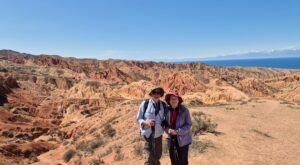
Tambaly Canyon is way out in the countryside, a group of low jagged hills a few hours drive to the northwest of Almaty. Here you must work hard to view the art, climbing up and down the crumbly paths along the rock faces. But the scrambling is worth it. For this site, dating back four millennia to the Bronze and Iron Ages (2500 BC to 1500 BC), preserves rock art recognized by UNESCO for its quality and quantity.
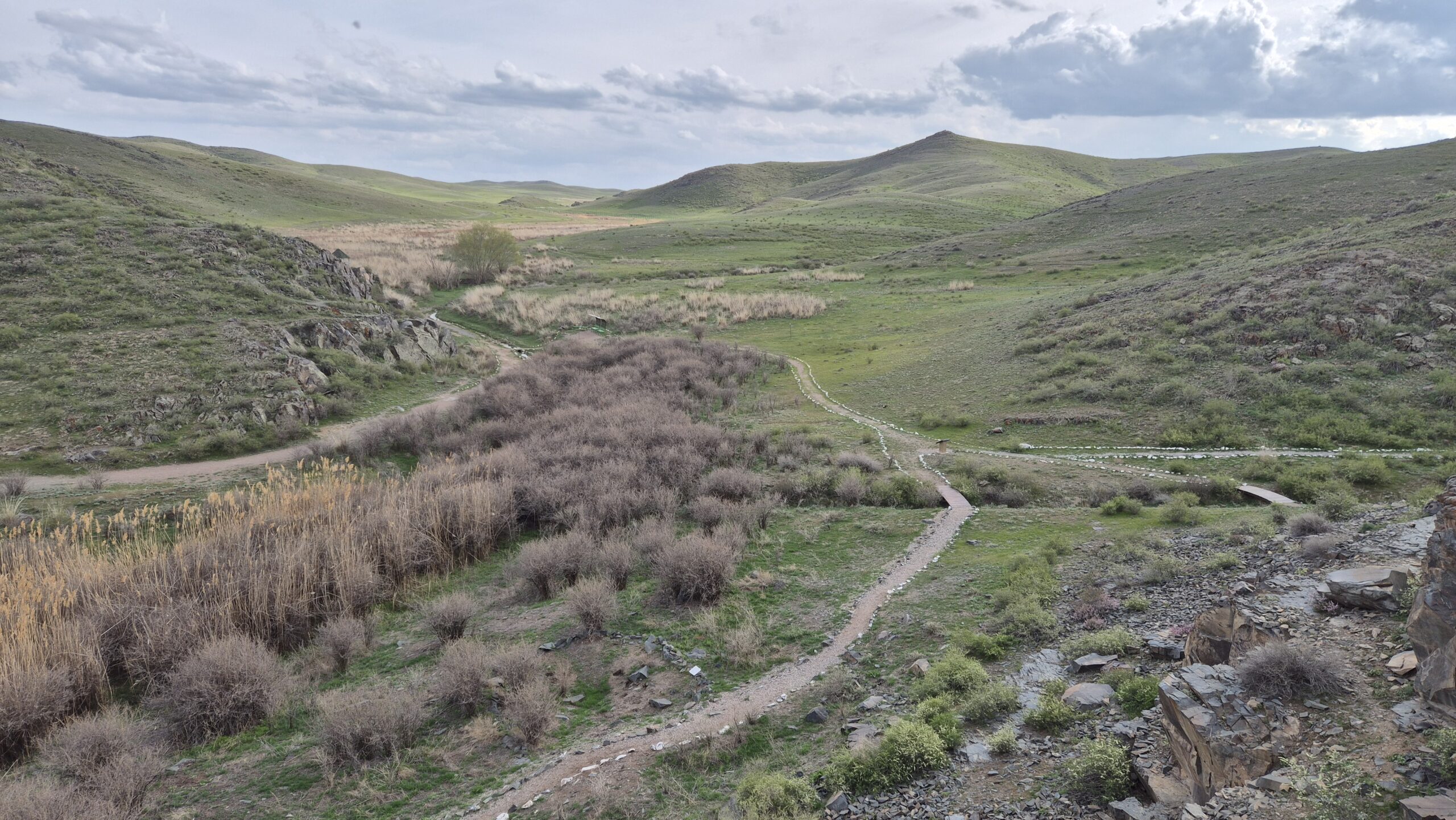
Some 3000 images teem on the cliffsides of the six sections we visited, many engraved deeply into the rock. Animals of all sorts, groups of figures dancing or hunting, solar gods with sun-heads, and even erotic scenes cover the flat surfaces.
Riders on the storm…One horseback rider heading west and the one on top racing to the east in a remarkably deft representation of speed.
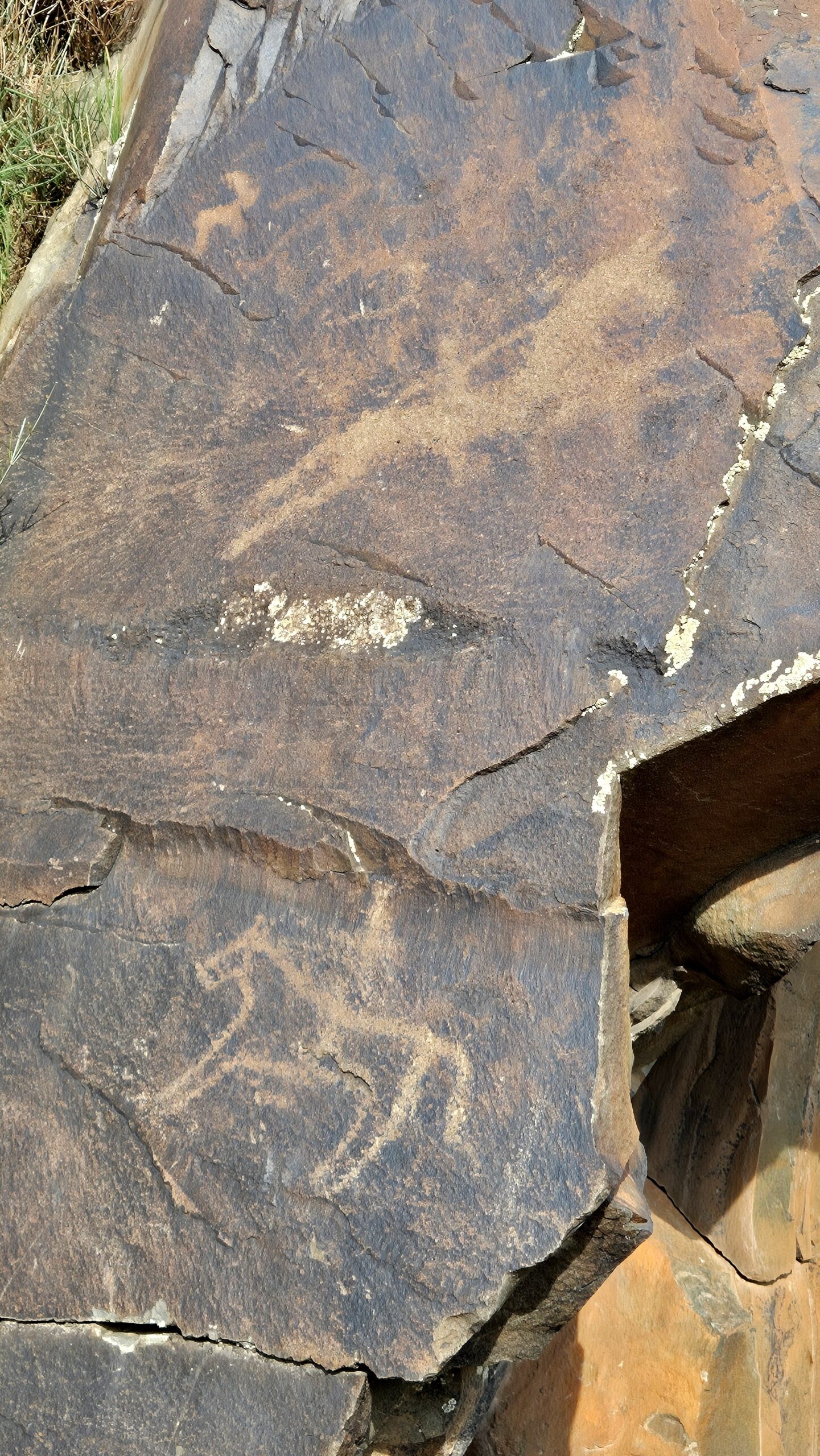
A herd of mountain goats with impossibly long horns, handled by various herders toward the top and what seems to be a snow leopard or other cat. Also at the upper left, a figure of a pregnant woman giving birth…or, as some say, a turtle.
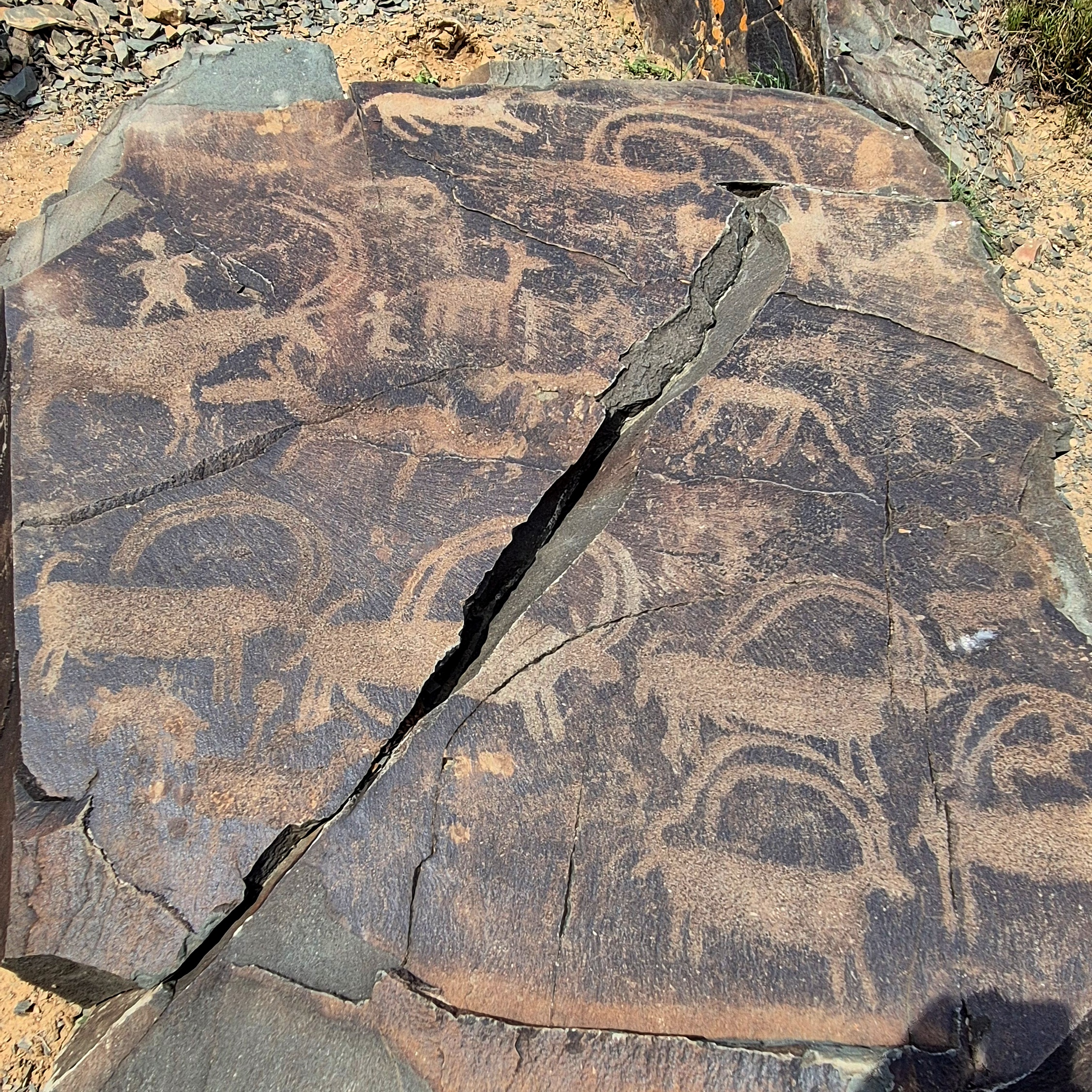
A splendid, more ritualistic, and – to us – unusual set of petroglyphs. The dancing figures at the lower edge to the left are joined by various animals above them. All are celebrating the appearance of solar gods with heads as concentric circles and rays in the shape of balls. Three or four of these very large figures preside across the top of the rockfaces. To the right of the dancing figures, it seems, a human-sized sun god has joined the party…or perhaps they’re shamans channeling the spirits.
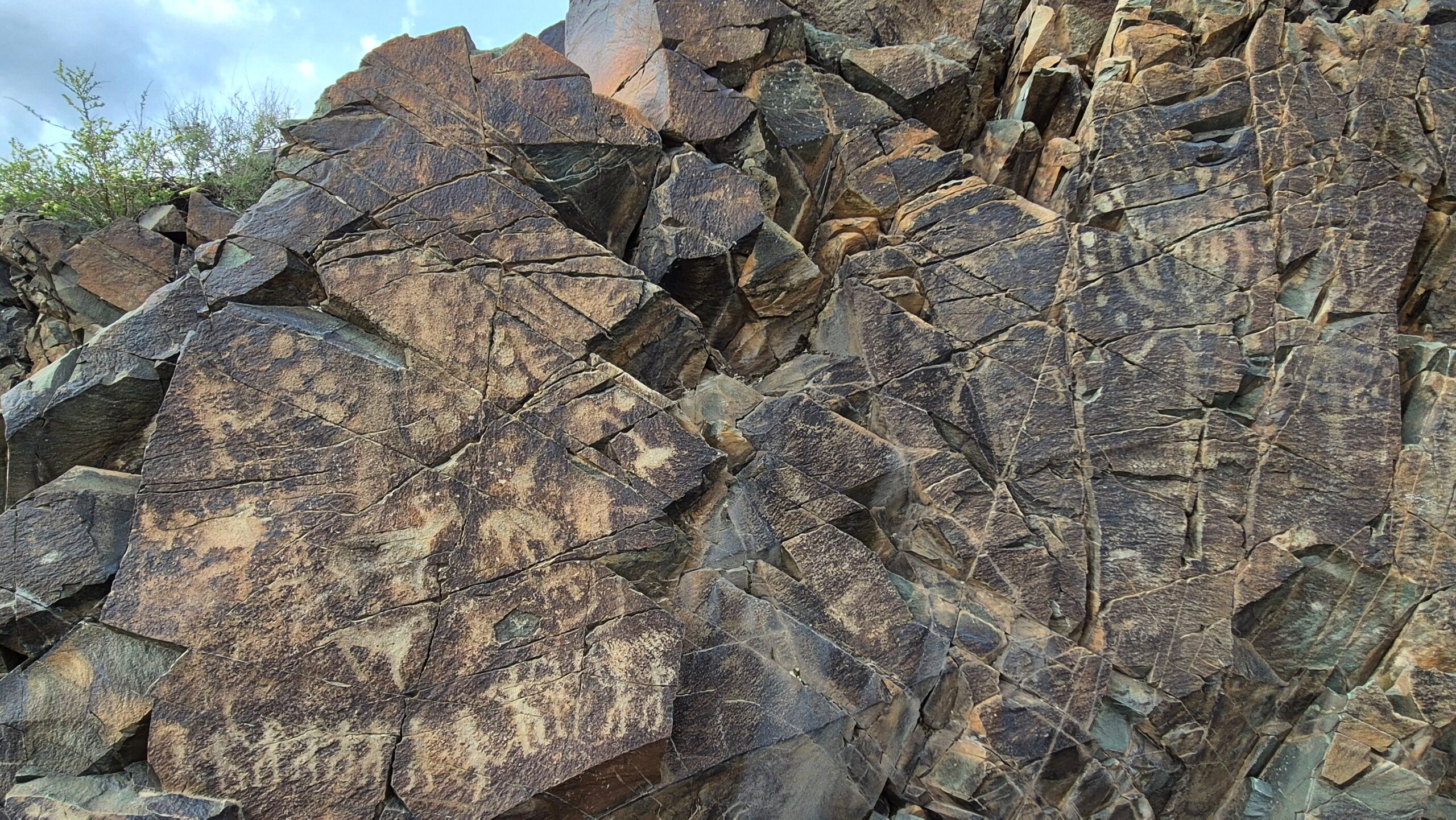
Archers and other hunters in the center of this surface pursue two large long-horned bulls, while diverse animals populate the scene.
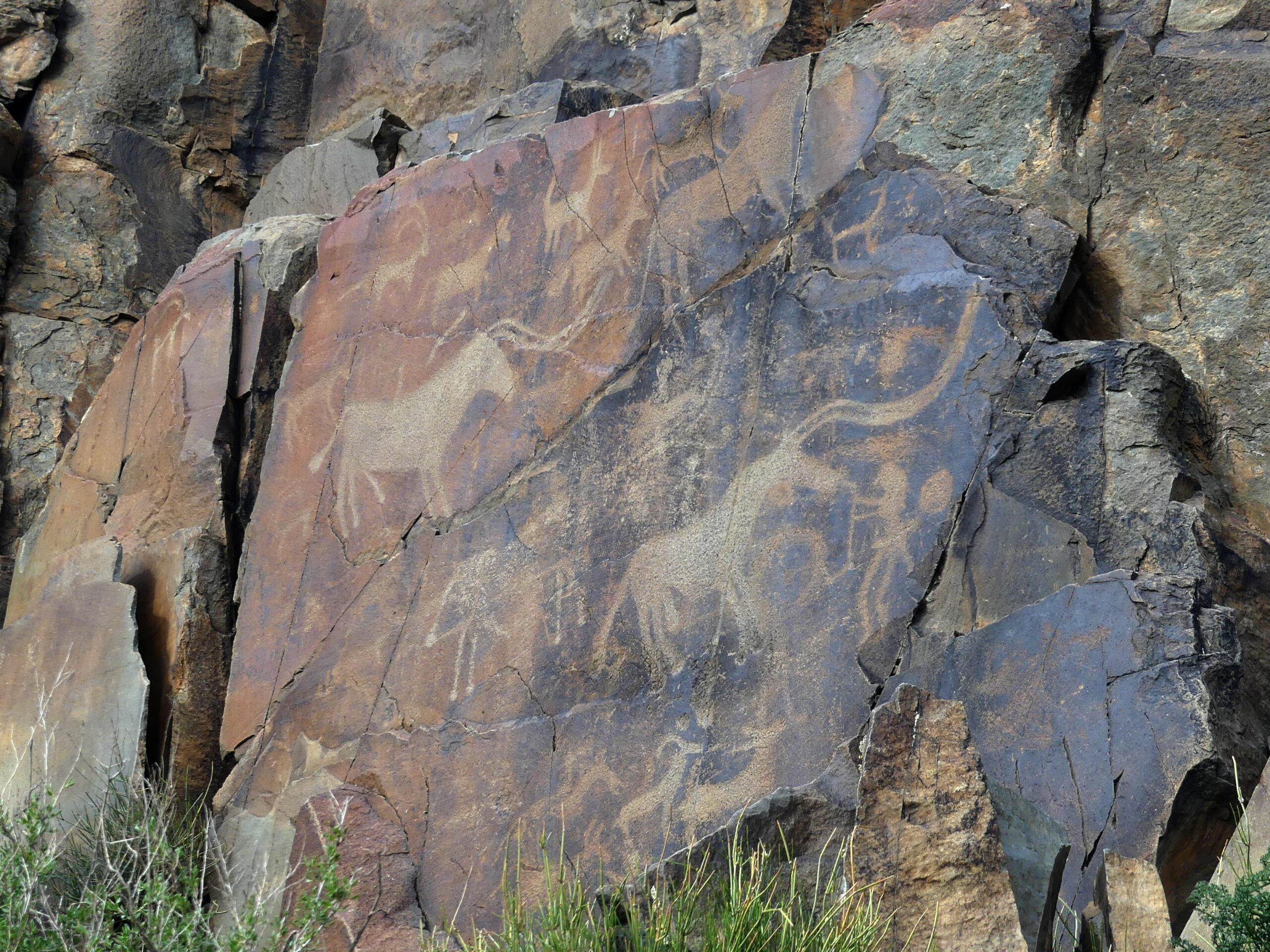
Nancy completes the long circuit of petroglyphs at Tambaly and heads to the broad plains that lead back to Almaty.
Contemplation and Action at Tanbaly Tas
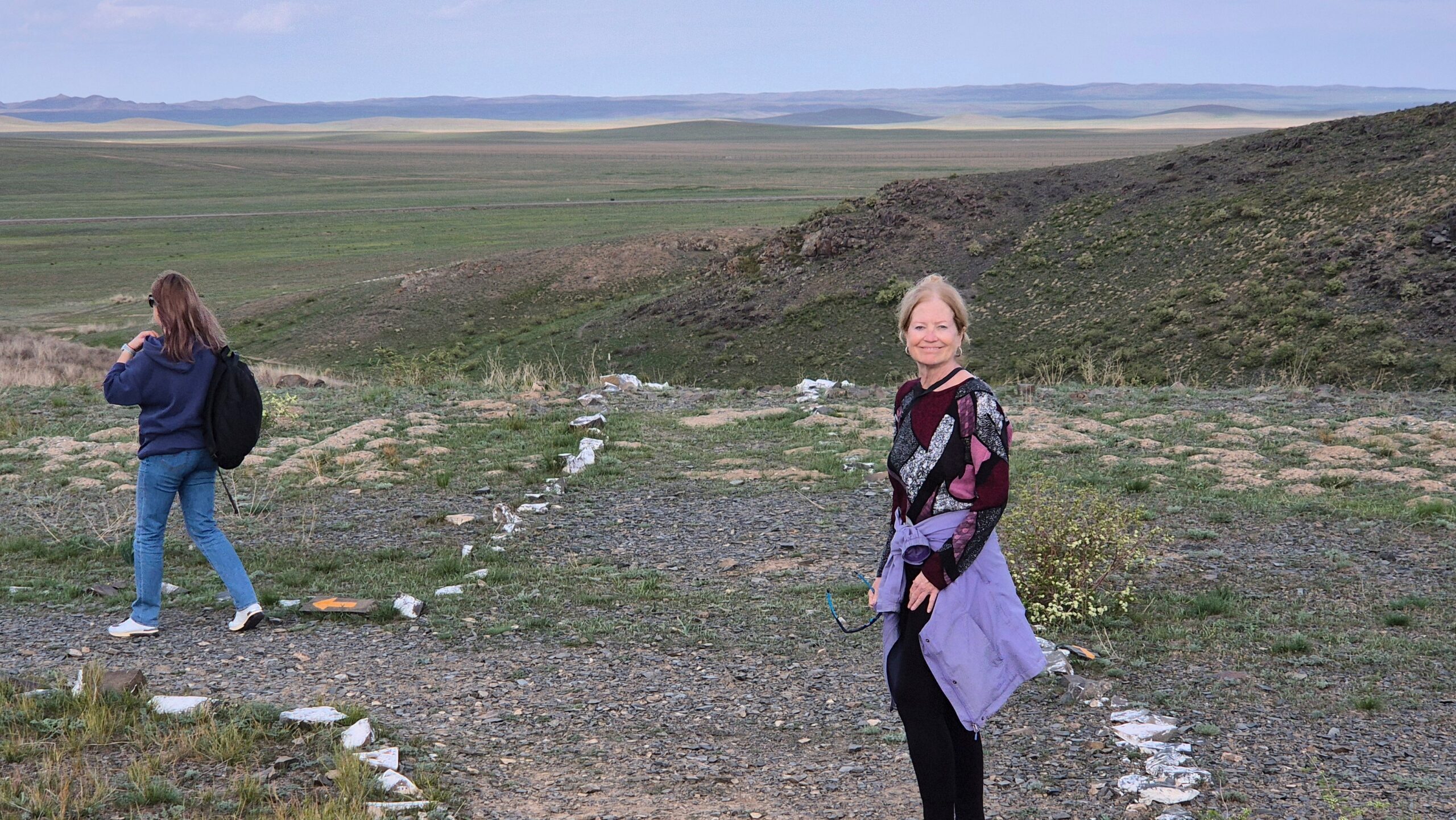
Despite the confusion of names, Tanbaly Tas is a very different rock art site, a few hours in another direction from Almaty. Though noted by many as a kind of outdoor Buddhist temple, Tanbaly Tas is set by a broad river where the locals mostly enjoy camping as well as the opportunity to climb high on the stony mountain faces looming over the river. (See earlier post about their passion for climbing.)
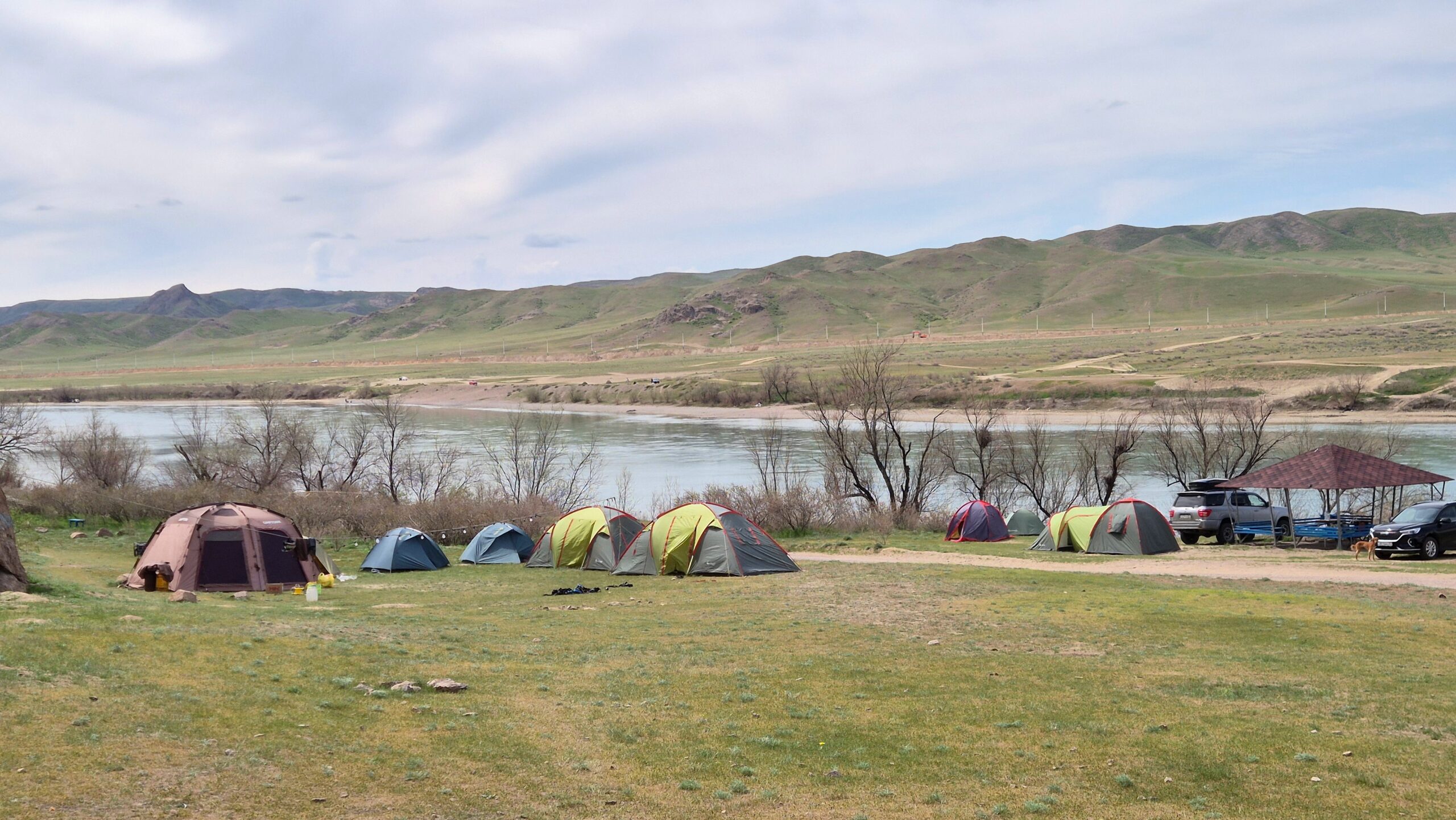
The climbers literally overlook the handful of engraved Buddhist images and varied texts, so different from Tambaly Canyon.
These date from the 17th and 18th century. Buddhist traders following the silk road stopped here to live for a while. So, they carved delicate, ornate images of Buddha into the lower rock faces as a kind of open-air, outdoors temple.
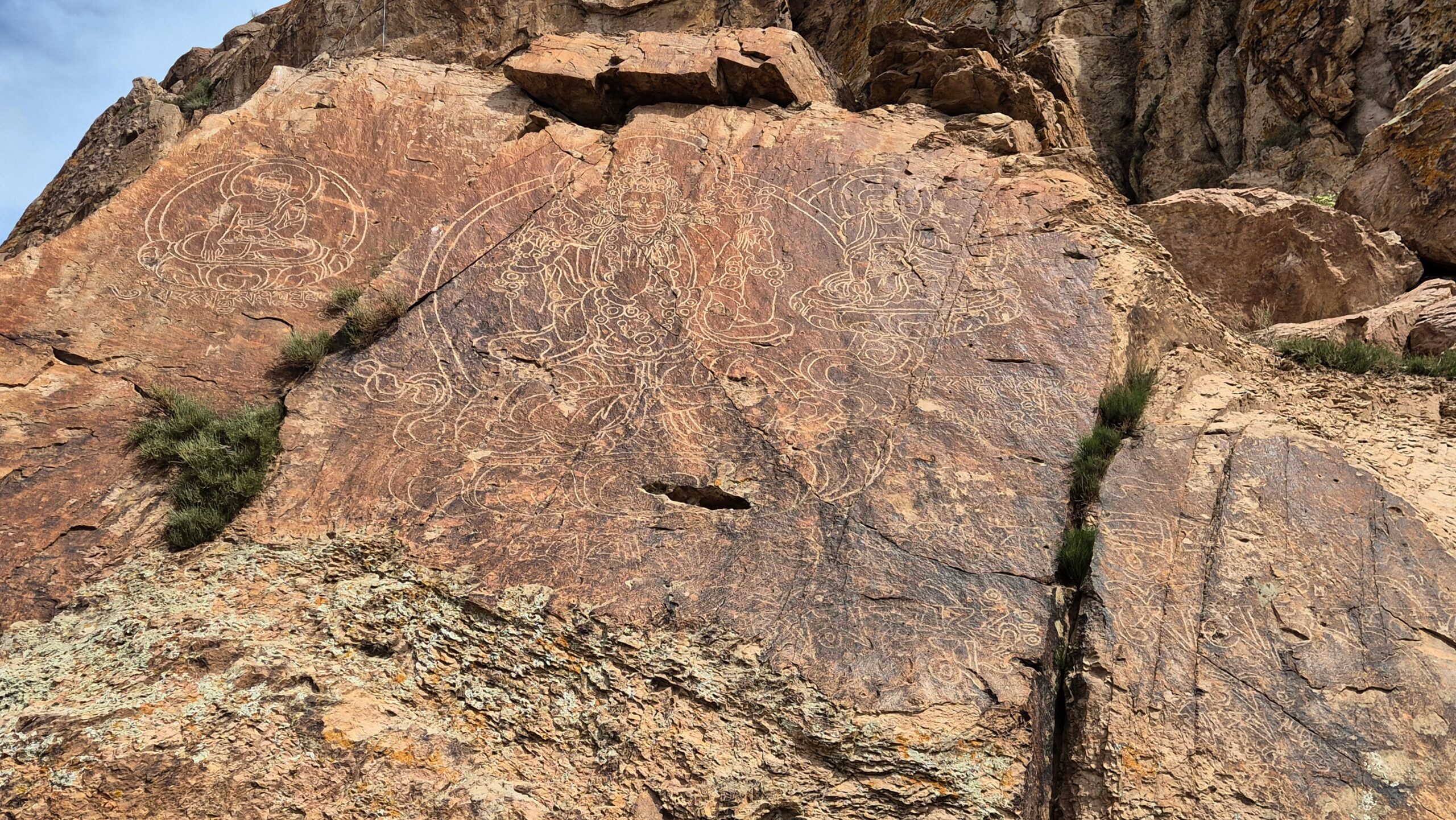
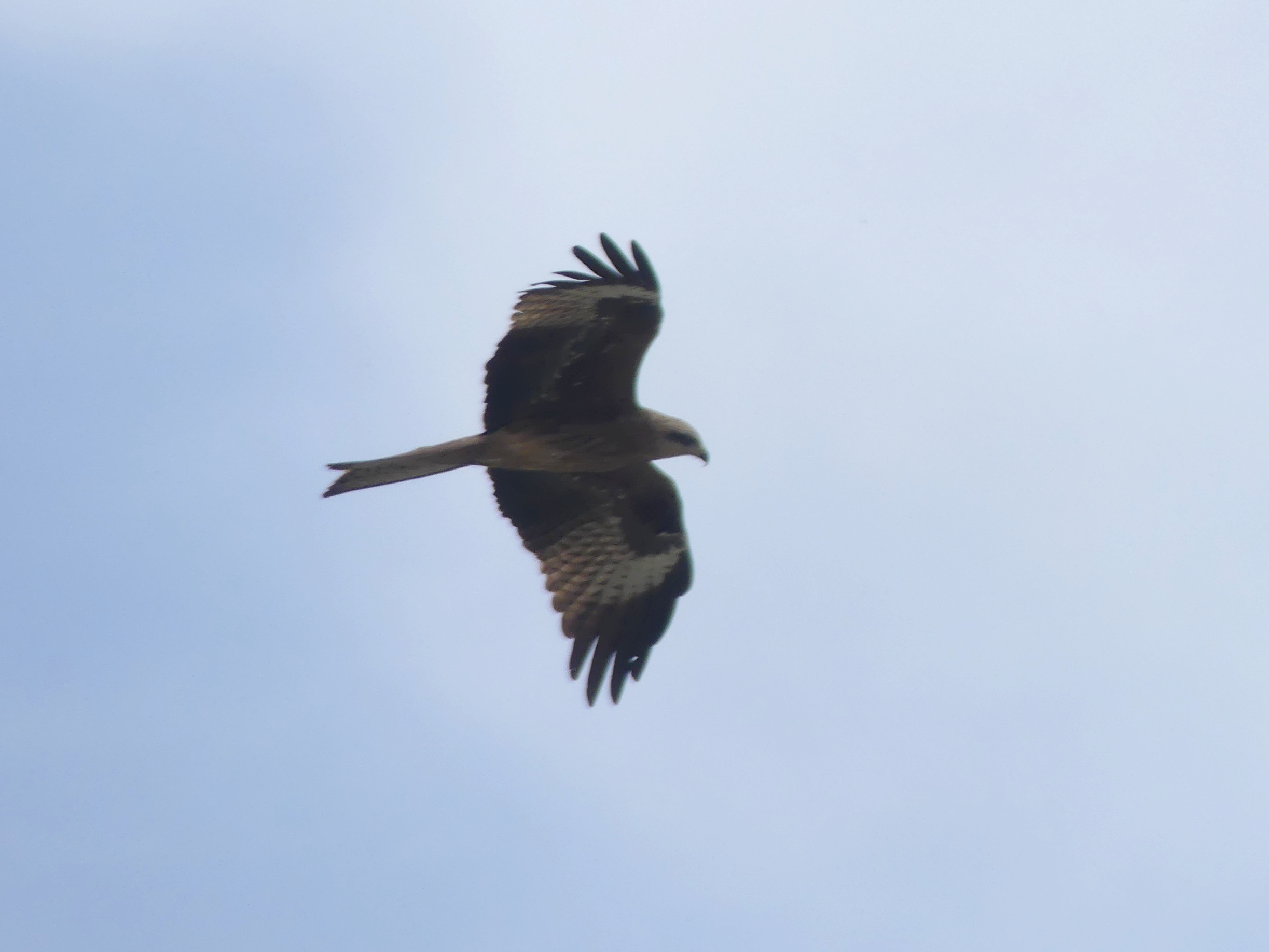
We climbed a bit for a half-hour to see the drawings. That left a lot of time, no, not to do the rock climbing, but wander the river’s edge and spot various birds.
Weighty Modern Art
Leaping forward a few centuries, we visited the newest museum in Almaty, for modern and contemporary art. The strongly declarative name, The Almaty Museum of Art, houses a private collection in a bold, inviting new building funded by the private owner of the works, Nurlan Smagulov.
The museum centers around Smagulov’s 700-piece collection of Kazakh artists, which occupies one large hall on the ground floor. Other large halls feature special exhibitions of mostly Kazakh contemporary artists. A few sculptures grace the compact outdoor courtyard fronting a main road in Almaty. A Fernand Leger piece in ceramic adorns the entry hall.
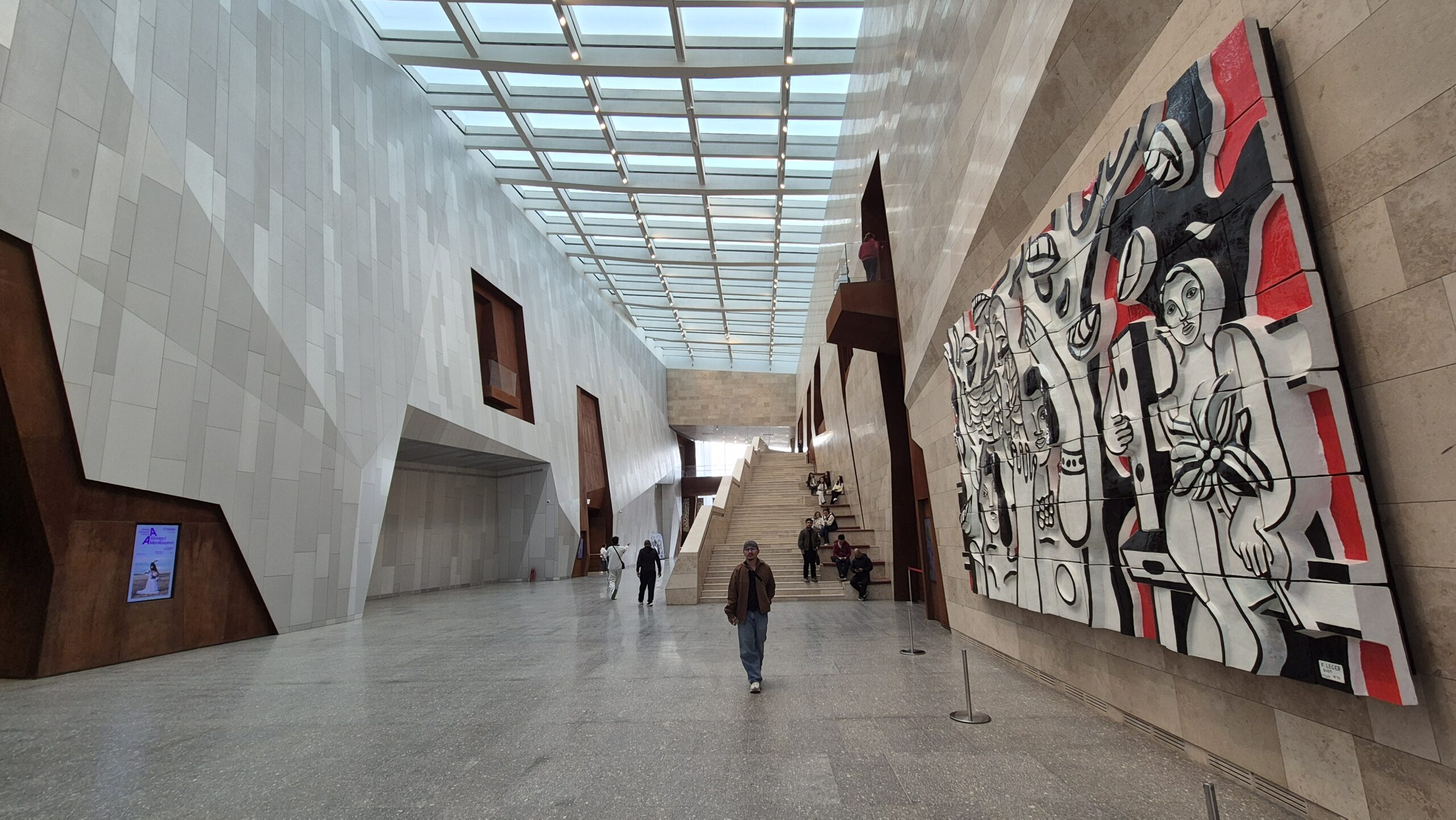
It’s the collection of non-Kazakh artists that makes the museum a bit odd.
The only other hall on the ground floor houses the major showpiece – and storyline – Richard Serra’s Junction. This massive assemblage of curved corten- steel panels, some hundred tons or more in weight, was purchased in New York. Hauling it over here was a feat in itself, celebrated by a video looping next to the entrance.
Once reassembled by crane in Almaty, part of the museum building was built around it, though the piece was originally intended for outdoors, mainly because nature weathers the steel. Now you would need to tear down that part of the building to remove it, if sold.
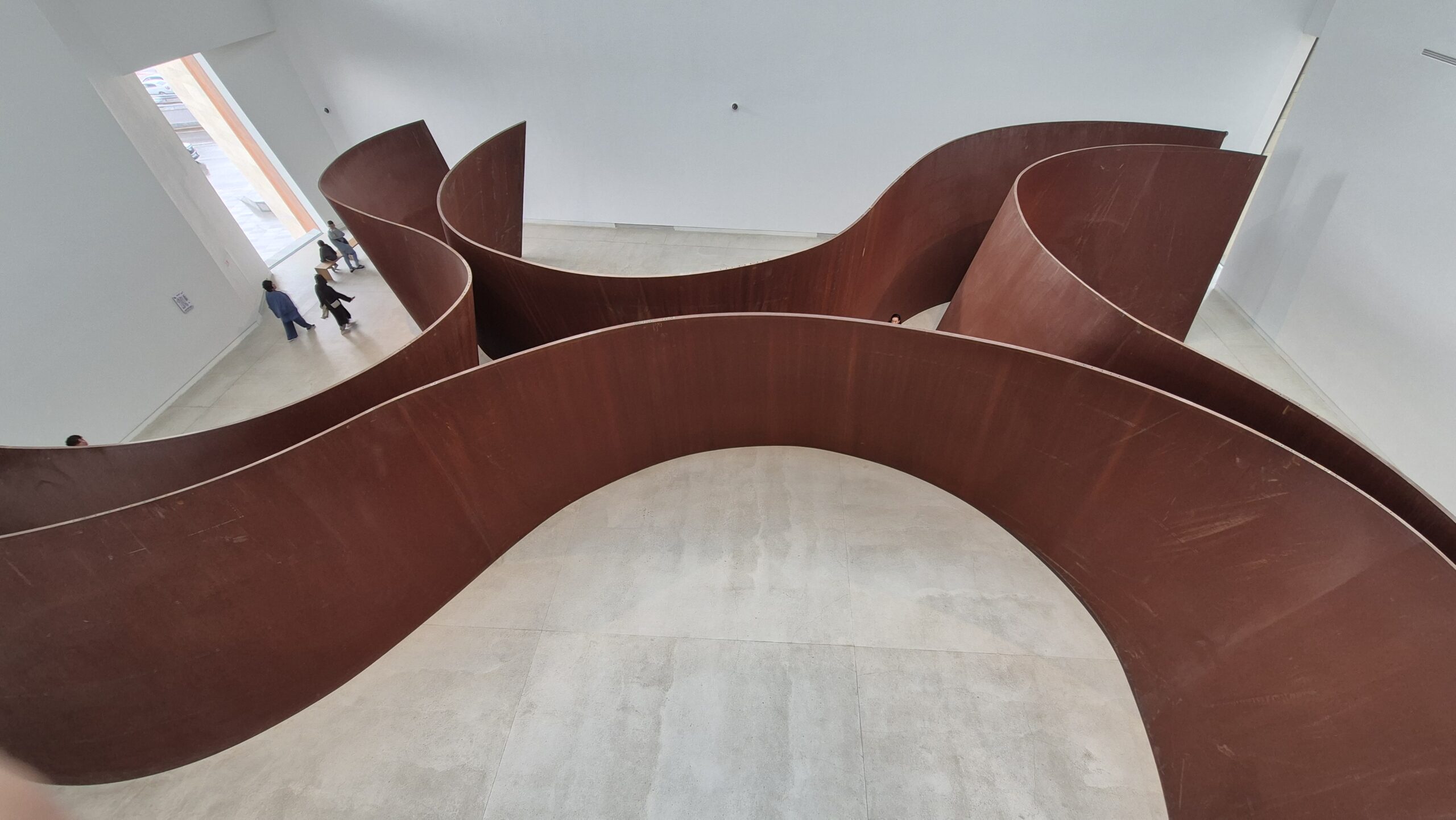
As to the art itself, the panels at first seem like barriers, but the four curved openings challenge the visitor to enter and explore. The tight channels soon funnel everyone to a junction suitable for posing, selfies, or even conversation.
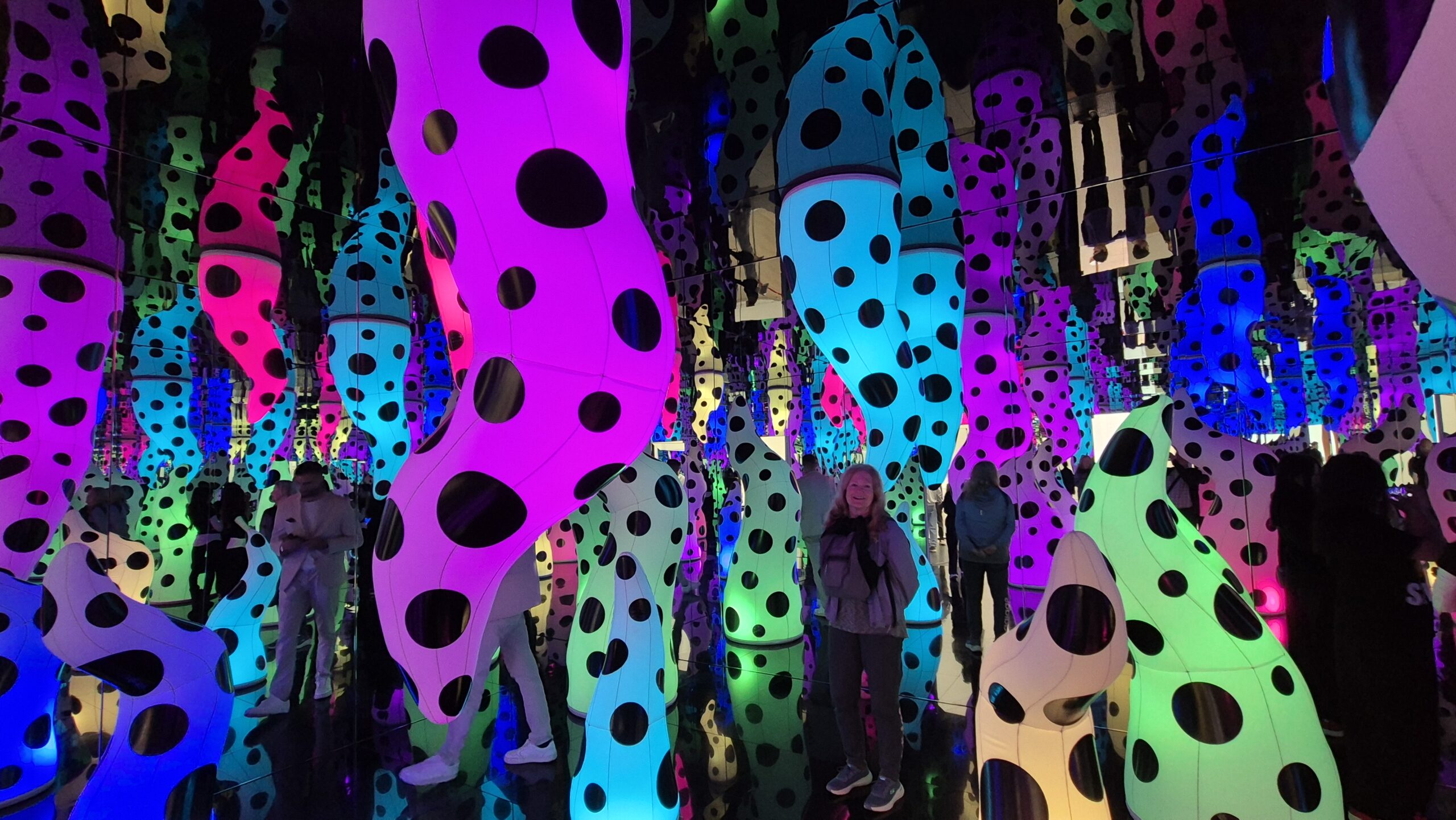
Stranger yet, upstairs at the museum, other than a walkway that looks over the Serra piece, the four halls offer just one artwork per hall by a renowned artist: a theatrical video installation space, a permanent video installation by Bill Viola of inverted nudes adrift in something like preservative, a small fantasia of a polka-dotted room by Yayoi Kusama,
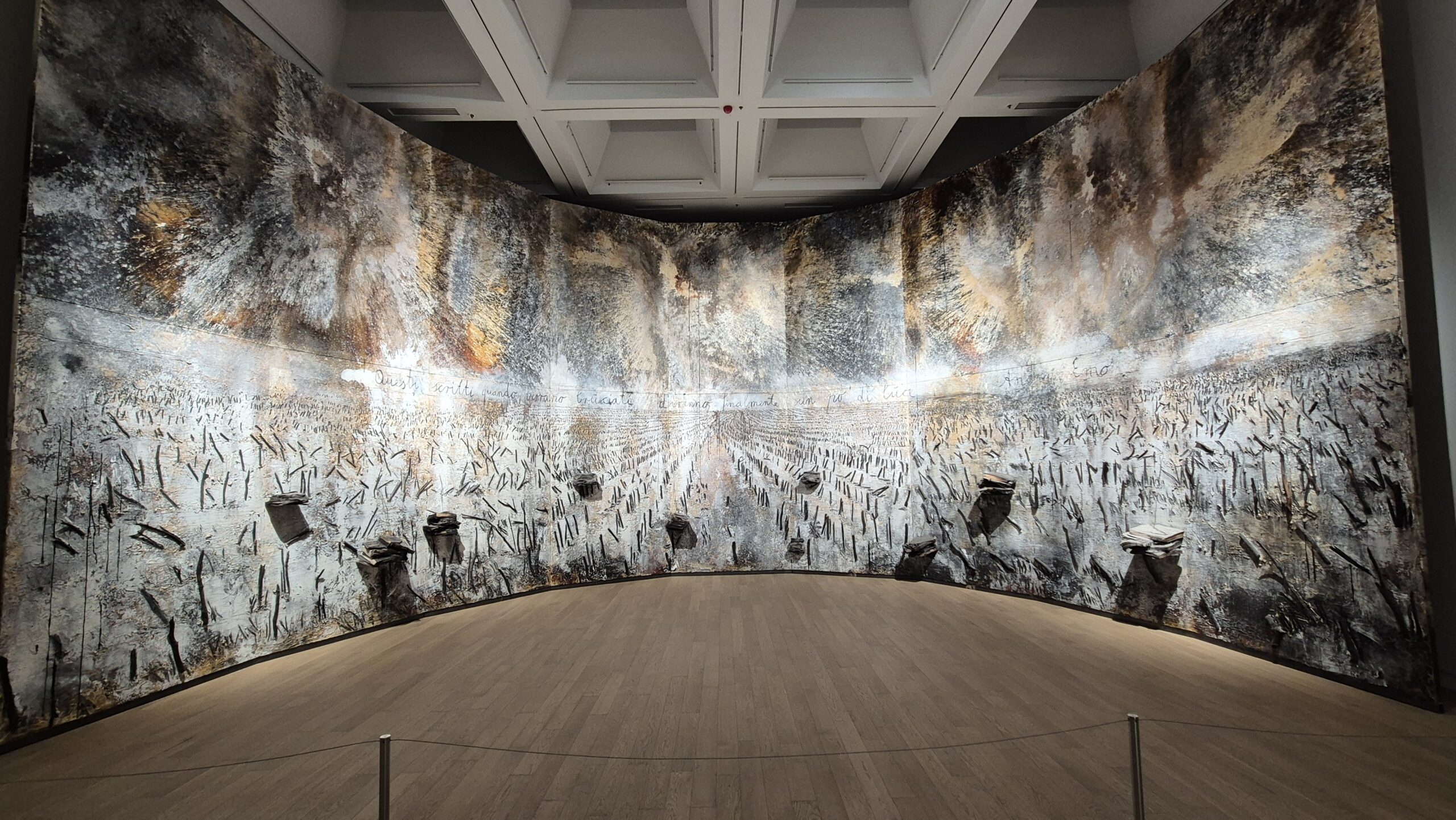
and a stunning arced panorama on ruin (below) and redemption (above) by Anselm Kiefer.
That’s it for the upstairs.
Nonetheless, the building and the art were worth a visit, for the price was certainly right – just $1 USD for a senior, even though an outsider.
(To enlarge any picture above, click on it. Also, for more pictures from the five Stans of Central Asia, CLICK HERE to view the slideshow at the end of the itinerary page.)