
In brief: It was early spring when we reached Almaty, Kazakhstan’s largest city. Emerging from winter, the city and its environs thoroughly charmed us – as did the lifestyle.
Almaty, in the southern part of Kazakhstan at the edge of Kyrgyzstan, is the central city of the country. It has the largest population, some 2 million people, and is the economic heart as well. Until 2007, before the shift north to Astana, it was the actual capital – as part of Russia as well as the Soviet Union, when it was also the capital of the whole region of the Stans.
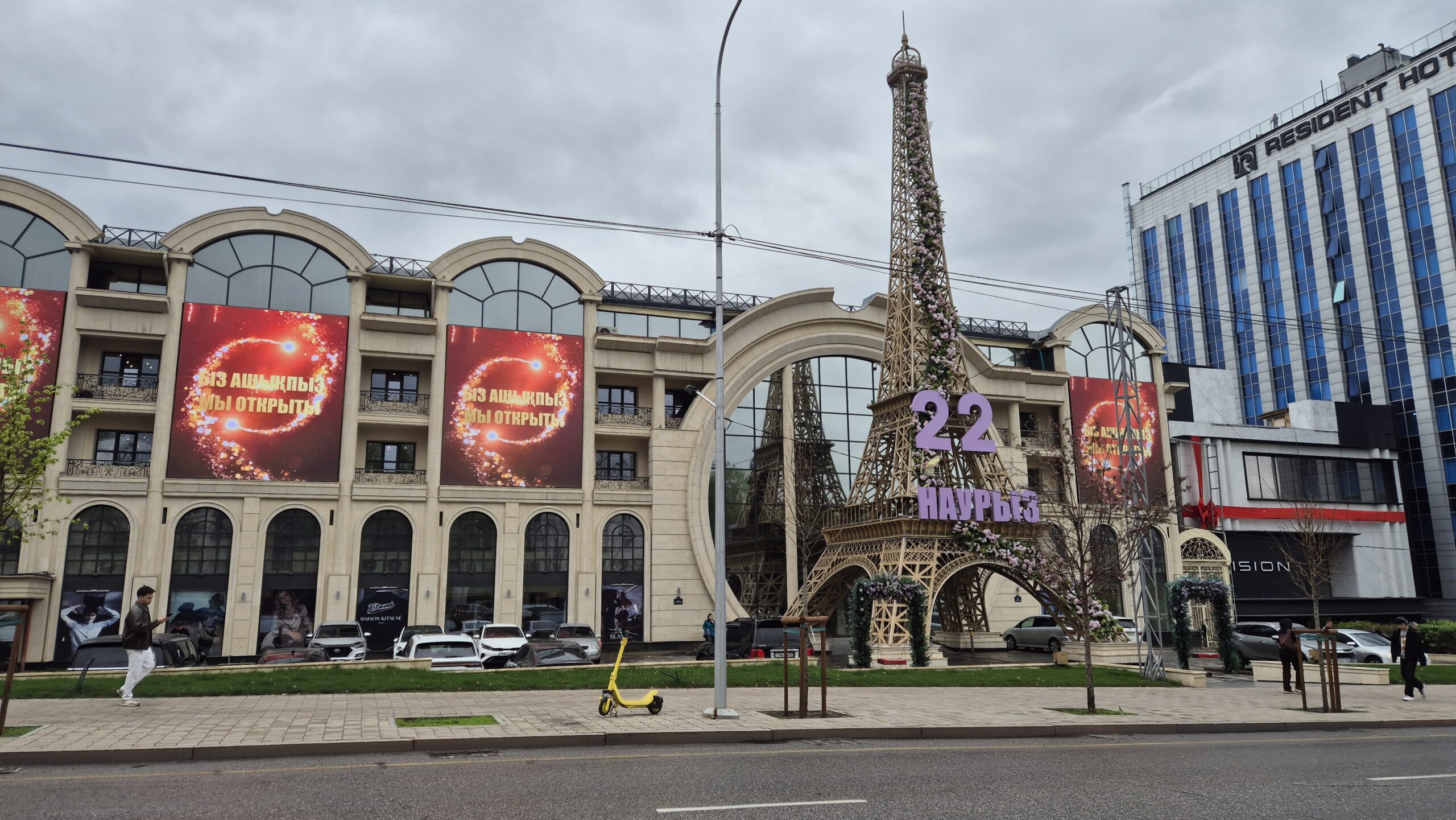
Not too many remain of the older wooden houses, as Soviet development first replaced those buildings for growth and then came more recent building of skyscrapers, modern apartments, and malls.
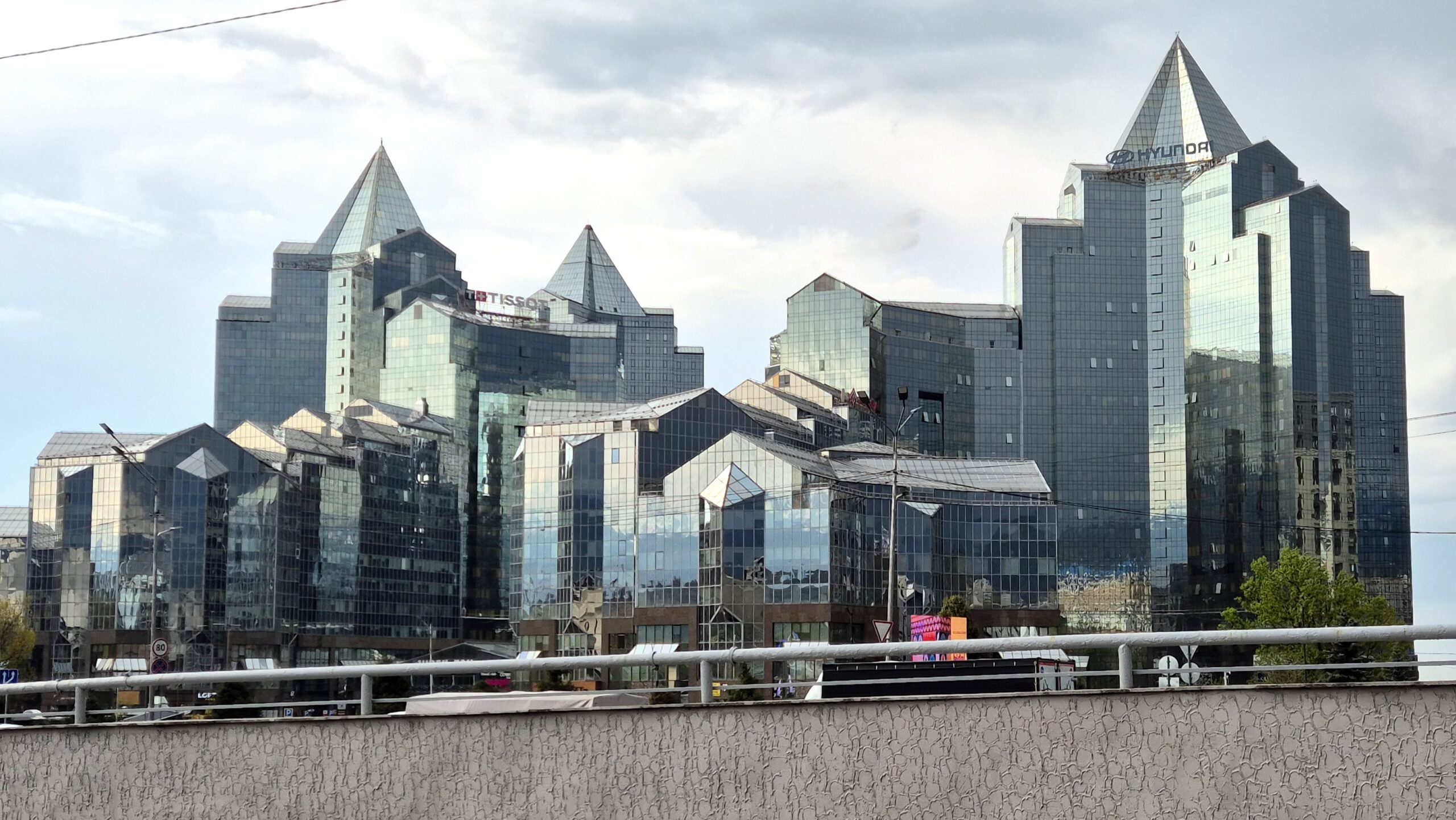
There are also not a lot of notable sites within the city to attract tourists – other than a handful of museums and the mountains that abut the town. Outside town, however, canyons and riverways make Almaty a good central stopping place. But it’s the cityscape of Almaty that excels and entices.
This is a city replete with trees – birches, firs, plane trees, and remnants of the apple orchards of the past. The name means valley of apples; large orchards remain on the outskirts, bursting out in white flowers in the spring and then yielding very, very large and juicy fruit.
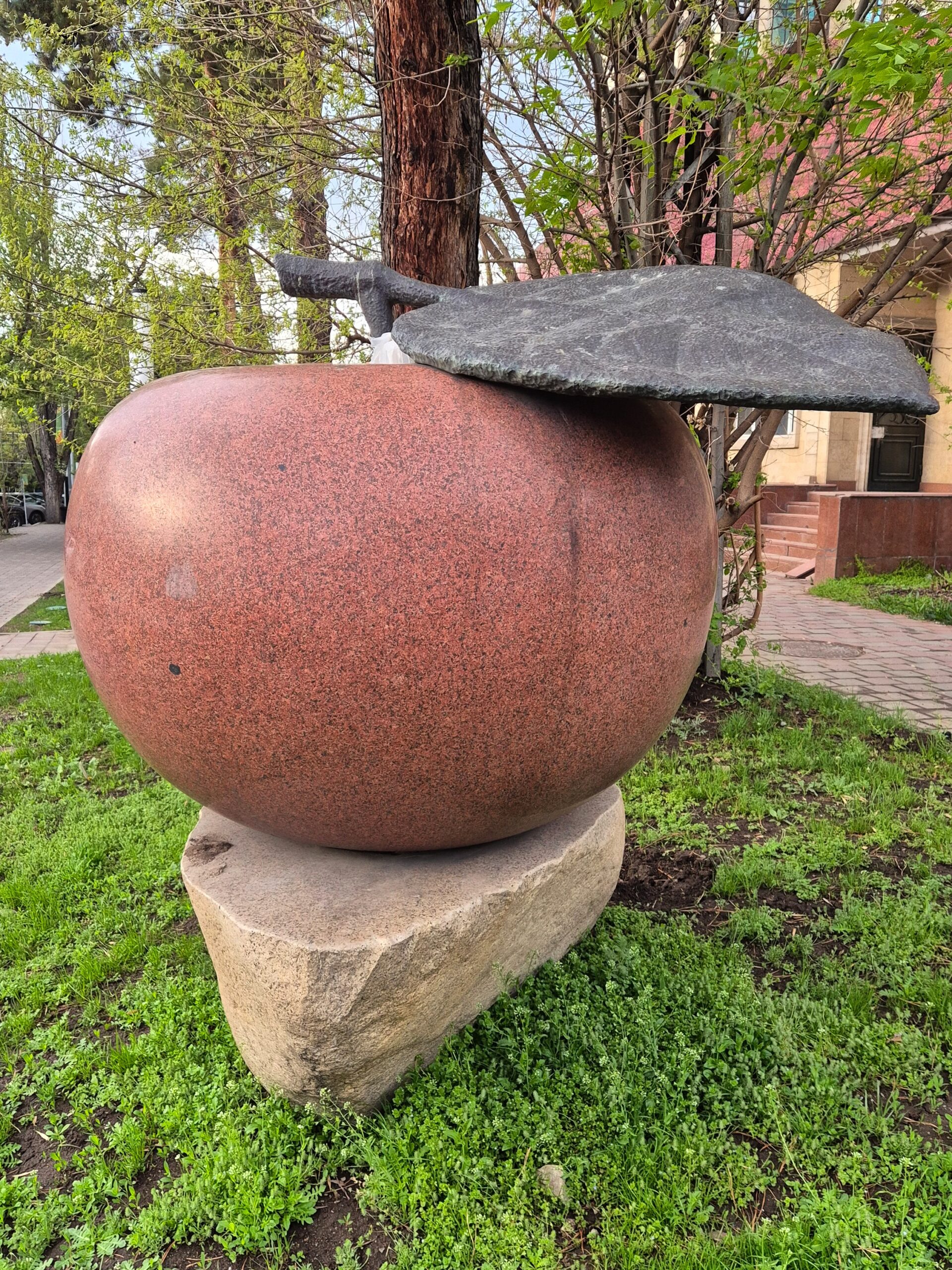
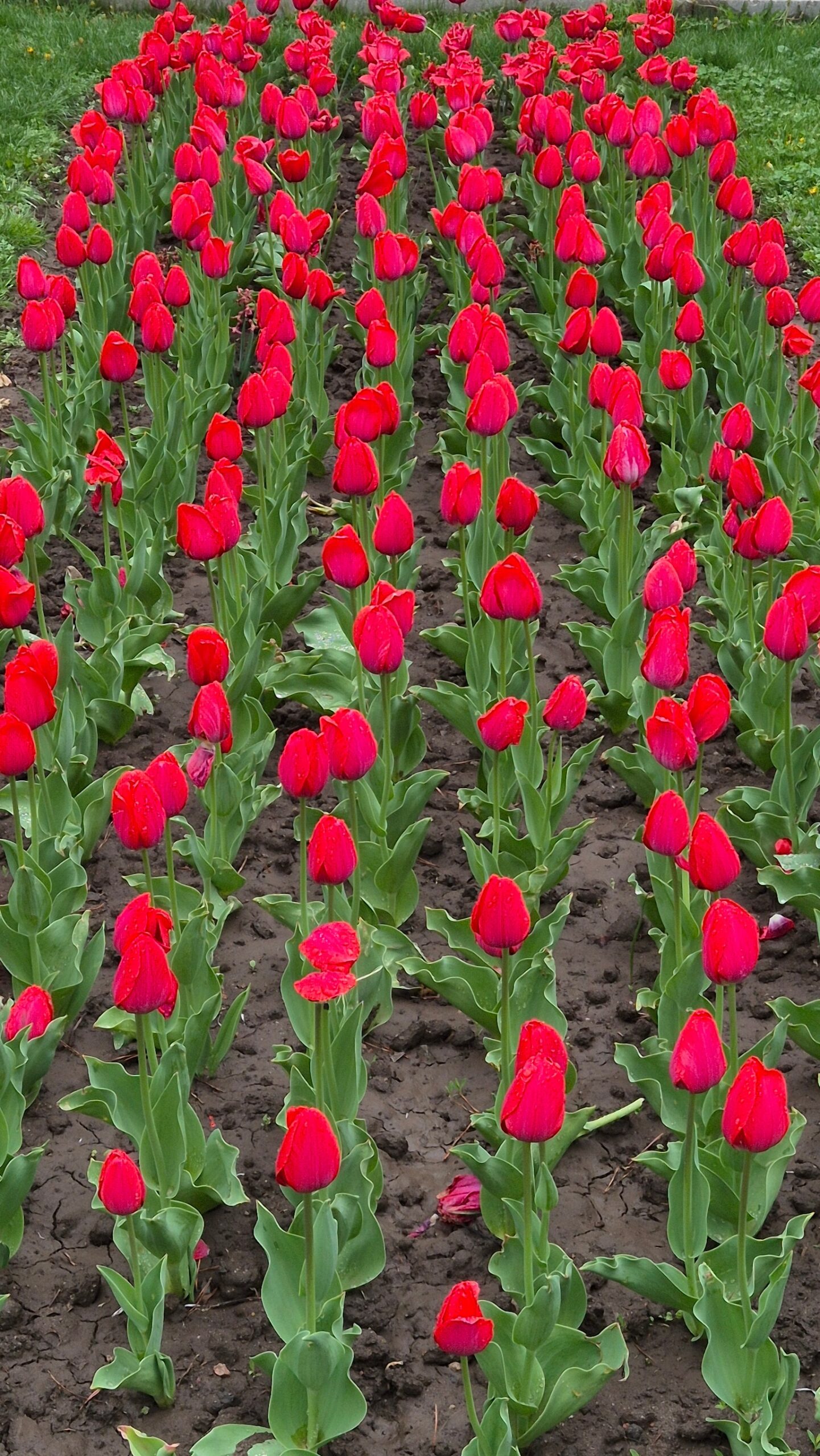
These alternate with apricot orchards, with a pinkish flower instead. And tulips in the spring started popping out all over.
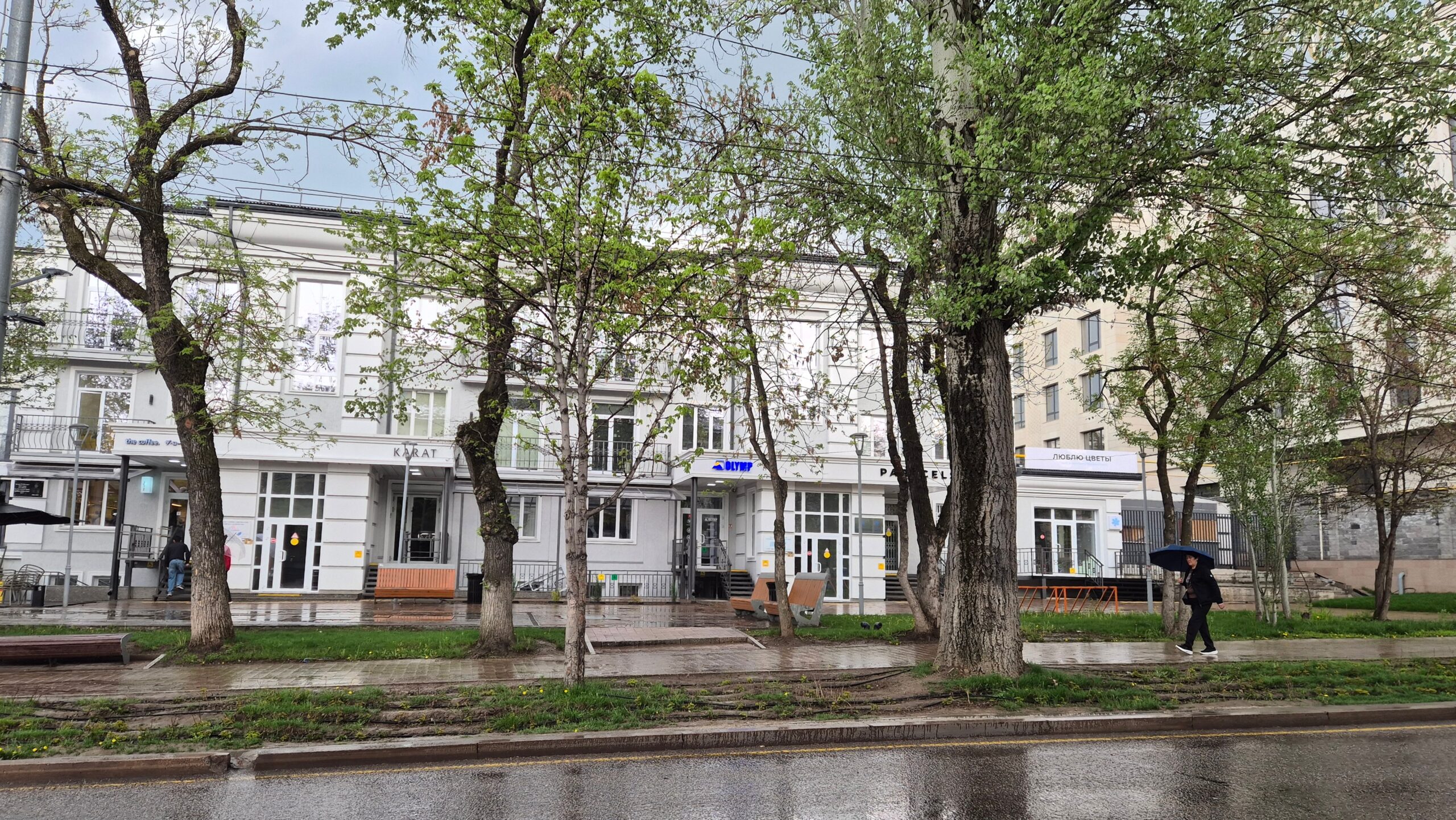
As in Astana, people walk here to enjoy the cityscape (at least when they decide to leave behind any of their multiple cars per family). The four-lane roads snarl traffic nearly all the time. Especially on foot, though, one can enjoy a pleasant tree-lined journey along the streets.
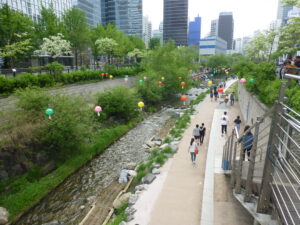
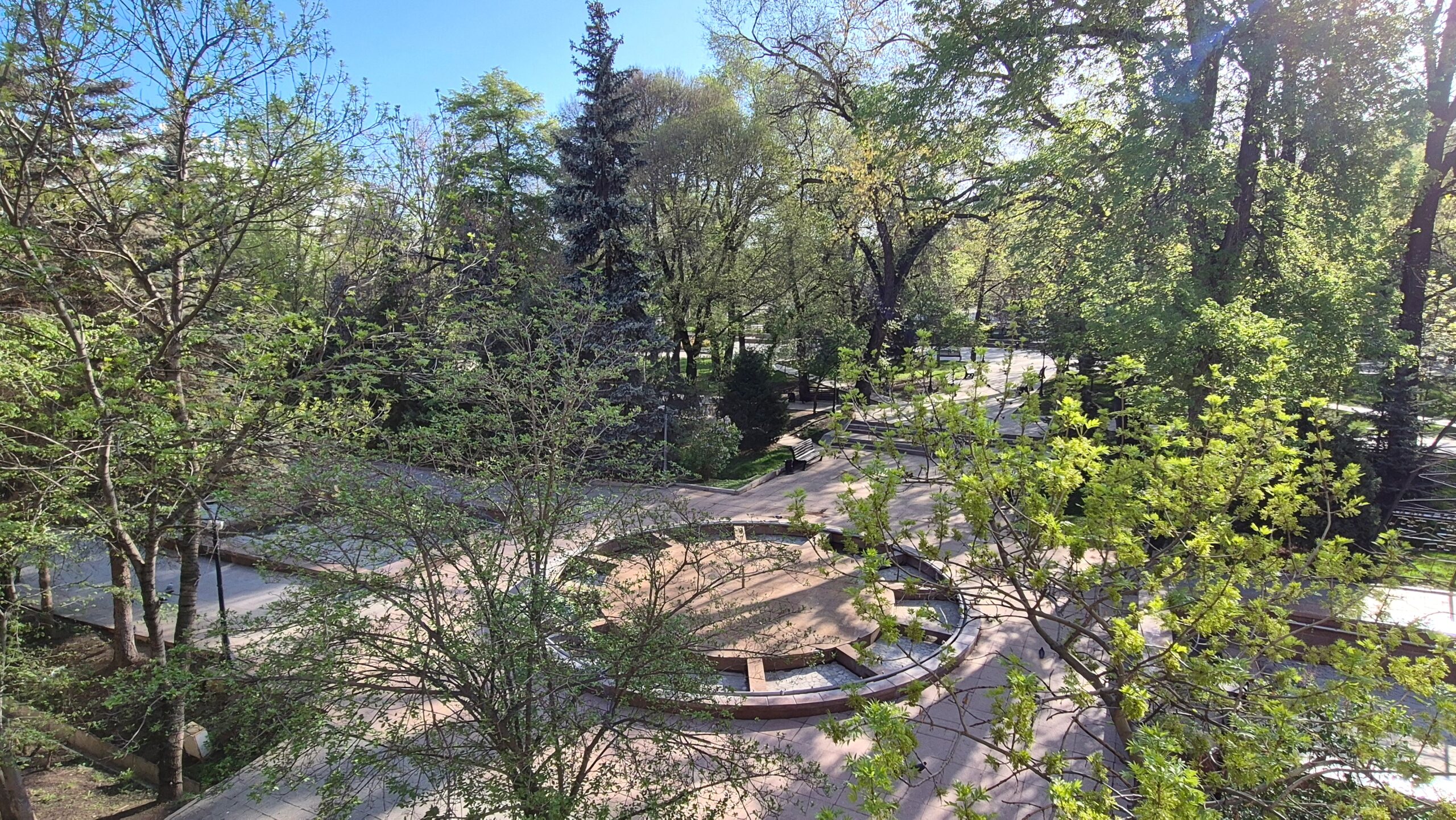
Fortunately, many pleasant parks have also outlasted development. Our apartment faced Apta Park, a lengthy park of fountains and walkways that offered a pedestrian-only passageway for many blocks. It’s a favorite of young couples for evening meetups or pre-nuptial photos.
Among the walkers, we saw clusters of school children, mostly in their local school uniforms, heading homeward. Even the youngest seem to have learned how to cross the traffic safely to reach home by themselves. It’s a help that the ‘zebra’ crossings require cars to stop for pedestrians. Students learn three languages in school: Kazakh, Russian (the two co-equal languages of the country) and now English. In the past, the English instruction has remained rudimentary, but seems to be growing in importance with tourism.
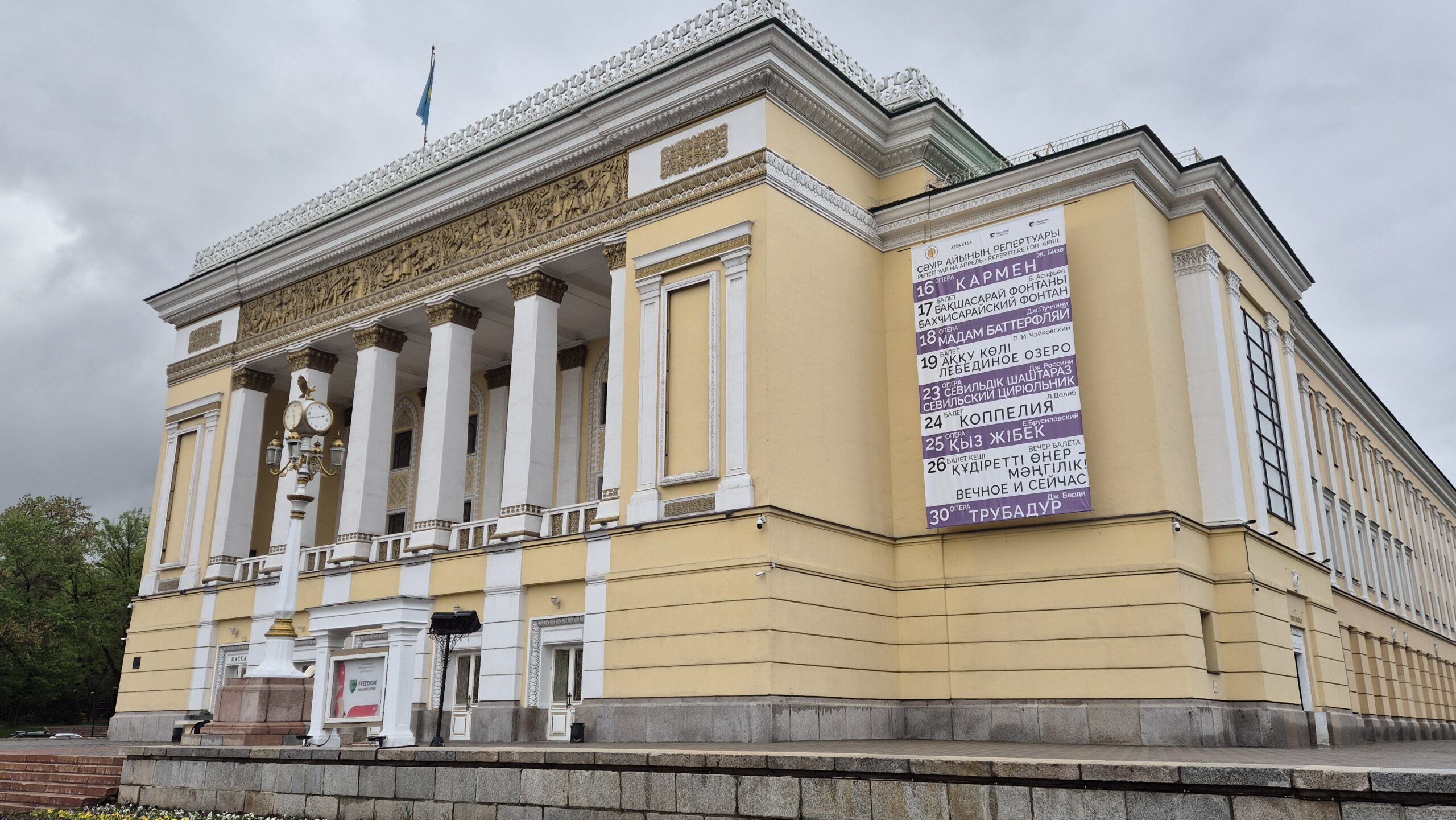
The other kind of schooling, as we saw in Astana, is training for all ages in the arts and sports. The ballet and music theatres offer basic and more professional instruction. As we enjoyed in Vilnius once, walking past a conservatory delivered a half-dozen practice performances echoing into the boulevard.
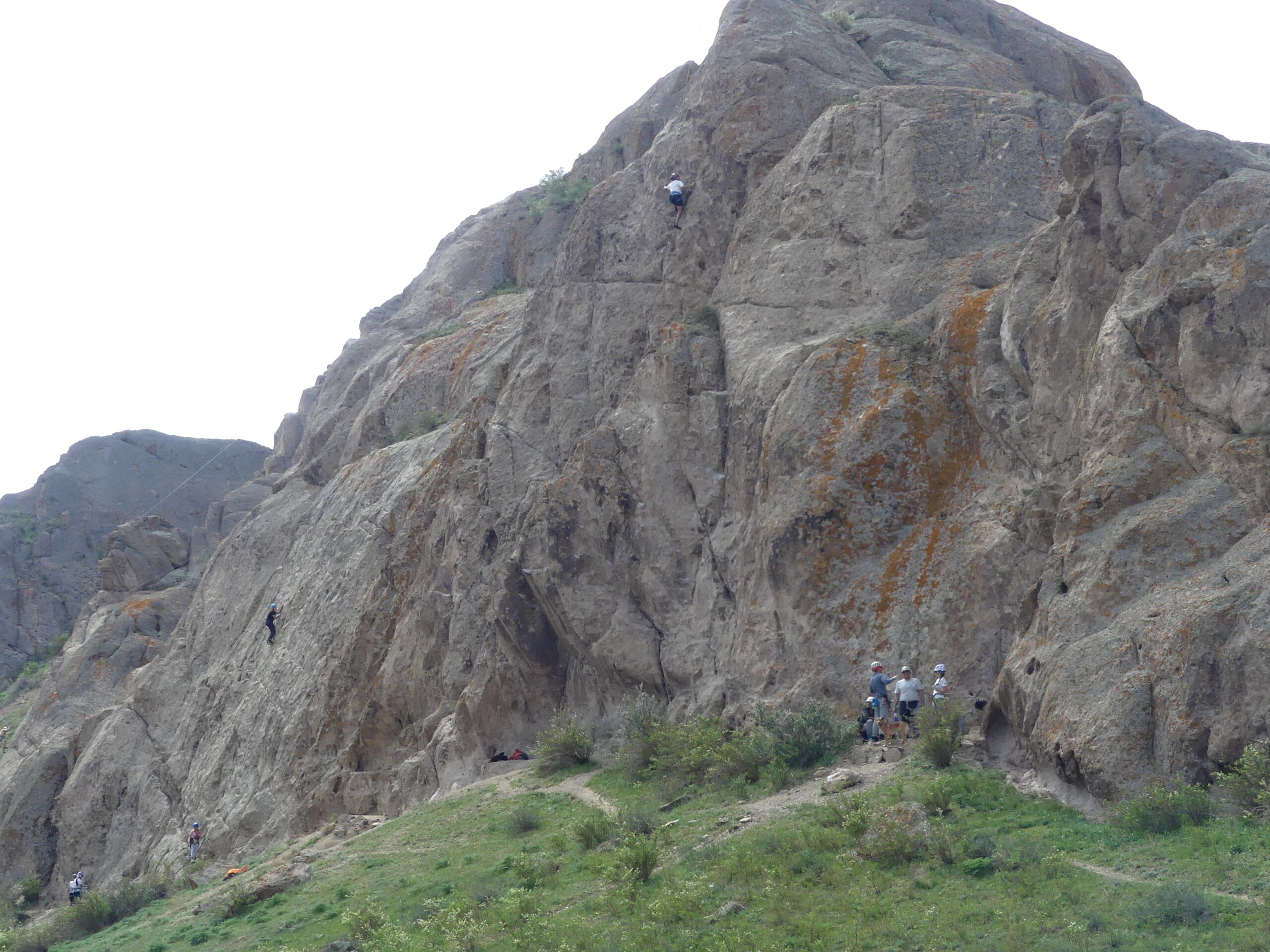
Large sports facilities cover the physical arts. One of these, rock climbing, seems to be a special passion here. The daughter of our city guide had been climbing since age seven. On an excursion outside the city, we were astonished to see people of all ages scaling rock faces in a spot with several difficulty levels.
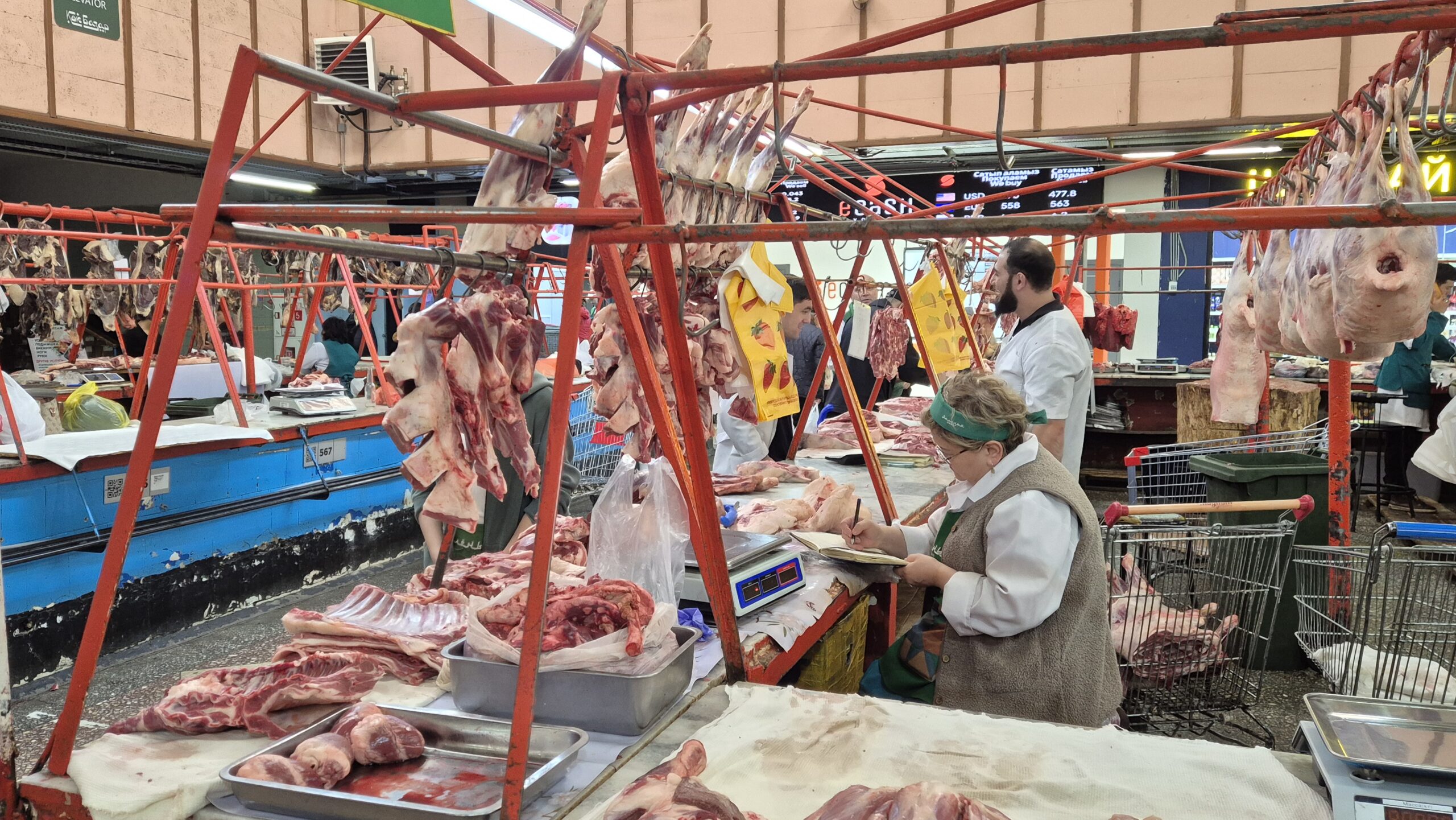
Rock-climbing aside, Almaty is a bustling and inviting city, with the vibe of a young populace, a delight in outdoor cafes (with endless coffee) or eateries even in chilly weather, and non-stop services like 24/7 groceries and pharmacies. Its renowned multi-level Green Bazaar, a square city block of a structure, houses innumerable stalls for food of all sorts as well as goods. We thoroughly enjoyed shopping amid the bustle and variety of the enormous market. But beware…imported foods (like asparagus) can be very expensive.
Among the countless produce stalls at the Bazaar, perhaps the most noticeable are those that sell horsemeat. As a nomadic people, the Kazakhs would not waste the aging horses they had used for herding, but turned them into a ready food source. That heritage makes horsemeat a staple of the Kazakh diet, offered in so many restaurants as well. The nomads also milked the mares as a dairy source, though the milk reportedly makes a novice drinker live on the toilet.
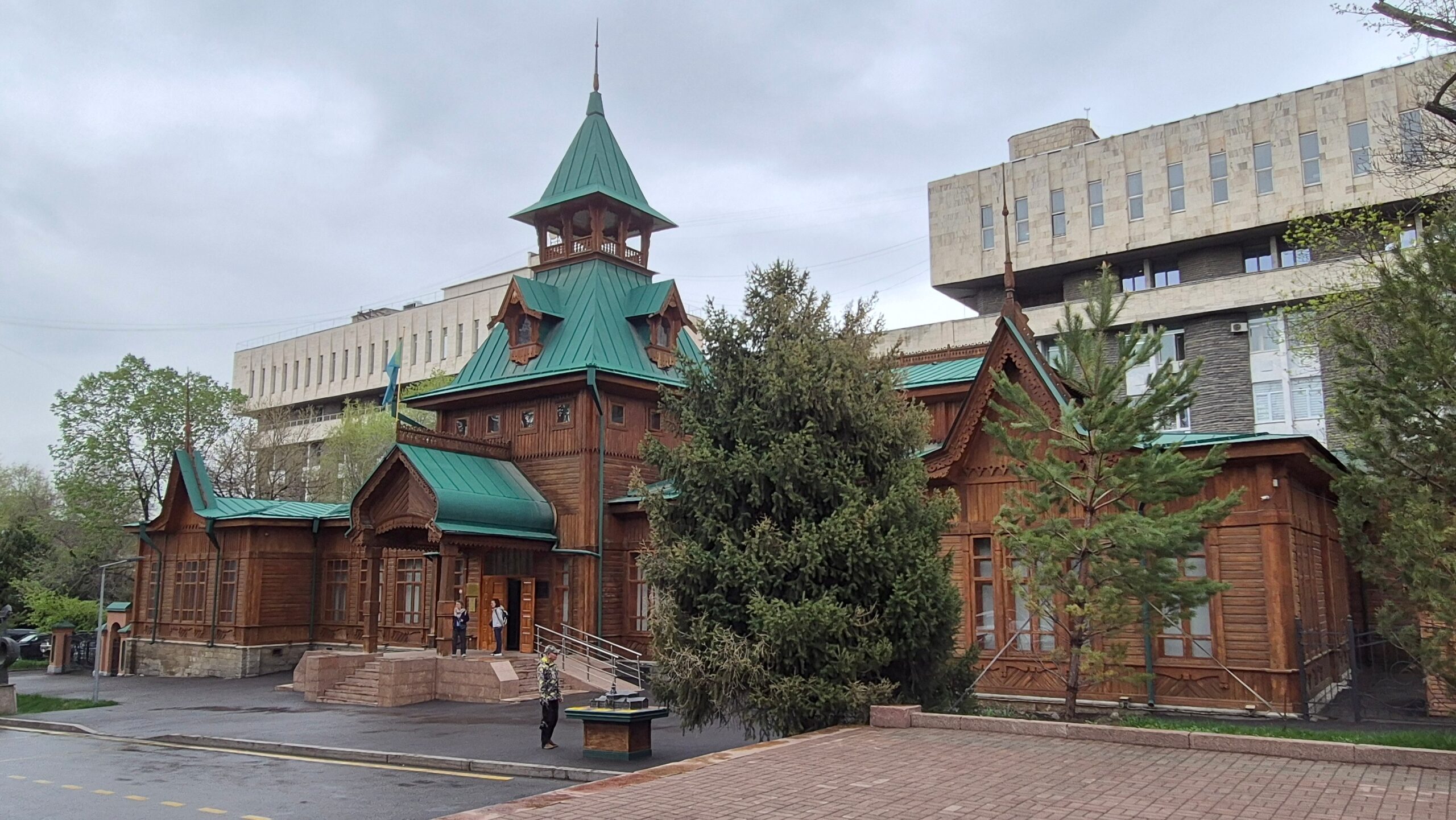
The city’s largest and most seductive park is Panfilov. At one end, we found a splendid wooden structure once used by officers in the 19th century. This and the adjacent former military center have become museums instead.
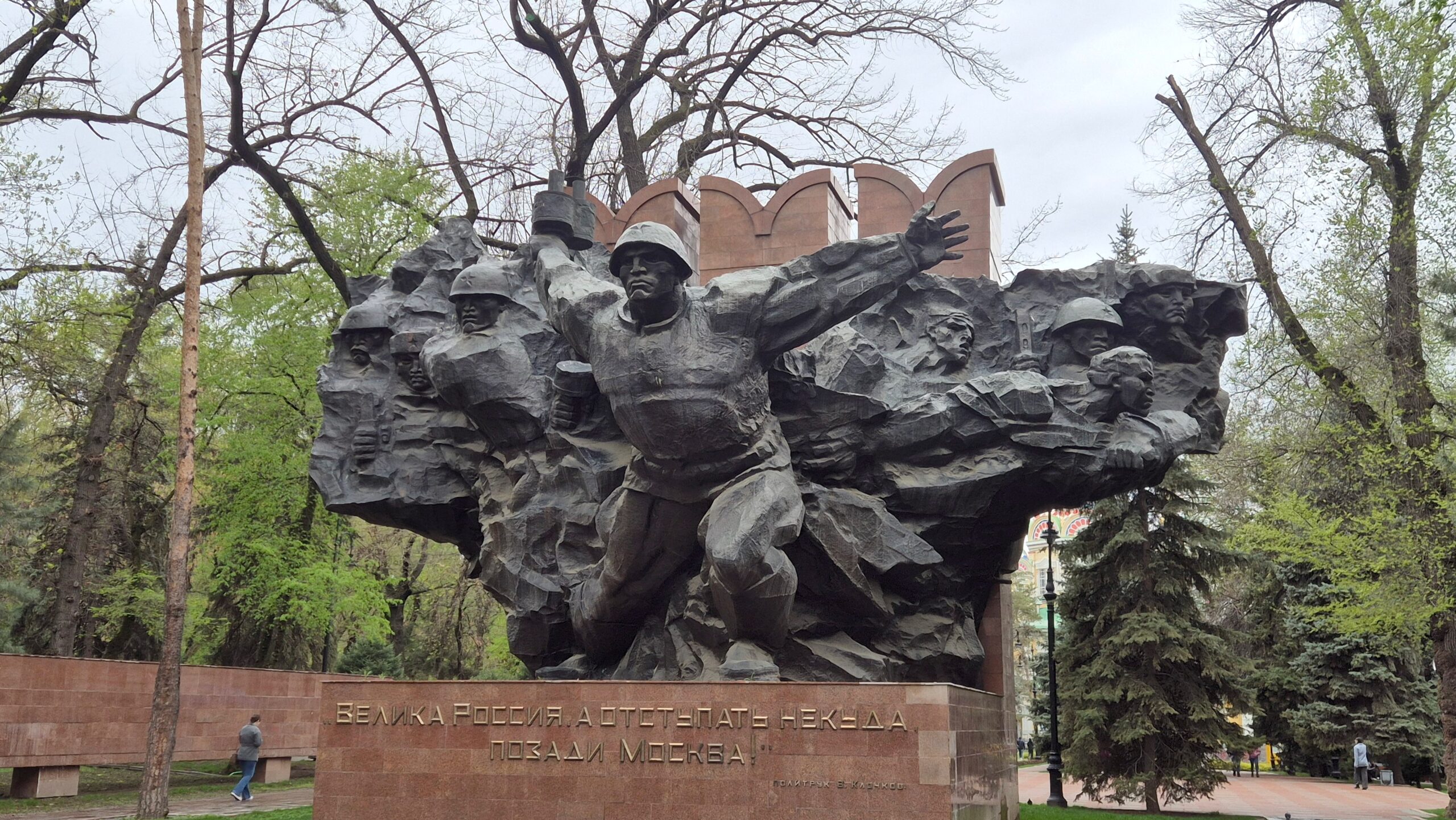
Across from this and a dominating Soviet-era building for the military are dramatic memorial sculptures and an eternal flame honoring the small cadre of Kazakhs that defended Moscow from the German attack of The Great Patriotic War (as they call World War II). We saw in the Almaty historical museum how proud Kazakhs are of their brave resistance to the Nazis.
Continuing within the park, past a fir-lined walkway of trees planted by various world leaders to honor the Guardsmen, one arrives at another section of broad lanes where still stands the Russian Orthodox Ascension Church.
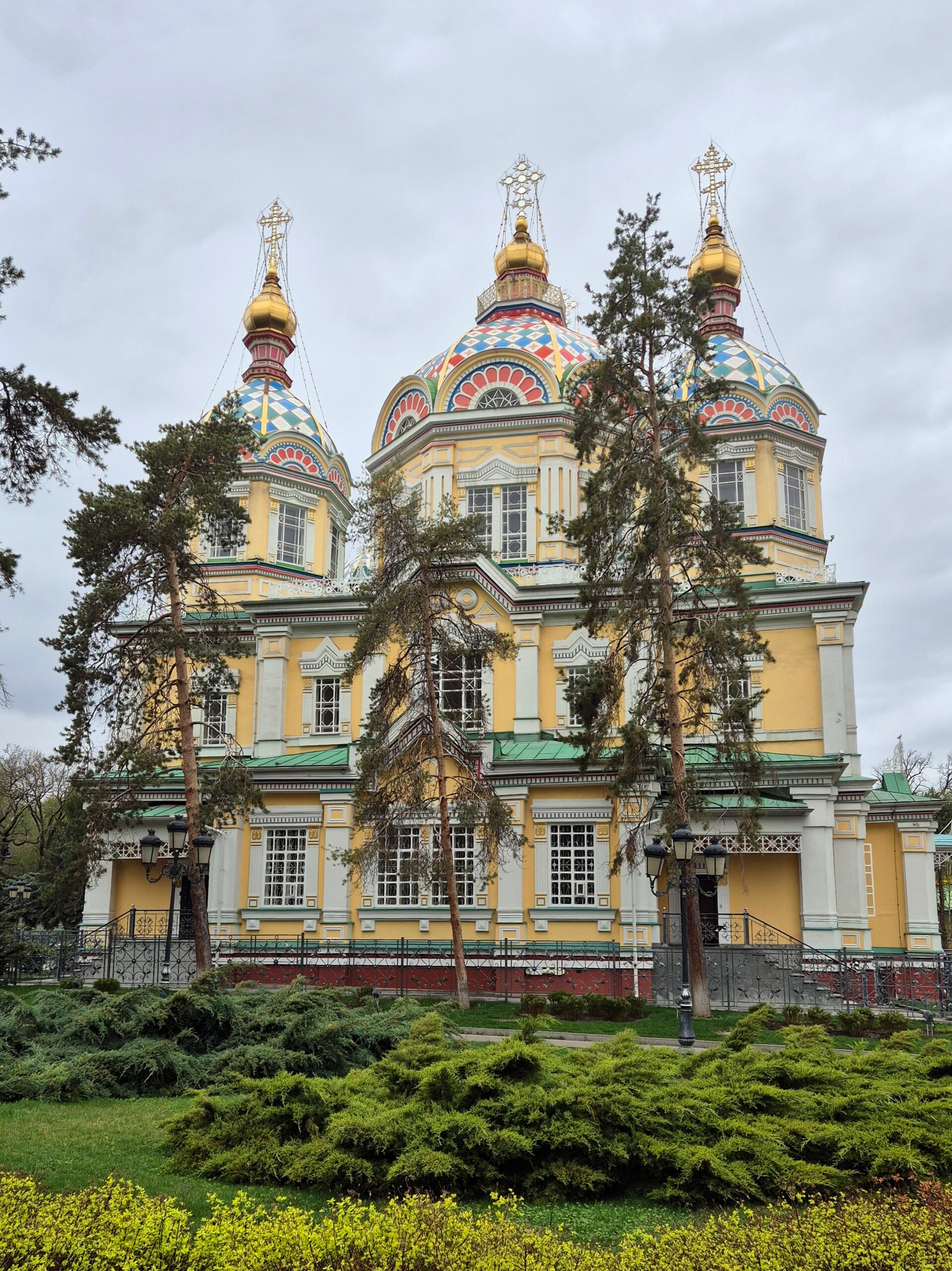
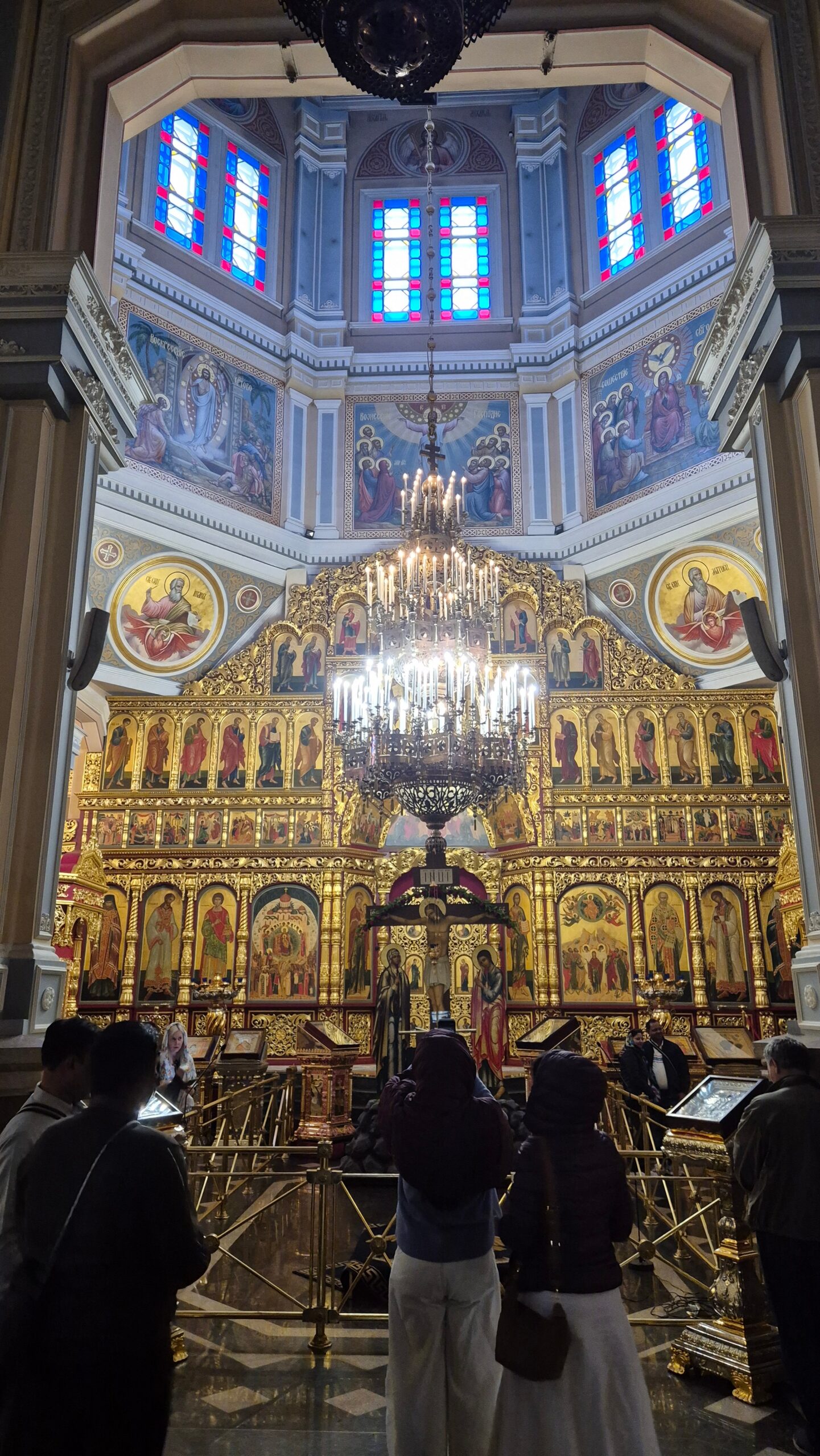
Built under Tsarist rule, this wholly wooden structure (with no nails) us the second tallest wooden church in the world. It survived the devastating 1911 earthquake here, as well as the official USSR policy against religious practice by serving as offices for public organizations.
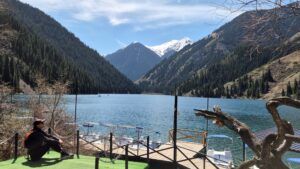
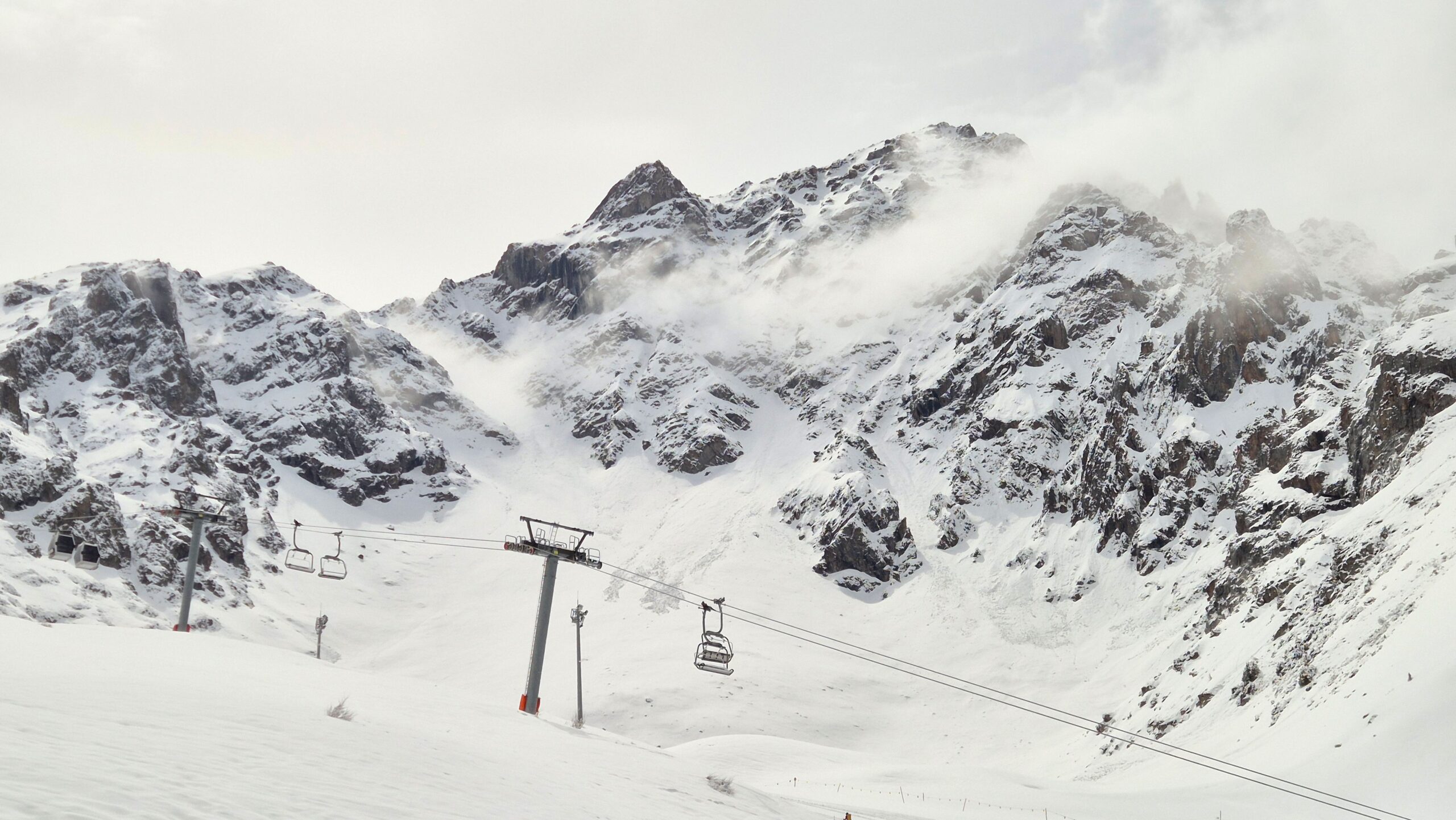
Panfilov Park is near the center of two informal divisions of Almaty, the wealthier upper town which gently slopes southward to the neighboring Shymalov Mountains and the flatlands of the lower town as they spread into the plains of the steppes. Almaty can reach into the 40s C (110s F) so any gain in altitude helps. People flock to Shymalov in the summer for relief, and in the winter can ski the mountain just a half hour from town.
That informal divide of the town resembles the broader economic one. Though its resources have made Kazakhs a wealthy society overall, a wide divide remains between the well-off, who can pay for expensive private education, for example, and the rest. Yet, with free education and healthcare, even lower earners have a good foundation.
In the past, the proximity to the mountains was a very mixed blessing. The city has been earthquake prone, making the survival of those old wooden structures all the more remarkable. Worse, the city had frequently been overrun by massive mudslides as the mountain lakes overflowed, sweeping debris through the streets. Now, new dams and barriers, emplaced along the Shymalov mountainside, protect the city.
If we returned to stay longer in Kazakhstan, we would happily settle into Almaty – enjoying the pleasurable city, the plains nearby, and the mountains – mudslides and earthquakes bedamned.
(To enlarge any picture above, click on it. Also, for more pictures from the five Stans of Central Asia, CLICK HERE to view the slideshow at the end of the itinerary page.)