
In brief: We tried four touristy activities in Turkmenistan as a kind of cultural filler. Some were enjoyable, but we found mundane things just as revealing.
Outside of the white monuments of the white city of Ashgabat (read the post) and somewhat interesting UNESCO sites and museums, Turkmenistan struggles for ways to attract visitors – assuming it actually wants more. It maintains challenging policies, such as an expensive visa that requires a sponsor within the country and a manipulated exchange rate.
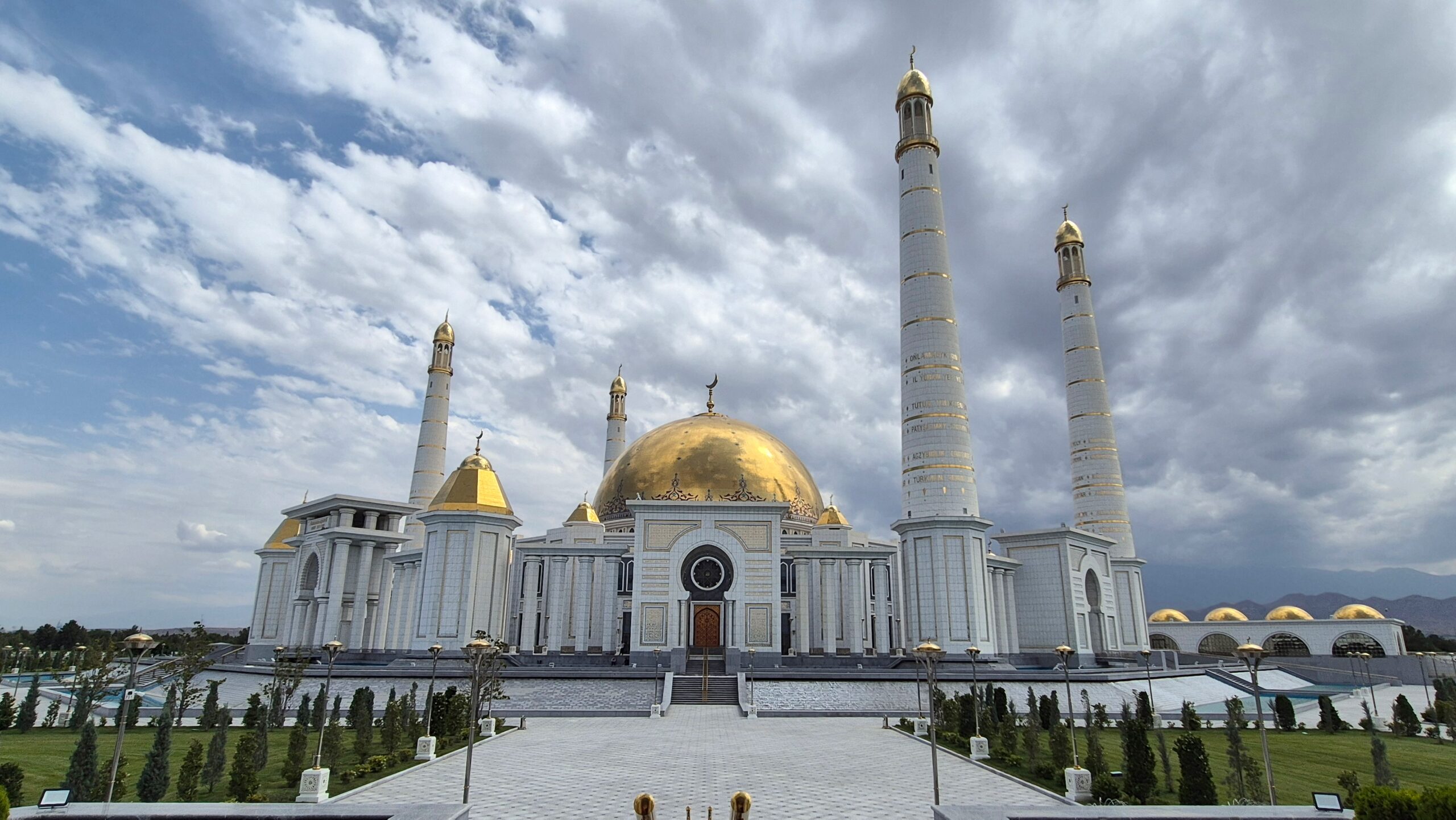
There are a few splendid natural areas. One, in the west near the Caspian is similar to a vast region in Kazakhstan called Mangystau. And there is a mountainous bit to the east. Few tourists visit these anyway.
So, an itinerary in Turkmenistan typically offers four cultural experiences, two of which are unique and two of which are common but eye-opening.
Holes
You would think, based on the local hype, that Darvaza Crater, the so-called “Gates of Hell,” would be some ancient fiery pit to which the Zoroastrian priests prayed. Or a natural emergence of gas long ago, as in Azerbaijan and other locales.
Not quite. Not only does the hole – and its two kindred holes nearby of either mud or water– date from just 1971. Not only was the crater man-made by engineers who erred in excavating it as a source of natural gas. But it’s now just a scattered set of flareups amid the ashy center of the crater – perhaps just a quarter of the spectacle of the past. And it only takes a couple of minutes to walk around.
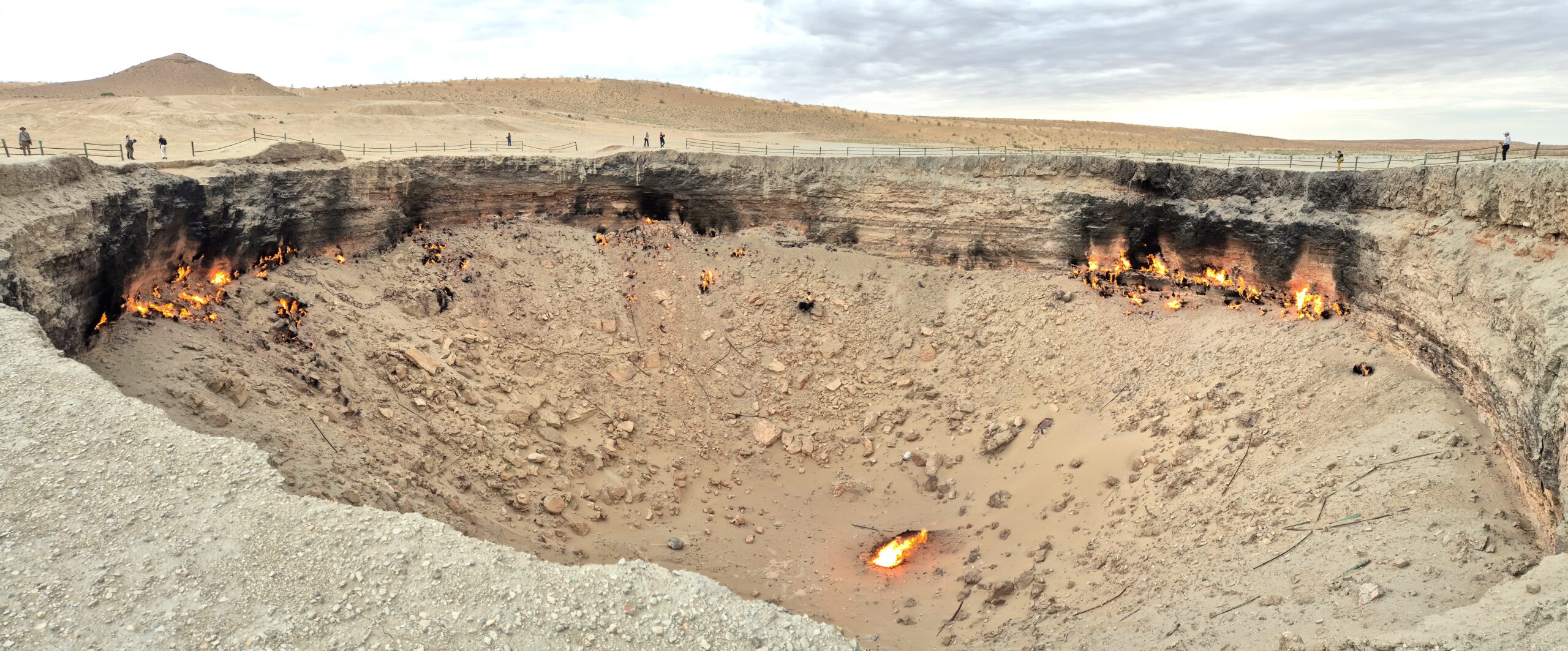
And the government is trying to quench those fires to prevent more methane pollution.
Sure, it glows in the dark and has a story to tell. But it’s hardly worth spending two days on wretched roads and an overnight at low quality yurt camps. Here’s a few minute sample of the four hour ride back to Ashgabat…
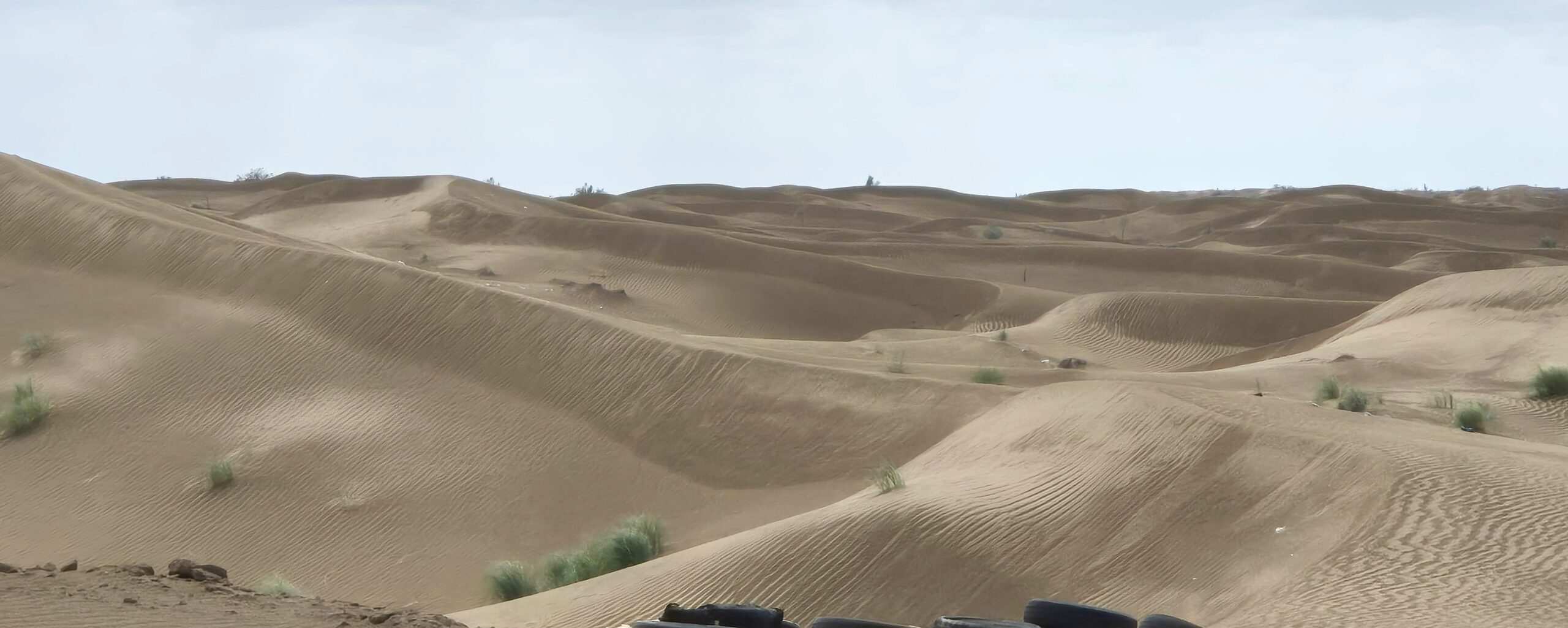
The desert can be interesting in itself, but didn’t seem to offer the beauty of other rich deserts we have seen.
Word is that a new road is coming, but what will one see when the methane flow is stopped, other than an historic glow?
Horses
The people here are very proud of their horses, a unique breed dating back 3000 years called Akhal-Teke. The fewer than 7000 of the breed are noted for speed, endurance, and intelligence. Their image appears in sculptures, adorns many (white) buildings in Ashgabat, and graces some of the currency.
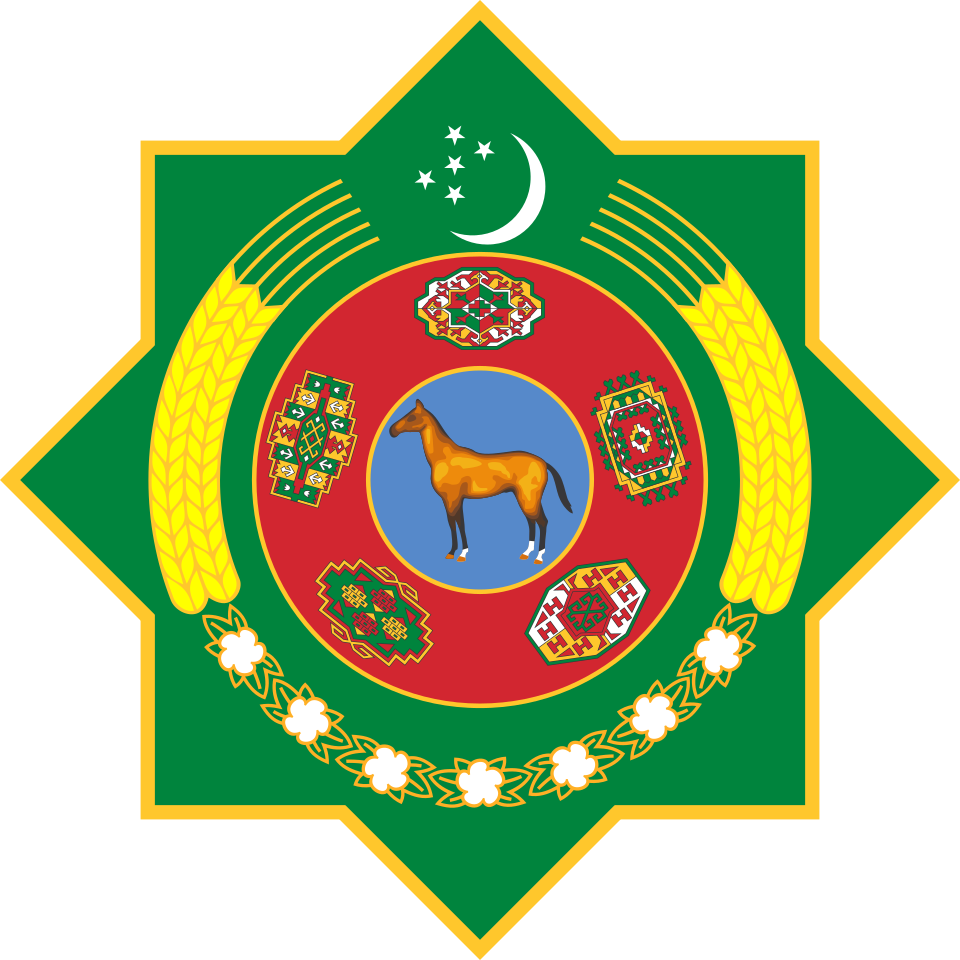
Also, in the image of the long-time leader’s own horse Yanadag, this breed appears in the center of the national emblem along with the ubiquitous eight-pointed star of peace and plenty.
They are beautiful animals, with sleek, nearly metallic coats that can seem transparent. But the typical horse encounter is more snack and tea than horse. Groups of tourists troupe in, spend a half hour or so snacking, and then perhaps a half-hour watching a horse parade around. On the plus side, they are able to touch that horse to share in the traditional good fortune that the breed is said to bring.
We preferred to wander the stables and barn to see a number of these horses, including a unusual white one amid the auburn coats. The white even scared us a bit with a kind of devilish blue iris in its white eye.
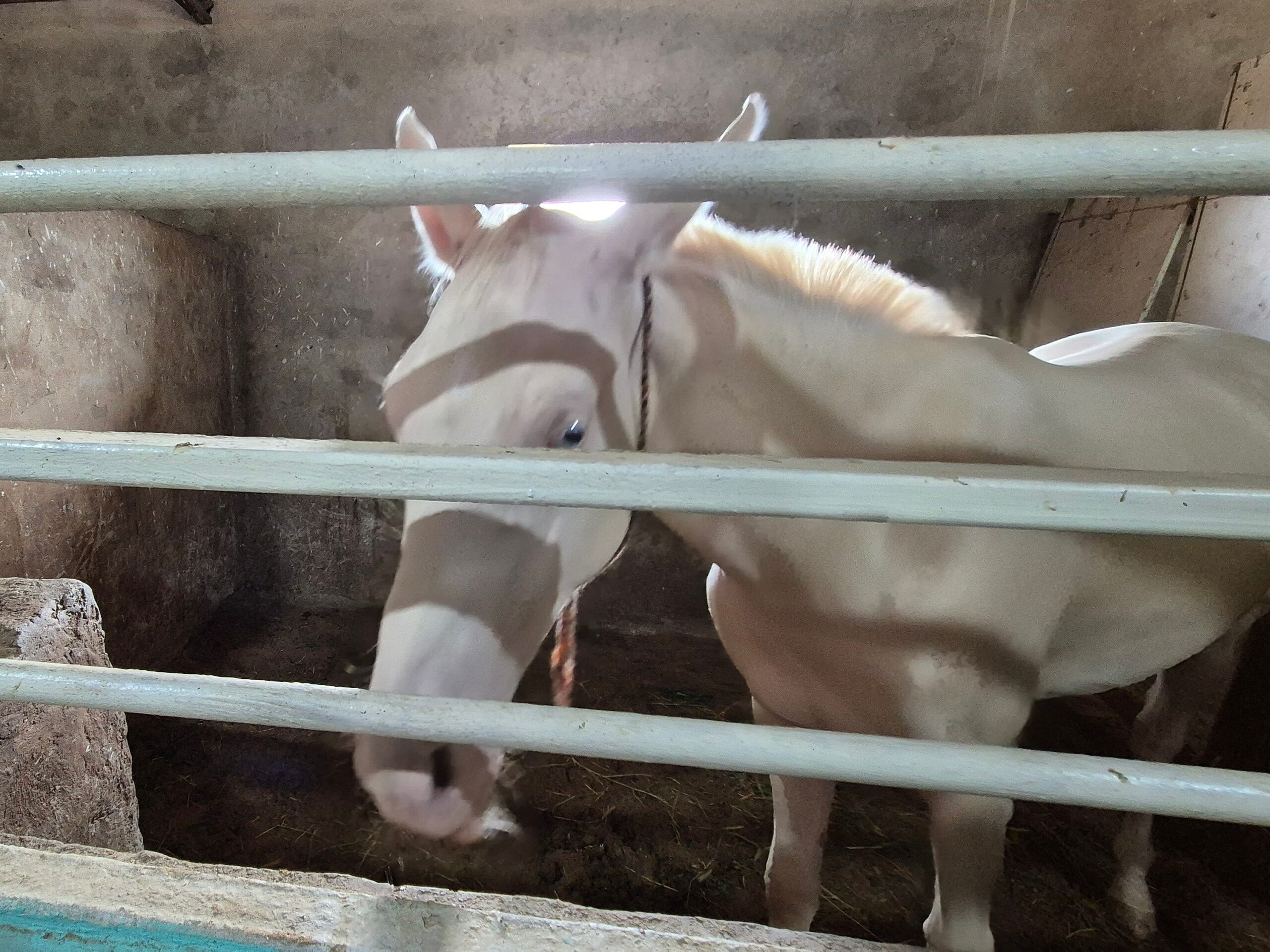
At least he would fit well into Ashgabat, the very white city.
Cooking with family
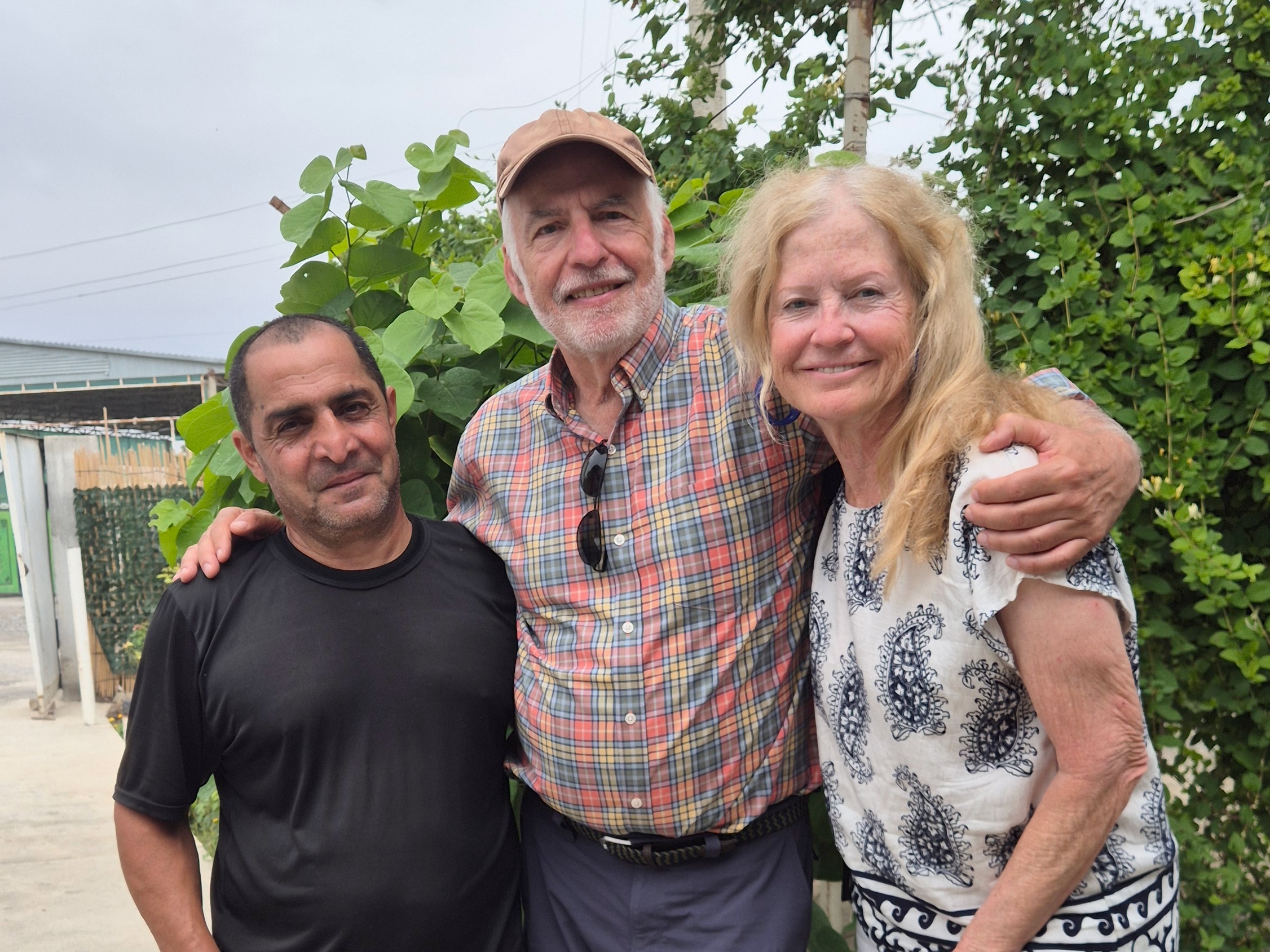
A more intimate and personable experience is the opportunity to cook with a local family. We have had the chance elsewhere to learn some cooking skills while preparing local specialties. Here, the experience offered by a farmer and his daughter-in-law was more like being a sous-chef in a limited prep.
But it was fun to knead and cut dough for preparing crispy pishme, the essence of hospitality in a local household, and then frying the pieces in a deep bowl of hot oil. Then cutting up very thin strips of noodles to add to a soup, which was actually made in the backroom, not with us.
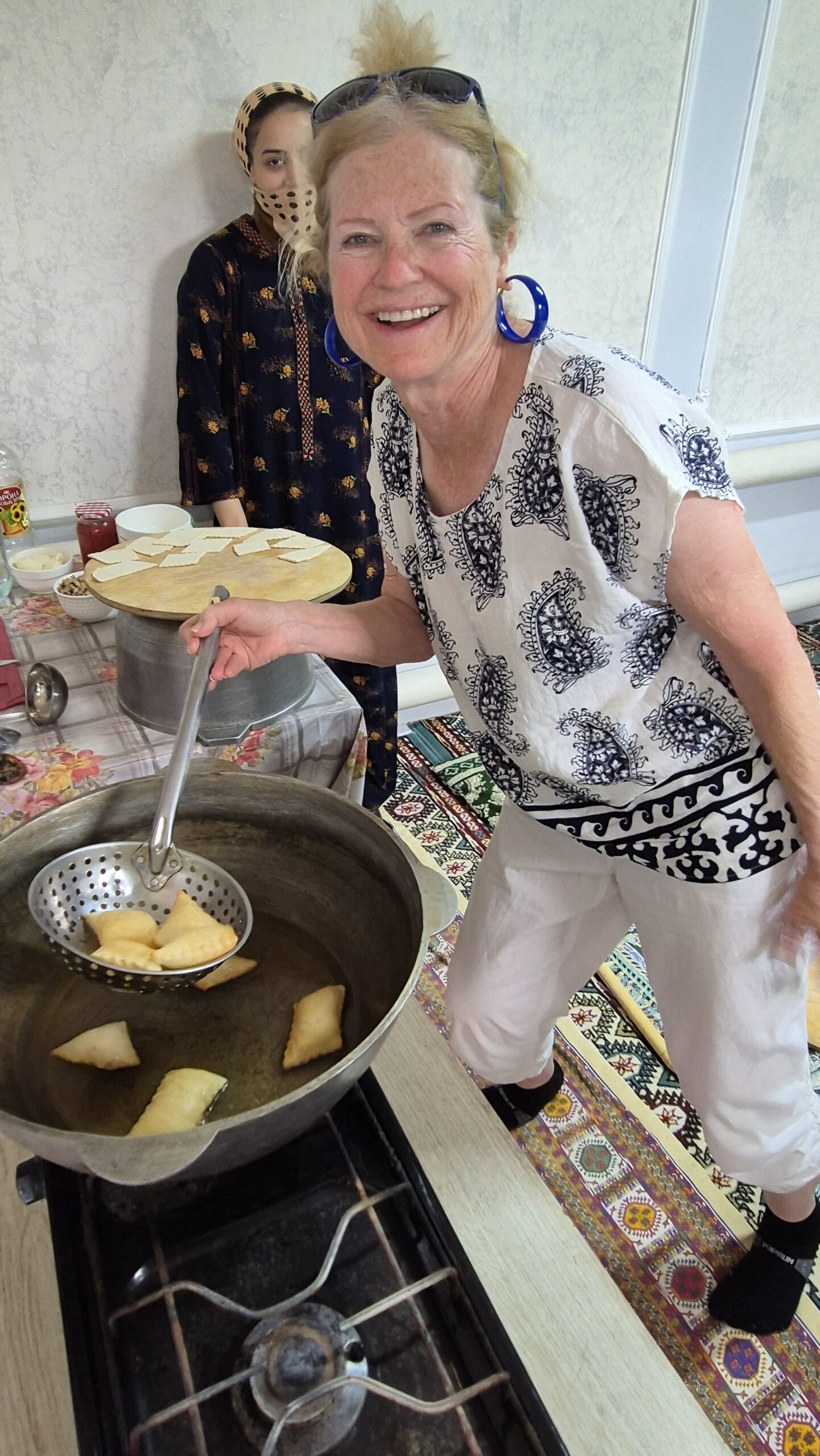
Perhaps more interesting were the glimpses of Turkmen culture. The daughter-in-law wore a kerchief over her mouth, not for hygienic purposes, but as a sign of deference to her father-in-law to whom she was not supposed to speak. Like most women here (and in several other countries of Central Asia), she went to school through 8th grade, but then was expected to become a stay-at-home wife (and mother to three to six children). We frequently heard about wives who were “not very educated” but did what the culture asked of them domestically.
On the other hand, the farmer’s 12-year-old daughter (like many young people now, quite overweight) visited with us after the cooking in order to demonstrate her English capability. She planned to be a musician and writer in the future. We’d love to know how that will go.
Music and Dance
Another tourist industry across the globe is the presentation of folk dances and music. Sometimes the performances are akin to those given at local gatherings for religious or cultural celebrations. But our ears hear a very different kind of music in shops and for prerecorded music chosen in cars. Western rock and rap in English contend for local appeal with pop songs and more rap in the native language.
We heard some good music in Kyrgyzstan from a family of musicians (see that video), and here in Turkmenistan just happened to catch a showy display of dancing with flamboyant accompaniment. The performance might have been historically correct but seemed a lot more like a Broadway version of the traditional material in order to delight the tourists.
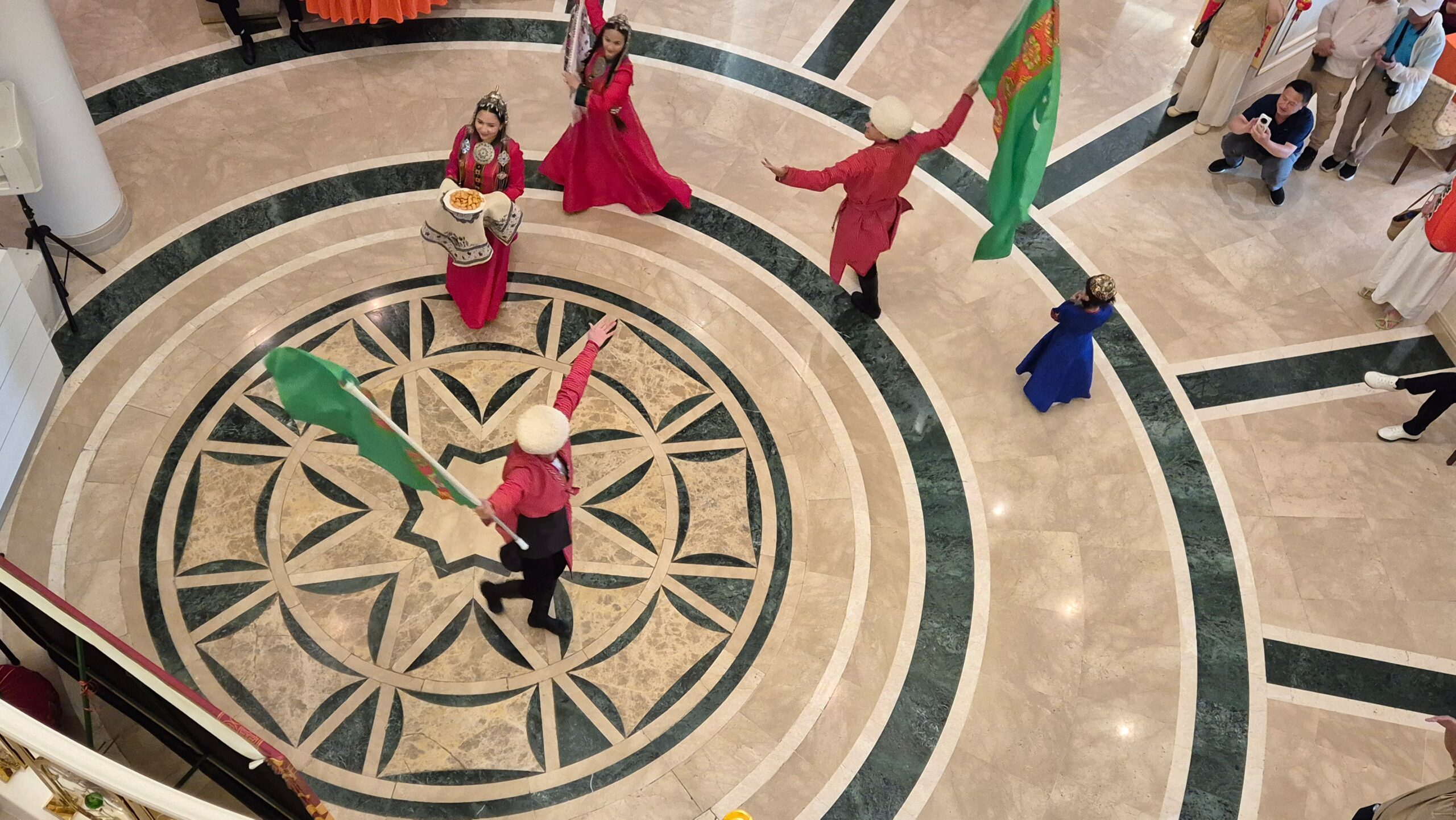
There is certainly some entertainment and cultural value to all this, but we couldn’t help thinking that most of the tourist offerings in Turkmenistan are just filler for the main reasons people want to visit the country. We learned even more from its mundane locales: the open air markets like the Russian bazaar, a languishing Ferris wheel, a grocery and alcohol shop, a regional library, and walking the streets.
(To enlarge any picture above, click on it. Also, for more pictures from the five Stans of Central Asia, CLICK HERE to view the slideshow at the end of the itinerary page.)