
In brief: “Go to Mangystau,” our Kazakh friend advised. Our first day there more than justified the trip. The second delivered expansive vistas, monumental mounds, and a lot of balls.
Day 2 Northern Mangystau
Click these links to read Part 1 or Part 3, the first and third days of our Mangystau journey.
Our second day dawned in clouds, but the rain of the first day had passed. We spent it driving north past more striated mesas, stopping to hike in and around and up them – and found a valley of stone balls as well. Though the scenery was gorgeous and the day turned sunny, a vicious wind whipped up the cold air.
We began along more dirt roads in the Airakty valley, a huge swath of green grass with sheep, horses and camels – all encircled by both mesas with colorful striations and eroding jagged peaks. Various birds of the steppes kept their music going to catch our attention.
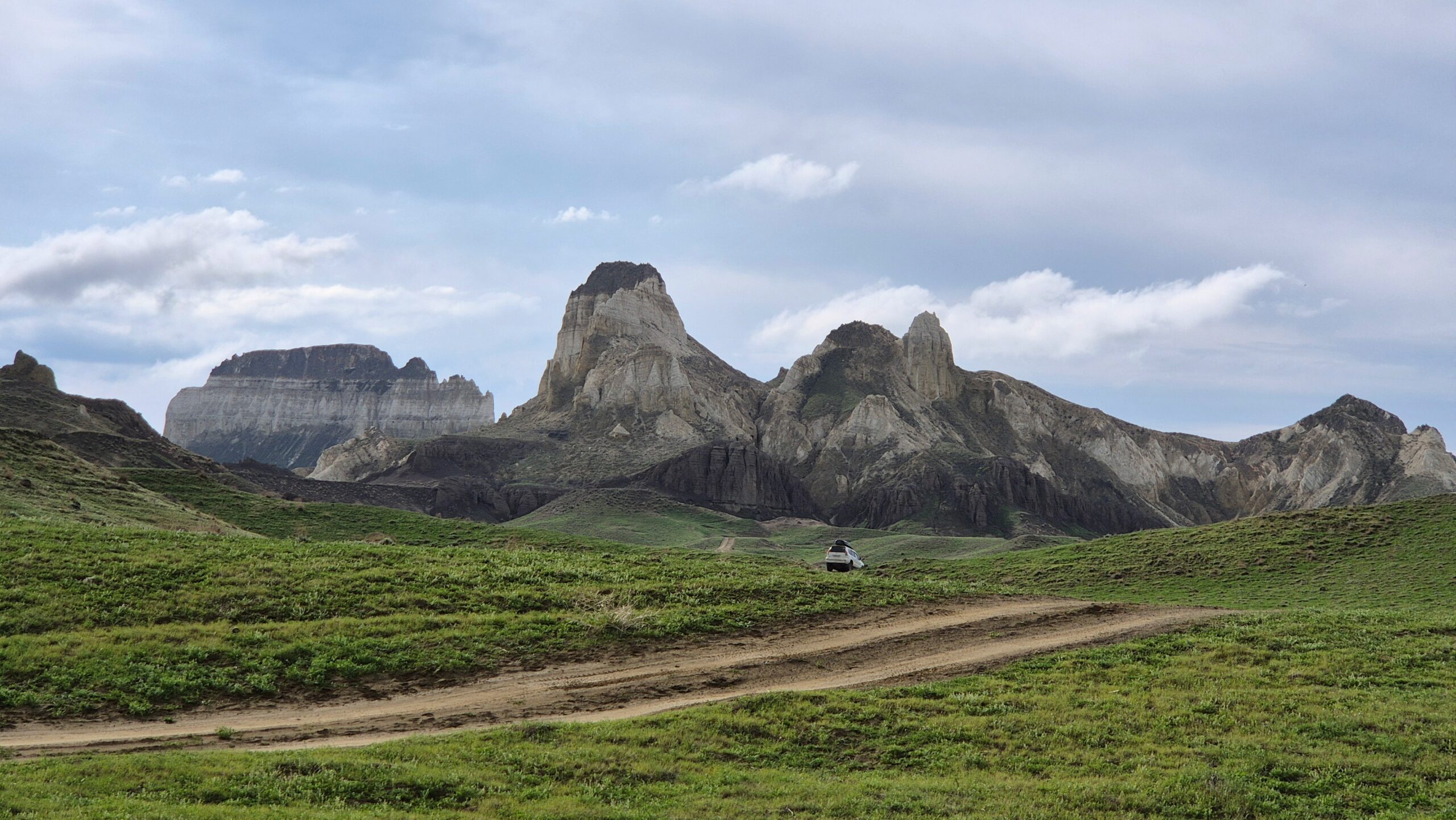
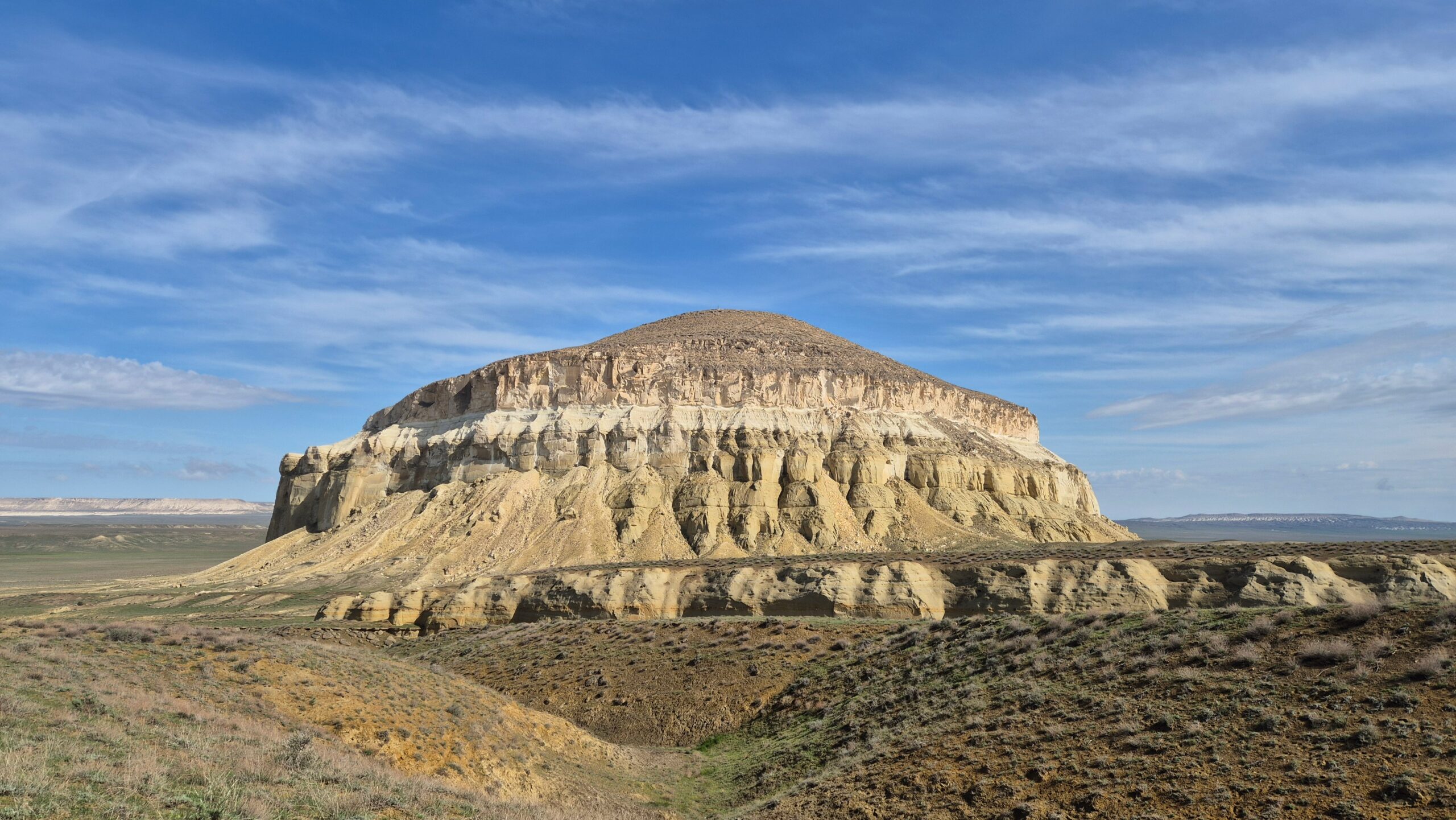
We then passed the famous yurt-shaped formation of Sherkala Mountain, a huge colorful confection adrift in the landscape.
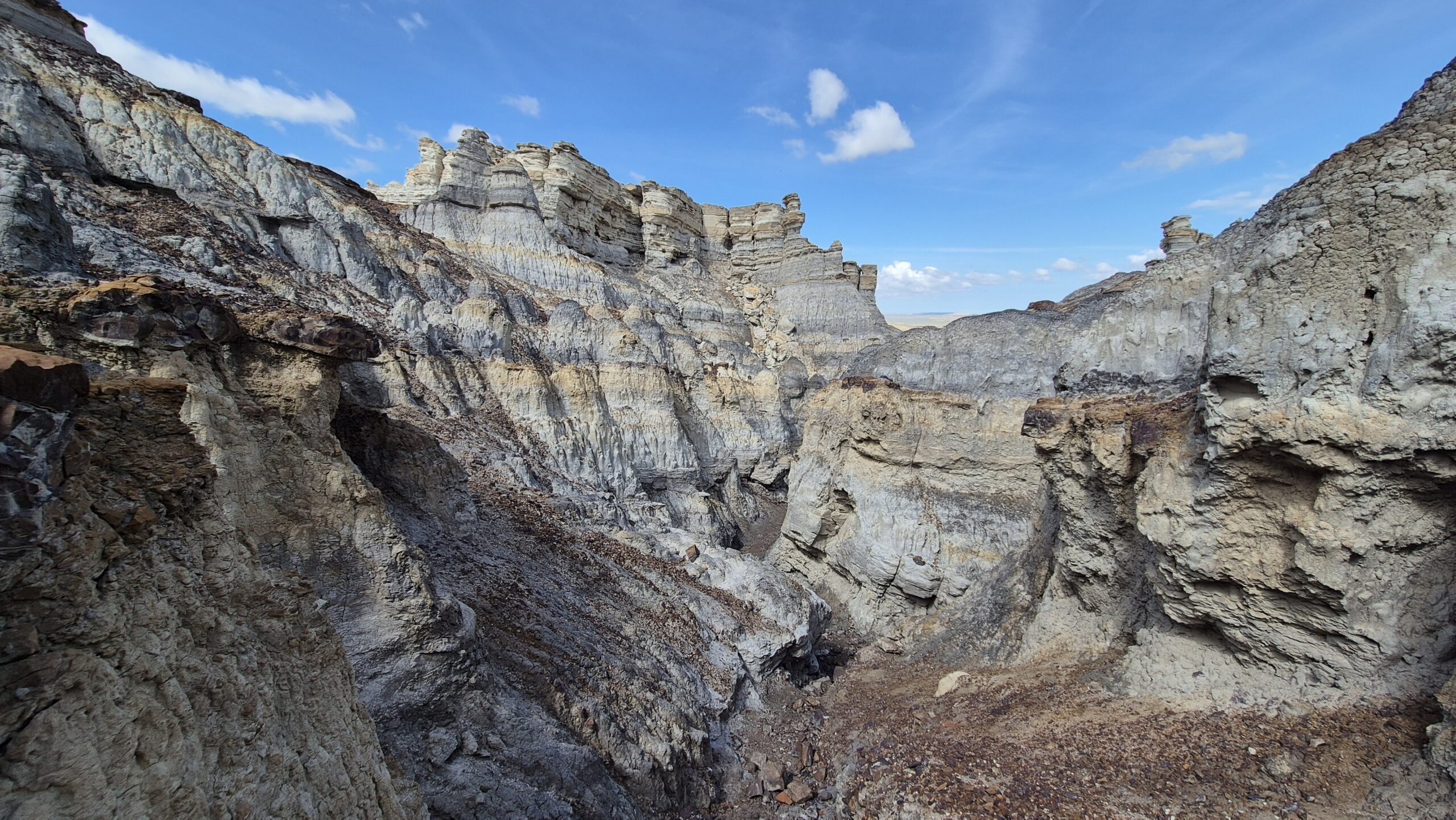
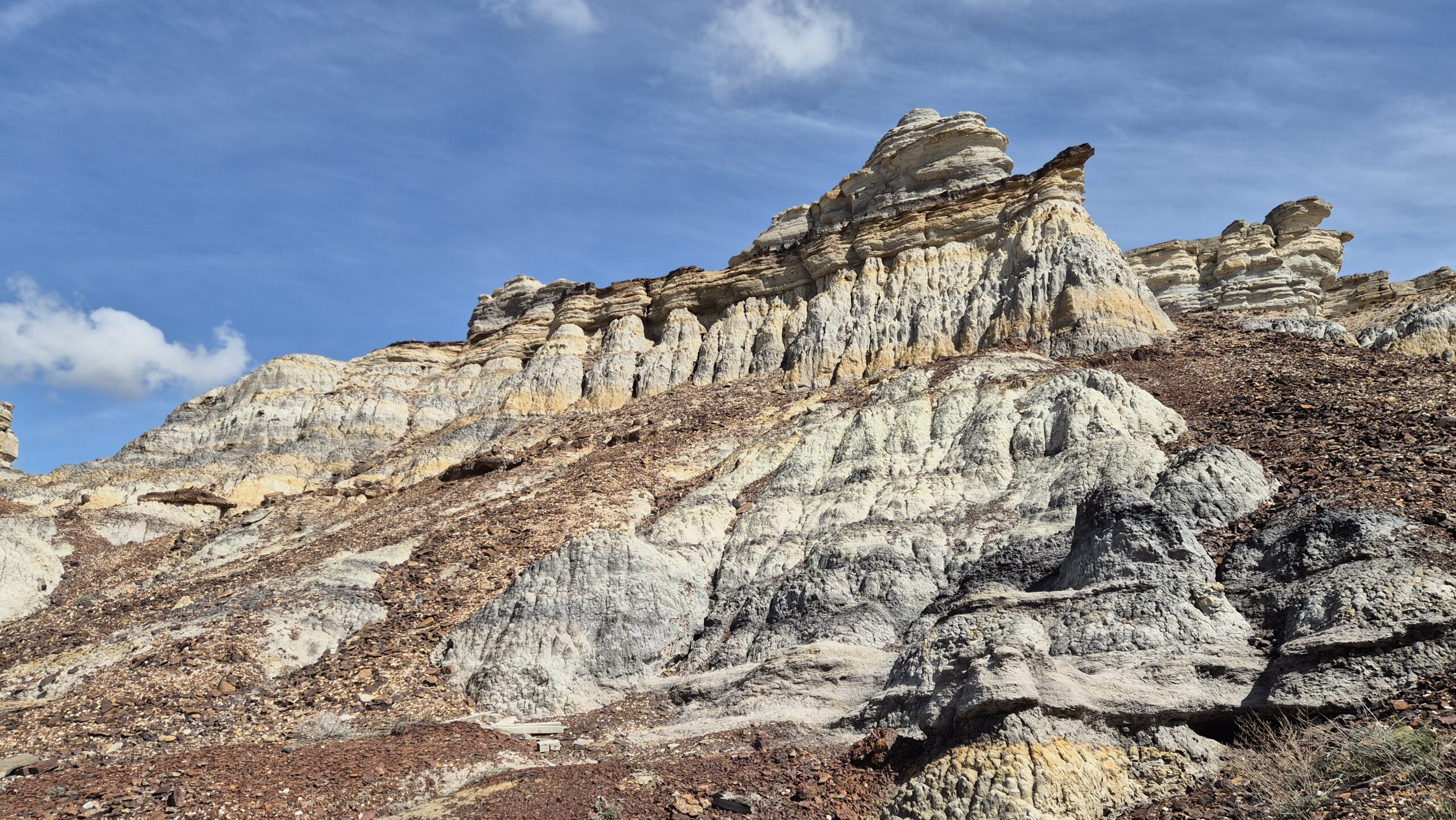
As if that was not enough color, we scrambled to a windy plateau up the narrow canyon of the lonely Kolkala tract. That’s a rugged pile of sandstone, clay, and mineral deposits rising in varied formations all by itself out of the plains of the steppe.
Sheltering in the lee of the canyon, Daniel surprised us again with a lunch of hummus, pan-fried toasts, crisp cucumbers, and tomatoes. He does vegetarian quite well, we noted.
“And now we go to the Valley of the Balls,” he said, as we packed up and headed over more rutted roads.
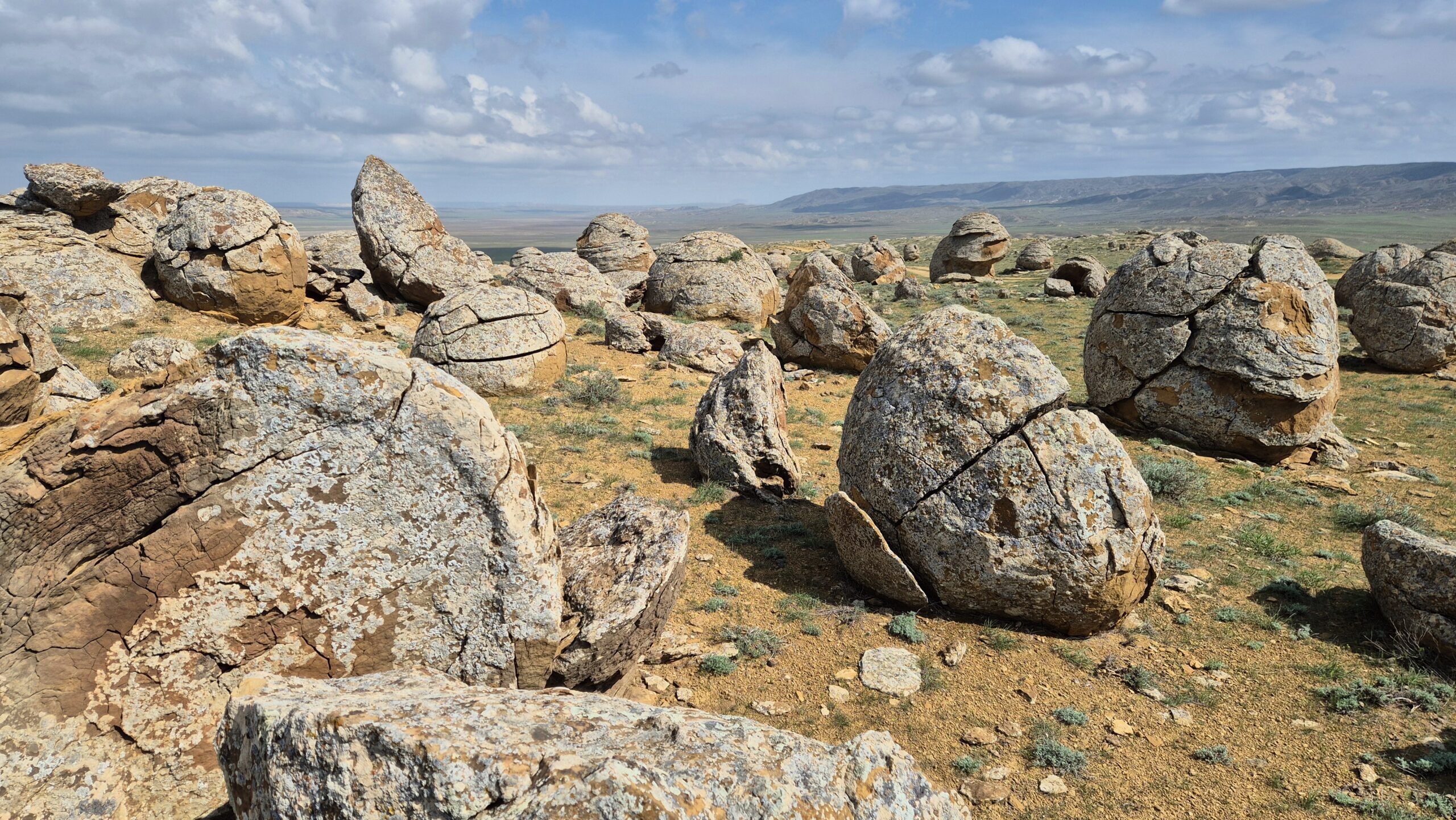
We had seen volcanic balls before, as well as those formed within the ocean. But this vast collection of enormous stone balls, situated at the top of a ridge overlooking a grassy valley, astonished us. It seemed we were among the playthings of giants.
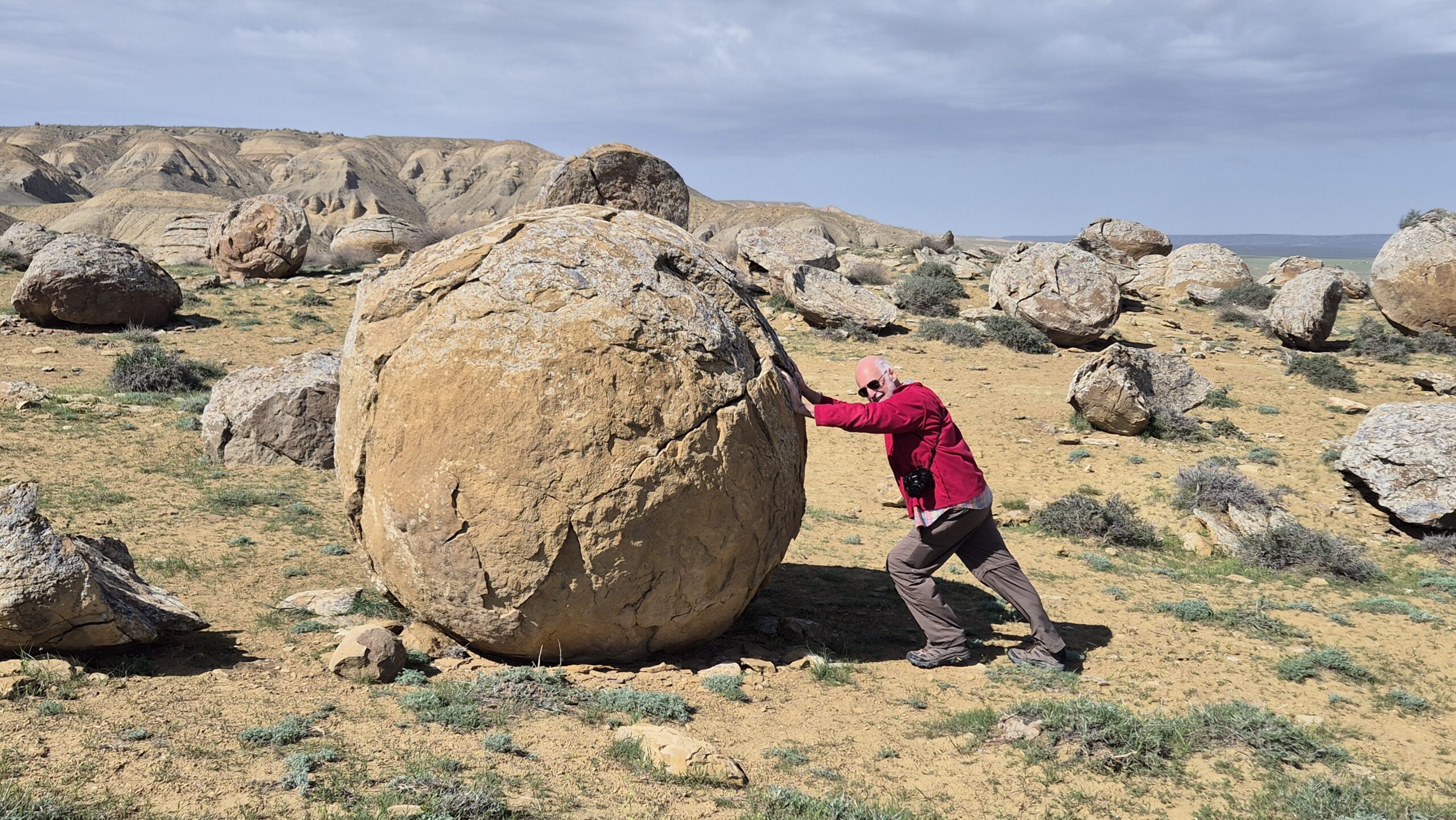
In reality, they formed over millions of years ago when the area was an ocean. A conch shell gradually accreted other mollusks around it, growing larger and larger until the pressure of the ocean and sand fossilized the mass into a ball. As the waters receded, these hardened balls remained in place, some up to 3 or more meters (10 feet) in diameter.
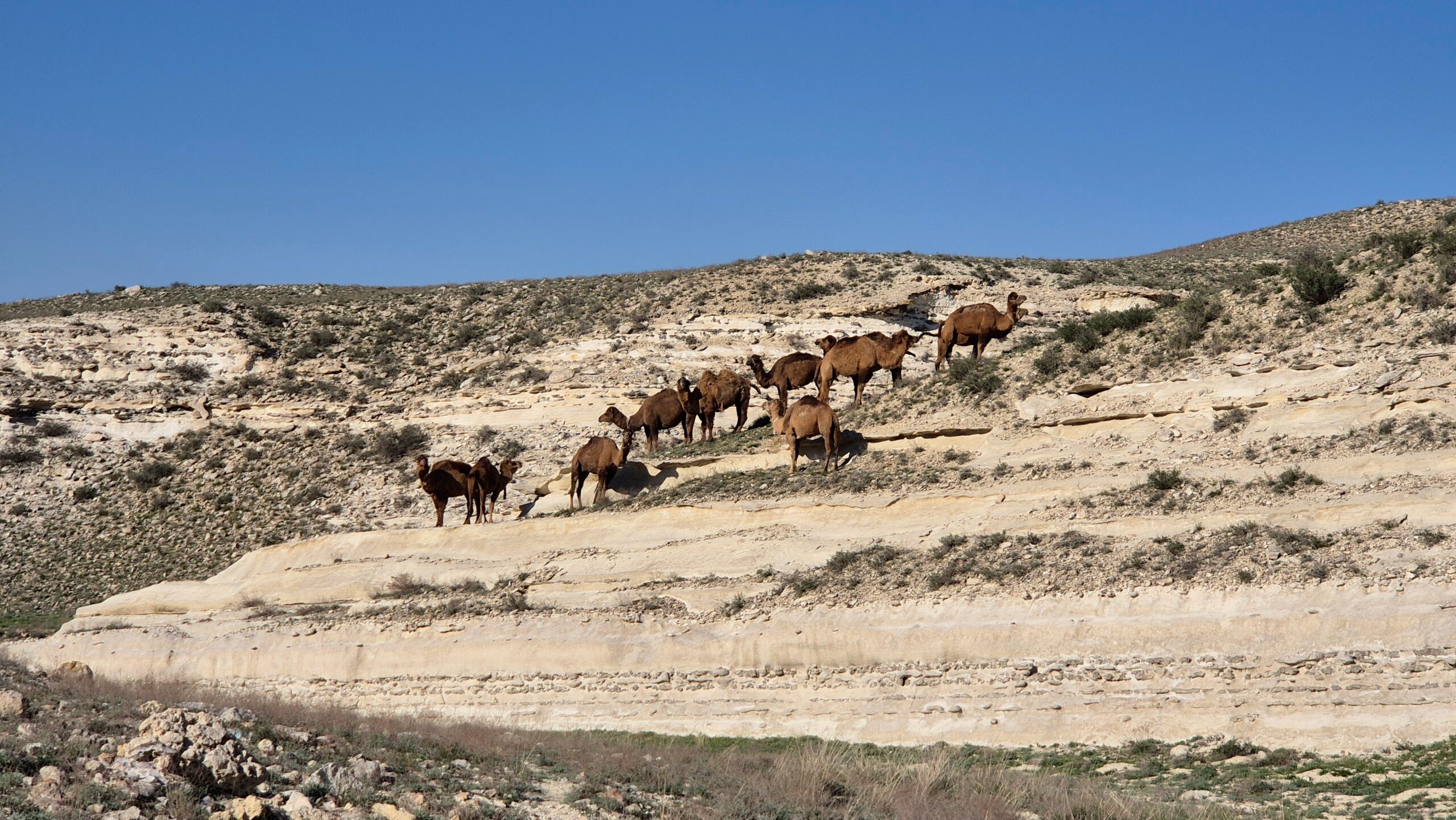
We hoped to end our day camping in Kampamsay Gorge, a narrow canyon of white clay and varied hues near the Caspian. However, the icy wind whipped through the canyon with even greater force here. Tenting would be tough enough and cooking almost impossible. As we left, mountain climbing camels seemed unfazed by the conditions.
Luckily again, the nearby visitor center – with a few large rooms in a chalet-style building – was open, though not quite ready for the prime season yet. Our room offered four single beds and lots of space. Only one other couple took advantage of the place. They were Italians from the Dolomites, spending 10 days in Mangystau alone, and a pleasure to converse with.
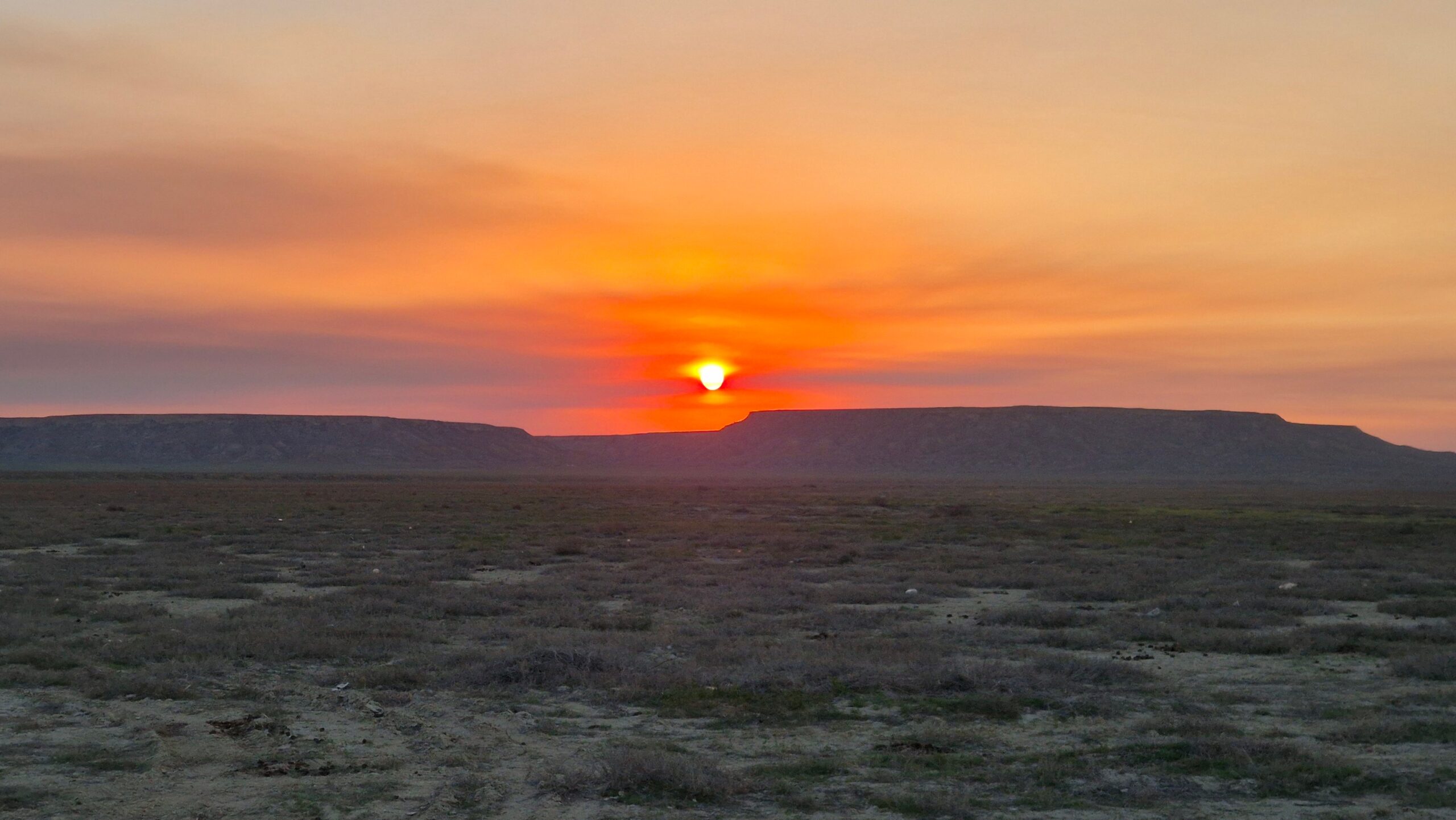
For dinner, we took advantage of a sheltered BBQ nook outside the visitor center. Daniel prepared a hearty soup of lentils and French mushroom stock, to which we added our extras…tofu, adjika, and soy sauce. It was just right on a cold night, as the sun slowly lit up the sky behind the low-lying hills in the distance.
Before bed, we stepped out into the surrounding dark to see the stars, dense and astoundingly bright, with no distracting moonlight. It was about as good as one could want. Then a cold shower and off to sleep.
(To enlarge any picture above, click on it. Also, for more pictures from the five Stans of Central Asia, CLICK HERE to view the slideshow at the end of the itinerary page.)