In brief: The ostentatious capital of Turkmenistan is an eerie place, most of which is colored white and devoid of people.
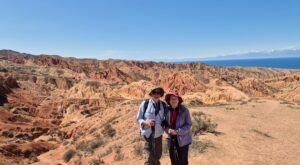
Though Turkmenistan is largely desert, it shares the eastern shore of the Caspian Sea with Kazakhstan and Iran. That region in Turkmenistan contains spectacular terrain similar to the Mangystau region of Kazakhstan (read about our visit there), with dazzling cliffs of chalky white and mineral-rich seams.
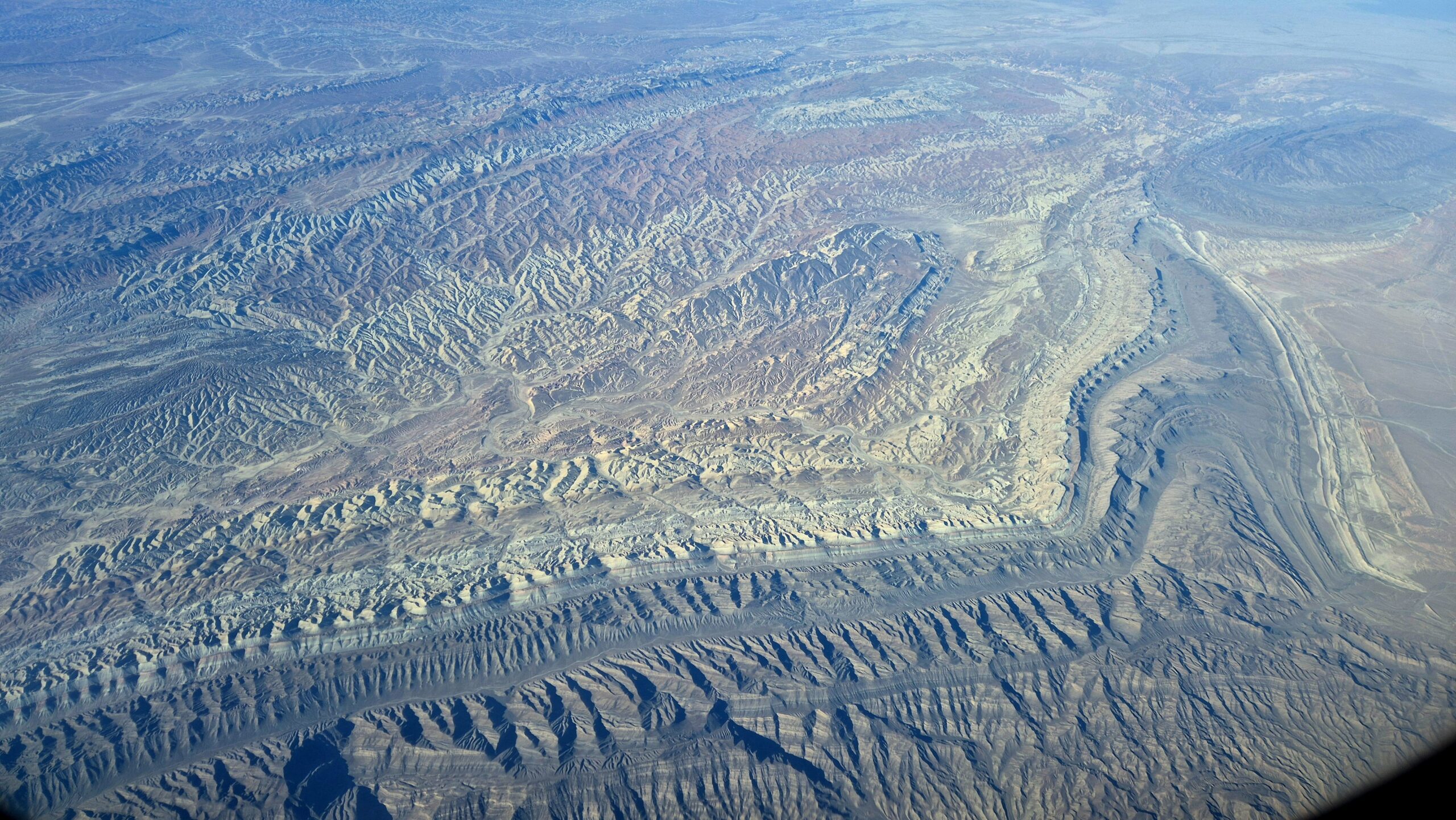
More importantly for its economy, Turkmenistan also profits from the very rich bounty of oil and gas harvested around the Sea as do Kazakhstan to the north and Iran to the south. The border with Iran is only 50 kilometers from the capital city of Ashgabat in the Kopet Dagh Mountains.
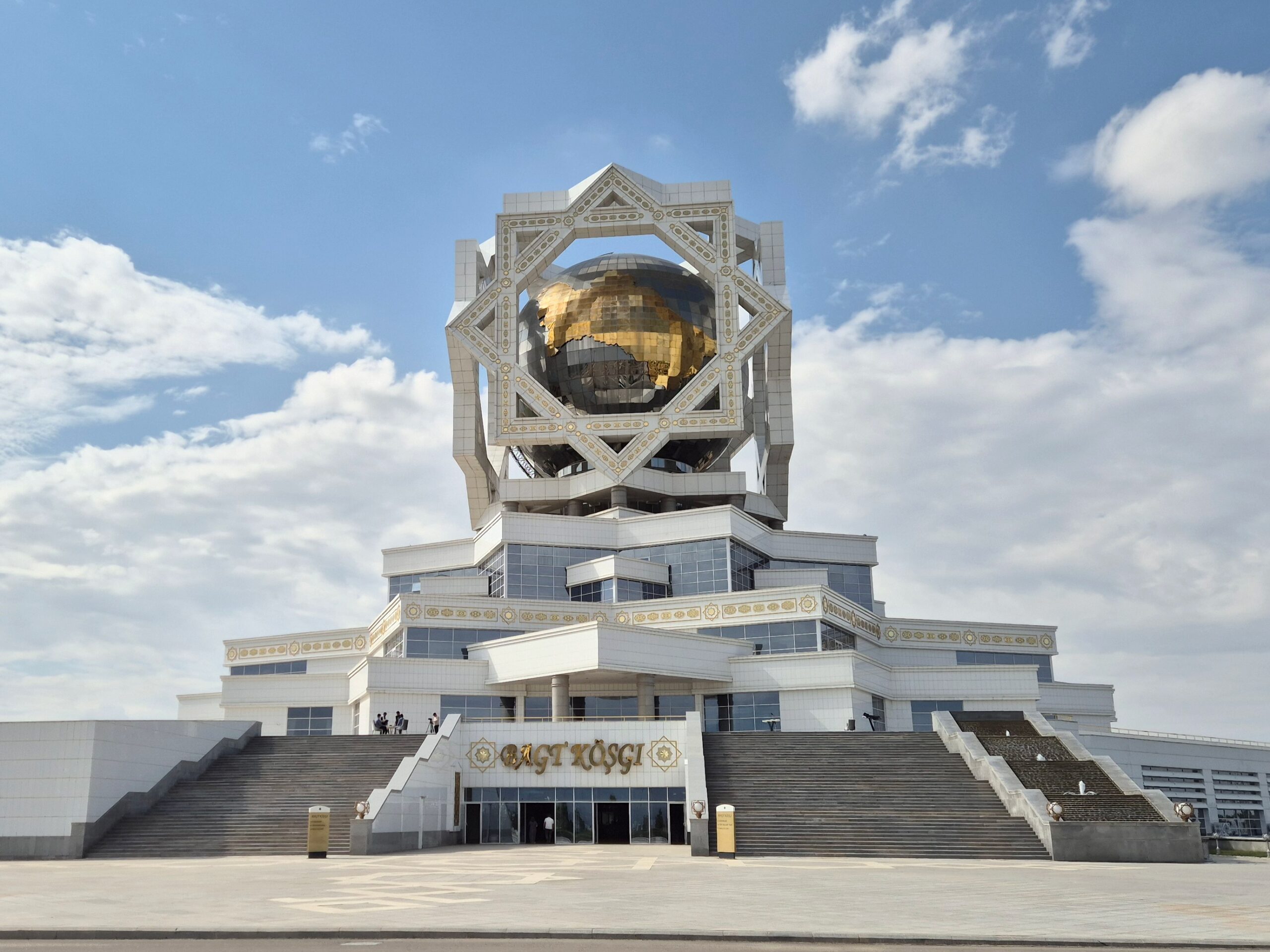
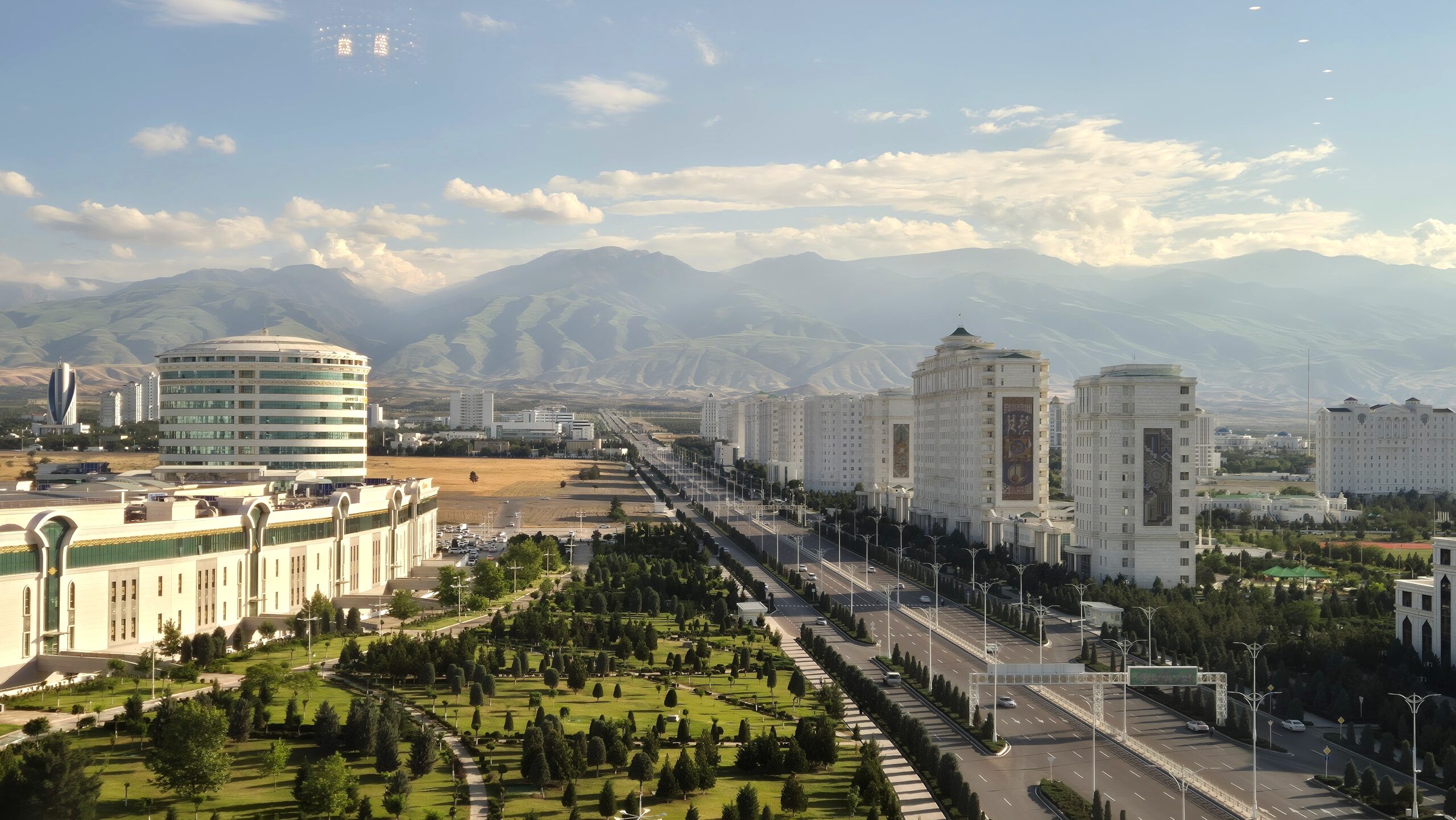
Perhaps partly inspired by the natural white of the west, the leaders of Turkmenistan have built a capital in Ashgabat they proudly call the White City. The name itself means “city of devotion/love.” But, to us, it seemed more like a Hollywood backlot. Or Oz itself.
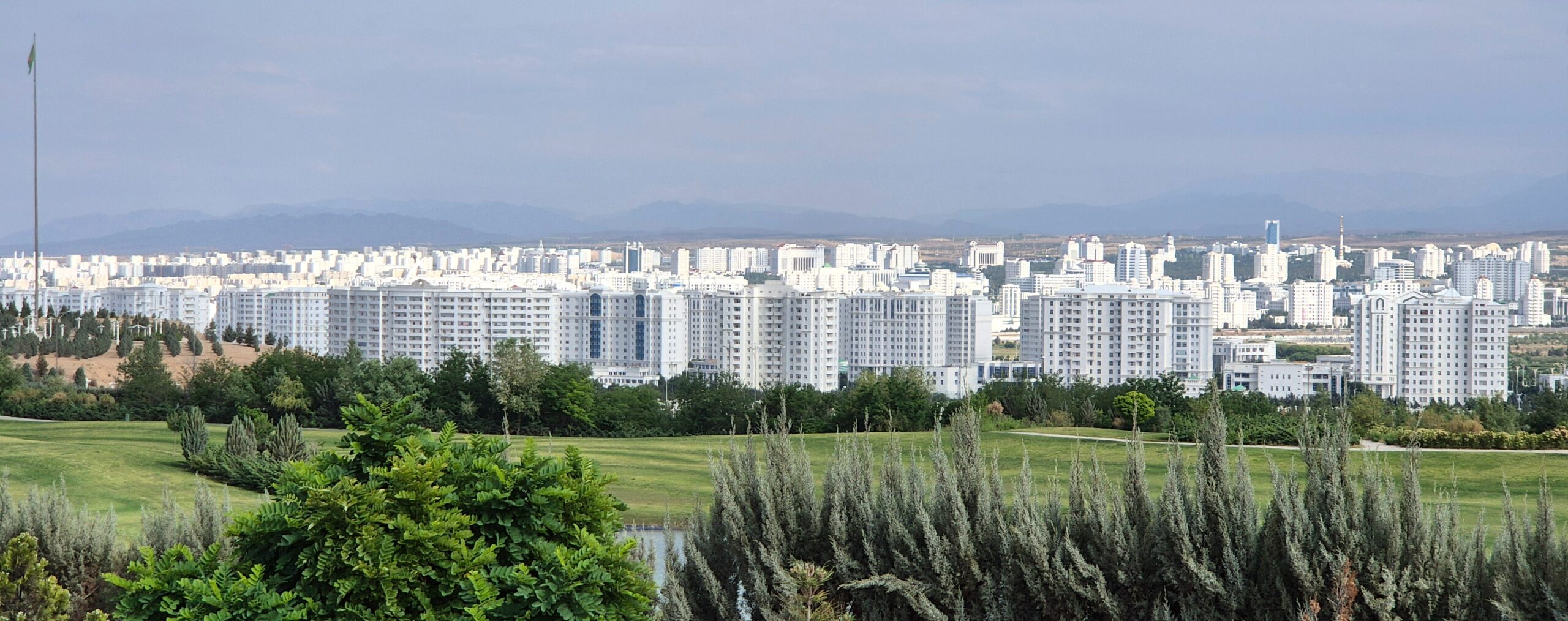
The surfaces of all the buildings are formed of white marble or other stone. During the day, gleaming brightly in the sun, one can barely distinguish one from another except for those few with unique stylistic features or gold trim.
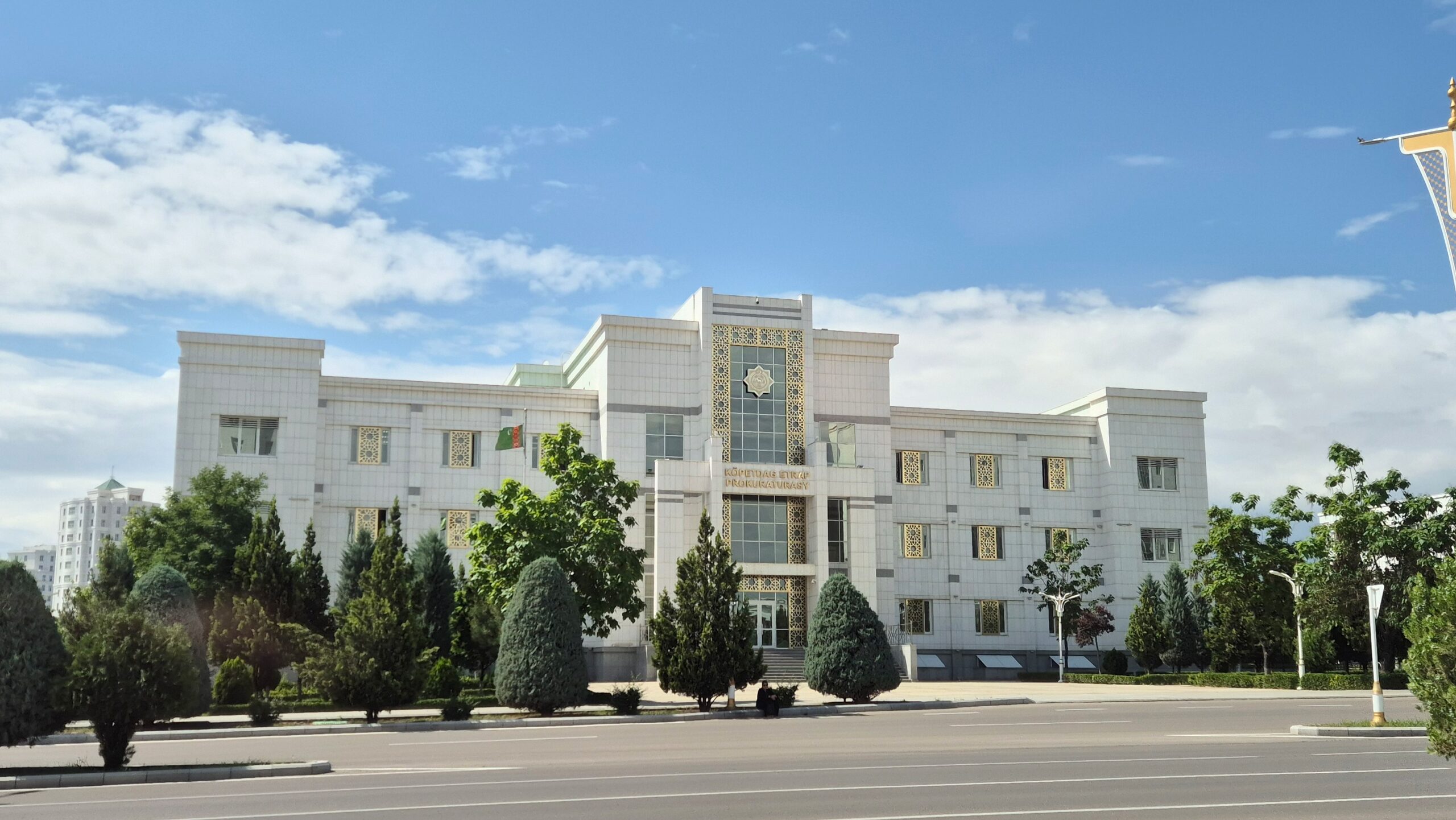
This is especially true of the numberless blocks of apparently identical apartment buildings; to us, every street looked the same.
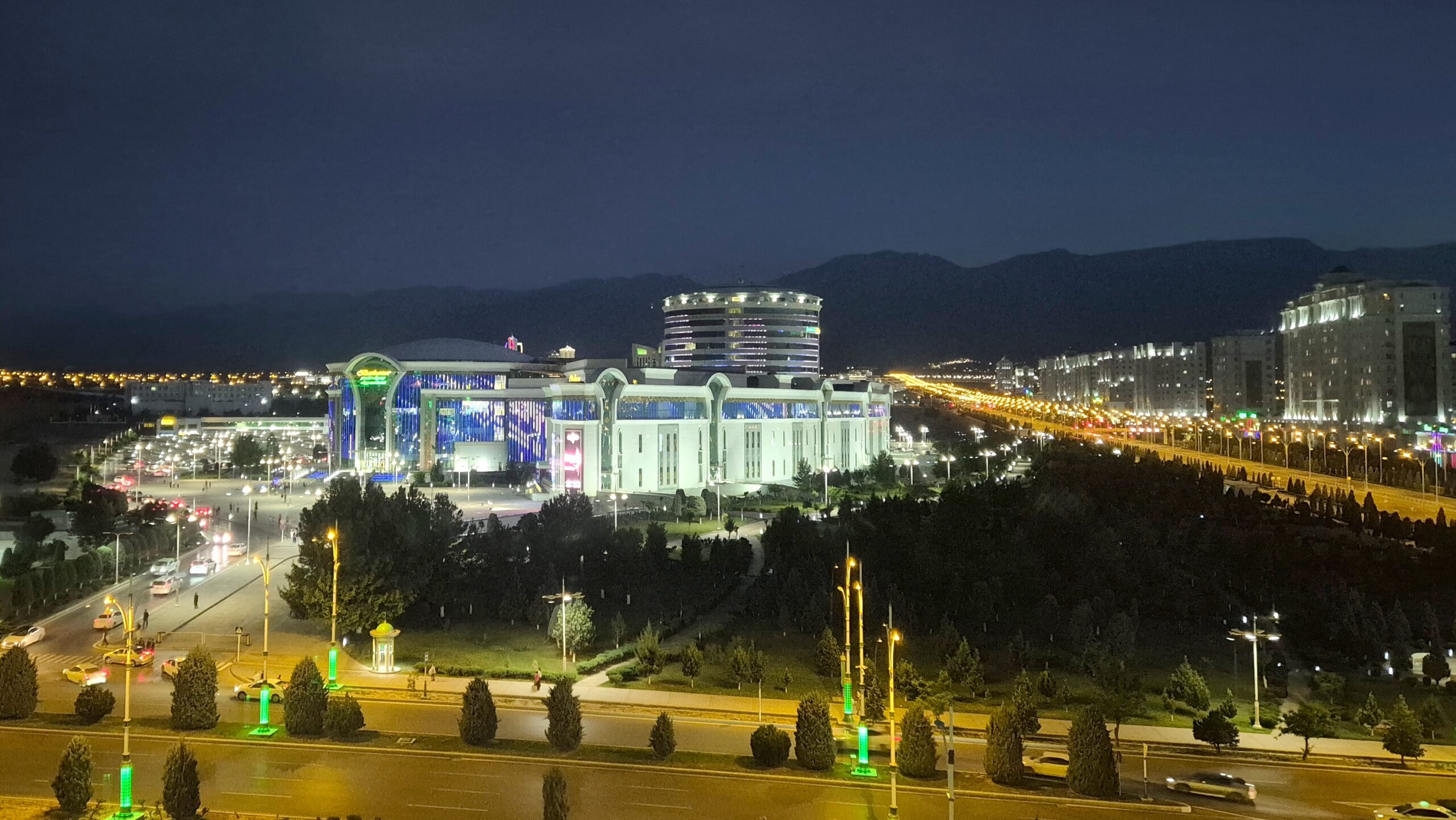
At night, however, like Las Vegas on steroids, commercial buildings and other structures vie for attention with flashing colors, light shows, or other glitzy displays.
Every car and bus is white, with very occasionally a creamy silver or gold. And not even dirty white: it’s an expensive violation to drive a dirty car in the city. And road police are plentiful on the main streets. Car washes, tucked away from view, proliferate on the edge of town so those returning, tainted with the dust of the desert, can hose down.
Plus, in a city that broils during the summer, no tinted glass or shades are allowed in the car so cameras can see within.
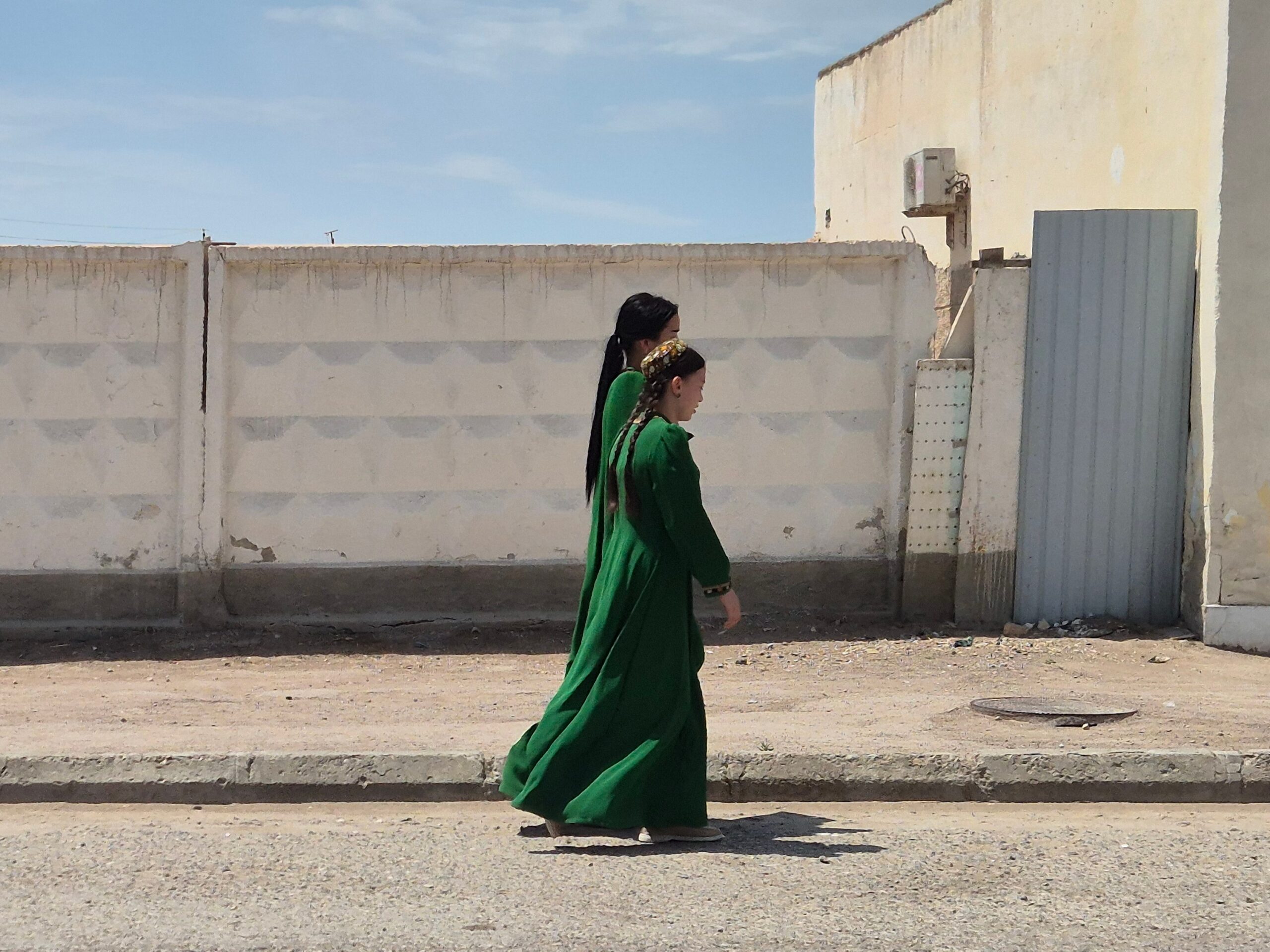
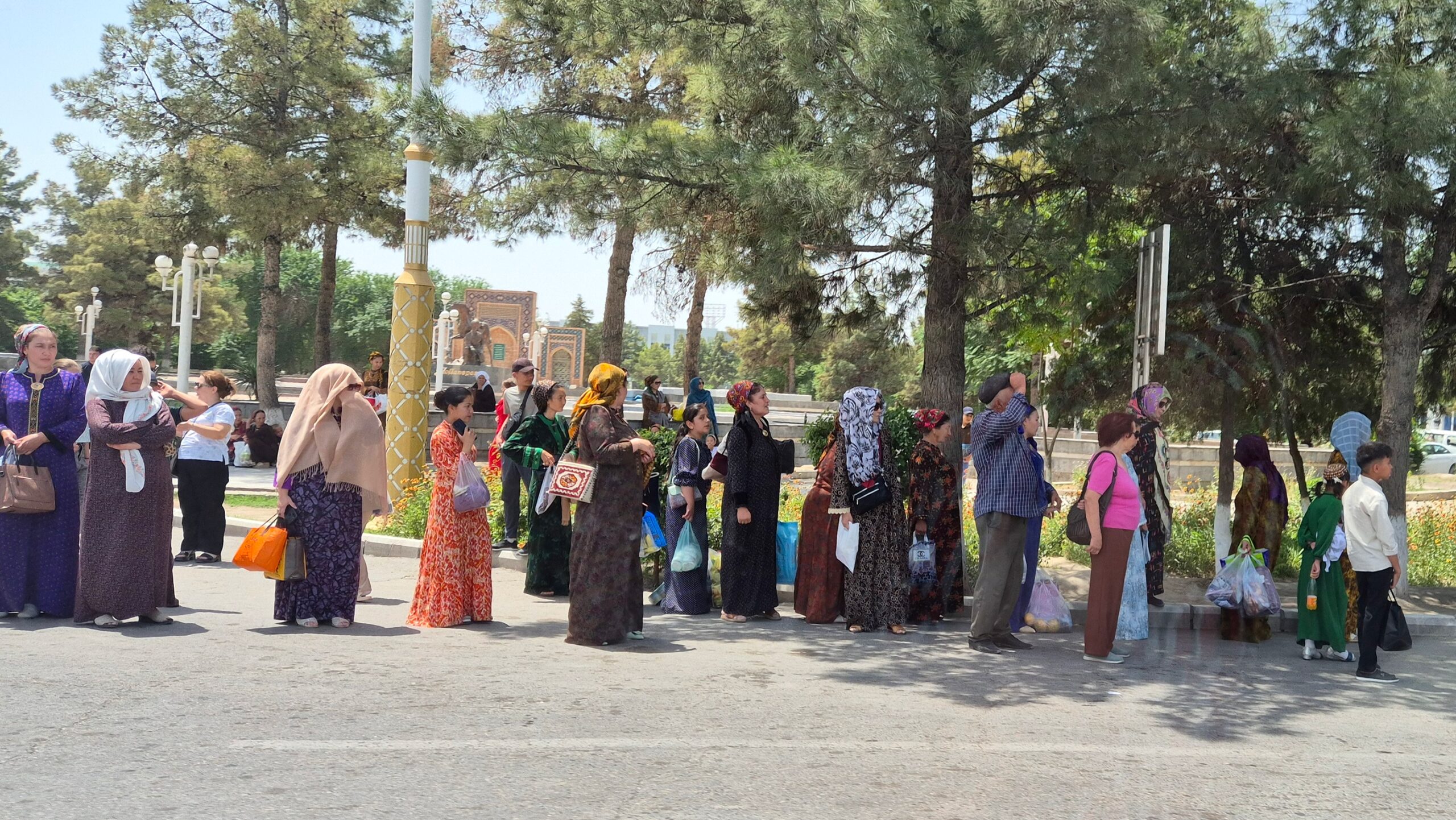
The men dress like accountants in the 1950s, narrow black tie and pants, plus a white shirt. The flora is allowed to be green and the flowers gold and red, etc. As well as the women, who wear dark colored robes, or chapan.
Outside of the searing summer season, the border mountains to the south form a backdrop to the surreal set design on the streets – shiny with green or aspiring to their own whiteness in the mists.
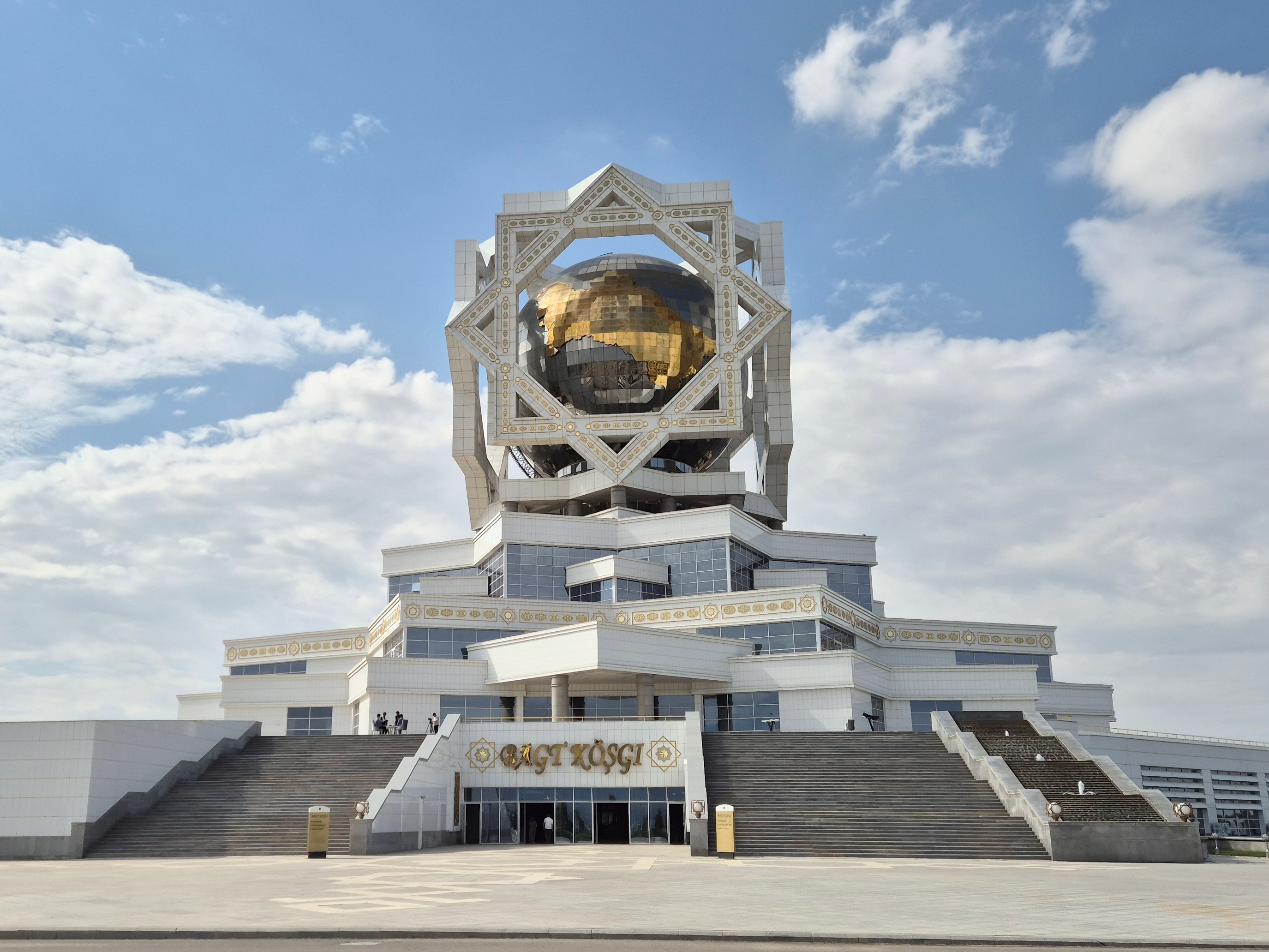
In addition to the color white, the other ever-present sight around town is the eight-pointed star of Oghuz Khan. It’s formed from two overlapping squares where one is rotated 45 degrees.
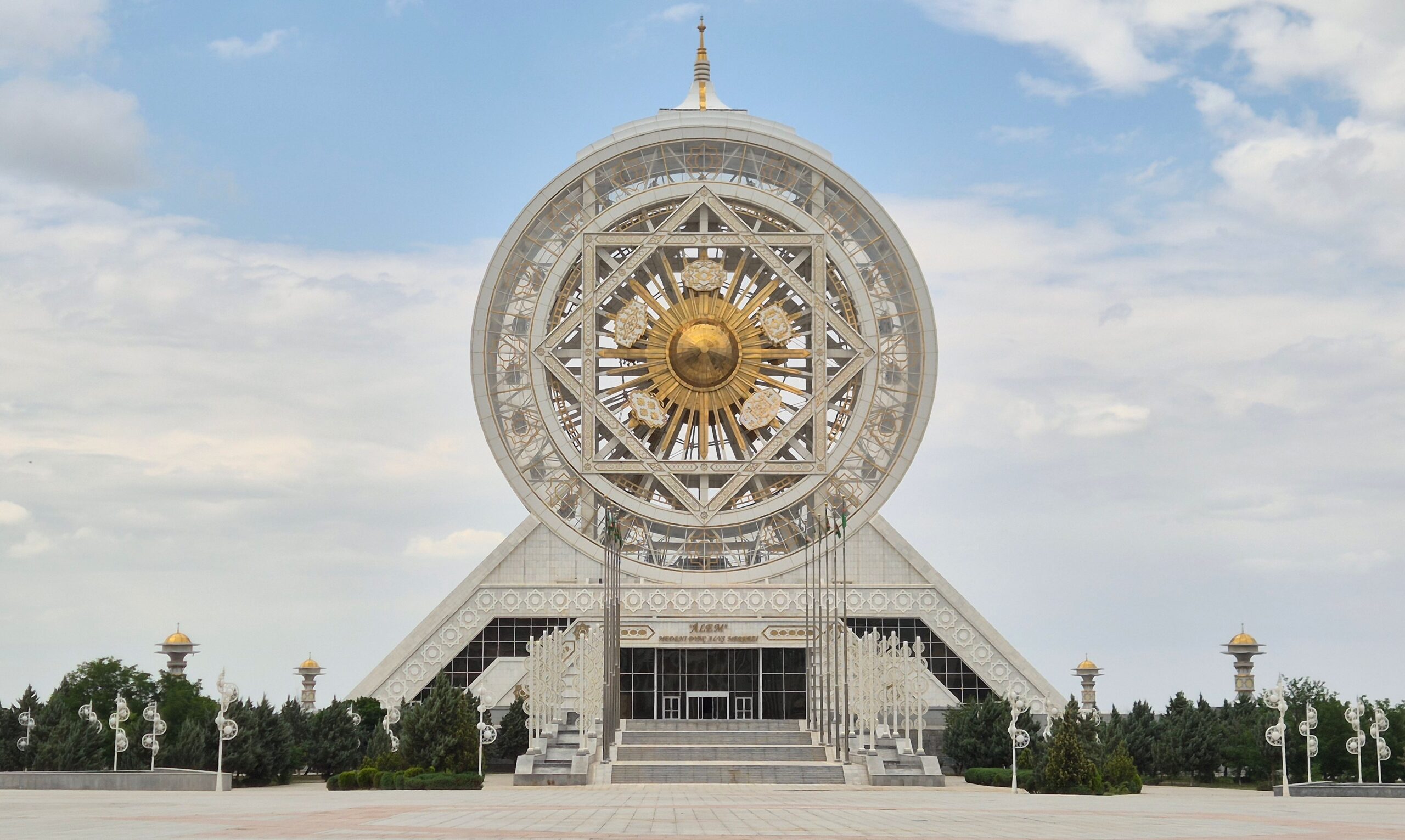
The symbol derives from Turkic Islamic art as a sign of abundance and peace. It adorns buildings, street fixtures, furniture – and even defines the overall shape of many structures or monuments.
The only other exception to the uniformity is the old part of Ashgabat, a small section that looks much like the large Soviet-era cities across Central Asia, with grand Stalinesque public buildings amid renovated sandstone structures, tree-lined streets and parks.
Unlike the clogged capitals of the other Central Asian countries, which have similar populations, Ashgabat has no traffic, automotive or pedestrian. The white cars, typically with just a driver, motor along at steady speeds on the six-lane boulevards as if in an AI simulation of a city. We saw empty roads and motorways more than we saw any kind of traffic backup at a light.
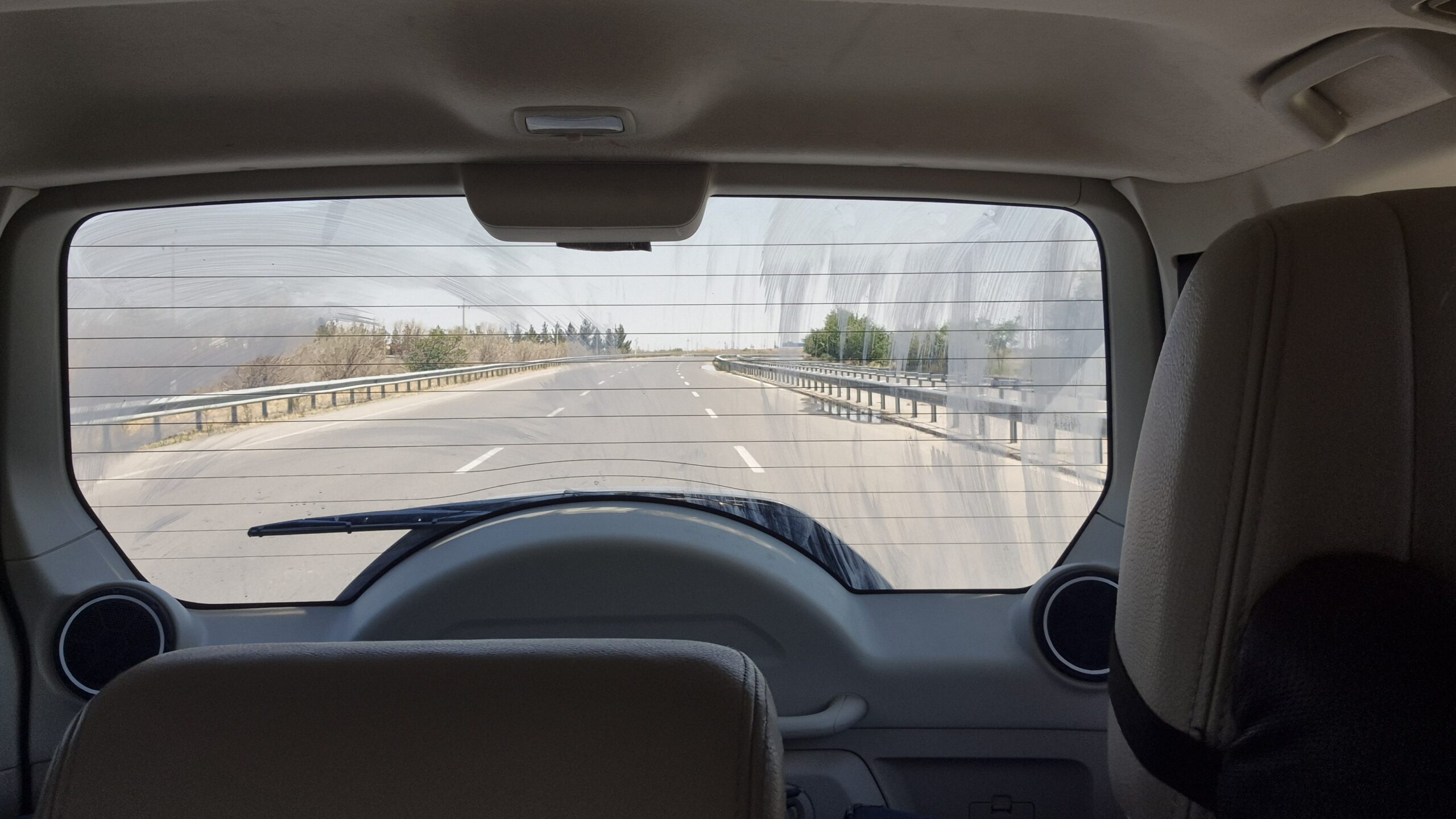
And the drivers were nearly all male, as young women cannot obtain driving licenses and complex rules govern rights for older women. People do take buses or taxis, but quickly disappear off the streets. The costly monorail metro has never even worked.
It’s all very, very eerie and sterile.
People can be found in the white shopping malls, with their white cars parked outside, or the open-air markets, but those never seem very crowded. The only gatherings we saw were celebrations of special occasions with hyper-patriotic performances by youth groups, reportedly by special invitation only. Even Ashgabat’s airport, in the form of a white soaring dove, spans a voluminous space with hardly any flights.
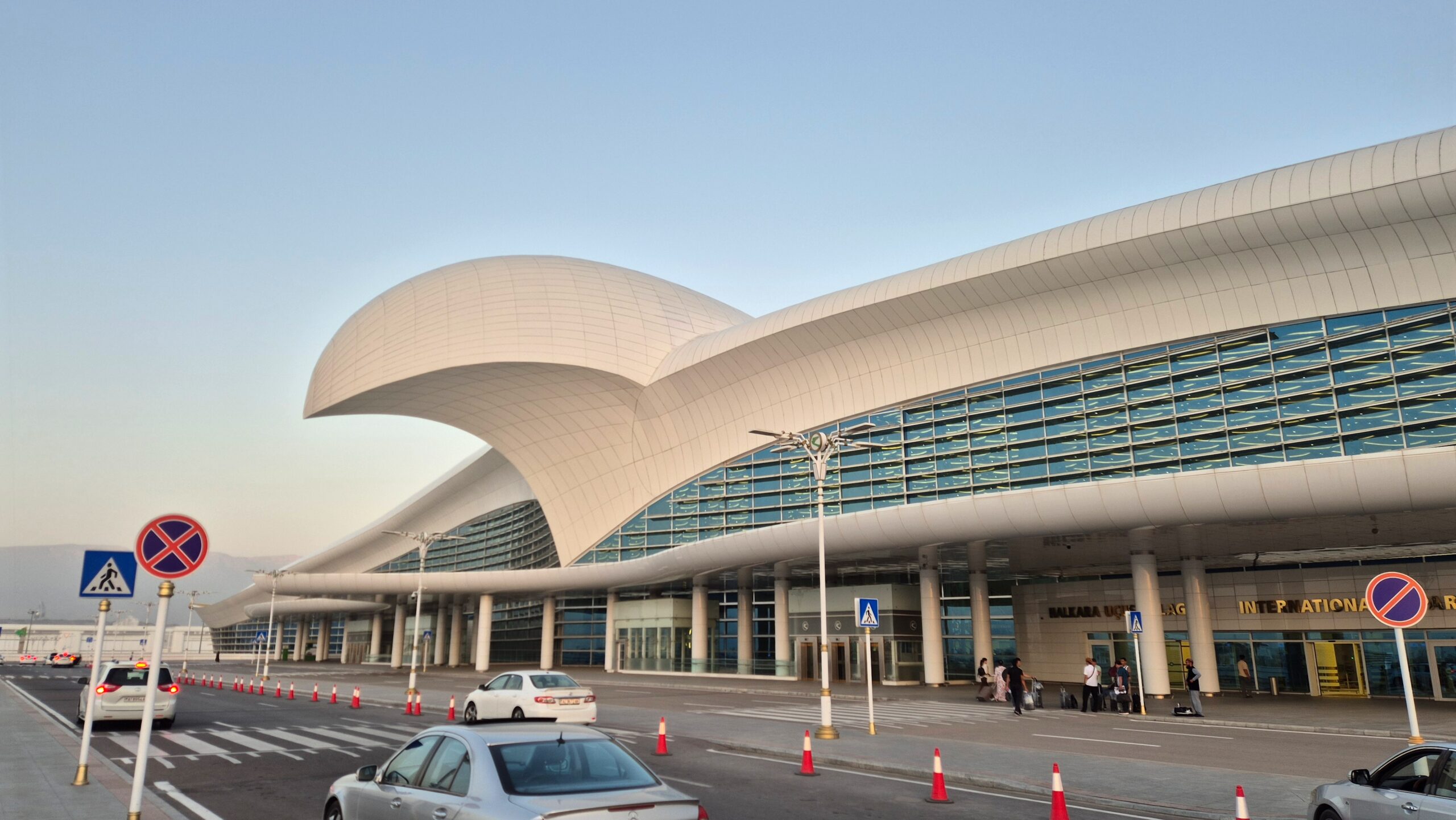
During the first president’s long reign (Saparmurat Niyazov) after the fall of the USSR, the strictures were often bizarre. Some were reactions against religious extremists. But many were based on personal predilections, such as whiteness which meant purity and good fortune to him. And recognition by the UN as formally neutral, never to interfere in other countries, was also important to him, perhaps to suggest others keep hands off Turkmenistan.
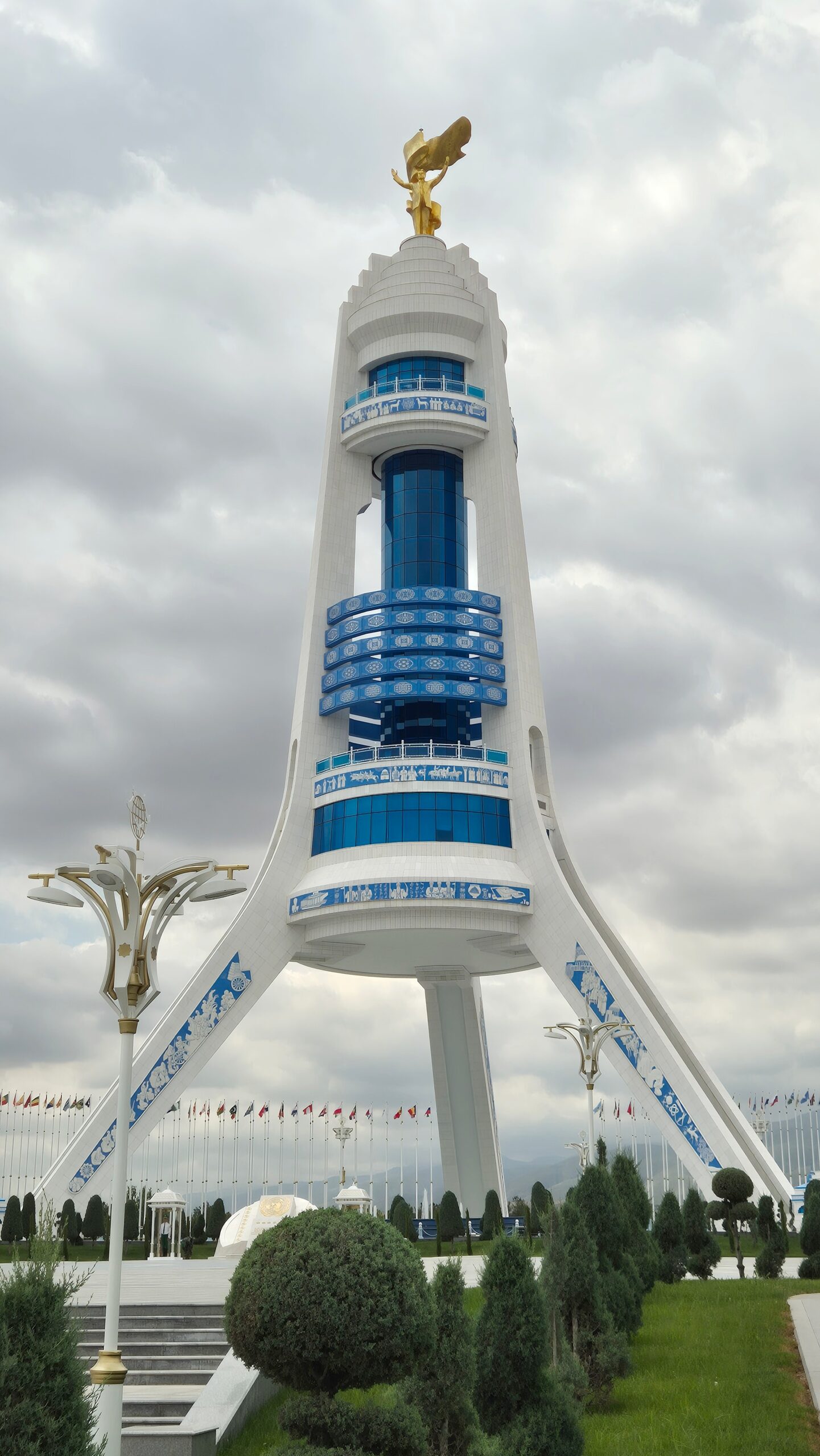
As for his rules…In a country the size of California, for example, no hospitals except in the capital city. Others included no beards on young men, no dogs, strict limitations on music listening, testing on Niyazov’s own book even for a driver’s license, and more. Happily, many of these rules, but not all, have eased. Our car played all kinds of Turkmen and western music, for example.
Across the country, internet access to foreign sites like Facebook or even Whatsapp is also tightly controlled – at least in theory. Insiders know the right VPNs to enable apps or sites. We were lucky to stay at our hotel when an international conference took place, so access was open. Once the conference ended, it was constrained again.
Why are things so different here? Since the first president, the leadership has tightly controlled the people and development, partly through such highly idiosyncratic rules. The tools of control seem to have served his successors, who splash their carbon-based energy wealth on grand, neo-classical government buildings, futuristic designs, and non-stop apartment construction.
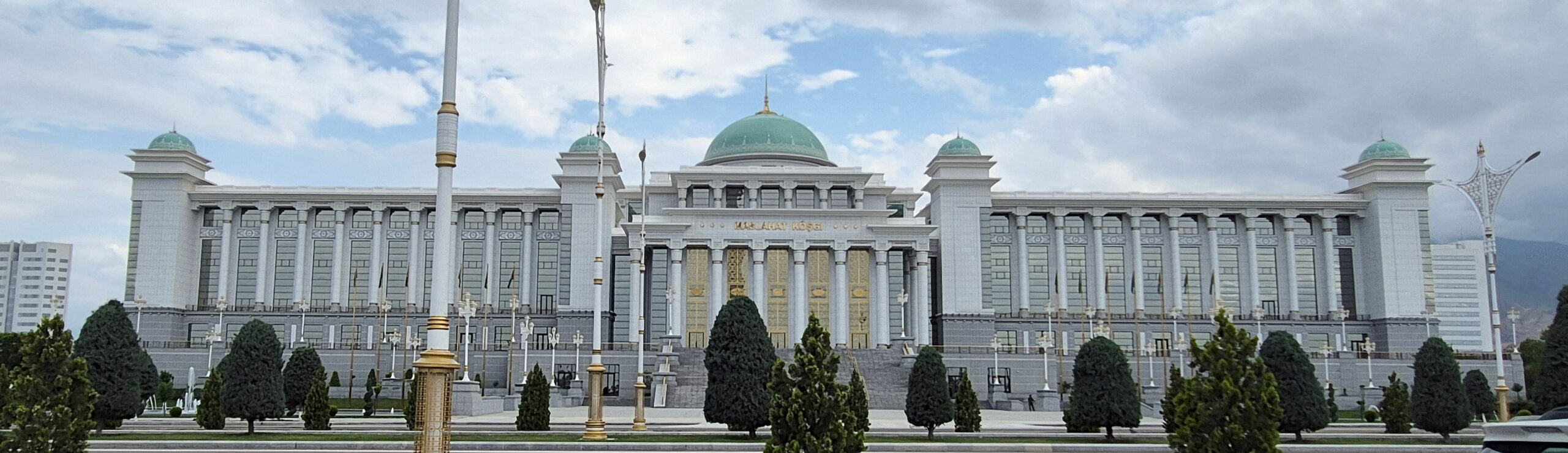
For whom, we couldn’t tell. Rather, the grandiosity of this unique city seems intended mainly to show off wealth and shout importance. Large images of the current president adorn many facades across the city.
Even our hotel, one of the few that takes tourists, emulated Russian palaces with gold trim everywhere.
Though the city may be white, the only sensible method for currency exchange is the black market. You can use an ATM, bank, or credit card for money or purchases at the official rate of the moment, 3.5 TMT (manat) to 1 USD. The real black-market rate was 15 or 16 to 1 (19 to 1 for the Euro). In other words, a purchase of, say, local vodka at 75 manat could run you $22 by credit card or $5 in cash obtained by exchange.
Given the tight restrictions on foreign currency holdings in the country, the dollar and euro are prized. Even the only mobile service demands 30 dollars for a tourist’s SIM card. Only dollars. And, on entering the country, a visa plus mandatory covid test and fees run at least 125 USD…only payable in USD. However, you do receive about a dozen laboriously hand-written receipts for your payoffs. It took friends four hours to clear all the paperwork and rigamarole when entering via Ashgabat airport. We felt lucky to do it in just an hour or so at a land crossing.
So, it’s very hard to do business outside the country because of the abysmal official rate of exchange. All the more reason that the country’s economy depends so heavily on natural resources.
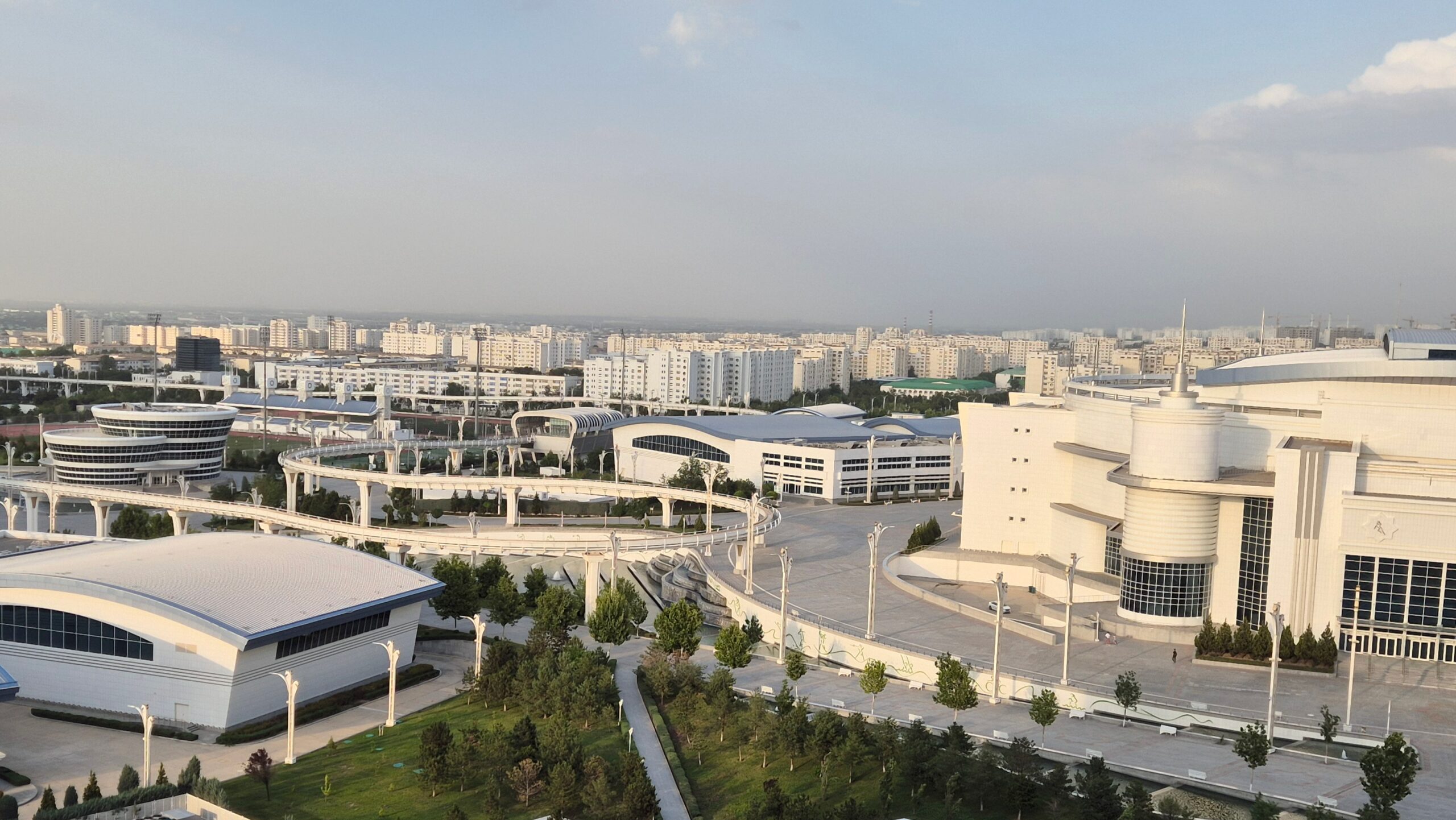
But tourism is growing, it seems. This is one of the five Stans on the typical route through Central Asia. Yet, because of the difficulties of coming here, most visitors for pleasure come in groups. You need a formal invitation before visiting, essentially a pre-registration from some agent who takes responsibility for your presence.
A few others like us take on the challenge independently, but typically work with an agency for arrangements, including guides and drivers. The passport check at the hotels took a long time, as the hotel needed to log us into the government’s system. However, we seemed free to move about as we wished, whether walking, shopping, or eating out.
Otherwise, there is just not that much of interest for a tourist. There is the old town, but it’s very similar to other capitals. There are many new monuments honoring the leaders or celebrating the country, not unlike the imperial columns and memorials in Dushanbe, and a very interesting, if overly large, historical museum. A tour of the city takes little time. And the hyperbolic grandeur dulls the senses.
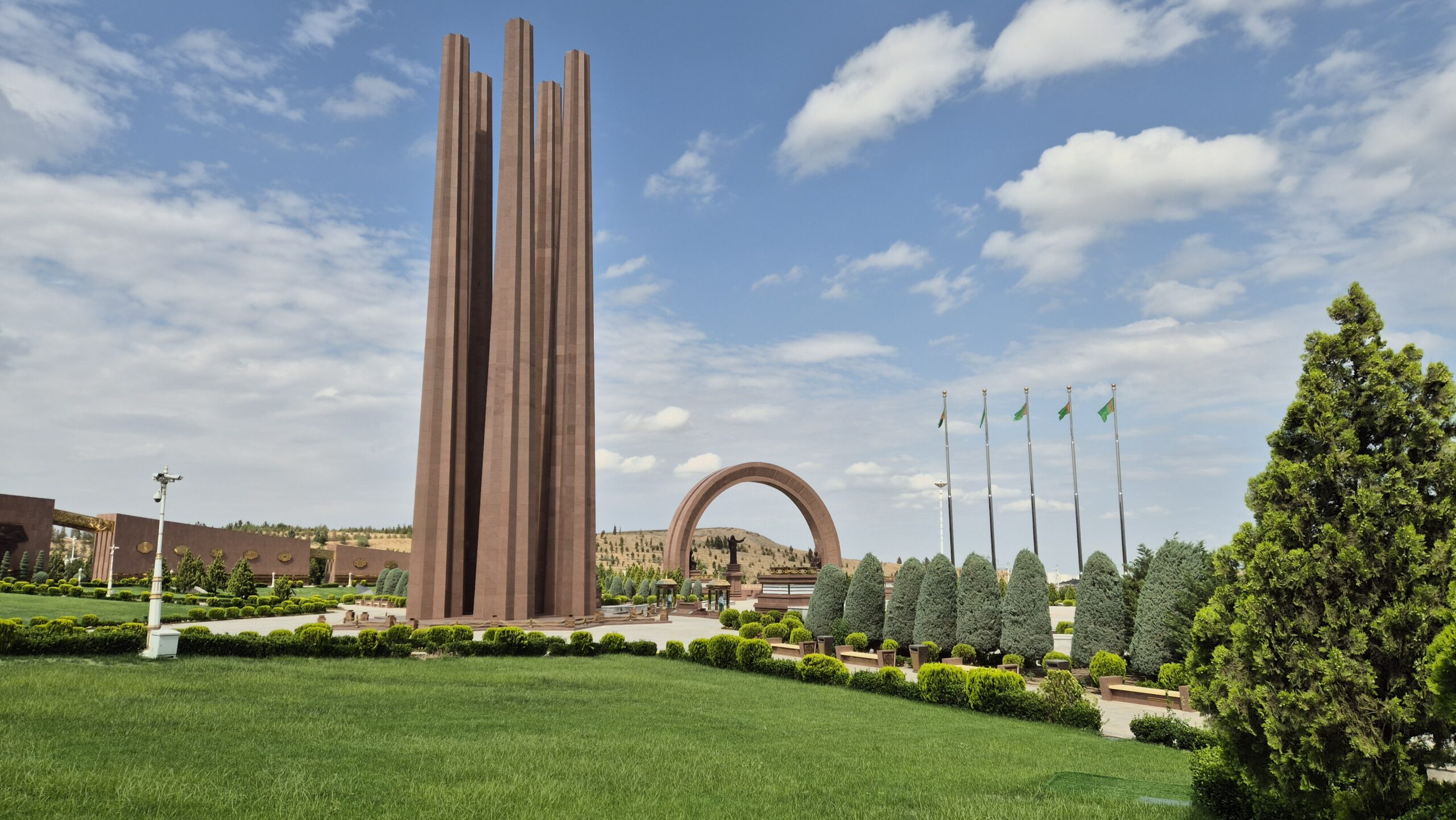
We almost missed the most personal and emotional site in the city. Perhaps the guide felt it wasn’t grand enough. On a hillside overlooking much of the white city, a large plaza holds a set of memorials that began with the idea of honoring the 110,000 who died in the devastating earthquake of 1948.
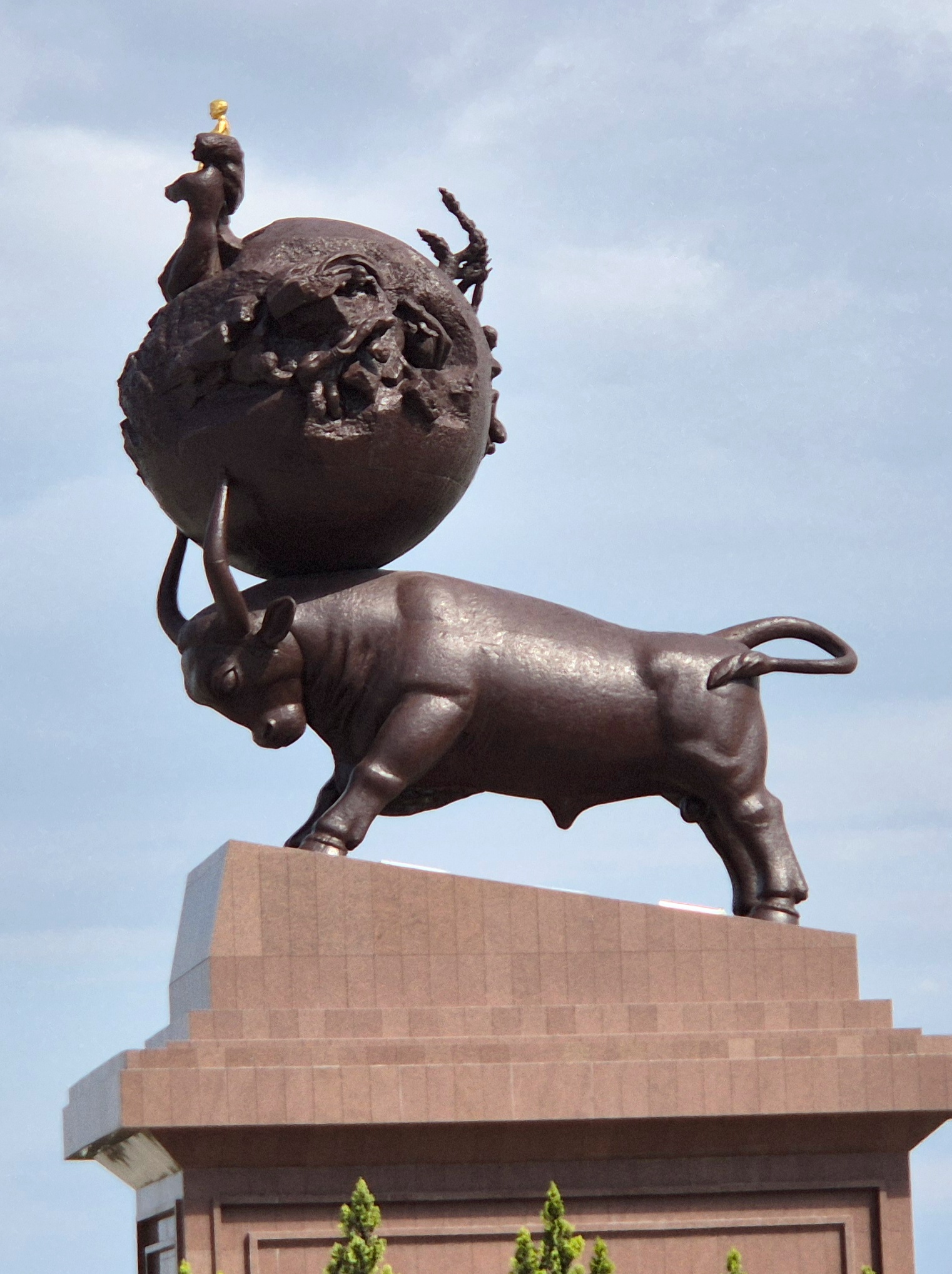
We heard the story of the first president of independent Turkmenistan, who lost many family members in the quake including his mother, who saved him from being crushed. This sculpture is based on Turkic legends that describe earthquakes as the restless movement of the bull’s horns that hold the earth. The gold figure represents the President – and others who survived – in the protective arms of his mother.
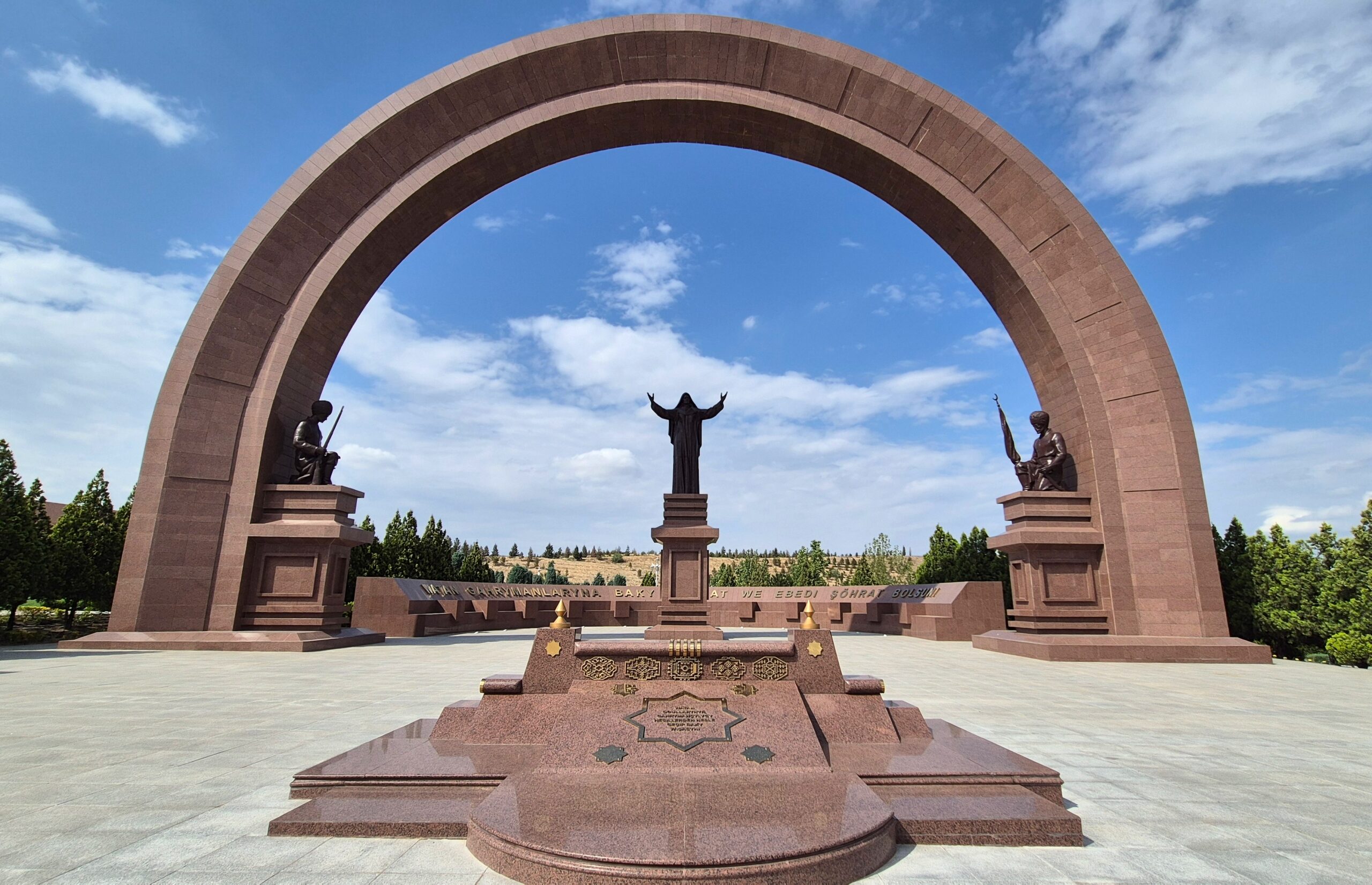
The site also includes memorials for those who died in conflicts during the 19th and 20th centuries.
A Glimpse Outside
We wondered whether the other cities of Turkmenistan had also become white cities. We briefly passed through Dashoguz in the north near Uzbekistan. We had noticed much of it was white, but did not explore it enough.
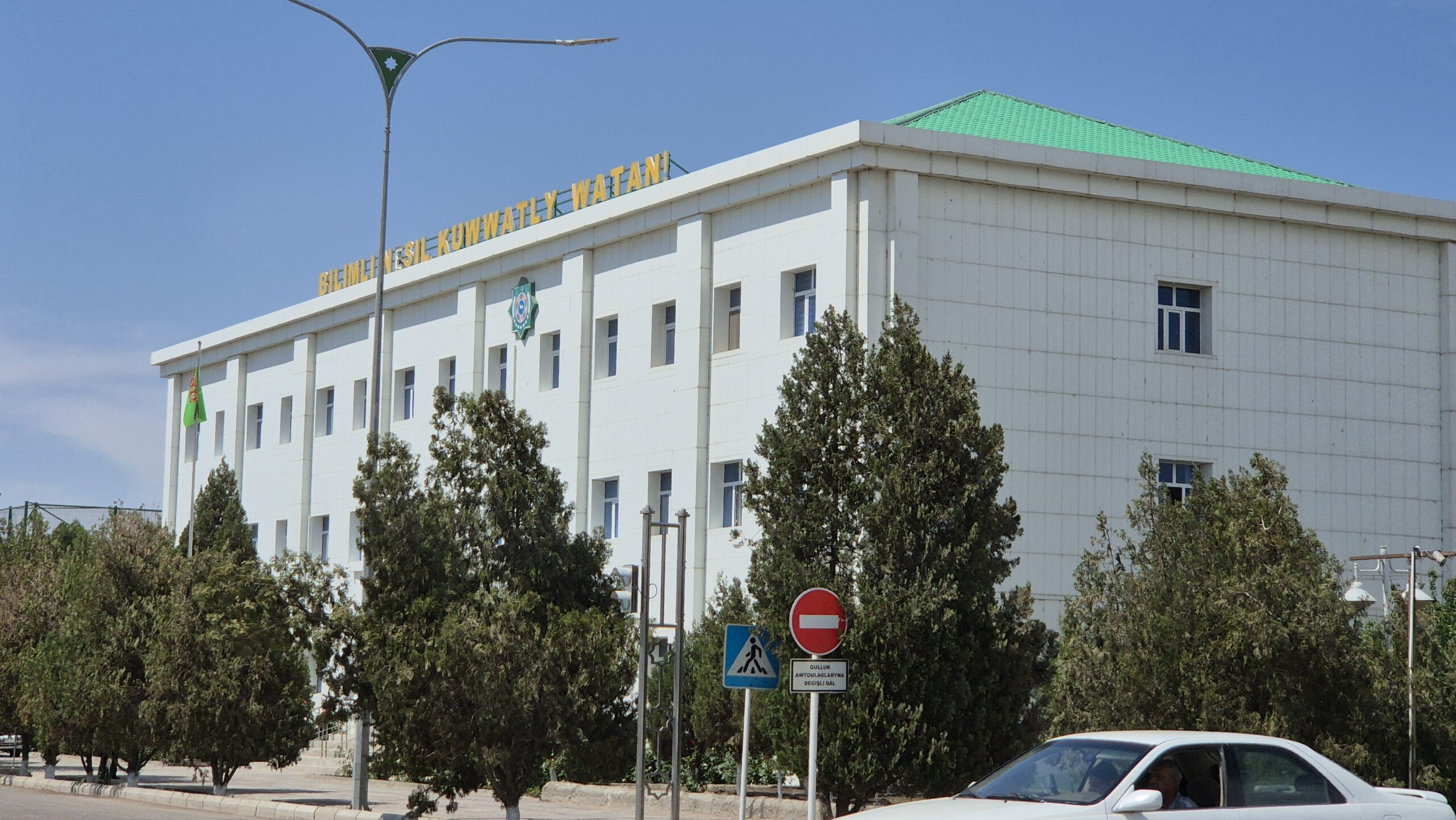
Later, we stayed in Mary, about four hours drive east of Ashgabat, on the way to Merv, the ancient center of the region. Though not as uniform as Ashgabat, Mary’s buildings were still mostly white, with gold trimmings. The internet was constrained even with a VPN.
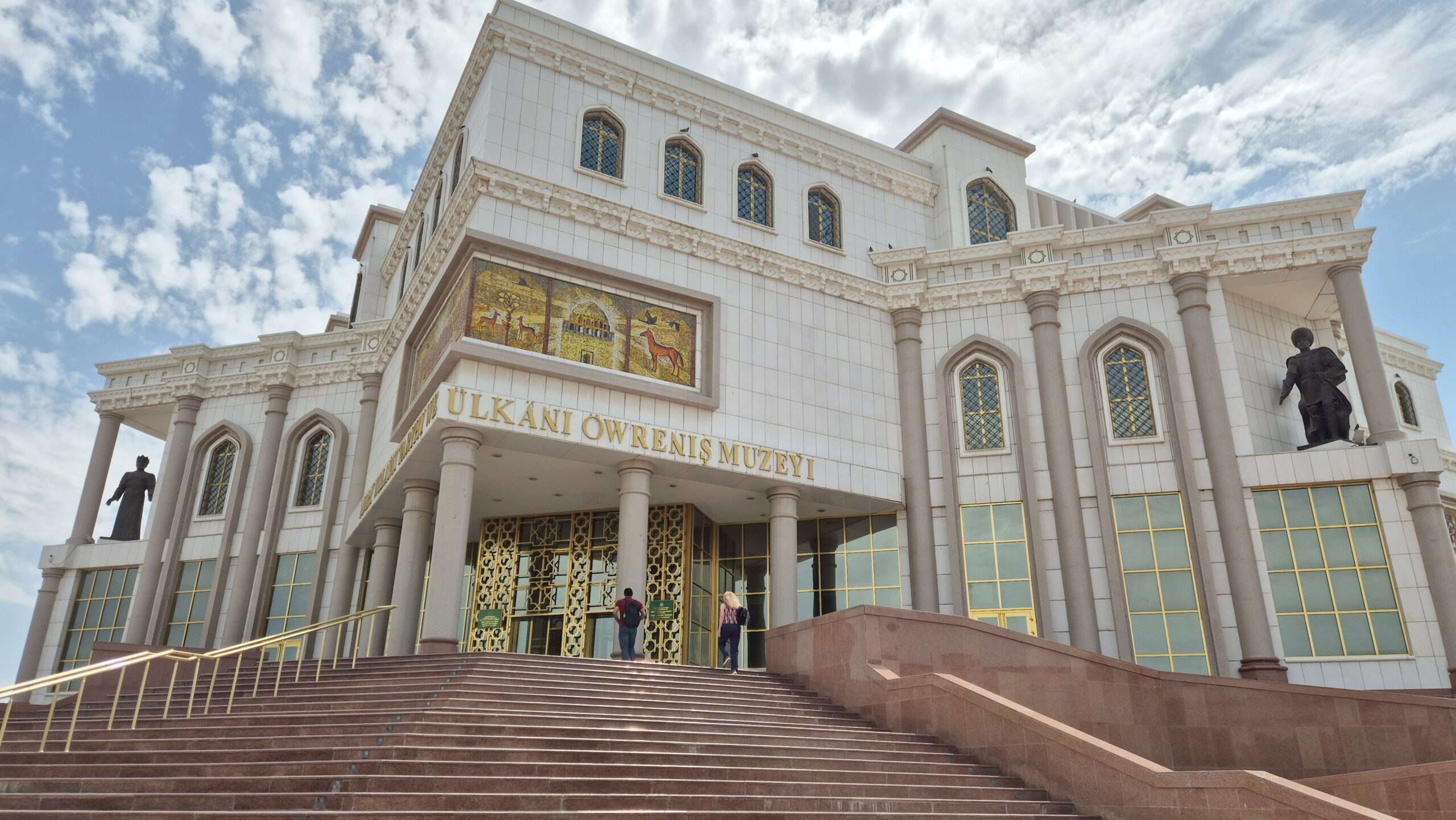
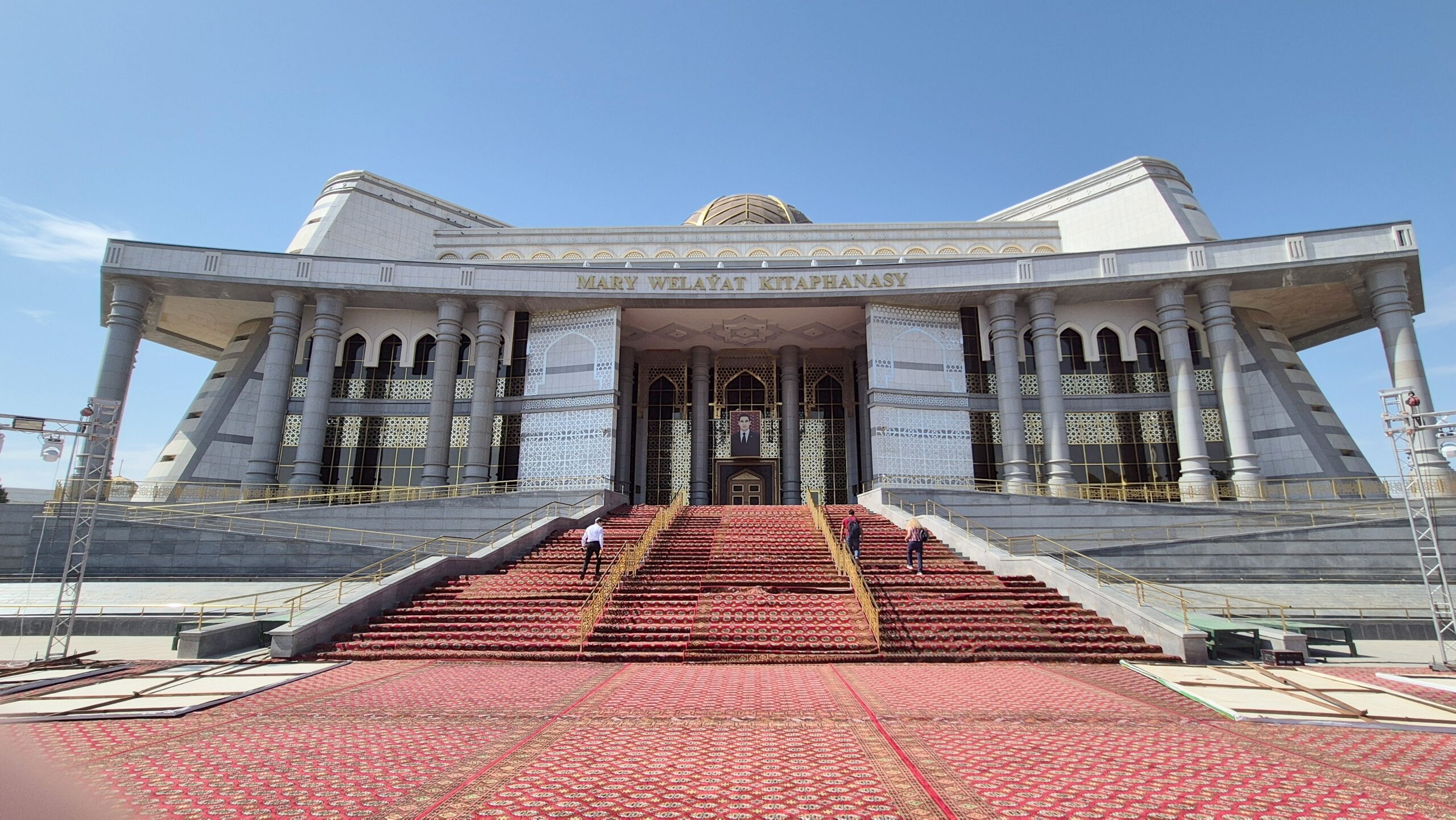
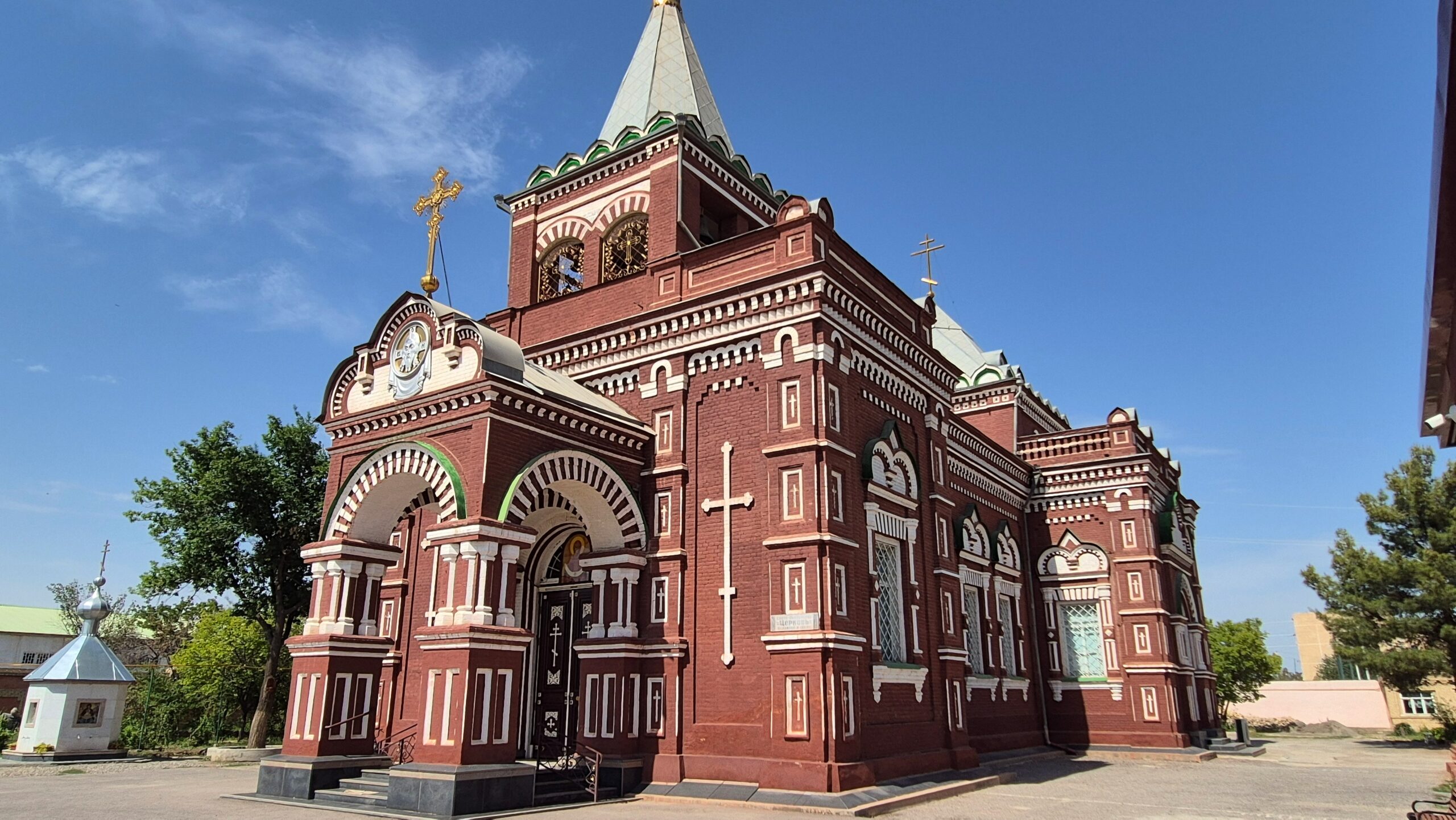
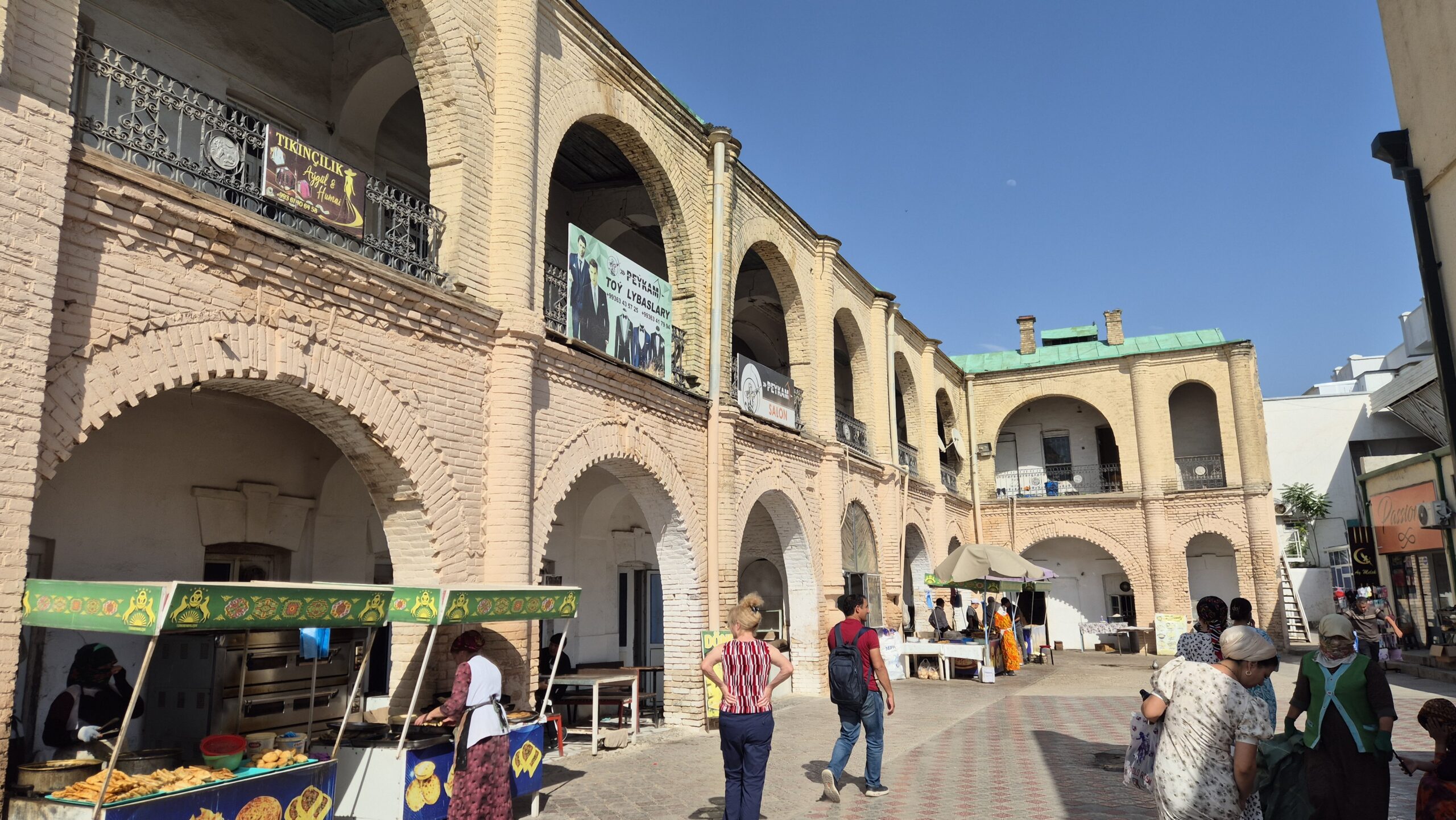
But some other tints had intruded on their structures. The late 19th century bazaar buildings in sandstone and yellow brick have been left in place, as was a very red Eastern Orthodox church.
Many cars, especially older ones that wouldn’t go to Ashgabat, were dark-colored – and often quite dirty.
Most noticeably there was life: car traffic, people thronging the streets especially near the bazaars, and colorful clothing. Stalling in traffic felt like a relief.
(To enlarge any picture above, click on it. Also, for more pictures from the five Stans of Central Asia, CLICK HERE to view the slideshow at the end of the itinerary page.)