
In brief: We end our Tajik stay at the remnants of its early cultures. For them, fire was a link to the heavens. To us, it still seemed to warm the hearts of the people.
In our post about Dushanbe, the capital of Tajikistan, we wrote about past empires that occupied or plundered this part of Central Asia. In the northwestern end of the country, we had the chance to visit the imperial sites themselves.
As expected, they lay in valleys – the 7% of the country that is not high mountain terrain. This is the land of the Sogdian rulers from the 5th century to the Arab invasion of the 8th century. Panjakent was the city-state center of the Sogdian tribes here. It was linked along the Silk Road to trading centers like Khujand in the nearby northern chunk of Tajikistan.
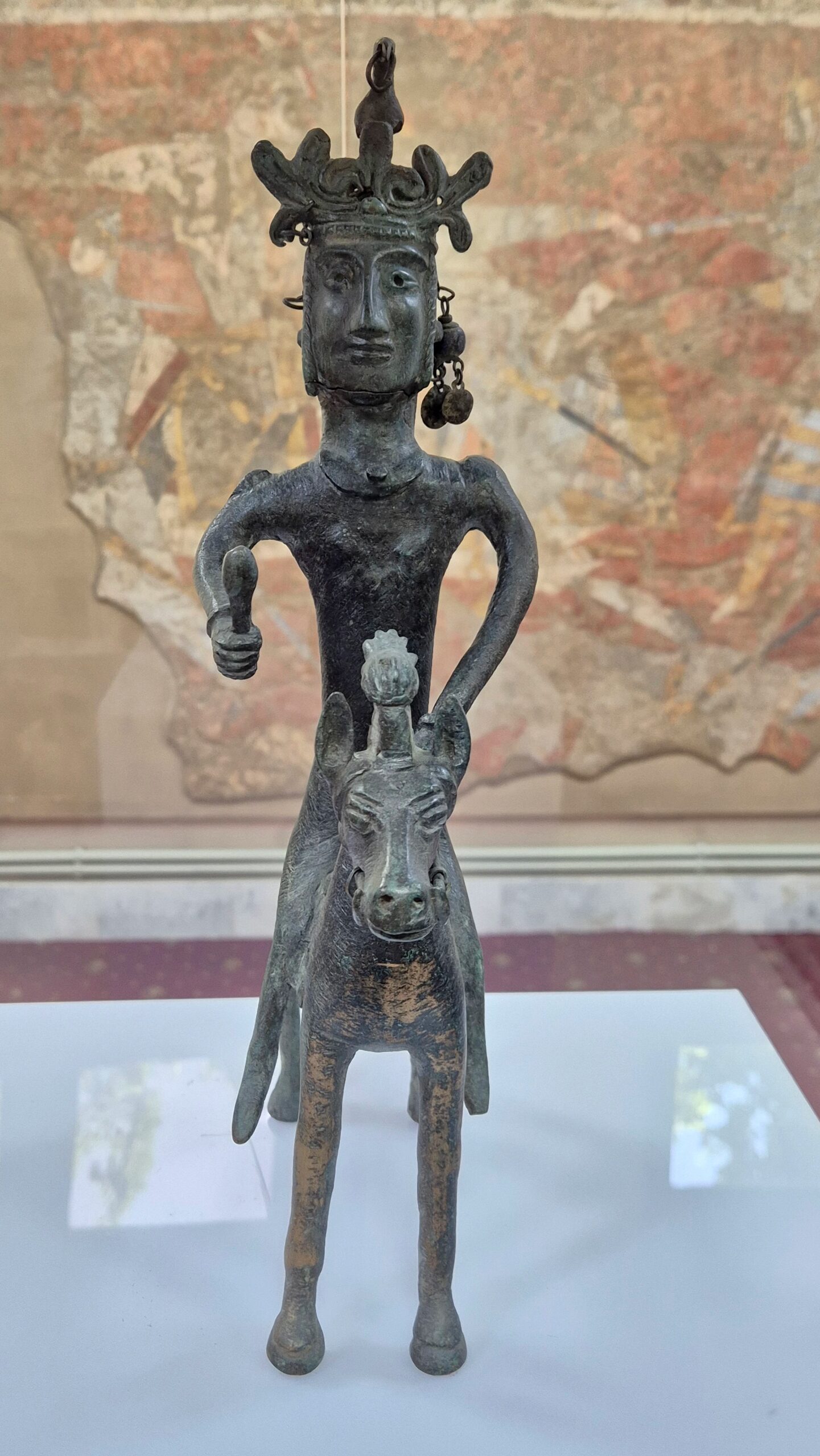
During that first invasion and then with the onslaught of the Golden Horde under the Mongolian Khans, the city was destroyed by fire, leaving mainly the clay foundations to be discovered by archeologists.
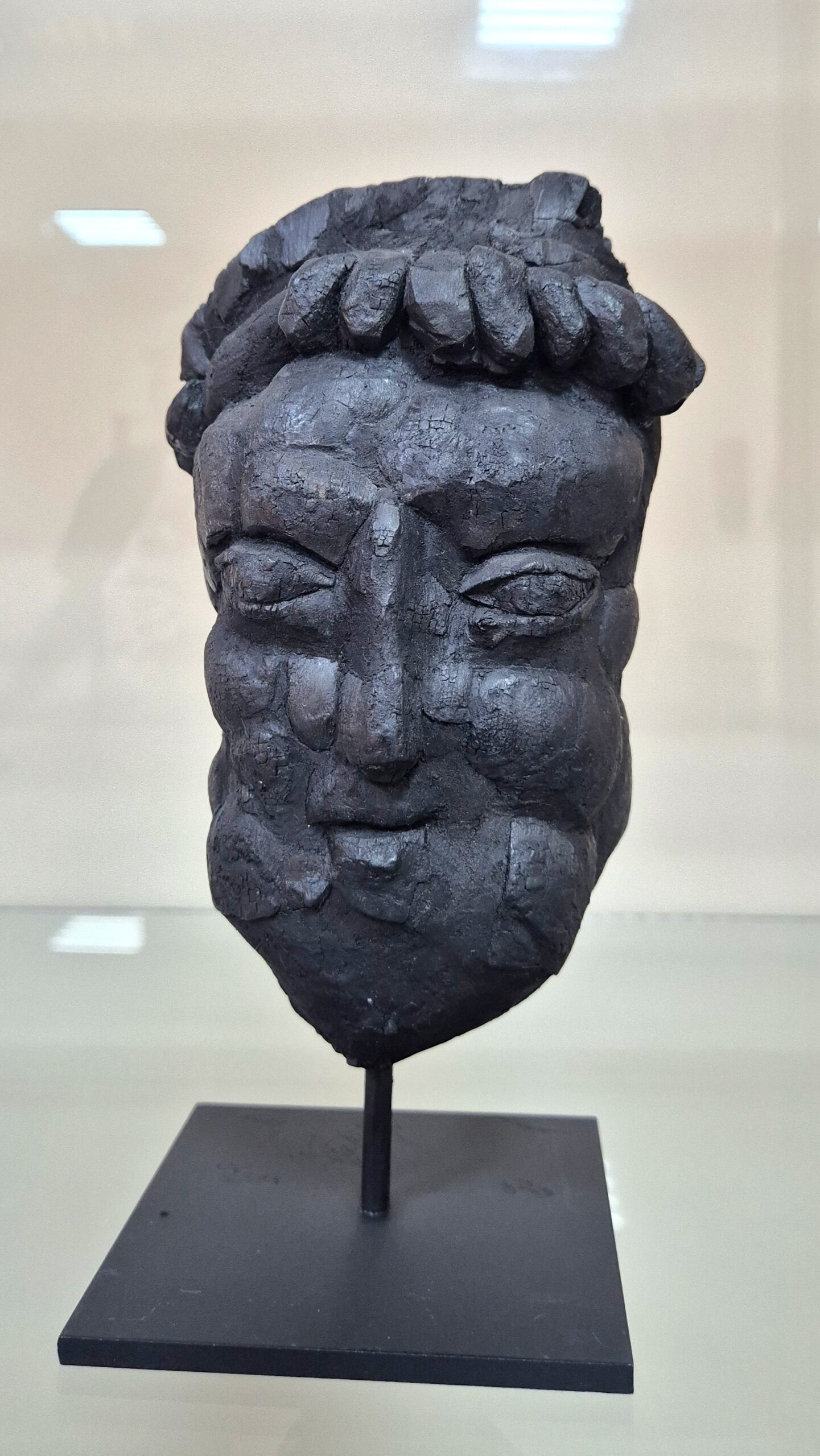
Such burnt wood remnants present a certain irony. The people who lived here before the spread of Islam held Zoroastrian beliefs centered around worship of fire. As an attribute of the sun, it was the most important of the four basic elements of life: fire, water, air, earth. All their temples featured central hearths, as did the upscale homes. Their creed was simple: good thoughts; good words; good deeds. But many of the regional superstitions of today, such the ways of warding off the evil eye or other perils, derive from their beliefs.
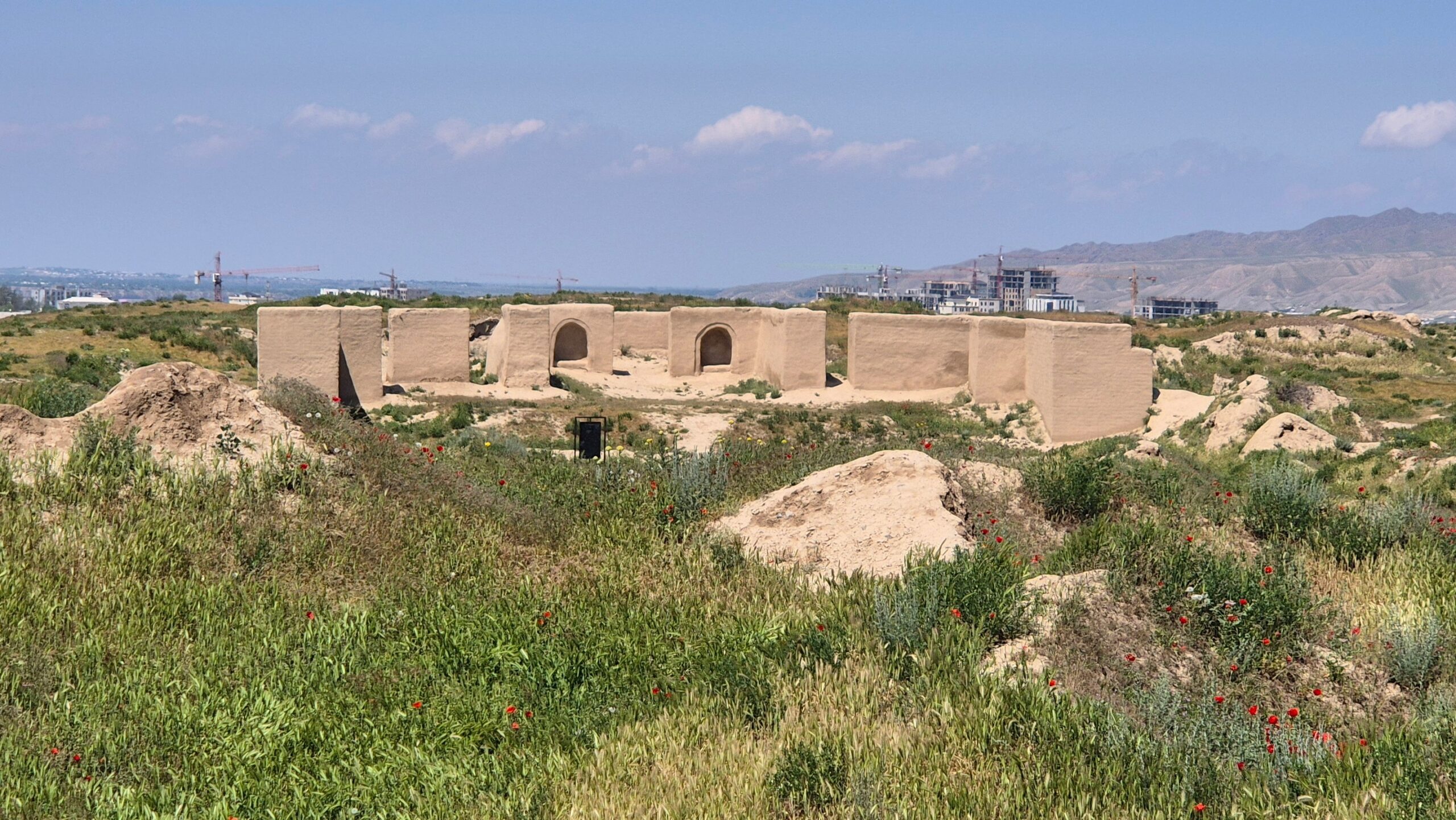
Fired clay, or brick, was a fundamental building material for them, in a region of very hot summers and cold winters. Structures built with these not only endure, but they naturally insulate from the heat outside. Before refrigeration, clay pots were used to keep things cold, for example. Plus, during cold weather, clay walls retain the heat from a hearth inside.
The city-state of Panjakent has been excavated enough over the last 80 years to reveal the lifestyle and culture..
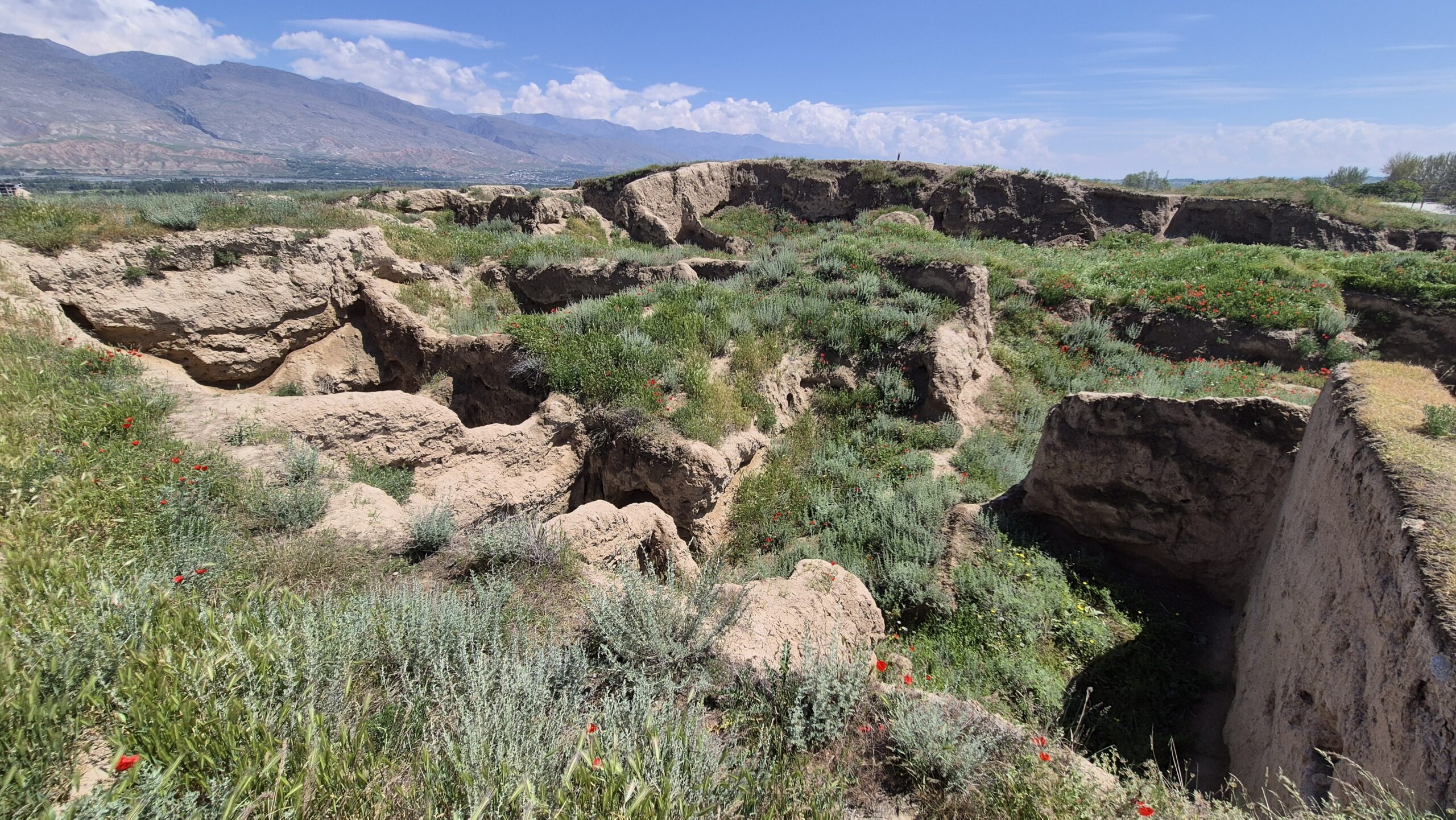
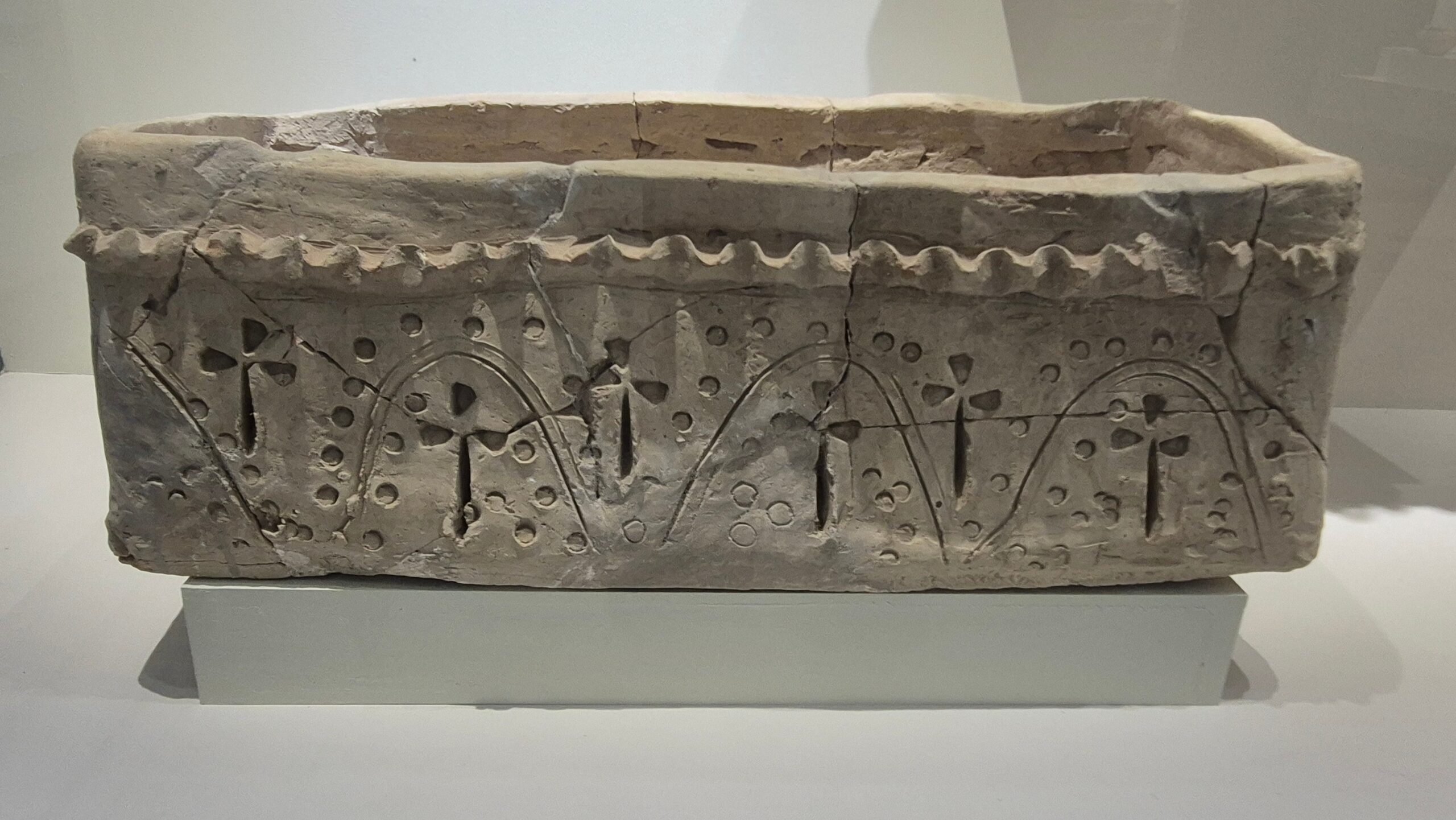
Clay caskets were used to inter the bones of the dead after the bodies were left on hillsides to be scavenged by animals. The caskets were often placed below the doorway of the clay homes.
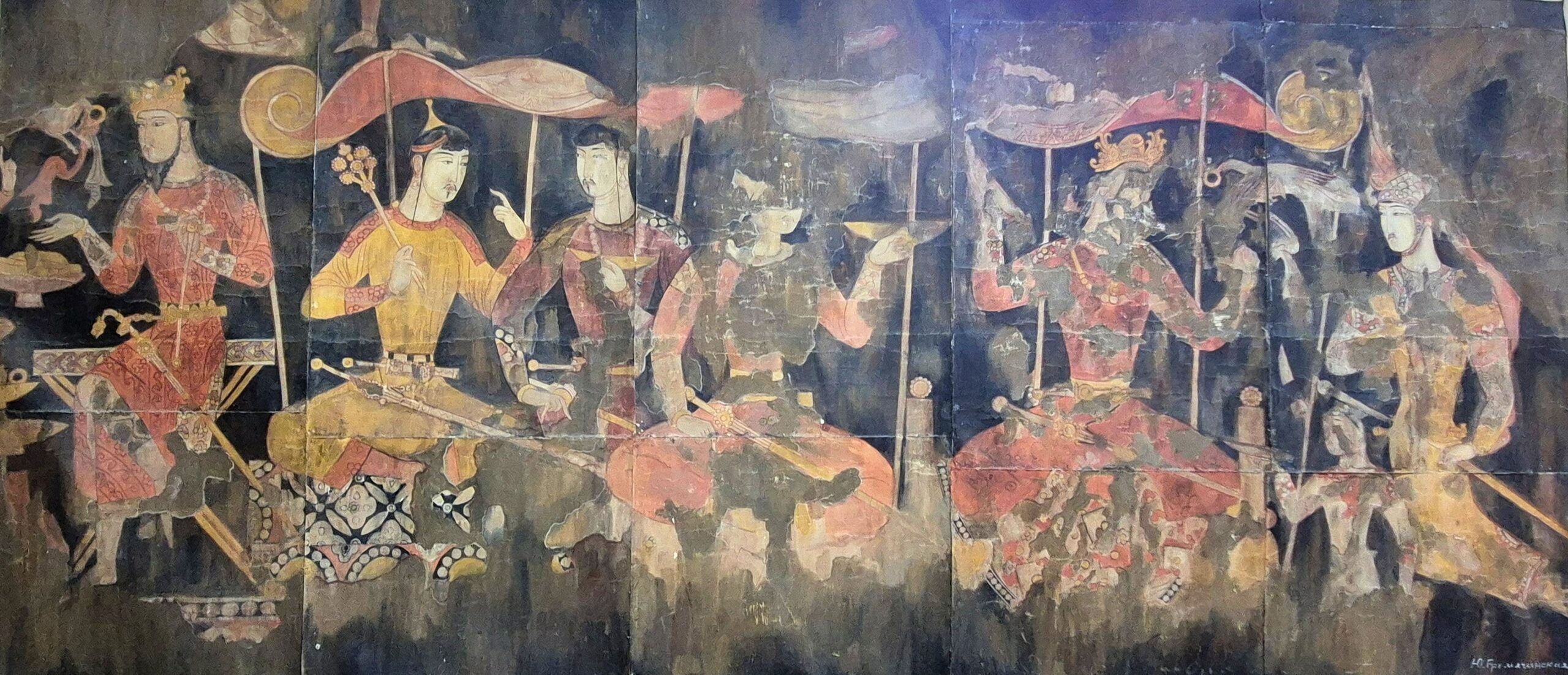
In the Dushanbe post, we also showed the kind of art that decorated the ceremonial halls of Panjakent: dramatic, colorful frescoes now on display at Dushanbe’s Museum of Antiquities – or at the Hermitage in St. Petersburg where the Russians moved so many of them.
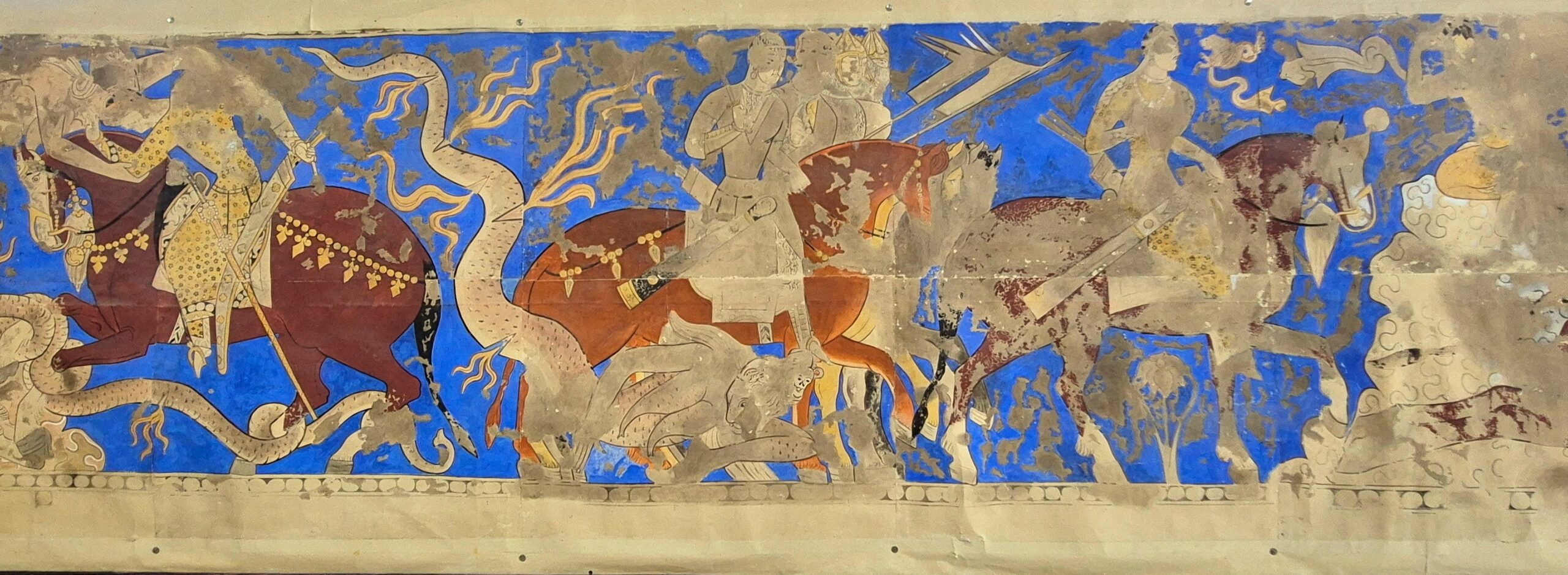
In Khujand and Panjakent, we saw mostly copies, but they still impressed us. Plus, they vividly demonstrate the linkages forged along the Silk Road, with elements of Hinduism, Buddhism, and Zoroastrianism.
We also wrote of the national revival of pride in old empires like these, including the ones that conquered the region. Alexander the Great battled through here during his years of conquest, even building a great castle in Nurata, just over the border near Bukhara. He set Khujand as the outer limit of his regime, a defensive barrier against the Scythians of the Caucasus.
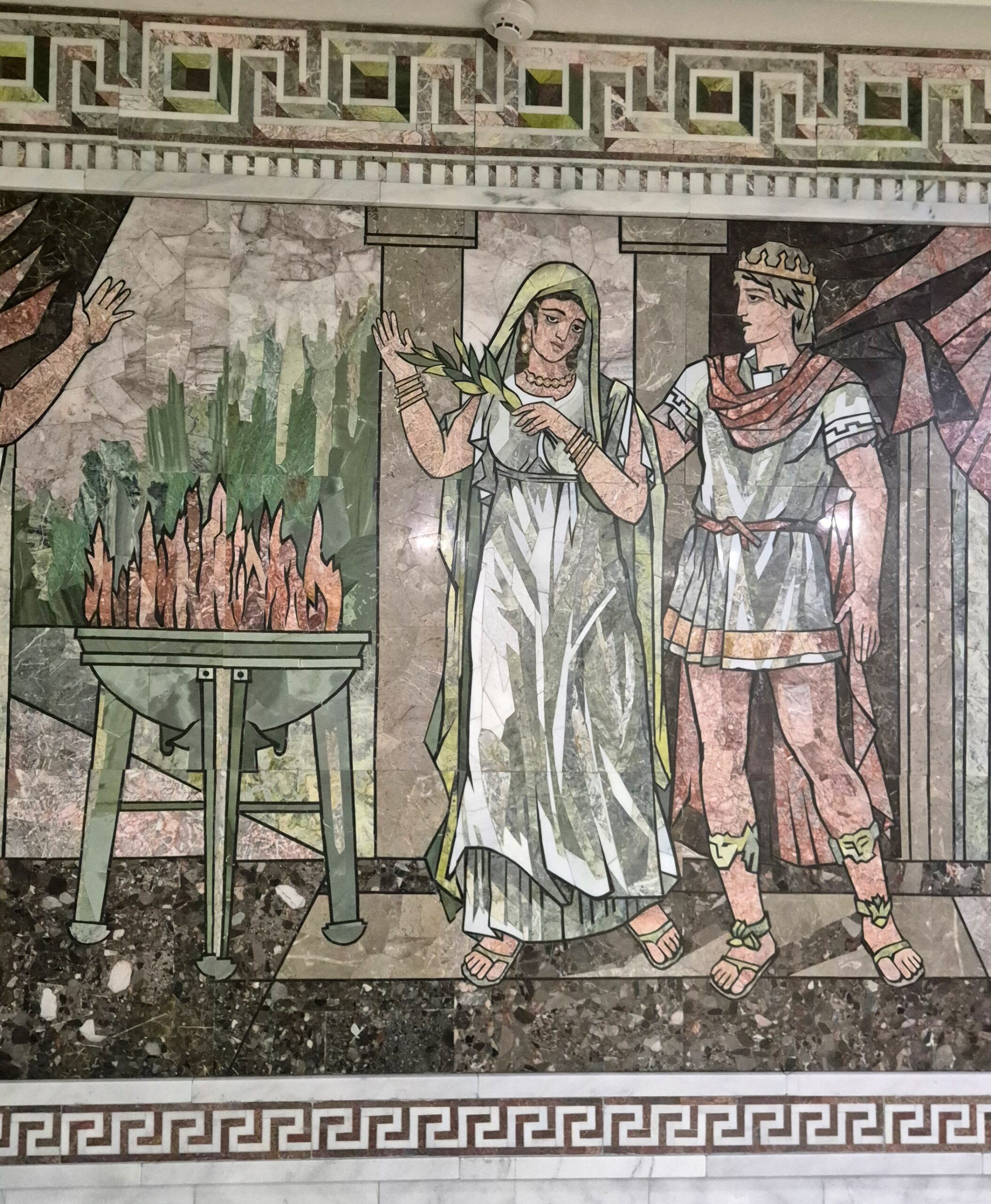
In the museum at Khujand he is lionized with a roomful of modern mosaics about his life, from birth thru conquest to death.
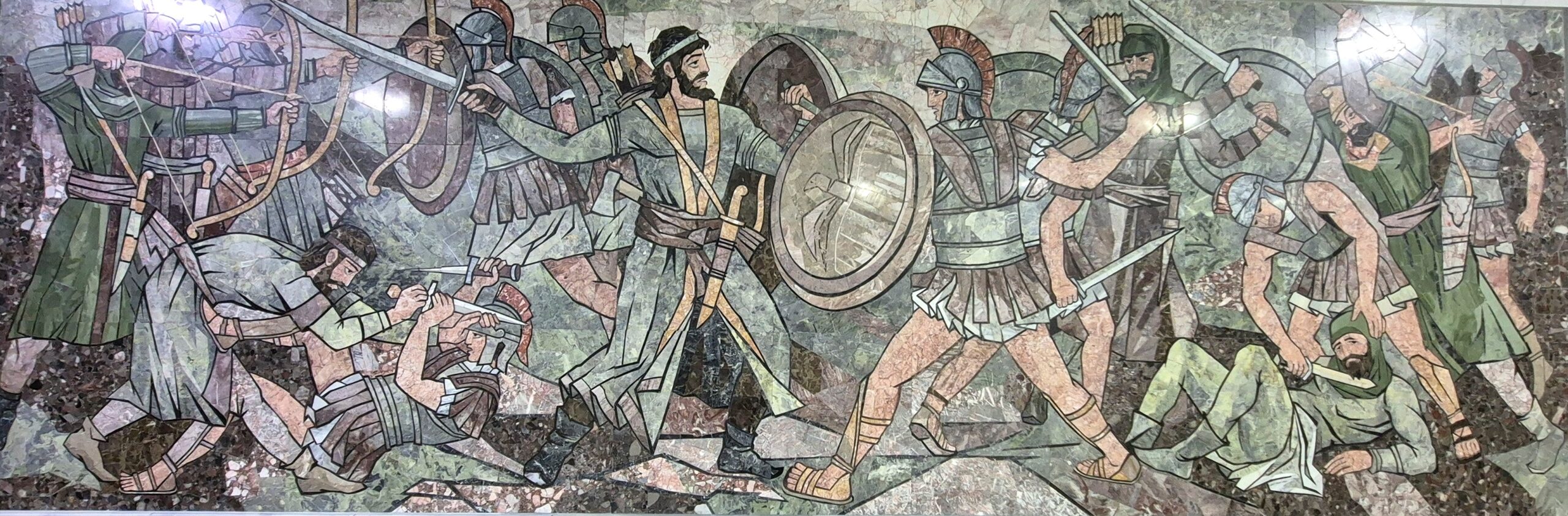
Featured in the mosaics is his marriage, because a local girl, Roxhana, captured his heart – a frequently noted event here.
Luckily, yet another old culture was discovered at a site near Panjakent, a proto-urban community from 5500 years ago that is one of the earliest settlements ever discovered. It’s known as Sarazm, “where the land begins.” This was a valley that enticed a nomadic people to work together, cultivating crops and grazing their cattle, one that connected them via traders to the east and west, north and south – a proto-version of the later Silk Road.
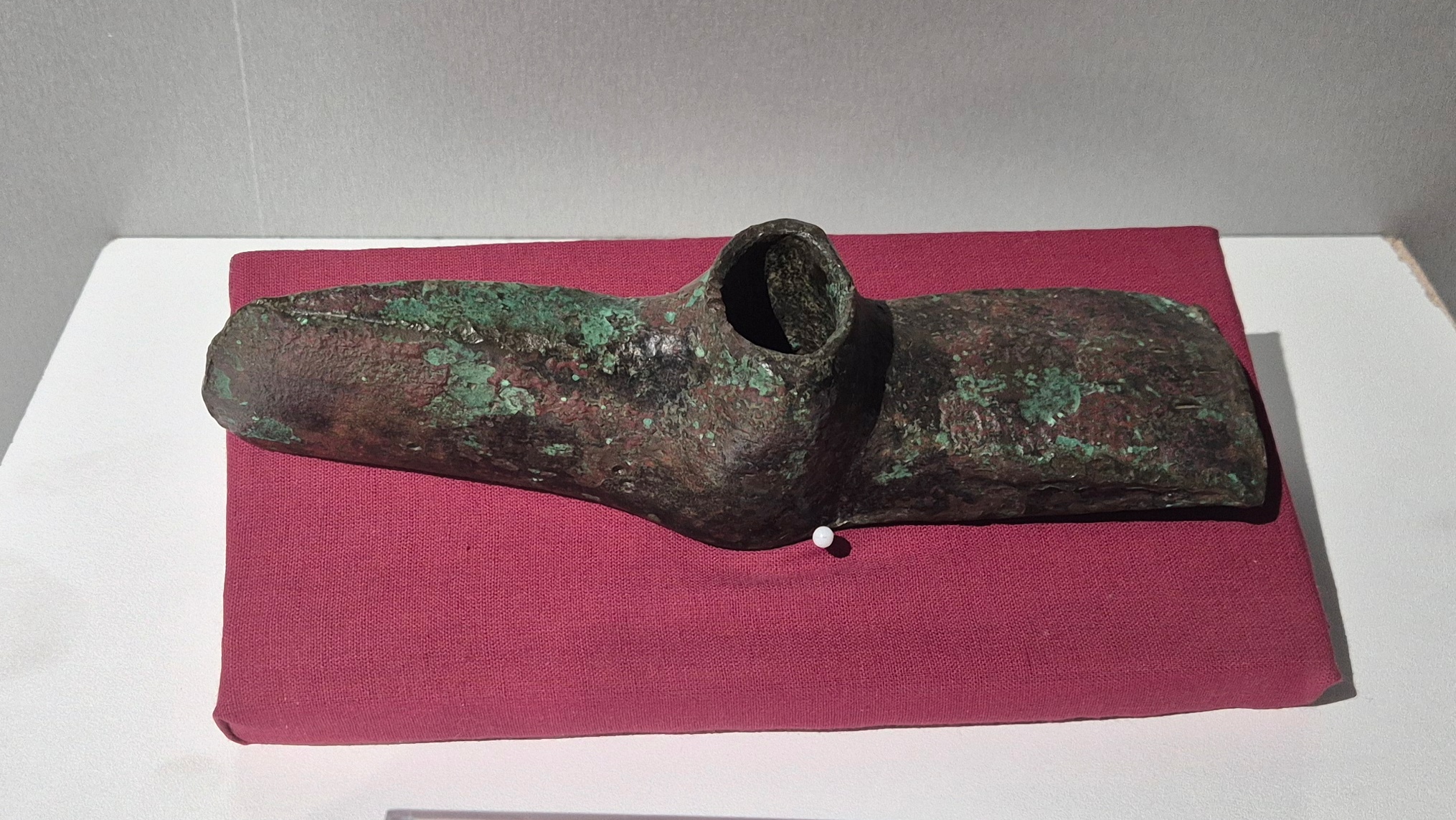
The discovery was lucky, we learned, because it was accidental. A local farmer unearthed the copper head of a digging tool. He showed it to a Russian archeologist who immediately recognized its age and importance, then began excavations here. Now Sarazm is a UNESCO World Heritage Site.
To us, the site of the proto-community was much more extensive and interesting than the one we discovered in Turkey at Catalhoyuk.
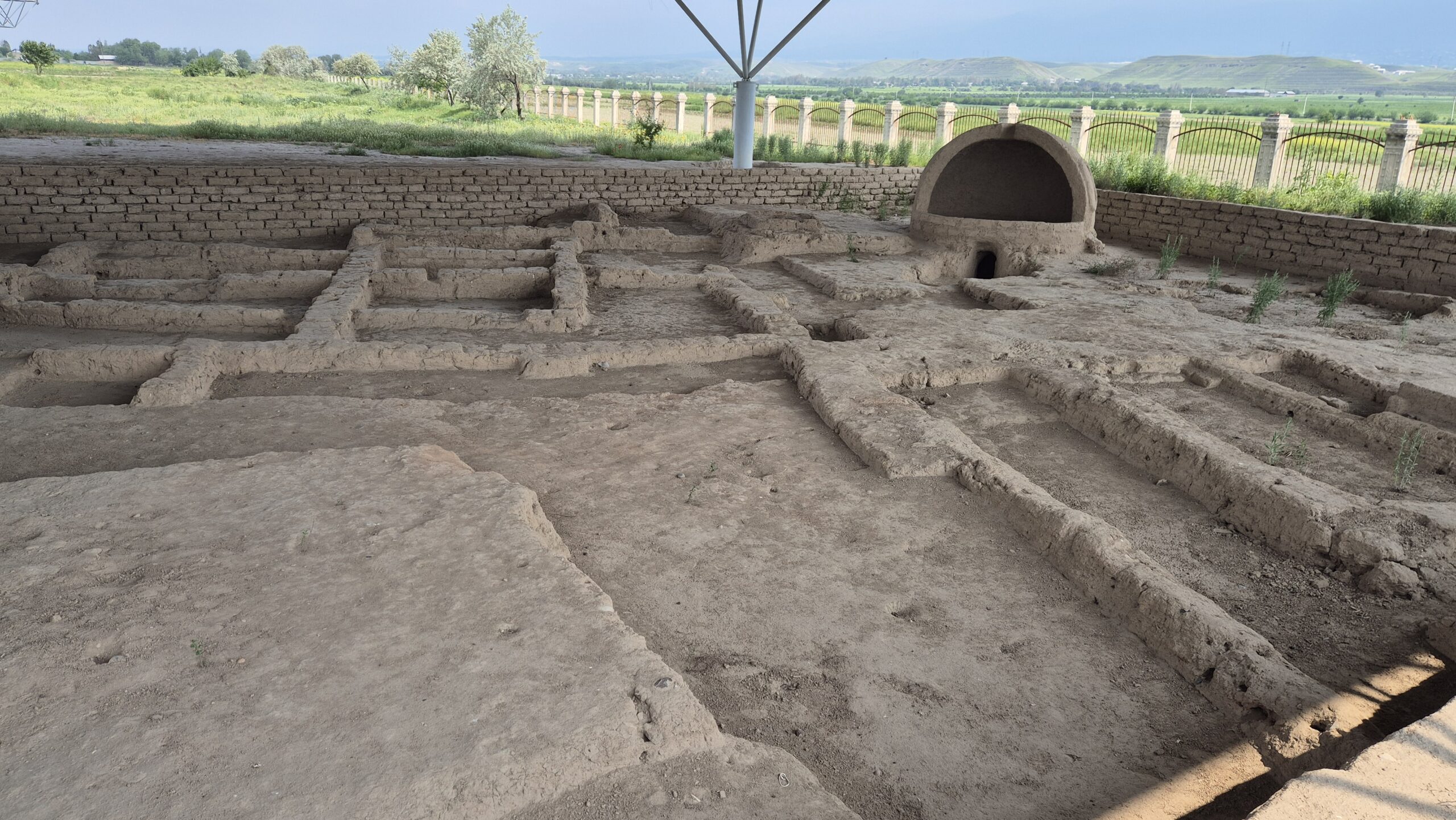
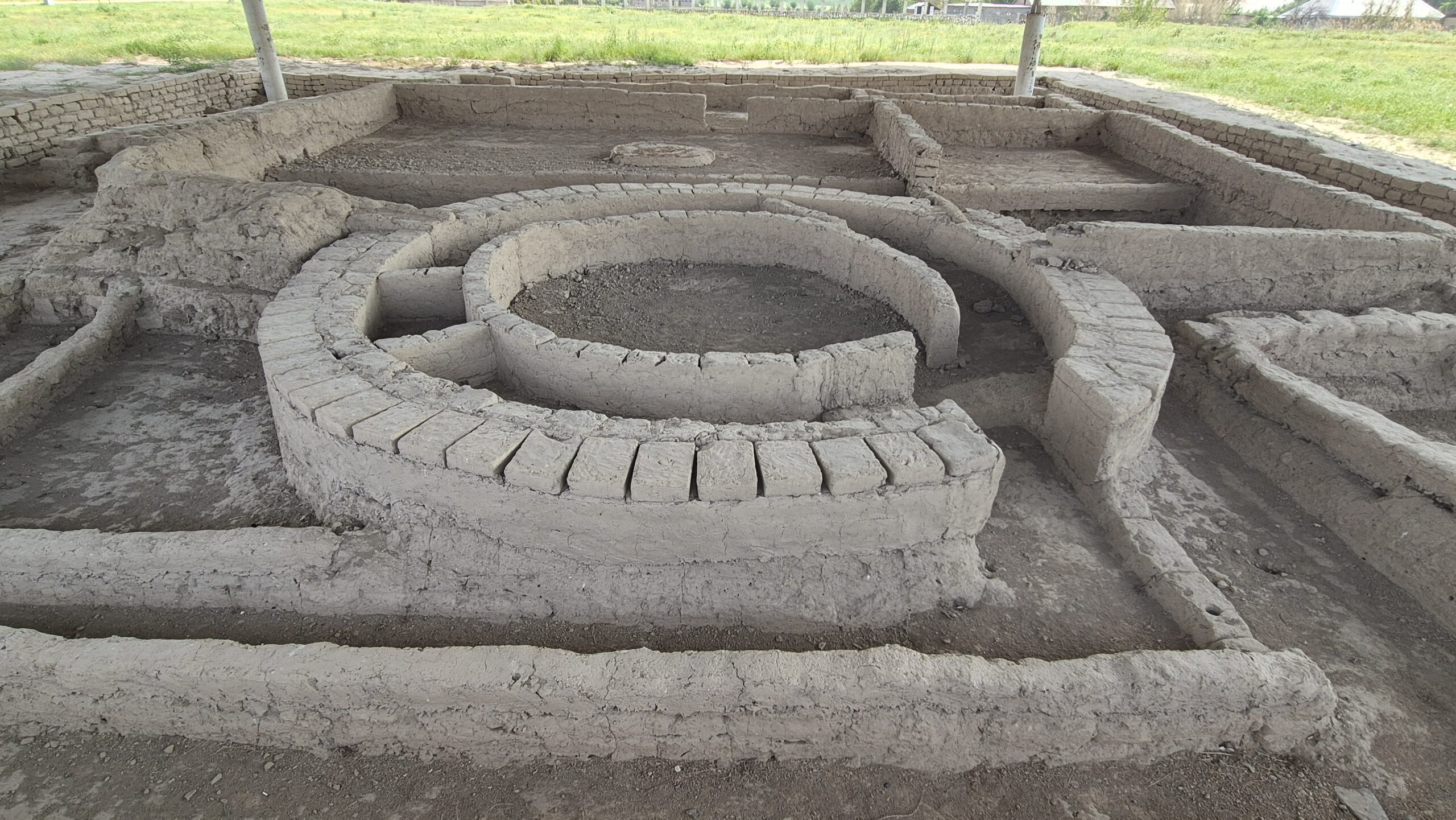
Here, most of the town was also constructed of clay. At the digs, enough of the foundations have remained to understand the layout and lifestyle, including the hearths that served for their fire worship.
The unearthing of the Sarazm Princess and other remains from that time included many items of everyday use and precious jewelry of the period.
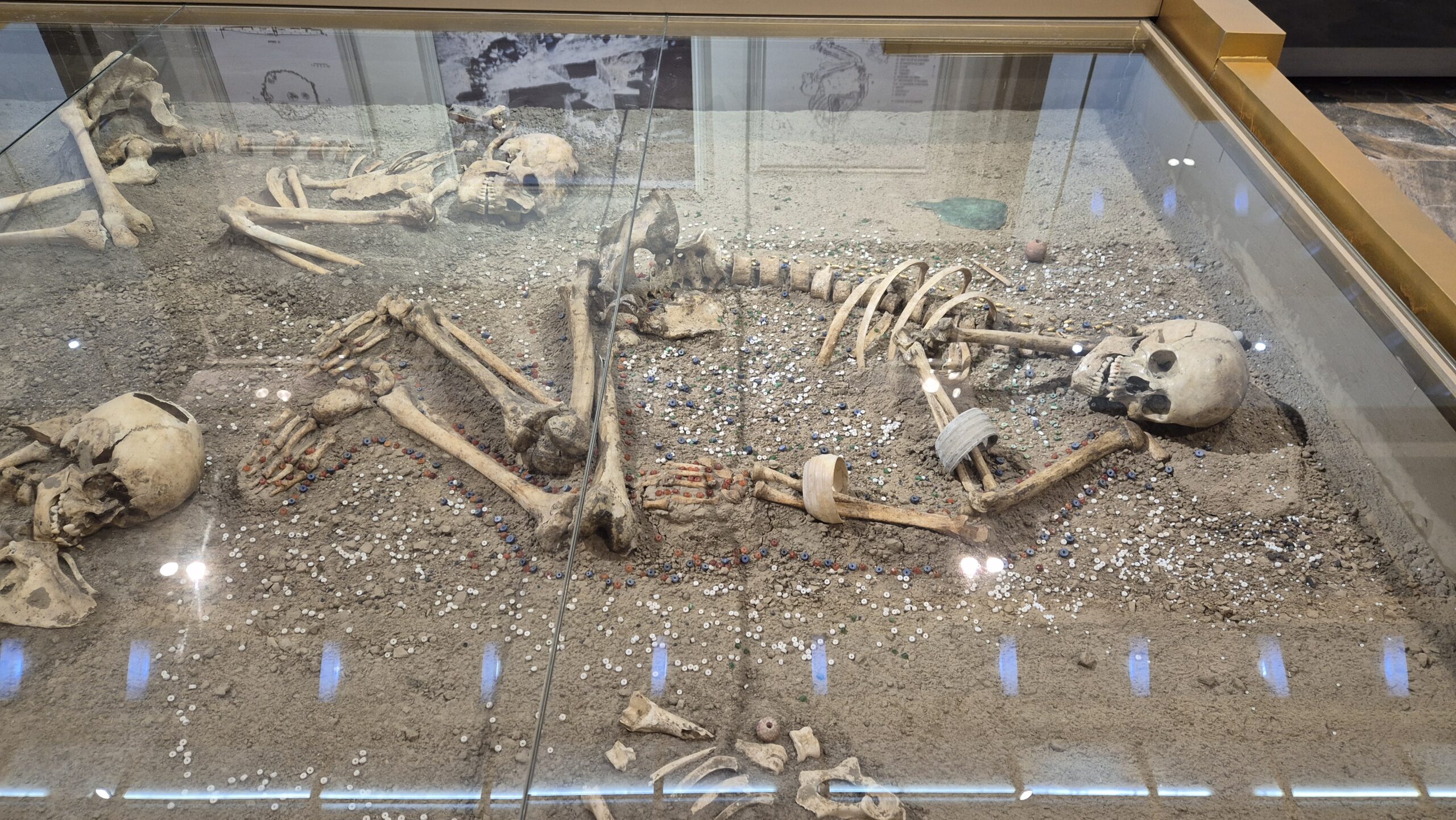
Clearly, it suits the modern leaders of the country to hail this early record of city life. A large gate, re-creations of the original buildings, a huge museum – all celebrate what they’ve designated as Sarazm 5500. “We were the first!” they can boast.
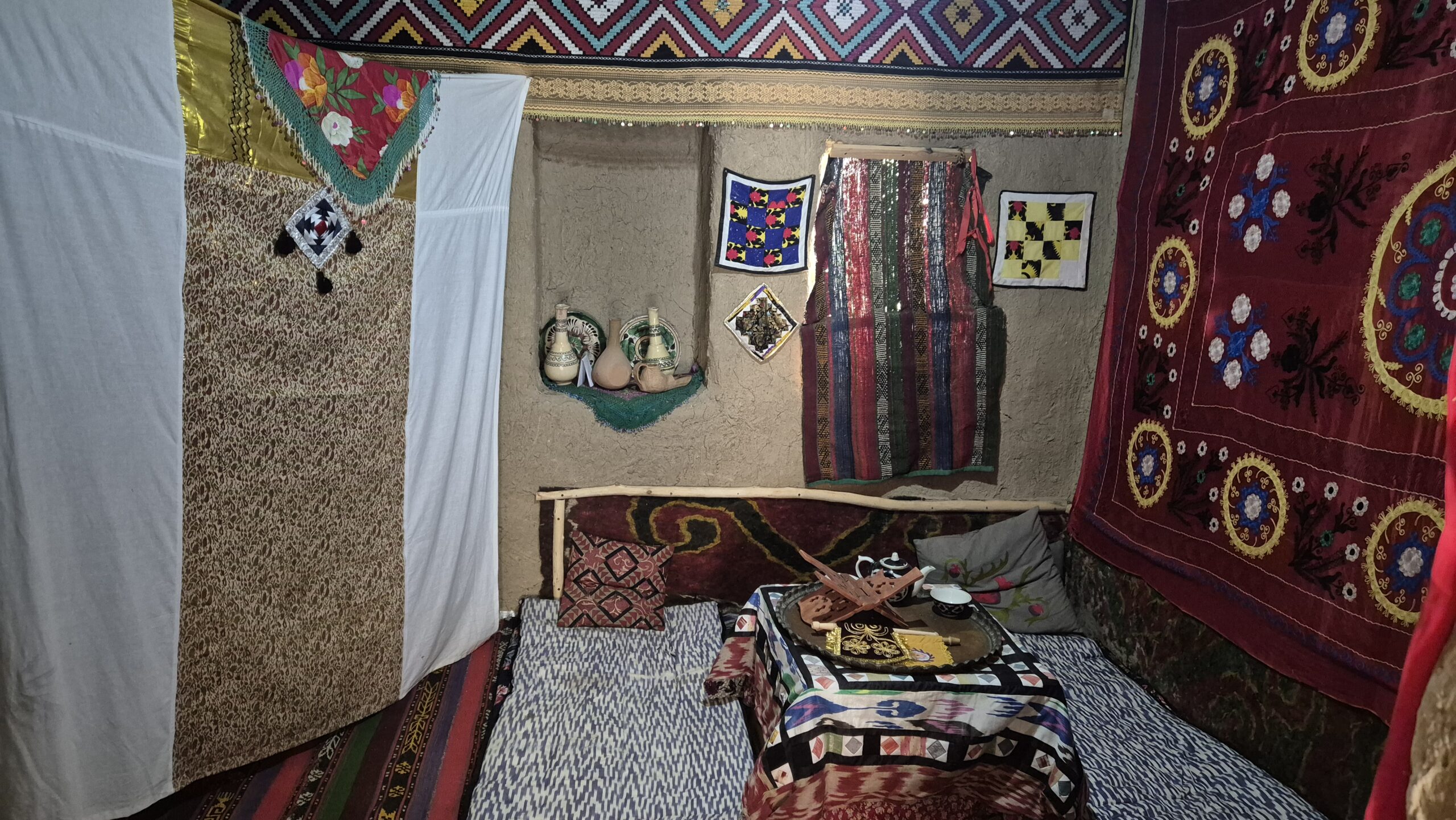
In more modern times, this area was part of the Bukhara Khanate before the Soviets split up the “republics” of the USSR to suit their needs, rather than historical or ethnic affiliations. The old trading center of Khujand is now the largest Tajik town in the northwest. After the Arabic invasion, Khujand became a center of learning, home to celebrated poet Khujandi in the 14th century among other notable scientists and writers.
The style of its heavily restored fortress demonstrates in brick and stone its relationship to Bukhara, which ruled this part of Tajikistan by the 17th century, as do various mausoleums and religious buildings.
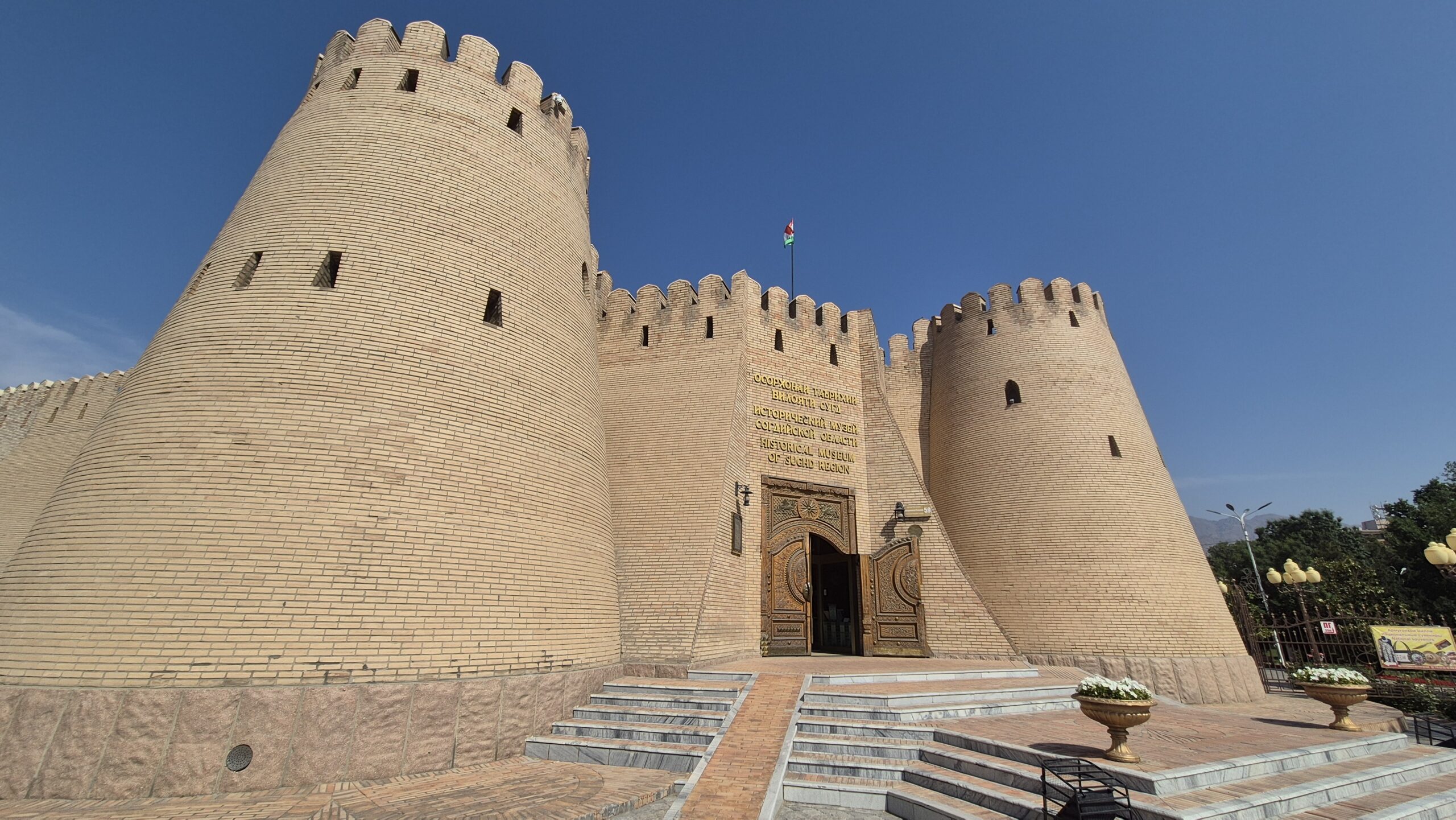
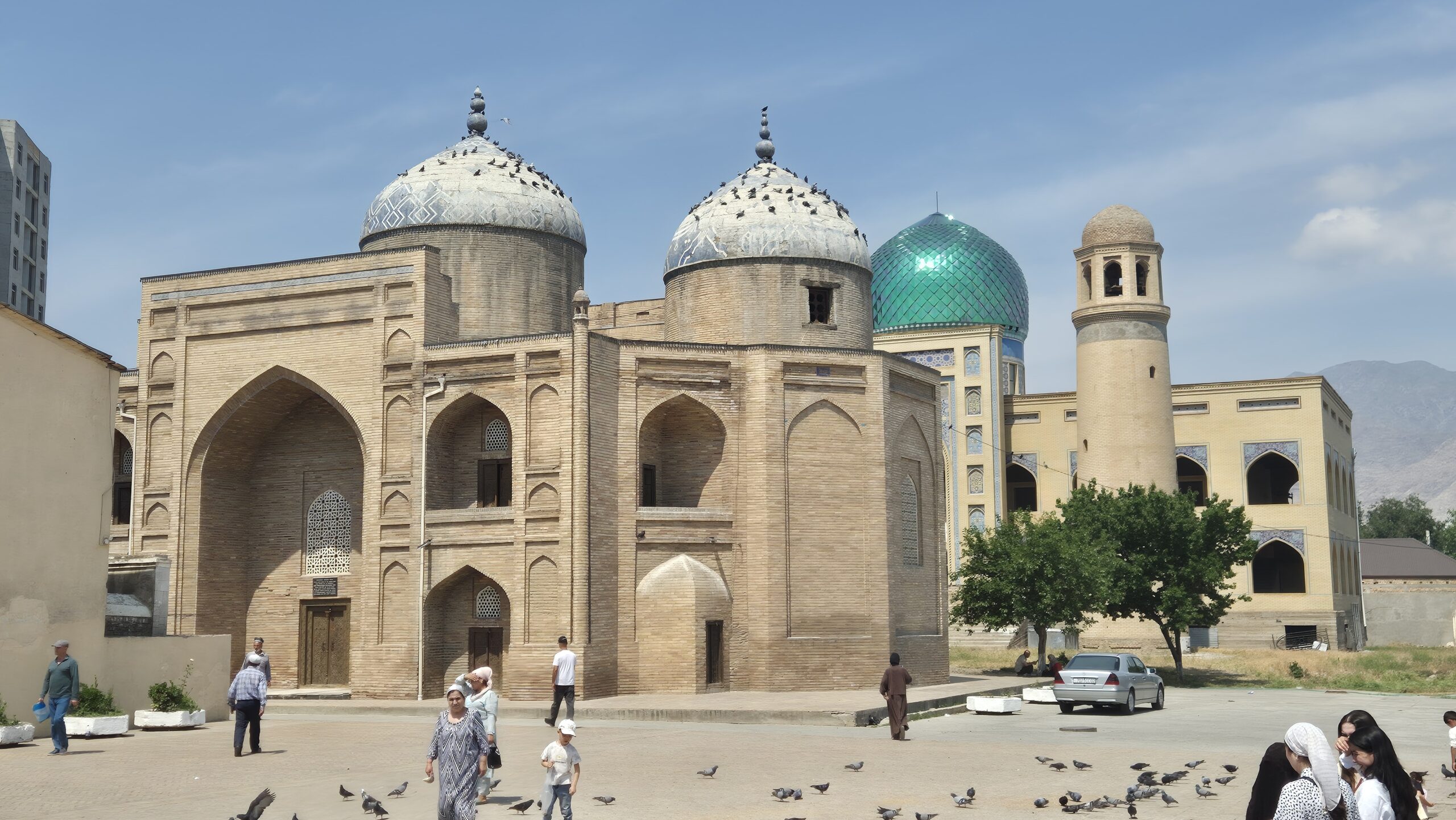
The contemporary city preserves the usual 20th century Soviet add-ons: broad parks (though with a creaky Chinese cable car crossing the river), grand public buildings, etc
Of course, no one worships fire anymore; it is not a part of Islam. But there is much warmth shared.
Here, as elsewhere in the country, we were often hailed by children and warmly greeted with huge smiles from the older men and women. We had already seen how hitchhiking is a way of life in Tajikistan, particularly in the mountains, to supplement the many minivan buses rumbling about. Picking people up is expected as a normal courtesy, a sign to us of their communal warmth, regularly extended to guests.
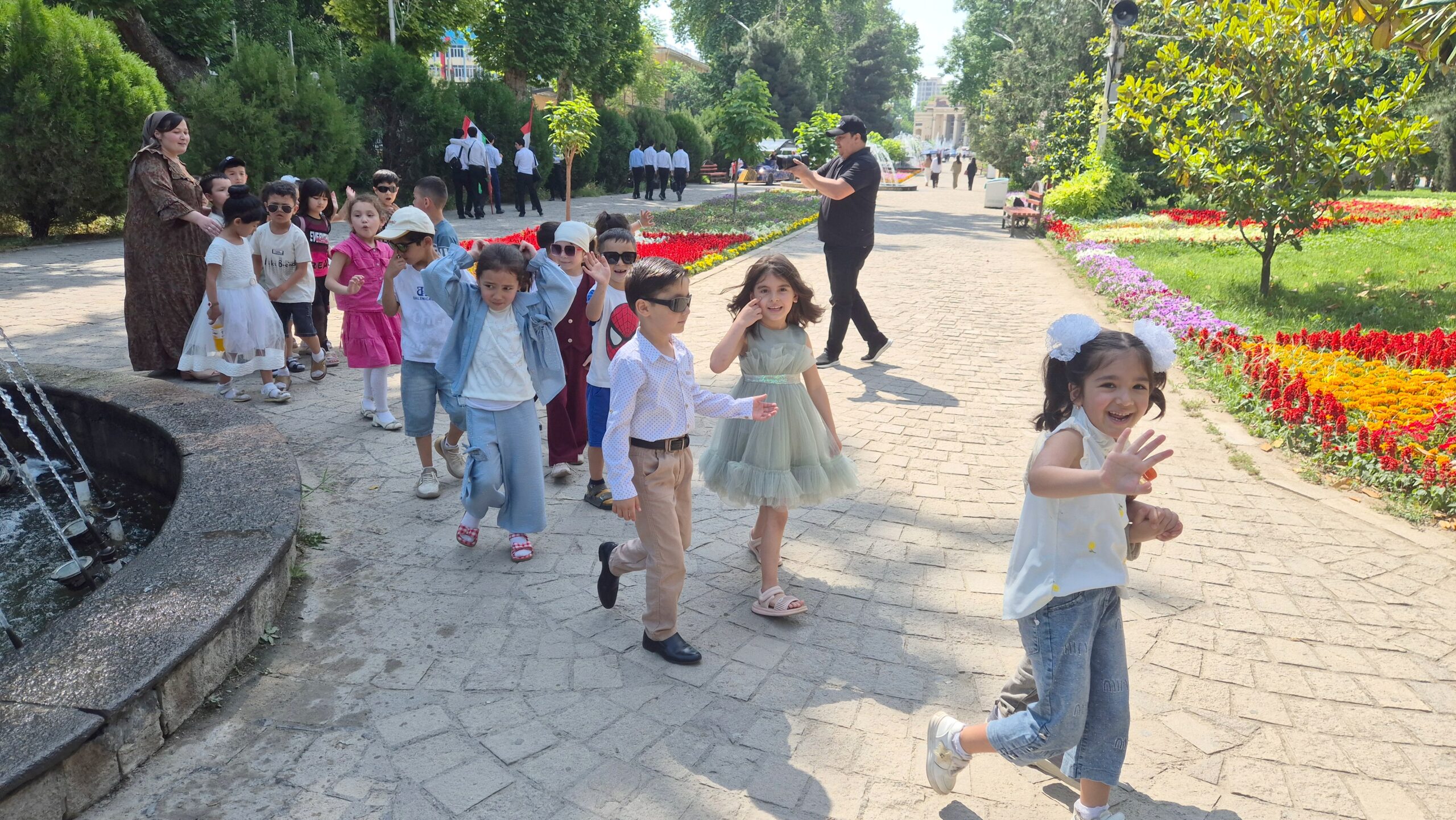
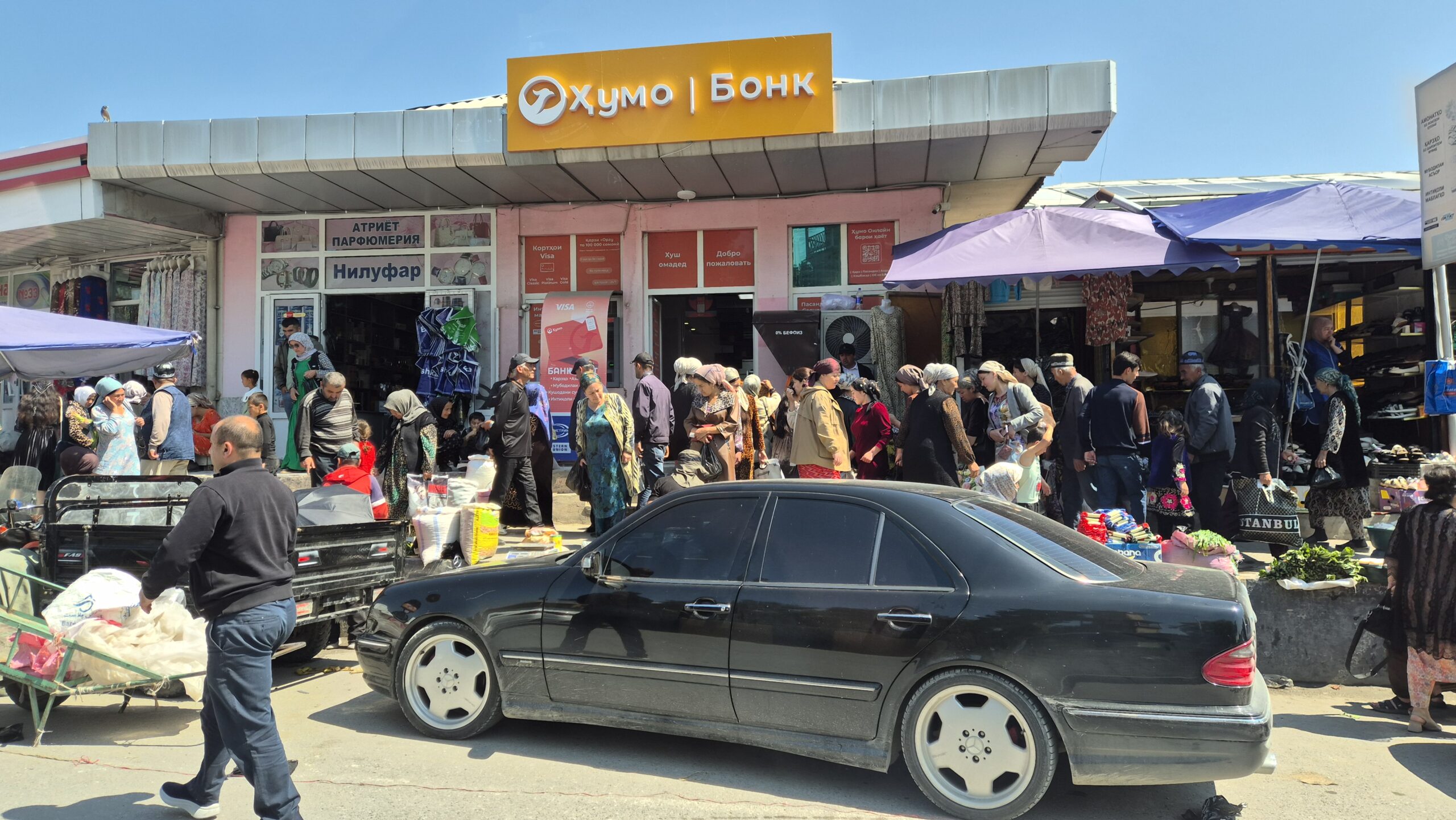
We experienced many other small instances of this warmth. Everyone can taste the bulk wares on display at the bazaar markets; it’s expected. When we bought something, though, we nearly always engaged in a long conversation about who we were and any connections that the stallkeepers shared. Plus some extra from the stall – basil, an extra measure of an item, etc.
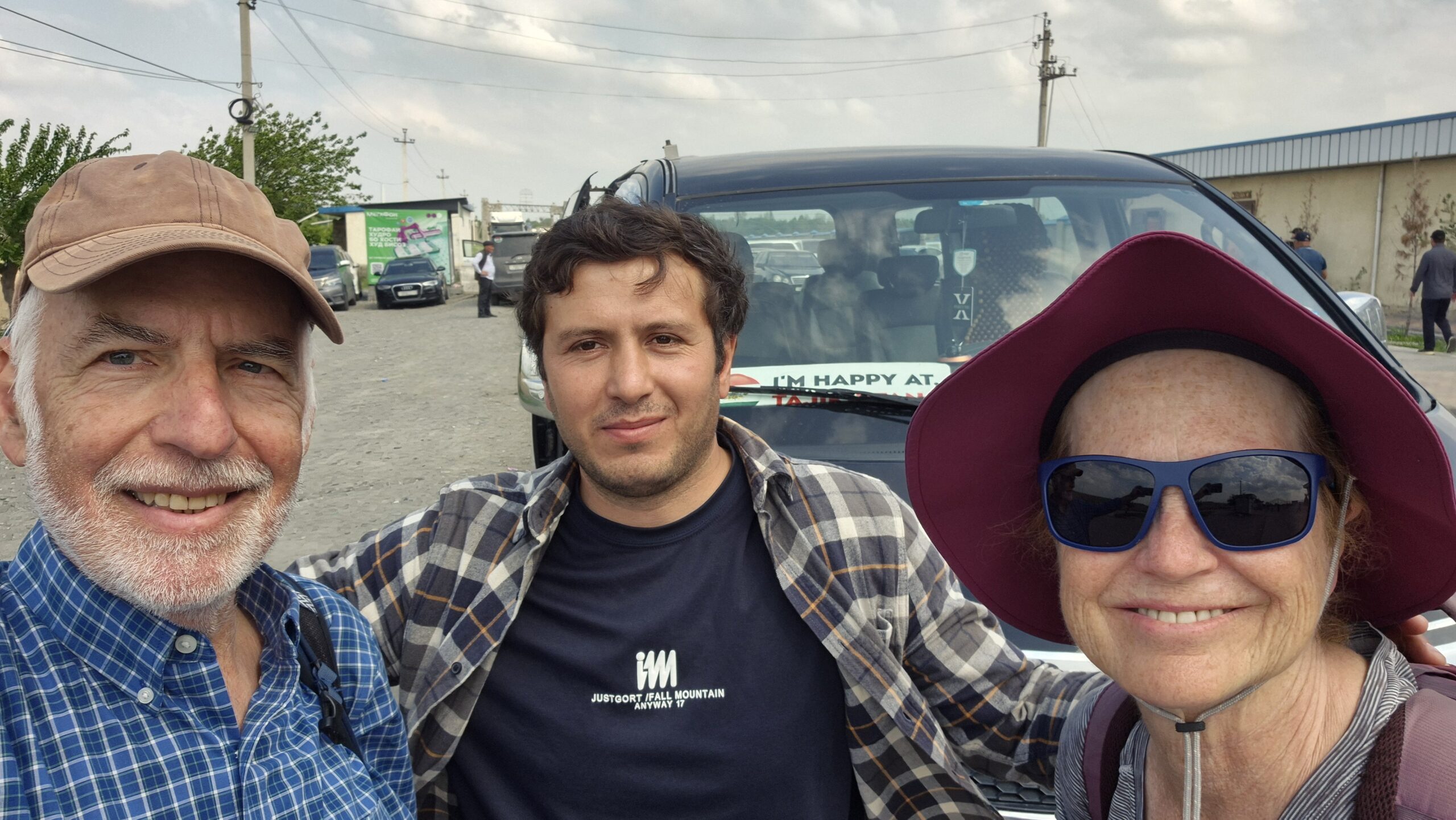
As we left Tajikistan via its land border with Uzbekistan, we hauled our bags about a kilometer to clock out of the country and clock into Uzbekistan. We said goodbye to our helpful guide and driver, who kept us safe on all those rough mountain roads.
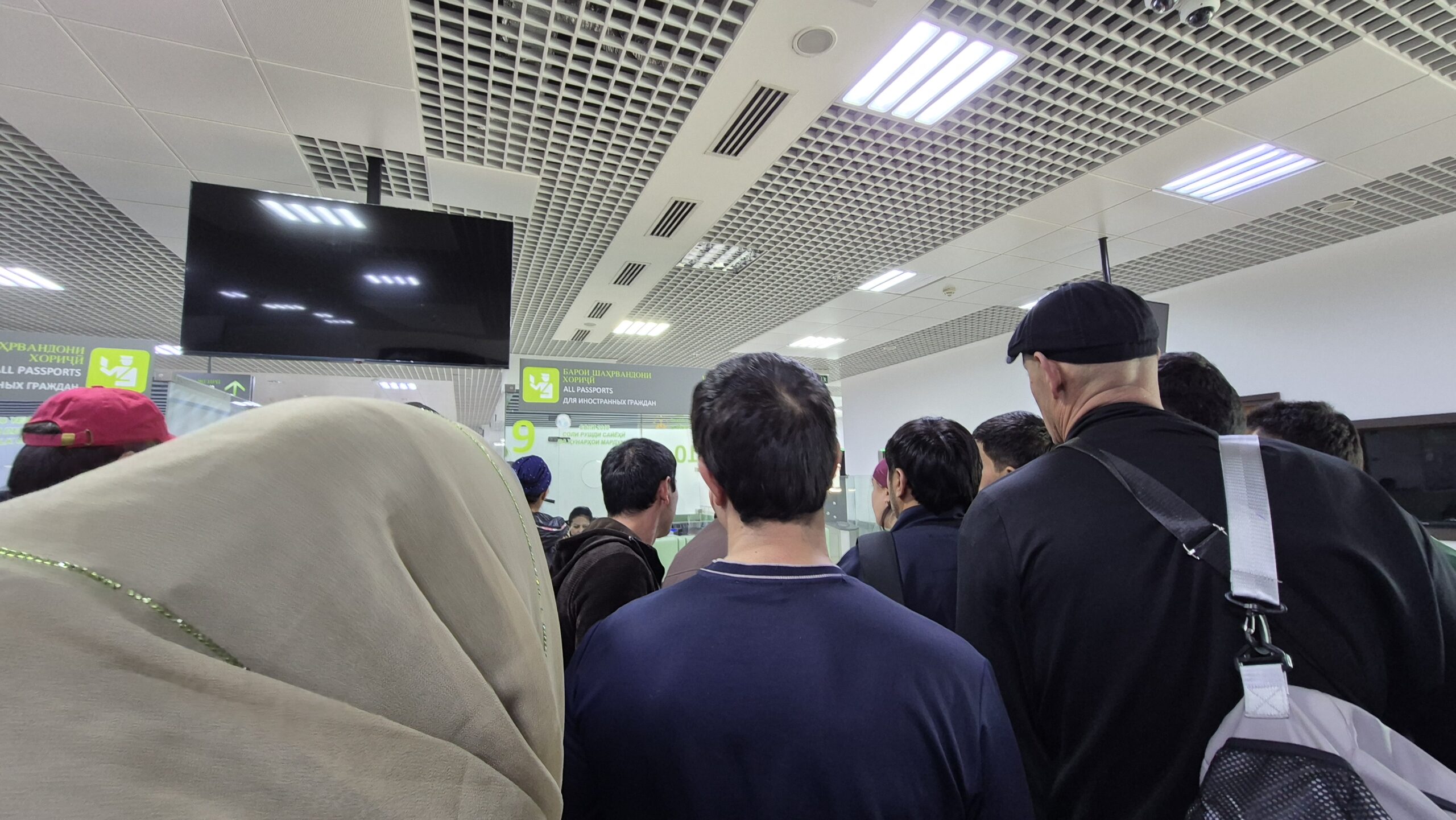
But the most heartwarming example of local warmth was on our arrival by plane into Dushanbe, after a grueling pair of flights crossing two borders twice within 12 hours (a re-jig because the direct flight was cancelled). The long, confusing passport control line looked to be at least an hour wait, as only a few agents were working. A dozen people were in front of us when one proposed that we go ahead. We demurred, but they all insisted. None of them knew each other, but all agreed that we – clearly not local – should go ahead: we were their guests.
The fire still burns in Tajik hearts.
(To enlarge any picture above, click on it. Also, for more pictures from the five Stans of Central Asia, CLICK HERE to view the slideshow at the end of the itinerary page.)