

In brief: The Kyrgyz are a superstitious people in everyday life and spin tales about the countryside, notably at Issyk-Kul, their great lake.
At 1600 meters in altitude (1 mile), Issyk-Kul – in the center of Kyrgyzstan – has been called the second highest alpine lake in the world, after Titicaca. And it’s also huge, some 180 kilometers (120 miles) long. The lake has changed size frequently over time and even has flooded an ancient city or two.
It’s easy for a visitor to forget that she is not at the edge of a sea except for the enveloping Tian-Shan mountain range, whose peaks drain into the lake, and the fresh, chilly water with just a touch of salinity.
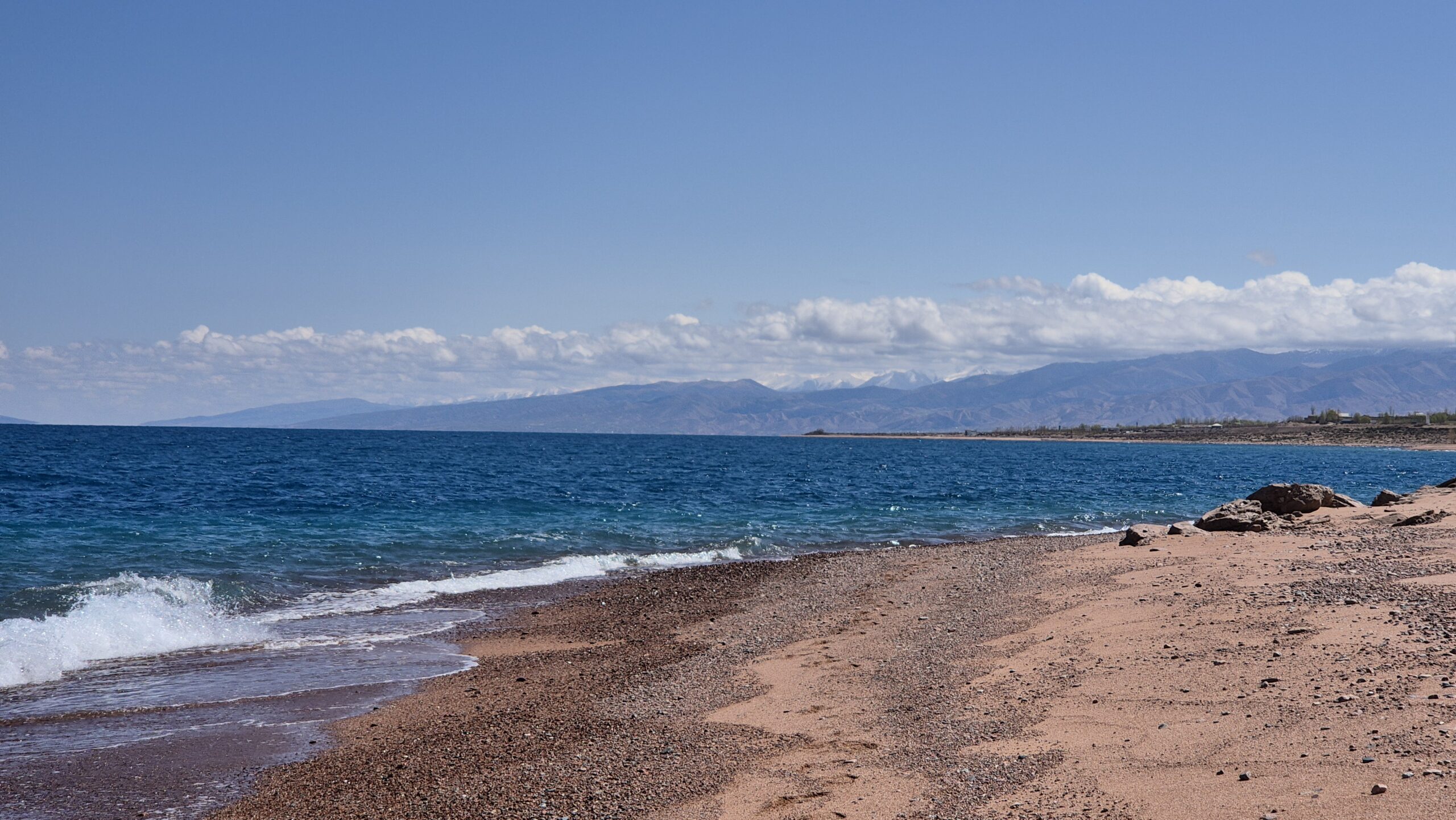
In the past, traders followed the Silk Road through here between east and west. Now, during the season, Issyk-Kul’s beaches attract many Kyrgyz visitors from the big cities like Bishkek, and adventurers who savor picturesque hikes in those mountains.
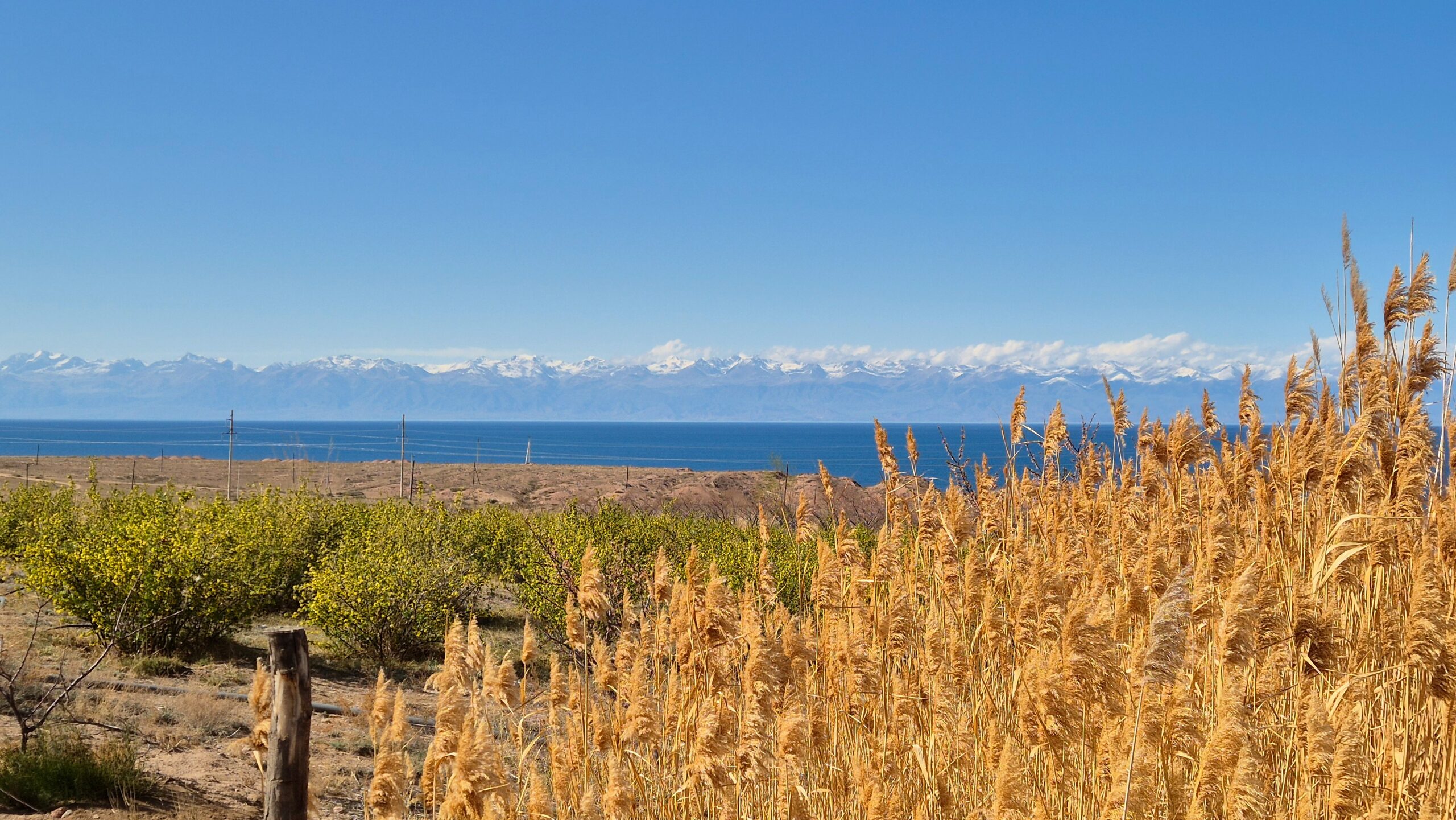
While we traveled along the southern shore of the lake, we were intrigued about the continuing power of superstition and legend among the Kyrgyz, despite the attempts to purge these unholy beliefs by Islamic leaders.
The Kyrgyz tribes were still nomadic when the Russians forced urbanization and farming on them during the late 19th century. By then Islam was widespread, but lightly treated as a religion. Instead, animist and Zoroastrian beliefs kept their hold on the people, even now just a few generations since that nomadic life.
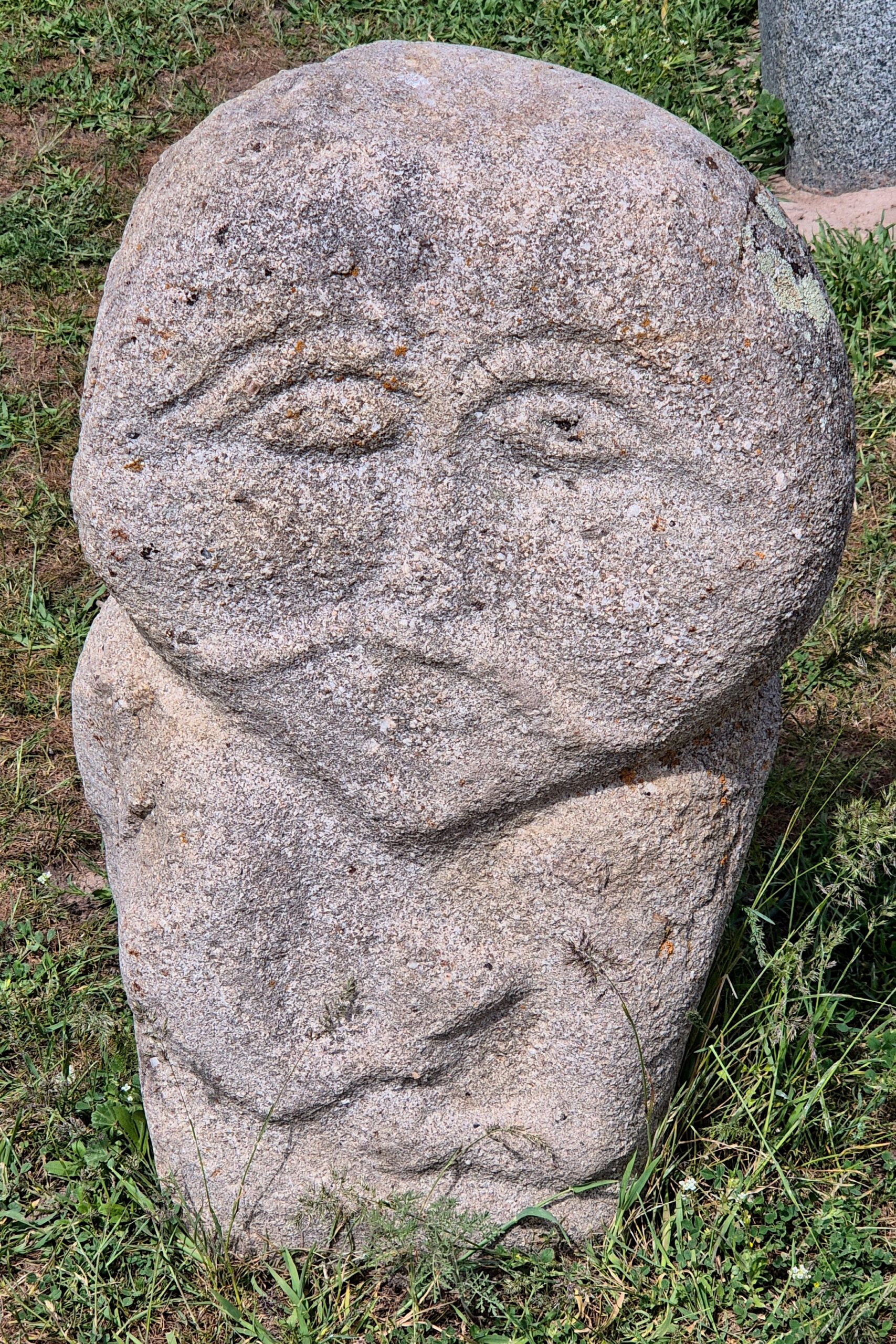
For example, a common practice in the first millennium was to set stones near grave sites, with carved figures holding a knife in one hand for power and a cup in the other for prayer. These balbals (or “father stones”) are still thought to let the spirits of the dead return.
Even today, women carry burning juniper bush on streets or into houses to ward off evil forces. The most potent of these are revered as shamans. People tie cloths to trees as protections, and bread is so revered that people will ‘rescue’ it if they find a piece on the ground.
Not surprisingly therefore, Issyk-Kul lake is a place of legends: for the towns that were buried over the years, for its supposed role in the spread of the Black Death plague from traders, and more like these…
Seven Bulls and a Miss
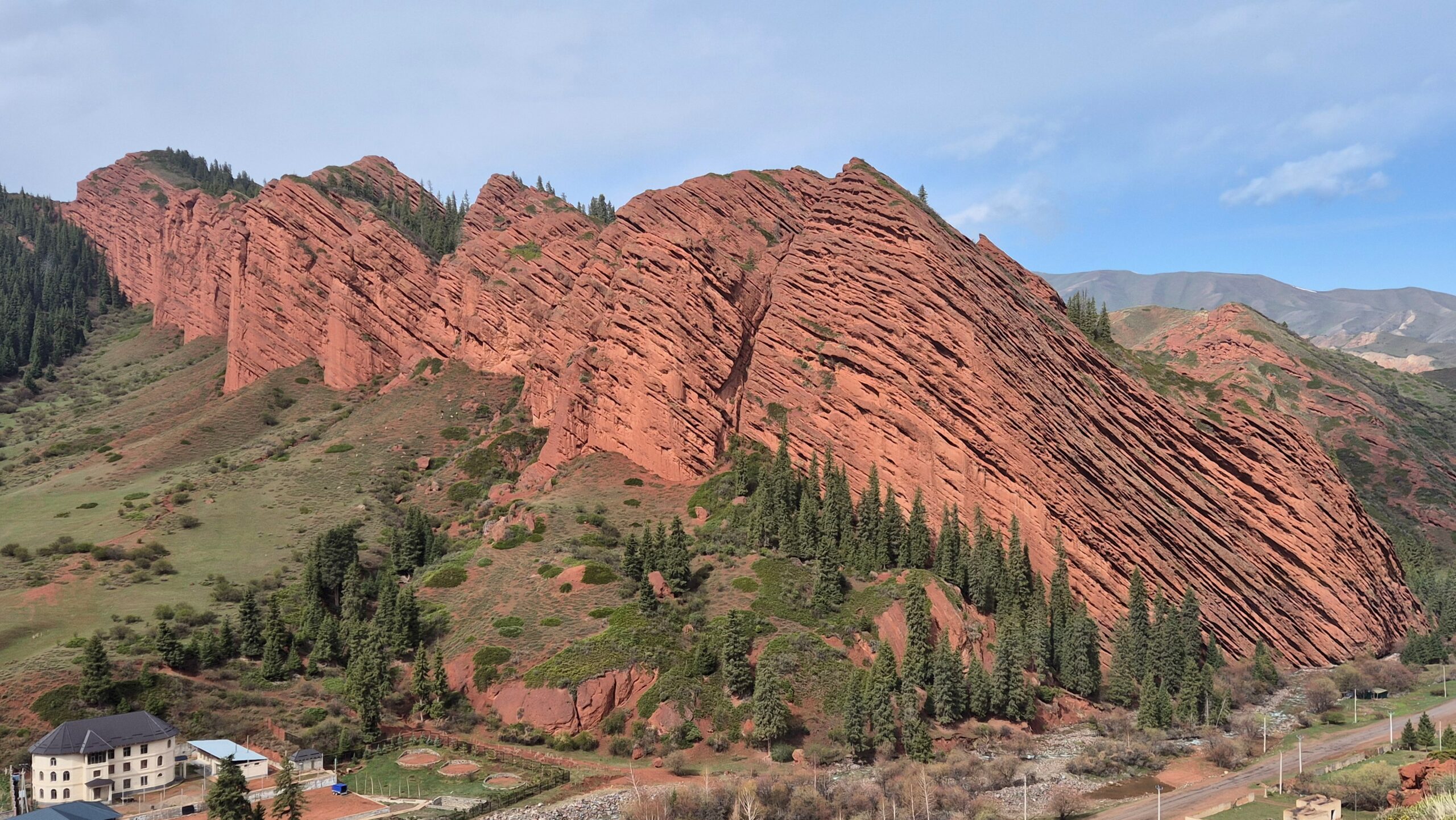
Take the Seven Bulls formation of red rock mountains thrust upward in severe angles near the eastern end of the lake. It’s clear now that some forceful geological activity occurred.
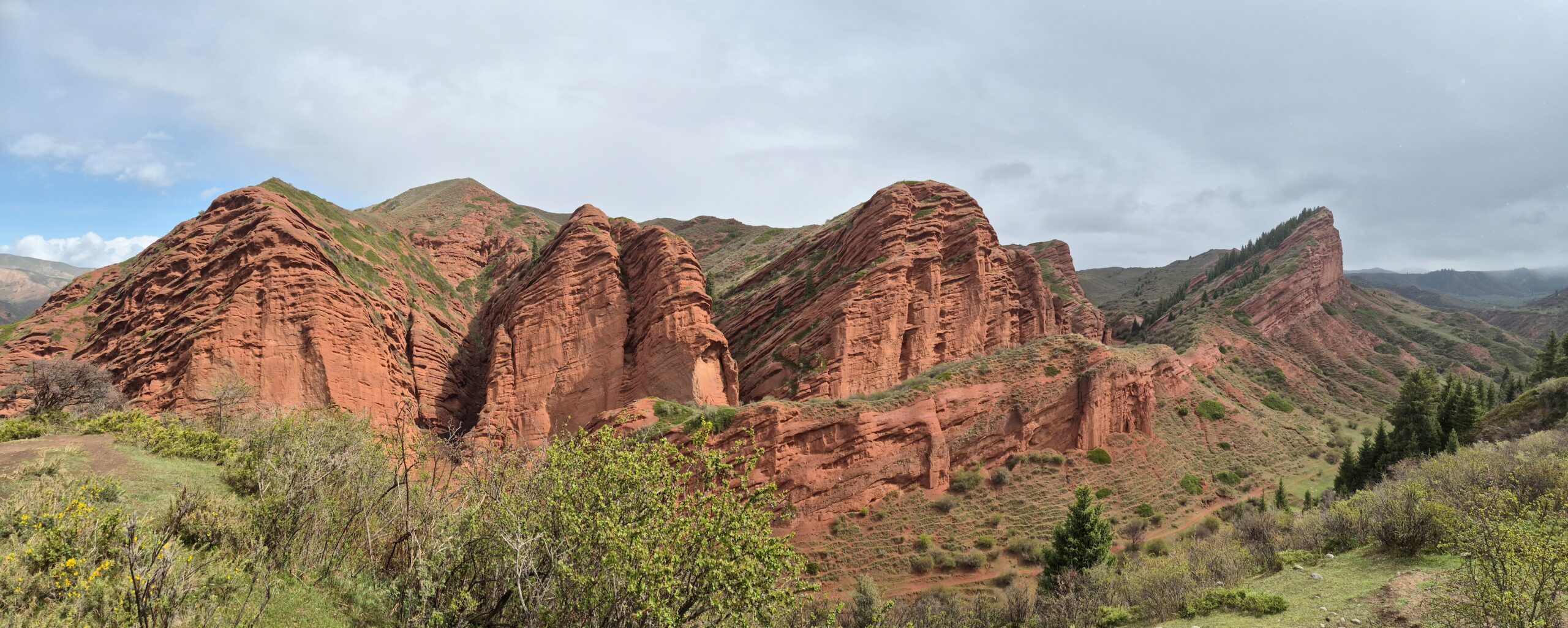
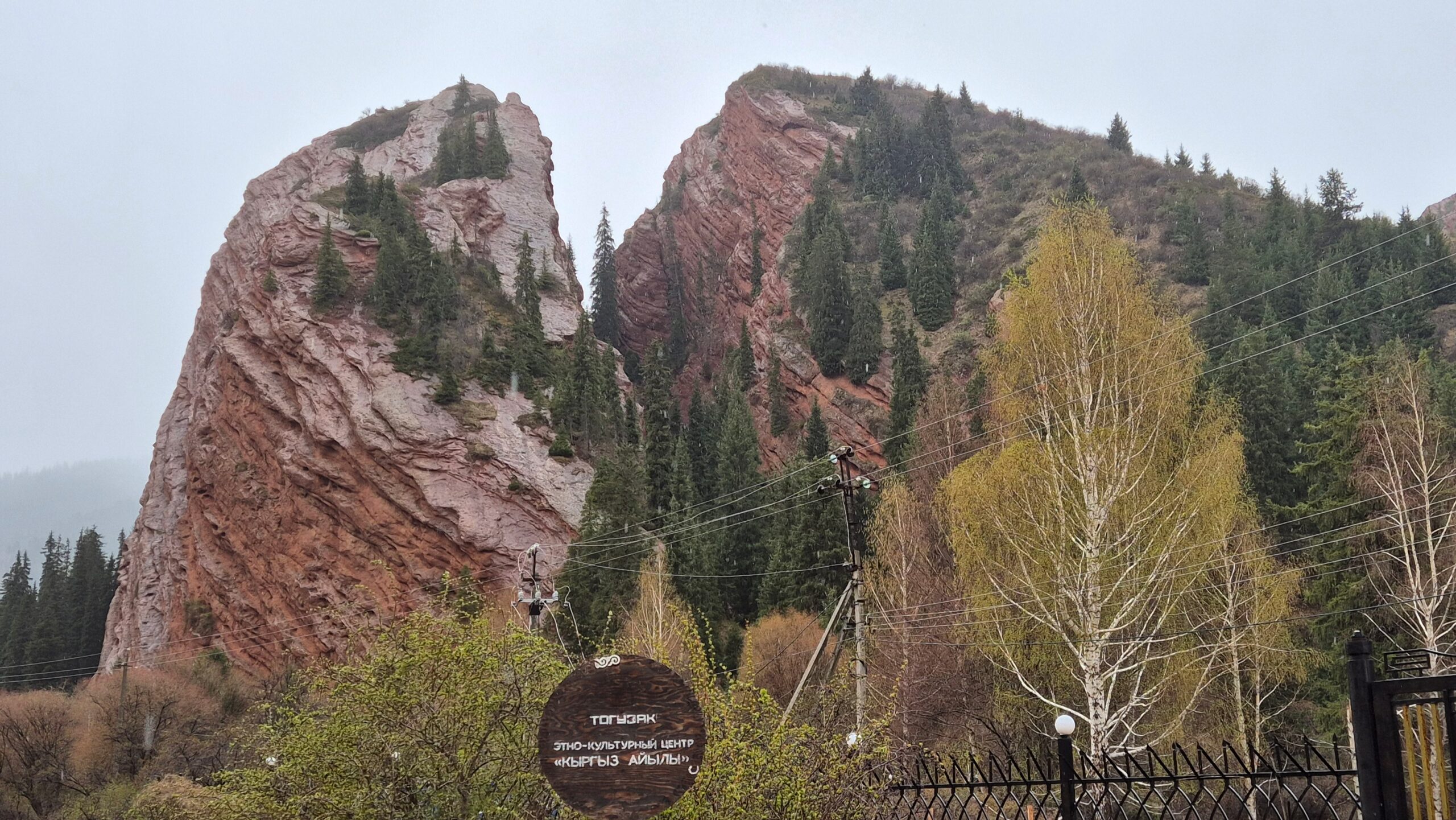
But in the past legends explained the phenomenon and the mysterious split boulder nearby. Two rulers fought over a maiden. One of these rulers found no way to resolve the conflict except to deny the other a victory by killing the woman. After ceremoniously sacrificing seven bulls, he murdered her. Ah, but this evil deed was punished by a flood that destroyed him and his entourage within the gorge. The spirit of the bulls found their place in the seven humps of the red mountain.
And that split rock, shaped like a heart, became the lover’s broken heart and a kind of symbol for the country (even though that sign and the electric wires refused to get out of our way).
Fairytale Canyon – A Dragon and a Miss
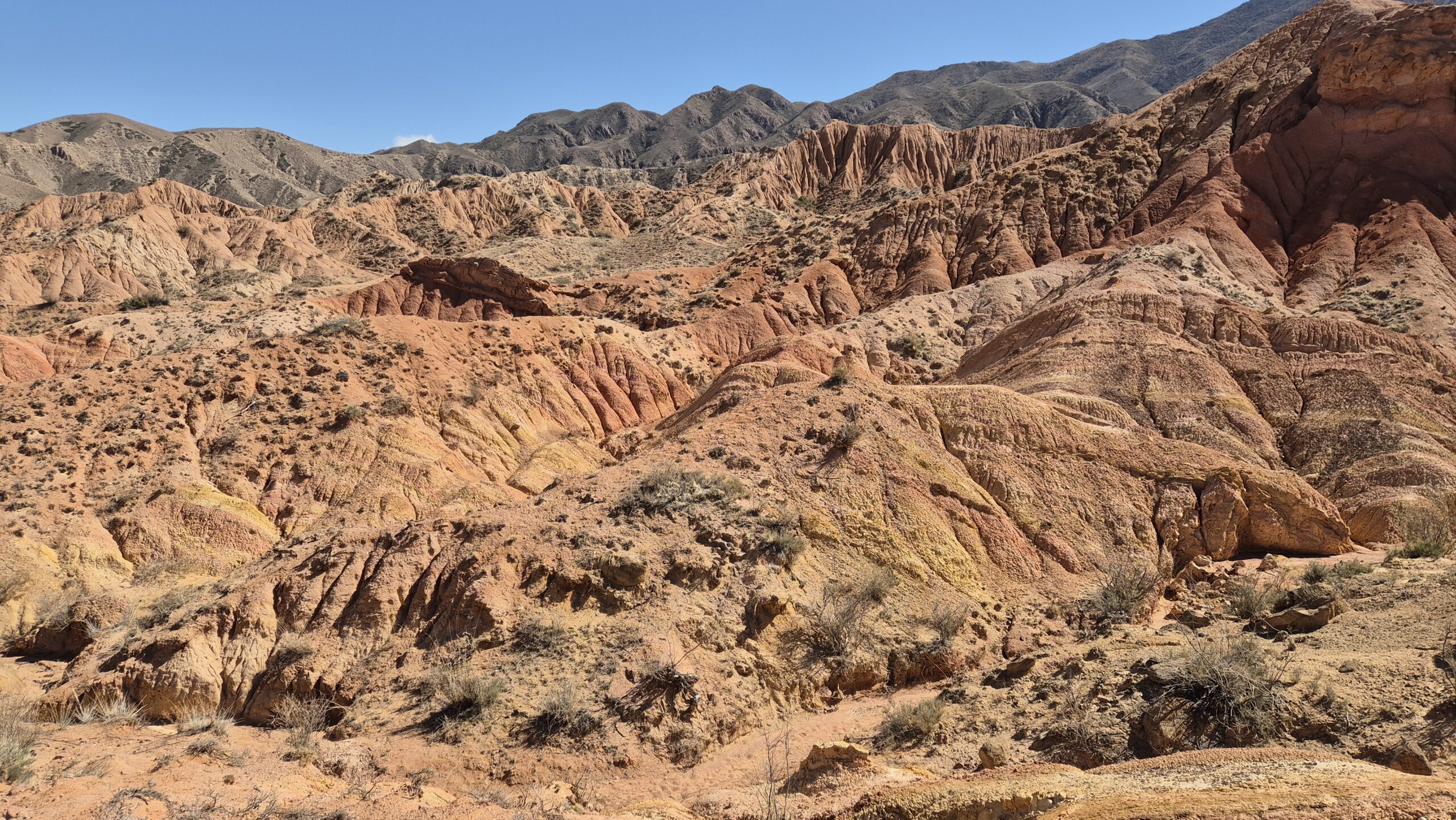
At first sight, we felt that the strange landscape called Fairytale Canyon, up from the lake, farther west should have its own legendary spirits. And indeed, as we discovered, it comes with its own mythic tale of frustrated love, cities flooded over, and – in this case – a dragon.
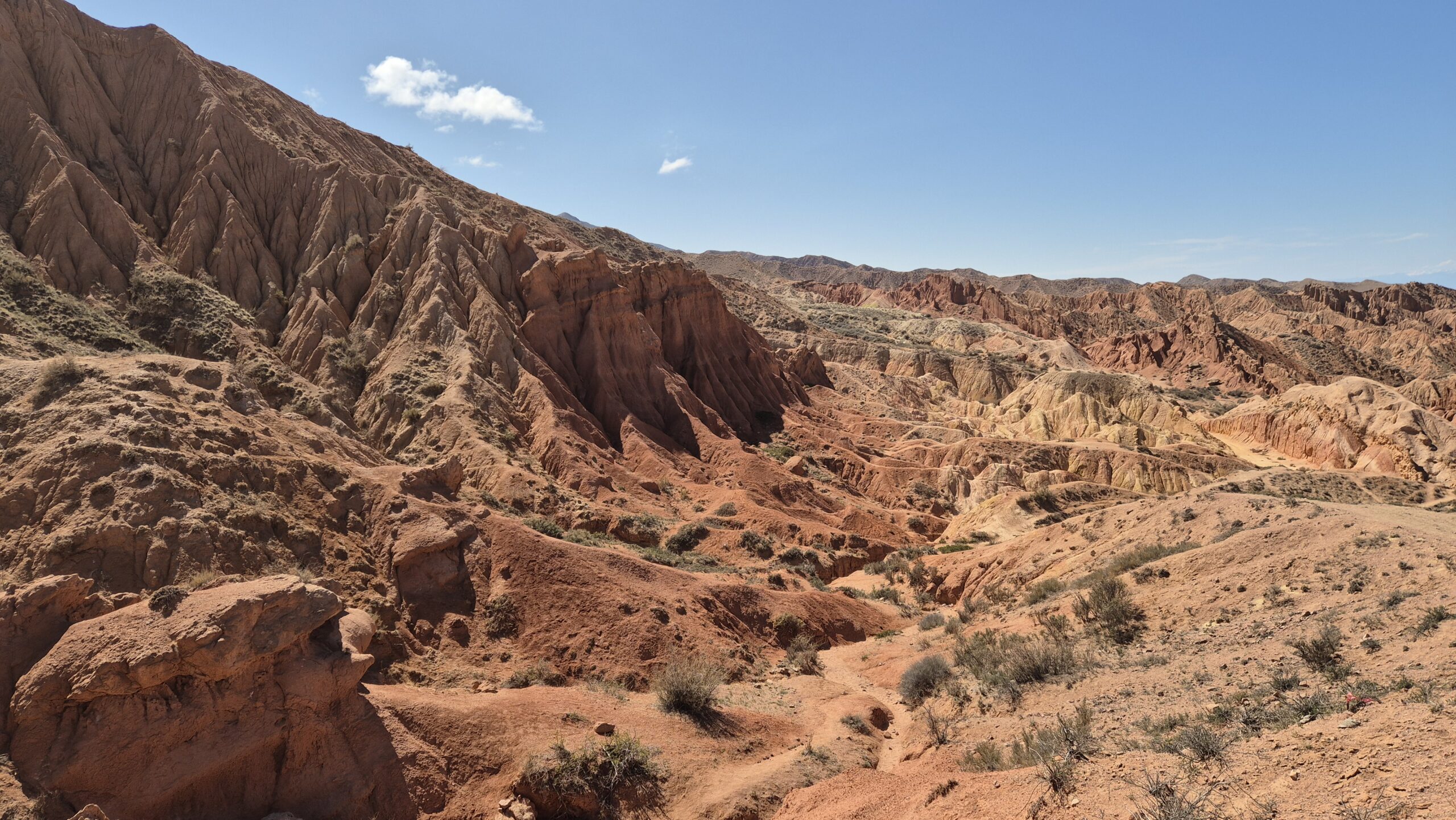
Once upon a time, a dragon loved a beautiful maiden who, for reasons known only to her, rejected his love. Maddened by his frustrated love, the dragon cursed the towns in the valley, threatening a flood from a well until she changed her mind. She might have been smart enough to want another mate, but apparently was not smart enough to remember to cover the well at the critical time. So, the waters rose and the towns – and all their maidens – were lost beneath Issyk-Kul. In shock, the dragon hardened into stone of yellow, ochre, red, and orange.
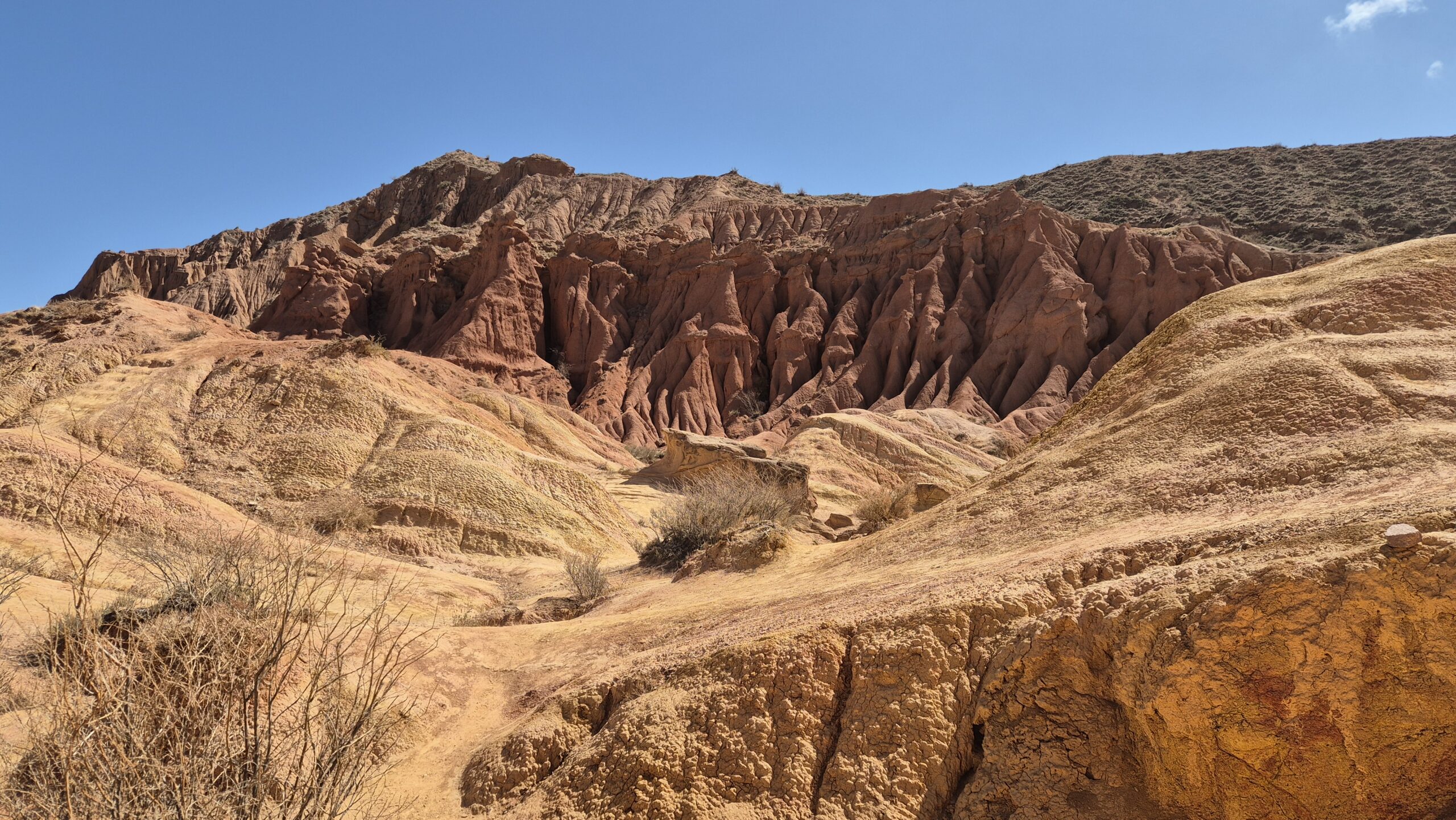
With just a bit of imagination now, you can search the ripples, strata, and peaks of this stunning terrain to find the stony dragon, among rocky turtles, elephants, and other creatures.
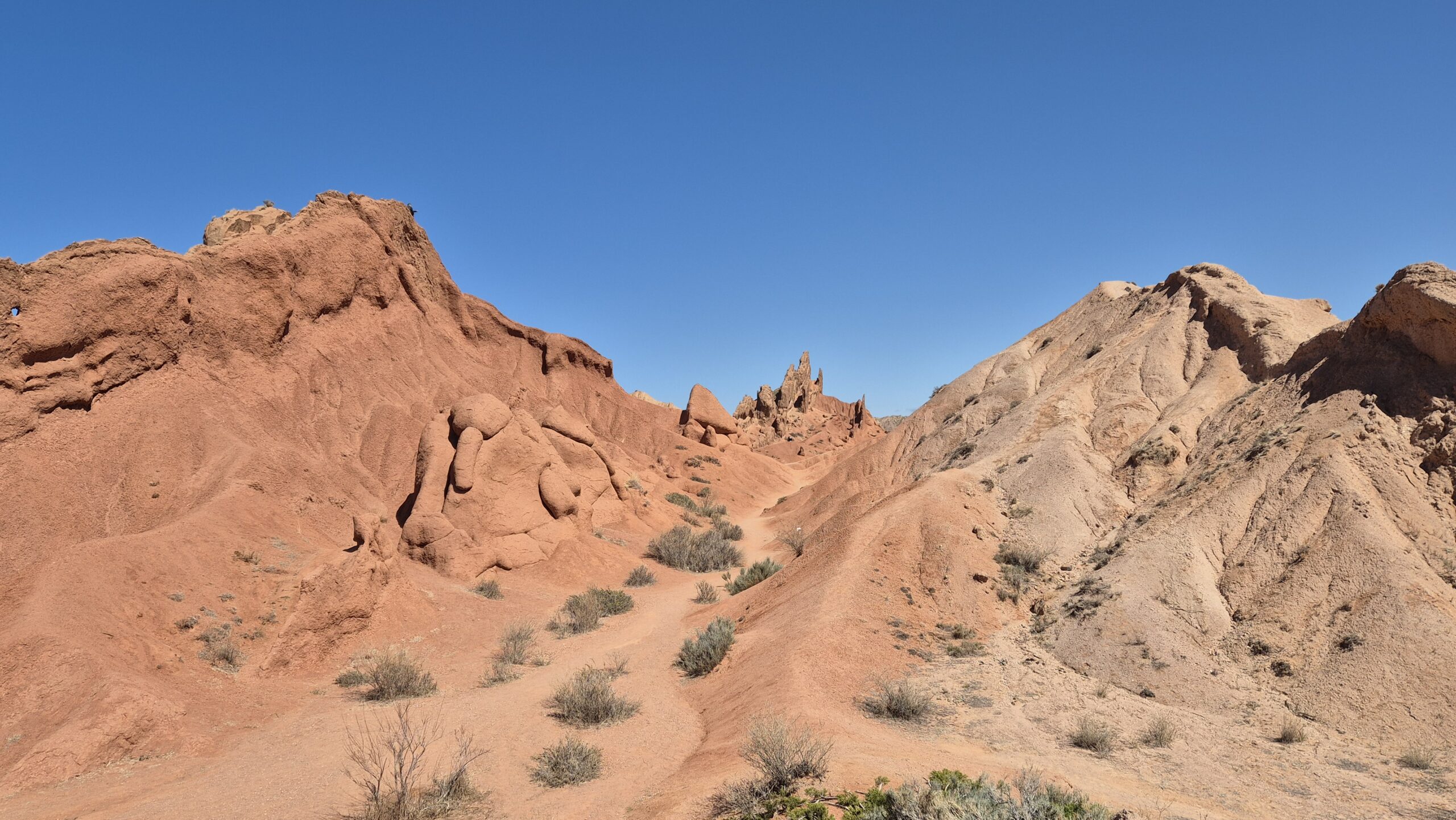
We traversed its bumps and snaked through its dry stream beds for hours, thrilling at the multi-faceted, multi-colored splendor.
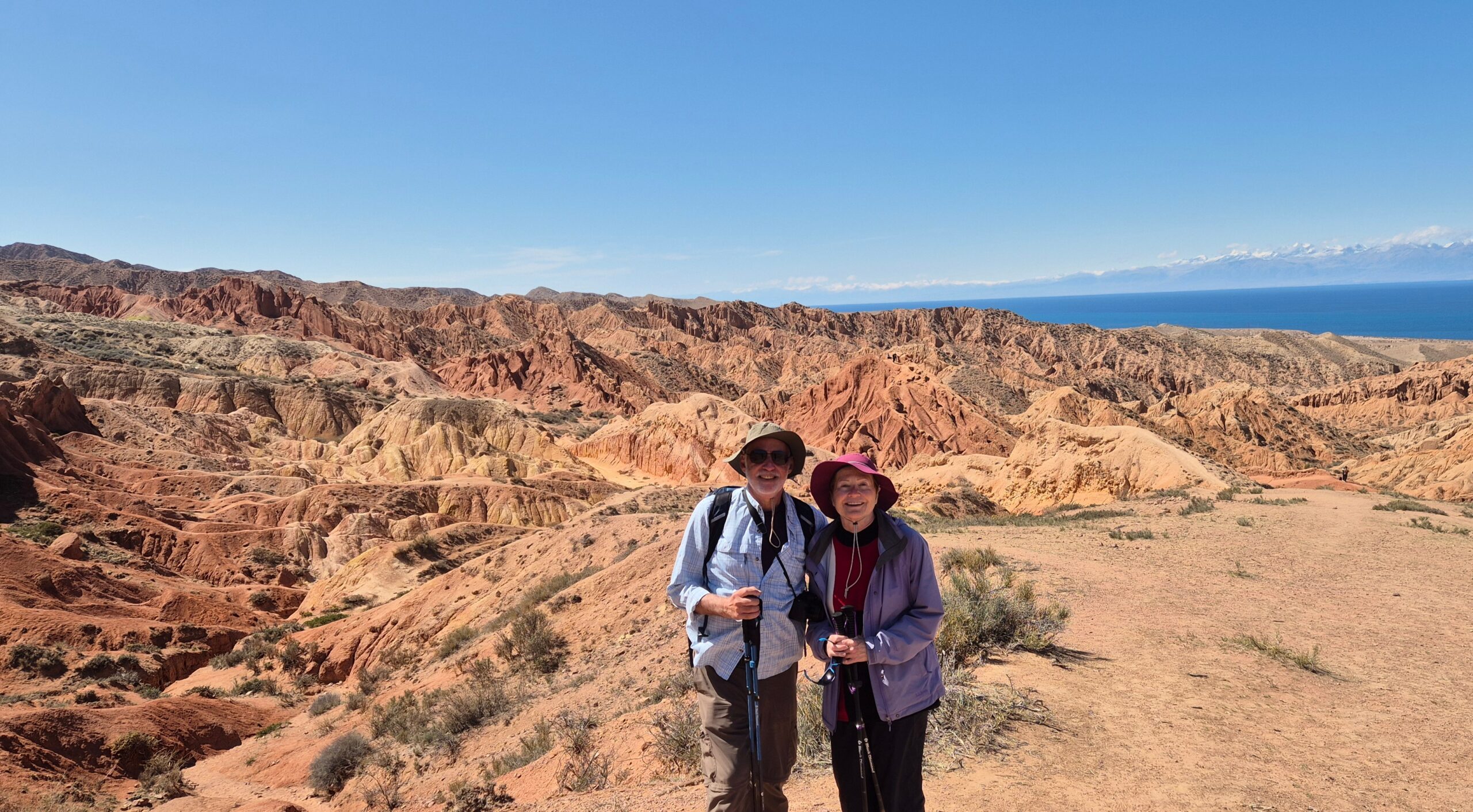
But, alas, found no beautiful maidens.
Chon-Kemin – Horse Power
For our last adventure at Issyk-Kul, we hooked around the westernmost point of the lake to visit Chon Kemin National Park, in the mountains above the lake’s northern shore.
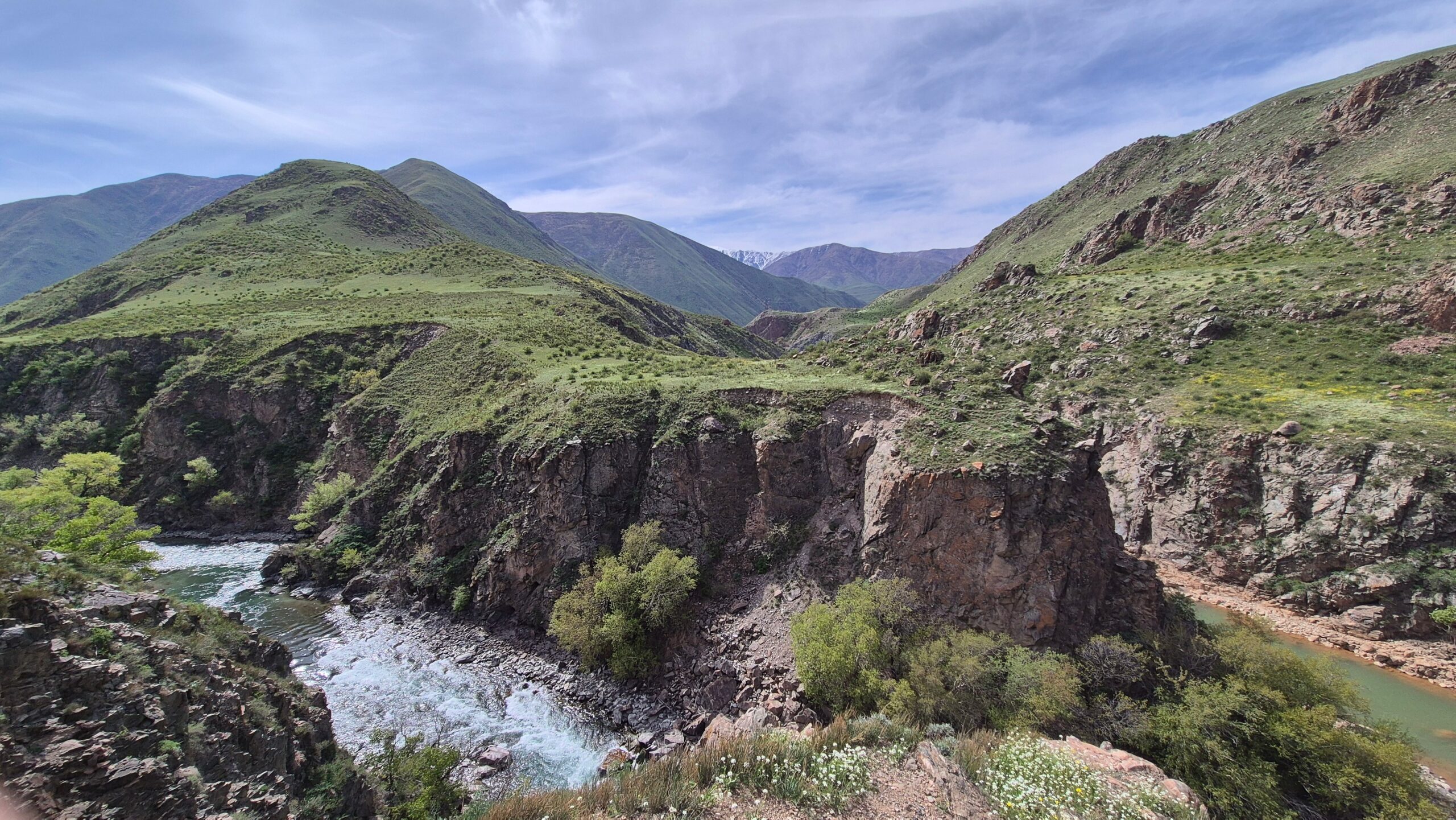
The upland valley within the park offers a beautifully landscaped hotel with good, basic rooms – in a small village . In the early spring, flowering trees and grass contrasted with the still snowy caps of the mountains. Only the two of us, a couple of Russian women, and a French couple from Miami occupied the place. But, in the season, locals from Bishkek, the capital, pack the place, staying for a week or more to purge their systems with mare’s milk.
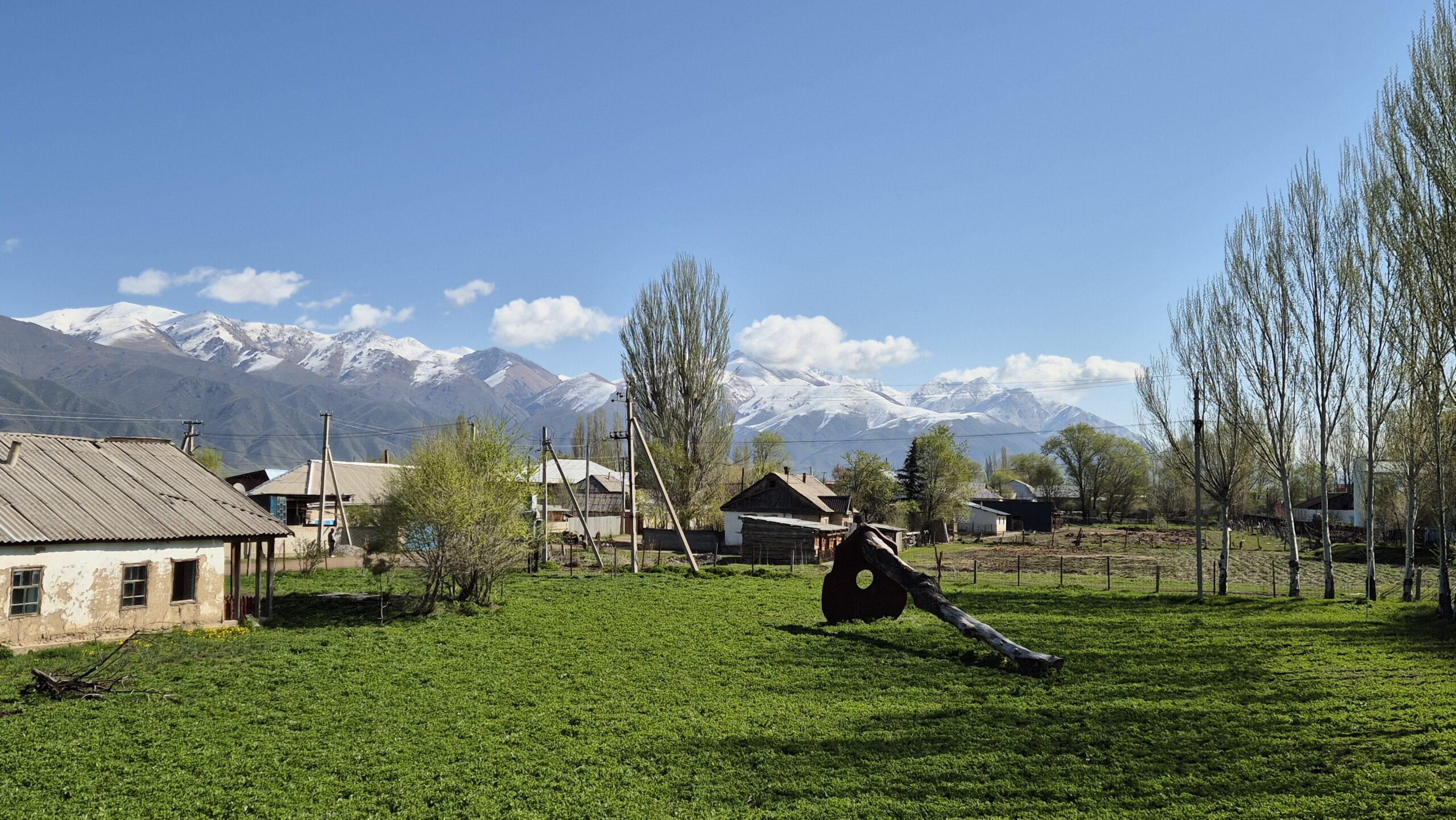
Mare’s milk is, to say the least, an acquired taste. For those not inured to its powers, a single serving will – as our friend said euphemistically – make you rush to the toilet and stay for a while. Those whose systems are better conditioned to the milk believe superstitiously in its health-giving qualities.
We decided to skip that treatment, but felt we made ourselves healthier by hiking up the mountainside for a few hours for a vista over the valley.
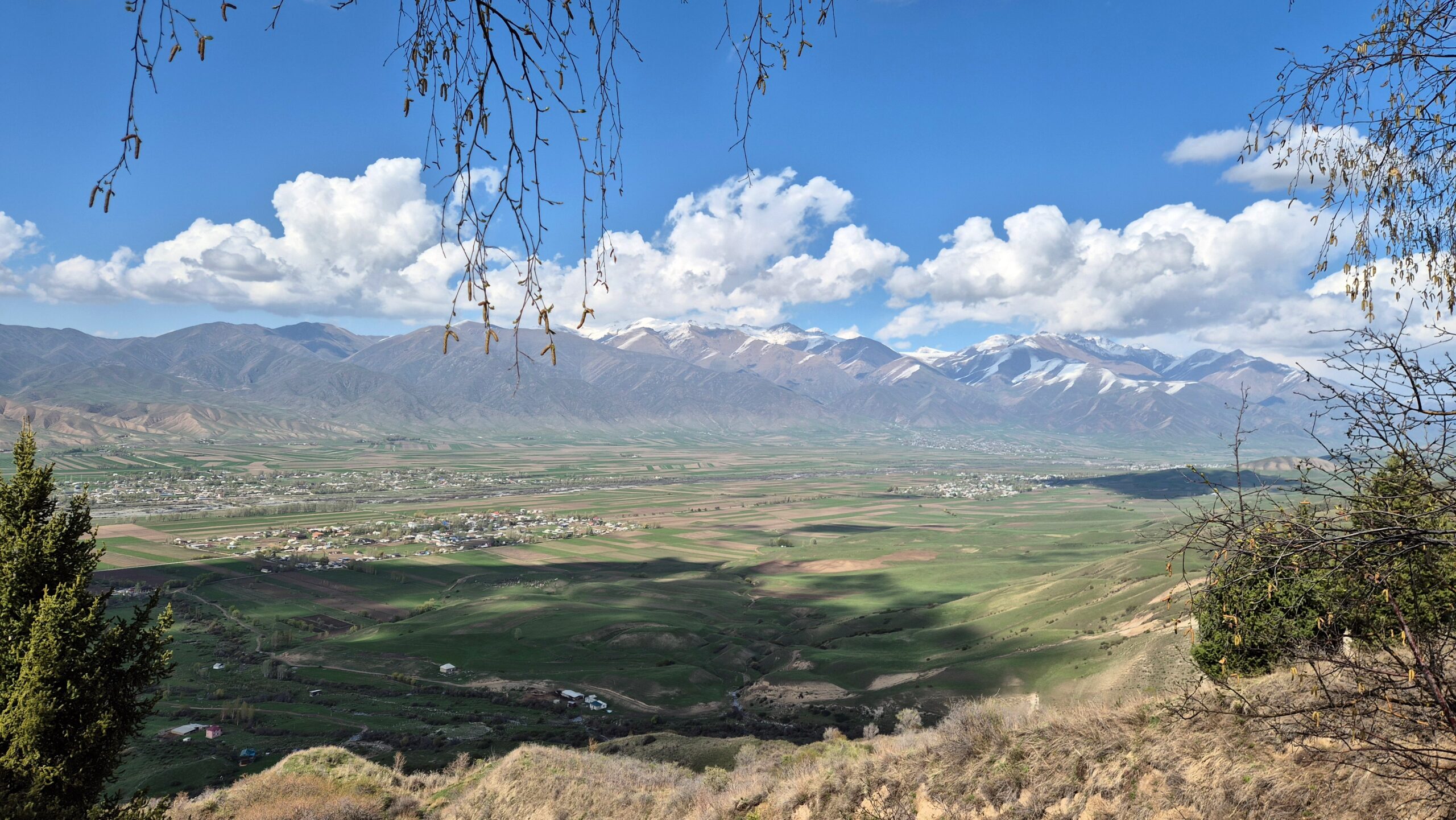
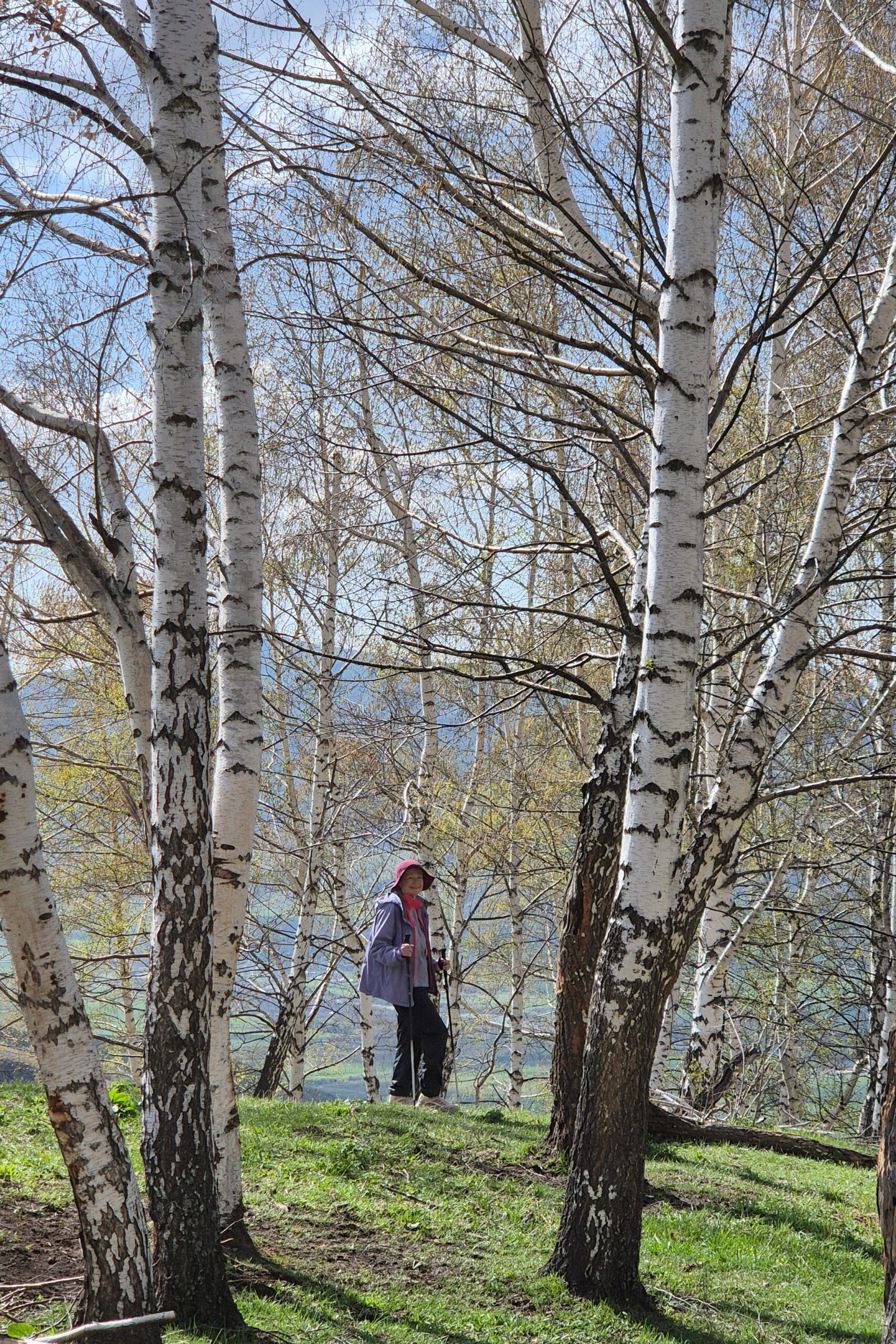
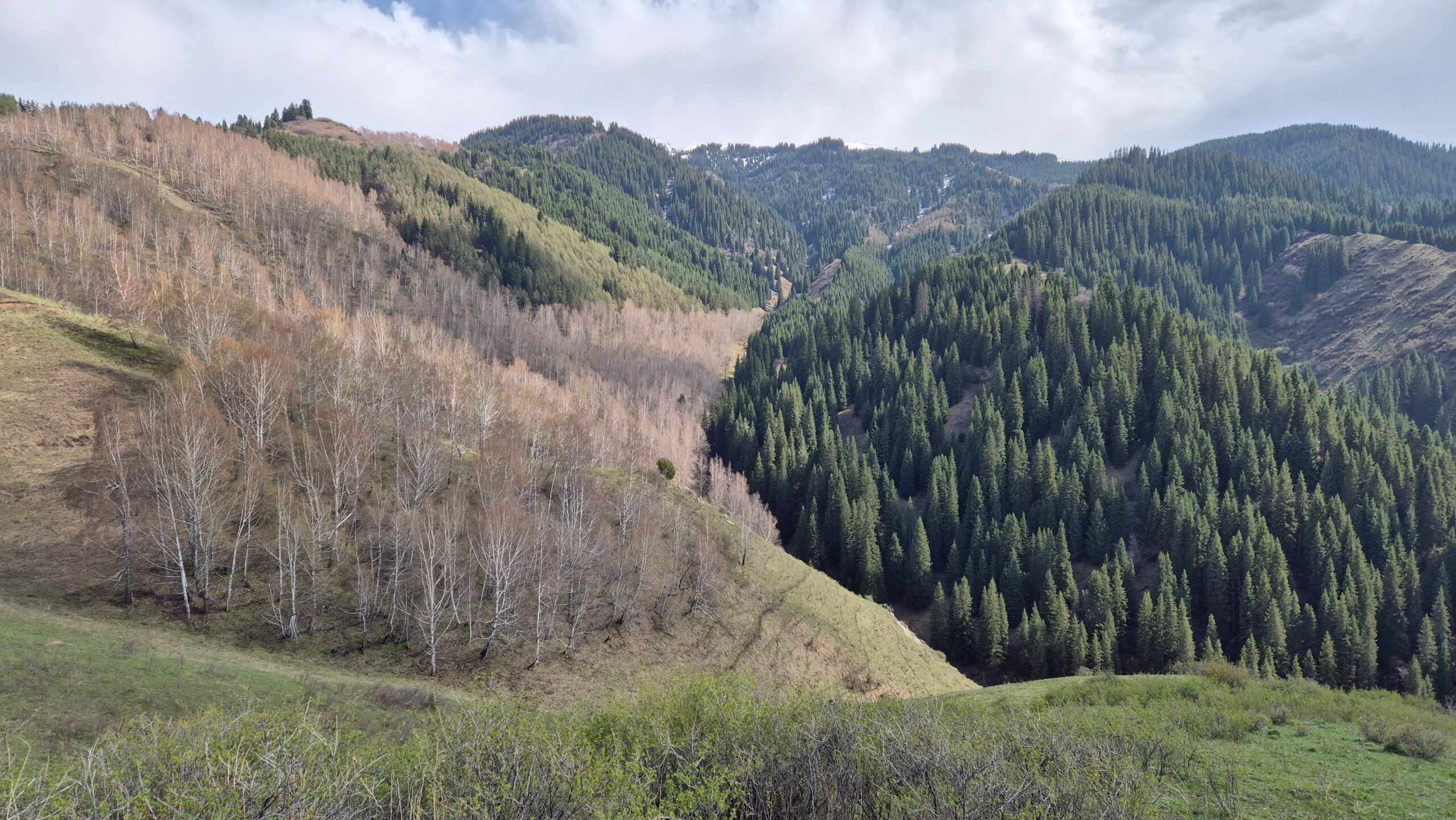
Passing through poplar forests high over the green valley, we neared the snows and darker fir forests on the far side.
Then we descended a long shallow canyon back to the valley.
A herd of free-range horses – a sleek black stallion and several mares – quietly passed us in the poplar forest. Again, we did not try the milk.
(To enlarge any picture above, click on it. Also, for more pictures from the five Stans of Central Asia, CLICK HERE to view the slideshow at the end of the itinerary page.)
Hi — I enjoyed reading your Issyk-Kul piece.
Just one small geography note: the description of Issyk-Kul as “the second highest alpine lake in the world, after Titicaca” is difficult to support, as the ranking depends heavily on how “alpine lake” is defined and there are higher lakes that make the superlative unreliable.
I maintain a source-referenced dataset and overview of Kyrgyzstan’s lakes, including Issyk-Kul and the different figures used for its elevation, area and depth:
https://kyrgyzstanplanner.com/lakes-of-kyrgyzstan/
It may be useful if you decide to revise that sentence.
Best,
Ethan
Thanks for your comments. We had a lively debate with a guide in Kyrgyzstan about this issue and we did quite a bit of research at the time. As I recall, so much of these comparisons are definitional in nature. I don’t recall the source now, but we felt somewhat comfortable with this description. Yet I am happy to adjust our sentence.