
In brief: In their passion for grand monuments, the current leaders of Tajikistan aim to make the capital heir to the empires of the past.
Once part of the emirate that ruled from Bukhara in current Uzbekistan, Dushanbe became the capital of the Tajikistan republic as demarcated by the Soviets in the 1920s. For over 30 years, from 1929 till 1961, it was even called Stalinabad, or Stalin City,
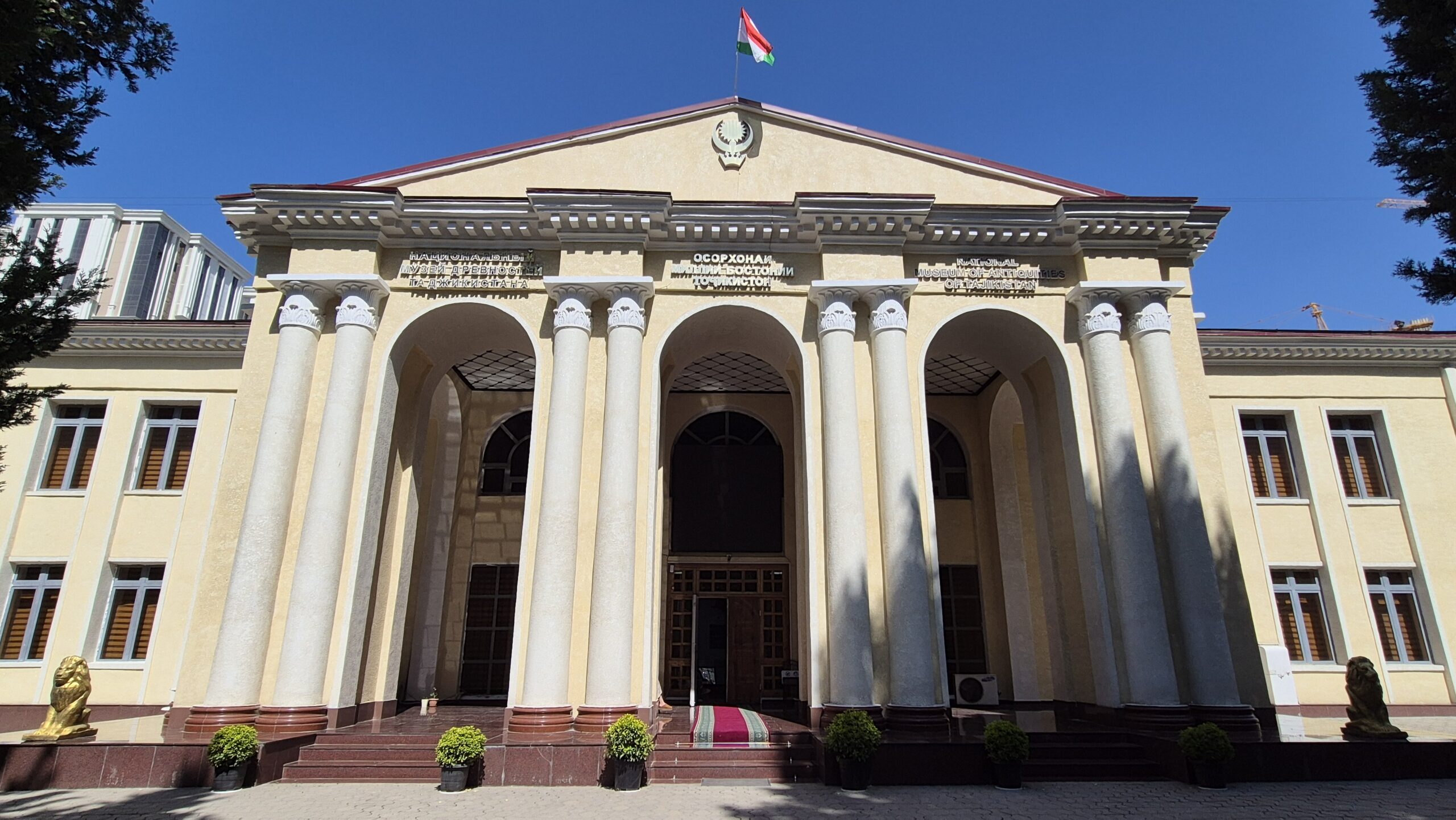
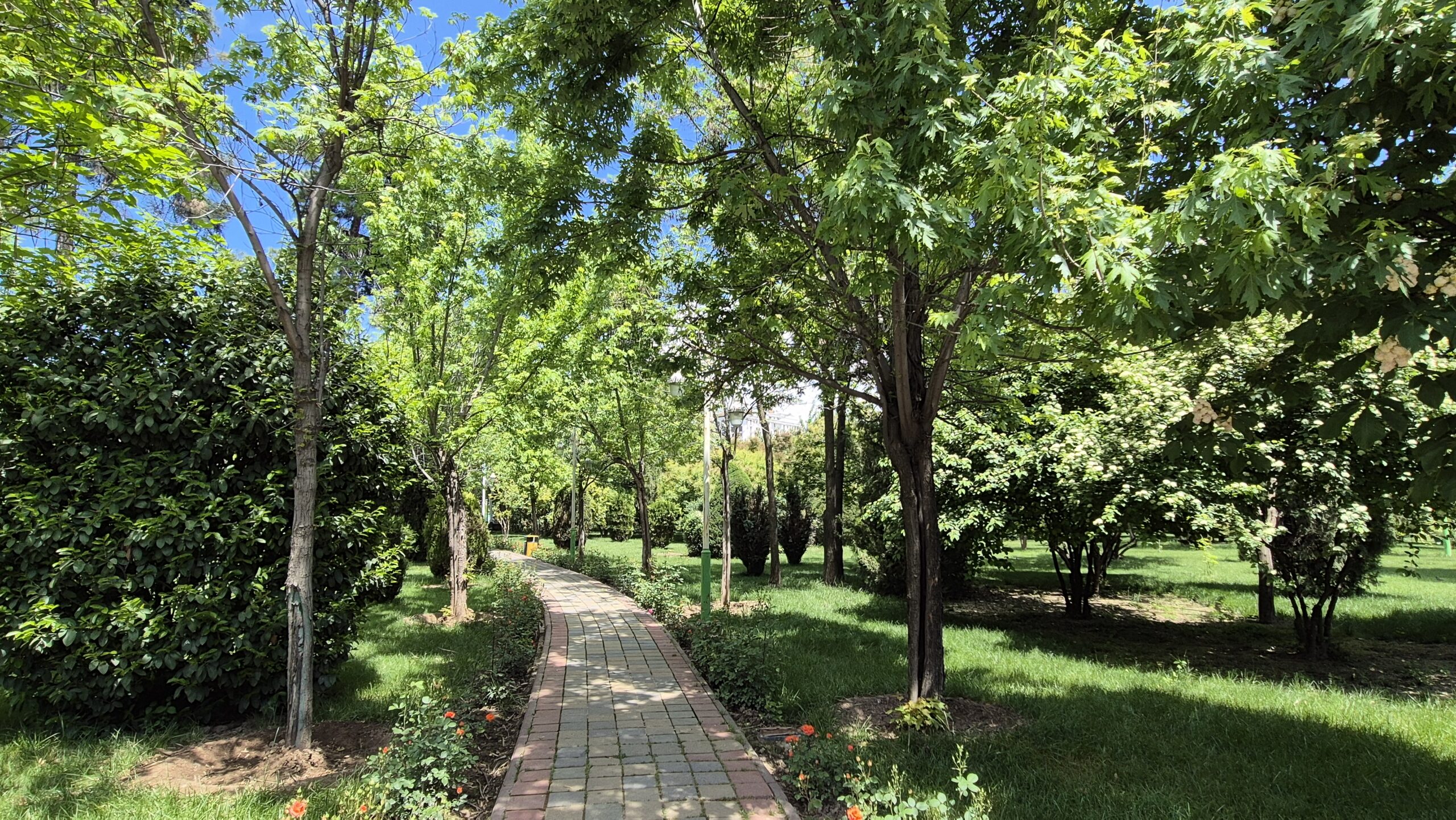
As usual, the Soviets put grand imperial buildings in Stalin-esque, approved style around the city along with the usual wide boulevard and broad parks. These parks remain grand and spacious, pleasingly bedecked with flowers in myriad colors.
Today, however, much of that Soviet style is being transformed to modernize the city, from renovation to removal.
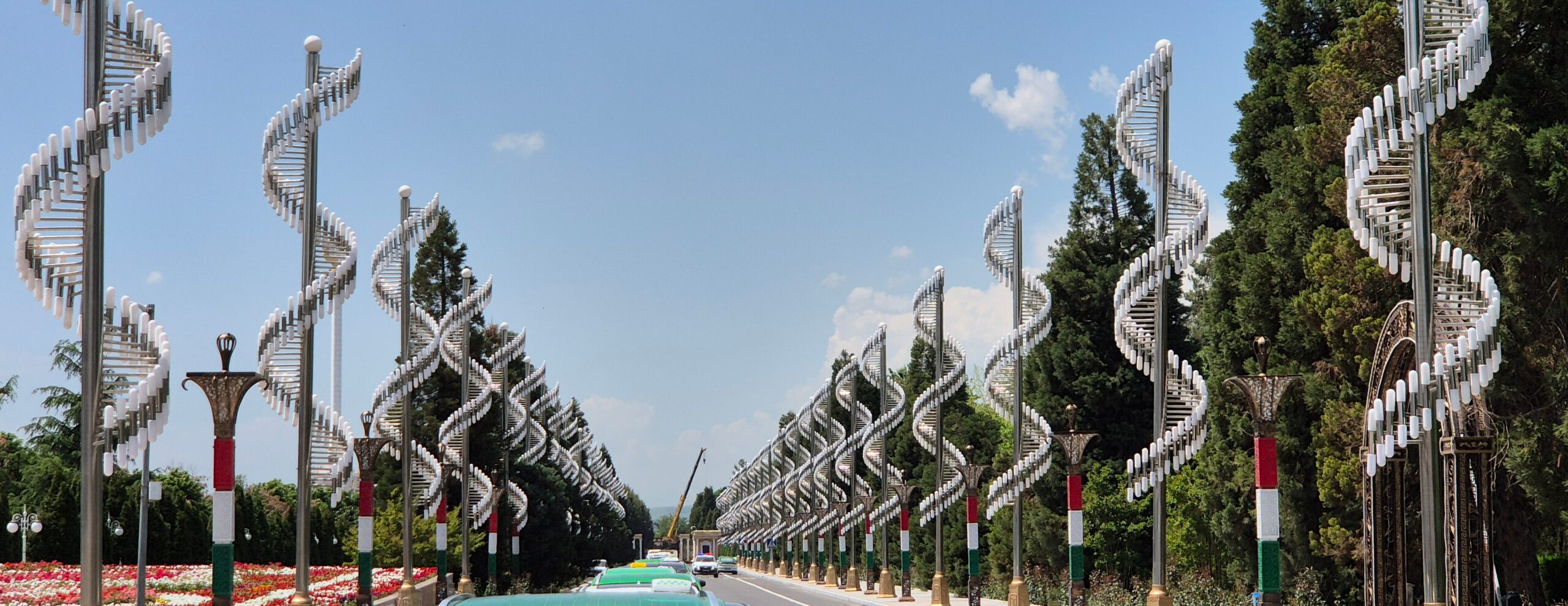
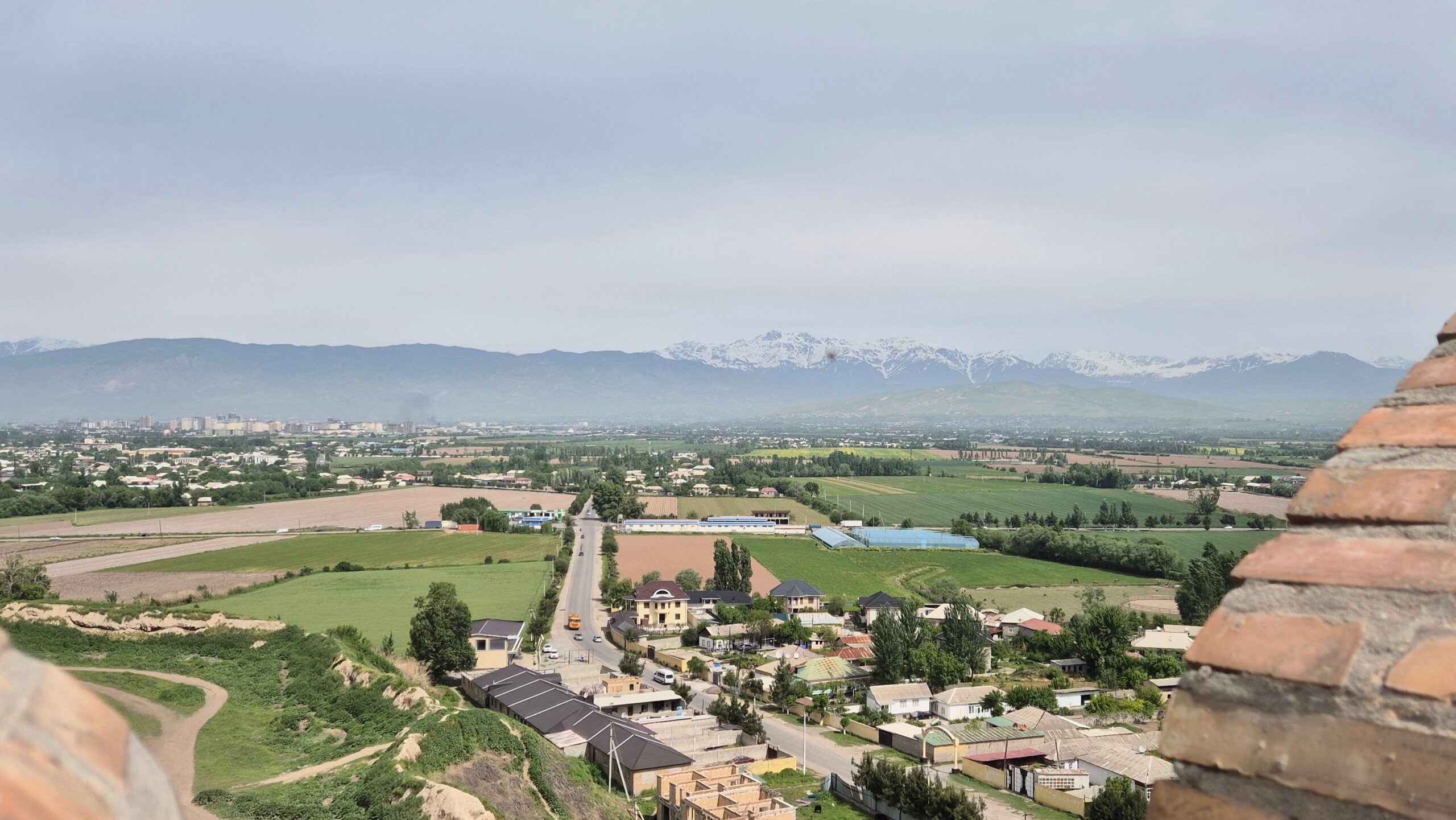
One legacy, alas, shared with other major cities of Central Asia, has not been upgraded: the smoggy air from coal-burning, road-clogging traffic with many old cars, and industry. It shrouds the city, coats the lungs, and obscures the snow-capped mountains that comprise 93% of the terrain in the country.
In place of the Soviet grandeur, Tajikistan’s long-time ruler, Emomali Rahmon seems to aspire to a new imperial age under his watchful leadership. His Lenin-esque stance and benign face appear everywhere on posters throughout the country.
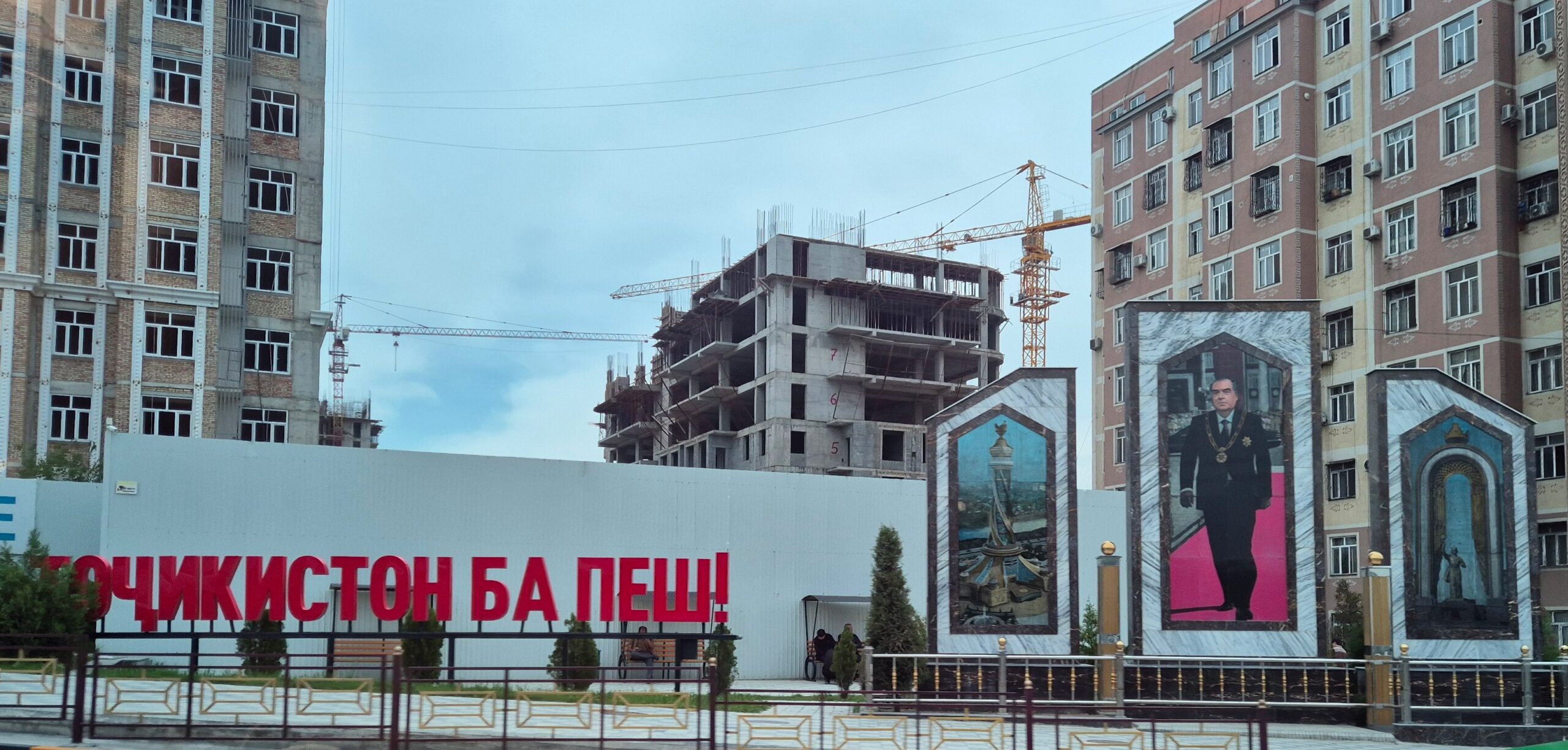
Unsurprisingly, his regime espouses the grandeur of the past. The museums and city statuary memorialize three historical periods when Tajik predecessors commanded the territory. The first goes back 3000 years to the greatness of Cyrus and the Persian Empire as well as Alexander the Great who conquered this region later, marrying a Tajik princess named Roxhana.
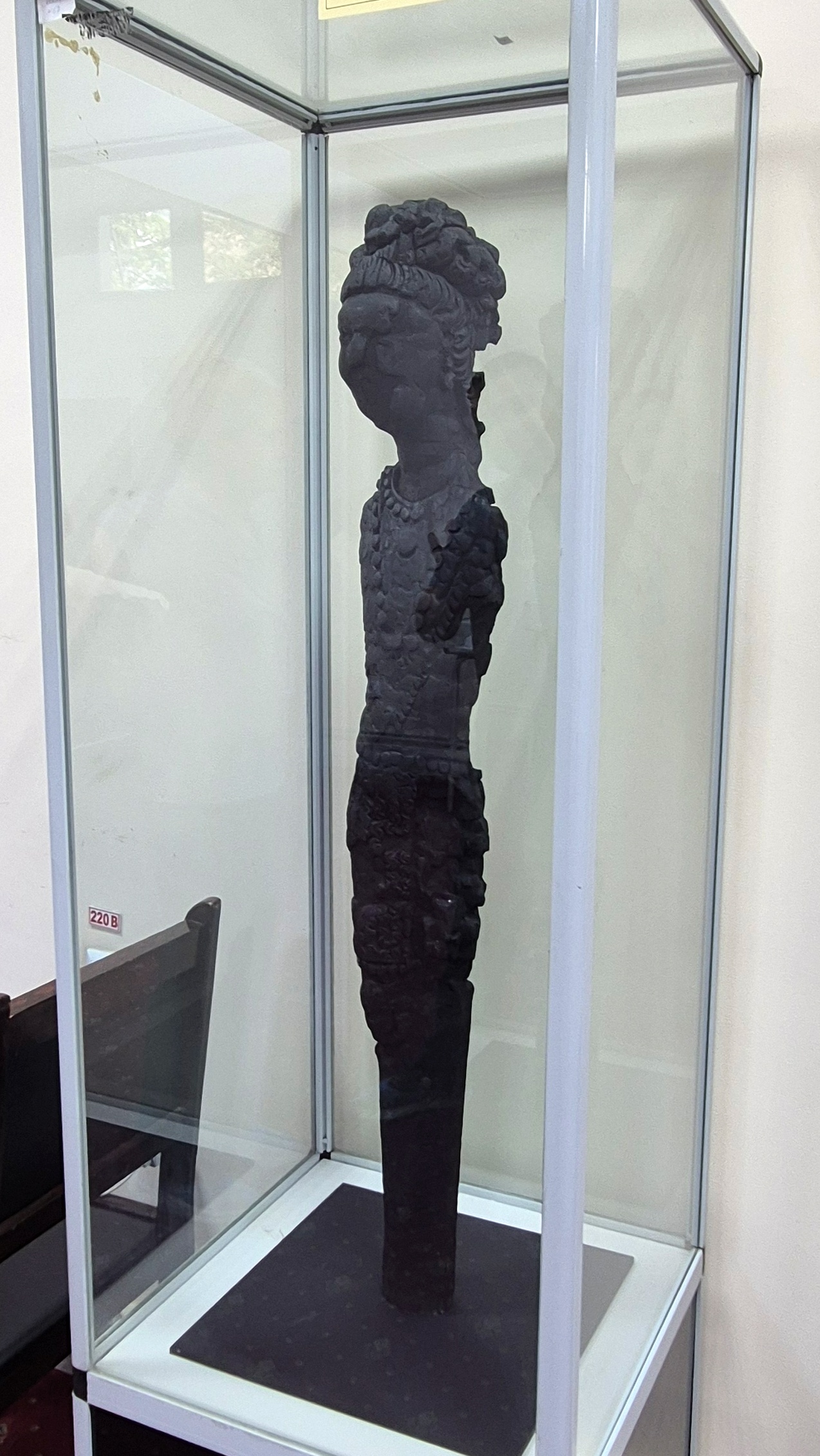
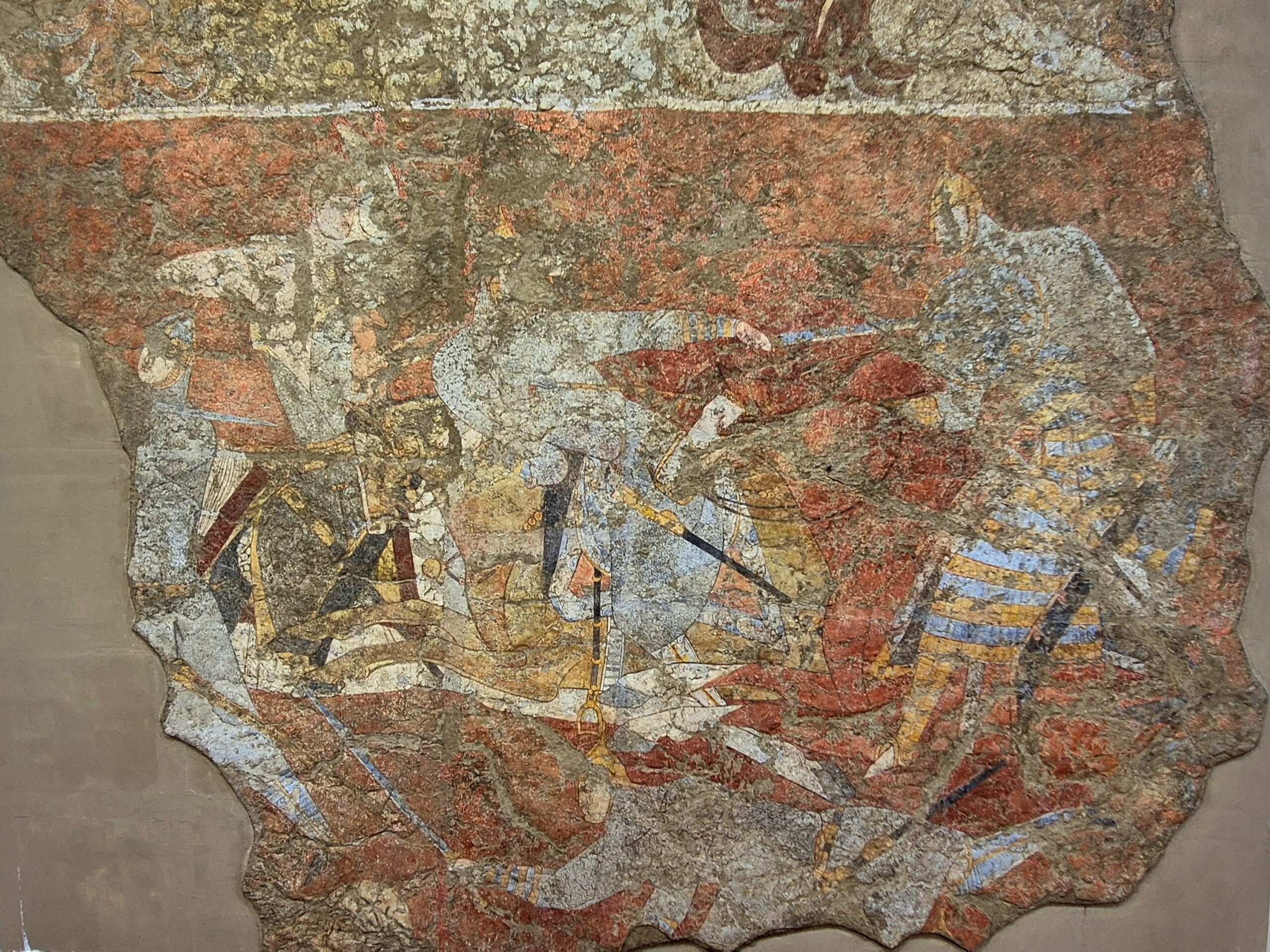
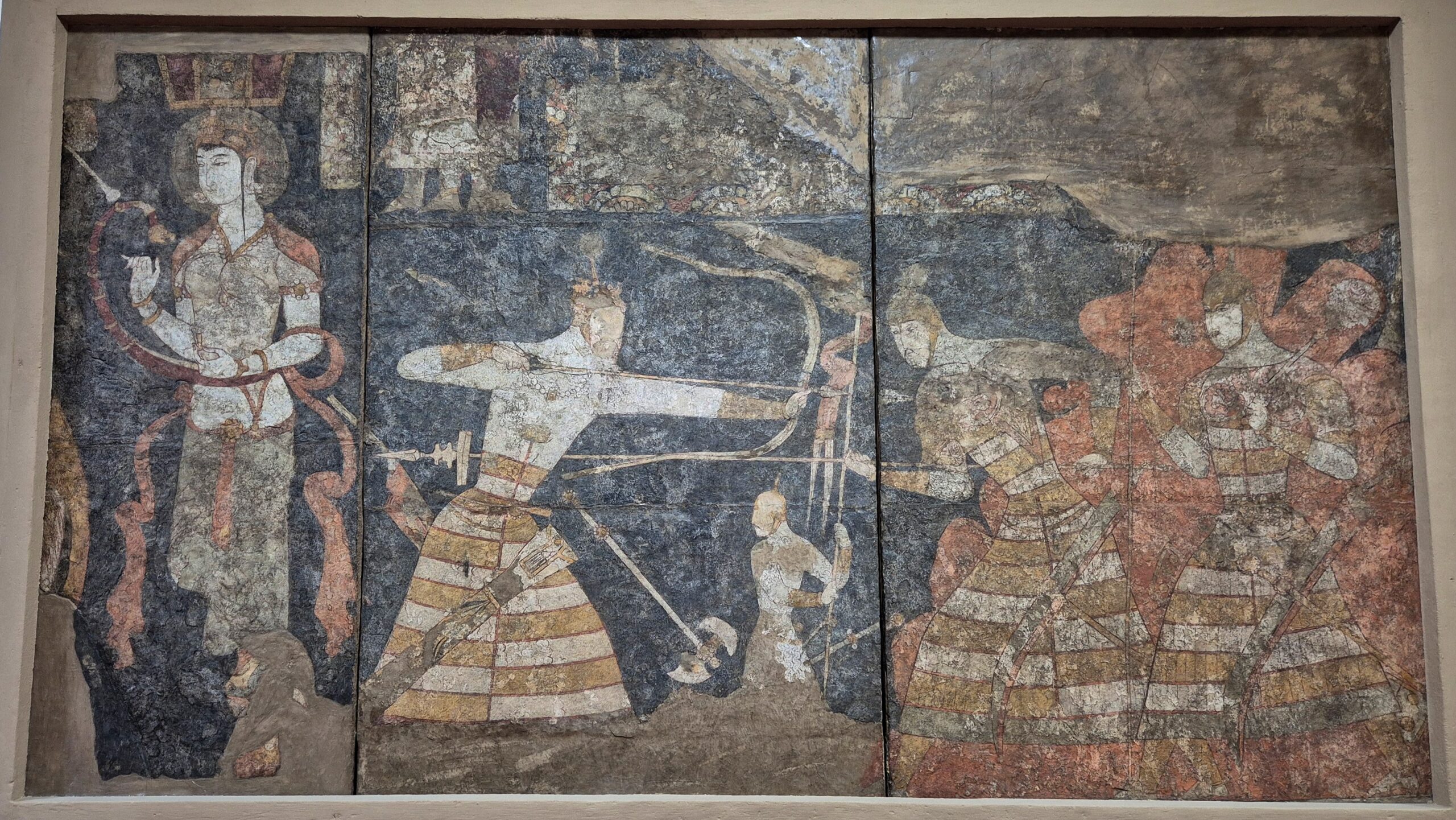
The second period is the Sogdian from about the 5th to the 8th century when a group of affiliated tribes controlled this area from Panajakent in western Tajikistan. Two kinds of artifacts have survived since then.
First, the charred remnants of statuary and buildings from the torching of their cities.
Second, magnificent frescoes on display at the Antiquities Museum in Dushanbe and Panjakent itself.
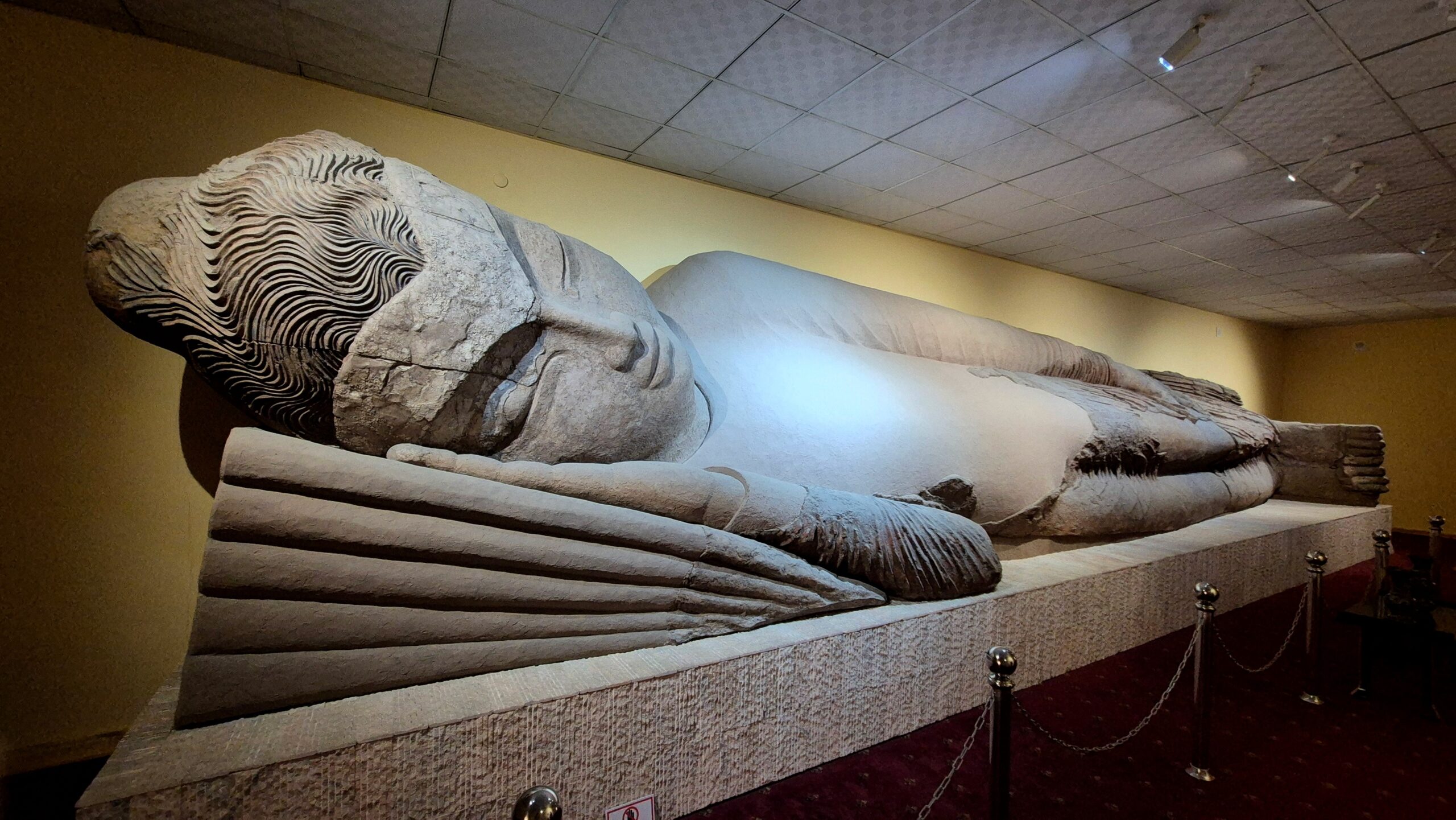
During this period, and before the spread of Islam, Buddhism still flourished in Central Asia, with great monasteries like Ajina-Tepa in southern Tajikistan. Though that monastery was mostly destroyed, its treasure, the largest sleeping Buddha statue of Central Asia (12 meters or over 40 feet long), is honored by its restoration in the Antiquities Museum and a recreation of the monastery itself in the National Museum.
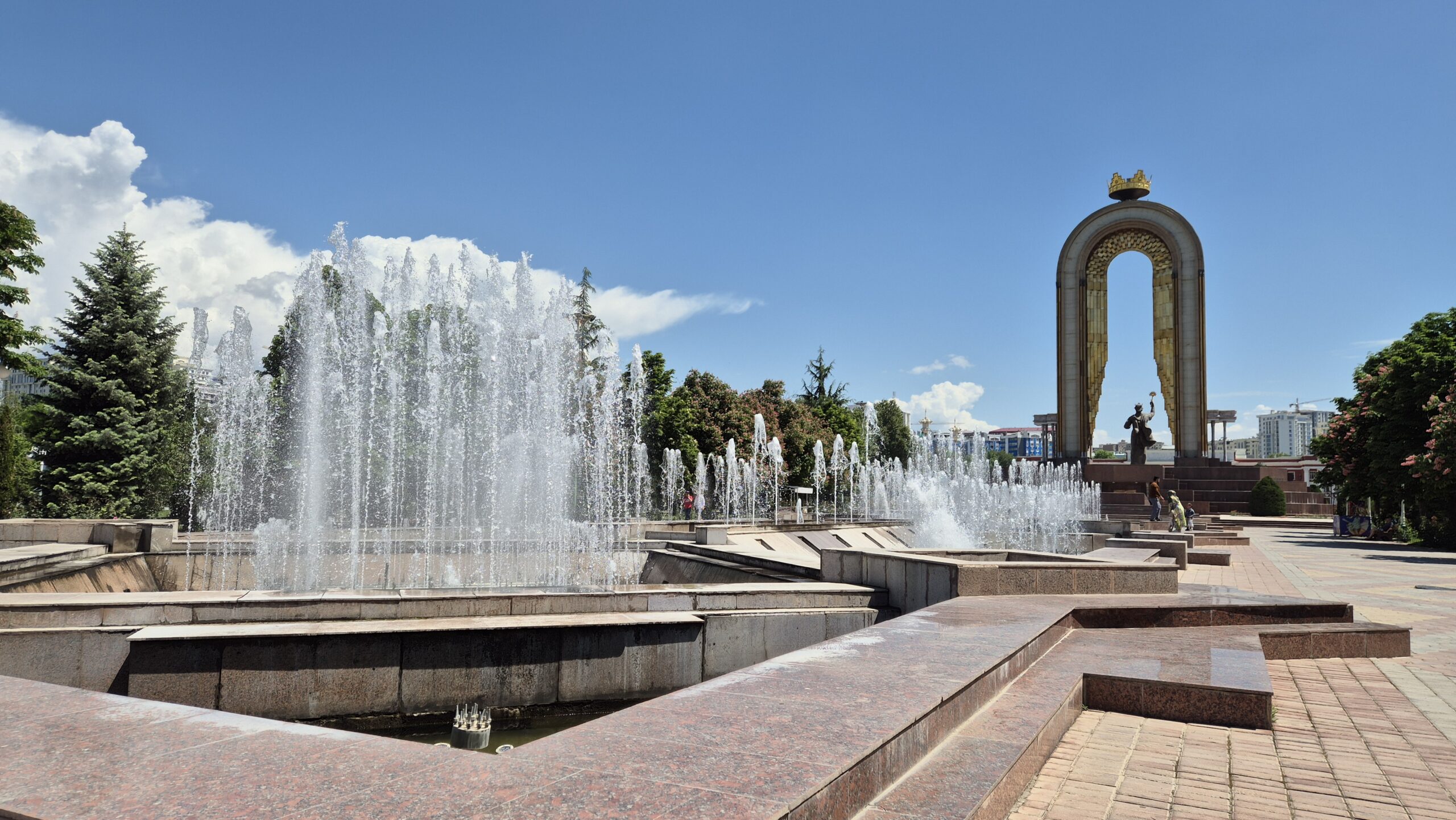
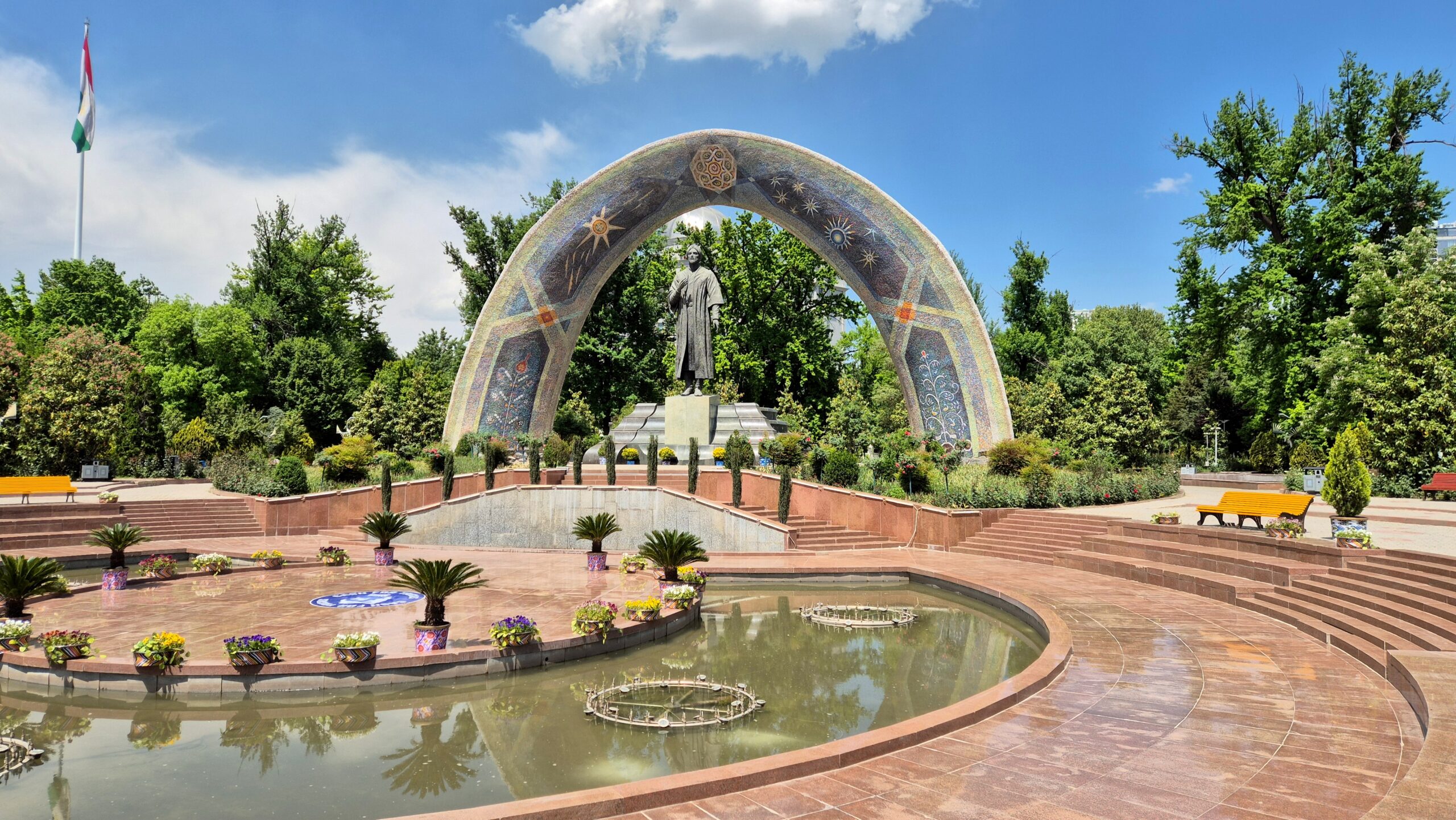
The third imperial age was the Somonid period, after Islam spread to Central Asia, from the 9th century to the onslaught of Genghis Khan around 1200 AD. Its leader Somoni is celebrated by a huge statue and arch in Dusti Square, erected on the 1000th anniversary of his rule in 1999. And by the name for money, somoni or som – and one of Uzbekistan’s airlines.
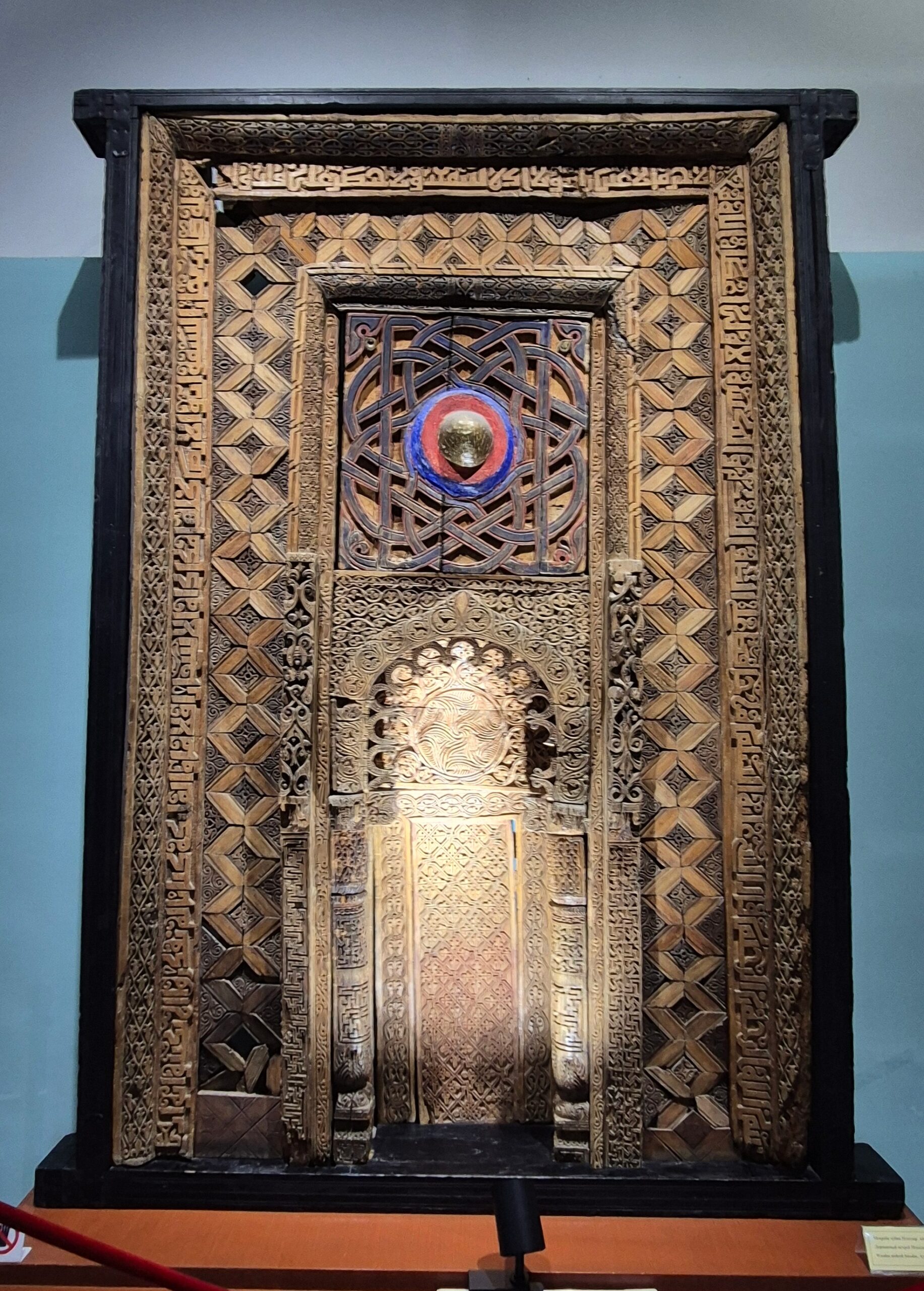
This was the Golden Age in Tajik history, one shared with the modern-day countries of neighboring Uzbekistan and Afghanistan. This period after Islam spread through Central Asia fostered several renowned thinkers. Abu Sinu is truly the father of modern medicine. He purportedly dared to violate strictures against dissecting a human body in order to discover what killed a beloved student of his. He found a large kidney stone was the cause and, by accident, discovered a plant that dissolved the stone. Abu Sinu continued his study of anatomy and ailments, writing revelatory manuals on human ills that influenced medical science for centuries. His name is still recalled in the end of the word “medicine.”
And another key figure was Al-Khwarizmi, the 9th century mathematician and astronomer, who developed the basics of algebra. He is honored in the use of the word “algorithm.”
The Tajik native son, Rudaki, was a 10th century poet who grew up near Panjakent in the west. He was the first, it seems, to write in the modern Persian language, Farsi, which is closely related to Tajik. Statues and poetic verses of Rudaki are everywhere in Dushanbe, most notably in his eponymous park near Dusti Square.
Here is a sample of his writing from Shahid’s Caravan on the subject of life’s brevity:
Shahid’s caravan left before ours.
Believe me, ours will also leave.
Count the eyes, there is one pair less,
Measure the wisdom, thousands less.
Reap all that enriches your soul
Before death comes to bind your legs.
Though Tajikistan has none of the resource riches of neighboring Kazakhstan and Turkmenistan, one can see in central Dushanbe how much its leaders want to impress with its own grandeur, taking its cue from the past eras.
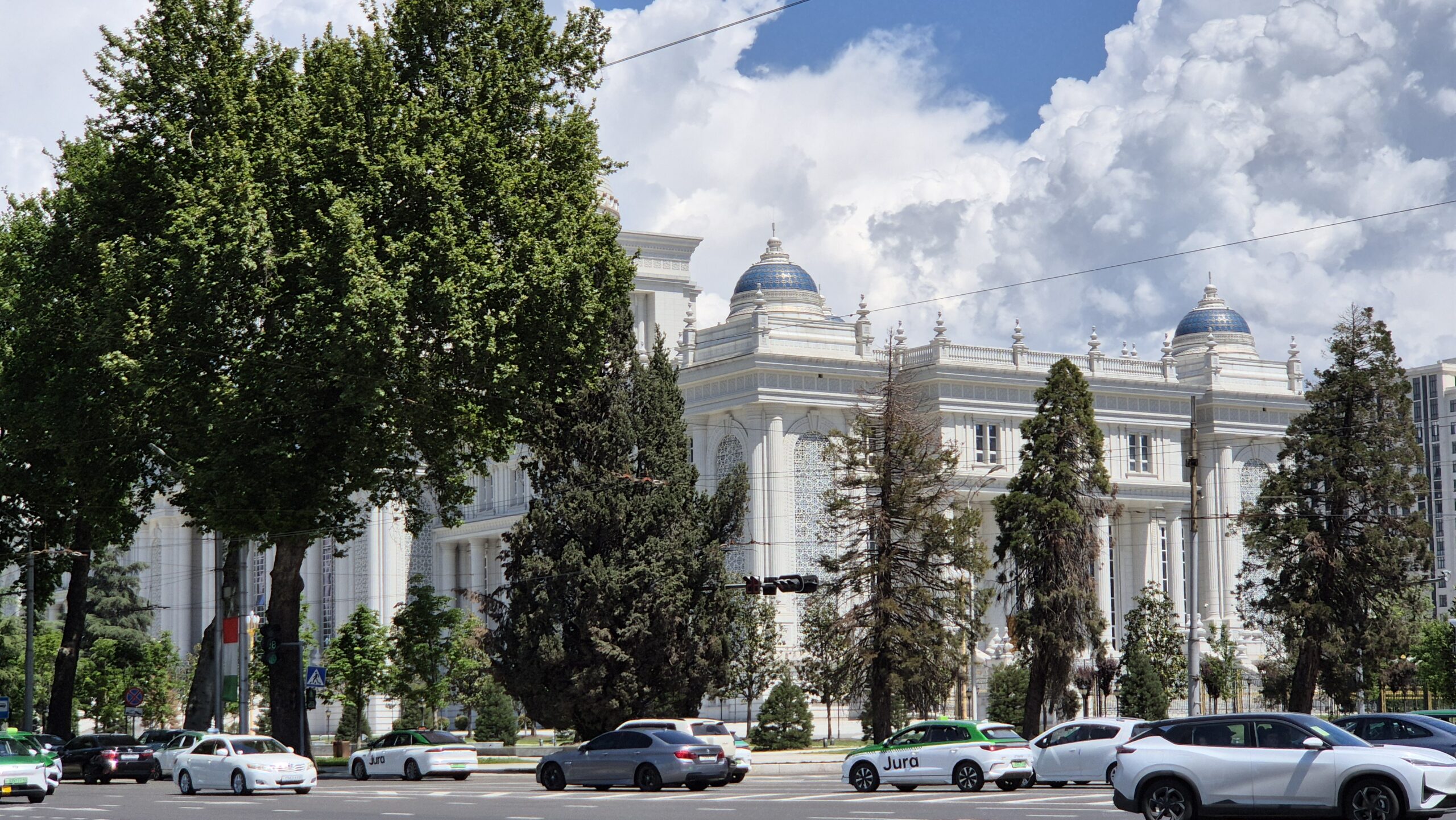
From Rudaki Park, you look in one direction and see a golden tower celebrating the nation. Or a triumphal arch. Or the second tallest flagpole in the world (165 meters or just under 600 feet), loser of a rivalry with North Korea for the dubious honor of tallest flagpole. The flag itself weighs over 400 kilograms (1000 pounds).
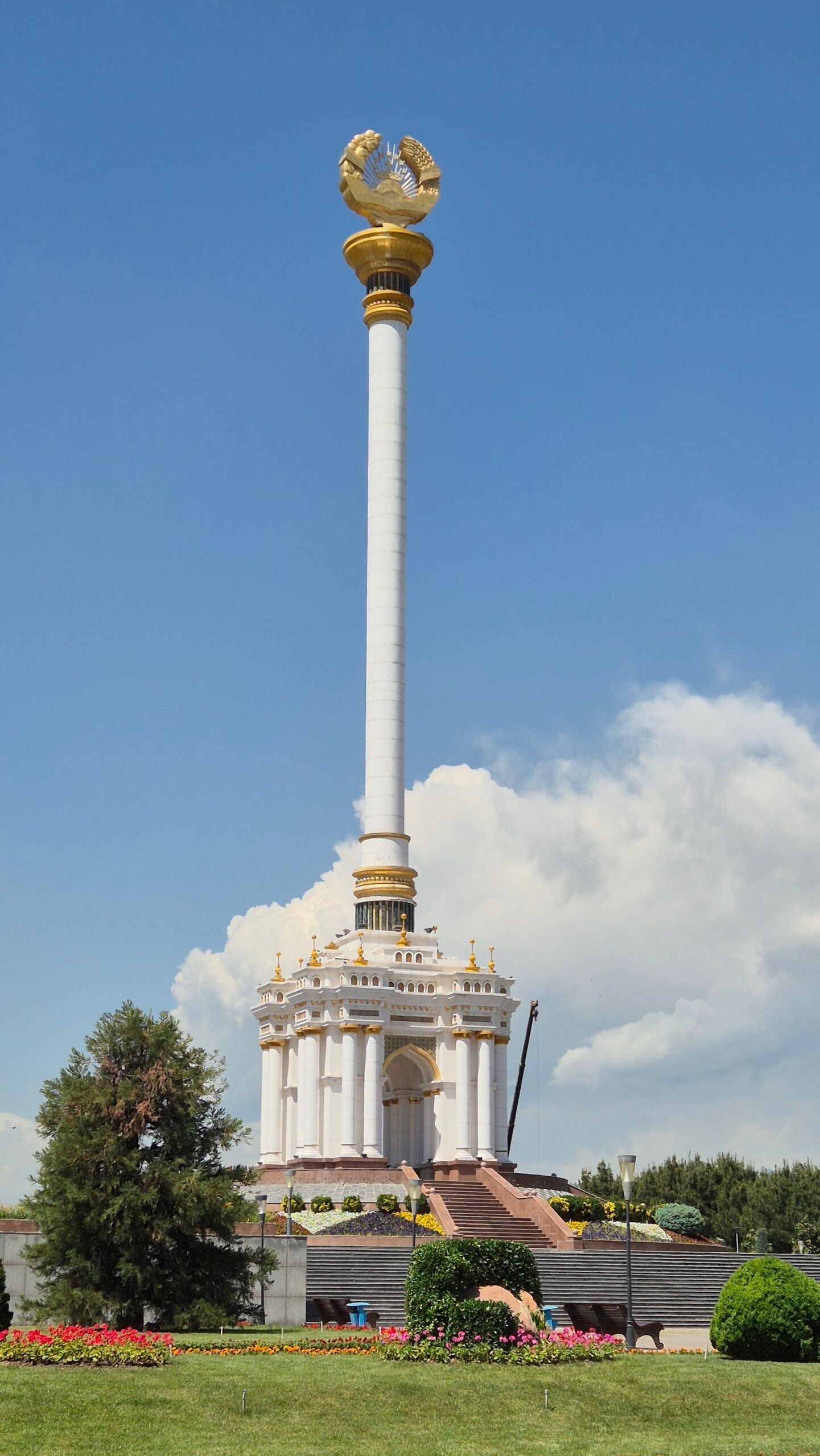
A complex of three new monumental buildings for governmental use now dominates one of the main central boulevards.
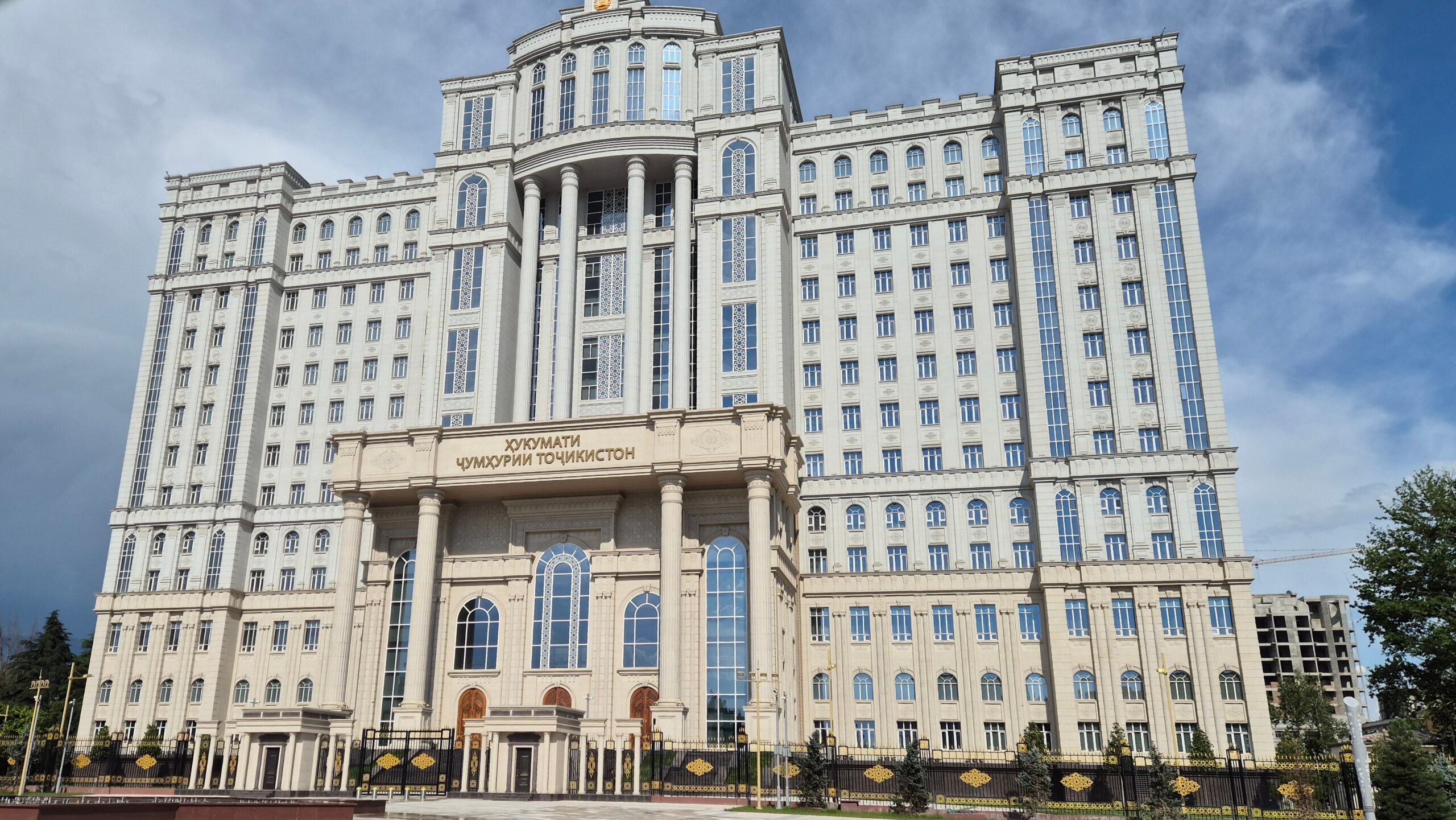
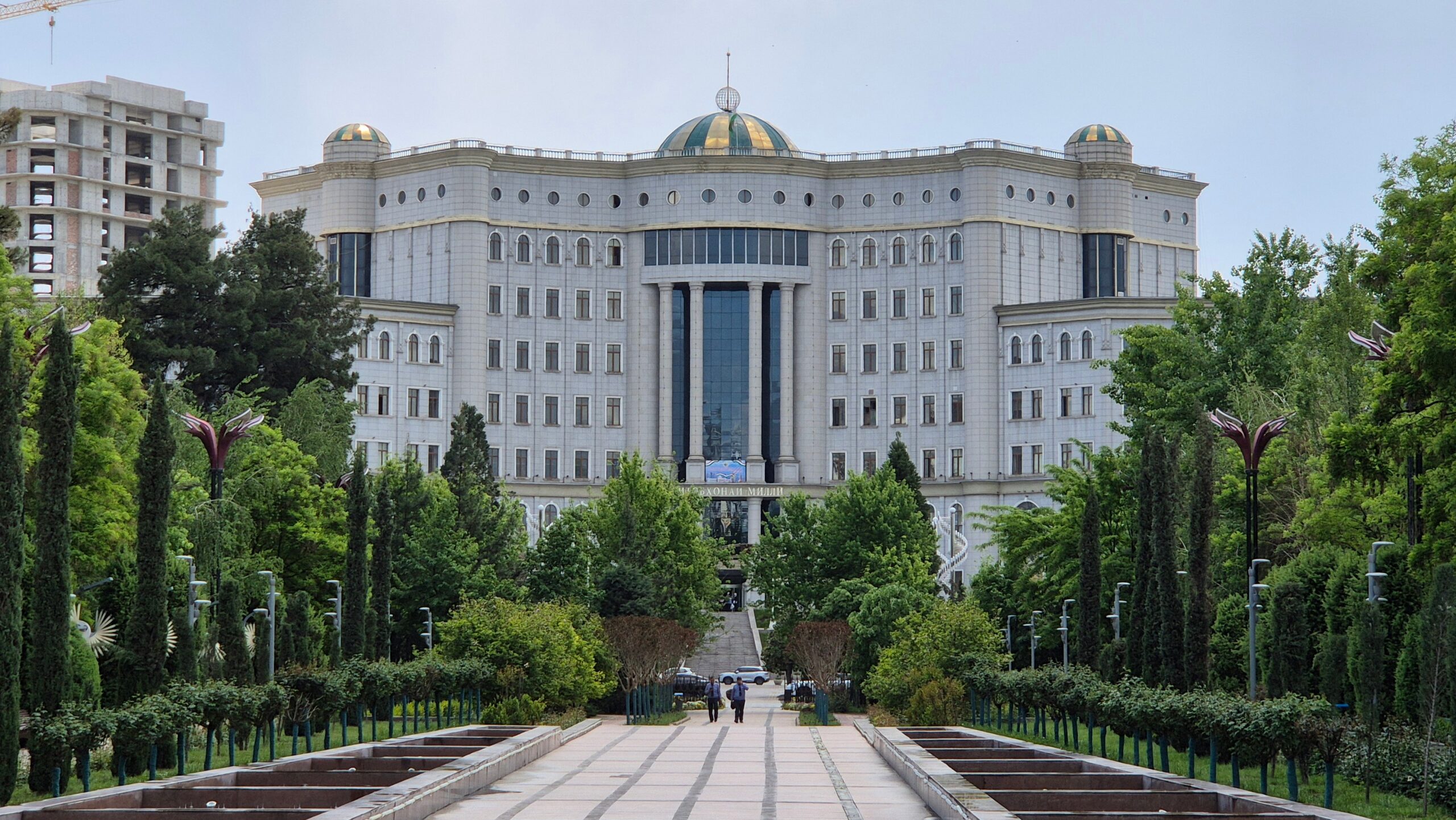
A behemoth of a National Library has just opened on Dusti Square, securing its six million or so books in a kind of fortress.
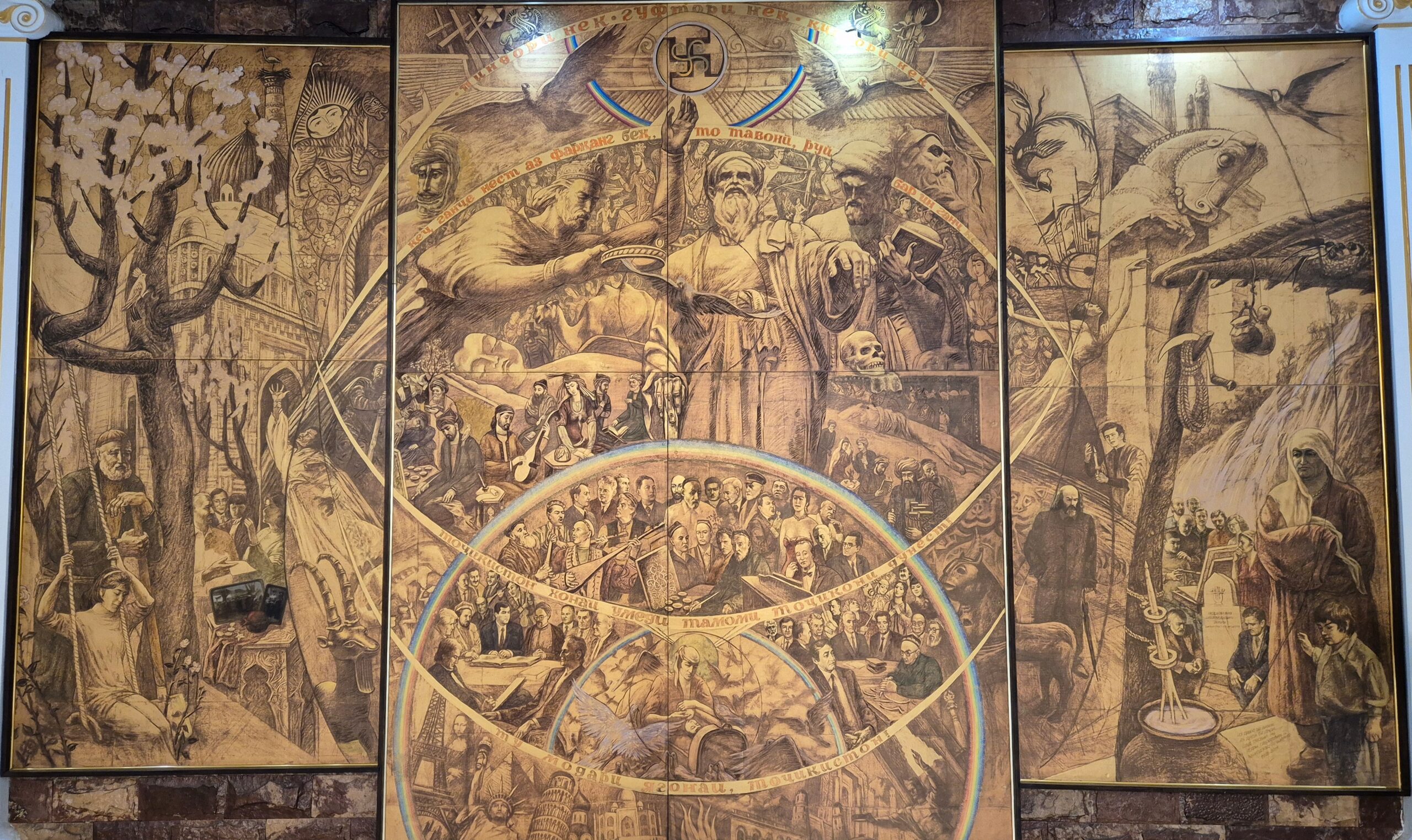
Atop its endless entry staircase an artist painted a complex fresco that features noteworthy Tajiks and cultural highpoints, starting from the empires and ancient cultural heroes on top to more recent figures below.
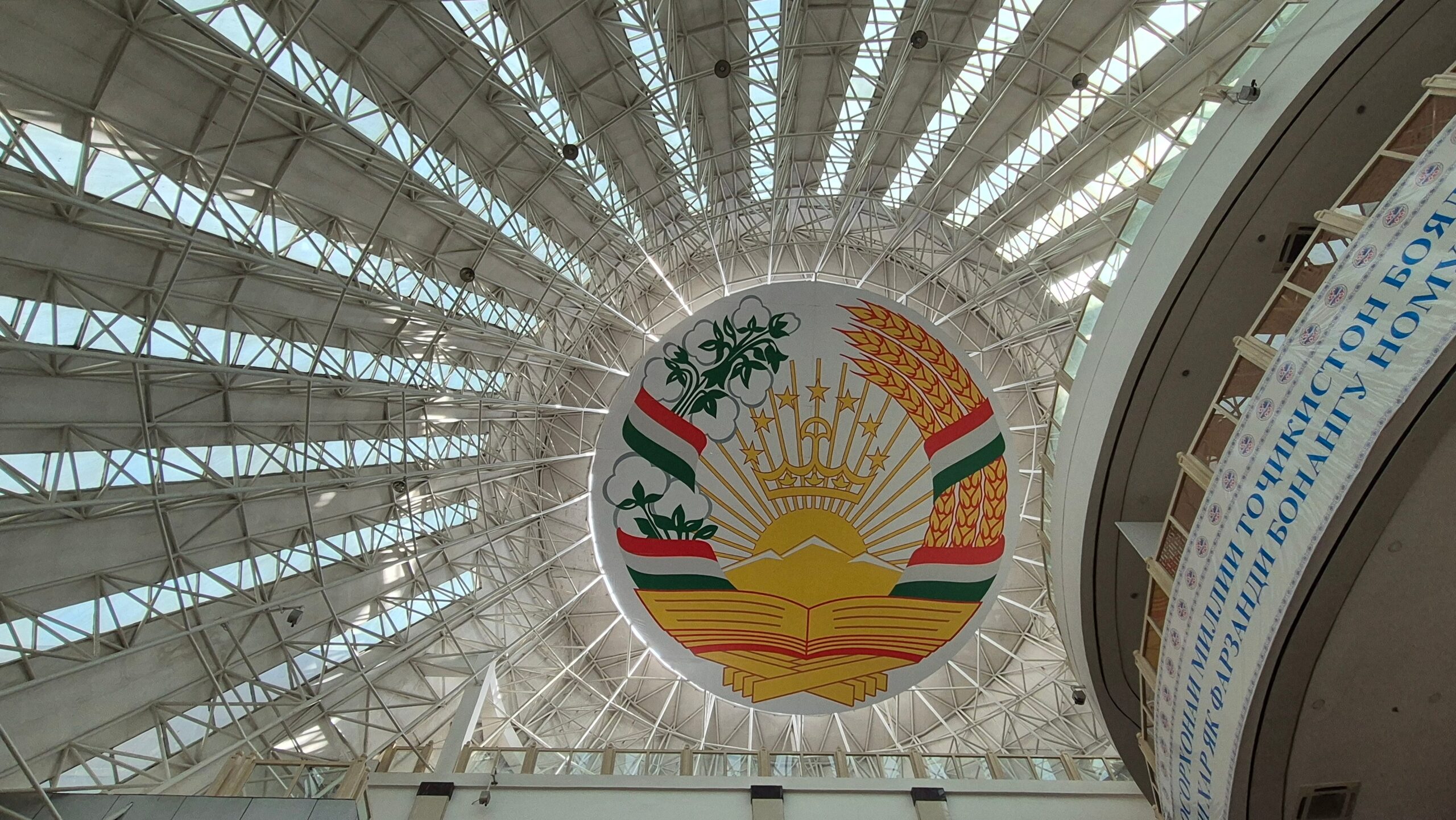
The National Museum close by is a huge modern take on neo-classical architecture, but with a leaning glass tower inserted in its center.
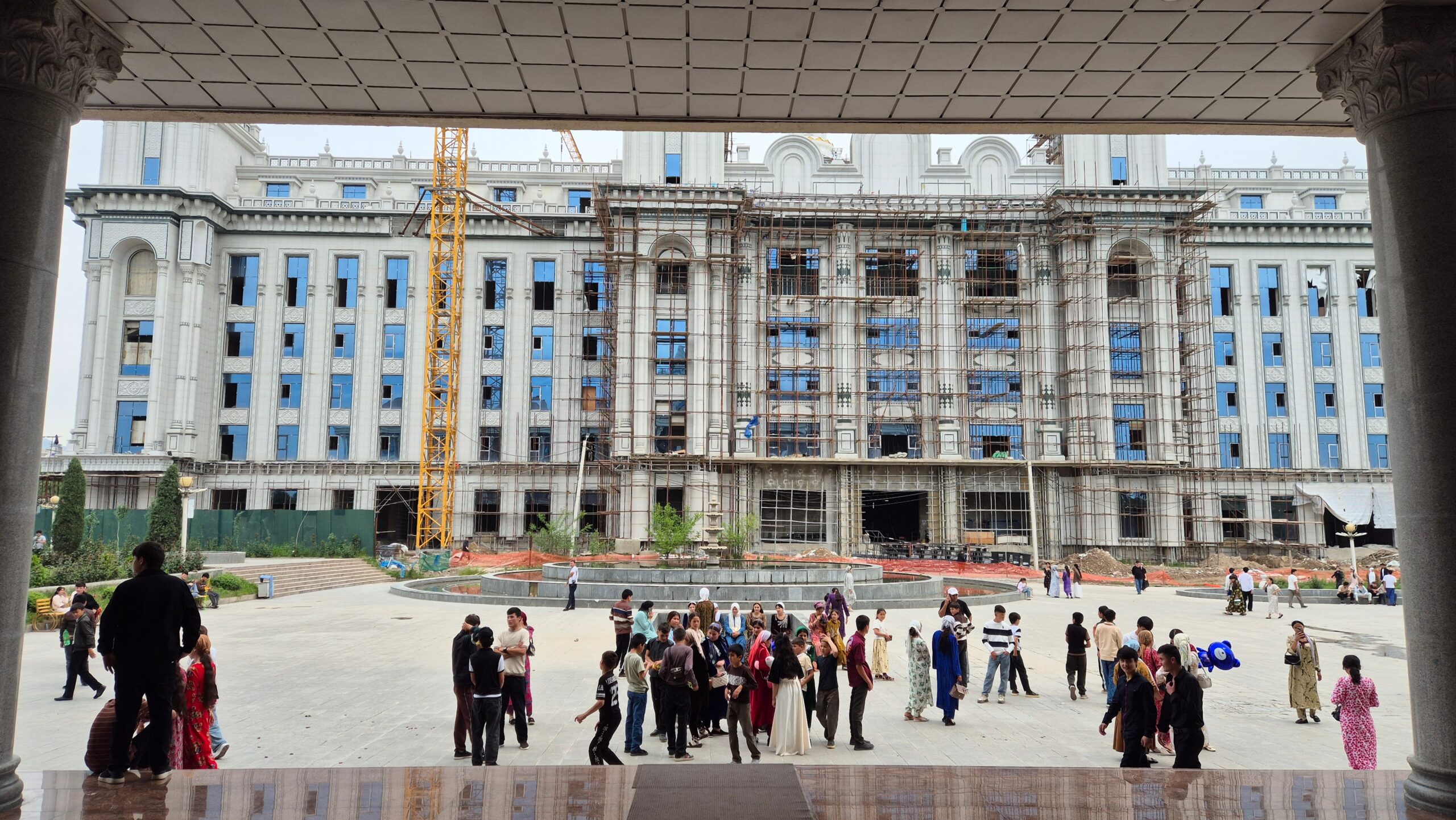
The Museum anchors another large plaza featuring a statue of Rudaki. Across the plaza, an equally monumental public building nears completion.
Nearby looms a massive dark granite building called the Palace. When we headed there, we thought we were going to the regal home of some khan of the past or tech mogul. Instead we found a chintzy three-level sculpture at its center of the nearby mountains and their animals, a multi-screen cinema, a large restaurant, and vast halls being used for weddings and graduation celebrations.
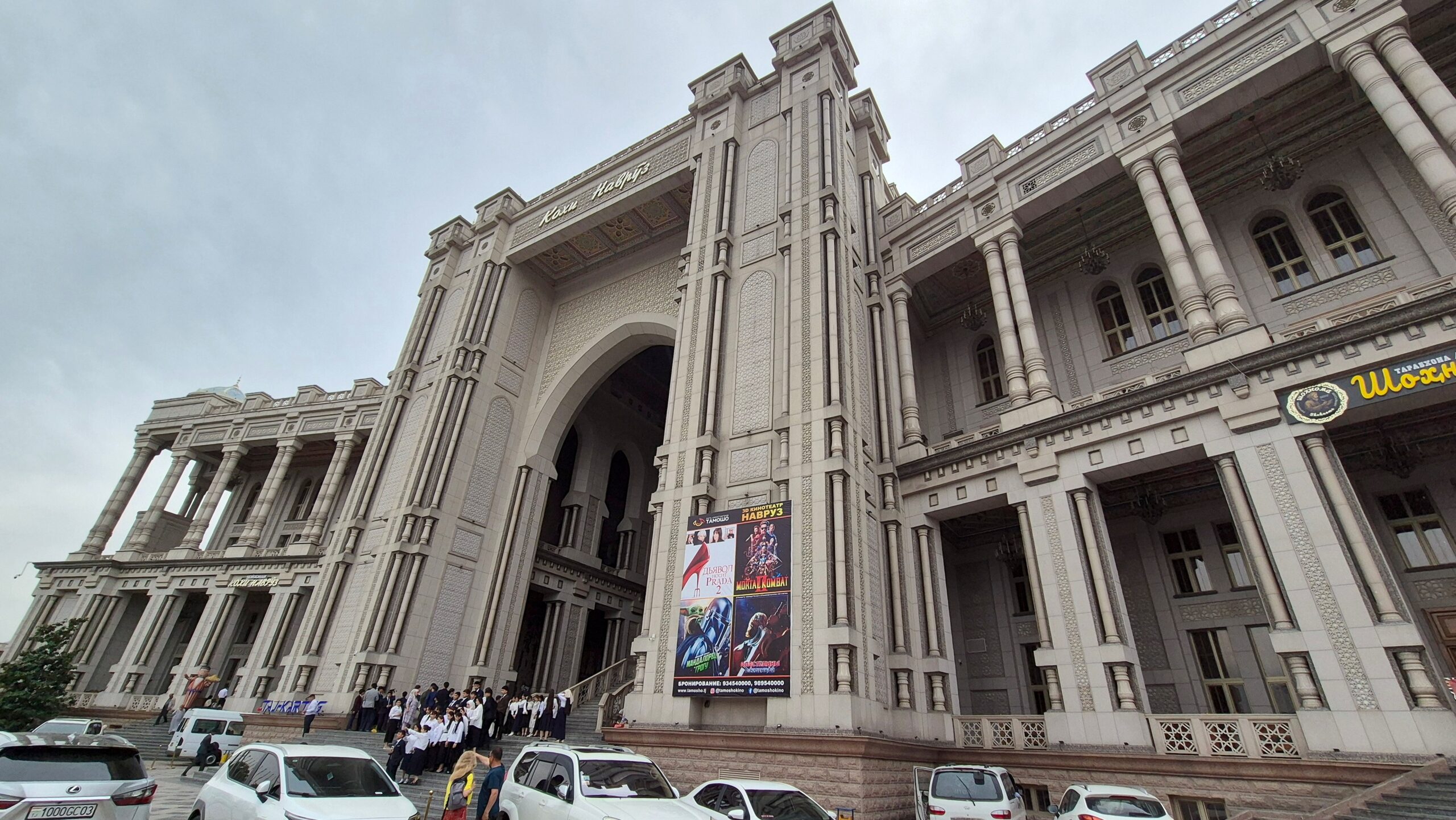
These celebrants wisely spilled out the back of the palace to enjoy themselves in the outdoor cupolas at the edge of a huge artificial lake dotted with paddle boats.
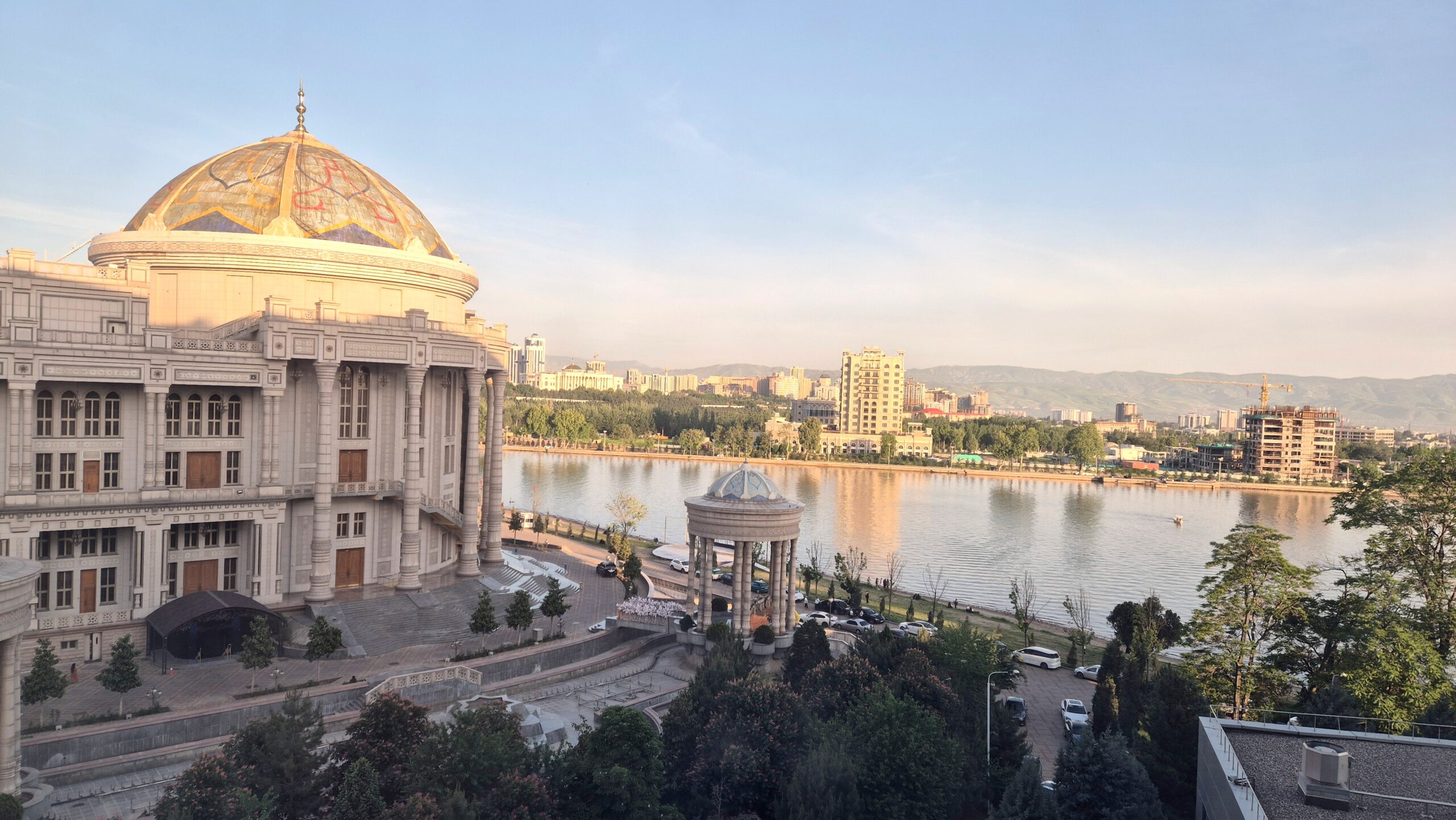
Fittingly, the newest mosque in town is also immense, the largest in Central Asia. Just two years old and funded by Qatar, the Central Cathedral Mosque seems to rival the sizable mosques of the Middle East, with capacity for 125,000 in prayer.
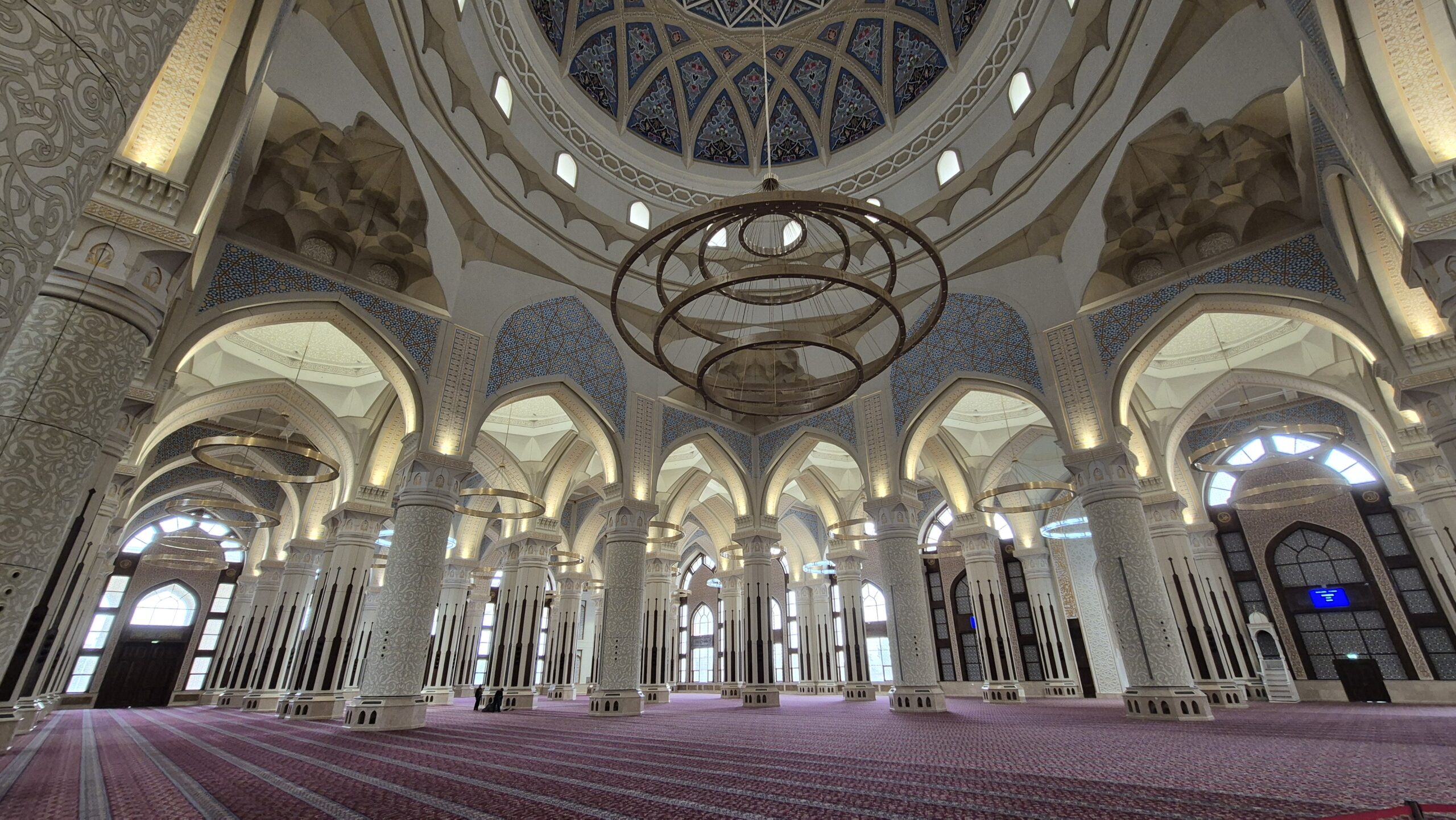
A short ride outside the city rises another reminder of the grand past at Hisar. The Hisar fortress began, it is said, in the time of old Cyrus but was destroyed 21 times over the years. The grand gate, with its bulky round towers, and the walls scaling the hillside have been extensively restored to look like their 15th century incarnations, clearly reflecting Bukharan monumental style.
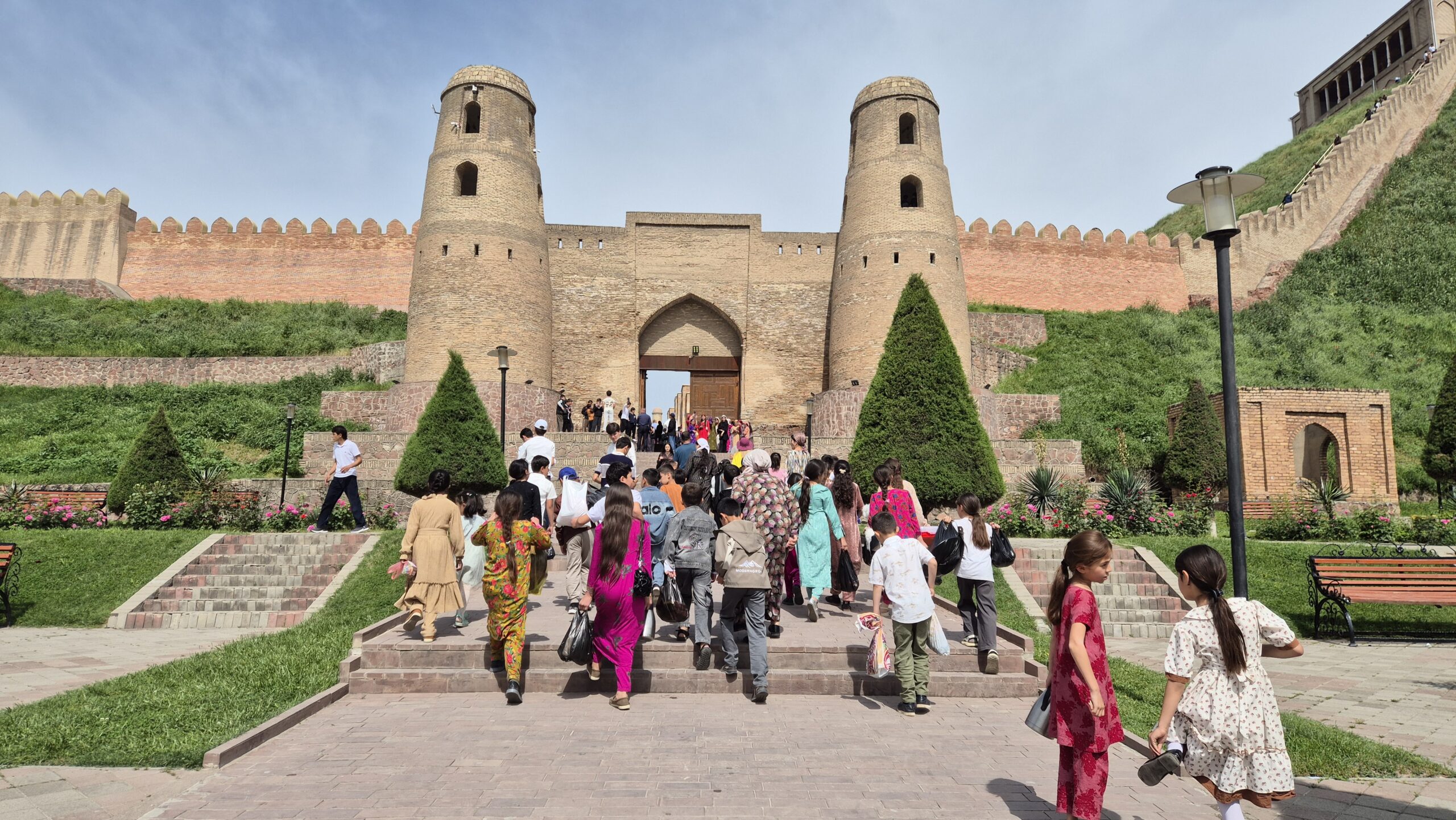
The impressive structure, surrounded by the clay remains of ruined fortifications, attracts residents of Dushanbe for wandering, partying, picnicking, and even horseback riding (at which even the young seem to excel as they galloped about). We too enjoyed the atmosphere, as well as the challenging climb up to the top and then down the steep stairs without a guardrail.
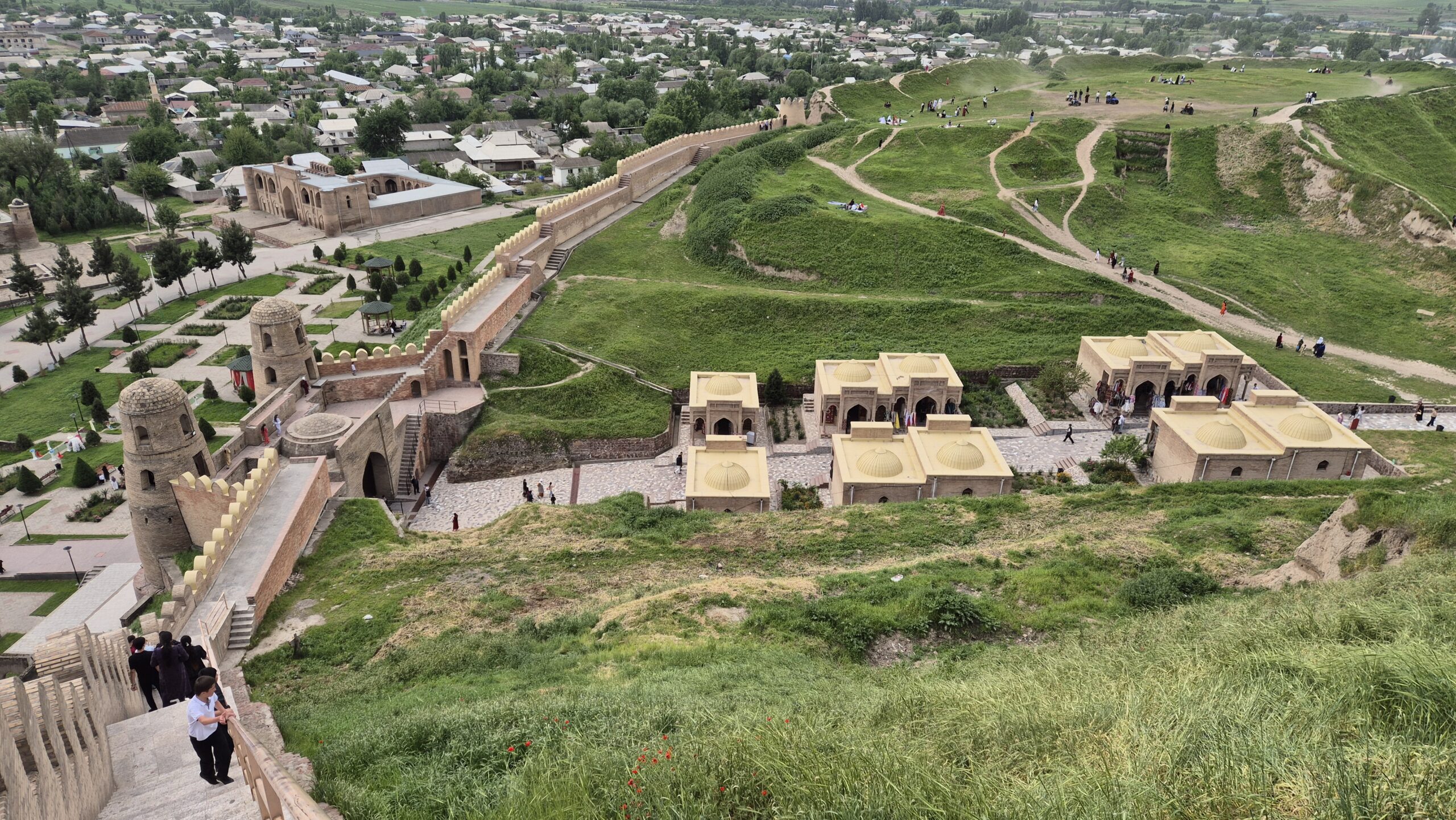
We happened to go on some festival day, when many people dressed up fashionably. While there, we were invited to join a large family picnicking on the grassy mounds that remain of the old forts. Later, a teacher leading a large group of students around the site stopped us so his students could proudly and excitedly talk with us in English – well, mostly basic greetings in English.
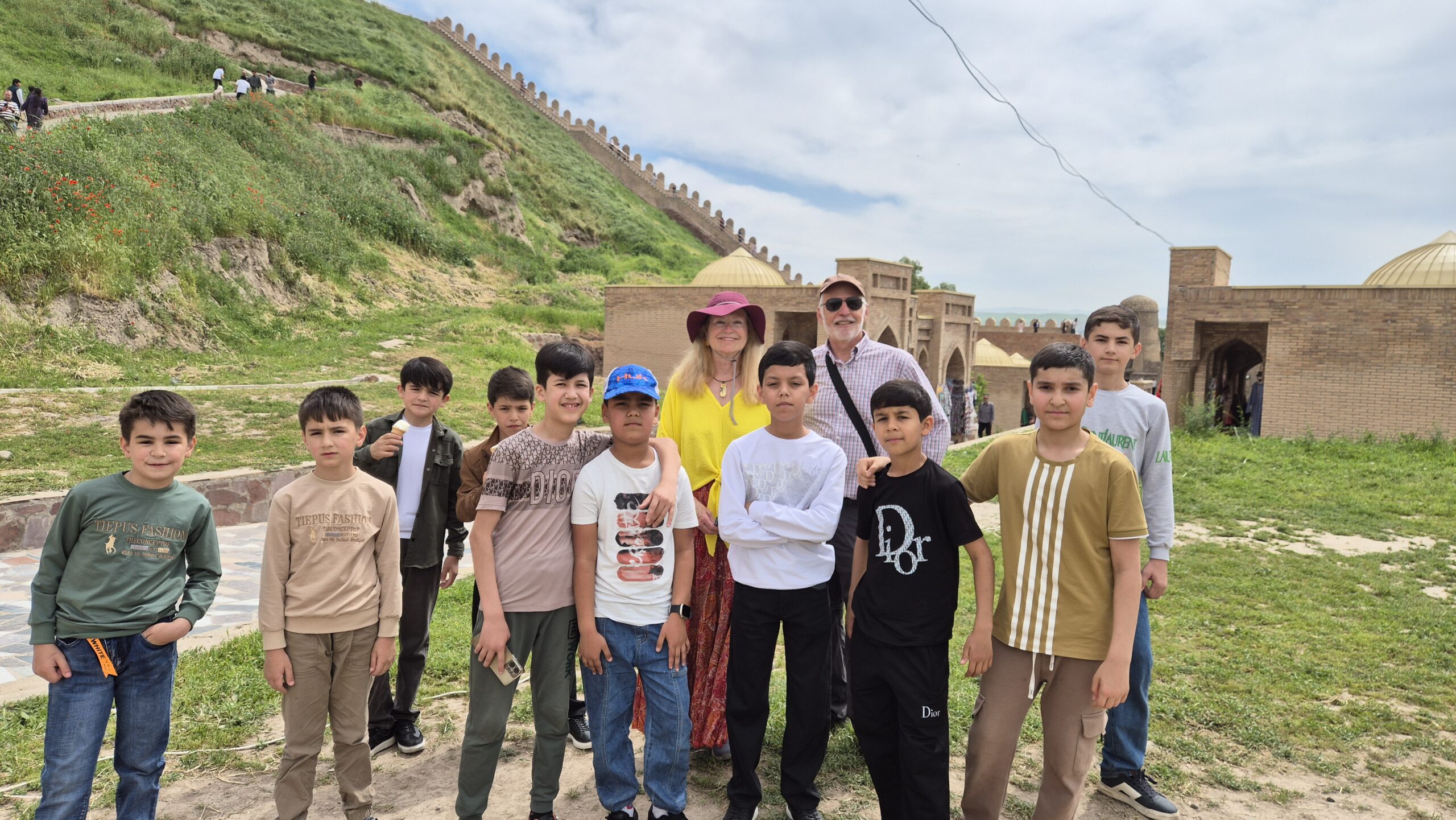
The same thing happened while we toured the National Museum, but with a more controlling teacher. He picked a couple of students to show off, though most were eager to do so. One did the usual greeting routine. Another started rattling off the 400 words in English that he knew, from A to Z. His patter was so fast we couldn’t catch any of the words, though we managed to stop him around C or D with a lot of praise and applause from the class. Sadly, the teacher did not give any of the girls a chance. As we parted, we pulled them aside and gave them the opportunity with our encouragement.
Back at the fort, it wasn’t clear how much of their historic past the Tajiks cared about while enjoying themselves in the fine weather. The students were evidently visiting to learn more about it. Yet, even for their elders and despite the festive distractions, the stalwart fort likely imprinted a bit of its own long history – and that of the Tajik people – on all who came.
(To enlarge any picture above, click on it. Also, for more pictures from the five Stans of Central Asia, CLICK HERE to view the slideshow at the end of the itinerary page.)