
In brief: After destruction by the Mongols, it took strong leaders like Timur and his heirs to build a city of stunning architecture, great learning, and durability.
A dazzling showcase. The essence of the Silk Road. A UNESCO World Heritage city. The jewel of Central Asia. Samarkand has long enticed traders, scholars, wise men and fools, archeologists and artists, camels and conquerors, as well as hordes of tourists more recently.
The Samarkand we see today, however, largely began at the end of the 14th century with Timur Lenge, or Tamerlane.
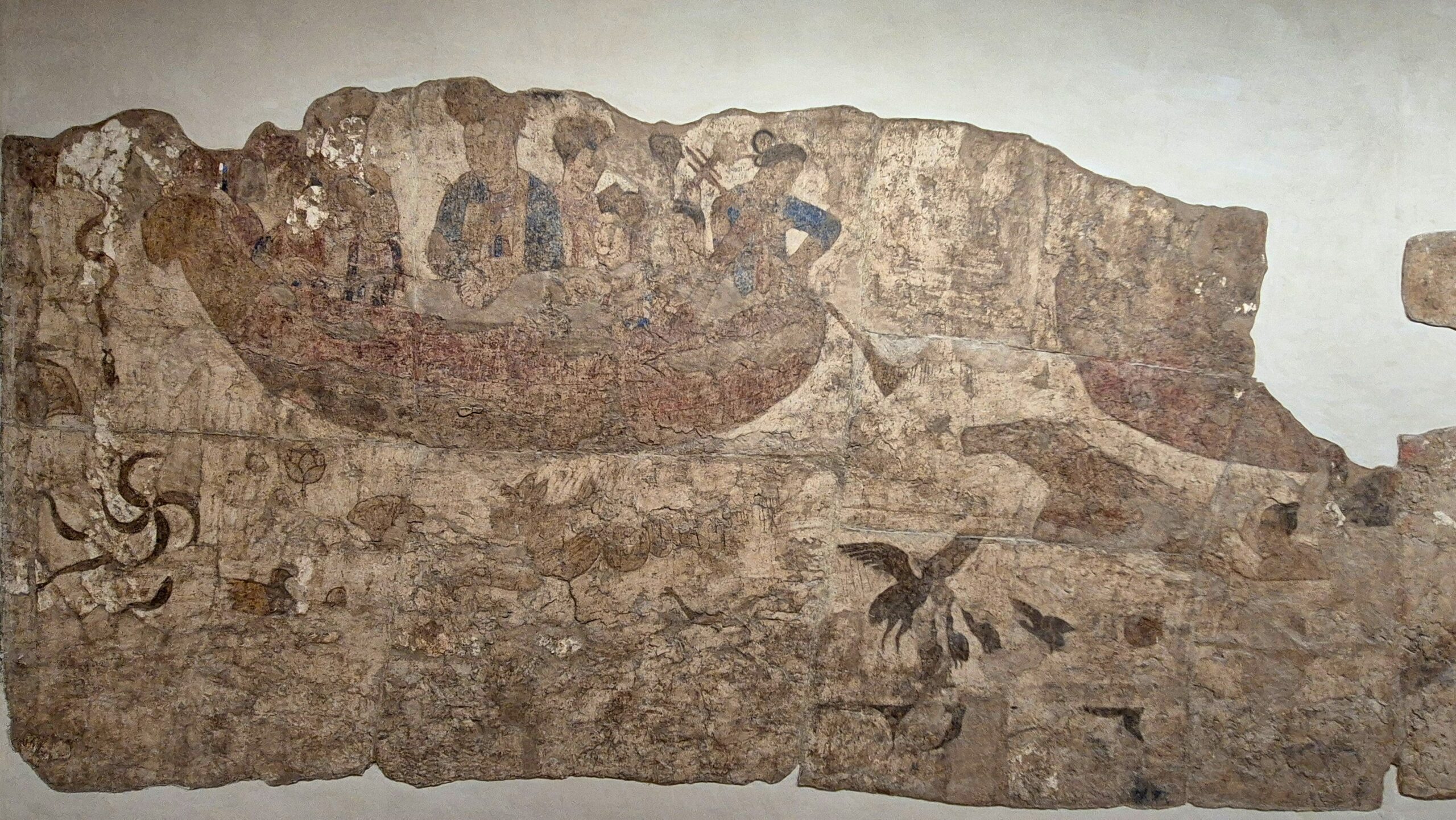
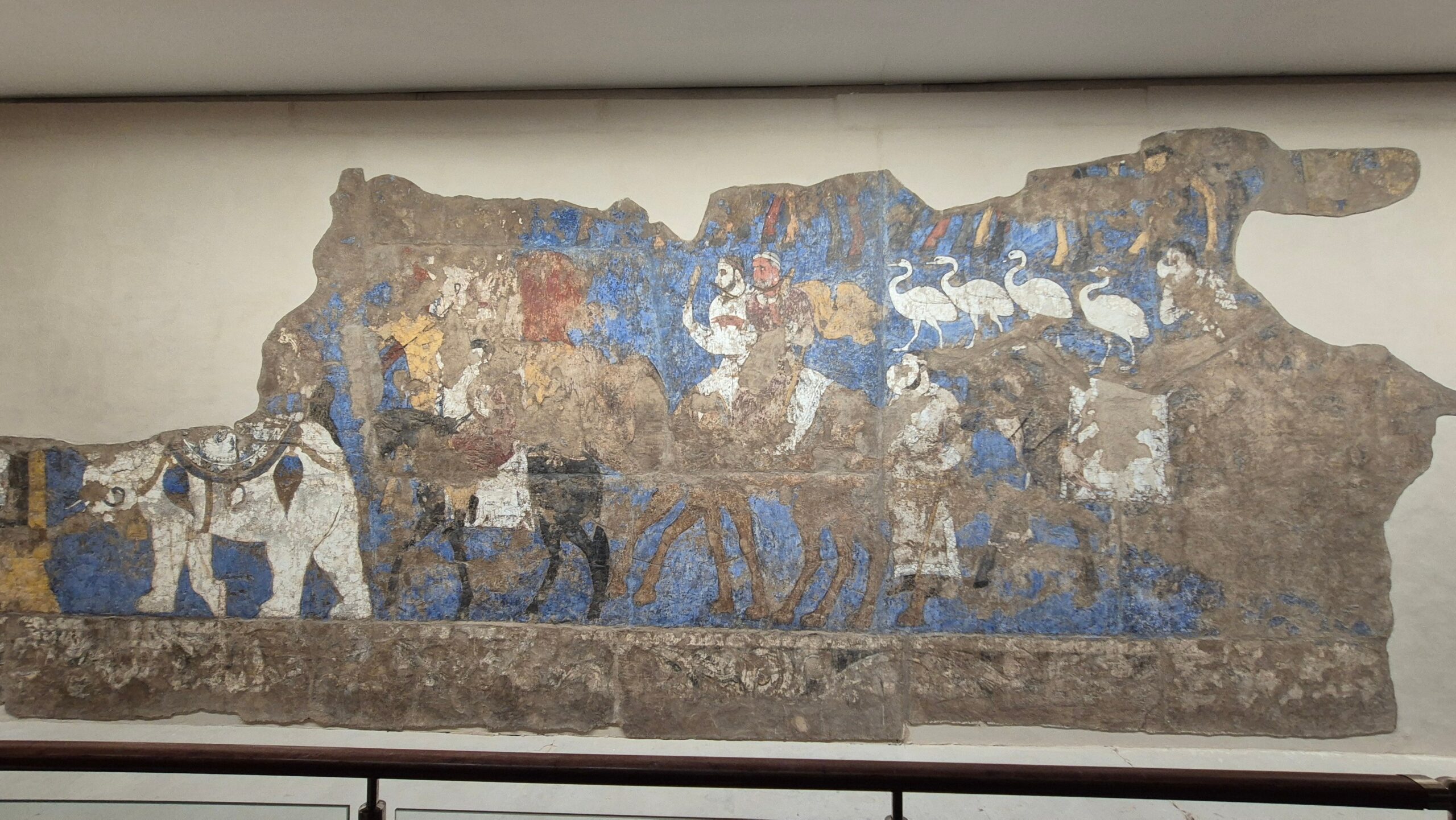
The city had flourished during the Islamic Renaissance, with extensive trade between east and west along the silk road. One of the most magnificent proofs of this was a wall painting of the 7th and 8th centuries found in Samarkand amid the ruins of the ancient royal palace of Afrosiab. The mural occupied four walls of a hall that was 11 meters (36 feet) square.
Along with motifs from across Asia, visitors from various countries – Korea, for example – are represented in an audience with the king. And an international cast stars in the other imagery.
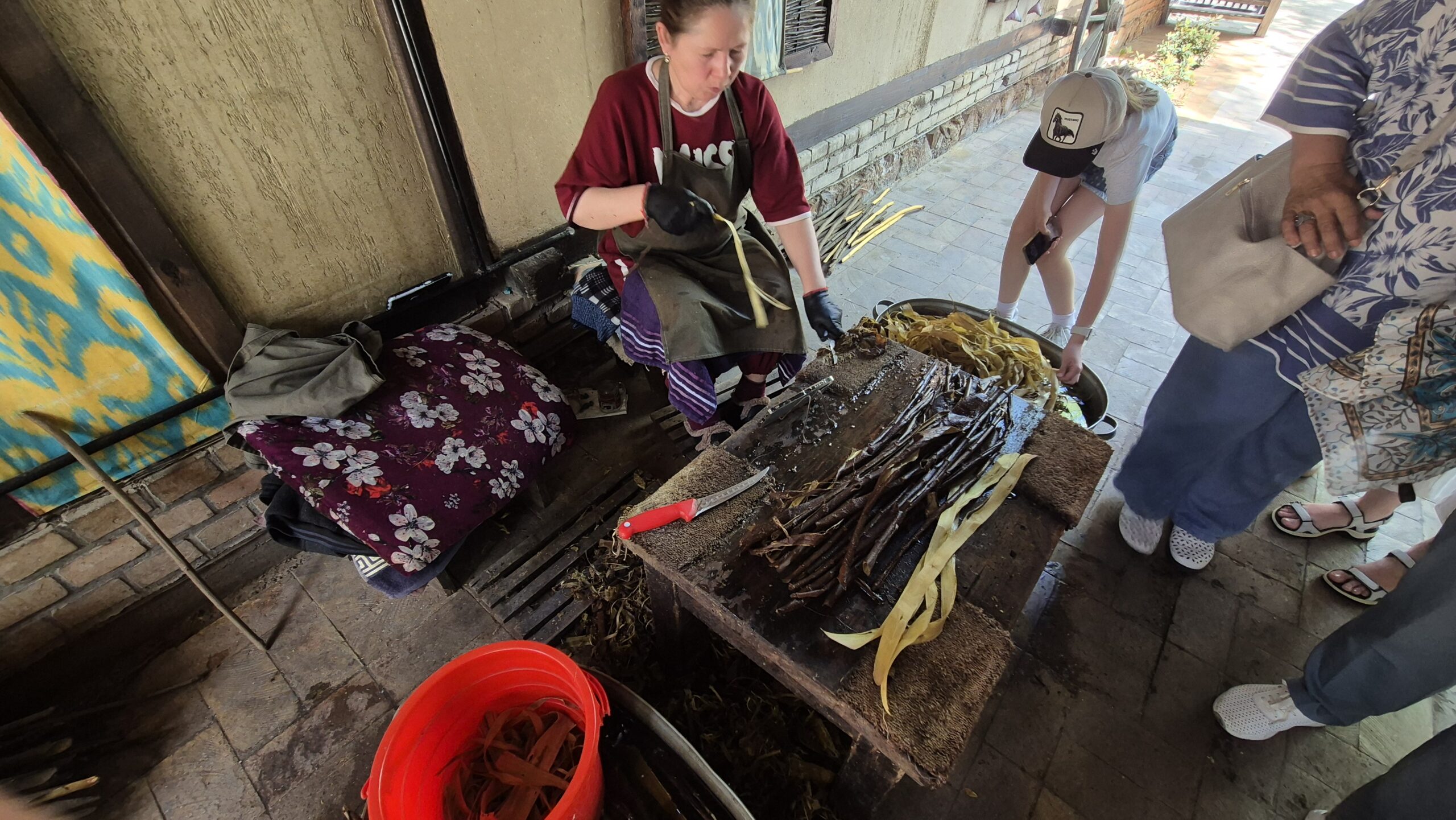
Locals often refer to the links between global regions as the Paper Road, not just the Silk Road. Samarkand itself disrupted the Chinese monopoly on paper making, somehow stealing the technology and exporting paper to Europe.
The same mulberry trees whose leaves silkworms like to eat are ideal for the fibers to make paper. That art is still practiced here.
Then Genghis Khan and the Golden Horde in the 13th century destroyed almost all of it.
But, in the late 14th century, Timur emerged from the Turkic-Mongol people in current Uzbekistan. His name meant Timur the Lame because of a wound he received in cattle raids when he was young. He was a brilliant and brutal military strategist who overcame numerous challenges – and ruled the extensive Timurid Empire for 35 years.
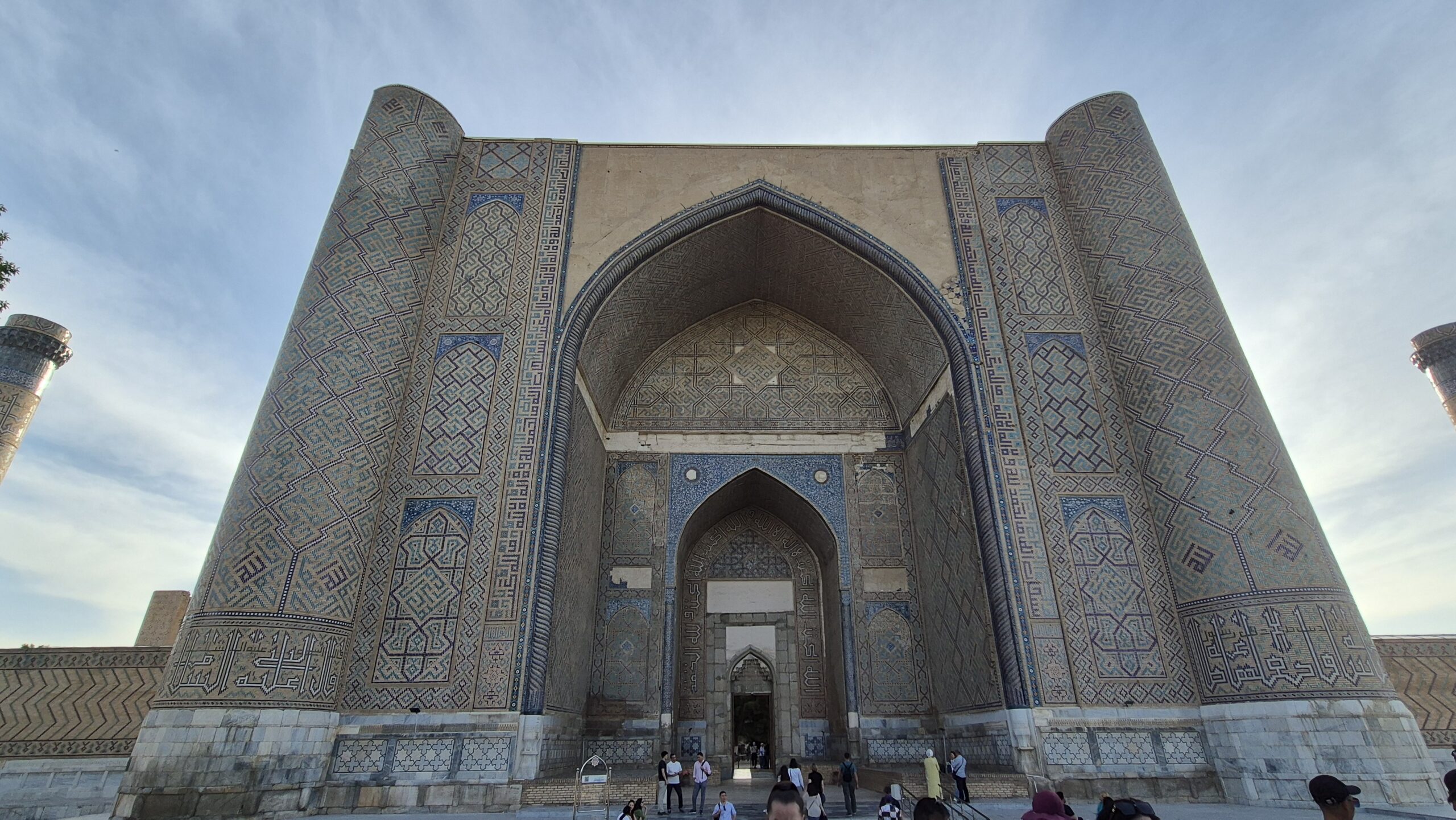
Everything he built was grand in scale, like his Bibi Khanym mosque (named for Timur’s wife), which was once among the largest in the world. Restored in part after collapsing from a late-19th century earthquake, it still looms over the landscape.
He became a patron of the arts as well and chose to build his capital city in Samarkand. Only a few structures remain at his palace at Shahrisabz nearby, but the scale of his ambition is evident.
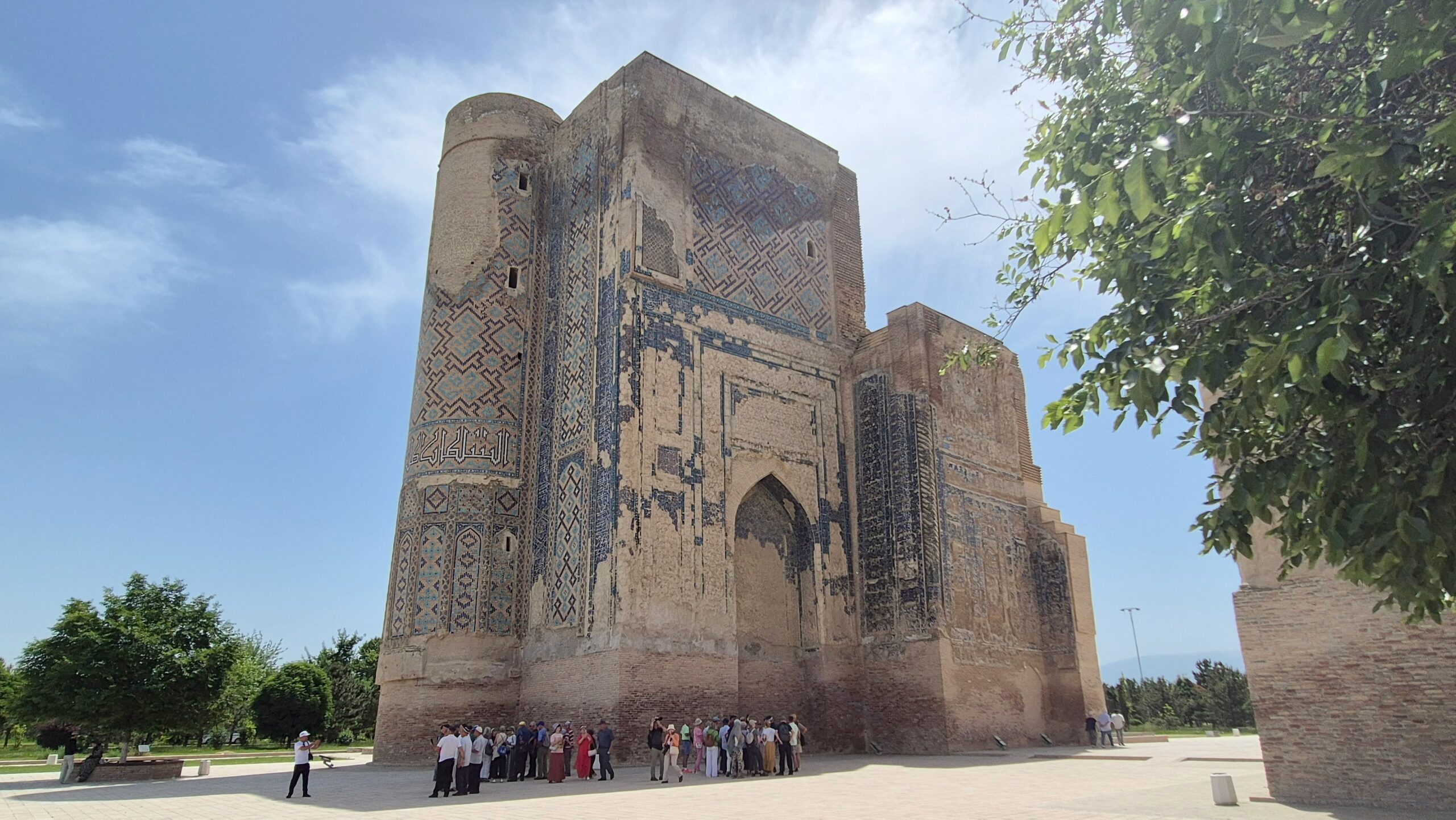
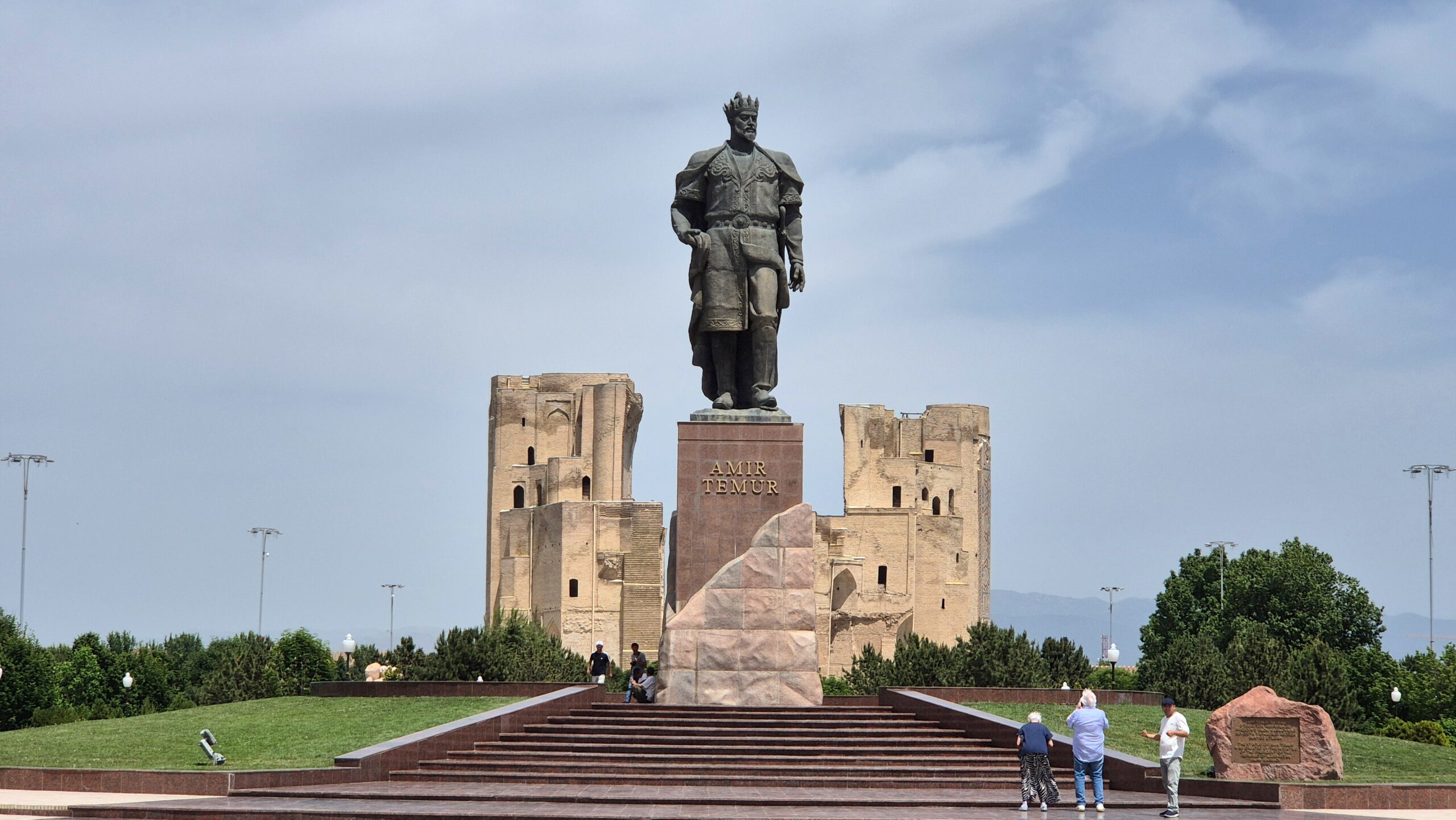
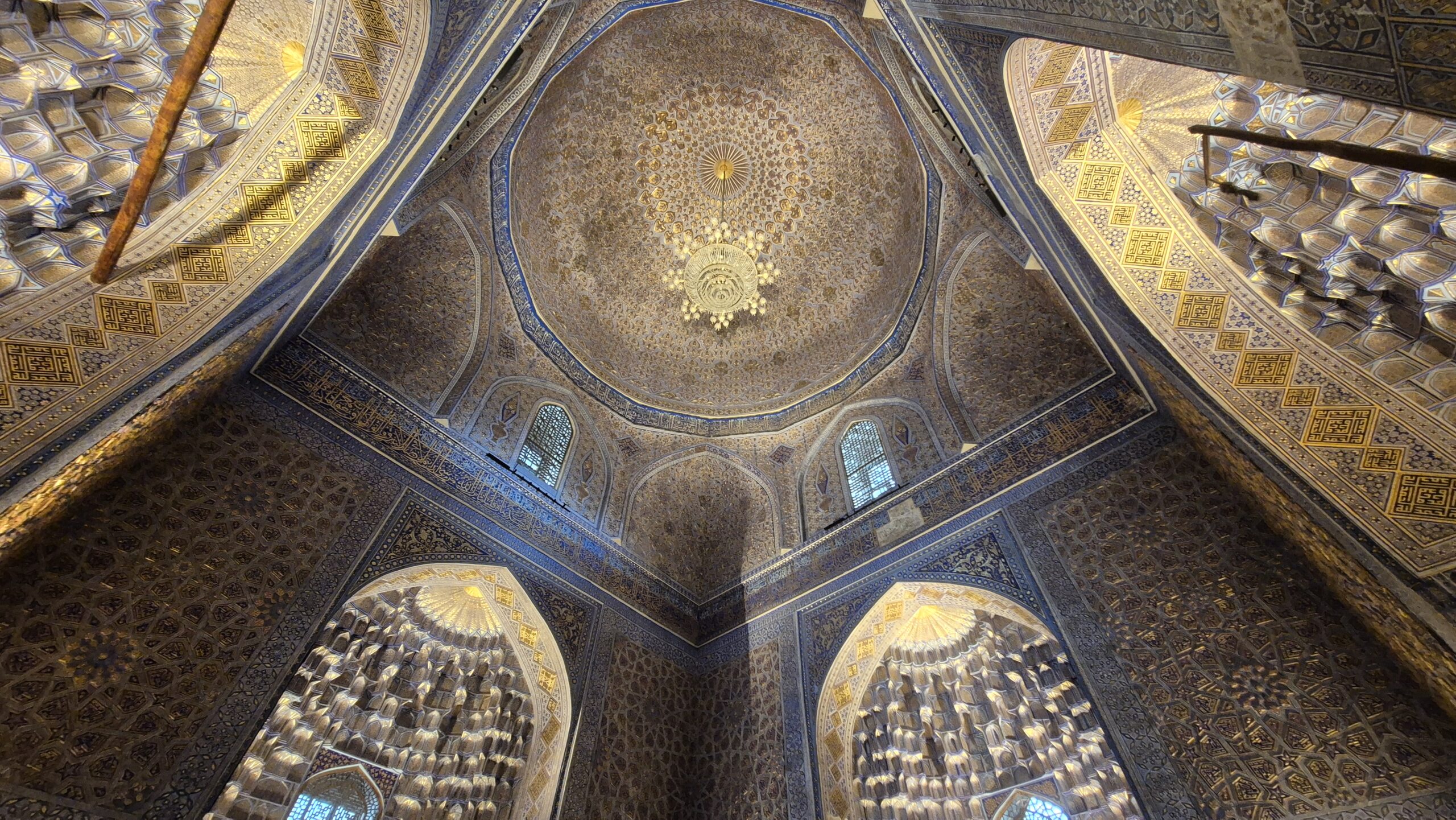
Timur was set to be buried at his palace, but winter storms prevented his followers from reaching Shahrisabz. So he was buried instead at Gur-i Amir Mausoleum, which he had built for his religious teacher.
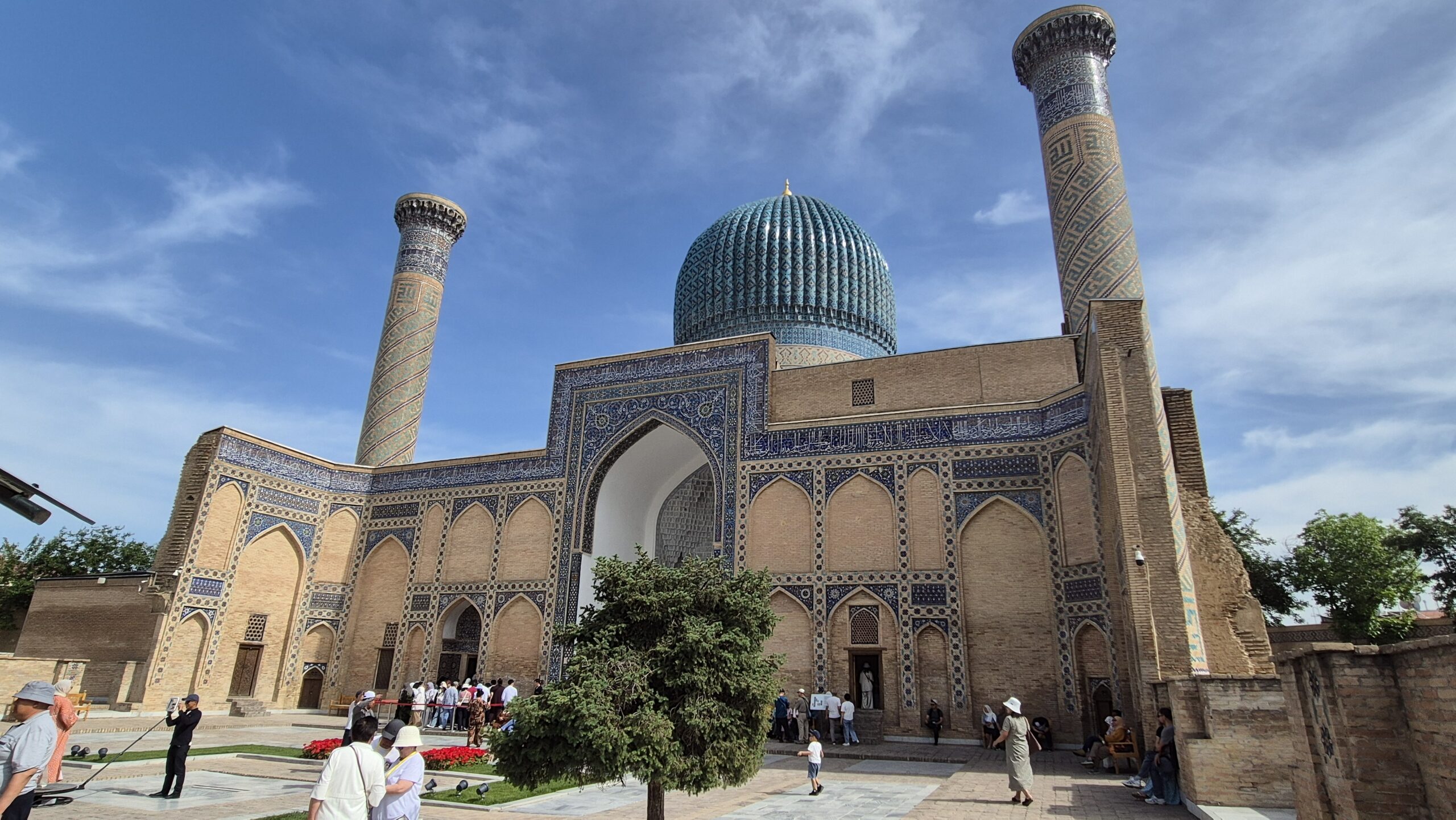
Structures like this set the model of grandeur for his heirs, most notably his grandson, Ulug Begh, who is buried next to Timur.
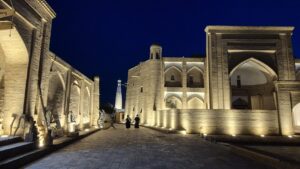
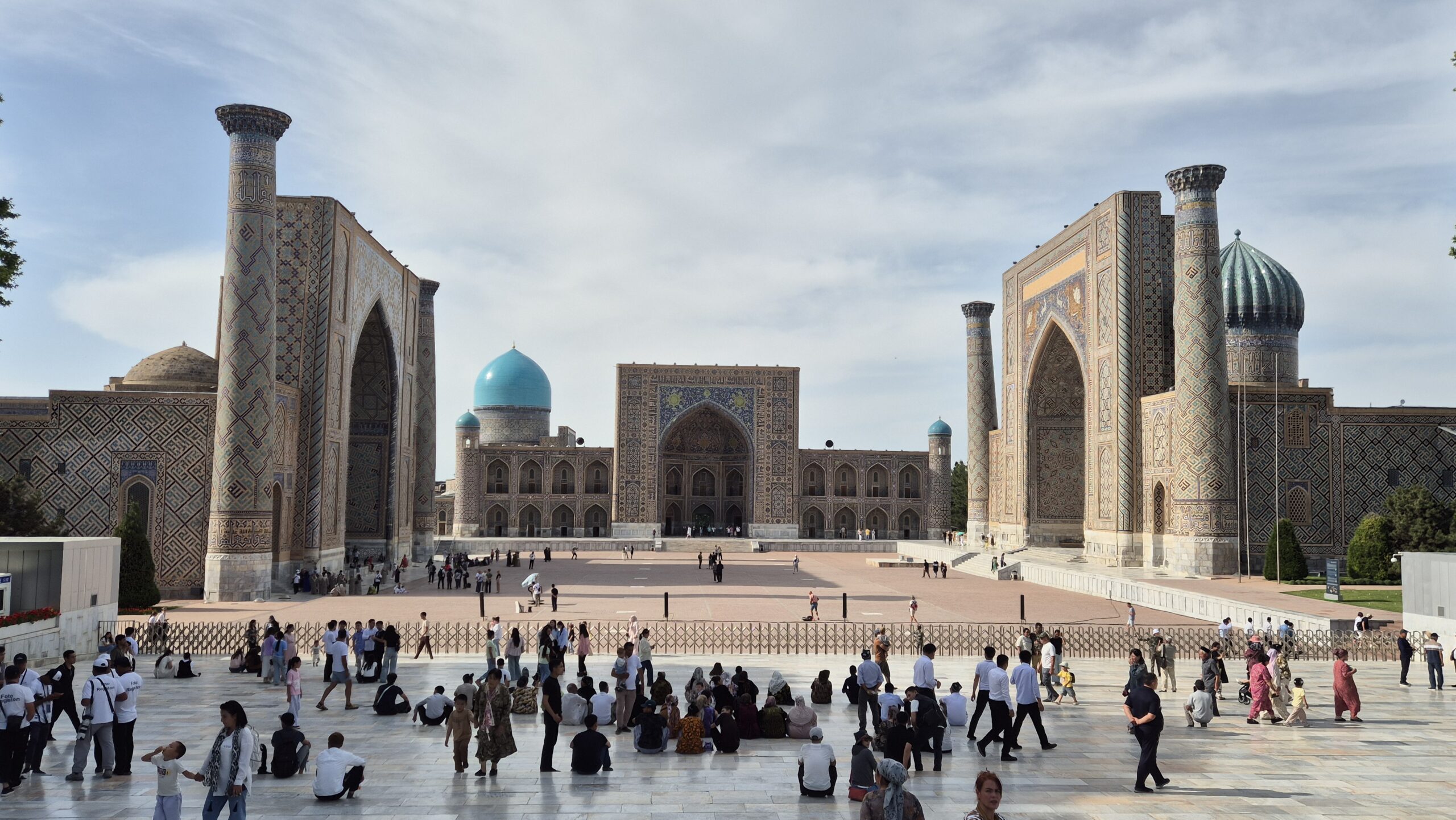
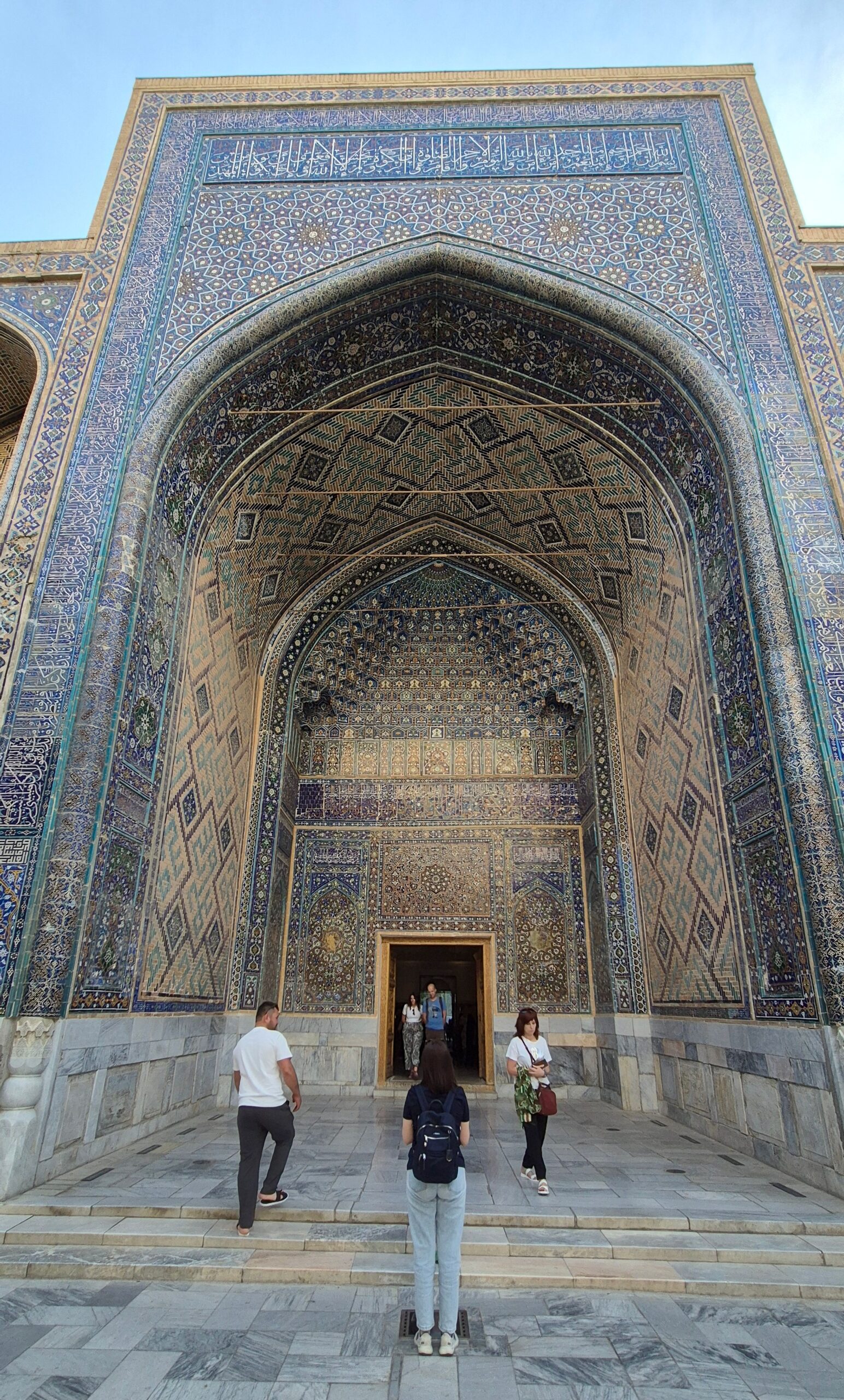
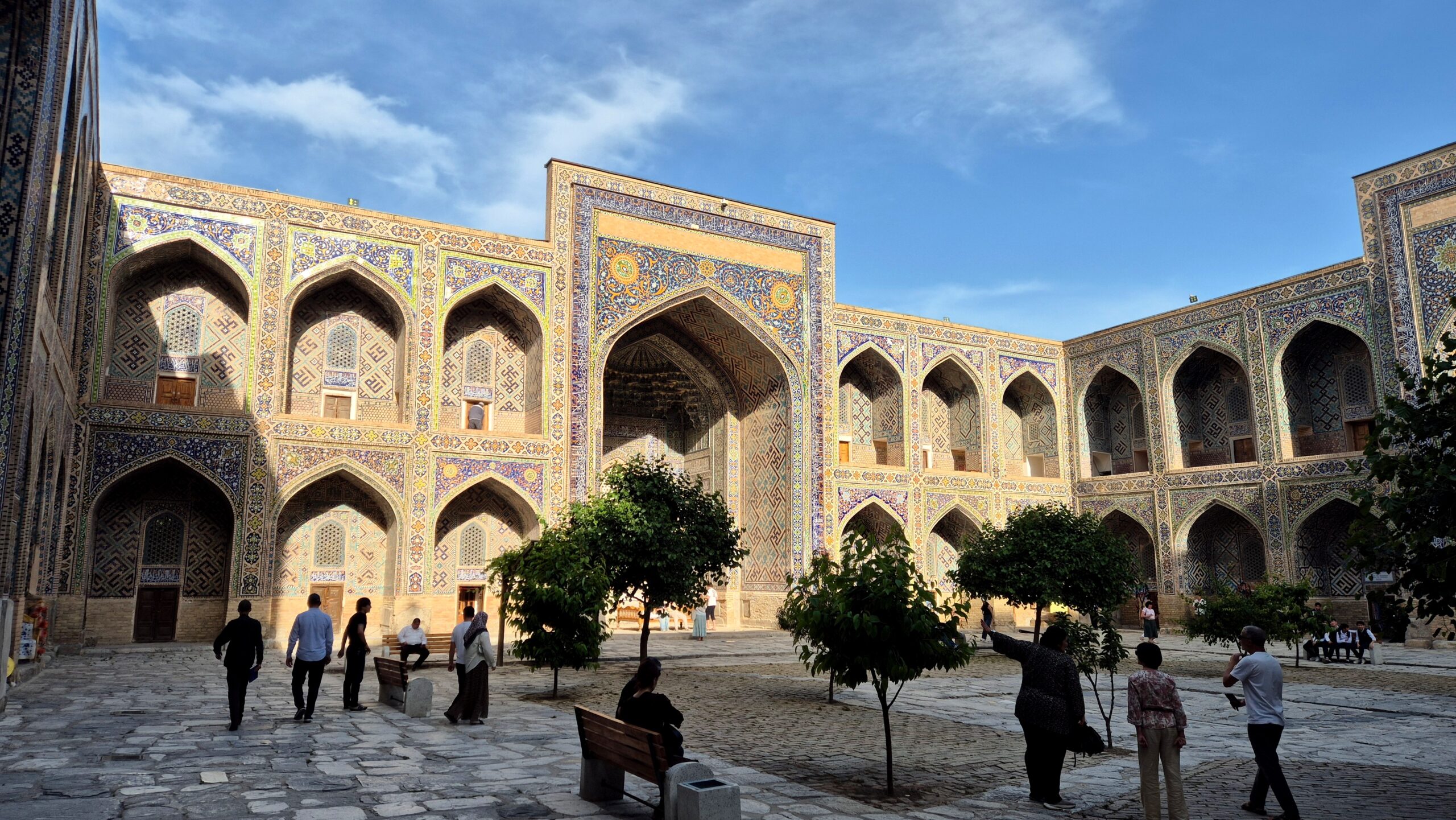
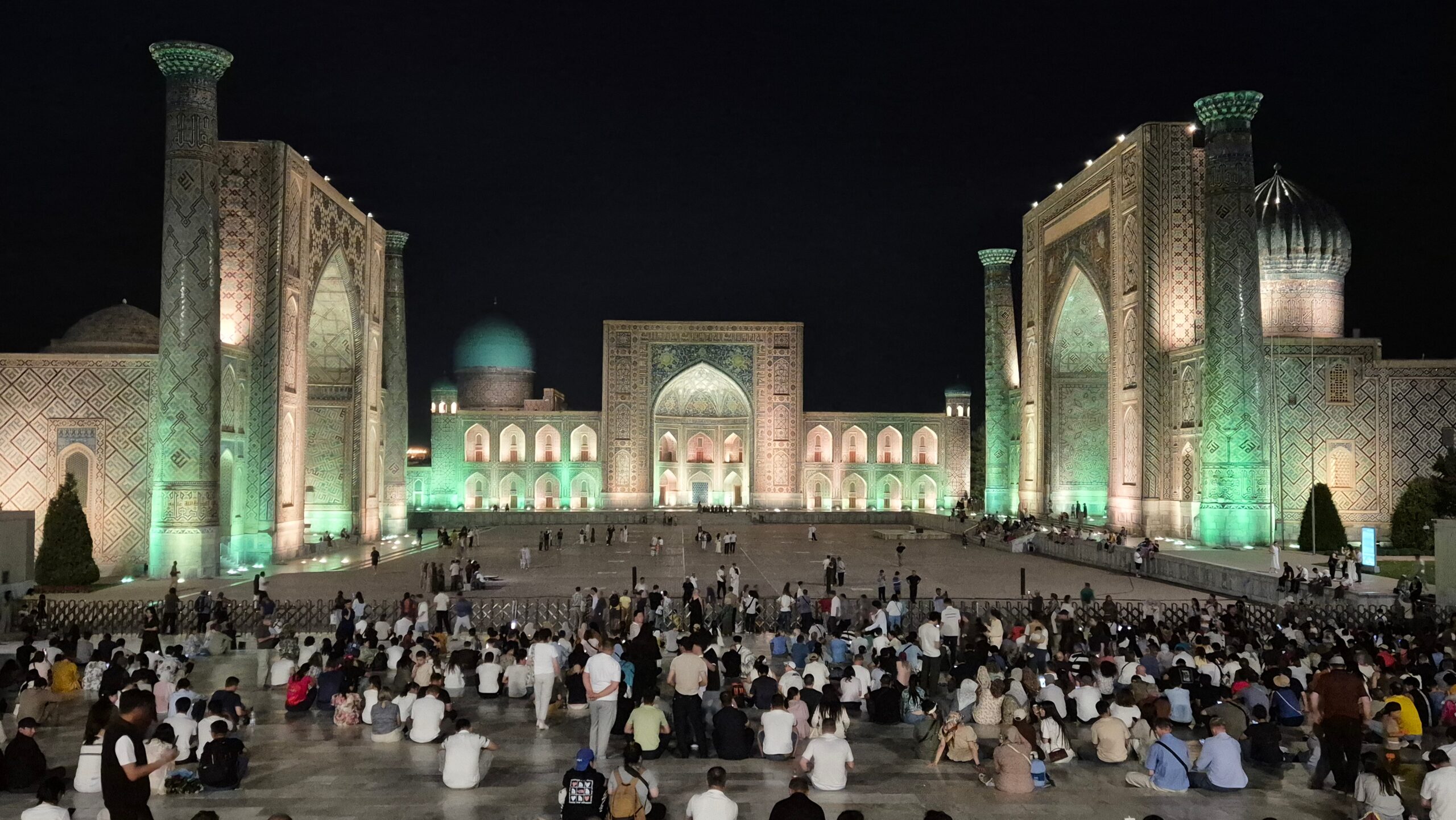
During his rule in the 15th century, Ulug Begh built a prominent educational institution or madrasa in Samarkand, a building that survives today in Registan Square. This most famous location in Samarkand now includes three madrasas in a glorious ensemble. Ulug Begh’s original is on the left; the other two were built in the 17th century by later rulers.
Ulug Begh was also an expert astronomer and mathematician, so he attracted scientists, poets, and other learned people to Samarkand.
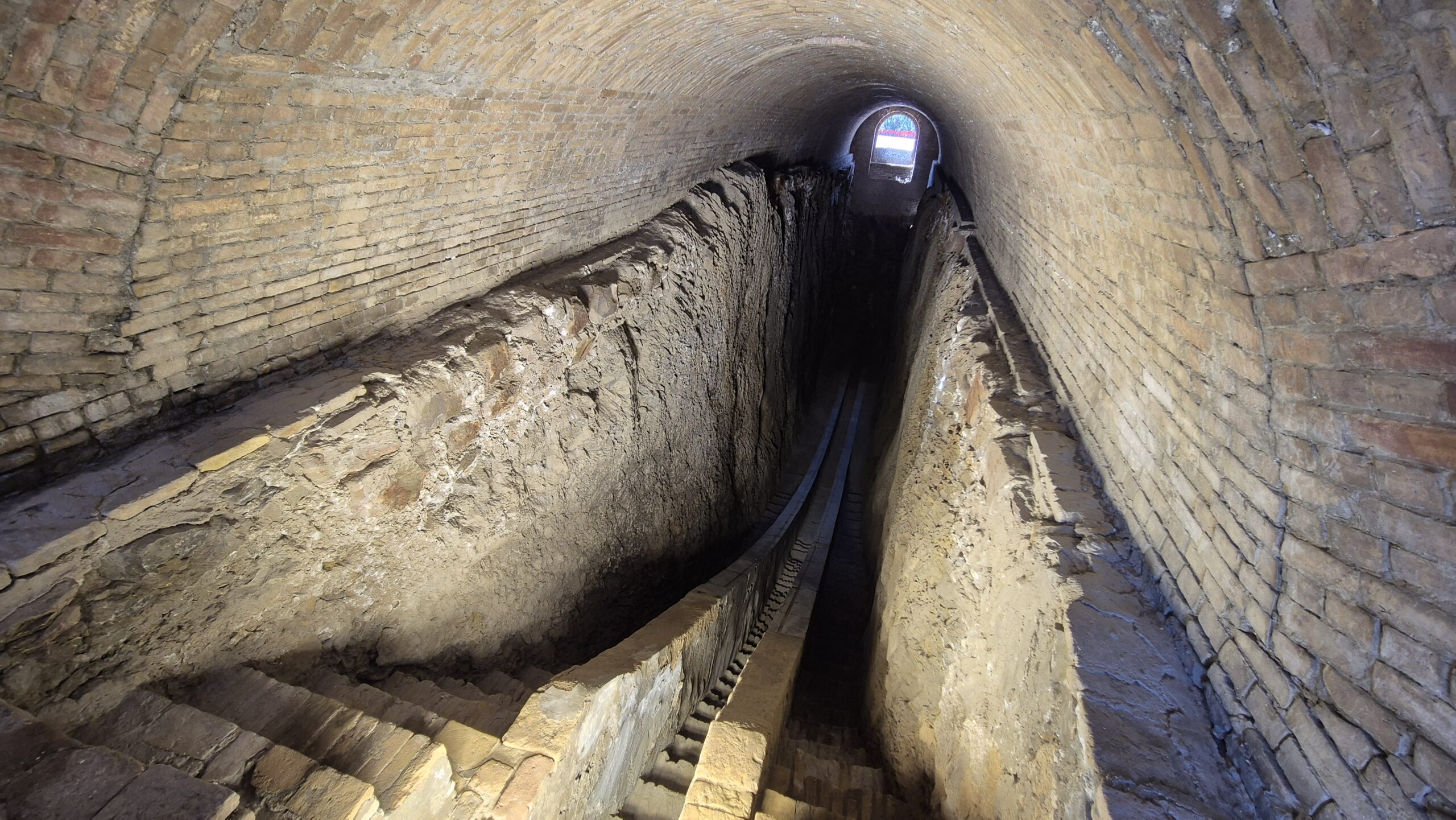
He even constructed a huge observatory, a massive sextant in effect, with a radius of 36 meters (nearly 120 feet). The observatory building was four stories tall, but only the underground section has survived.
The long heritage of the scientific work of this period is well recognized among scholars, revered in Uzbekistan, but so little known by others.
Successors to these rulers, especially in the 17th century, added mosques and madrasas that rivalled earlier structures. And then there are the tombs.
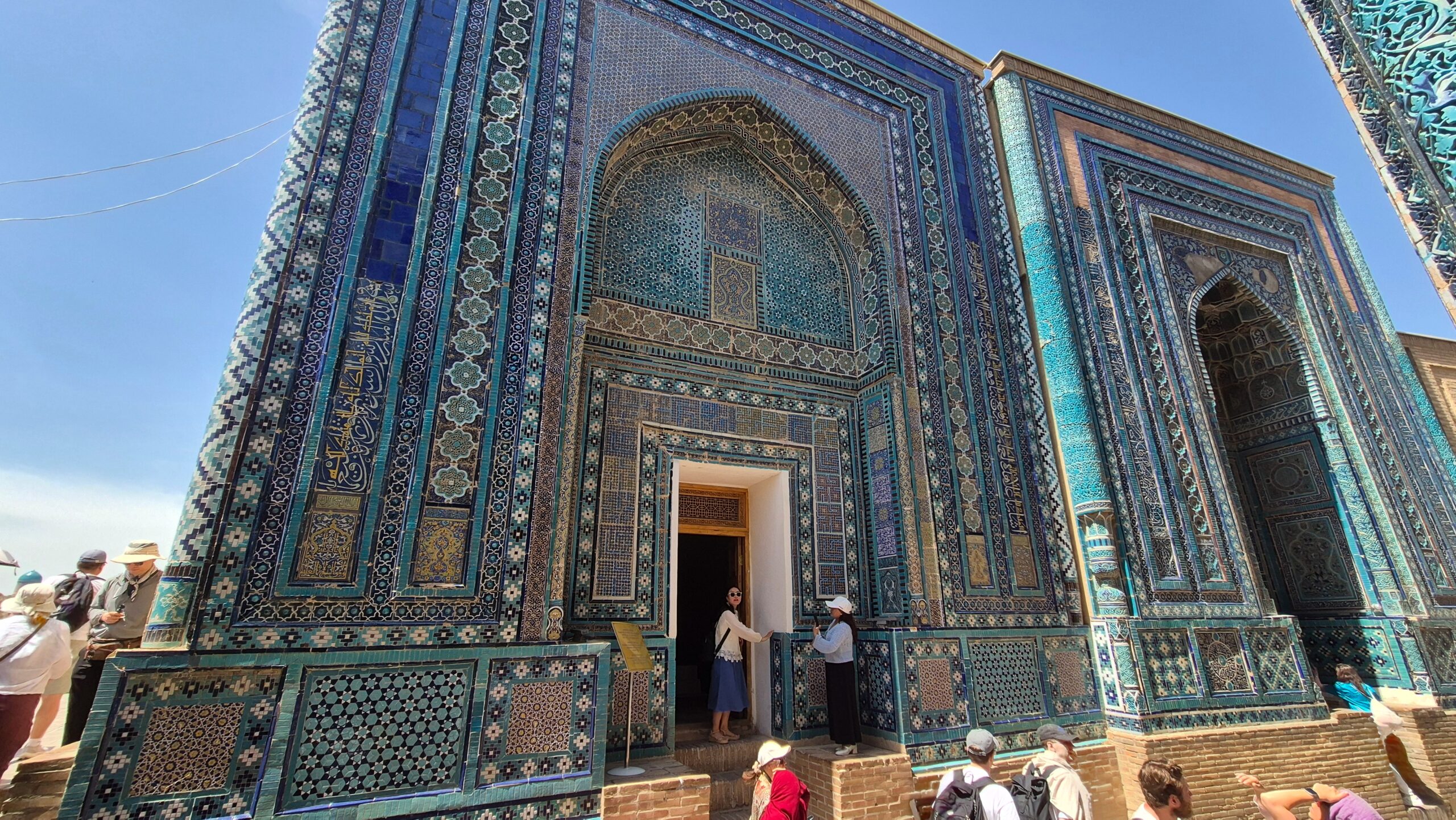
One’s first vision of Samarkand’s magnificence is the one that sticks with you. For us, that was the complex of mausoleums at Shah-i-Zinda, with twenty structures spanning 800 years, mainly from the Timurid period of the 14th and 15th.
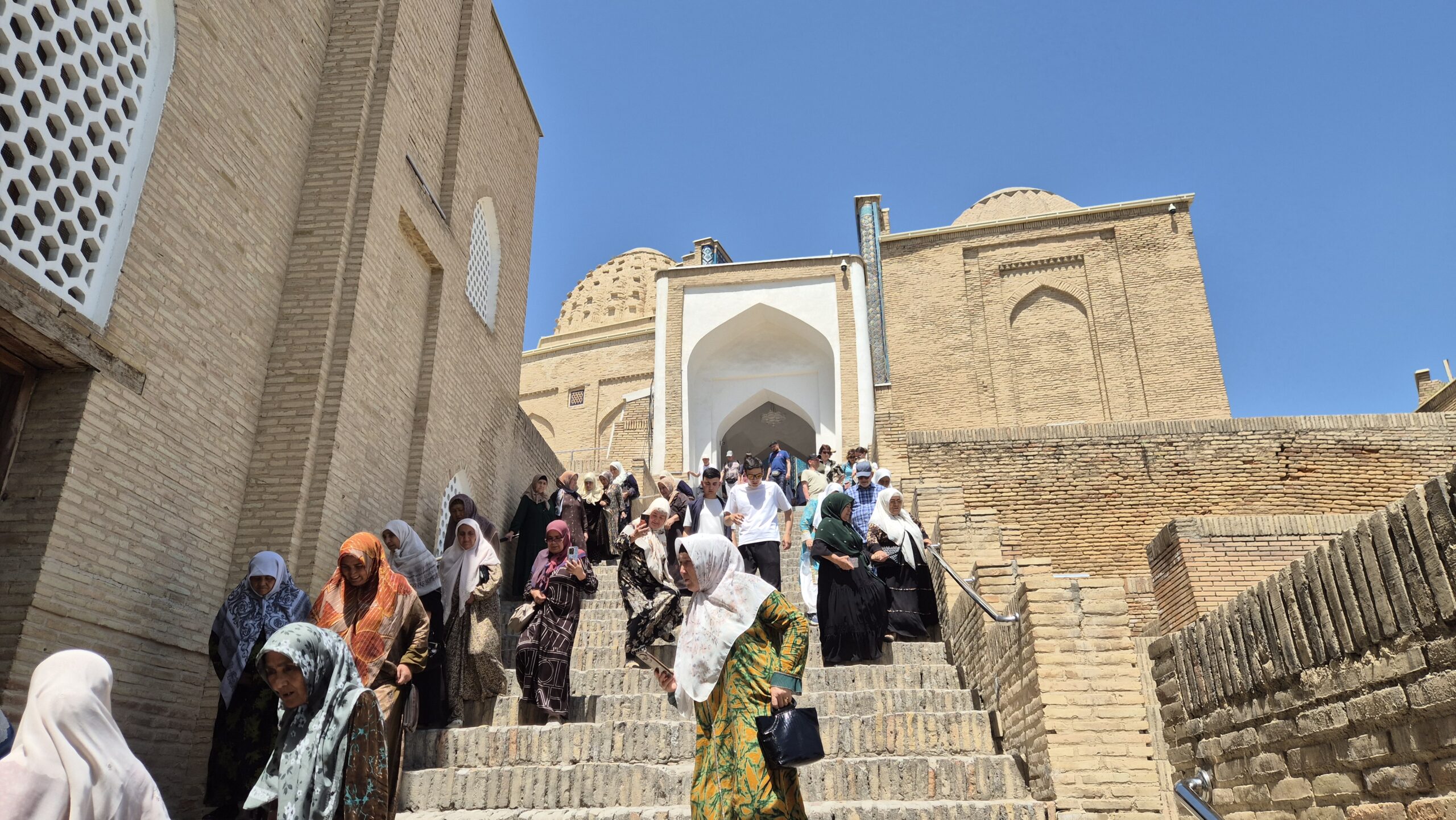
Shah-i-Zinda doesn’t look like much from the entryway, a set of tall stairs that challenges many of the visitors, including many who come to pray here. But, once in the complex, people spend a long time.
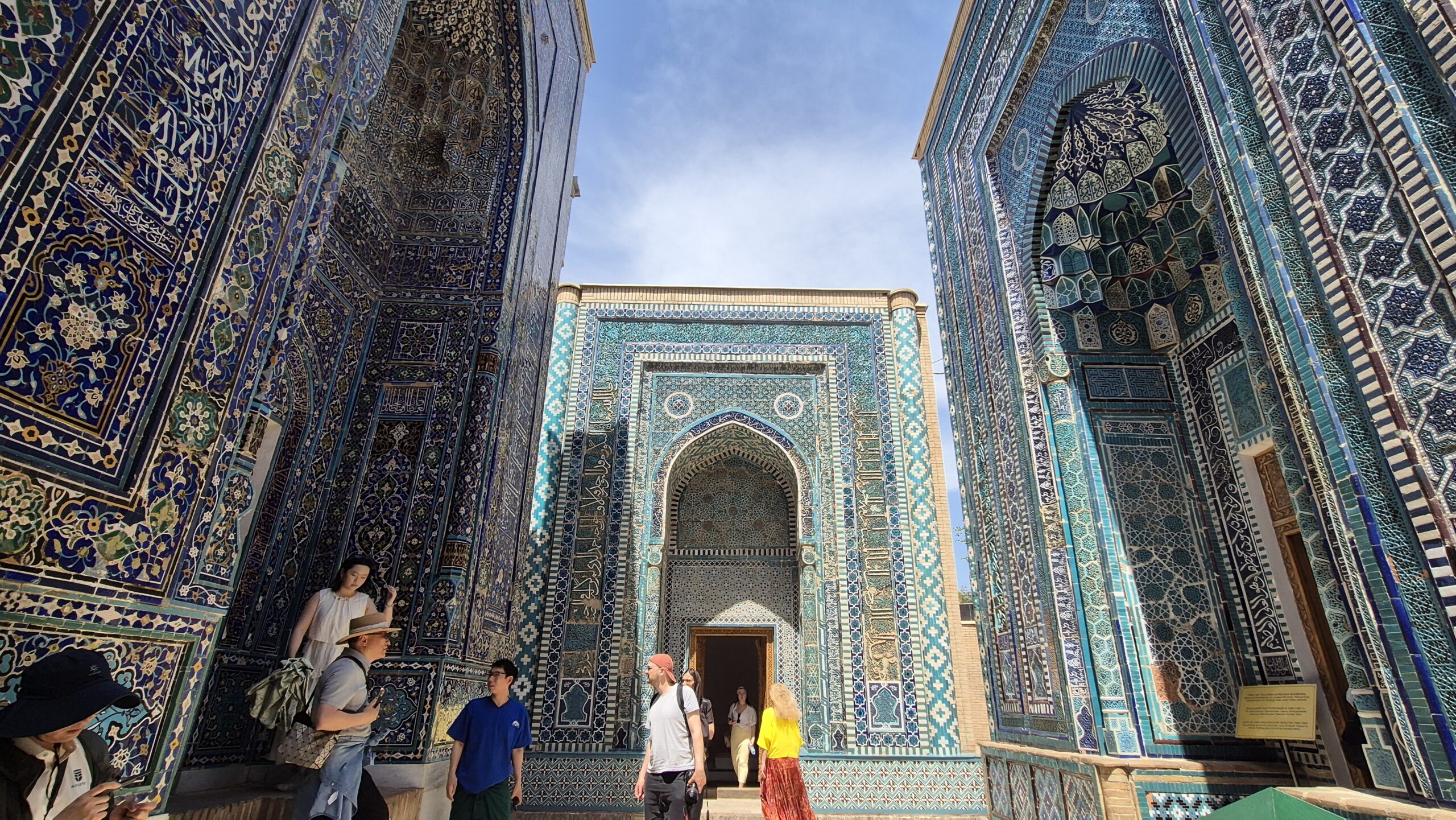
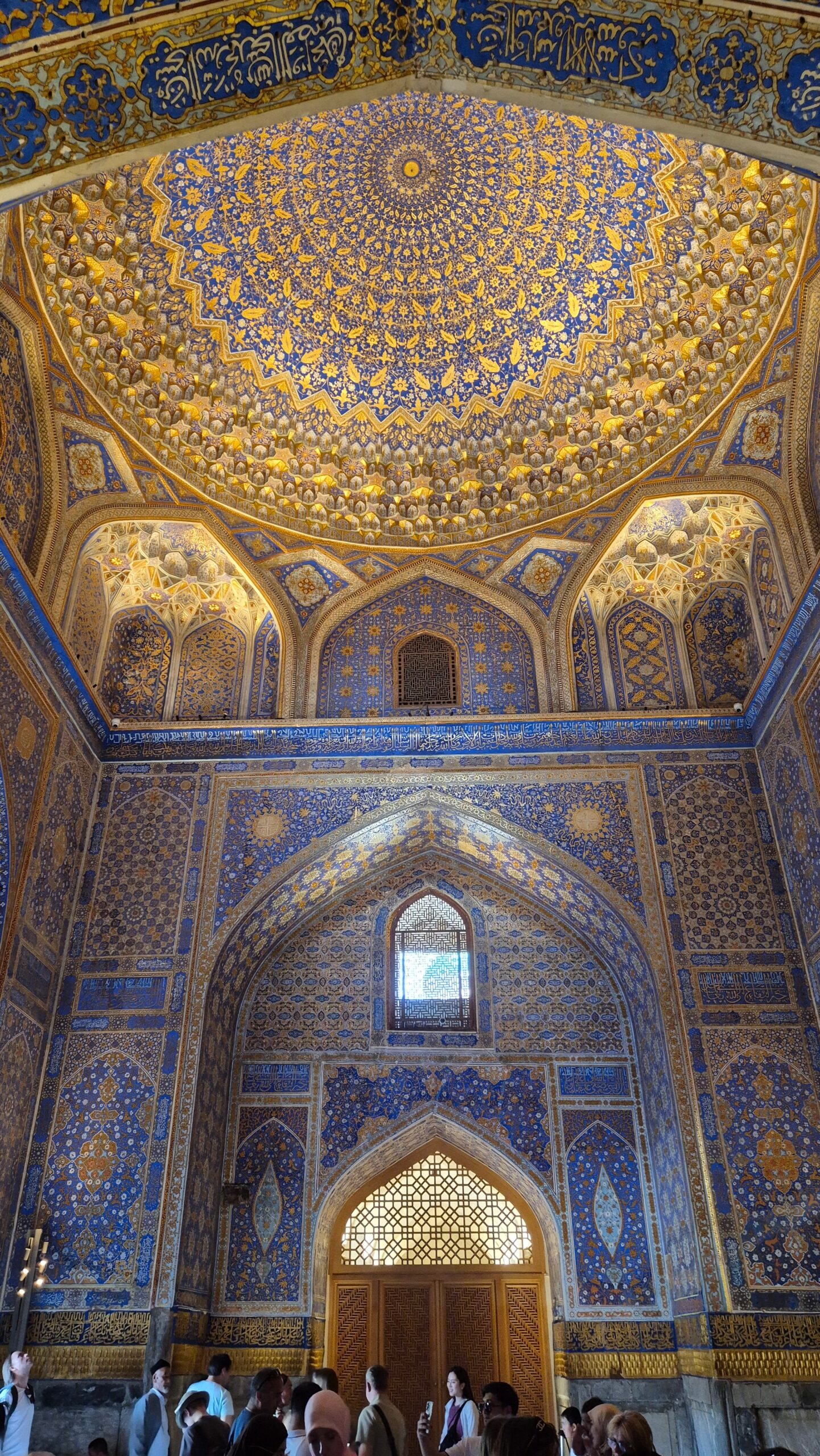
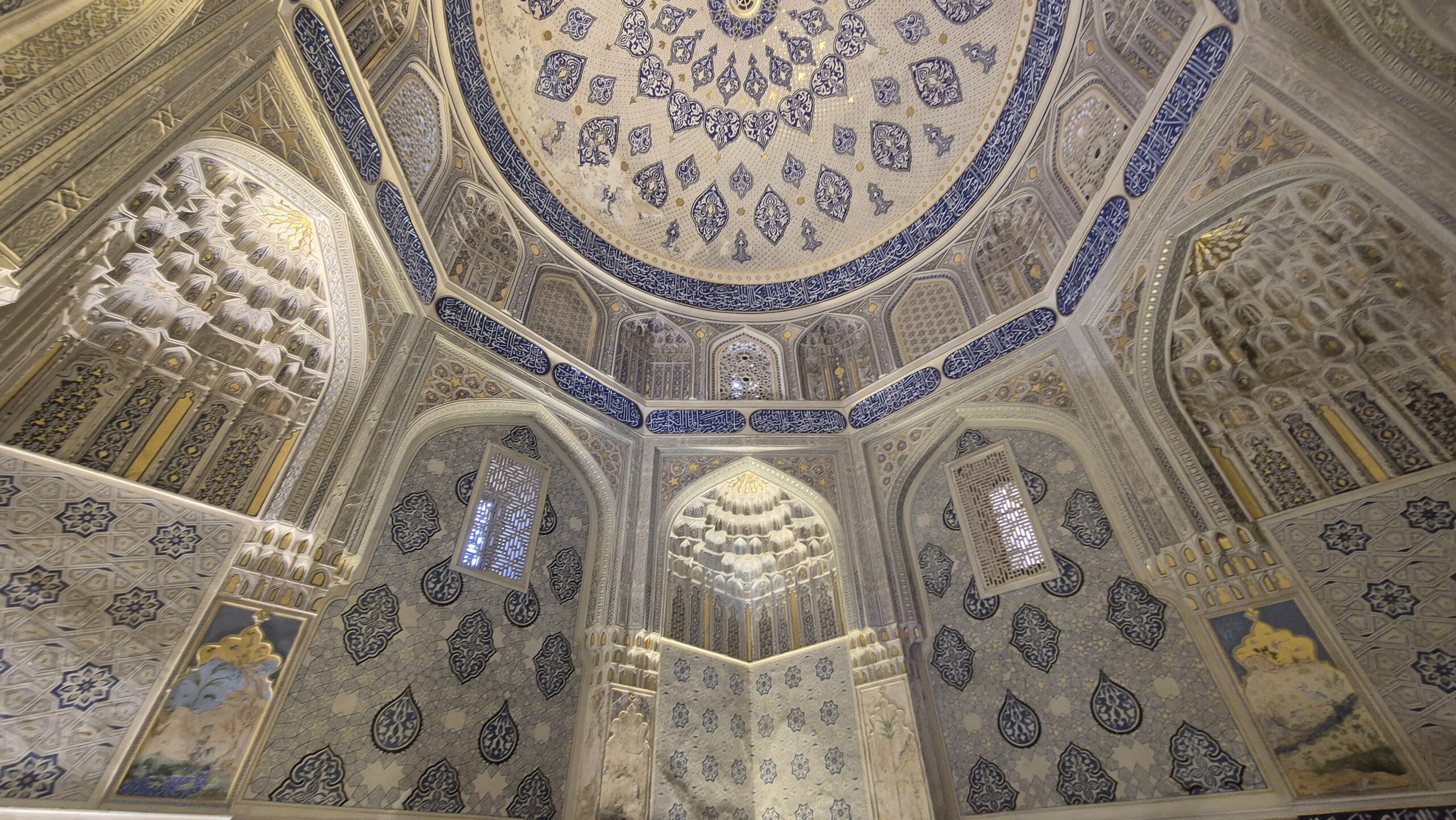
The facade of each one is swathed in exquisite tilework; within, stunning interiors have been restored in dazzling fashion.
After the 17th century, Bukhara gained power over the region, building up its own learning and religious institutions and limiting investment in Samarkand until the arrival of the Russians in the mid-19th century.
In the next few decades, the Russian archaeologists decided to repair the crumbling buildings and build a few imitations. Other fixes have kept these structures resplendent. As a result, what we see now is often a mashup of the original and the imagined.
But, face to face with these buildings today, one can ignore the uncertainties of authenticity. We can but gape in awe at the scale of the ambitions and the beauty of the result. And thank Timur the Lame for his vision.
(To enlarge any picture above, click on it. Also, for more pictures from the five Stans of Central Asia, CLICK HERE to view the slideshow at the end of the itinerary page.)