
In brief: Our first stop in Kyrgyzstan gave us a taste of the diverse mix of ethnicities within the country.
The 40 tribes of the Kyrgyz people were nomads who traced their origins back to Turkic tribes and then the Mongols. Only with the 19th century advance of Russia within the region did cities arise – at first as military outposts.
Karakol to the east of the country was one of these.
By the 1880s Dungan Chinese (Hui Muslims), Kazakh, and Uyger people fled China into the area to join the native Kyrgyz and Turkic Tatars here. The town soon flourished as a trading center.
Notably, these settlers brought their cuisine with them. The Uygers introduced laghman, for example, a stew of vegetables and pulled noodles that we tried one evening.
The Dungan brought their Islamic traditions to the city as well as their cuisine. As with laghman, several of their dishes like Ashlyan-fu (a spicy cold noodle dish) have become hallmarks of the country, while the other ethnic groups have added to the local mix.
We were a bit skeptical about the noodle dish, as the description mentioned a cold jellied addition. But we didn’t hesitate to try it after we sampled some of the local breads in the open-air bazaar.
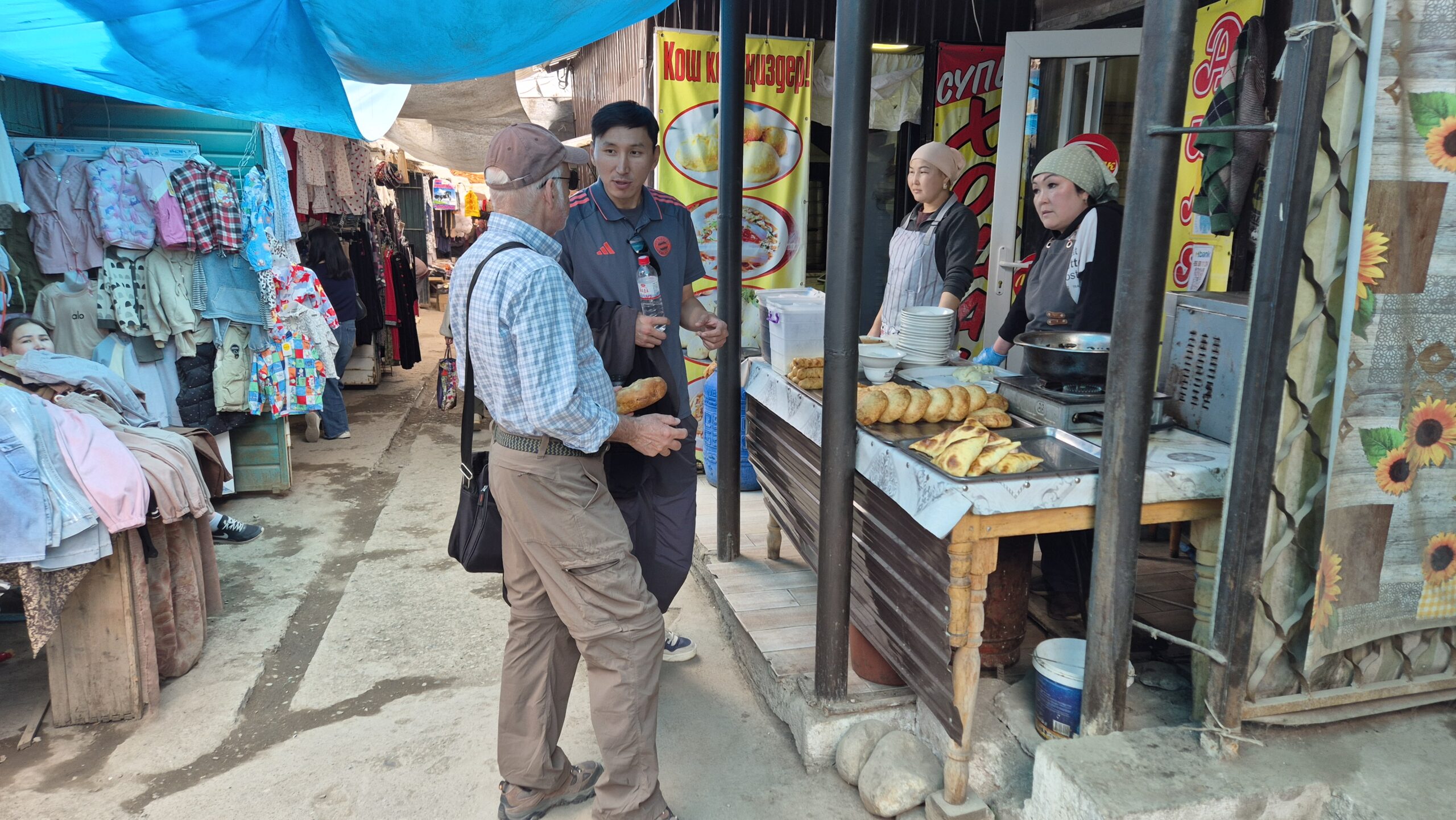
We happened upon a passageway with a dozen stalls offering the dish.
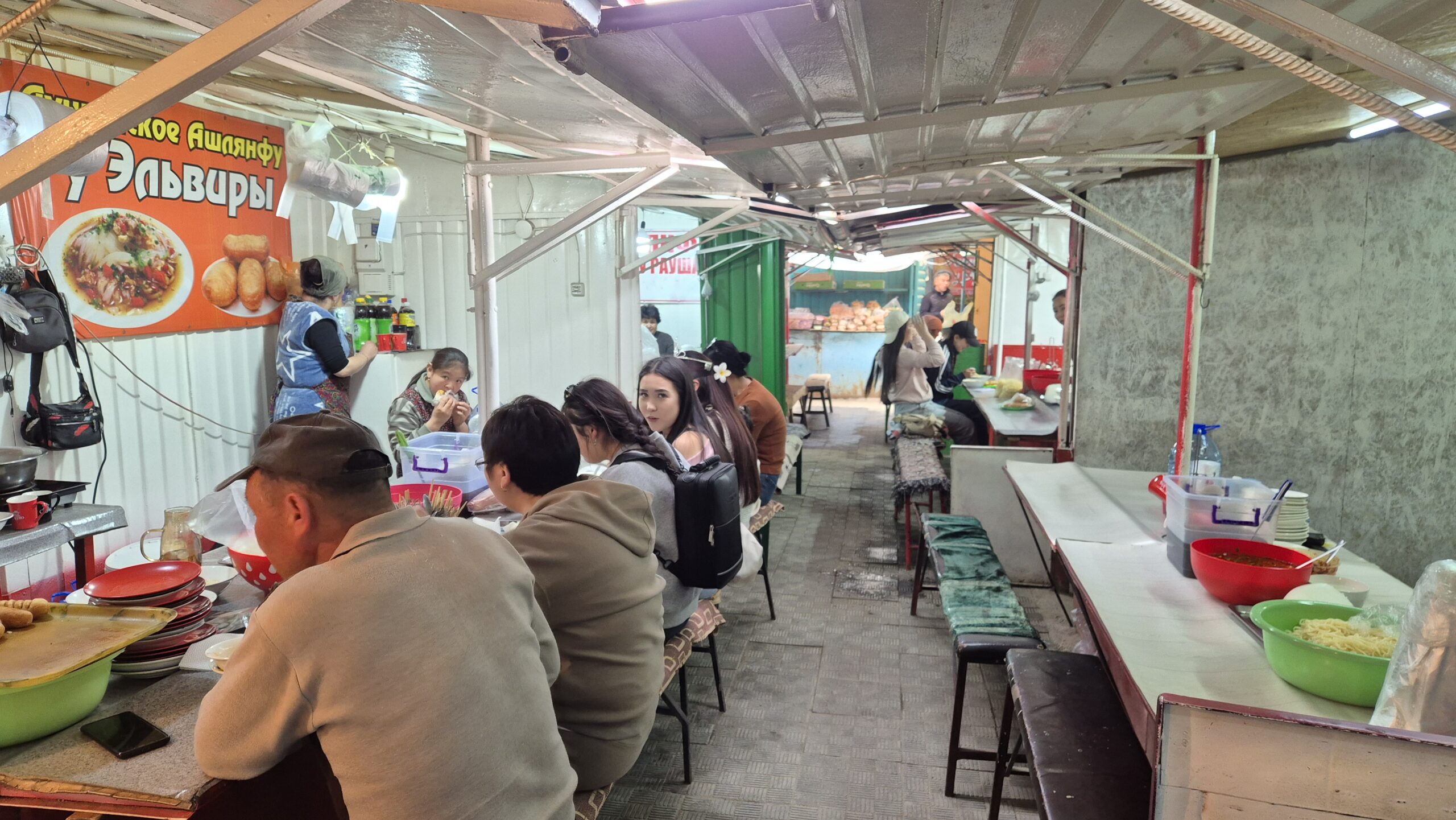
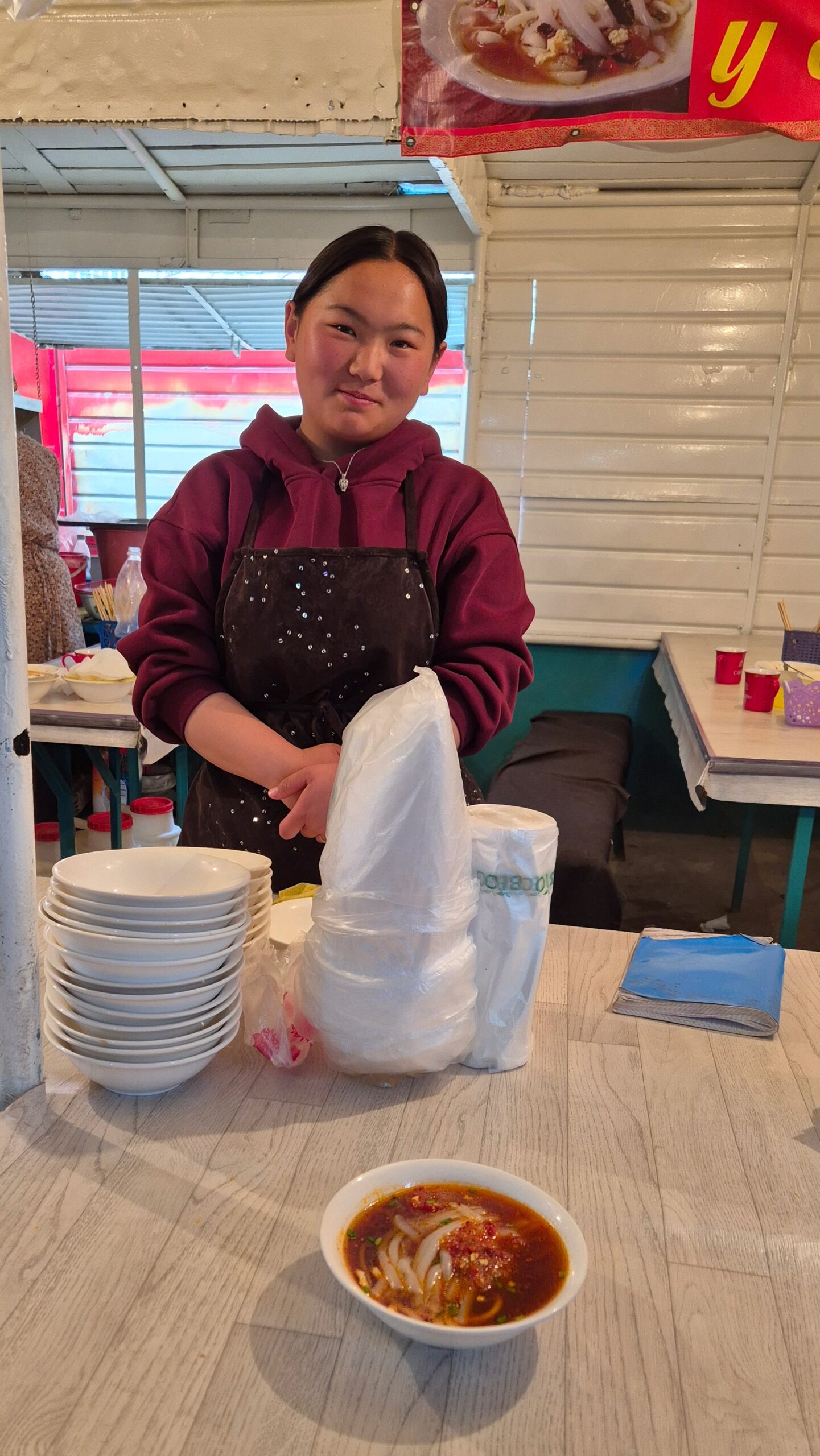
The server at our stall, chosen at random, quickly served up the bowl (“spicy?” she asked) along with the traditional accompaniment, a fried potato bread. Especially with the spicier version, we relished its savory, filling qualities.
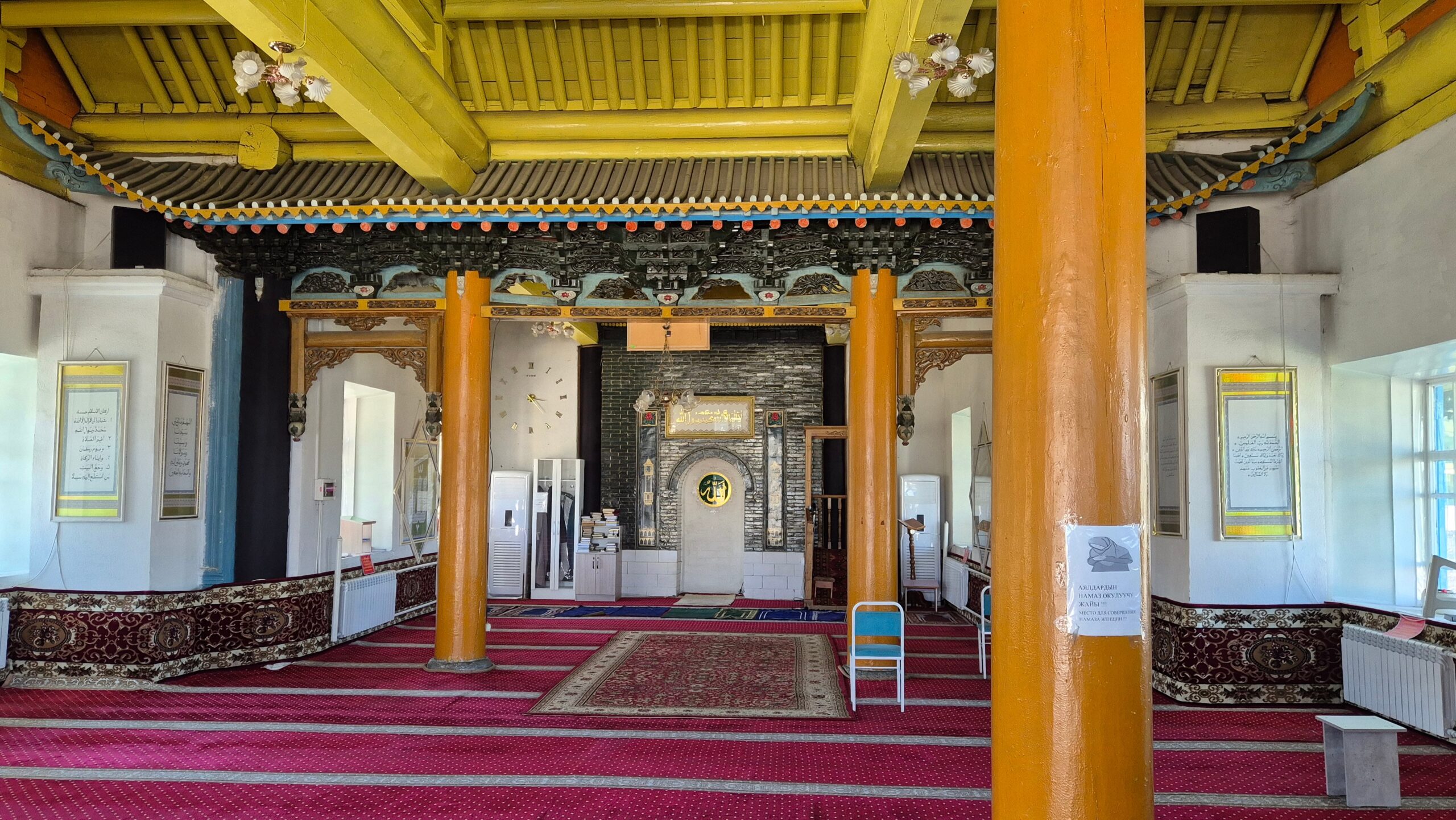
Other than food, the most notable mark of the Dungan presence is their colorful mosque, built originally in 1910 by a Beijing architect. He designed this wholly wooden structure for the Muslim worshippers, including the intricate patterns under the eaves, with interlocking wooden parts and no nails.
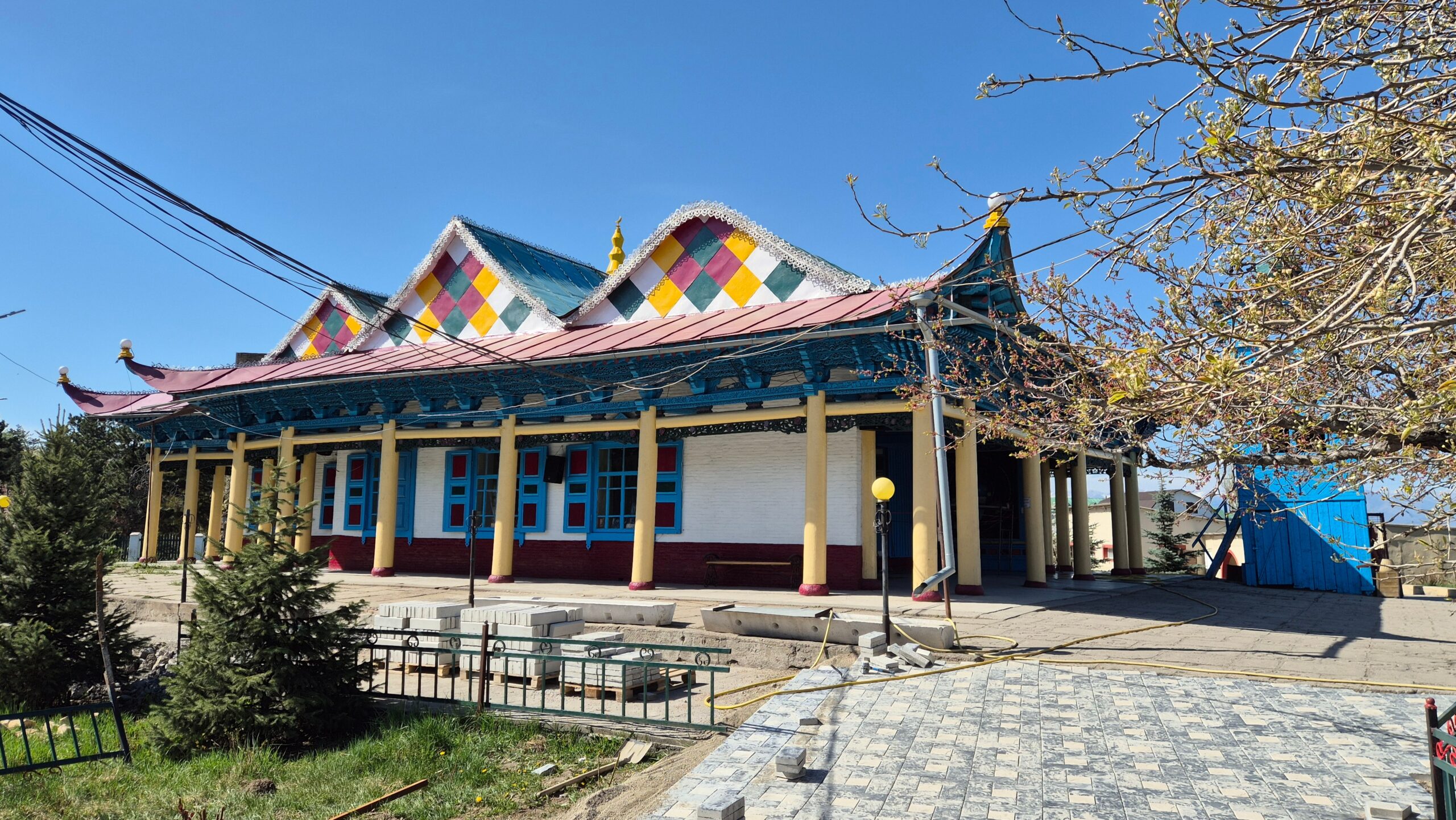
Refurbished over the years, it still shows its Chinese origins in design and color – but still has no nails.
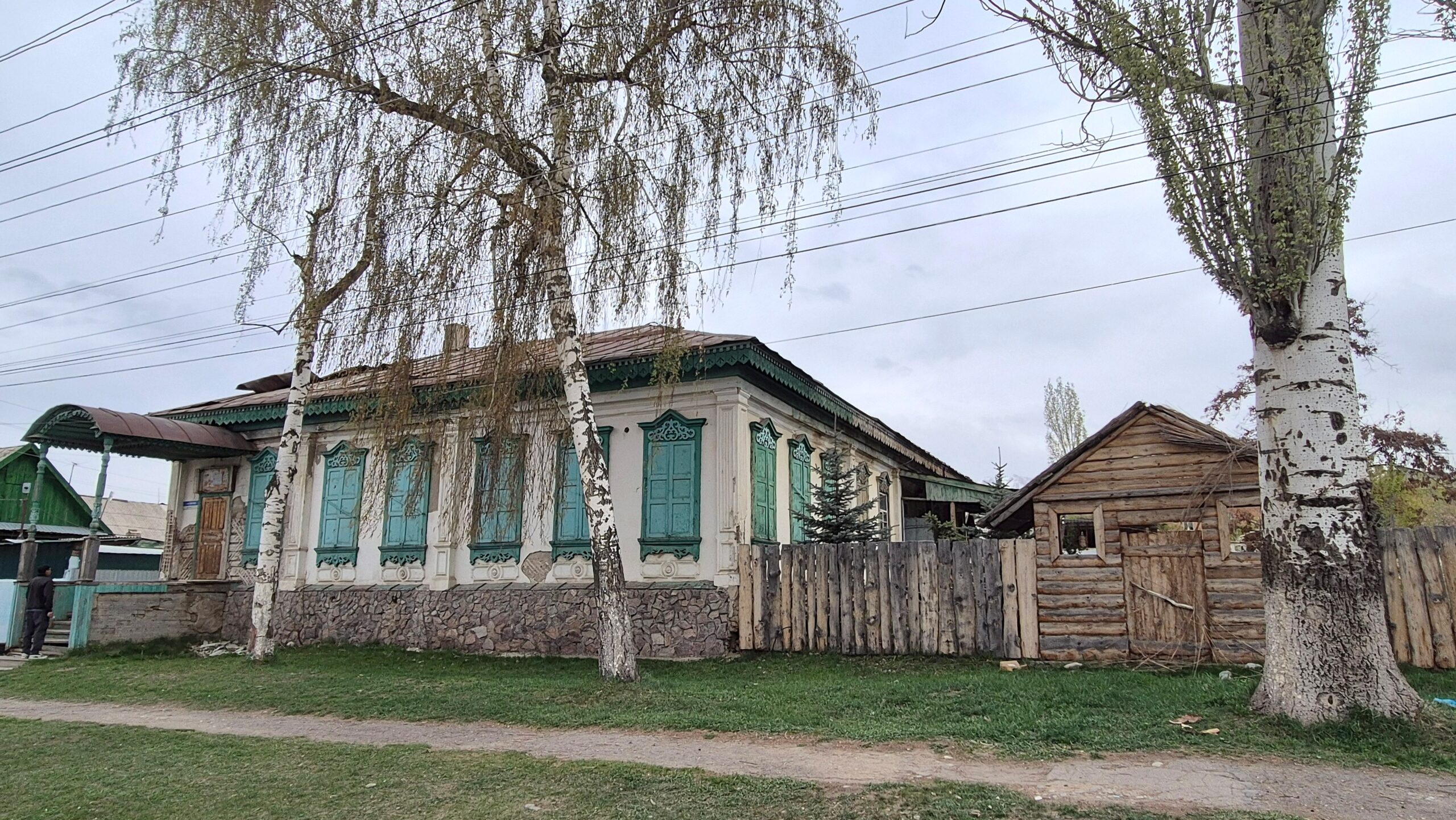
Wooden structures adorned with fancy carving became the norm after the old clay houses collapsed in the major earthquake of 1887. Despite the modernization under the Soviet Union and continuing work to renovate the city at some sacrifice to history, many of these wood houses still stand just outside the center of town. Some need extensive repair work.
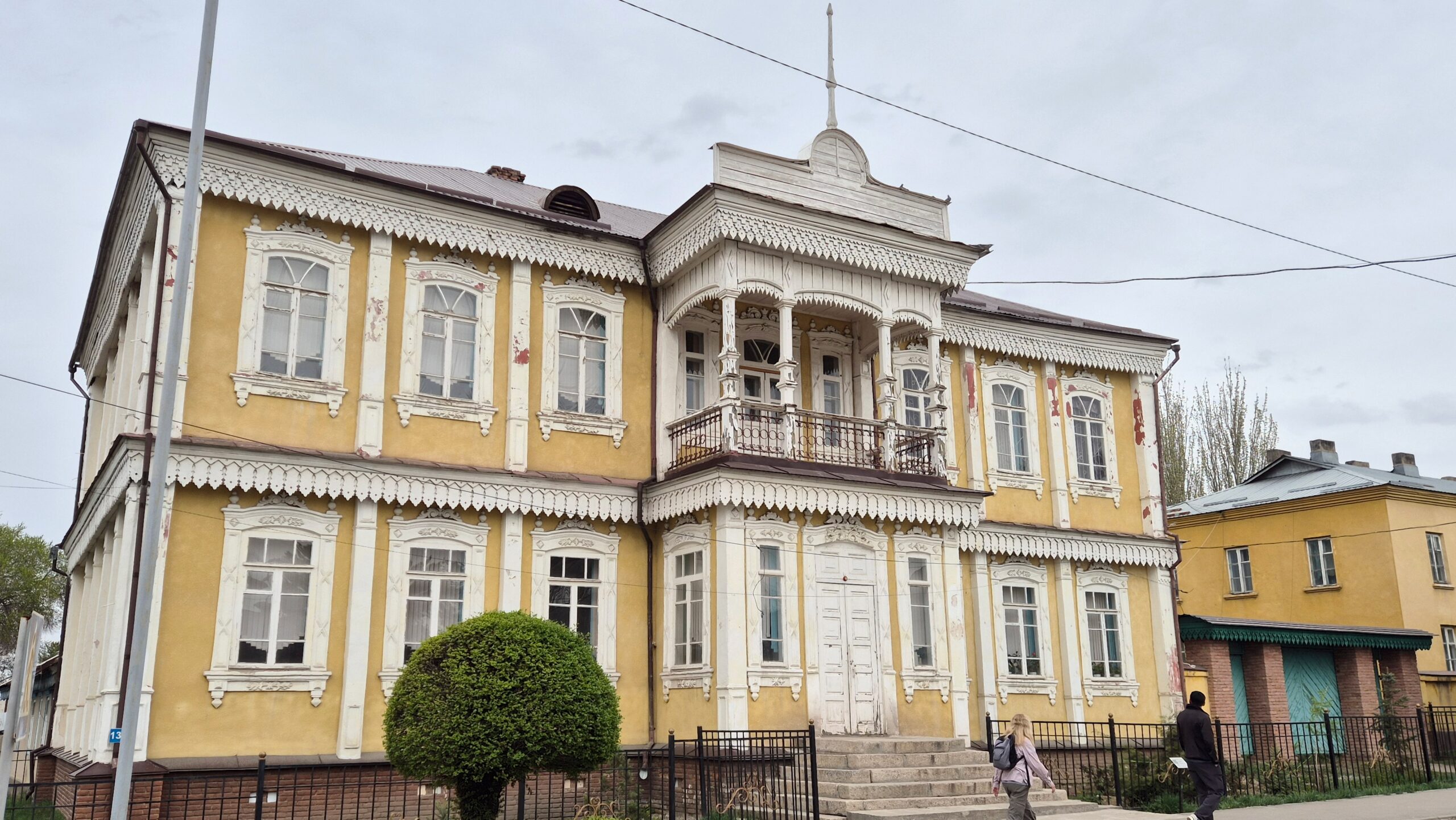
Others, like this grand wood building once used as a women’s school, have been fixed up.
We stayed in a guesthouse that had transformed one of the old buildings into a kind of Japanese teahouse.
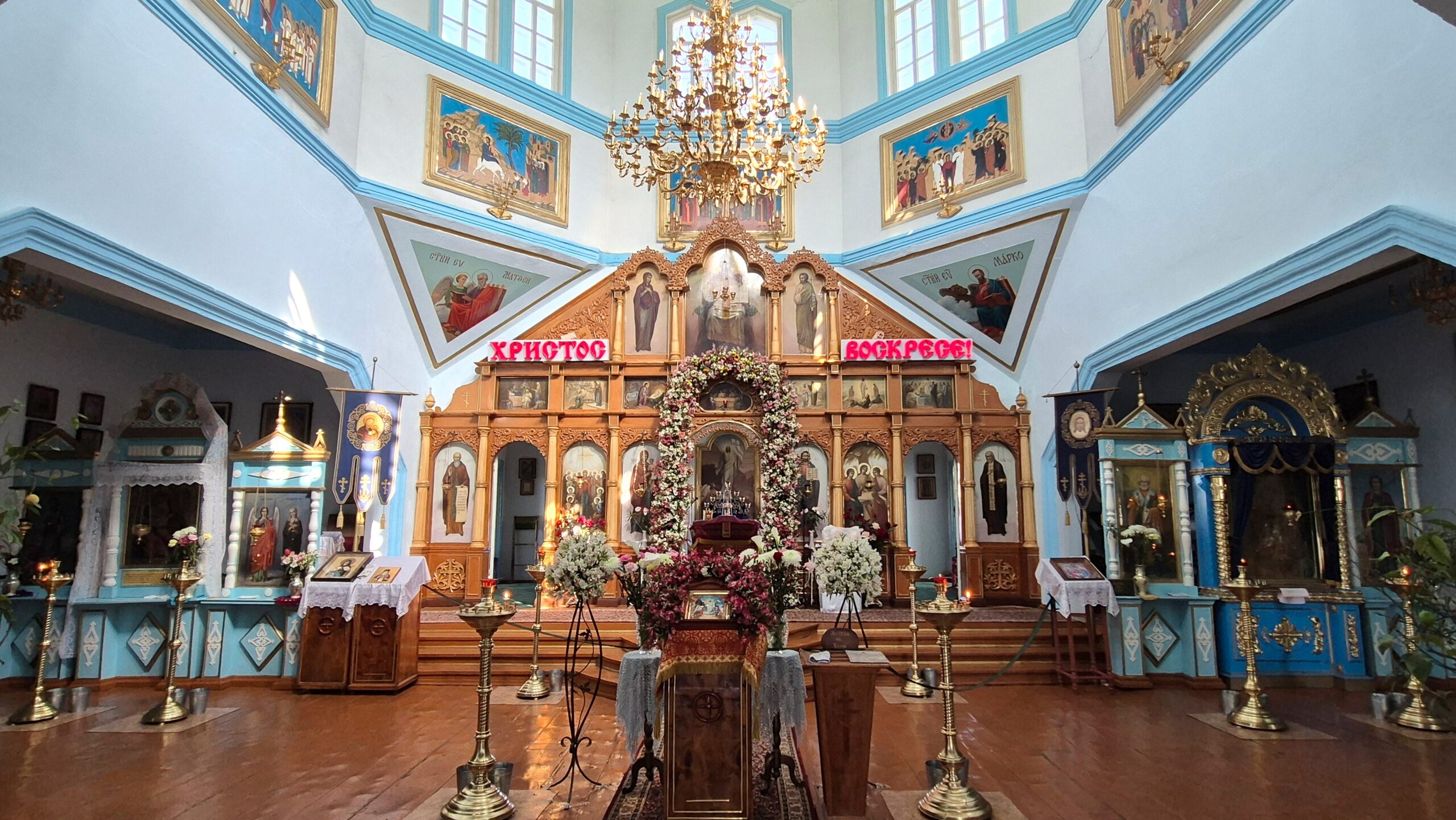
The most impressive of the old structures is the 1895 Holy Trinity Church. The Orthodox Christian Russians built this after the prior church had fallen in that earthquake. The simple, repeated carved patterns that enwrap the dark wood church on the outside rival the impressive onion-dome steeples.
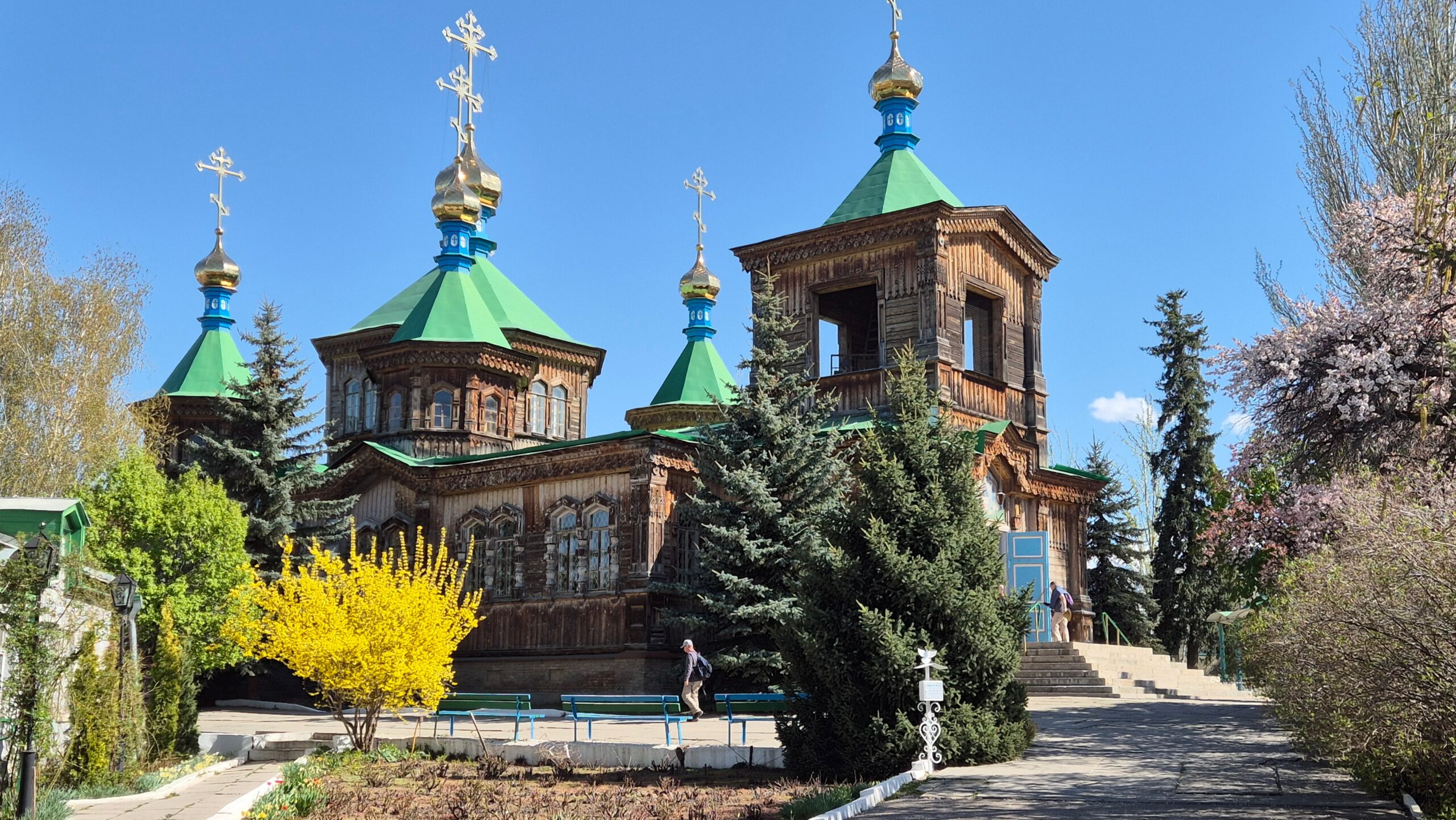
Sadly, the inside has been refurbished to look more contemporary, with plaster walls hiding the old wooden beauty, yet with the dark wooden flooring.
Karakol has changed names frequently. The Tsar renamed it Przhevalsk, in honor of the Russian adventurer Nikolay Przhevalsky, who explored Central Asia from here, then died in Karakol and was buried nearby. As the start of the Soviet Union, the name reverted to Karakol but was changed back to Przhevalsk by Stalin in 1939. With the fall of the Union in 1991, Karakol became Karakol again. The locals are even somewhat confused about the meaning of the town name anyway.
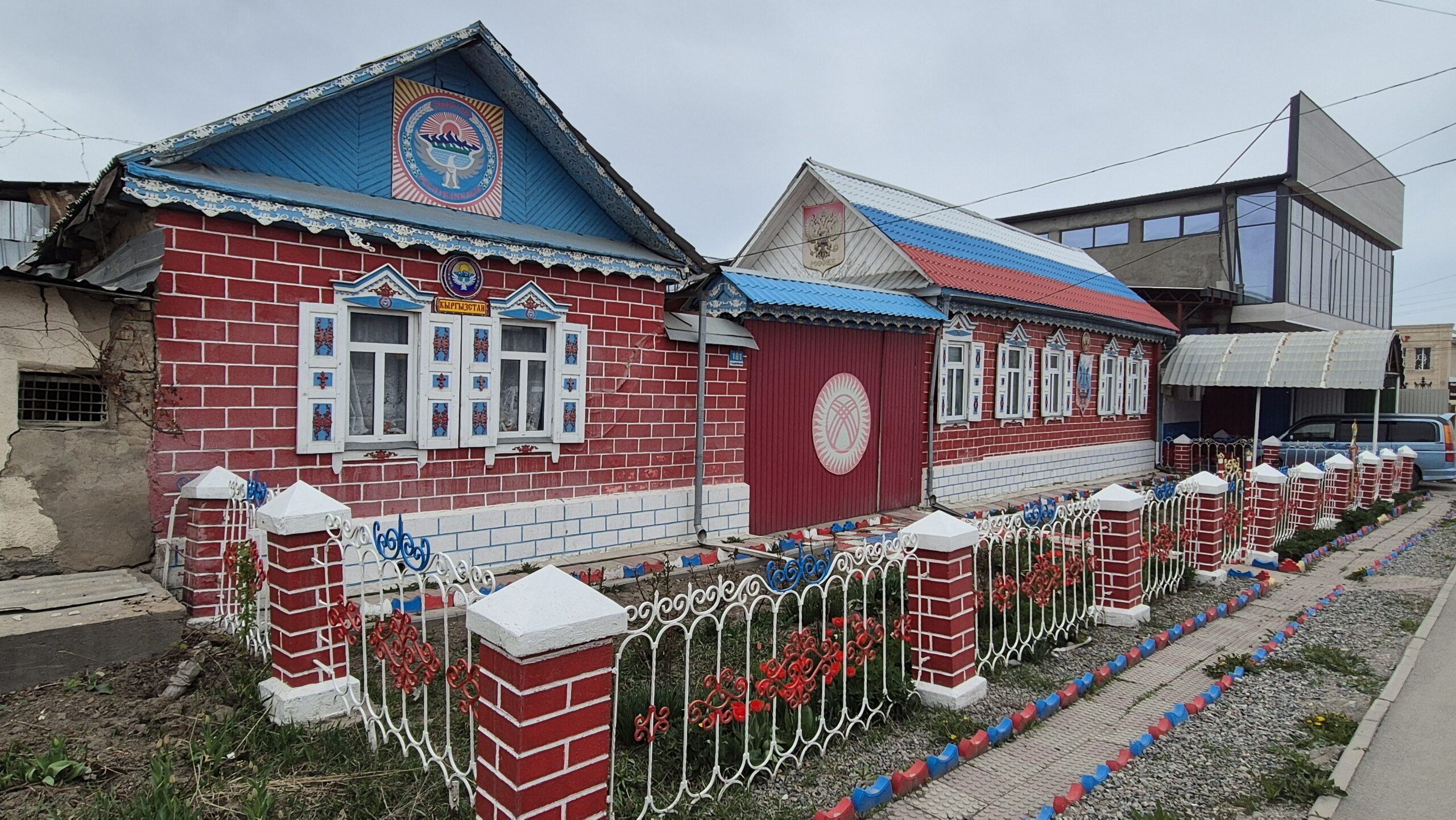
This house near the center of town demonstrated that the mixed past lives on. The emblem of Kyrgyzstan with the eagle appears on the upper left. The symbolic image from its flag is featured in the middle section (a typical lattice atop a yurt’s wood structure surrounded by 40 rays, one for each tribe). But the overall colors and the far rooftop, as well as the double-headed eagle on the far-right building, are all Russia.
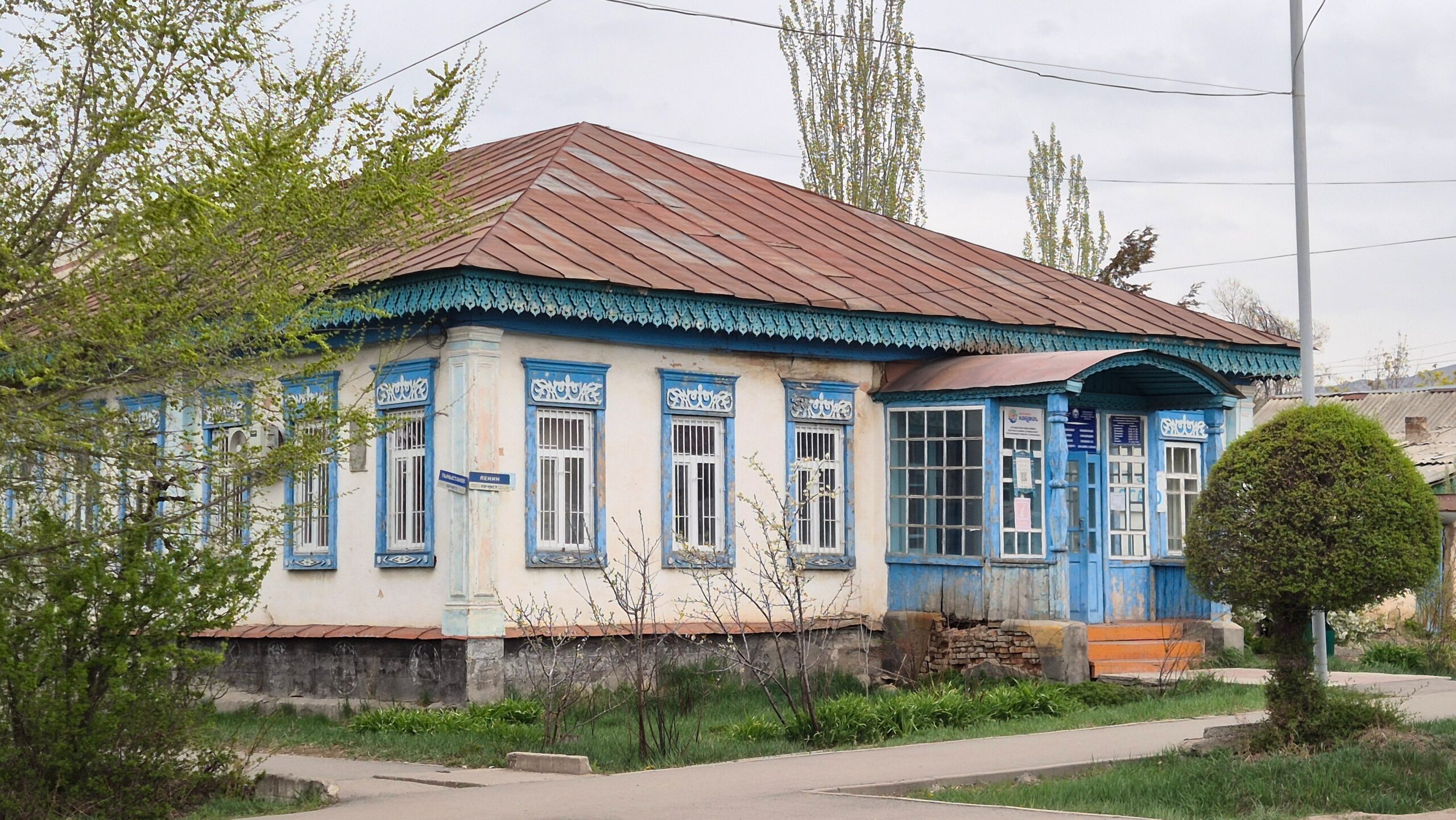
As with the town, even the streets have changed names. This renovated wood house, which was home to the woman mayor in Russian times, used to be on Lenin Street but that was renamed after independence. To avoid confusion, both the old and the new street signs appear at the corner of the building.
Once home to many Soviet military personnel, Karakol now caters to local and international tourists interested in the lengthy hiking trails of its nearby mountains or enjoying the huge Issyk-Kul lake to the west.
Even with just 90,000 people, it’s still the fourth largest city in Kyrgyzstan. And perhaps the one with the most interesting cuisine.
(To enlarge any picture above, click on it. Also, for more pictures from the five Stans of Central Asia, CLICK HERE to view the slideshow at the end of the itinerary page.)