
In brief: You could endure a 10-hour tour and perilous roads to see the Seven Lakes…or just enjoy the beauty through our slideshow.
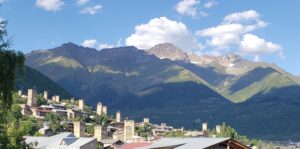
In Part 1, The Good, the Bad, and the Ugly Beautiful, we highlighted the beauty of the Fann Mountains, one of the ranges that comprise 93% of Tajikistan’s terrain. As we found, the surprisingly pleasant guesthouses let us rest comfortably after the challenging, often frightening roads and the hikes we did. The stunning landscape, replete with mirror lakes, waterfalls, and even an avalanche, satisfied our taste for adventure.
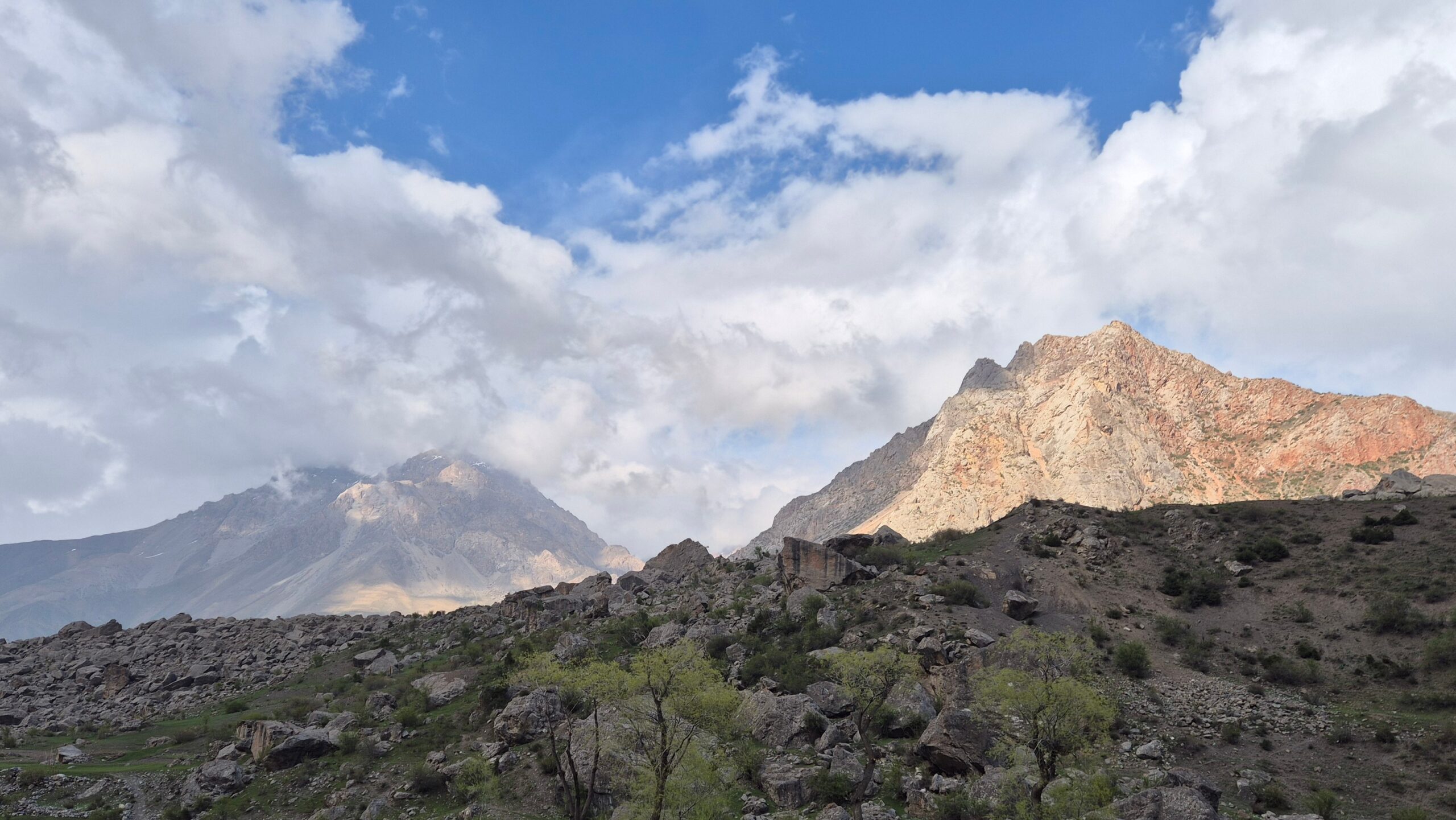
In this part, we share the main mountain experience that visitors to the capital cities undertake, the Seven Lakes of the Shing River gorge. Most visitors take a tour that lasts up to 10 hours and crosses the Uzbek-Tajik border twice out of Samarkand. The full vans somehow make it through the narrow, steep, rock-strewn trails near Panjakent in northwest Tajikistan. (See part 1 for more about driving challenges here). And they make the obligatory stops for photos at each of the lakes.
We continued on from other parts of the Fann Mountains and stayed in a nice guesthouse between lakes 4 and 5. In that way, we could dawdle at the most appealing of the lakes and do some walking as well, especially to lake 7, where cars don’t normally reach.
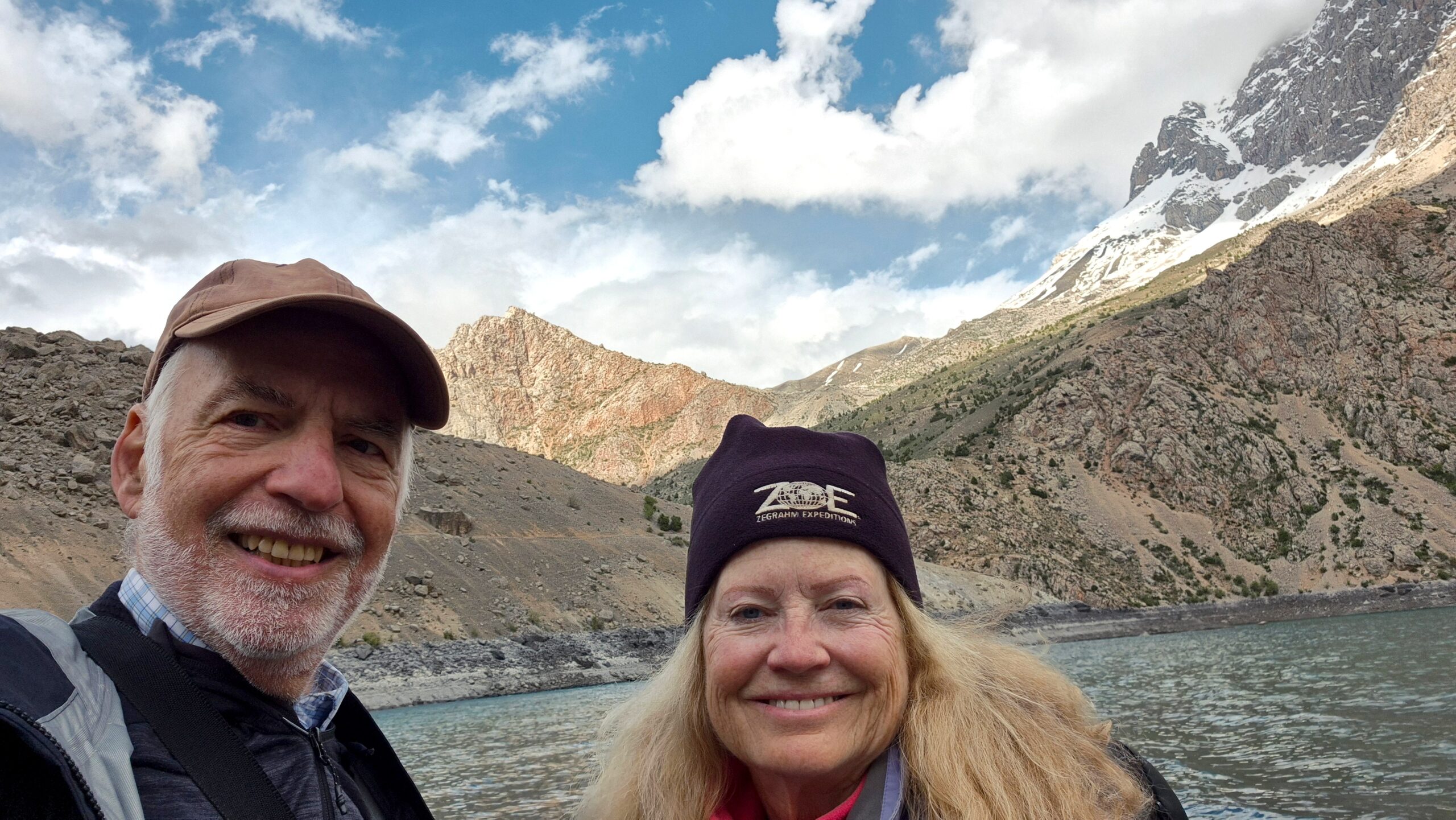
That guesthouse was one where we could cook our own food, rather than the standard fare for such odd people like us who are vegetarians. It was configured somewhat like a hostel, with a common dining area, individual bedrooms, and a shared double bath. The best part was that we could just sit for a relaxed hour at the edge of a lovely falls streaming past the home. Even when the lakes aren’t so full, there is a lot of water flowing here, including the natural springs that fed our falls.
The Seven Lakes are like a string of jewels. Each is linked to the outflow of the next higher one and spills into the lower. Some are just 50 meters higher; others, hundreds of meters. From 1 to 7, you climb over 750 meters in altitude (2500 feet), finishing at 2400 meters above sea level. The connecting roads span 15 kilometers (about 10 miles), ranging from easy to frightening even in dry conditions.
One of them, number 4, is quite recent, formed by a landslide that blocked the connection to number 3.
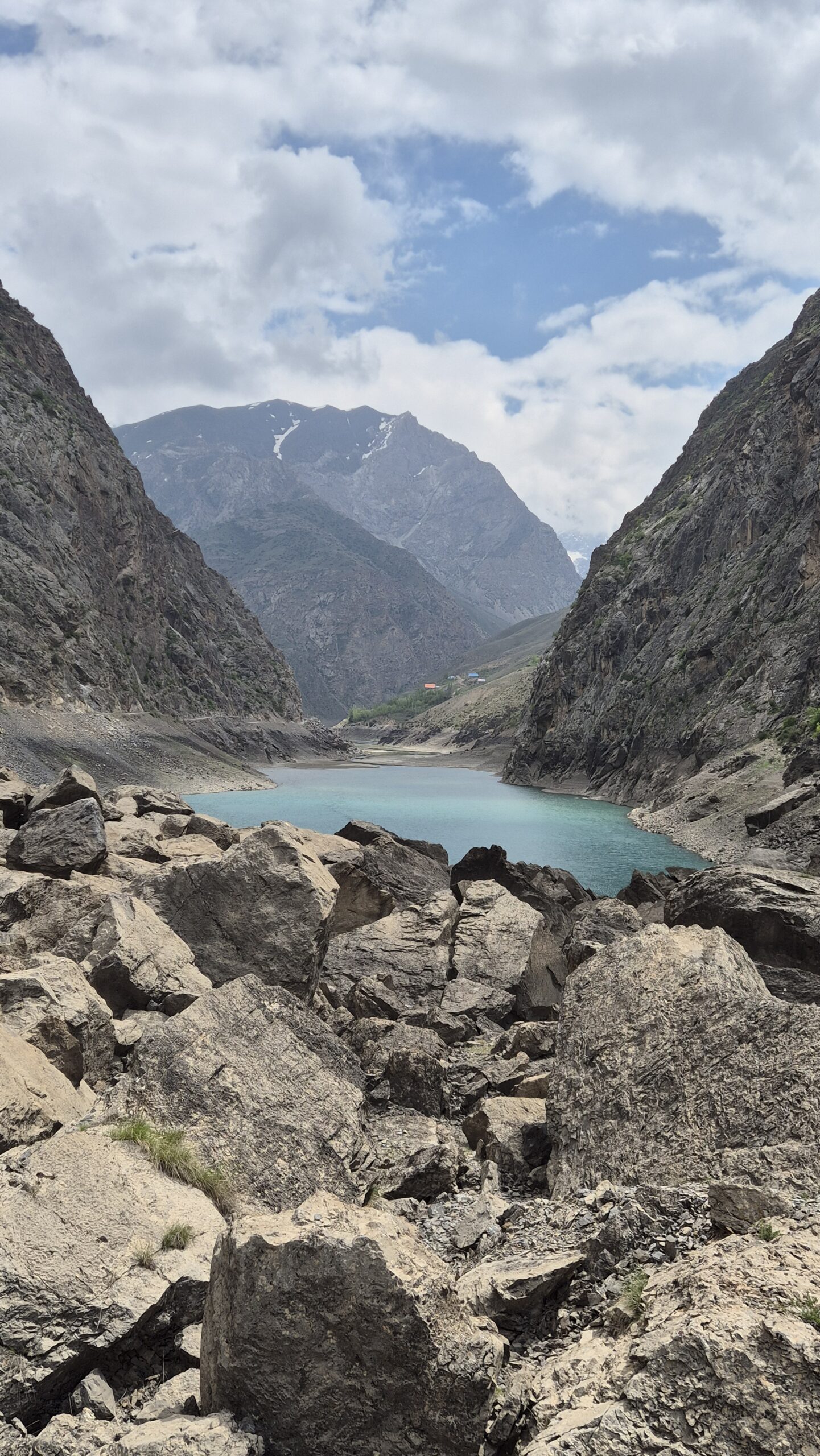
The lakes themselves vary greatly in size and shape. Their color starts from a turquoise base, mixing in purples and blues and yellows depending on the mineral content of their encircling hills, as well as the shifting light of day.
So, enjoy this short tour of the lakes just in case you don’t dare take the van from Samarkand on these gritty roads.
In early spring, we were surprised to find, the lakes are not full. It’s only in July and August that the melting snows of the mountains raise the level of Lake 7 at least 3-4 meters (10 to 15 feet). The outflow of Lake 7 was hardly detectable when we saw it. The rising water then starts the cascading increase of levels in the lower lakes.
Despite the steady flow of vans and gawkers, as well as water, it’s still fun to count the lakes and watch the shifting colors in each. And even more fun to hang around a while. On the morning we left, before the day trippers could arrive, we had the lakes to ourselves.
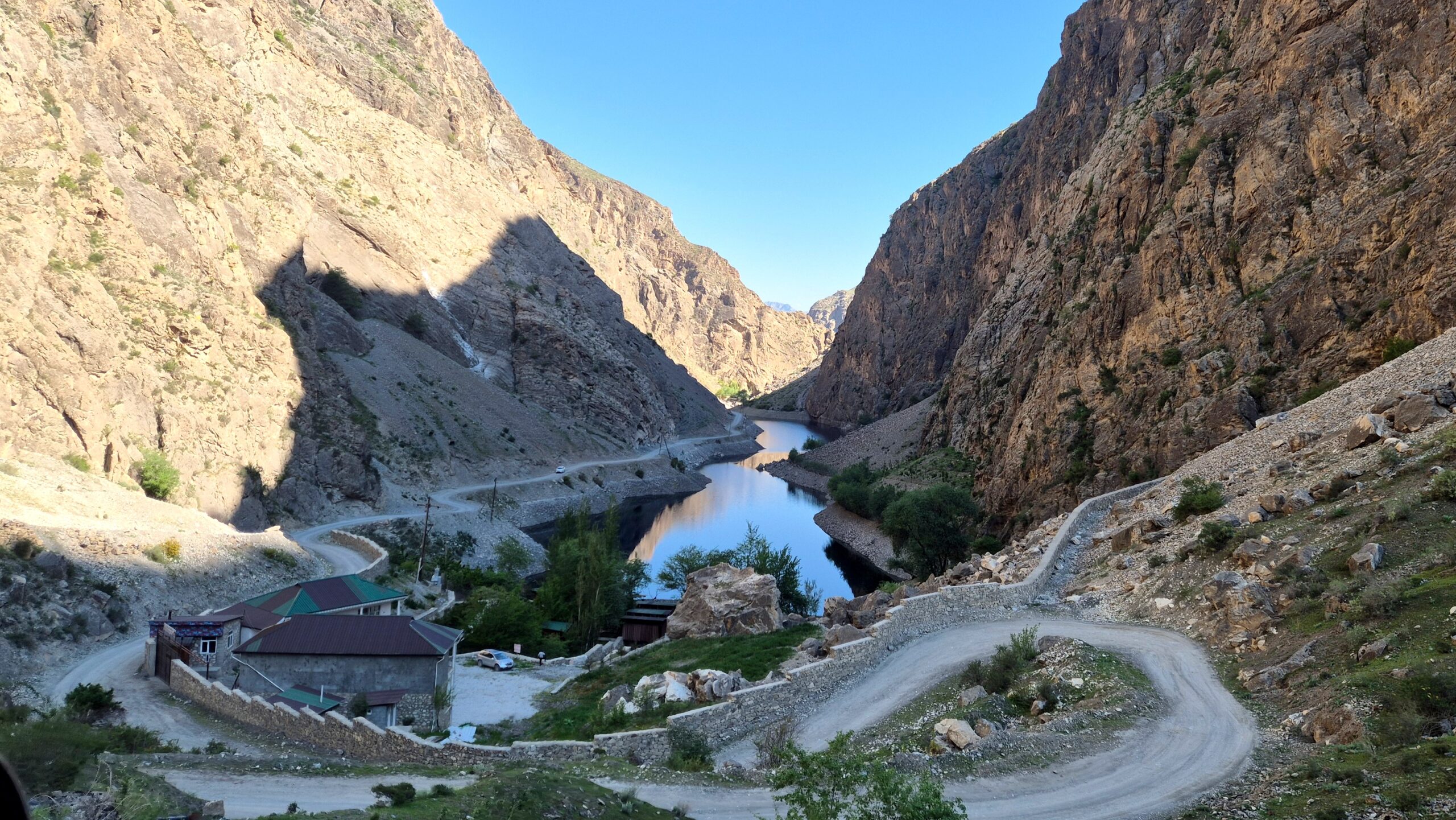
…and especially the glory of lake 4 in the morning light.
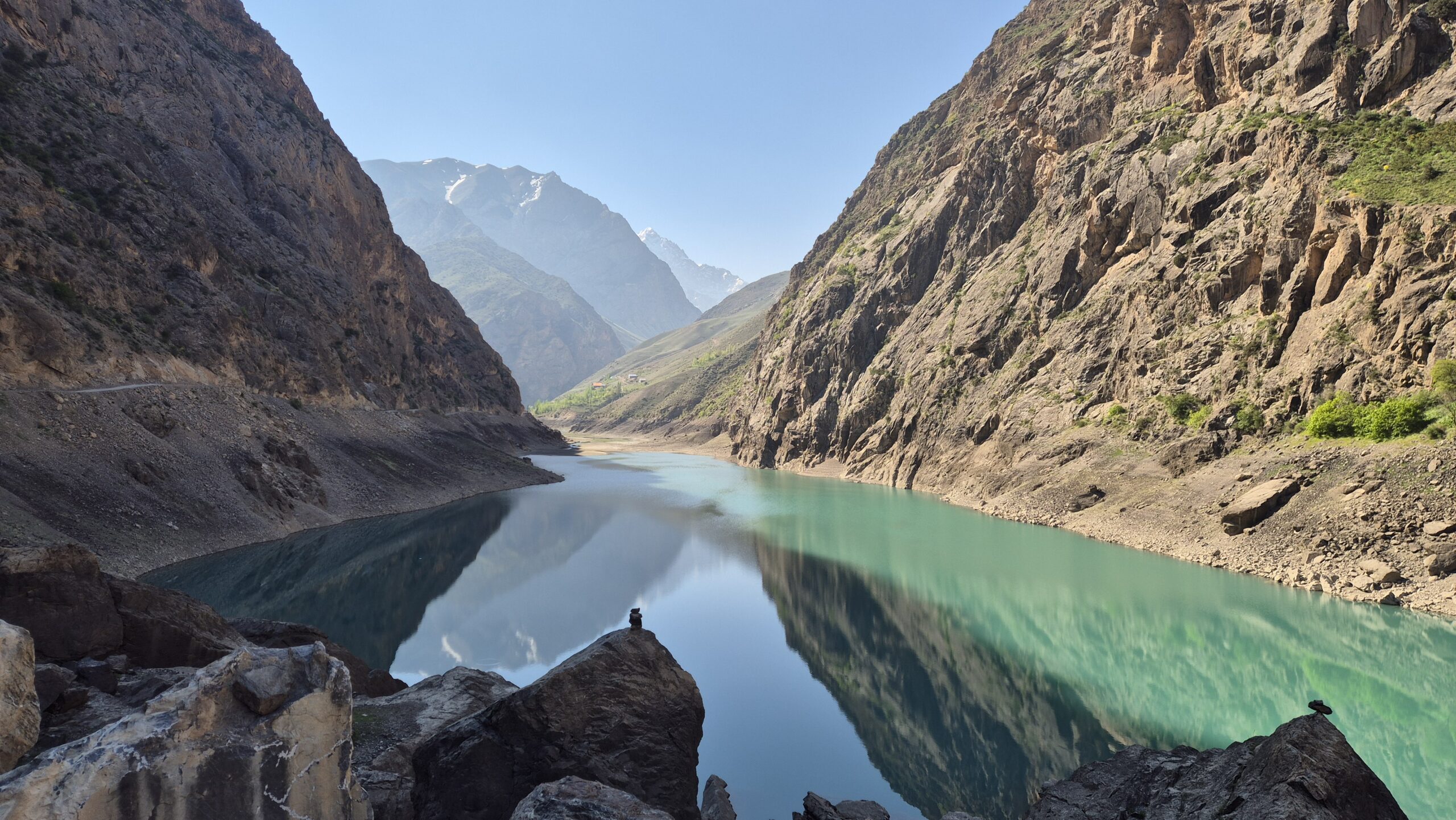
(To enlarge any picture above, click on it. Also, for more pictures from the five Stans of Central Asia, CLICK HERE to view the slideshow at the end of the itinerary page.)