
In brief: The ever-changing city offered us much to see and do, from venerable traditions like high tea to new experiences amid the old.
London is like many other big cities: always different, but ever familiar. A mix of the very old and the very new, and everything in between. But it is renowned for its traditions – entertainments and rituals that began centuries ago. We partook.
Theatre
In our last post, we touted London’s magnificent free museums (click here to read). The city also boasts a theatre scene with some of the best productions and actors in the world – in some very old theaters. We had a tough time choosing from the riches, even in the summer season.
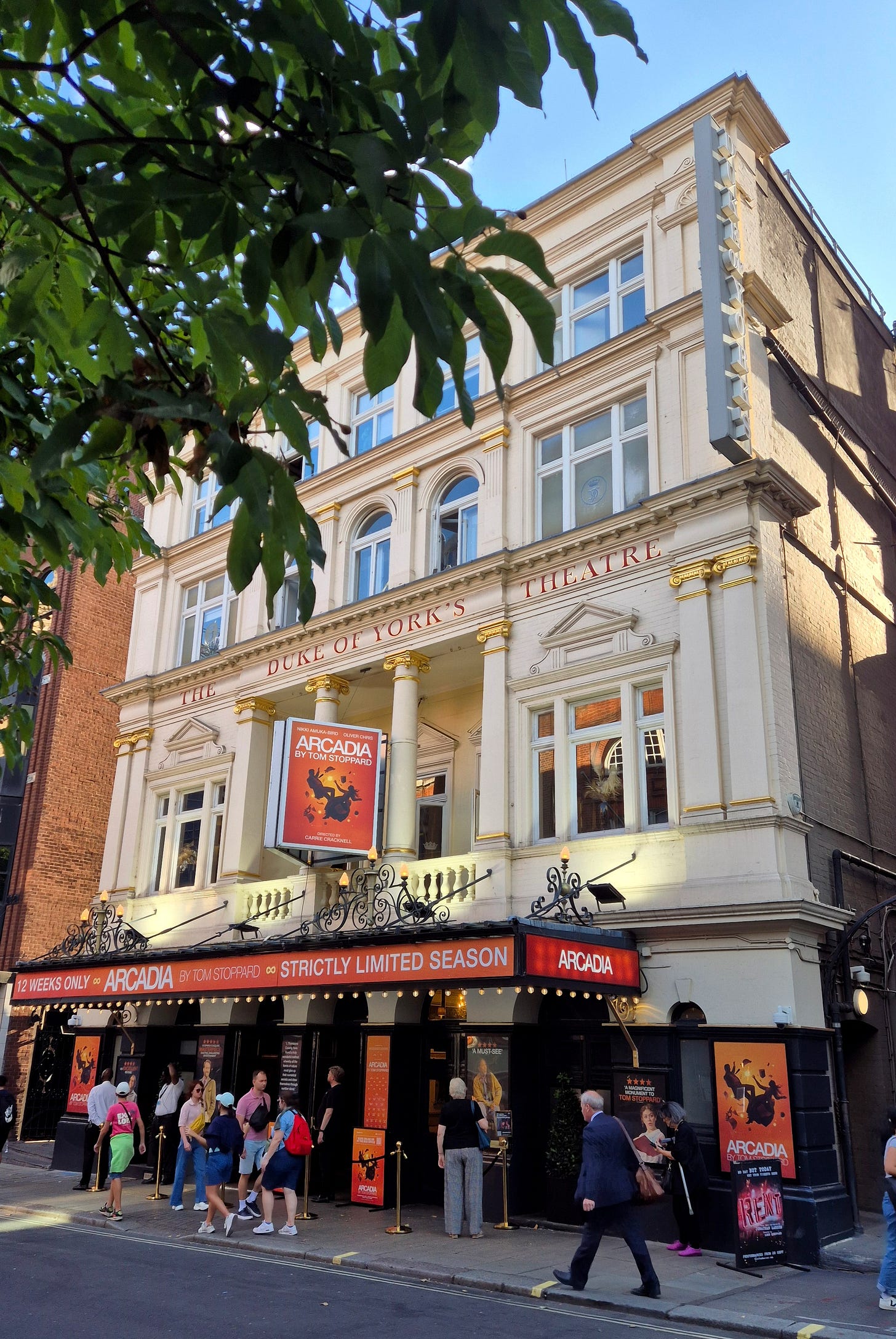
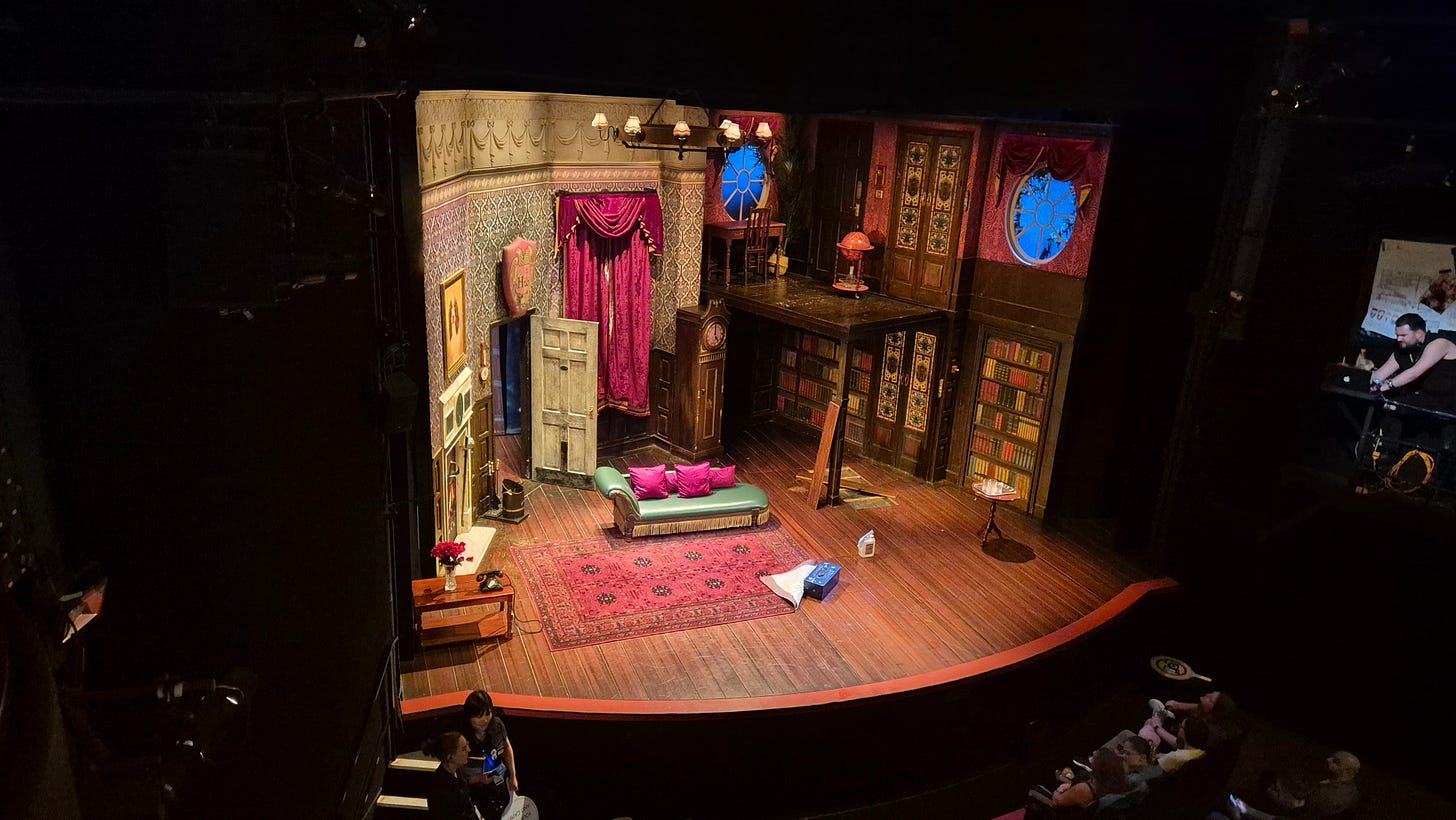
We opted for two very different shows: Arcadia, Tom Stoppard’s masterpiece of scientific speculation, academic mysteries, and the recapture of history; and a riotous blend of verbal, genre-spoofing, and physical comedy in The Play that Goes Wrong.
In the first, at the venerable Duke of York theatre (1892) within the robust theatre district, the set was a simple turntable where characters several hundred years apart interact.
The second presented a mundane, all too familiar spooky mansion which gradually falls apart during the raucous production.
High Tea
The first time Nancy and Barry had visited London, separately, they each went for a long-standing ritual of high society in England, the afternoon tea. By now, it’s become an industry, offered by hotels and cafes at all levels of pricing, and marketed through myriad booking sites.
We tried to ignore all the hype and chose a somewhat alternative, but still very posh, location at the Lanesborough Hotel. They tout an old style, Bridgerton-era setting, though the elegant hotel dates only from the 1990s. We dressed up in fashionable “smart casual.”
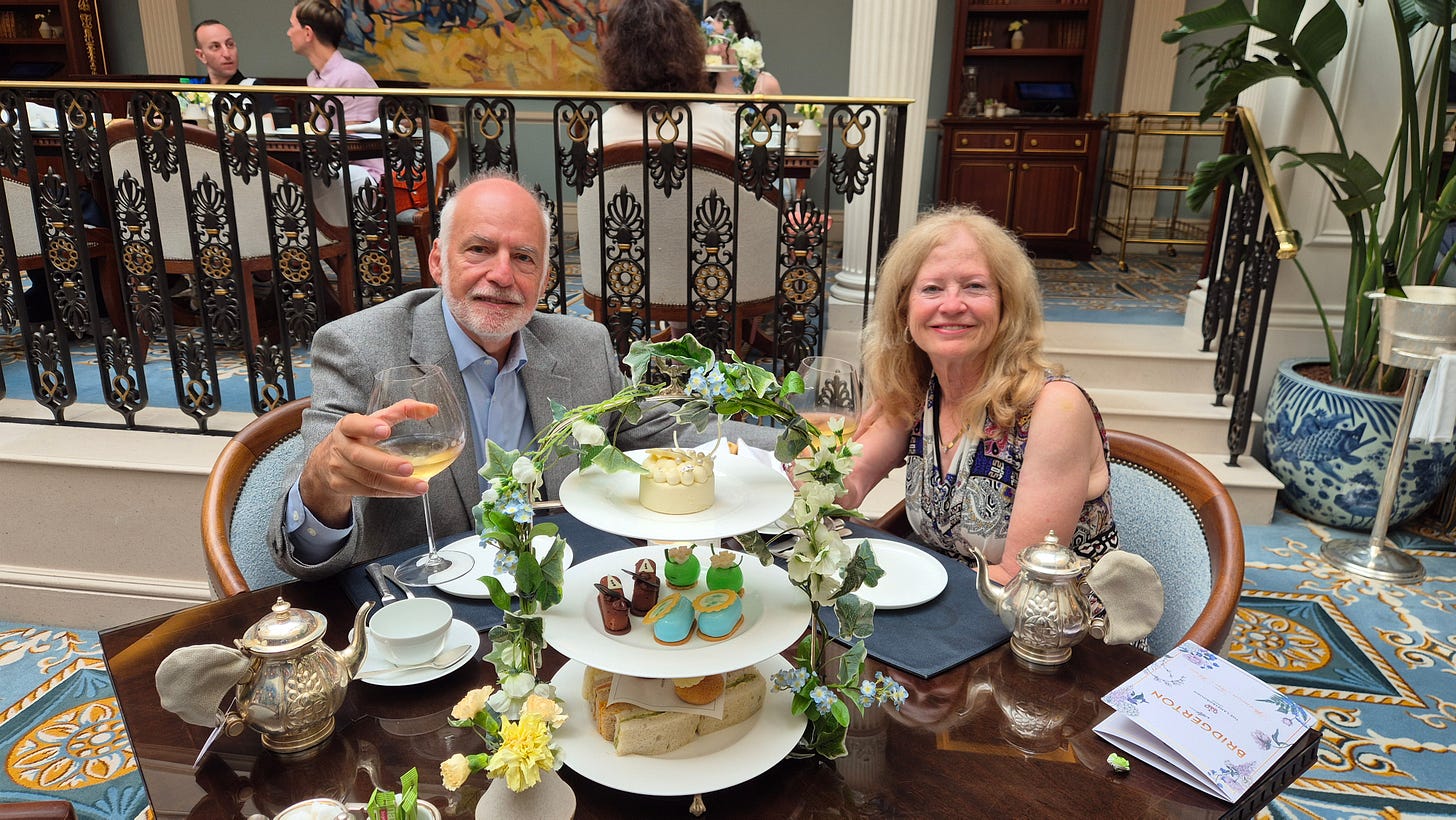
Unlimited tea, scones, finger sandwiches, and artistic desserts deserved our choosing a few expensive wines off their huge list. The servers were friendly and attentive, without being intrusive. After two and a half hours of coddling and indulgence, we weaved out for the Royal Albert Hall.
Music
Music of all genres unfurls across the London cityscape, even in the very off season. We decided on a venue and festival that were well known to us, but we had never visited. The Summer Proms sponsored by the BBC (formally the Sir Henry Wood Promenade Concerts) dates back over 130 years to 1895. Lasting eight weeks in the summer, the festival is a more casual opportunity to hear symphonic music.
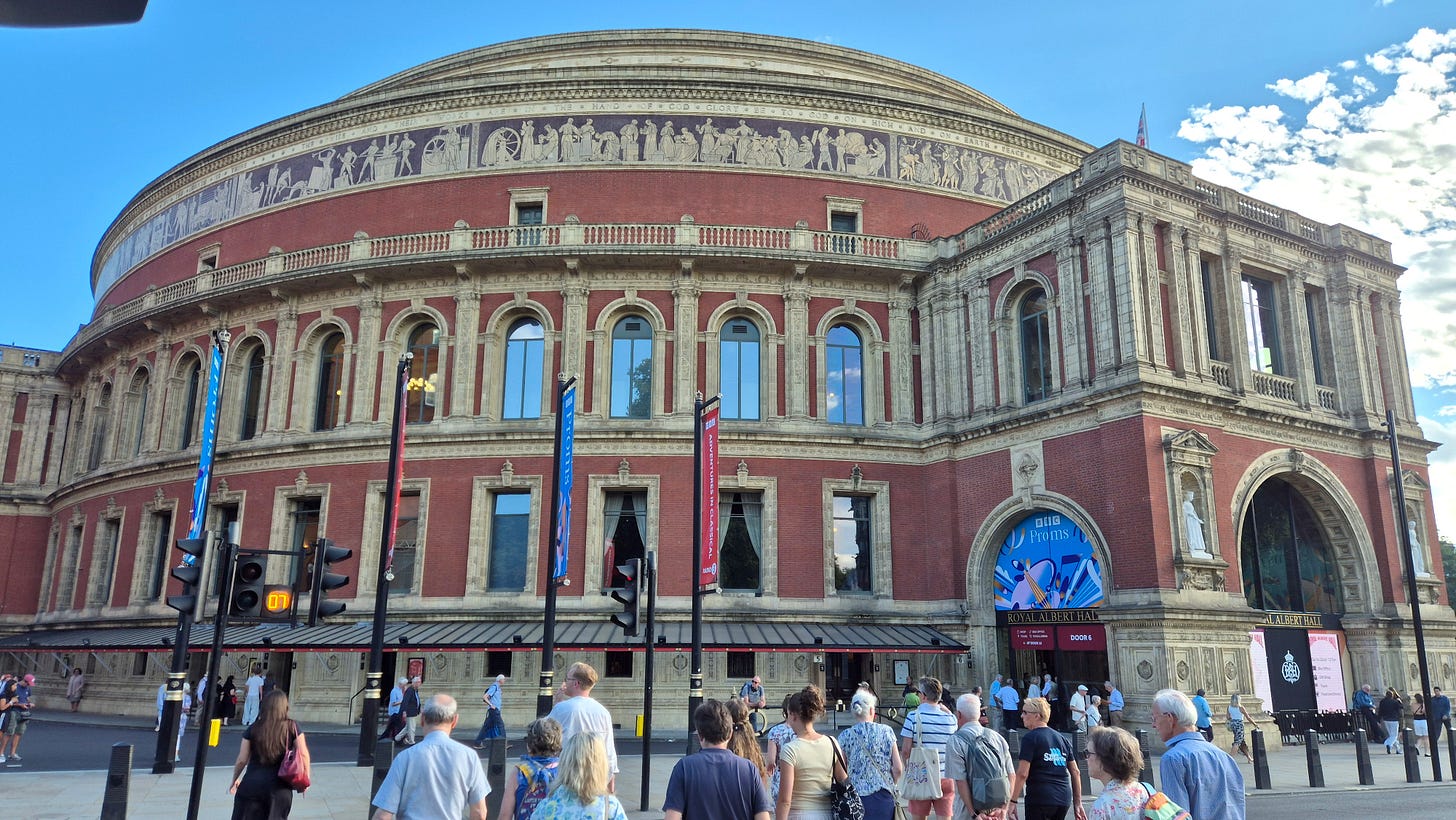
The circular venue, the Royal Albert Hall, was built as Queen Victoria’s tribute to her husband. Famous locally and a film star in its own right, the place is huge, holding 5000 to 6000 listeners. It’s an impressive place, no matter where one sits – or stands, as the stalls at the floor level offers only standing, not sitting.
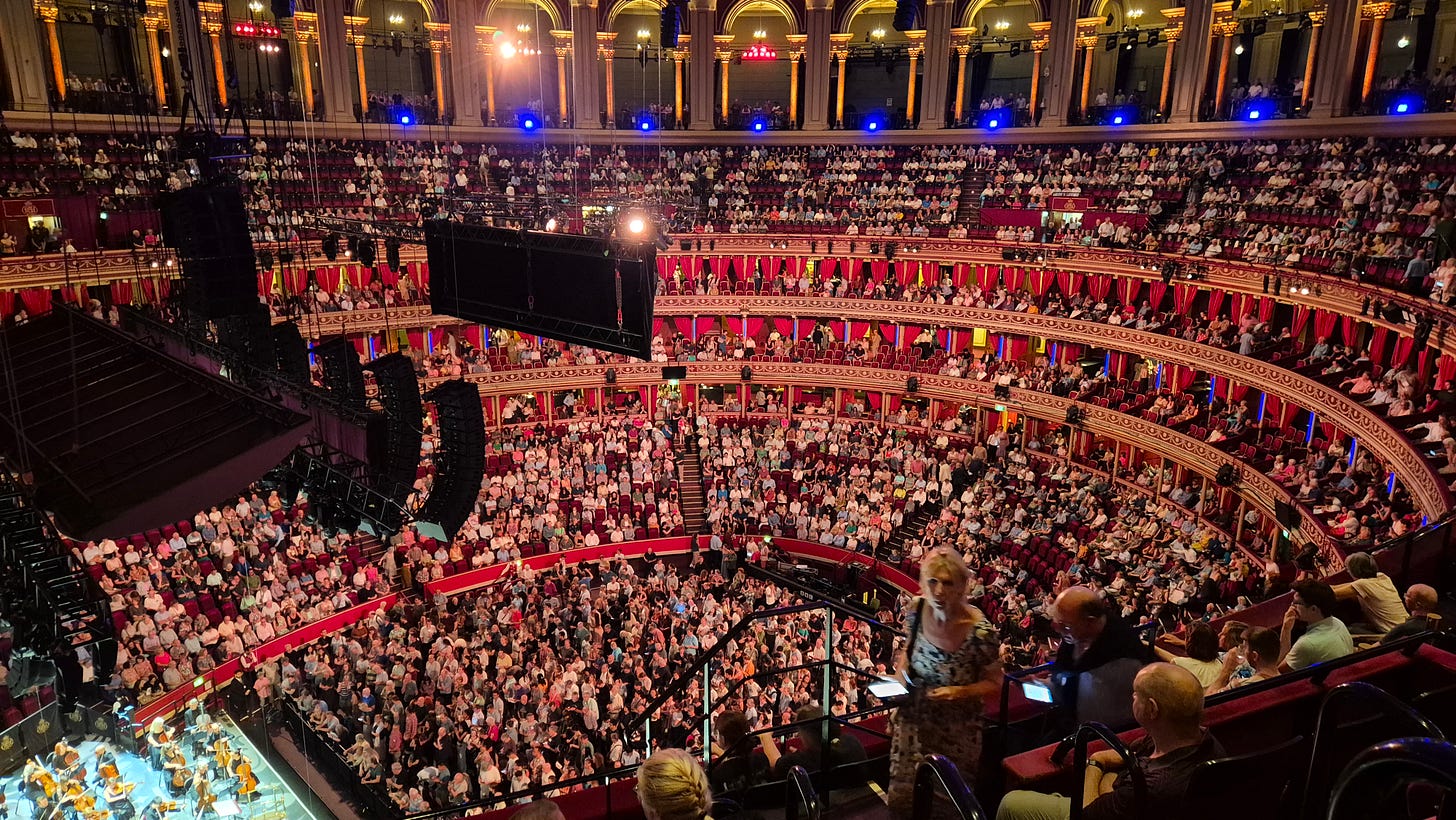
We could only find tickets far, far up in the nosebleed section, but the music was good (Mendelssohn, Dvorak, Zimmermann), despite the sweaty conditions during another London heat wave. The hall isn’t cooled.
Pub Crawl and Walking the City, err…Walking the City and Pub Crawl
These are two more traditional ways to enjoy London, strolling through all the eye candy of the city and the very poorly named pub crawl. We tried to combine them.
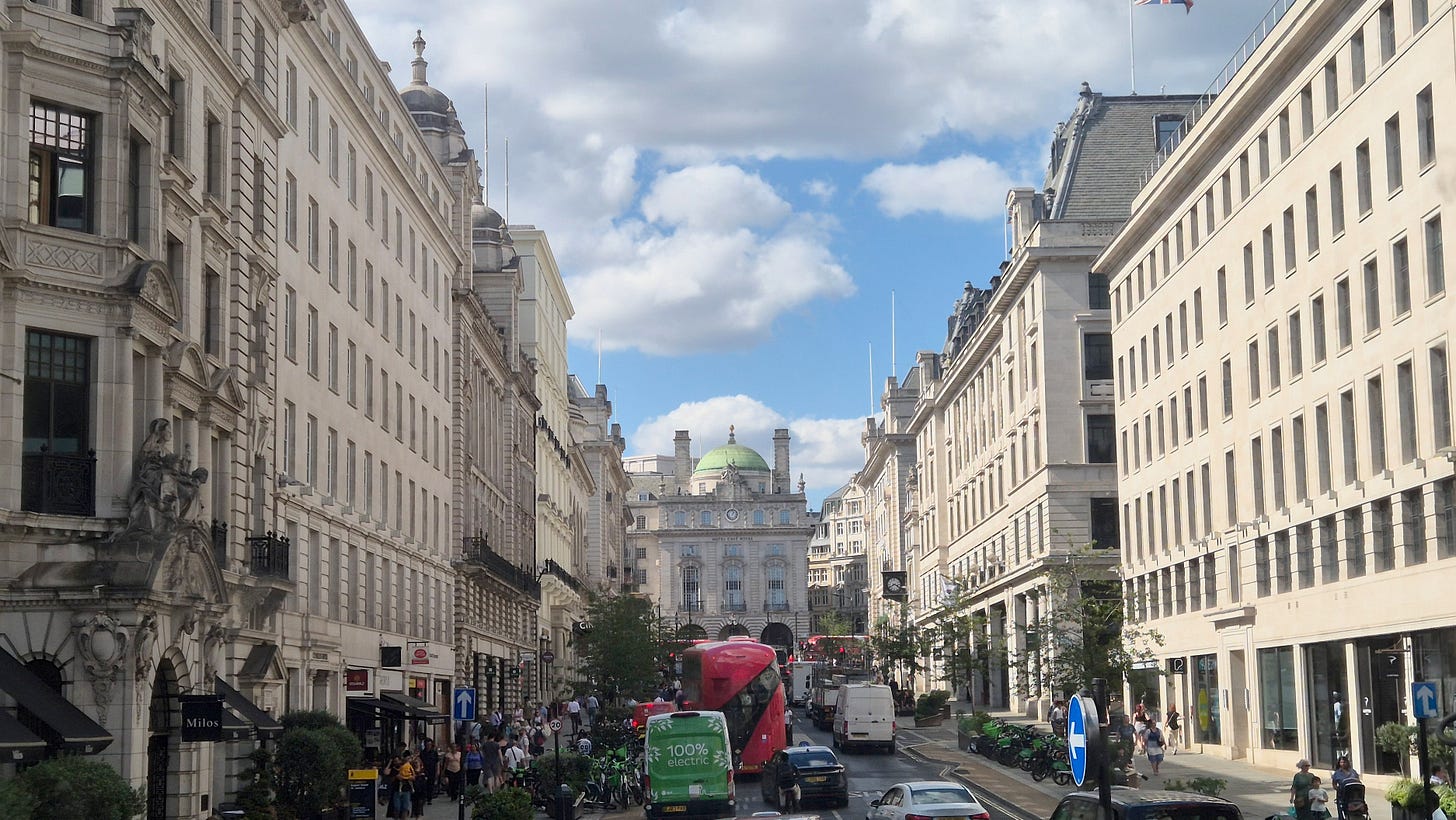
It had been decades since our prior visits, so we wanted to wander the old lanes of the center and London’s financial hub, the City. And we sauntered along the broader 19th century streets outside the old center, admiring the columnar facades and brickwork fronting their broader streets.
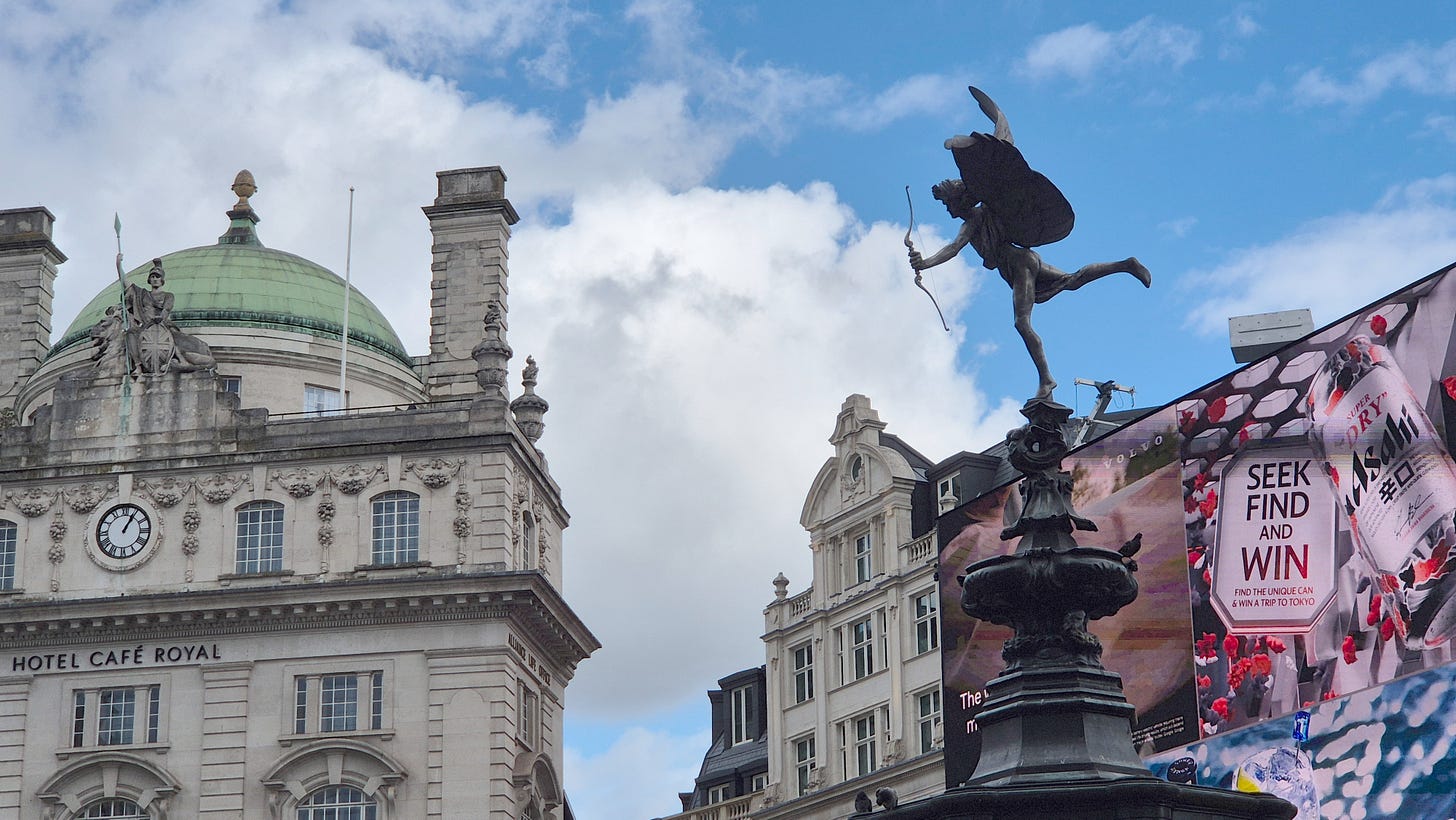
We passed through landmark plazas with grand buildings and monuments. We’re pleased to report that Eros still hunts for lovers in Piccadilly Circus. That Wellington still guards Trafalgar Square. And that even busy city streets retain an Old World allure.
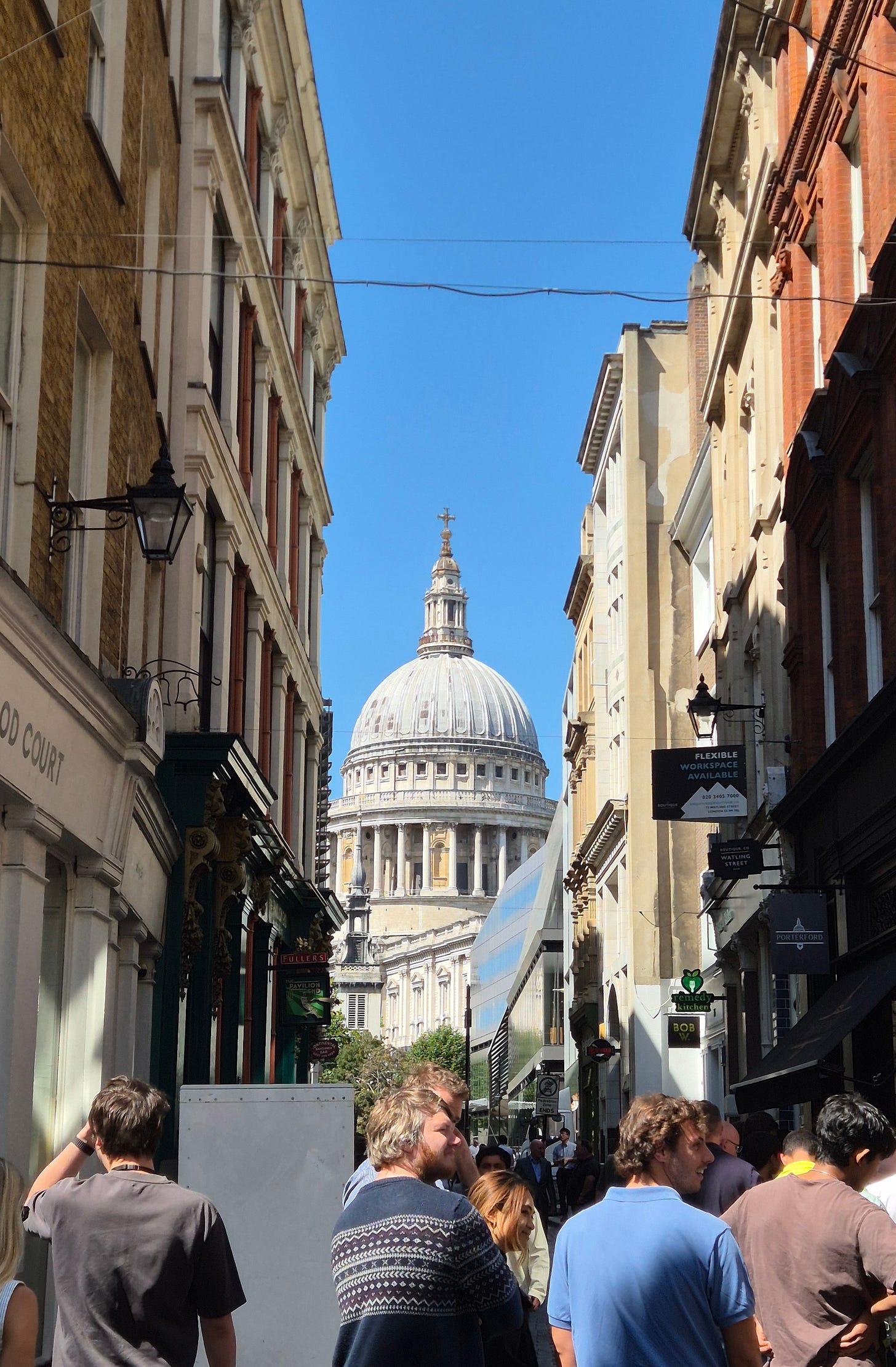
A narrow city lane with historic buildings in the vicinity of St. Paul’s Cathedral.
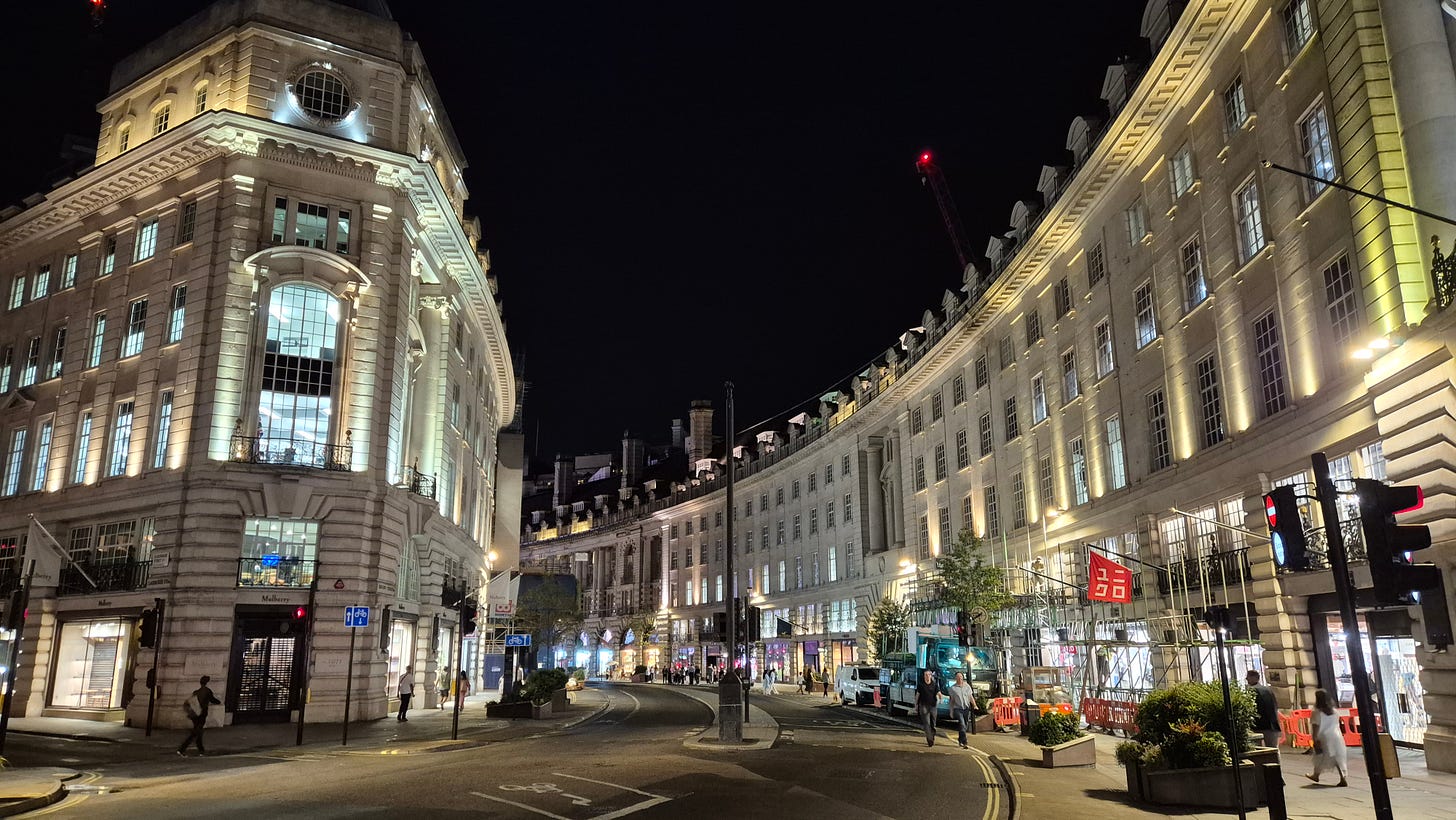
Paris might be known as the City of Lights, but London is not too shabby when lit either.
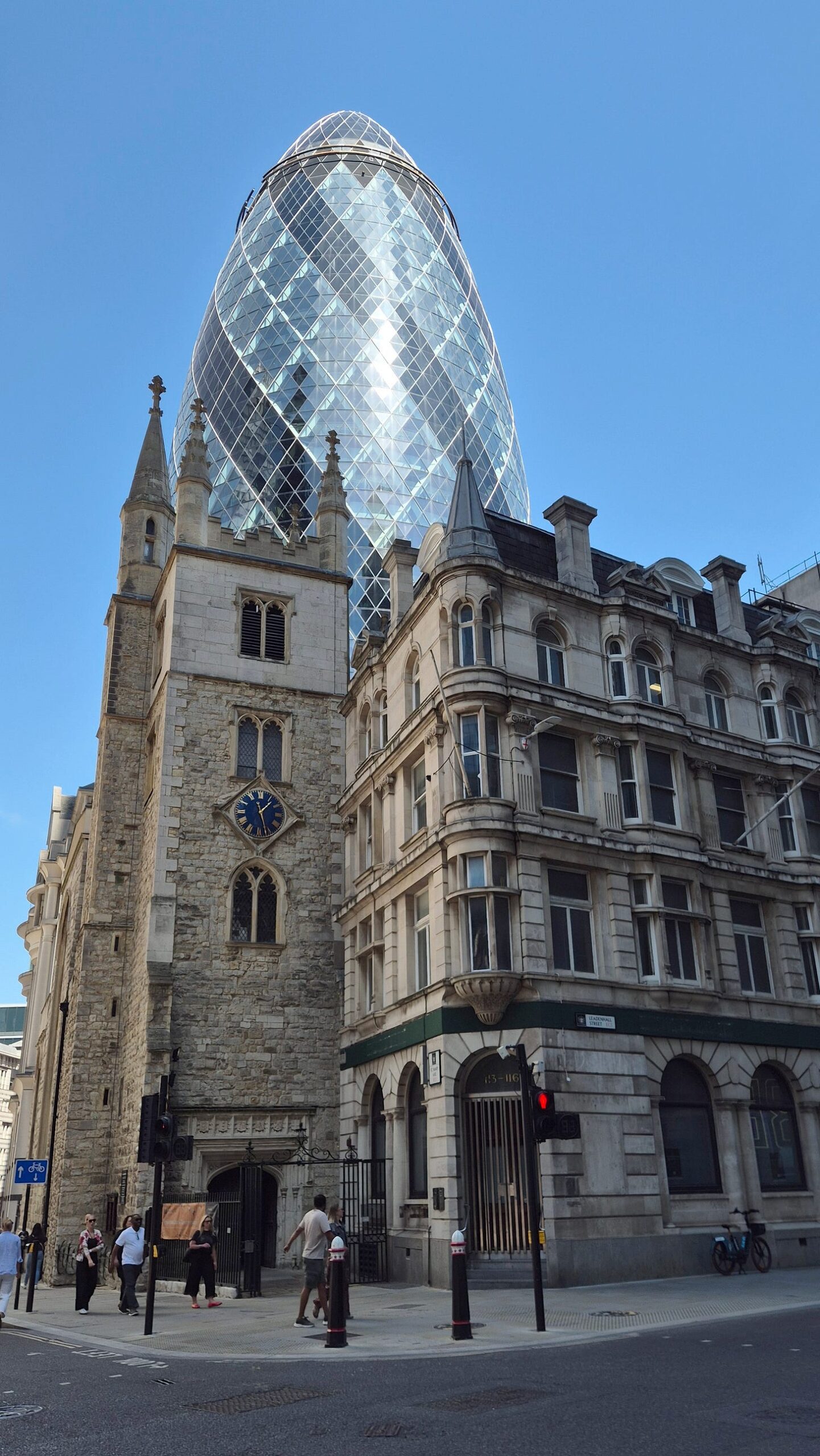
Older and newer bits of London City, like Norman Foster’s bullet tower, cozy up together.
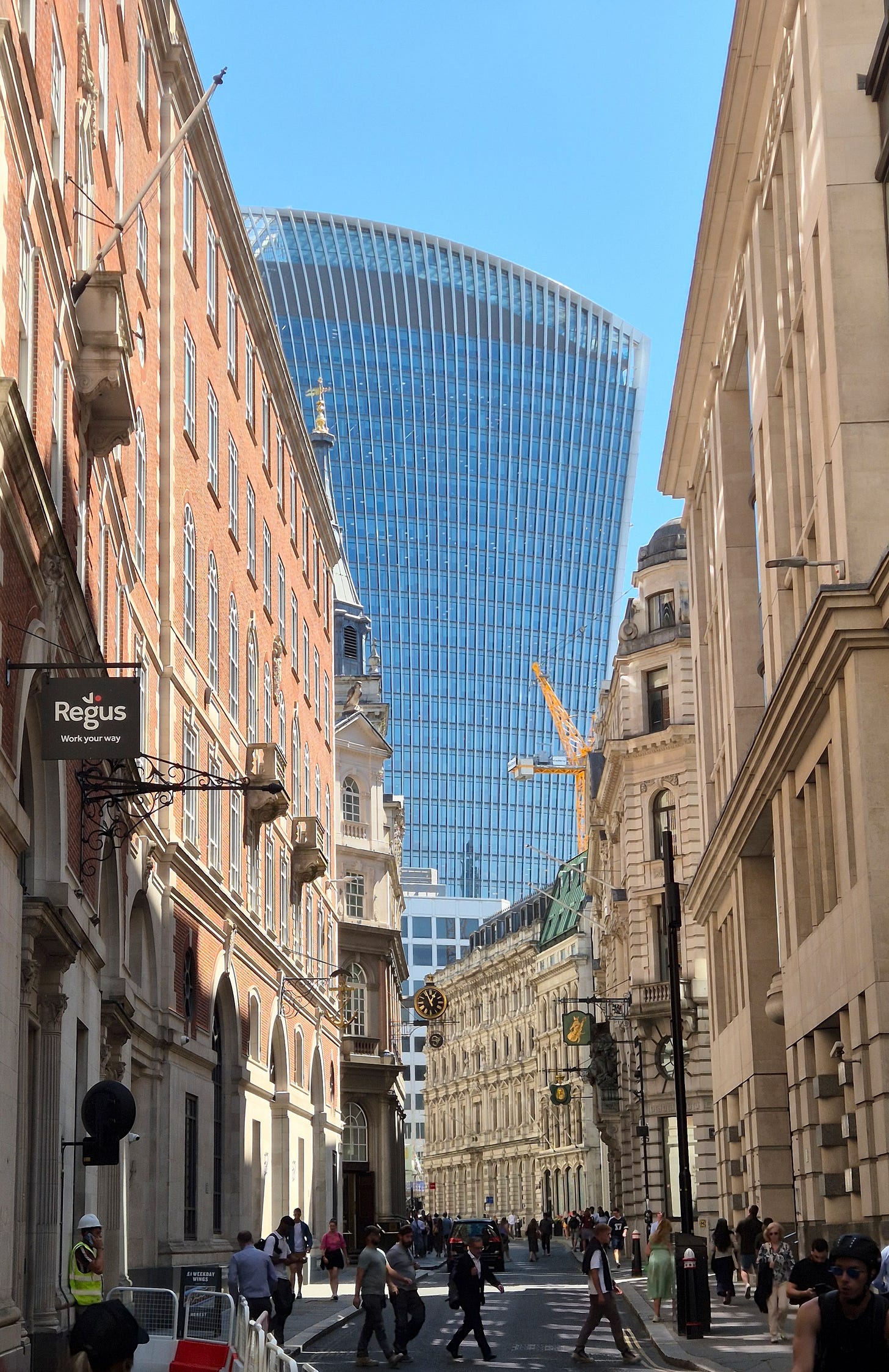
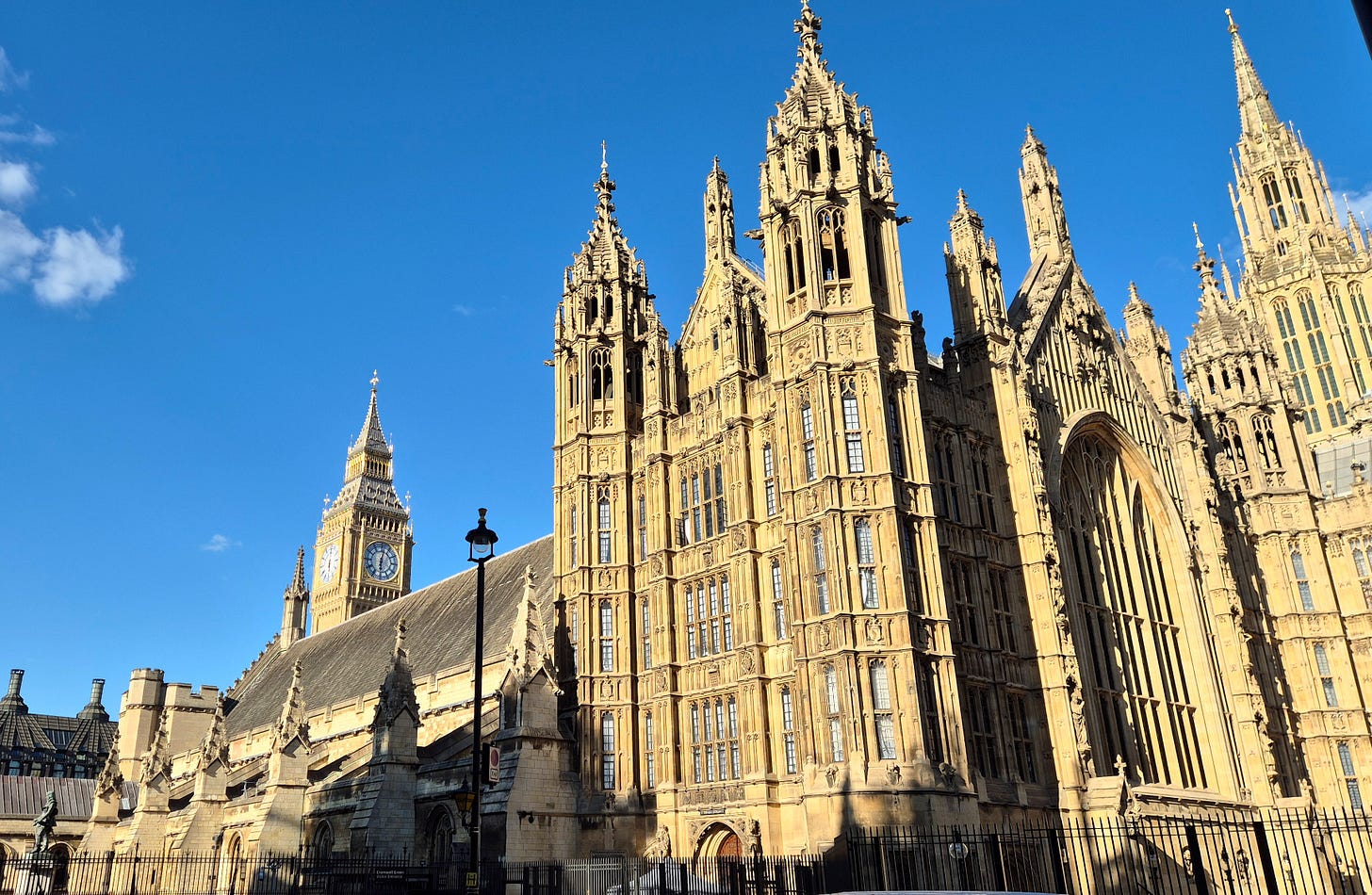
And then there’s the river. We walked the Thames twice, once along the parkland and embankment to the south where Westminster Abbey nestles by the resplendent Parliament Building and Big Ben. We saw the latter two in a new light after our visit earlier to Lincoln Cathedral in the Midlands (see post). The 19th century Parliament clearly inherited its neo-Gothic look from that 12th century church.
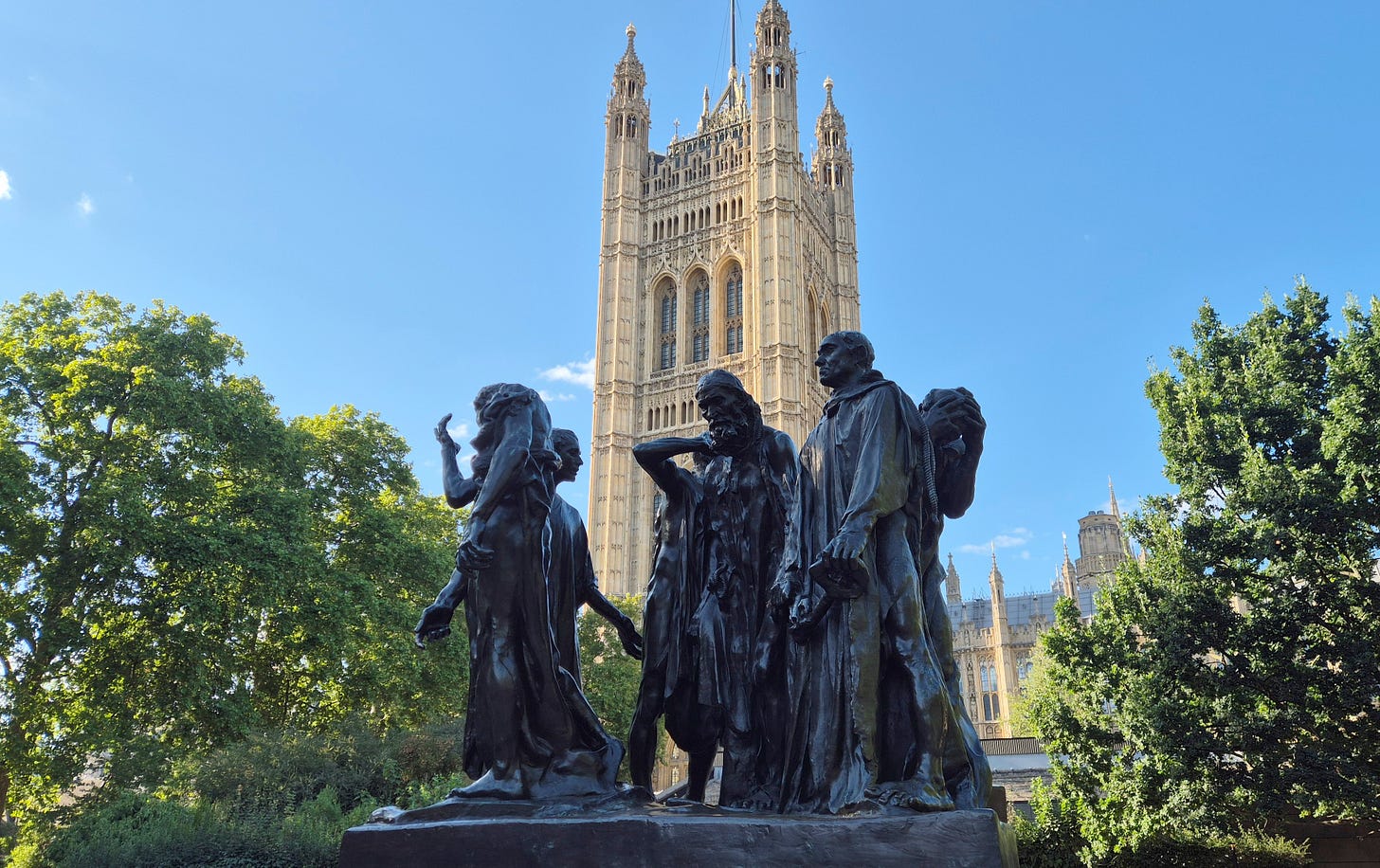
In the neighboring garden, Rodin’s defiant Burghers of Calais complement the democratic heart of the country.
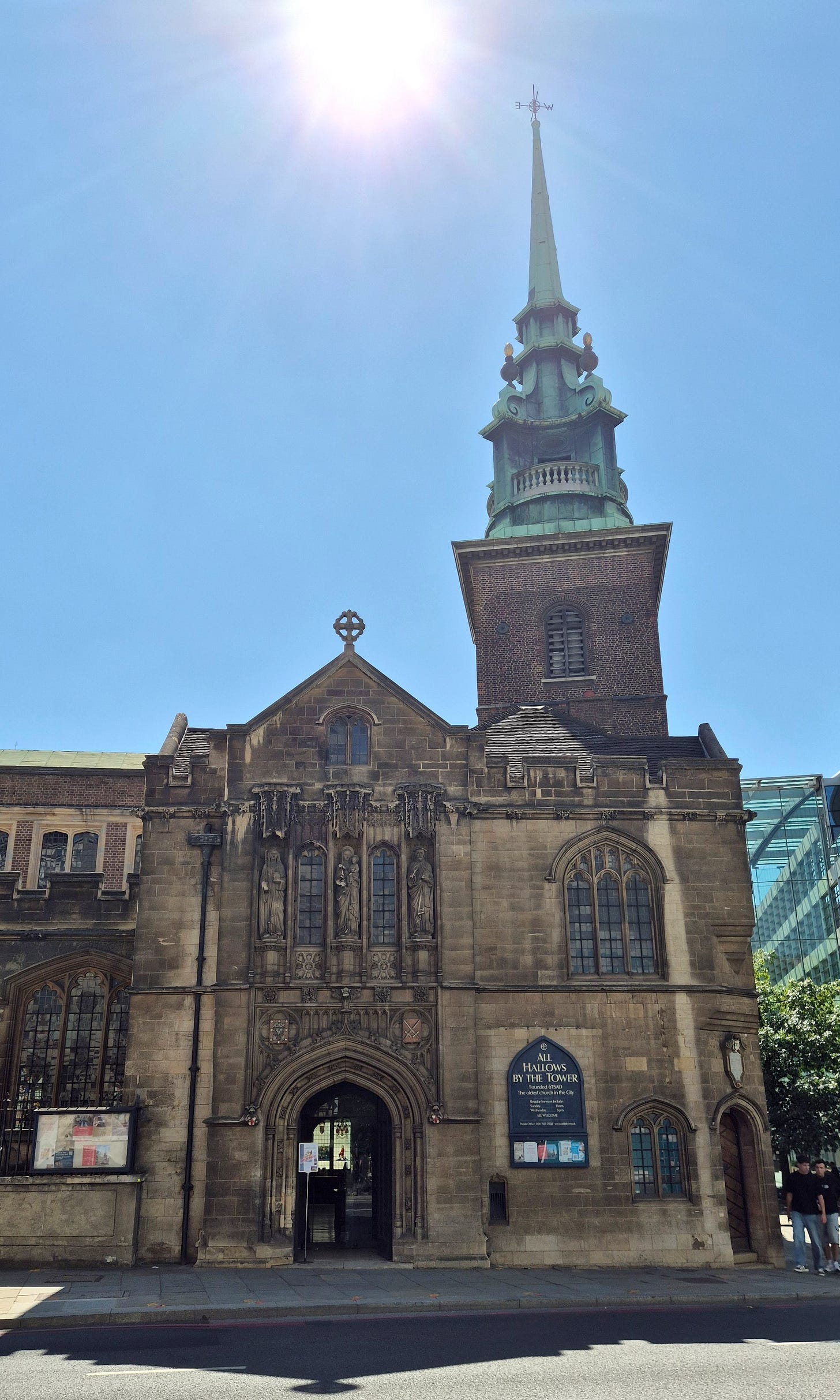
The second approach to the Thames brought us to the oldest traces from Londinium, a major Roman city after the Celtic Britons were overcome by Claudius in 43AD.
In the basement of the church, All Hallows by the Tower, stone supports and carvings date from 675AD, early Christian London. This is the oldest church here.
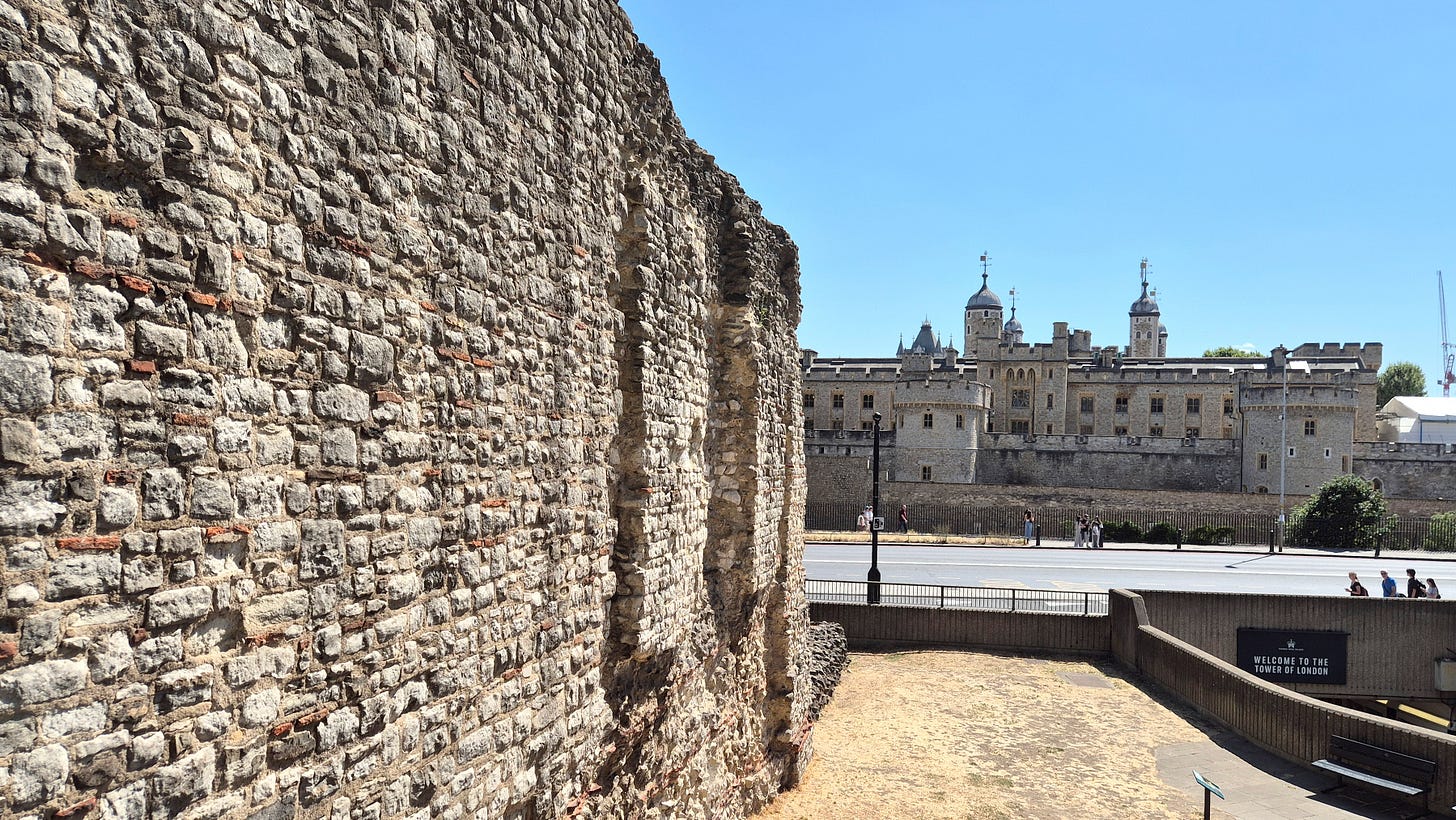
We then happened to discover a section of the old Roman wall just across from the four-poster Tower of London, a relative upstart chronologically from the Renaissance.
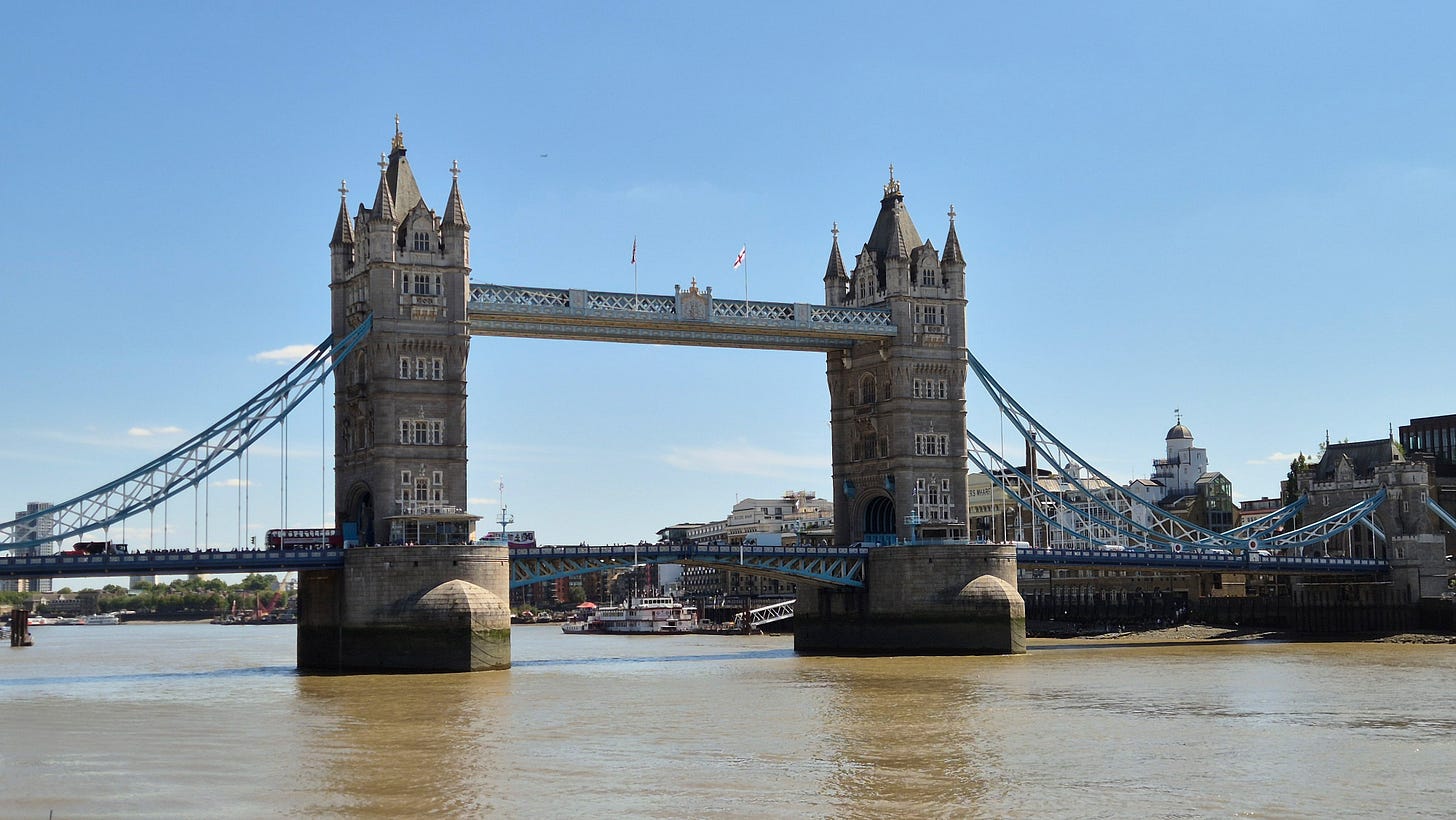
And alongside that, the still impressive Tower Bridge, a relatively new echo of the old Tower buildings from the late 19th century. We couldn’t view London Bridge, since that now resides in Arizona, USA.
Ye Older Pubs (note that the ‘Y’ is an older form of writing ‘th’)
As for the other venerable tradition, we typically included in our walkabouts a sampling of English pubs, or public houses. Though today’s pubs seem much fancier and more expensive than we recalled from decades ago, they are still a pleasure to visit for a filling meal, any kind of tipple, and friendly conversation with strangers.
While in the central city, we found a few of the oldest pubs in London…and did our due diligence to try them.
Dating from the 17th century, our first old pub had also sustained Christopher Wren, the architect of St. Paul’s and much more baroque England. The interior still has a few beams from those days and some Wren miscellany, but the exterior felt more historical.
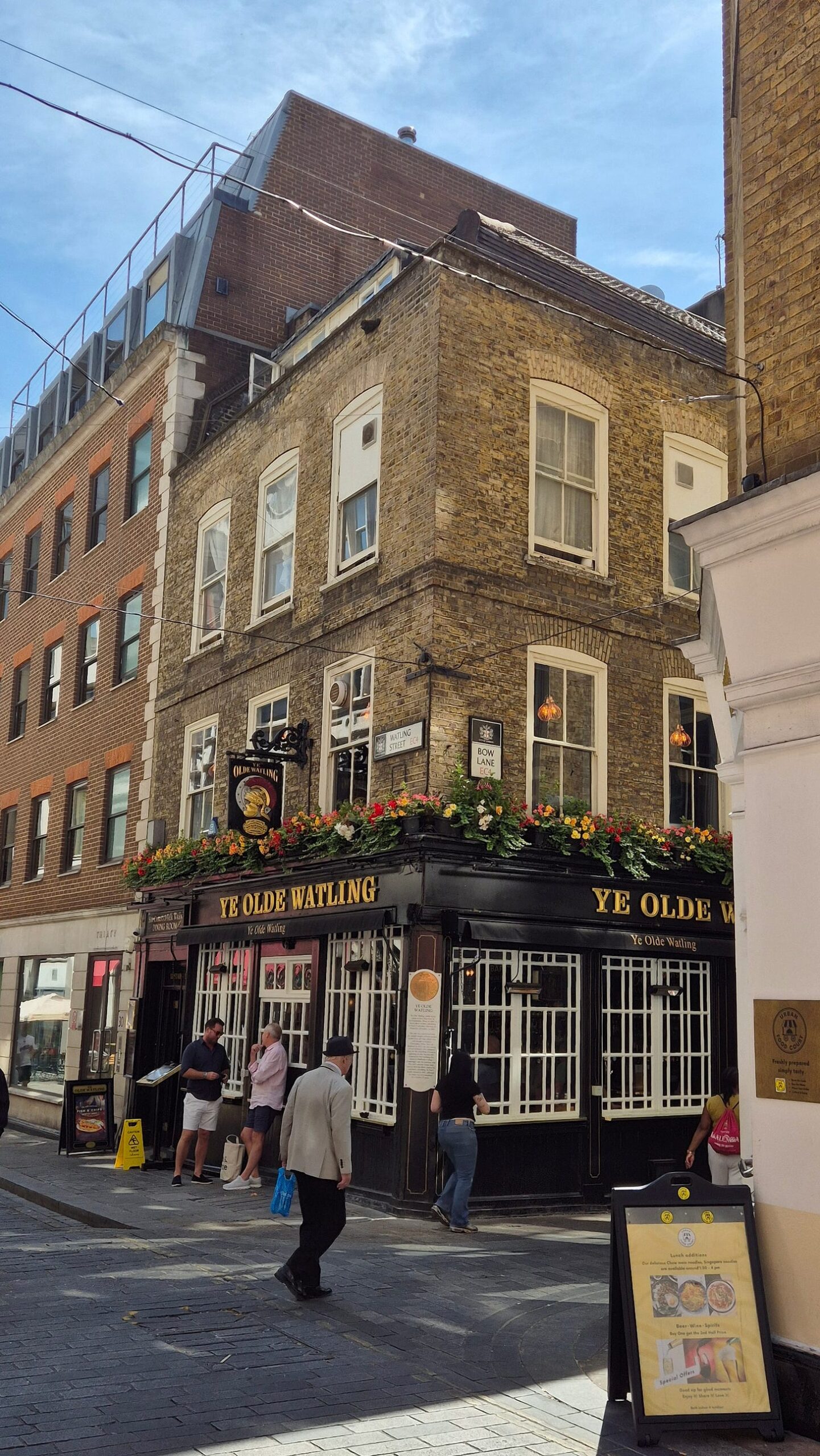
On this narrow lane, St. Paul’s itself makes quite a contrast.
Here we are at the Jamaica Inn, a pub that began in 1652 as a tavern serving the faddish drink of the time, coffee. The exterior looks like it dates from the 17th century but was swathed in construction materials. The interior is still woodsy and inviting.
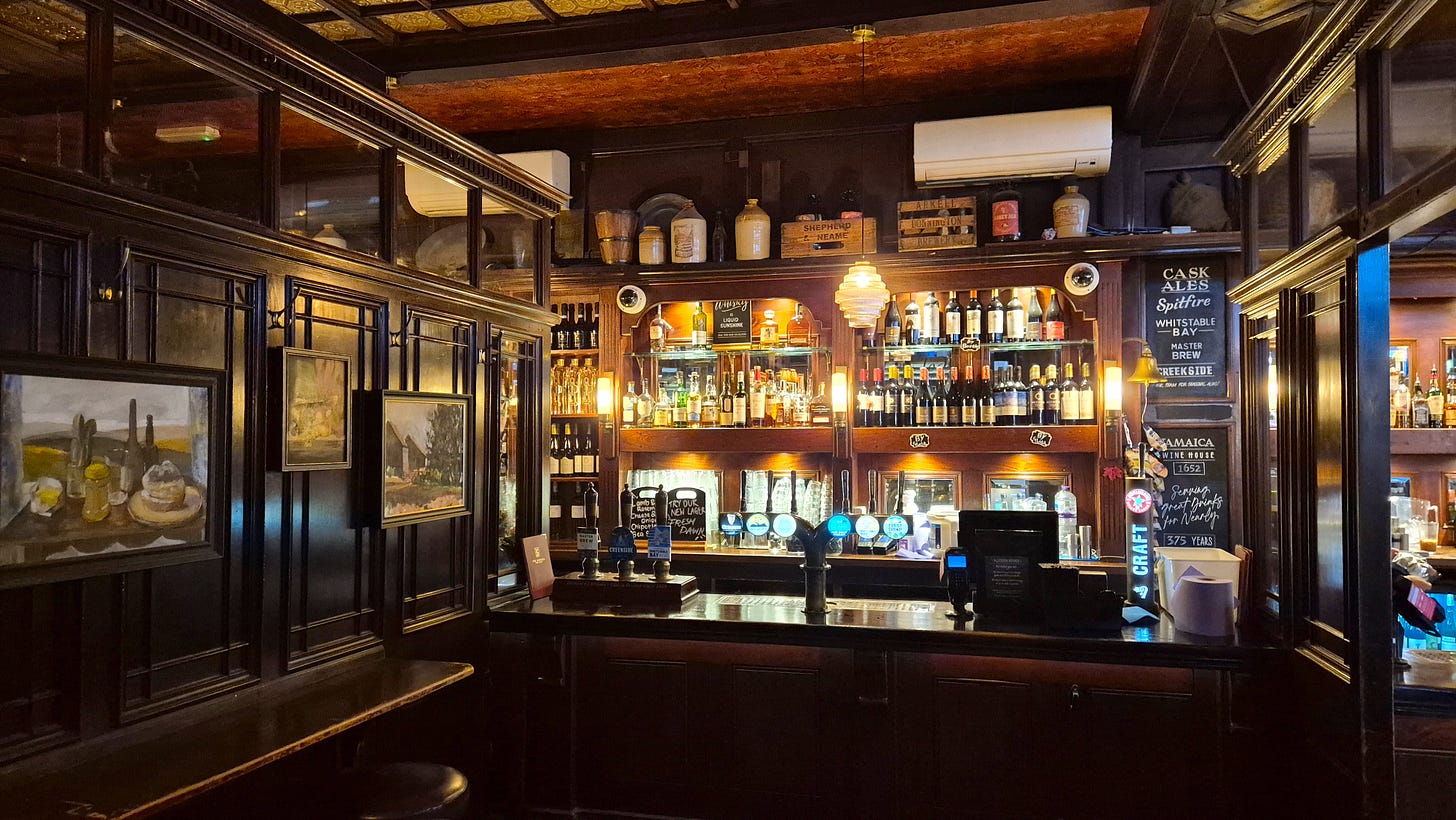
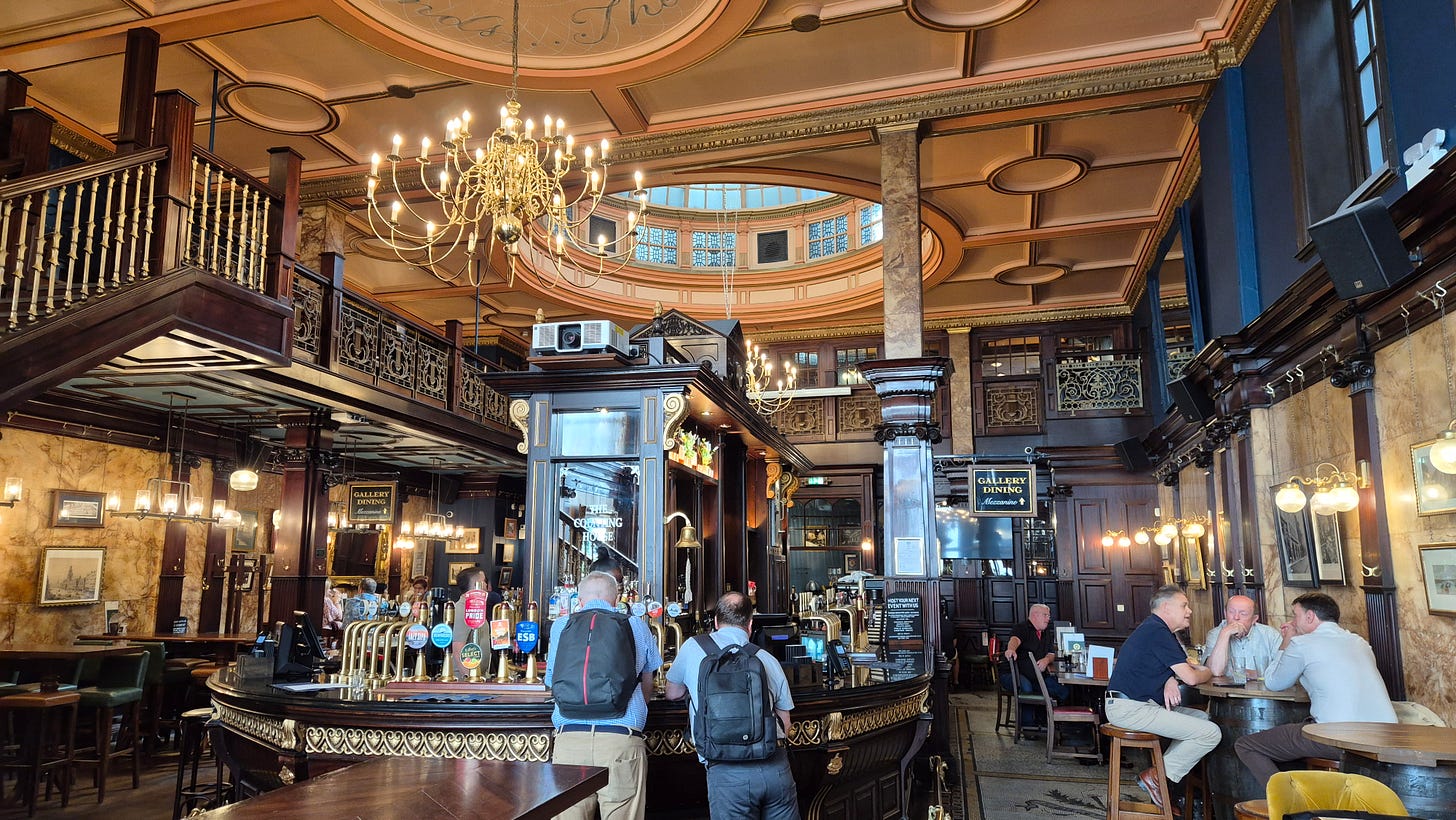
One other was an old Exchange, a former banking house. Here we conversed with several Brits who were checking off details in a small paperback. They were prowling London like us, but with a different purpose: a treasure hunt for curious, rarely noticed details from past and present London.
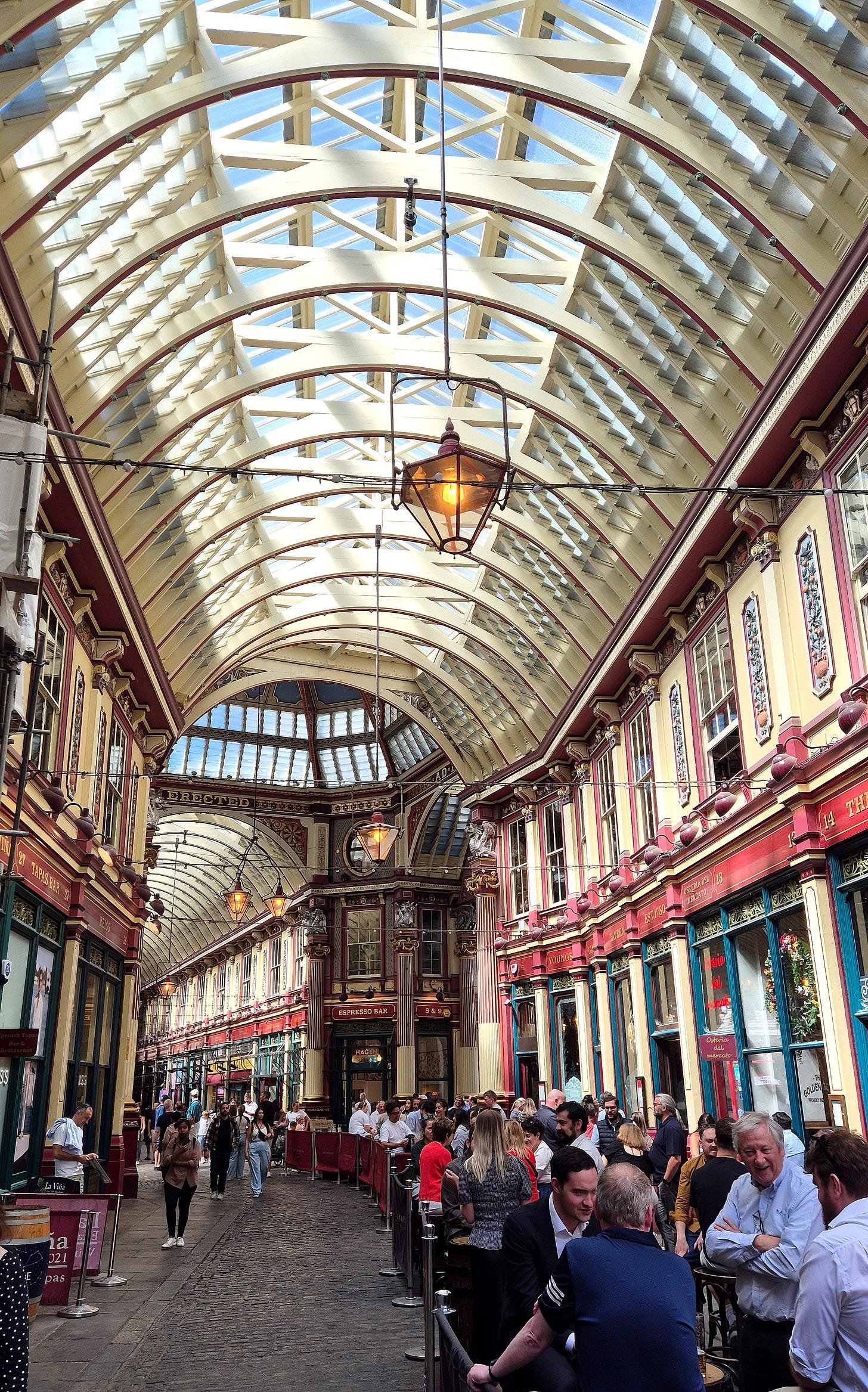
Searching for yet another pub, we found ourselves in the famous Leadenhall Market on Gracechurch Street. It’s a highly popular Victorian arcade that graces a space that has been a market since the 14th century. Plunk in the middle was an 18th century pub, Lamb Tavern, but it was a bit overwhelmed with tourists.
A Walk in the Park
Above all, we had been looking forward to long walks within the parks of the city. Strolling, relaxing, cycling in them – all are long-standing habits of Londoners. That’s why we paid a bit more for a hotel in a charming neighborhood close to Hyde Park with its Marble Arch, Speaker’s Corner, and Serpentine lake.
Sadly, the parks have not been doing well here. With the extreme heat and drought plaguing the country, as well as the rest of Europe, this “green and pleasant” land of song was sere and parched. We saw the impact across the agricultural fields up north. Here, we saw more dust than grass in the parkland. Many, many trees looked unhealthy, clinging to leaves that were dried out.
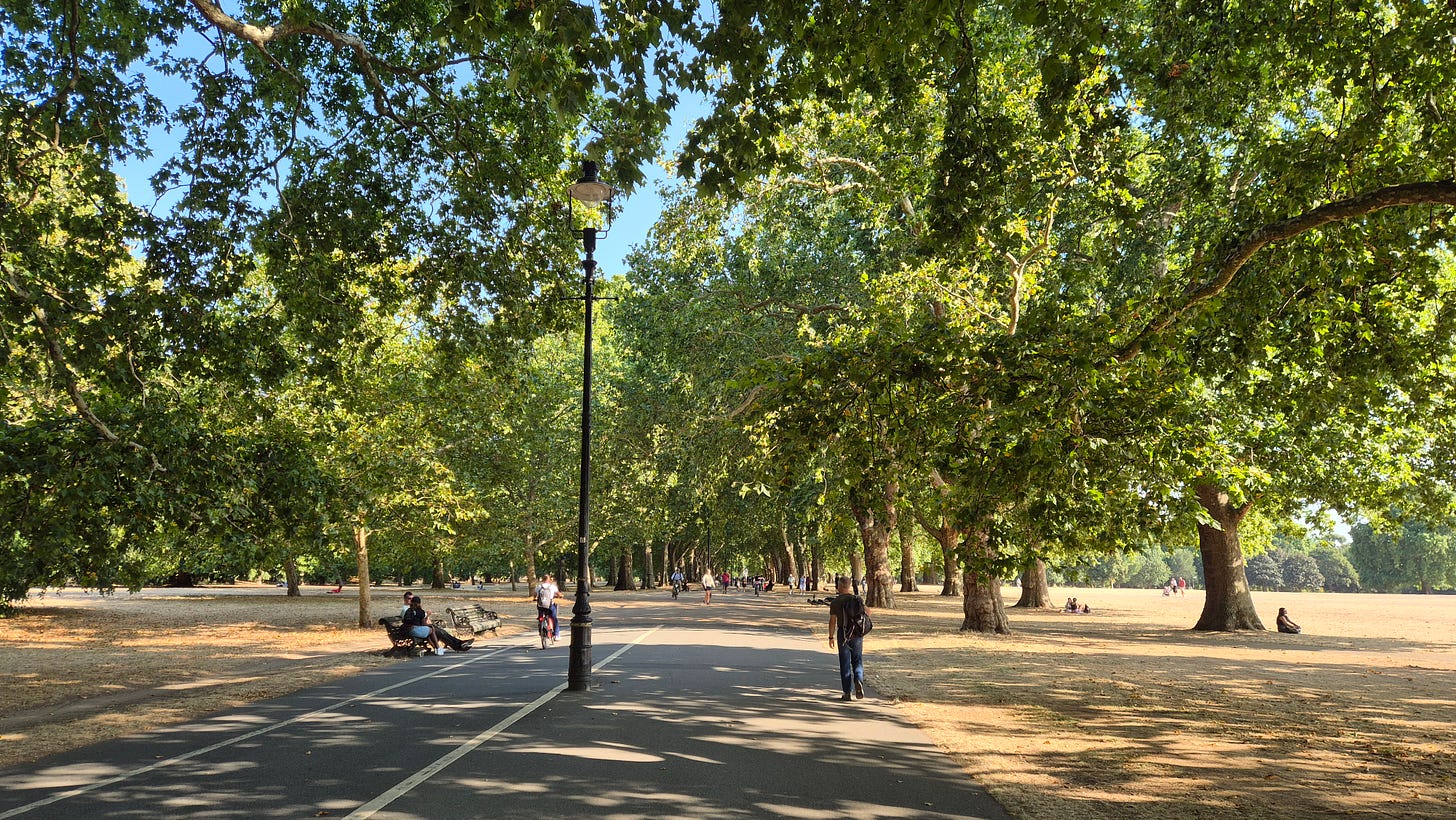
Across the country, thousand-year-old oaks – nearly a symbol of England from early times – have been dying due to the dry, overheated weather. We were dismayed at the sad conditions; it’s even harder for the Londoners and British to adjust to this new reality.
Departing
Our last experience epitomized the mix of the old and the new here. Instead of flying out, we decided to take the sleek Eurostar bullet train through Brussels, a surprisingly quick trip of a couple of hours.

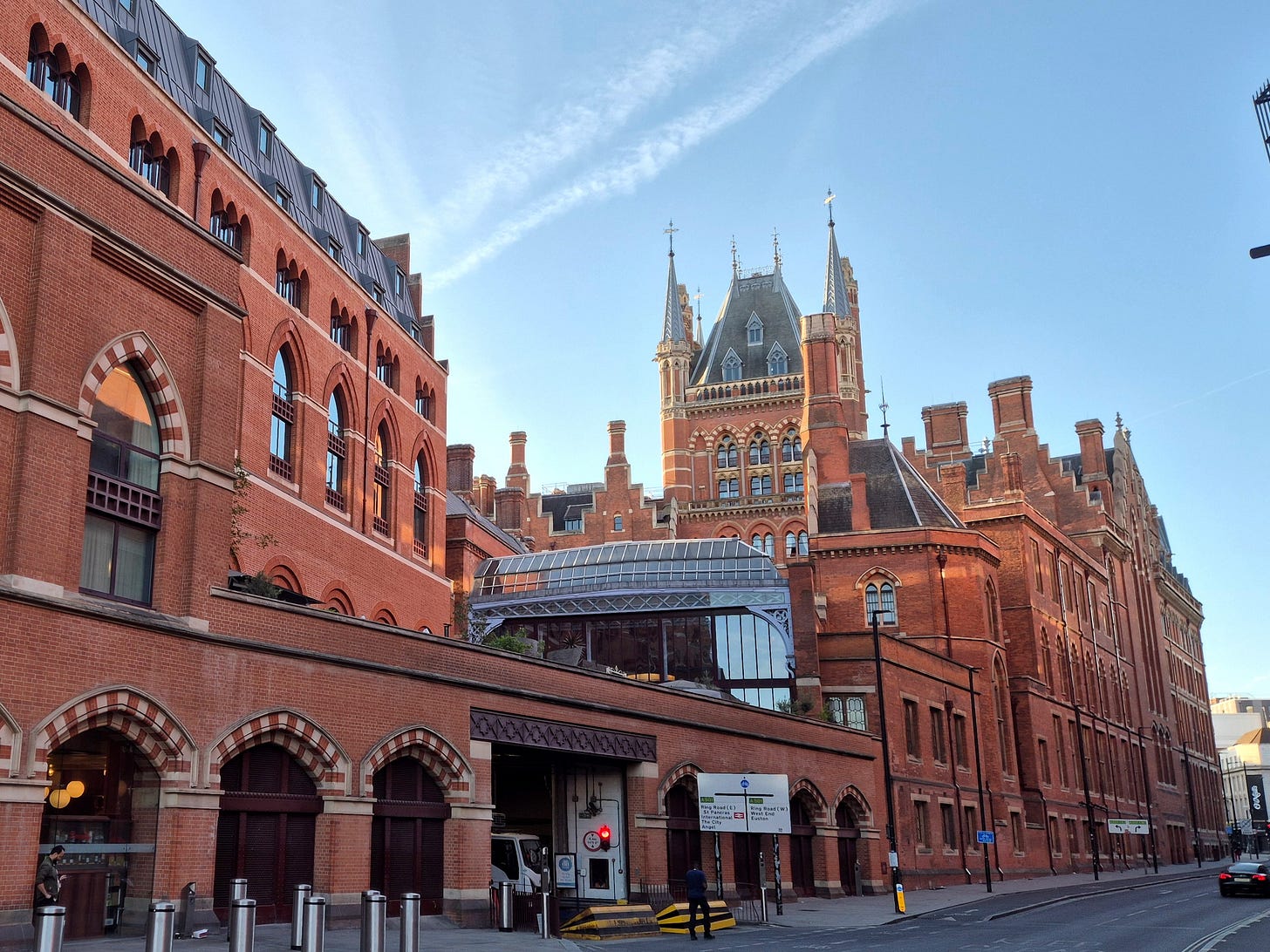
The departure, complete with contemporary airport-style security and border clearances, takes place in a renovated section of the hulking St. Pancras train station, yet another Gothic Revival building that has been embarking and receiving people on journeys since 1868.
(To enlarge any picture above, click on it. Also, for more pictures from the United Kingdom, CLICK HERE to view the slideshow at the end of the itinerary page.)