
In brief: While in London, we thoroughly enjoyed three major museums of art at no cost – and more.
In most countries, the sites for viewing great works of art are costly. The Met in New York, $30. The Kunsthistorische in Vienna, $28. The Louvre, $25 and up. Uffizi in Florence, $29.
In England, however, the major collections are free to all. Sure, they request donations. Everything within the museum costs money…the apps, the maps, the guides, special exhibits, etc. But admission to each of these costs nothing – including the British Museum, home of antiquities and artifacts from millennia past; the National Gallery, where art from centuries of old masters resides; and the Tate Britain, where the best of UK artists are on display.
We thoroughly enjoyed each of these freebies. Here’s just a small sample of their riches and an odd extra one tossed in.
British Museum
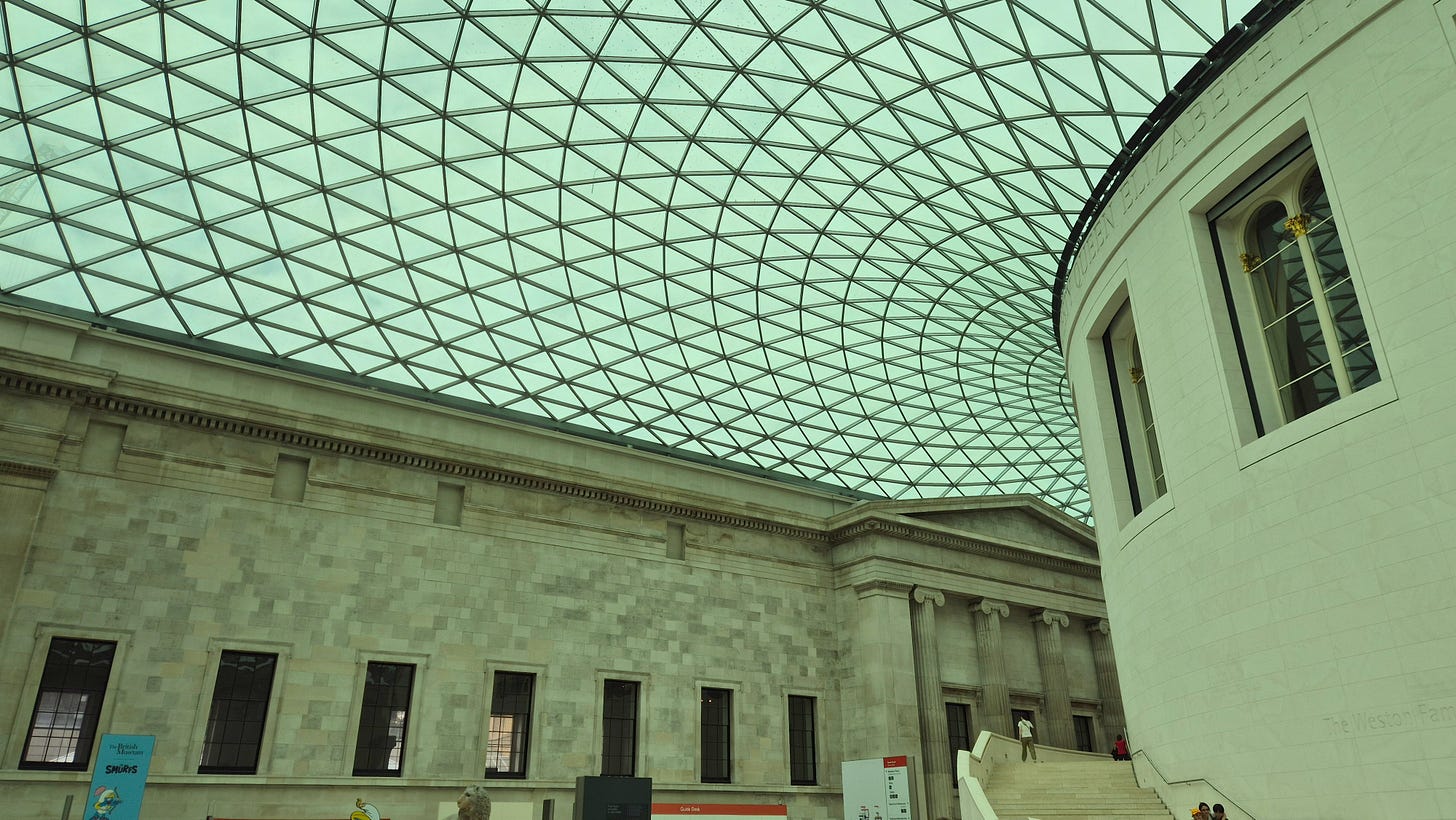
This vast museum displays some 80,000 objects spanning millennia and continents. With steamy temperatures inside during the European heat wave, we shamelessly opted for the sections with the most precious items.
The Assyrian Engraved Stones (1st millennium BC)
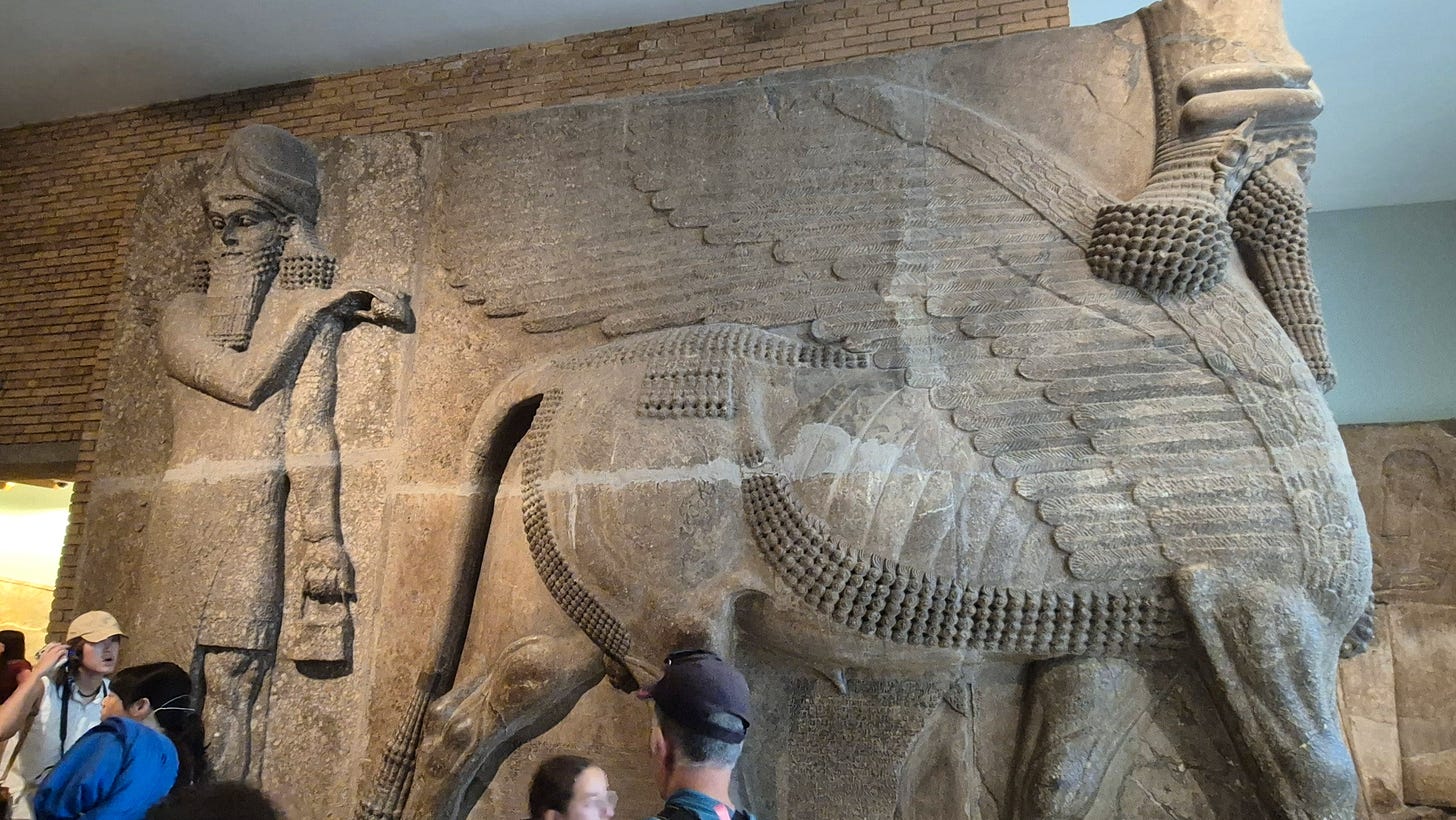
The entry to the Assyrian section passes through a passage flanked by two monumental figures, the Colossal Lamassu (part human, bird, bull).
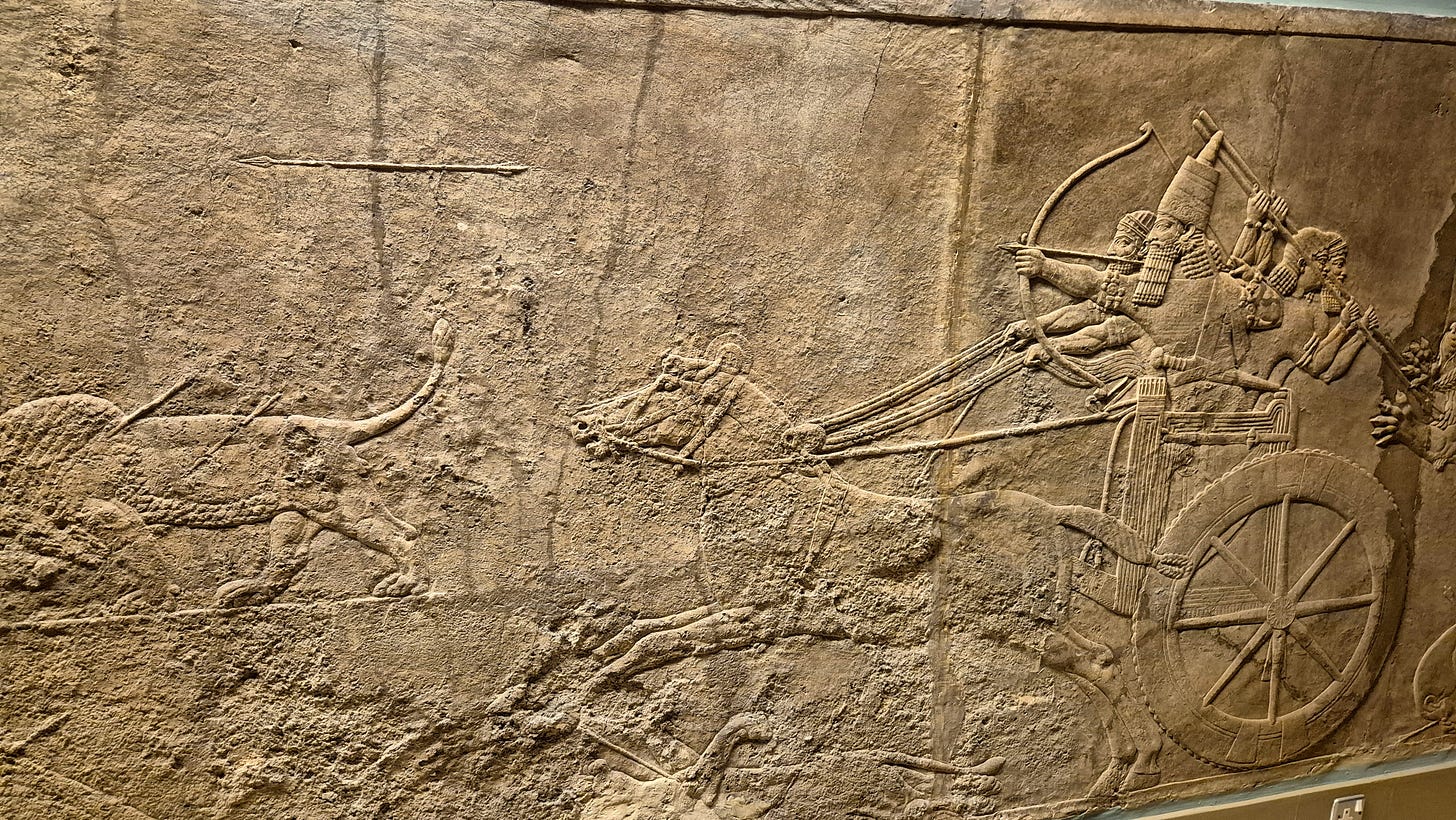
Three rooms display massive stone reliefs from an Assyrian palace including the dynamic, realistic scenes of lion hunting.
Greek Statuary and Ceramics
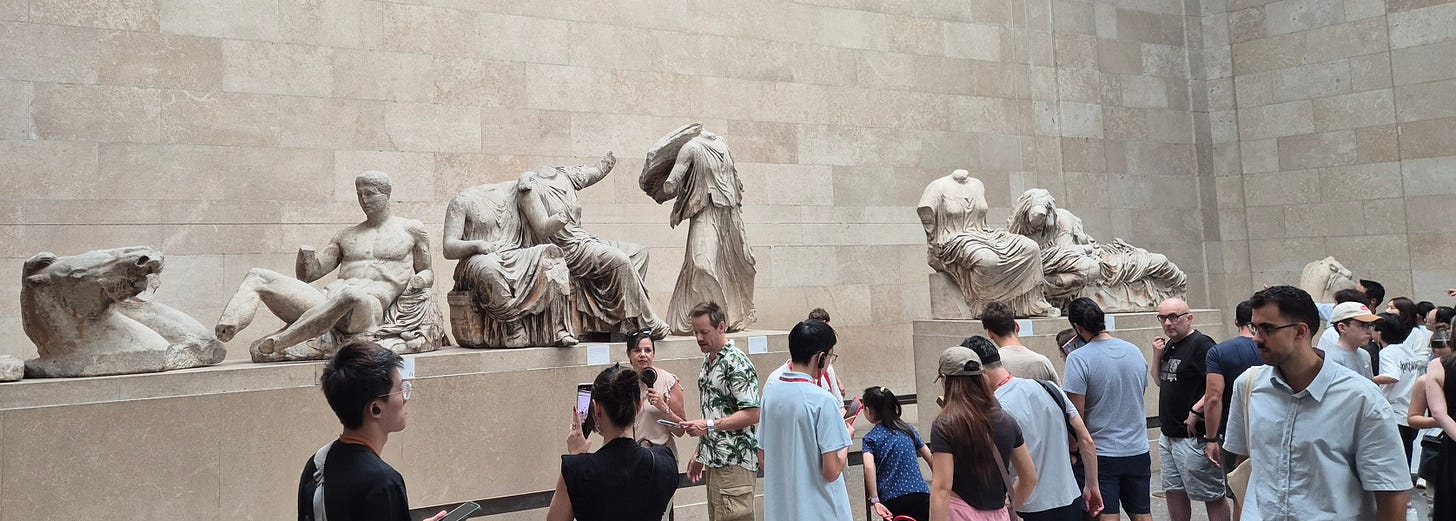
Several rooms contain a whole temple from Xanthos in Turkey and other Greek statuary. But the highlight is the huge room with The Elgin Marbles, the 5th century BC pediments and friezes carted away from Athens’ Parthenon by British colonialists. This array from the east side of the temple fit the figures perfectly into the triangular shape of the pediment. The details are subtle, like the illusion of wet clothing on the figures to the far right or the rearing horse’s head.
Egyptian statuary and highly adorned mummies, along with the Rosetta Stone (the 2nd century BC version of Google Translate that enabled archaeologists to decipher hieroglyphics)
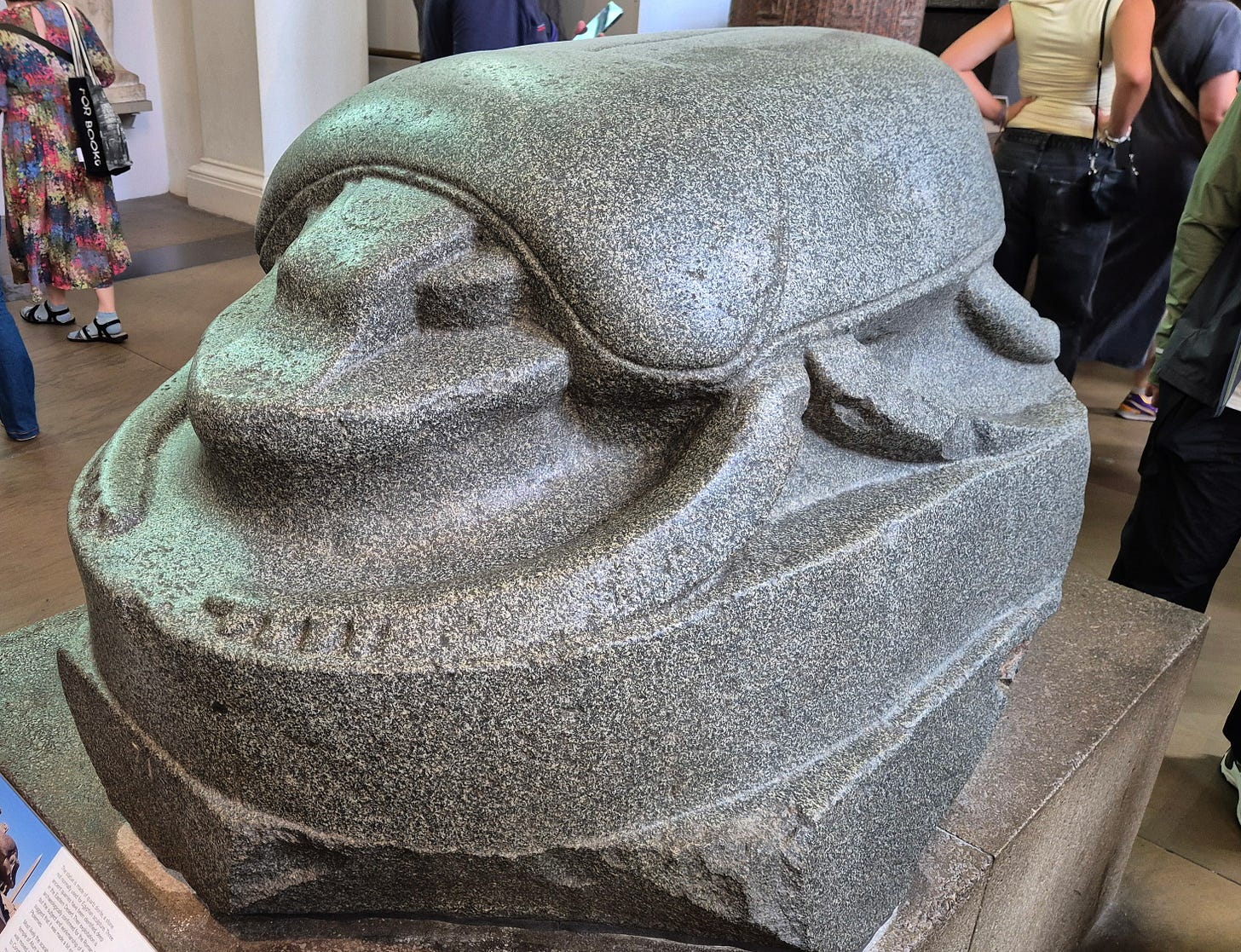
This friendly creature is the largest scarab in stone ever found (2300 kilos). The dung beetle symbolized the god of the rising sun and eternal renewal of life.
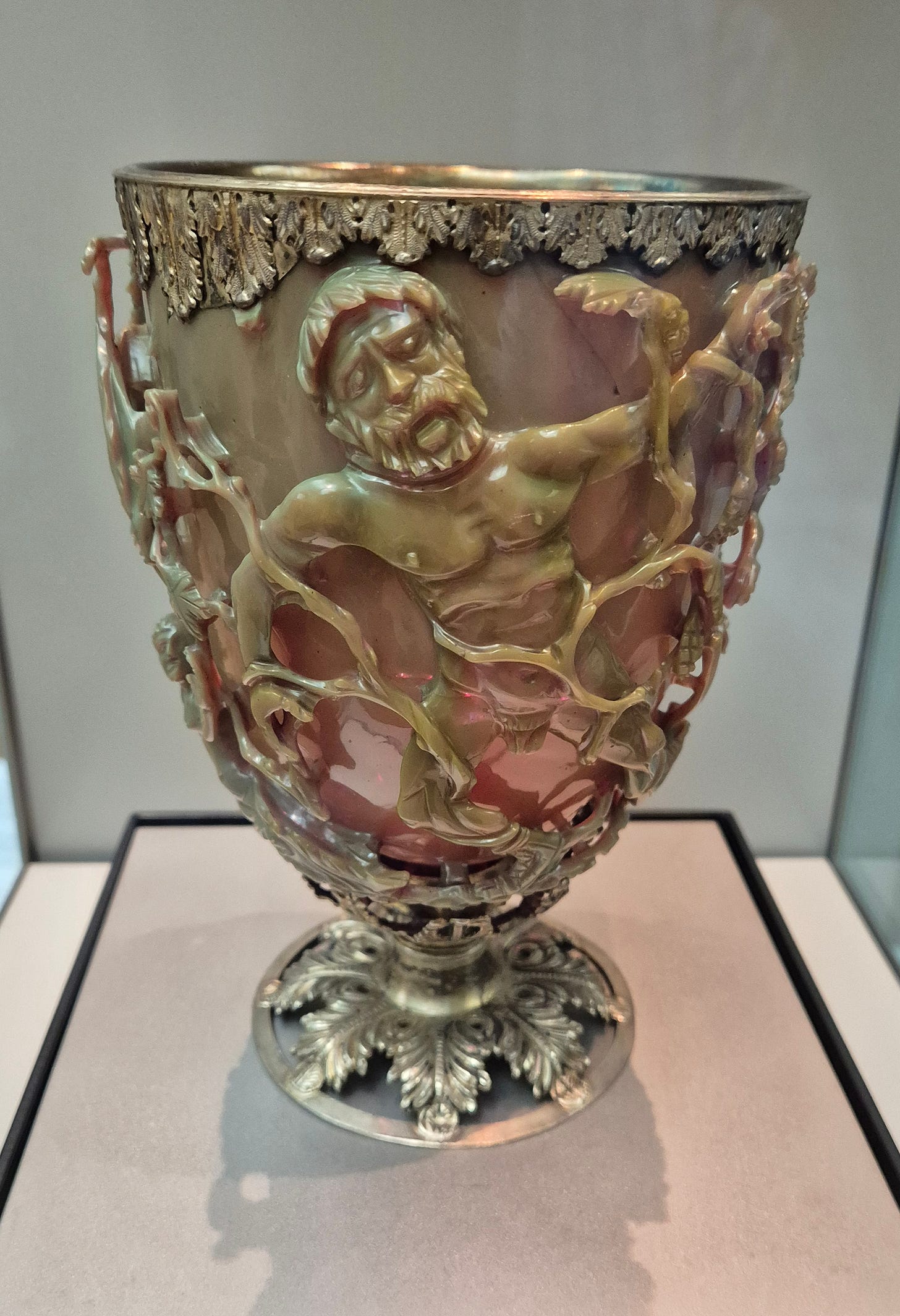
The Sutton Hoo discoveries from an English royal cemetery in the 6th to 7th century AD.
The goods packed away for the royal buried at Sutton Hoo included ivory boxes, inlaid helmets, weapons, delicately carved images set in crystal, jewels, coins and more – all unearthed since 1939.
The National Gallery
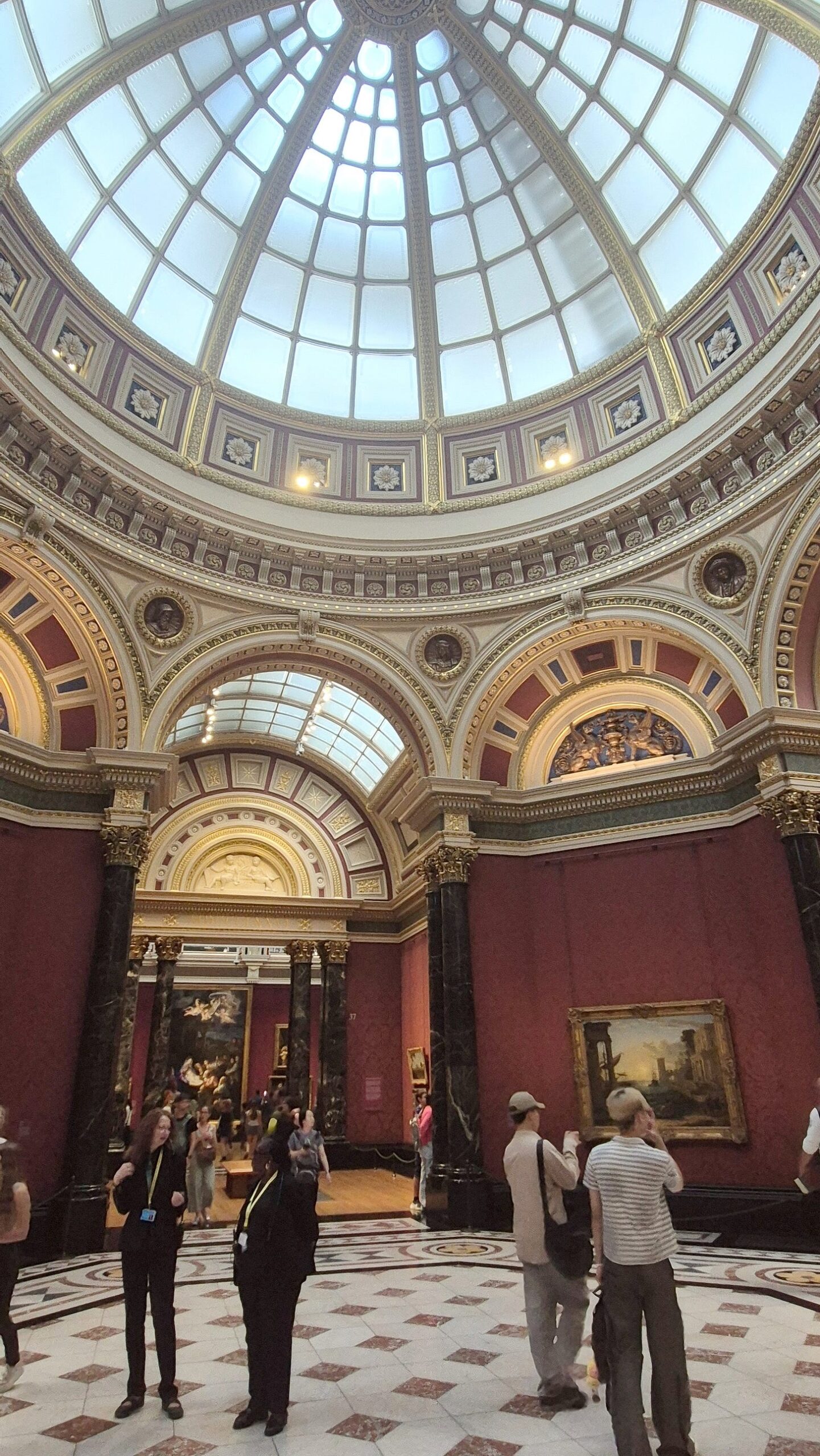
The sumptuous rooms here, somewhat better air conditioned than the British Museum, present important work by renowned artists from around the world between the 13th century and 1900. We spent three delighted hours, but probably needed an extra three to do it justice. From Giotto to Gentileschi, Mantegna to Manet, Raphael to Rembrandt, van Eyck to van Gogh, della Francesca to Delaroche – and much more in between.
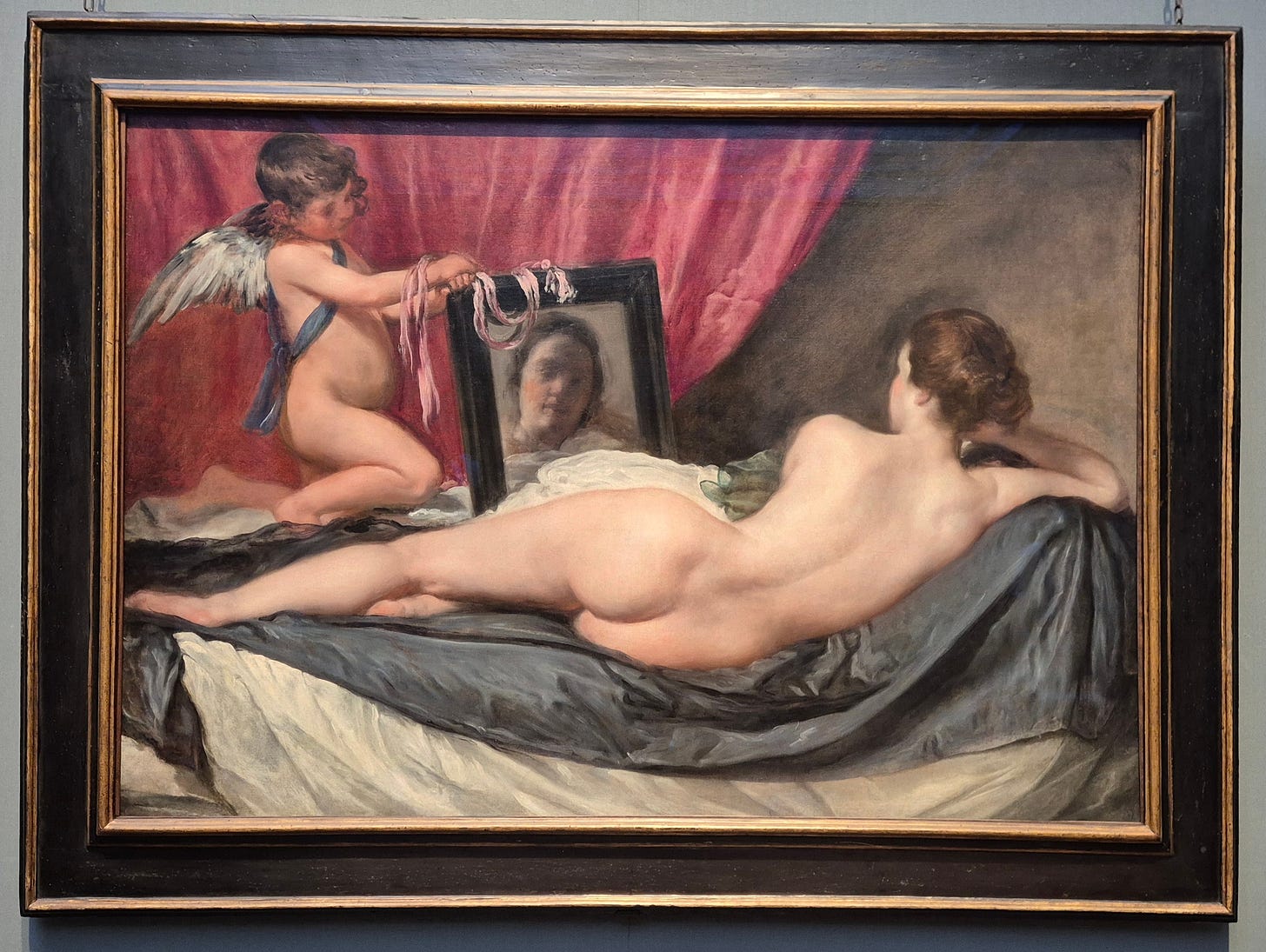
Velasquez: The Toilet of Venus (The Rokeby Venus). Much admired and imitated by other artists.
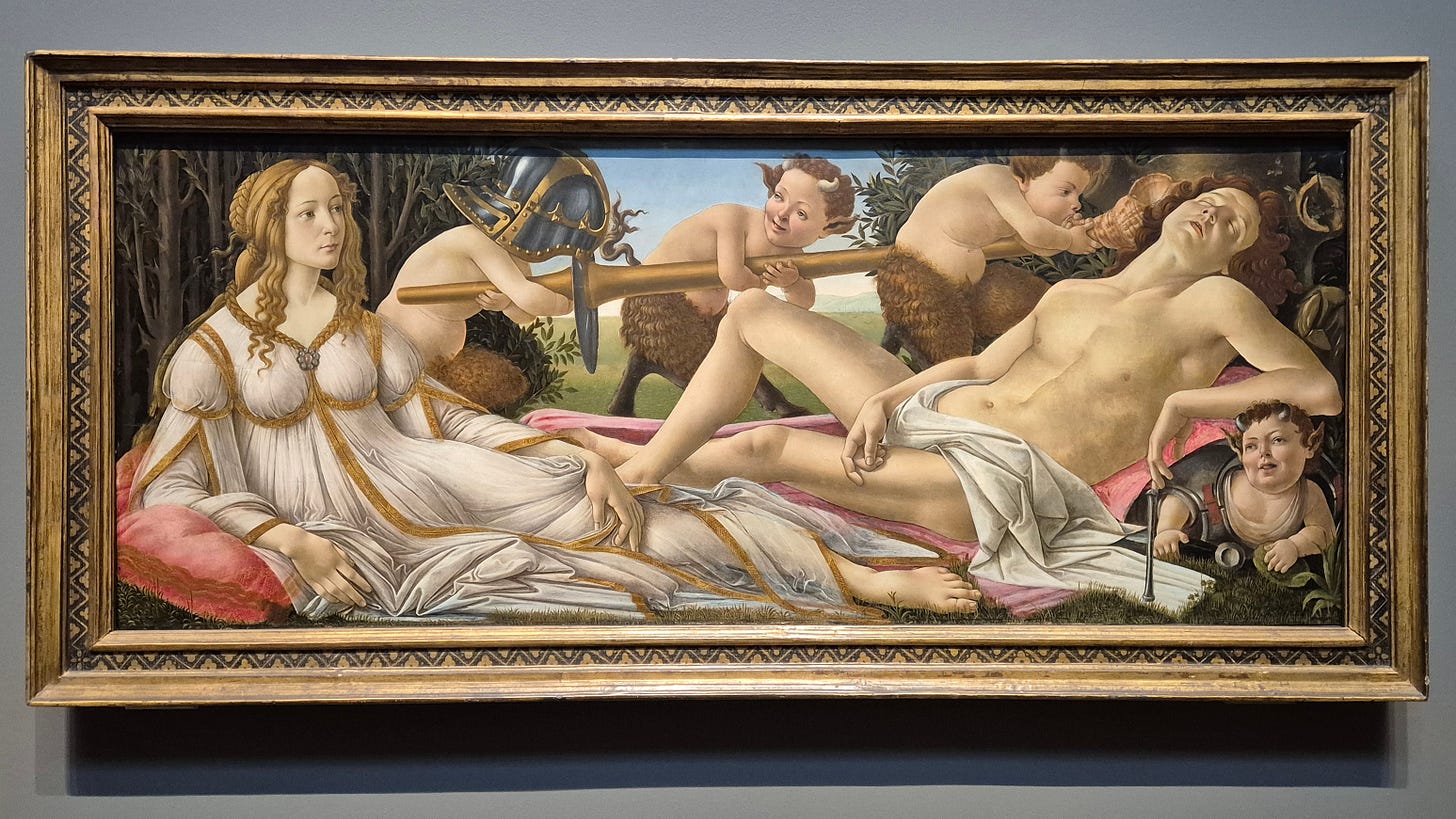
Botticelli: Venus and Mars. Mars seems exhausted from his encounter with Venus, or immune to her charms perhaps, while satyrs play with his lance. Her expression is well worth pondering.
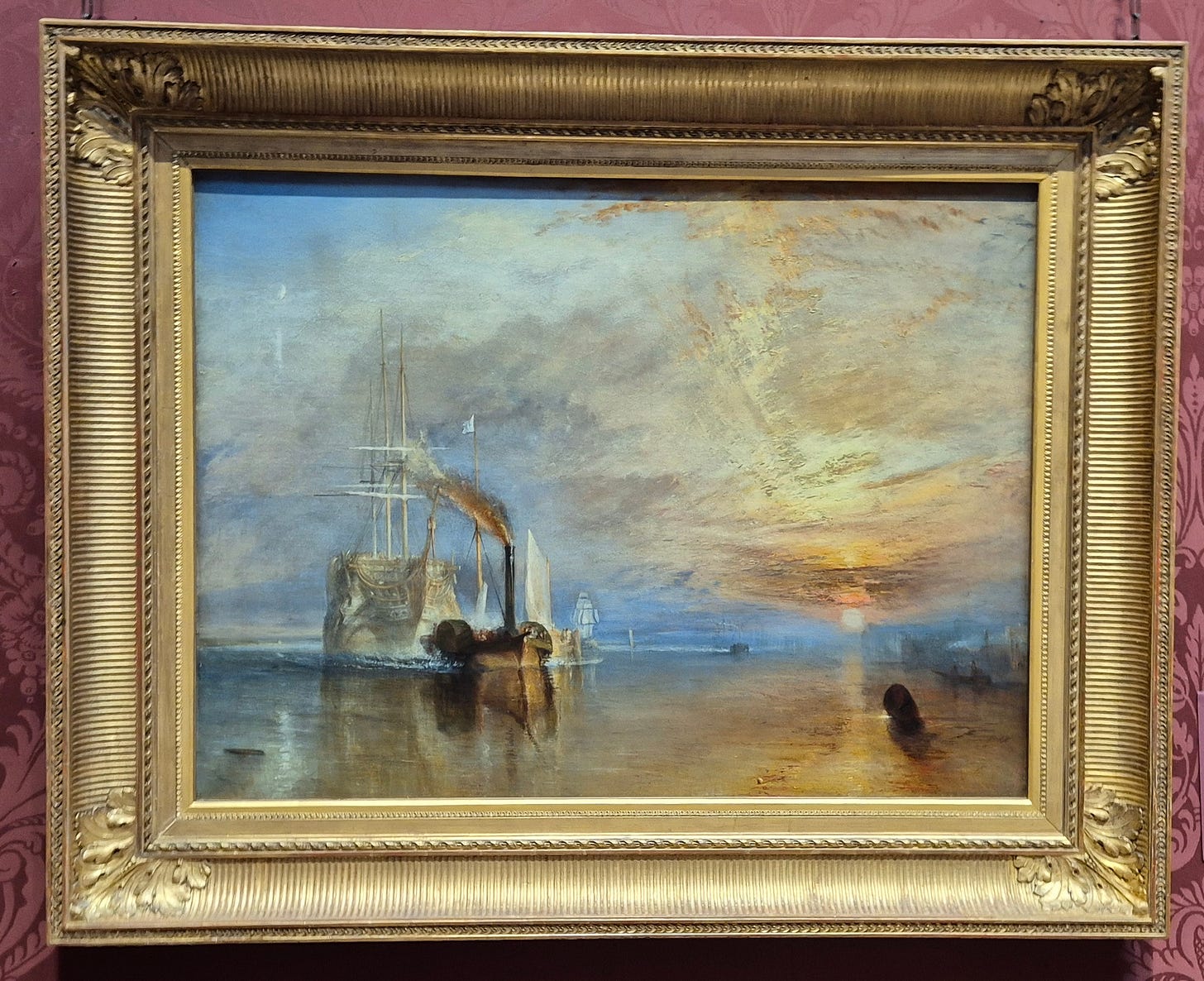
JMW Turner: The Fighting Temeraire. A modern steamship hauls the vintage sailboat to its final mooring, while the setting sun flairs in myriad colors – a vision of technological change.
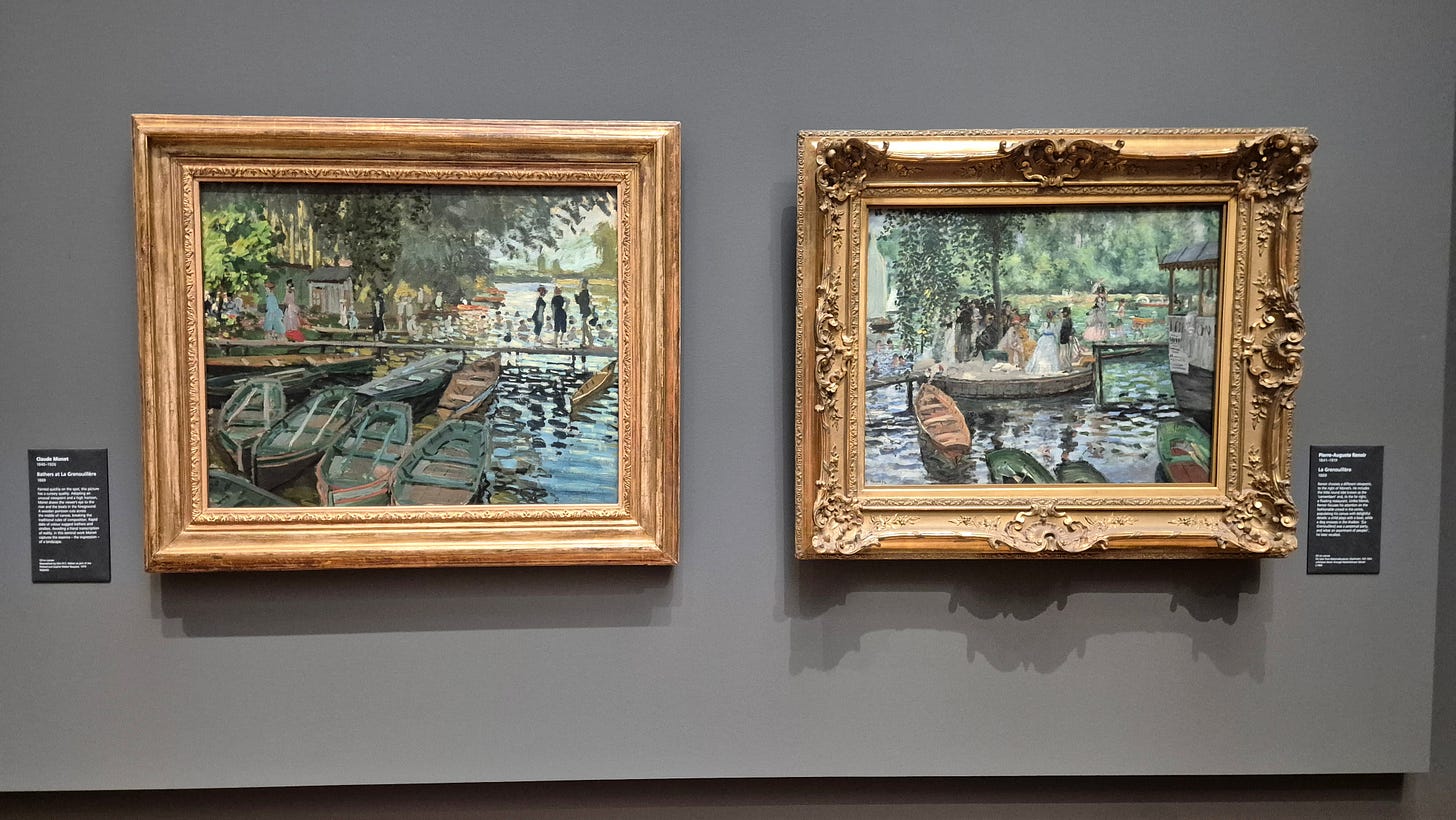
Monet and Renoir painted together on the banks of the Seine in 1869, producing these two paintings. Side by side, they make a fascinating comparison.
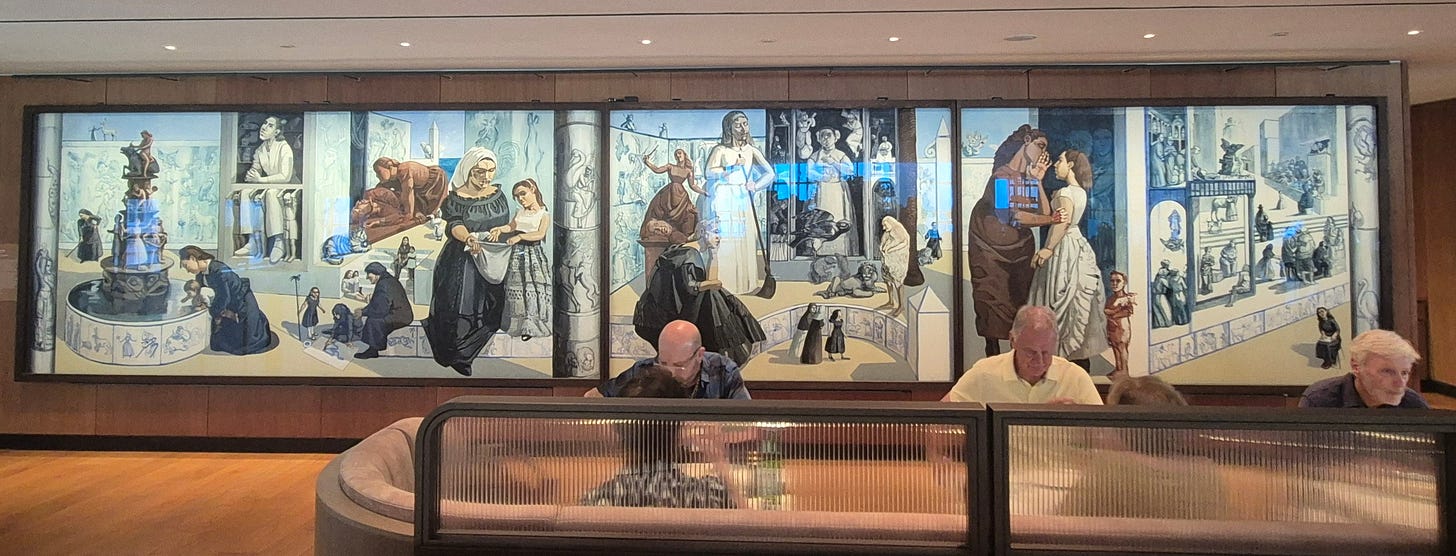
The one work more recent than 1900 is by the Portuguese artist, Paula Rego. Commissioned for this space in the museum cafe, it honors the role of women often depicted in the arts, like Mary, against the backdrop of Portuguese tile artistry.
The Tate
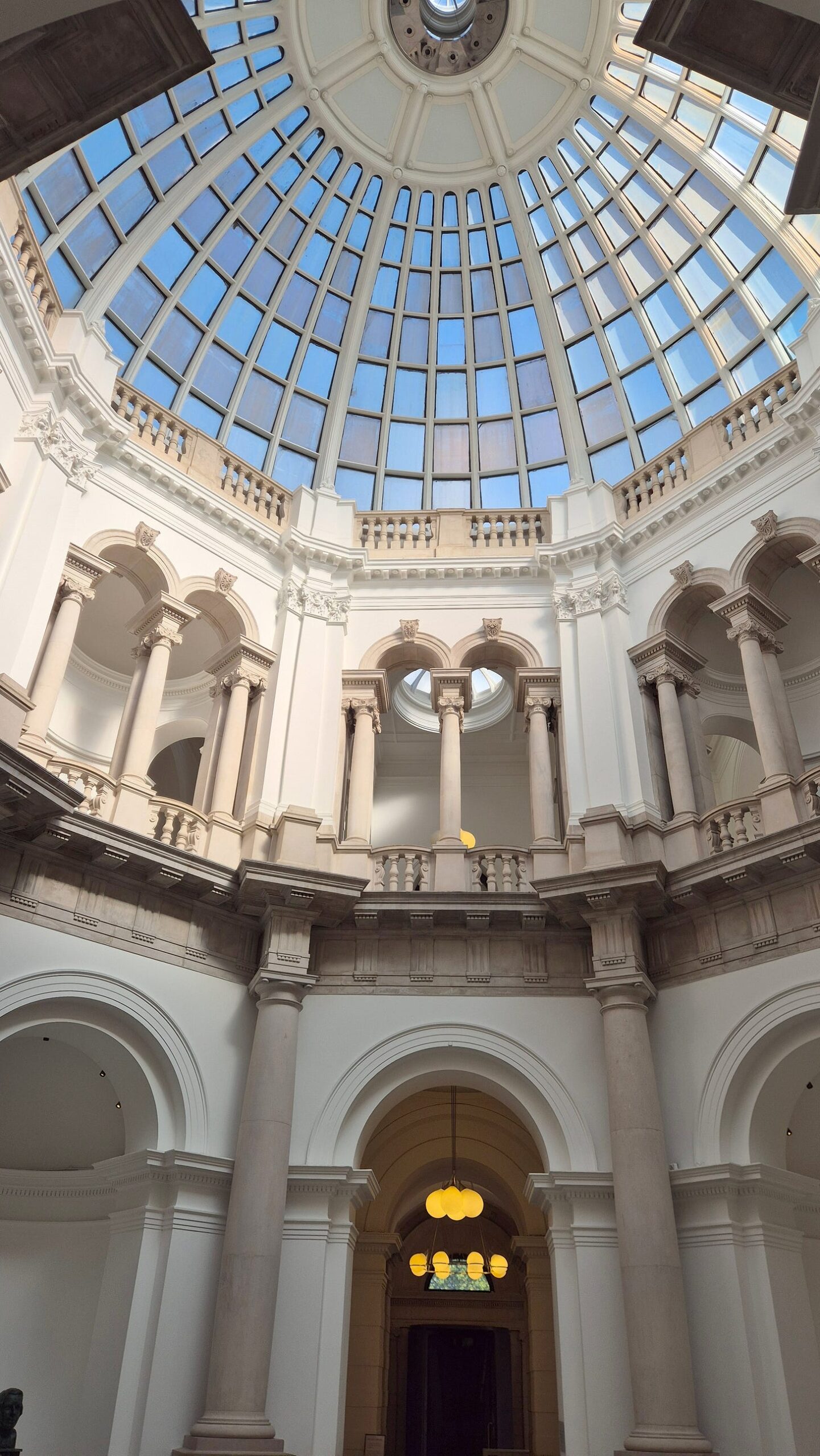
The Tate Britain sweeps through centuries of art by British masters, with an especially strong collection from the 18th and 19th centuries.
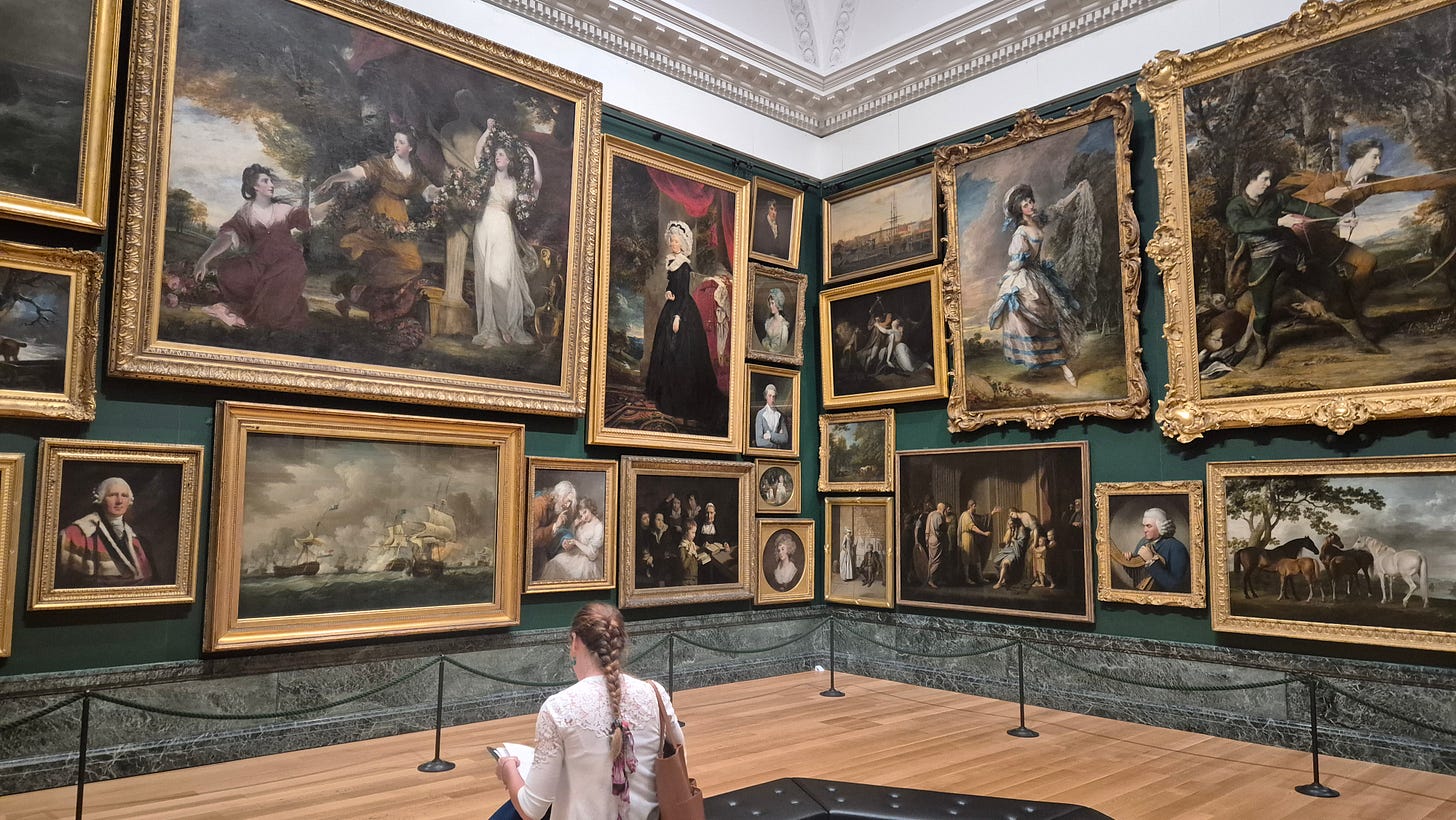
Many galleries are organized by eras to show how various artists responded to the highs and lows of their times. And others feature their rich holdings of artists like the Pre-Raphaelites as well as JMW Turner’s gift of his work to the country.
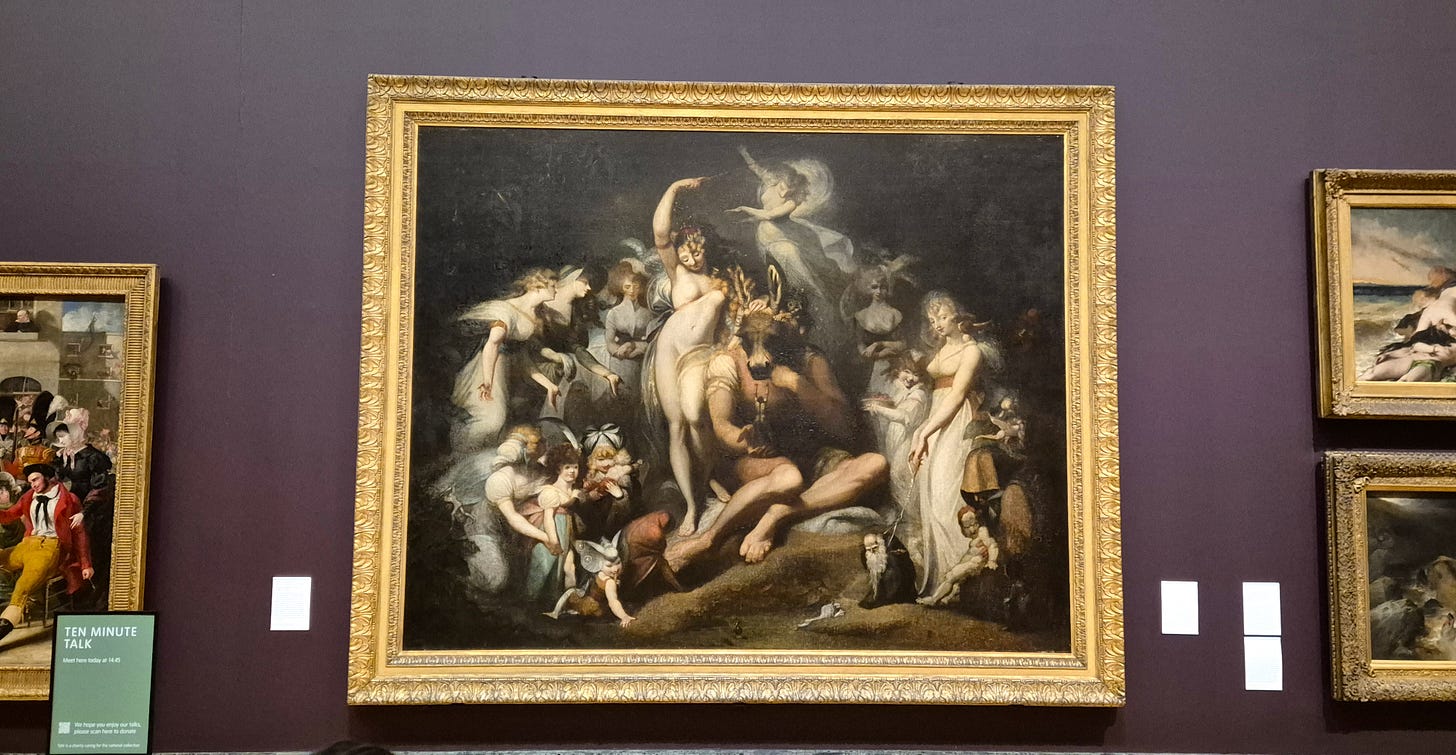
Here, in Fuseli’s Titania and Bottom (1790), the otherworldly figures swirl around the earthbound man with a donkey head.
Frameless
And then there was something completely different – and free. Our hotel comped us to an art fantasia called Frameless, though it can cost $17. We feared it might be like those generally dull and uninformative traveling shows where fuzzy images of artworks are enlarged on the walls of a big room.
This turned out to be very different: here, the artwork came alive with stunning animations, projected on every surface of four rooms. Backed by apt music, the animations made statuary come to life, figures move, and jungles grow. They focused our attention on details of the paintings we might have overlooked.
Each room hosted art on a different theme.
In the fantasy room, Bosch’s creatures flew, twisted, and interacted. Dali, Munch, and others took their turns.
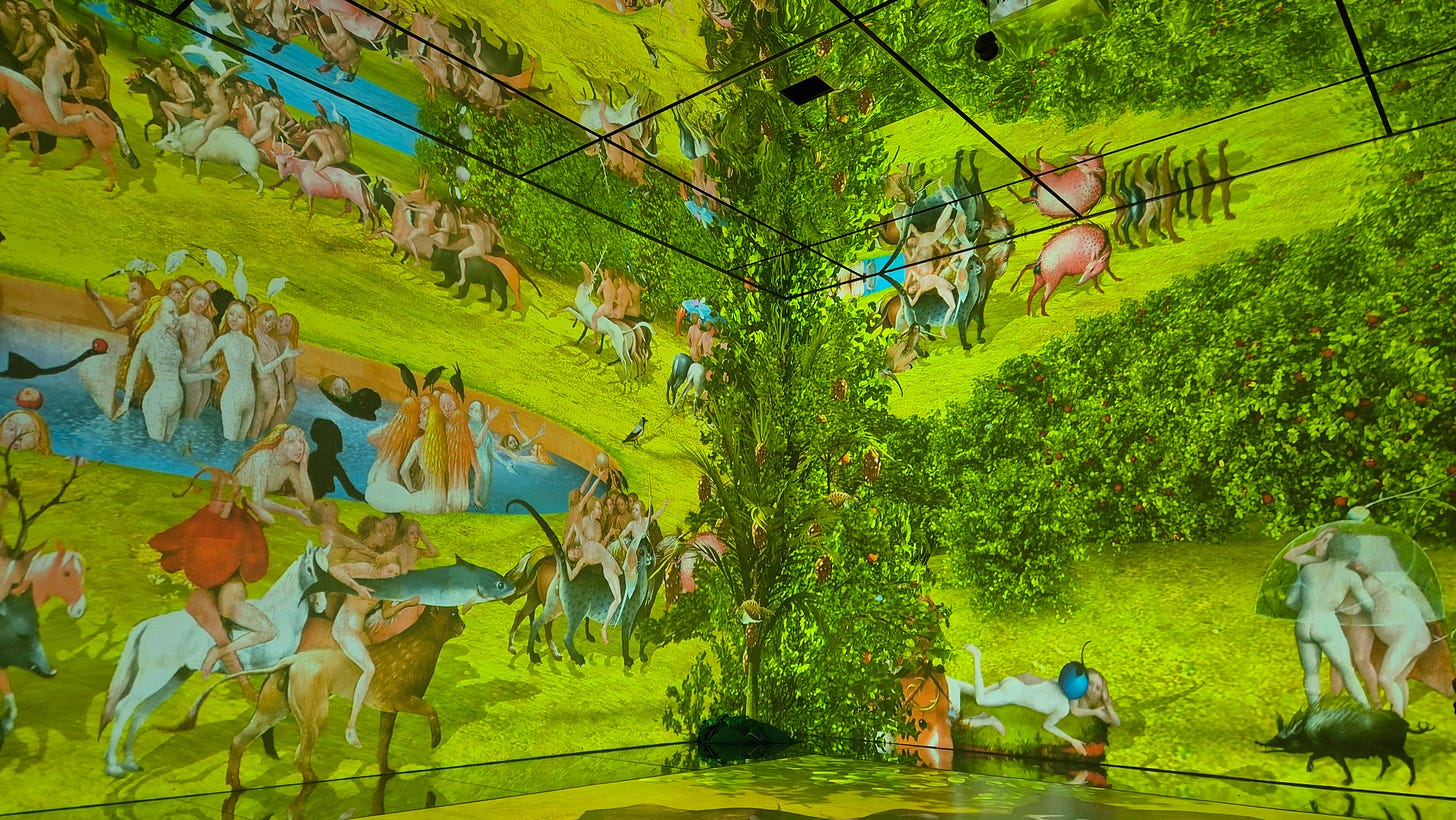
In the nature room, Rembrandt’s Sea of Galilee roiled and swelled in a surprisingly threatening way. Michelangelo’s Sistine Chapel, Van Gogh, Canaletto, Turner, and others more calmly came to life before us. In another room, the shapes of abstract art works danced about.
Lastly, our favorite room let us shuffle dots, swishes, and splotches displayed on the floor up onto the walls. As the colored pieces climbed the walls, they formed large scale reproductions of an Impressionist work (from Monet, van Gogh, Seurat, and others) before dissolving again onto the floor. Then we shuffled the bits of color up the walls to form another piece.
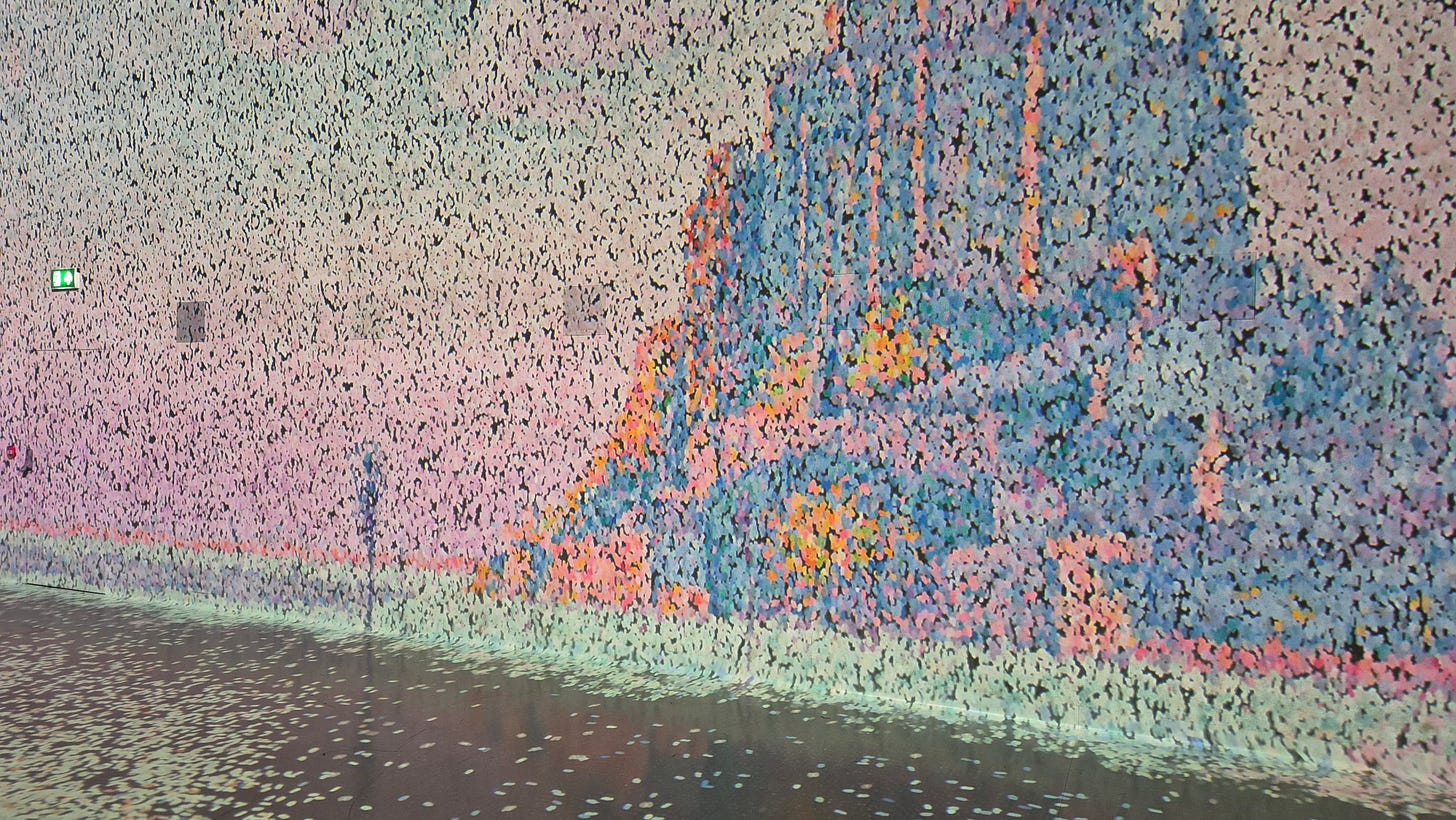
It’s always a thrill to gaze calmly at an exquisite work of art, as we did in the other museums. At Frameless, we also thrilled at the illusion that we were creating these pieces by dancing along the floor.
(To enlarge any picture above, click on it. Also, for more pictures from the United Kingdom, CLICK HERE to view the slideshow at the end of the itinerary page.)