
In brief: Spain’s Galician region centers on Santiago de Compostela. Yet it offers so much more, like the Tower of Hercules, scalloped churches, and the end of the world.
Perhaps the pilgrims who walk to Santiago de Compostela know. But we were surprised to find that the historic end of the pilgrimage to this holy town demands another 90 – 95 kilometers. That’s 3 – 5 days of walking across the province of Galicia in addition to the 10 days, 2 weeks, or months to reach the Cathedral city. (For more about Santiago de Compostela, see our previous post.)
The locale now named Fisterra was considered the end of the known world by Europeans during the Middle Ages. Its name in Spanish is Finisterre from the Latin “finis terrae,” or end of the earth. Now at most under 1% of registered pilgrims continue on by foot to the end. But we observed that many more arrive by bus or car just to experience an added sense of completion at such a lovely spot.
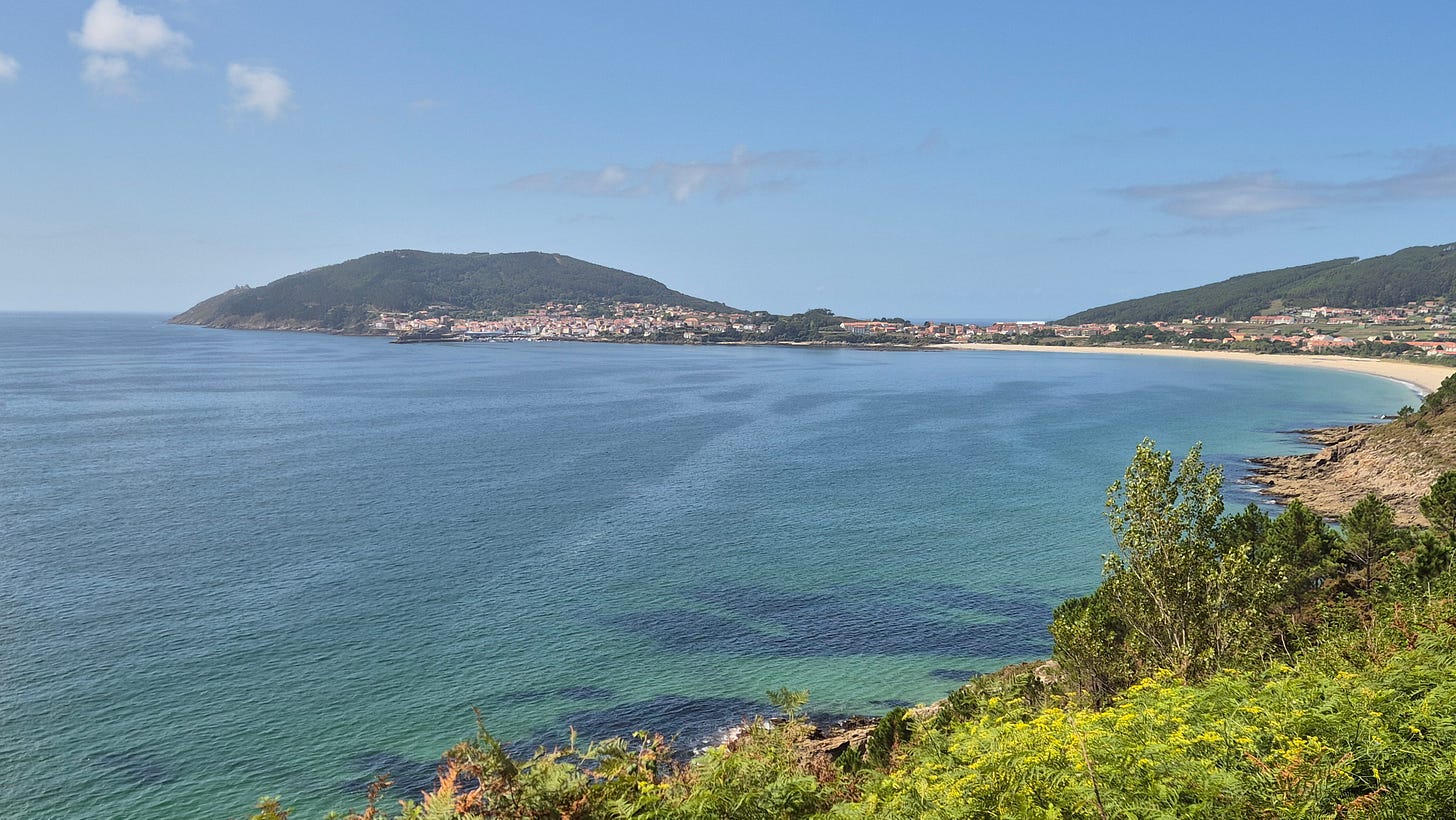
The town of Fisterra is small, with a pleasant, broad harbor walkway lined with bars and restaurants. A few hotels and narrow streets make it an inviting place to rest calmly for a while.
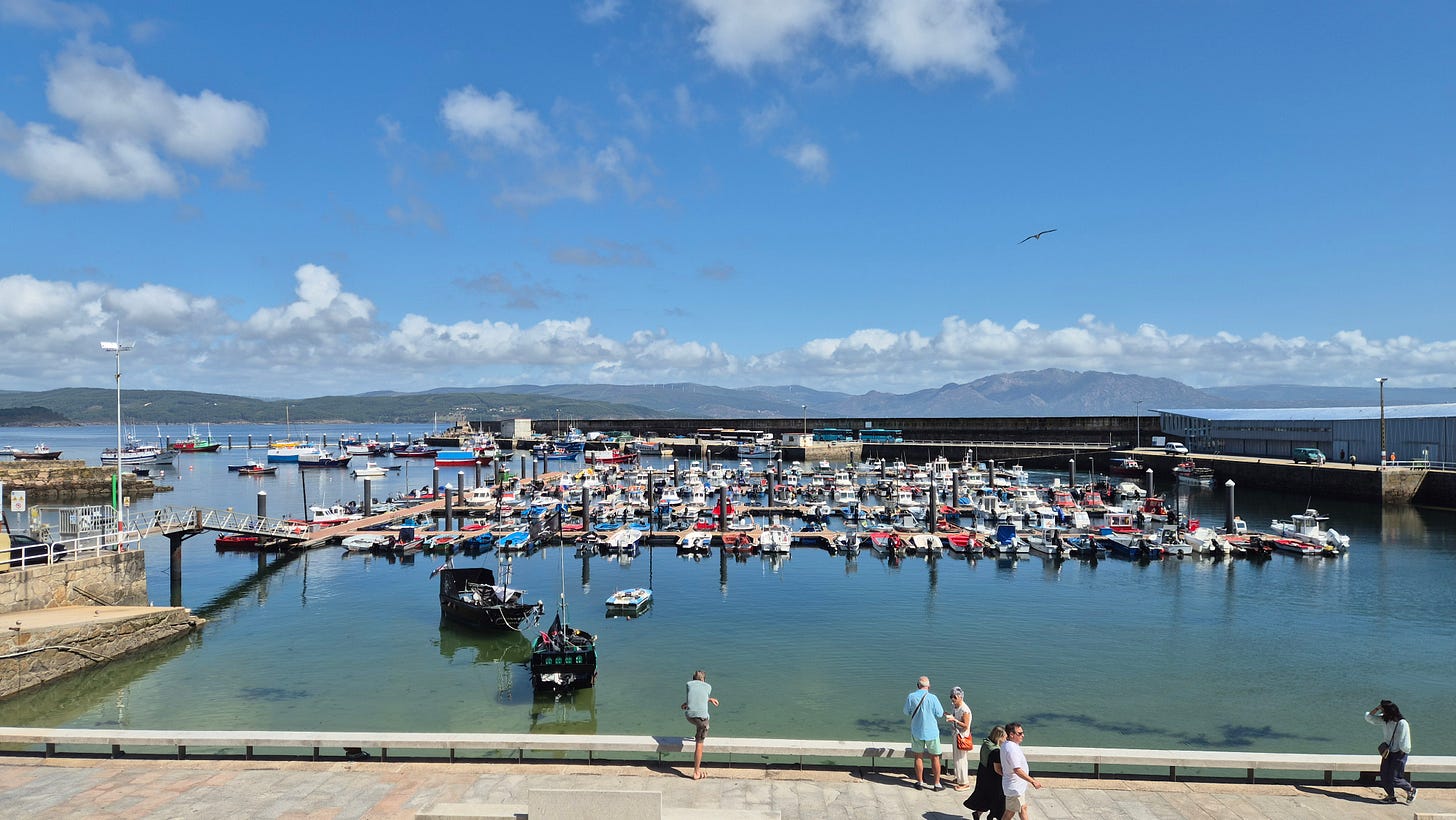
The coastline, however, is the main attraction, whether you dawdle on the broad beach of its bay or head to the rocky end point of the land. There you confront part of the eerily named Costa da Morte, or Coast of Death, due to the many shipwrecks it’s caused over the years.
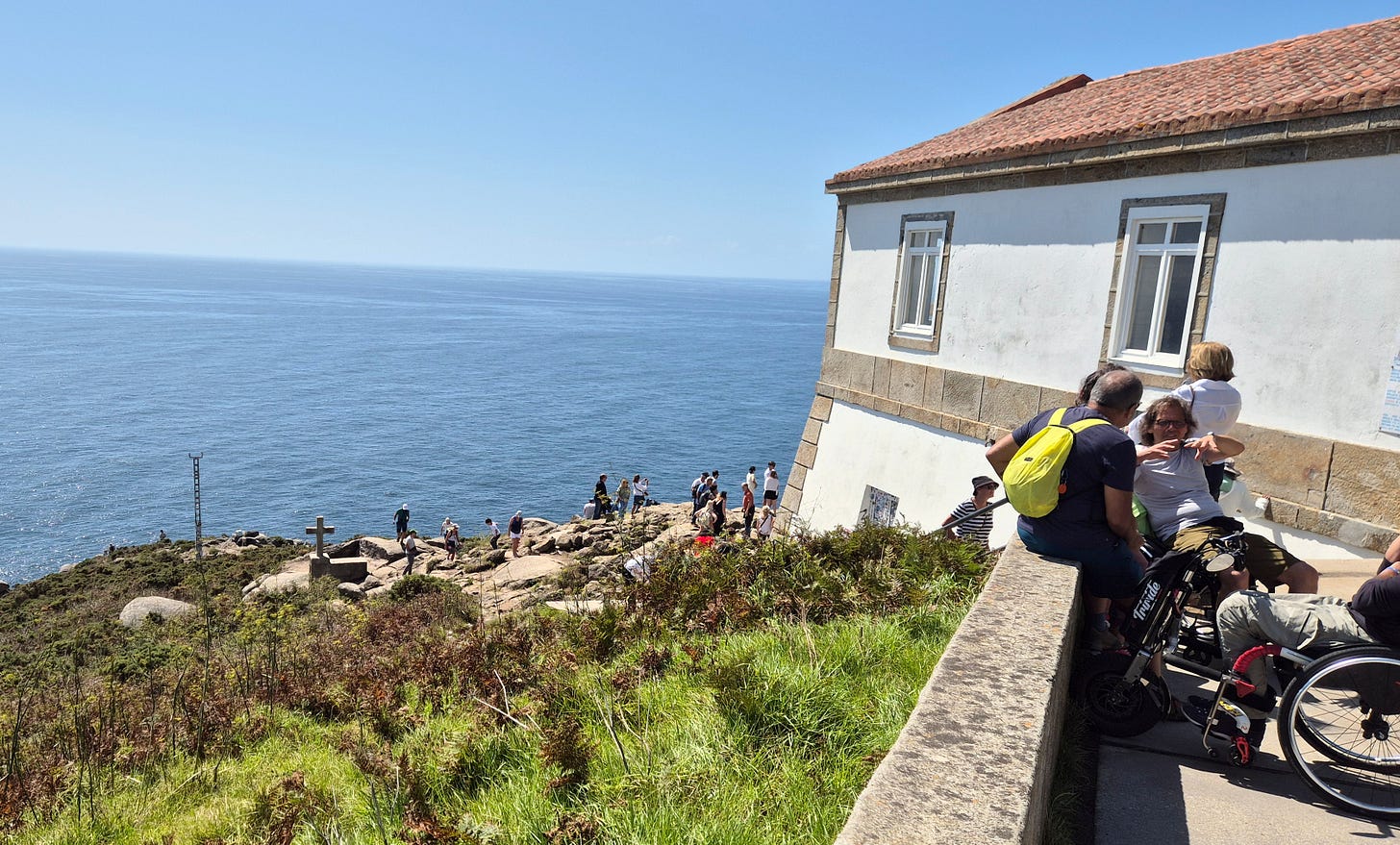
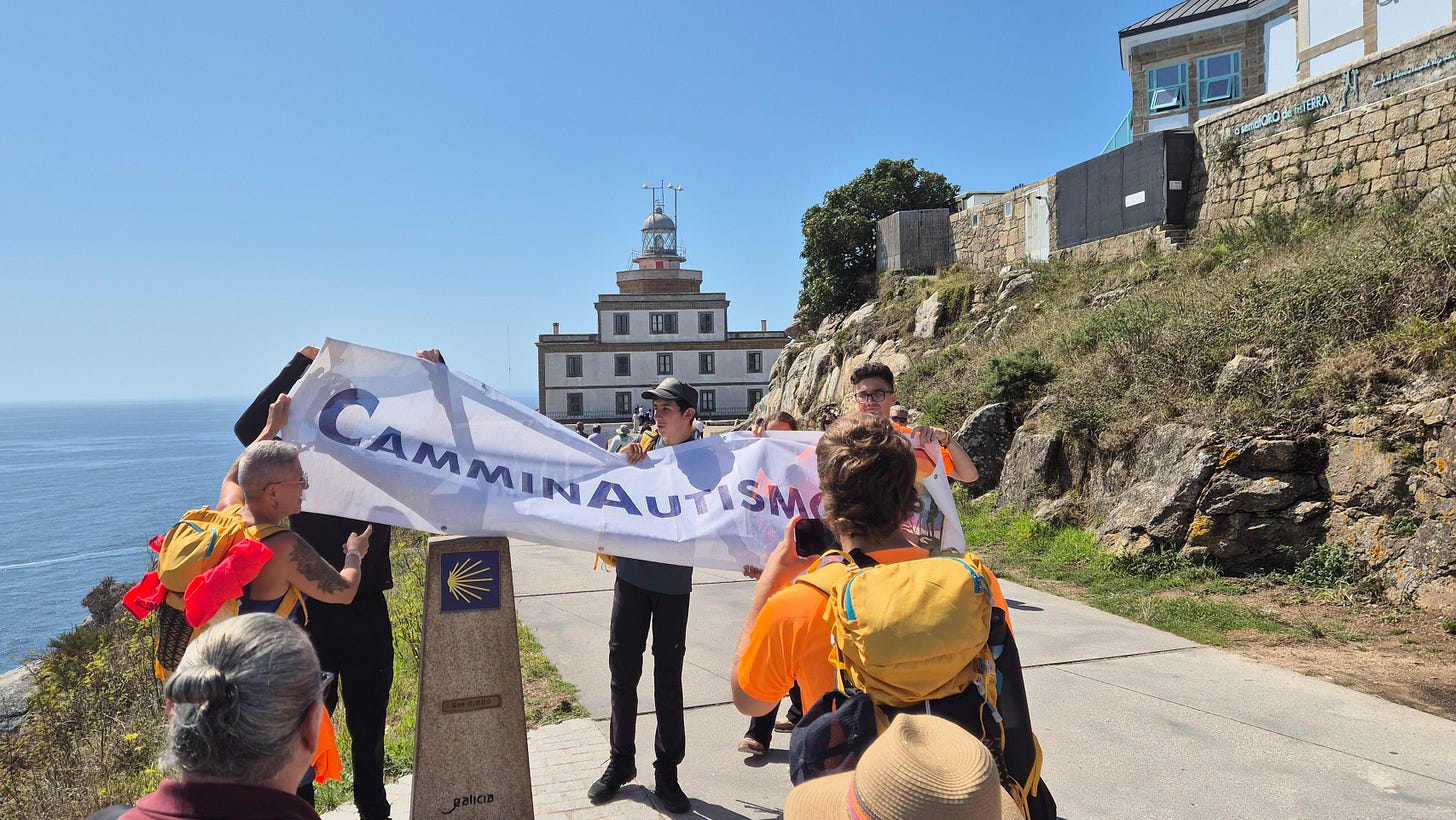
At the lighthouse on the edge of the sea, pilgrims – and the curious – gather to enjoy the vista, take pictures in celebration, share stories of their walks, and savor views over the endless Atlantic with wine or beer in hand.
On the boulders, you can see one of the crosses that mark the end of the medieval world where the Fisterra lighthouse now stands. Dozens of pilgrims relaxed on the rocks there or – like those wheelchair pilgrims on the right – hung out as close as they could get.
Another pilgrimage group honoring autism recorded the finish of their journey at the last marker of the camino. These markers show the way along the various trails, adorned like this with the scallop shell, symbol of the pilgrimage. In the background stands the promontory lighthouse.
Fisterra’s promontory exemplifies how much more rugged the Spanish coastline seems to be compared to the Atlantic Coast of Portugal. Deeply inset bays like fjords and rocky points alternate with inviting beaches in the coves. Galicia’s inland forests also invite hikers who seek challenges beyond the pilgrimage.
We decided to visit two other cities along that coastline: A Coruña, the capital of the province on the northern coast, and Pontevedra, a charming old town near the Portuguese border.
A Coruña is a large city now that has spread beyond its original location on a peninsula jutting into the sea. It’s a very pleasant walking city, with broad avenues and charming side streets. The name derives from earlier words for ‘horn’ due to its peninsula, but in Galician the ‘A’ replaces the normal article ‘La’ – just as in Portuguese.
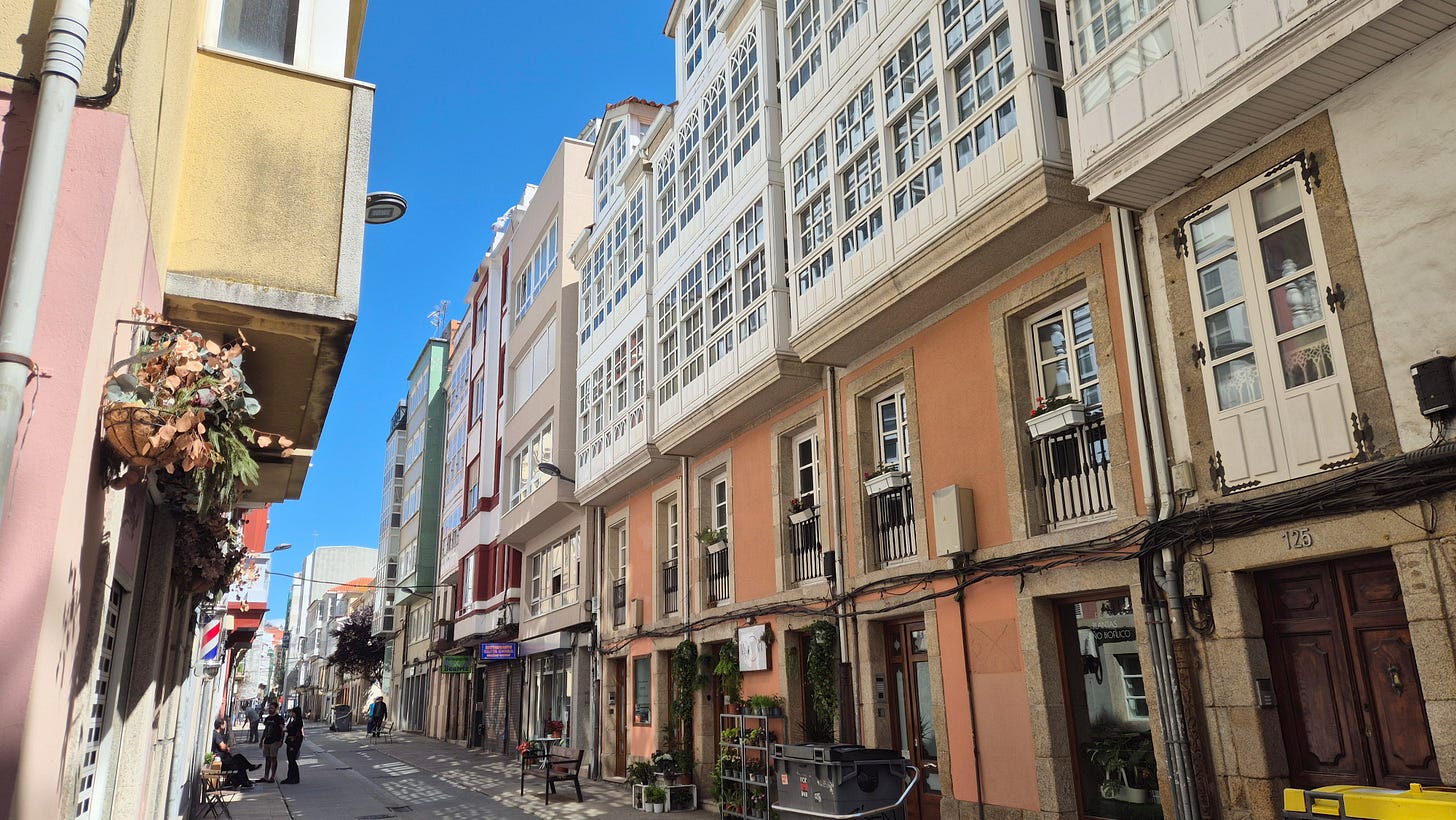
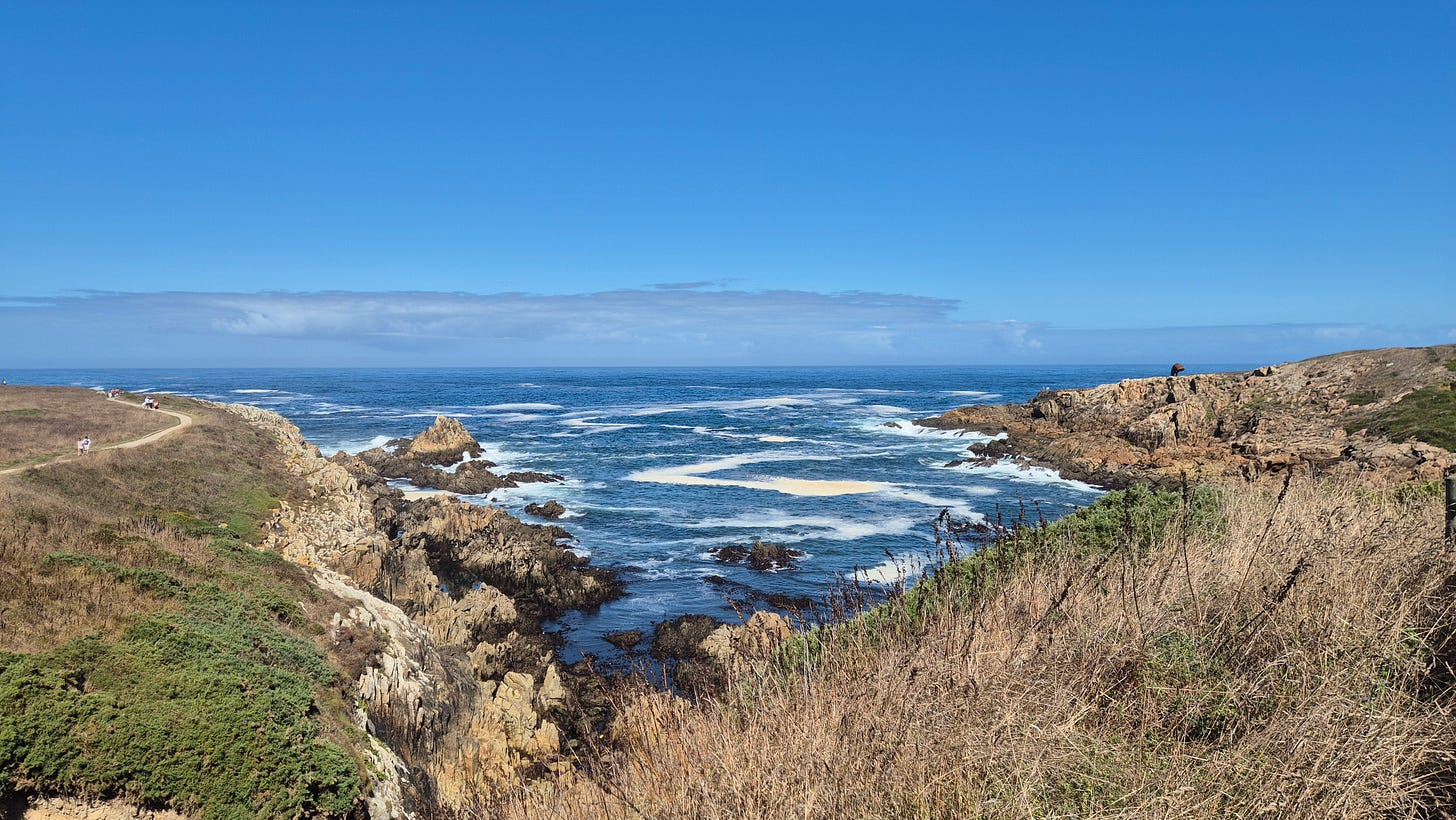
The long coastline accommodates harbors, beaches, and limitless walks along the shoreline.
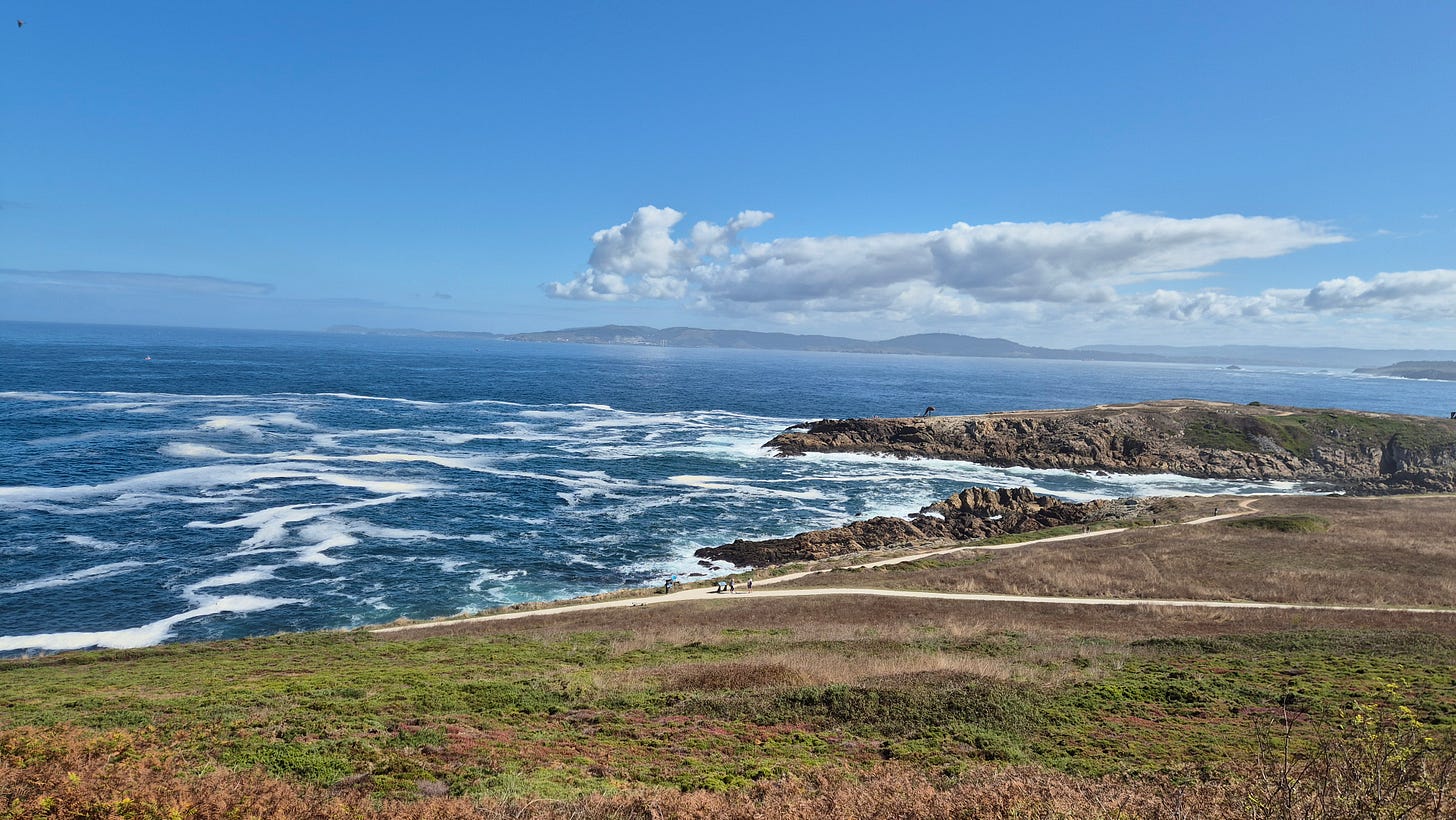
At several rocky points jutting into the sea, we strolled past billowing waves and breaking surf that made us dizzy to watch.
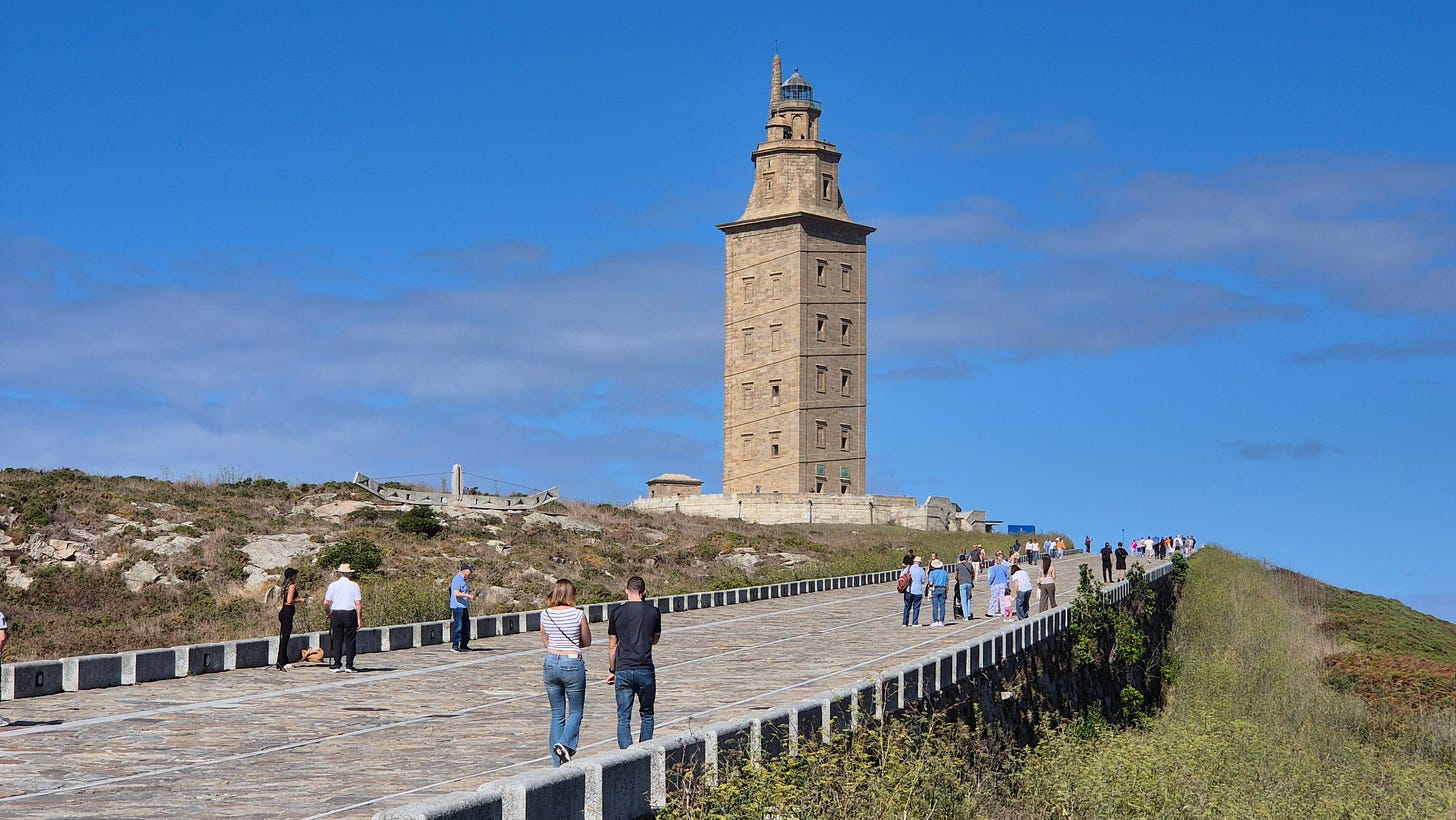
There we also found an ancient lighthouse called the Tower of Hercules. Truth be told, only in myth did Hercules battle a giant Geryon here. After three full days of fighting, it’s said, Hercules beheaded the giant and buried his head and weapons where the lighthouse stands. Apparently, the story derives from old Celtic lore, but is honored on the city seal, which shows a lighthouse atop a skull and crossbones.
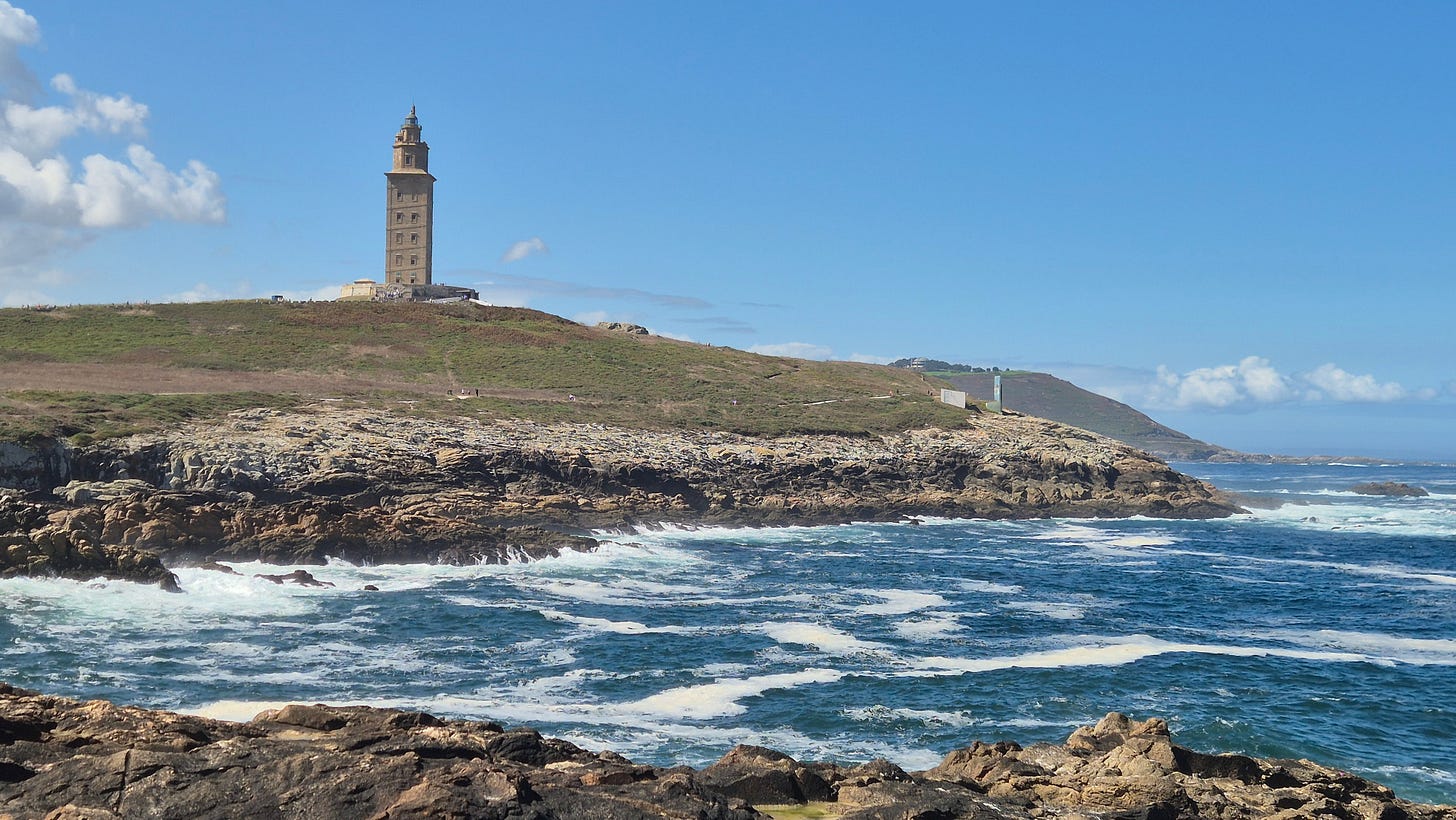
Less mythically, the tower dates from the 1st century under Trajan, a project marked by a visible inscription in the foundations. Built atop a Phoenician version, the tower is the only known Roman-era lighthouse still standing. The present look dates from the late 18th century renovation in a neo-classical style to prevent the tower’s collapse. The restorers preserved a lot of the smaller original while heightening the structure. They also removed an external spiral staircase, vestiges of which are still visible.
Down the urban shoreline of A Coruña, we found engaging bars and restaurants with a view of the water. Curious about the town itself, however, we wandered into the city to see a bit and happened on Nana Pancha, an excellent Mexican restaurant operated by a man from Mexico.
Pontevedra is the “second” city of Galicia, much smaller than A Coruña and set more on a river than the sea, close to the Portuguese border. Pilgrims have long passed through here on the way from Lisbon or Porto to Santiago.
It’s no surprise that the streets of the town share characteristics of both countries. For a long time, they were one country. And then there’s the Galician dialect that seems to blend the Portuguese and Spanish languages.
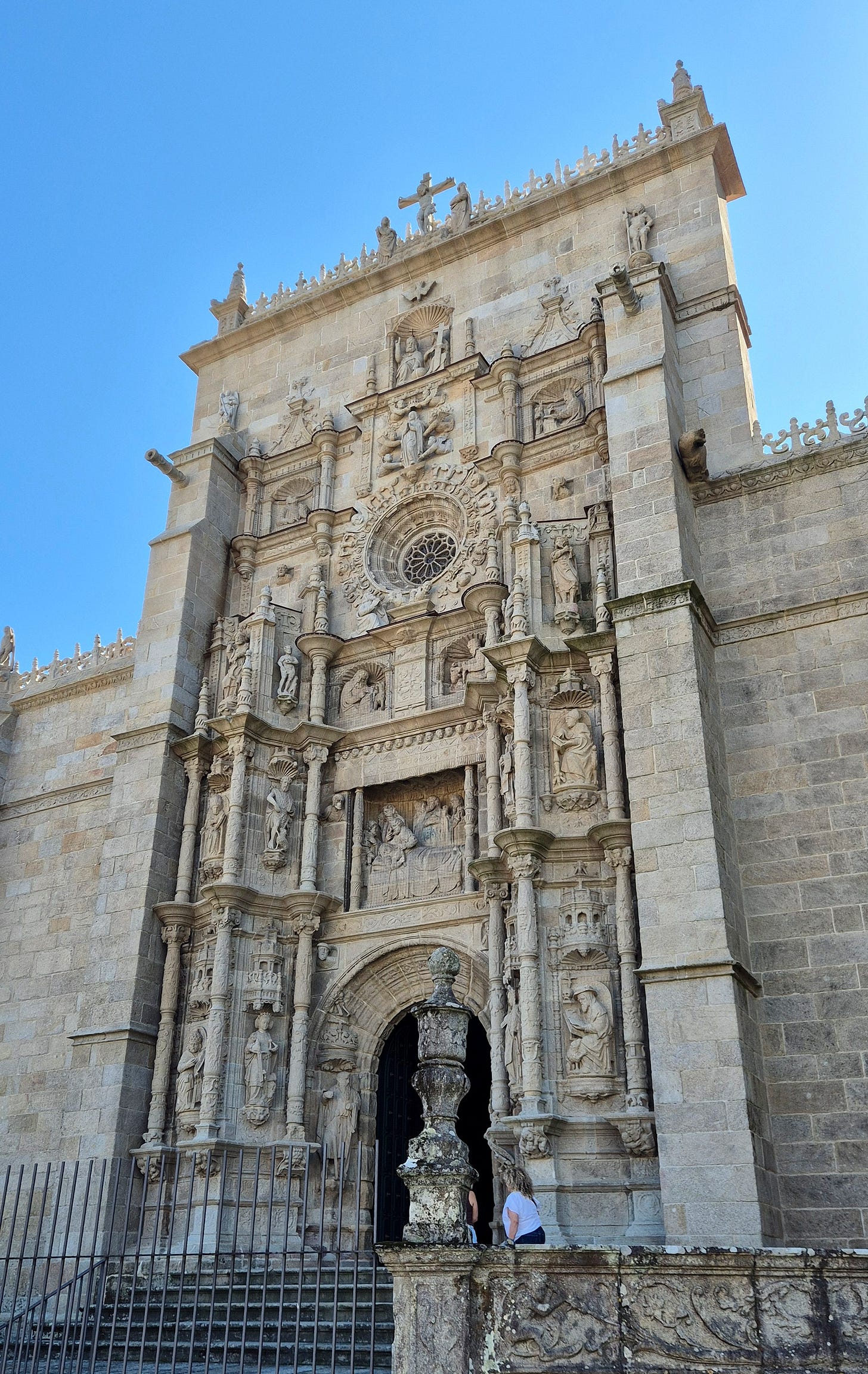
Even the 16th century church of Santa Maria Major is elaborately decorated outside with Manueline features, a style developed in Renaissance Portugal.
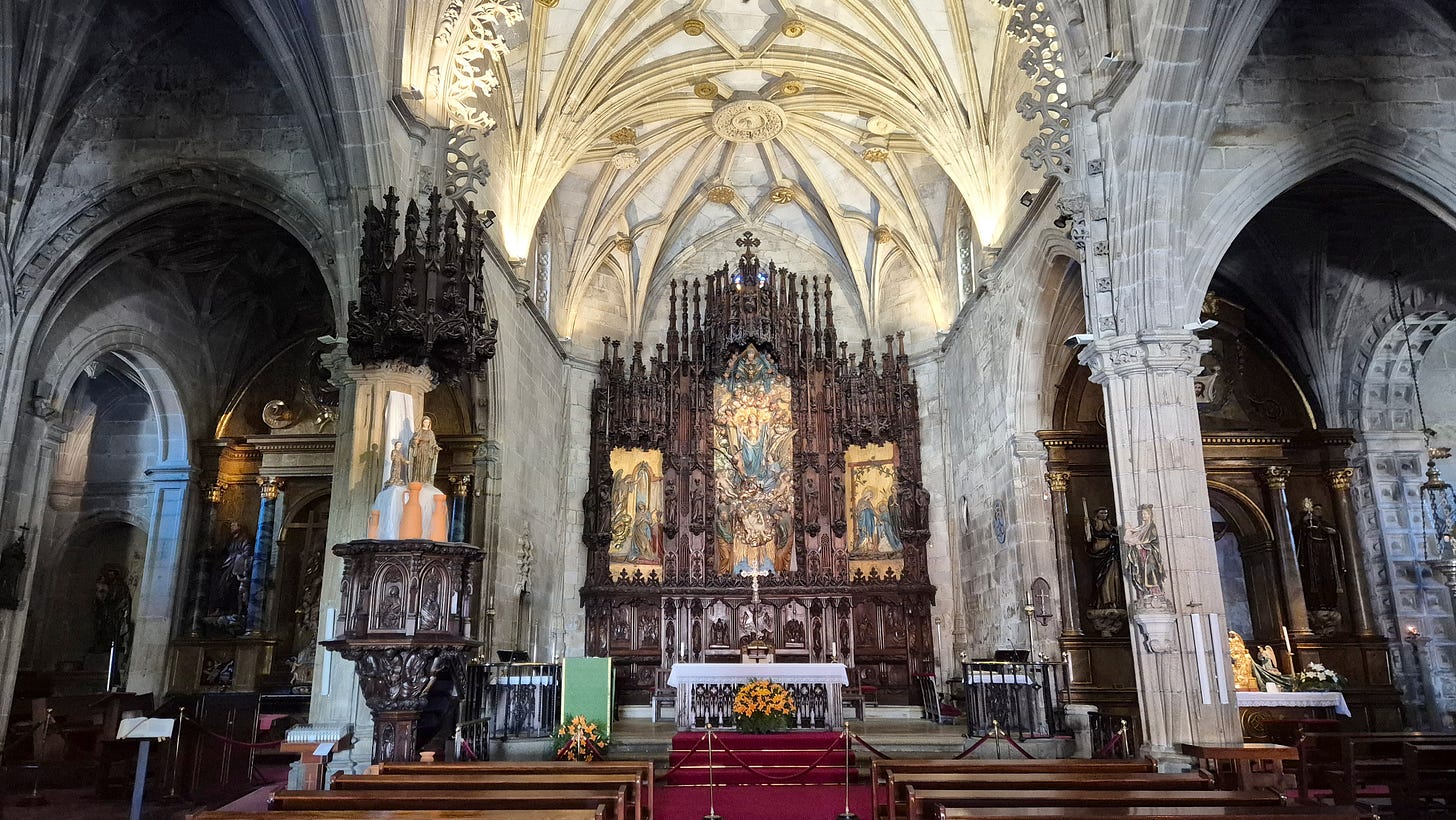
The interior too is elegant, though fairly restrained for a Spanish church.
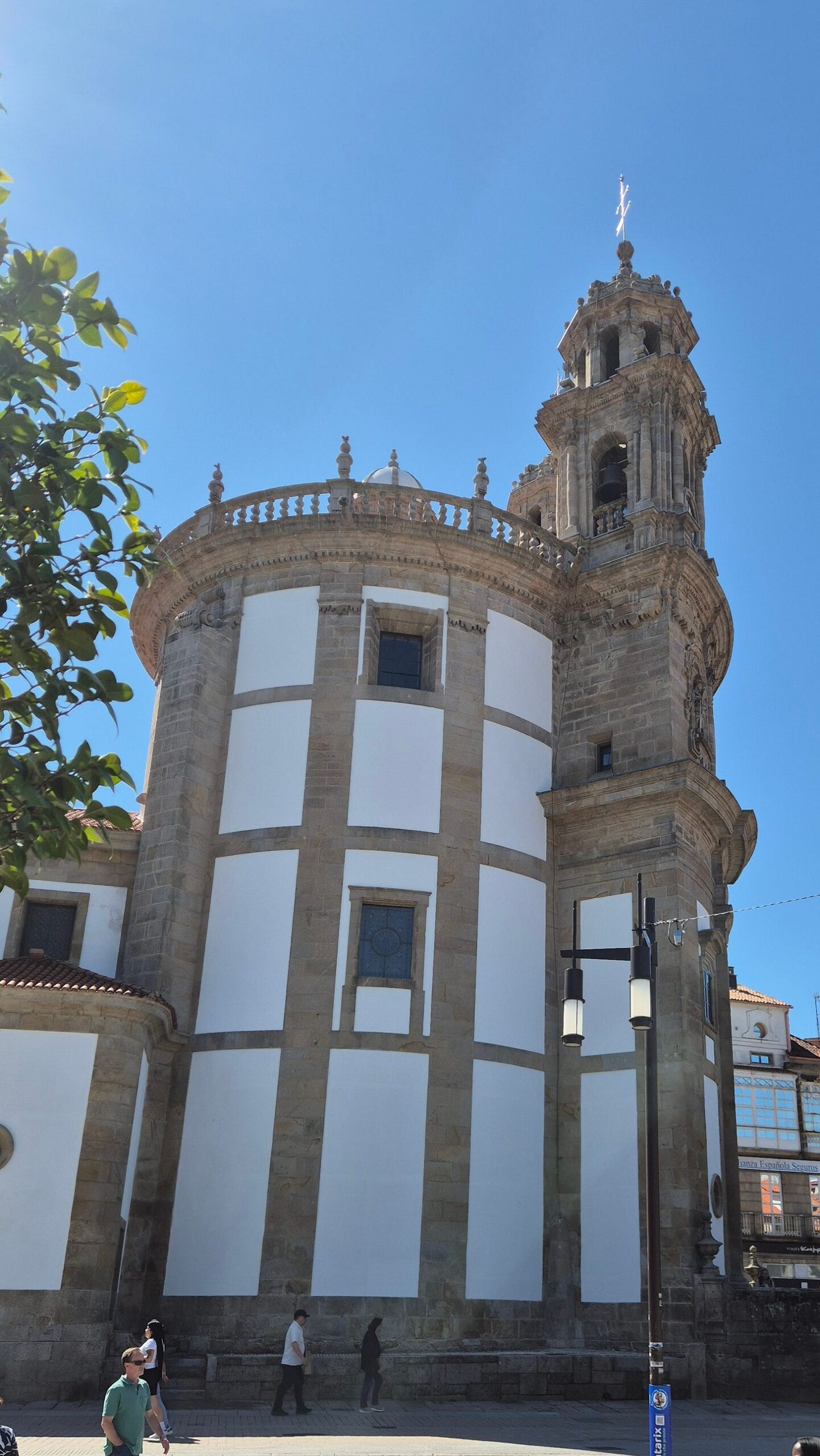
Another church in the center of town, however, would welcome pilgrims passing through. This is the tall Church of the Pilgrim Virgin in the shape of that pilgrim emblem the scallop shell. The name somehow sounds better in the Galician dialect. It turned out to be much less ornate on the inside than outside.
The old center is a charming, very pedestrian-friendly city with many venerable churches, huge plazas in the newer parts, and smaller plazas conjoining the older, narrower lanes. Praza da Leña is one of the finest to encounter, with its elegantly enclosed wood balconies, for which the plaza is named.
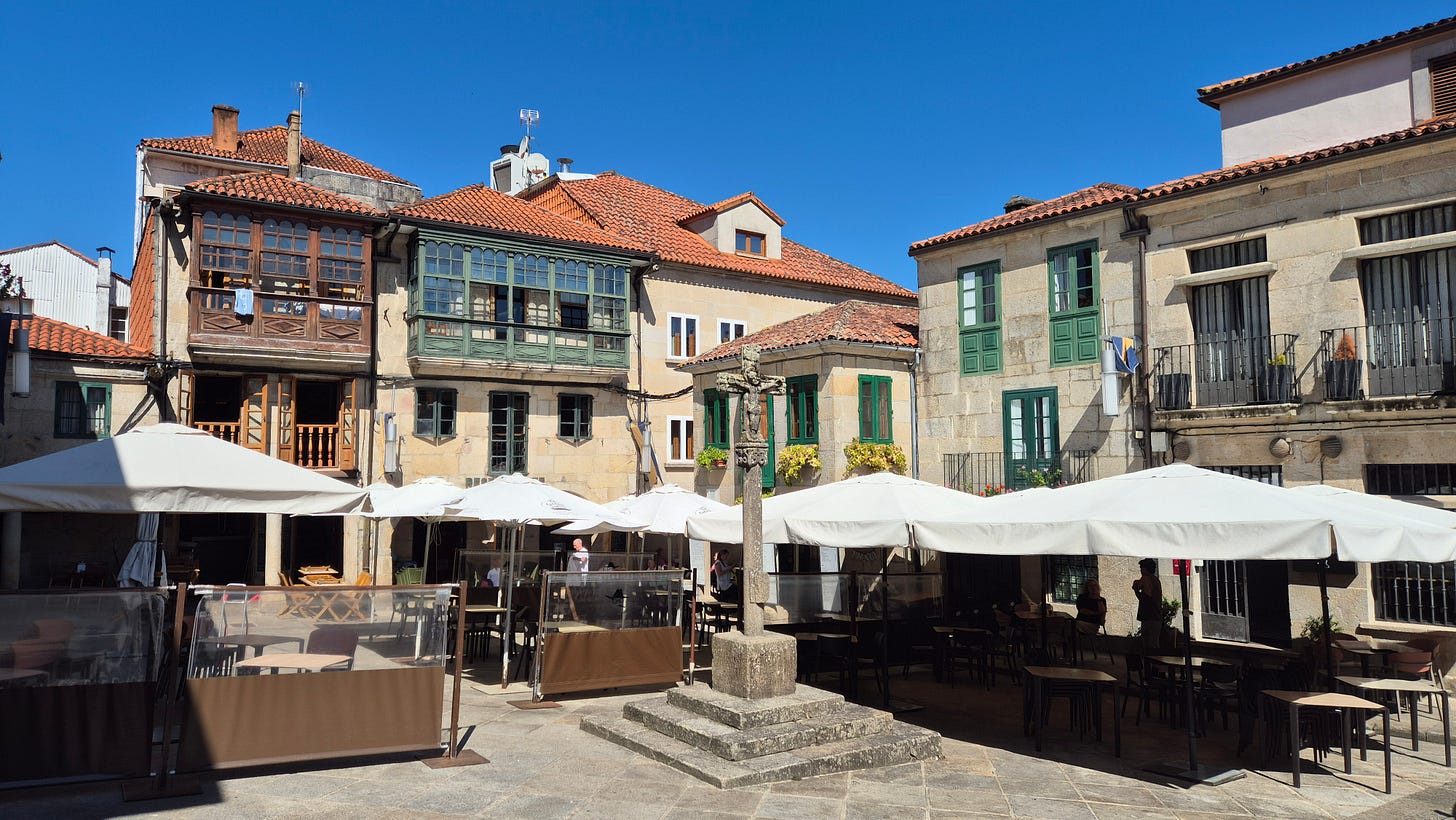
On a pleasant day, during the long lunch period, the restaurants and cafes buzz with people. We found ourselves at a locals’ haven on one of those lanes, where several large groups kept the small, but efficient staff busy while we enjoyed a meal.
At every turn, a walkabout here reveals some intriguing detail, whether stone carving, emblems molded onto iron drainpipes, or statuary.
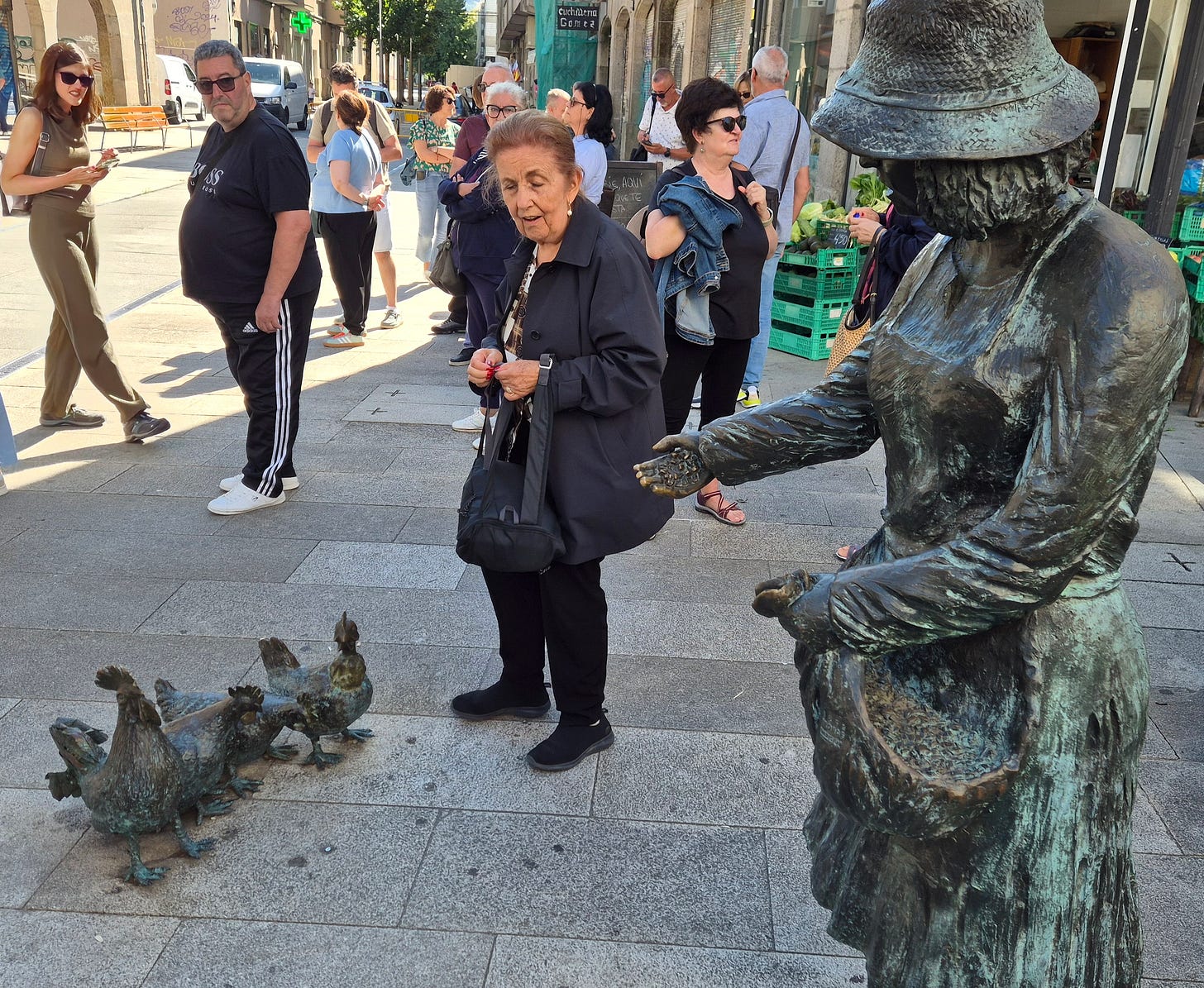
This statue outside of the old city marketplace near the riverfront recalls the days when chickens ran about as well. It’s been modernized over the centuries, but still teems with buyers looking for fresh produce.
Most appealing were intricately cast fountains like these in many of the plazas.
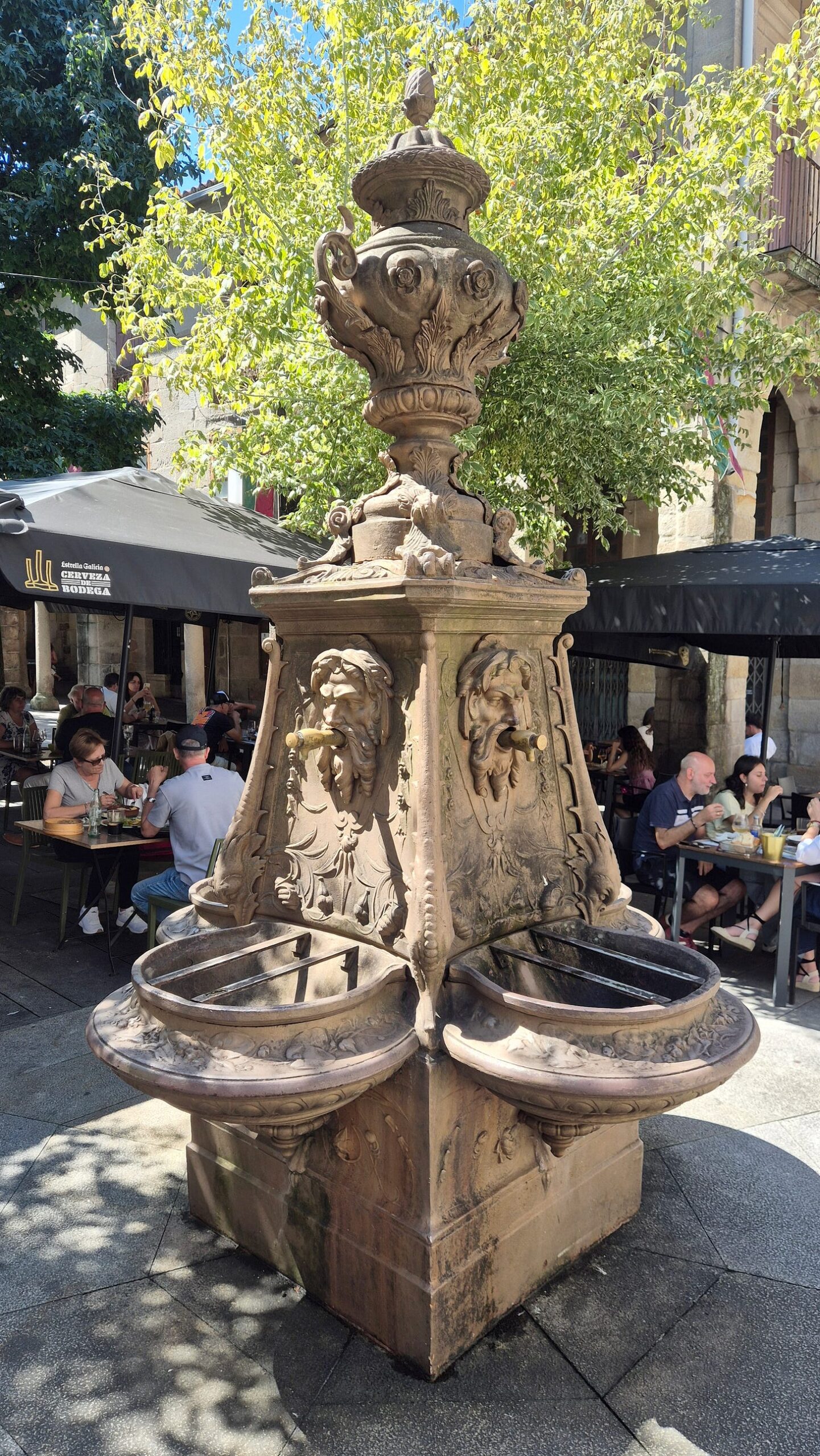
Surely in the olden days, these would spew fresh water to sustain pilgrims enroute to the end of their trek at Santiago…or Fisterra.
(To enlarge any picture above, click on it. Also, for more pictures from Spain, CLICK HERE to view the slideshow at the end of the itinerary page.)