
In brief: Old friends, an old home, and an olde towne warmly welcomed us back to England.
For our first visit to England in over a decade, where better to head than towns whose names are pretty familiar to us from America – Newark and Lincoln?
No, we were not tracing our genealogy. We were visiting good friends who live in the East Midlands region some two hours north of London. They moved from Portugal a few years ago to be close to family and found a place that suited them in Newark-on-Trent. This happens to sit close to a storied part of England, Nottingham and the Sherwood Forest. Clumps of the latter have survived the spread of farmland and people. But we never saw Robin Hood and his band.
We were definitely not in Kansas – or rather Nebraska – anymore, nor across the Hudson from NYC.
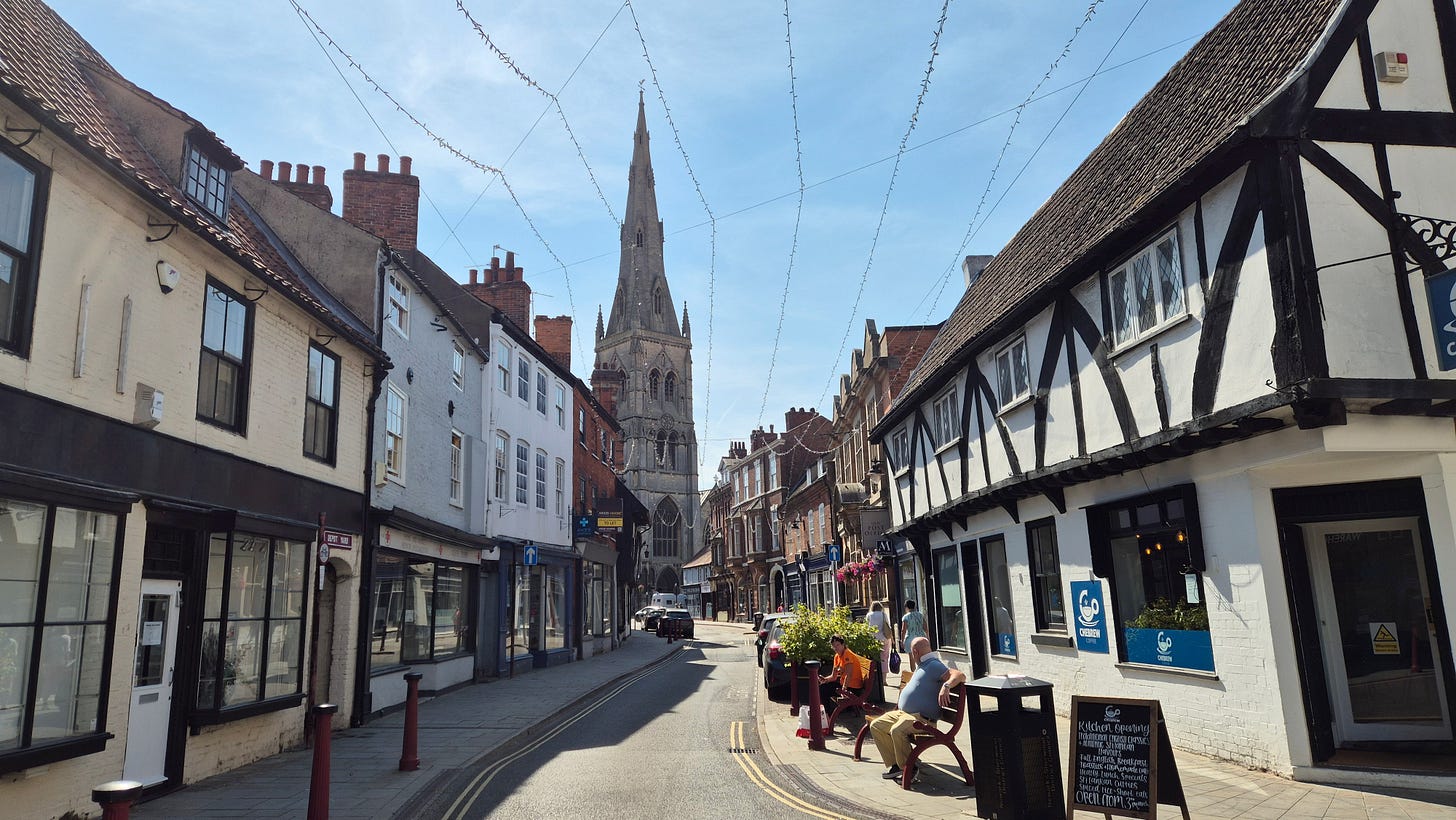
We found this Newark to be a charming town of some 20,000 people in the midst of patchwork farmland. It bore no resemblance to that other Newark in the States. Its Georgian-style brick buildings trimmed in white, half-timbered houses, and neo-Gothic churches topped with tall spires adorned quiet, narrow lanes and streets. All clearly marked this as a bit of olde England.
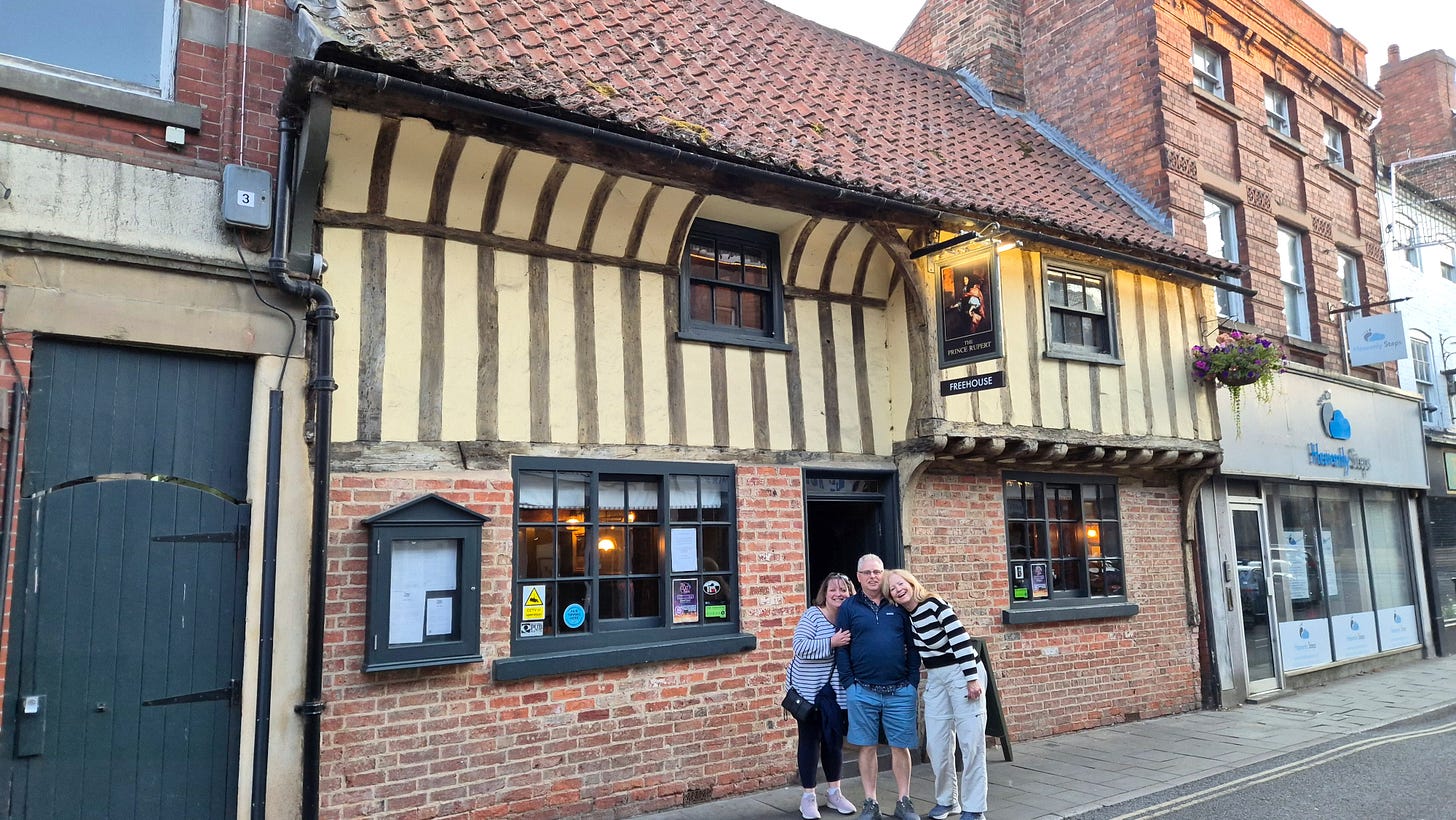
Not that things hadn’t changed. Newark still enjoyed a lively pub culture, but now pub “grub” included vegetarian hamburgers and curries, non-alcoholic beer and wine, along with the traditional mashes and pies and pints. Fancy haircutters, wine bars, and other refinements have arisen to serve a more posh set of residents. New upscale complexes of row houses, imitating an older style, keep springing up around town especially near the waterways. It seemed that prices had soared as well.
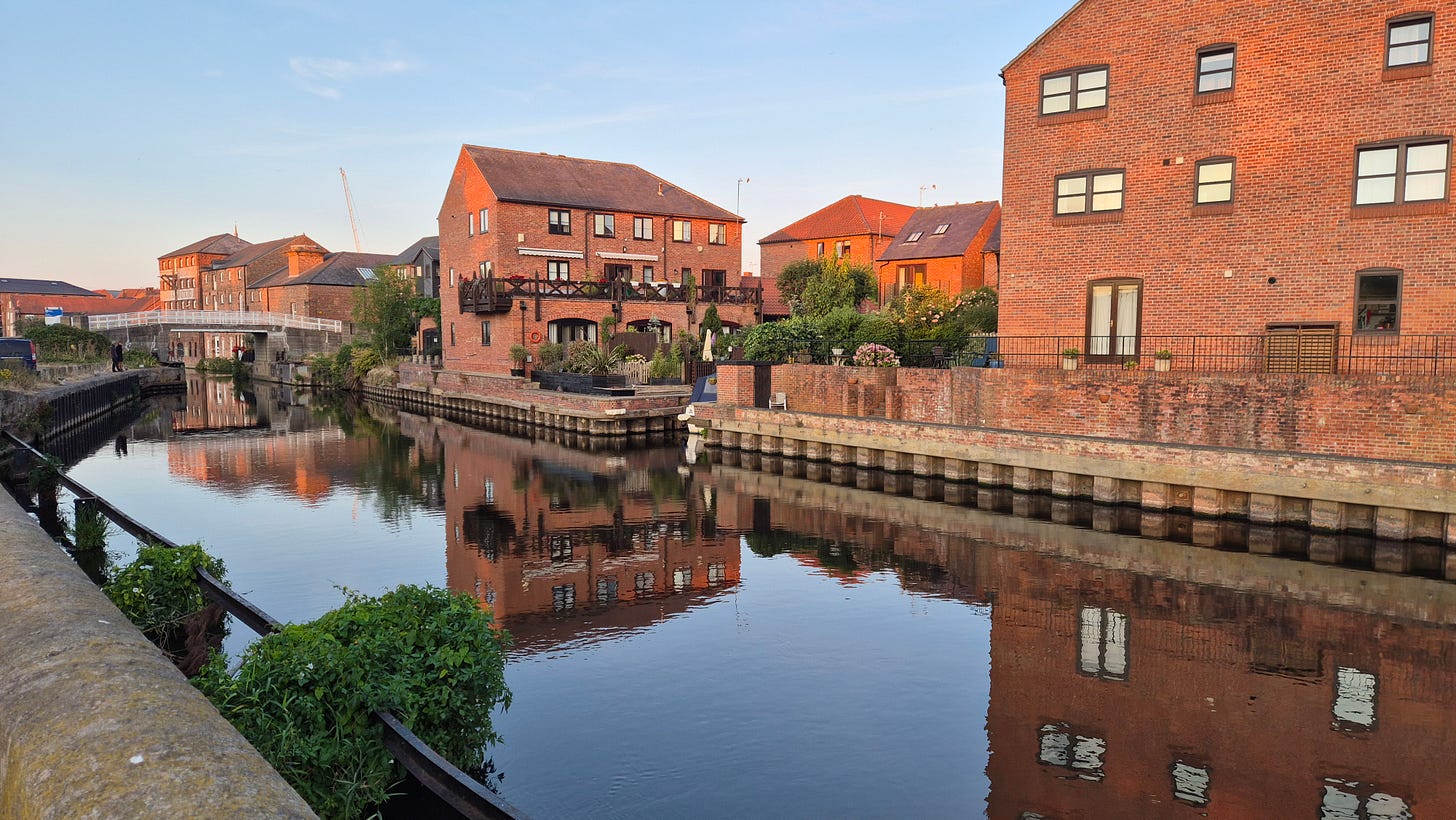
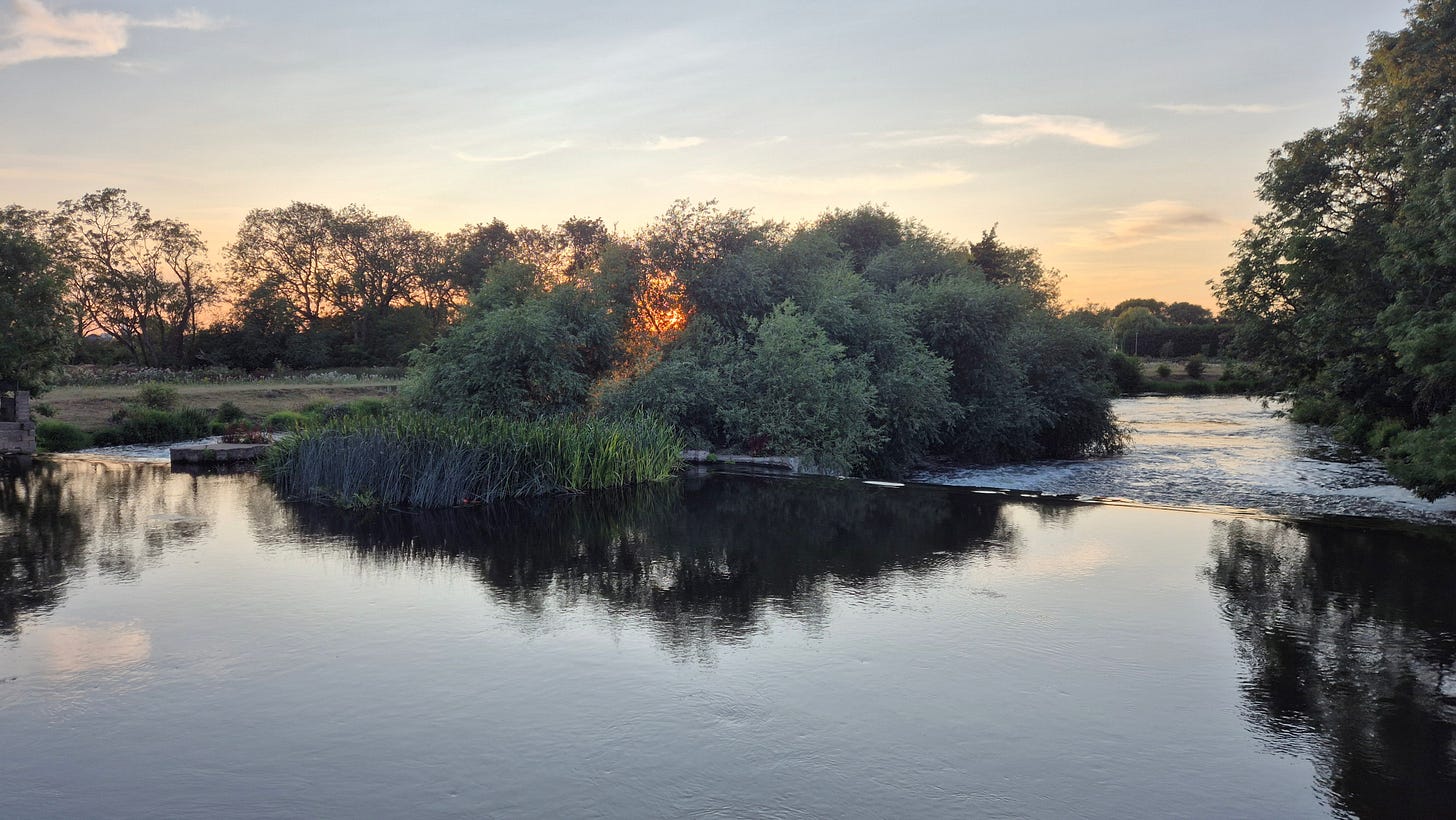
Terrible drought conditions in high heat have scorched the not-so green and pleasant landscape. Our train ride passed through fields of brown. But Newark-on-Trent has long enjoyed a confluence of several rivers like the one in its name and the Devon (pronounced properly on Google Maps as Dee-von). Despite the drought, these and the various parks around town proved quite picturesque (as if Constable had painted them).
Staying with our friends for a few days, we also had the opportunity to glimpse their life here. We could see why they liked it. We even enjoyed a tipple or two with their friends, many of whom worked nearby in engineering and aeronautics, a legacy industry here because the RAF had located its operations close by during World War II. They all made us feel at home.
Knowing our yen for exploring, however, our friends thoughtfully took us on a couple of excursions to East Midlands sites that constituted archetypal England.
One was Belvoir Castle, a small but still very grand one about an hour drive from Newark. In this case, too, Google knew its peculiar pronunciation, “beaver”. Belvoir is one of countless aristocratic estates that dot the English countryside.
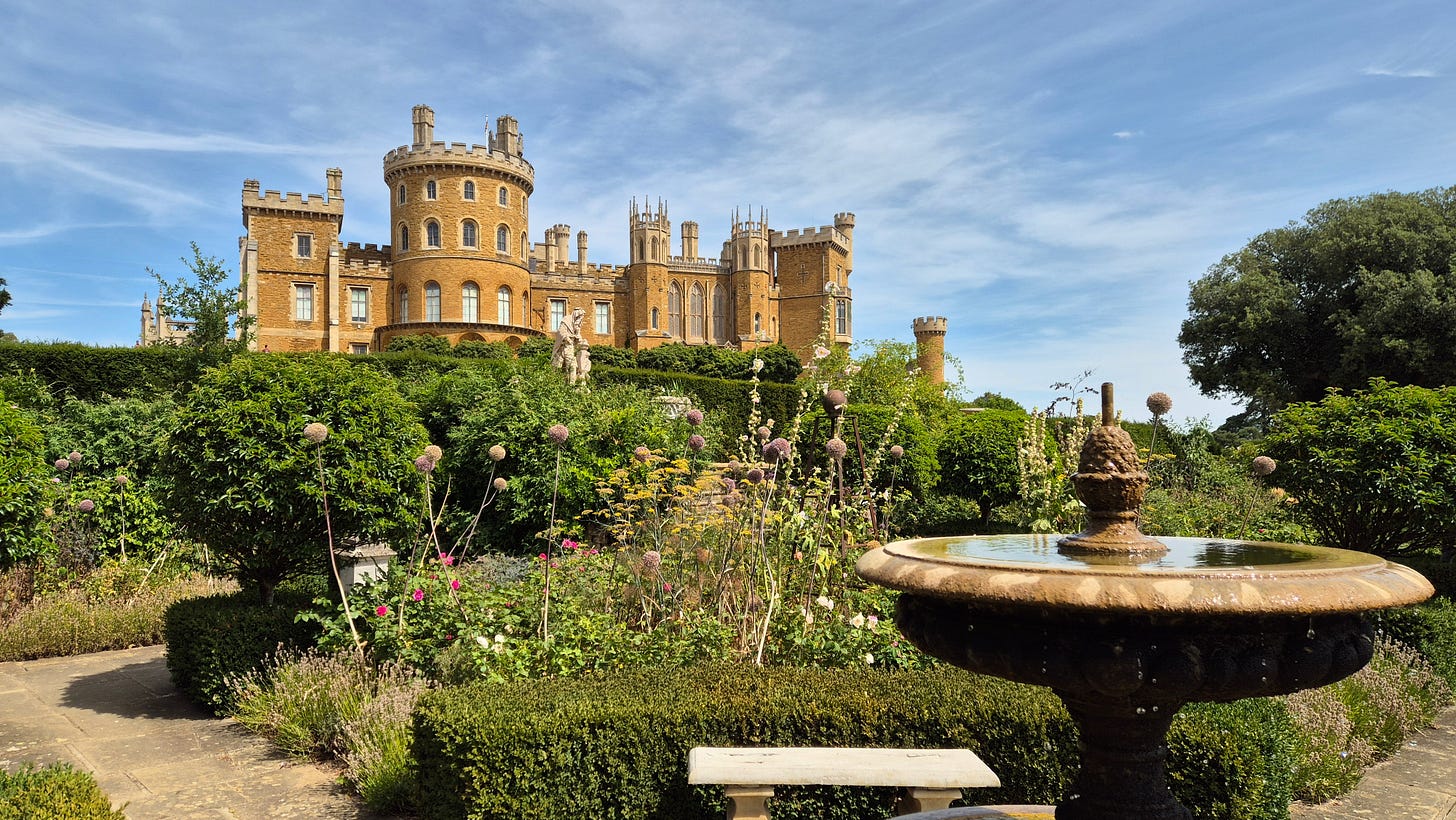
The castle is still home to David Manners, the 11th Duke of Rutland, whose genealogy dates back to the origins of the castle some 900 years ago. In 1703, John Manners, the 1st Duke of Rutland, married into the family and the estate. But the current Gothic revival castle dates mainly from the early 19th century, after wars and fires had destroyed the earlier ones.
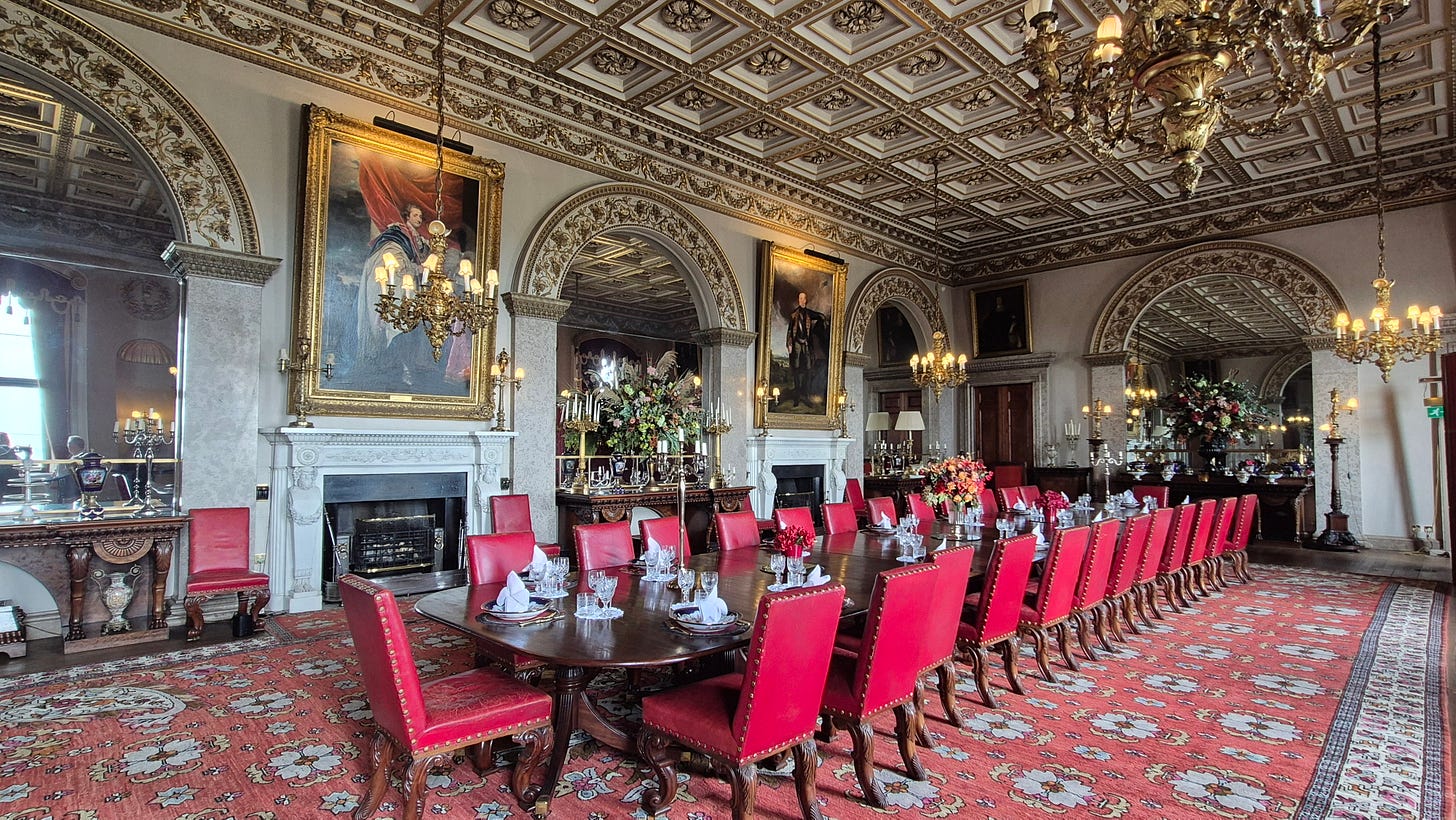
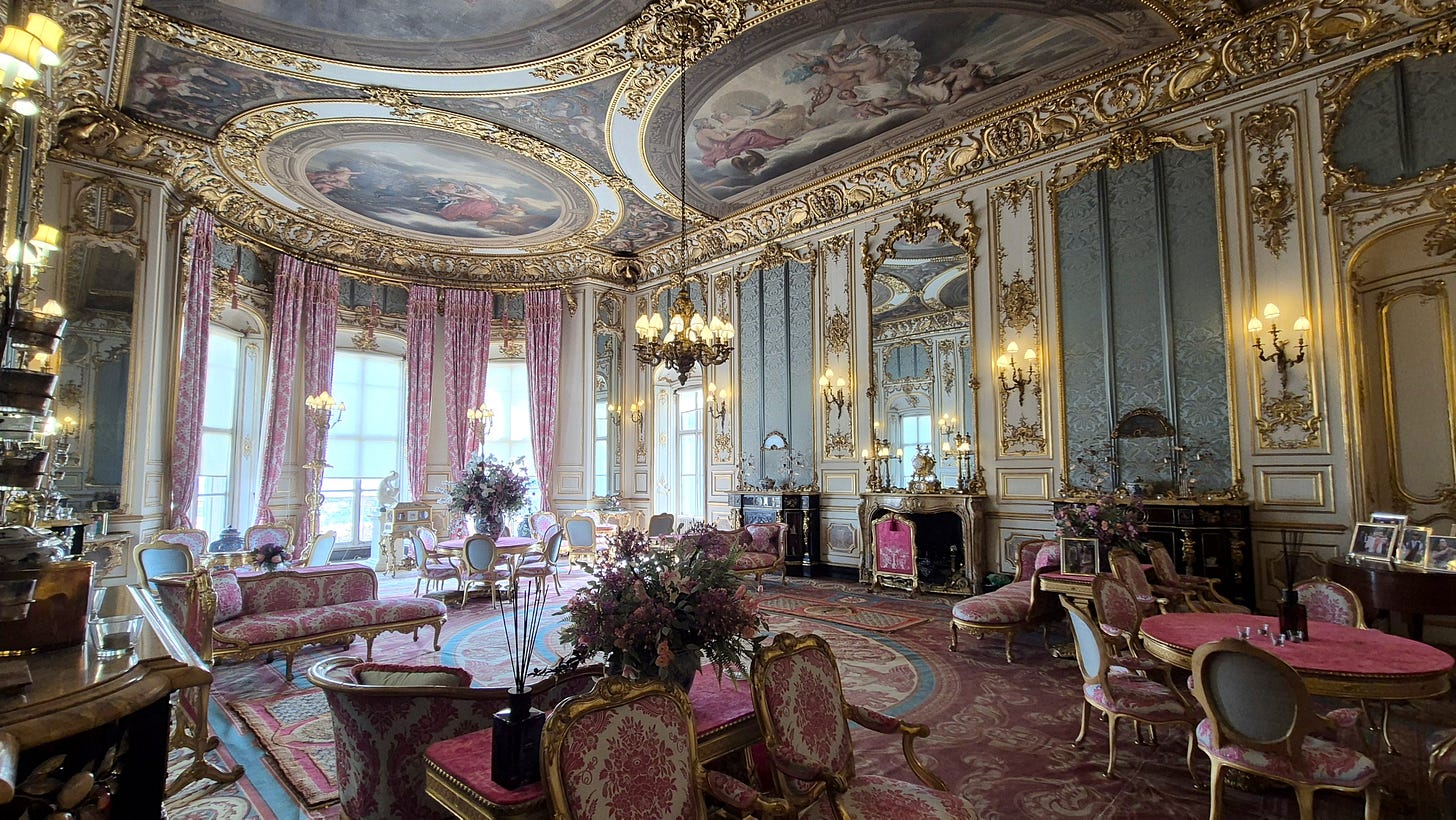
Nonetheless, walking through the spaces open to the public, we felt like we were stepping through more than 200 years. So much of the fine furnishings and art had perished, though some older items were displayed in the rooms like ancient munitions and knight’s armor. Queen Victoria and Queen Elizabeth, among other notable leaders, stayed in the guest bedrooms here and withdrew to the Saloon after dinner. Elegance and style remained.
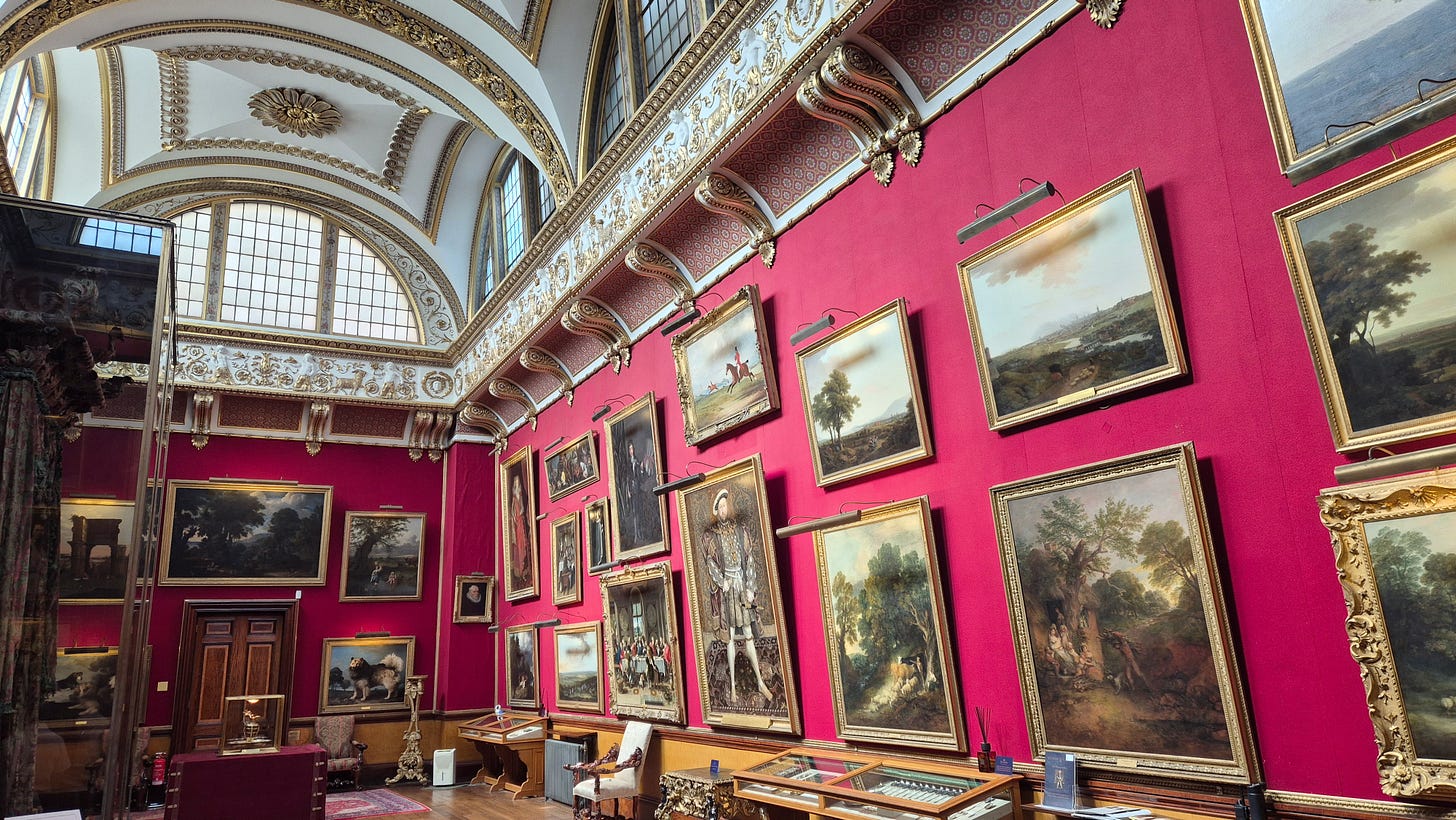
Within the long gallery, many images of the royal Rutlands hung. These included late 18th century portraits of Rutland children and dogs by Joshua Reynolds as well as Turk and Crab, the dogs themselves, by George Stubbs. Several fine Gainsborough landscapes with peasants faced the entryway into the gallery. In central pride of place, a masterful 17th century copy of the famous Holbein portrait of Henry VIII exuded power and royal mastery.
The other excursion took us further back in history, to that town of Lincoln. The city began as a fortified Roman town called Lindum Colonia (later shortened to Lin-Coln), then faltered during the 15th to 17th centuries partly as a result of the conflict during the English Civil War. Abraham Lincoln’s family came from here. Its population now exceeds 100,000 people.
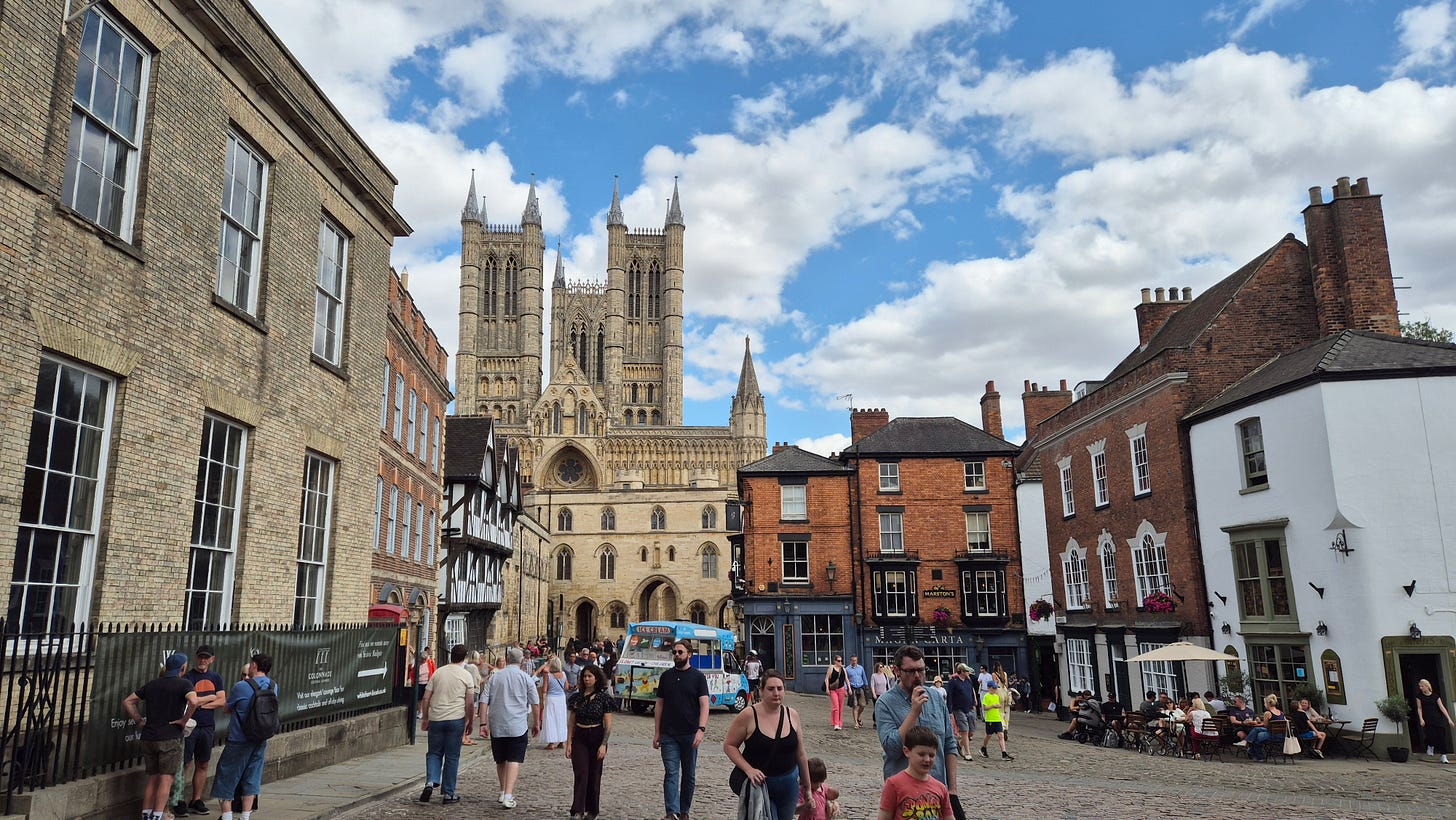
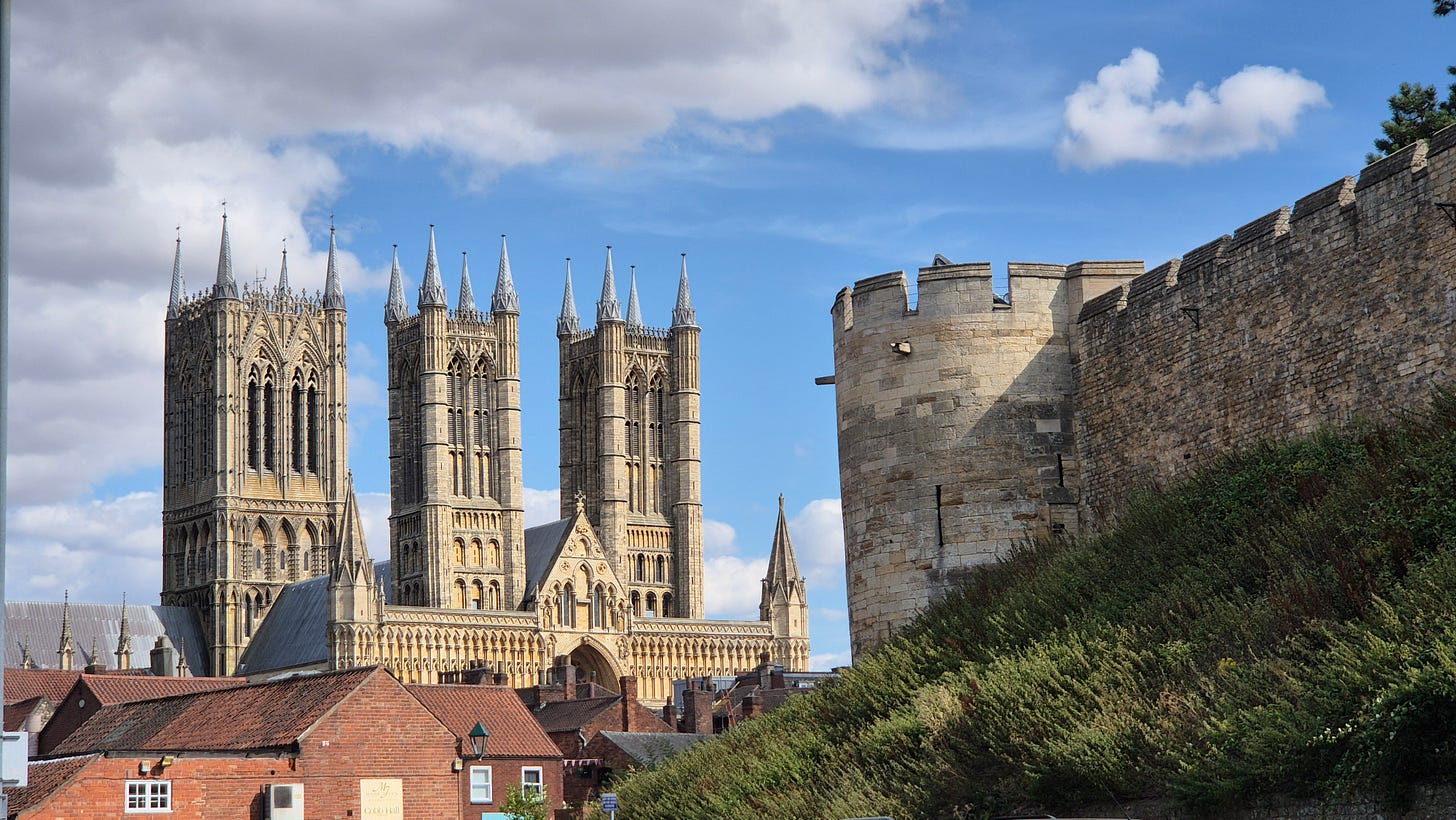
At Lincoln, we centered our visit on the famous Lincoln Cathedral, an 11th to 12th century masterpiece of English Gothic architecture, a style revived often across England, most notably in the Parliament House of London. For 200 years, it ruled as the tallest building in the world.
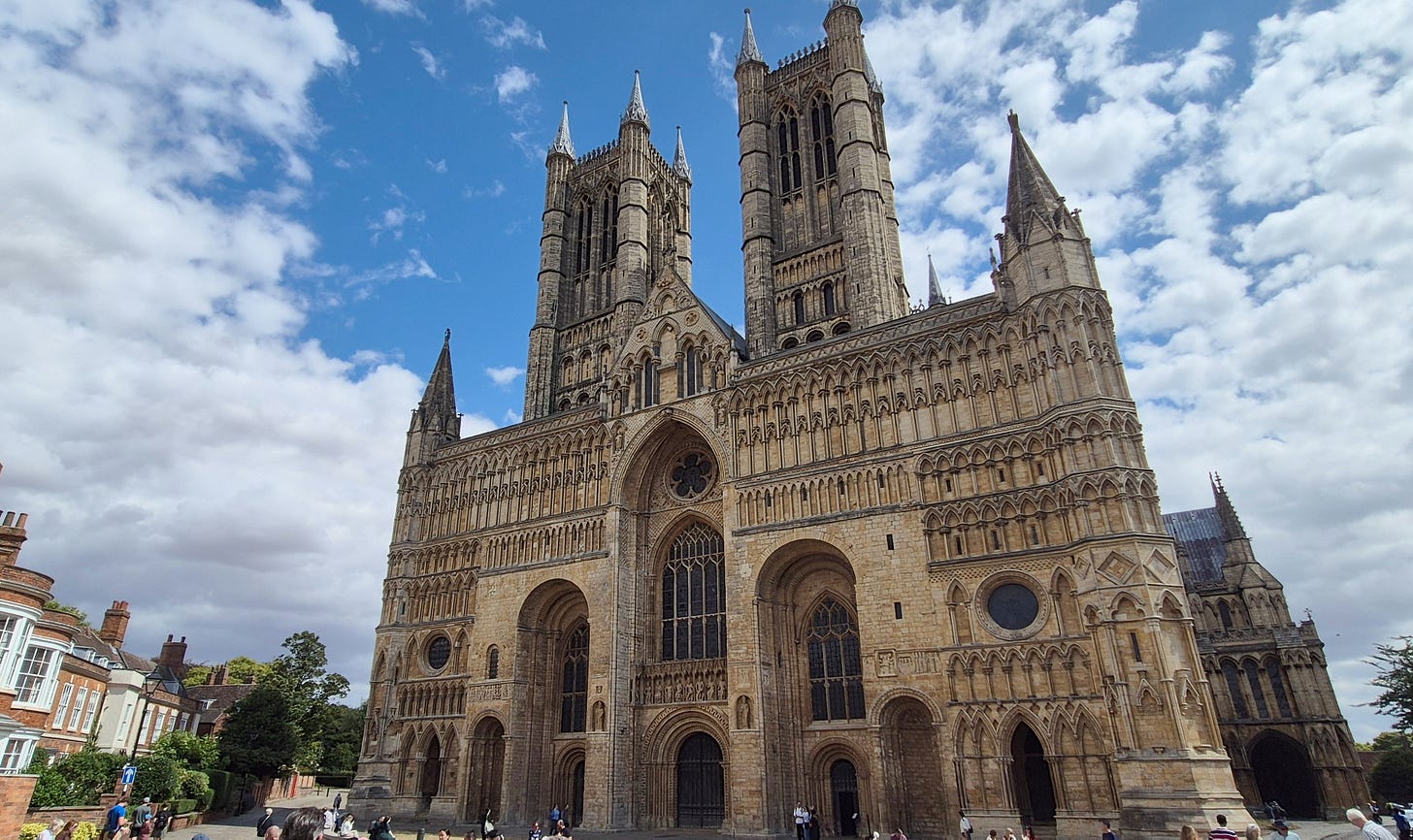
A visit to the Cathedral, admiring its exterior or poking around its chambers and chapels, can take hours. There are many oh-wow moments…
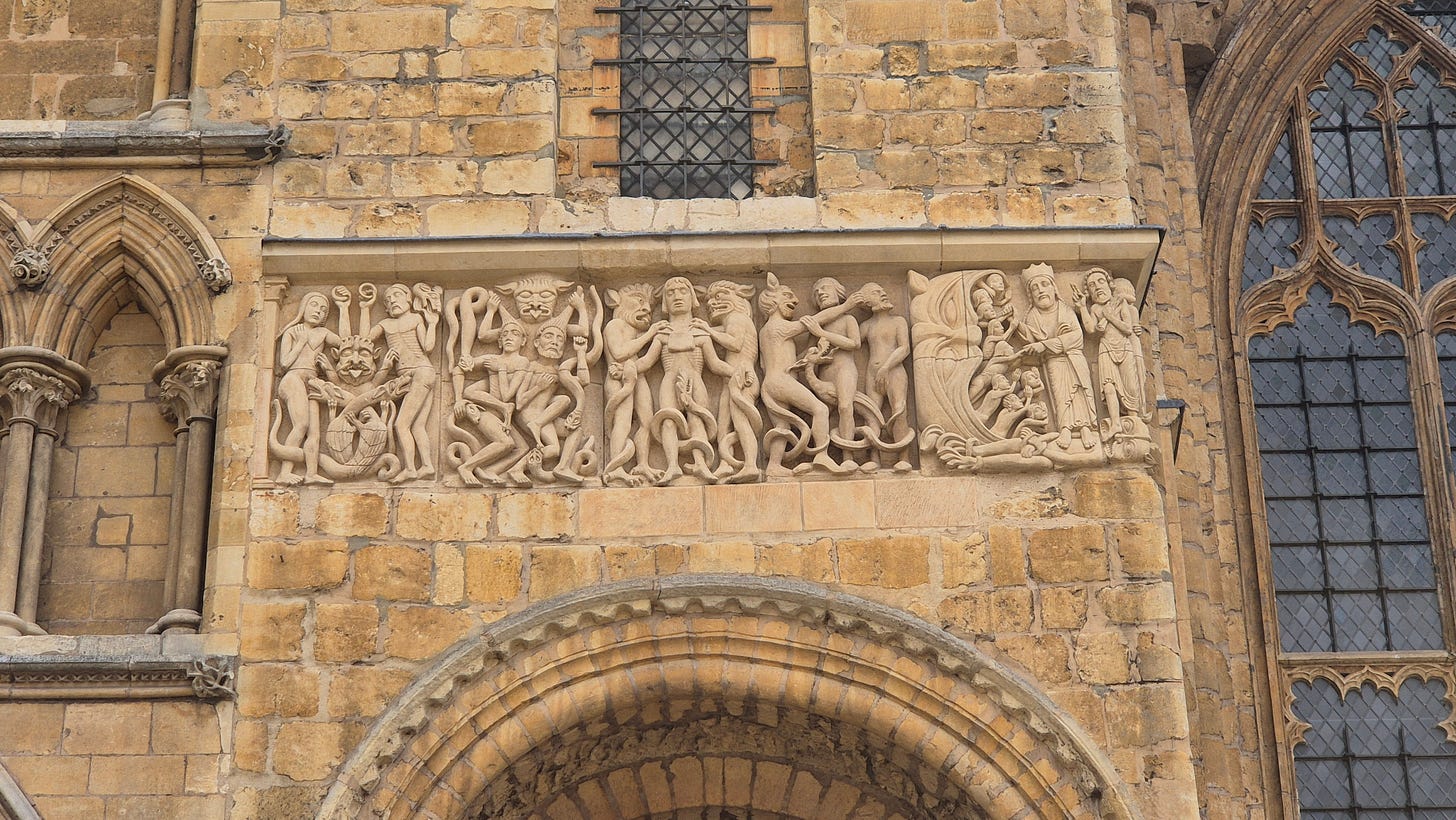
The restored carvings on the building façade threaten the horrors of hell or promise the blessings of heaven, along with odd sculptures of Biblical tales. This frieze shows souls in hell being tortured for various crimes (from left to right, lust, sodomy, avarice) with Christ’s harrowing of hell at the beast’s mouth to the right. The sculptors knew their sins, it seems.
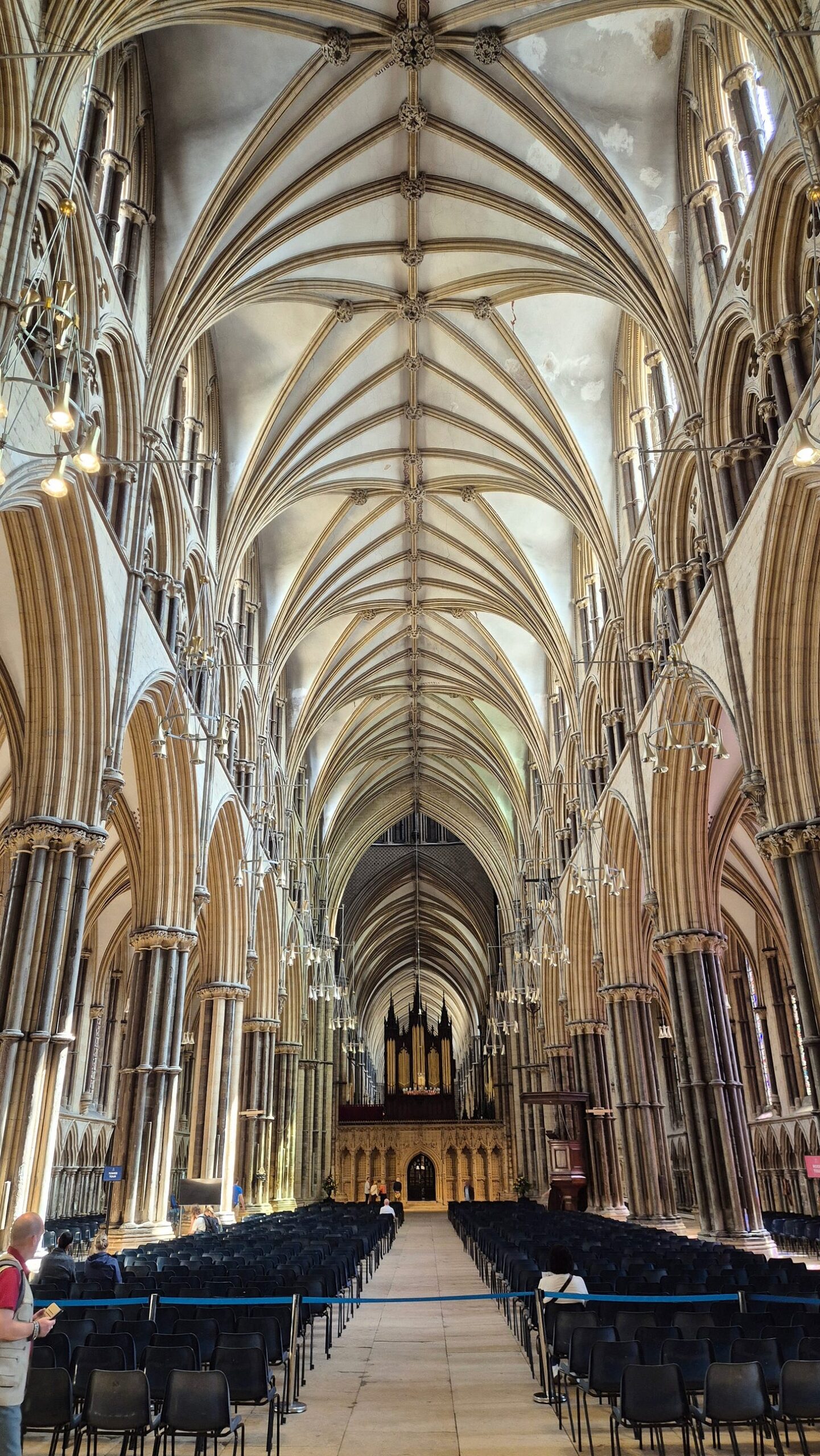
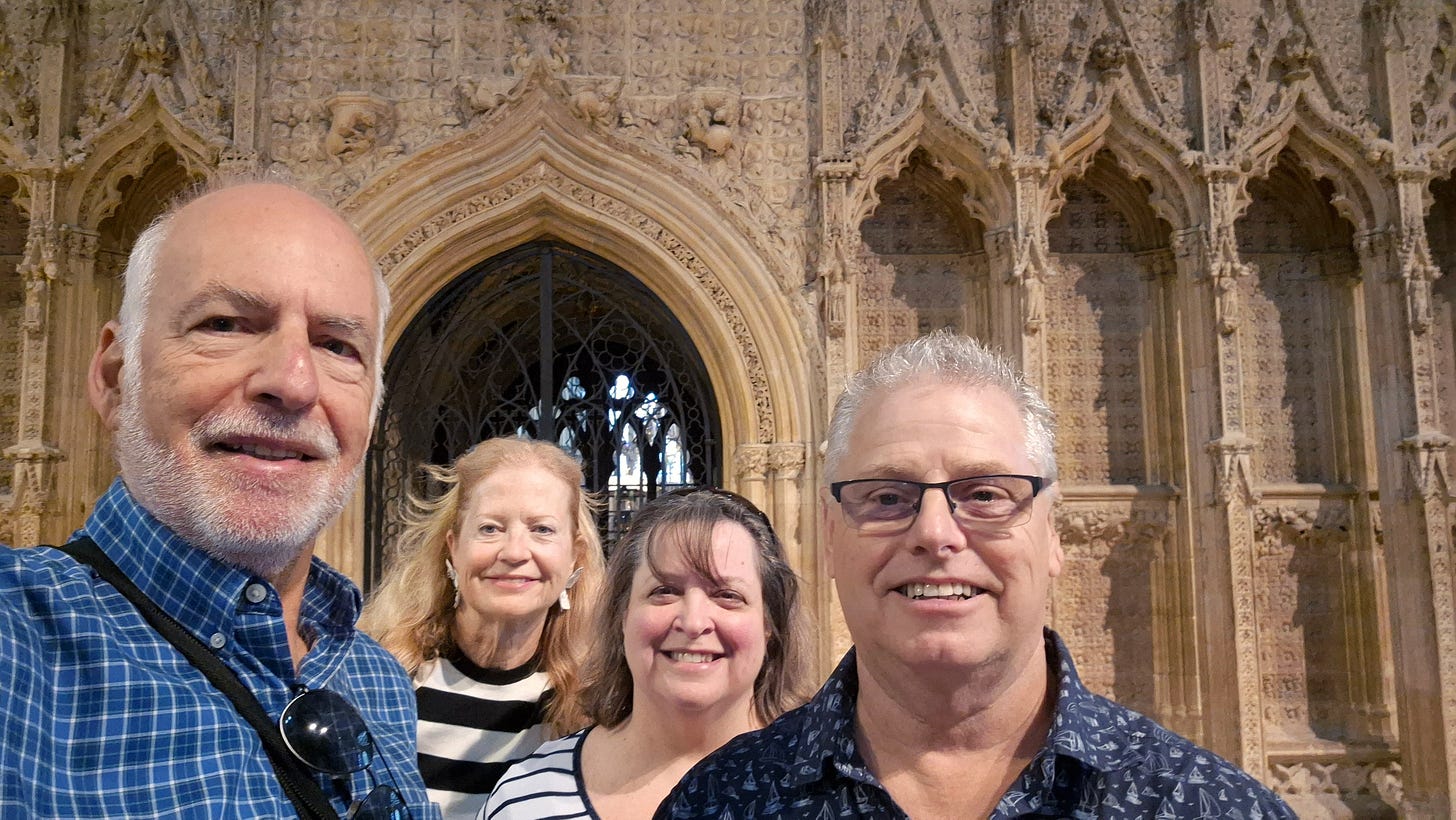
Upon entering the main aisle, the view toward the altar reveals the graceful stone tracery of the vaulting roof and the strange quietude of the place.
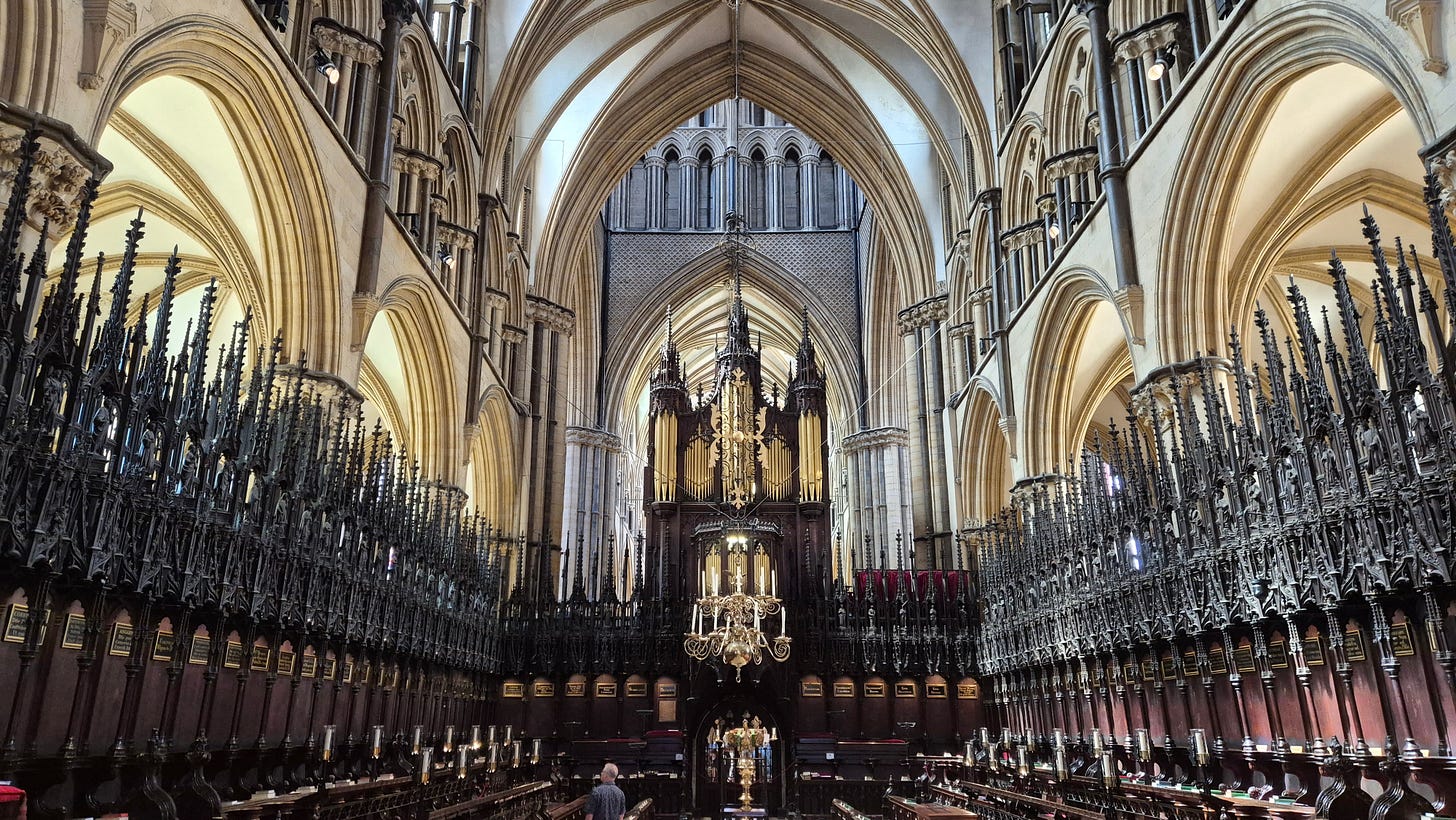
Similarly, stepping up into the choir lift in the middle of the floor, as was traditional then, rings out grand harmonies of dark wood and gold decoration. You could almost hear playing by the the Cathedral’s noted Renaissance organist and composer William Byrd.
Attention to the small details is also rewarding such as the innumerable stories shining through the stained glass panels, or the stone-carved grotesques and gargoyles that seem to be taking possession of the cathedral.
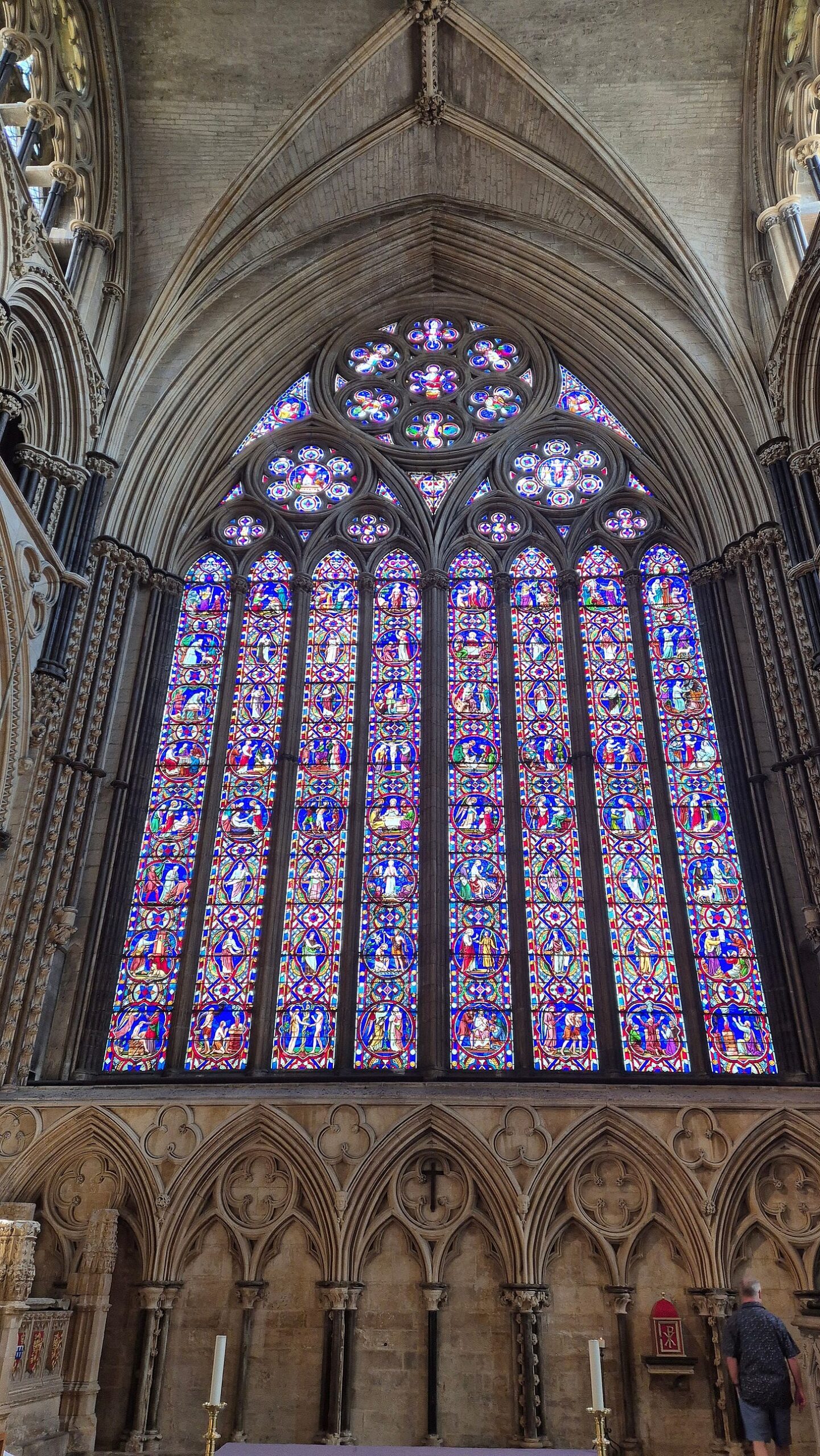
Signage spoke to unusual stories of local saints as well as the shameful oppression of the Jewish population in the Middle Ages.
Across the town’s old central plaza, the other town landmark, Lincoln Castle, was less impressive for its details than for its walls. They loomed around a central courtyard in which various medievalists were jousting noisily.
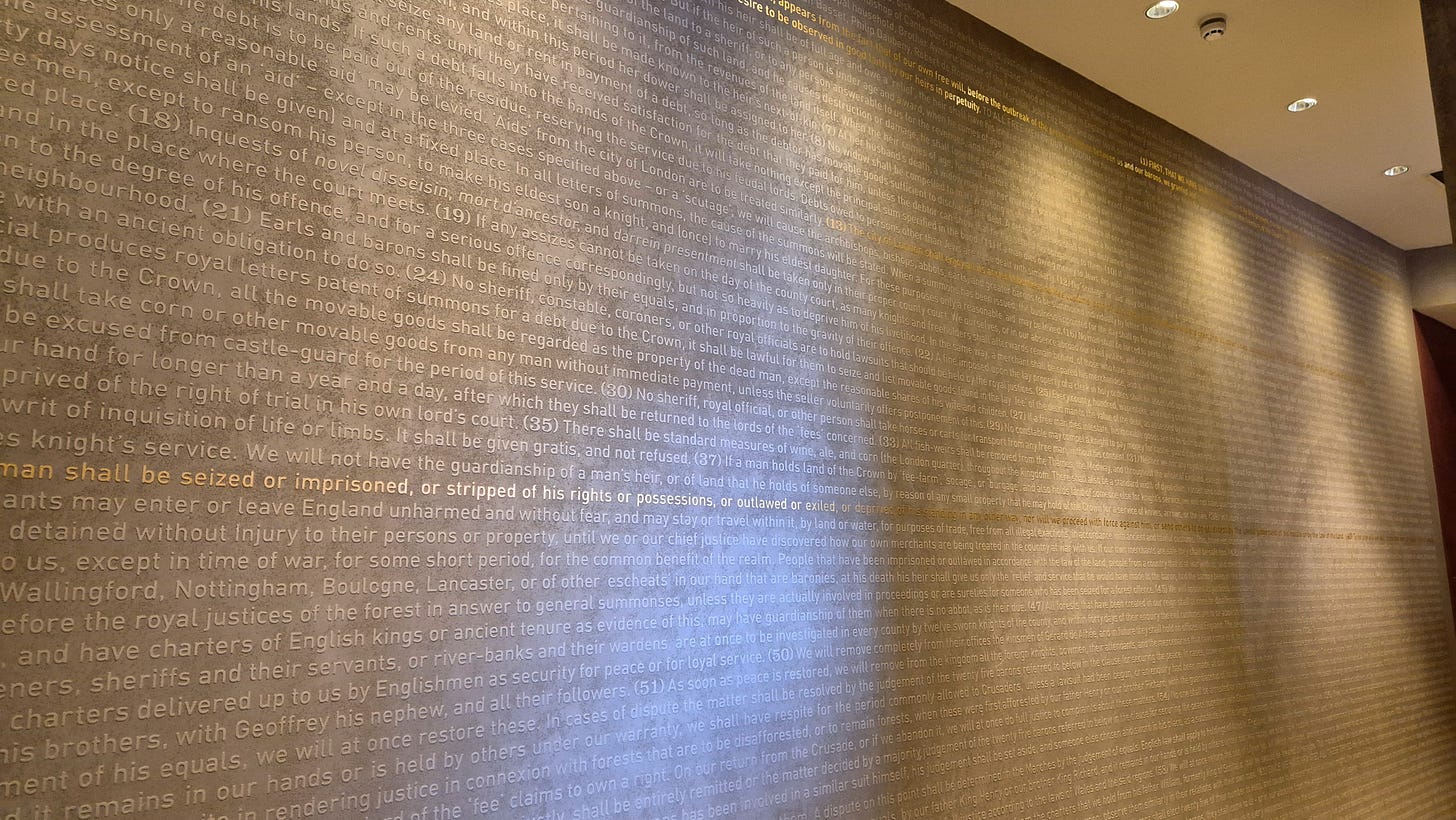
The true highlight however was a lot quieter, but was just as contentious once. One of only four existing originals of the 1215 Magna Carta lay in a vault within the castle, alongside an equally important later version known as the Charter of the Forest. (Photos inside prohibited.) In impossibly small Latin text, the Great Charter affirmed the legal rights of the barons as well as limitations on royal powers. Over 500 years later, the American revolutionaries created a new country based on such principles.
Helpfully, an animated film shown near the vault animated the revolutionary ideas recorded in the Magna Carta and a very large translation in English covered the entryway wall to the vault. The highlighted line reads: “no man shall be seized or imprisoned, or stripped of his rights or possessions, or outlawed or exiled…nor will we proceed with force against him…except by the lawful judgement of his equals…”
Suitably elevated, spiritually and legally, we were pleased to come back to earth along the neighboring streets with a pint or two, a hearty pub lunch, and a walk along Steep Street dropping down to the river. Yes, it was steep.
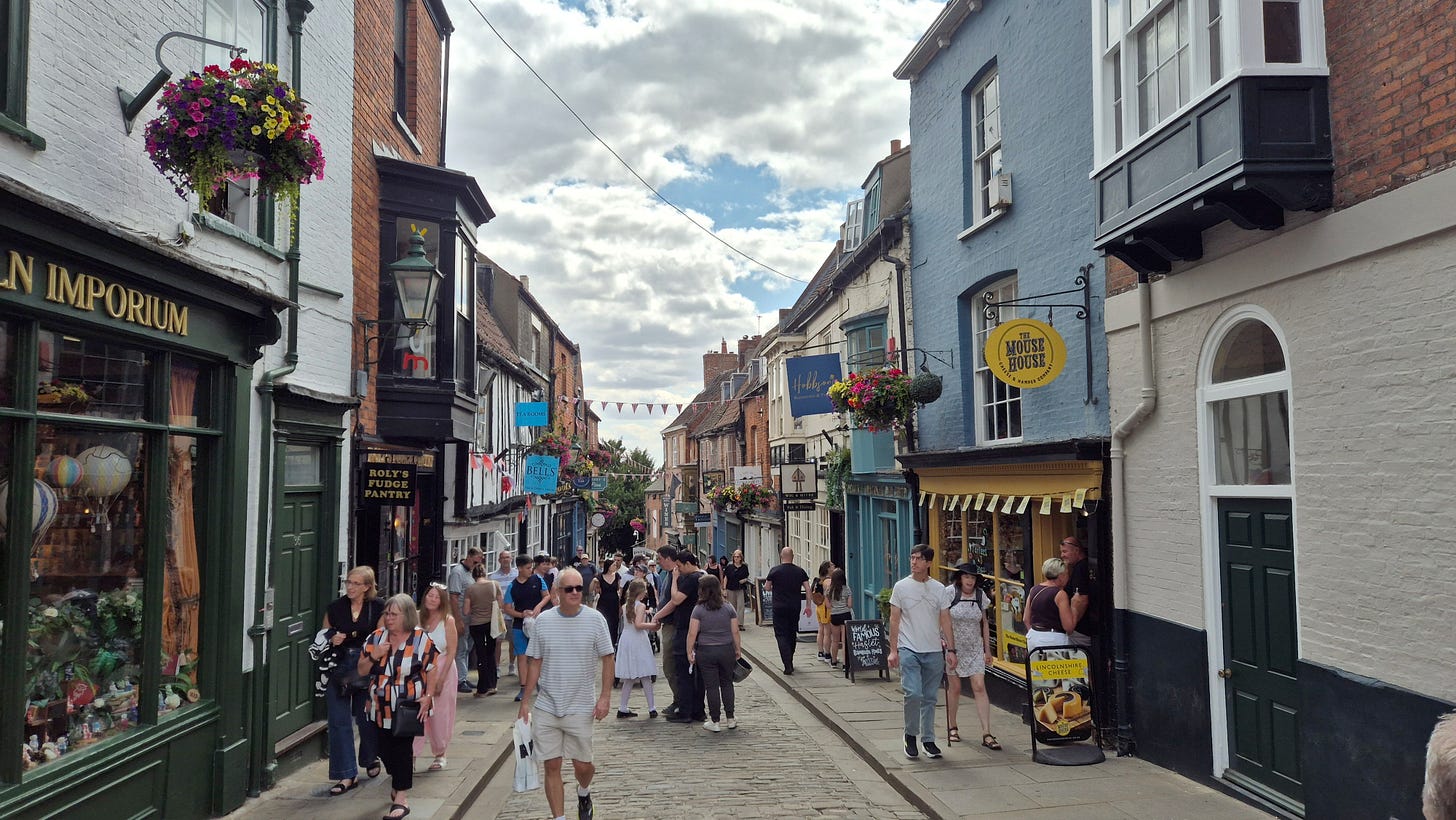
On a weekend, there were many tourists visiting mostly from the UK, it seemed. It was busy, but it all felt like home.
(To enlarge any picture above, click on it. Also, for more pictures from the United Kingdom, CLICK HERE to view the slideshow at the end of the itinerary page.)