In brief: Even with a partial eclipse, a viewing site away in the countryside enriched the experience.
A full eclipse, even in cloudy weather, delivers to many a transcendent experience. A friend witnessing it in Spain a few days ago wrote, “The crack of brilliant white light and sunset-colored sky shining between earth and heaven, lasting perhaps 40 seconds, was like an other-worldly offer…”
For millennia as well, writers have rhapsodized about the relationship between sun and moon, loading them with complementary metaphoric value. And even about eclipses…
You’ll wait a long, long time for anything much
To happen in heaven beyond the floats of cloud
And the Northern Lights that run like tingling nerves.
The sun and moon get crossed, but they never touch,
Nor strike out fire from each other nor crash out loud...
From Robert Frost, On Looking Up By Chance at the Constellations
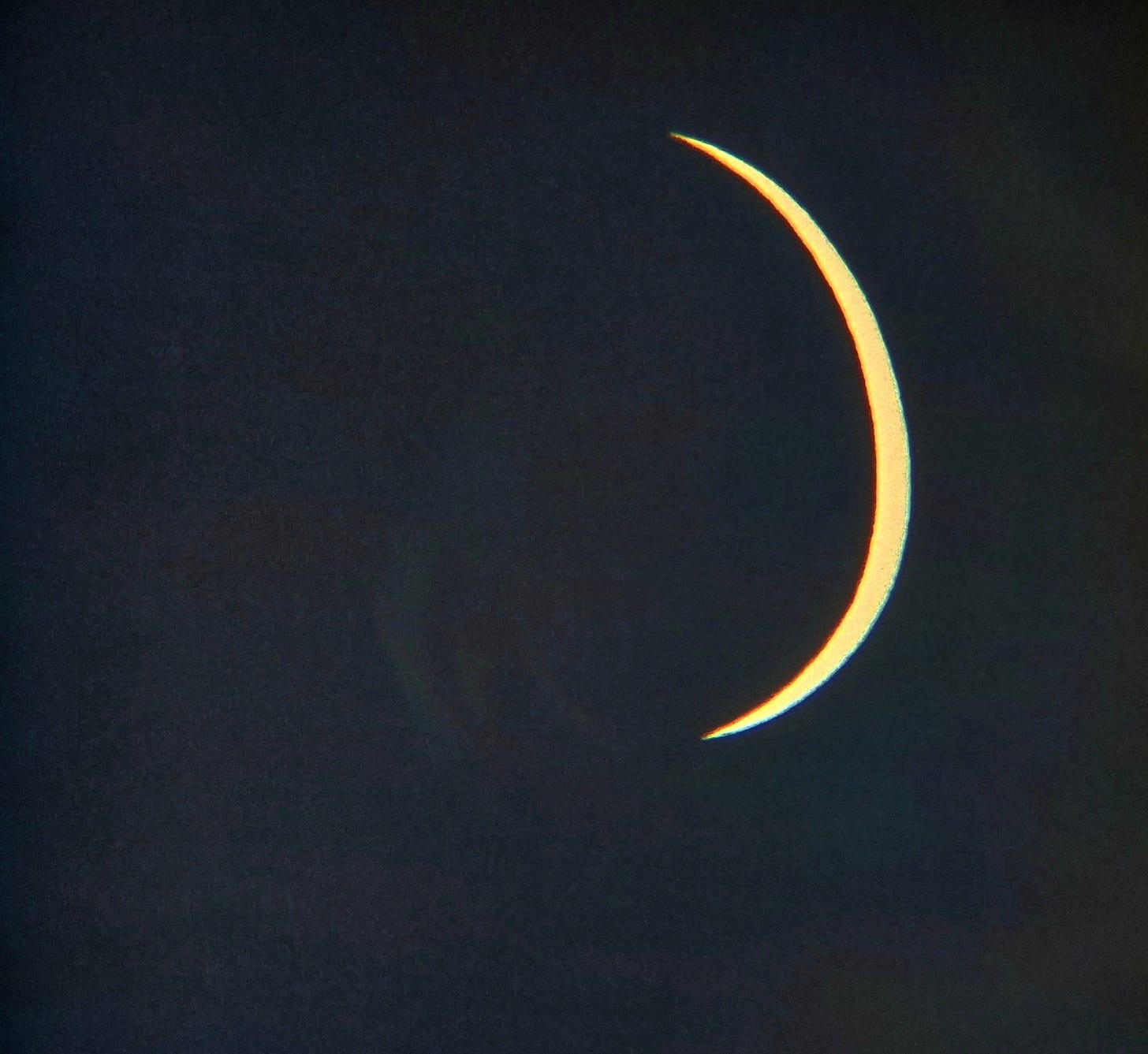
Our experience was eerie, but much more earthbound. By the time the moon obscured 95% of our big star, the light had dimmed as if a grey scrim descended over the landscape. Just before, the birds headed to their night havens and quieted. Just after, they returned to their foraging and welcomed a second morning. We were surprised, however, how much light remained at the peak, like a late dawn instead of night.
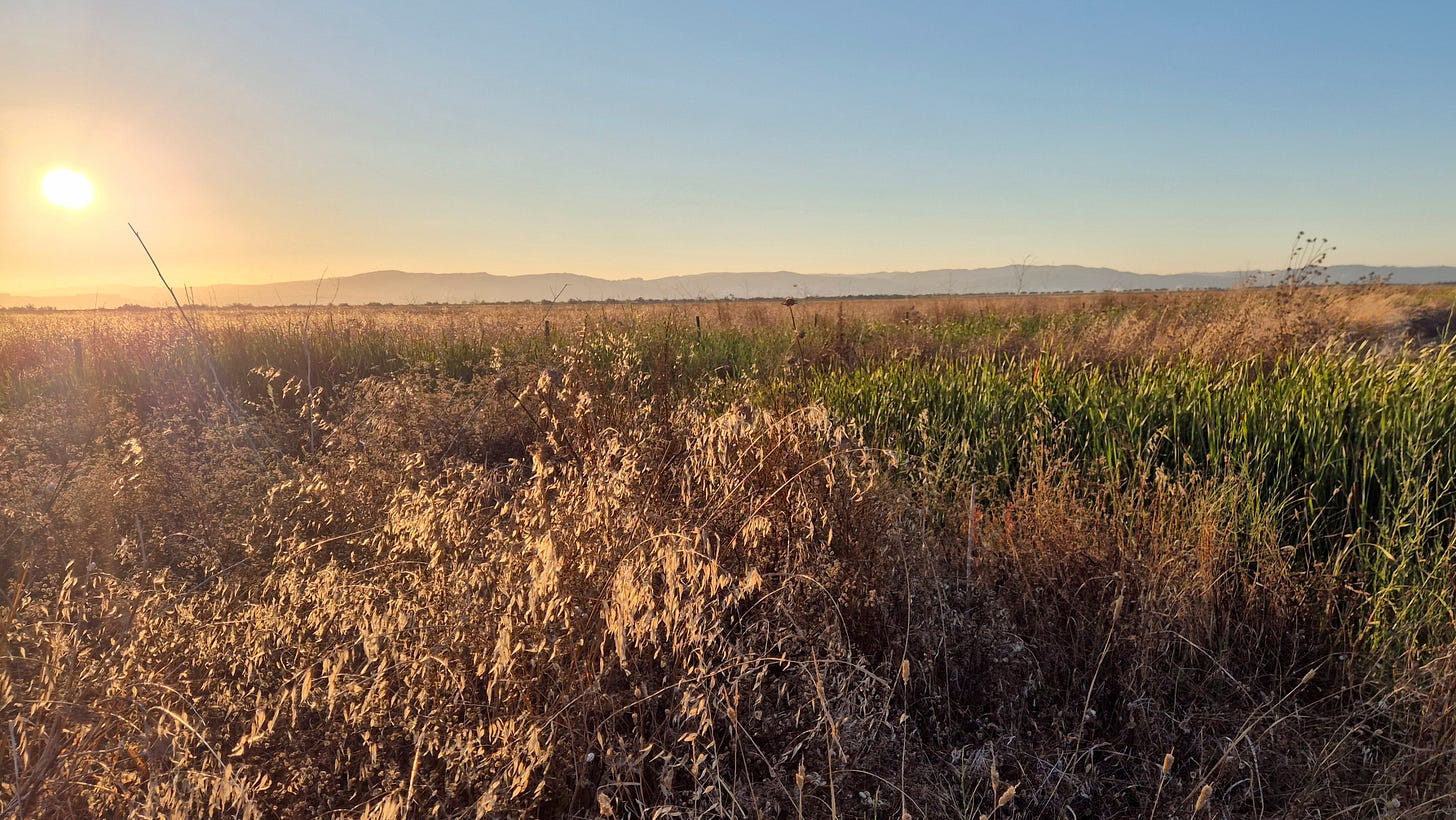
What also made our experience special was the locale. We had driven deep into a wildlife preserve called EVOA, up the Tejo River from central Lisbon and far away from any urban lights.
Normally EVOA is about the wildlife and the natural cycle of the wetlands along the Tejo. Many people flock here for the seasonal bird watching and flora, walking about the reserve or perusing the water from the blinds. We have done this several times. They sponsor regular events hosted by experts in various specialties, including night raptor tours and star gazing as well.
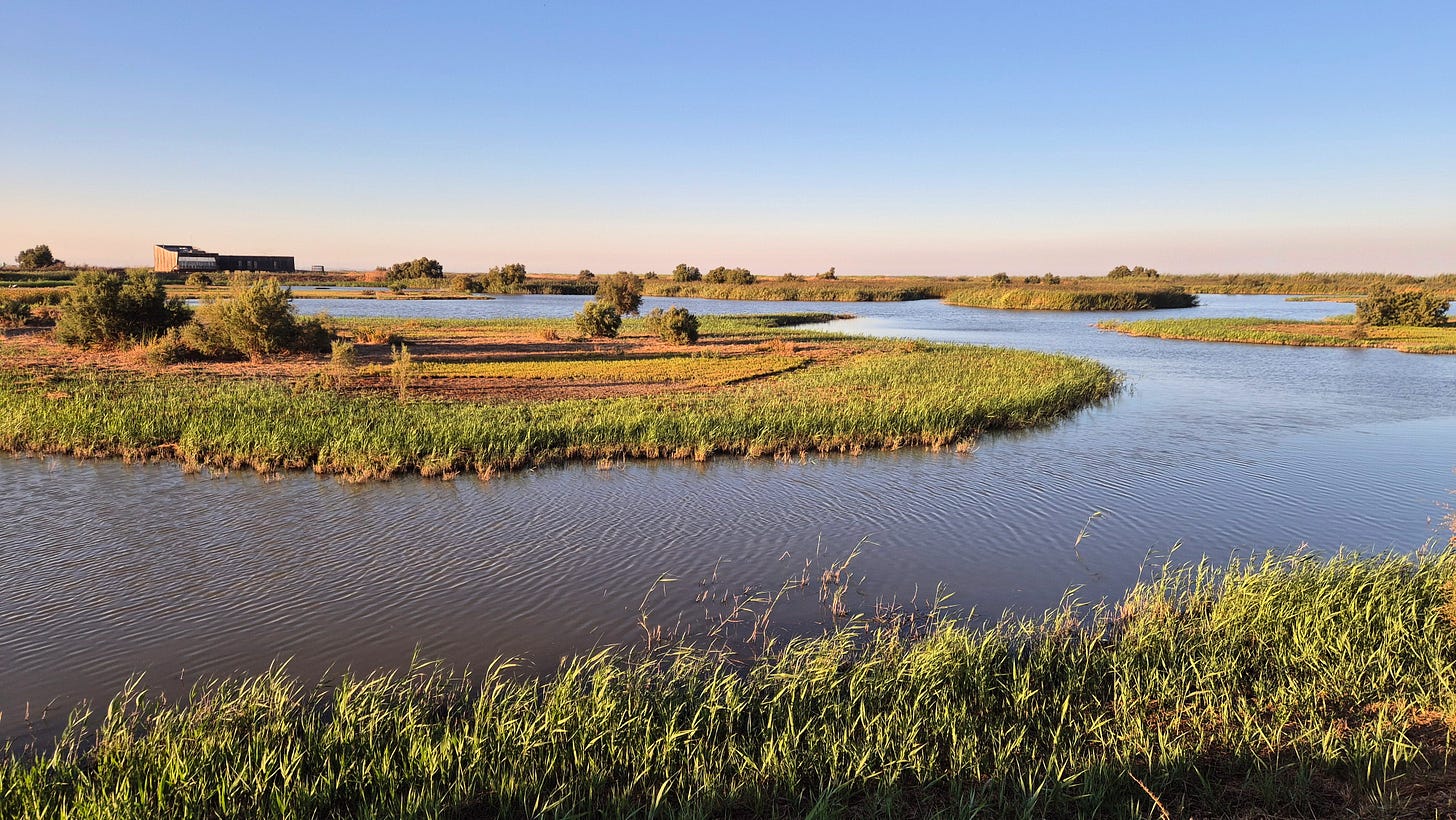
So, to us, EVOA was a perfect host for a special eclipse event even though this was just a partial one in Lisbon. In less than a half hour, we had driven to the gate and then slowly meandered along dirt roads through the rice paddies that adjoin the EVOA reserve. Whatever the season, the car ends up with a coating of fine dust that needs a power wash to remove.
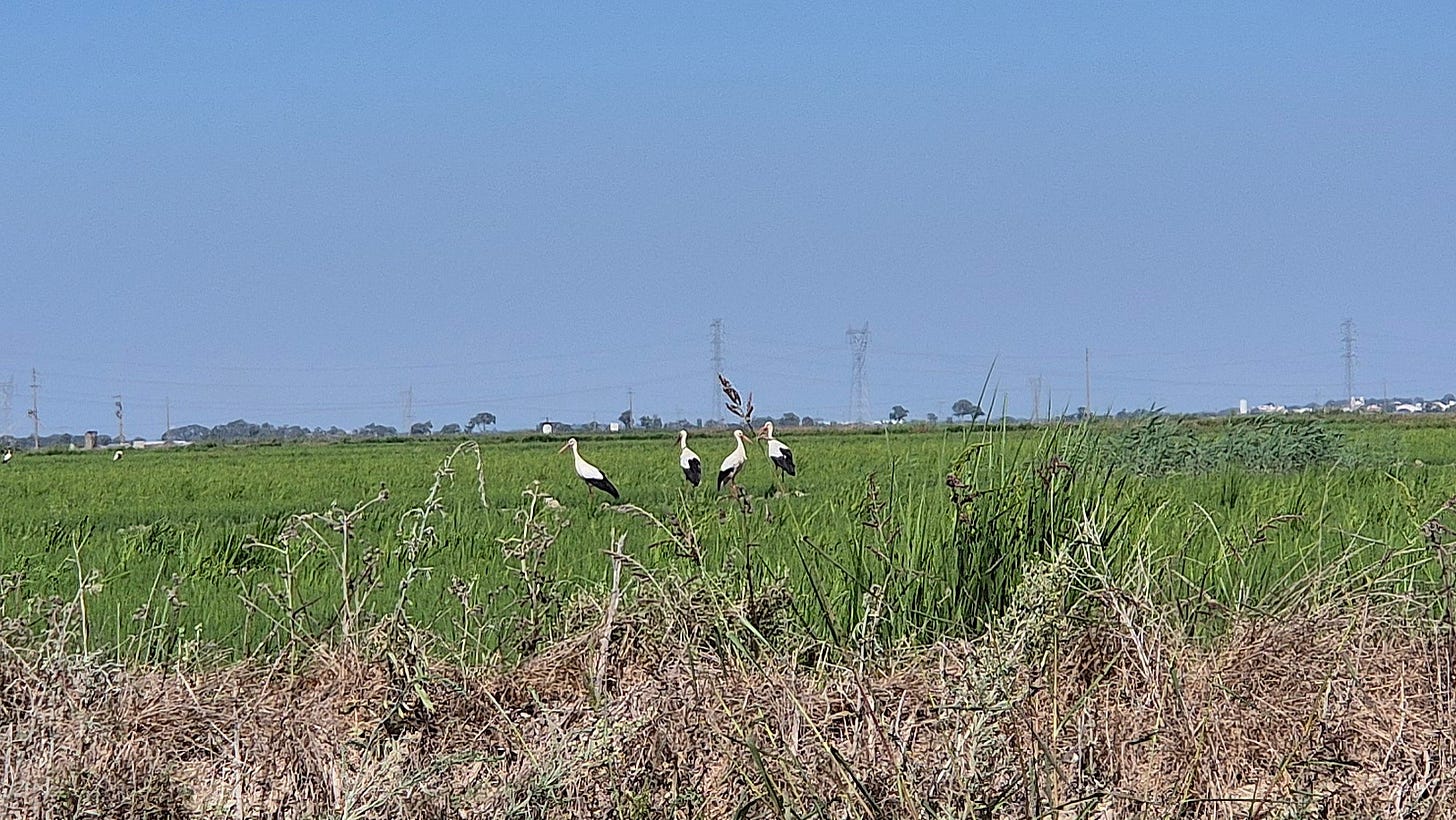
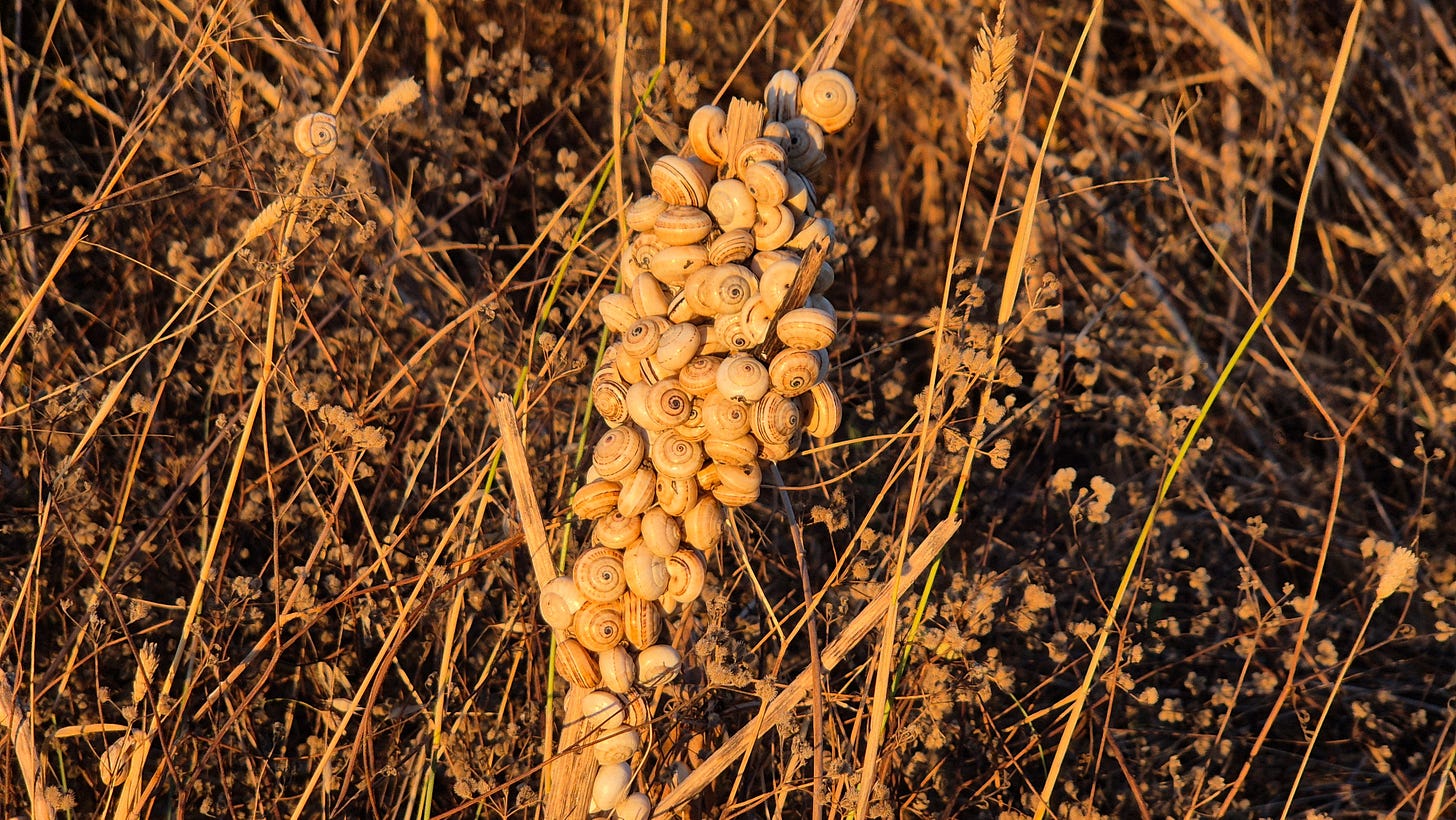
That road has given us a lot of pleasure, though, in the past because of the many birds we have sighted before even arriving at the reserve. Huge flocks of ibises and egrets have greeted us in the past. Falcons and hawks have eyed us from fence posts. This time it was White Storks, standing in long queues at the borders of some fields.
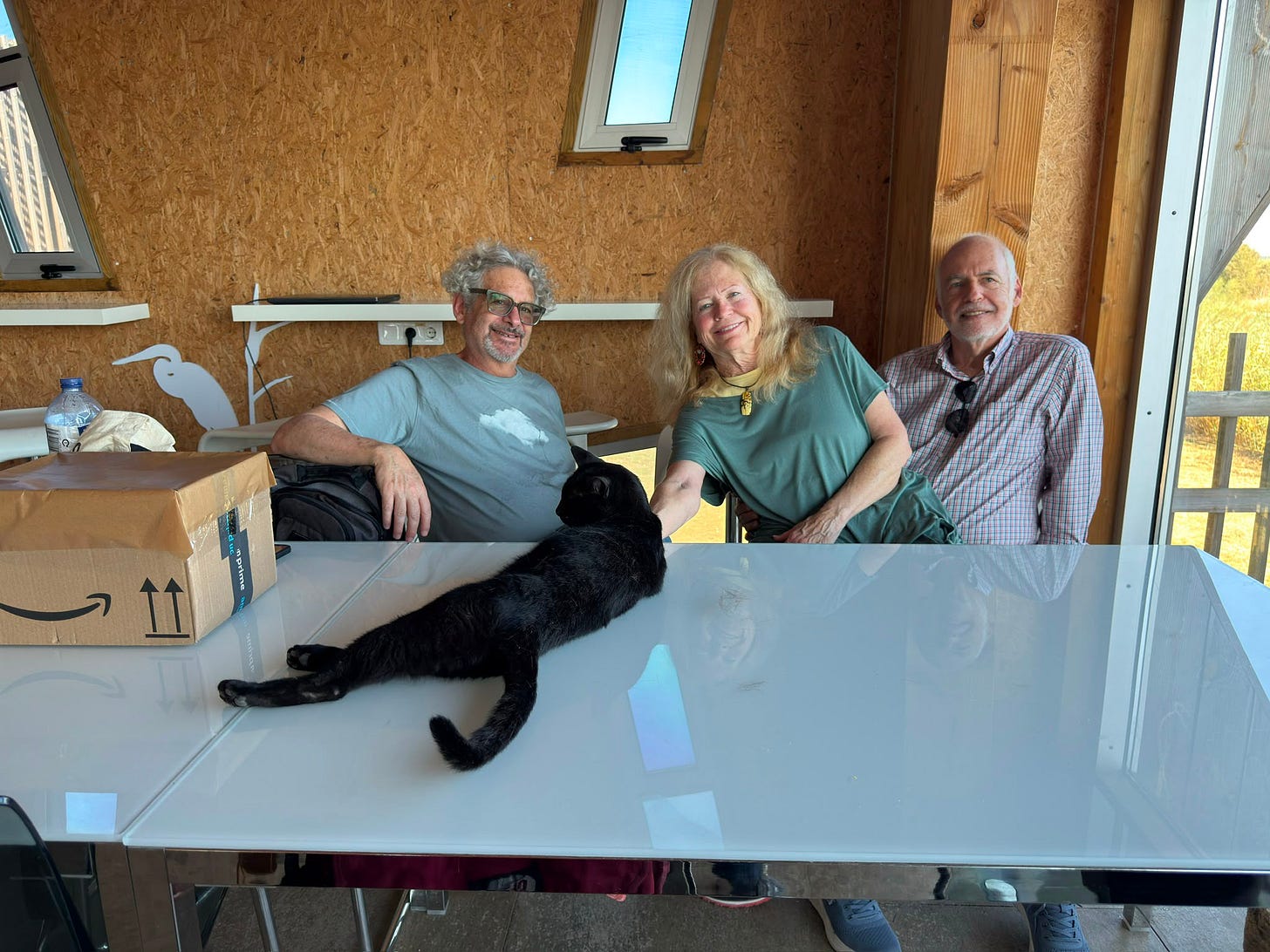
At the reserve center’s plain wooden building, we gathered with about 40 others. Outfitting ourselves with borrowed binoculars and the special viewing glasses, we set out along a path to start our eclipse watch. After a briefing about the rights and wrongs of sun-gazing (essentially DON’T, without the certified glasses or an indirect method), we awaited the event.
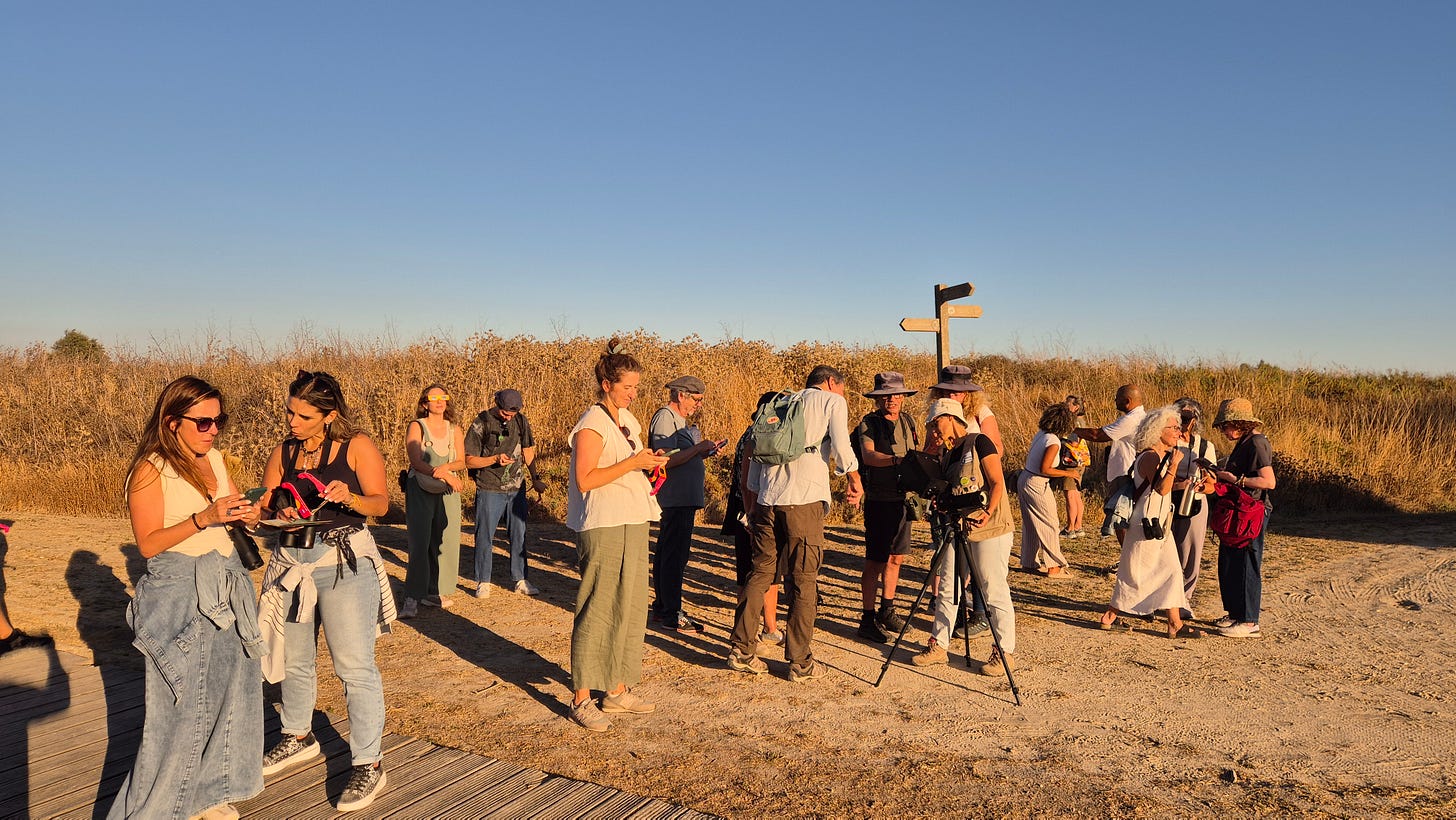
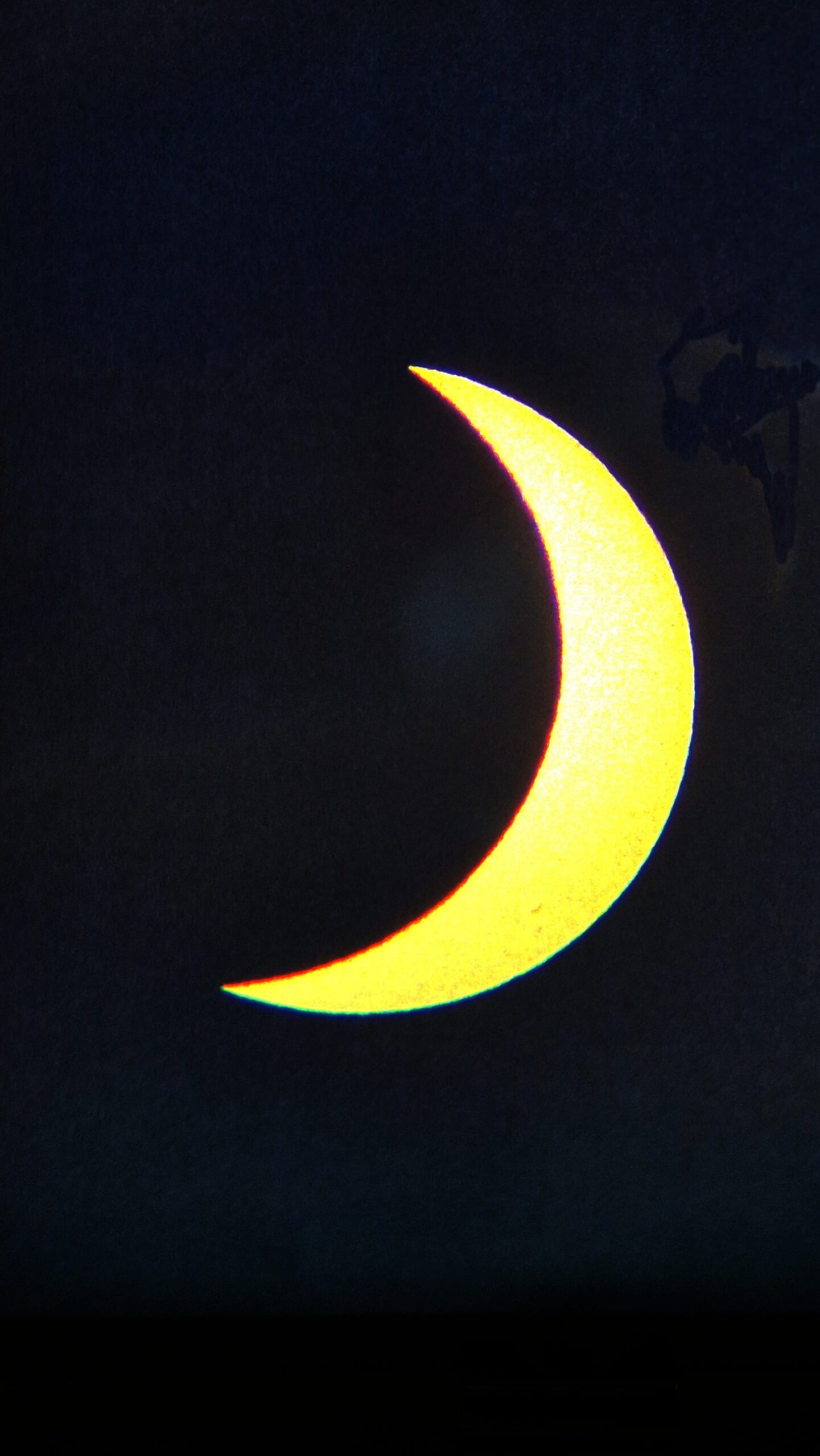
Shortly the moon started to eat away at the sun, so we shifted over toward one of the observation blinds along a main waterway. There we continued our moon watching until the eclipse peaked at 19:35. We deployed all the tools we had…
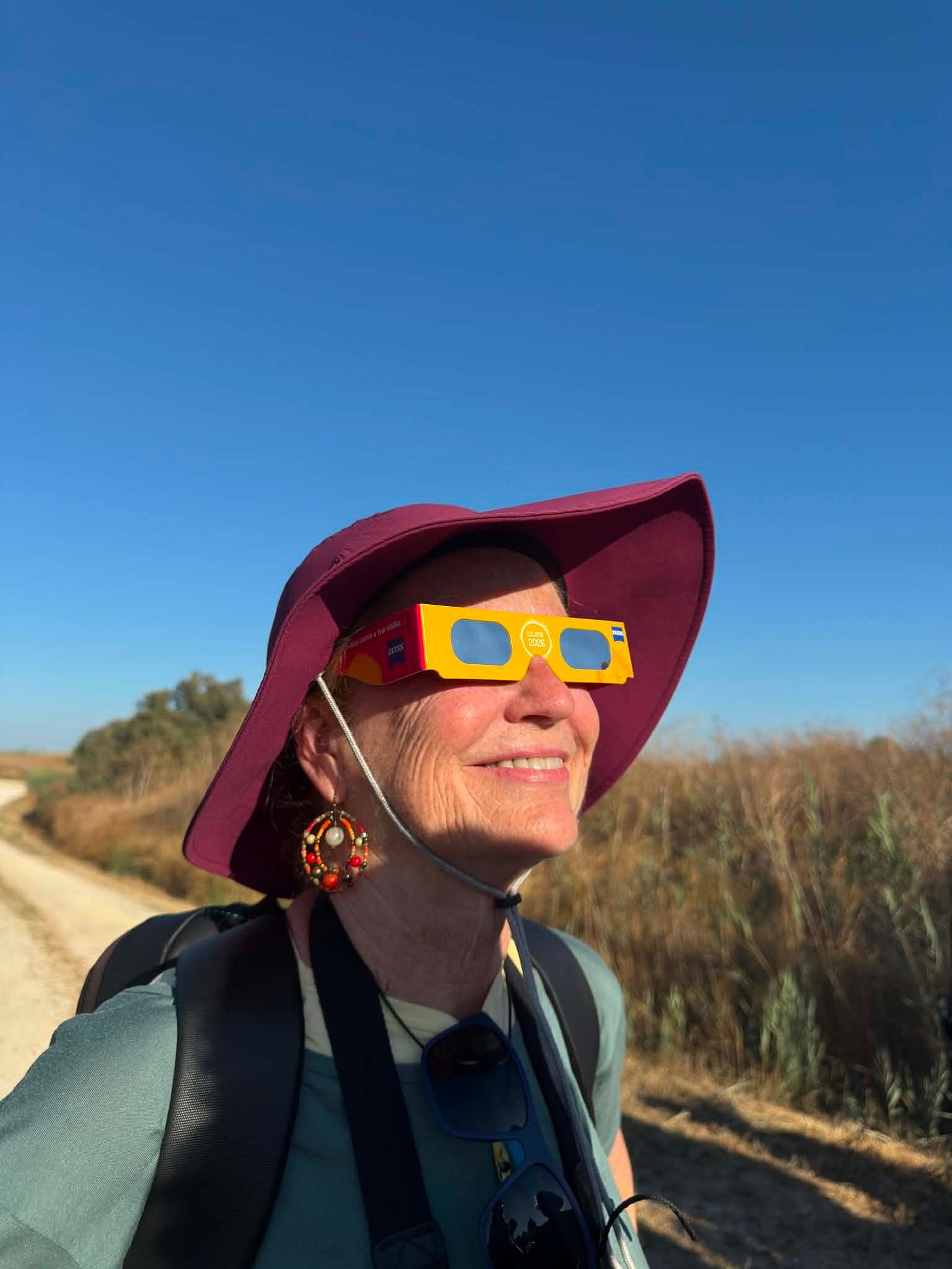
The glasses (but only for short looks)
A projection box attached to a scope (an inverted image naturally, but sharply defined)
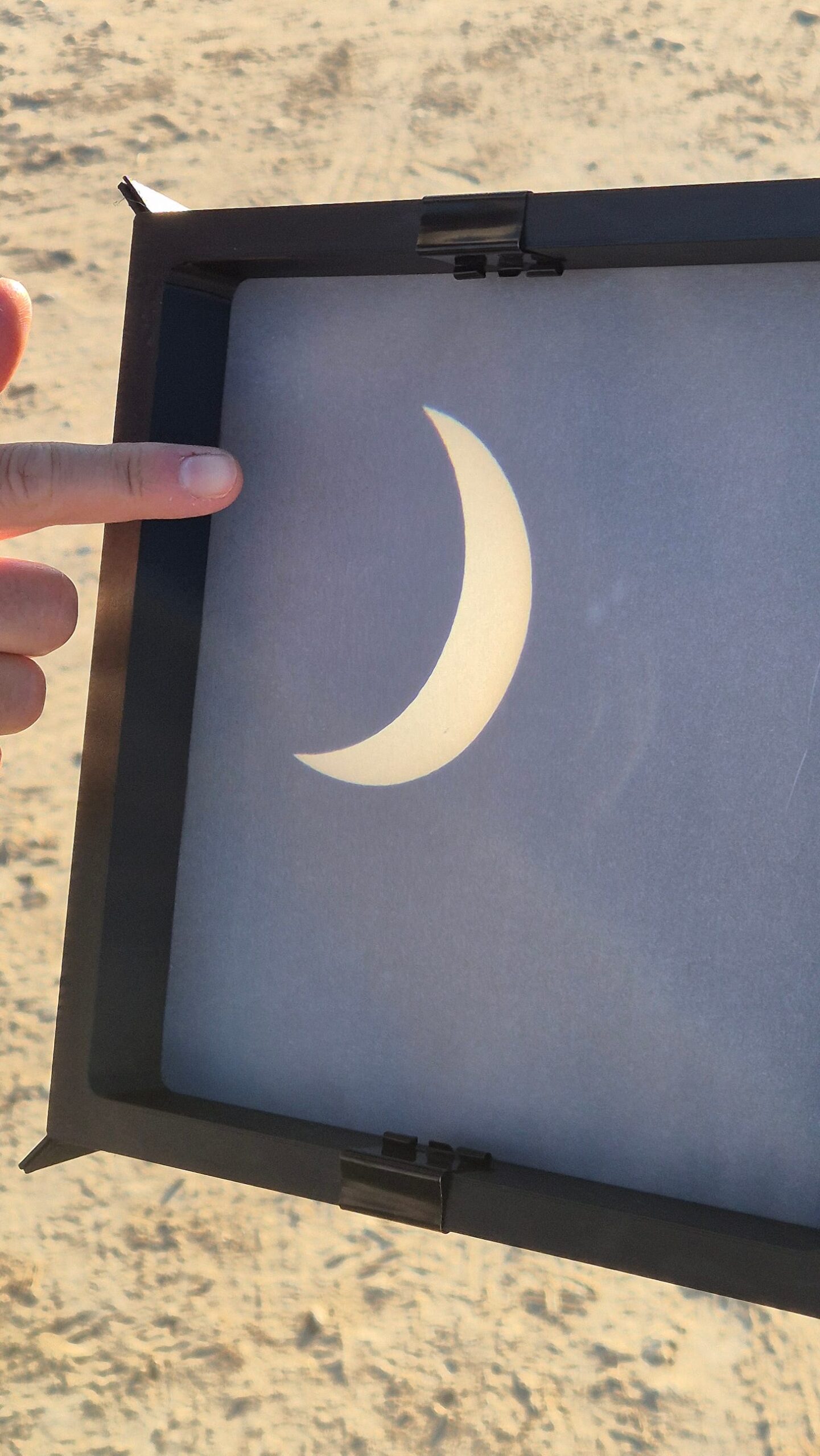
We could even see the moon’s craters and sun spots toward the peak.
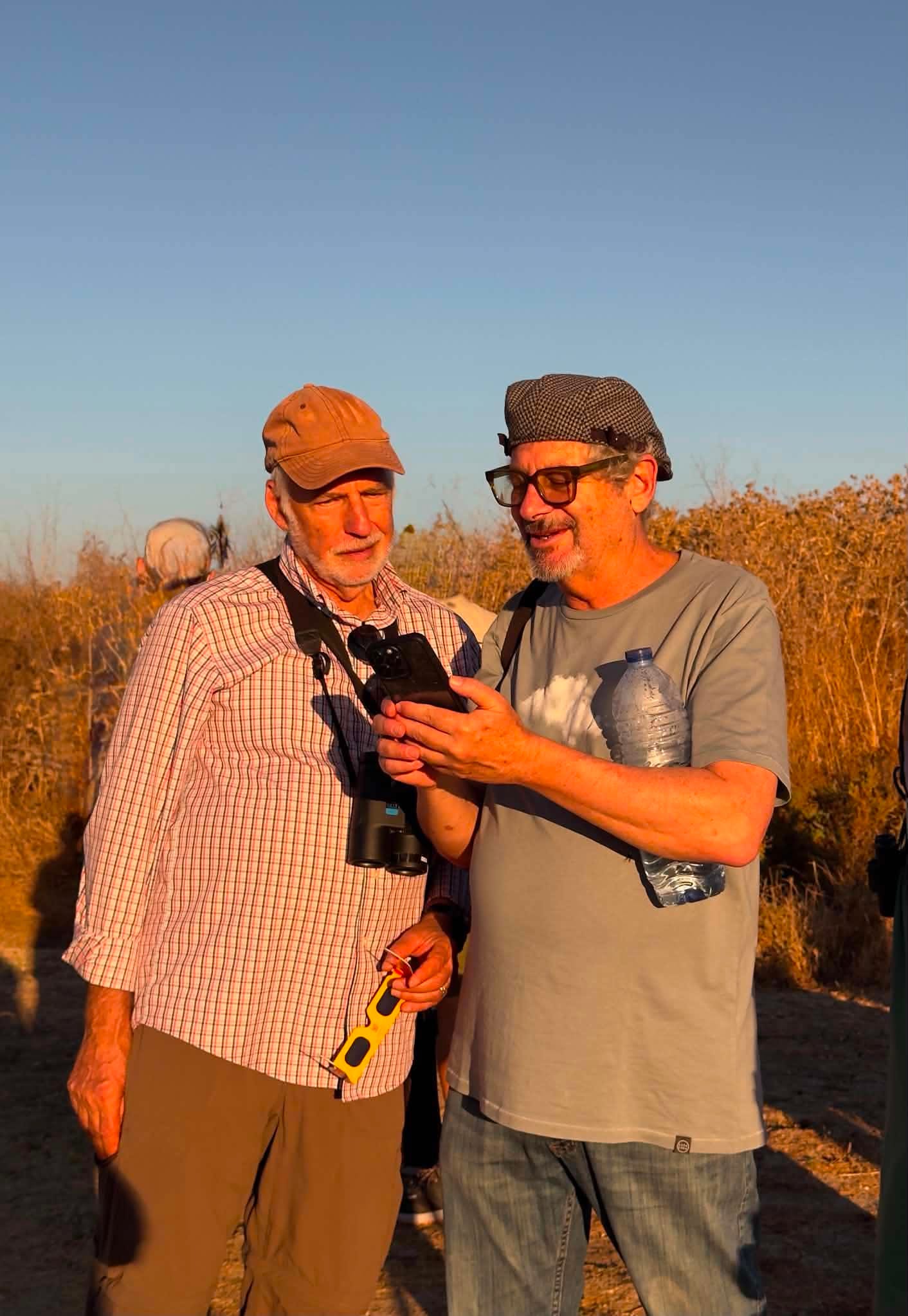
Pinhole in a card projecting the sun onto another card (though a very small sun). We enhanced this one with inverted binoculars.
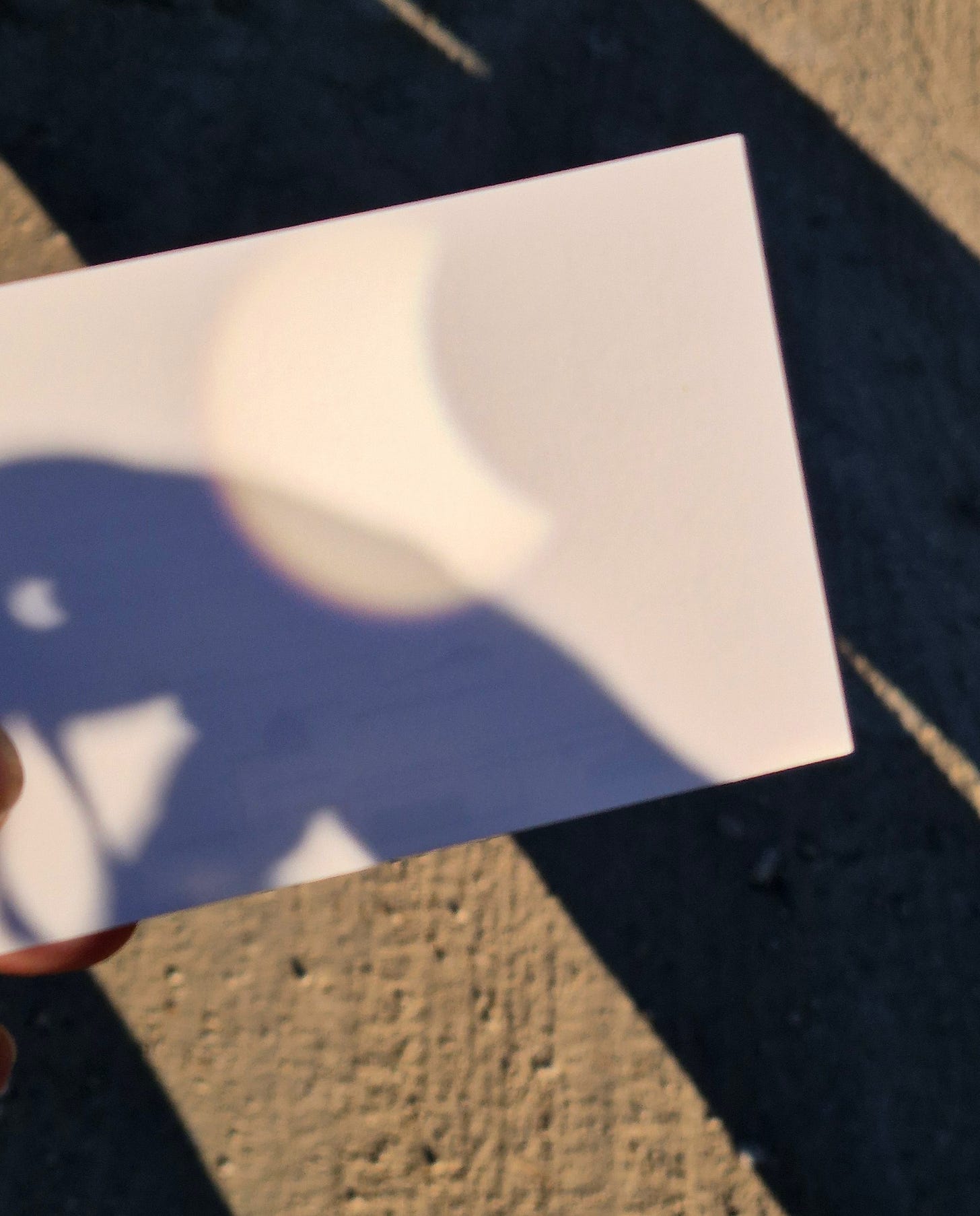
The colander method (a mind-enhancing multiple projection)
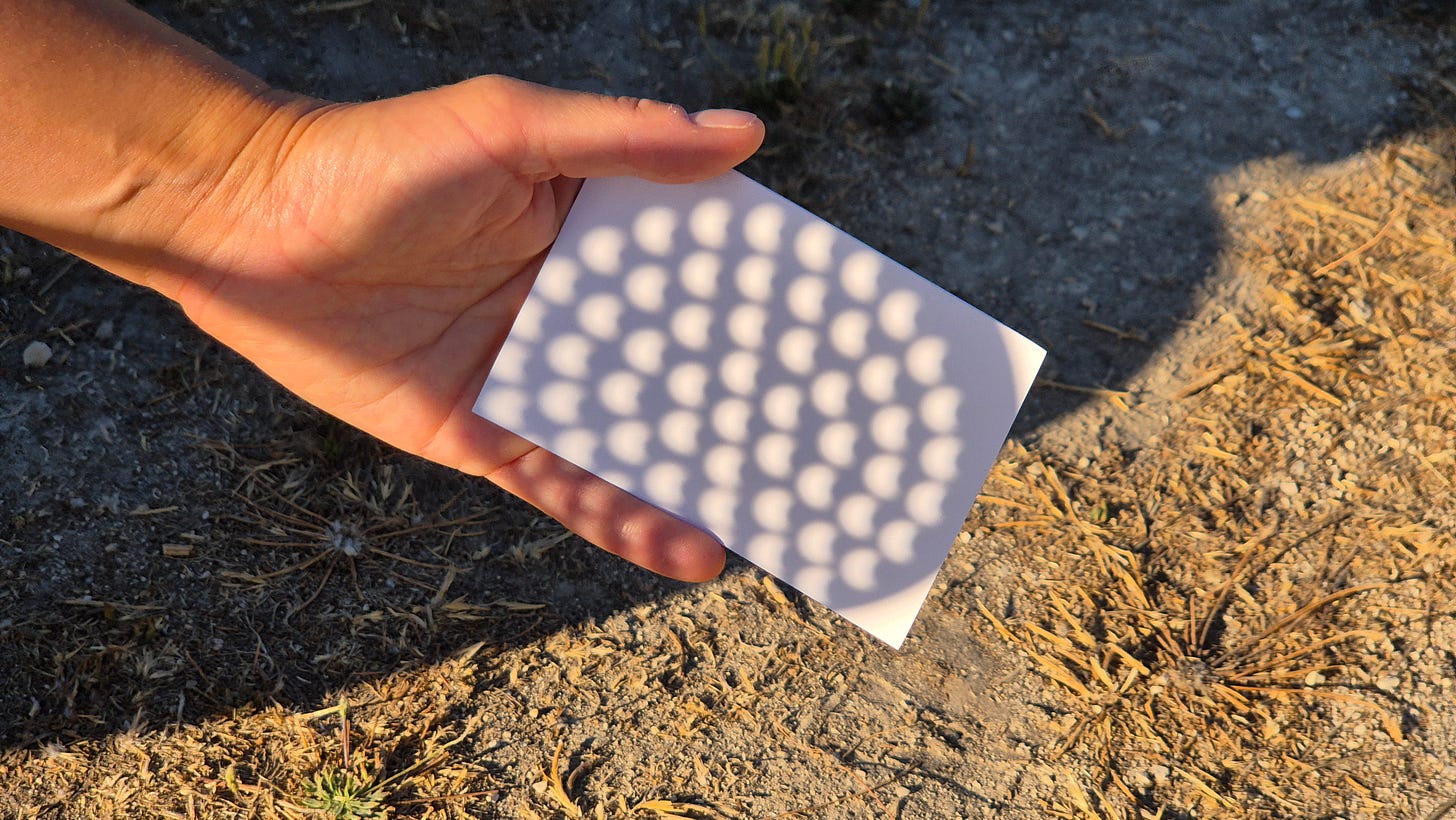
A half hour before the peak, one of the expert staff led a session of bird spotting from the blind (flamingoes, ibis, lapwings, coots, gallinule, egrets, geese, herons, etc.) – a splendid enhancement to the main purpose.
Meanwhile, the moon continued its work more and more rapidly, shifting slightly off-center compared to the sun. Around us the light shifted subtly until 15 minutes before and after the peak, when that grey scrim took over and the wildlife reacted. The air cooled noticeably. Then we watched the sun slip off its lunar cover again.
All of us at the event were delighted at how well we could view this rare astral event.
And there’s another eclipse coming in August of 2027. This is the place we would want to be to see that darkening in the mid-morning instead. It might prove more dramatic than this one where the darkening blended into the fading light. And we hope to share the delight with friends again, such as those that contributed words and photos to this post.
What we will miss next year is the chance to see so many stars and the Milky Way. After a light meal and socializing at the center, we went out into the tranquil night to spot Venus, Cassiopeia, Scorpio, and the other Greek formations. Plus catch a few flashes of the Perseid meteors.
(To enlarge any picture above, click on it. Also, for more about Portugal from 2025, CLICK HERE to view the Portugal page and slideshow. Or CLICK HERE for articles between 2017 and 2024.)