
In brief: “Go to Mangystau,” our Kazakh friend advised. But going required a big commitment of time and money. Here’s why it was worth the trouble.
“Go to Mangystau,” our Kazakh friend advised. “It’s the best part of the country.” But we needed to commit five days of our trip, including nearly six hours of flying between the core of our itinerary and Aktau – the ‘wild west’ of Kazakhstan on the edge of the Caspian Sea.
Once there, we drove nearly 2000 kilometers (1300 miles) including many hours on gouged dirt trails – confronting rainy conditions one day, cold and whipping winds another.
Here’s why it was worth all that trouble.
Day 1 Eastern Mangystau
Click these links to read Part 2 or Part 3, the second and third days of our Mangystau journey.
The evening before, we had repacked all our belongings so we could travel with minimal baggage and leave the rest at our Aktau hotel. The forecast was rain throughout the day and cold at night. So, half of what we took, it seemed, was just to stay warm and dry.
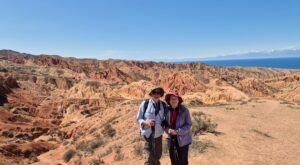
This first day took us to the eastern part of Mangystau, with our capable guide and driver Daniel. Mangystau sprawls across 165,000 square kilometers (64,000 square miles), twice the size of Austria. Its different sections offer a wildly diverse landscape – from steppe grassland to canyon to painted mountains. Today was our chance to see the renowned landscape of Bozzhyra and Kyzylkup tract. Fortunately, though the day remained overcast, we arrived in dry conditions at the picnic area of the overlook. Various colorful striations of the conical hills and eroded valleys spread before us, but still so distant.
It’s heading off-road through that landscape that the wonders reveal themselves. This was the first of those notorious Mangystan tracks we took, rough and rutted due to vehicles ploughing through. Sometimes it is too muddy to drive, we heard. Again, we were lucky. The rain had not ruined the track.
Traversing a plateau of modest interest, we suddenly came upon the edge of the broad depression of Bozzhyra – an otherworldly vision.
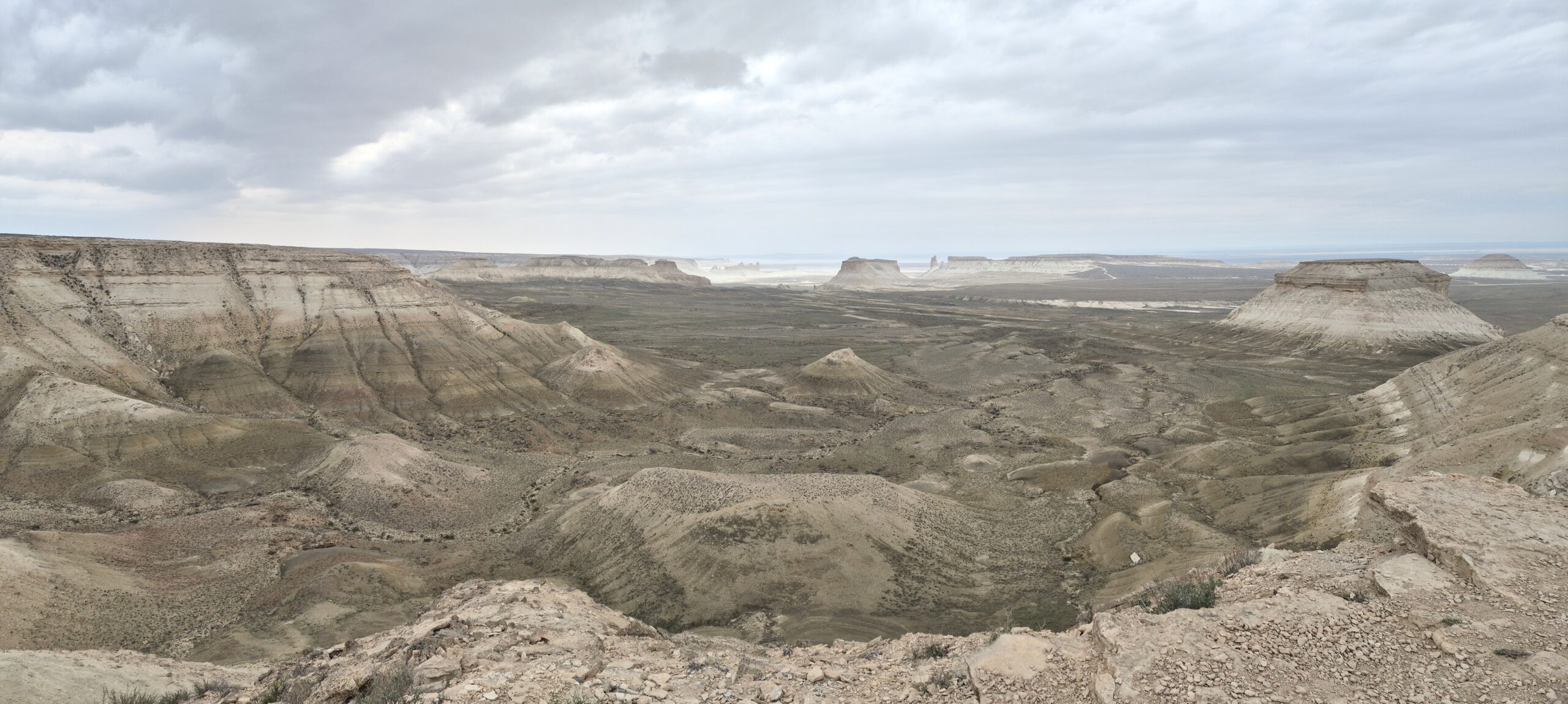
Here, at the edge of a salt flat, an ancient sea has deposited limestone, clay, iron, and other minerals – all sculpted into phantasmagoric peaks and valleys.
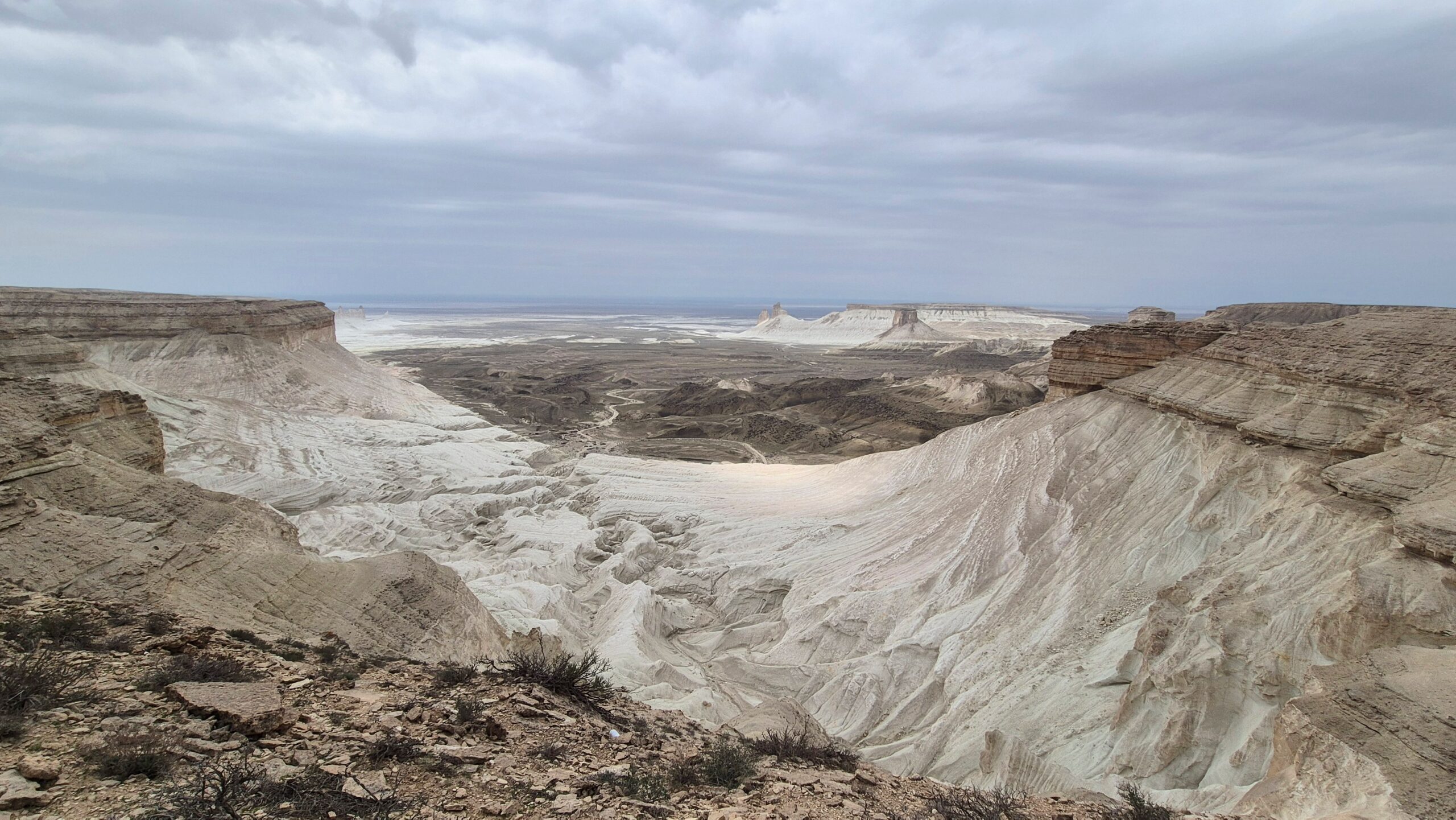
A different lookout point hovered over a narrow island far below.
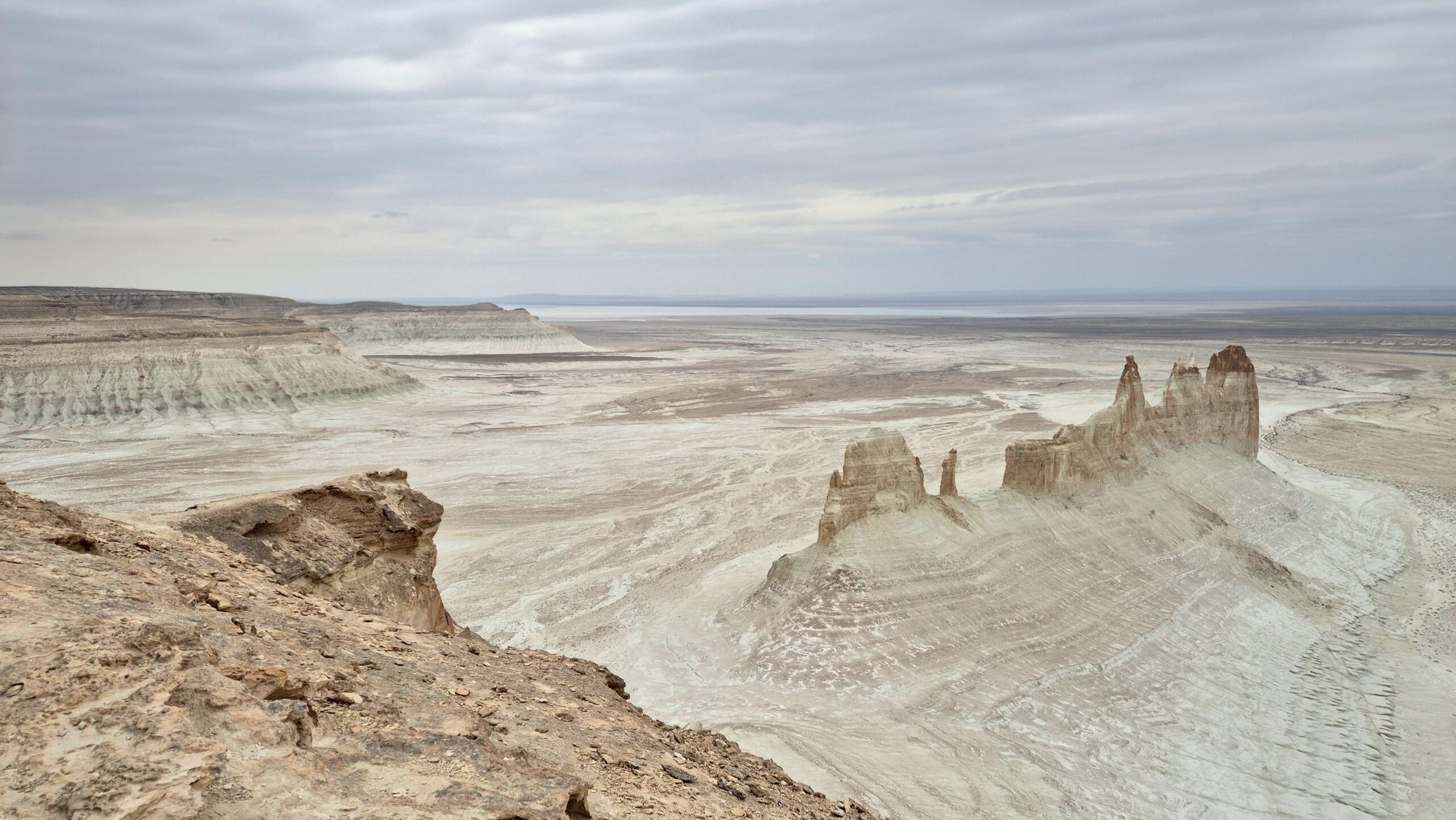
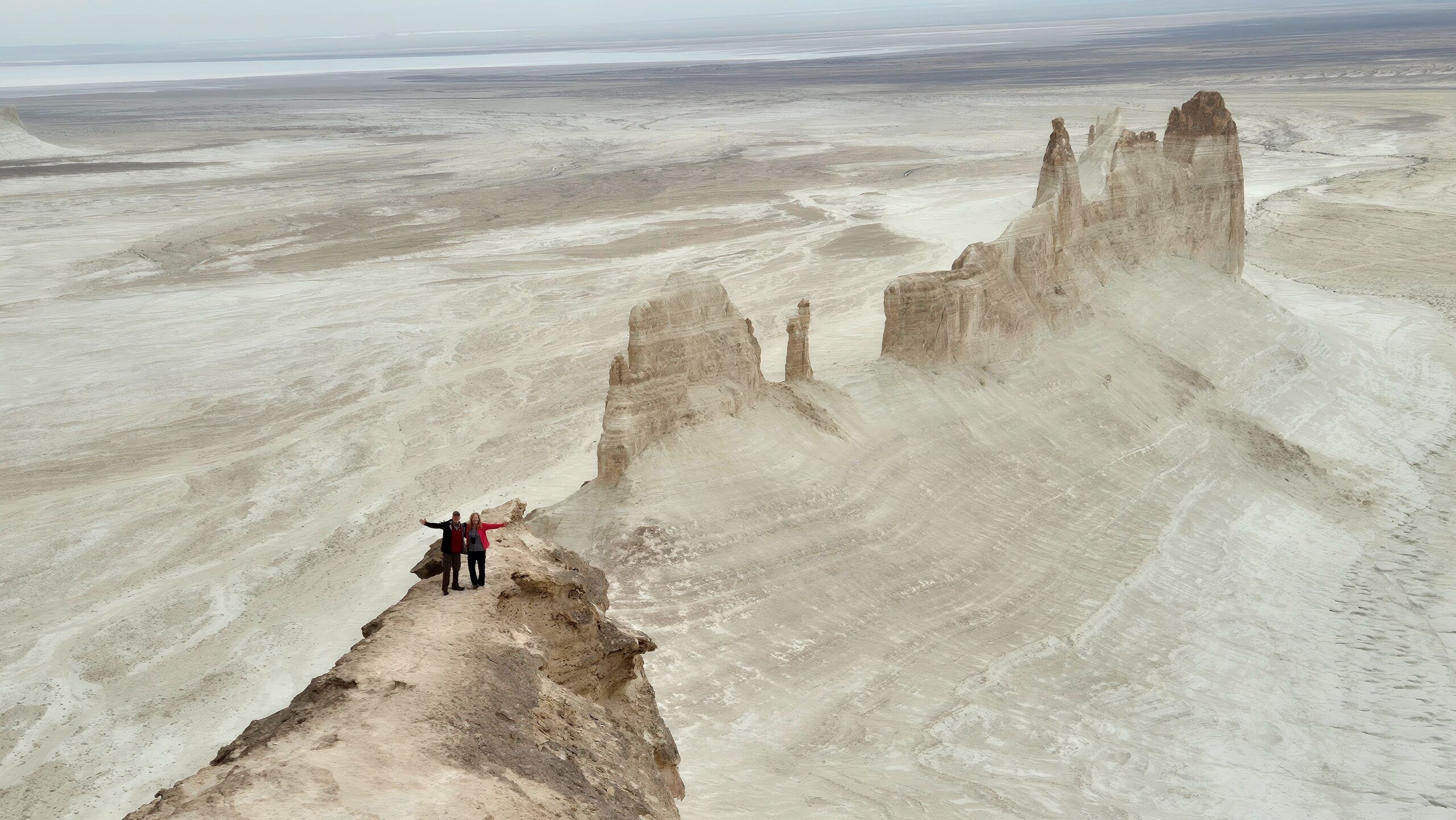
We dared step onto a cliff edge looming over the island, as a Kazakh man with his family snapped our picture there, and we did his.
Our good luck continued as the rain held off until we left the area. Back at the rest stop overlook, we took over a shelter and enjoyed a lunch Daniel had prepared: bread stuffed with potato and cheese, like a borek, along with cucumbers and tomatoes and tea. Daniel continued to surprise. In a land where meat is staple of a meal, he had never heard of vegetarians before, but did a great job with food throughout our trip, including finding tofu, an item he had never heard of before.
He had, however, heard of Tiramisu, at least in part because of the formation we were about to visit within the colored streaks visible from the picnic area.
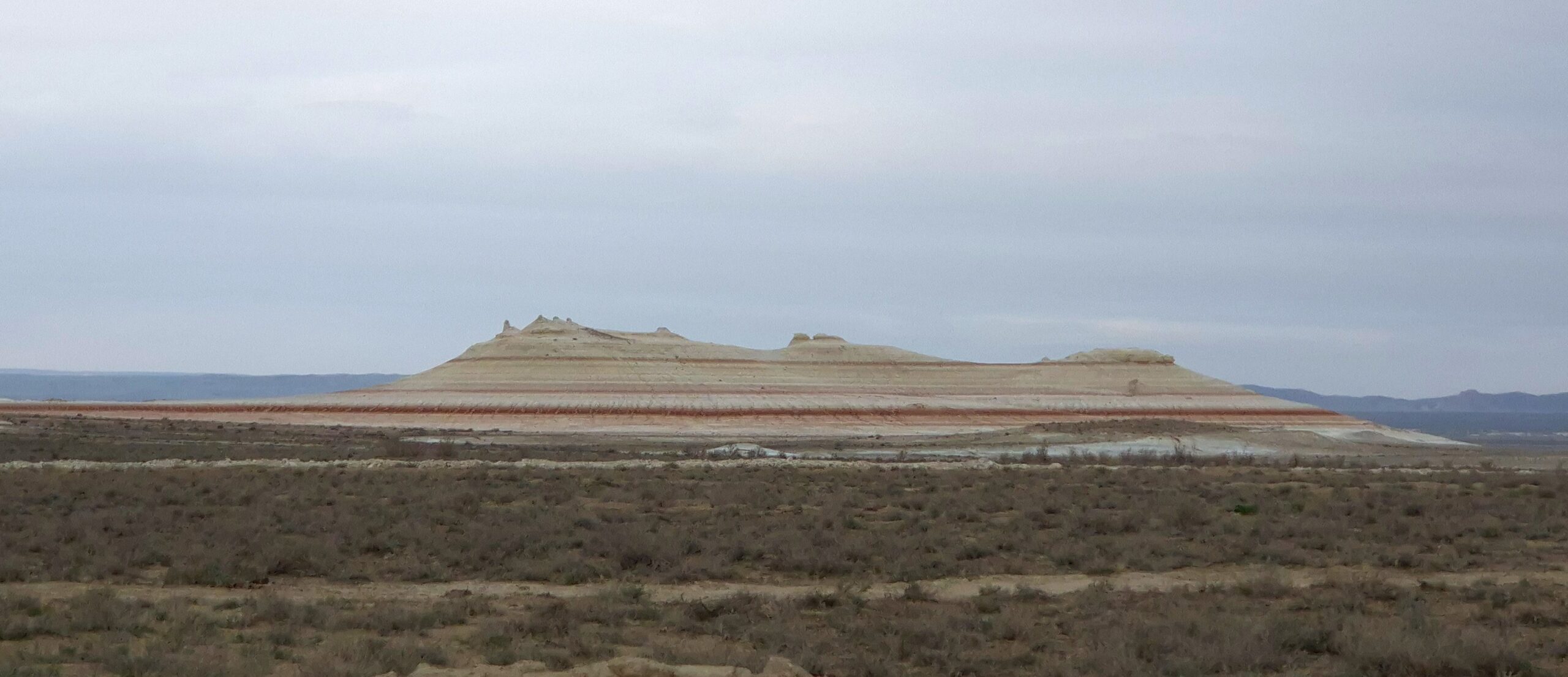
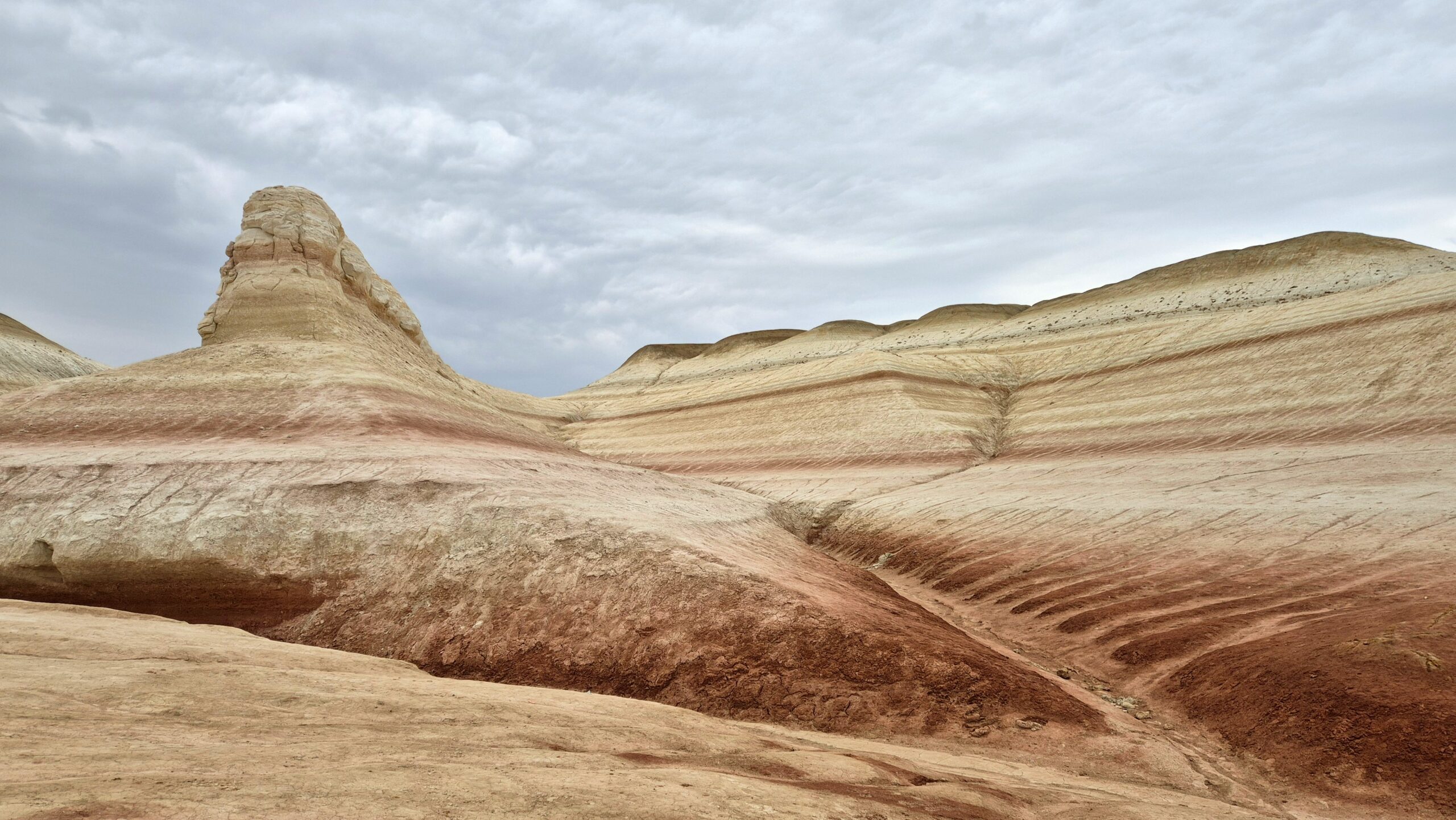
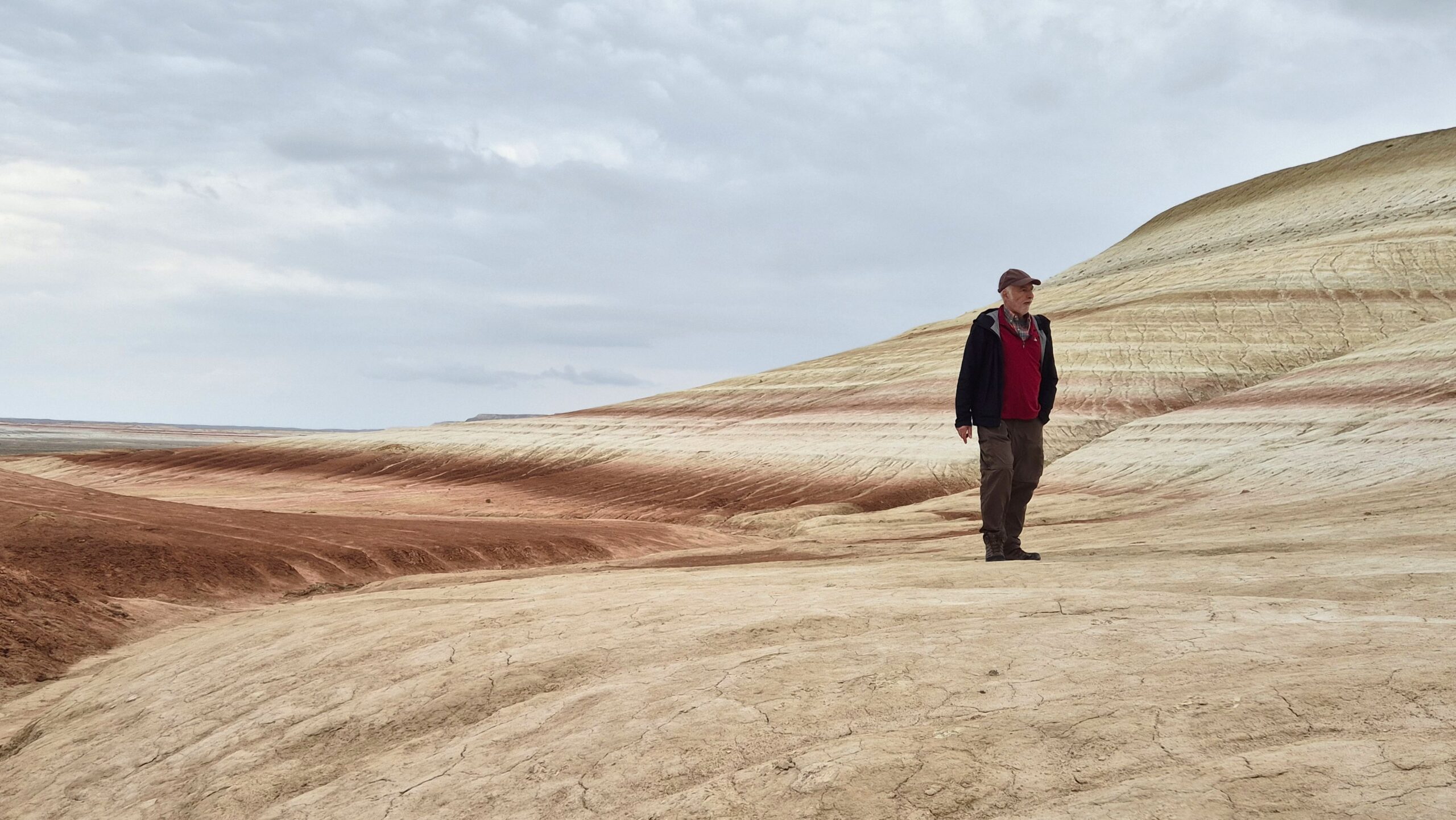
“Tiramisu” is the popular name for the spectacular eroded cluster of hills painted in many shades of red and rose and gray, amid ancient white chalk rock.
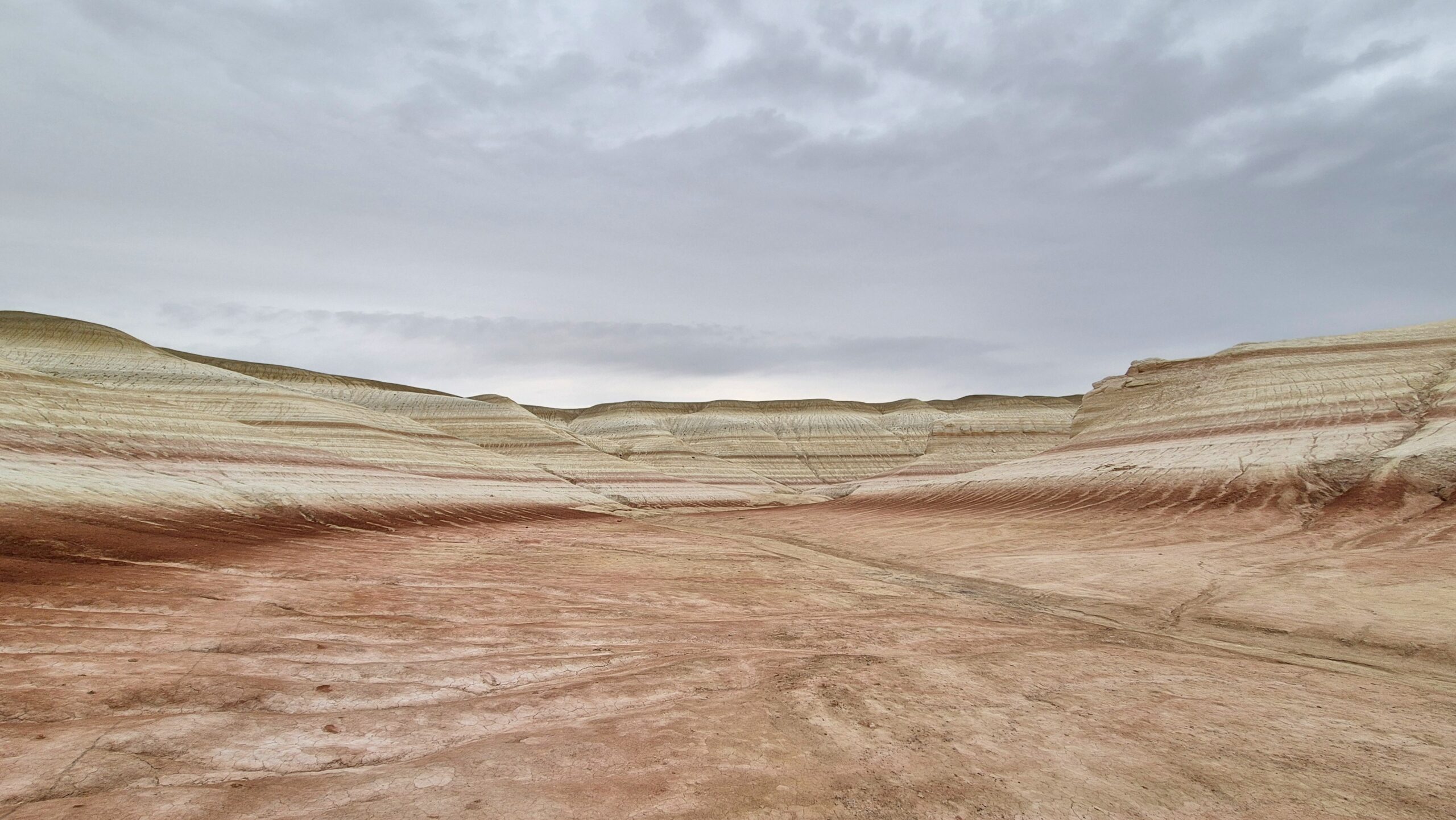
We wandered for a while through narrow gullies carved by water, rather like rainbow-hued arroyos.
With rain expected to return in the evening, we opted to shelter indoors instead of camping. A modest guest house in the small oil town of Shetpe had a room for us, where several bicyclists also bedded down for the night. Under an awning, we cooked our meal together, a stir-fry of rice, vegetables, tofu, chili pepper, adjika hot sauce, and soy sauce. And then to bed.
(To enlarge any picture above, click on it. Also, for more pictures from the five Stans of Central Asia, CLICK HERE to view the slideshow at the end of the itinerary page.)