
In brief: When Astana became Kazakhstan’s capital 30 years ago, a new city was built atop the old. It’s wealthy, friendly, growing rapidly, and often monumental.
Astana, Kazakhstan, is a largely invented capital city, created anew over an earlier Russian town, and funded by the oil and gas wealth drawn from the Caspian Sea. Nazarbayev, the long-time leader of the country after the fall of the USSR, decided to move the government from Almaty in the south. Whatever the reasoning, he chose a spot in the midst of the flat, desolate steppes of the north, a location that makes it the second coldest capital city in the world (but still in summer, quite hot).
So, just 30 years ago in 1997, with grand aspirations, Astana (whose name means ‘capital’) was overlaid on another town on the Ishim River. Even the UN deemed it the “City of Peace” due to its ambitions to plan for a brighter future and build on Kazakhstan’s historic integration of many ethnicities and religions.
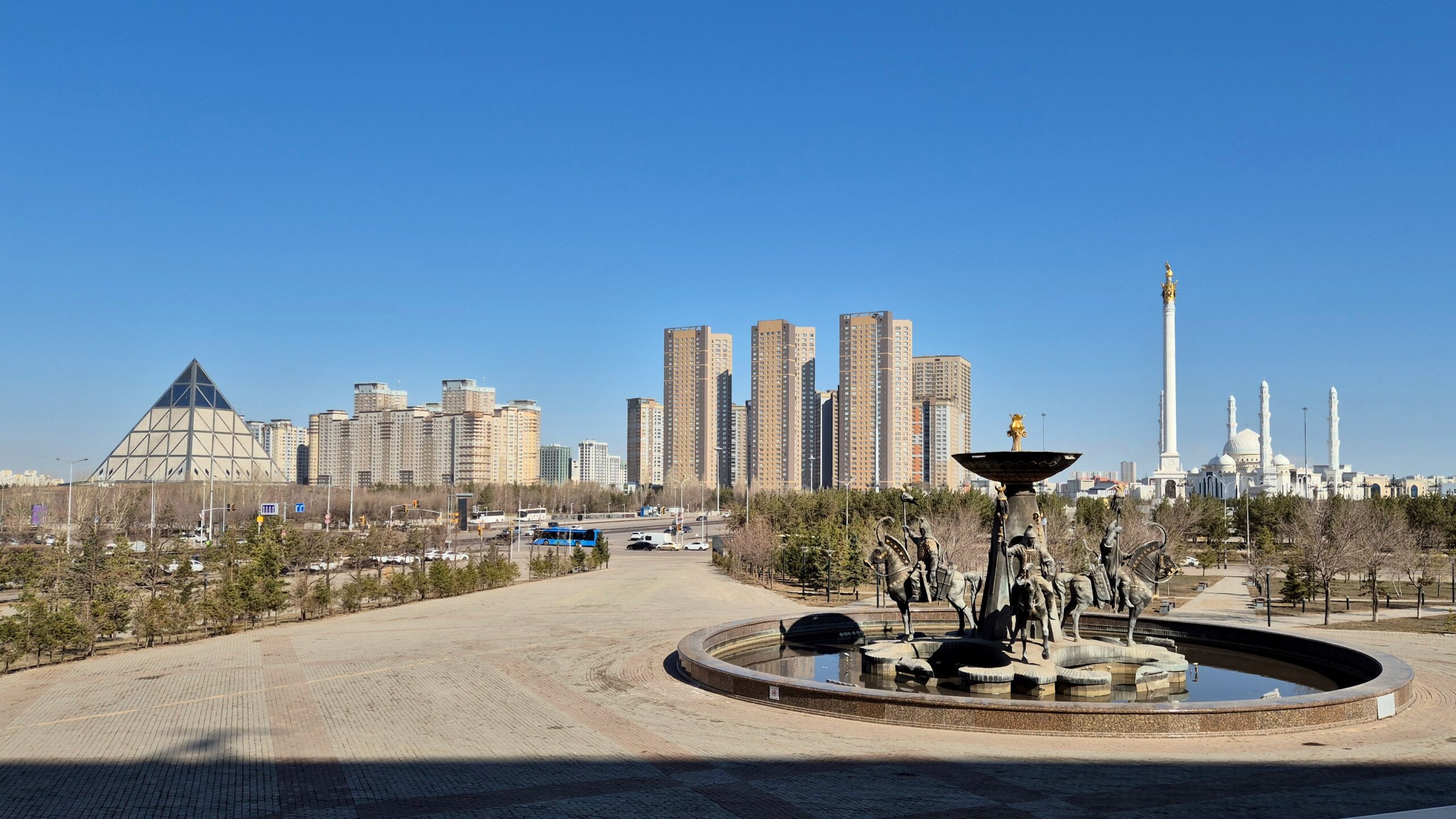
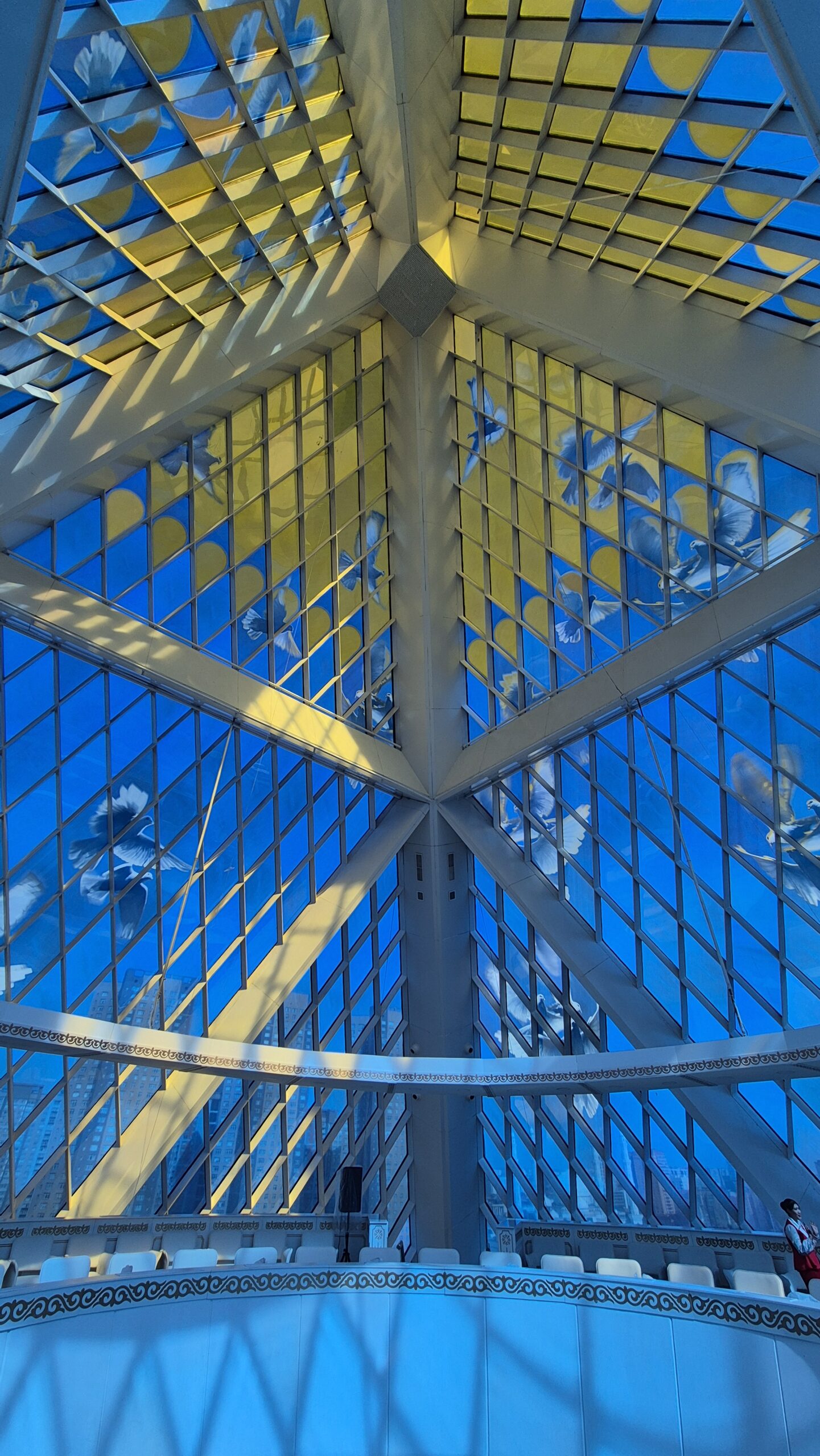
That was the point of the Norman Foster glass pyramid, the Palace of Peace and Accord, built soon after, a place for political and religious leaders to figure out how we can all get along better.
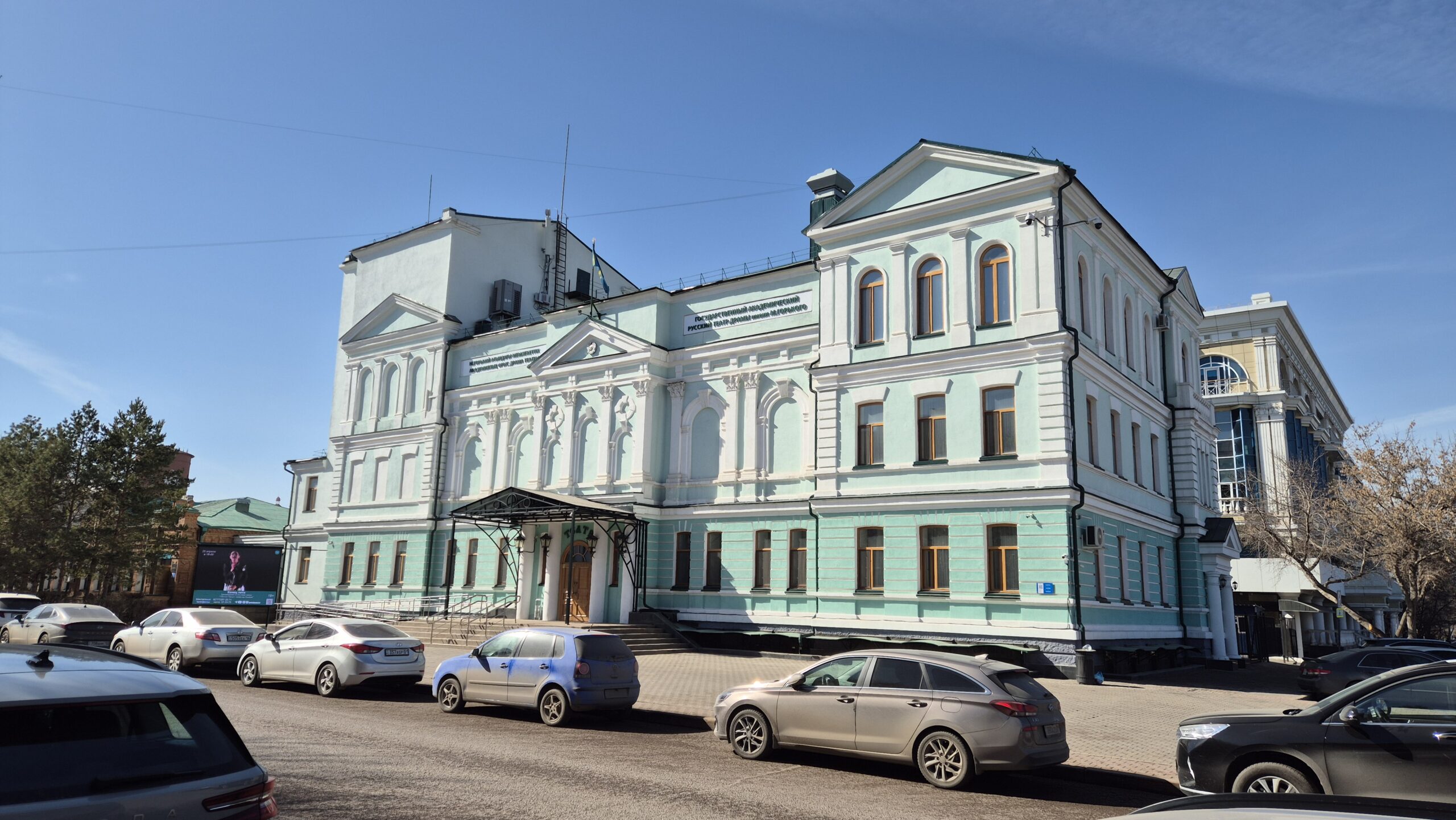
Even before the shift of the capital, much of the old town to the north of newer Astana had been displaced, primarily by Soviet era structures and apartment housing. A few treasures have survived, like the old theatre. In prime locations, however, new development is displacing even more.
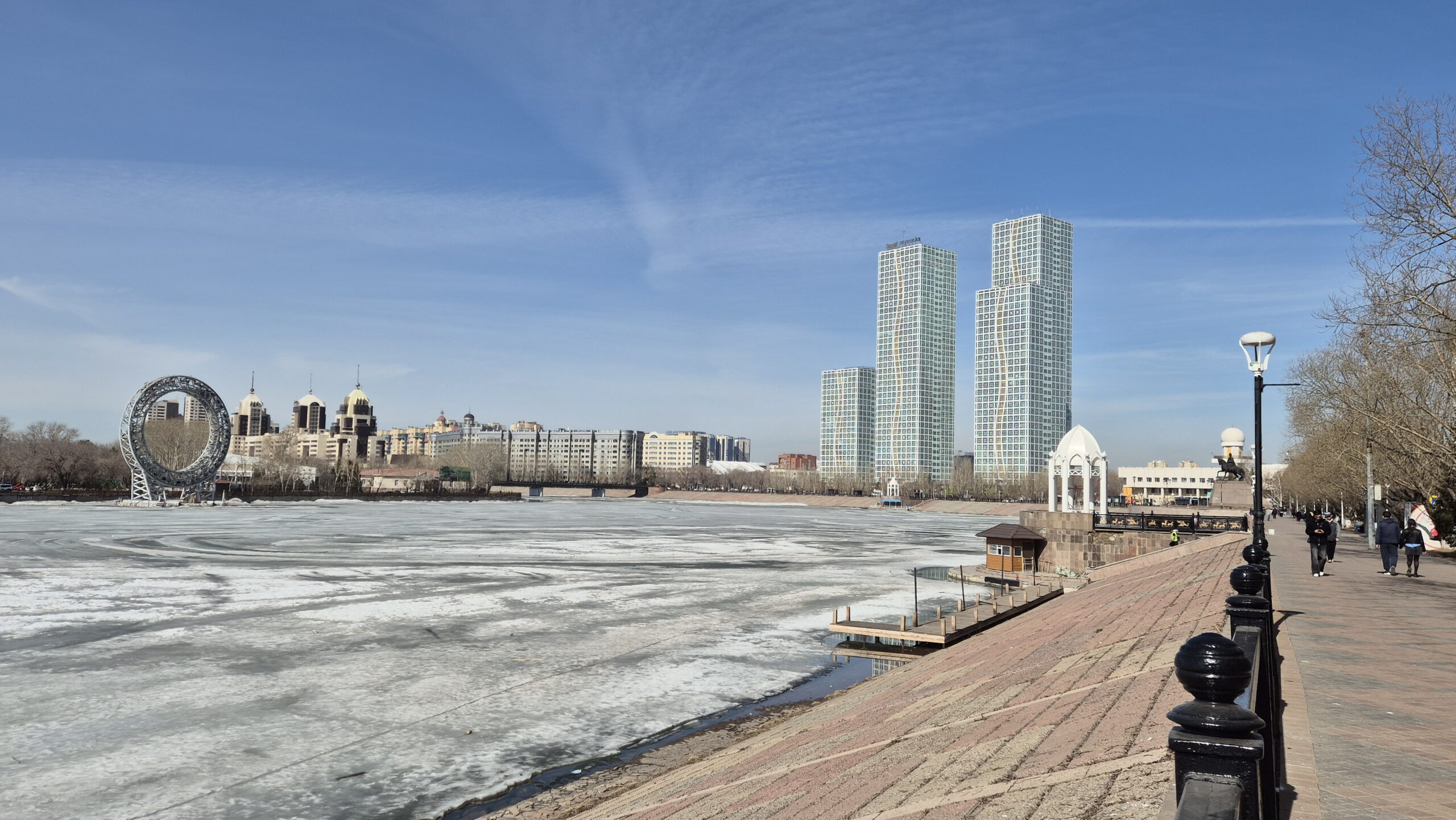
The most inviting part of the old town is the riverway, a long promenade to the north of the new government and office complex. It offers residents a splendid embankment to walk or just gather to enjoy delightful views of the new and the old parts of town.
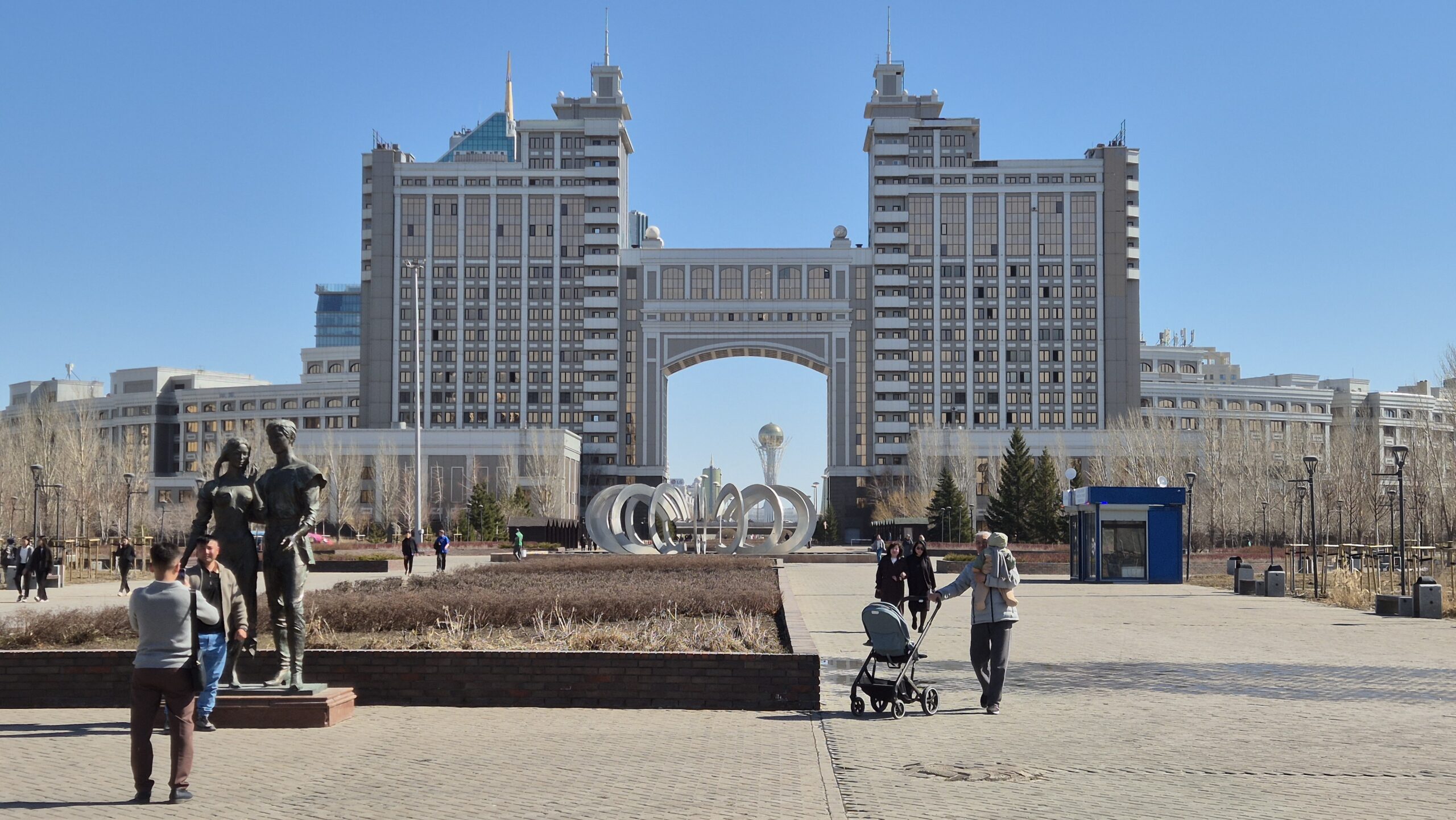
As for the new town, two broad axes define grand pedestrian plazas. Along these, palatial ministry buildings contend with eye-catching skyscrapers by notable architects, modernistic monuments, and massive apartment buildings.
One pair of emerald buildings flares at the top like the open pages of a book. A trio across from those (Northern Lights) ripples in waves as it rises and features light shows at night.
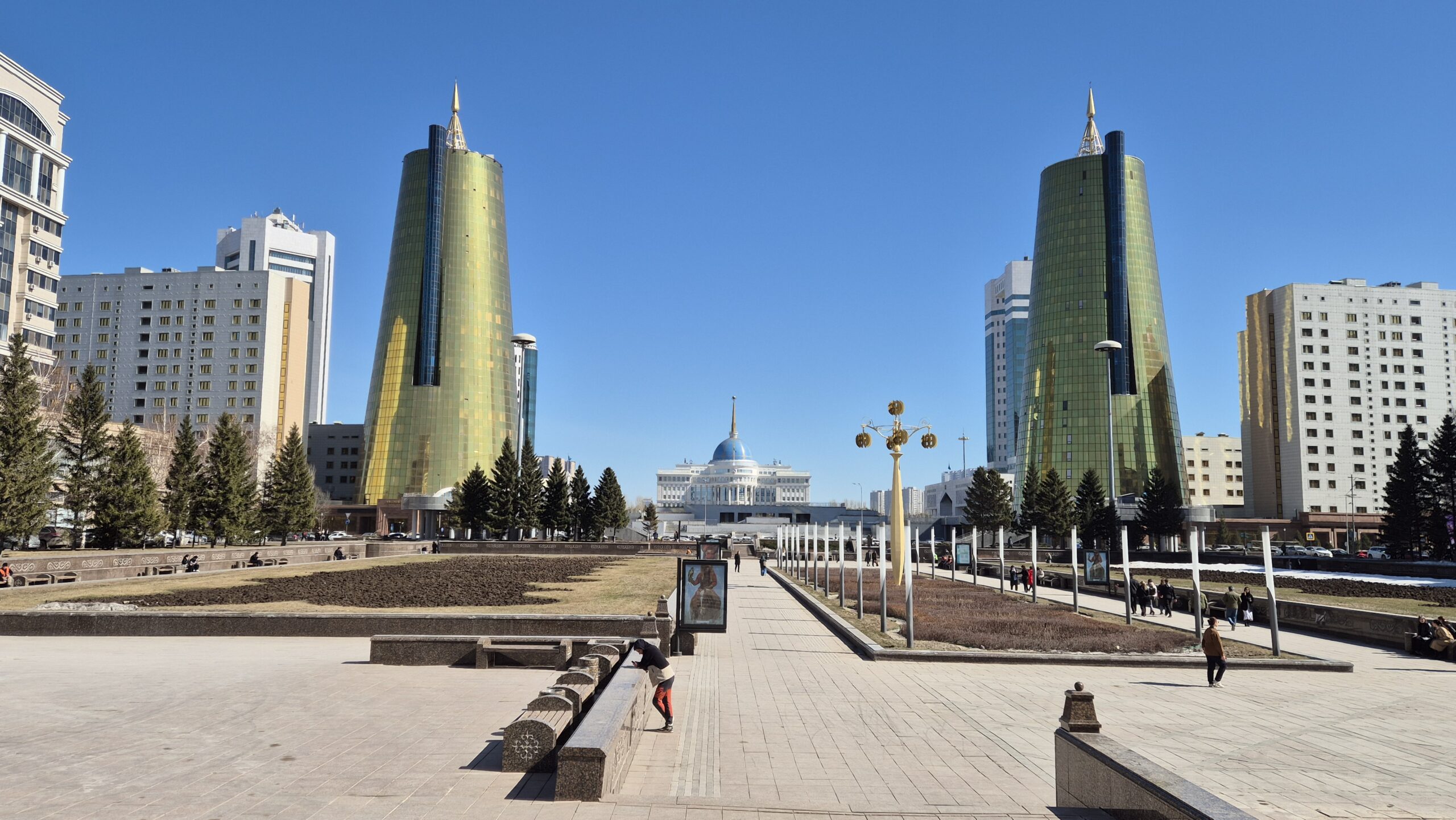
It can seem a bit much, monuments to excess or over-ambition, like the grandiose Presidential palace at the end of the east-west axis. But perhaps the remoteness of the capital has limited the endlessly contending skyscrapers of the Persian Gulf states.
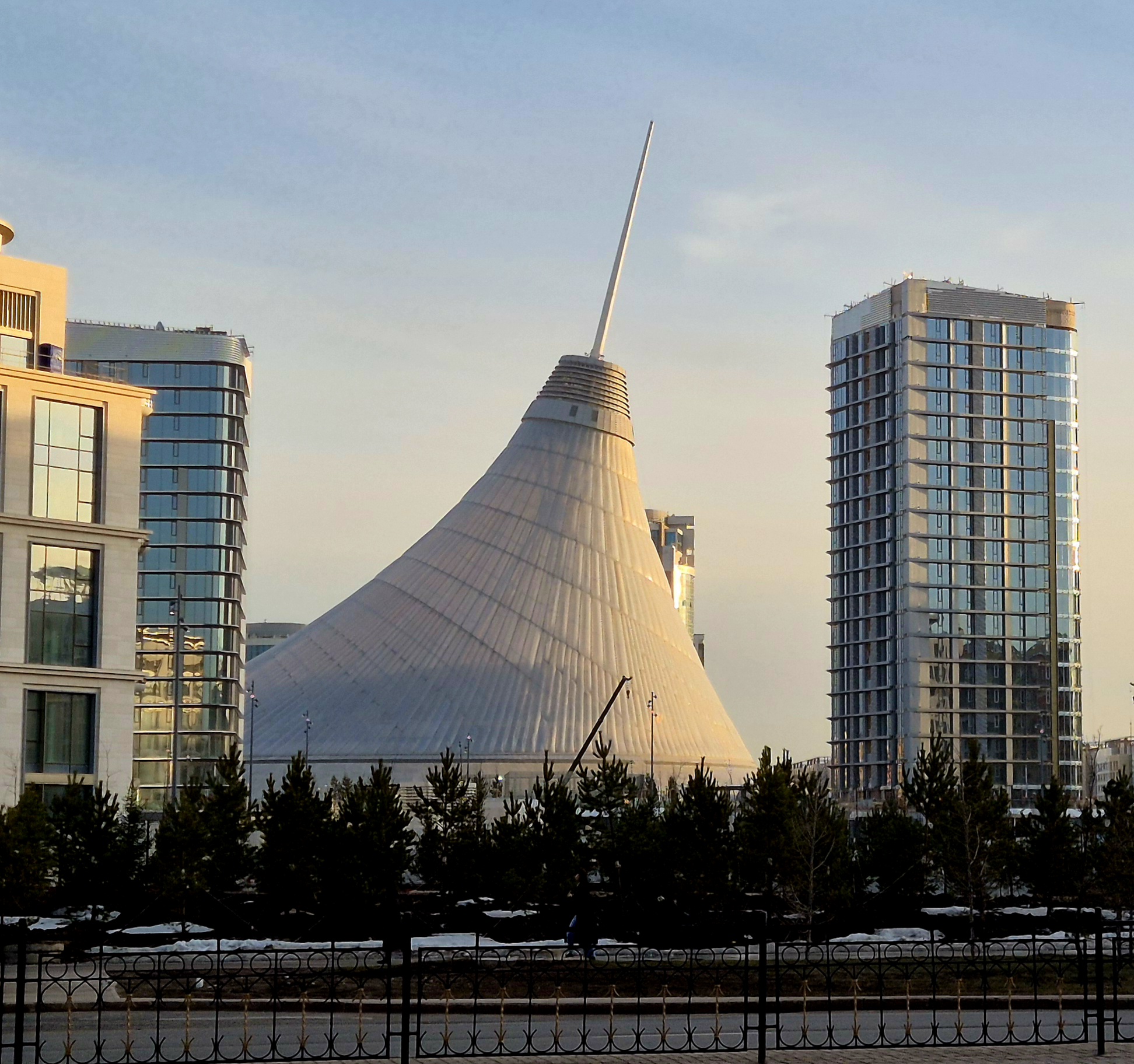
We saw other signs of wealth. The countless shopping malls are filled with brand-name fashion options. Locals often show off tailored outfits on the streets. The most noteworthy of those malls is Norman Foster’s Khan Shatyr, a massive, melting Hershey Kiss confection at the opposing end of the east-west axis from the Presidential Palace. Within the notable buildings hide restaurants with grand interiors and wide-ranging cuisine from across Asia.
We loved walking the plazas, joined by hundreds of city residents enjoying the unseasonably warm weather, with temperatures up to 17C (65F) and down to 0C (32F). It was largely mud season, with the accumulated snow just melting off or being removed by city workers. They were also cleaning the large fountains that had been covered with platforms. Elsewhere, women were sweeping up sand and debris. Further off, even at this time, the extensive parkland and riverfront areas around the axes made for an enticing urban landscape.
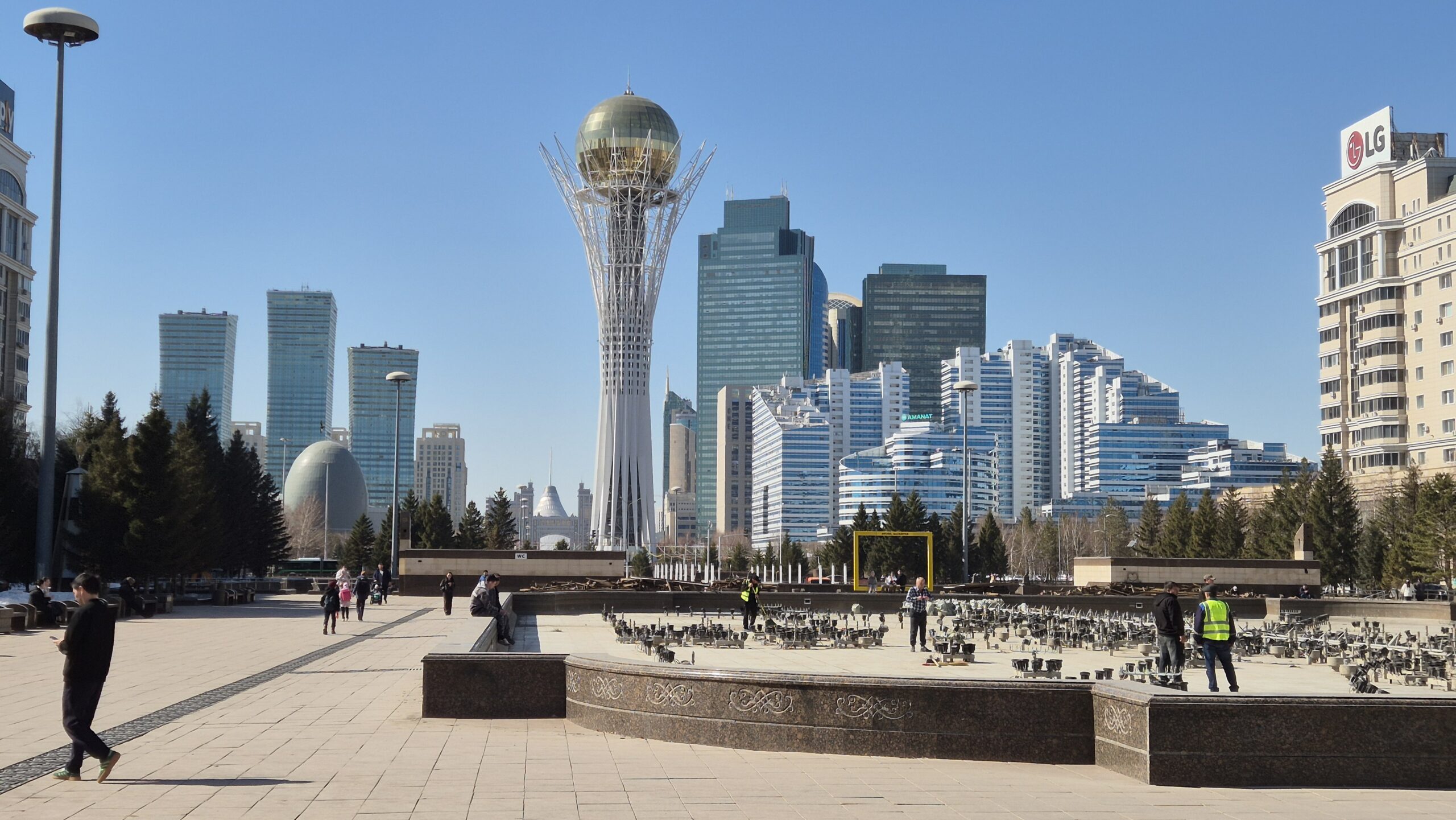
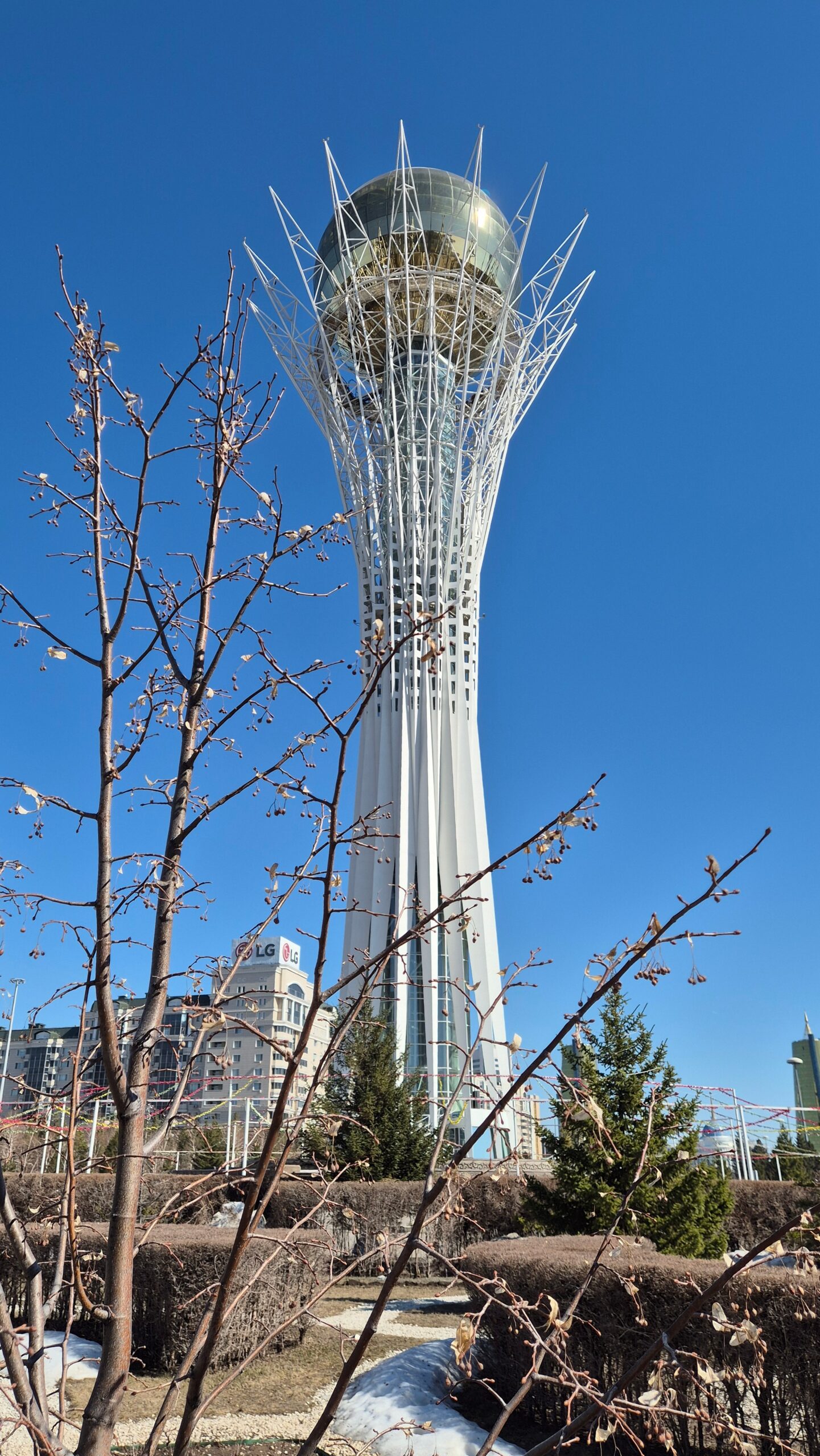
At the center of the new town rises a symbol of the country and the city, 97 meters high to match the founding date. An abstract image of the Bayeret tree, the tree of life, it represents a vision of the future and the country’s old nomadic beliefs. The tree connects the world to the celestial, with a glass ball – an egg of the legendary eagle Sarayak – at the top.
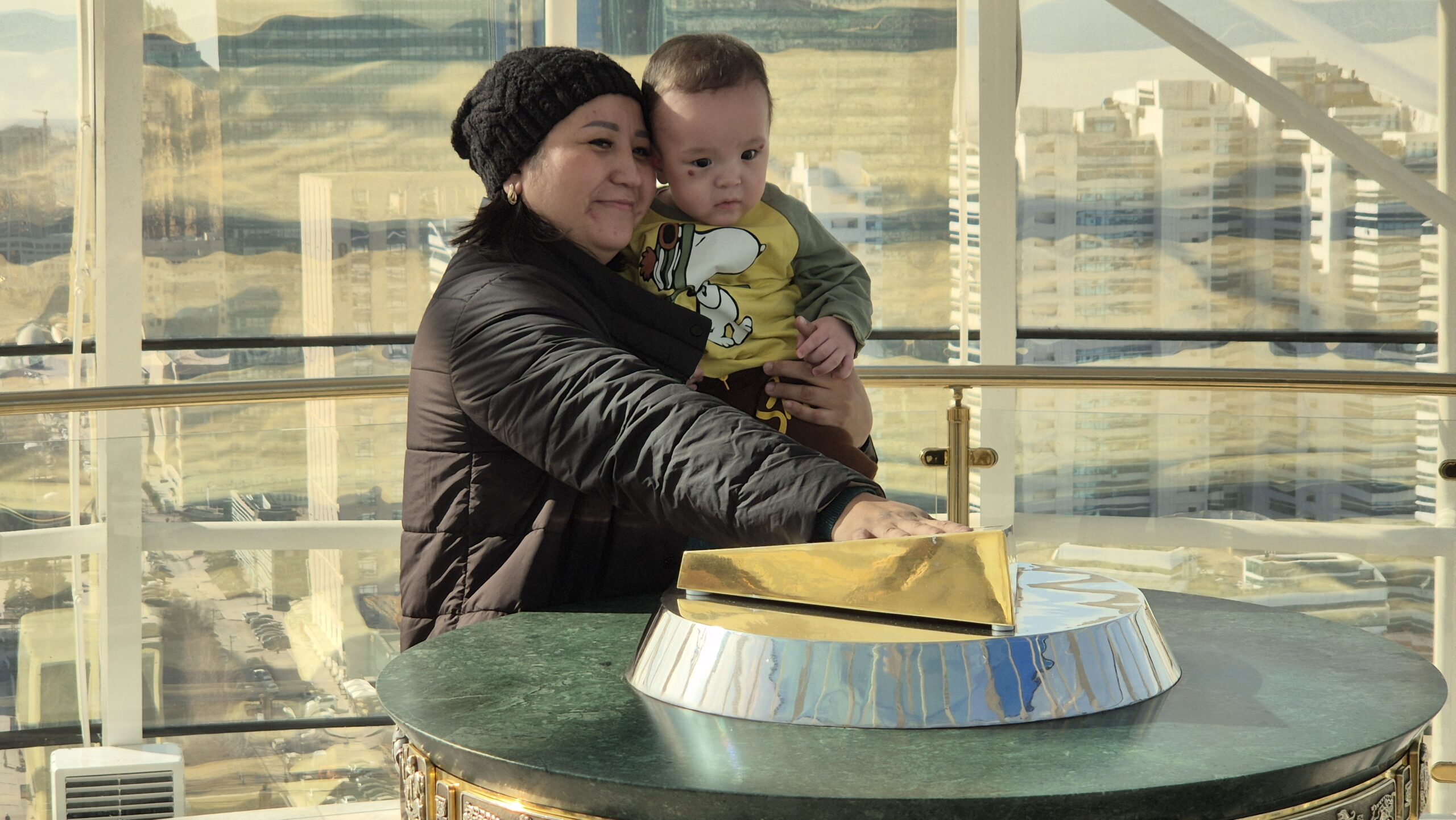
An elevator takes visitors into the ball for a view in all directions, not just of the city, but of the open steppe land at its current limits. Even locals troupe here for the view and to remember Nazarbayev. At the top level within the ball, they can place their hands in a bronze casting of the man’s handprint.
While we visited, several of them showed how friendly and welcoming the Kazakhs are by asking about us and chatting a bit. And we were somewhat surprised by how many spoke English despite the long years of Russian oversight. It’s now part of the curriculum in schools.
Sadly, the gleaming design – and great wealth – did not forestall problems. On the major arteries – minimum six lanes – through the city, traffic inched along. Money also brings lots of cars – from Korea, China, Japan especially. The traffic is not very noisy due to the broad streets, but why is there no metro in a wholly new city, we wondered. That project foundered for years due to mismanagement, but may soon come online.
The traffic adds to the major pollution problem here. Despite the flow of oil and money out of the Caspian Sea along the country’s western shore, Astana primarily burns coal – another major resource of the country – to generate electricity. Cleaner sources are slowly coming on board, but the city and its people suffer the consequences for now. It doesn’t help that winds from the steppes regularly sweep dust into the city as well.
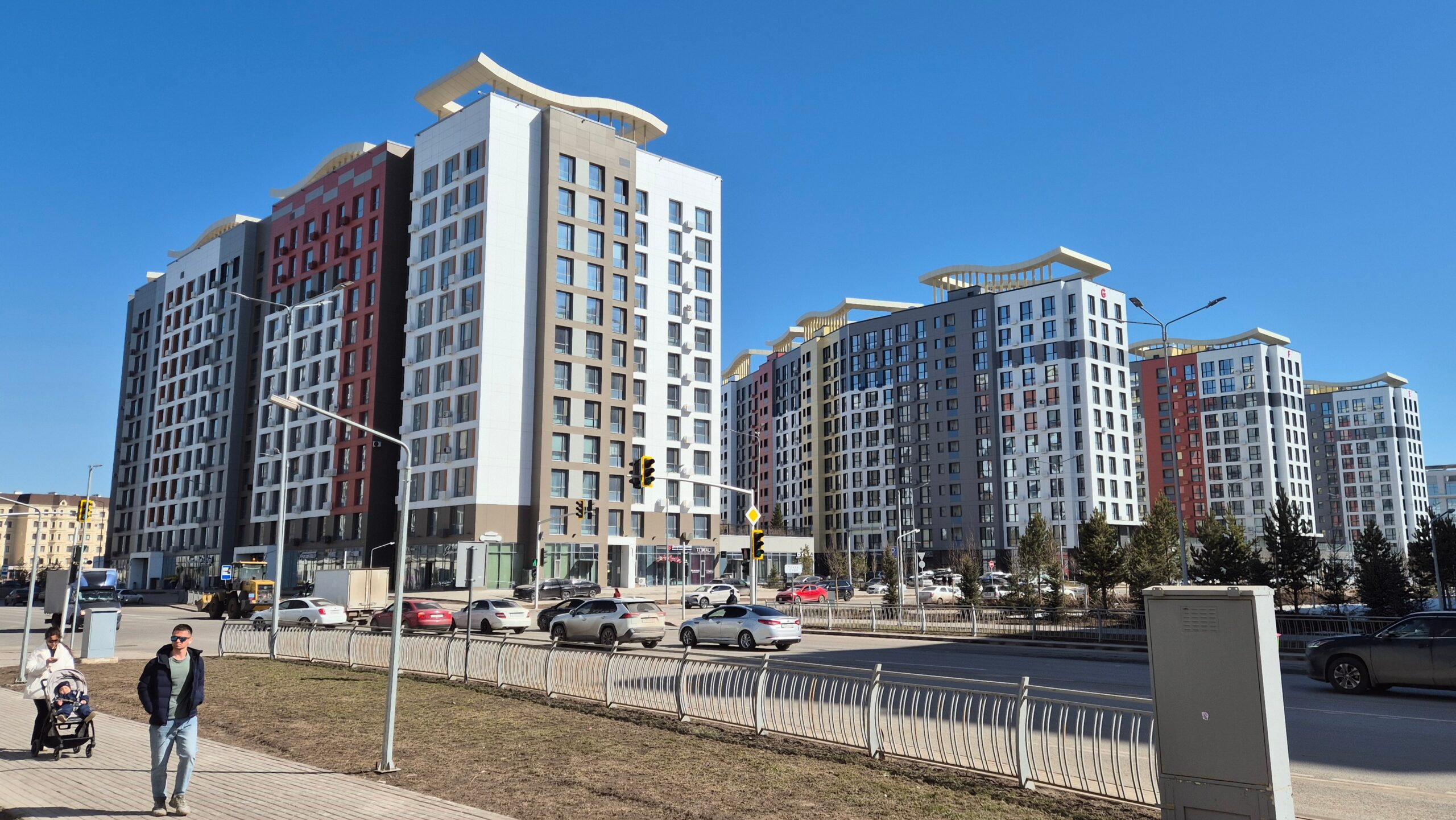
Despite these problems, the population of over 1.5 million is growing rapidly. Battalions of apartment complexes – new or under construction – march along the outskirts of town, and throughout the central city as well. There appear to be plentiful opportunities to make a good living and future here, enhanced by governmental incentives for skilled personnel. We saw so many young children wherever we went.
(To enlarge any picture above, click on it. Also, for more pictures from the five Stans of Central Asia, CLICK HERE to view the slideshow at the end of the itinerary page.)