In brief: The beauty of Khiva comes from generations of leaders, like the last Khan, who built monuments for Allah – and for themselves.
When he wrote poetry, a lot of love poetry, he called himself Feruz. When he ruled the Khanate of Khorezm out of Khiva, he was Muhammad Rahim II.
He was the last in 400 years of rule by his predecessors, retaining control for 47 years, from 1864 to 1910. Still revered today as a wise and effective leader, this last Khan accepted integration into Russia in 1873 as a protectorate in order to preserve his city. But then he still ruled for another 37 years.
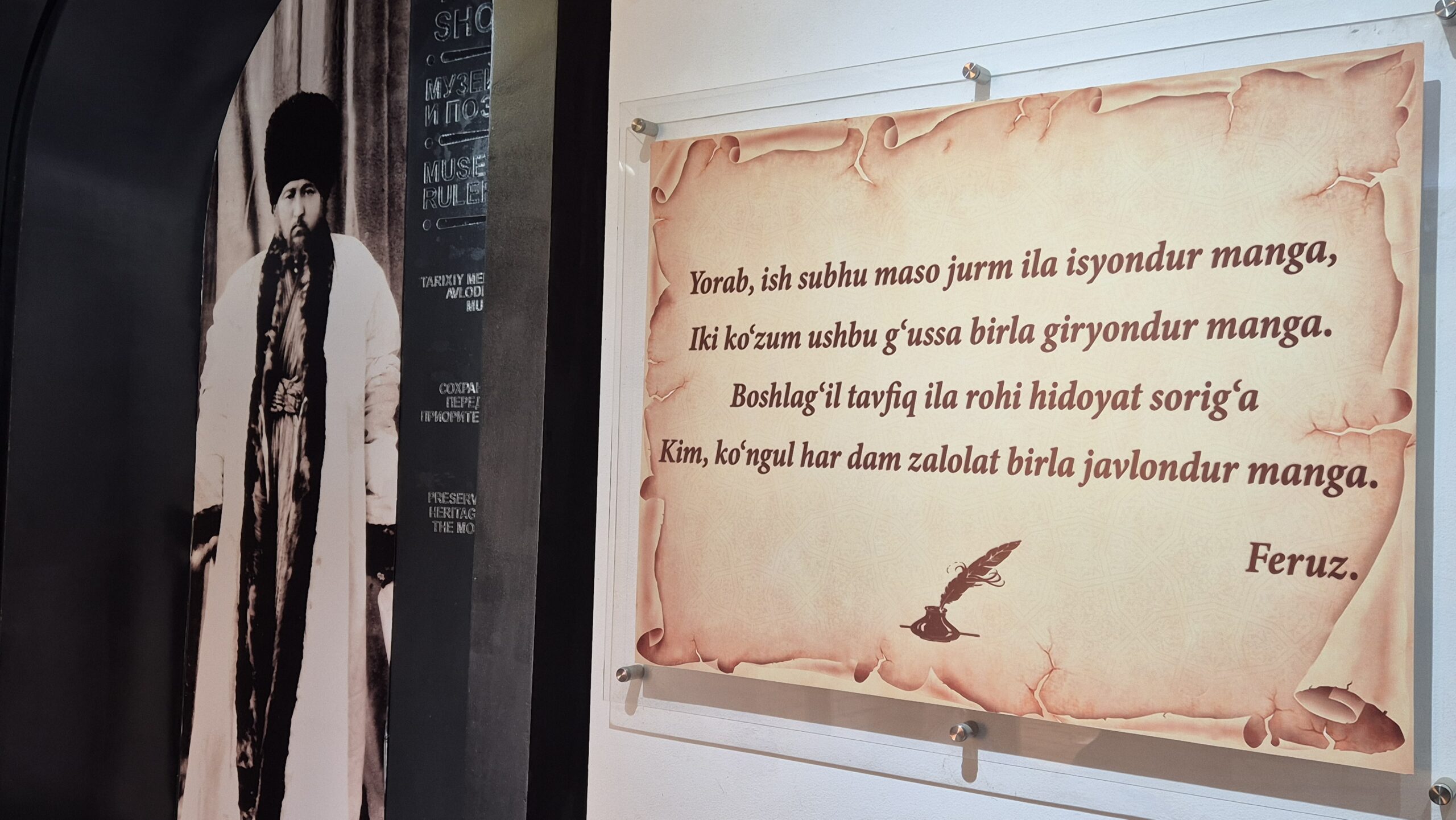
Poet, architect, leader – Feruz inherited and advanced the culture of Khorezm during his rule in Khiva, a fitting heir to its past glories.
Just as Bukhara had its origin legend about Job discovering water, so does Khiva. Shem, the son of the Noah of the flood, dreamed of a site where water would rise from underground and then found that place in Khiva. Around town, one can find the motif of an ark in tile.
The later imprint of Khorezm’s ancient leaders stands in the deserts just to the northwest. In a district known as Karakalpak, old brick and clay castles occupy a widespread area.
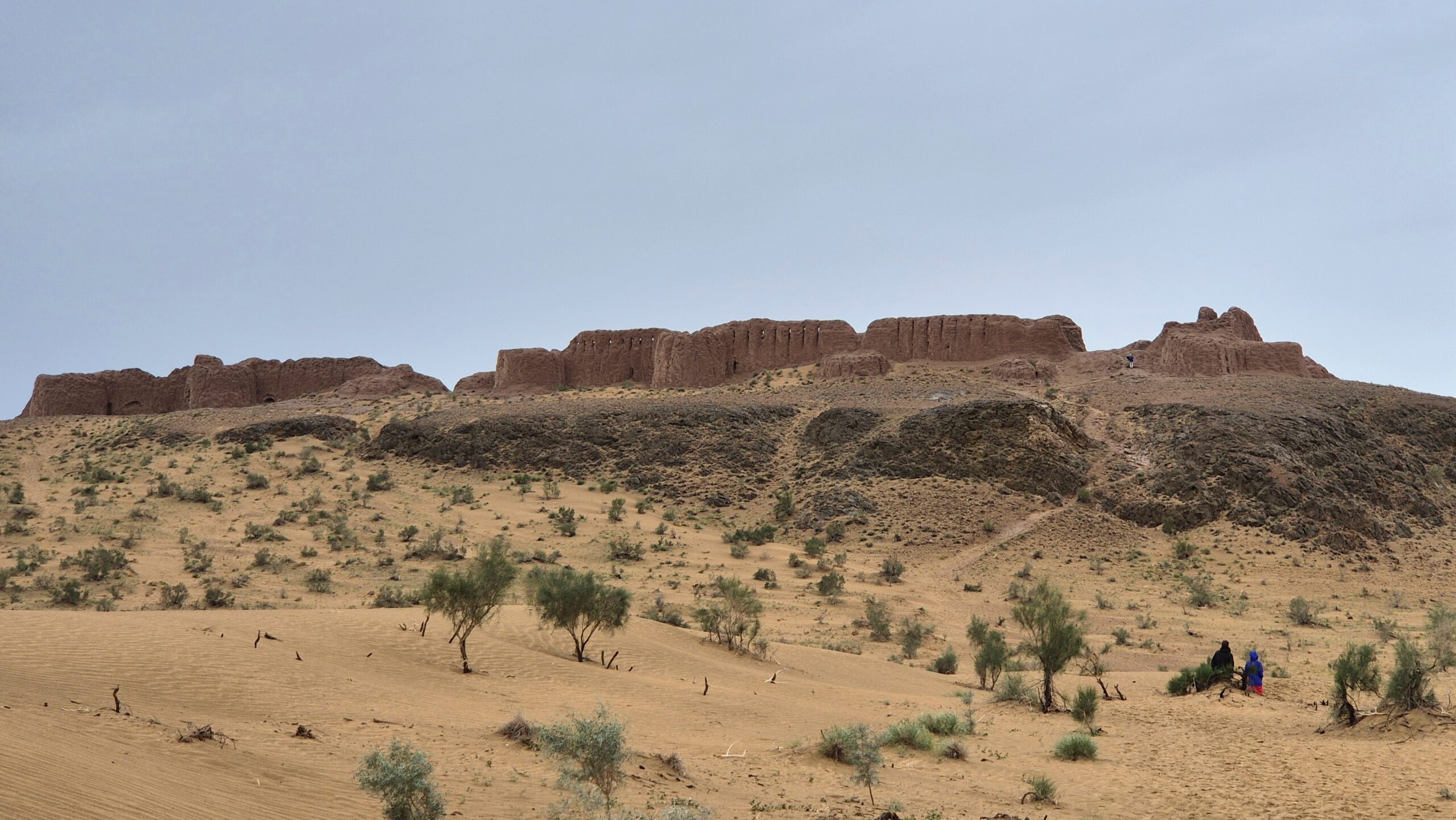
Known as the Fifty Fortresses (Elliq Qala), these include impressive remains dating back to the 4th century BC, some of which had been restored into the Middle Ages. They were made of unfired clay so they eventually dissolved in the rain, even if not overcome by enemies.
We visited three in various stages of archeological excavation or preservation. At Ayaz Qala, imposing walls topped a sandy mountain and looked over a sister fort of a different time.
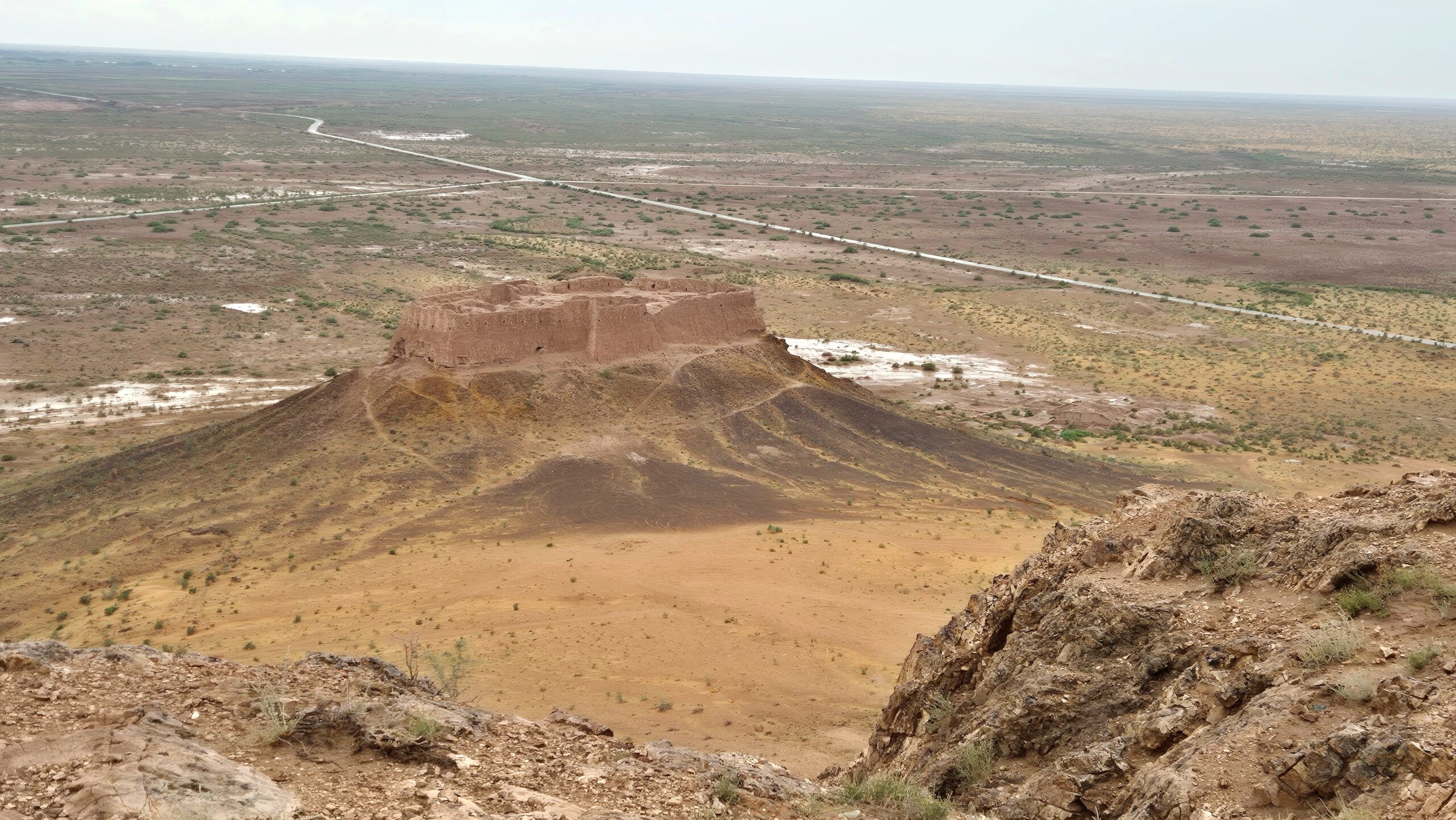
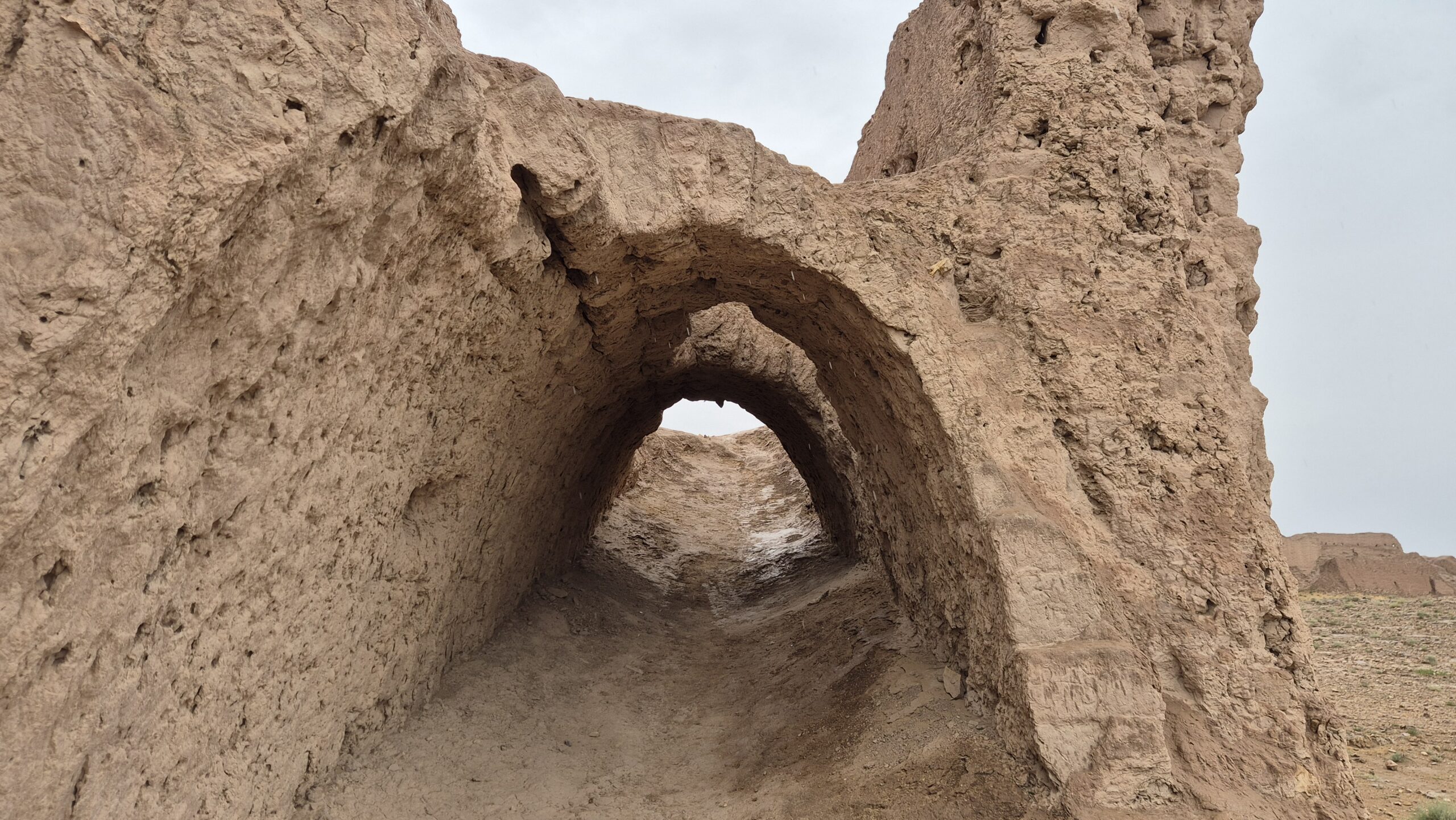
Old passageways and ramparts that had survived the years made for pleasurable exploring.
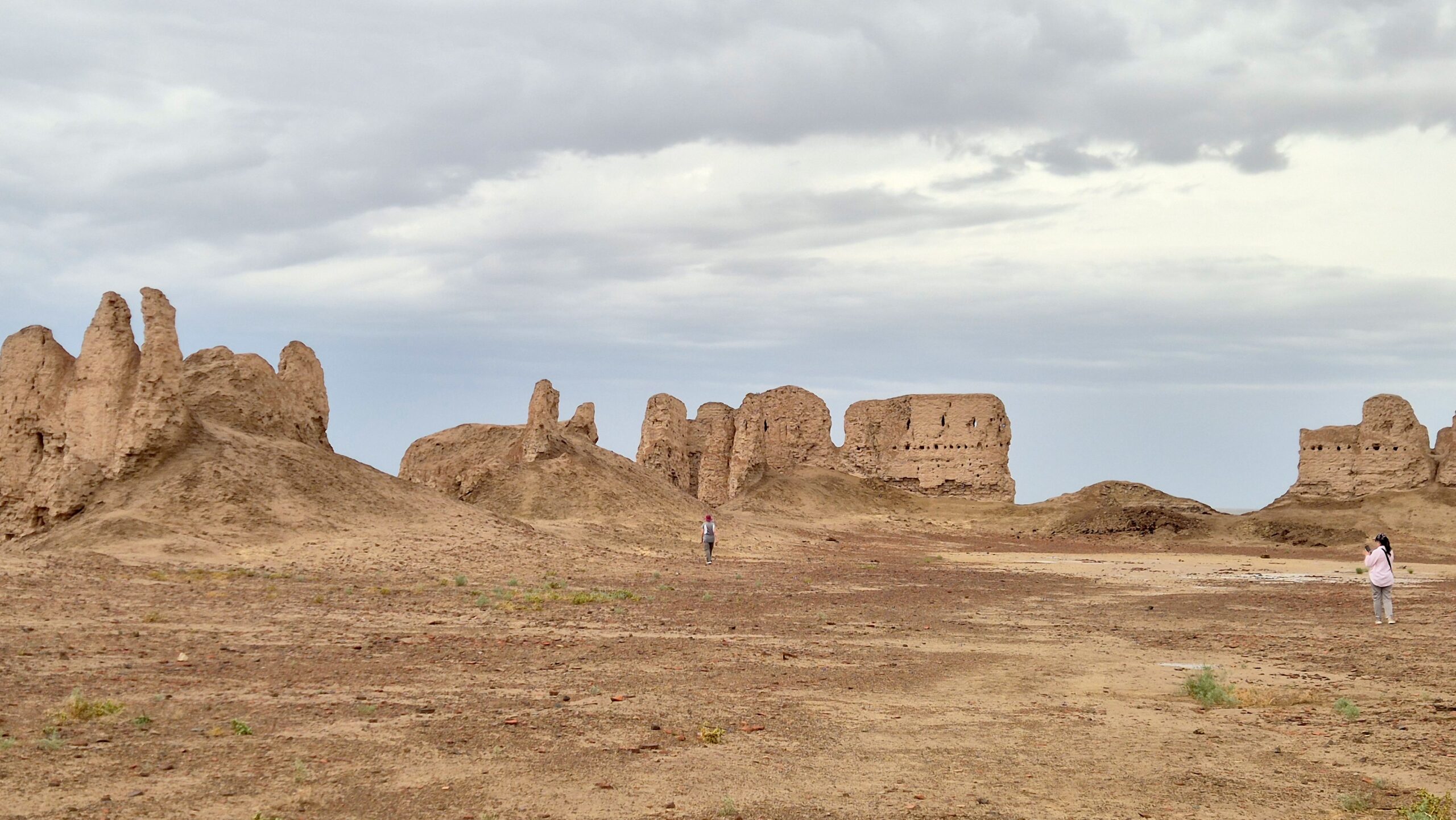
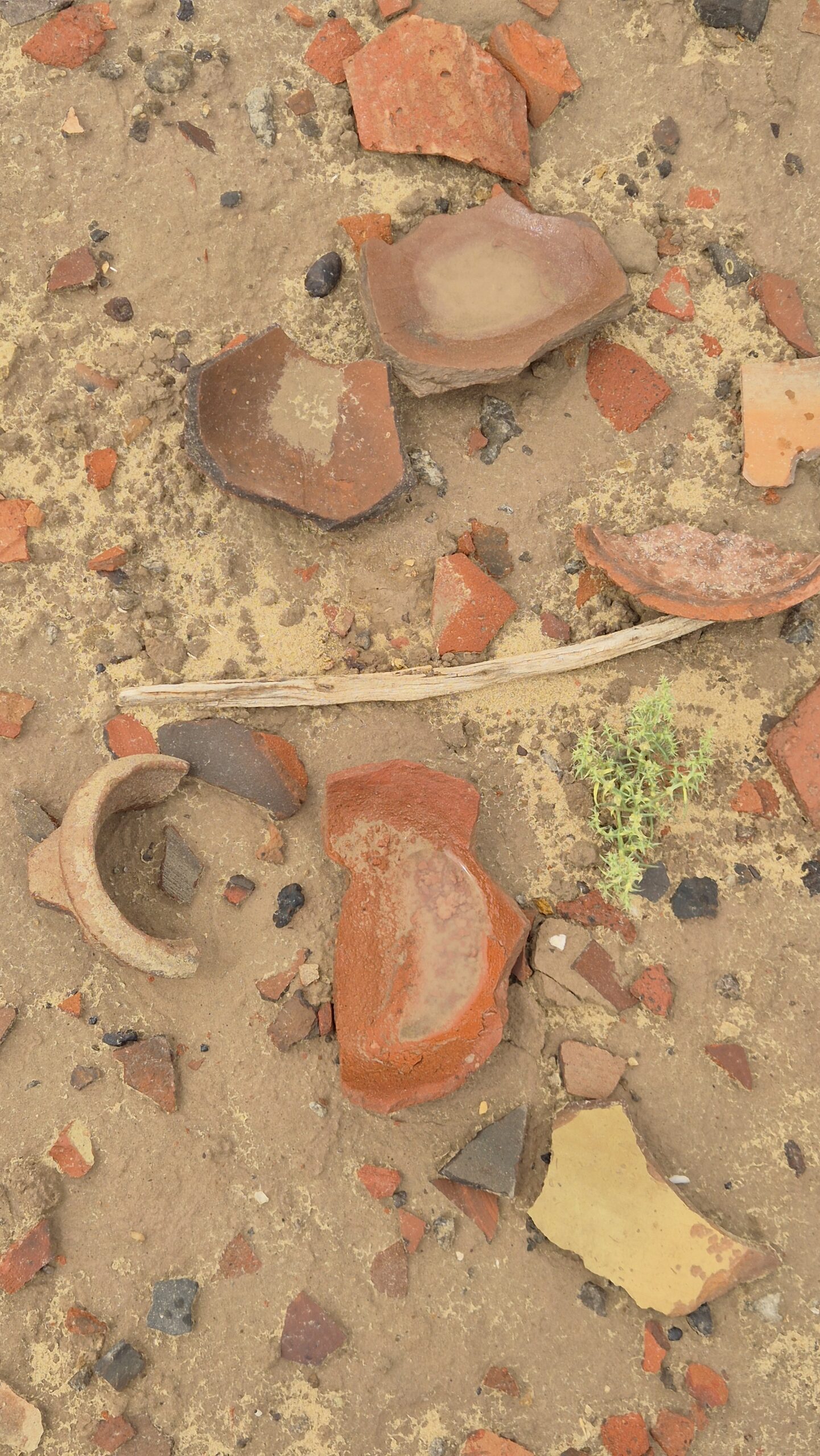
Among these, at the huge site of Kirkkiz Qala, we spent a lot of time in a treasure hunt among the countless shards of old ceramics still lying about.
Those were the Massaghete people (vs the Sogdians to the east), whose legendary queen Tomyris once defeated Persia’s Cyrus the Great. Khorezm remained different from the Uzbek cities to the east, more Turkic in character like Turkmenistan than the Persian connections with current Afghanistan and Iran.
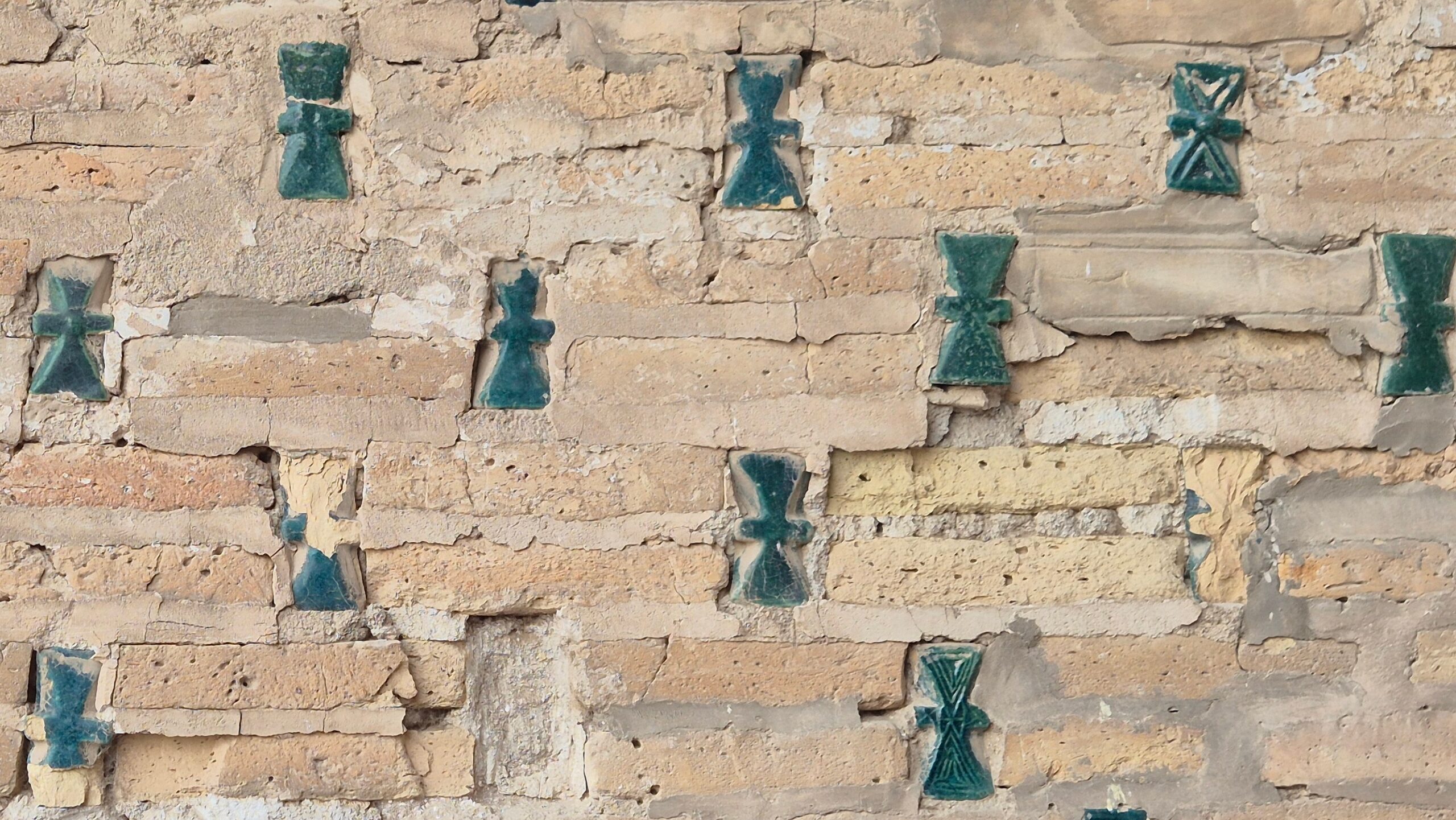
Among the legacies of this time is the heritage of customs and rituals from Zoroastrianism. Around Khiva, you see the hourglass symbol for protection against harm, physical or otherworldly. It’s combination of masculine and feminine principles, with the connection for reproduction or birth. And it’s related to the representation of the Persian Faravahar, a protective angel.
Later, the Khorezm area shared in the Golden Age of Islam. In the 9th century, a mathematician from here named Al-Khorezmi brought so-called Arabic numerals and algebra to the attention of the western world. The word Algorithm comes from his name.
Abu Al-Biruni, a polymath genius, worked in Khiva in the 11th century. He wrote works on science and mathematics, as well as a renowned comparative history of religions. He was also an expert astronomer who affirmed that the world was round (500 years before Galileo). He even calculated its radius within 2% of modern measures.
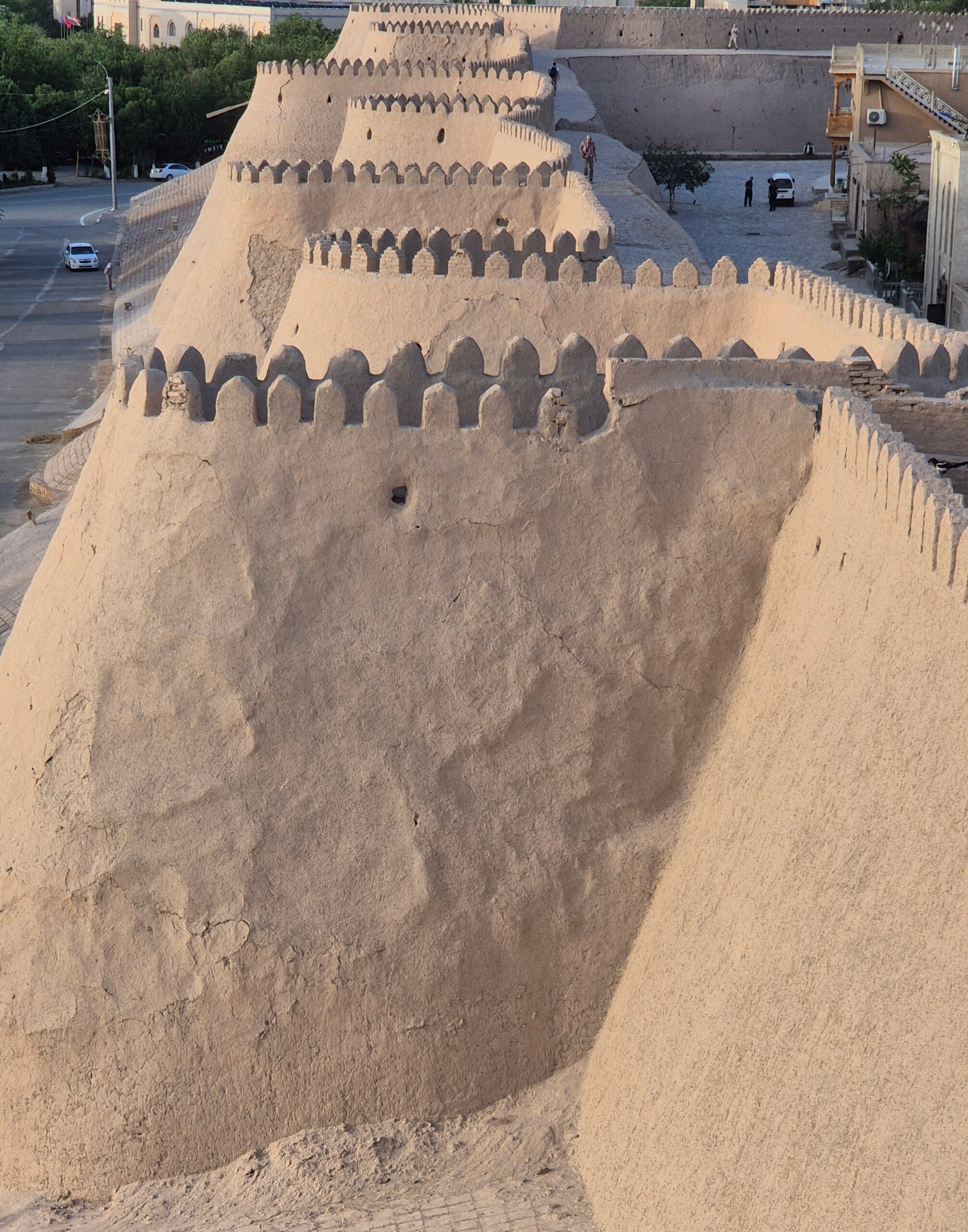
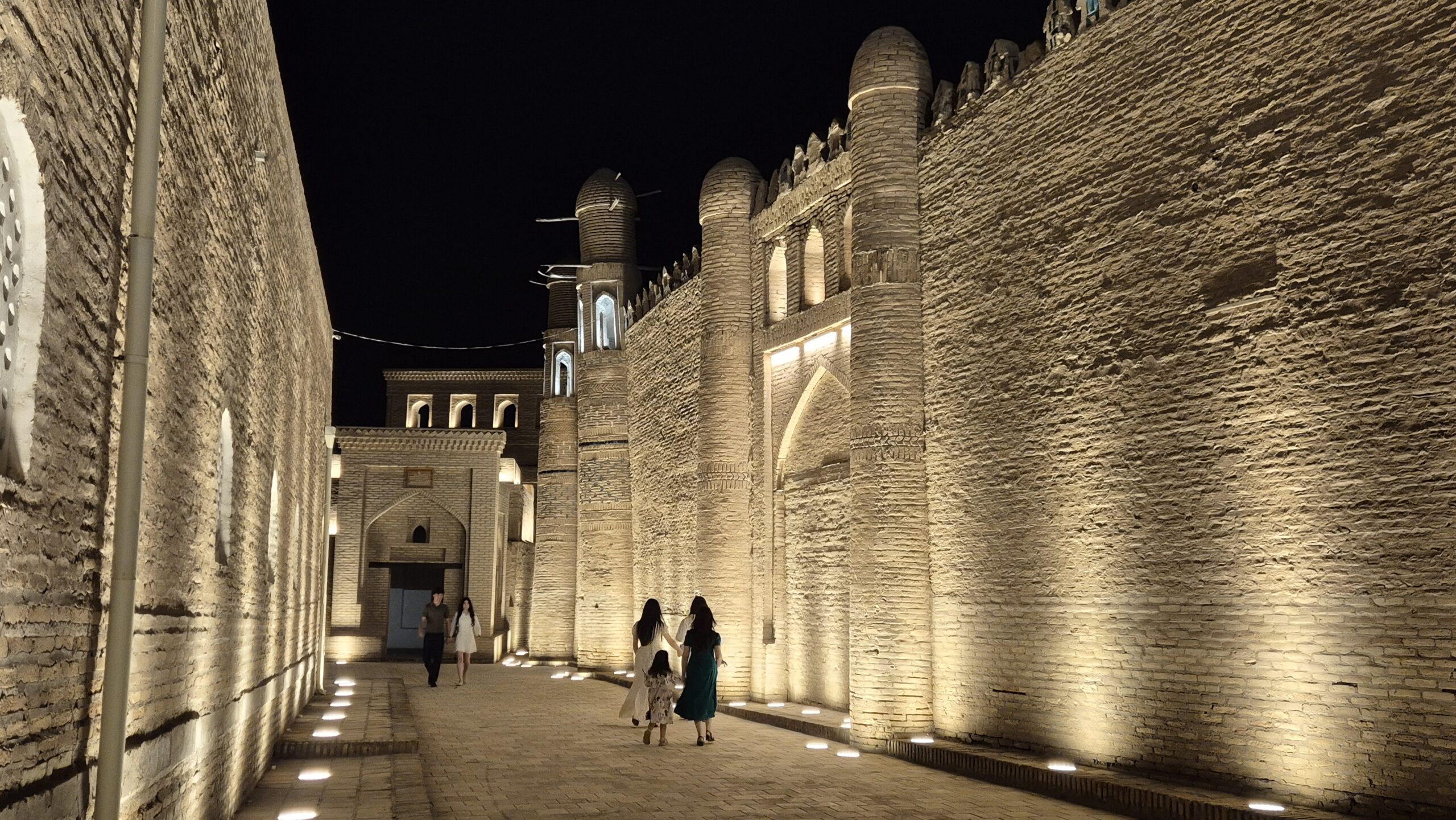
By that time, the inner part of Khiva – for the ruler and his court – was encircled by brick walls. Those 10-meter walls (33 feet) and their four gates still stand, with crenellations added under the Khanate in the 17th century. The rest of the city was also walled with 11 gates, but those have not survived.
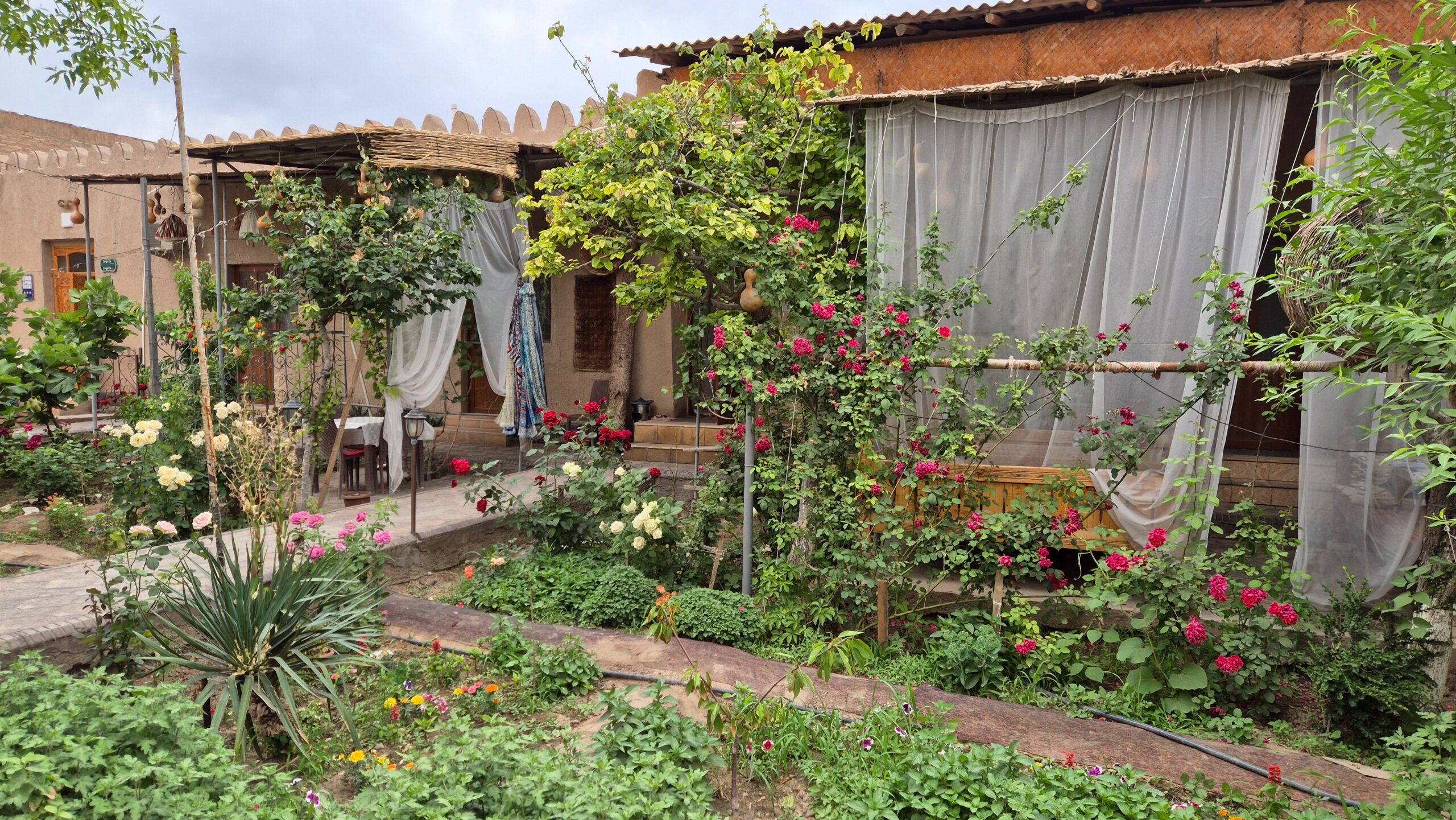
We stayed in a lovely guesthouse within those inner walls, so the compact city was easy to wander day or night on foot.
On one day, we found a large number of tombs built into the walls near the southern gate and wondered why. These were intended to prevent attack from other Muslim forces who would not want to disturb the tombs in any way.
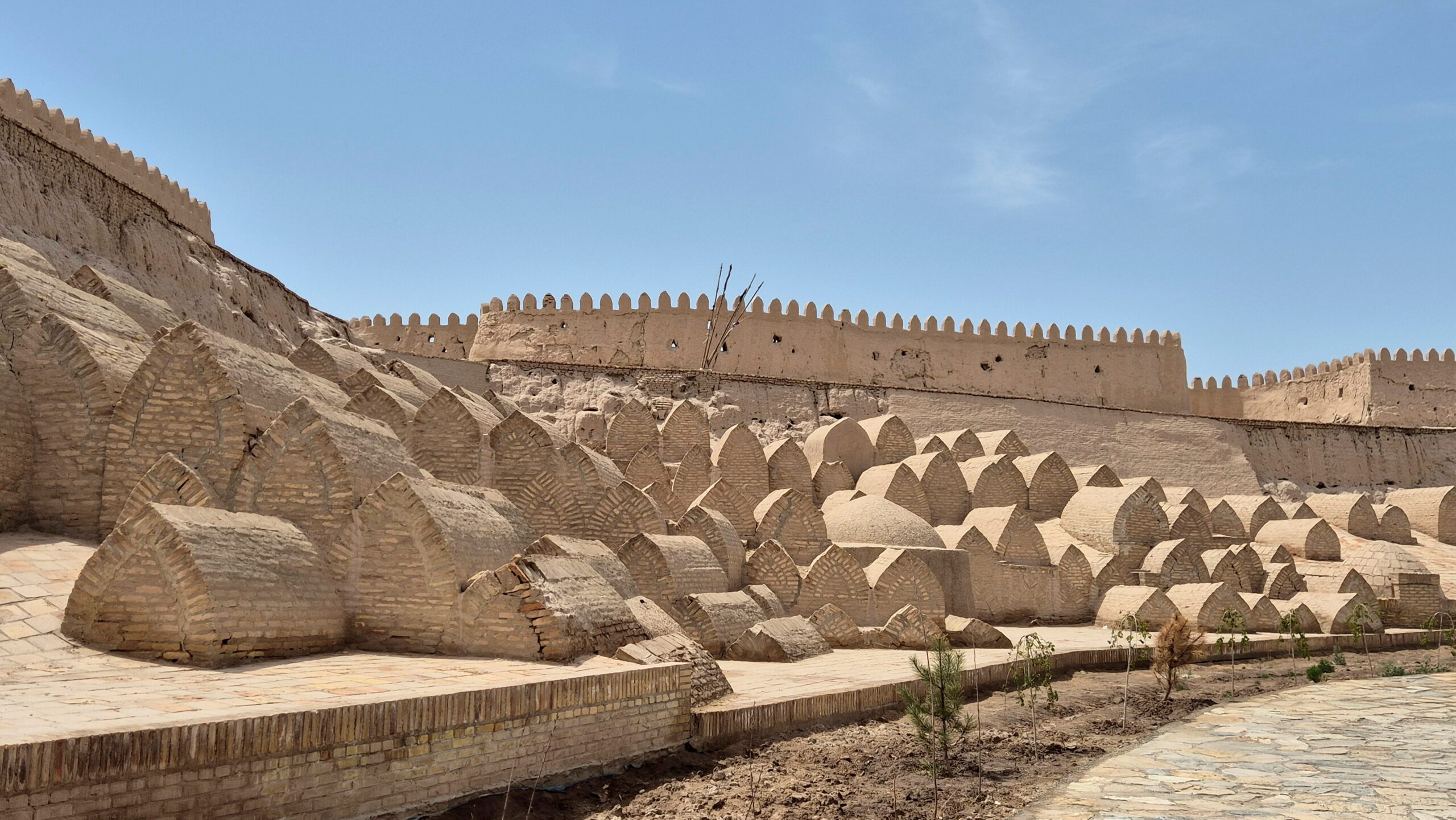
Most of Khiva’s structures, however, date from the 18th and 19th centuries, unlike the many earlier buildings of Bukhara and Samarkand, as Khiva’s Khans often wanted to redesign the city in their own manner.
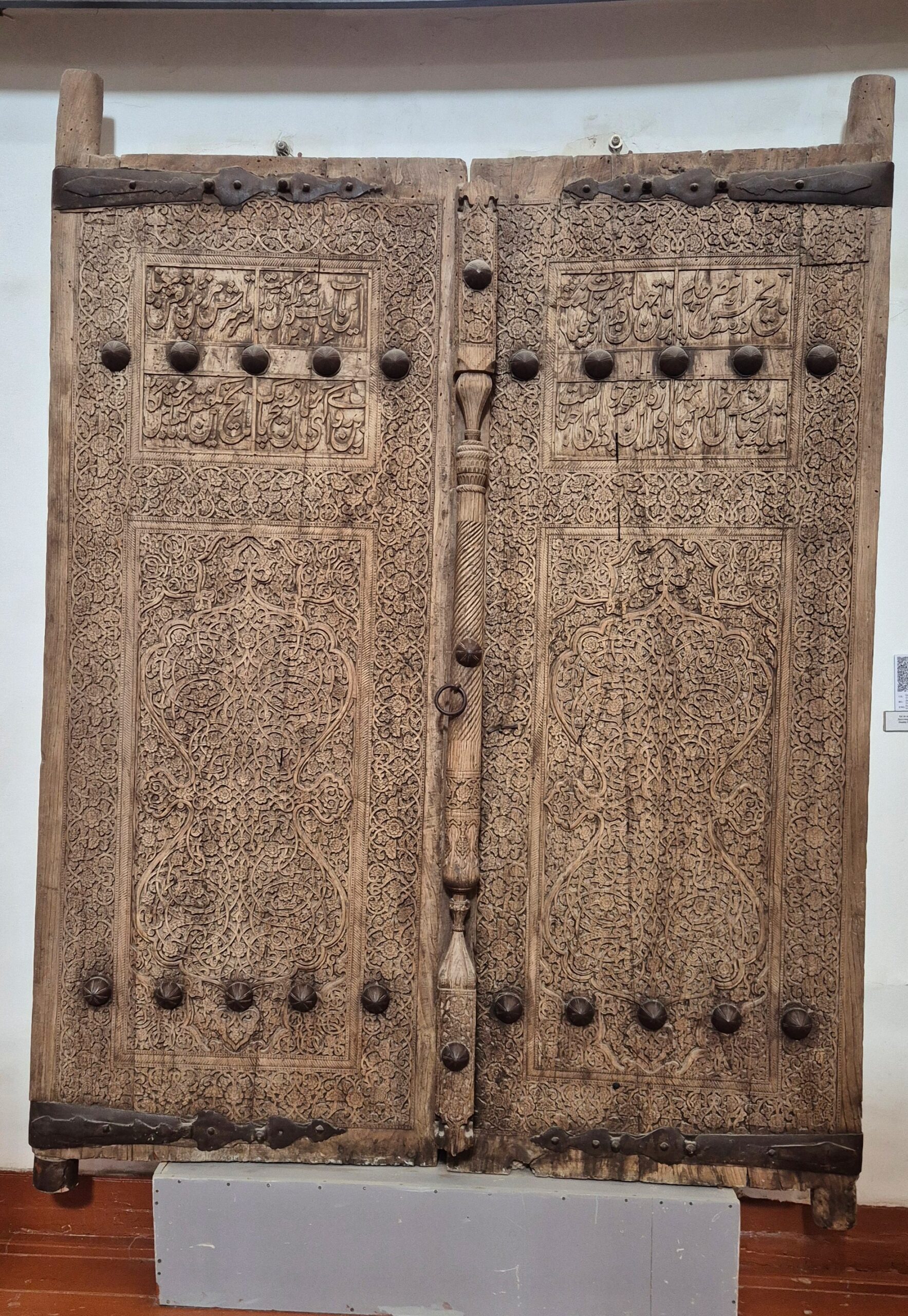
That, along with the deal with the Russians, explains the uniform style and excellent preservation of the inner city. At its peak, the empire controlled the eastern shore of the Caspian Sea and numbered 800,000 in population.
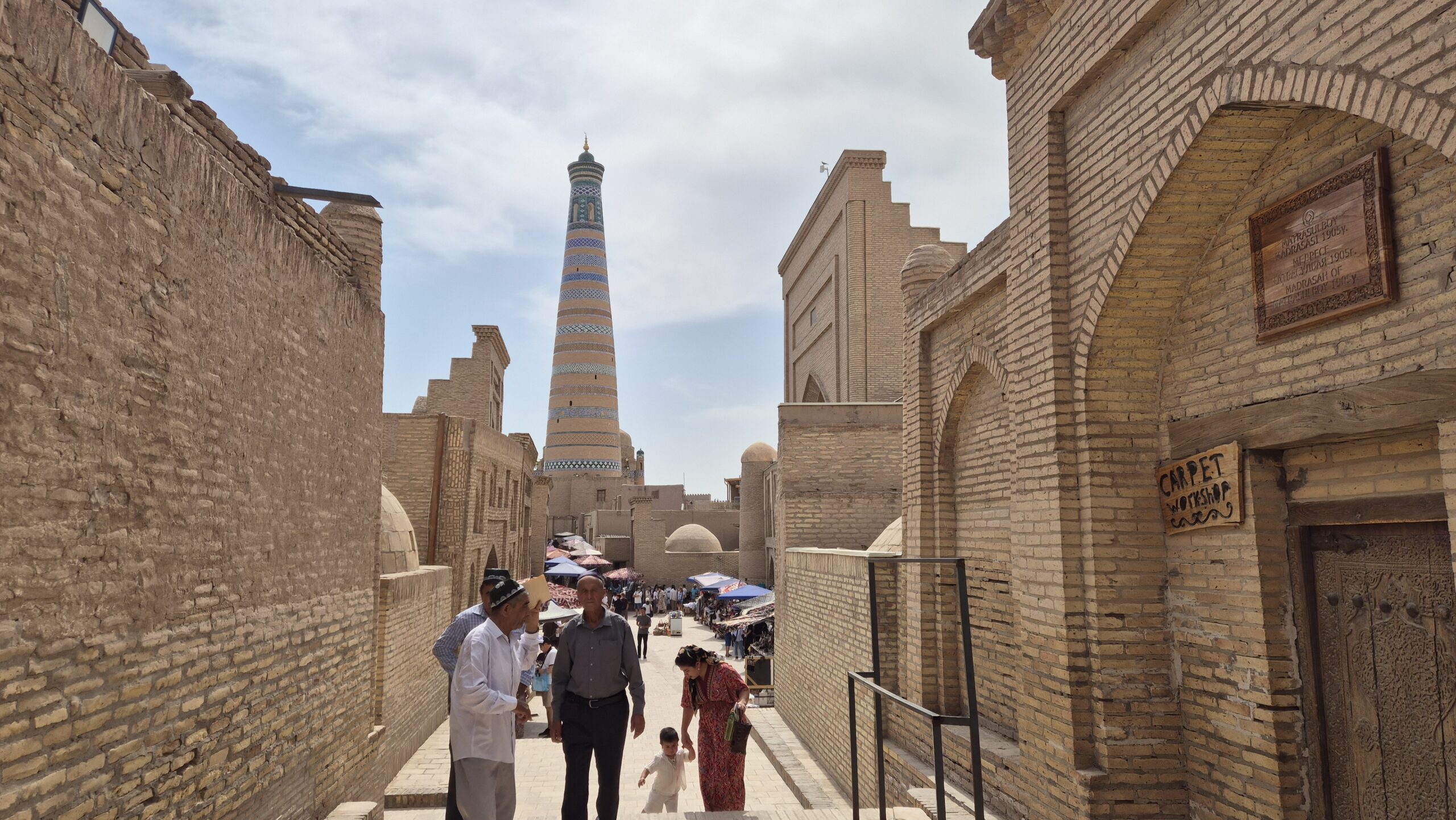
Walking within, you feel you have stepped back in time some 150 years. If you look carefully at entrances, though, you find that many old buildings, including madrasahs, have been re-purposed as hotels or guesthouses like ours.
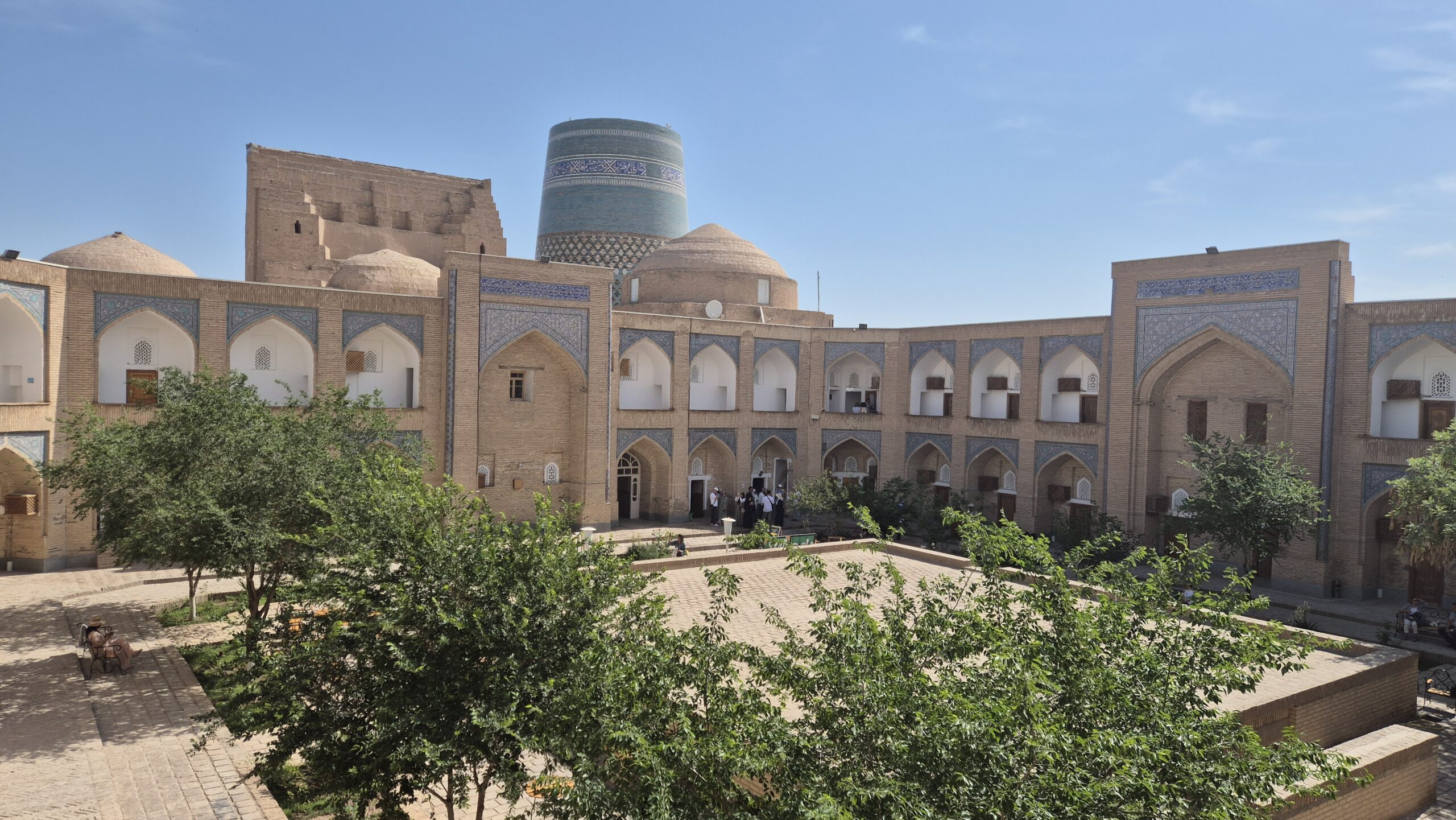
The funds for these projects came from the ongoing trade of the Silk Road throughout this period, a significant part of which was the slave trade in Russian and Persian captives that the Russians eventually stopped in 1873.
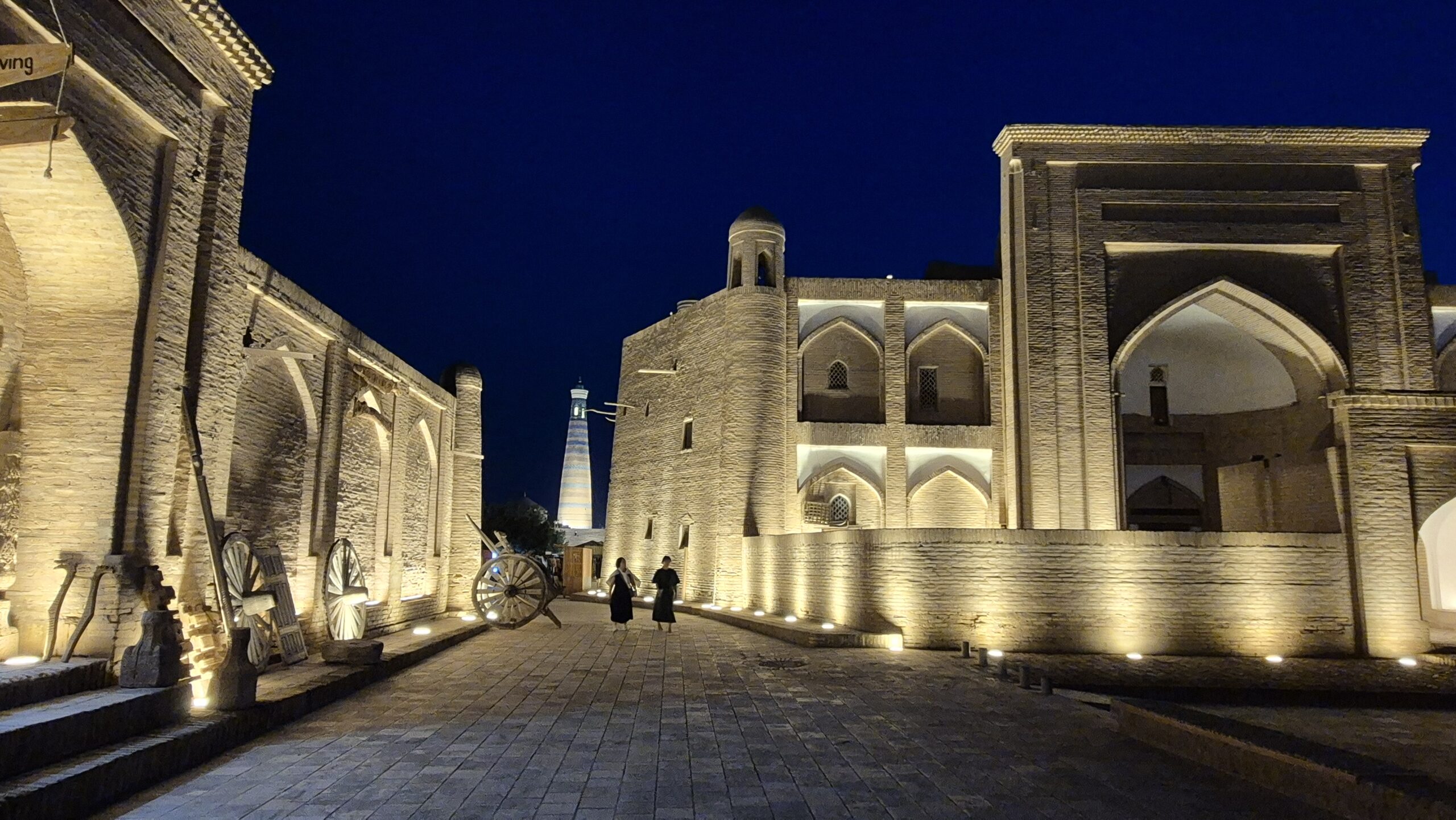
For example, the main madrasah complex, a huge walled structure across from the Khan’s palace, was built in 1876 for the love of Allah by the poet-scholar Khan to foster Islamic and secular learning. Construction projects like this and the work of translating much Persian literature to his Turkic language fit the cultural revival Feruz promoted.
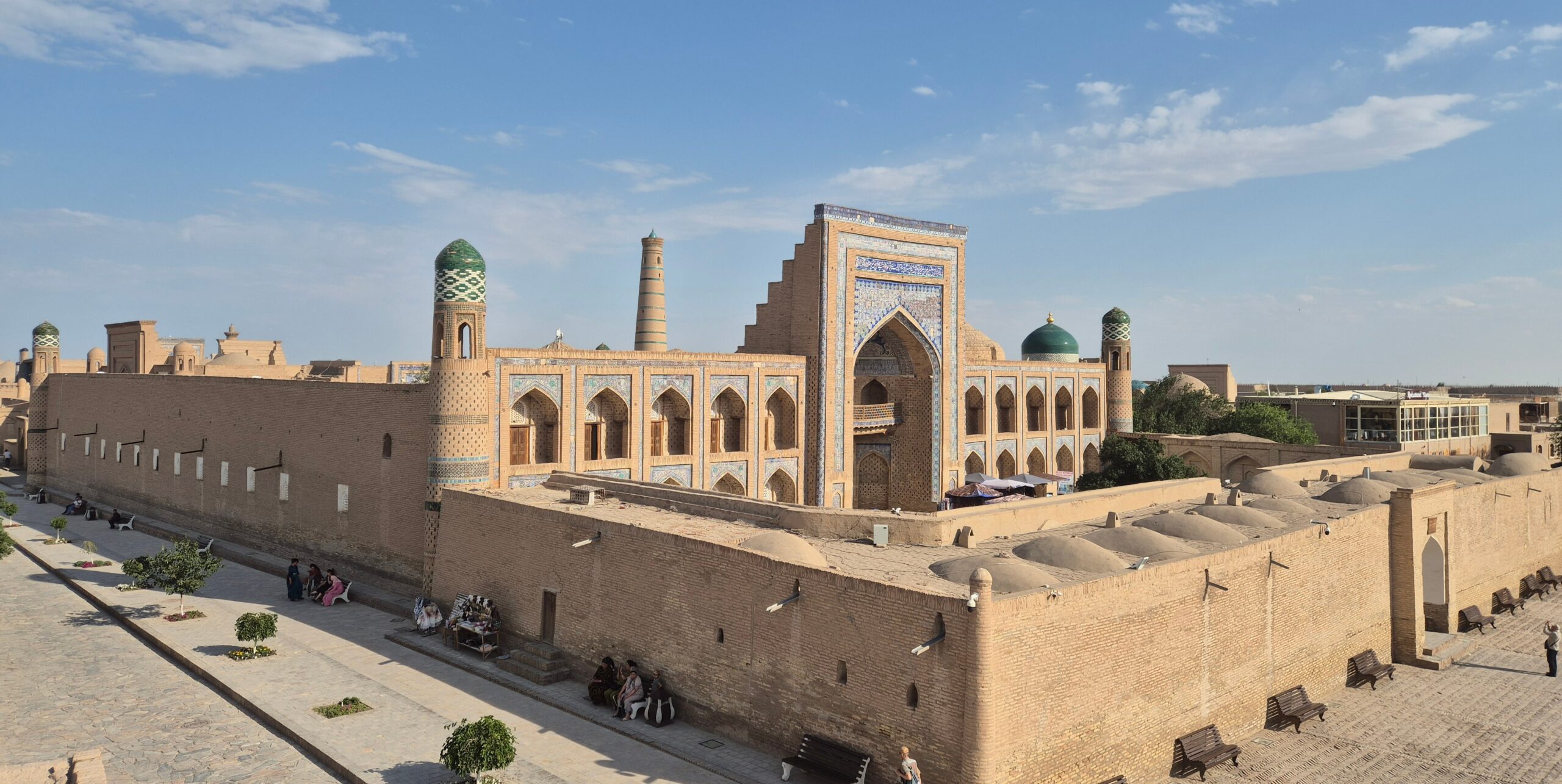
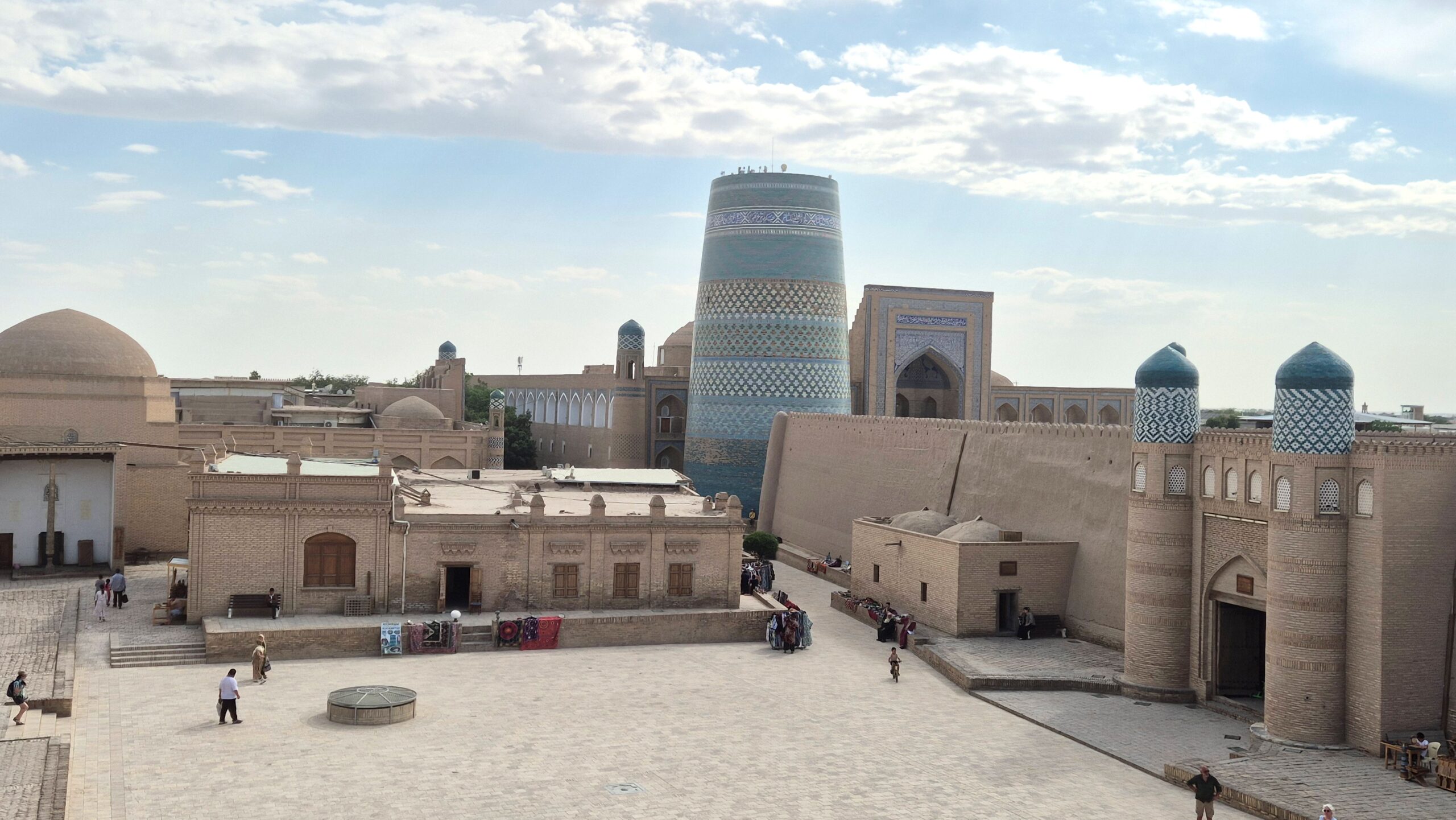
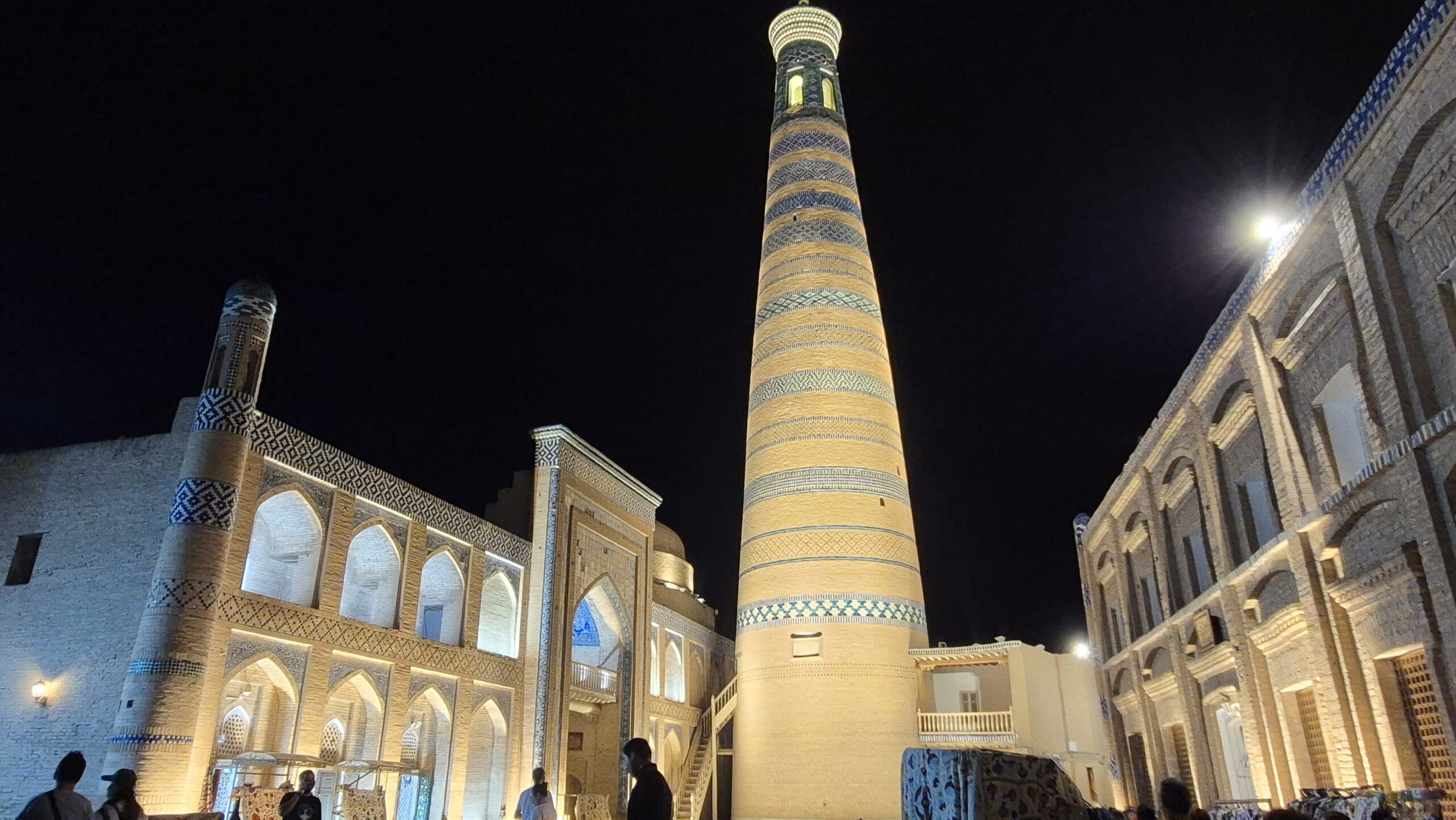
Of course, he also wanted to put his own stamp on the city. The strange half-built minaret in the city center, Kalta Minor, was begun in 1851 but left unfinished by successor Khans, including Feruz – as, well, not theirs. There are several other large minarets in other sections of the old city, beautiful in themselves as they dominate the space around them. Yet the cut-off tower has become a more notable landmark than it would have been if completed.
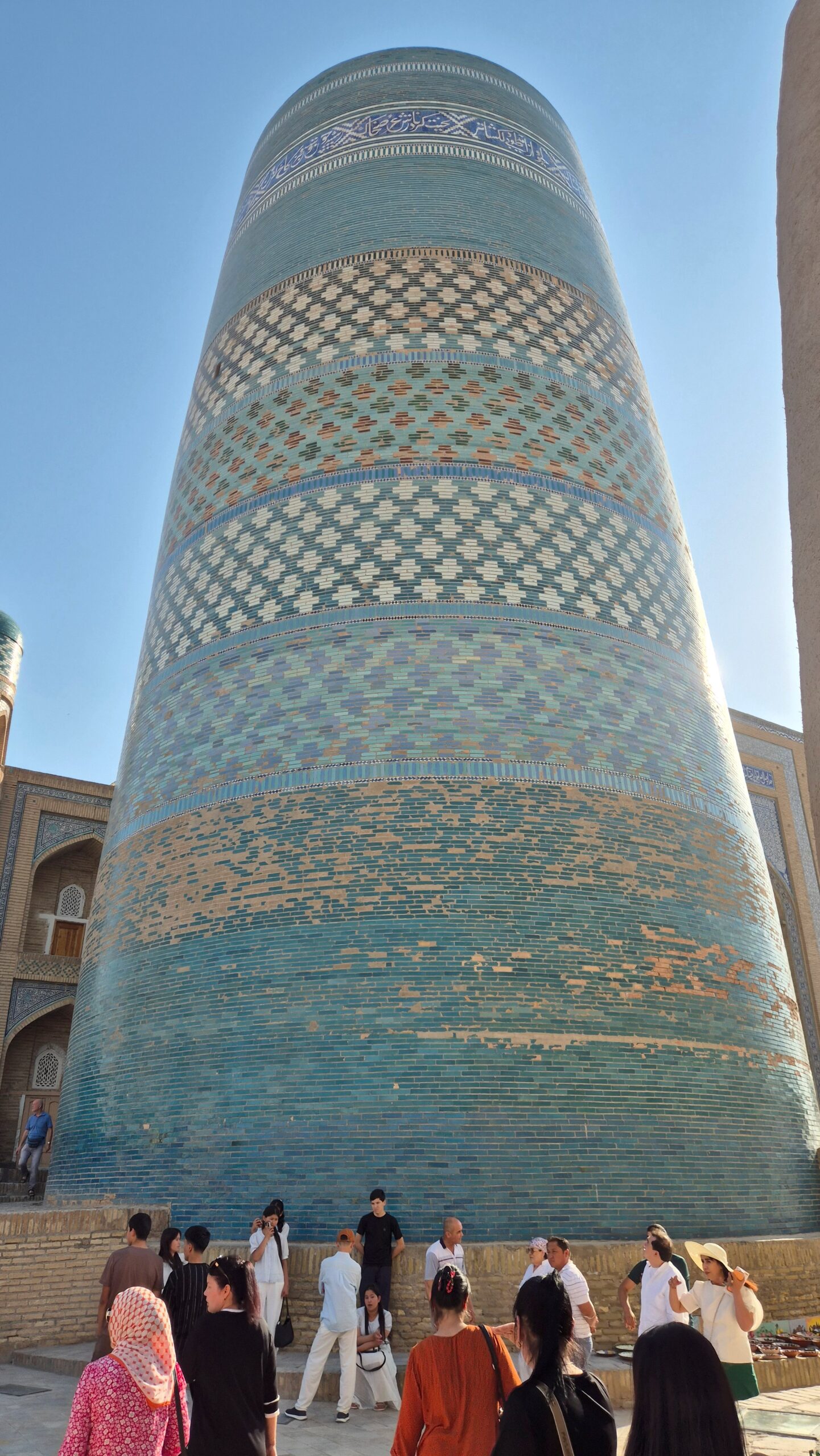
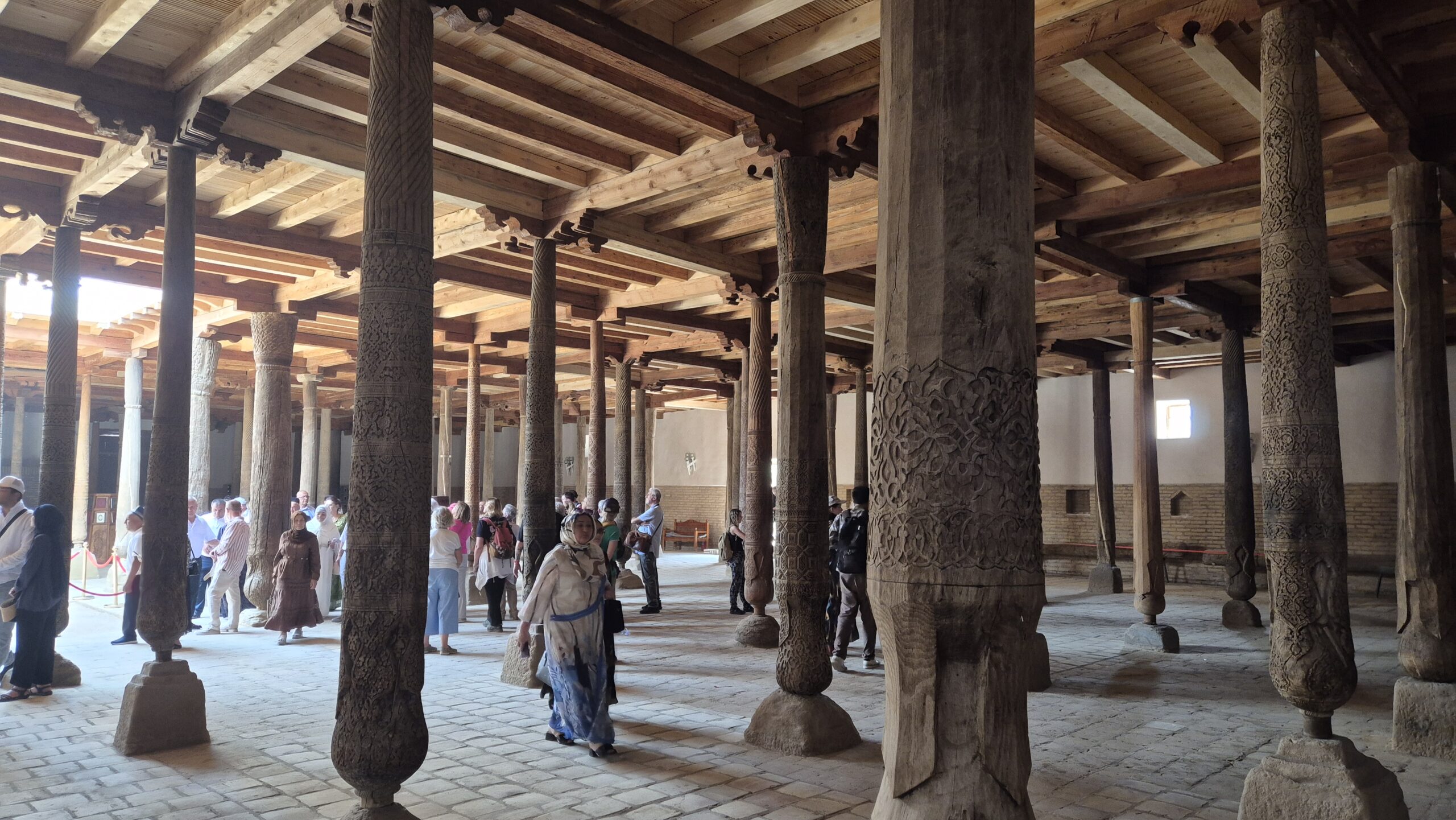
By contrast, one of the oldest monuments here is the Djuma Mosque, a stunning space with over 100 carved wood columns. Built in the 10th century, and rebuilt in the 18th, it is reminiscent of the hypostyle 8th century mosque at the Cordoba cathedral and wooden mosques of Turkey. It’s a treat to find the original columns within the forest.
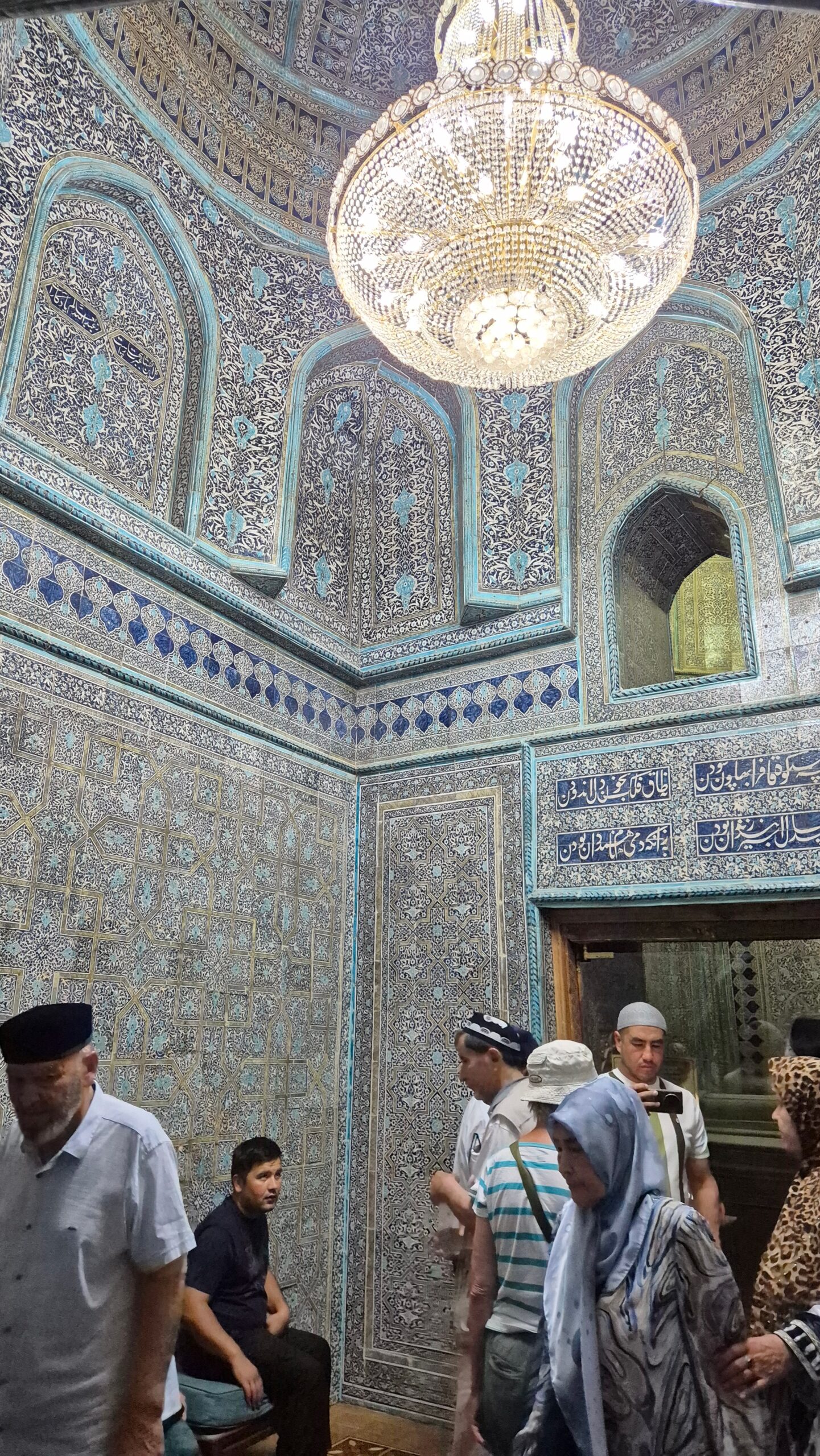
And there is a unique space within Khiva dating from the 14th century, though refashioned over time, which entombs and honors a holy man. The poet Pahlavon Mahmud, who became a 13th century leather tradesman and famously strong wrestler, proved to be a powerful healer as well. In a steady flow, pilgrims come to his mausoleum and pray for healing. In the entryway, an imam reads the Qu’ran as devotees sit and tourists gawk. Then, in the tall but compact chamber that contains the tomb, pilgrims fill the gorgeous space with prayer.
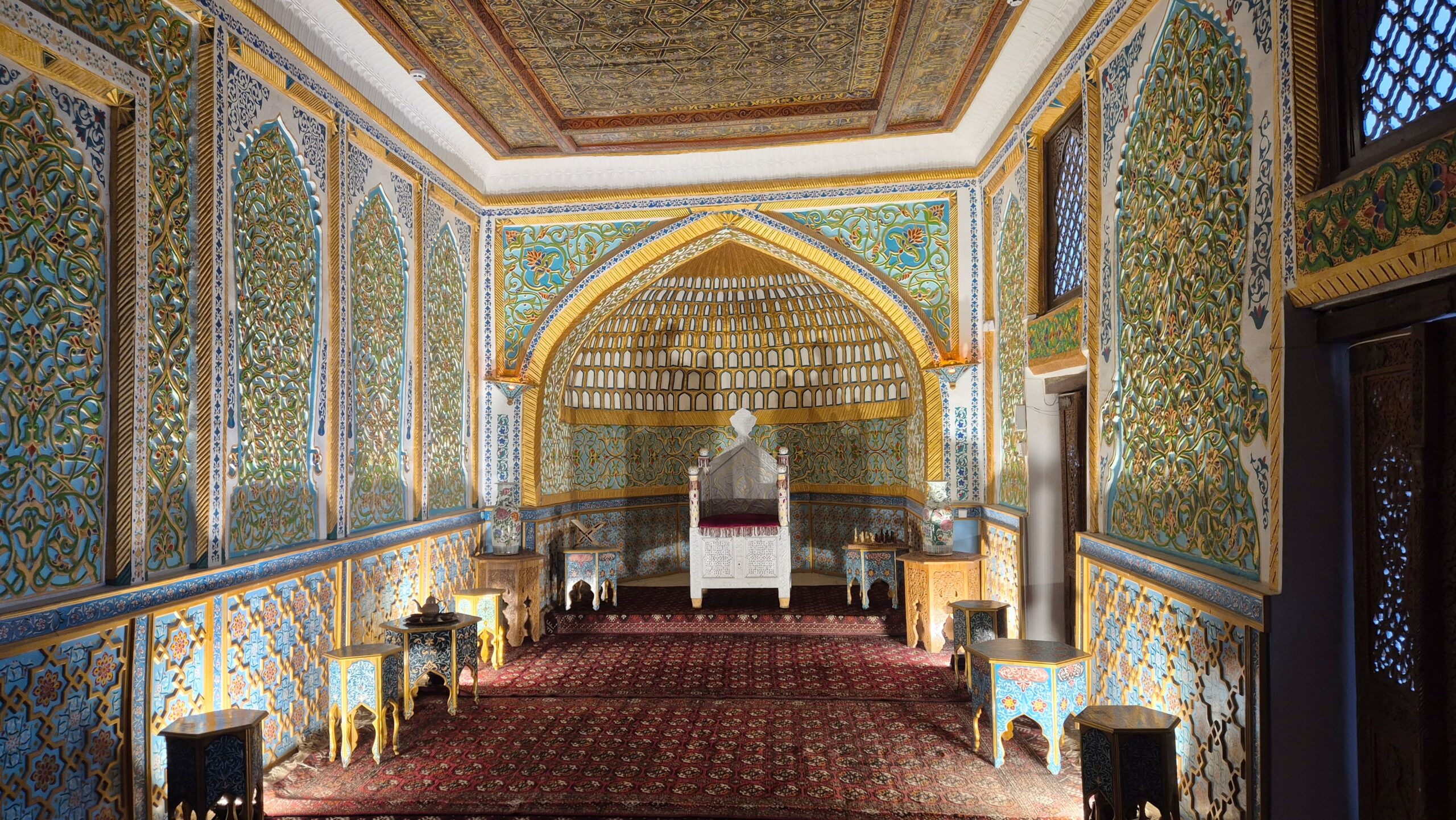
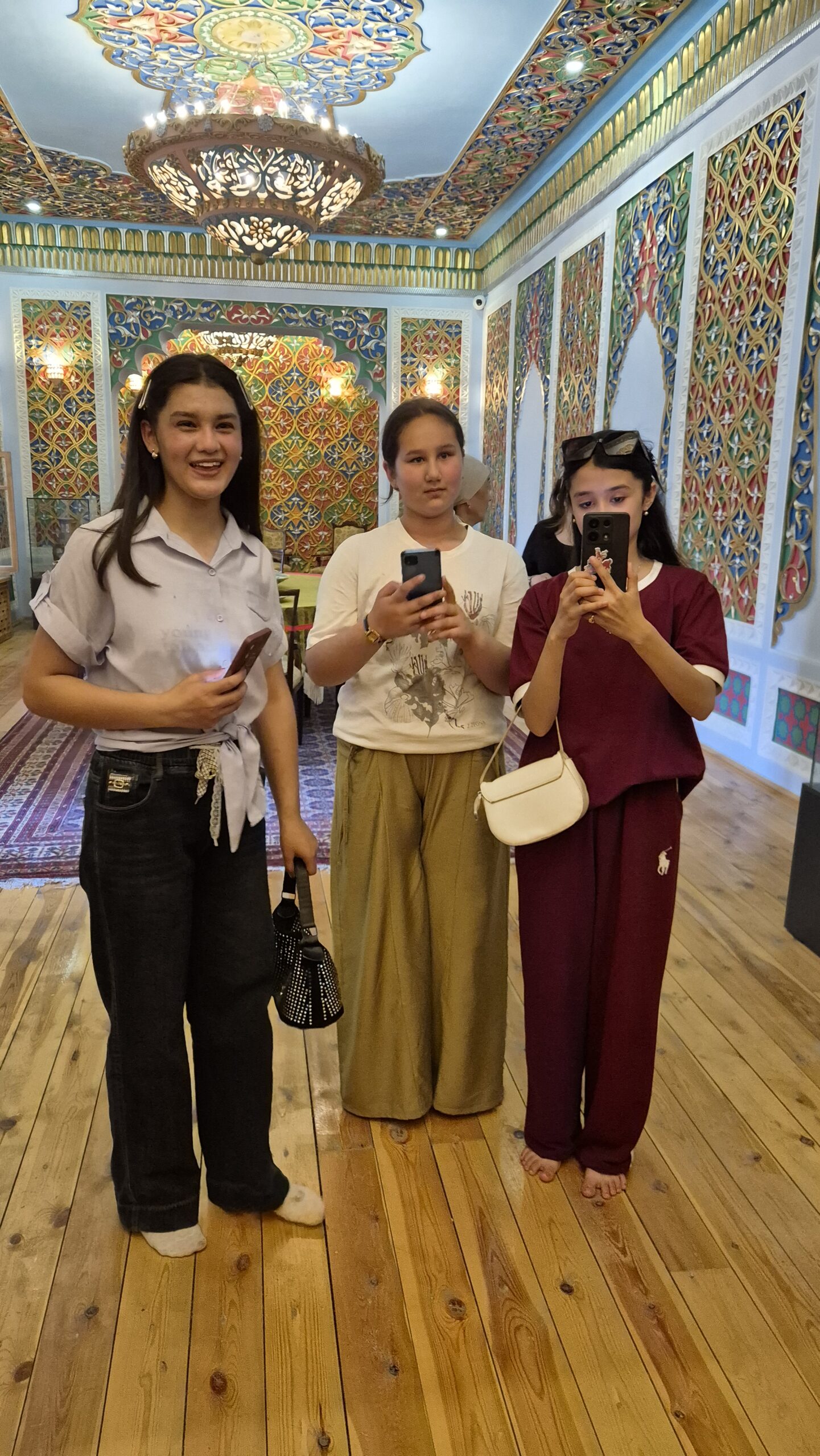
Feruz’s 19th century palace, facing the same plaza as the half-minaret, was a small walled city for the Khan, his entourage, and his harem. The interior rooms, like this throne room for reception of dignitaries, have been preserved in their lustrous beauty.
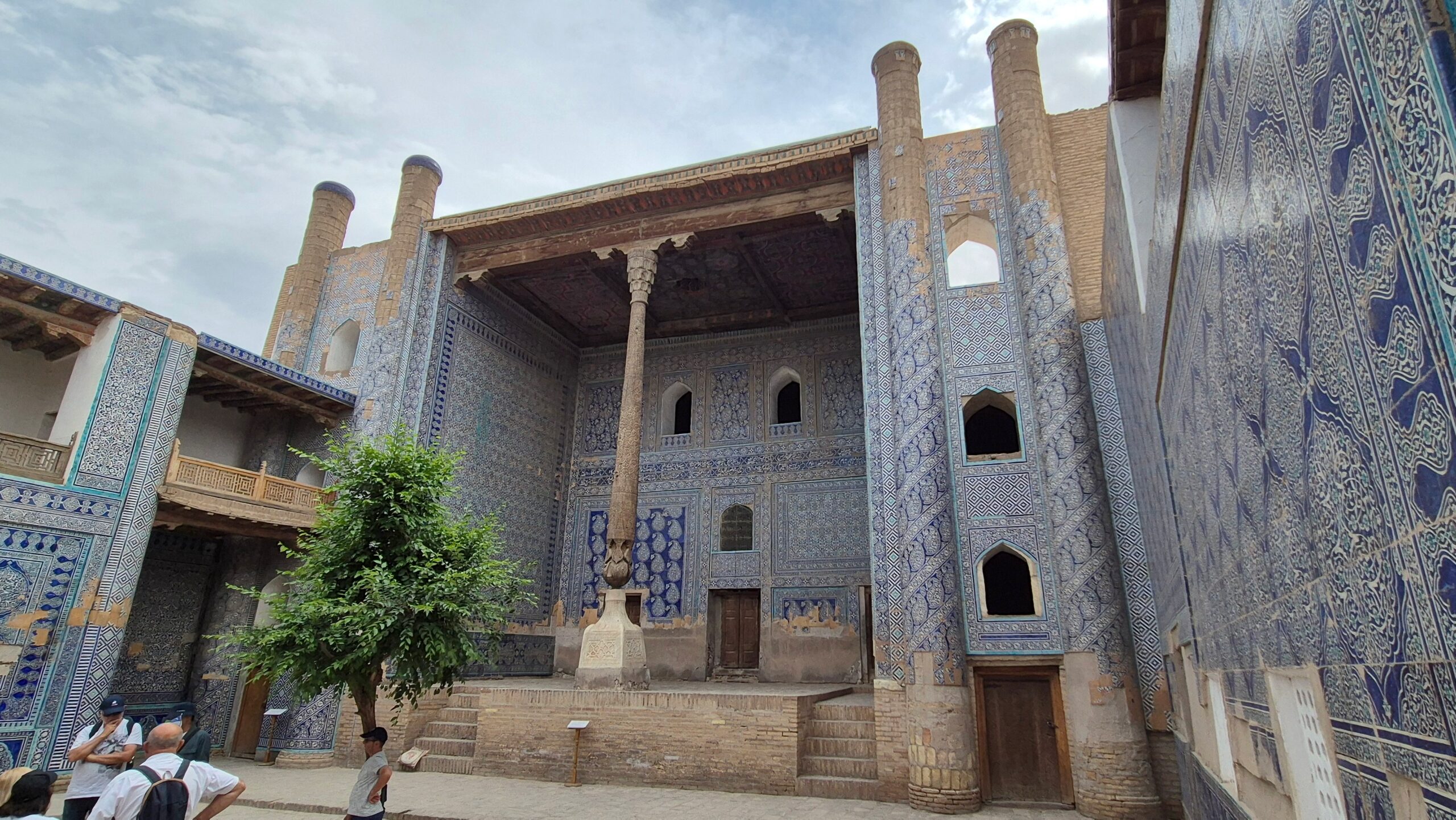
Similarly, the impossibly elaborate tilework and woodcarving of the porticos, where the Khan held court, manifested his wealth and power, as well as his aesthetic sense.
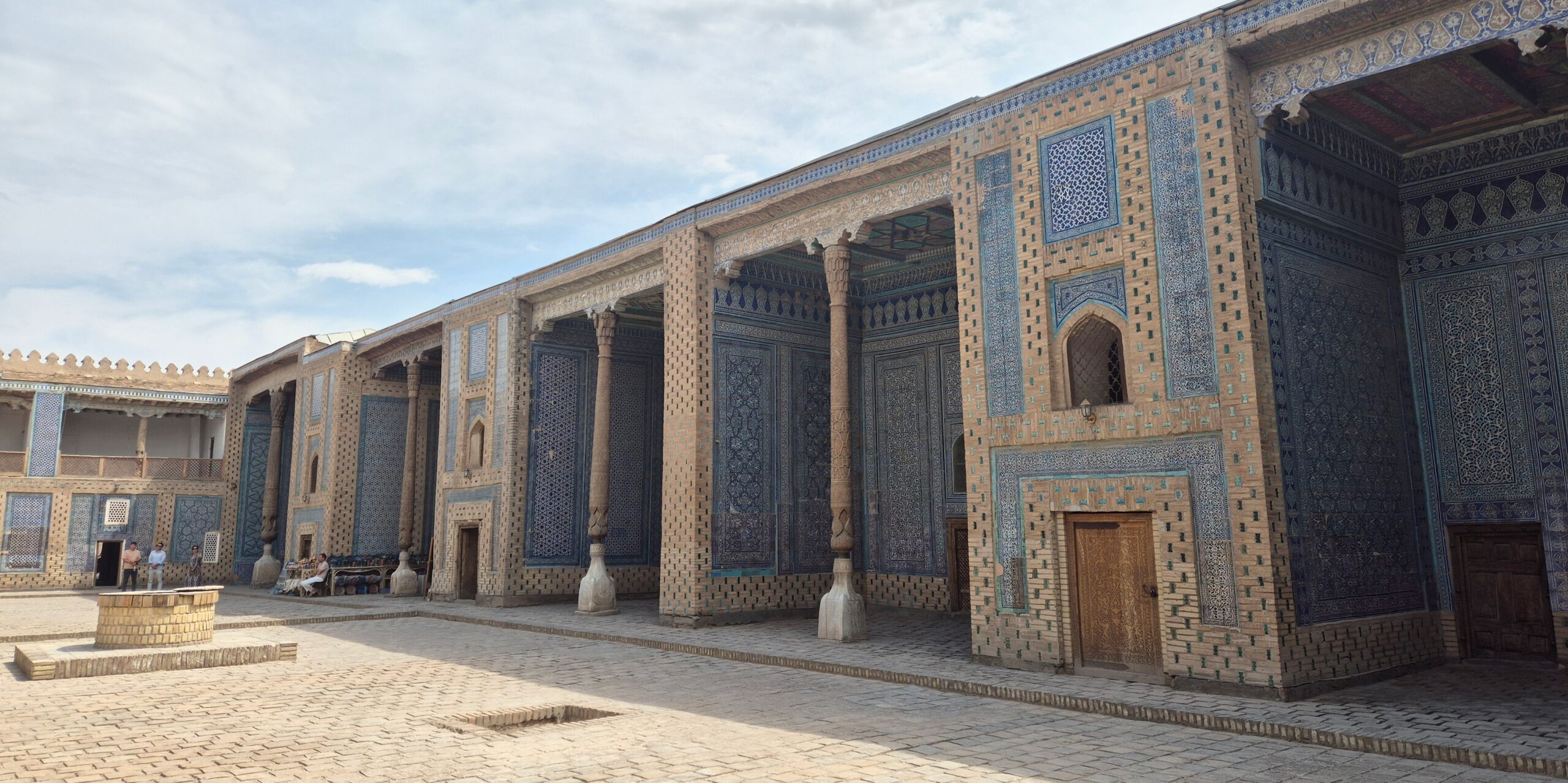
The other courtyards allowed for relaxation and contemplation. Behind the scenes, the servants operated out of their own distinct section of the palace.
The Khan’s wives and concubines enjoyed their separate area too, but a private passageway led from their rooms to the Khan’s bedroom.
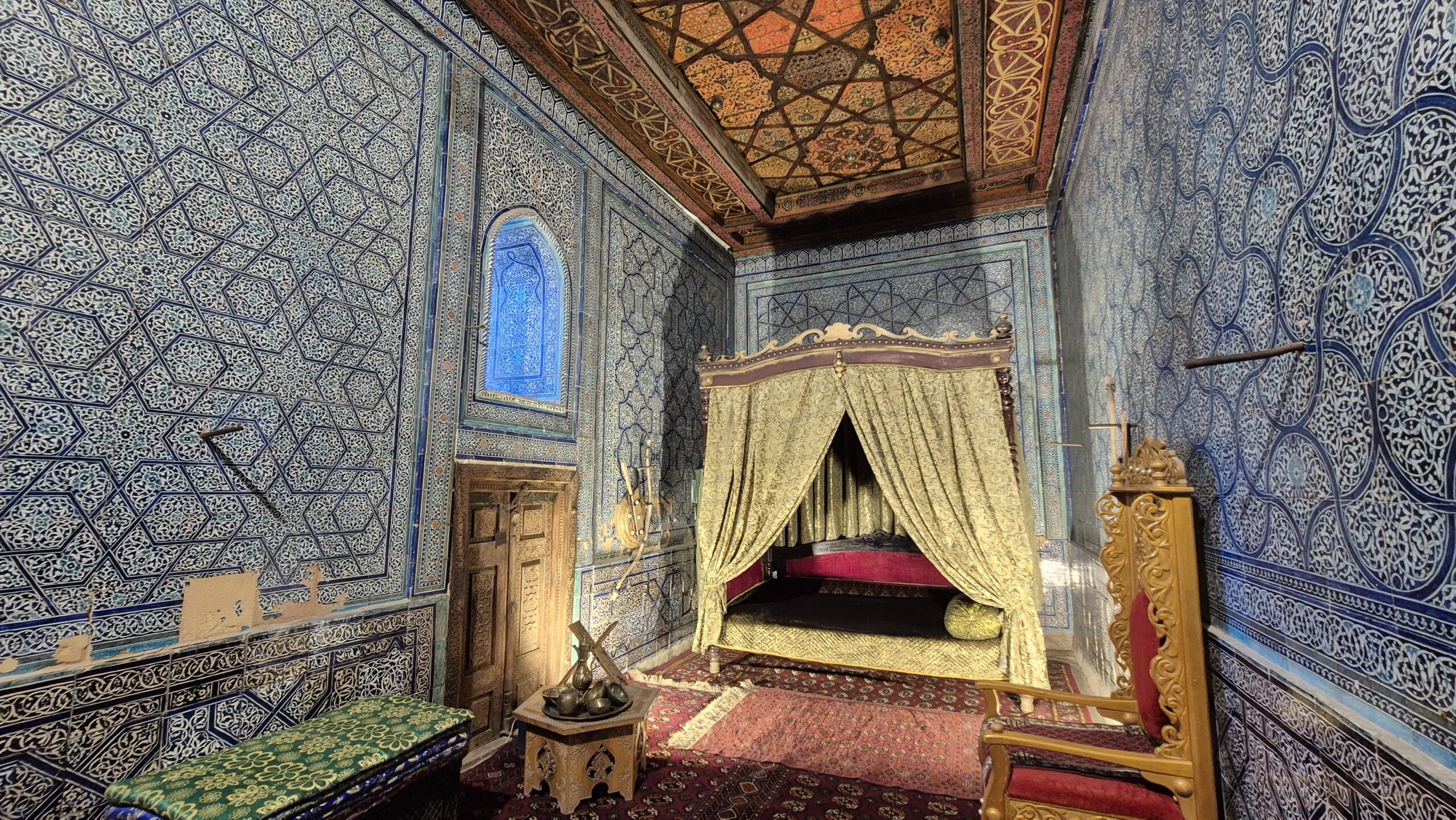
They presumably inspired his love poetry as well.
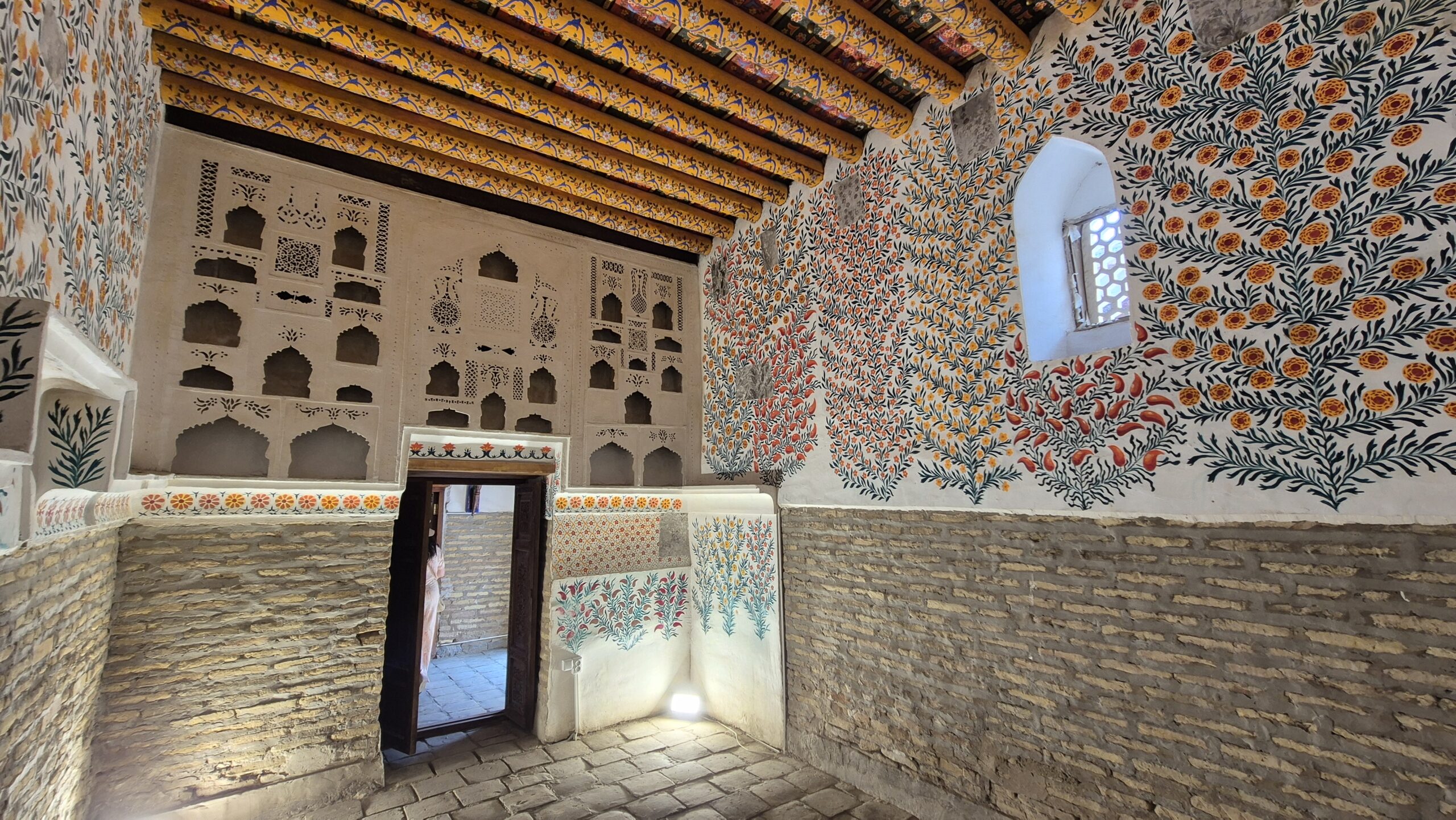
Not to be outdone, the summer palace, now outside the city walls, also accommodated the royal court in grand style.
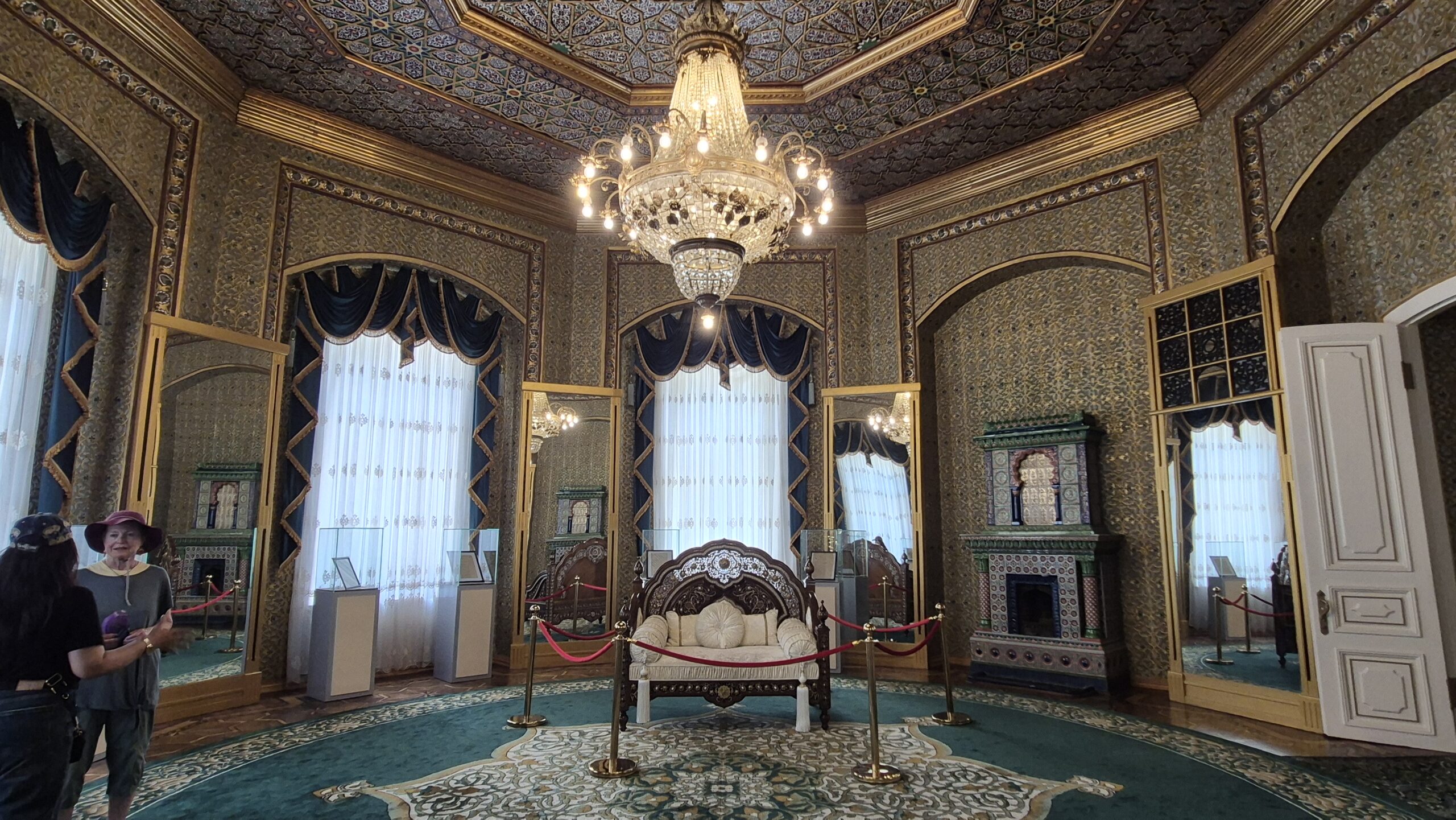
Though consistent with overall Khiva style, it presents a simpler, more contemporary look…with what seems to be a fancy hostel for the concubines.
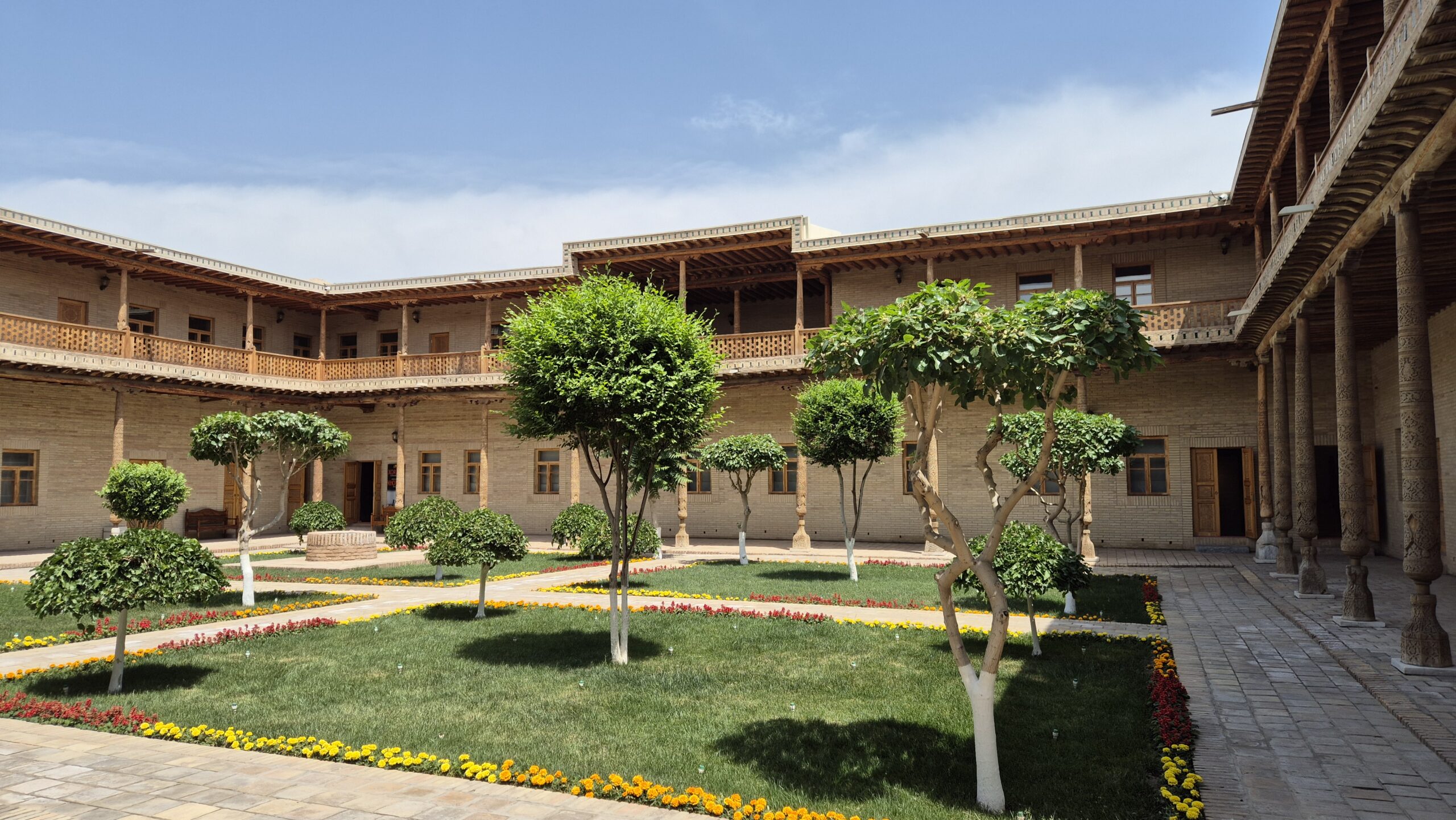
So, Khiva today is largely a love letter from the Khans, particularly the poet Khan Feruz – a harmonious creation in brick and clay, rather than words, that visitors can still peruse.
Your love has burned into the heart and soul,
The darkness of disbelief has burned into religion and faith.
The other is the fading of your eyes,
With one glance, it has burned into the garden, the garden.
…
The love of your face, as bright as the moon,
In the sky, the love of the sky has burned into the garden.
How strange, when you see your face,
If it falls from the book of Feruz, it has burned into the garden of roses.
— Feruz (Muhammad Rahim II)
(To enlarge any picture above, click on it. Also, for more pictures from the five Stans of Central Asia, CLICK HERE to view the slideshow at the end of the itinerary page.)