
In brief: Like the Kyrgyz people, Bishkek has tried to honor the past in the face of change and disruption.
After spending our time amid the rustic towns and high alpine terrain around Issyk-Kul, Bishkek the capital at the western end of Kyrgyzstan proved instructive, illustrating the changes the Kyrgyz have withstood.
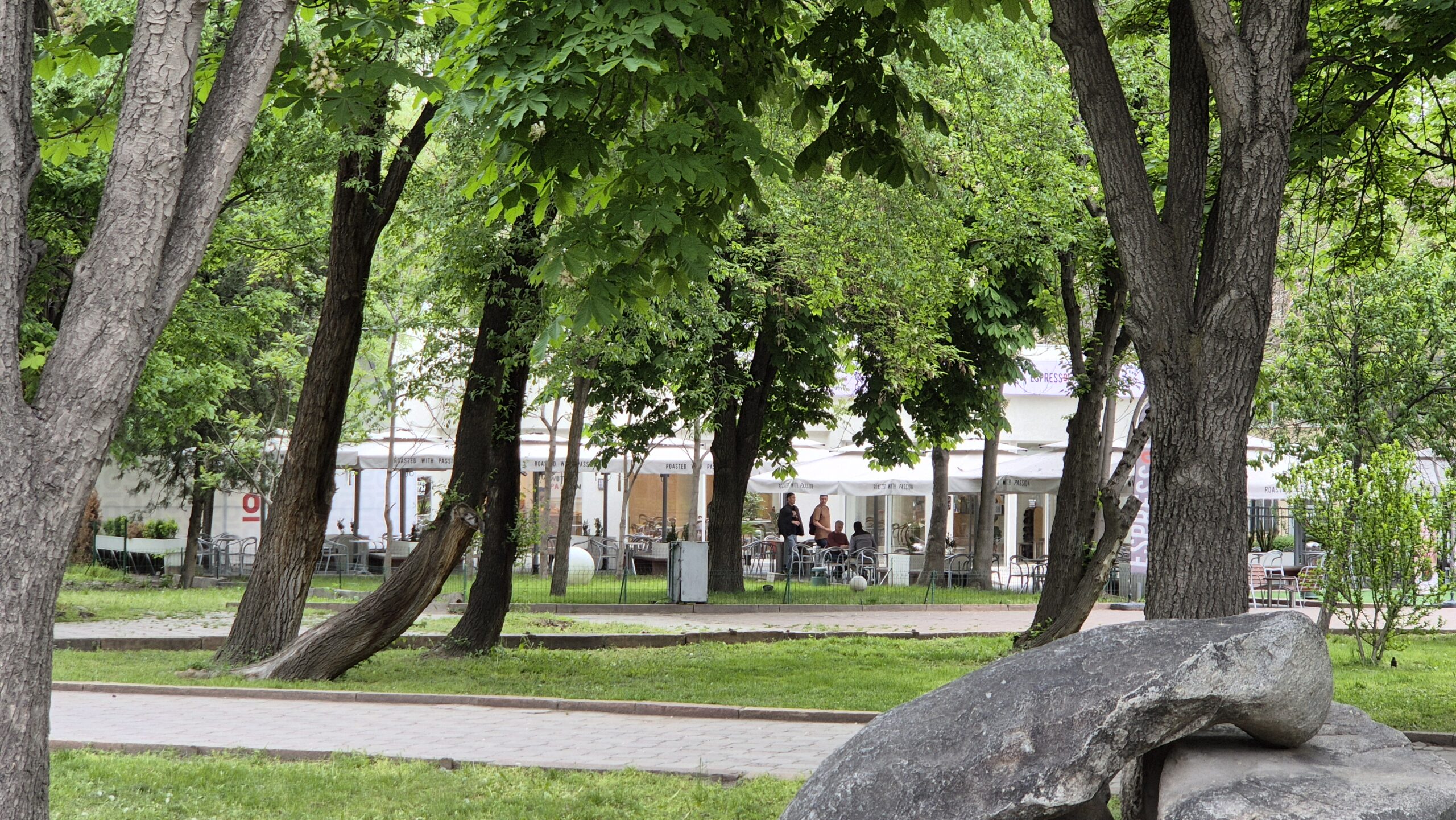
Bishkek was the first real city in the country, created from scratch by the Russian Empire when the people were largely nomadic and then built up during the Soviet era. Even compared to other Central Asian cities from that time, it is very green, with tree-lined boulevards and broad urban parkland. Much of the central city felt like a leafy university campus.
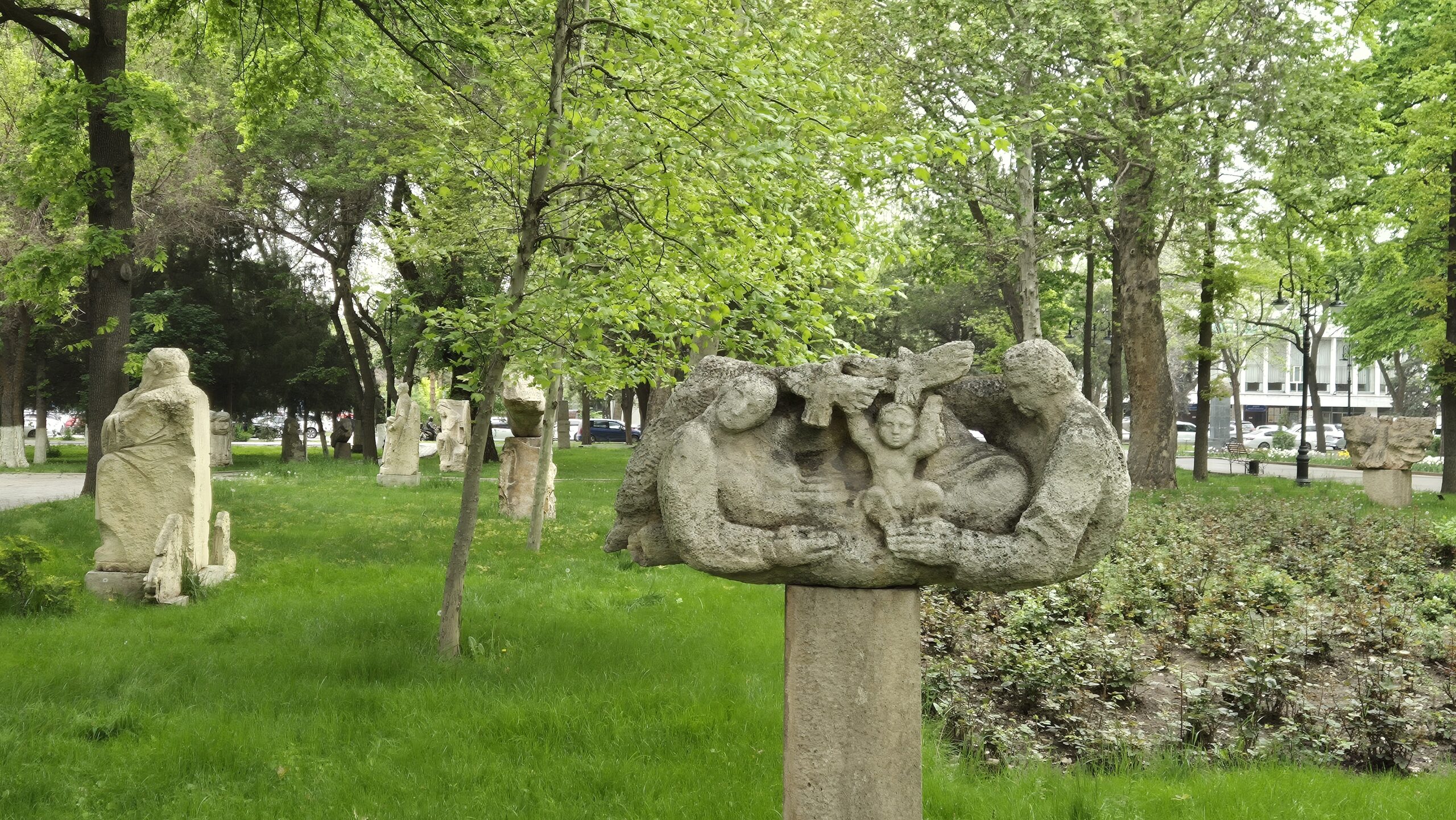
Yet, as we saw in Karakol, new housing has begun to invade these parks – most notably the extensive botanical gardens – to accommodate the rapid growth in the city. And we saw many century-old trees in other areas removed for some kind of modernization of the park space.
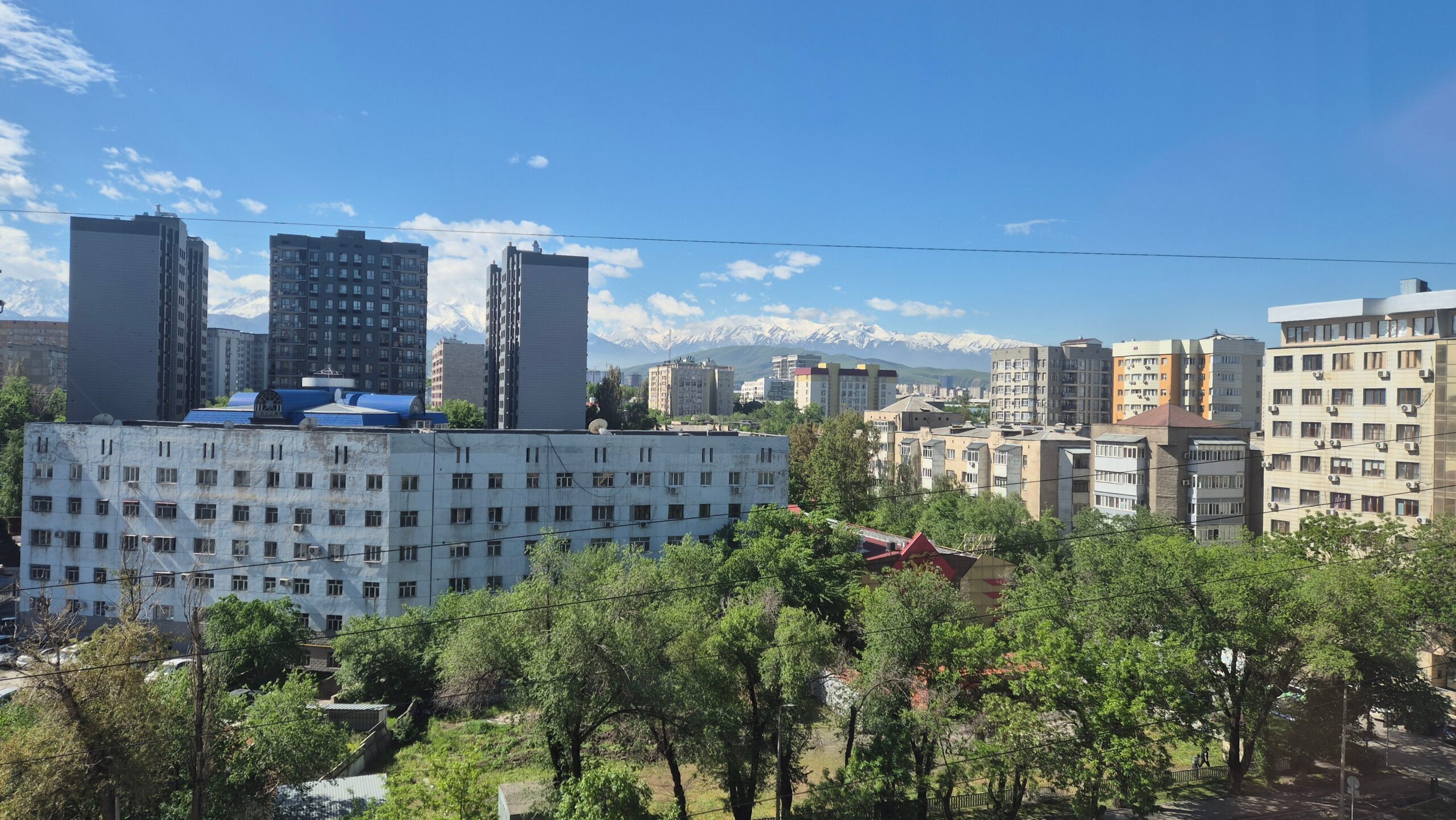
One sees construction everywhere – hundreds of new apartment buildings sprouting on the outskirts of the city and, even near the center of Bishkek, high-end apartment buildings replace older structures. For all that, toward the outskirts of town and in the suburbs, it was comforting to see large and small single-family homes on quiet side streets.
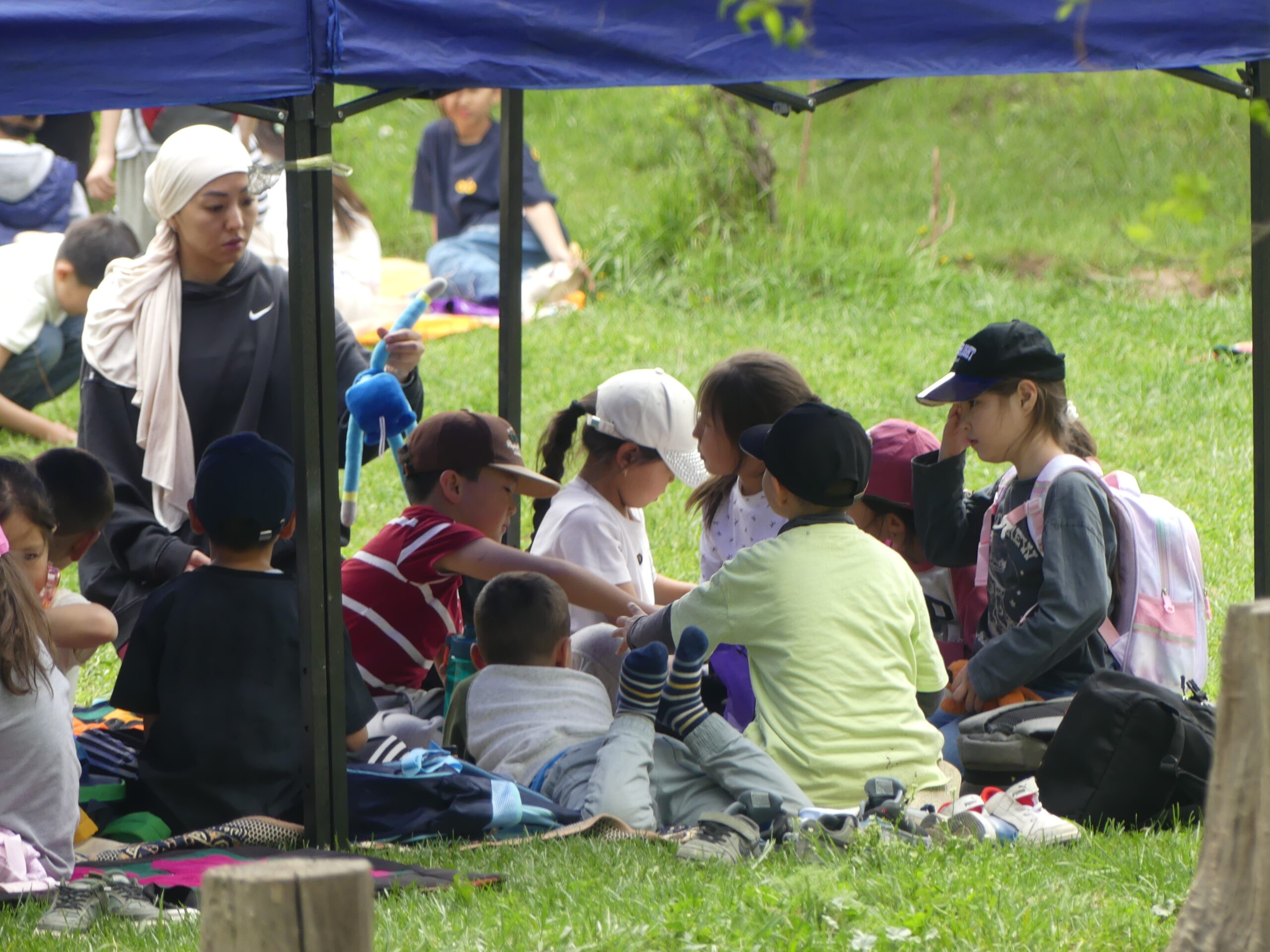
For the tradition of large families with lots of young children continues, with a birth rate of around 2.7 – not as high as Tajikistan next door at over 3.0, but still a lot. Perhaps this made much more sense when the Kyrgyz were nomadic with poorer healthcare, before the Soviet era.
“This is what my parents used when I was a baby,” our guide said, when we found cribs like this still available in the Bishkek bazaar for the burgeoning young. To keep things dry, the little stick is taped on to channel urine from the baby into the hole: the one on the left for boys, the one on the right for girls.
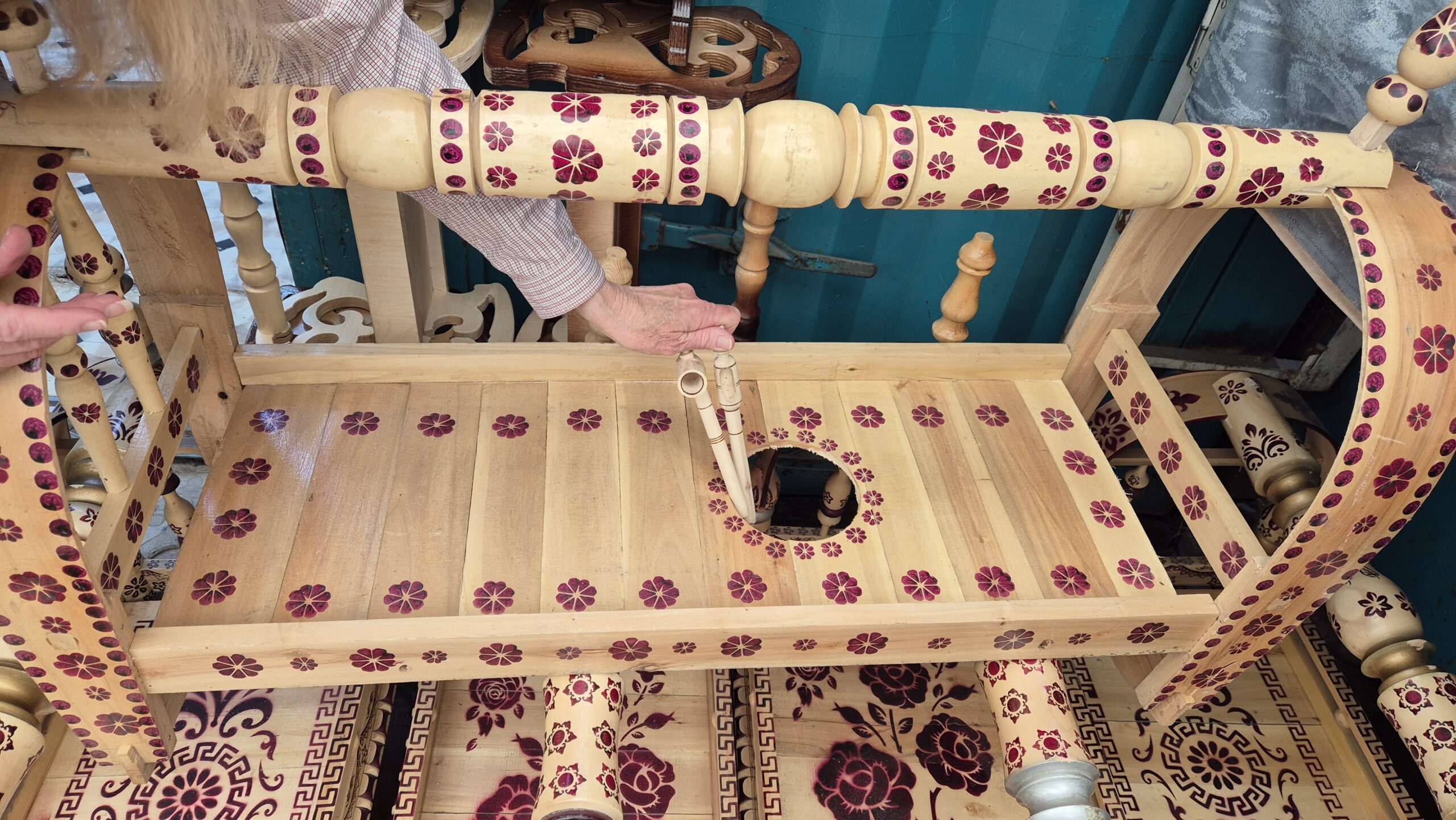
It takes a while for cultural norms like this to change.
Take bride kidnappings, for example. A young man in the past would fancy some young woman, kidnap her to his family home with the help of friends, wed her, and then rape her to consummate the marriage. This was a practice accepted by most, except often the young woman. Now outlawed officially, the kidnappings have changed into a way of avoiding the punishingly expensive wedding feasts for hundreds of guests, as traditionally demanded of bridegrooms. One person we met helped a friend “kidnap” a willing woman for just that reason, in a culture where eloping is not quite yet an option.
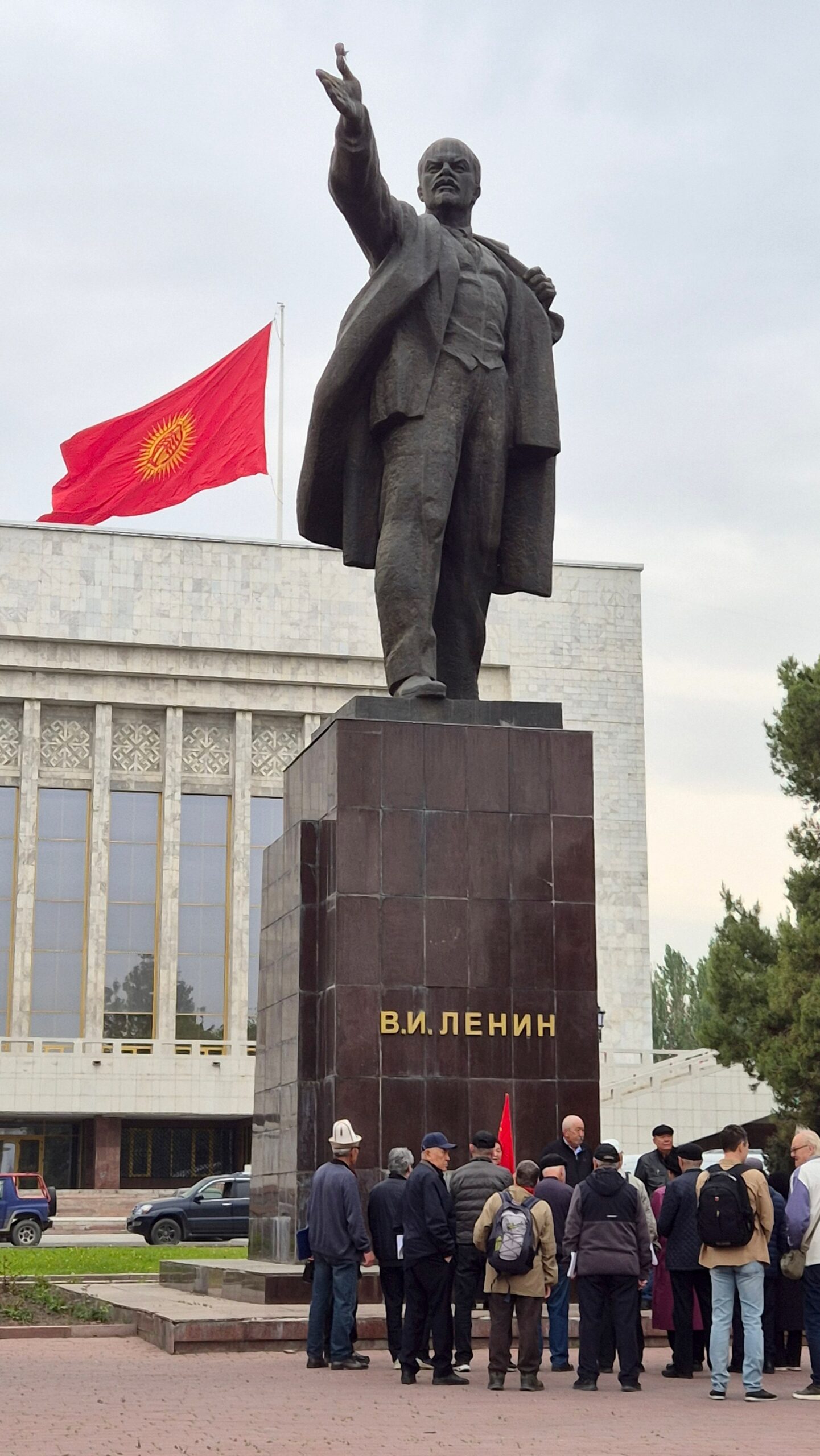
Meanwhile, the Kyrgyz have had to adjust to many abrupt changes in the last hundred years or so. As nomads, nearly the entire population lived in yurts. Like tents, yurts were easily disassembled, packed up, and then rebuilt in another location. The flag reflects this history, with a central circle mimicking the crossed poles at the topmost part of the yurt. Radiating from the circle are 40 points, representing the 40 historical tribes of the Kyrgyz.
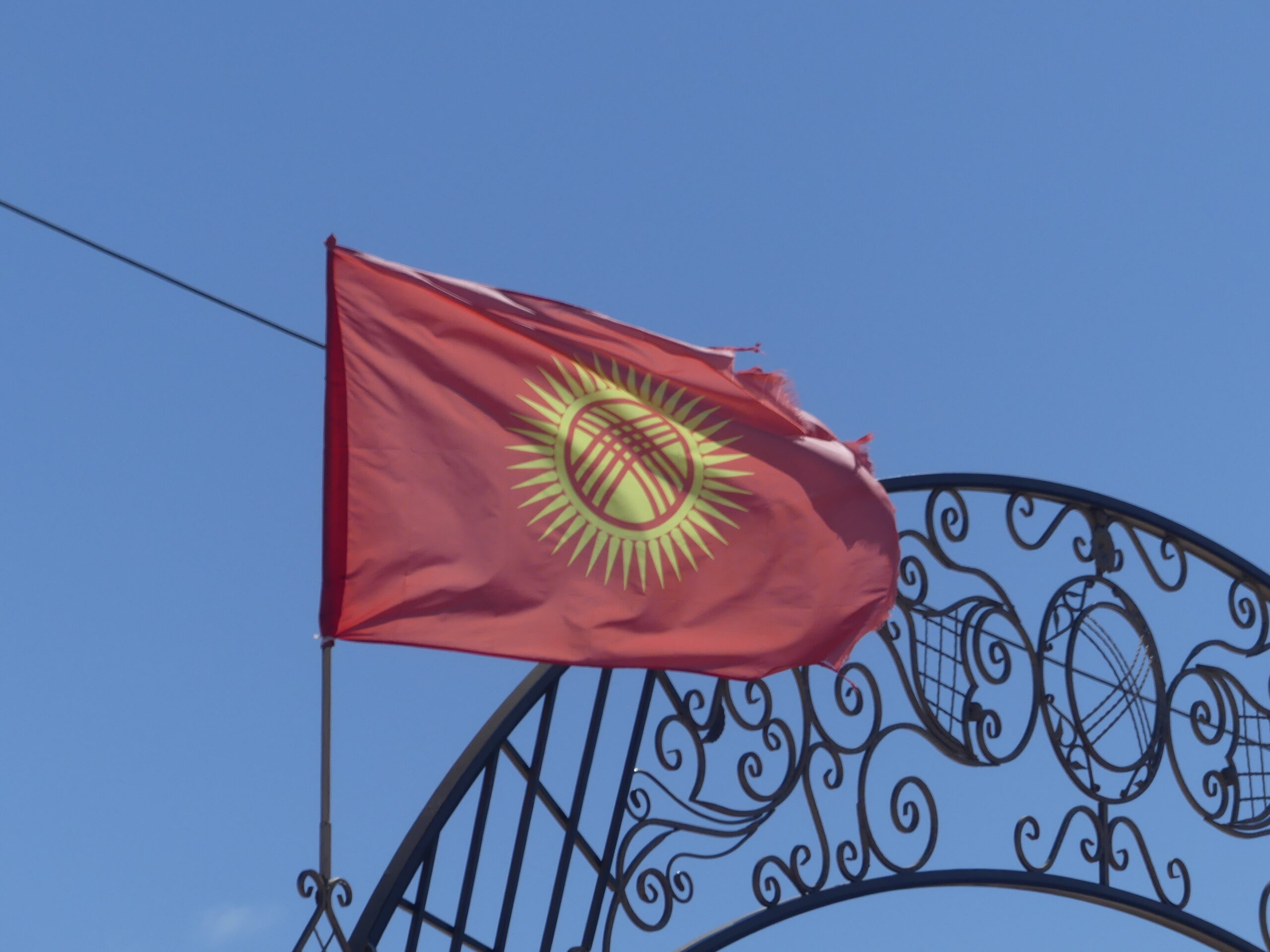
The Soviets urbanized the population, forcing people into factory work and agriculture. Once the USSR collapsed, however, the factories closed, withdrawn to the new Russia. Ethnic and political conflicts hampered the country’s efforts at building a democratic republic, and limited its economic growth.
Without the oil resources of Kazakhstan and Turkmenistan, the economy here still struggles. A large part of the male population works in Russia and elsewhere to support themselves and their family. Another cultural tradition helps in this respect. The youngest son stays with his parents at their home until they die, freeing the elder sons and daughters to go elsewhere.
Money from abroad is the second mainstay of the economy. The top industry is mining, which China eagerly invests in. And the third, a growing one, is tourism.
The wealth gap is evident in Bishkek, where the poor and the posh mingle. Stiletto heels, white overcoats, and stylish outfits abound even when women wear robes and head coverings. Elegant coffee shops offering French pastries have found a ready market. But we also saw more beggars here than in all of oil-rich Kazakhstan.
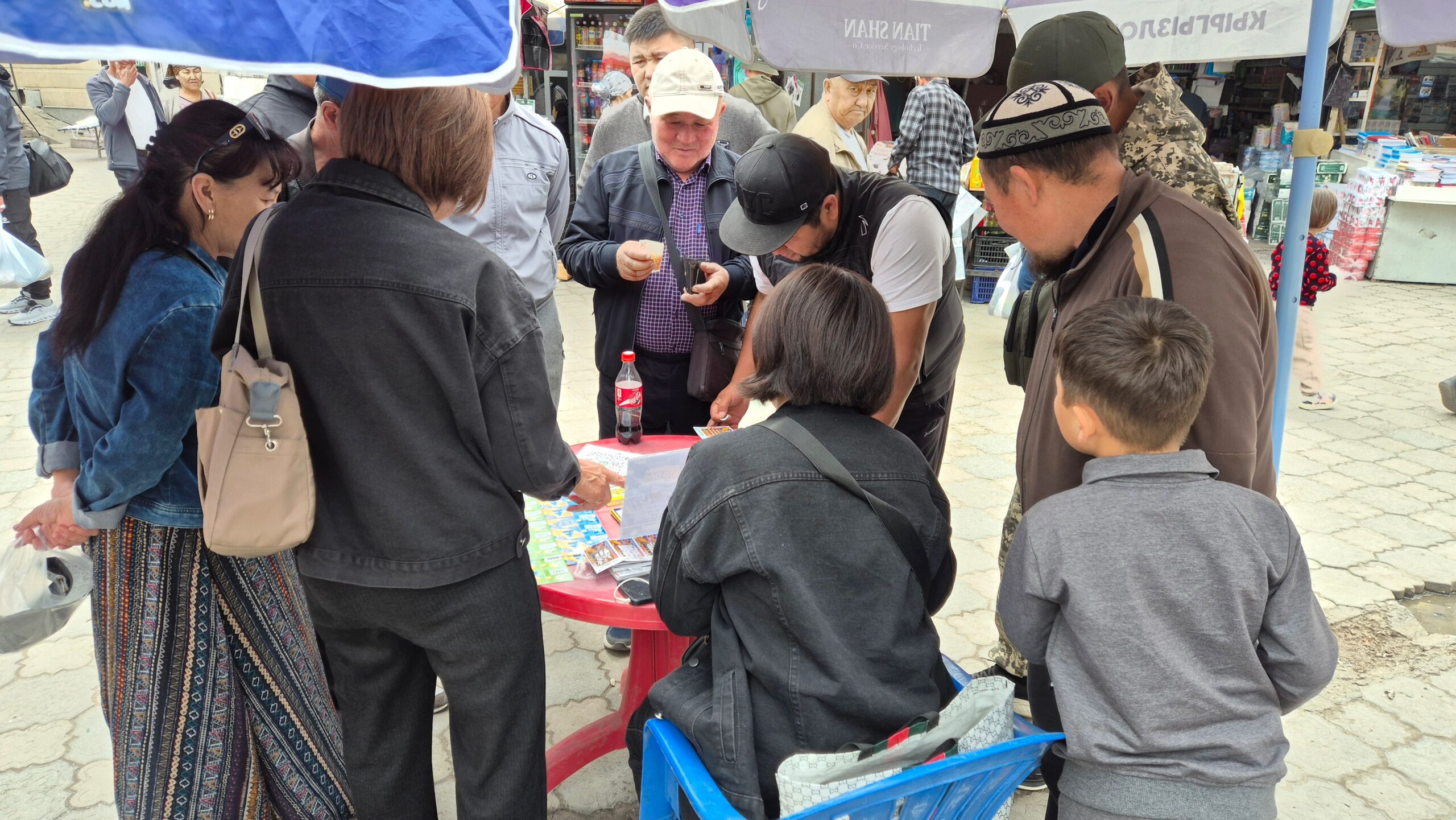
All are attracted by the potential for riches with the not-so-new game in town, the lotto.
Still, the average person in Bishkek (and tourists) can replenish electrolytes on the street with various, low-priced traditional concoctions. The “Shoro Aunties” sit on nearly every corner of the central town. Nancy loves Tan (or Ayran), a yogurt-like drink hard to find in Europe, so she tried a variant with barley.
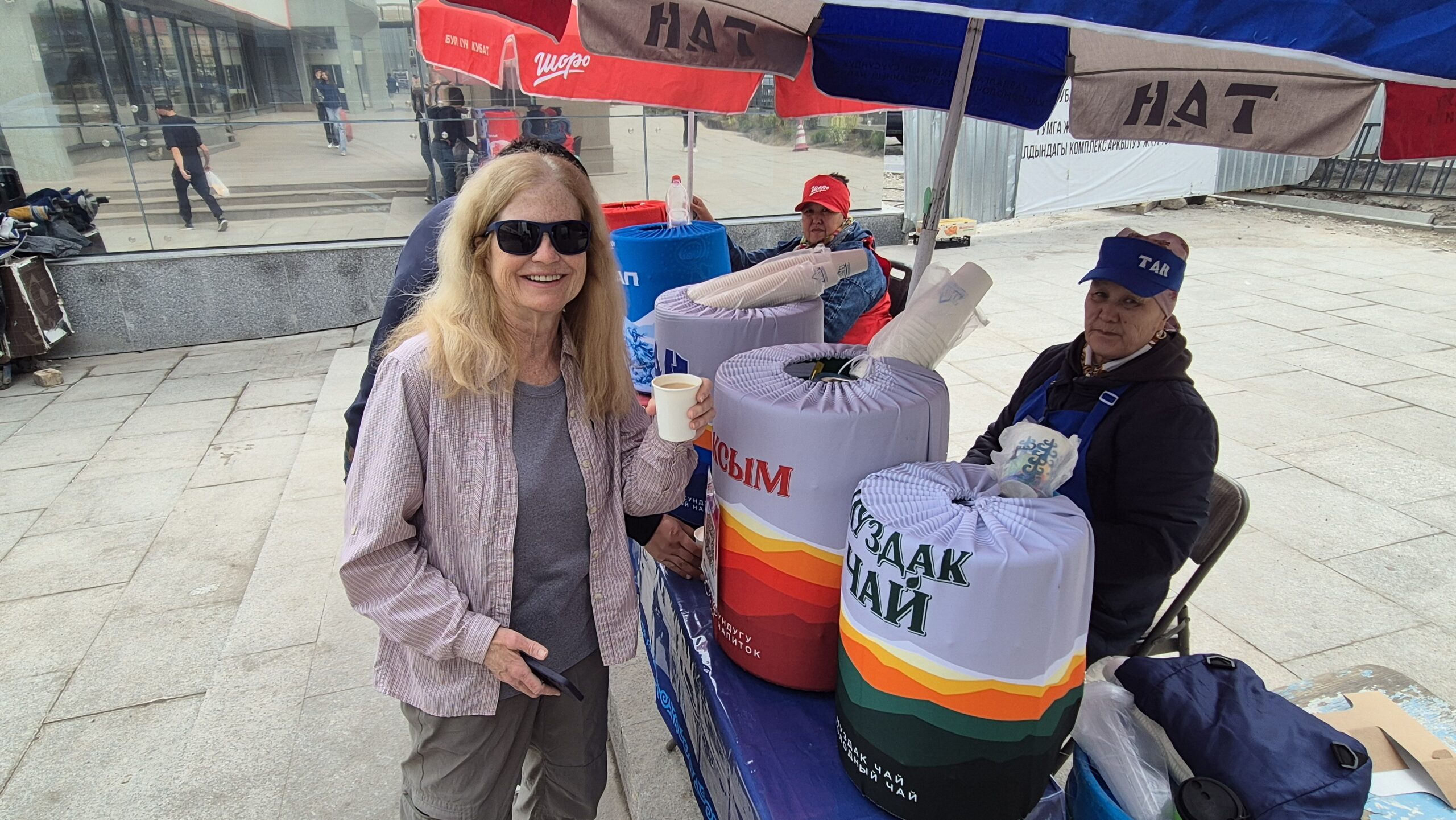
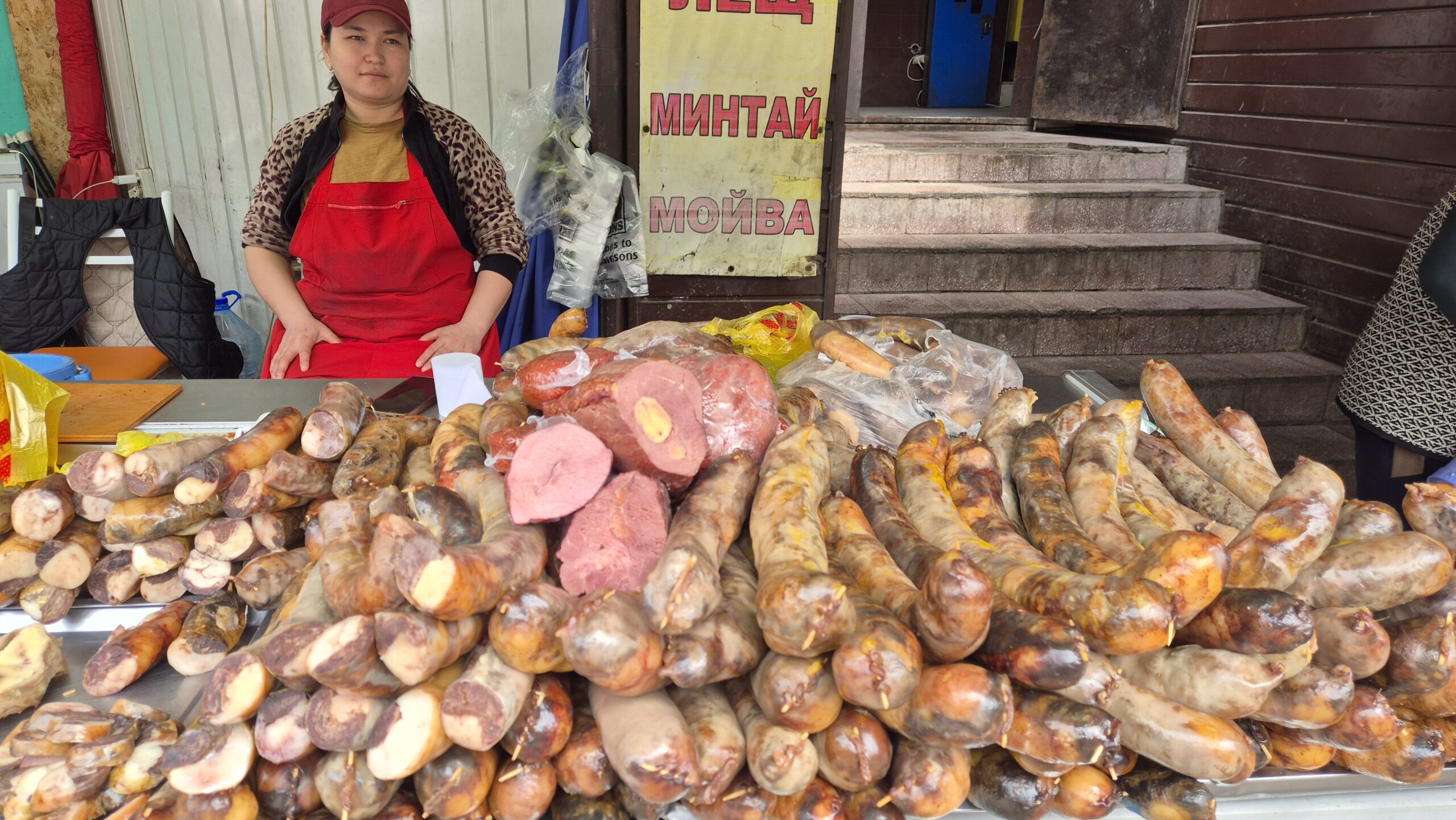
We both skipped the dangerously potent mare’s milk at the big open market, though we could have bought horsemeat sausages (if we weren’t vegetarian). Horses are still a vital part of the culture, with the best costing much money and, upon death, turned into food. They are still used for herding, as well as a kind of polo/soccer competition on horseback, using a 40-kg dead goat instead of a ball.
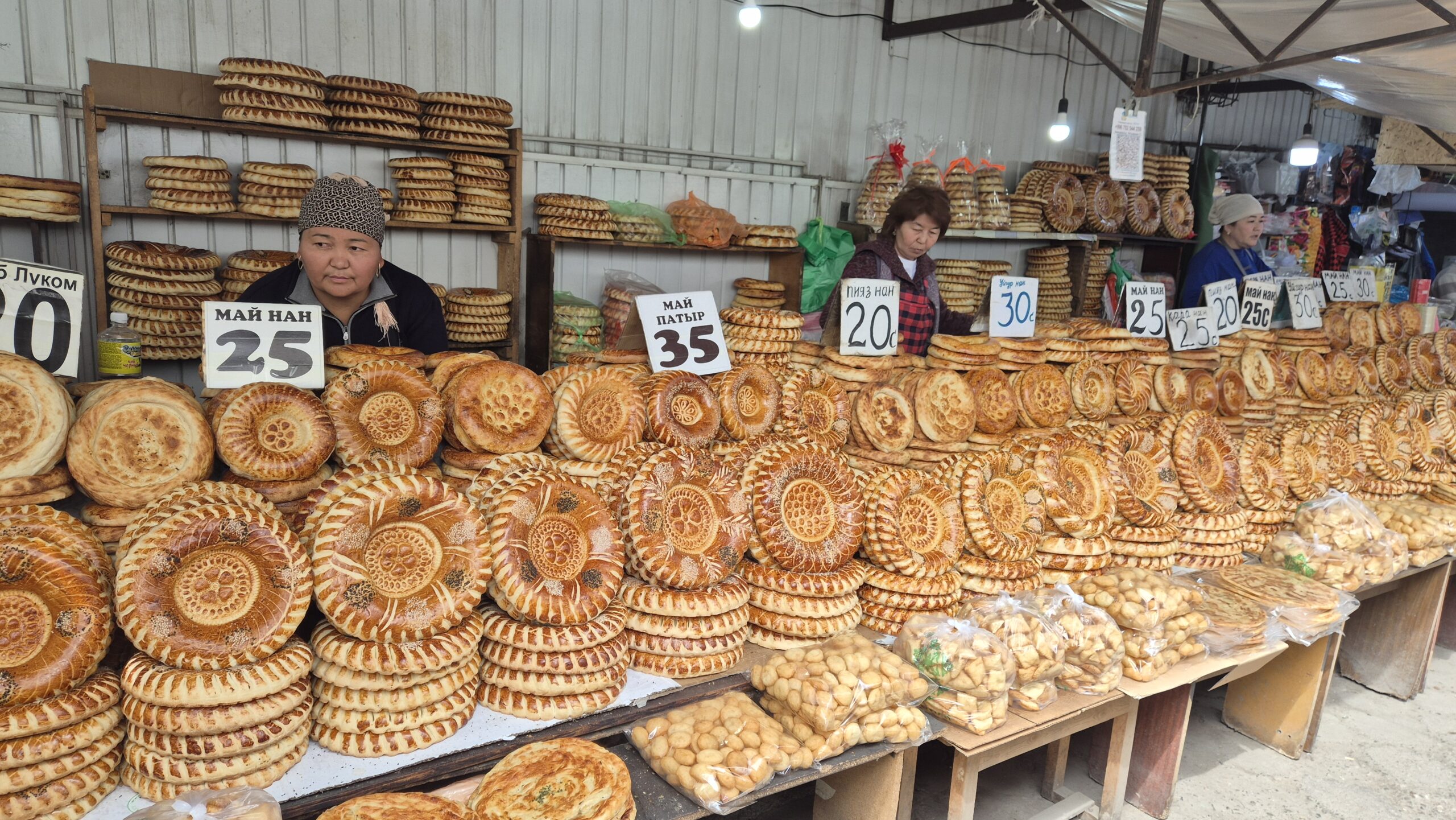
And, at every meal, the Kyrgyz eat this traditional ornate bread (20 – 30 cents) of Russian heritage. Tandyr nan, stamped with a mold and baked in a tandoori-style oven, tastes like a large bagel.
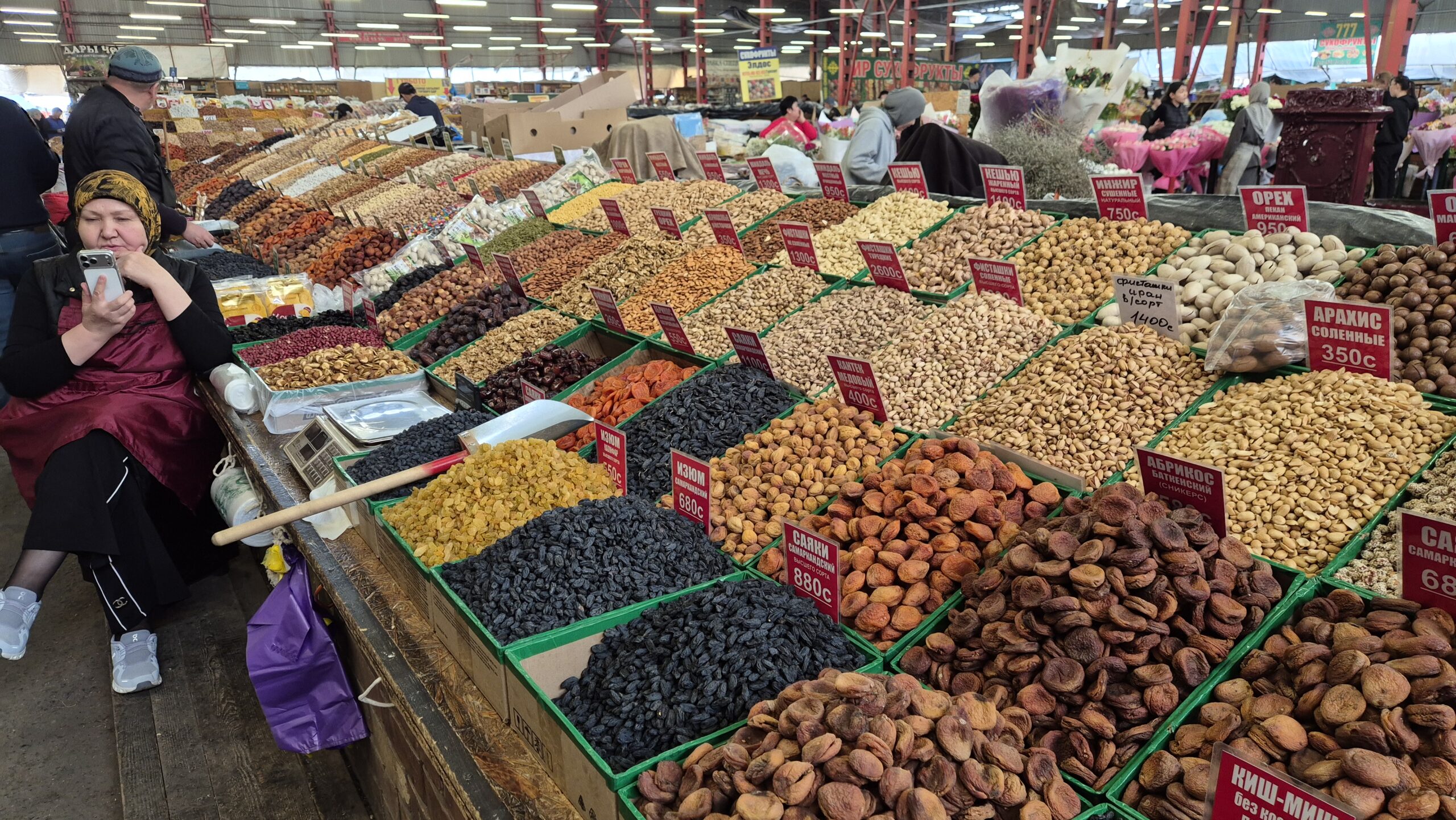
Like us, Bishkek locals love their large markets, or bazaars, though formal supermarkets continue to change buying behaviors. Dozens of different rices, huge arrays of fresh and dried fruits, and on and on – all make for a cornucopia of options.
Despite independence, the Soviet era persists in several ways. The old imperial and neo-classical Soviet buildings have been repurposed for local and national government use (city hall, ministries of this and that, etc.) but also as arts centers.
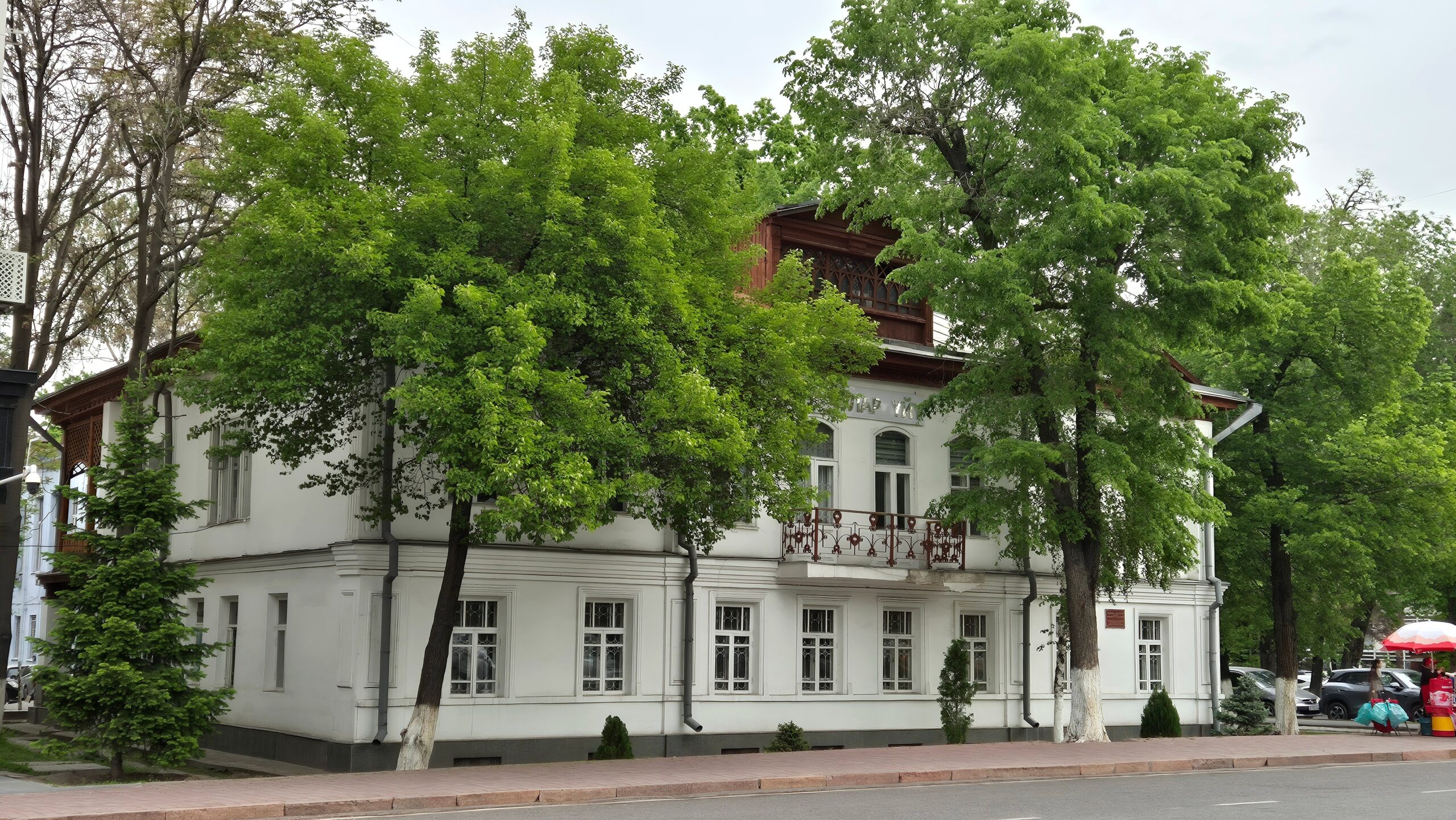
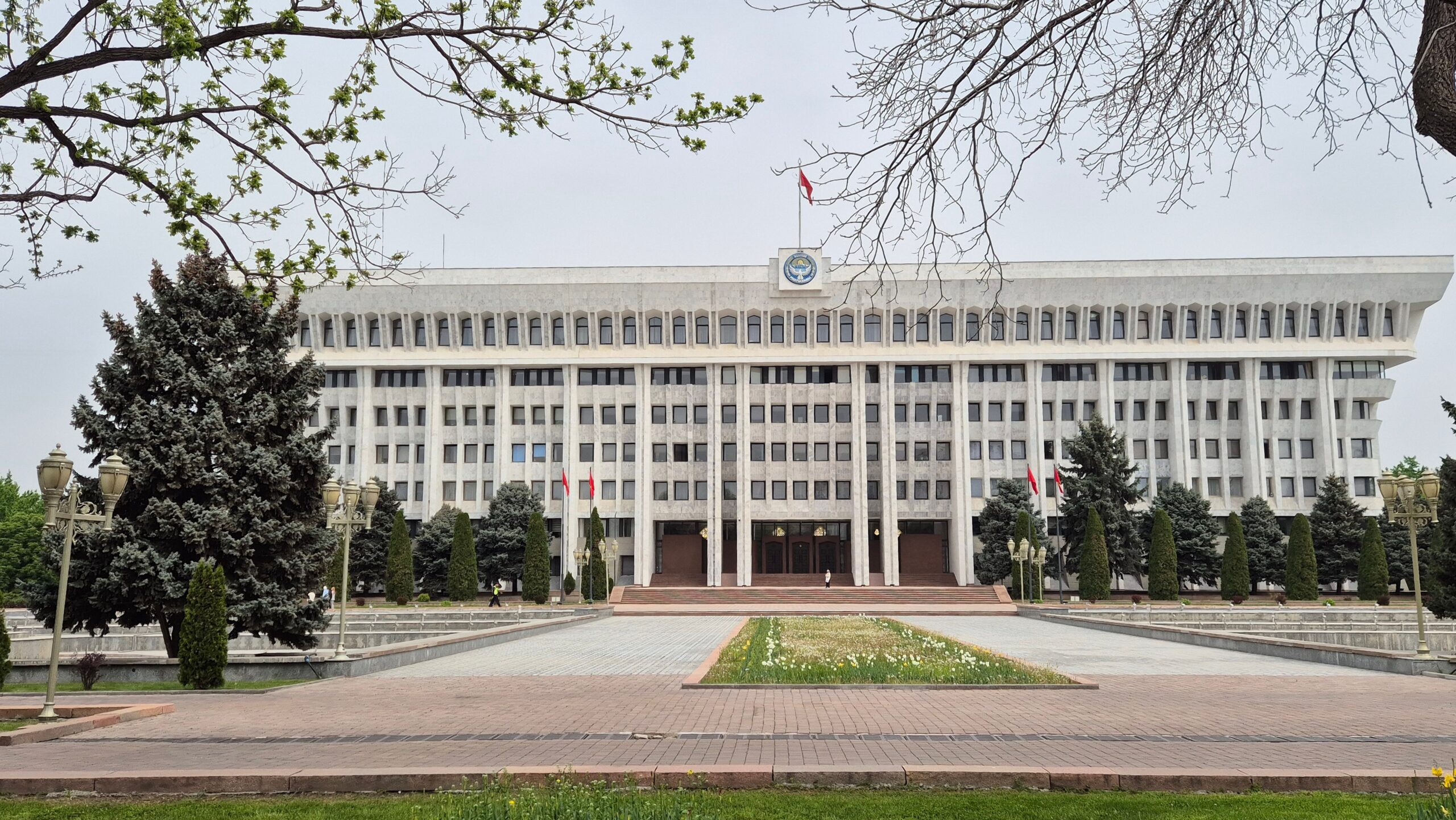
Unlike in many other former Soviet cities, statues of Lenin and emblems with Soviet stars are still plentiful. There is even a statue of Marx and Engels in earnest discussion.
The Kyrgyz continue to follow Russia’s lead as well by celebrating their artists, architects, writers, and musicians. Numerous arts halls and training centers are scattered throughout the central city, named for the most notable of these cultural heroes. The National Museum – in a Soviet-era building – honors the history of Kyrgyzstan’s tribes, nomadic culture, and evolution as a country.
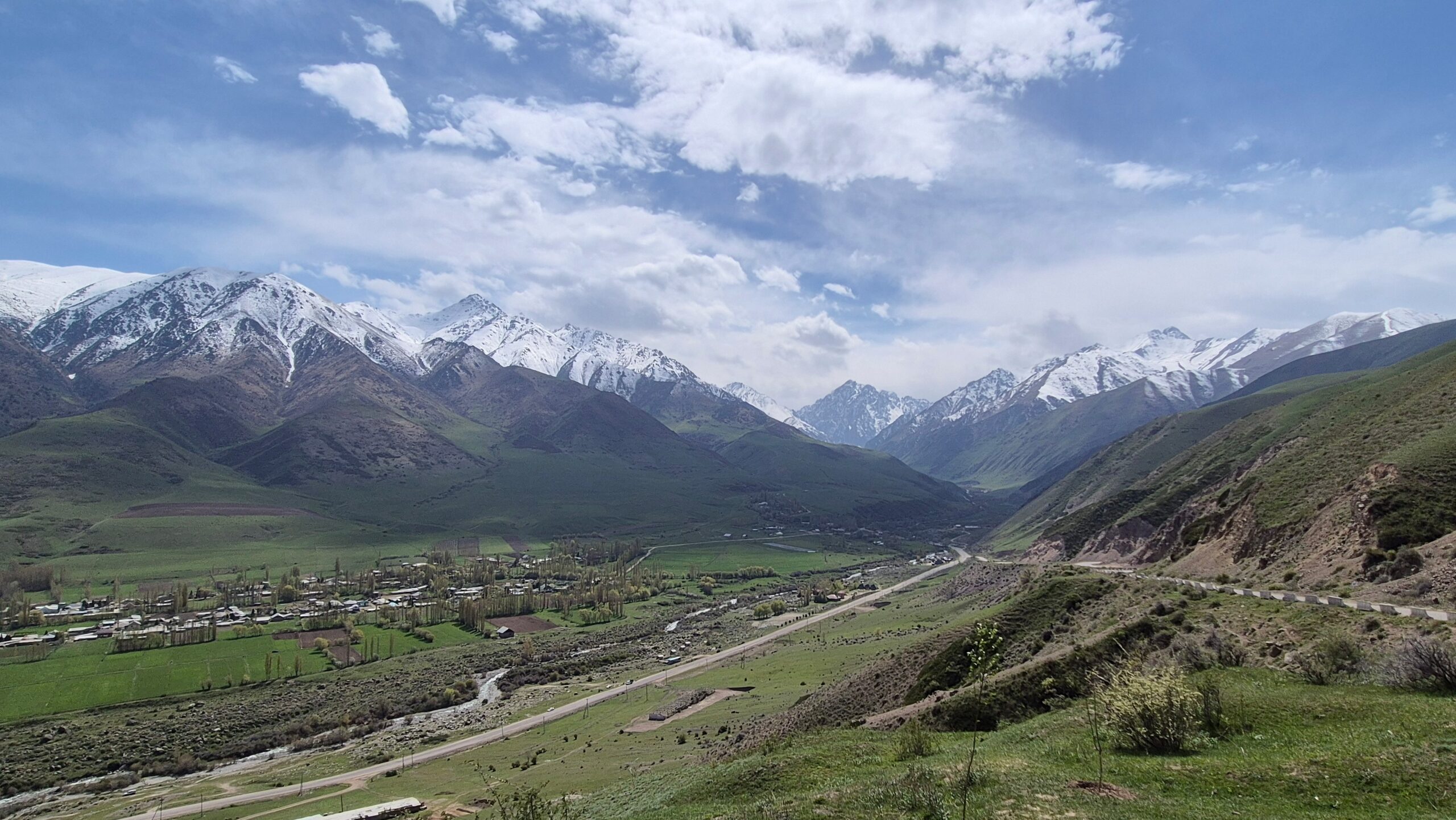
Because of their nomadic past, however, there are few monuments in the country for the Kyrgyz to celebrate. One such is Burana, a World Heritage site about 80 kilometers drive from Bishkek through magnificent mountain landscapes.
This was the prosperous imperial city of Balasgun, home for some of the Sogdian group of peoples from the 9th to 13th centuries.
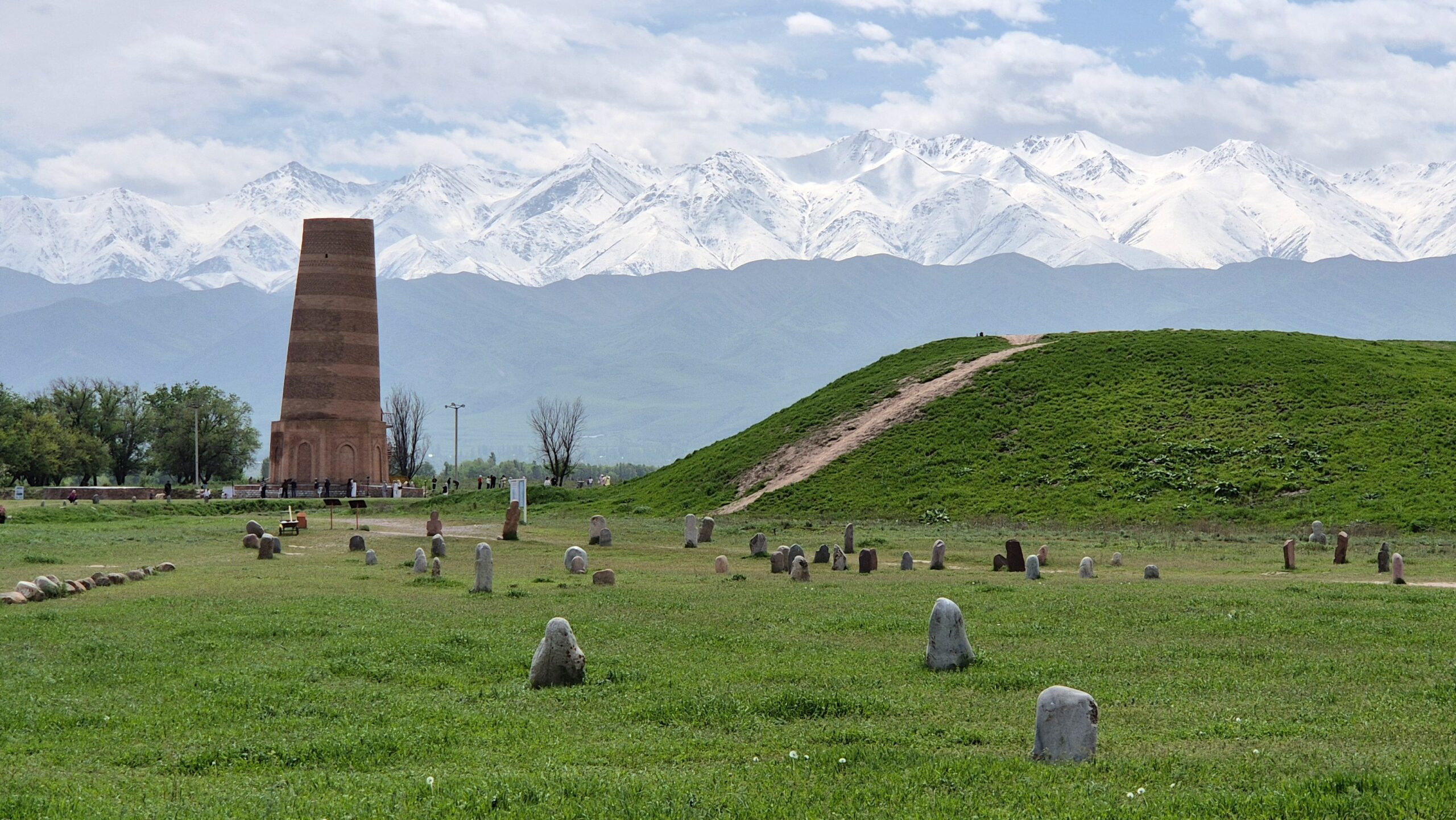
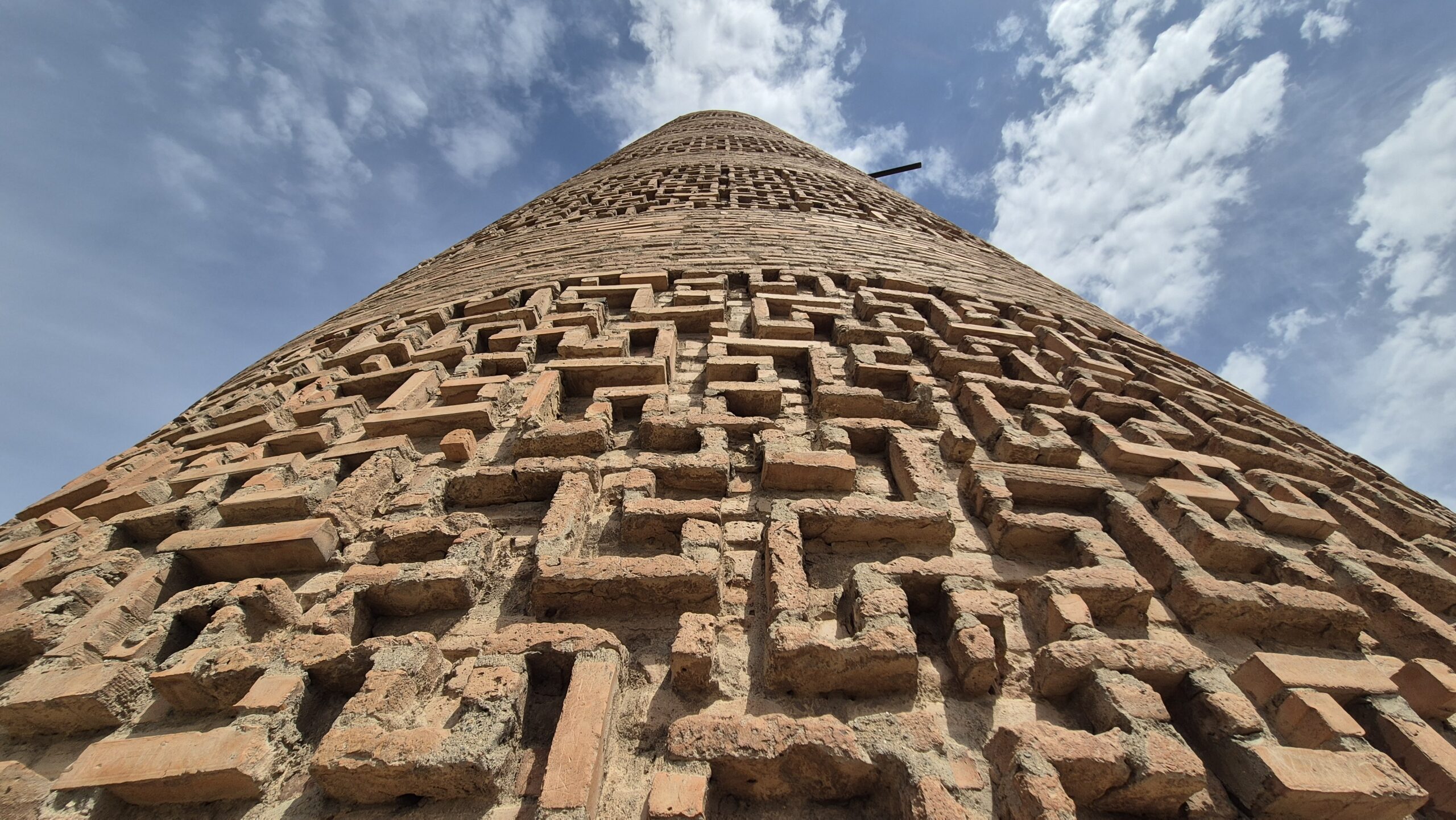
This watchtower for the mosque is one of the oldest extant structures in Central Asia. Reduced to half of its original height of 45 meters (150 feet) by a 15th century earthquake, it still dominates the site. Nearby a massive hillock, with a few chunks of wall remaining, outlines what remains of the khan’s palace.
A more performative celebration of Kyrgyz history persists as another tradition. That involves recitation of the Epic of Manas, a massive story of a leader in the 1st millennium and his heirs. The thrilling statue of Manas leaps forward in front of the National Museum in Bishkek, replacing Lenin’s statue in that same spot.
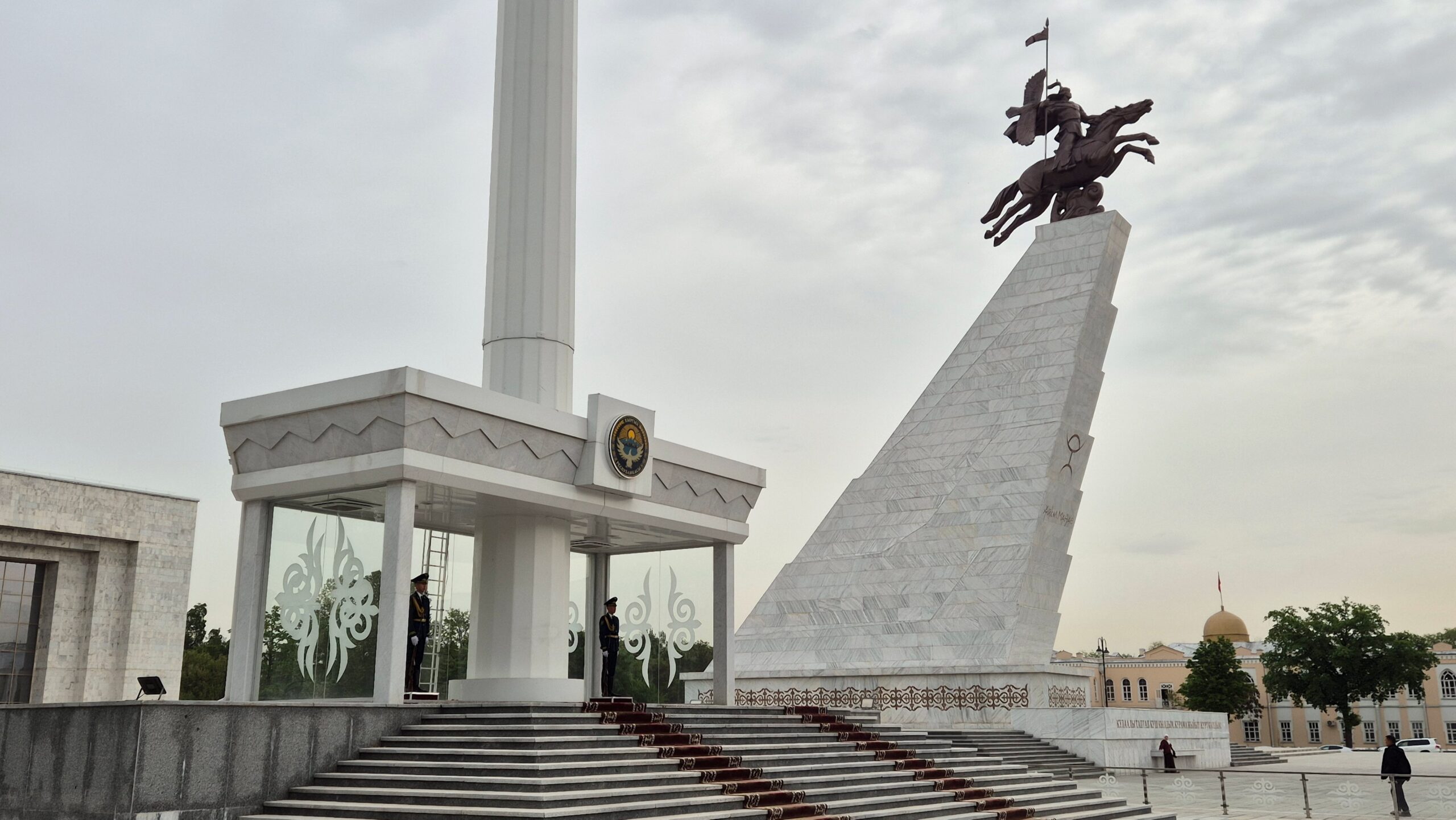
This epic poem in three parts runs over 2 million words, 20 times the length of Homer’s Iliad and Odyssey together, arguably the longest such every written – or rather sung. For this poem was passed along orally until written down a few hundred years ago. As might be expected, the reciters of the poem (manaschy) are themselves cultural heroes for their feats of memorization and endurance. Legends abound of those who could recite the epic from a young age, as if inspired by divine forces.
About midway through a concert at our yurt camp one evening at Issyk-Kul, the young son of a musical family recited part of the epic in a rapid patter lost on us. But the music they played – with the unusual technique on traditional instruments – truly linked us to the country’s nomadic past.
(To enlarge any picture above, click on it. Also, for more pictures from the five Stans of Central Asia, CLICK HERE to view the slideshow at the end of the itinerary page.)