In brief: On the shores of the Mediterranean Sea, alongside magnificent landscapes, we explored ancient cities that were important some 2000 years ago and still revelatory today.
Greco-Roman Cities
“I am Alpha and Omega, the first and the last: and, what thou seest, write in a book, and send it unto the seven churches which are in Asia; unto Ephesus, and unto Smyrna, and unto Pergamos, and…unto Laodicea.” – Revelation 1:11
It’s been several millennia since the great cities of western Turkey flourished as Greek, then Roman, then Byzantine Christian centers. Since then, earthquakes, conquests, collapses and, in just the last few hundred years, re-discovery have given us the archeological sites we can visit today.
No one site, therefore, shows the splendor or the scope of those great cities. But, as we visited the classical sites of Revelation (along with Hierapolis), we felt we were re-assembling the fragments of all their ruins into a fuller picture of those lost worlds. We selected these images, more than we usually post at once, to reflect both typical features and unique ones.
- Hierapolis
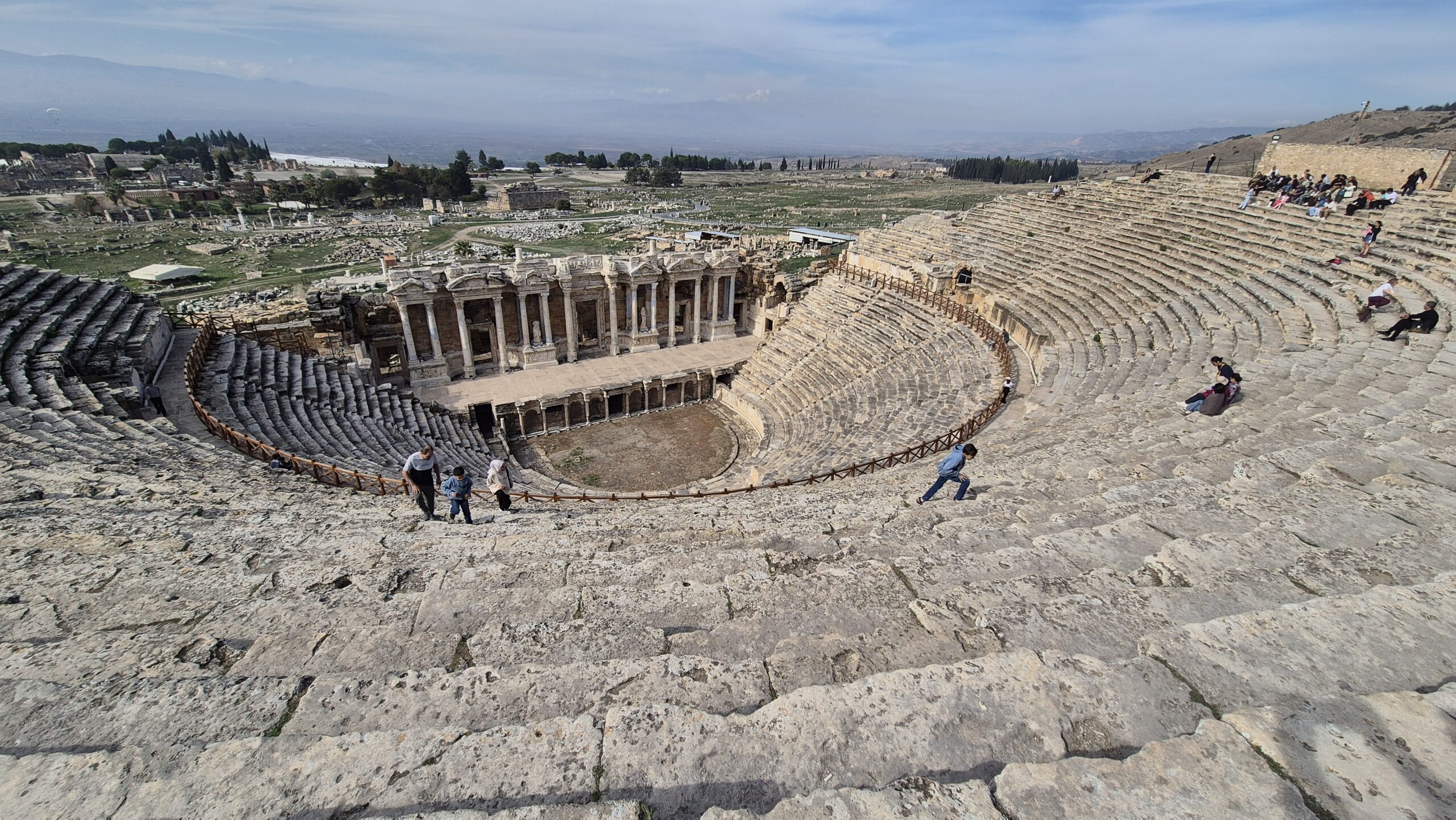
Amphitheatre. You can’t enter any of these classical cities without bumping into the amphitheatre. Many have been restored meticulously; this one recently by an Italian team. The largest we saw was at Ephesus, originally 3rd century BCE under the Greeks, then expanded by the Romans to seat 25,000 people. But that was inaccessible due to ongoing work. There were two at Laodikea. But this one at Hierapolis was the most impressive that we could visit due to its size (15,000 capacity) as well as its exquisitely restored 2nd century AD stage and backdrop.
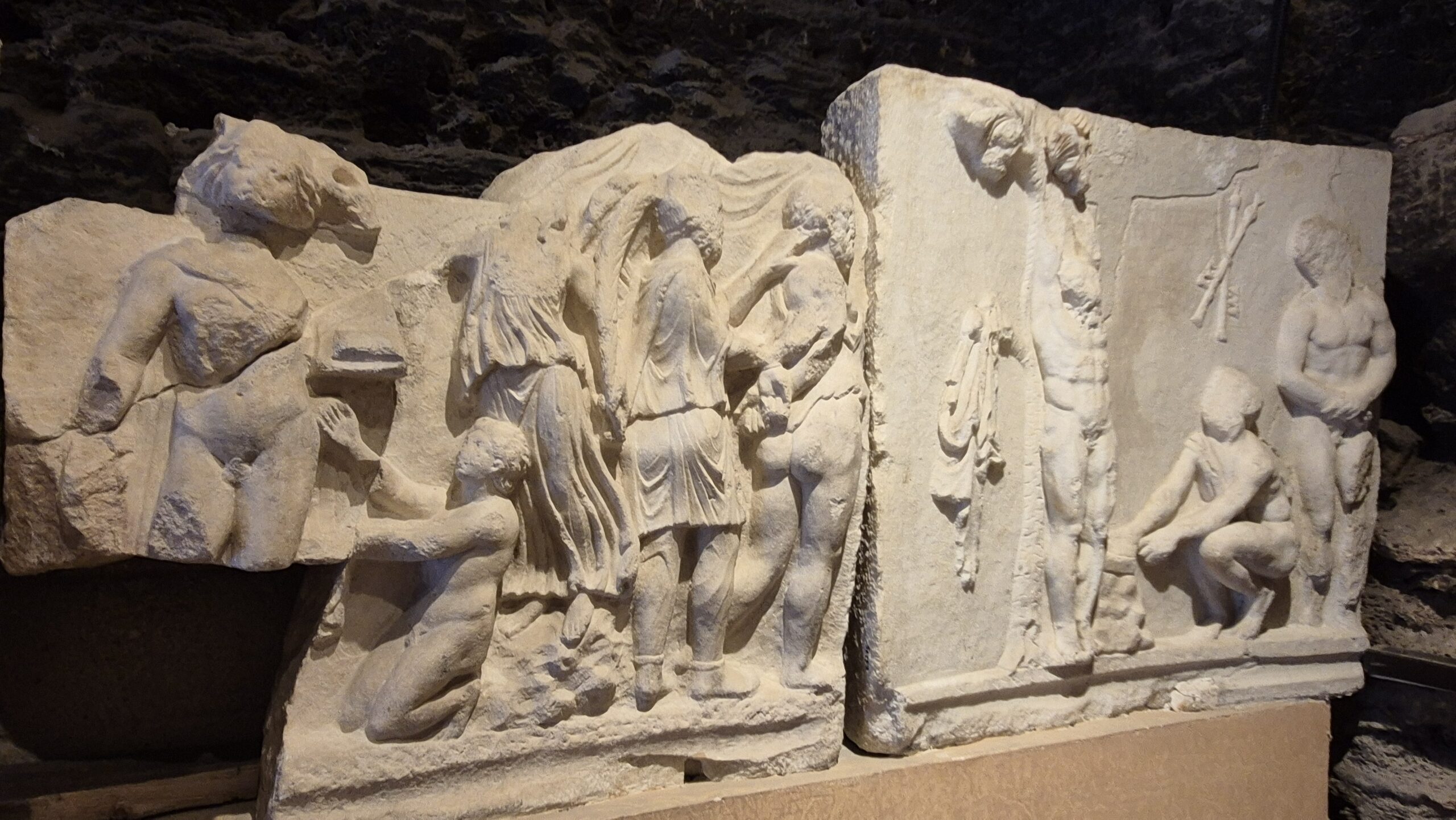
Friezes from the amphitheatre. Most of the original friezes high atop the amphitheatre stages of ancient cities have been lost. Here almost all of the one-meter high carvings have been preserved at the site museum. This dramatic section retells the myth of Marsyas who came out badly in a musical competition with the god Apollo.
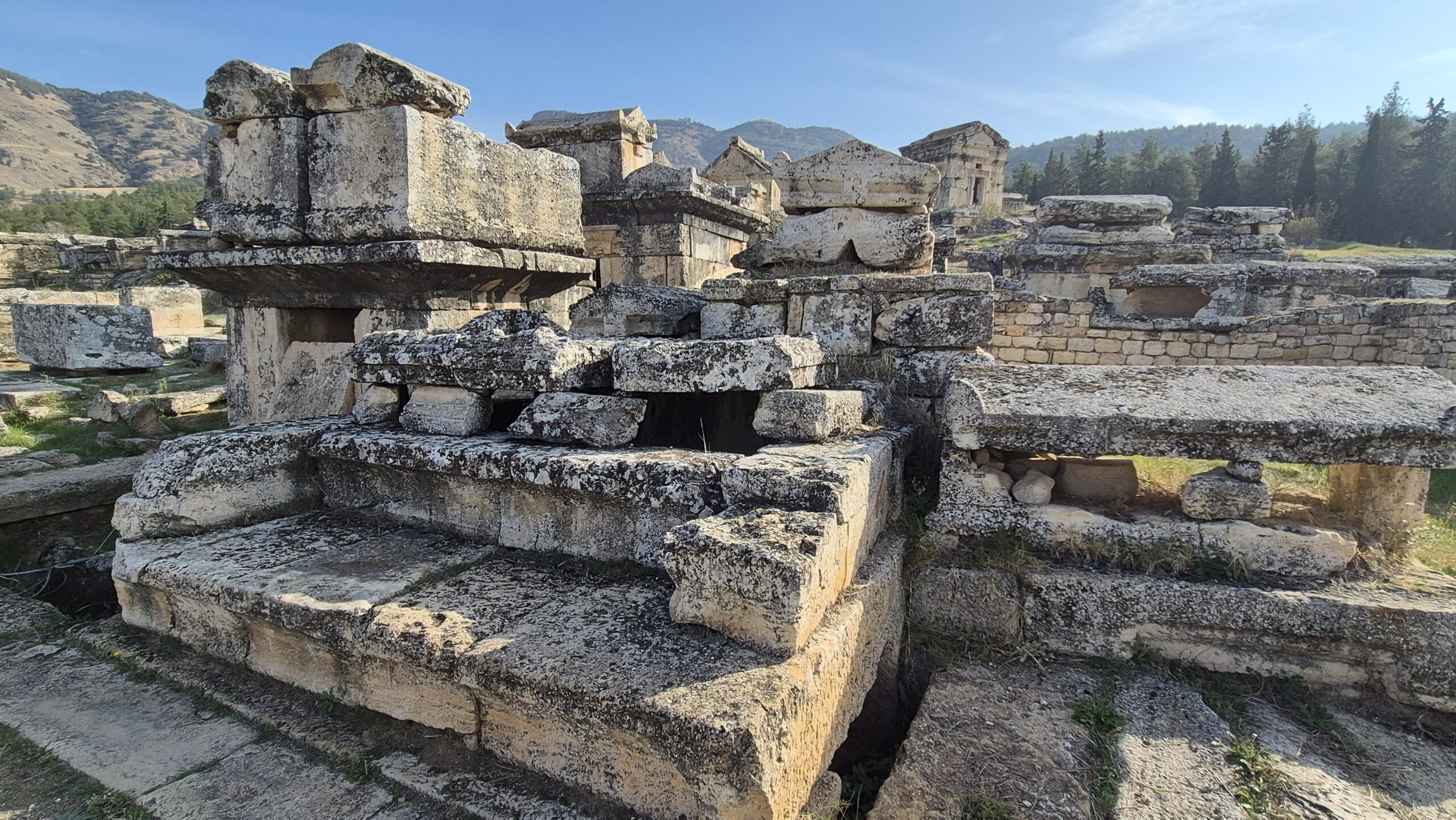
Tomb of the Curses at the necropolis. Extensive burial areas outside the central city are somewhat uncommon to find. This one extends for about a kilometer and is richly packed with tombs large and small of diverse styles. A typical interior is like a small cabin (like the one to the left and in the background) with several stone layers like bunkbeds and a hollow in the ground for bones. This tomb from the 2nd century AD featured a sizable platform for access that seemed to us more like a sofa for resting during a tomb visit, plus an overflow section to the left for a few extra marble coffins. It is inscribed with a warning to those who consider invading the tomb, threatening civil punishment as well as disease, misfortune, and a stay in hell.
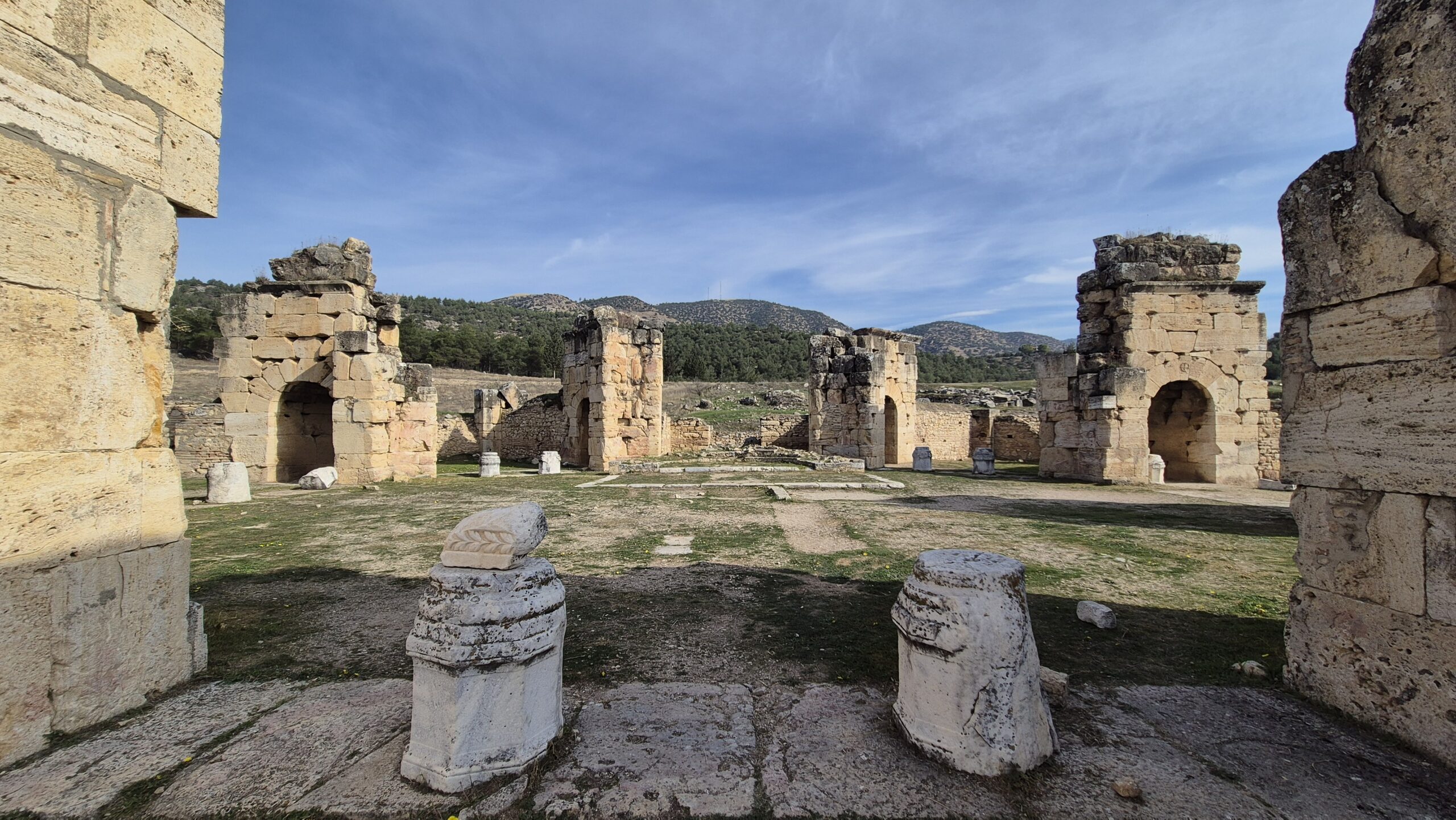
The Martyrion of St Philip. This 5th century octagonal building was built on the site where Philip was martyred, and even now it’s thrilling to enter its imposing ruins. It’s located high atop a hill, with a broad vista to enjoy, accessed by a long staircase starting at the church where Philip was buried. For centuries, it was a pilgrimage site for Christians and renowned for its healing powers. They stayed in the 28 rooms surrounding the octagon to experience the incubation rites of healing during sleep.
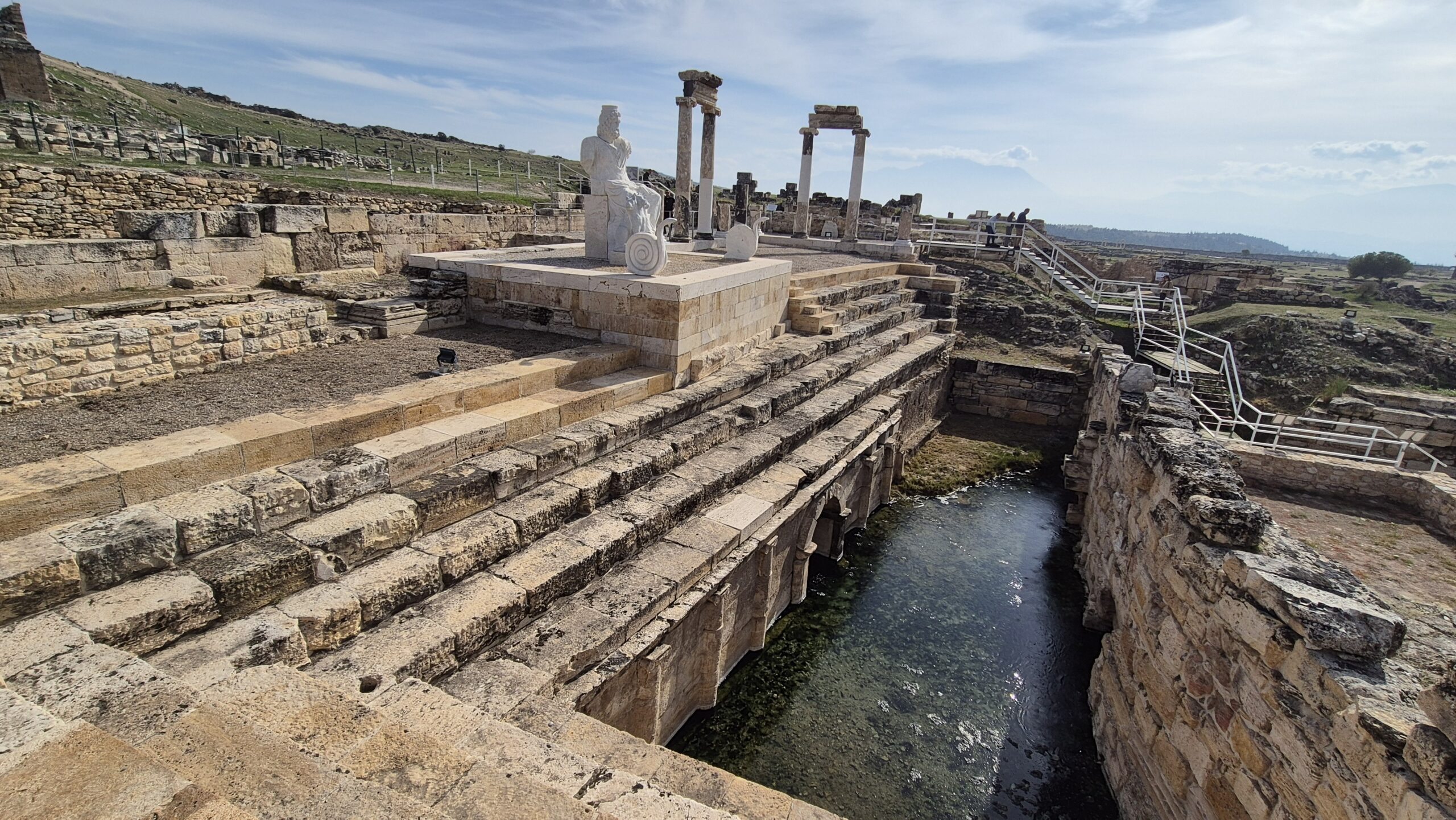
Plutonion. A “highway to hell” at this unique site among all the Greco-Roman cities we visited. Here the thermal waters flowing out of the man-made cave visible in the photo emitted a toxic gas that filled the natural cave opposite it. Bulls were sacrificed by suffocating in the gas, as part of rites intended to appease the god Pluto, keeper of hell. Spectators could sit on these platforms dating from the 2nd century BC Grecian town, under the watchful eye of Pluto, and observe the ceremonies. The sulfurous waters still feed the carbonate hills of Pamukkale.
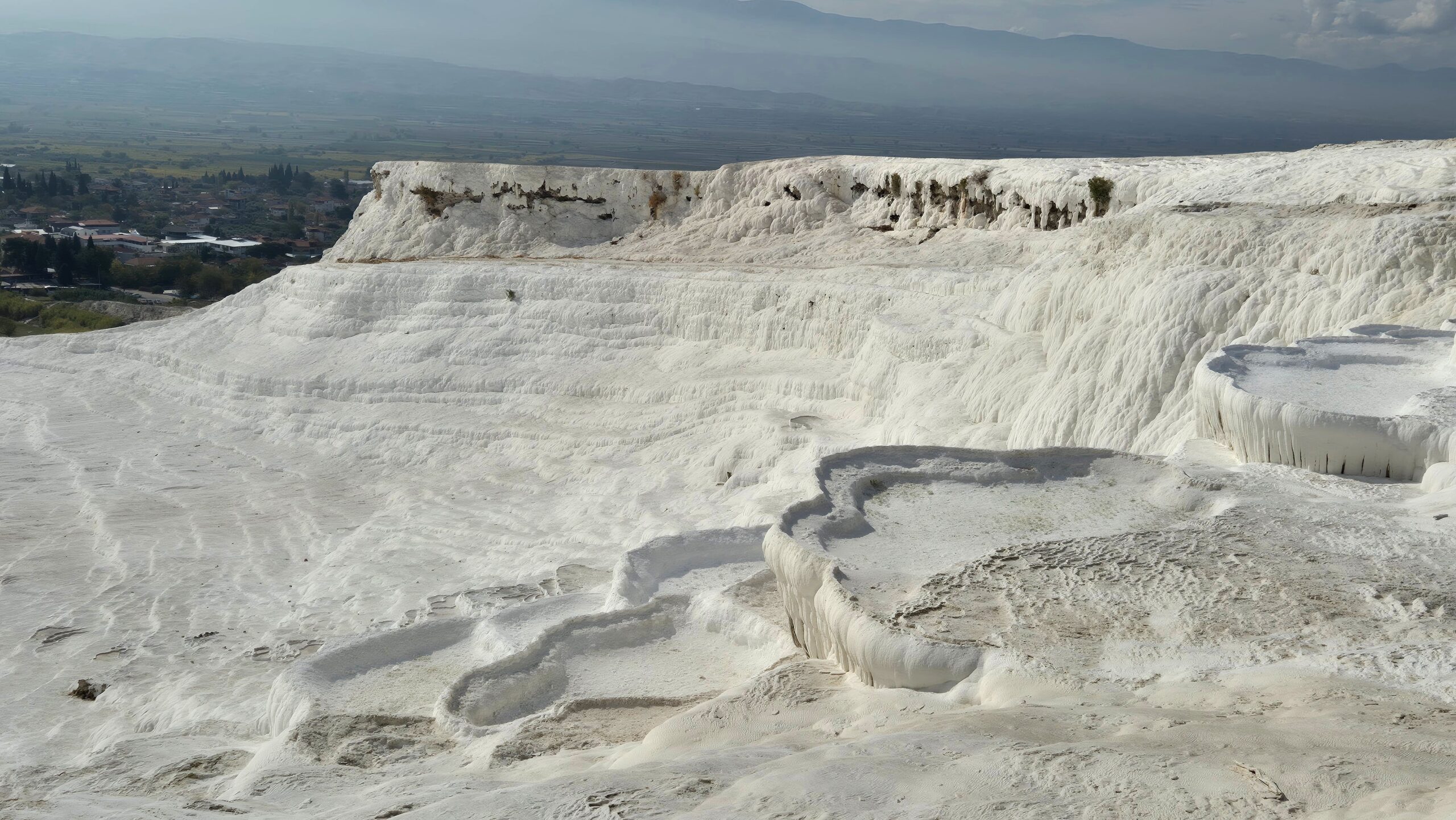
Travertine terraces, Pamukkale. From the 2nd century BC onward, the thermal waters here have attracted visitors to Hierapolis for their therapeutic properties. We walked through the upper part here, but the pools to splash in were surprisingly cold. The heated waters are now farther downhill, and the carbonate is drying out or wearing away, because water has been diverted to the tourist hotels below in Pamukkale.
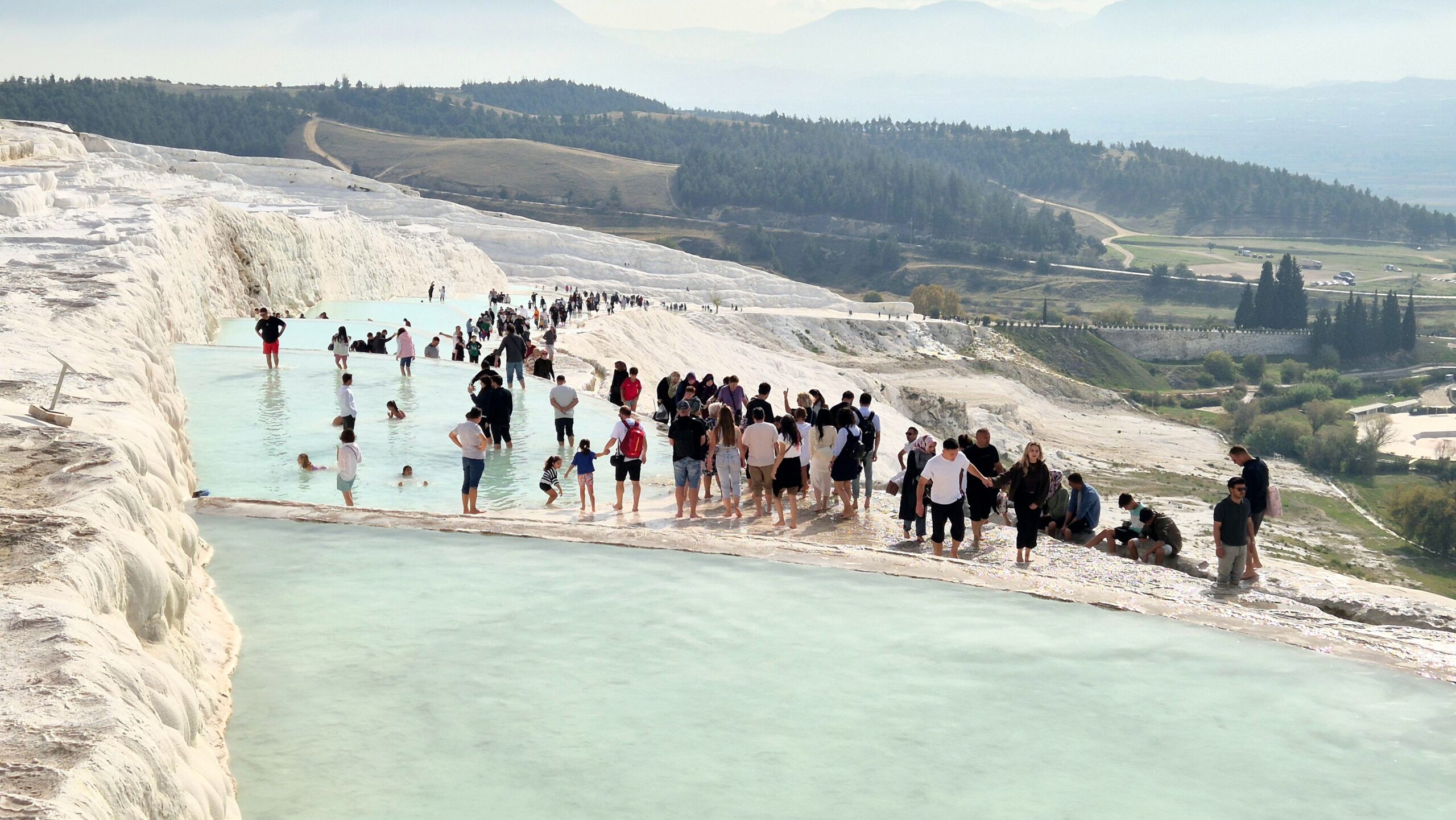
Travertine terraces, Pamukkale. Another view…Over the centuries, the thermal waters – rich in calcite and flowing from springs above – left these gleaming white deposits of carbonate and stacked pools.
- Ephesus
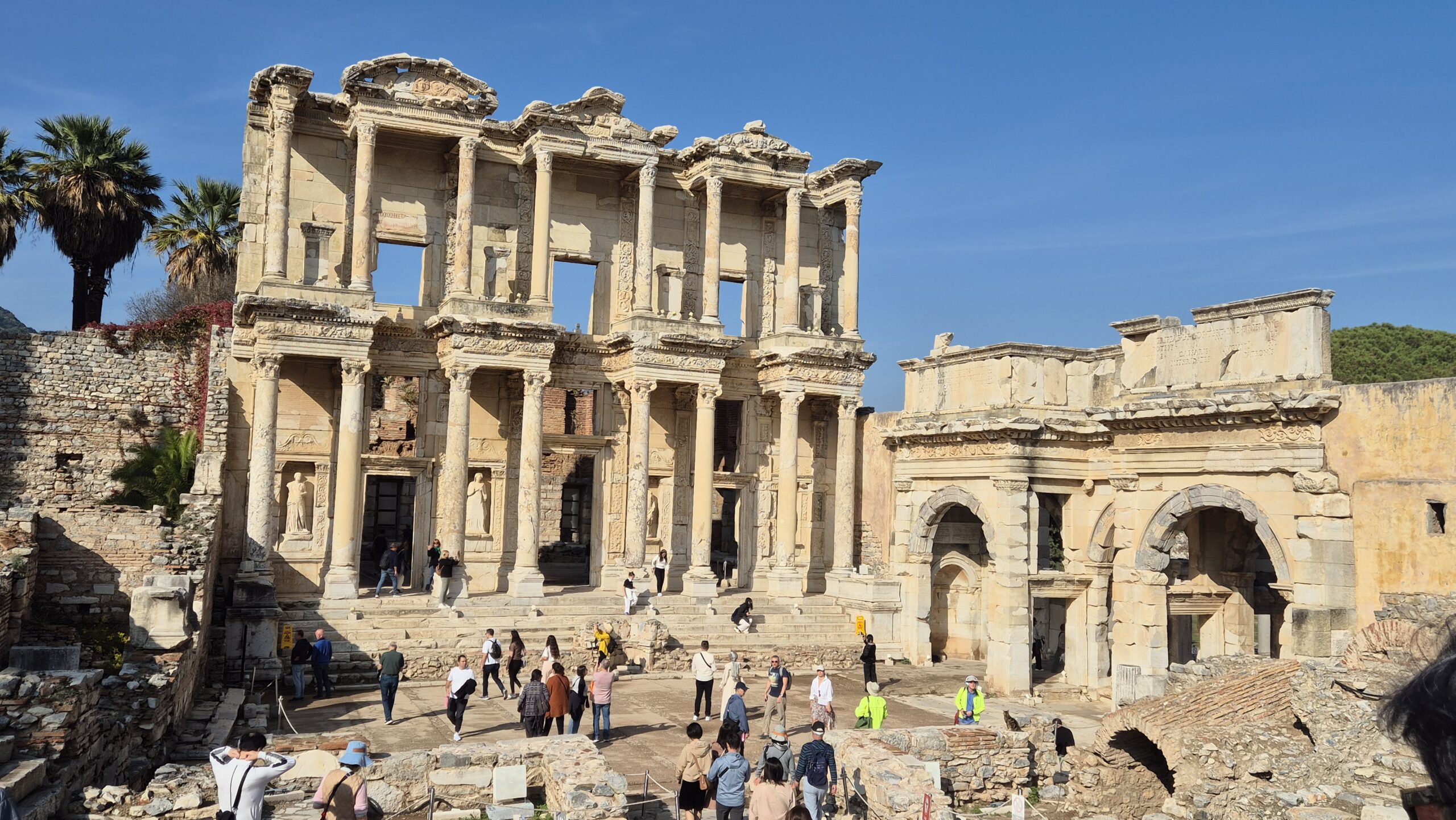
The Library of Celsus and Gate. The remarkably restored 2nd century façade of the library – with statues of the four virtues amid its pillars – is unique among the sites we visited, and one of the few remaining classical libraries extant. It was among the largest as well, holding as many as 12,000 scrolls, a size only exceeded by the libraries at Alexandria and Pergamum. Originally built to foster learning in memory of the Roman consul Celsus, it also contained Celsus’s tomb in a crypt below. What you see here actually dates from the 1970s, when this splendid building was resurrected from the ruins of an 11th century earthquake and a 3rd century fire. The more typical element here, quite overshadowed by the library, is the glorious three arched gateway to the agora, the Gate of Mazaeus and Mithridates (former slaves honoring, by their donation of the gate, those who freed them).
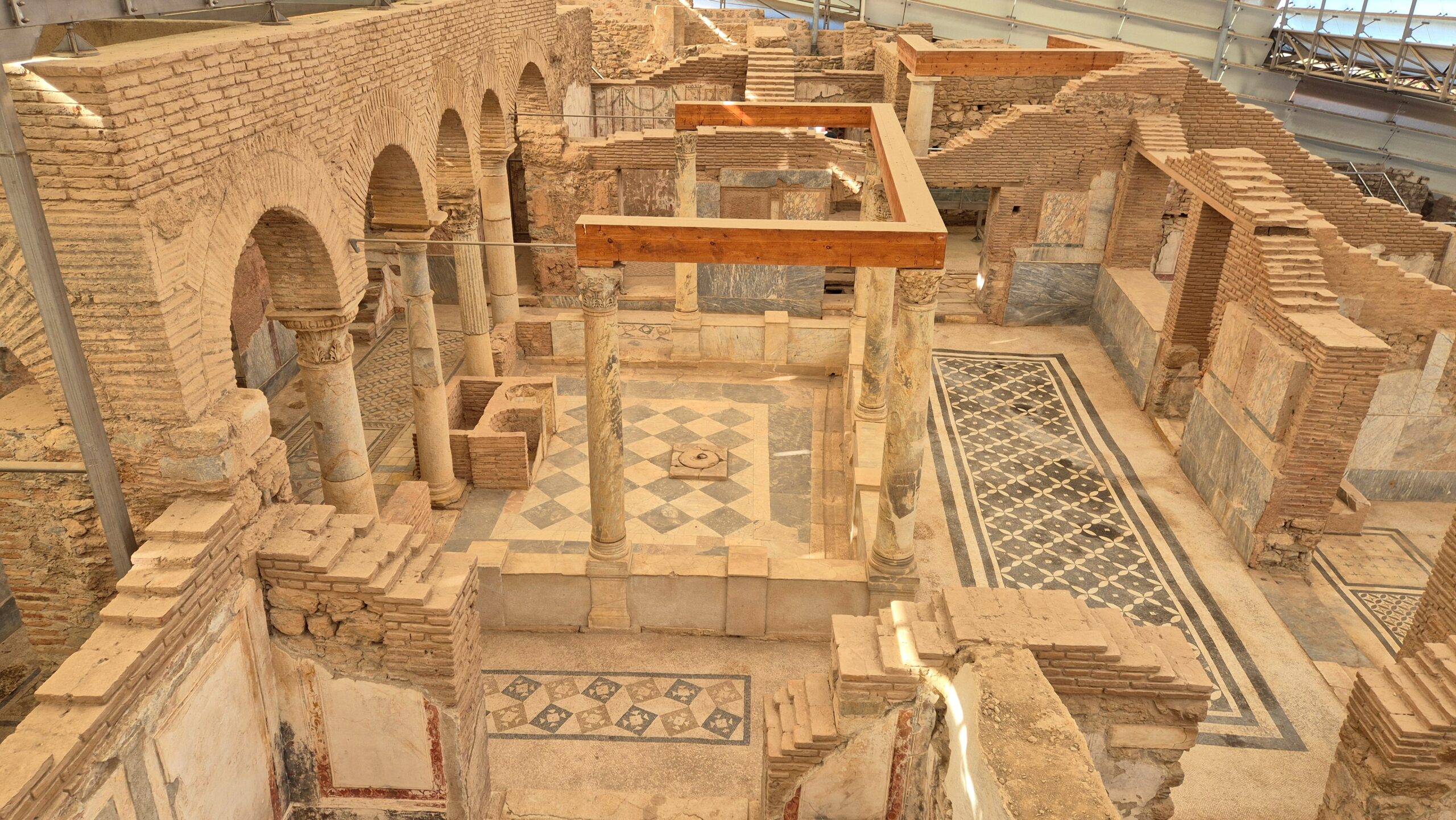
Terraced houses. A collection of seven homes owned by the rich and famous of Ephesus line a hillside at its center. Subject of many detailed books already, they make for a special treasure within the remains of the old city. They date from the 1st to 3rd century and, even in partial restoration, show off their owners’ splendid marbled salons, frescoed walls, elaborate mosaics, private sanctuaries, and more. In this home, added to the flooring and marbled walls and frescoes are grand columns and a sizable archway.
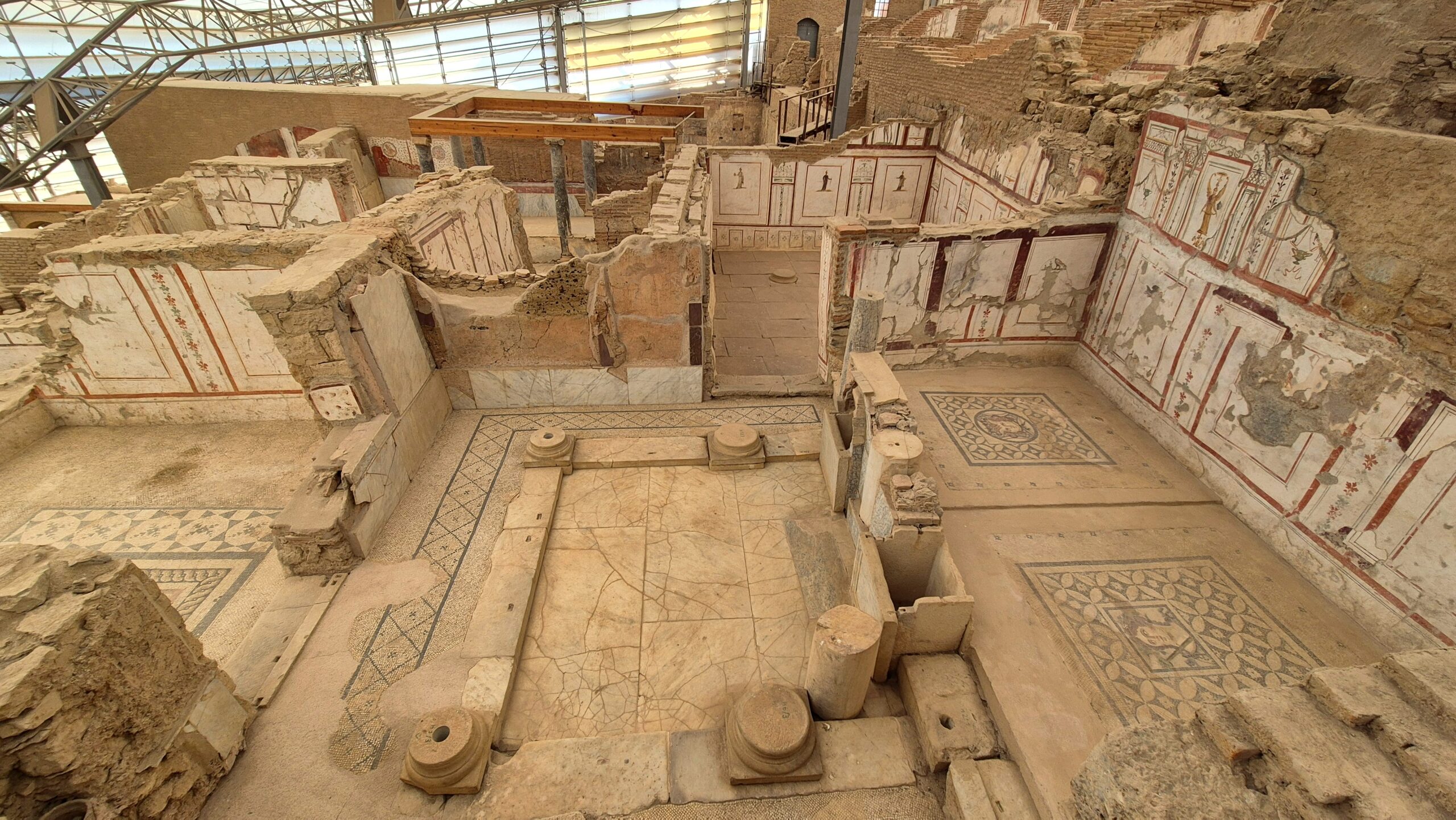
Terraced houses. Another view into this unique find of homes of the wealthy. This bird’s eye view shows off the room décor of one house, complete with mosaic faces in a room to the right of its marbled center court.
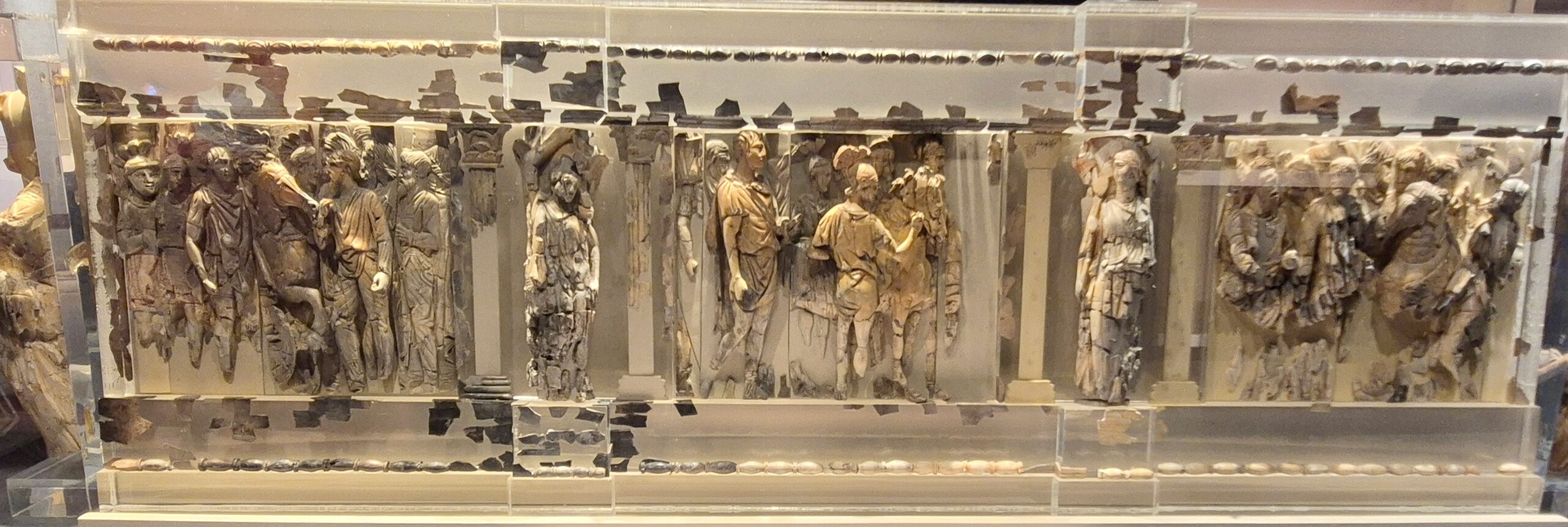
Frieze carved in ivory, Terraced Houses, Ephesus Museum. The uniquely preserved dwellings on the hillsides of Ephesus yielded some stunning artifacts like this, from the 2nd century AD. It depicts the Emperor Trajan triumphing over opposing forces. The horses and some of the faces are finely crafted. The great number of imposing statues and artifacts here – which could merit a whole post on their own – demonstrate the importance of this city then and now.
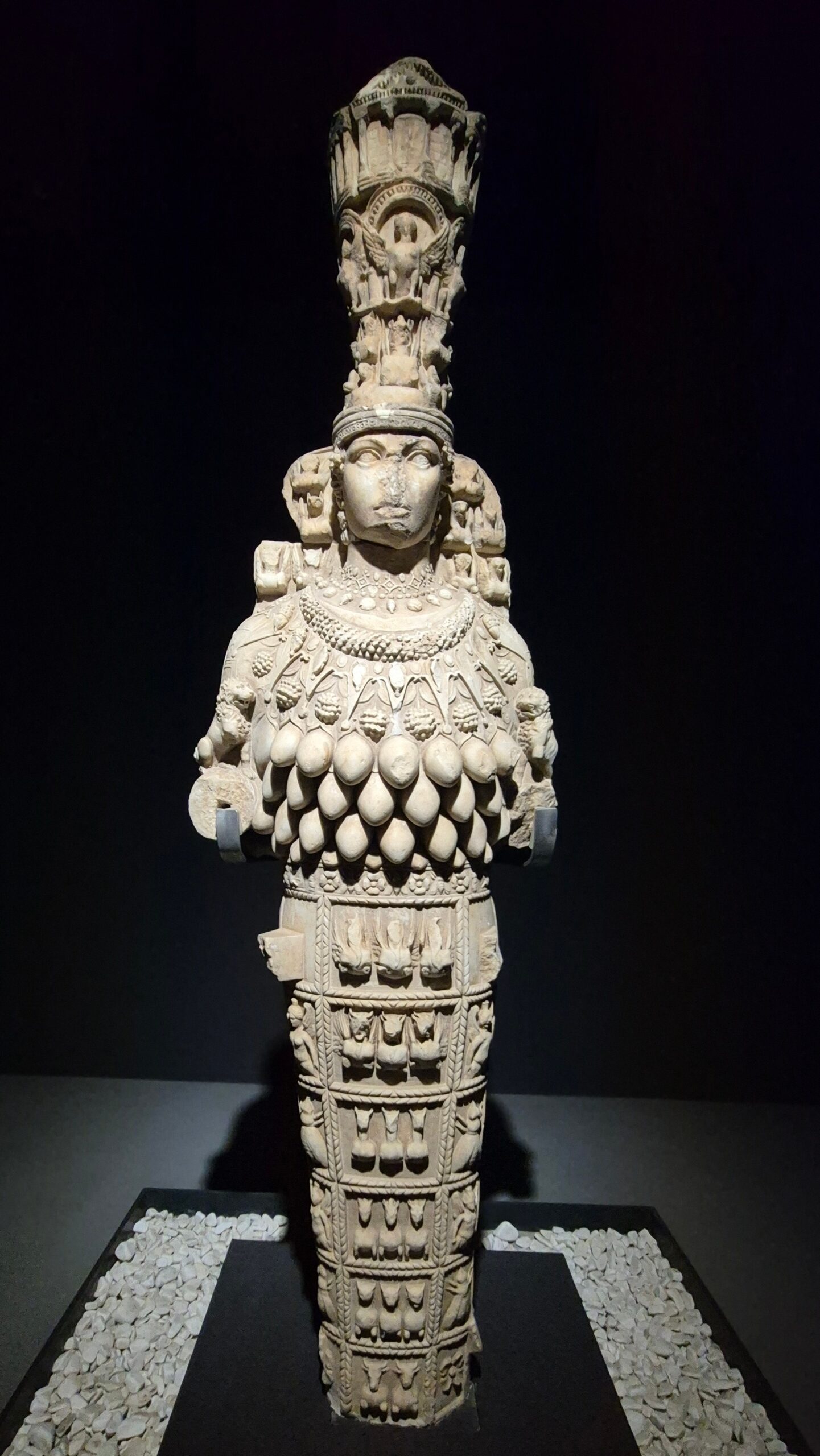
Statue of Artemis, the Artemision, Ephesus Museum (Selcuk). Artemis was the goddess of nature and fertility, also known as Cybele or Diana in other classical empires. This impressive marble statue – adorned with animals and fruits, as well as what seems like multiple breasts (but are thought to be bull testicles), plus a knock-out headdress – dates from the 1st century AD. Her grand temple here, the Artemision, was enormous in scale at 115 meters by 55 meters, with 18-meter tall columns. It was considered one of the seven wonders of the ancient world. A mini version of the temple tops out her headdress. Rebuilt by the Greeks in the 4th century BC after arson destroyed the original, the Artemision lasted at Ephesus until the Goths destroyed it in the 3rd century AD. Not much except some marble flooring and a stray column remain to be seen on the site.
- Smyrna
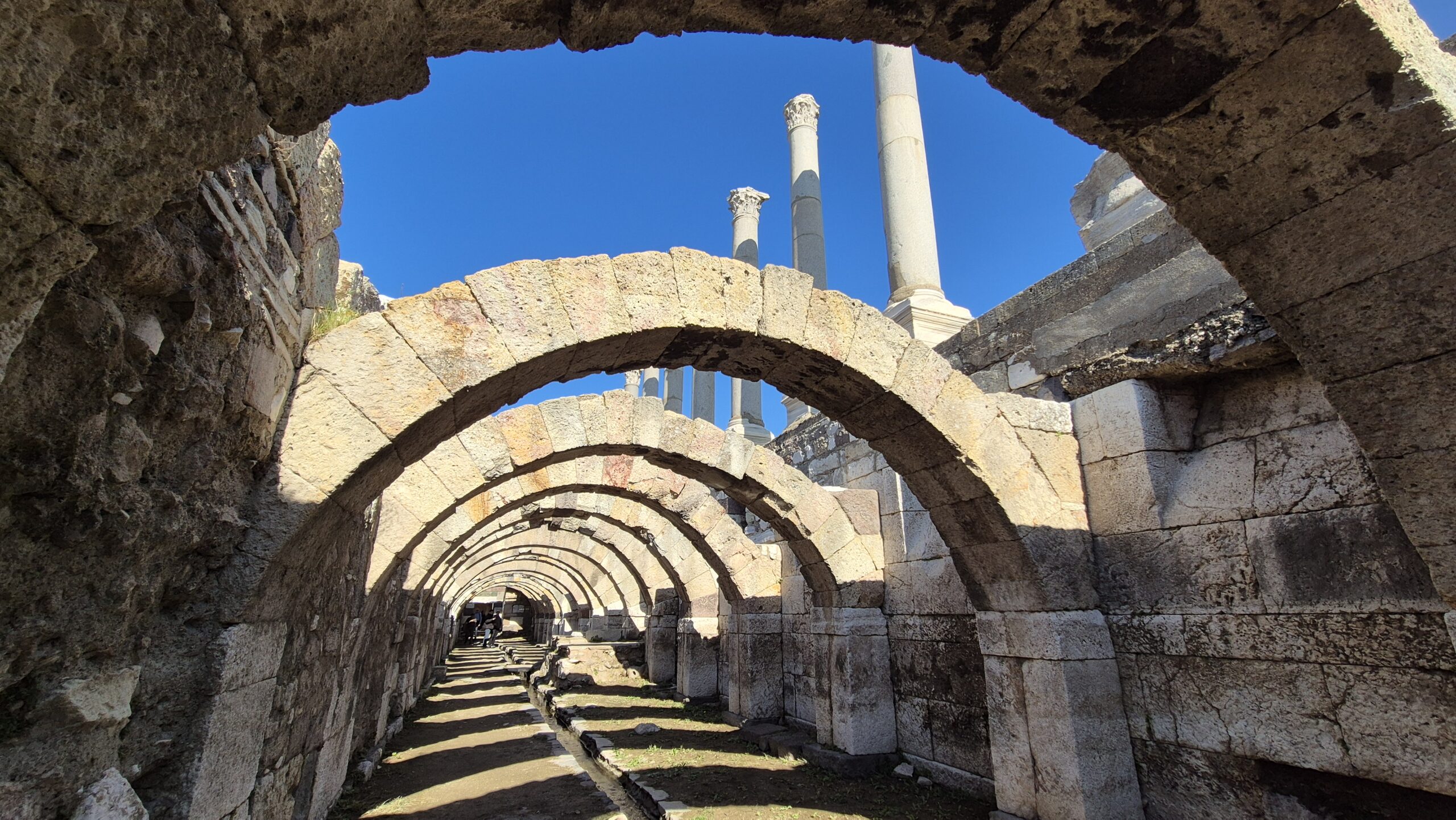
Underground passages. This city now known as Izmir was founded per myth as a result of a vision dreamt by Alexander the Great in the 4th century BC. Above ground here are typical remains of an old agora and “basilica” where judicial and administrative functions occurred. Below ground, however, we found something special: a network of long arched galleries where merchants traded and stored goods. Along the walls of this vast space, we could still see rough paintings and graffiti of myriad subjects: ships, gladiators, flora, fauna, games, and even early religious iconography. Here you see both a downstairs gallery and the upstairs agora columns at the site. A fountain has continuously fed the water channels running down the center for at least two millennia.
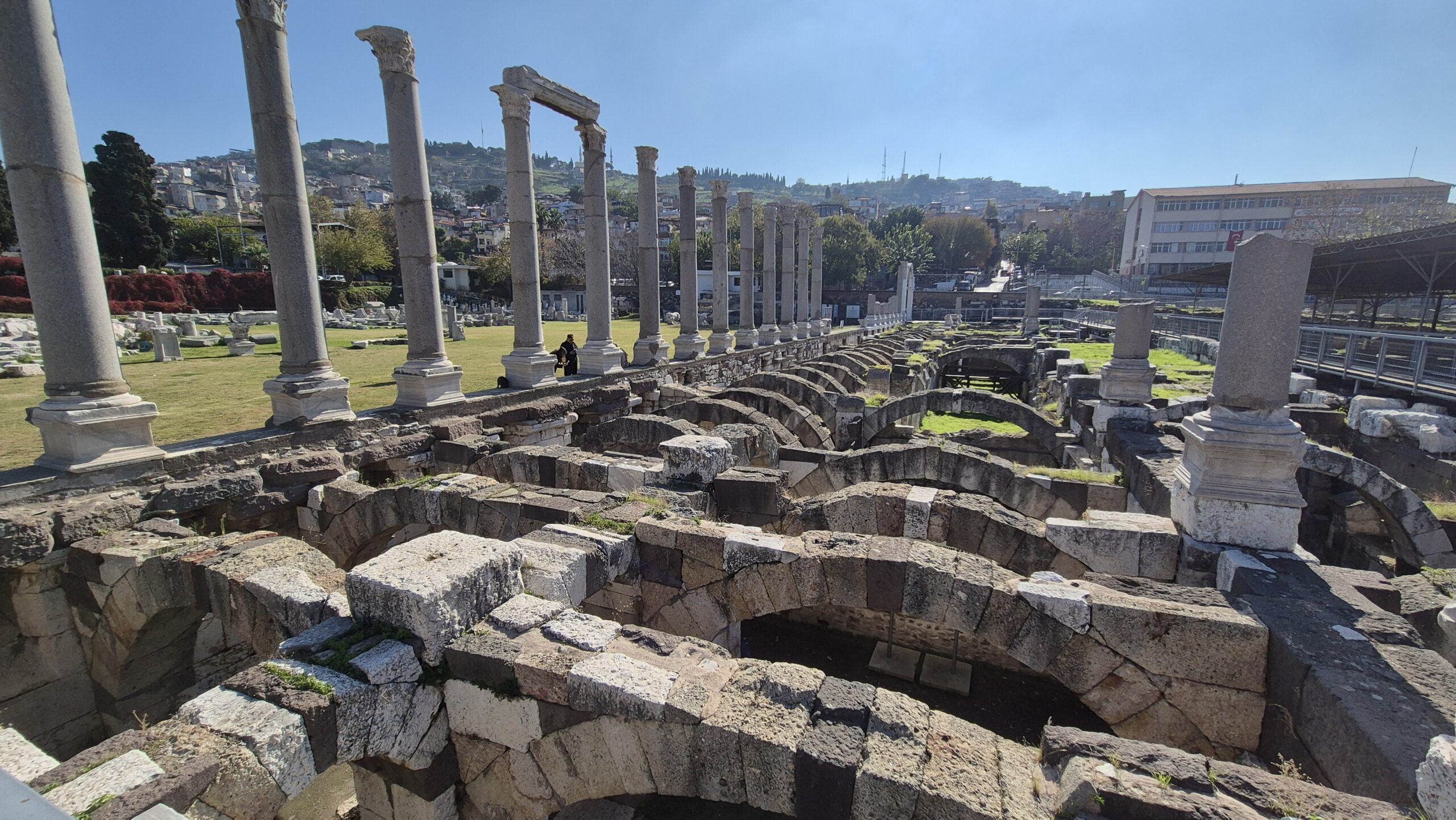
Underground passages. One section of the unique underground galleries known as the Basilica seen from above, with the porticoed agora to the left and the meeting hall for city leaders to the right.
- Laodikea
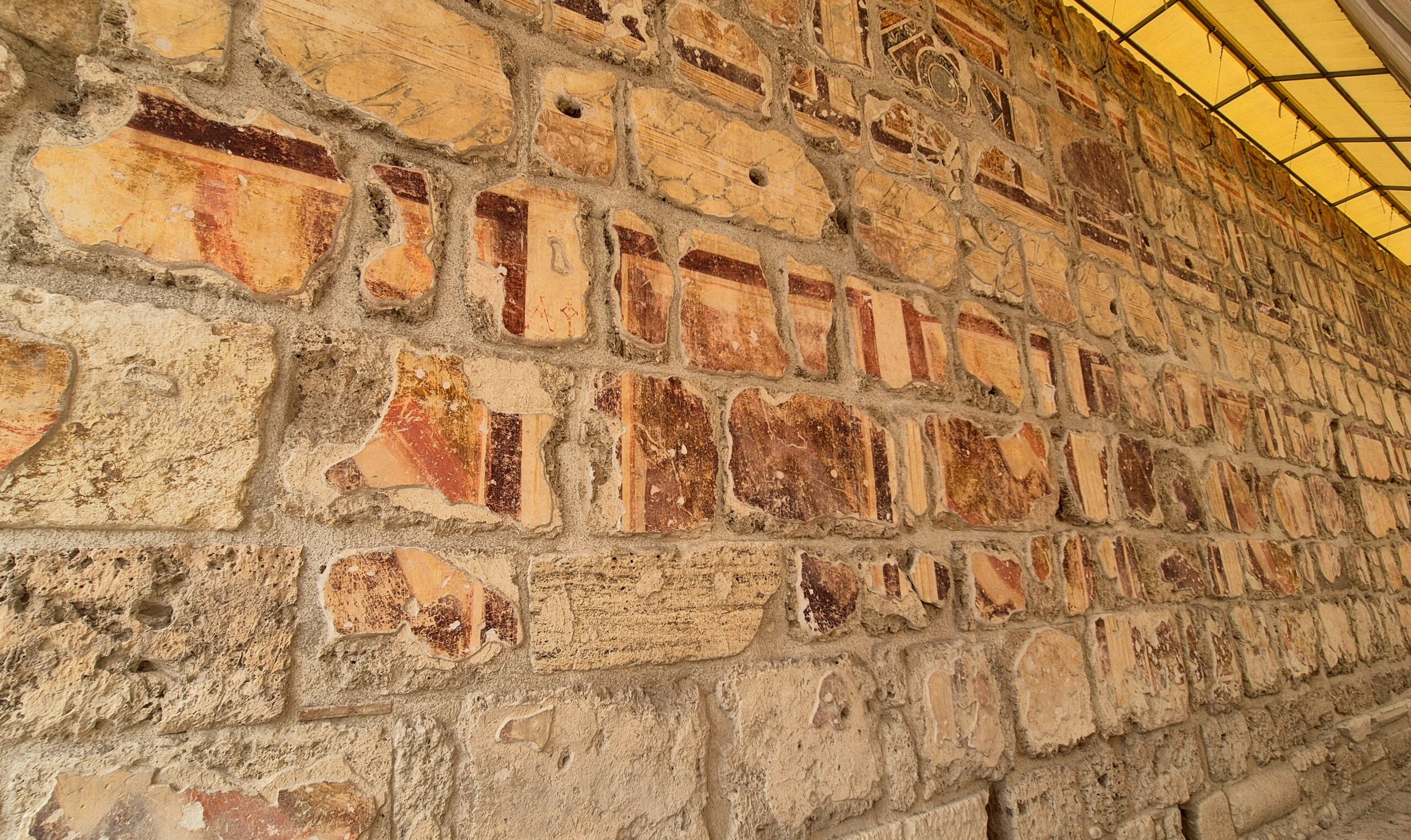
Frescoed wall. An untypical find once buried deep next to a more typical large square (agora), this huge painted wall was discovered just a few years ago. It extends over 50 meters (170 feet) and rises about 9 meters (30 feet) next to a splendid array of columns that supported a portico around the agora. On these travertine blocks, you can trace the lines of frames surrounding red panels in the lower section and designs in the upper section. One part of the wall is a similarly frescoed arch.
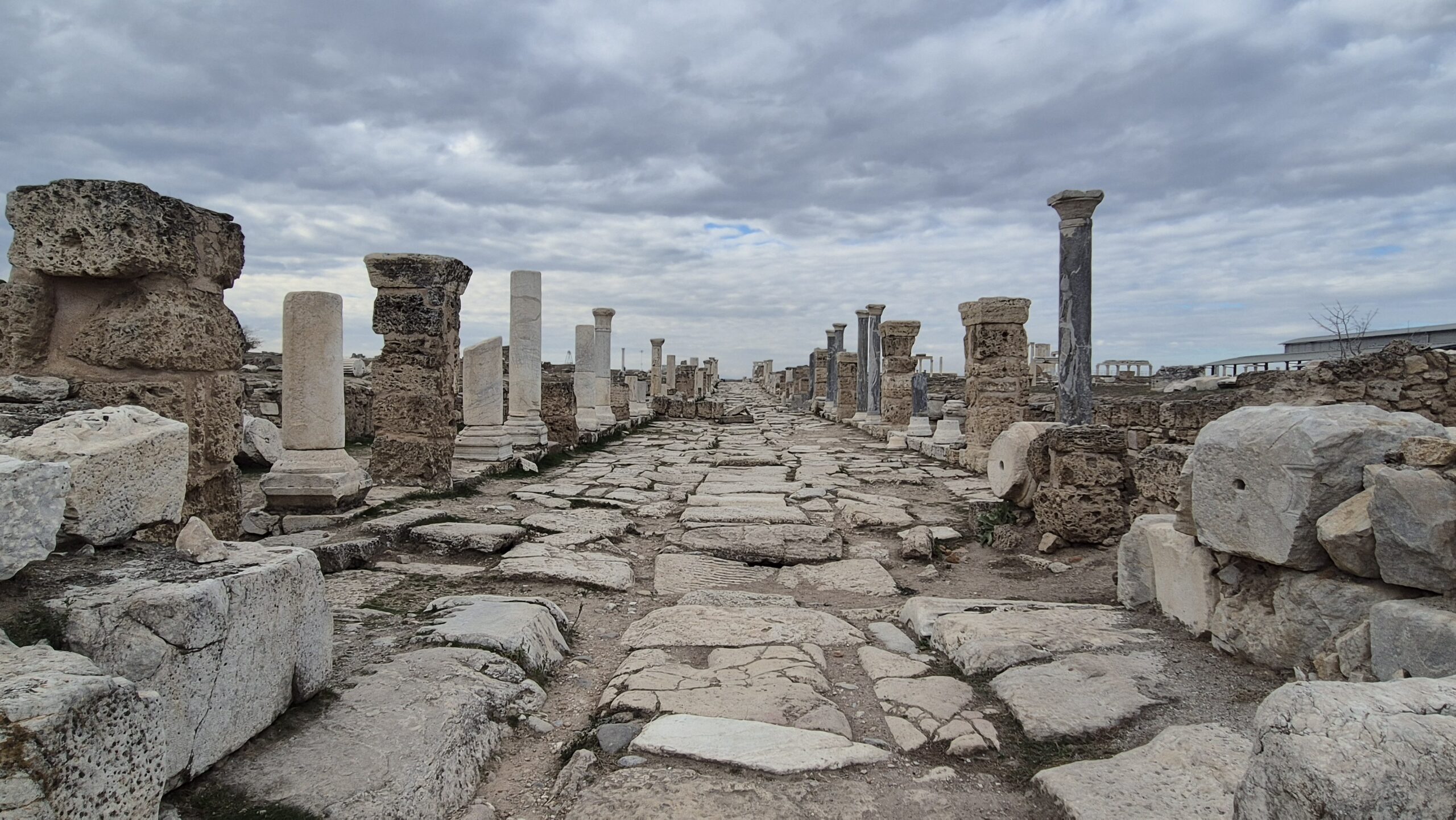
Roman street. Typically two main intersecting streets of marble slabs led to its main gates. These were lined with columns and fountains and market stalls, usually just restored in part today. At most sites, you can walk a large section of the streets. Hidden below, and usually not so evident today, were clay water channels to take rain and waste away.
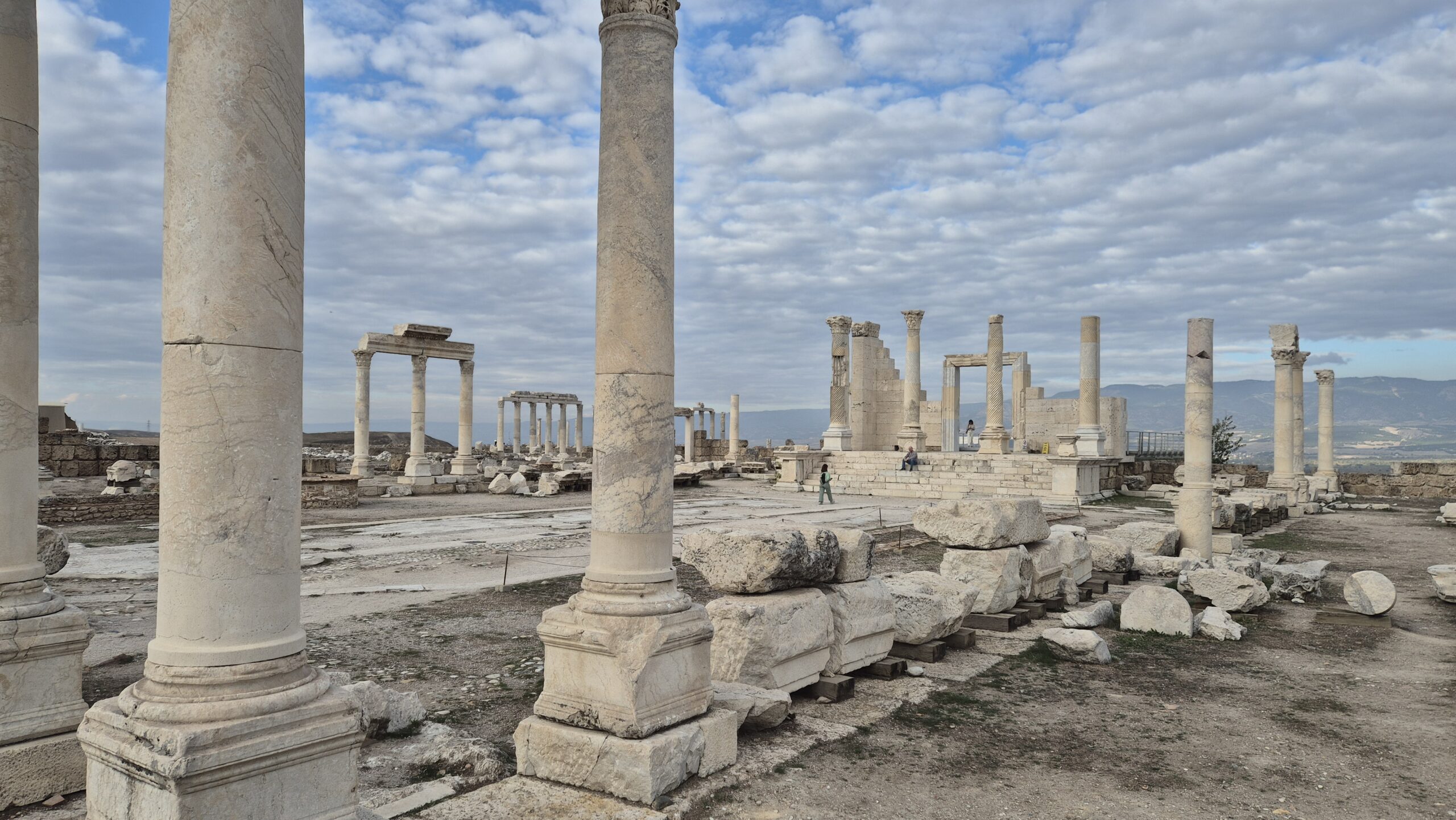
Temple. A typical sight at these cities is a partially restored classical temple with space in front for people to gather.
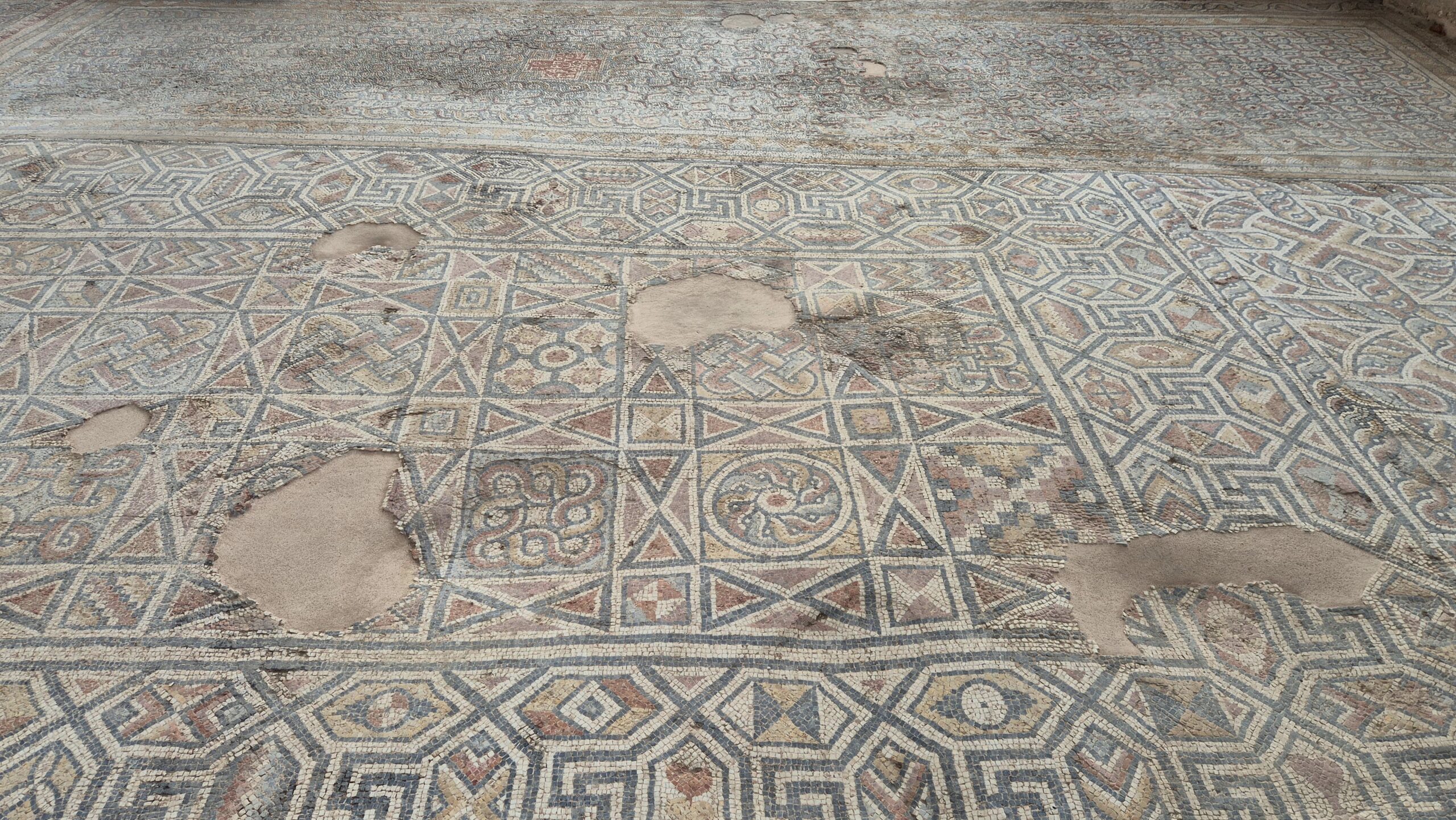
Byzantine church. This is the 4th century Christian church, a huge basilica of an innovative design with many apses, that is still impressive both in its size, its condition now, and the mosaic details on the floor. Notice the lion’s foot at the base of the small column in the foreground and, in the distance at the back right, the columns of the Greco-Roman agora.
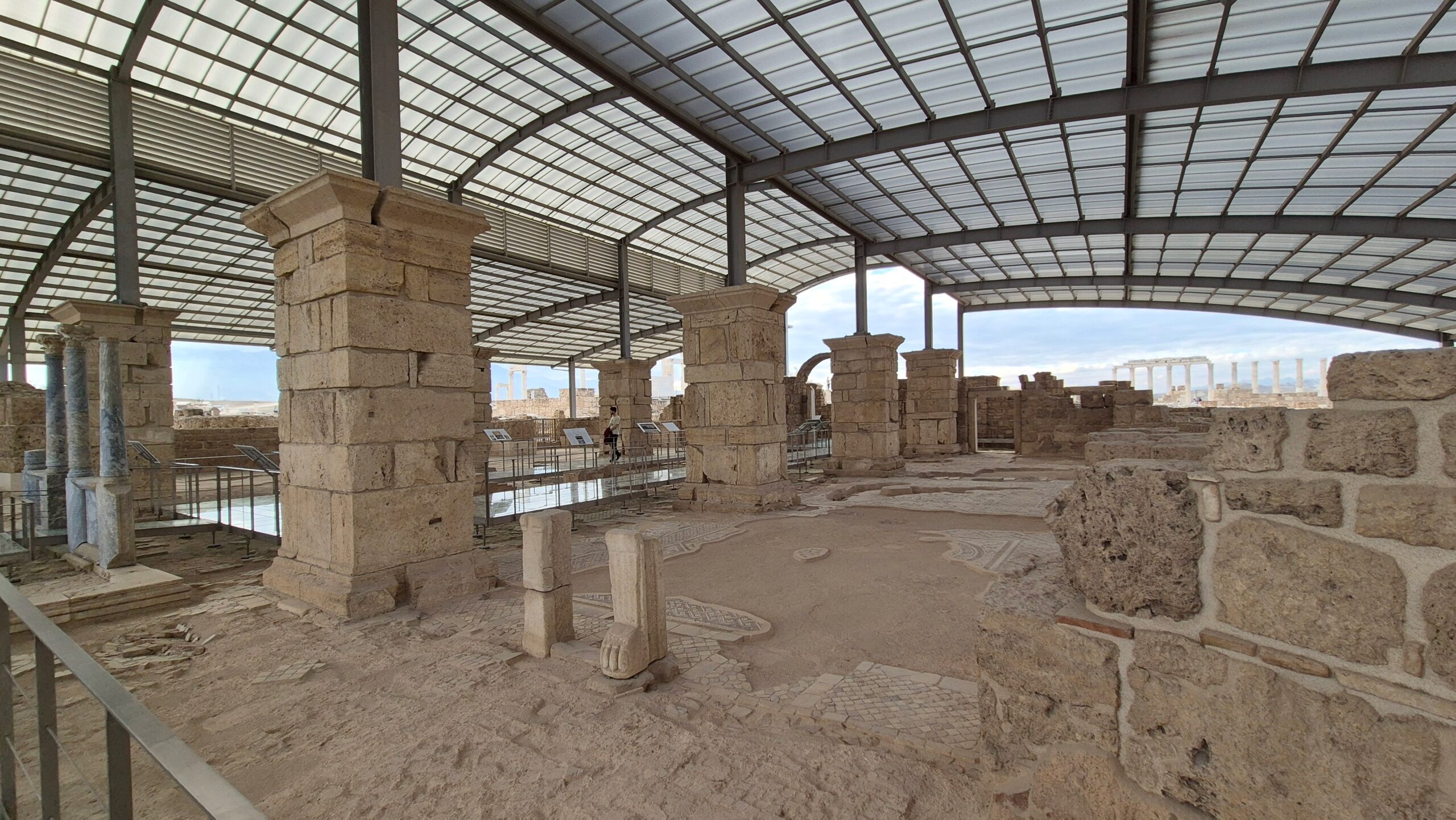
Byzantine church mosaic floor. It’s one of the nicest sections in the church, remarkably still intact despite the earthquake that toppled the building.
Lycian Way
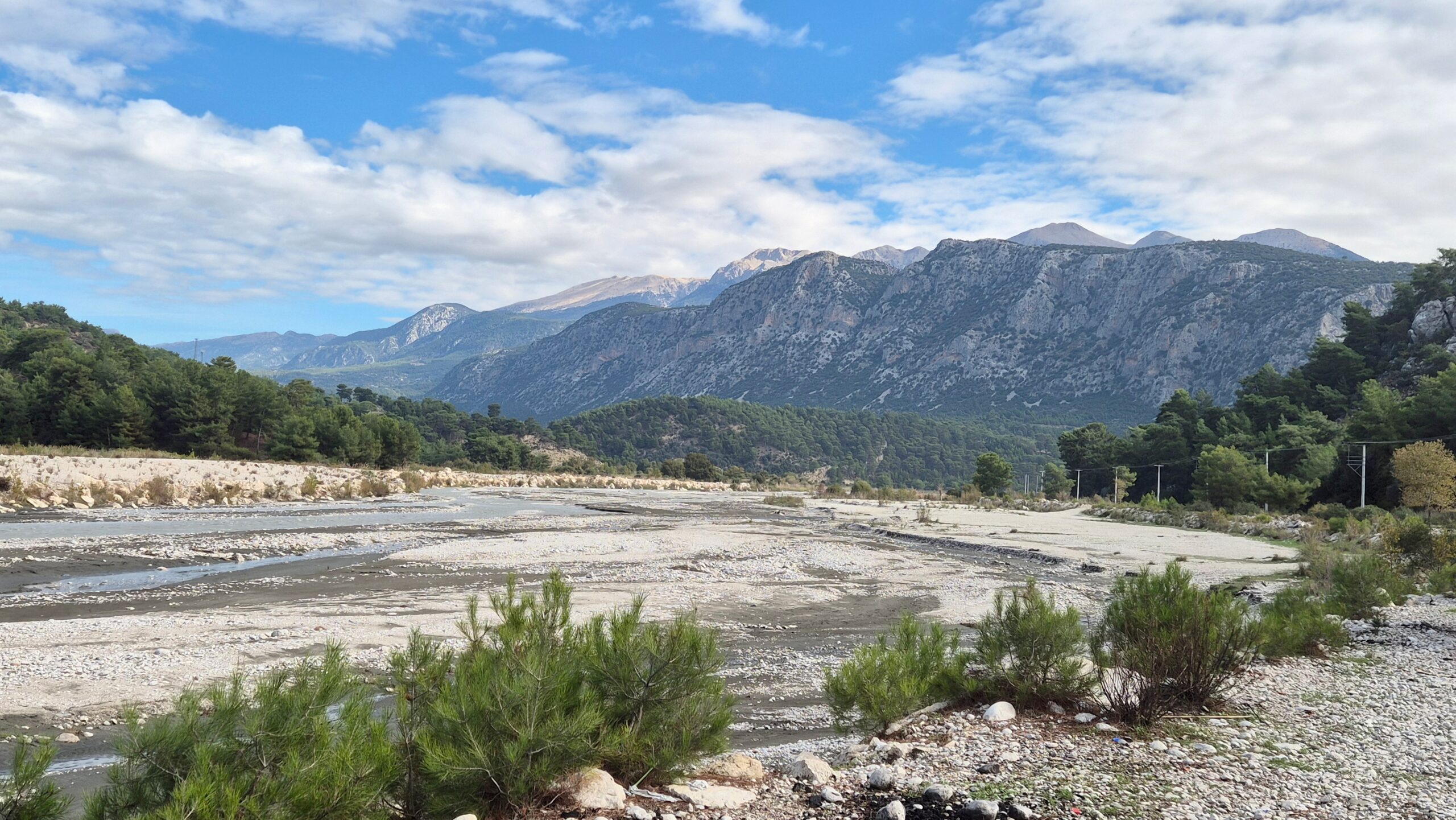
Backpackers troupe through the sites of these ancient cities, as if they were on a pilgrimage. They are following part of the Lycian Way, a popular trek that meanders for more than 500 miles (750 kilometers) among the old cities of the Lycian people. Along the way, they pass through the lovely landscape of southwestern Turkey, impressive ruins, and a swath of history from 2000 years ago.
The Lycian landscape near Patara, some of the terrain through which the Lycian Way trek takes backpackers.
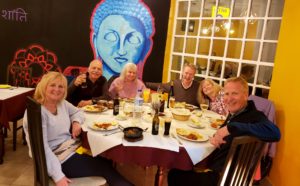
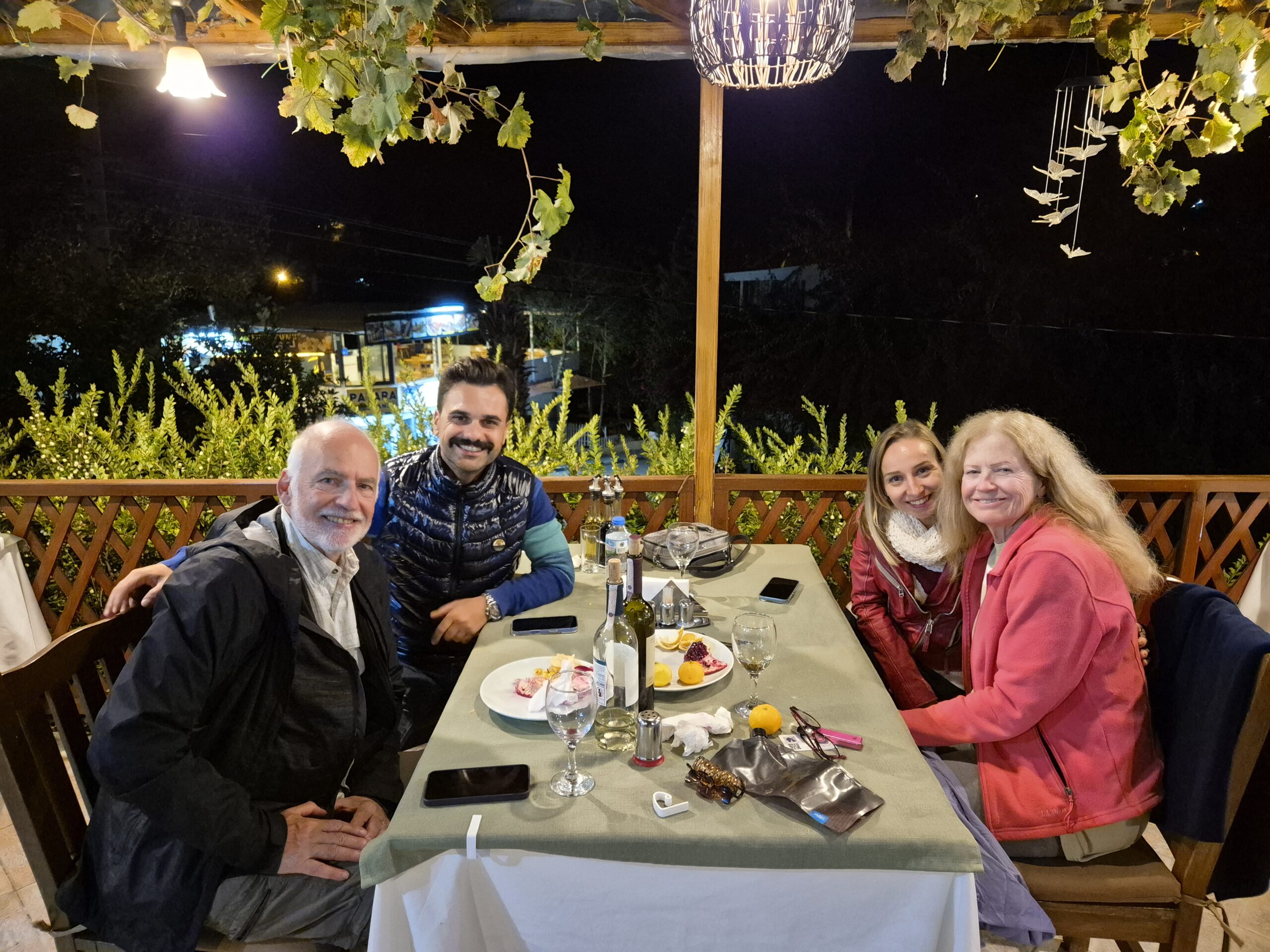
Not a religious ceremony nor a collection of backpackers, but a happy meeting with a couple that works in tourism within southern Turkey. We spent two long evenings talking politics, astrology, following one’s heart in life…and more. This lovely terrace was the superb restaurant connected to our pension, the St. Nicholas!
The Lycians flourished here during the late Hellenic period and Roman empire. Their quasi-independent standing under the Romans even influenced the federal system of the US Constitution.
We wandered a tiny bit of the Lycian Way and trod the ancient sites of Myra, Xanthos, Letoon, and Patara. Patara was the former capital of Lycia, and the birthplace of the renowned 4th century bishop St Nicholas, i.e., Santa Claus. Remarkably, amidst the ruins caused by earthquakes and conquests, there were still so many storied remains for us and the backpackers to see.
- Myra
At Myra, a relatively unvisited site along the Lycian Way, we saw several remarkable and well-preserved structures. This was their 6000-seat amphitheater from the Roman period, which we could still scramble up and down. At Myra, St. Paul did a transfer at the port here while heading from Caesarea to Rome for trial.
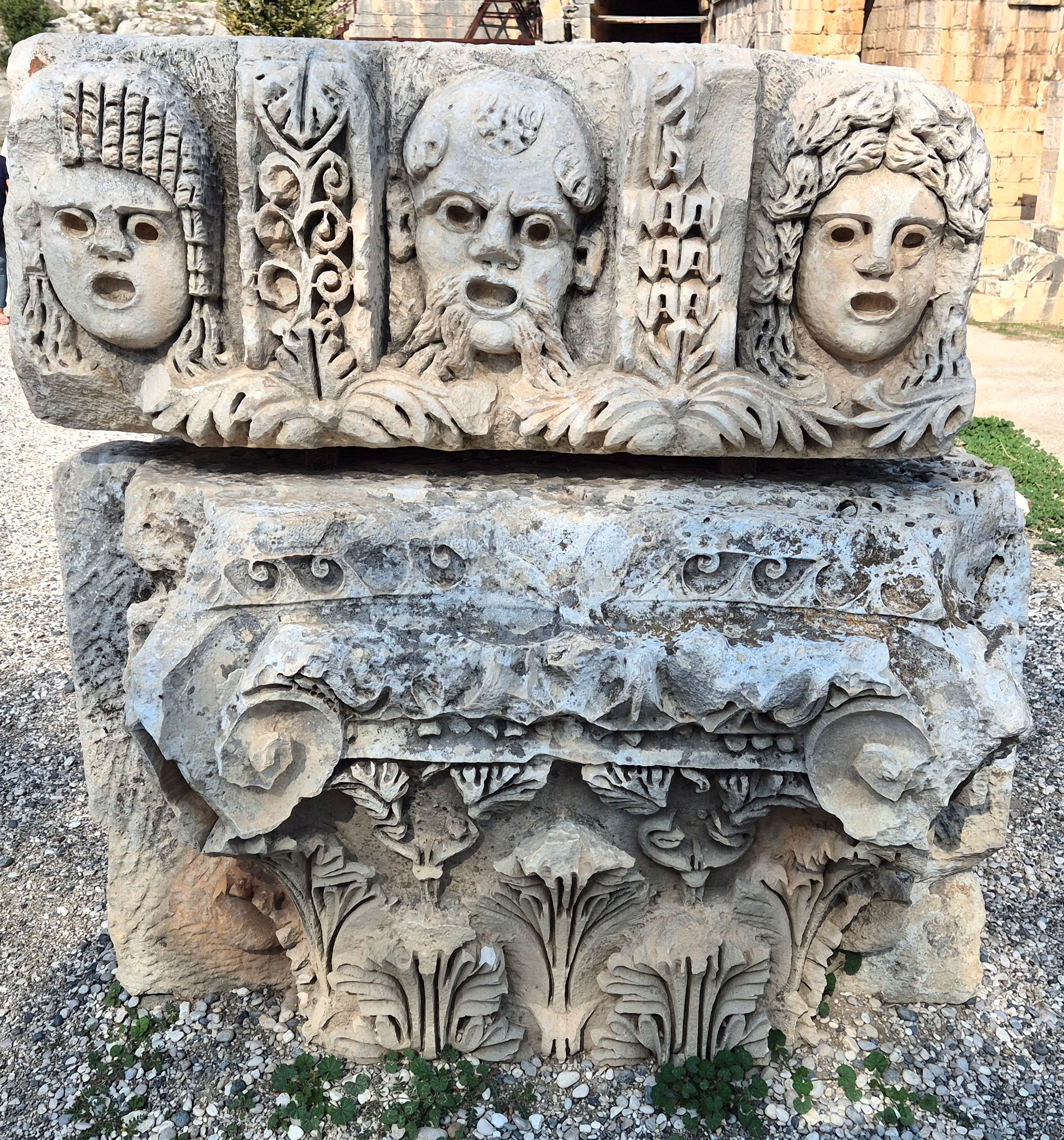
OMG! Who are these tourists visiting our theatre? An attractive setup of faces and a leafy column header greets us at Myra.
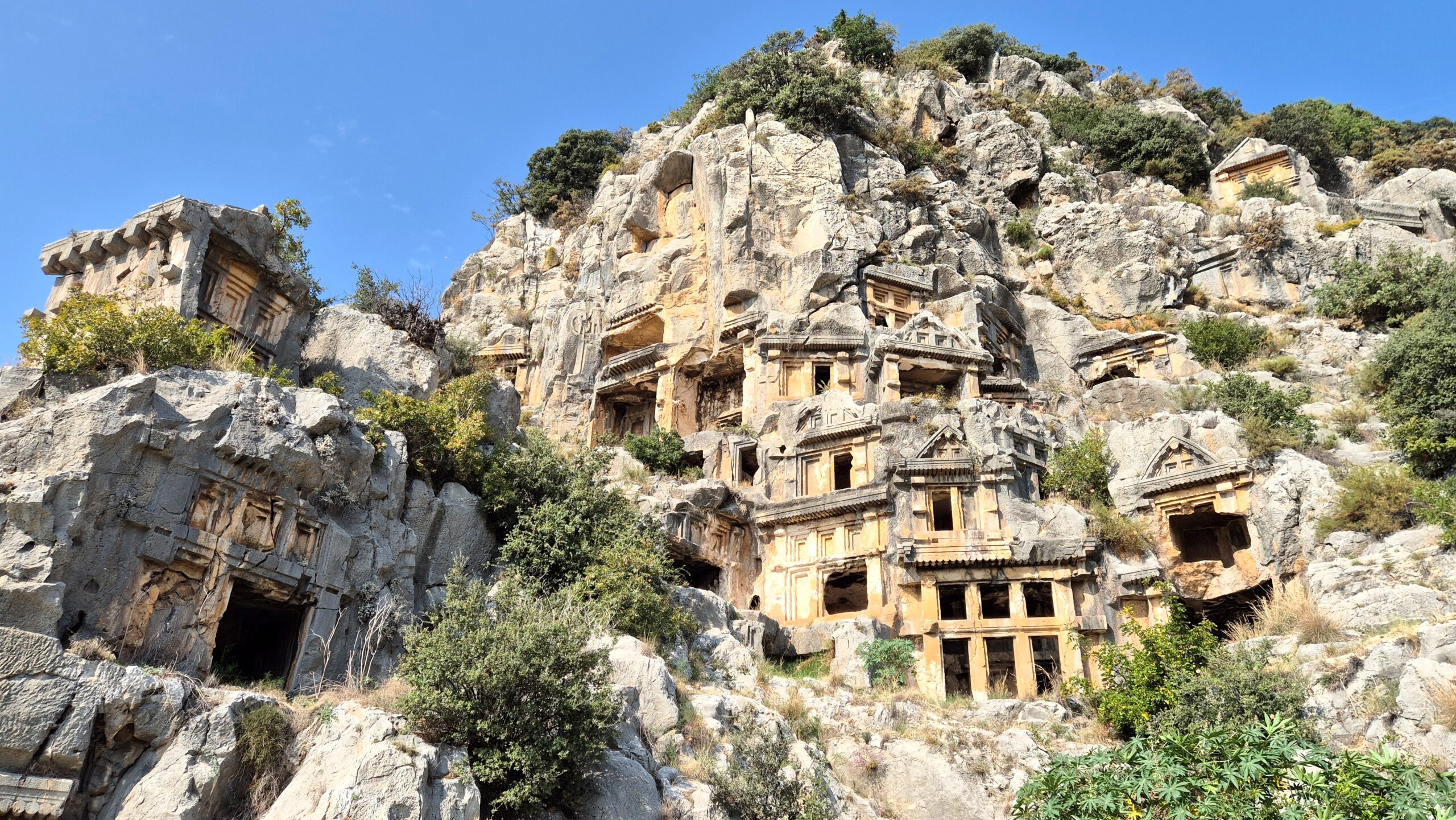
These unusual rock-hewn caves on the mountainside, with formal classical portals, seemed to be religious in nature and probably once served as homes over the years. But the original purpose was to bury the dead at Myra.
- Letoon & Xanthos
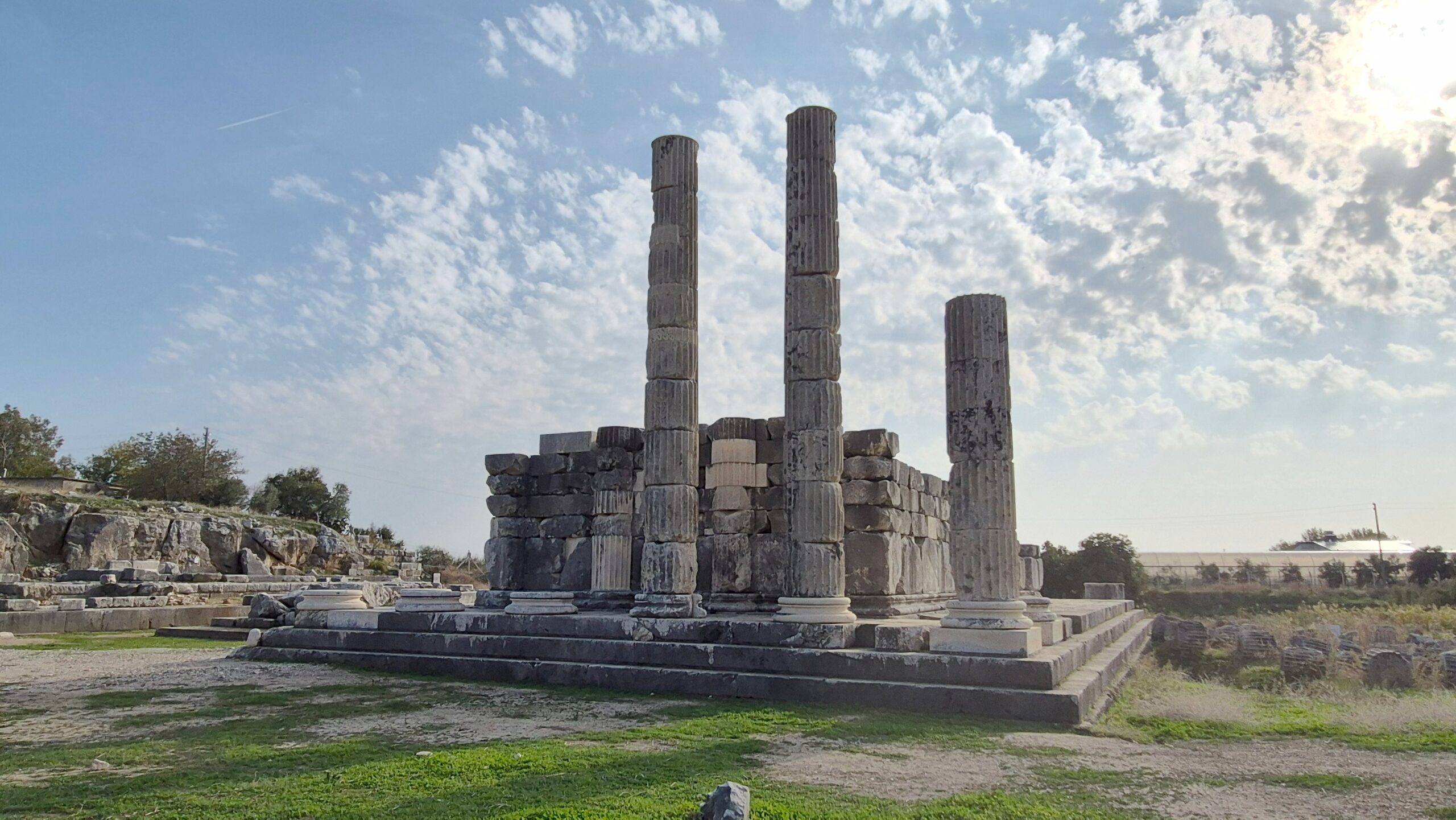
The Temple of Artemis, the middle of the three at the religious center at Letoon. Though only a few columns stand, you could grasp the great size of the original from the existing base.
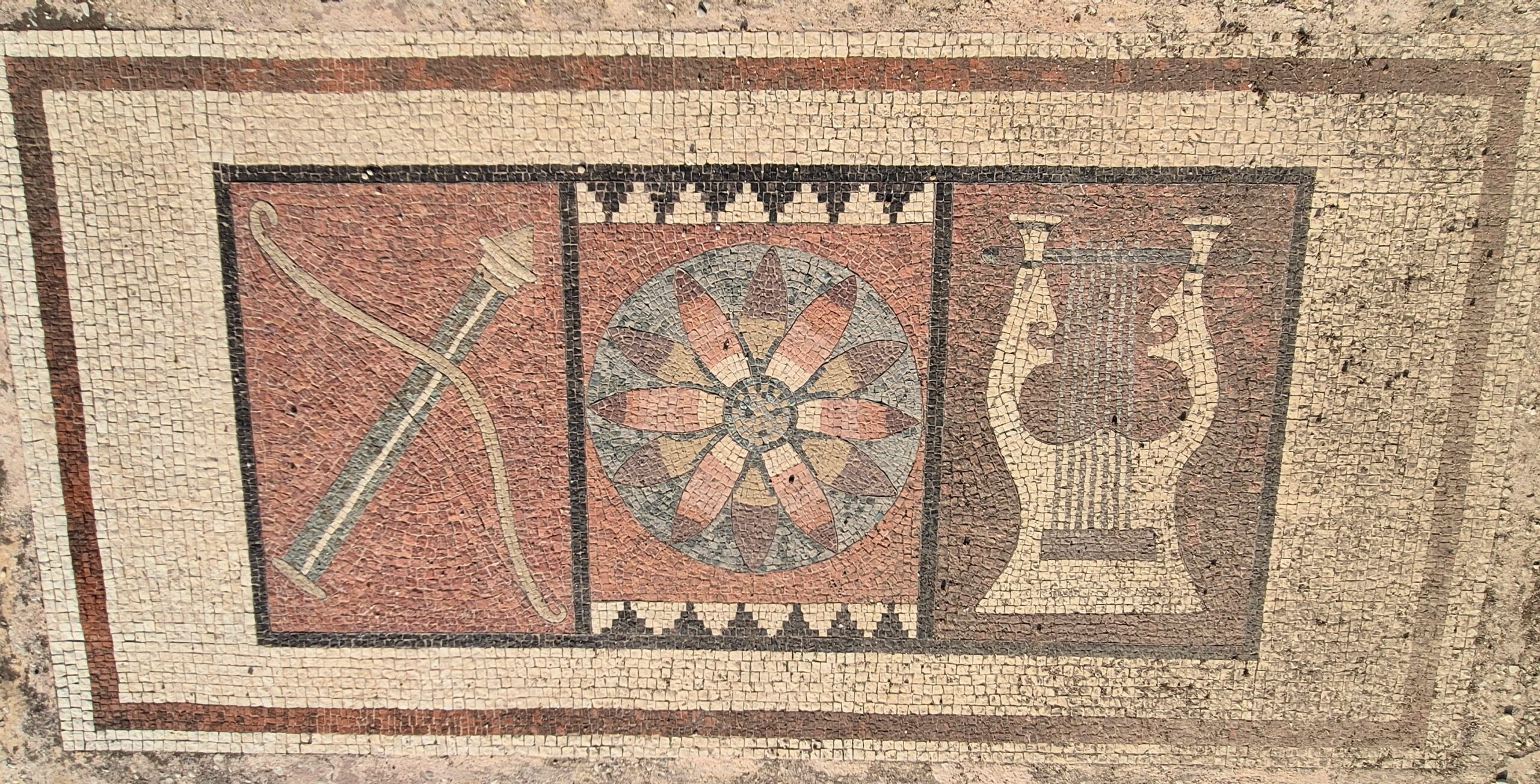
A gorgeous mosaic still within the foundations of the otherwise bare-bones Apollo Temple celebrates his attributes: music and hunting. This is one of three temples that formed a religious complex in the city of Letoon, honoring also Artemis and Leto. Leto was Zeus’s lover and mother of both Apollo and Artemis. She was honored by the Lycians, though early on, legend says, they denied her water from a pool because they were afraid of retribution from Hera, Zeus’s wife. She turned those Lycians into frogs within the pool.
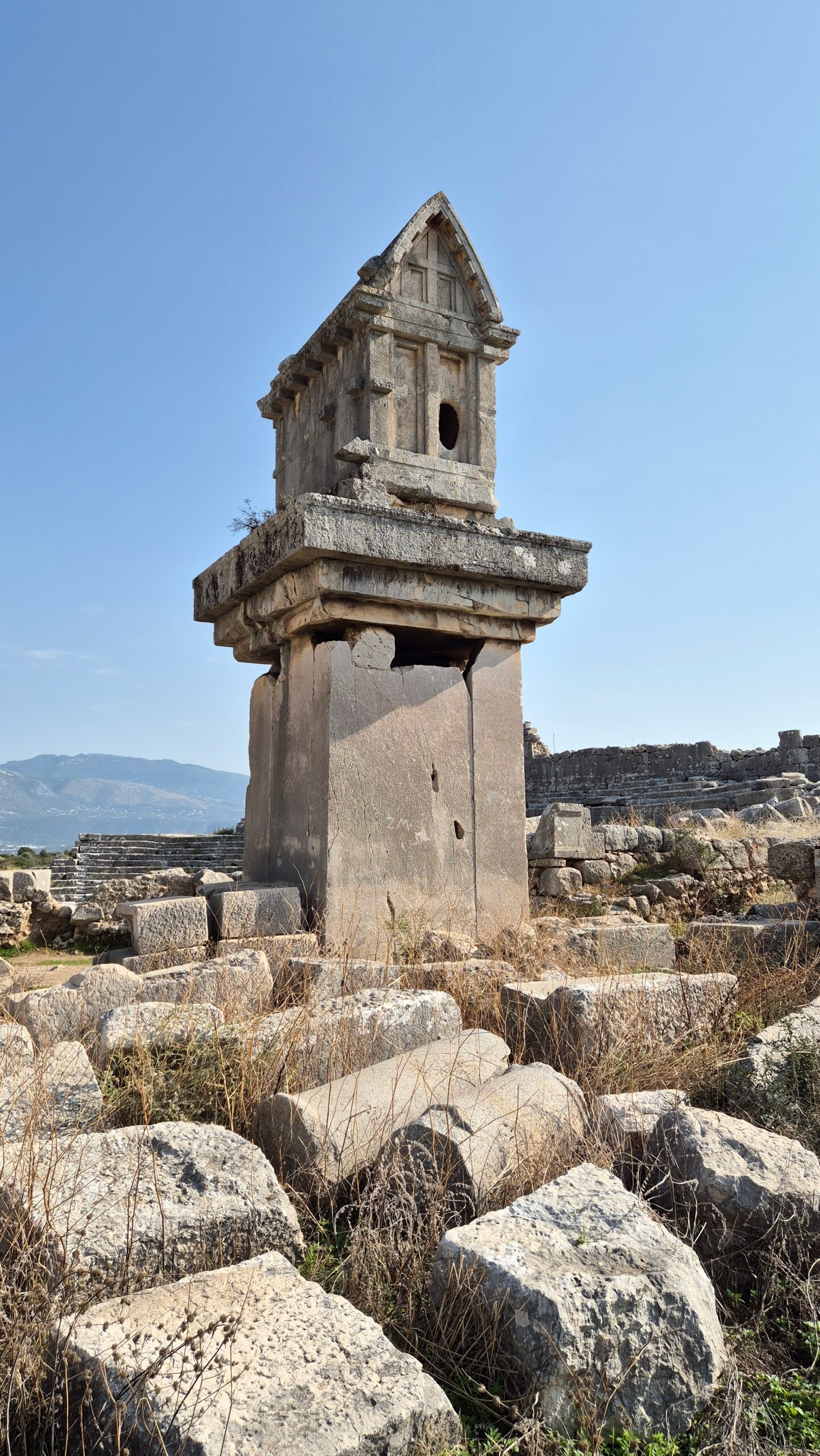
An unusual burial method at Xanthos, another Lycian city, with a tomb upon a tower. Many such columns still soar within the site, including one with a text in multiple languages that was the key to deciphering the Lycian language.
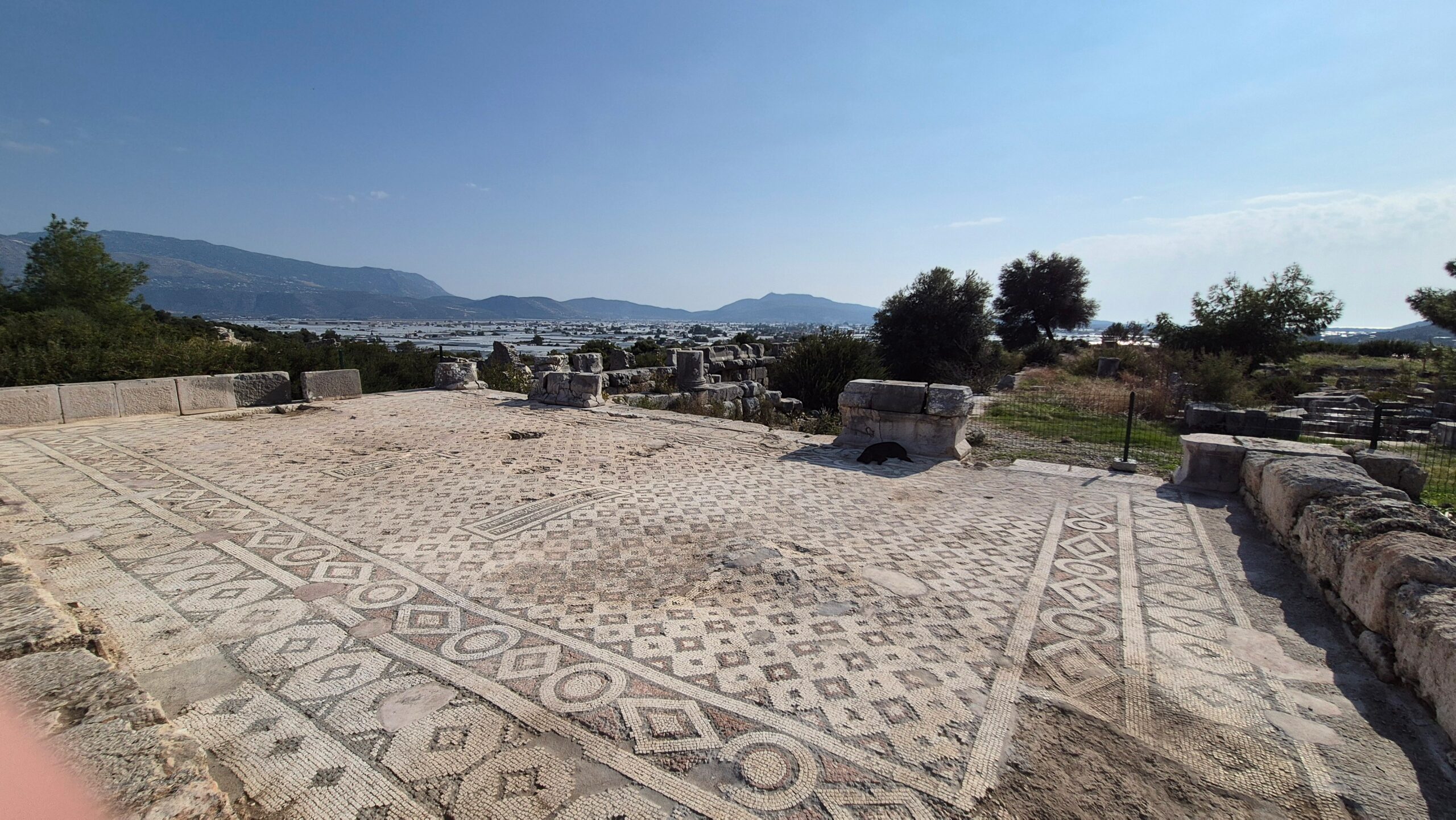
A splendid mosaic floor in a Byzantine church from a later period in Xanthos.
- Patara
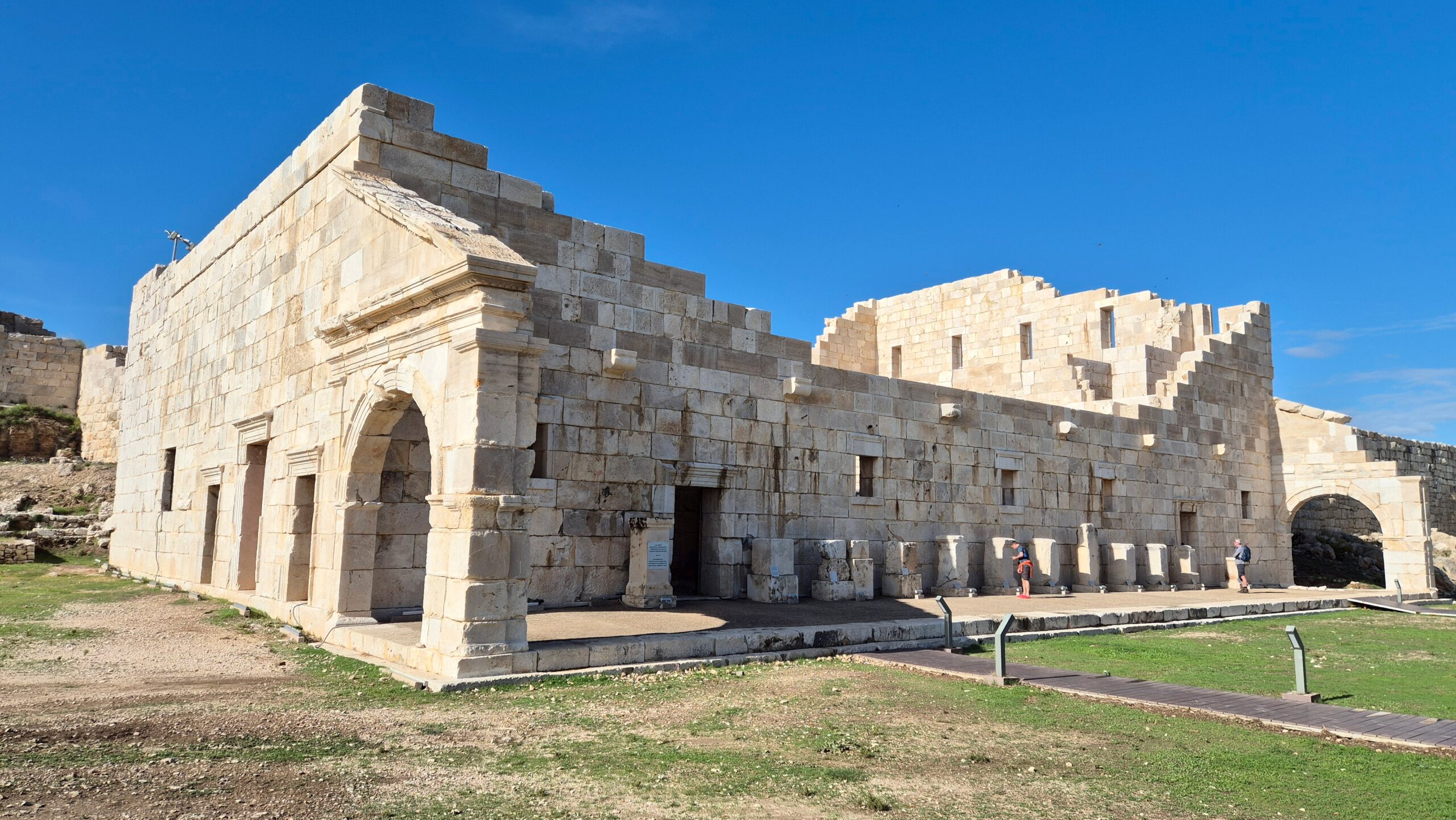
One of the most interesting classical buildings we have seen, an Assembly Hall for the Lycian League, a parliamentary meeting space that looked like a small theatre on the inside. Lycia was made autonomous and independent by a vote of the Roman Senate in 167BC. So, its leaders would meet at this hall in their capital city of Patara, the most vital of the Lycian cities due to its important port.
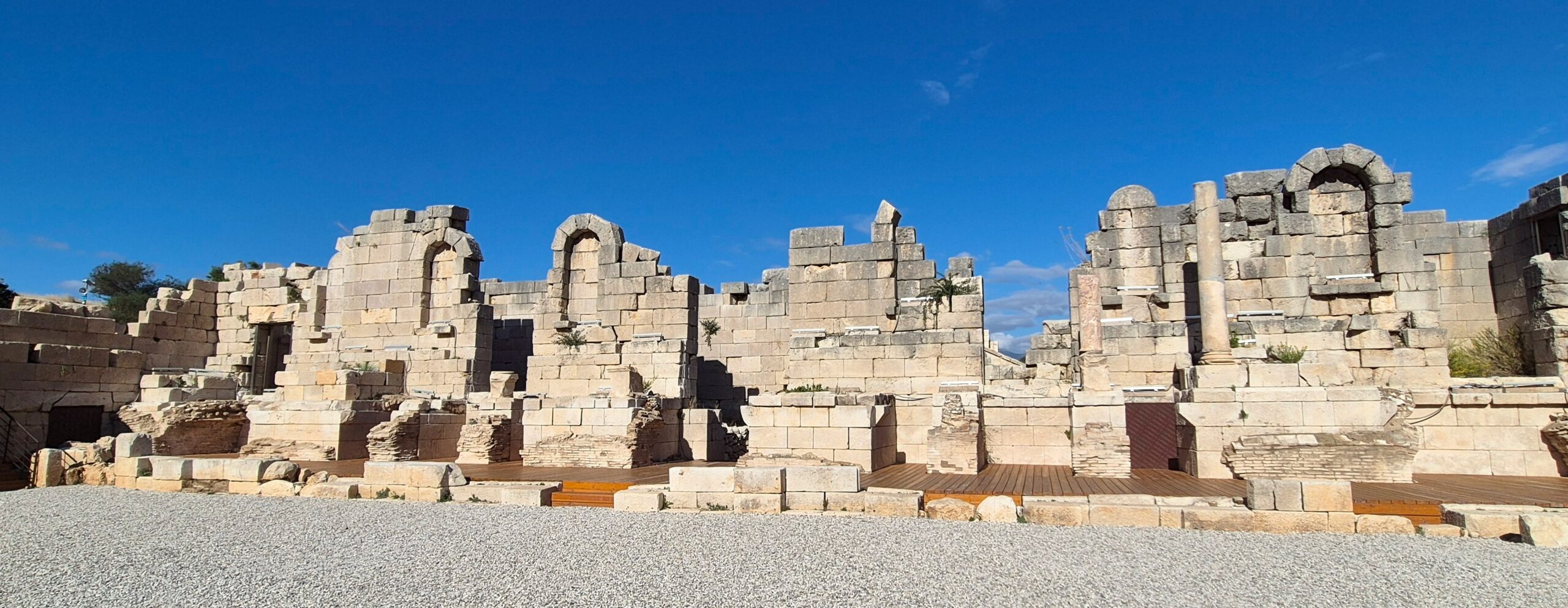
The extensive fountain area, or Nymphaeum, at Patara. These water delivery stations were typically quite ornate, gifts of the emperor or regional governor, as water availability was a key governmental function.
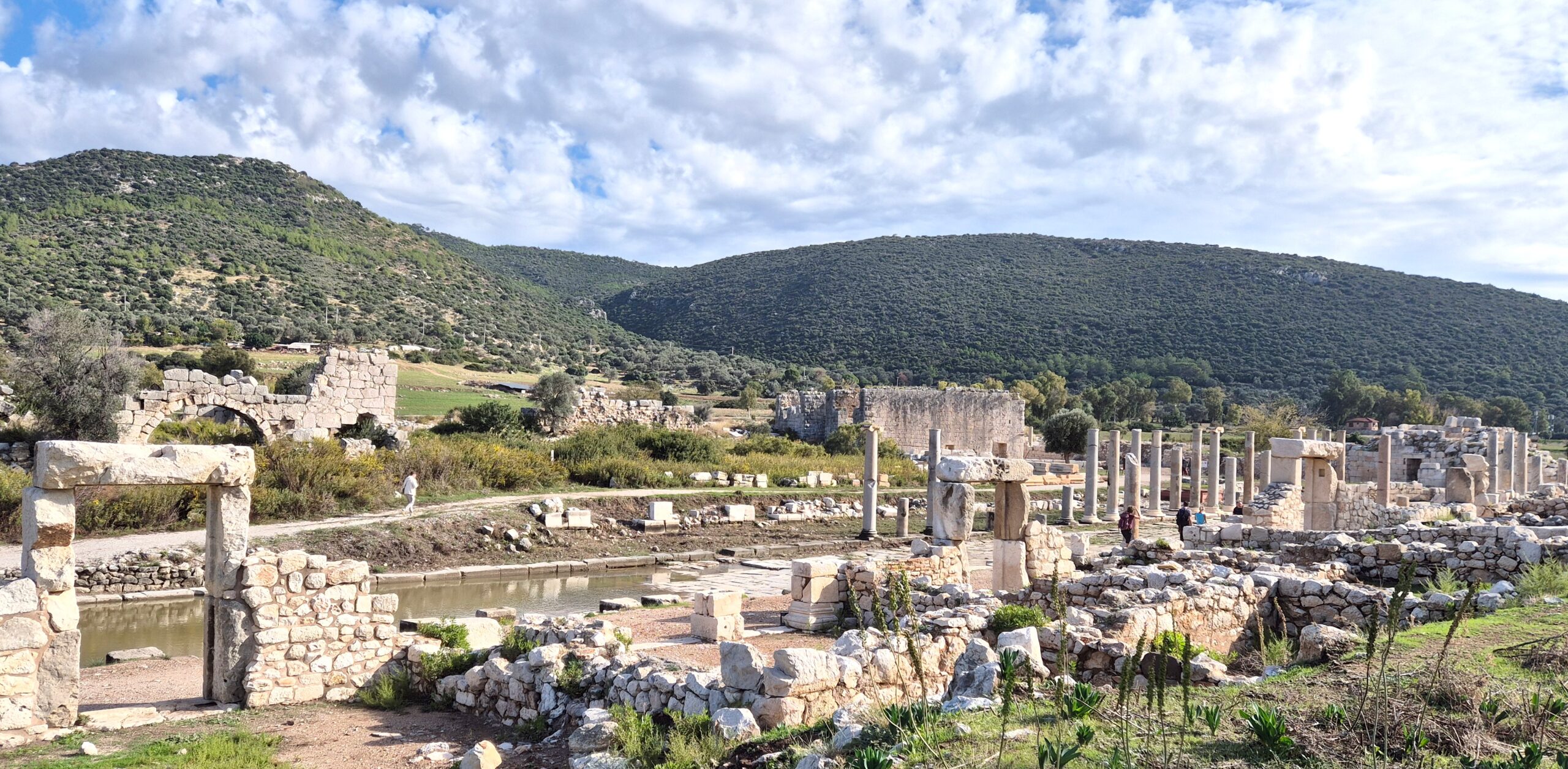
Overview of the agora at Patara, where people gathered for social and commercial activity. It’s lined by marble columns, with the remains of stores in the foreground and with large baths to the back right.
Troy
“Was this the face that launched a thousand ships and burnt the topless towers of Ilium?” asks Dr Faustus about the famous Helen in a nightmare vision. Our daytime visit to Troy – or Ilium – was less troubled, but just as interesting. We saw no towers as we walked the fabled site of that epic war, the subject of so much literature and pondering since Homer sang about it some three millennia ago.
Much, however, is truly legend. It seems that some destructive conflict beset Troy around 1000 BC, but the historic details are uncertain. Recent discoveries confirm that there were really 10 Troys dating from a small, fortified city in 3000 BC to its final state in 14th century AD. The challenge for visitors is to trace what remains of Troy VI, the expansive city that might have been undone by Helen’s face and Odysseus’ equine gift.
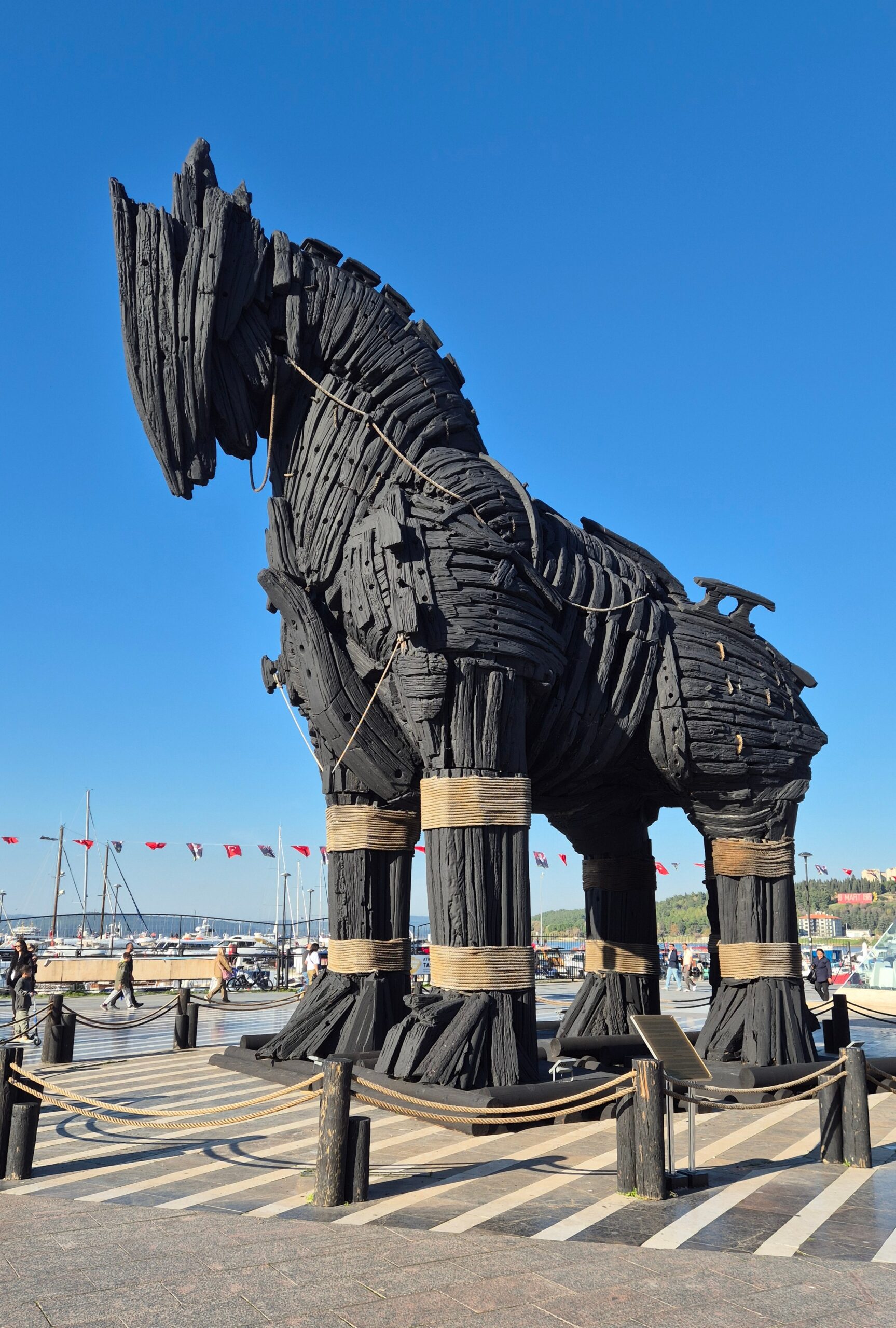
Horse – “Trojans, do not trust this horse. Whatever it may be, I fear the Greeks, even when they bring us gifts.” (Vergil, Aeneid). There’s one sleek model at Troy, with a ladder into the horse’s belly for kids, perhaps, to play Greek invaders. This one is at the neighboring town of Çannakale. It starred in the 2004 movie “Troy” alongside Brad Pitt, who was not inside when we visited.
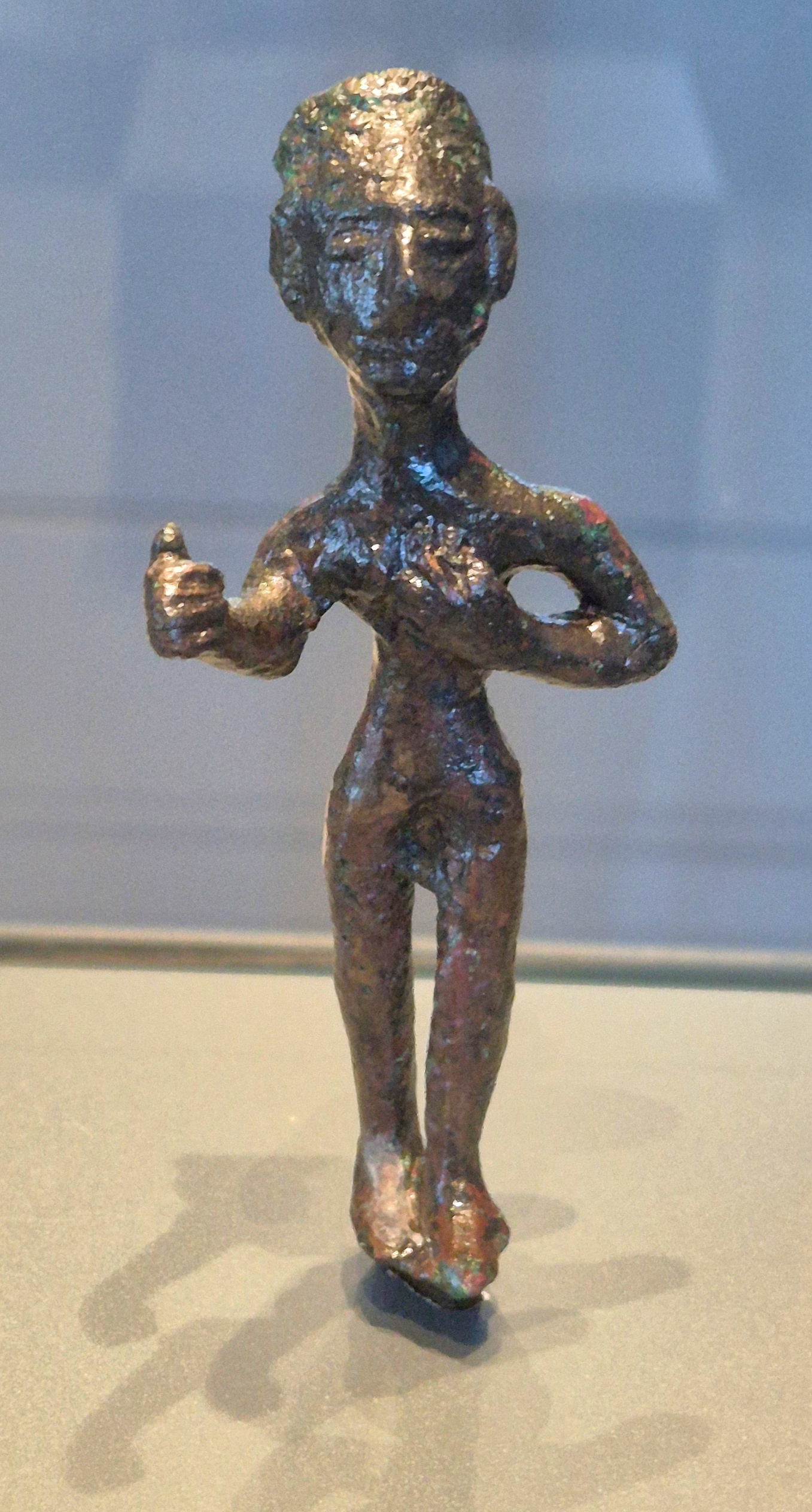
Warrior figure – “Sing in me, Muse, and through me tell the story of that man [who] plundered the stronghold on the proud height of Troy” (Homer, The Odyssey). This 12 cm (5 in) bronze statue of a soldier in the Troy Museum was formed around the time of Troy VI and the fall of the city. Odysseus probably did not look like this, however.
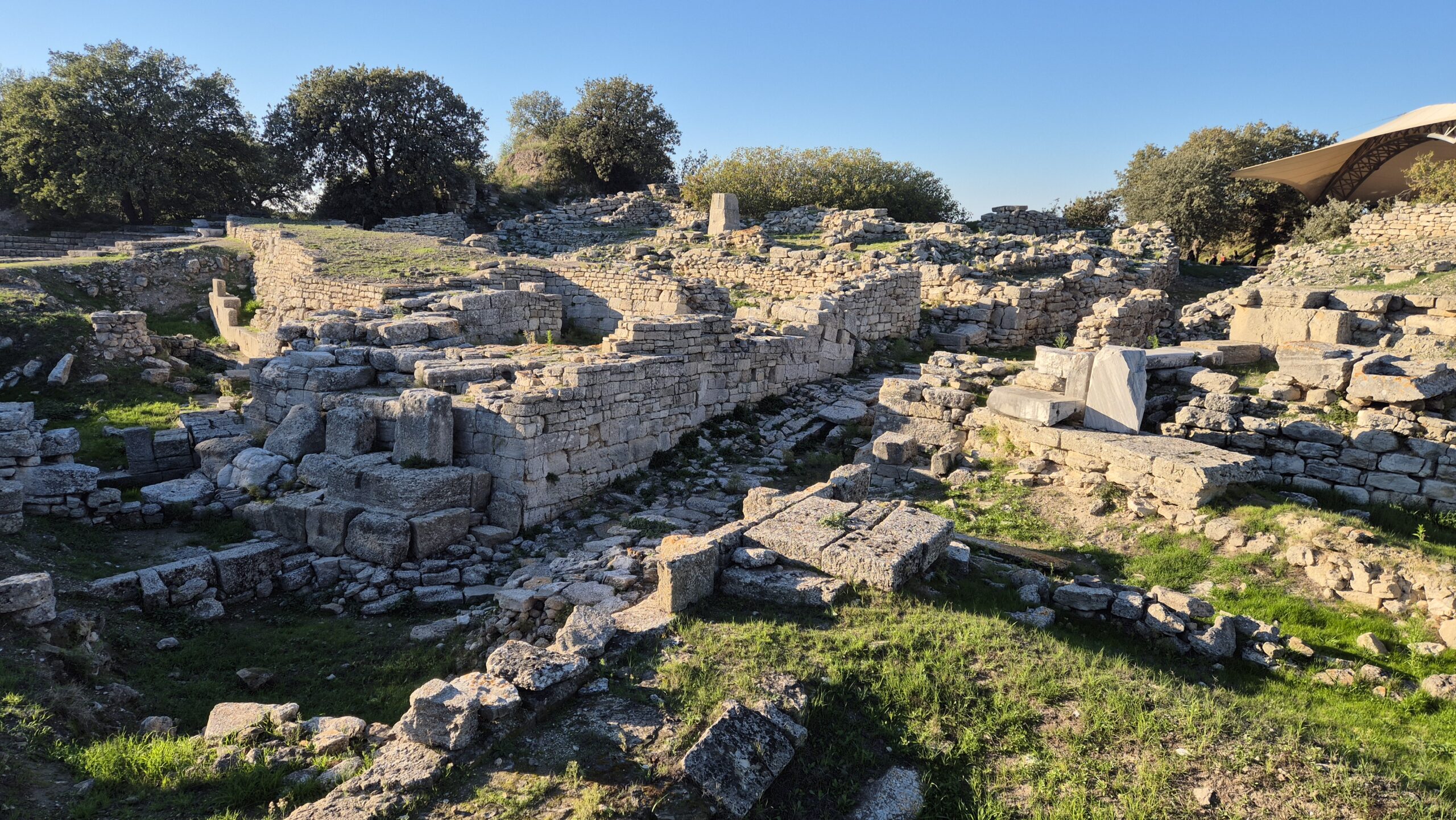
Gate – “After the siege and the assault had ceased at Troy, the city destroyed and burned to brands and ashes…” (Sir Gawain and the Green Knight). Late in our visit, we were pleased to find the remains of the South Gate of Troy VI. This passage led toward the high walled gates of the Trojan citadel. Was this path trod by that wooden horse?
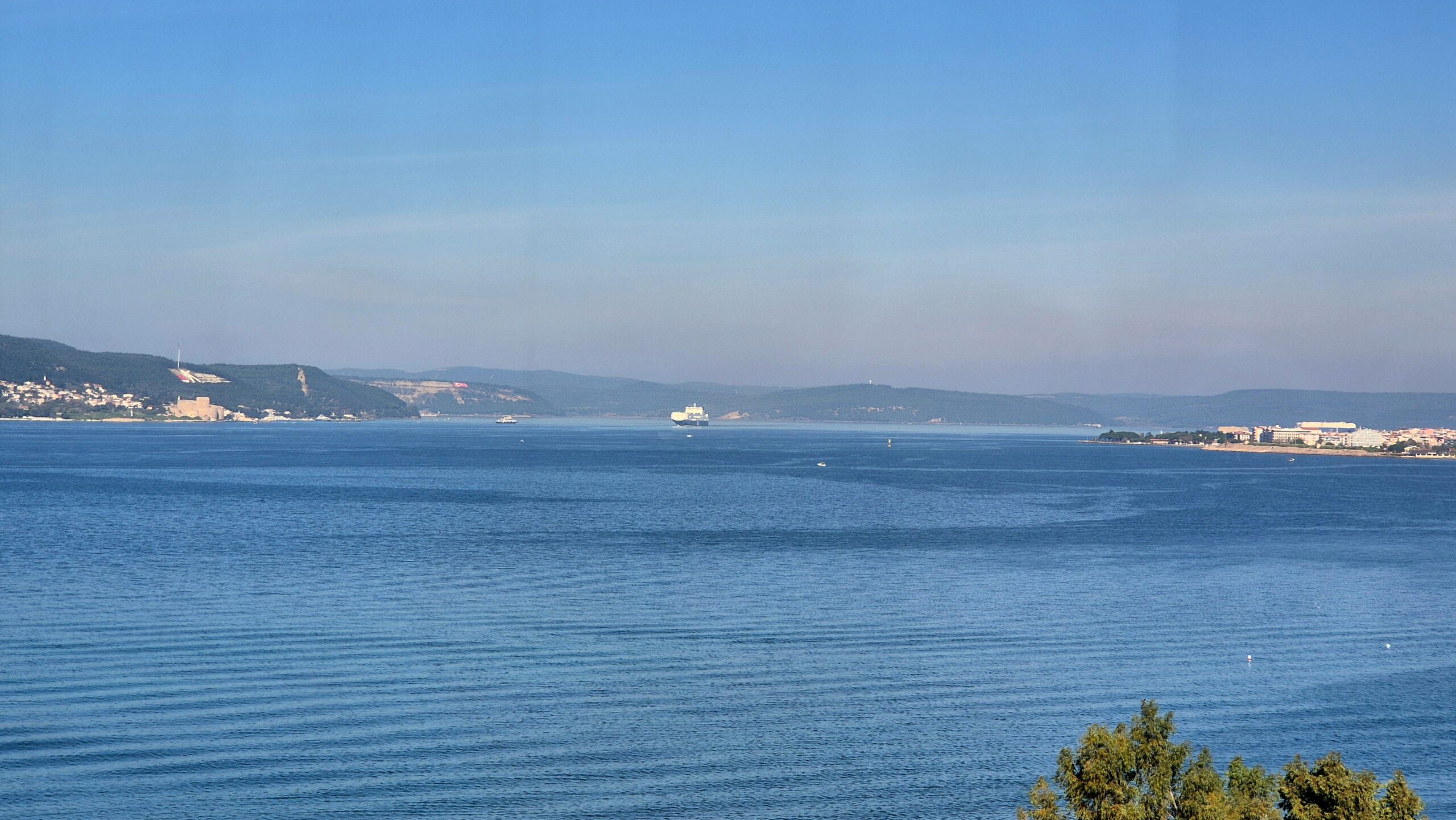
Dardanelles – “The drums began to beat, and the oars lifted and fell, taking us to Troy.” (Madeline Miller, The Song of Achilles). This is the strait of the Dardanelles through which the Greek fleet would pass to reach or depart Troy. The area, especially the Gallipoli Peninsula on the left, is filled with battlefields and memorials honoring a much more recent conflict. That’s the 1915 defense of the straits by Turkish forces under their future leader Ataturk against allied soldiers of Australia and New Zealand.
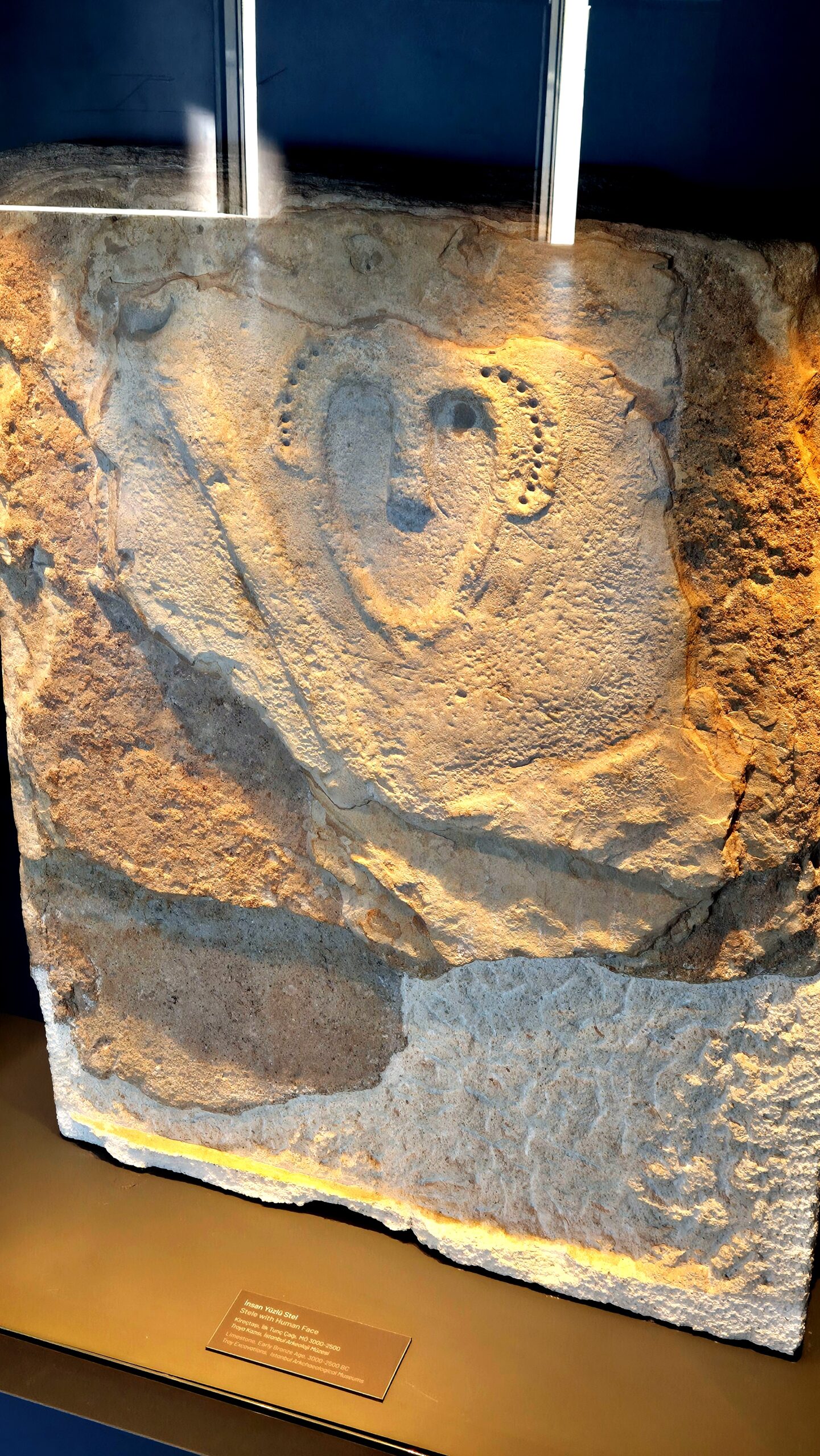
Welcoming stone – “We’re going to survive–our songs, our stories. They’ll never be able to forget us. Decades after the last man who fought at Troy is dead, their sons will remember the songs their Trojan mothers sang to them. We’ll be in their dreams–and in their worst nightmares too.” (Pat Barker, The Silence of the Girls) This stele – carved with a protective guardian – greeted arrivals at the city gate and dates from the first Troy around 3000 to 2500 BC.
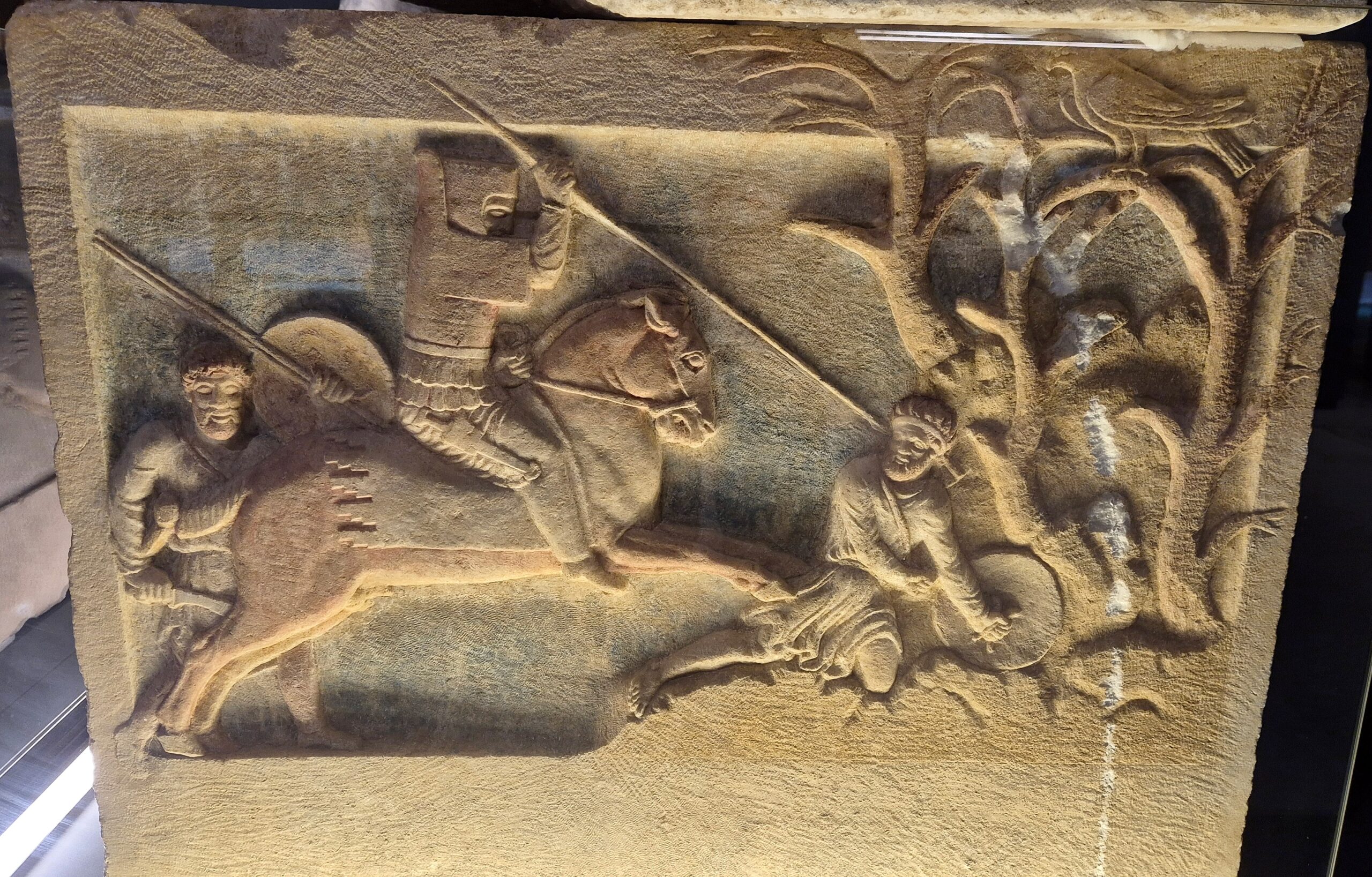
Sarcophagus – “Vengeance and glory are the ways of the Greeks and the Trojans. We are of the Herdsmen.” (Sulari Gentill, Chasing Odysseus). A carved sarcophagus (Troy Museum) from Troy VIII in the 4th century BC recalls a later war between the Greeks and the Persians. The conflicts never seemed to end.
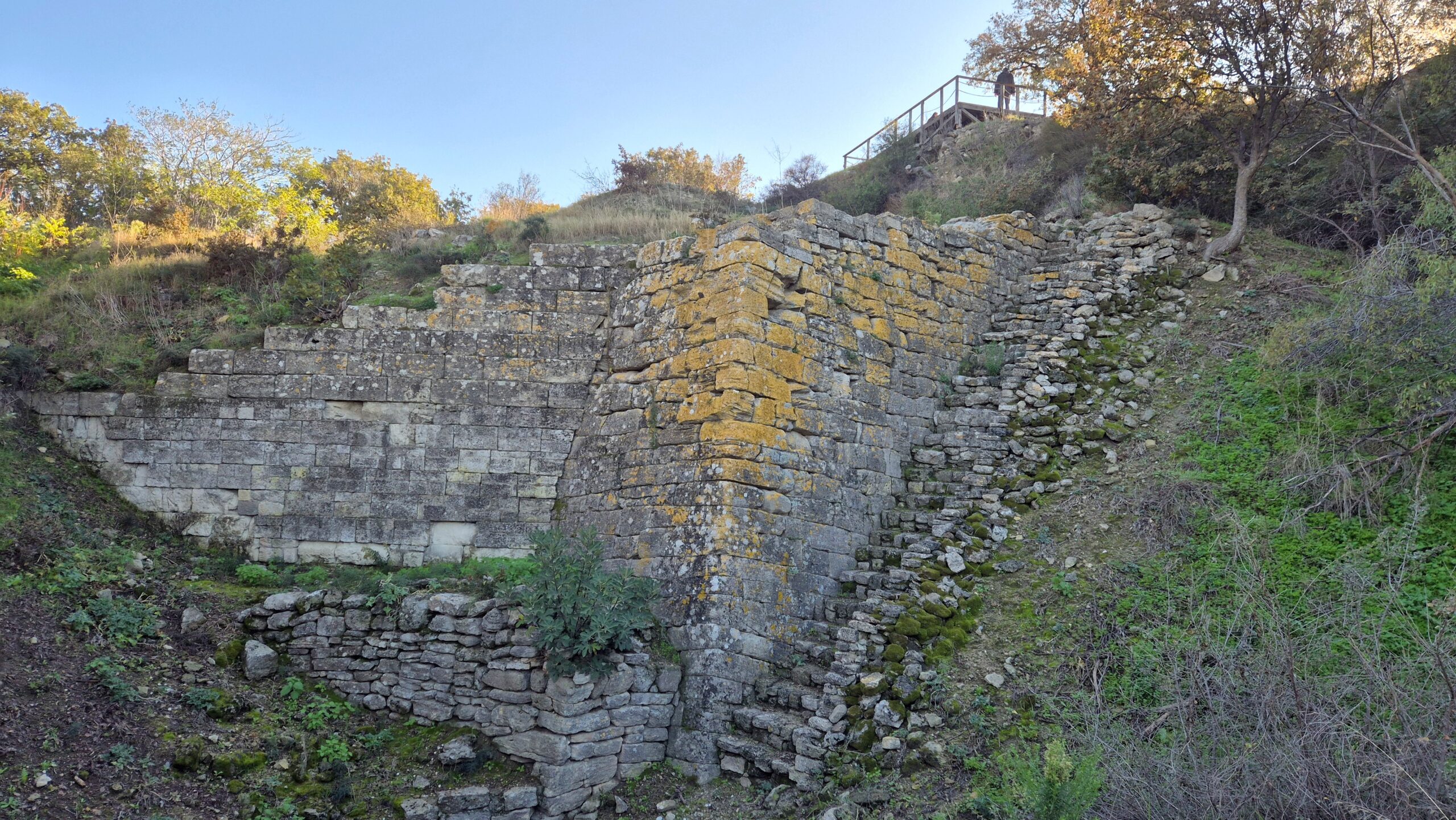
Wall – “Cry, Trojans, cry! a Helen and a woe: Cry, cry! Troy burns, or else let Helen go.” (Shakespeare, Troilus and Cressida). A typically battered (slanted) wall of stone from the citadel of Troy VI, the time of the Trojan War.
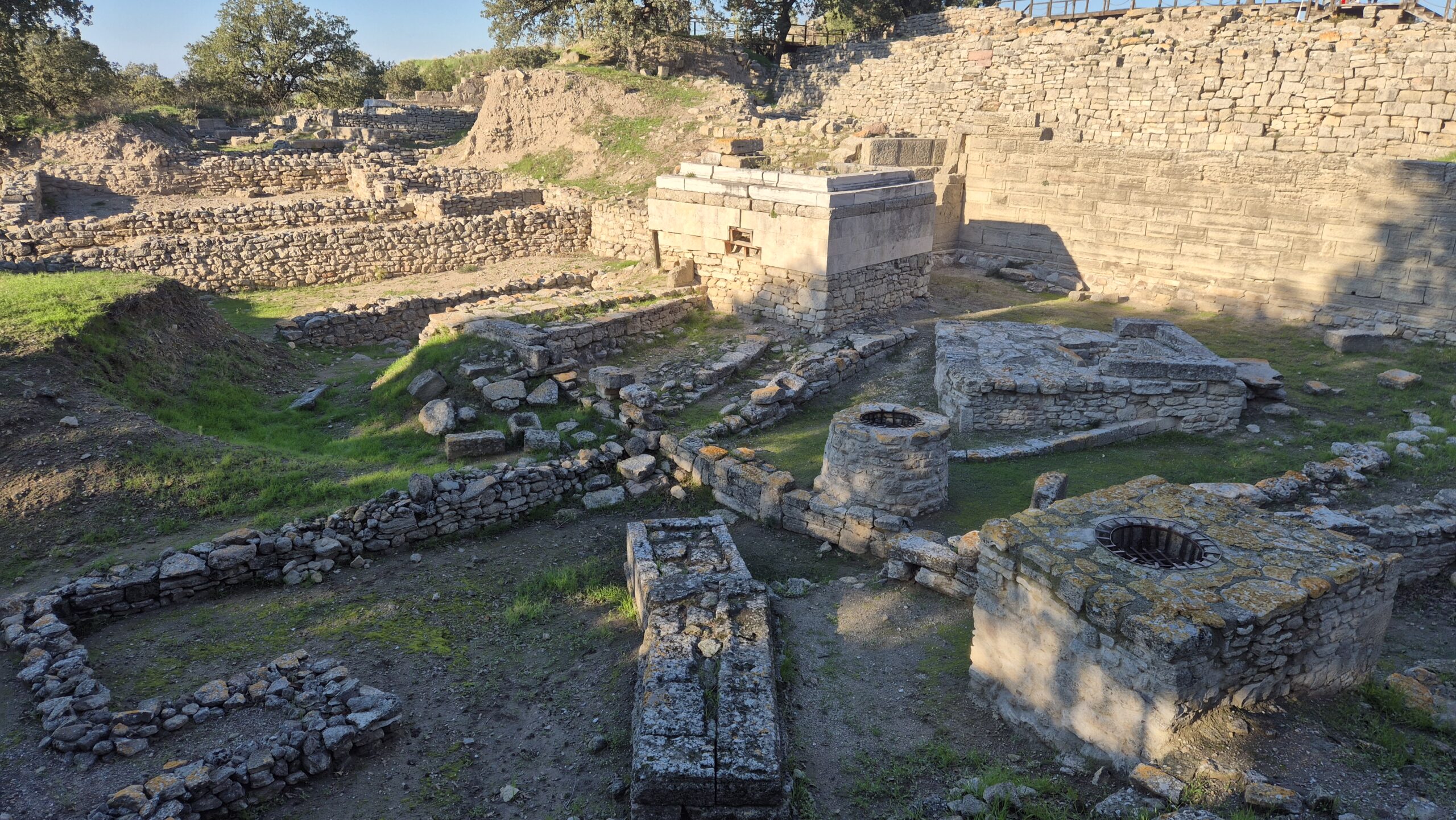
Sanctuary – “This I know in mind and soul, that there shall be a day when sacred Troy shall be destroyed and Priam and his people shall perish.” (Homer, The Iliad). By the 7th century BC (and Troy VIII and IX) the reborn city had become an important religious site. This area was a sanctuary, complete with altars and sacrificial pits.
Layers of ruins – “Troy has perished, the great city…
The dust is rising, spreading out like a great wing of smoke and all is hidden.
We now are gone, one here, one there.
And Troy is gone forever.” (Homer, The Iliad)
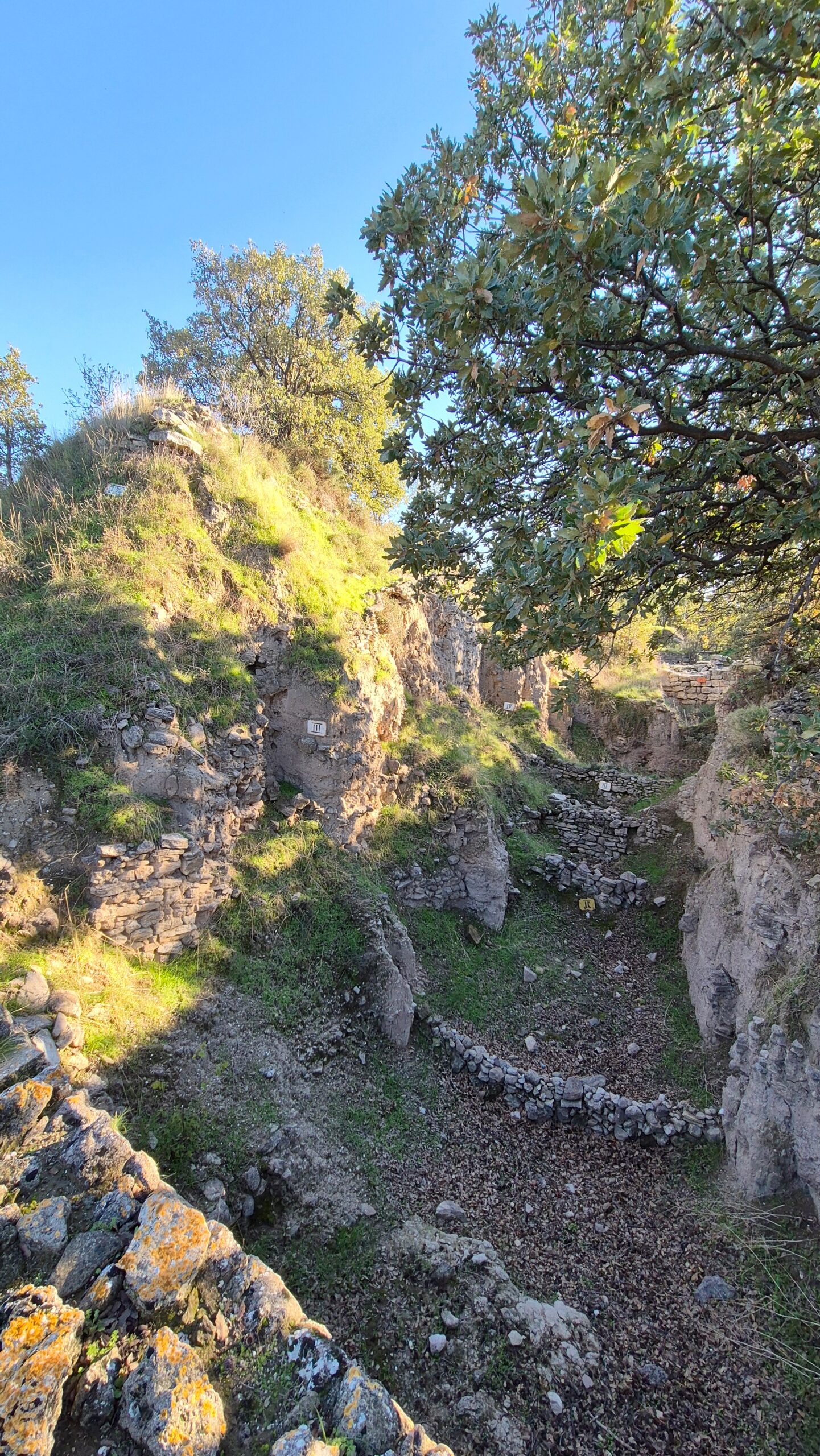
This hillside and ditch don’t seem like much, but a bit of every layer from the first eight Troys is visible (and marked by a sign). The stone wall that fills the gap at the far end of this ditch dates from Homer’s Troy VI.
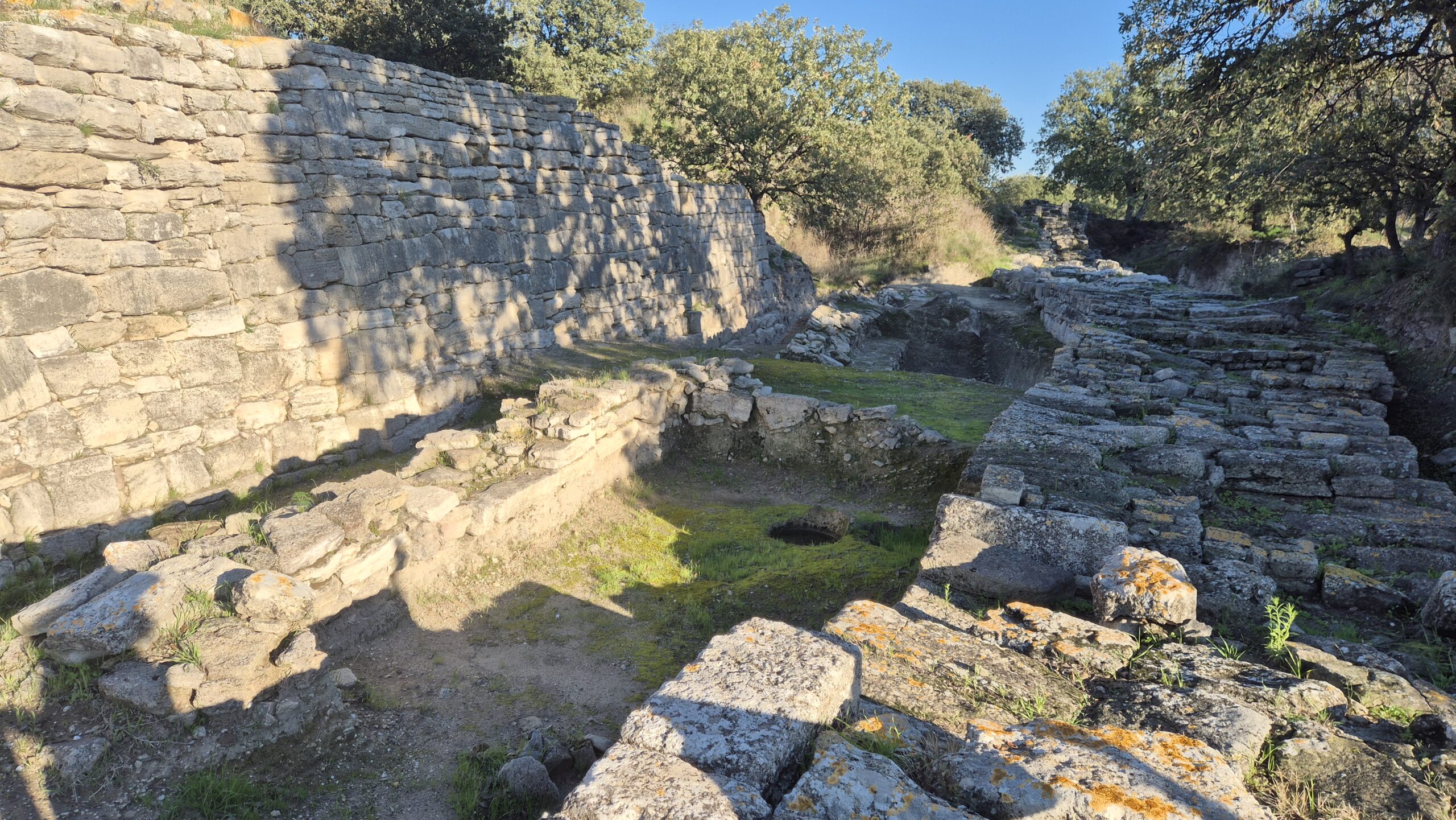
Palace – “Troy rushes down from her high pinnacle. Enough is done for Priam and our country.” (Vergil Aeneid). Another remnant from Troy VI is this fortification wall of the citadel, most of which is still buried, and the remains of the palace that – perhaps – King Priam occupied during the Trojan War.
(To enlarge any picture above, click on it. Also, for more pictures from Turkey, CLICK HERE to view the slideshow at the end of the itinerary page.)