
In brief: Istanbul has many monuments to show for all its storied past, while its population comes alive outdoors at its bazaars and cafes.
Walking for a week around the historic city of Istanbul uncovers a lot of stories – of centuries of history, of empire and destruction, of religion and mercantilism. But the stories – like the sweets called Turkish Delight – can only give a taste of a city of 16 million that has, for millennia, been a land and sea junction between Europe and Asia. It ruled the Eastern portion of the Christian world for nearly 900 years and then the vast Muslim Ottoman Empire for nearly 500 more. It has so many monuments to show for all that history amid a population that comes alive outdoors at its bazaars and cafes. Here are a few sights from our walks.
To start, here’s one of the grandest views of Istanbul, from a ferry alongside the 19th century Galata Bridge to the right. Istanbul’s centrality was geographical as well, connecting the Black Sea to the Mediterranean Sea. Though featured frequently in films set in Istanbul, neither of these two old mosques are the most famous ones here. We also discovered there were dozens of pricey restaurants located one level beneath the traffic on the bridge, with amazing views of the Old City. On a Saturday, that lower level is also popular for photographing couples dressed for their weddings.
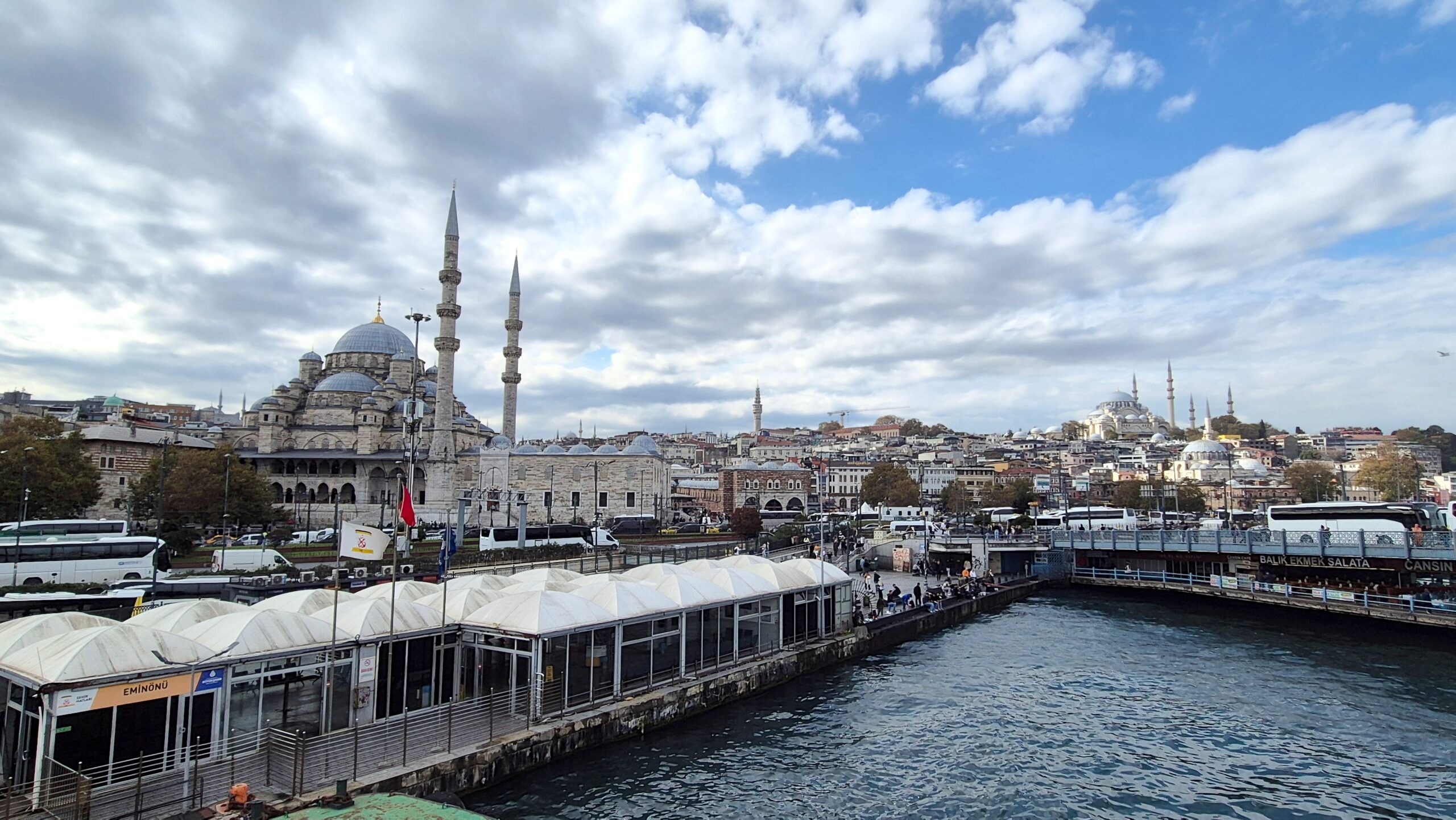
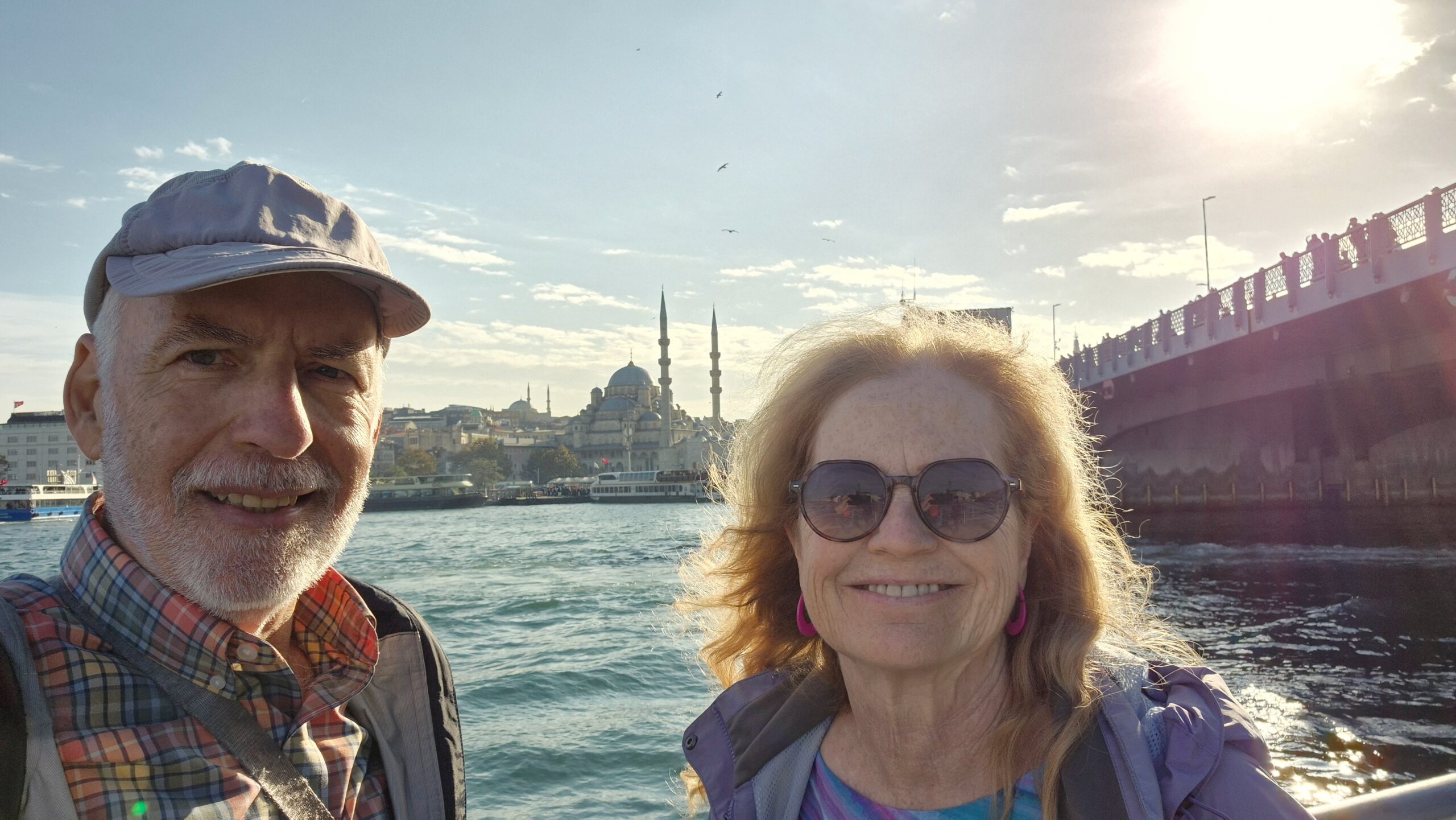
Us along the Galata Bridge, with the 17th century New Mosque in the backdrop.
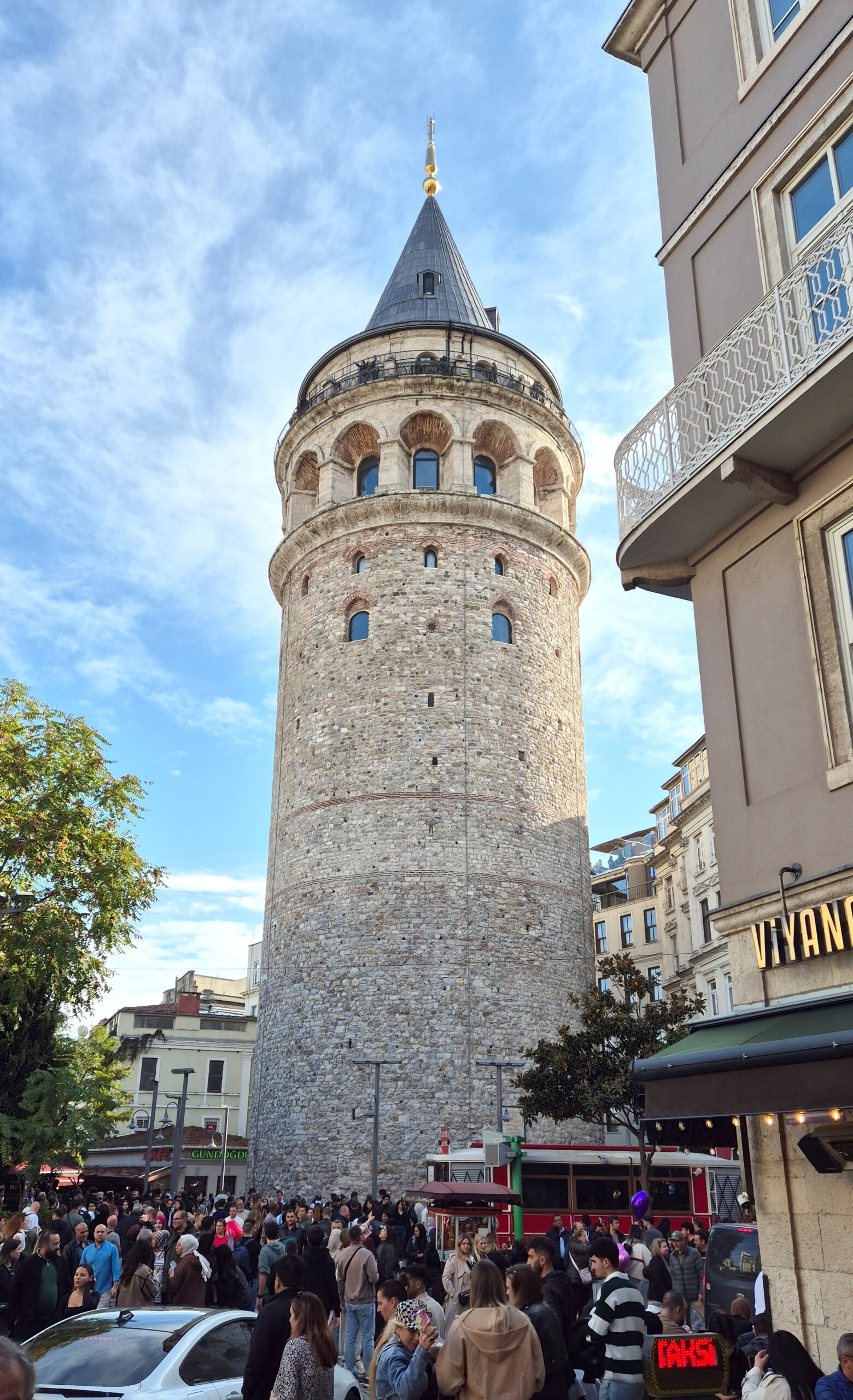
The Italianate Galata Tower has soared atop a steep hill across the Galata Bridge from the Old City since the 14th century Genoese occupied Istanbul. It once served as a watchtower and lookout for fires, but now hosts long queues of tourists in need of further climbing and the view.
With the noted tower in the backdrop, we crossed the Galata Bridge to find hundreds of people fishing for anchovies. To the left, glides one of the myriad ferries in the city. Along with the Metro system, they transport people to the edges of Istanbul – up the river called the Golden Horn, along the passage to the Black Sea called the Bosphorus, and along the Sea of Marmara, passage to the Mediterranean.
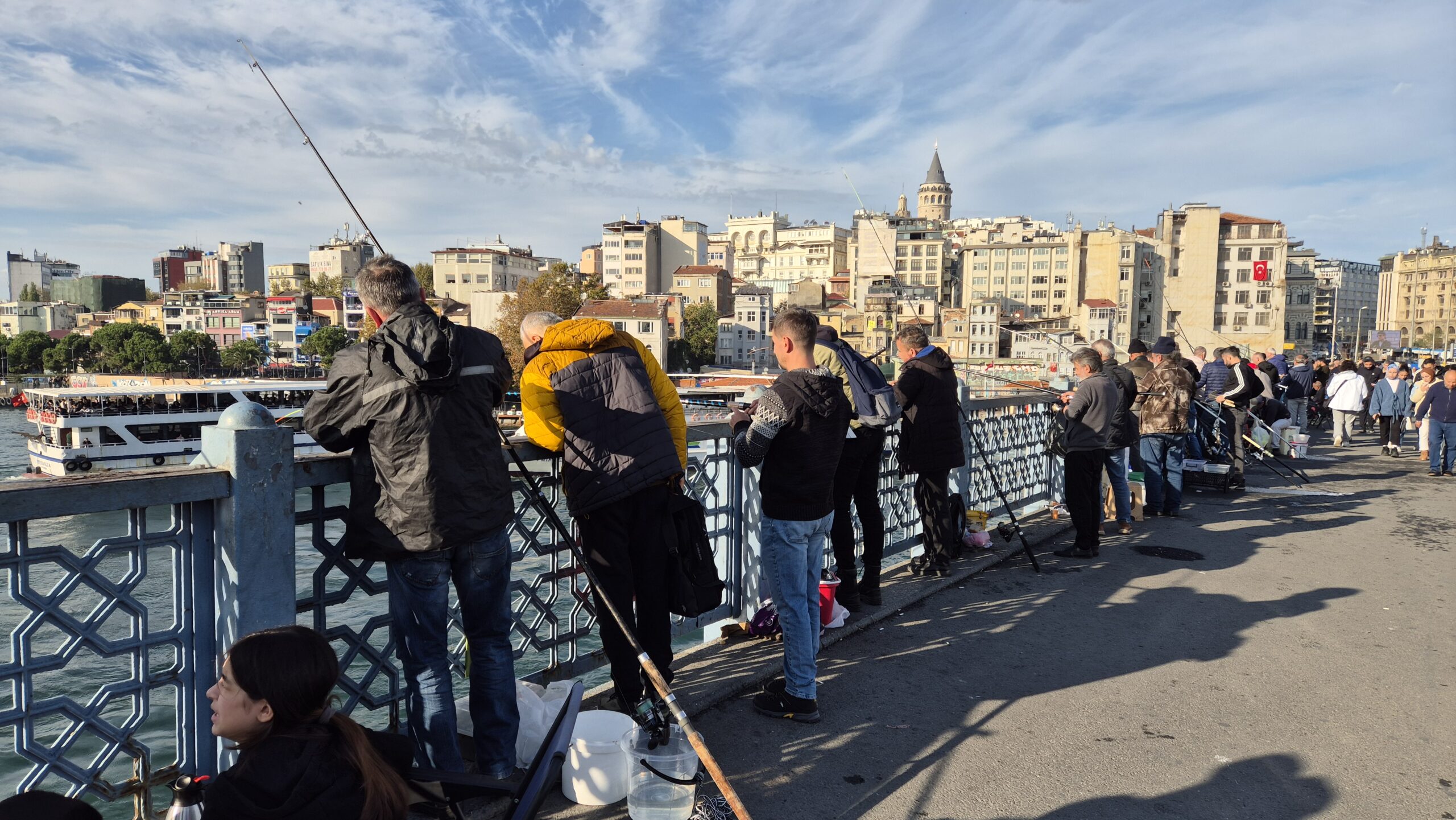
One street from the 19th century city in Galata, a row of banks, when the Ottoman Empire was still fabulously wealthy.
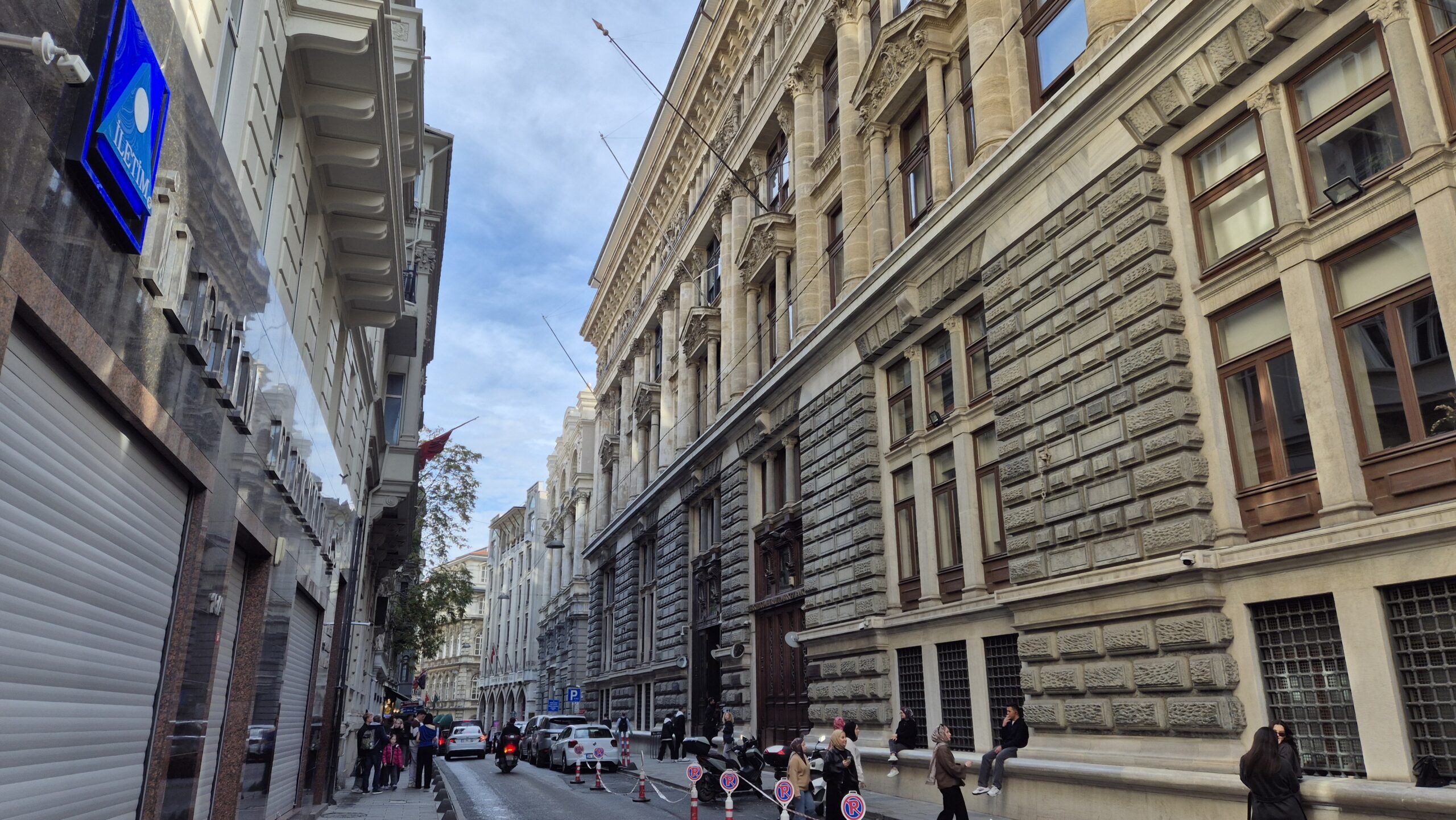
Nearby we found an Art Nouveau double staircase also from the 19th century. A rich family named Camondo added these to connect two streets, one some 20 meters above another.

A span of three millennia. Within the space of the old Roman Hippodrome, scene of chariot races, rises an even more ancient obelisk from Egypt (15th century BC). It was transported and set here with some difficulty by the first Christian ruler Justinian, planted on images of the imperial party enjoying the games. In the background are the many minarets of the “Blue” Mosque – the Sultanahmed – from the 17th century.

If you keep walking along the huge plaza that was the Hippodrome, you’ll find the end above one of the few remaining walls from the Roman era.

A string of cafes in a covered passageway hosts many locals for a coffee, meal, or one of the stunning Turkish desserts. Women adopt a variety of clothing styles in this predominantly Muslim country.
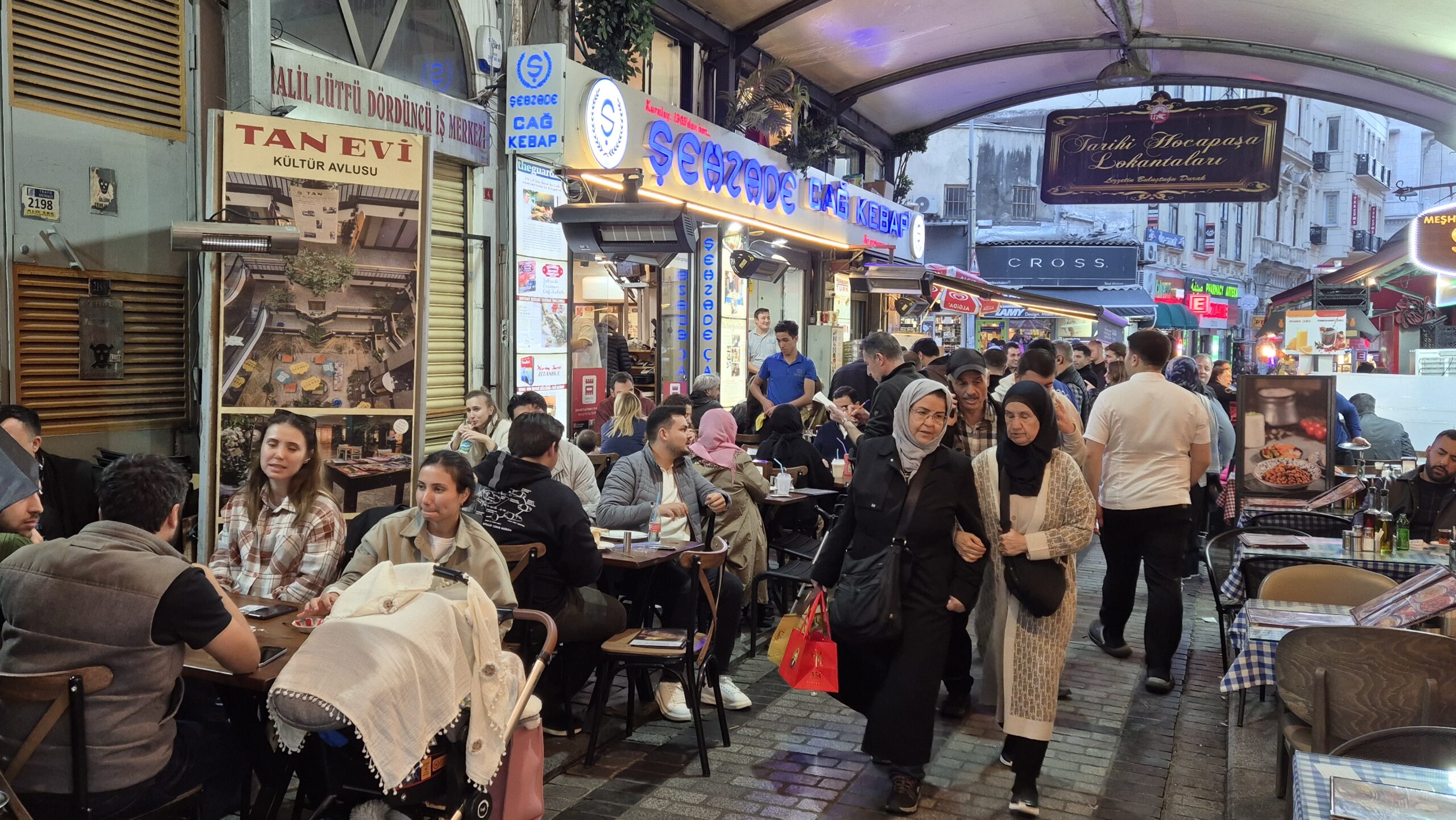

A small bazaar – an old style of shopping mall – in a district that has been increasingly altered by the swarms of tourists to the city.
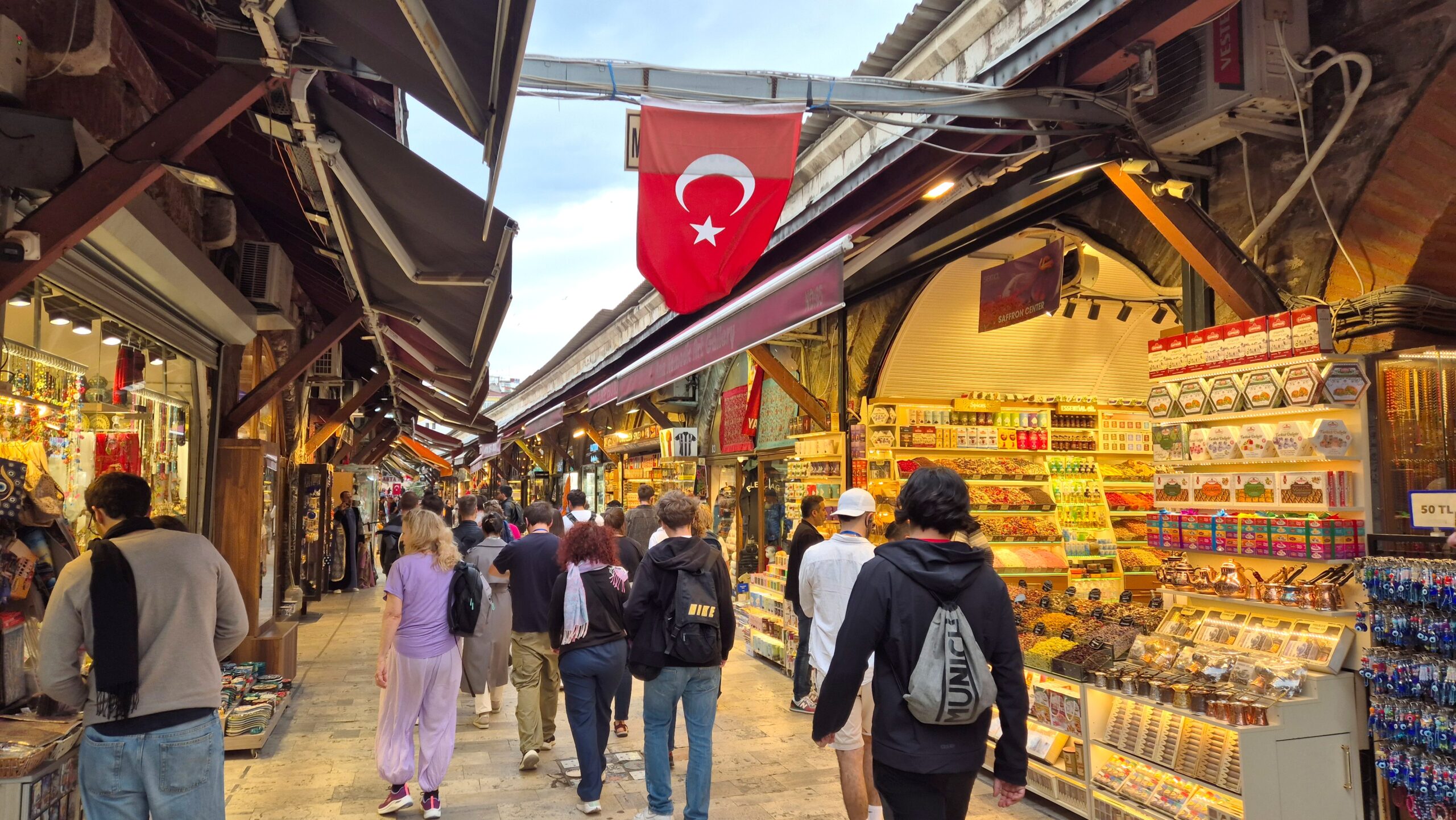
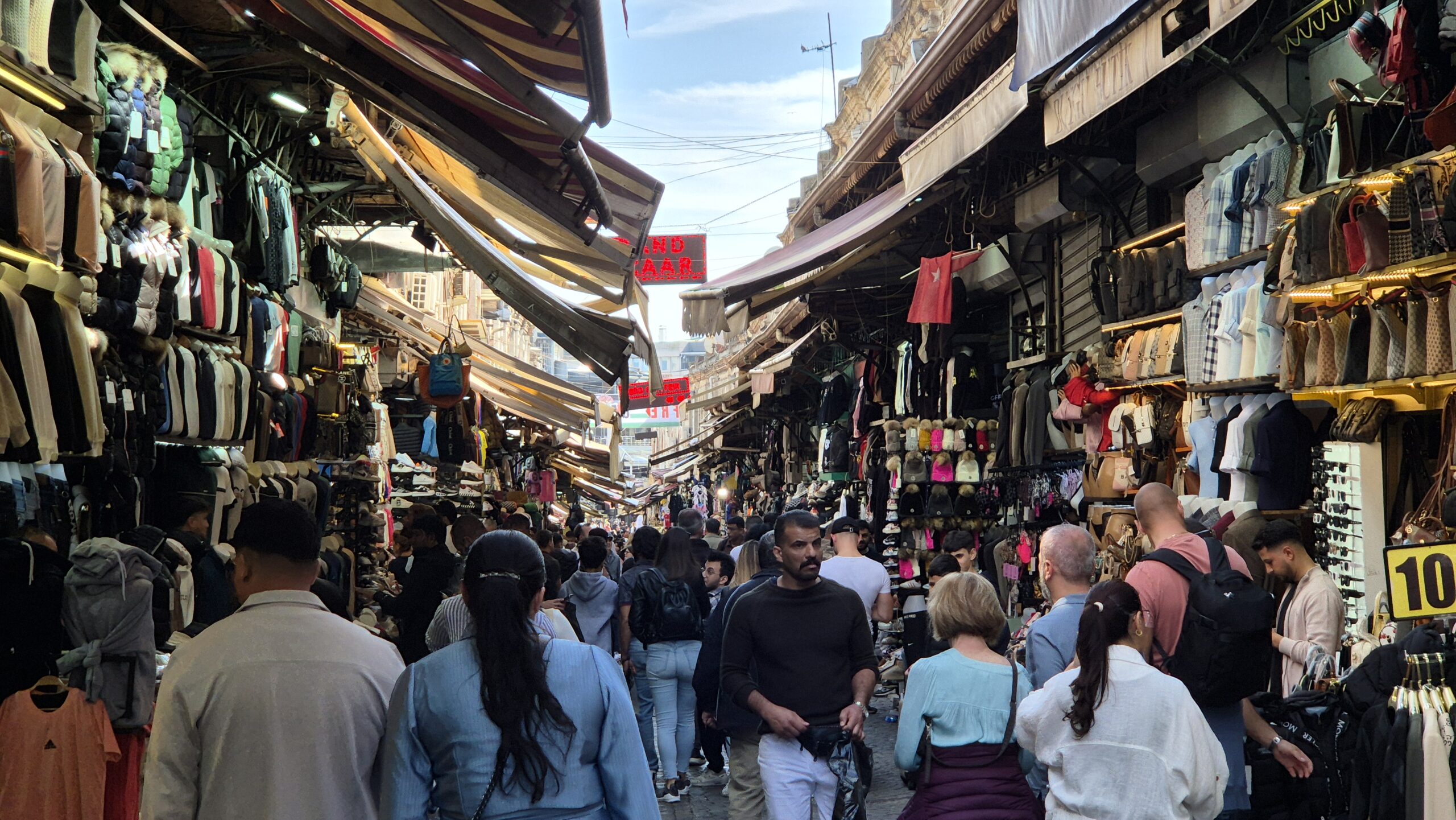
One lane in the larger bazaar of Istanbul
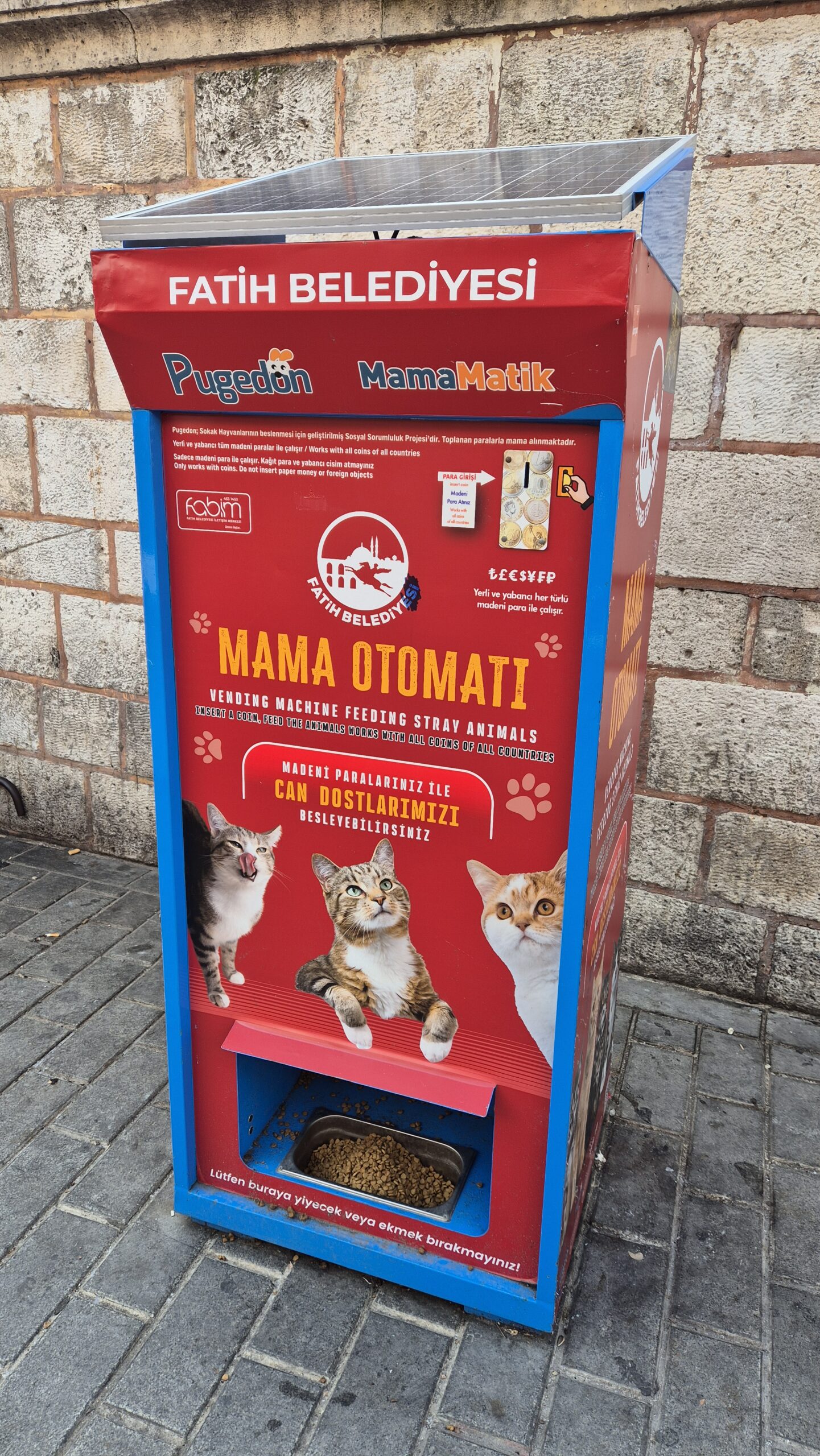
Cat feeding station at the souq
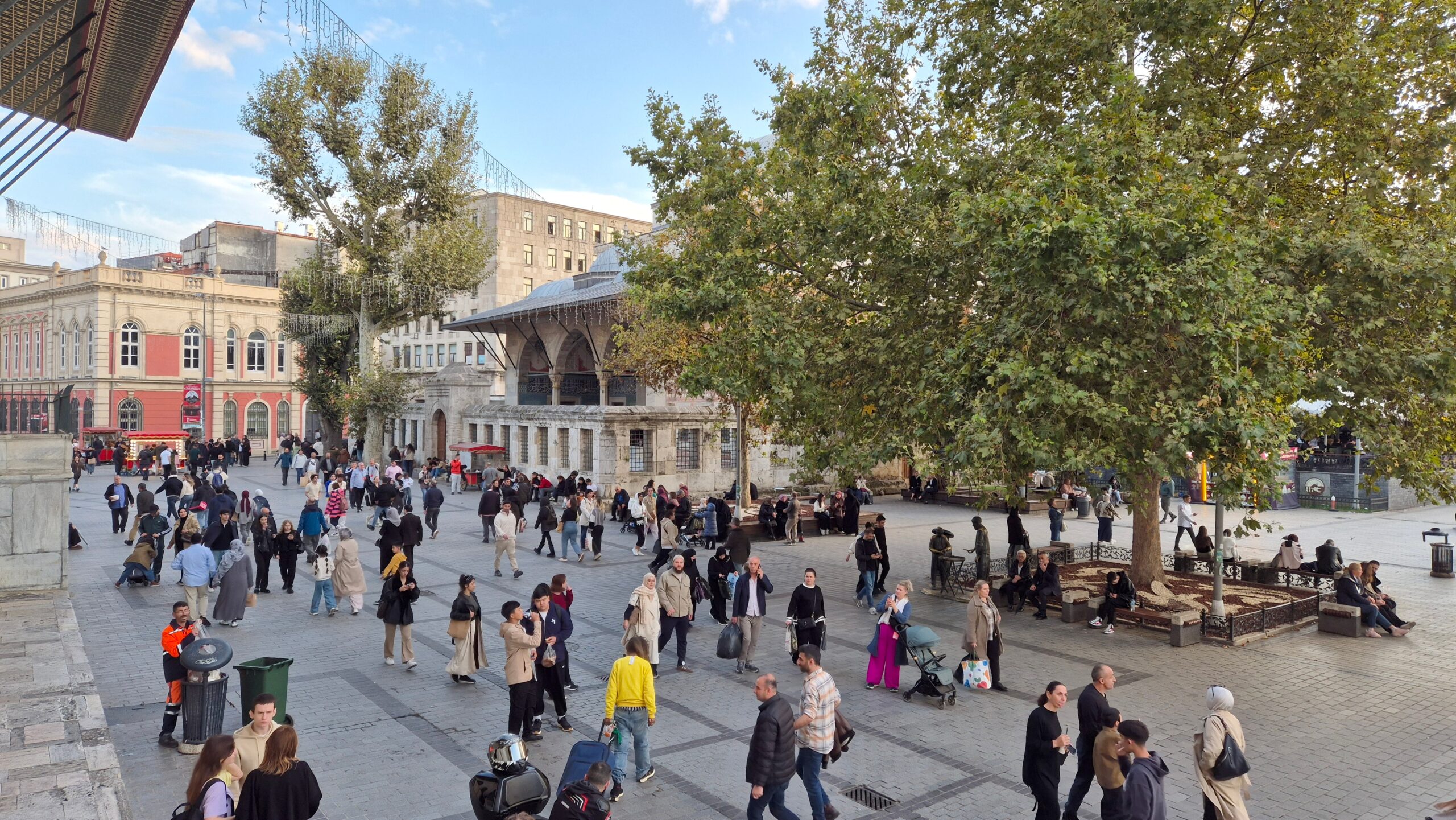
A plaza for sitting and strolling of an evening near the New Mosque.
Mosques
Tour Europe and you inevitably end up visiting churches. Tour Turkey and it will be mosques like these.
Two of the most important – and largest – mosques in Istanbul are also among the most ancient. The famous one, a model for religious architecture since the 6th century, is Hagia (or Haya) Sophia. It was built by the early Holy Roman Emperor, Justinian, then converted to a mosque 900 years later. The most prominent one on the city skyline since the 16th century is Süleymaniye Mosque, with its sumptuous interior and splendid tombs. That was built by Suleyman the Magnificent, a strong leader who vastly expanded the Ottoman Empire across the Mediterranean, Black, and Red Seas.
Two other mosques, among the many, gained our attention as well: the one known as the Blue Mosque (near Haya Sofia) and its contemporary cousin, the New Mosque (near the Galata Bridge).
Hagia (Haya) Sophia with its massive dome. The minaret towers were added in the 15th century when the Ottomans converted the church to a mosque. Several domed tombs sit in front.
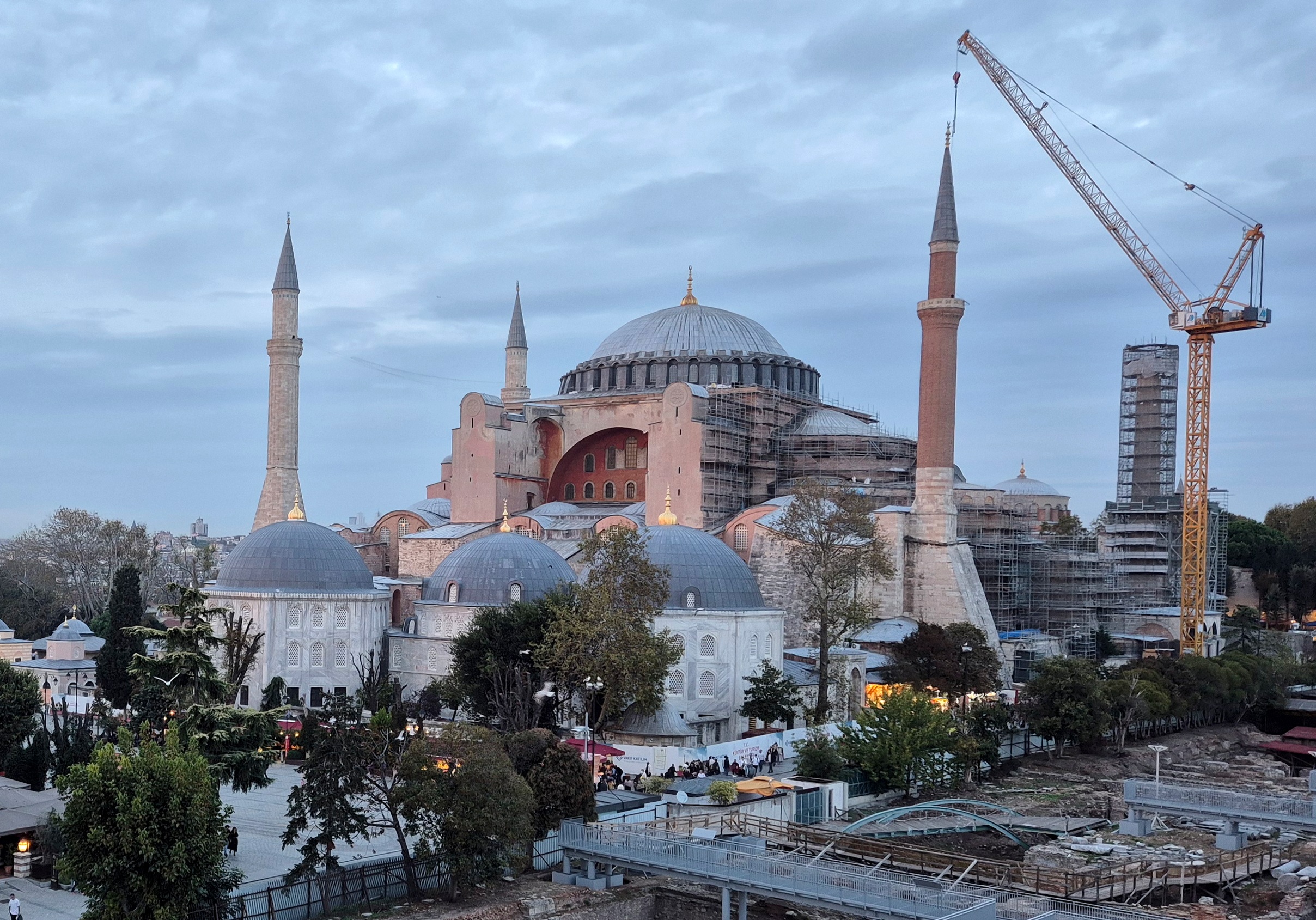
In visiting Haya Sophia, you explore both a church and a mosque. Justinian’s massive structure must have been even more astonishing in the 6th century, featuring its prominent dome. The original one collapsed but the church was restored to its dominance as the center of the Eastern Orthodox religion until the Ottoman rule converted the structure to a mosque.

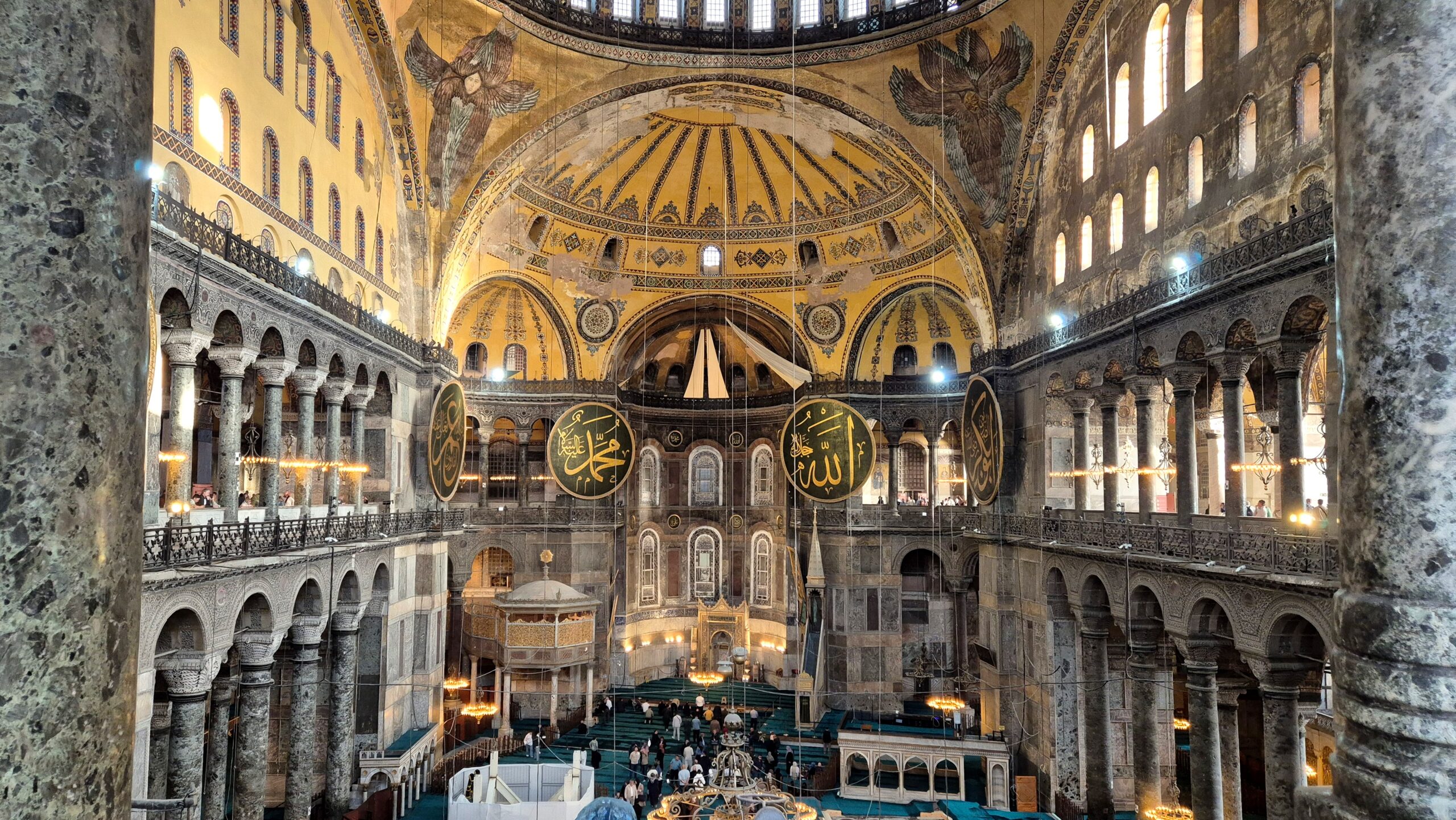
All of that history is on display within the massive building, though now non-Muslim visitors are limited to walking along the huge second floor gallery. Here is a view of the church’s apse and the mosque’s mihrab.
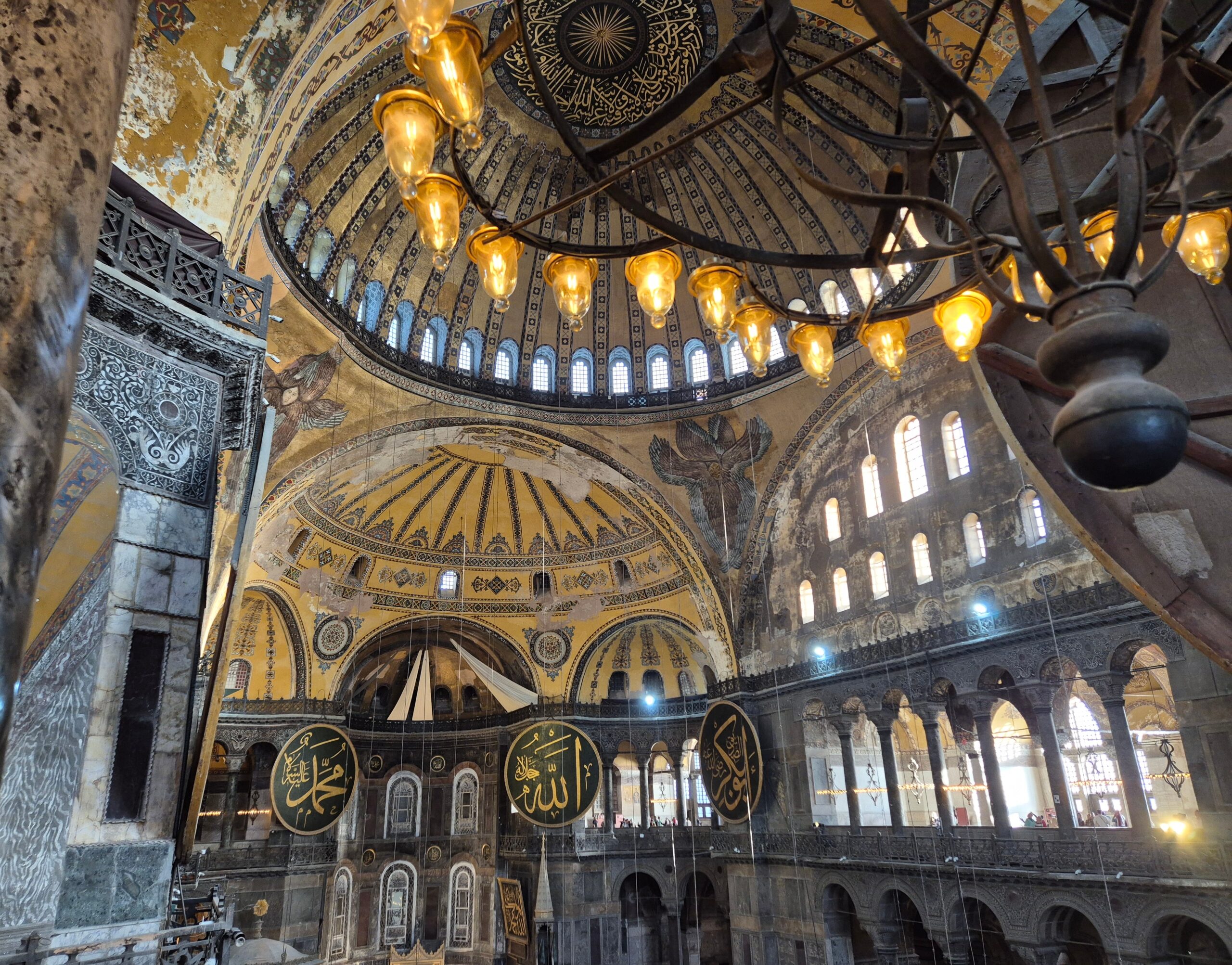
The people look so small praying along the carpeted floor where Holy Roman emperors were once crowned. Discreetly hidden behind the two flowing linens above are lovely frescoes of Mary and Jesus, once part of a Last Judgment scene. Ancient structures in marble along the floor date from the early Ottoman period. To the right of the apse is a huge disk with the name of Allah inscribed.
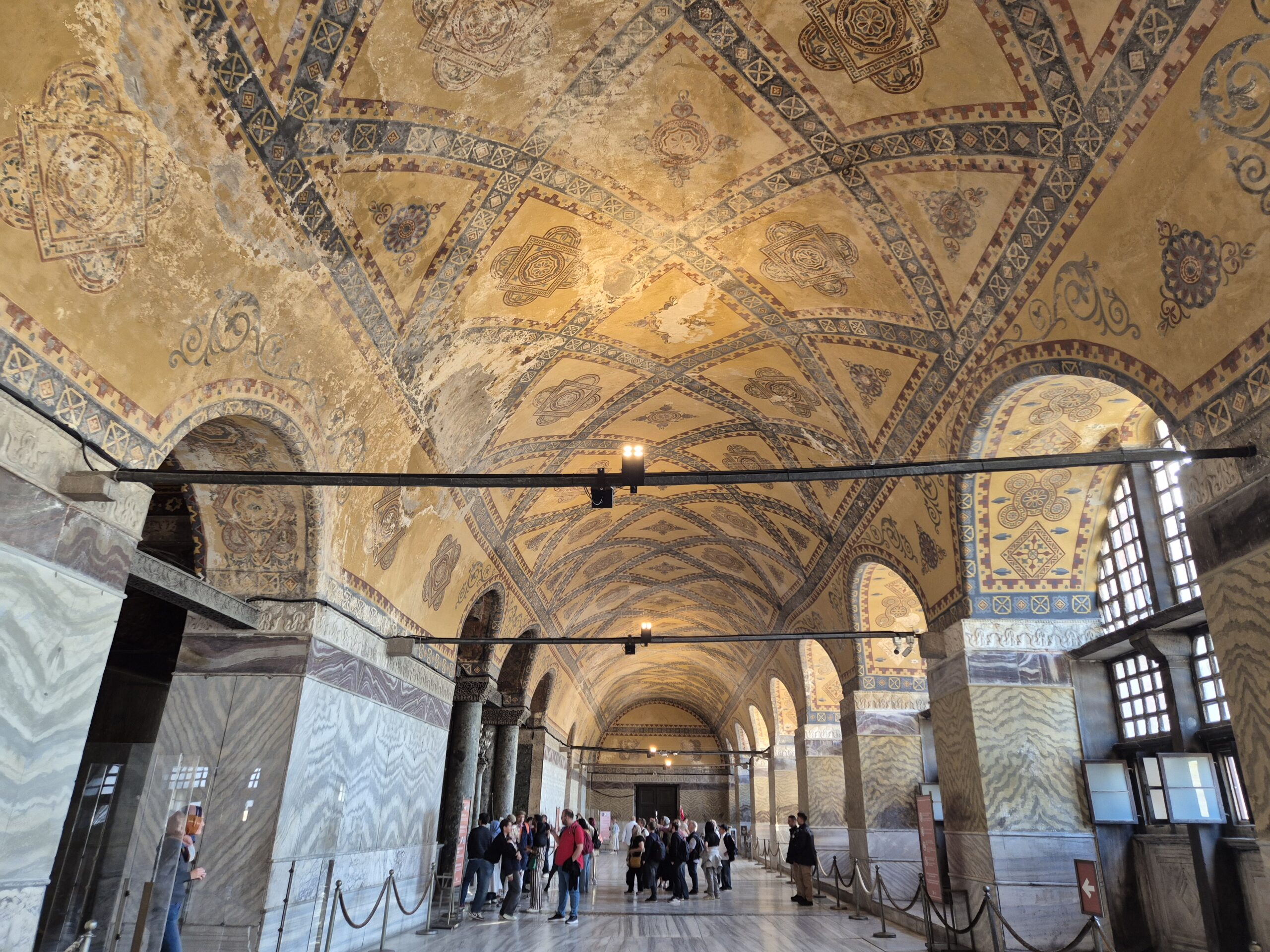
The visitor gallery at Hagia Sophia features a mustard yellow ceiling decorated with geometric and somewhat floral designs, all supported by the beautifully patterned marble columns, walls, and flooring.
There are several exciting mosaics on the gallery level that have survived the transformations of Hagia Sophia, mostly dating from the 12th century. This, Deesis, is the finest of them from a century or so later in time, showing an expressiveness in faces and bodies that previously had been stiff or perhaps transcending emotion. To us, John the Baptist shows a disturbed sorrow on the right, while Mary expresses several emotions, solemnly pleading and sorrowful for the plight of humanity. Even Jesus is troubled and grim at his burden in redeeming the human condition.

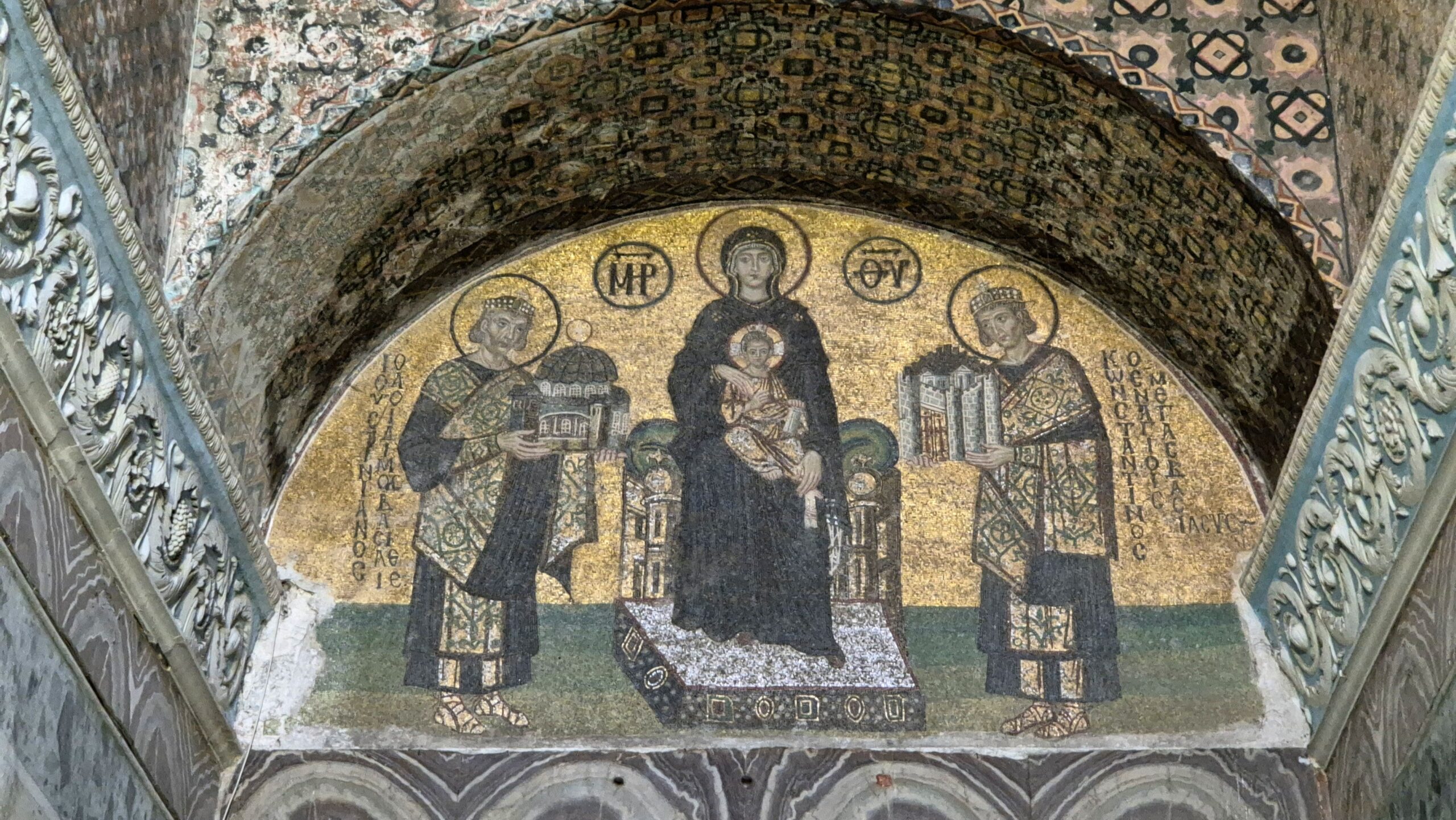
One unused entrance to Hagia Sophia is a narrow one leading to this highly decorated arched area whose mosaic depicts Mary and Jesus receiving the gifts of Hagia Sophia itself from Justinian on the left and the city of Constantinople (now Istanbul) from Constantine the Great on the right. The big donors still get the credit.
The Süleymaniye Mosque, gleaming high over Istanbul is a masterpiece of 16th century architecture by Mimar Sinan. You can feel how the multiple domes and half-domes support the large central dome and open up the broad interior space. Sinan designed over 300 notable structures across the far-flung Ottoman empire. He is entombed in the cemetery outside the mosque.
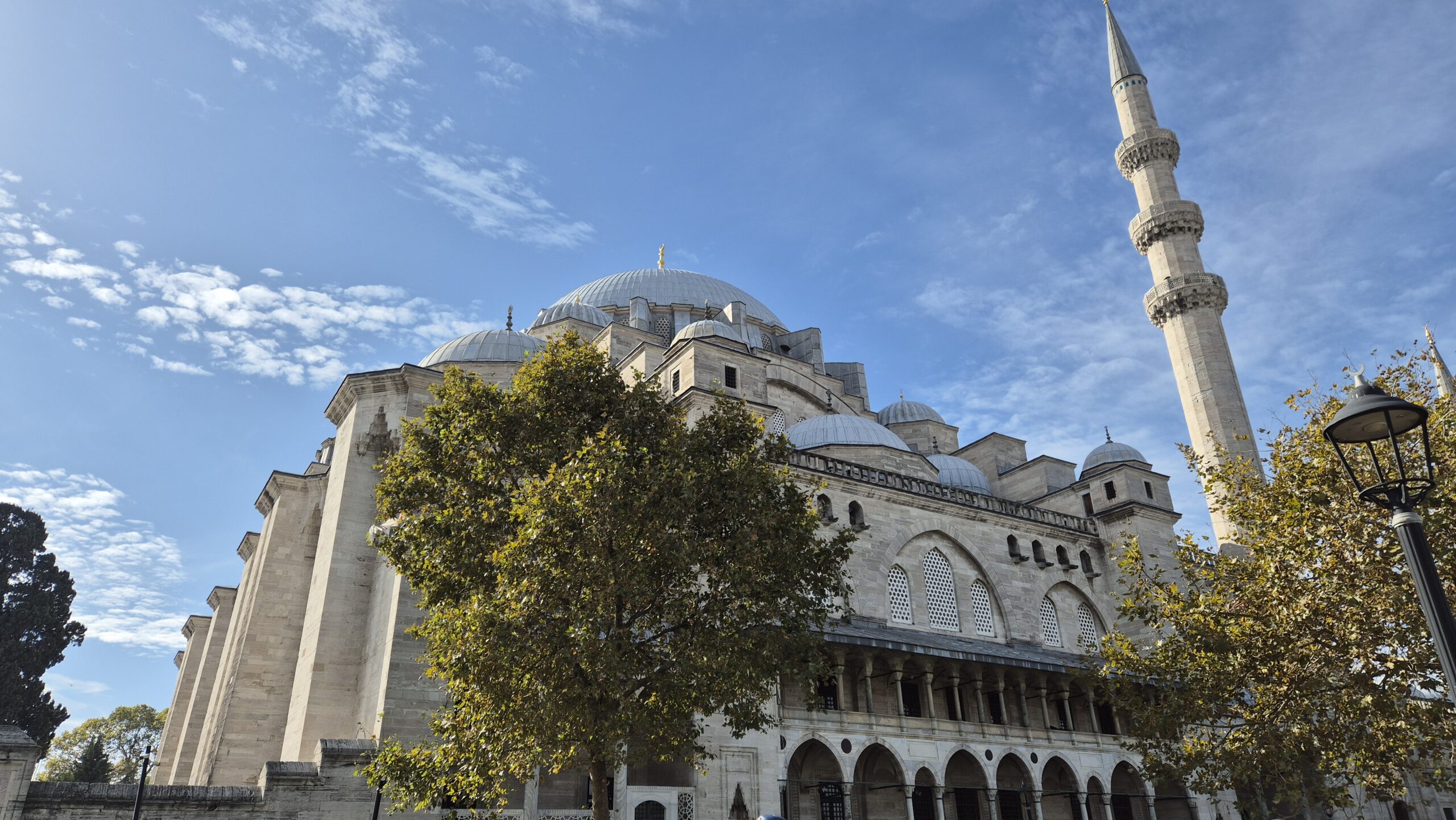
Westerners might consider this a somewhat baroque interior, the huge space within Süleymaniye Mosque with its gleaming blue windows ahead and a striking upper balcony.
The elegant upper balcony of the Süleymaniye Mosque.

Another view of the Süleymaniye Mosque interior giving a sense of its scale. The half domes and domes of the ceiling opened up the huge spaces for prayer; they are reflected in the seemingly limitless domes adorning the exterior.

The octagonal tomb of Suleyman the Magnificent, with lovely textured stone subtly defining its geometry, one of several small “palaces” within the cemetery.


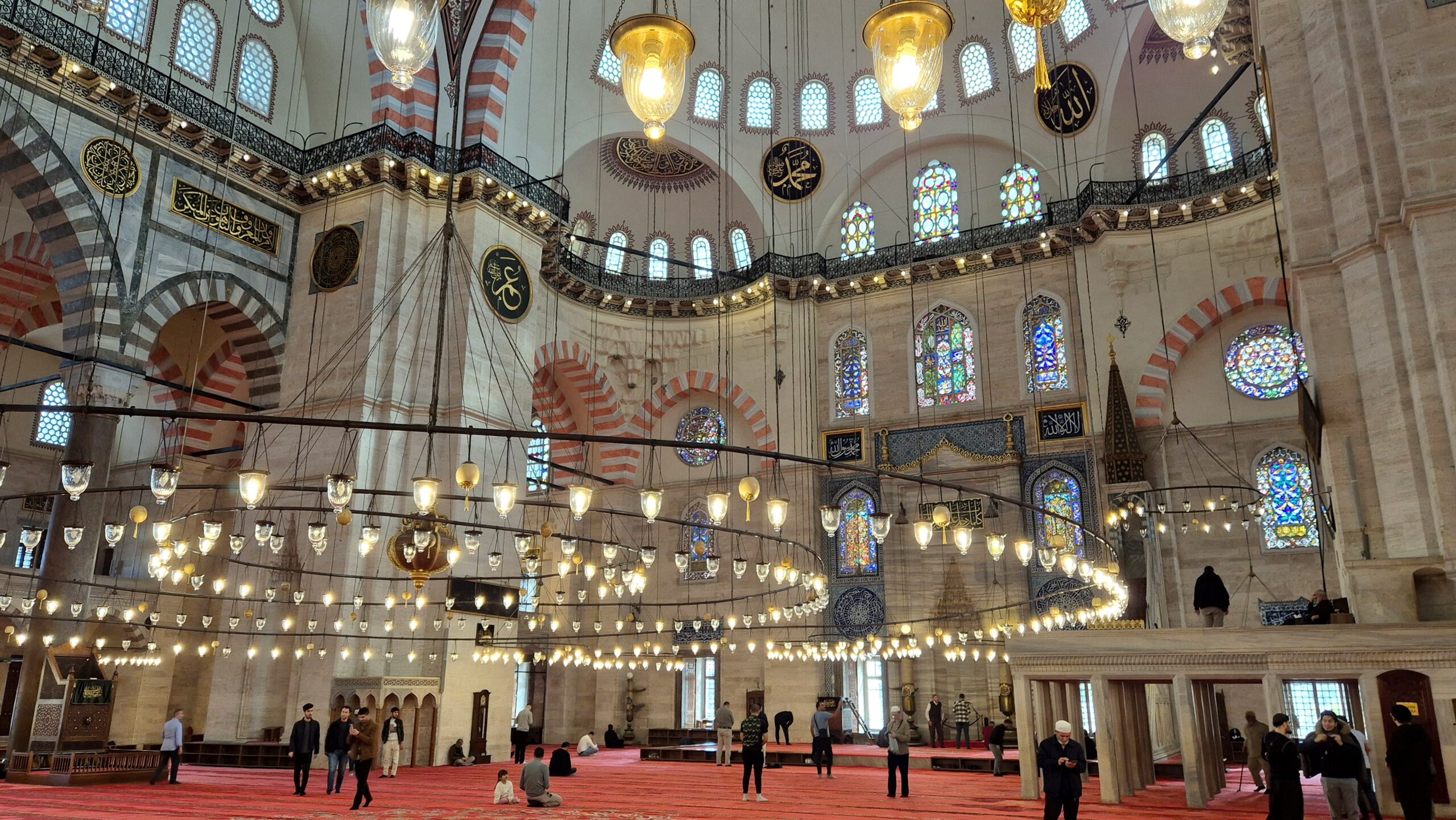
The interior of Suleyman’s tomb, richly tiled inside and out. The taller central casket is Suleyman’s, itself adorned in ivory inlay.
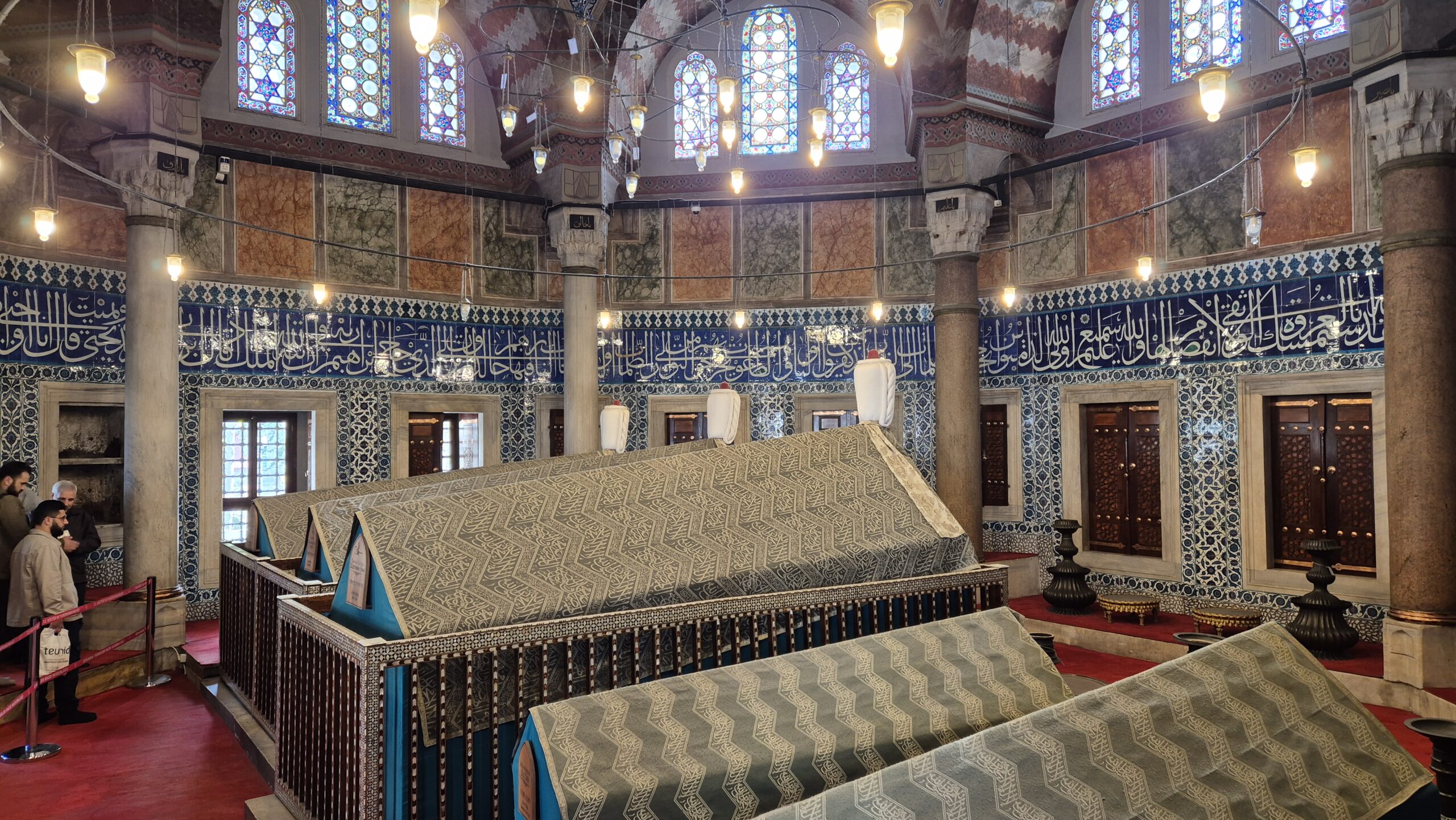
Interior of the New Mosque, at the end of the Galata Bridge, which rivals its more famous but equally old cousin, the Blue Mosque.
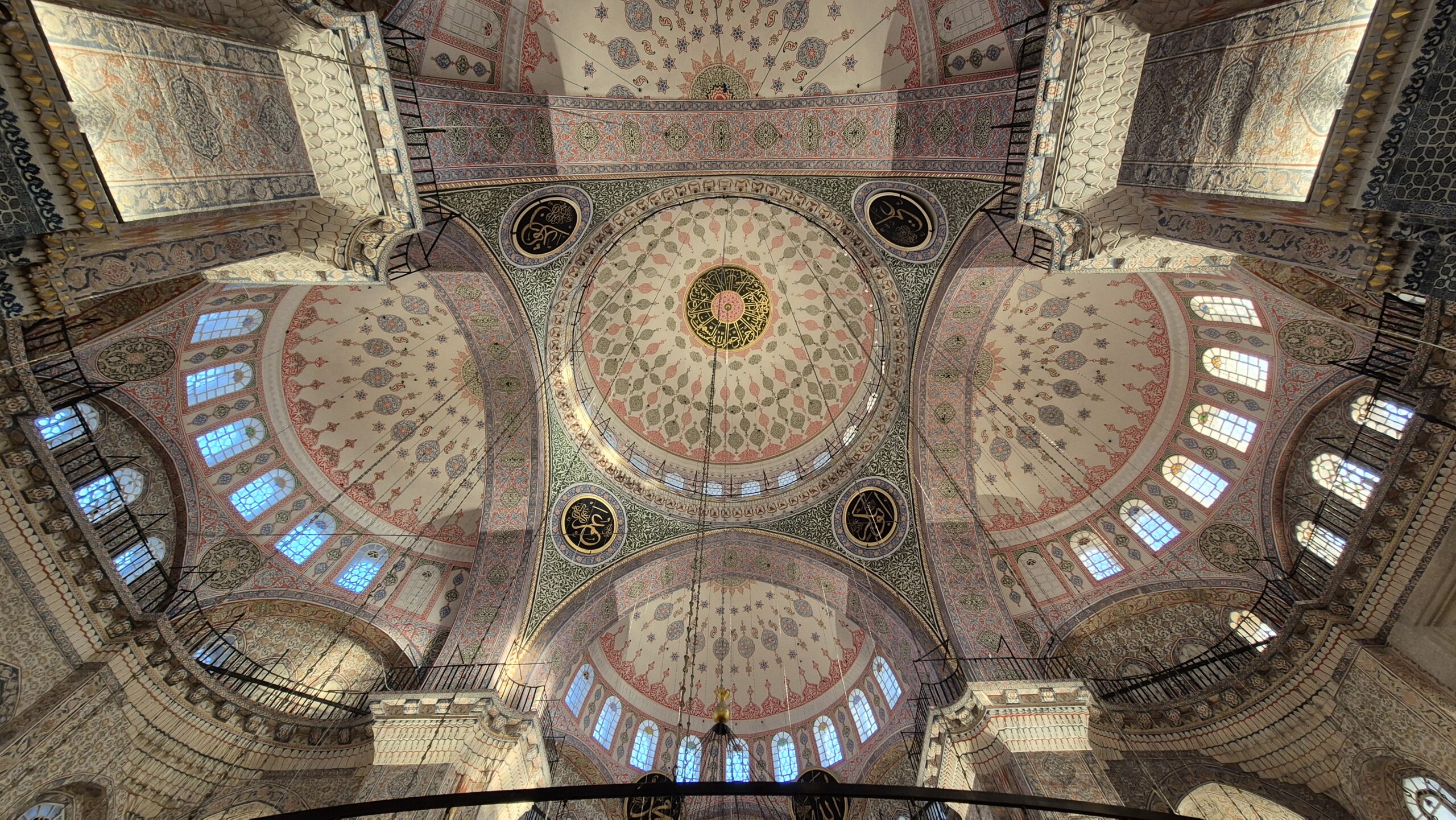
Interior of the Sultanahmed Mosque, known more familiarly by visitors as the Blue Mosque for the blue light of its windows. The many domes visible from the outside allowed for the expansive domed spaces on the inside.
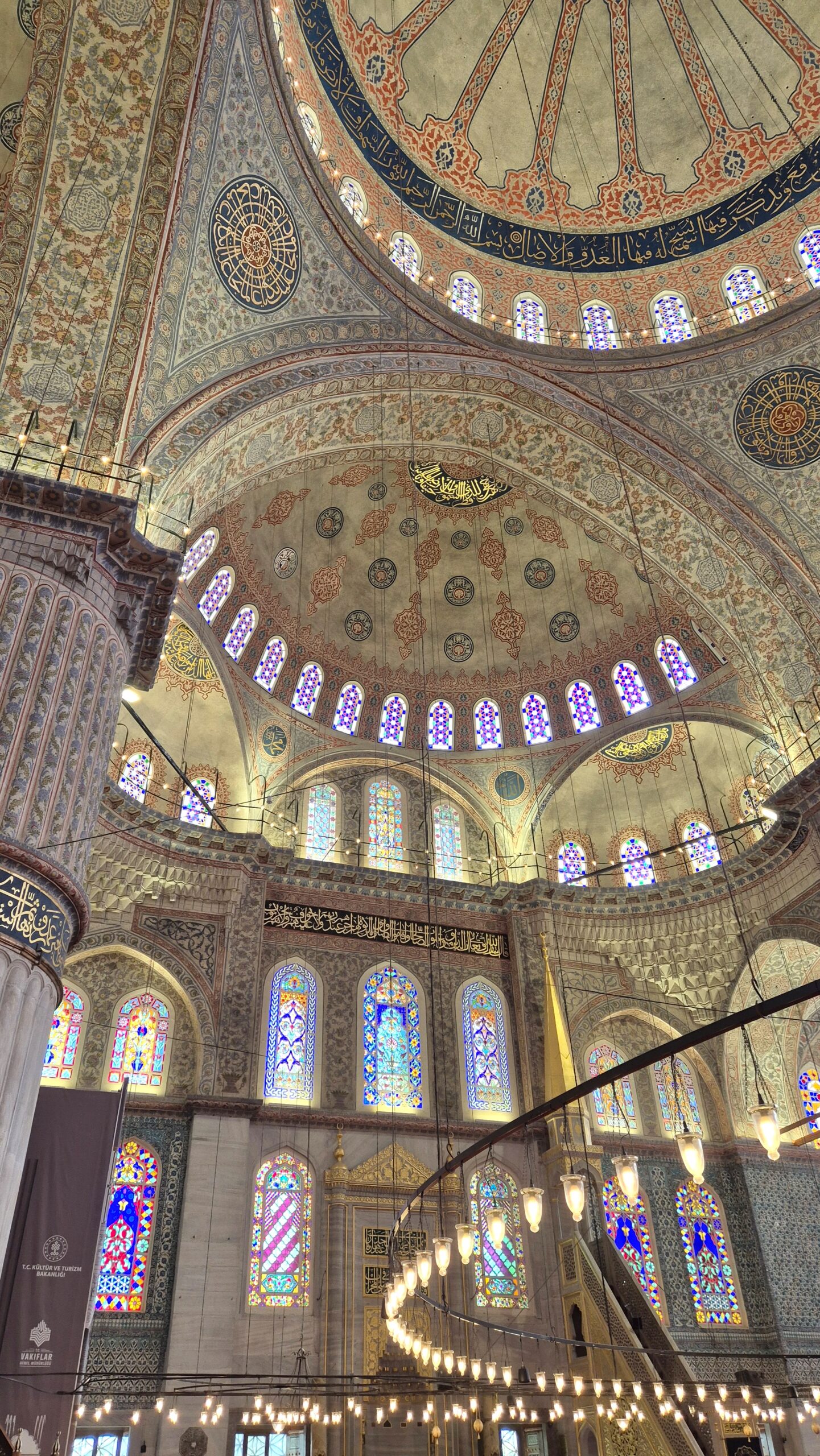
Topkapi
The headquarters of the Ottoman Empire since the 15th century still occupies a huge area in central Istanbul. Though called Topkapi Palace, or the Palace of Felicity, it was not so much palatial as efficient for managing state activities. Yet, in our three-hour venture through the palace, we found many dazzling parts, like the Sultan’s residence and harem (within the second courtyard) or the kiosks for rest and relaxation (within the fourth courtyard). Splendidly decorated or bedecked with luminous Iznik tiles, these rooms were surely fit for an emperor.
Just outside the great walls encircling Topkapi was one ruler’s gift to the city, Sultan Ahmed III’s fountain. Dating from 1728, it is a tantalizing appetizer for a visit to Topkapi or to the adjacent Hagia Sophia, with its four sides presenting drinking fountains beneath poetic tributes to both the donor and water.

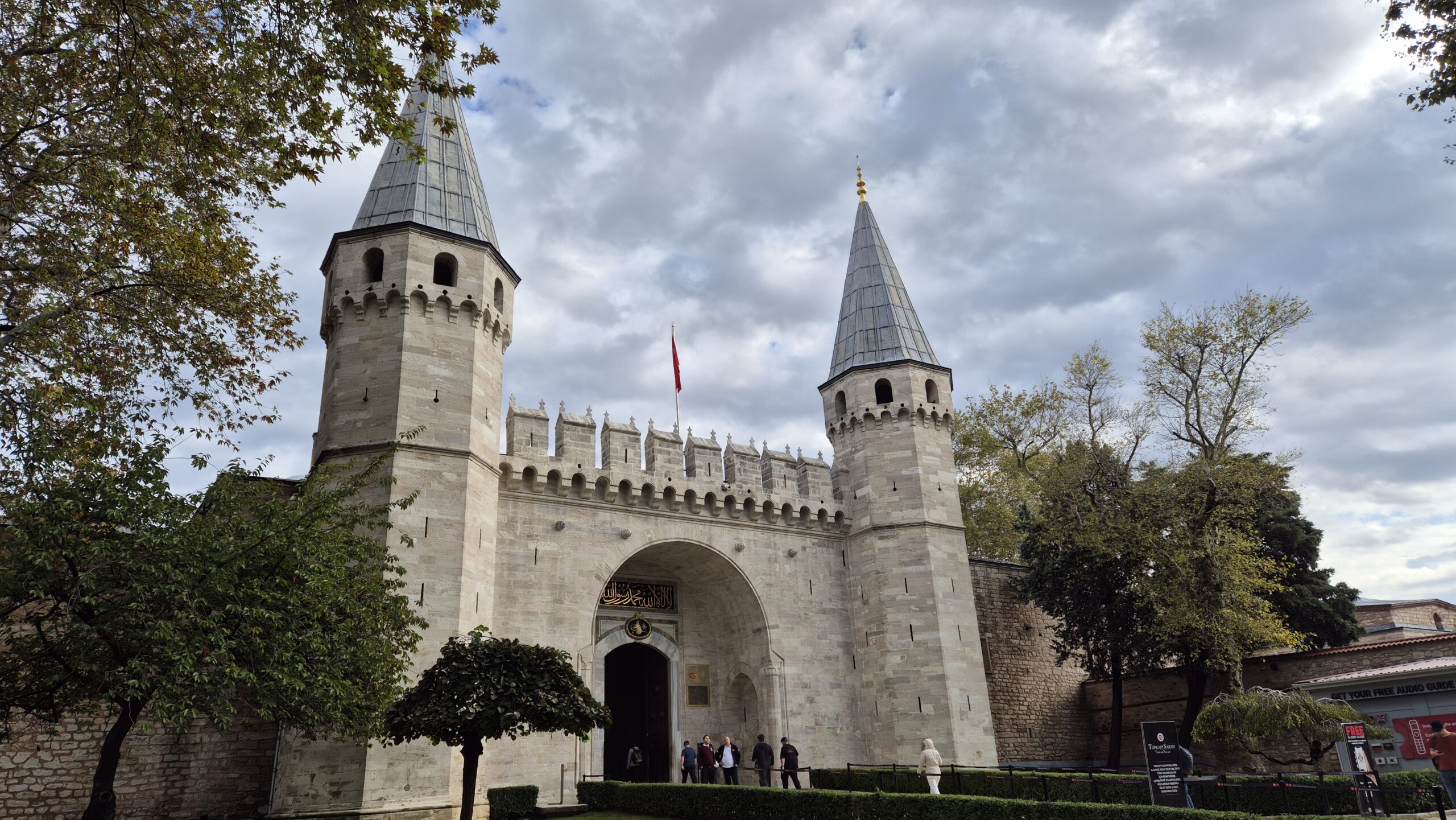
Gates separated each of the four courtyards of the Palace. This very Francophile gate divides the first courtyard from the residential second courtyard. The far-flung Ottoman Empire freely borrowed styles of construction from others.
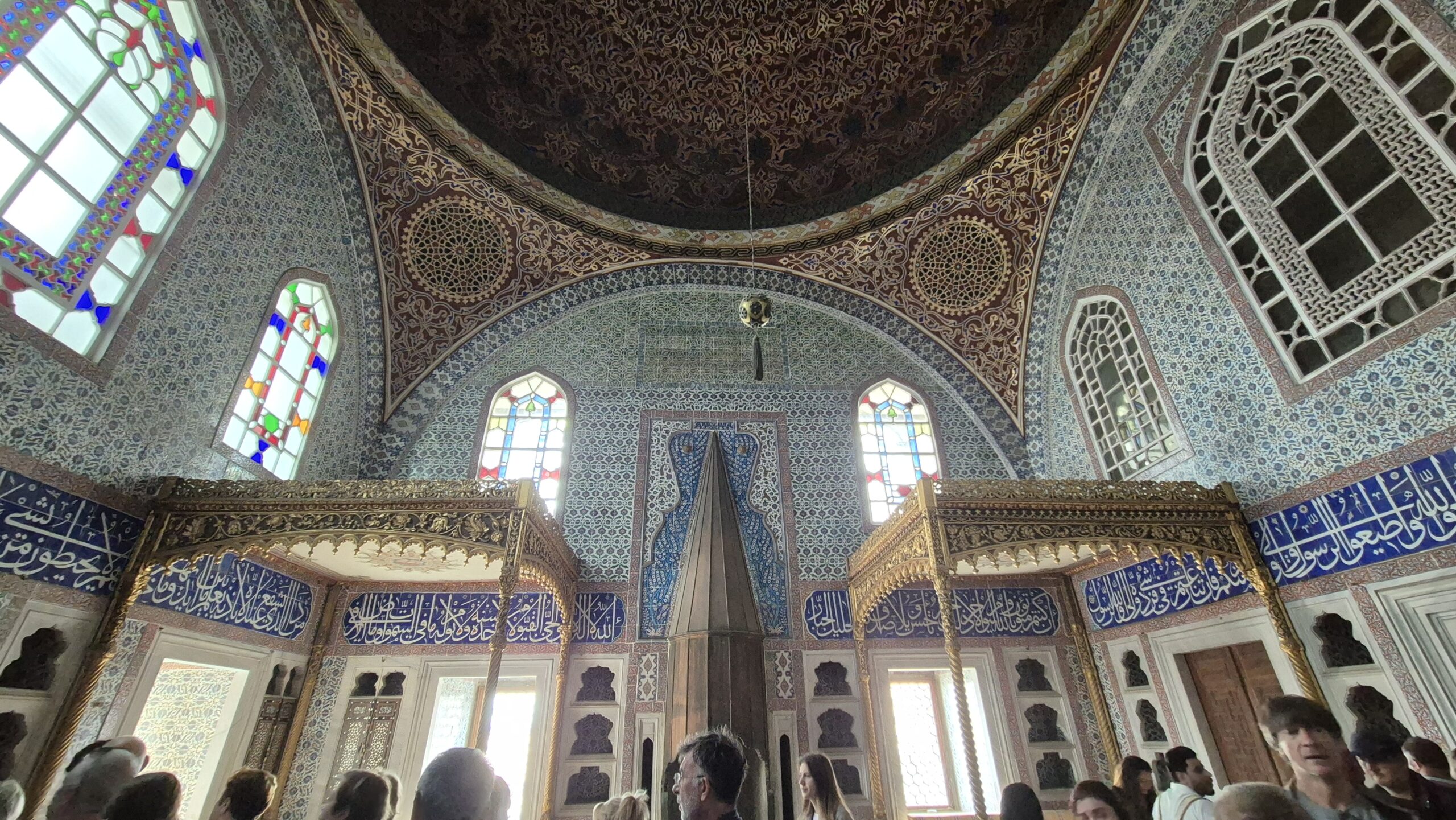
So many rooms like this residential one for the Sultan were covered in stunning tile work. Only a richly adorned dome could compete for one’s attention here. The harem was the official residence of the sultan and his very extended family of wives and princes, along with the servants and eunuchs who served them. Due to its grandeur, the harem is rightly the most popular section of the Palace though many of its small rooms and narrow passageways can be overwhelmed at times with the flood of visitors.
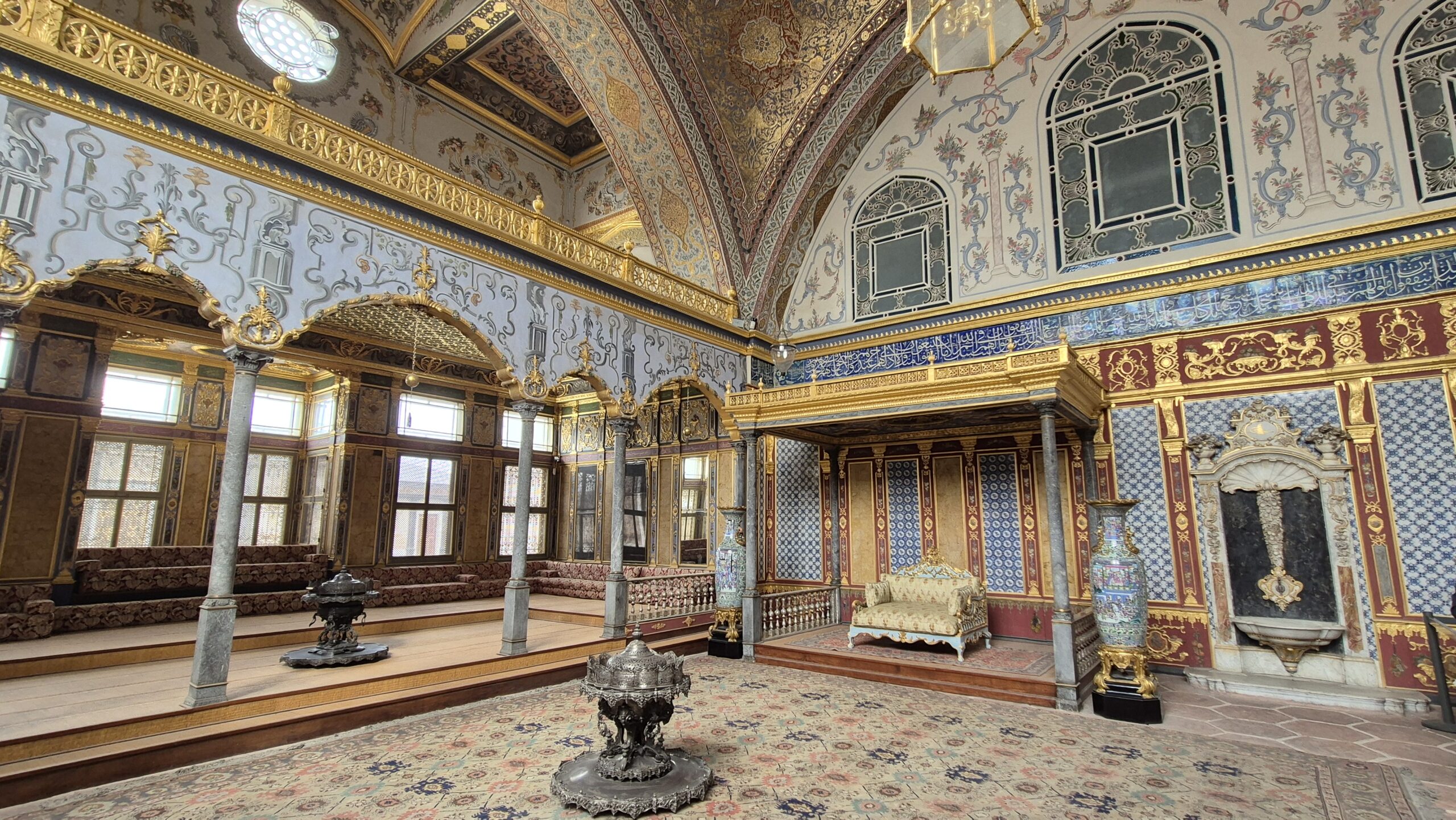
Attached to the harem in the second courtyard were grand ceremonial rooms like this one.
Even the simpler passageways for the servants were elegant.
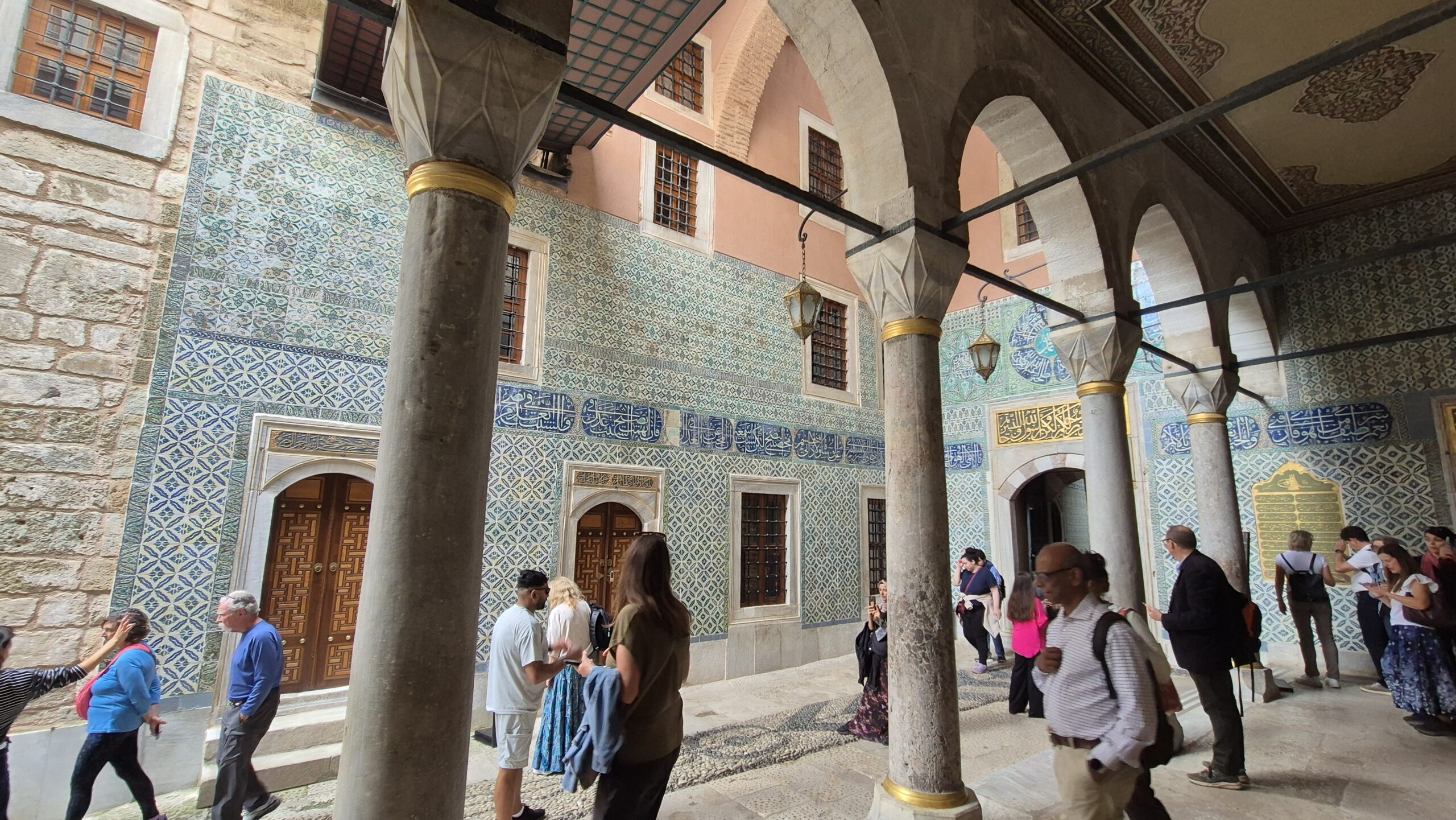
Another room for lounging in the harem. The elaborately decorated tiles seem to demand a lot of attention, as does the ivory inlay on the wooden doors. However, the extensive patterning almost puts one in a meditative state.
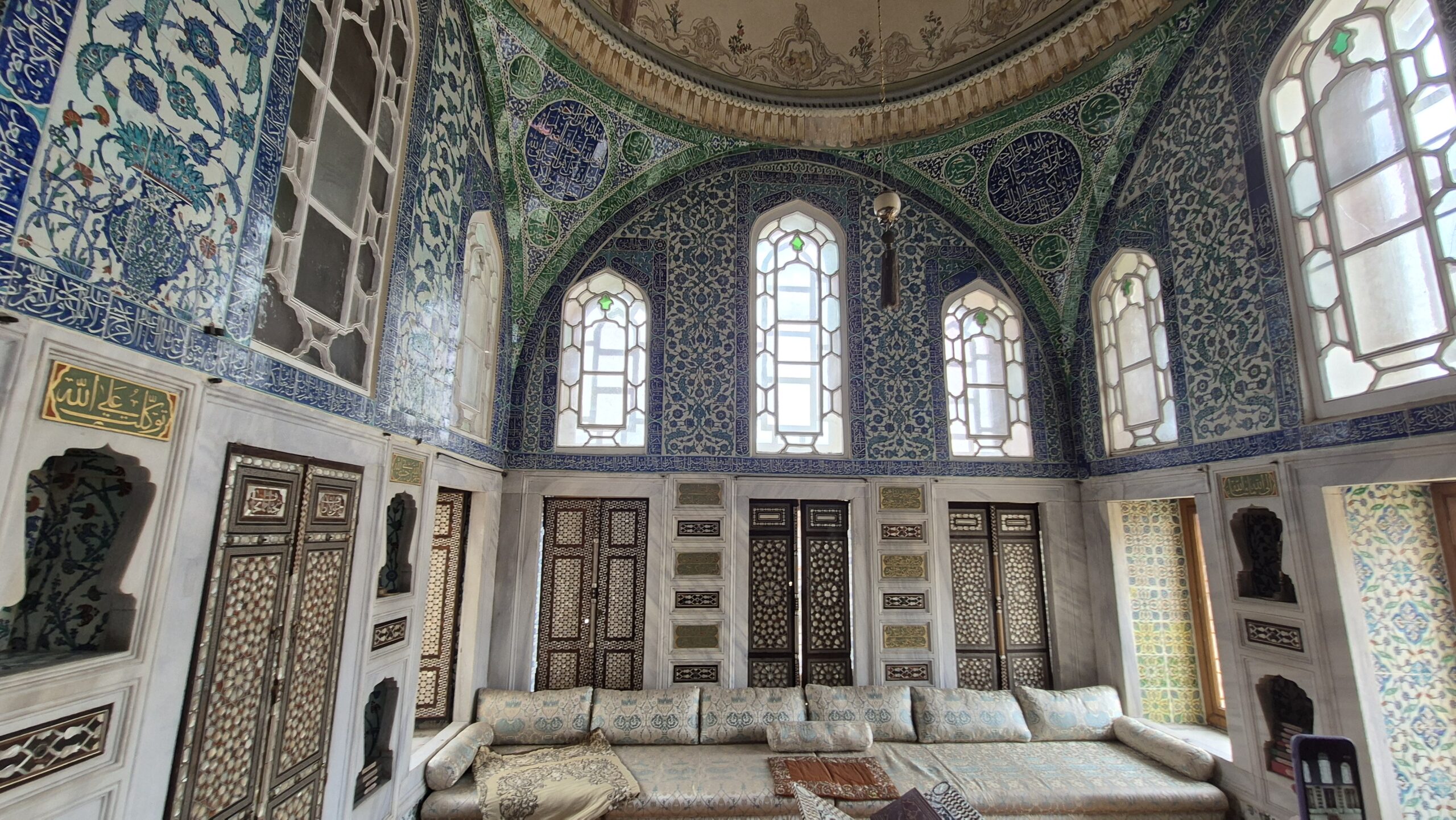
Another small harem room draws much attention for its elaborate decoration and paintings.
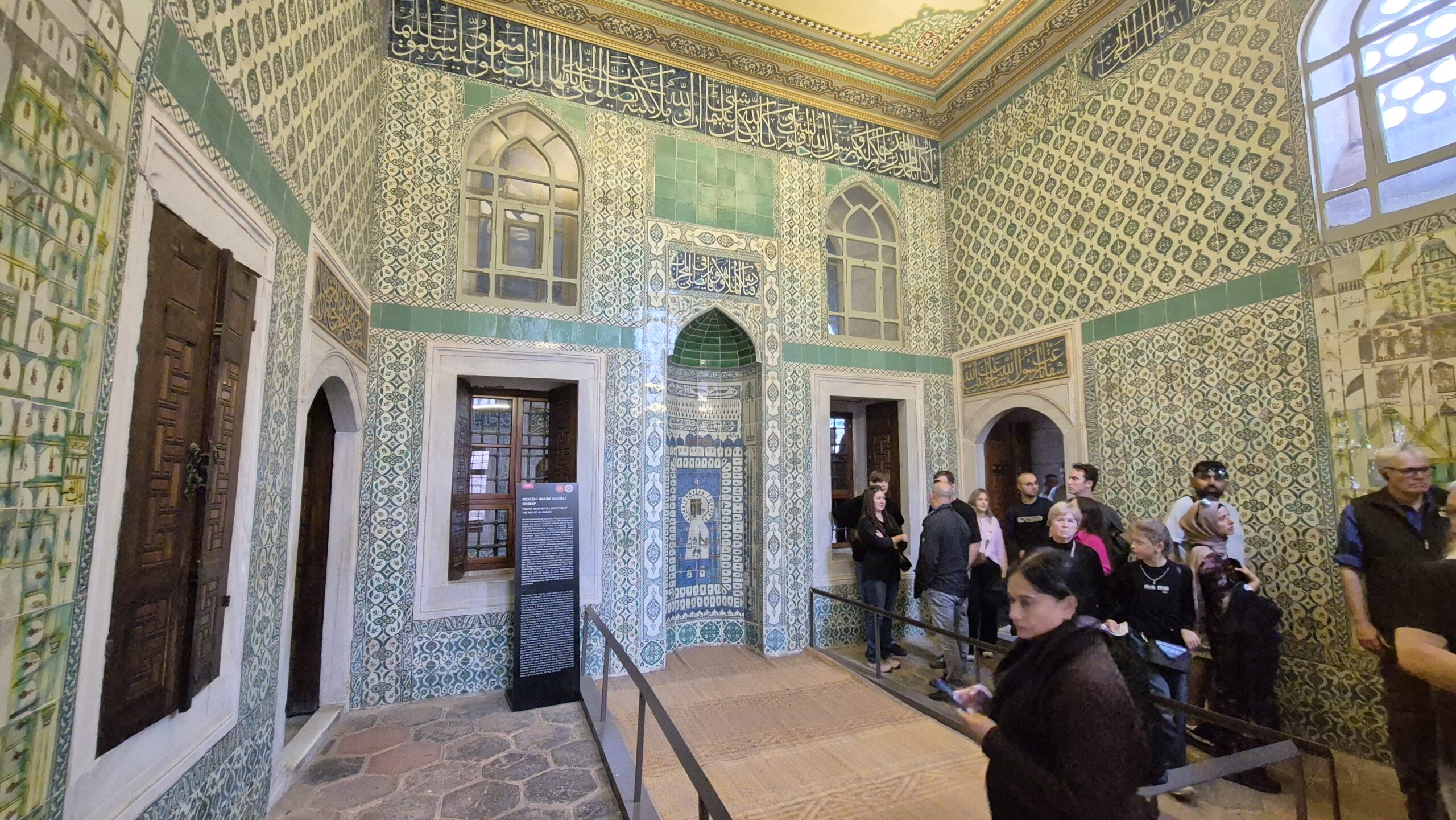
The Audience Chamber Hall, originally from the 15th century, was where the sultan formally received visitors – between the second and third courtyards.
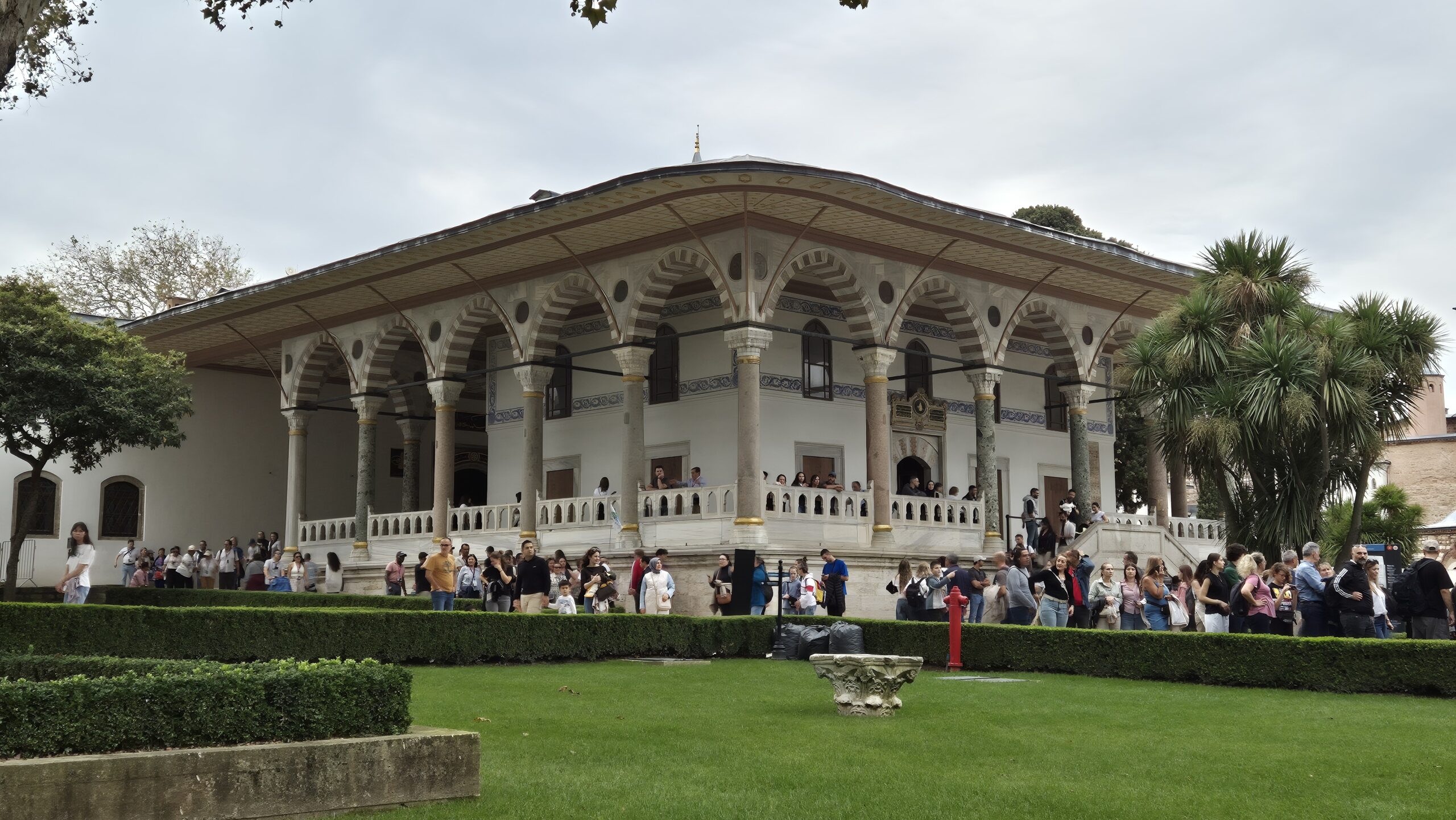
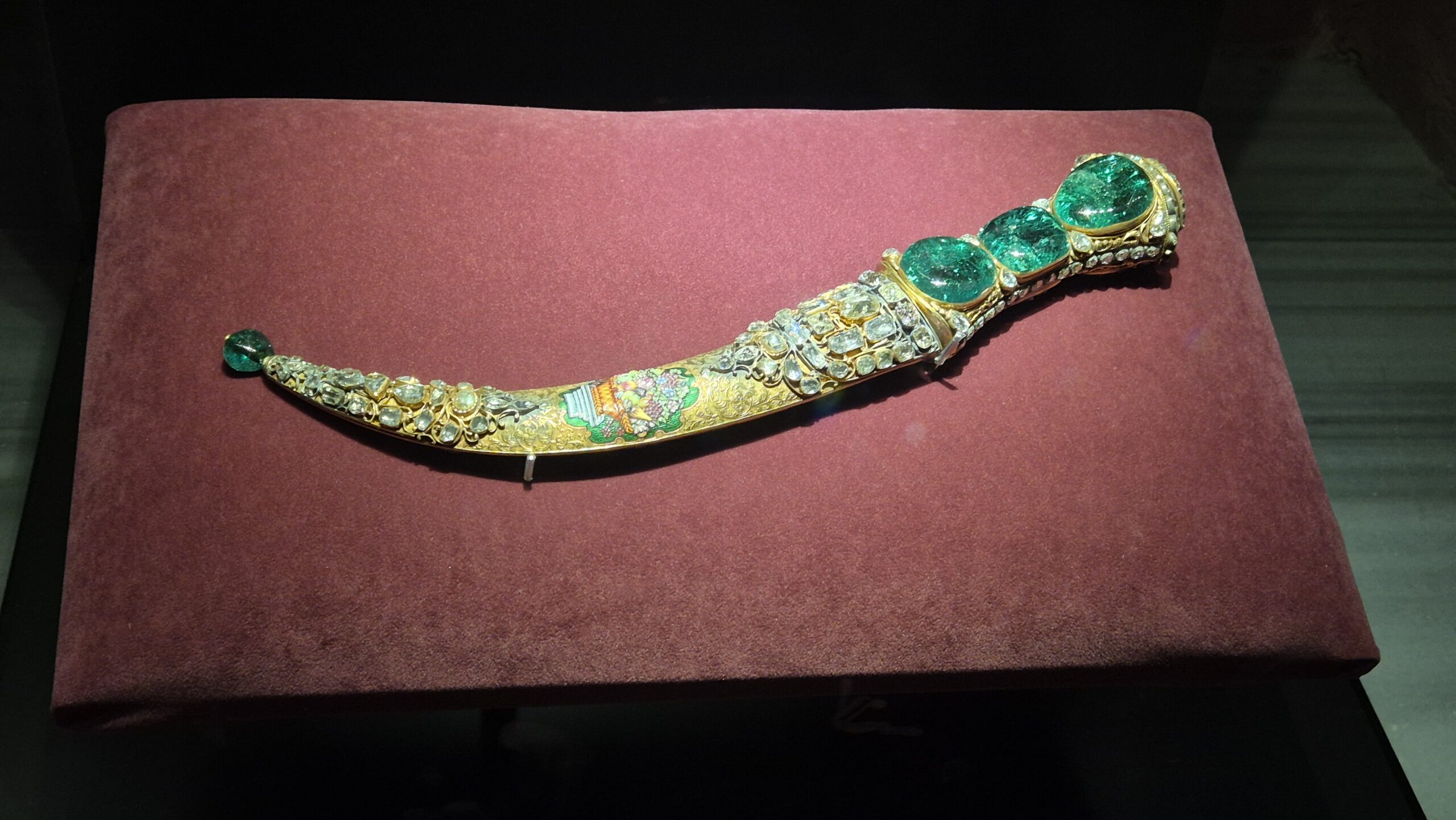
To see the riches of the Treasury, in the third courtyard, we needed to wait in an absurdly long line. Some of the bejeweled items were worth the wait, but overall the Treasury seemed a bit meager. Still, it was fun to see the famous Topkapi dagger, a mid-18th century gift from the Sultan to the Persian shah that included a 7-carat emerald. Some estimates say it’s worth up to 50 million dollars. This is the treasure at the center of the 1964 film Topkapi, where a host of thieves aim to steal the dagger.
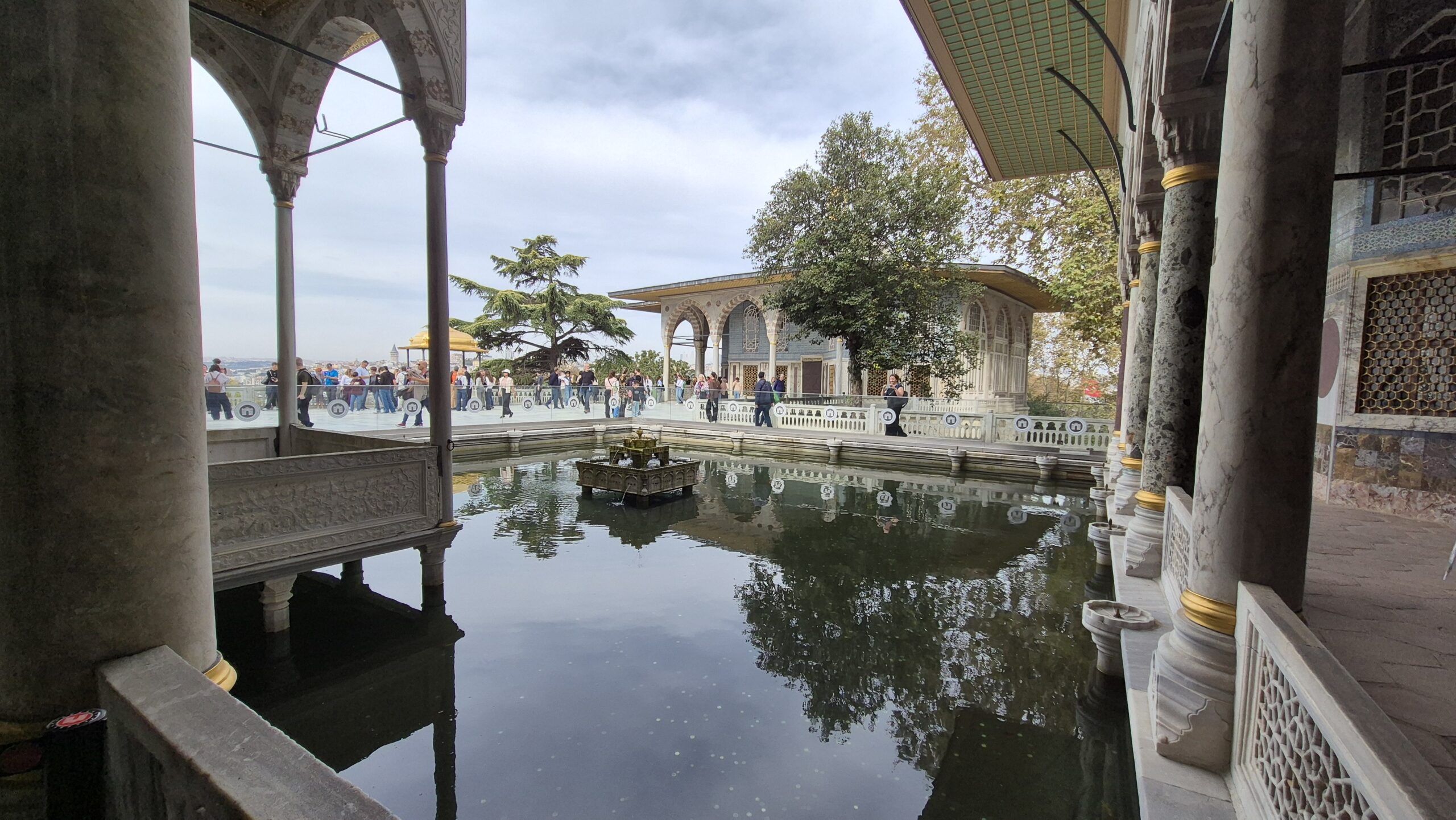
A view of one of the sultan’s pleasure palaces, or kiosks, in the fourth courtyard – the Baghdad Kiosk. Each was named for a famous conquered city in the empire.
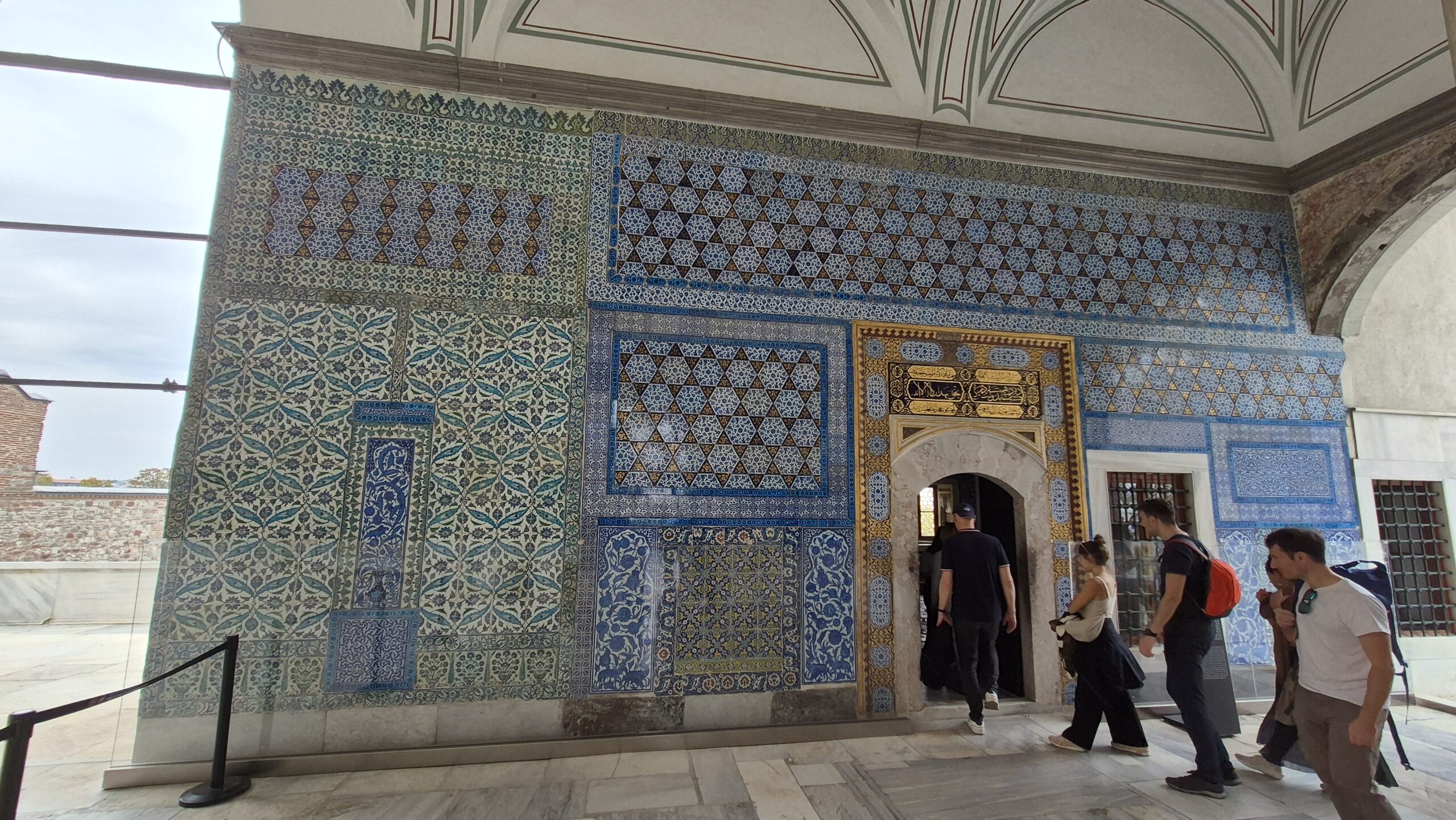
Another glorious, tiled wall in the fourth courtyard – outside the Circumcision Hall where, surrounded by splendor, the princes received that bit of surgery. The queue here is just for onlookers now.
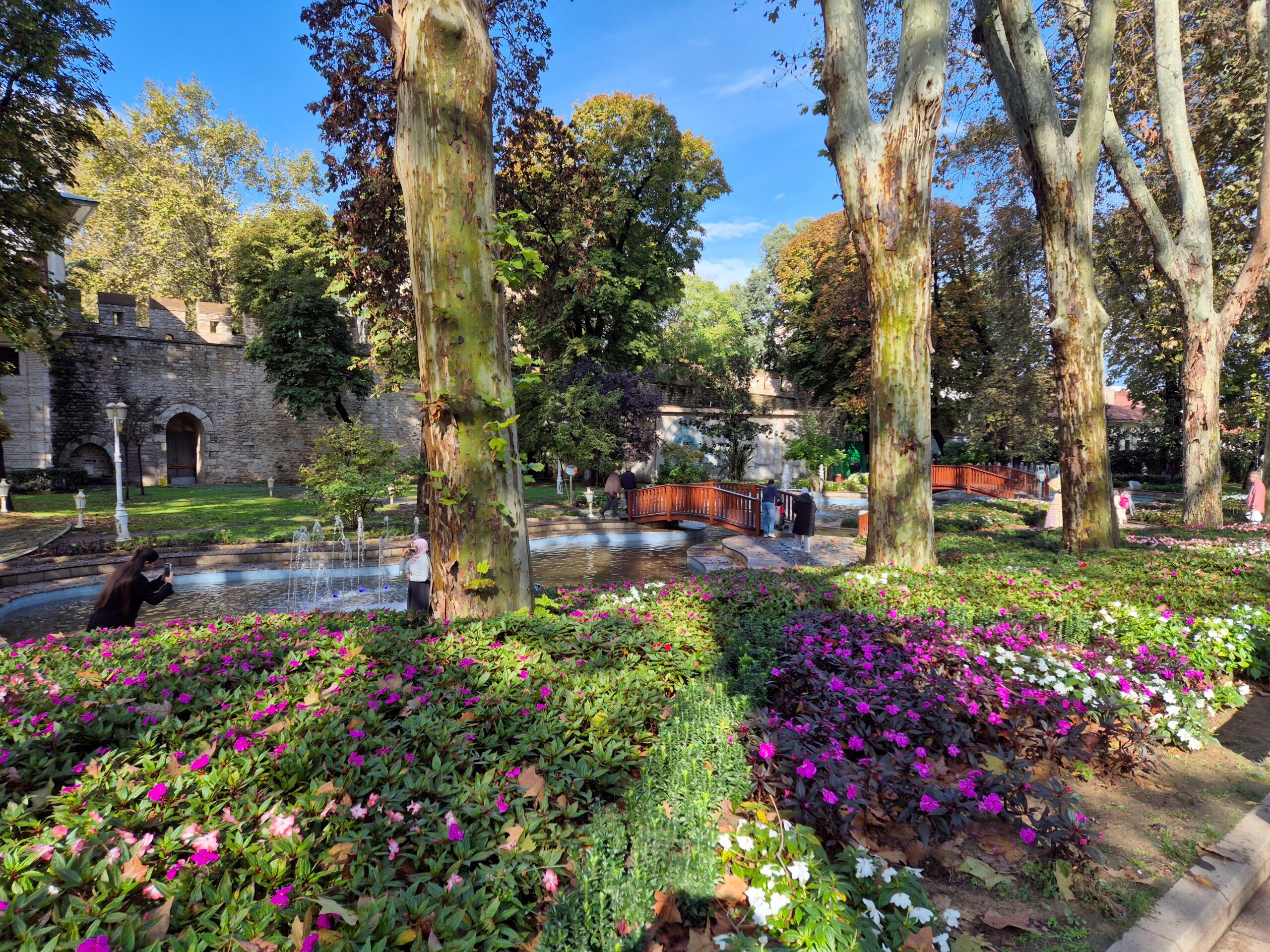
Just outside the walls of Topkapi Palace, the administrative center for the Ottoman Empire, is this lovely park converted from a former zoo. The released parakeets have since flourished across the city, pretty but noisy.
Cisterns
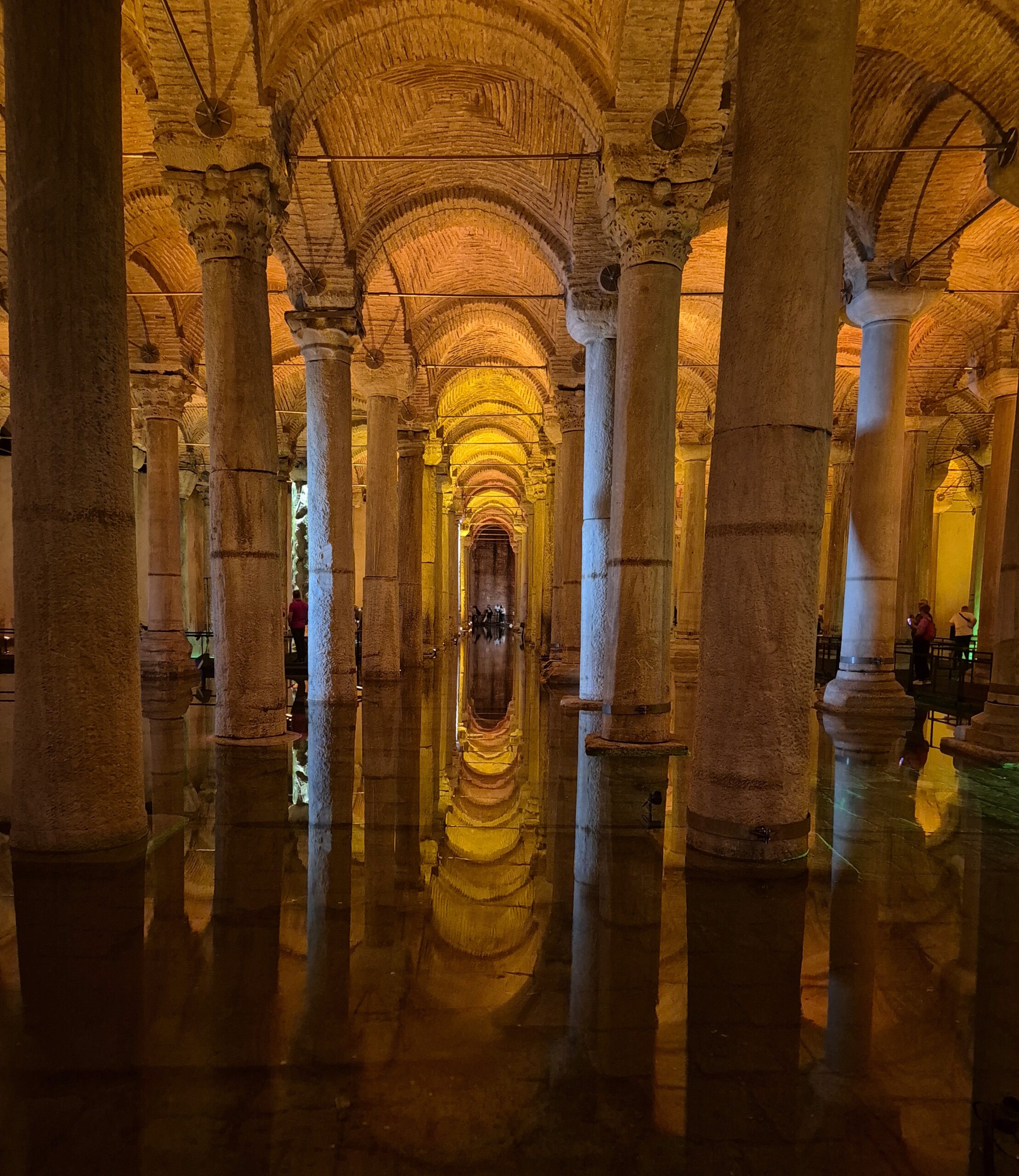
The many fountains built by Ottoman rulers around Istanbul sprang from the need to ensure fresh water for their people. Centuries earlier, Roman governors understood the same need. So deep below ground, the Holy Roman emperor Justinian of Constantinople (modern Istanbul) built a system of cisterns to capture water for the city’s supply. These caverns were engineered as huge, vaulted brick rooms supported by marble columns of nine-meter (about thirty-foot) height, stolen from earlier temples. Newly rediscovered in the 20th century and amped up with atmospheric lighting, these cisterns are a source of much delight for visitors. We walked two of them, the smaller Šerefiye and the renowned Basilica Cistern.
The Basilica Cistern is the grandest and most famous of the water storage bins, featured in many movies over the years. This image gives a sense of the scale of the thing, as well as its marvelous engineering.

As the lighting changes in the Basilica Cistern, added perspectives appear, such as this golden view when the water below the walkway becomes a gleaming mirror. By the way, the water is less than a foot (1/3 meter) deep, which wouldn’t quite work for movie-making thrills.
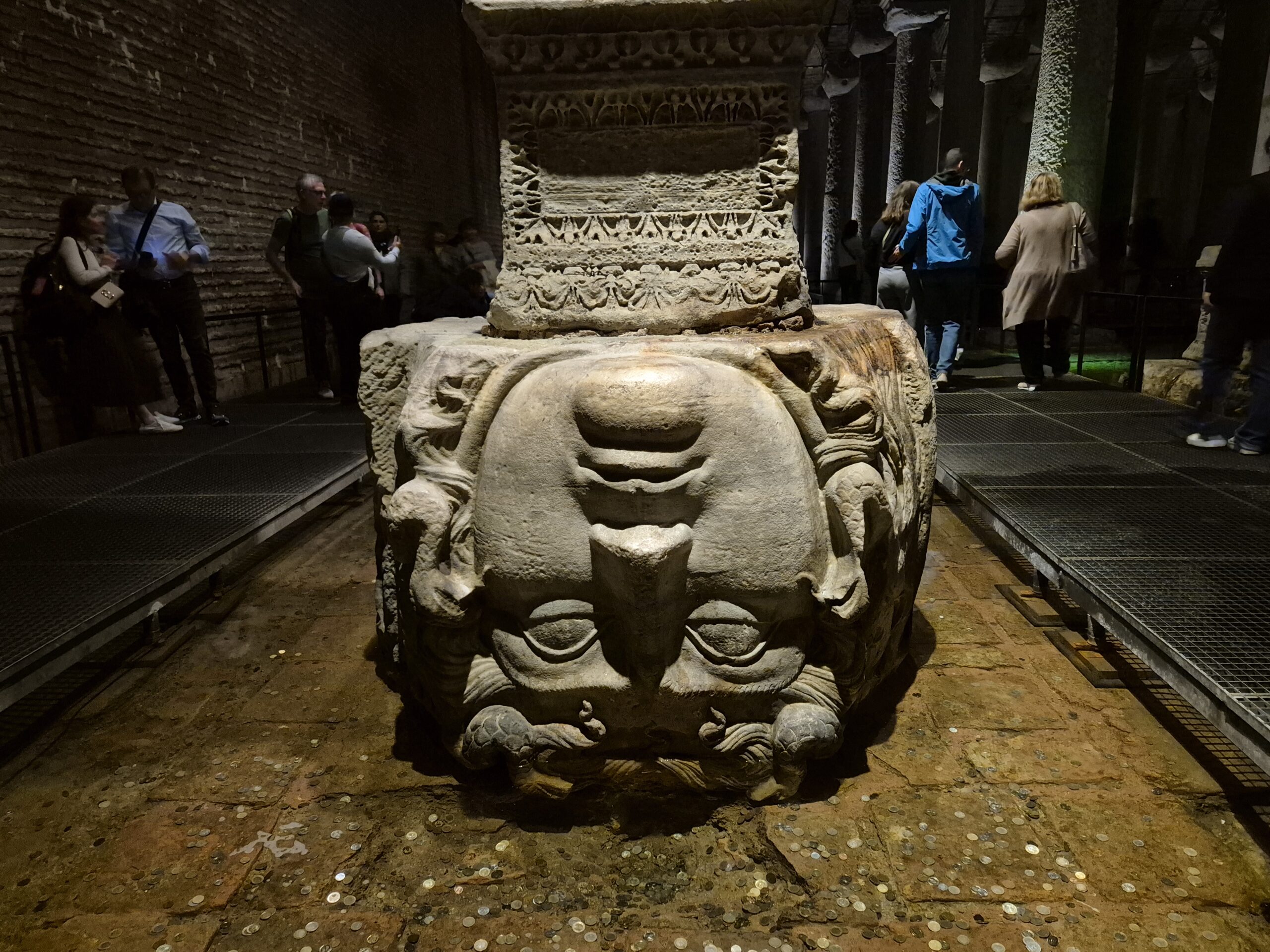
This is the best kluge, mashup, or remix of columnar bits at the Basilica Cistern. A short marble column stands on a decorated base and finishes with the massive, inverted head of Medusa. Her head is beautifully decorated with her signature serpent tresses, stony eyes, and a bitterly pursed mouth. Legend says she was installed upside down to counter her power to turn men into stone. Women get a free pass.
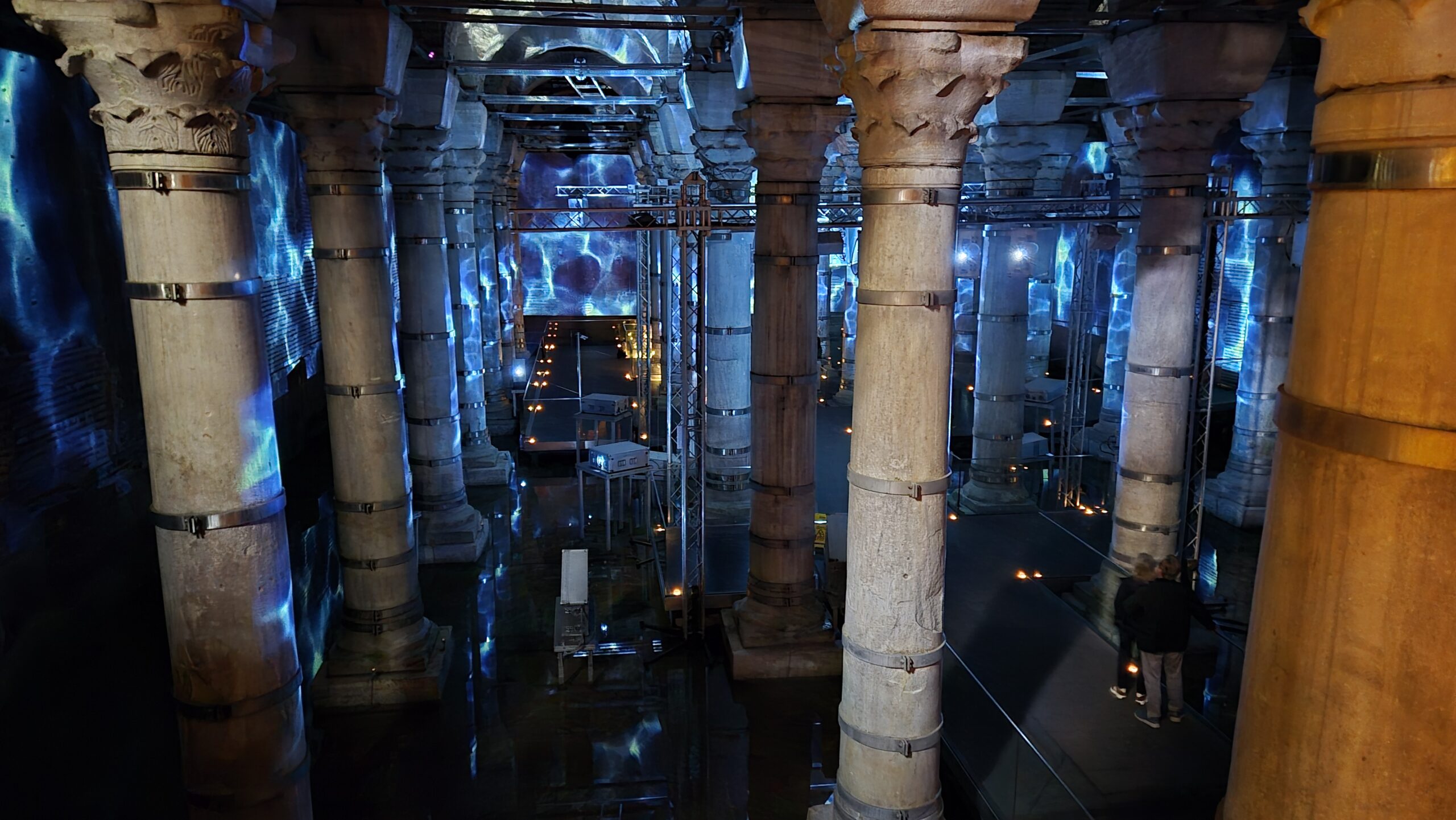
The Šerefiye cistern makes up for its smaller size (about 10% of the notable Basilica Cistern) with a surprisingly entertaining sound and light show that reviews the history of the city. But the same basic elements are there – the regular array of columns with leafy capitals supporting the brick ceiling.
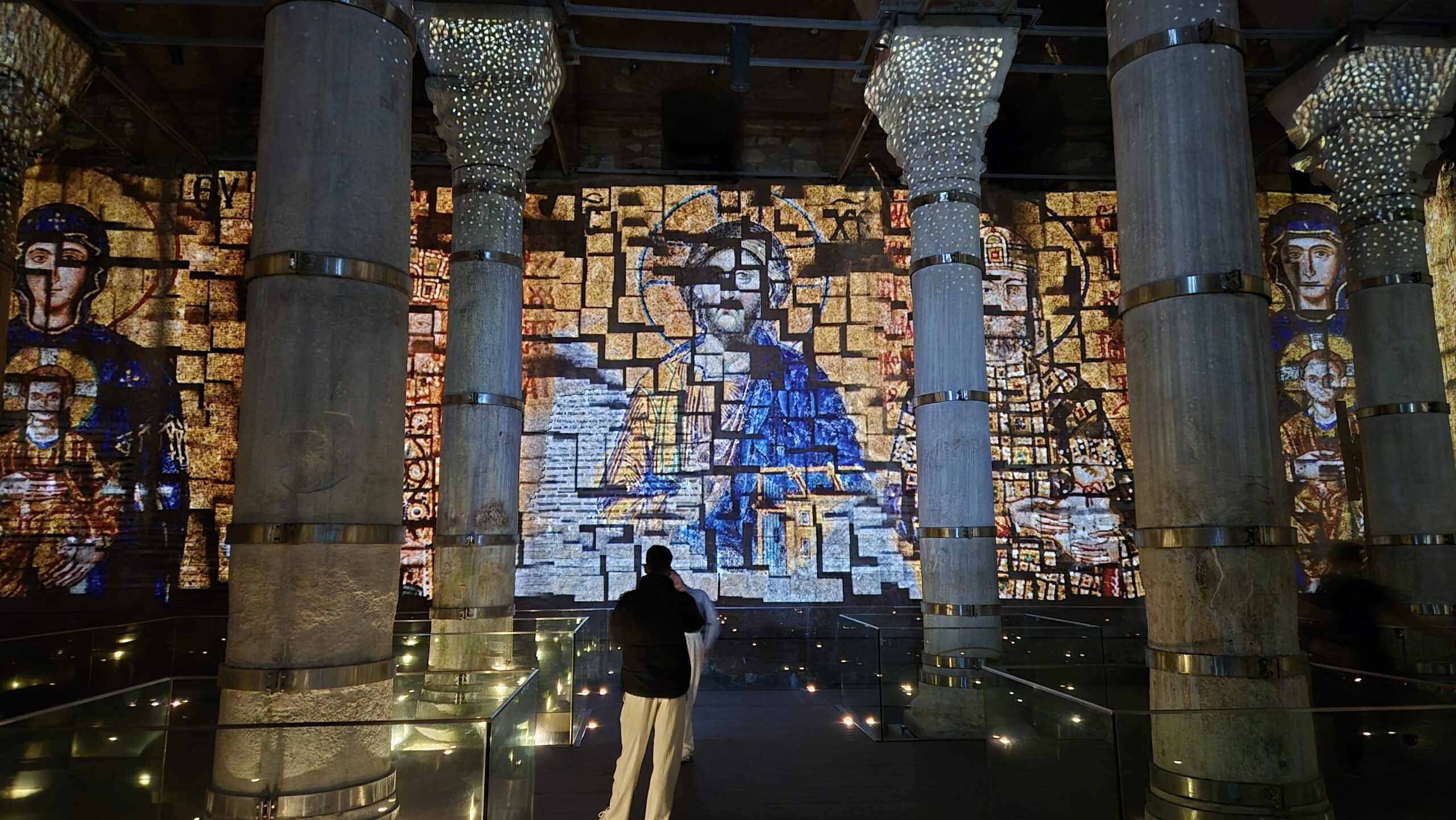
Mosaics from the Hagia Sophia church add more splendor to the light show at Serefiye.
(To enlarge any picture above, click on it. Also, for more pictures from Turkey, CLICK HERE to view the slideshow at the end of the itinerary page.)