
In brief: Whether celebrating ancient practices or inviting devotion to Allah, the Kazakhs proudly herald their independence and depth of culture.
In the 4th century BC, the Scythian or Saka people occupied the area now known as Kazakhstan. Consistent with their religious beliefs about the afterlife, they buried their important people in tumuli. The dead were presumed to advance to another realm, so they were richly adorned in gold and entombed with swords and other necessities like horses (also arrayed in gold) for the afterlife. To them, the metal represented fire and the sun, elements of the heavens.
The first discovery of a gold-bedecked person was in 1969, in the southern part of the country. This so-called Golden Man was buried with some 4000 pieces of gold jewelry on his clothing. Since then, eight men and women have been found by archeologists, each outfitted in costumes with golden decoration.
On display in the National Museum in Astana is a recreation of the outfit of the original Golden Man and some of the others found. Their adornments and other objects disinterred from the tumuli make for a stunning collection of artifacts in gold at the museum. Their quality rivalled the work we saw from the early Colchis artisans in Georgia.
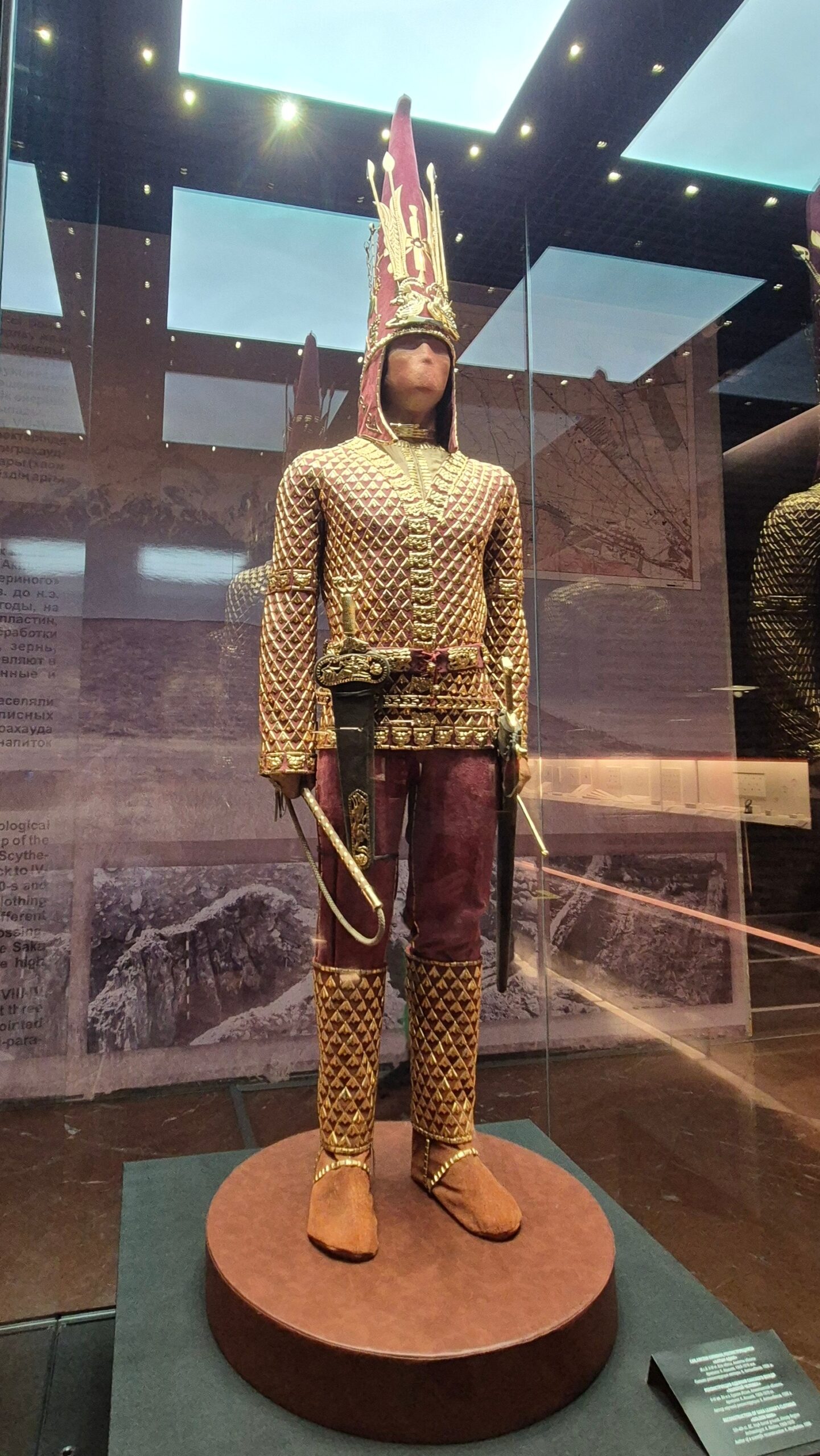
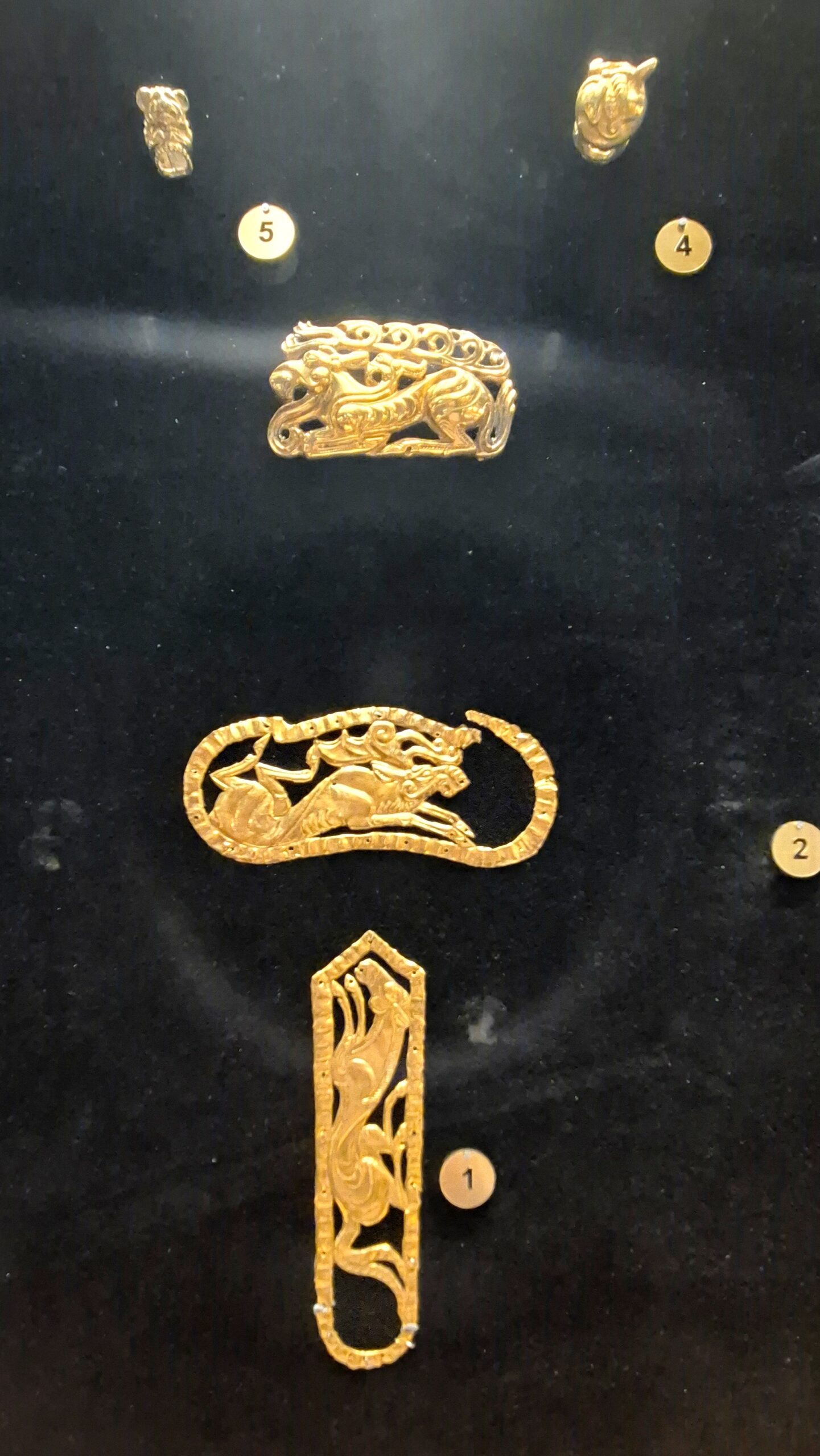
Here are some examples of Golden Man jewelry from the tumuli: at top left, a tiger head; top right, a wolf for a buckle; then down to a deer’s head buckle, and then below two parts of a dagger sheath in the form of a deer and horse.
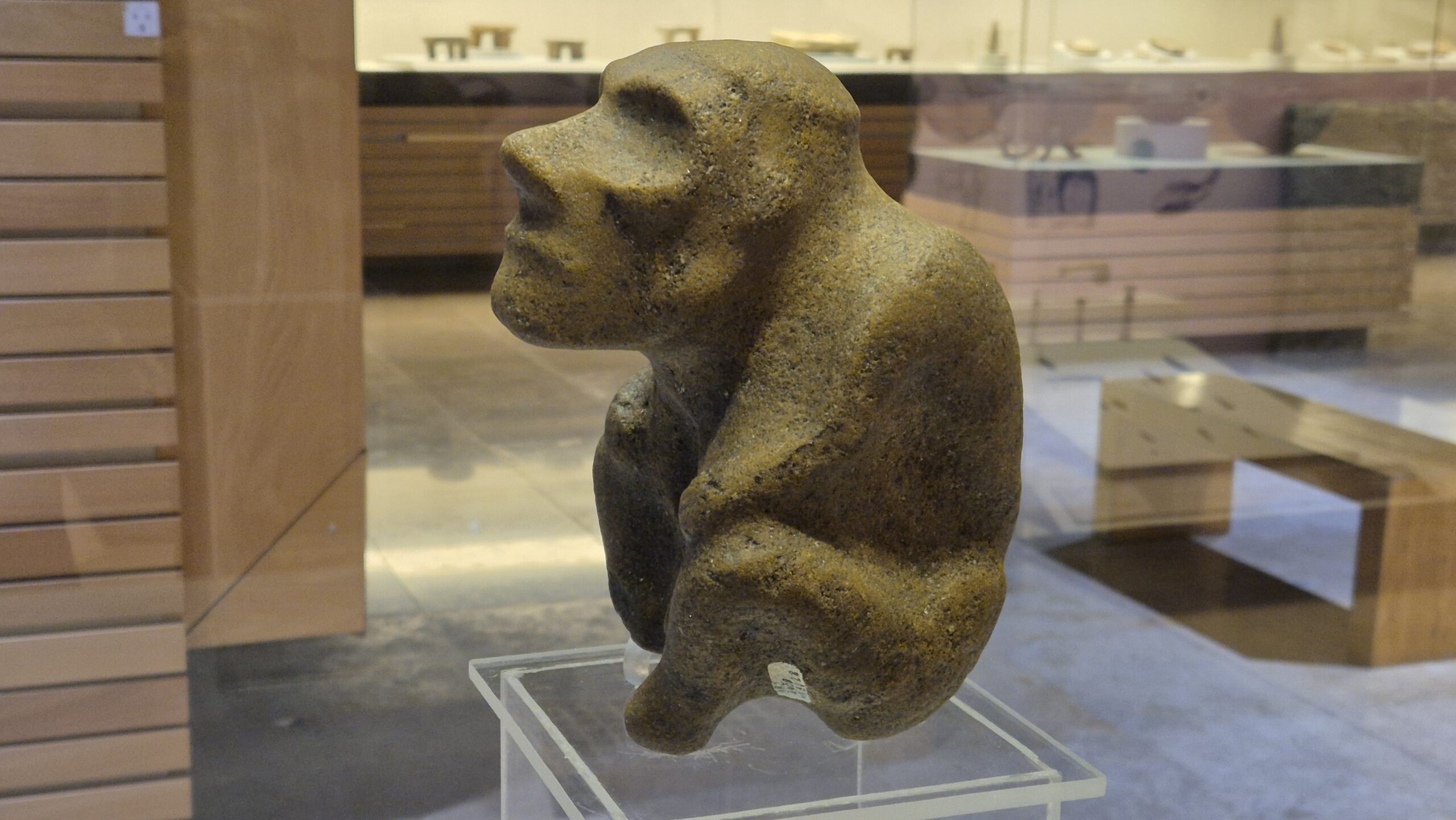
And three more examples at the Museum of past artistry. The first, a stone image from 2nd to 3rd millennium BC…the Tobol Thinker. Rodin came later.
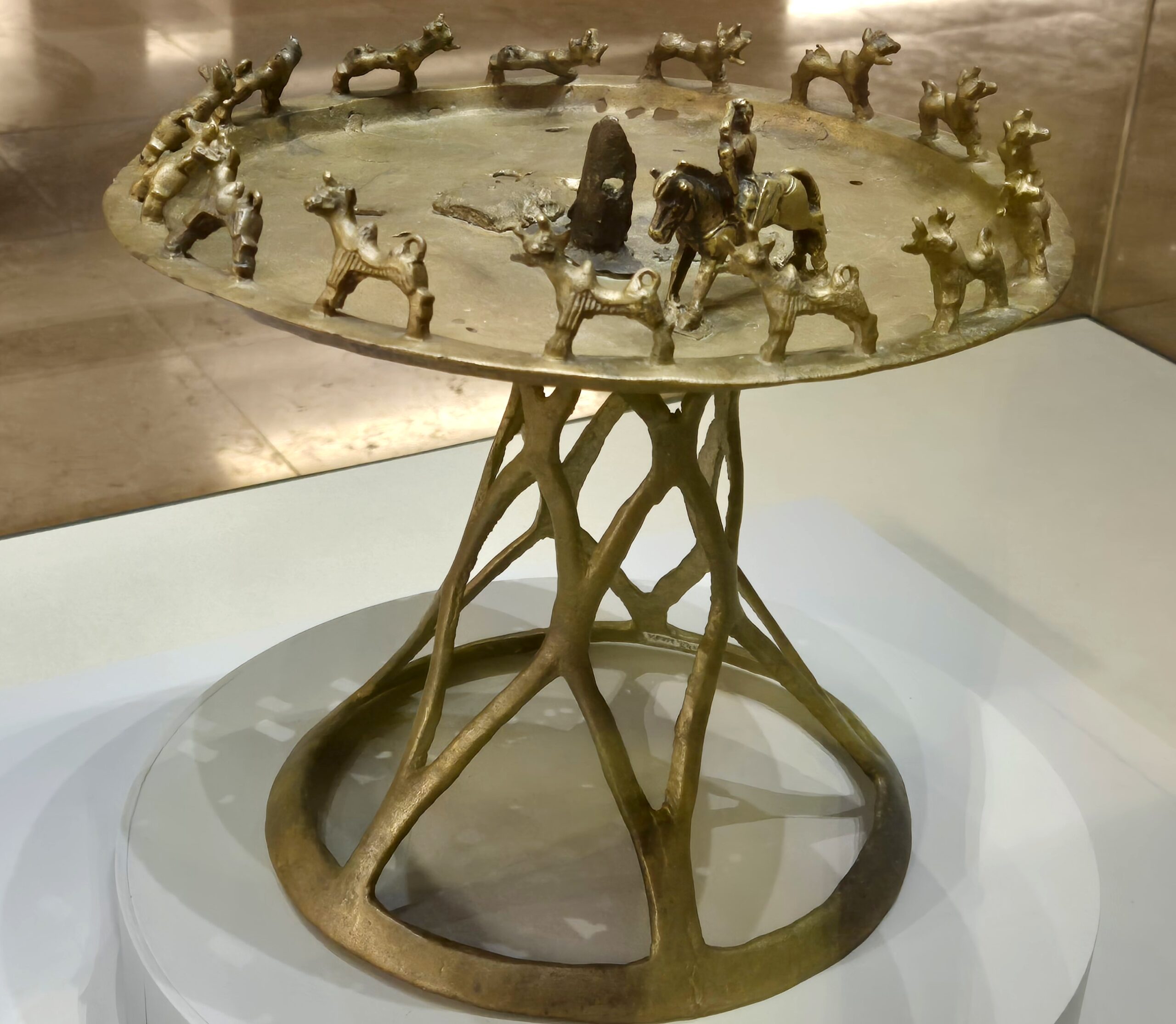
Second, a bronze hunting scene with archer and zebu bulls, 6th to 2nd century BC, in the form of a candle holder.
Lastly, a much more recent example of carpeting craft where woolen pieces are pressed into others for depth, in a kind of inlay.
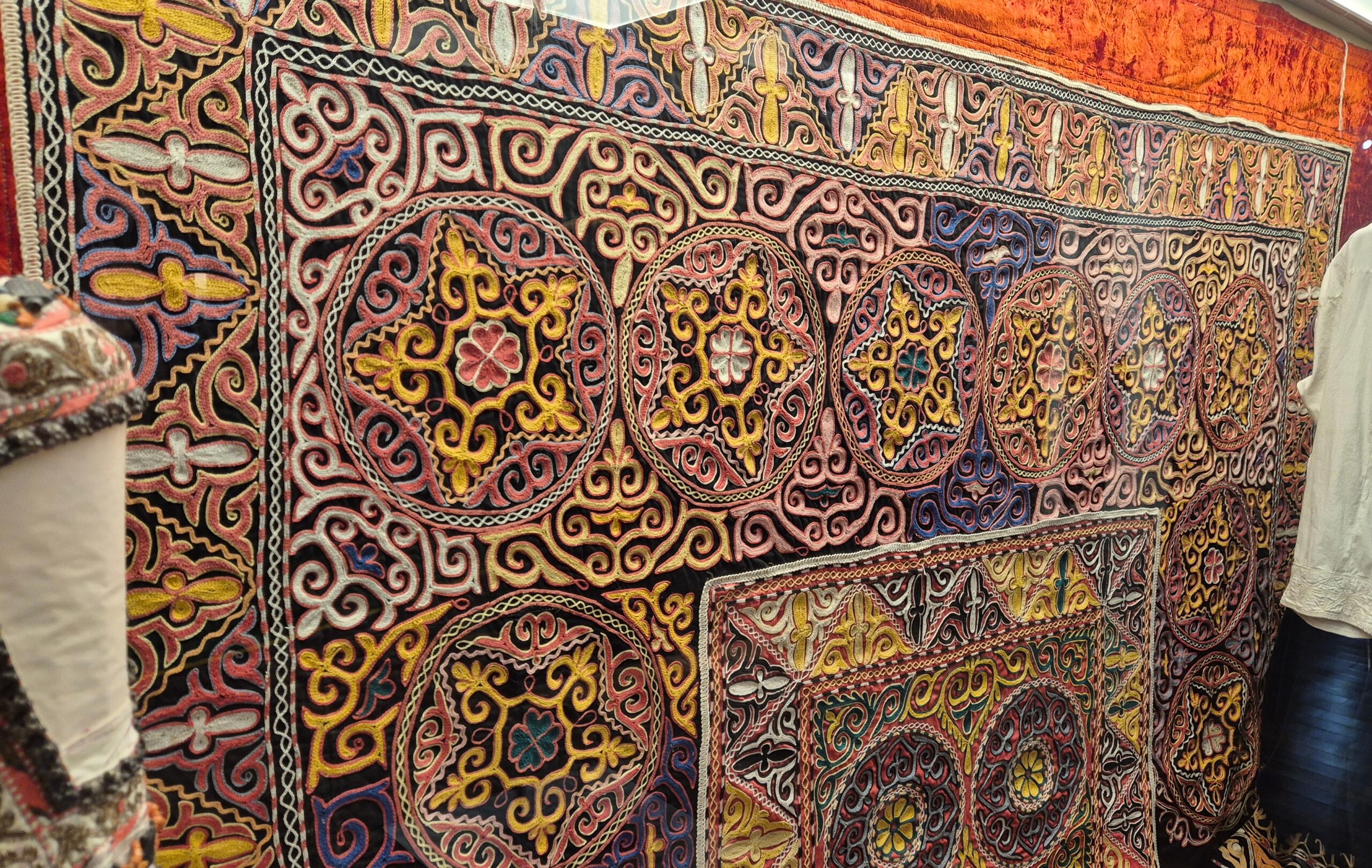
Beyond the historic value of the find, the Golden Man became a symbol of independence after the breakup of the Soviet Union and a touchstone for the Kazakhs of their cultural richness. Soon after, the Golden Man toured the world to dazzle people and herald Kazakh independence.
The more recent origins of the culture, however, were the 6th century influx of Turkic nomads and the 13th century conquest of the region by the Mongol Empire. That mixture became the Kazakh Khanate by the 15th century, whose leaders converted to Sunni Islam and are still celebrated today in the country. Since then, the Kazakh land has received an unending immigrant flow of over a hundred ethnicities and religions, making for a very rich pot of Kazakh stew.
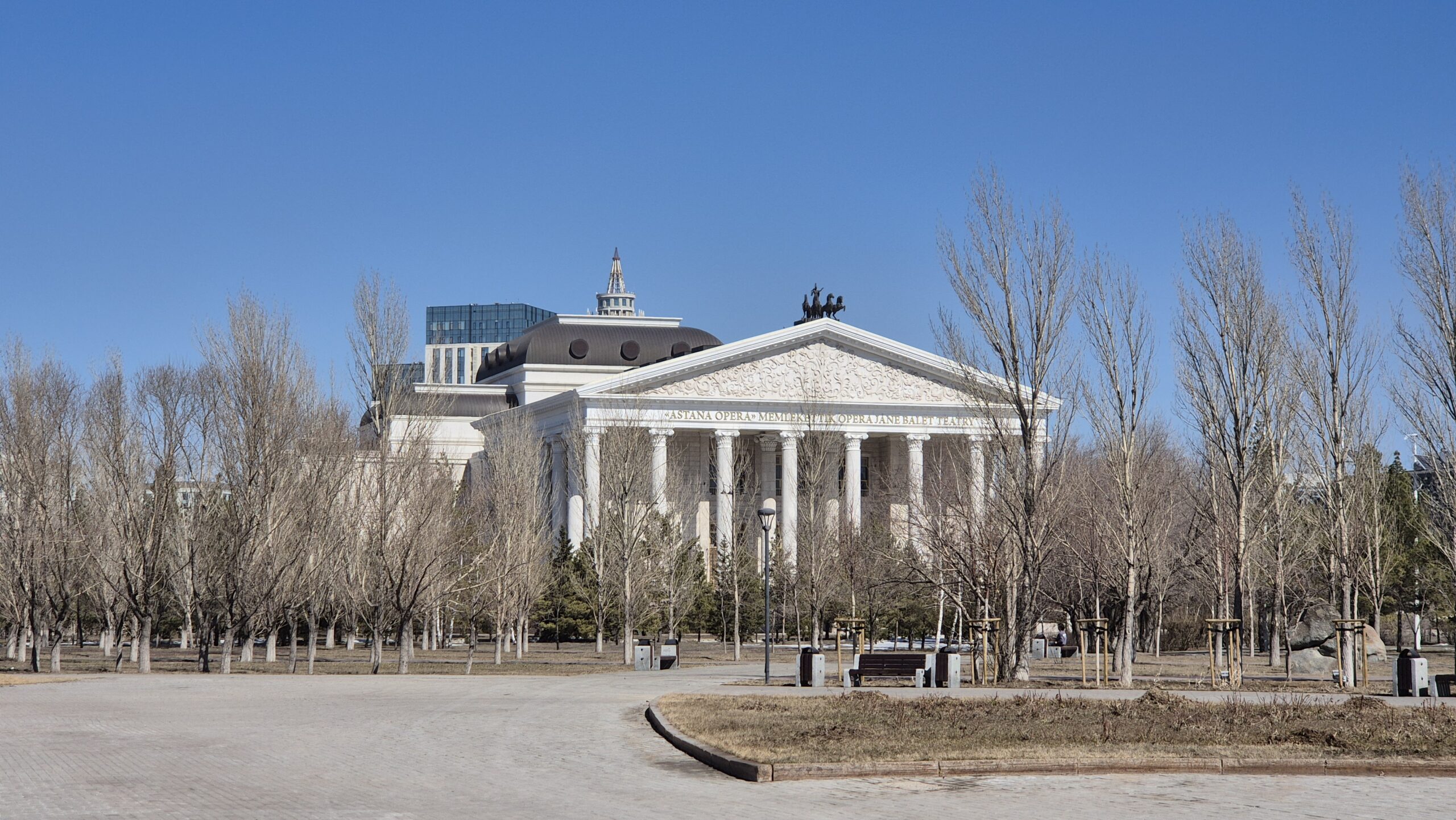
Even so, we were a bit surprised to find resources devoted to encouraging excellence in many areas, beyond just the free universities. Across Astana, there are “palaces” devoted to ballet training and performance, theatre and musical arts, as well as sports training of all sorts including martial arts.
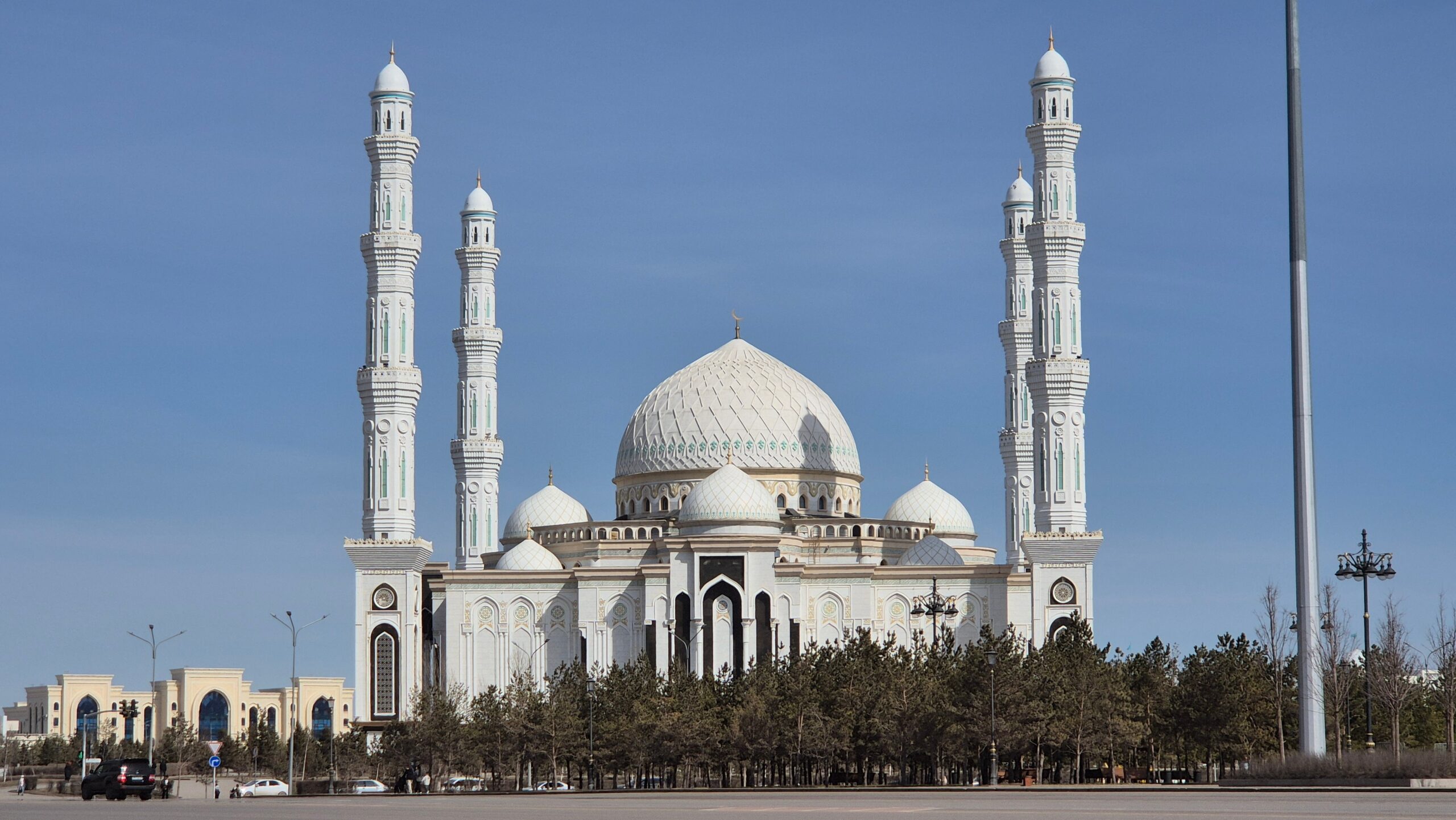
We were not as surprised to find two large mosques in Astana, rivalling those of the Middle East in grandeur. 70% of the country is Muslim – mainly Sunni but without the rigorous strictures practiced in Saudi Arabia. Older and villager women often wear a white wrap as a head covering, but, in the cities, others generally dress like westerners. Prayers draw people perhaps once a day or on Friday alone. Alcohol and cigarettes are quite common.
The slightly older Hazret Sultan mosque accommodates five to ten thousand people for Friday prayers. It is an elegant and inviting structure just off Independence Square in the new city center, with a hostel and canteen for visitors.
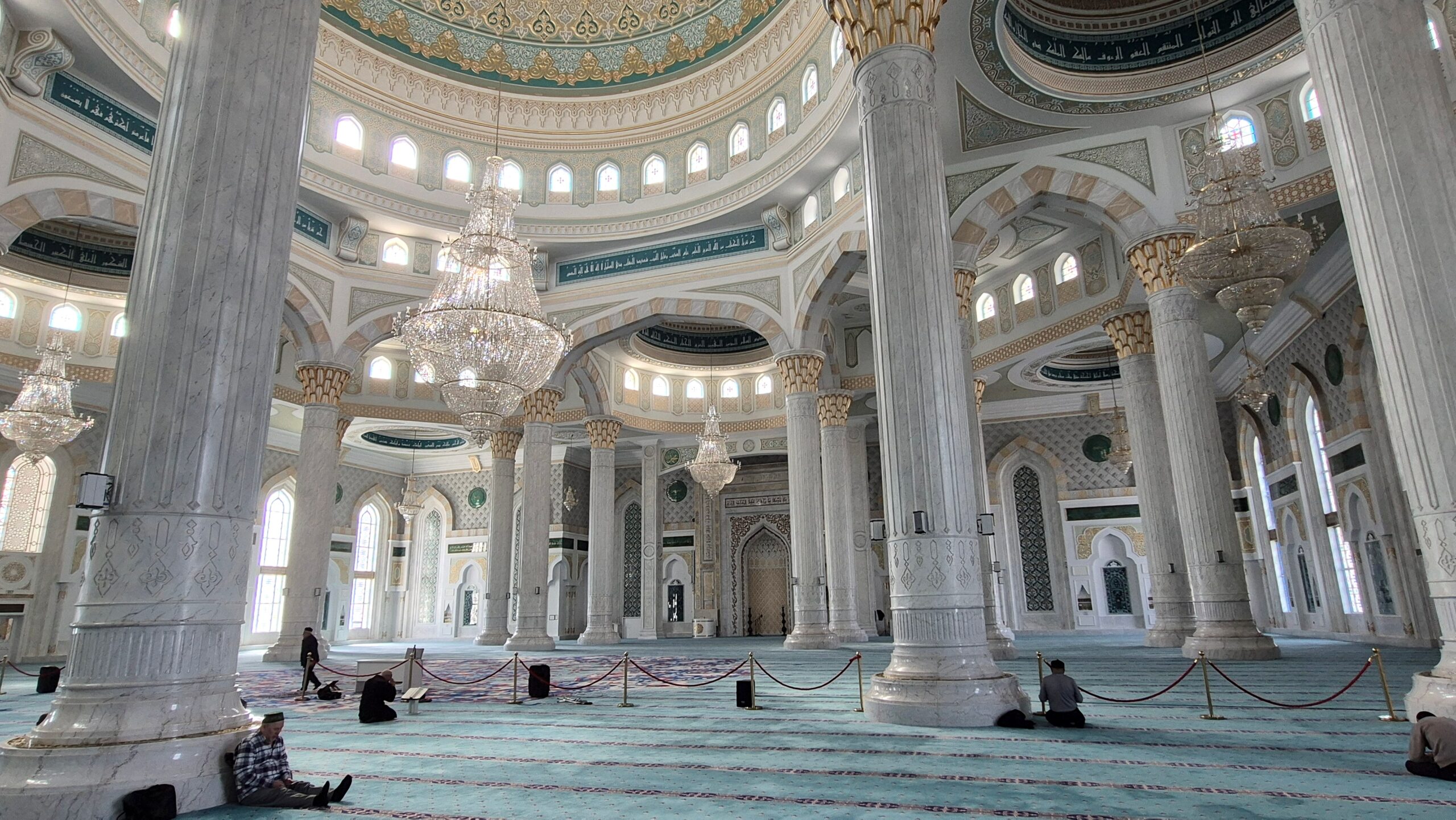
As prayers rise to heaven, the inside rises from below in muted fashion to display increasingly gilded designs up to the effusive dome in the colors of the Kazakh flag.
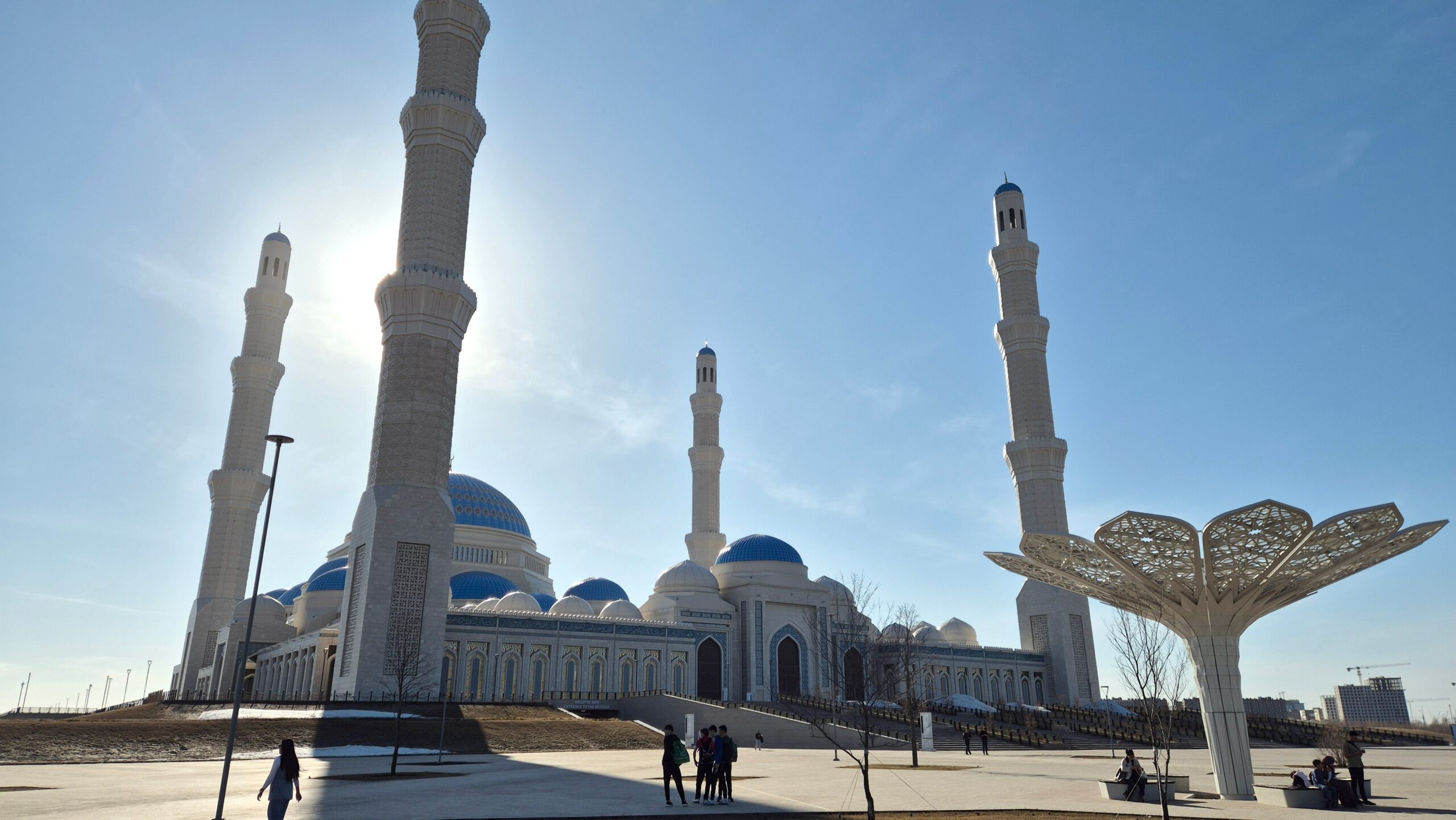
The newer one, the Grand or Republican Mosque, sprawls on a huge tract at the outskirts of today’s Astana. This mosque offers space for up to 250,000 to pray, plus an inexpensive dining hall, with extensive underground and above ground parking. As the largest in Central Asia, it has become a symbol of the Kazakh role in Islam. Its understated grandeur from the outside includes slender skyscraping minarets and numerous blue domes.
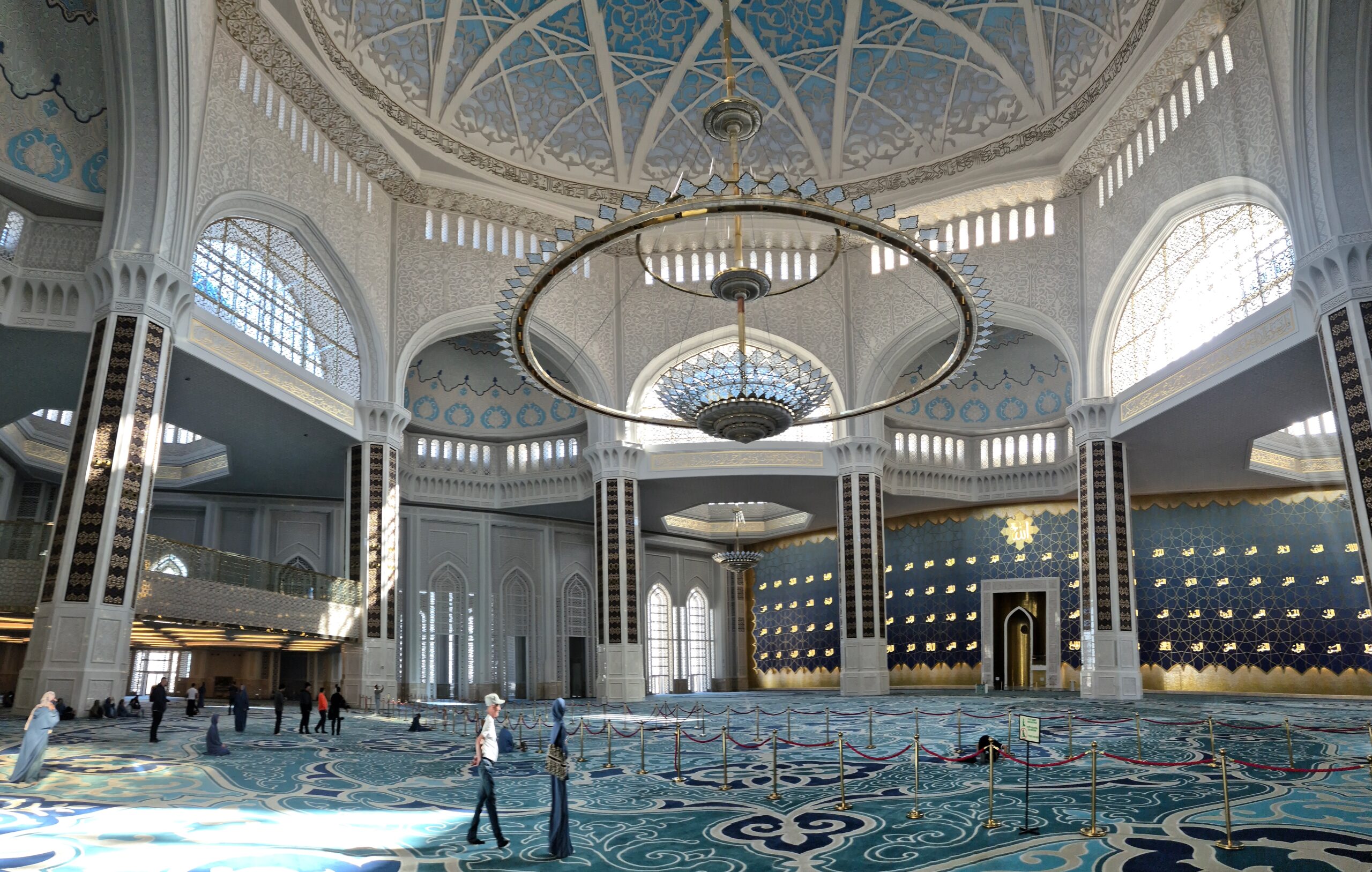
Inside, the usual open space of the vaulted central prayer hall also feels muted, with subtle decoration in traditional Kazakh patterns along the walls and columns, as well as throughout the massive woven carpet.
Whether celebrating ancient practices or opening space for devotion to Allah, the Kazakhs continue to take pride in their independence, national history, and depth of culture.
(To enlarge any picture above, click on it. Also, for more pictures from the five Stans of Central Asia, CLICK HERE to view the slideshow at the end of the itinerary page.)