
In brief: Our drive through western Turkey first covered the north and central regions – a land of ancient empires, magnificent artistry, and geological wonders.
Hittite Empire & Ankara Museum
The Hittite Empire – possibly the same as noted in the Old Testament – dominated the region around Turkey and Syria from the 16th to the 13th century BC, about 3500 years ago. We had sampled some of its culture and artistic work at the Museum of Anatolian Civilizations in Ankara. So, we took the opportunity to visit their capital city and World Heritage site, Hattusa, to learn more about them.
At Hattusa, we found the remains of a huge city once encircled by 6.5 kilometers (about 4 miles) of walls, some of which have been restored alongside imposing gateways. We wandered the extensive stone foundations of their wooden temples and residences. We explored natural rock caverns with vividly carved images of rituals performed within. And we found amazing artifacts from their culture in several Turkish museums. For us, it was an exciting journey back in time.
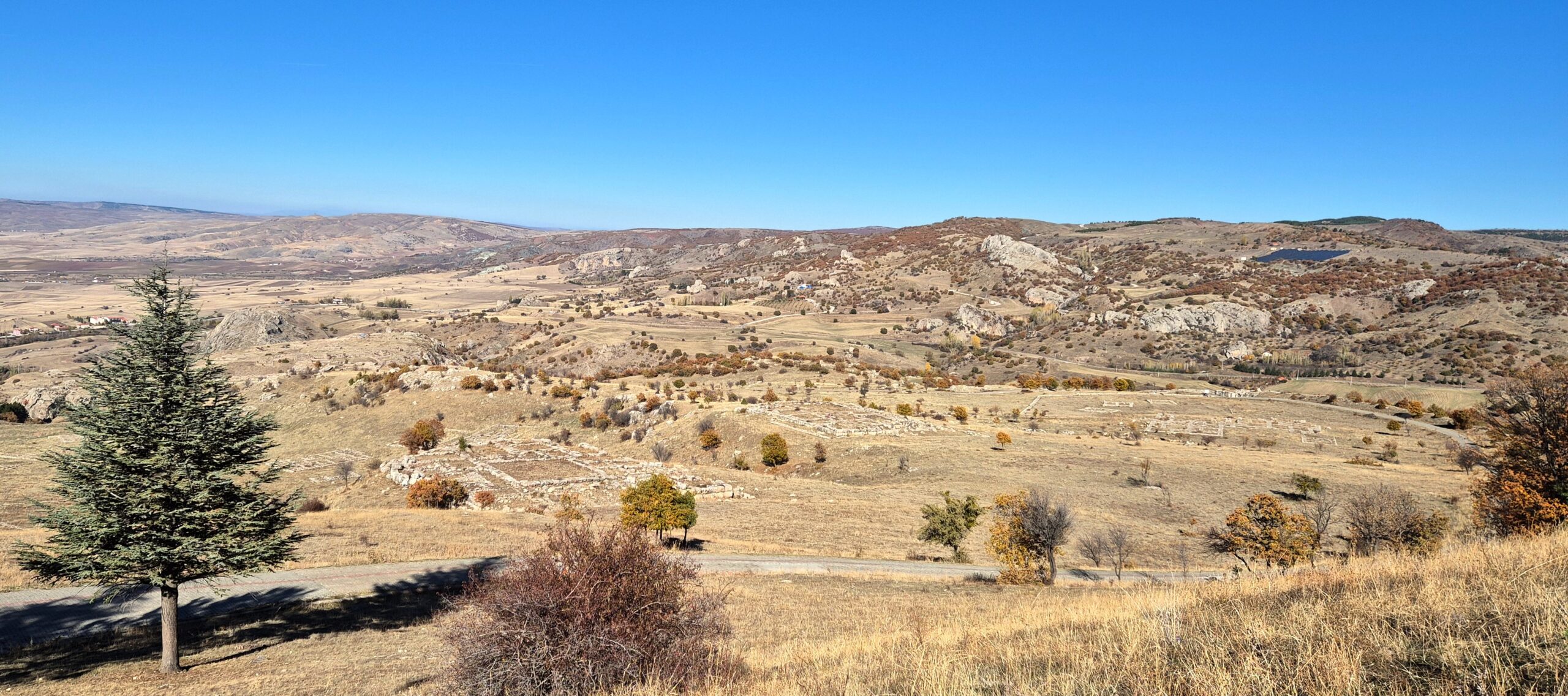
A re-creation of the walls surrounding Hattusa based on a small model found in a Hittite grave. The perimeter measured about 6.5 kilometers, or 4 miles. Archeologists estimate the population peaked at 5000 – 10000.
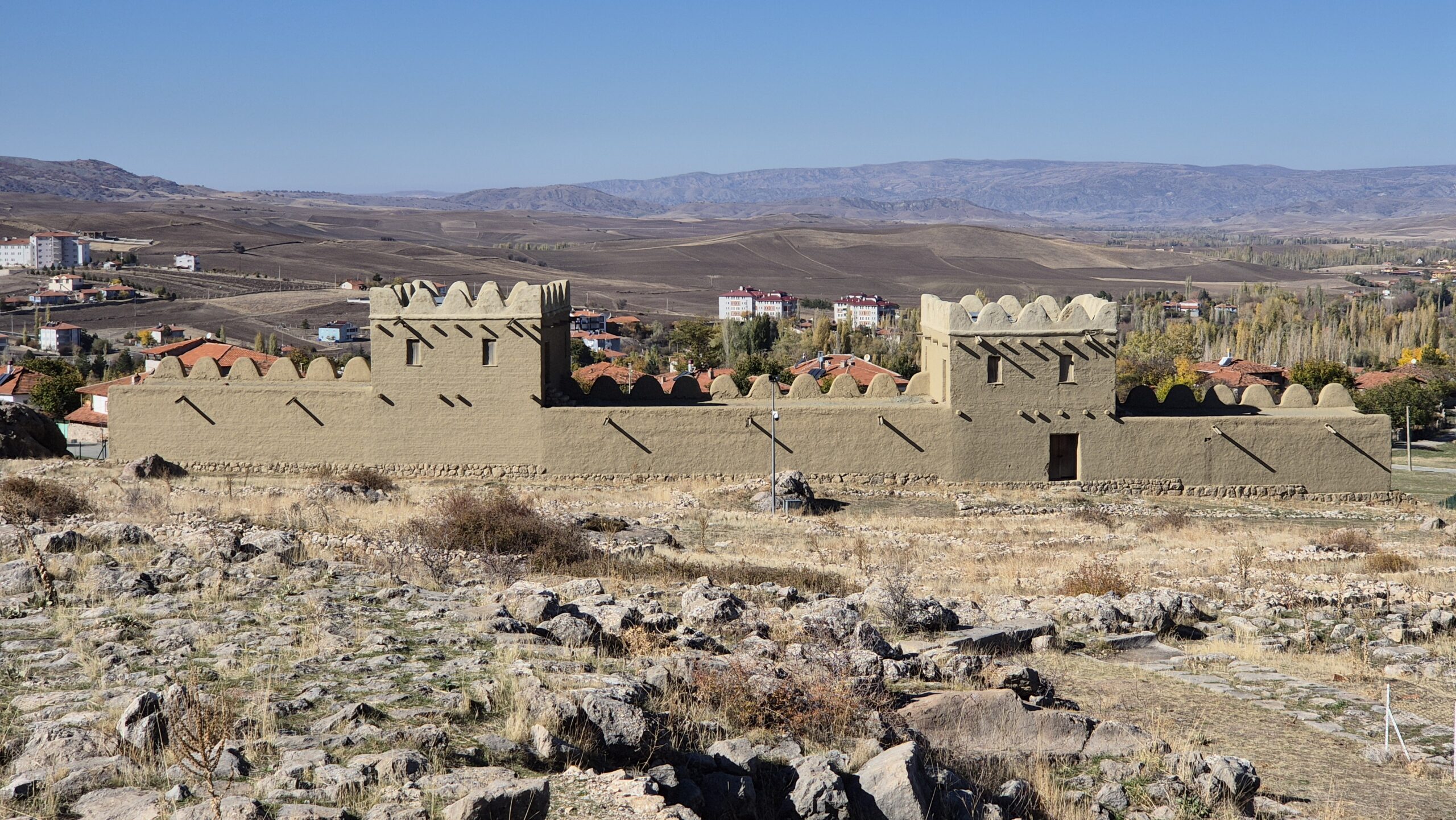
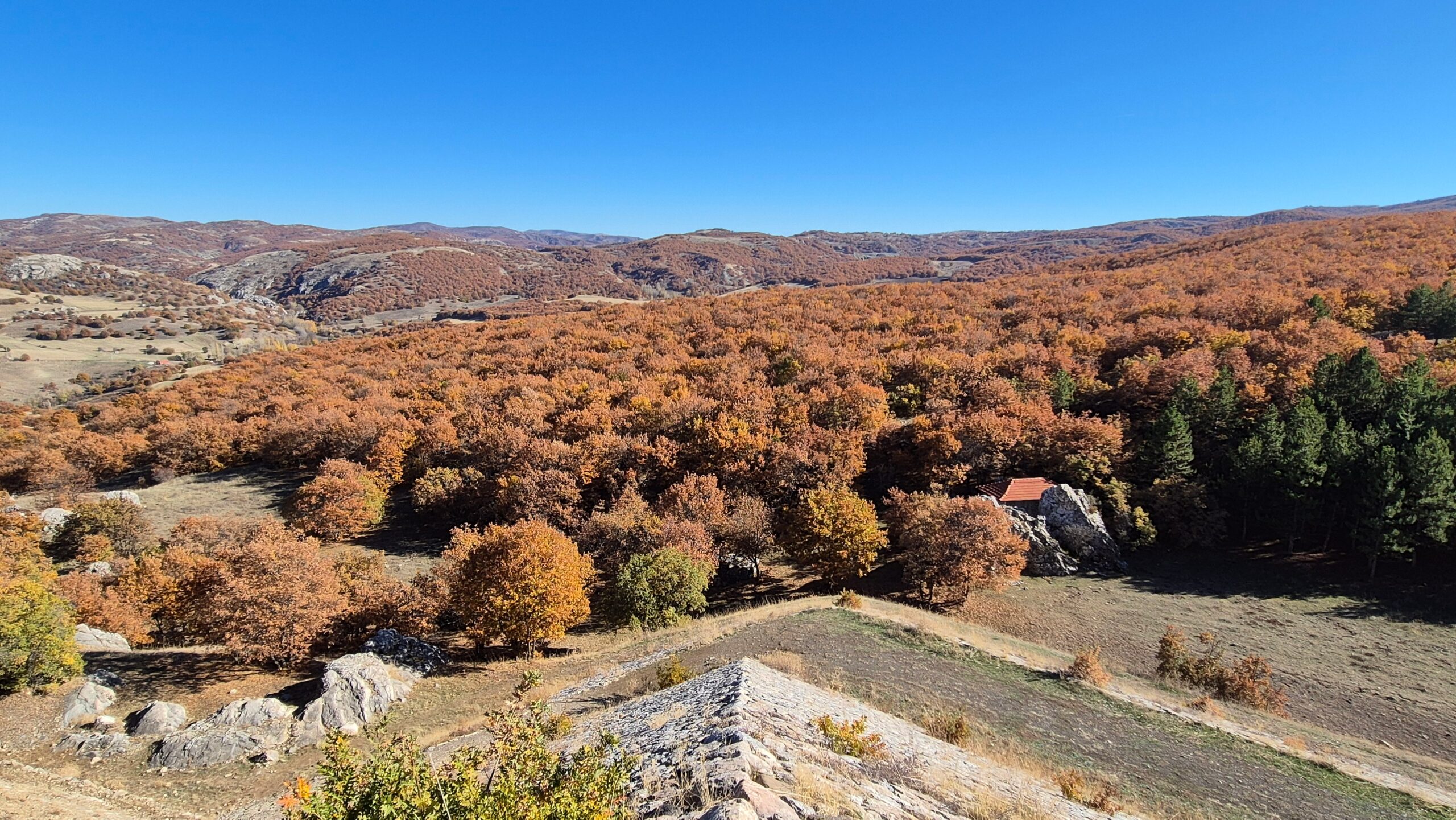
Hattusa occupied the whole basin seen in this landscape. Especially in the center and toward the right, you can see the foundations of several large temples.
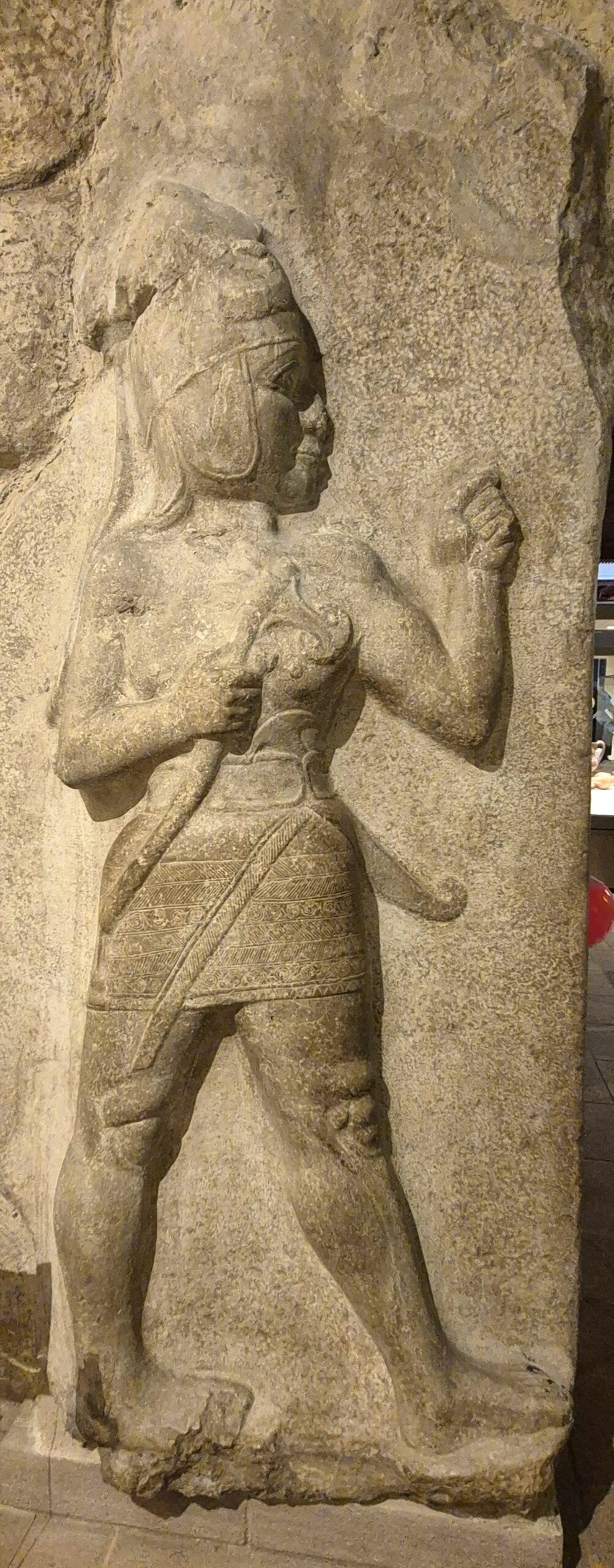
A life-sized relief of the God of War that once flanked the King’s Gate at Hattusa, from the 13th or 14th century BC. (Museum of Anatolian Civilizations, Ankara)
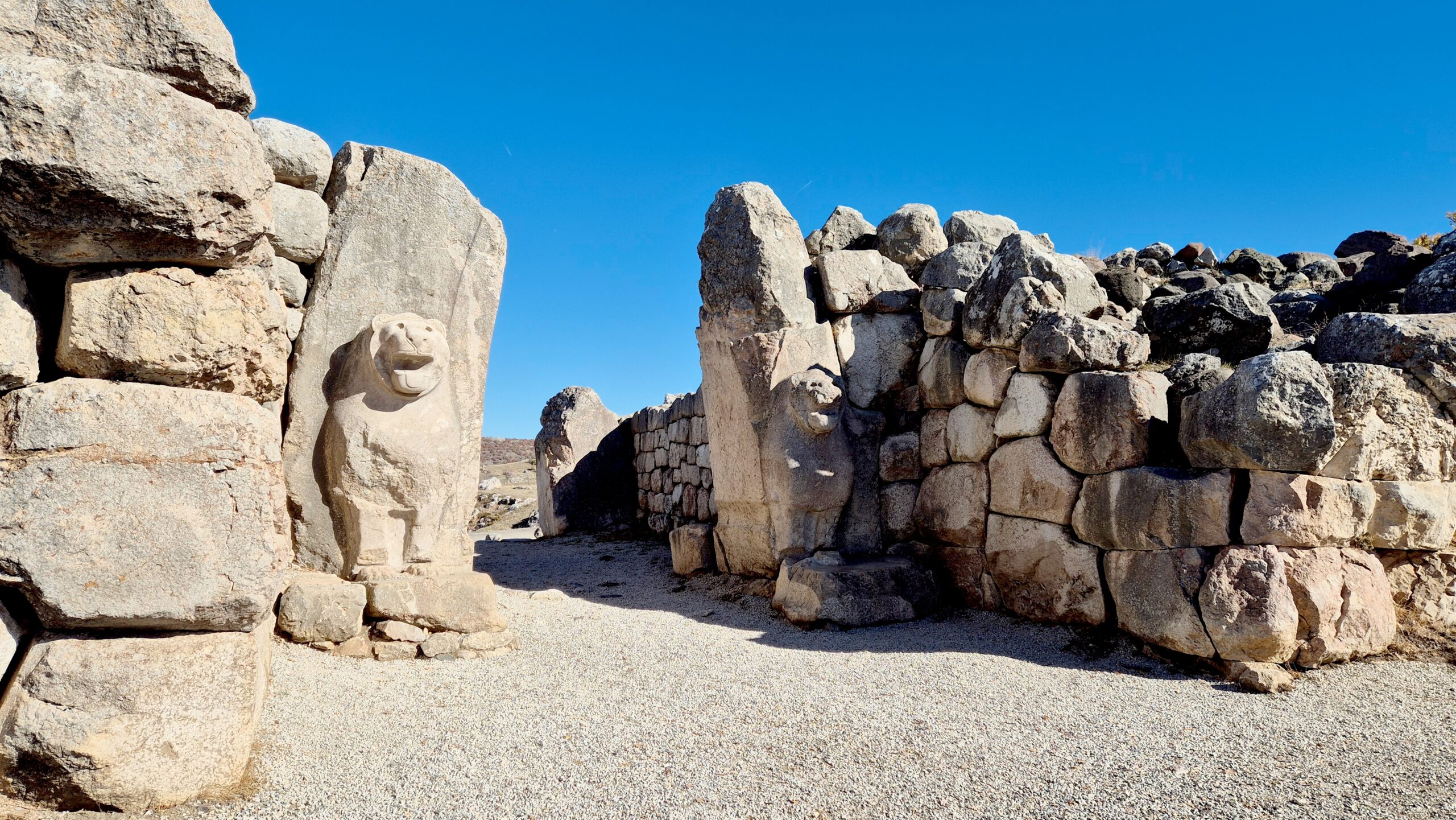
The Lion’s Gate at Hattusa, showing the huge stones of the original walls and the arched entrance. The right lion is the original from 3000 years ago, on which we could still see decorative trim etched into it, and the left one is restored.
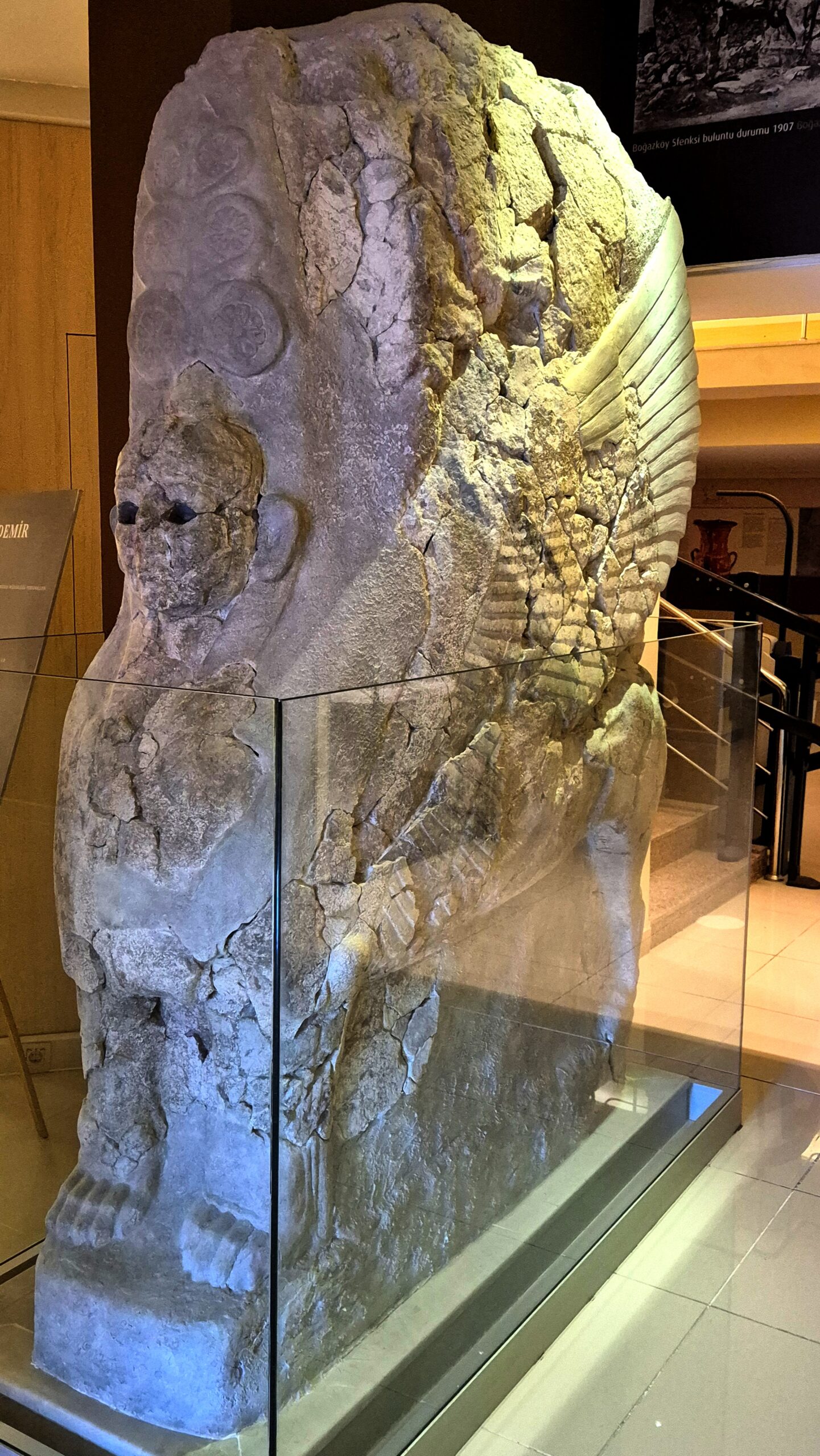
One of a pair of sphinxes that once flanked a gateway at Hattusa. It is still impressive at several meters (about 7 feet) in height at the Hattusa museum.
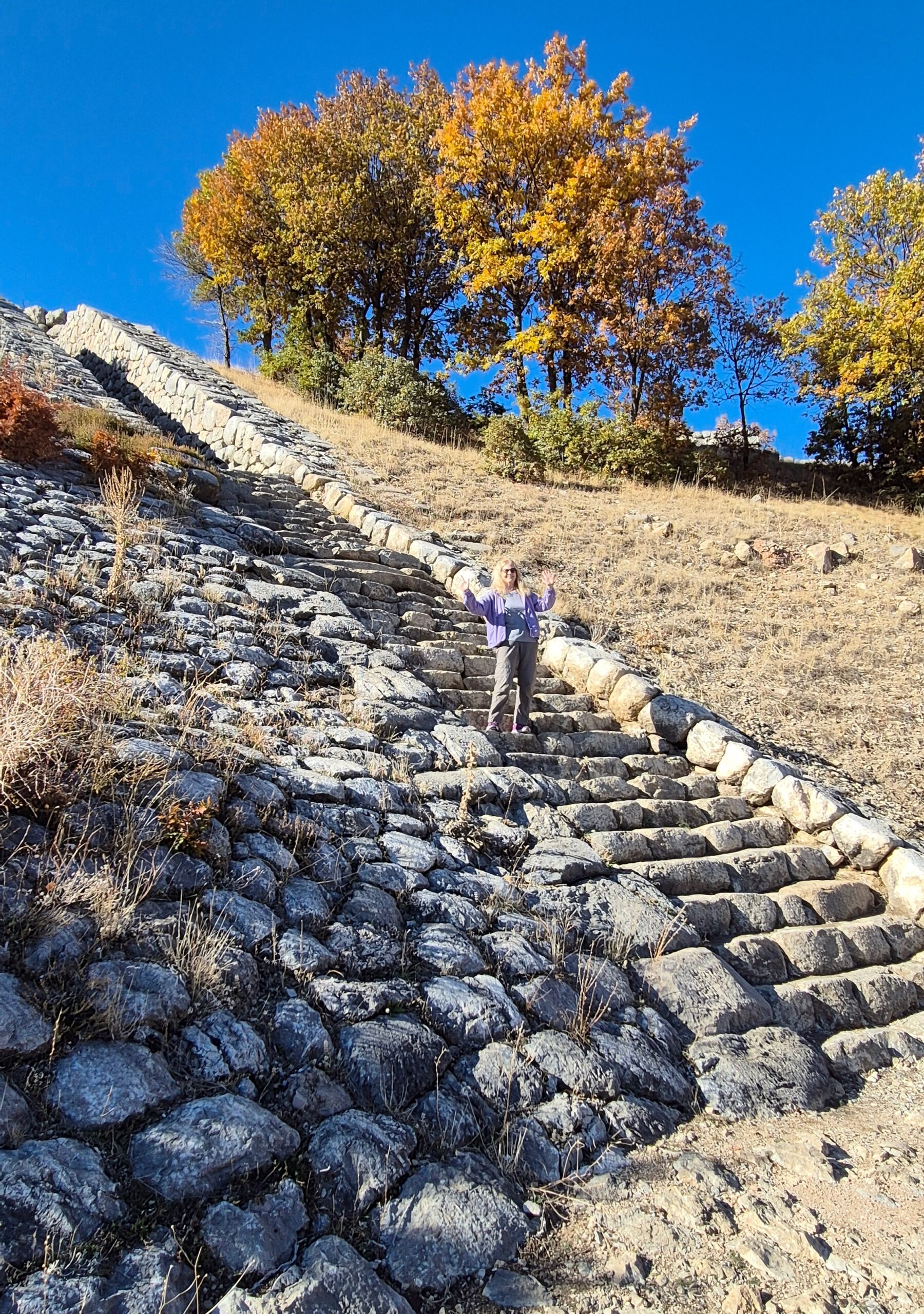
The Hattusa Ramp – a long uneven staircase that mounts a man-made rampart at the highest point in Hattusa. The defensive walls ran along the inner part of the rampart, but it was not clear why this ramp formed a back channel to the city.
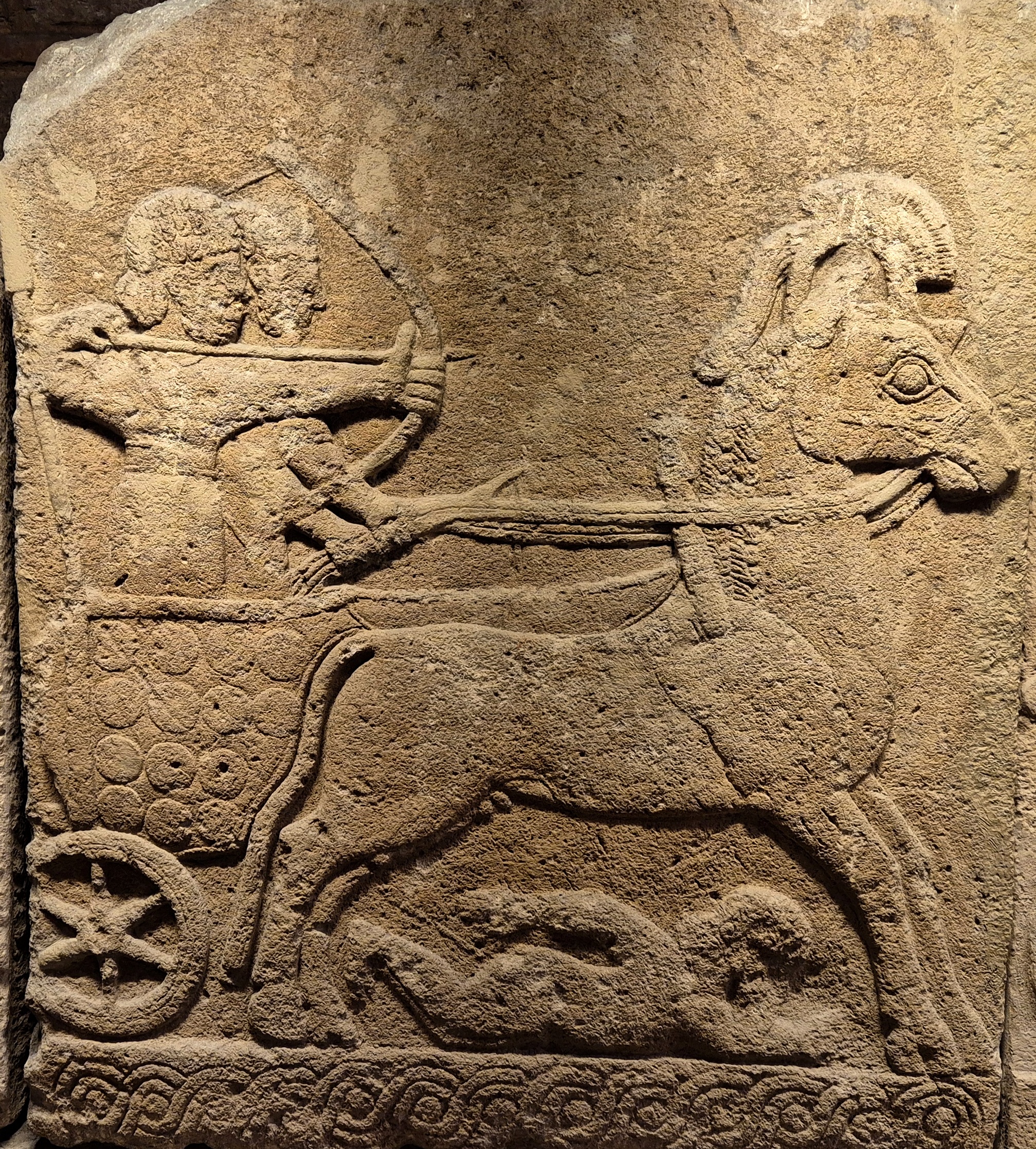
Two Hittite chariot warriors advance against the enemy, prostrate beneath their horse’s feet. (Museum of Anatolian Civilizations, Ankara)
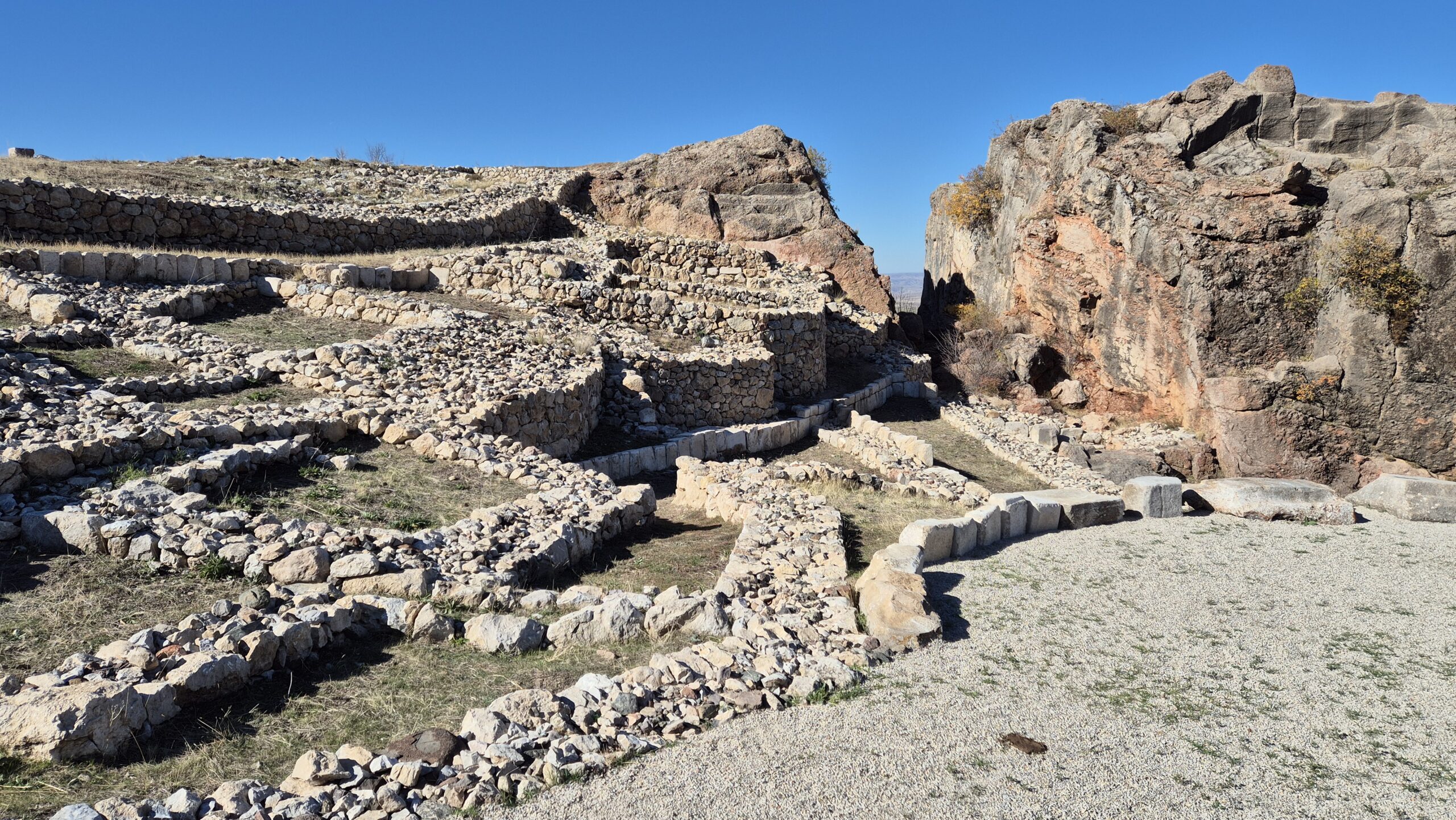
A residential section of Hattusa, with restored foundations.
The landscape around Hattusa includes lovely, wooded areas and fertile plains still being farmed today. You could tell why the leaders preferred this area for their capital.
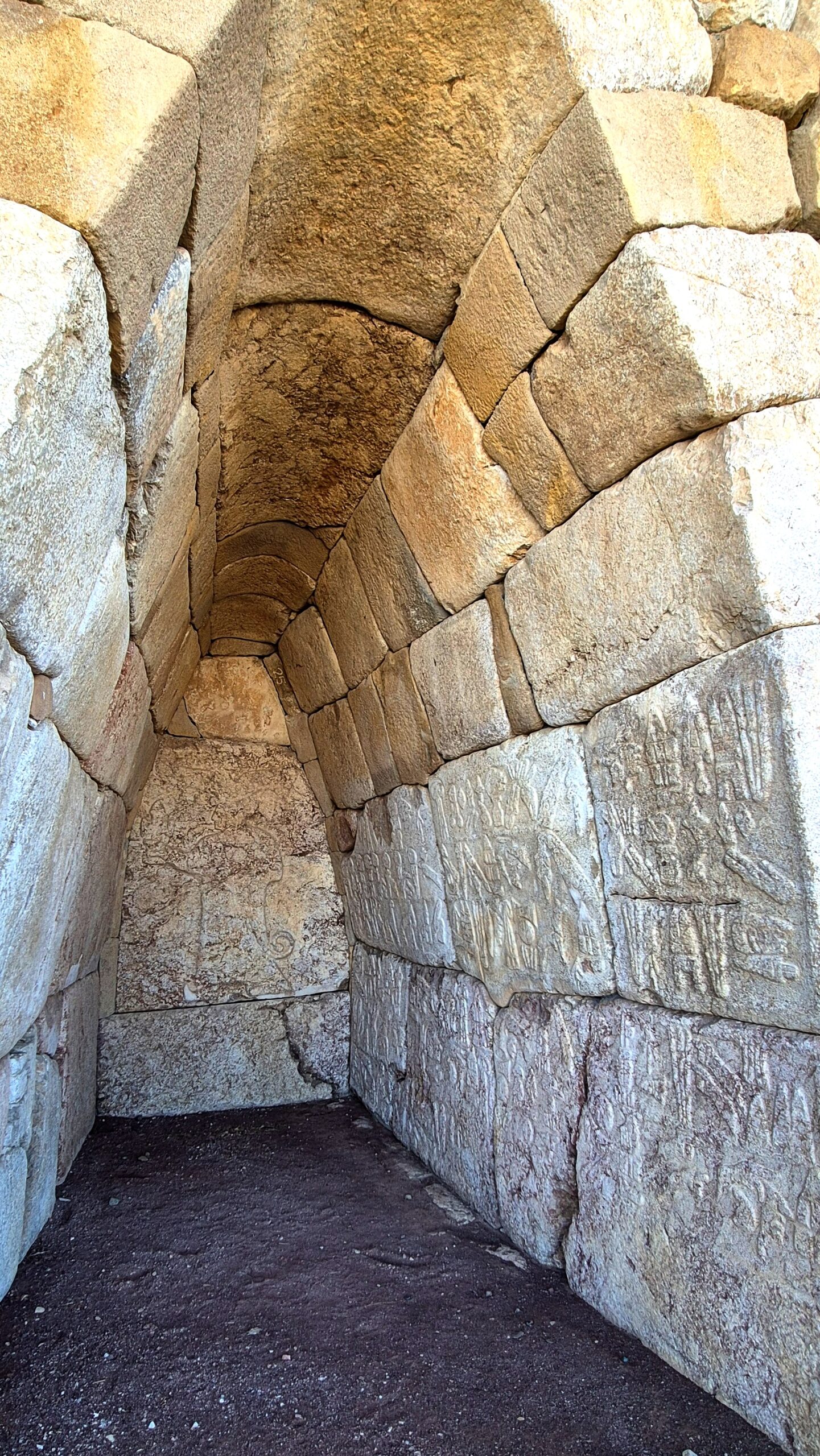
Toward the end of their imperial sway, around 1200 BC, the Hittite ruler built this lovely arch covered in hieroglyphics, apparently as a kind of portal to the underworld. On the back wall, the Sun God proceeds leftward, decked out in a long robe with a sun crescent on his head, and carrying a torch. The writing on the right wall celebrates conquests as well as the road to a good afterlife.
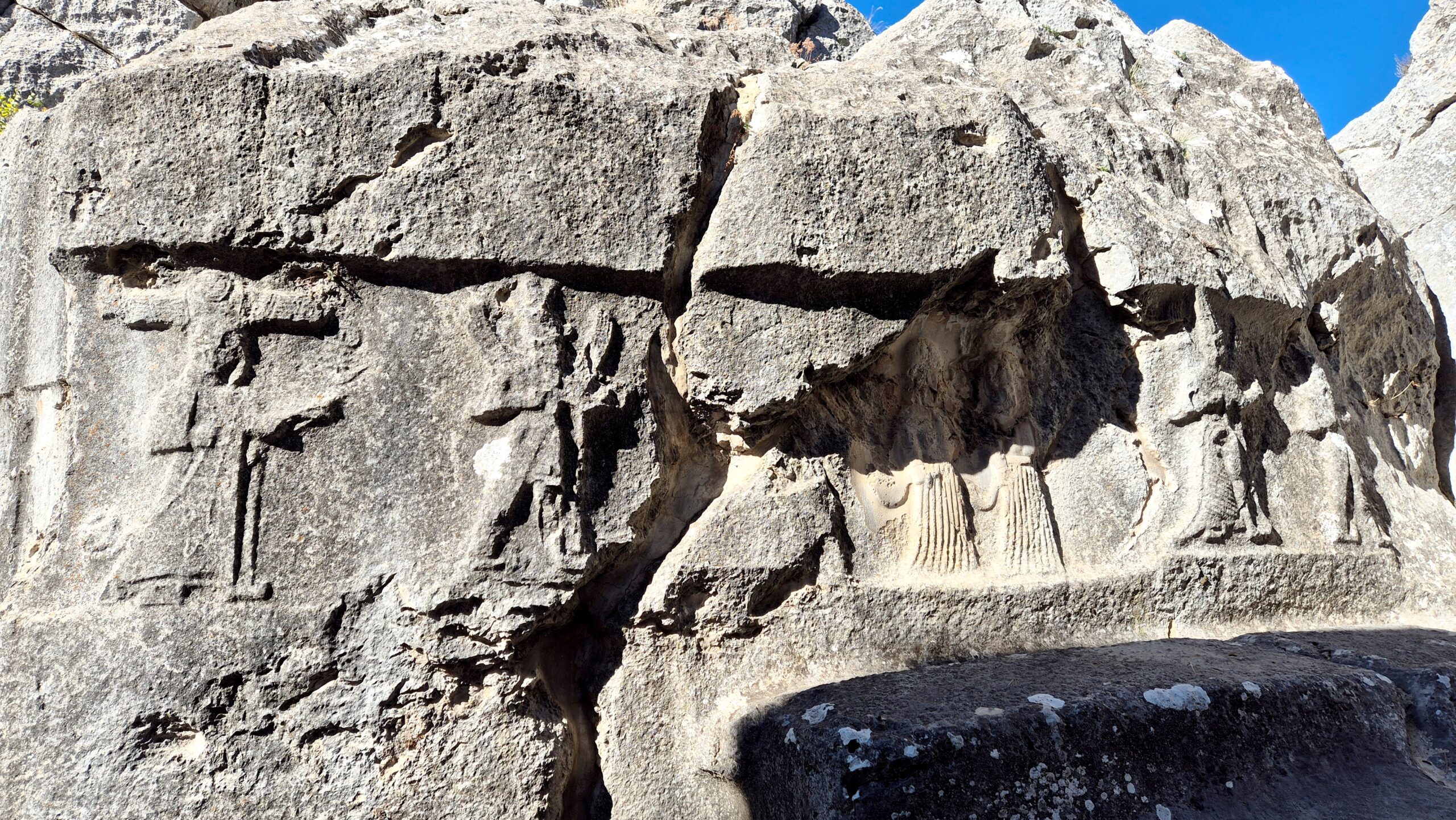
One of two rows of Hittite gods, both male and female, heading permanently into a ritual outdoor stone chamber at Yazilikaya, a holy site near Hattusa. In the chamber, Hittite priests invoked the Storm God and Sun Goddess.
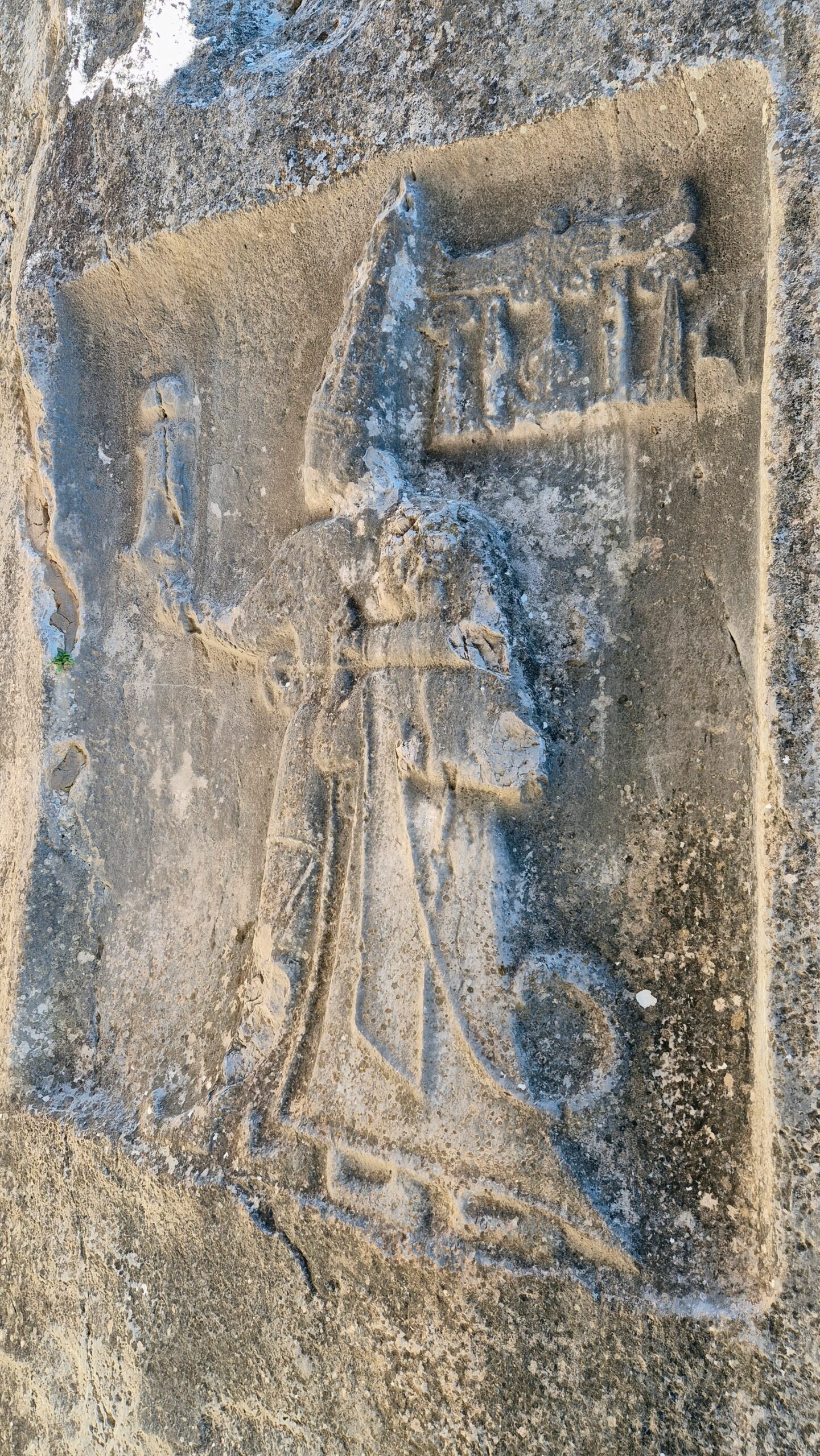
A royal celebrant etched into the stone at the ritual site of Yazilikaya.
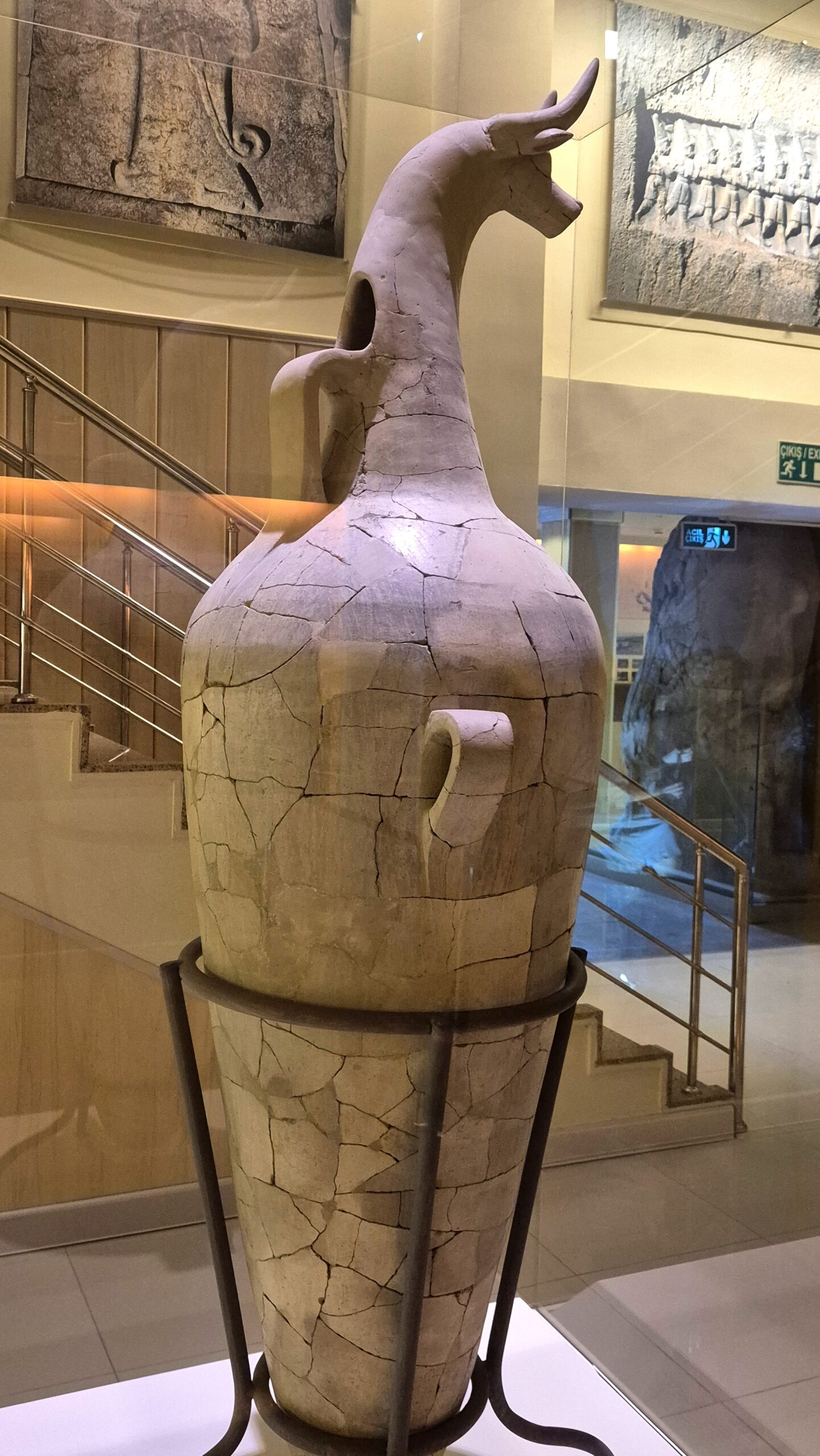
A bull-headed vase representing the Storm God, found in a commander’s home and likely used for ritual purposes. It stands nearly 3 meters (10 feet) tall. In the background, at the top, are photos of other sculptural images from the open ritual chamber at Yazilikaya.
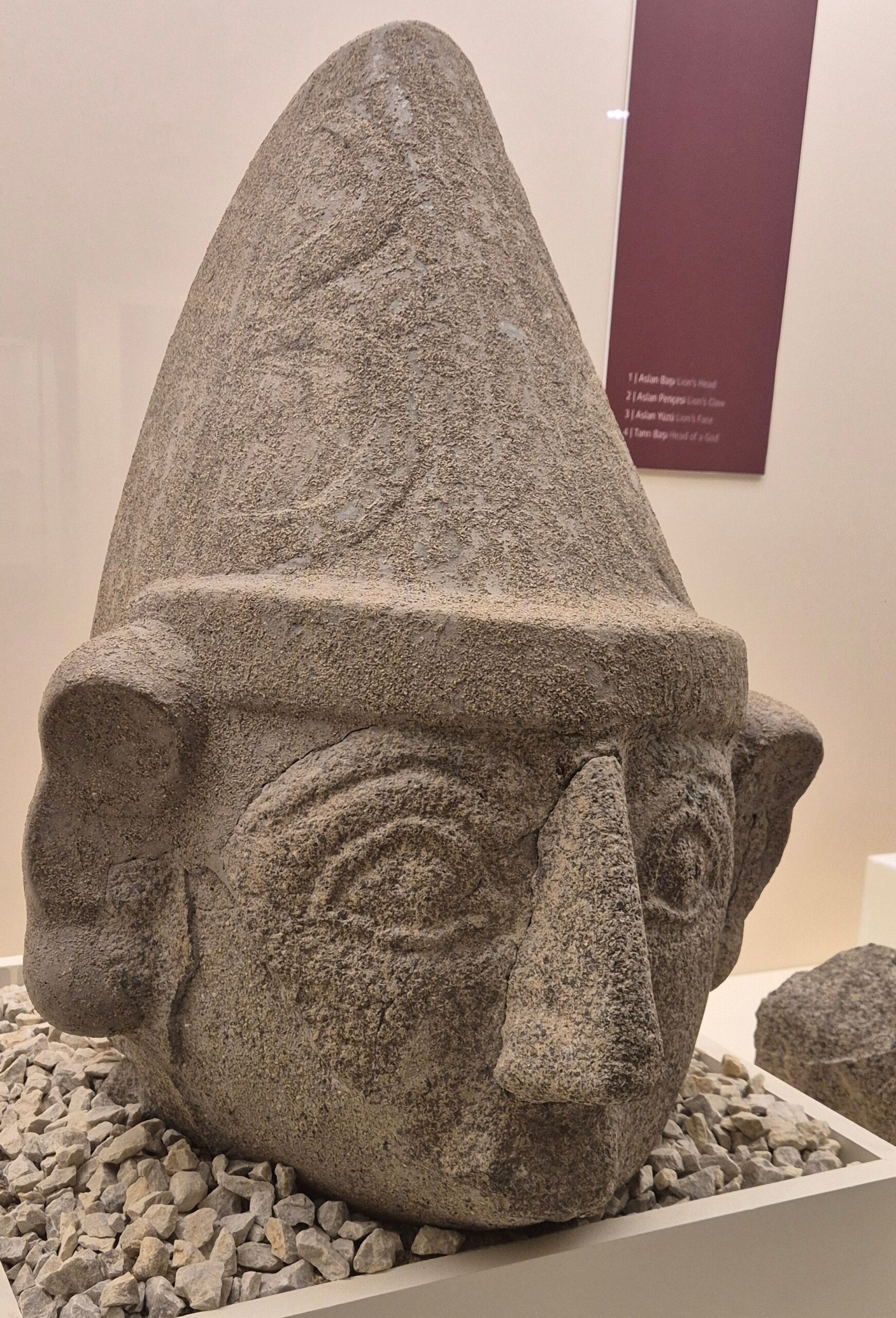
Head of a Hittite god in the Hattusa museum. We thought the conical headgear was a bit elfin!
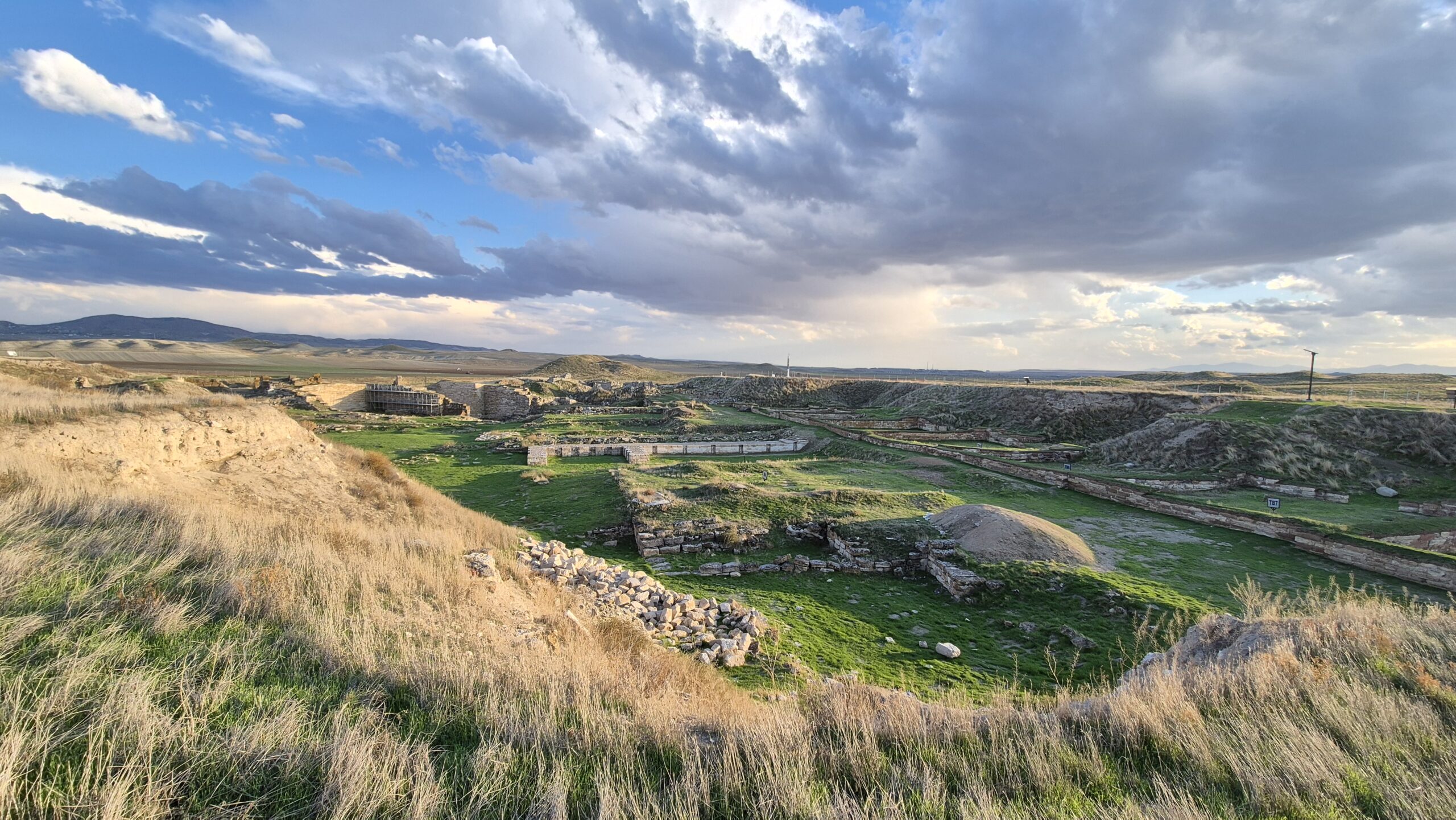
Nearby Hattusa was the old capital of another ancient people in Turkey, the Phrygians, who flourished from around 1200 to 700BC until the Roman era. The most interesting structure extant was an ancient pyramidal tomb from their time, but that was closed unfortunately. The remains of the city, featuring a few stalwart gates, were at least atmospheric.
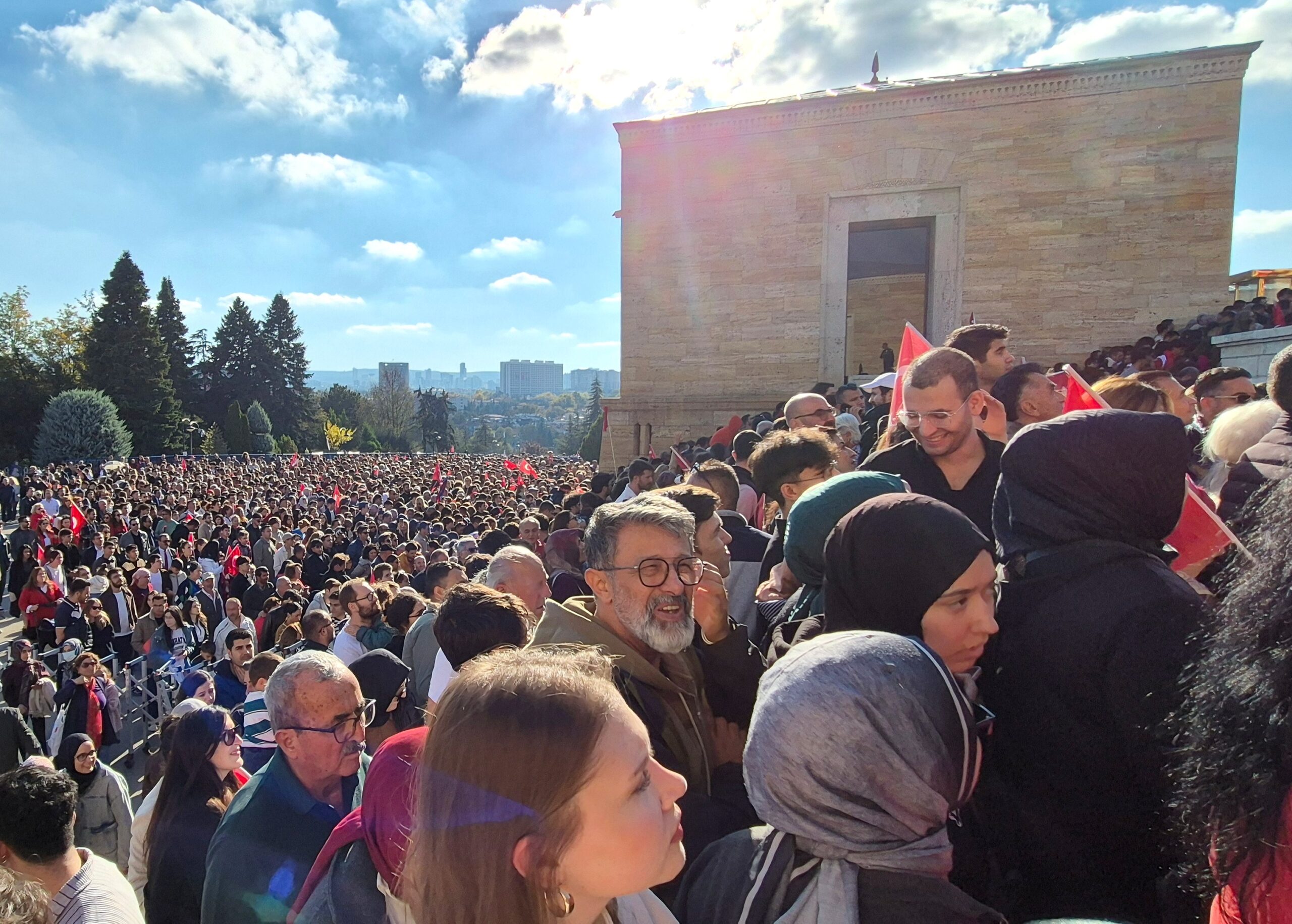
Ankara: Tomb of Ataturk
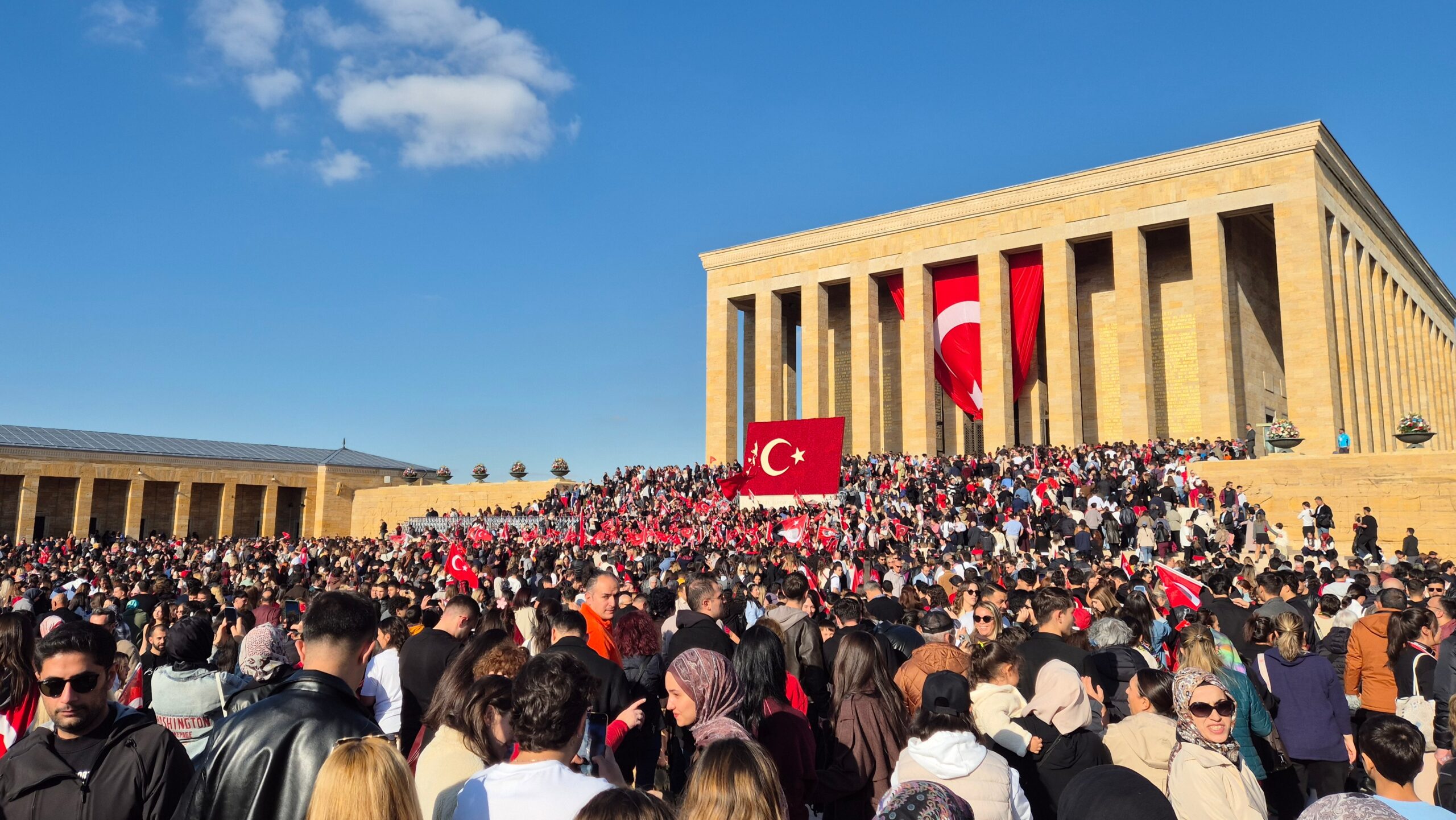
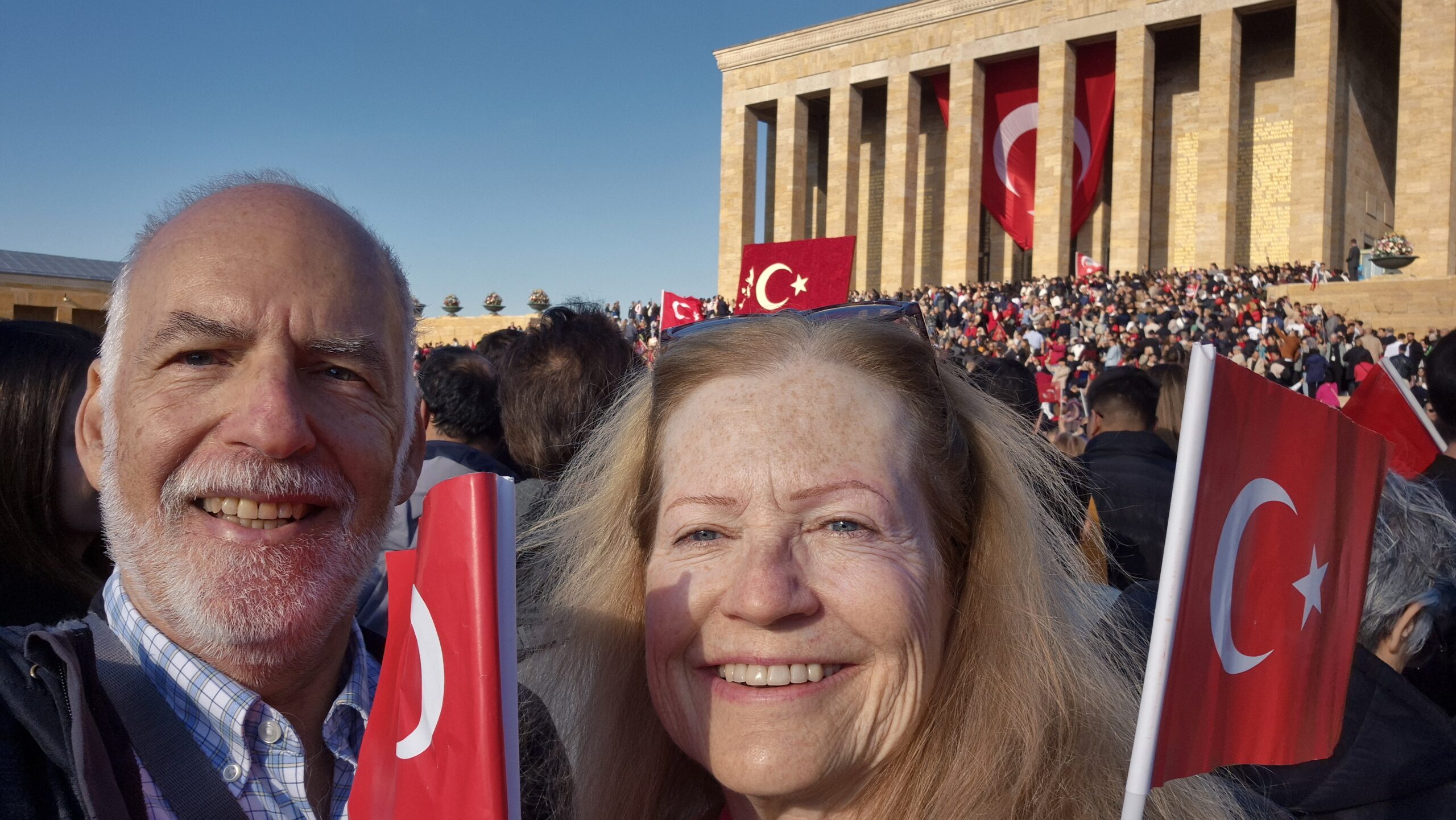
Totally unplanned…we happened to be in Ankara, Turkey’s capital city, for the national holiday called Republic Day, a day of commemoration on 29 October. That day, 102 years ago, Mustafa Kemal Atatürk formally declared Turkey to be a republic and ended Ottoman rule. He was then elected Turkey’s new President. So, we trooped over to his memorial, Anitkabir, while jets noisily pirouetted across the sky, to celebrate alongside perhaps several hundred thousand Turks joyfully thronging the memorial.
Cappodocia/Goreme/Underground Cities
- Ballooning over Cappadocia
It’s not even dawn, and we’re aloft in a balloon gondola, floating over one of the grandest landscapes on earth – the striated and colorfully eroded volcanic rock of Cappodocia (Kapadokia). In the next 90 minutes, as the light brightens and the air warms a bit, the landscape passes dreamily beneath us. We ooh and ahh. Our experienced balloonist teases with the wind, descends nearly to the treetops and rises again, before nestling on a platform at the landing site. We had done balloon rides before, but this topped them all.
A spin along the rock formations, while we descend to the treetops. The company does a 360-degree video production that we hadn’t seen, but we did a few videos ourselves, like this one.
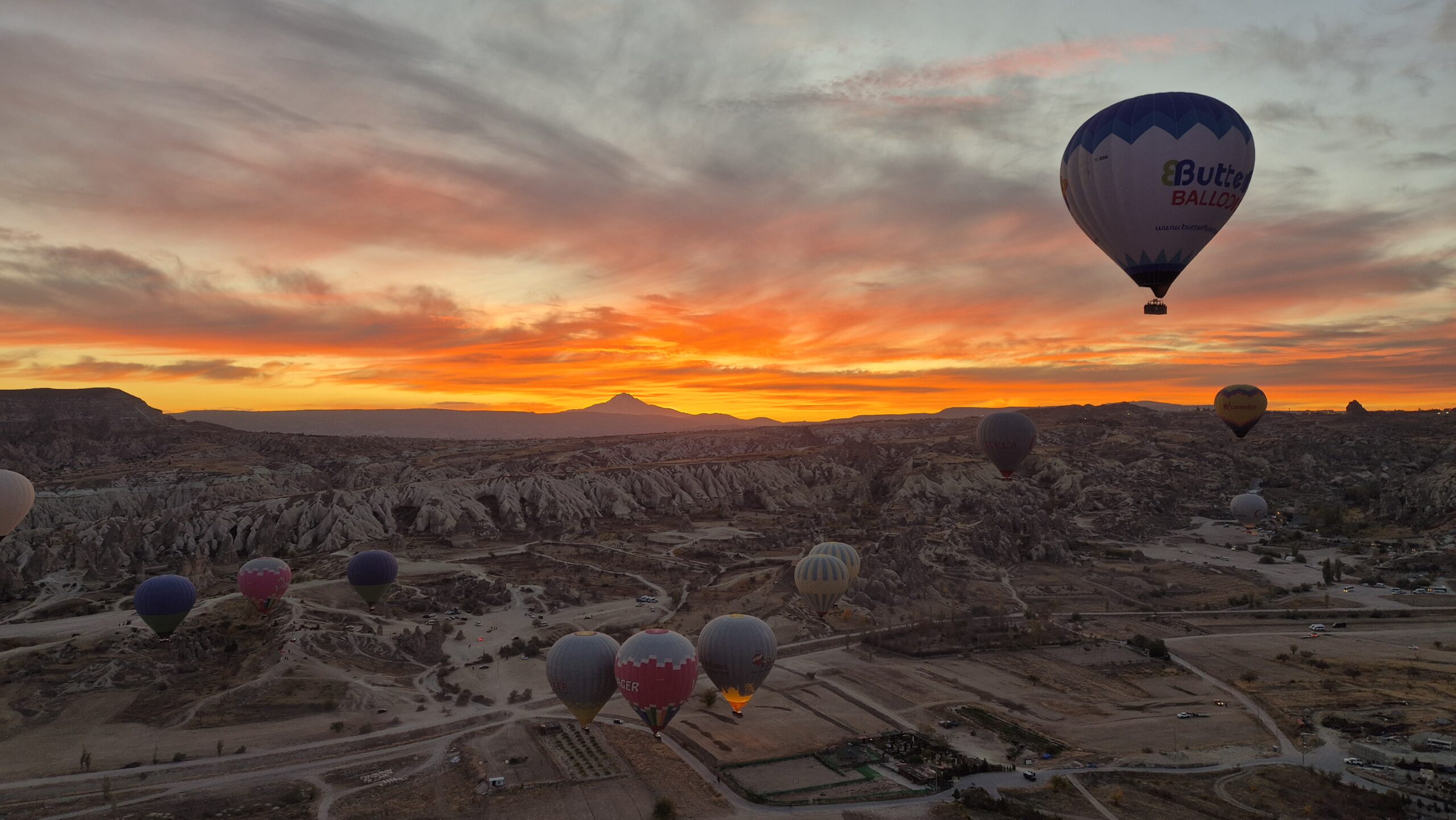
While the landscape provided spectacular vistas, the sunrise was stunning.
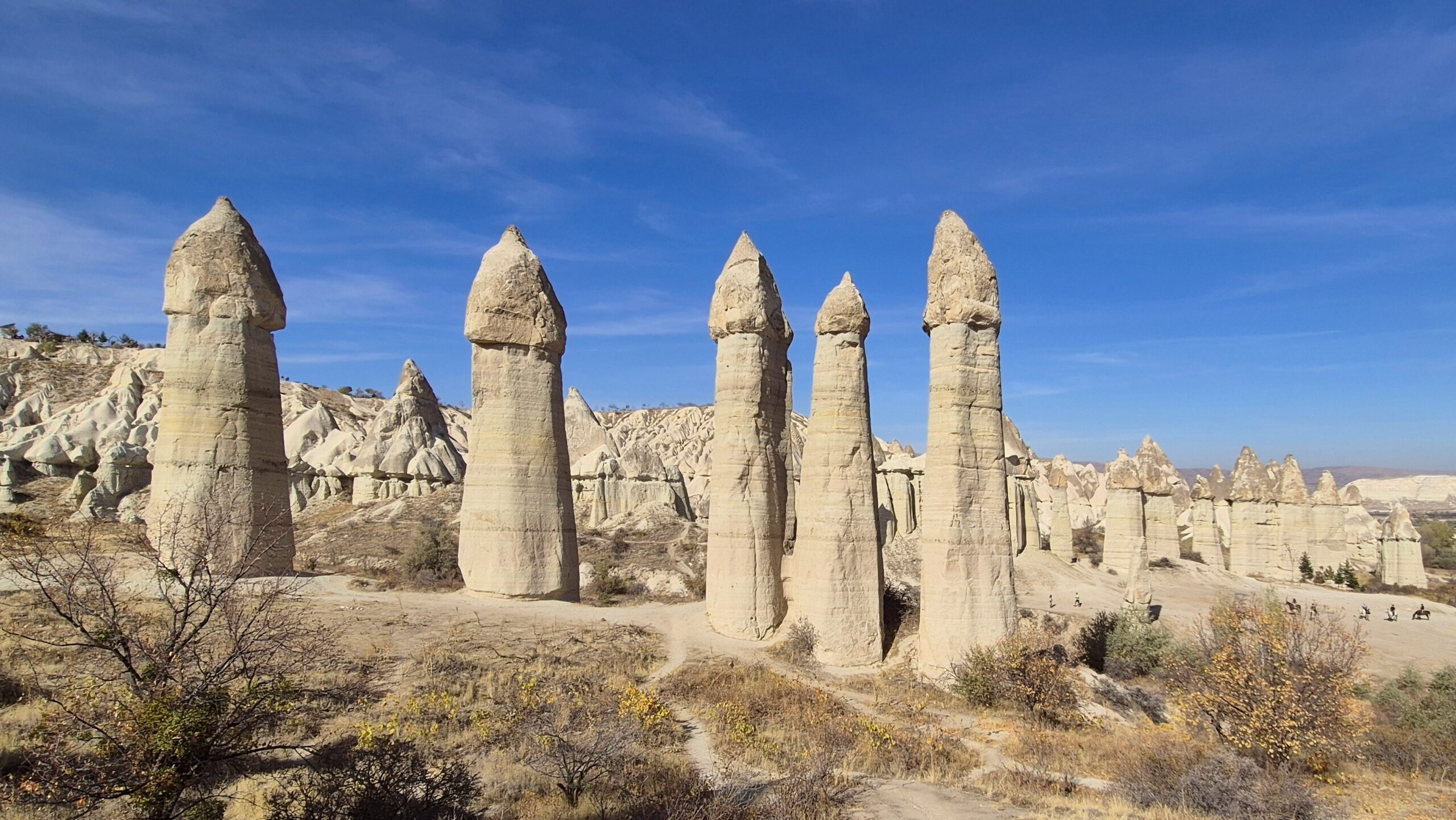
This area is called Love Valley, for reasons any visitor might surmise. The columns developed from the erosion of soft tufa below harder volcanic rock. We later hiked along this valley.
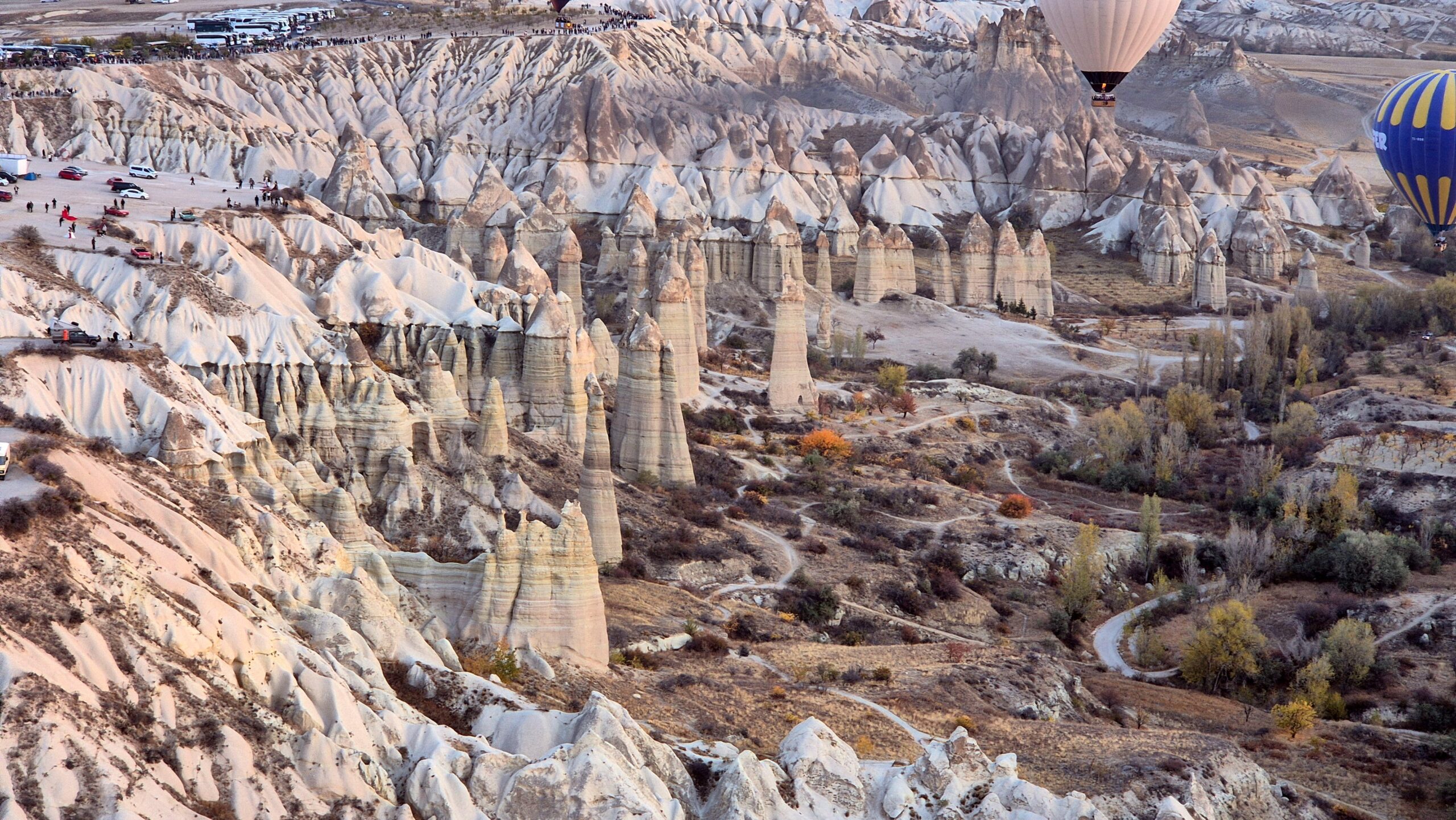
The towers of Love Valley
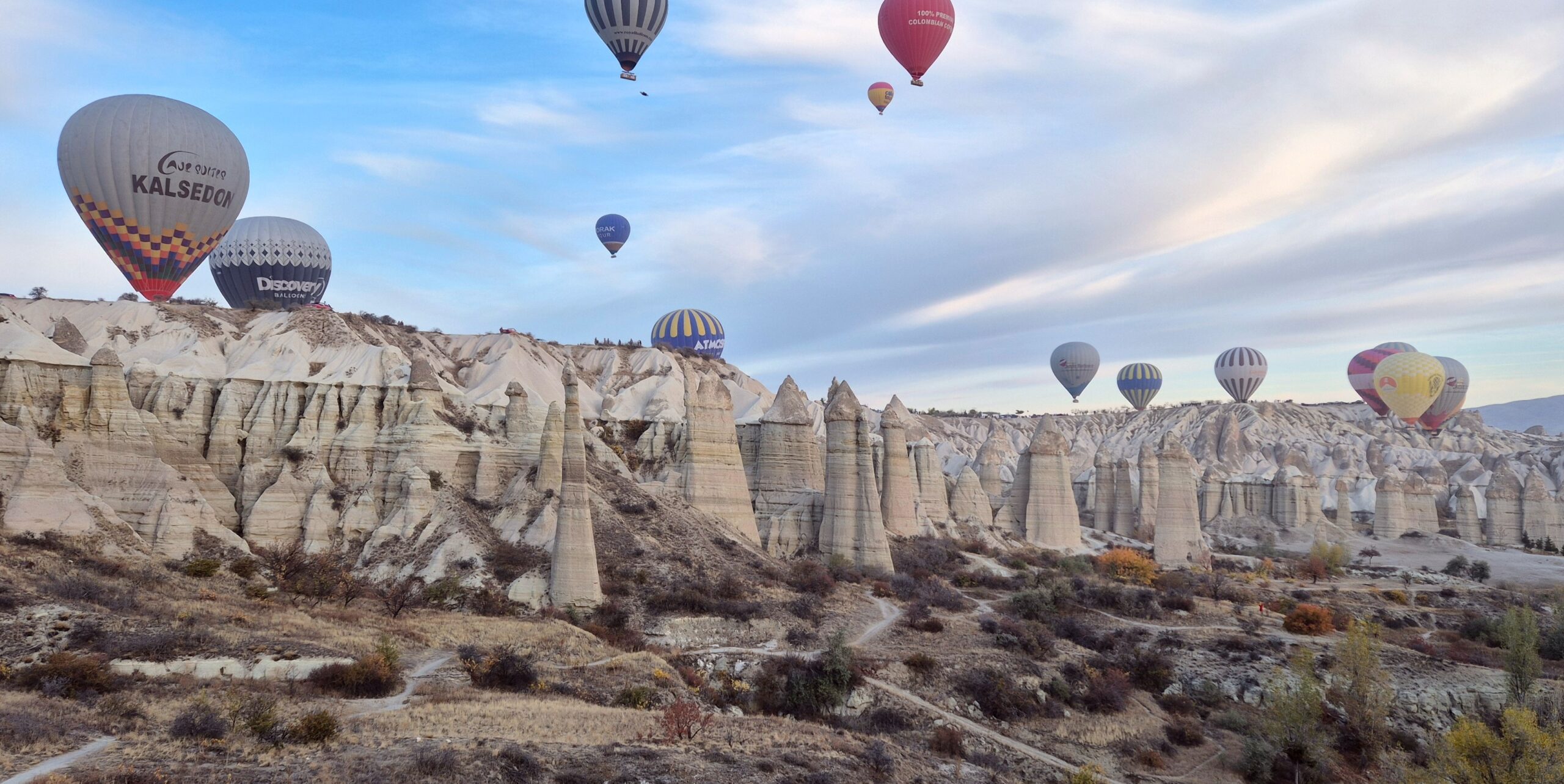
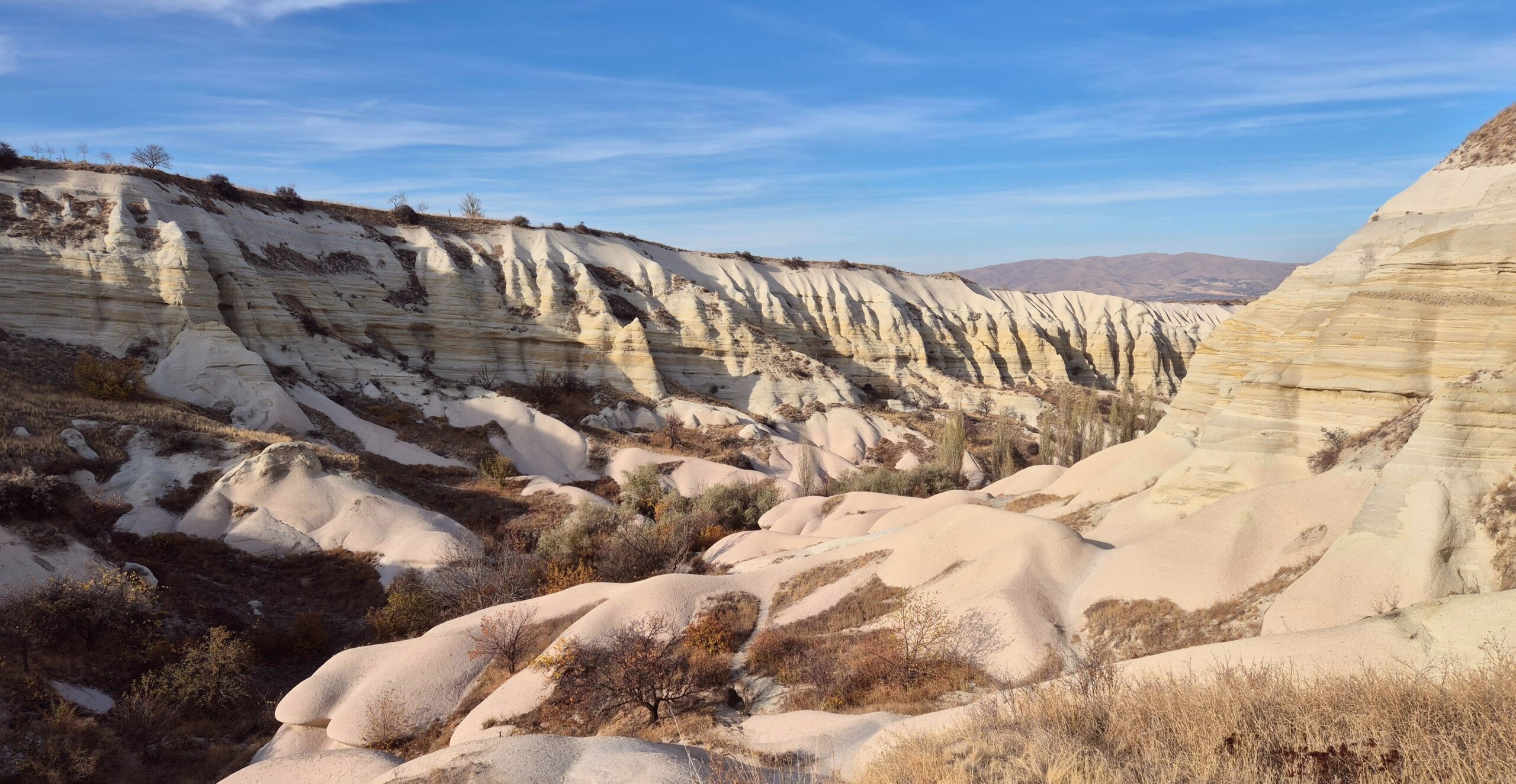
Just north of Love Valley runs the White Valley, named for its bleached formations. As we continued our hike from Love, these looked like rippling hills of sand to us.
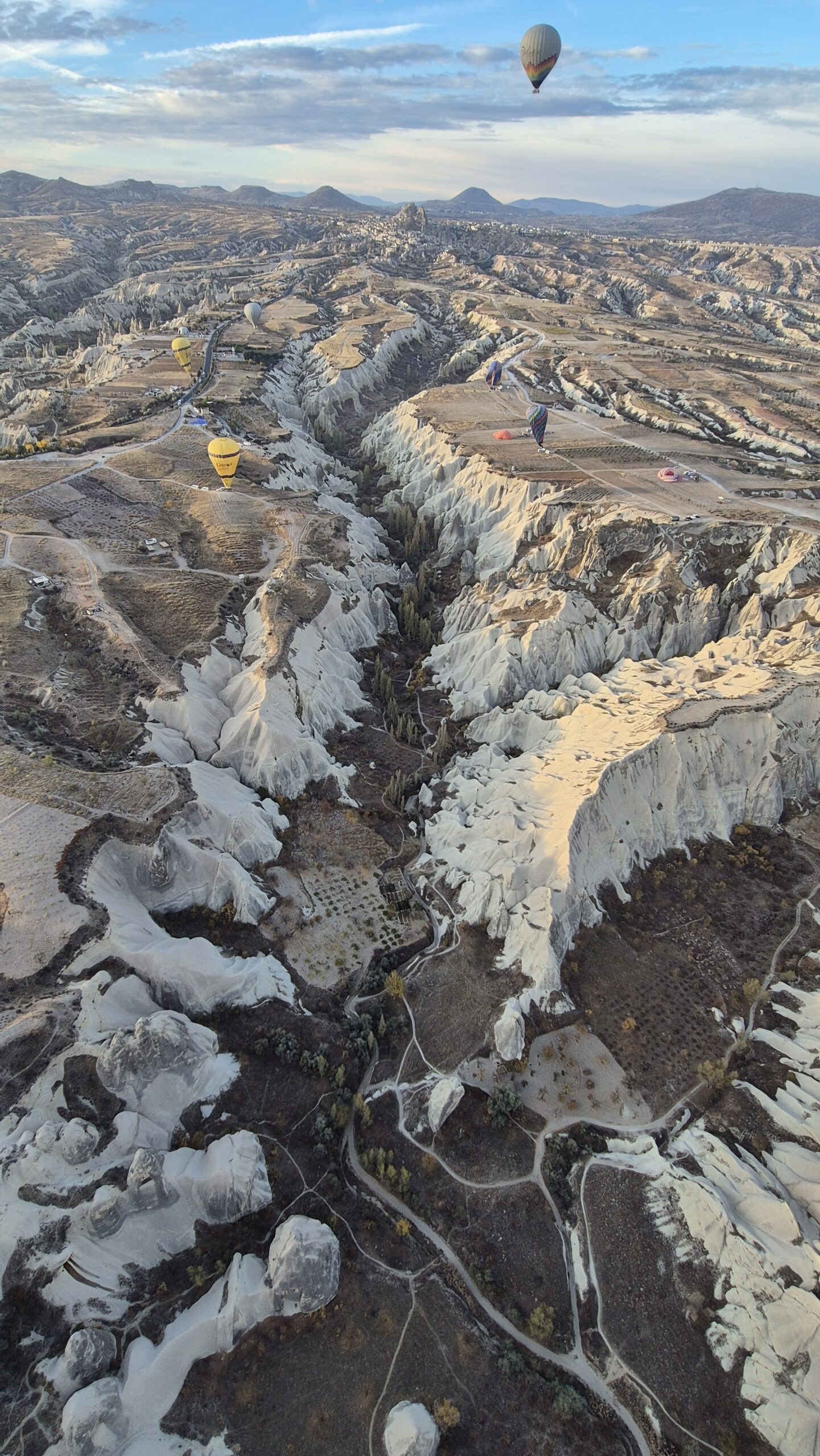
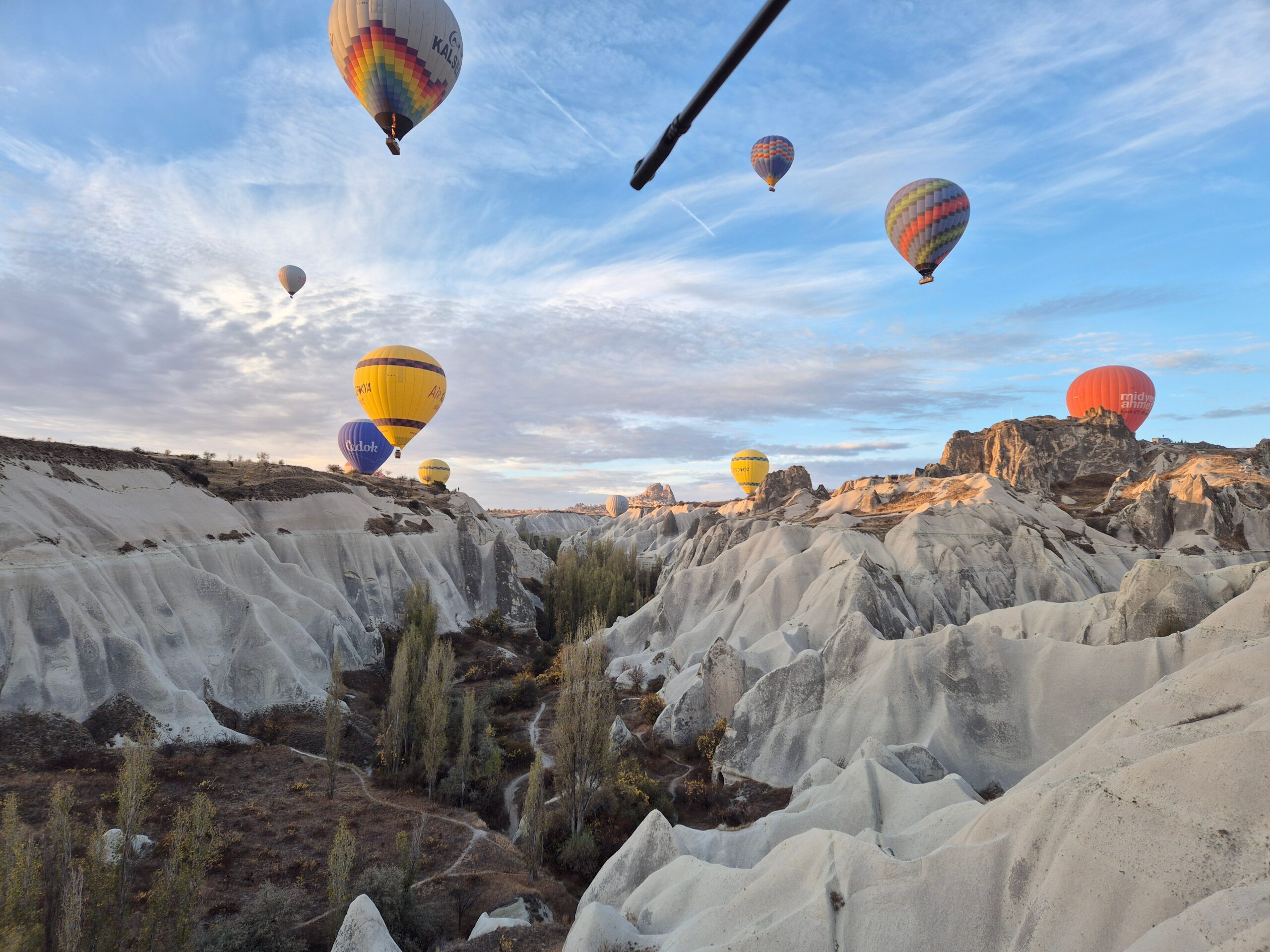
Our balloon glides deep down into the White Valley, where we later hiked.
The town of Uchhisar, rising high at the north end of the White Valley, gleams in the early sunlight. The town is topped by a natural rock formation transformed into a fortress.
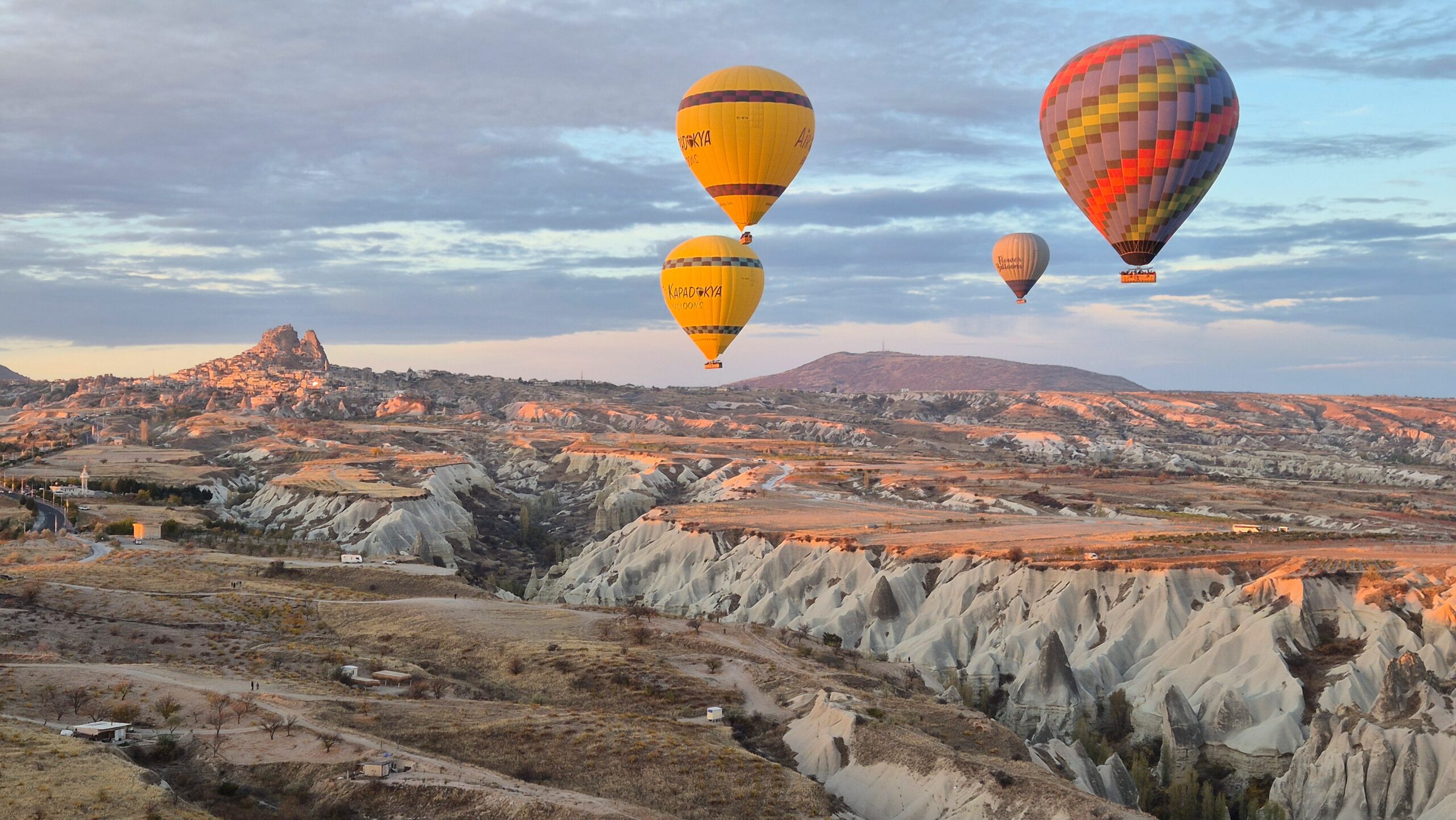
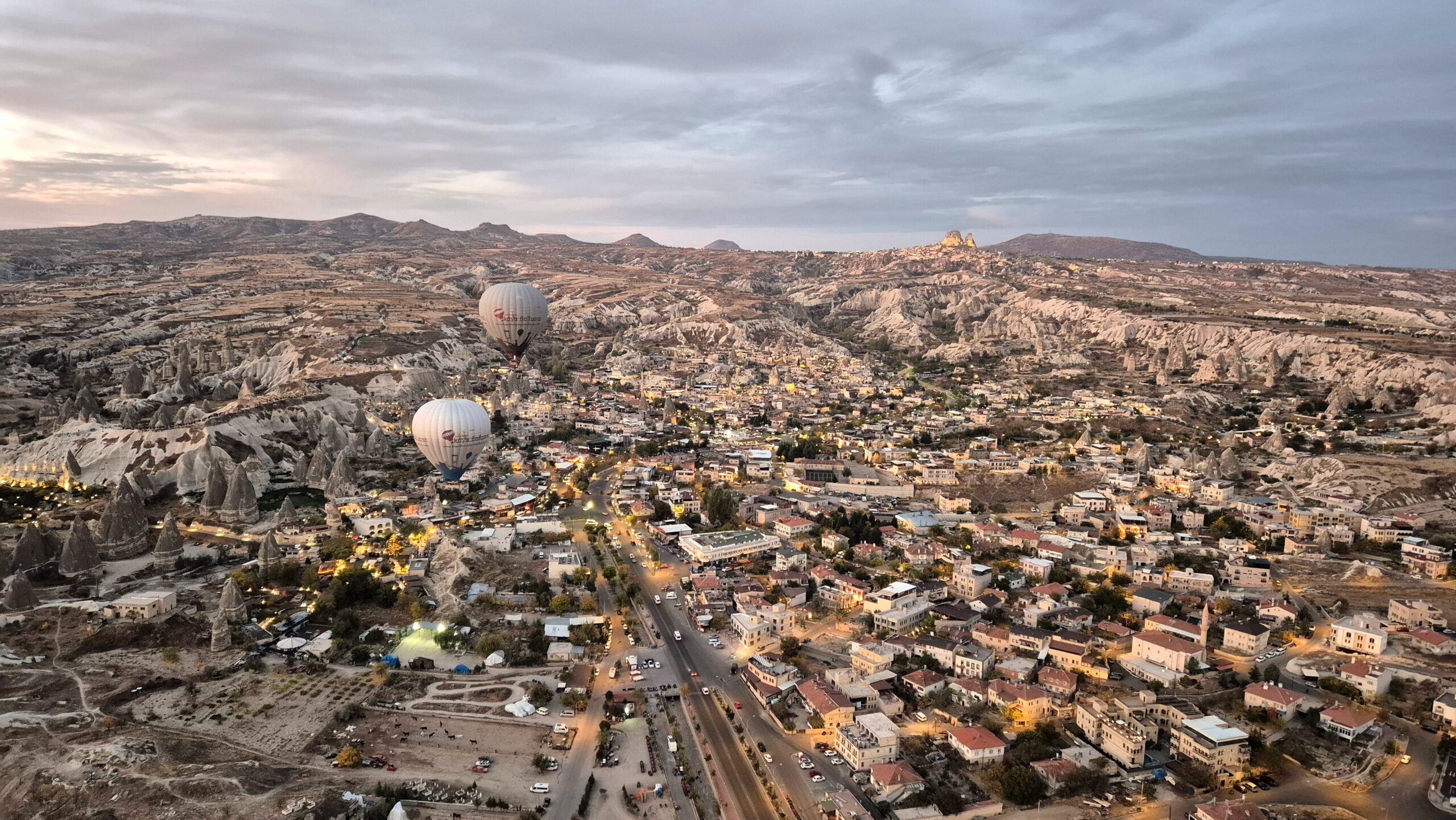
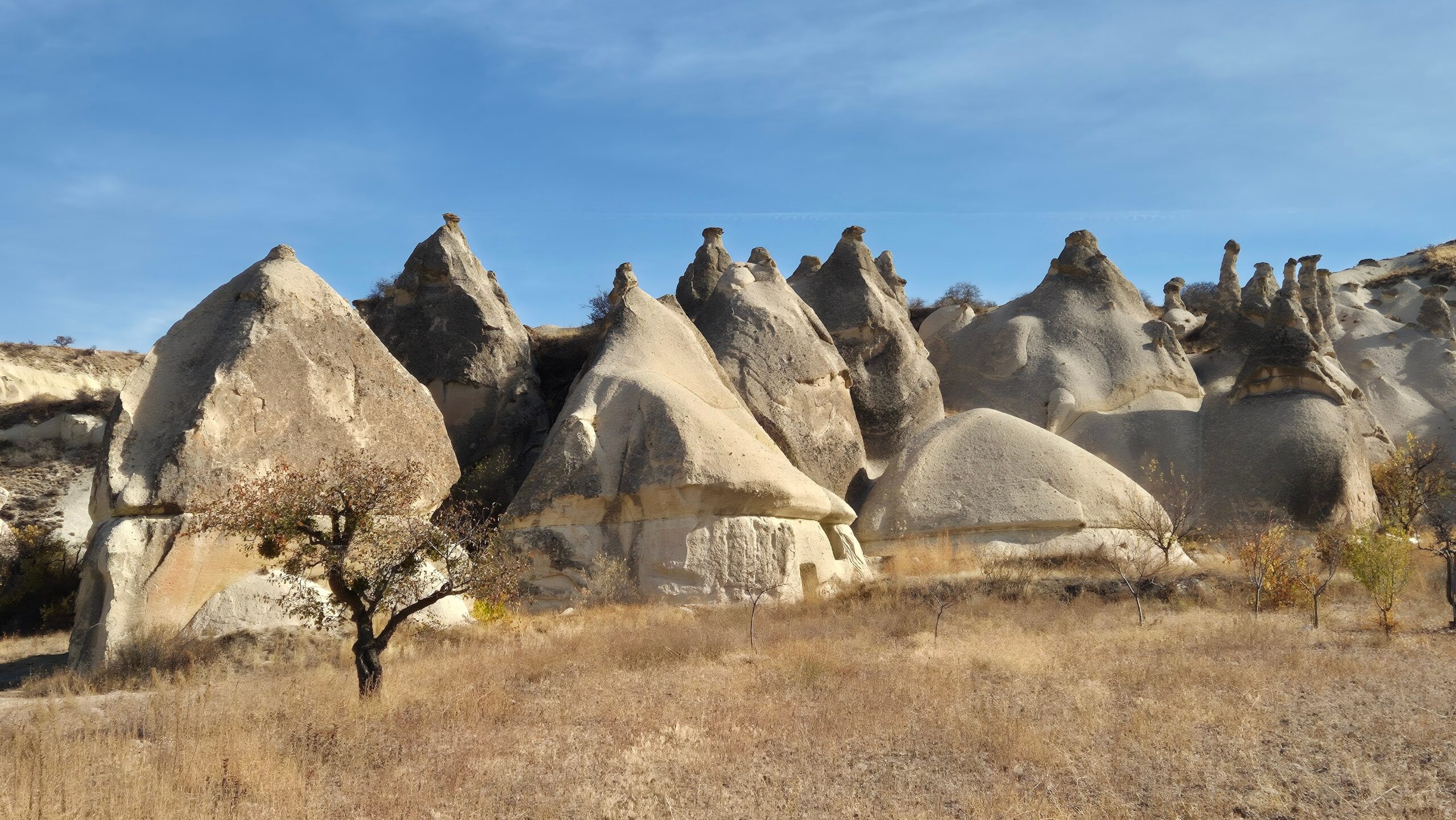
The town of Goreme, at the heart of the rocky formations in Kapadokia, awakes beneath us. The conical domes throughout town (note particularly those to the left of the two balloons) have served as churches and dwellings for thousands of years, as residents carved out living spaces within the soft rock.
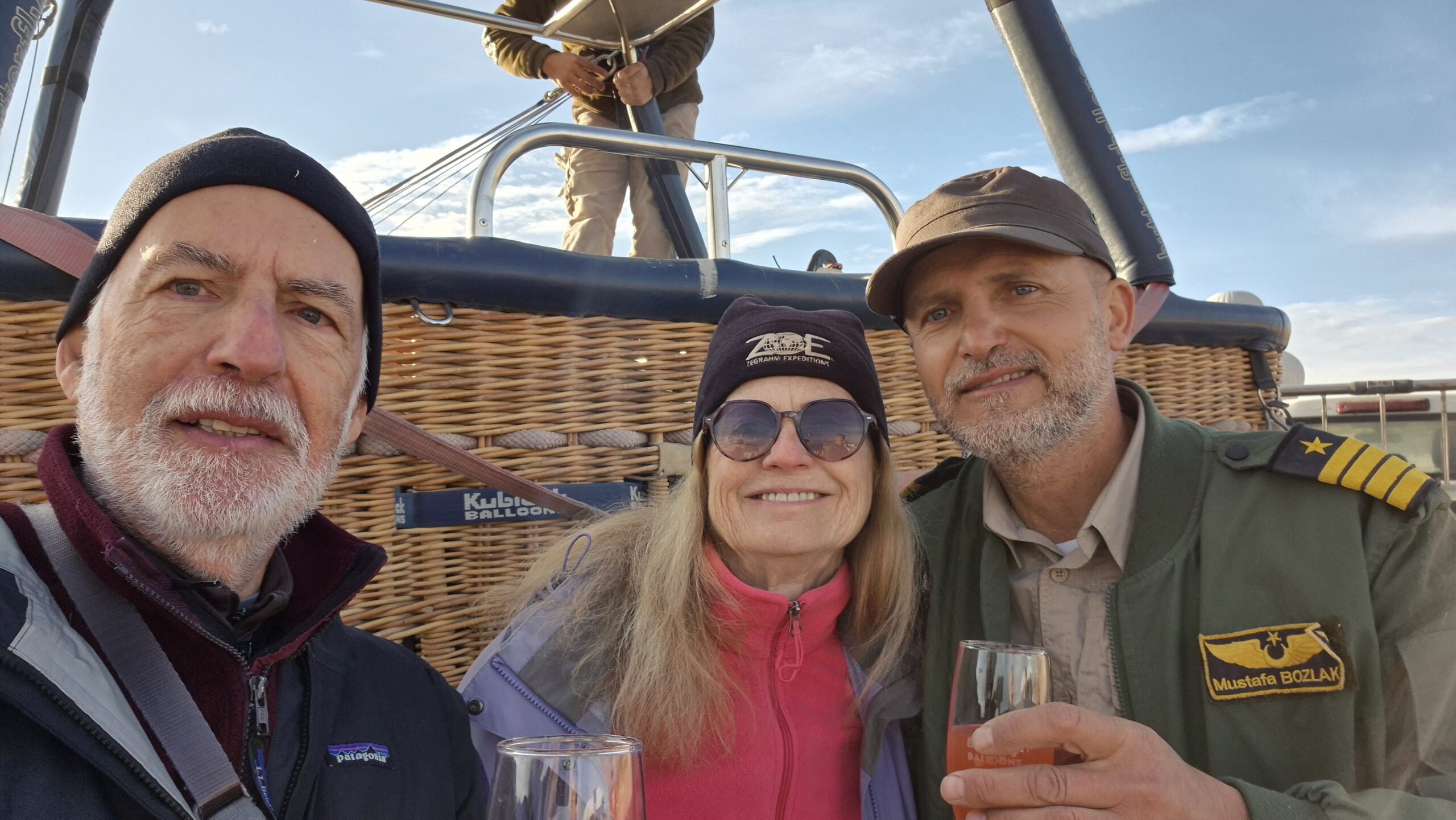
Savoring the afterglow of our balloon ride with our expert pilot – the first Turkish balloonist from about 25 years ago. It was just 30 years ago that the first balloon ride occurred at Kapadokia.
- The landscape at and below the ground
The Kapadokia area around Goreme is not just the pretty face you see from aloft during our balloon ride. Since the first millennium, people have carved dwellings as well as religious sites out of the soft tufa rock left behind by ancient volcanoes. Above ground, the hollowed-out caverns provided solid shelters and prayer sites for the early Christians. Below ground, with hidden chambers and complex passages, they offered protection from invading enemies. How wonderful that we can still visit the record in stone of centuries of effort to preserve lives on earth and aspire to afterlives in heaven.
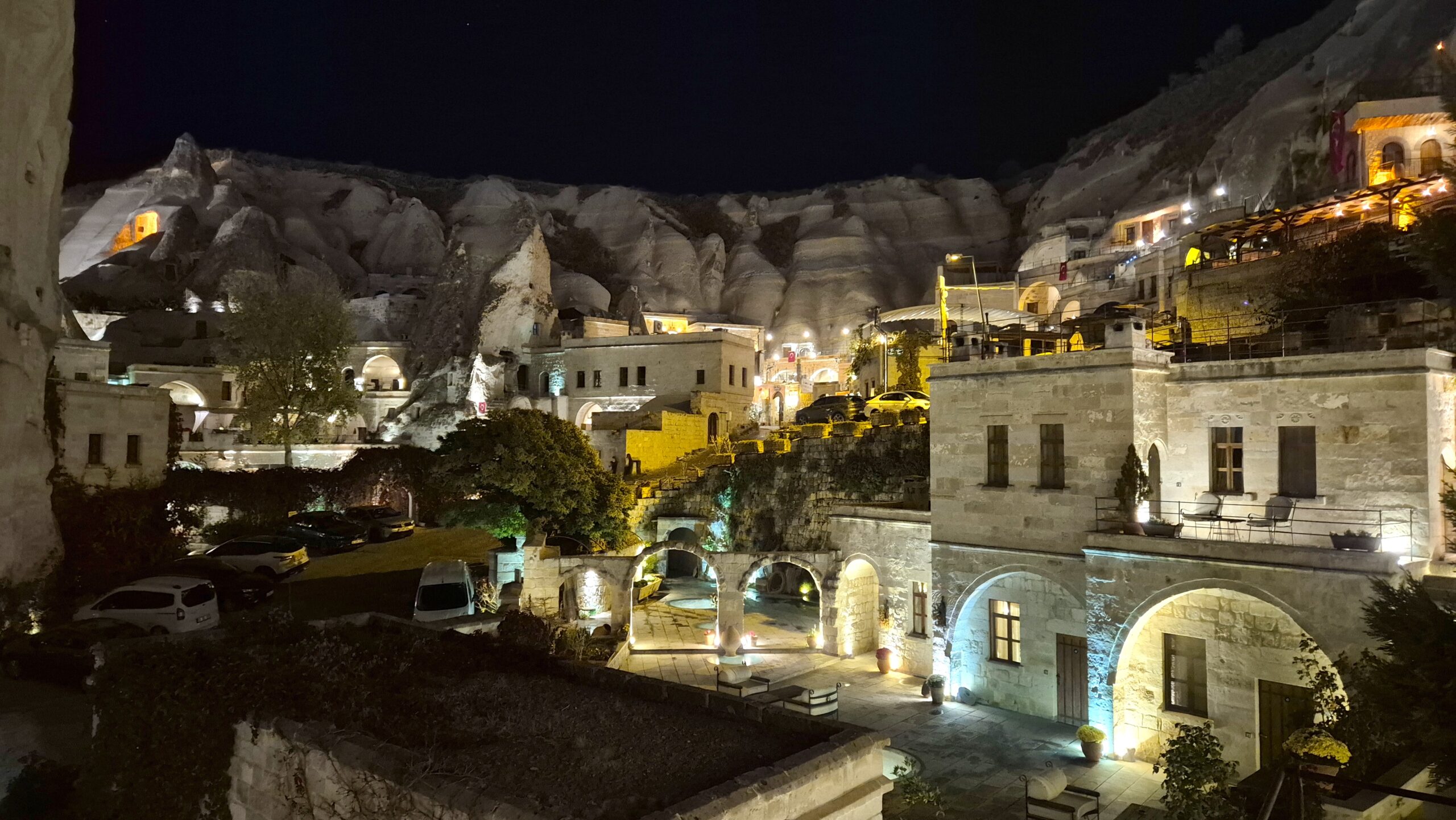
Many hotels in Goreme have turned cave dwellings carved out of the rock long ago into modern accommodation.
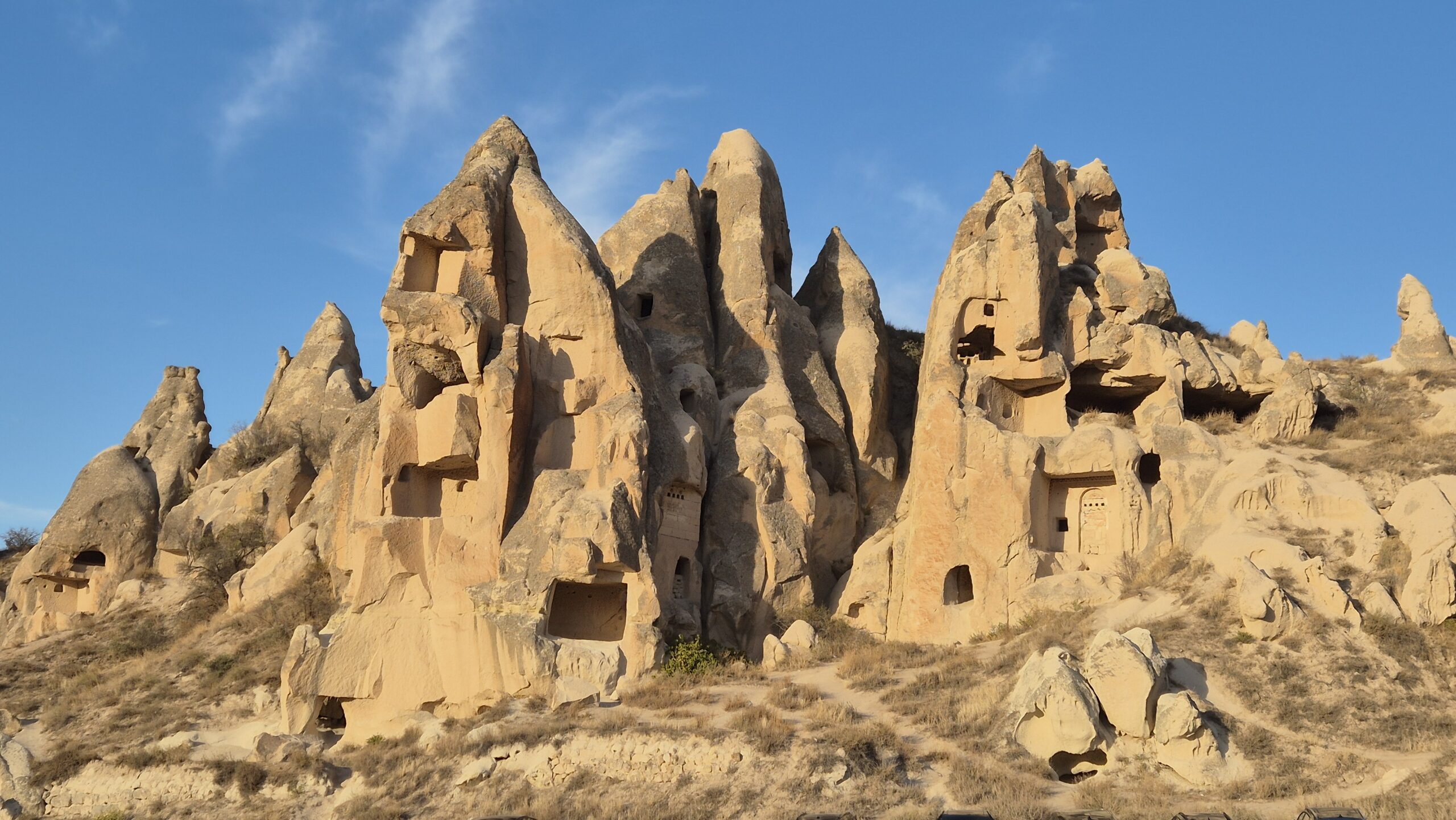
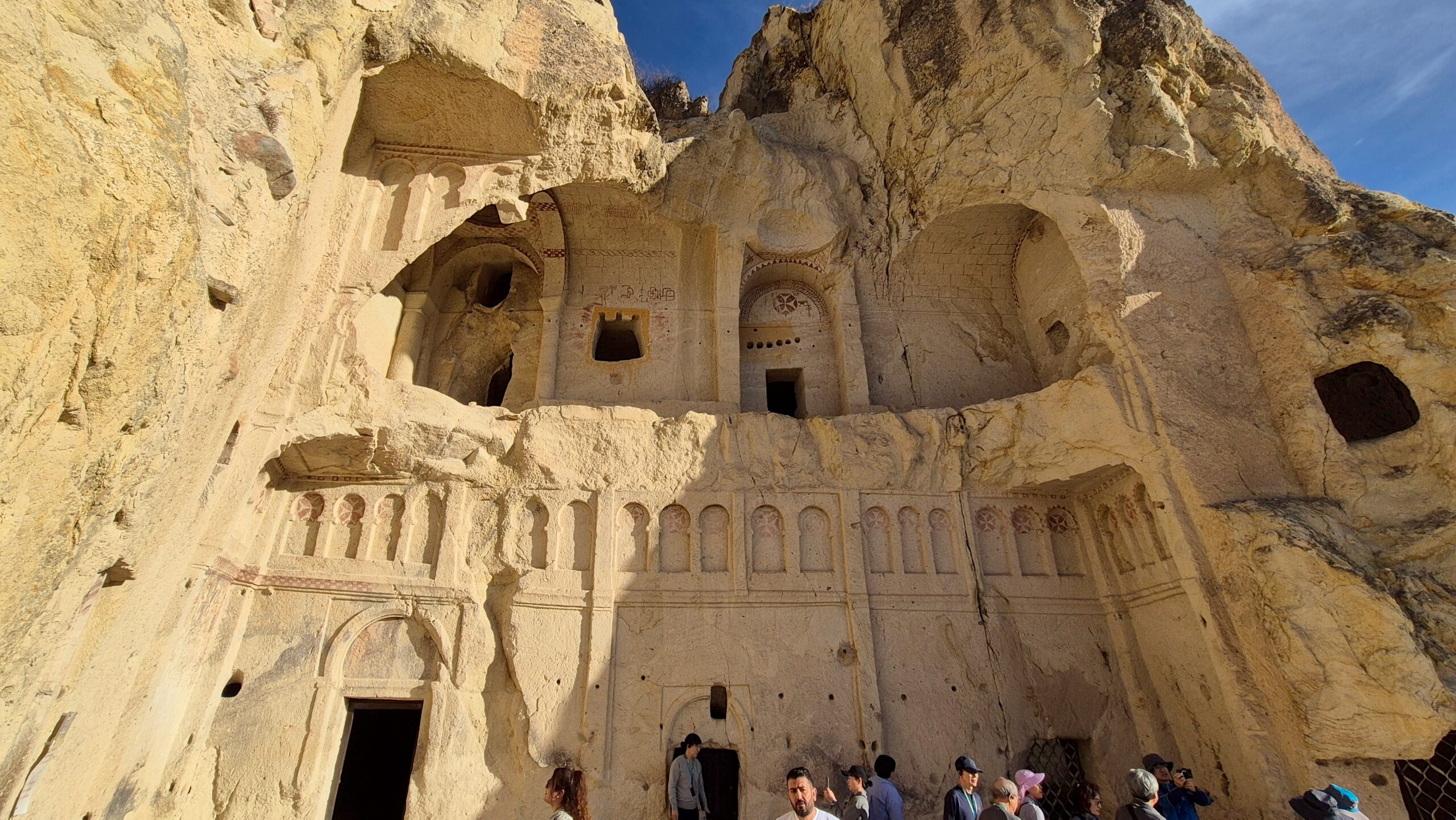
The doors and openings here show that this structure – golden at sunset – contained a large array of monastic cells and churches at Goreme’s Open Air Museum.
Entrance to the Dark Church. This is one of the finest of the churches in Goreme’s Open Air Museum, a collection of perhaps a dozen rock-hewn churches.
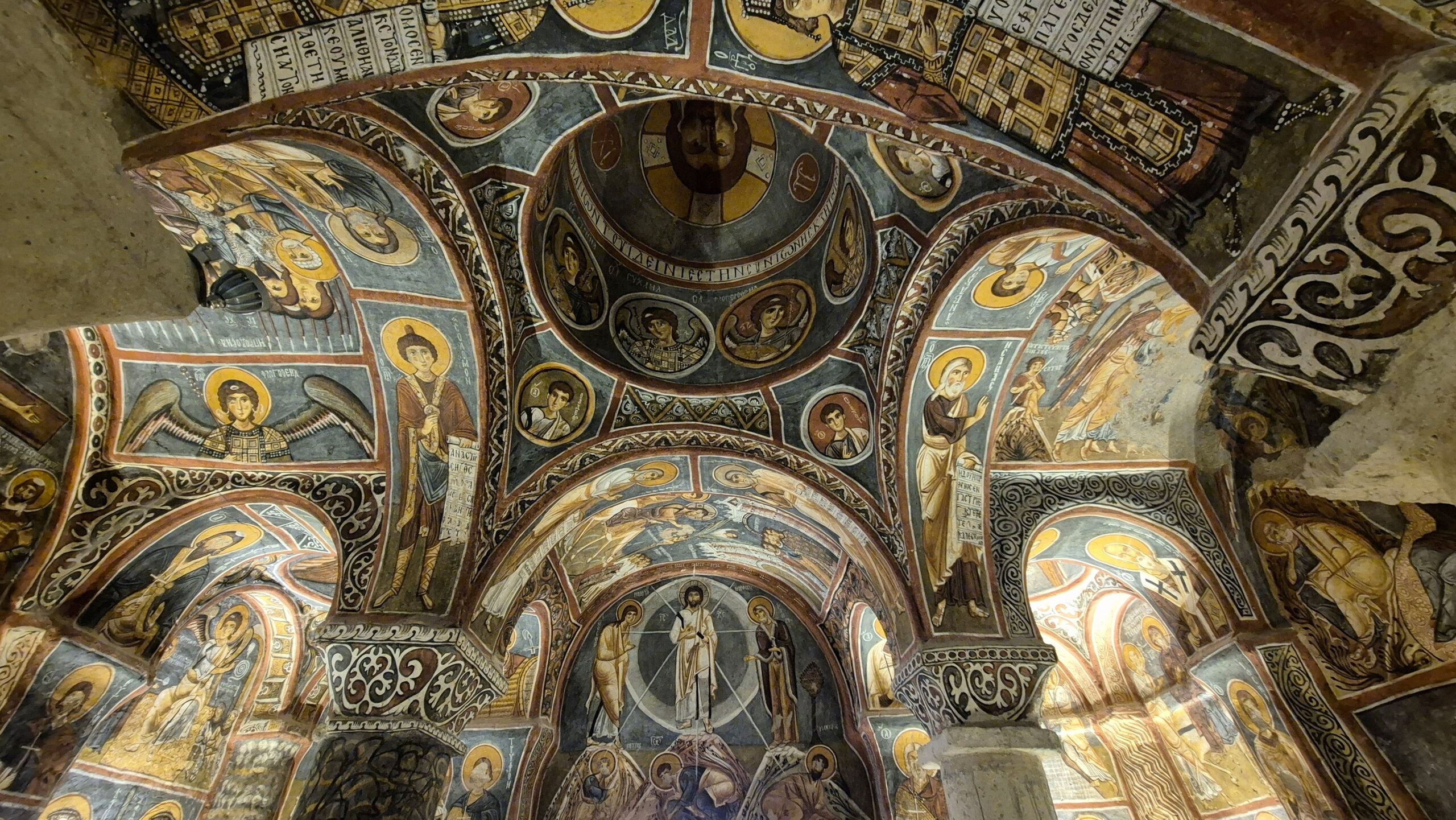
The 11th century frescoes from the Dark Church in Goreme’s Open Air Museum. These have been restored in recent years after neglect and deterioration from pigeon droppings. Like many other rock-hewn structures, this cave was used for years to breed pigeons or gather fertilizer.
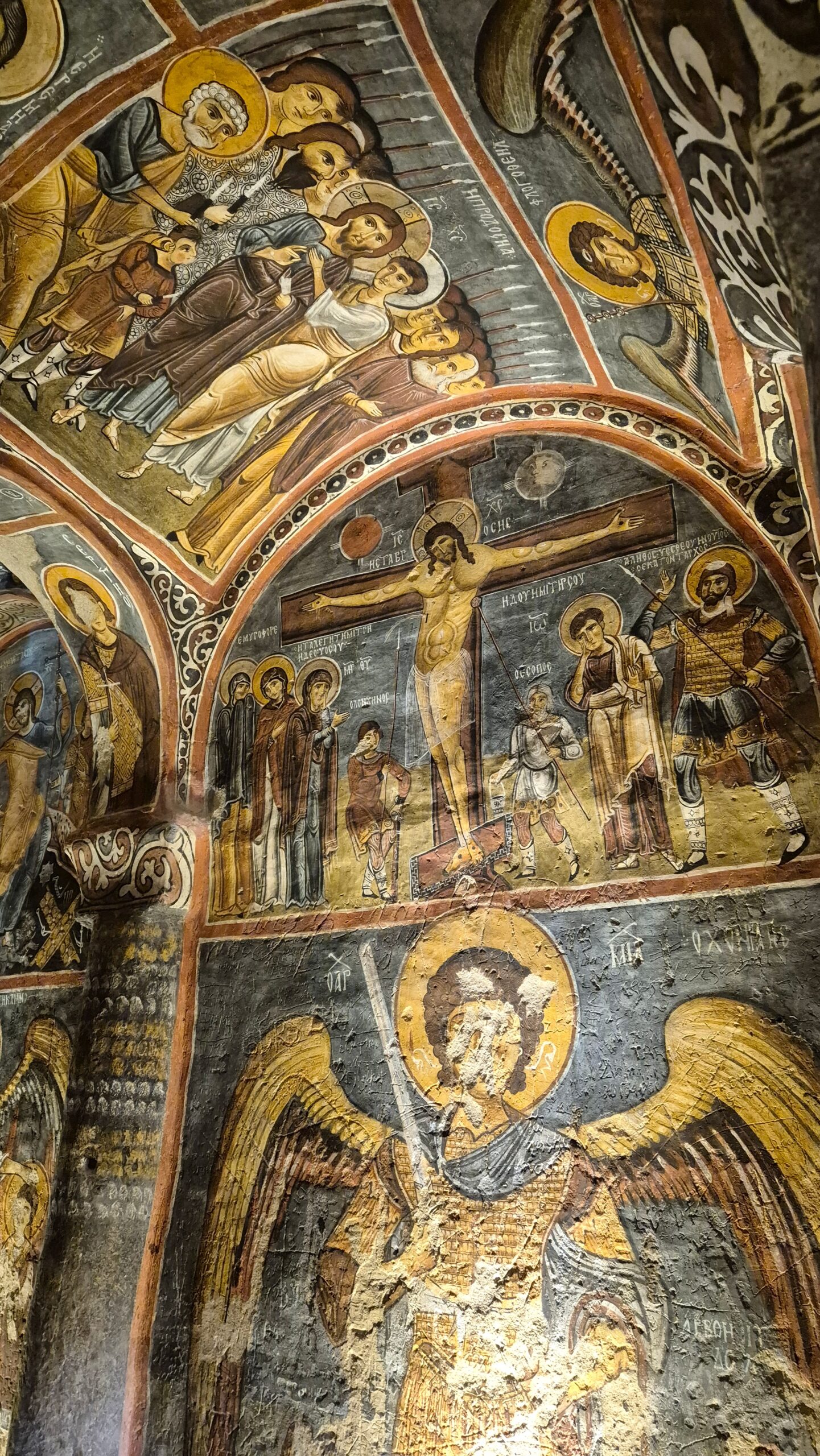
Other 11th century frescoes inside the Dark Church, Open Air Museum, with the kiss of Judas in the upper left and a mournful crucifixion below. Several of the other churches have splendid frescoes in fine shape, like the so-called Buckle Church. Others are still exciting to see, though their paintings have faded badly or been damaged.
The creams and colors of the soft rock along White Valley, where we hiked.
Other unusual formations within Love Valley during our hike.
A ground-level view, during our hike, of the striking columns we saw from our balloon ride.
A living room at Kaymakli, one of the amazing underground cities in the Kapadokia area. These stone burrows descended 8 levels down – and were connected to a larger underground city, Derinkuyu, by some 9 kilometers of tunnels. Over thousands of years, people carved these extensive passageways and chambers into the soft rock below ground to create a safe haven against invading enemies above ground.
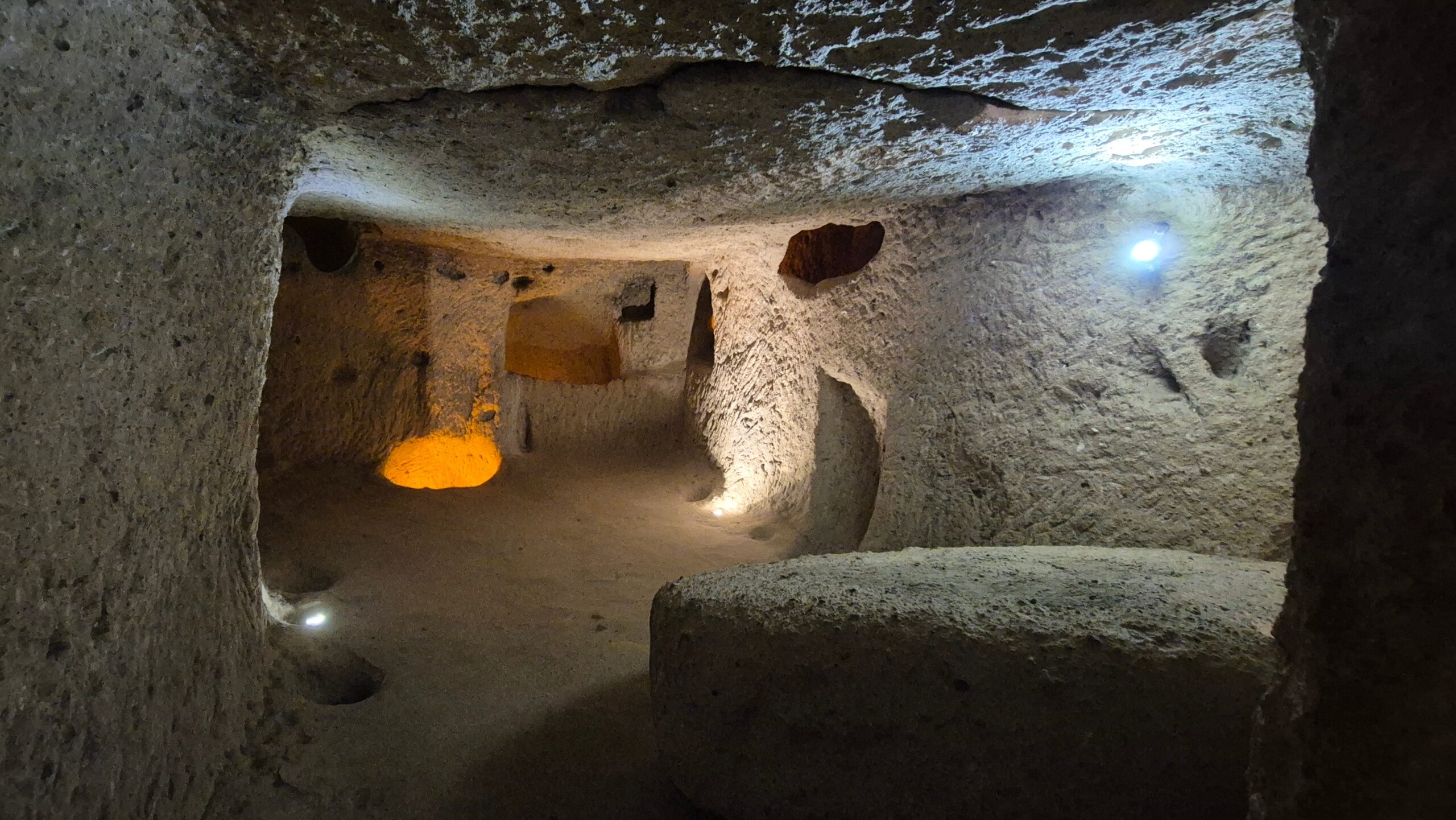
Other rooms dealt with amenities, ensuring enough supplies to wait out invasions. These chambers sheltered animals, operated as common kitchens, stored and processed wine or oil, acted as churches, or collected water. Even in this “upper class” living room, you can see some of the niches and hollows used for personal storage. If enemies invaded, residents could roll huge round stones like the one in the foreground across entryways to block access.
Wooden Mosques
Five Turkish mosques – made of solid stone blocks on the outside with rich wooden detailing on the inside – date from the 13th and 14th centuries under the Seljuks. They were the Islamic dynasty that controlled this region out of Persia before the Ottomans gained power. These 750-year old mosques – two of which we were fortunate to find in our travels – are collectively a World Heritage Site. Breathtakingly beautiful to a visitor, they are still used regularly for prayer and teaching after all this time.
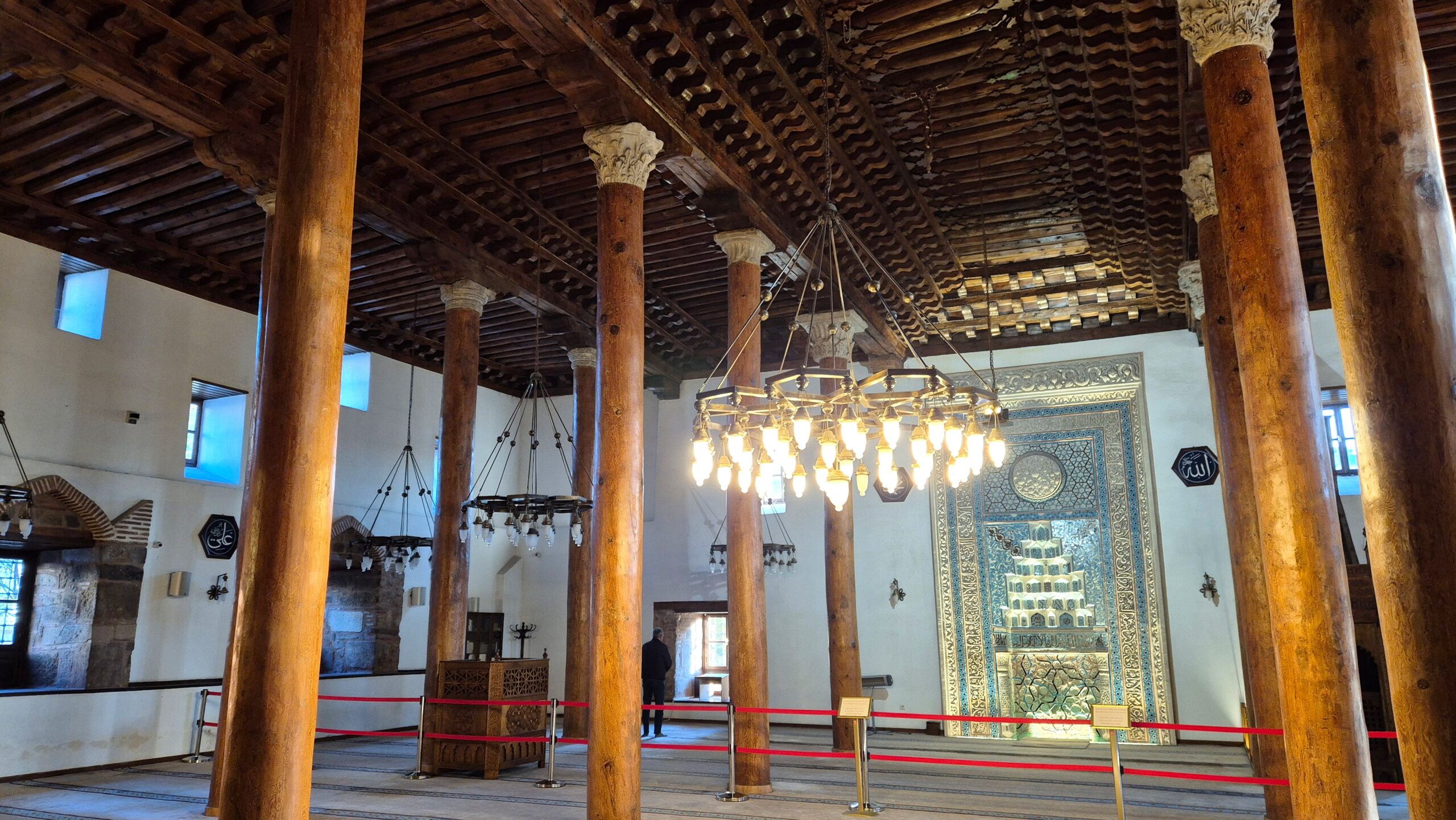
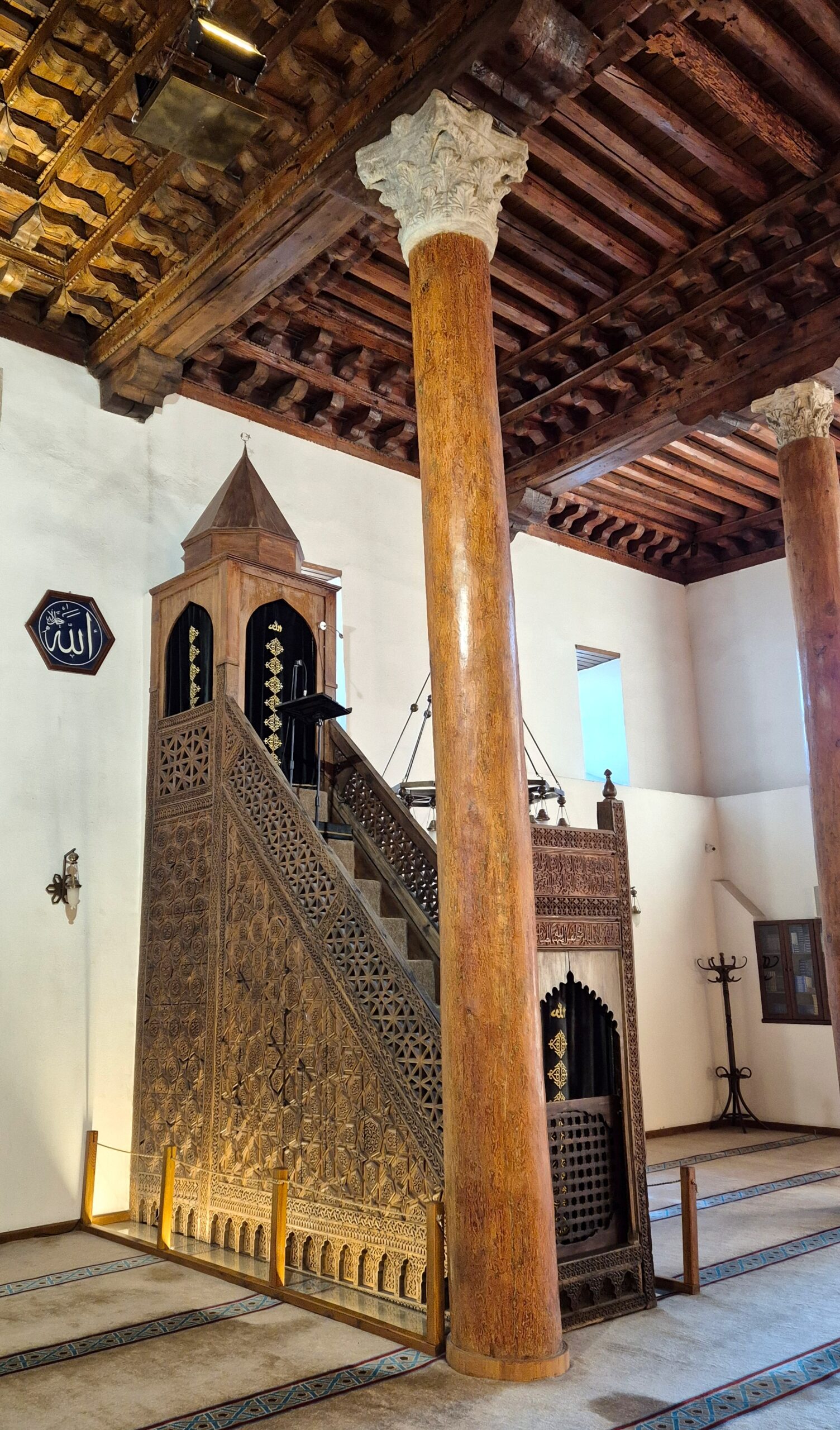
At Aslanhane in old Ankara, Turkey’s capital, wooden columns support a splendidly beveled, dentil wood ceiling. It is one of the oldest mosques in Turkey, dating from the 13th century. Technically these churches are called hypostyle because they are supported by columns. We are looking toward its gleaming mihrab, marking the direction of Mecca.
The minbar, or pulpit, at Aslanhane in old Ankara also dates from the Seljuk period and is made of walnut, with gorgeous intricate detailing. The name of the mosque, meaning House of the Lion, alludes to a lion statue buried below the mosque. CS Lewis fans might recognize the name.
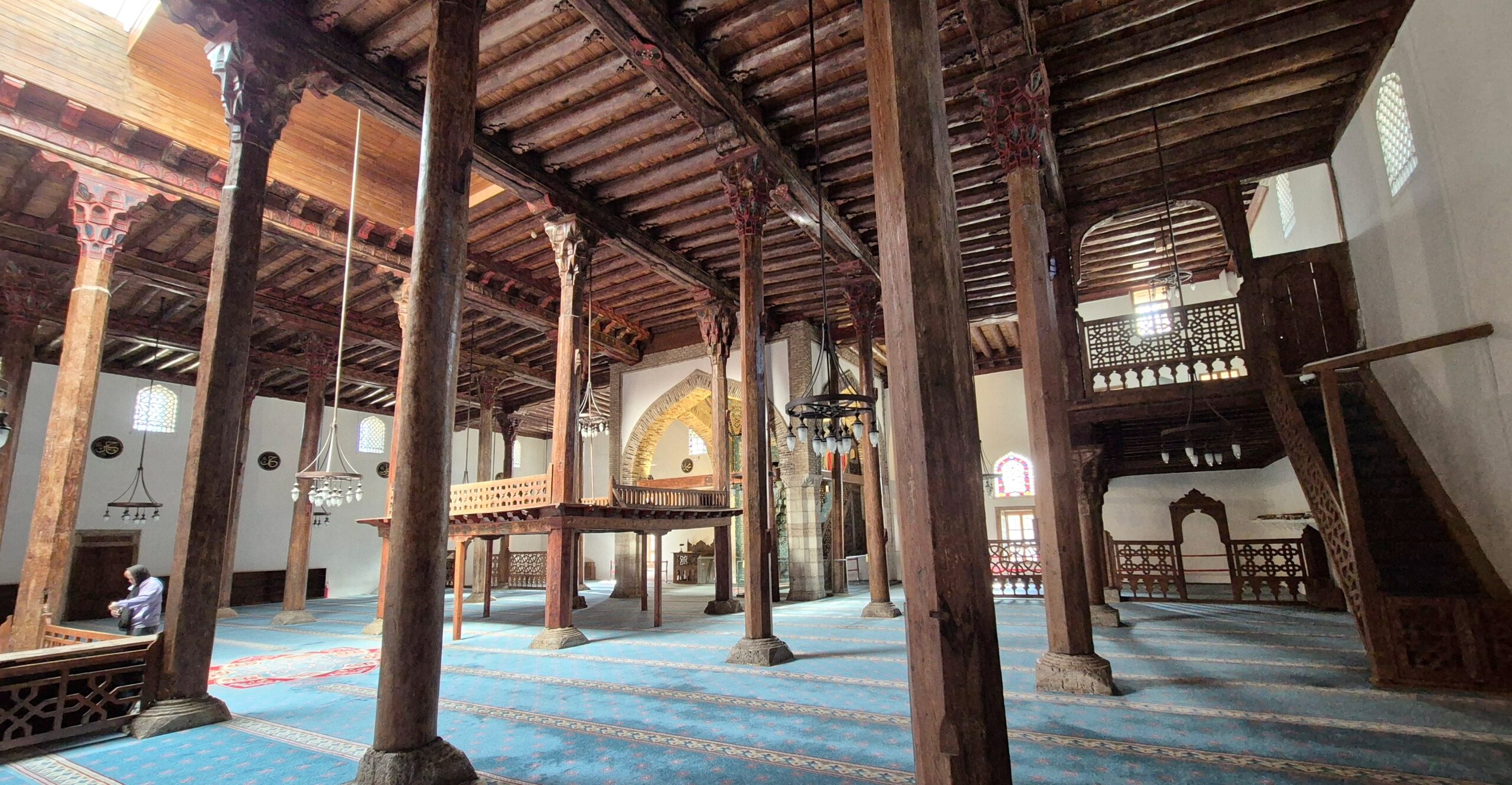
Cedar columns – some round and some beveled – support the broad space and high ceiling at Eşrefoğlu Mosque. At the far left, Nancy is looking into the central snow pit. That was filled with snow from nearby mountains to keep the interior cool and moist. Visitors now toss donations into it. The mosque dates from the 13th century when Süleyman Bey rebuilt the city of Beyşehir on a lake northeast of Antalya.
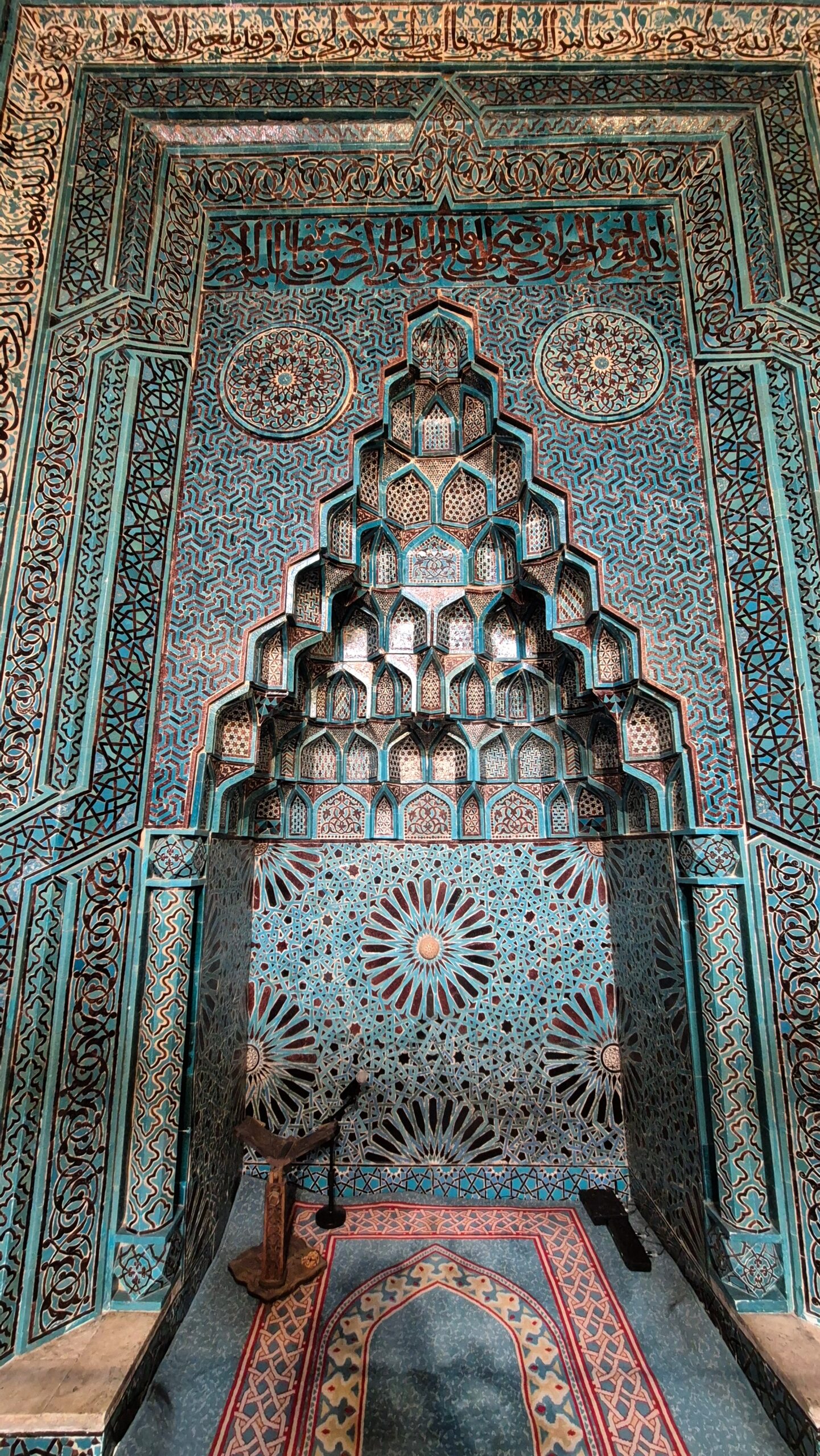
This is the stunning mihrab at Eşrefoğlu, made of painted Seljuk tiles. The mihrab marks the direction of Mecca in a mosque. The decorative detail and gracious calligraphy, along with the stalactite relief, draw attention from every part of the mosque.
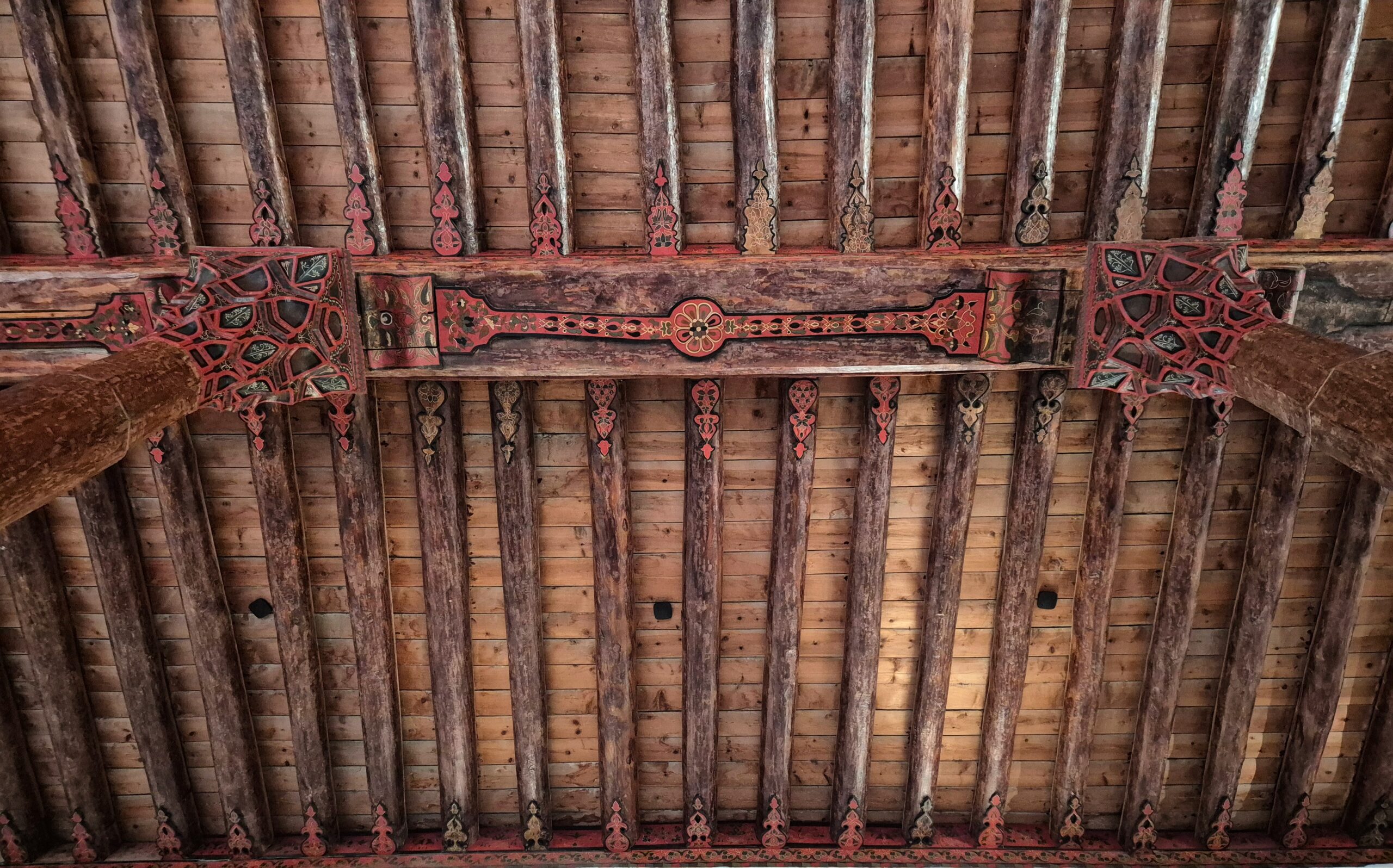
Painted beams adorn the entire ceiling at Eşrefoğlu Mosque.
(To enlarge any picture above, click on it. Also, for more pictures from Turkey, CLICK HERE to view the slideshow at the end of the itinerary page.)