
In brief: Our swing to the south of Turkey led us to its lovely Mediterranean coast and two very different cultural heritages.
Neolithic Çatalhoyuk: The origins of community
They established a model for how to live together…some 8000 years ago. Here, at Çatalhoyuk in central Turkey, a neolithic-era people were among the first to collect themselves into a community. And formed one of the first cities ever. That proto-city was located near fertile grounds and flowing water, a perfect location for producing what they needed. So, they stopped roaming and formed a loose social structure to hunt, grow crops, and breed livestock collectively. They built rectangular houses of mud, socializing and working together on rooftops from which they descended into their houses by ladders. They decorated their homes with art. It worked, for at least 2000 years in this place, setting the course for our megacities today.
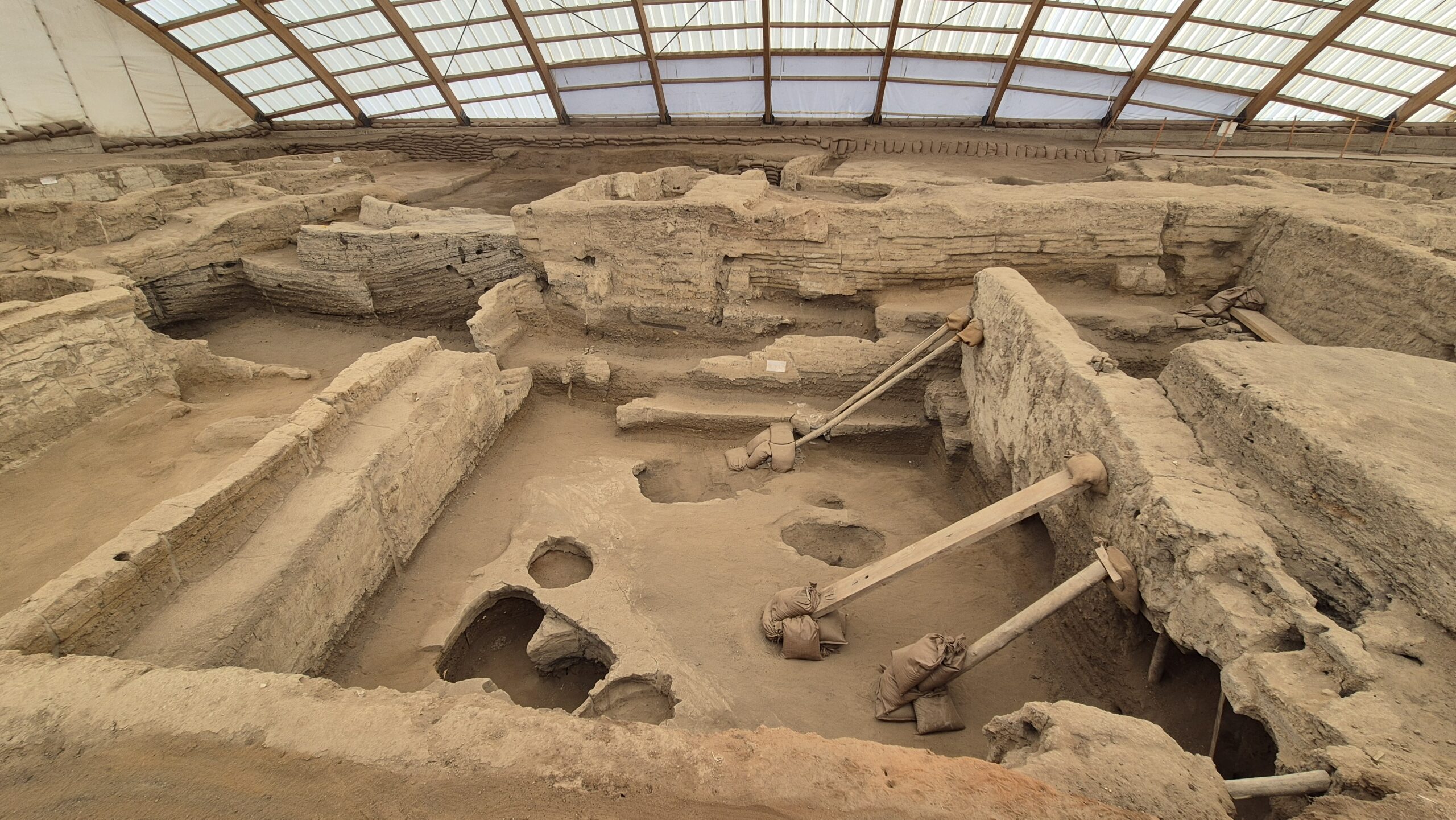
The only archeological site we could view at Çatalhoyuk. Here you can see the foundations of one home, with niches for storage and different levels for different household uses. The wall outside of it to the back and left marks the place where refuse went. The pits in the ground are for depositing the bodies of those who died, keeping them close in death as in life. Many layers of bones have been found in these.
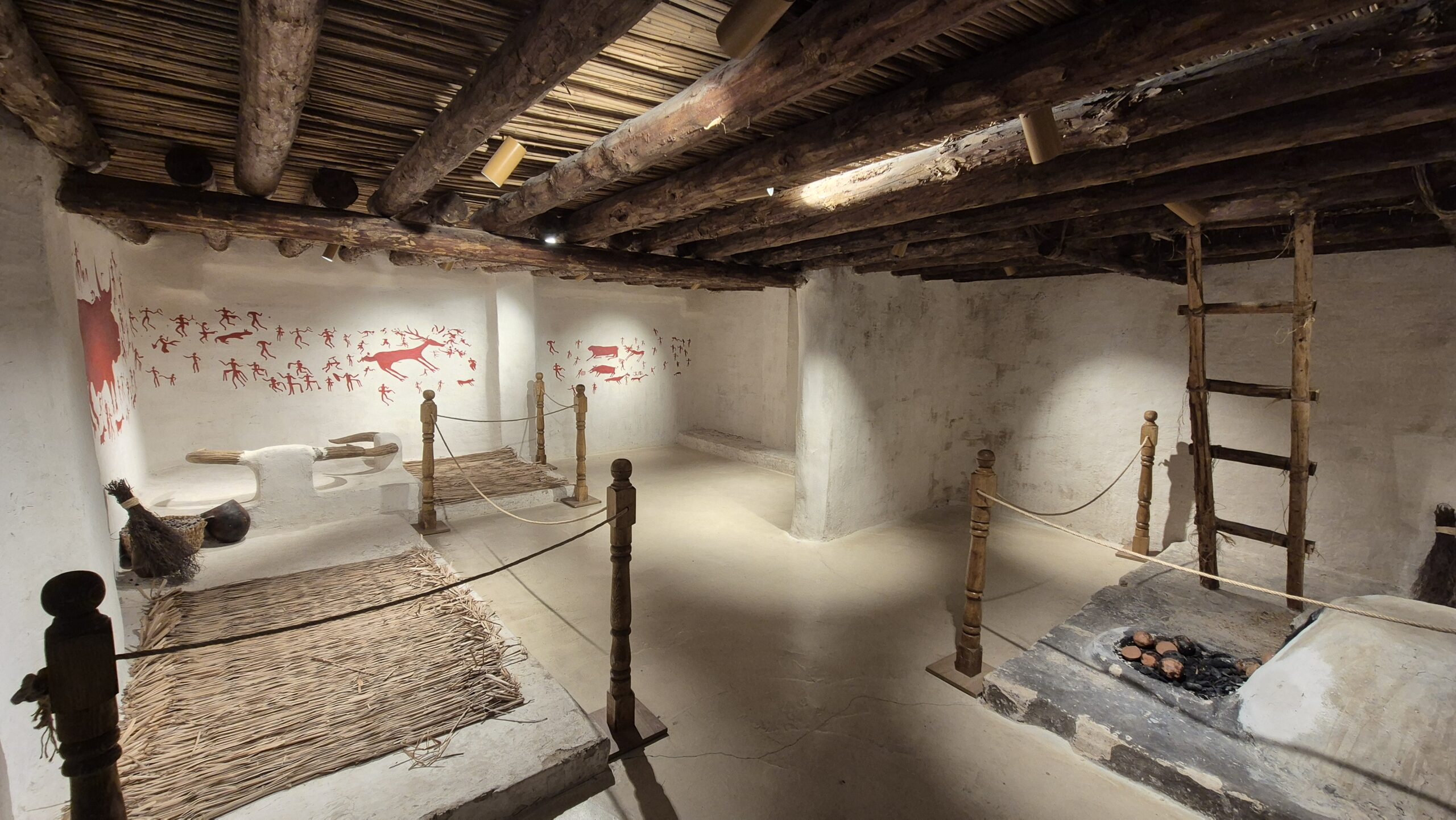
Reproduction of a Çatalhoyuk home. The mud walls had no side entrances, only a rooftop access for cooking smoke to escape and for climbing/descending the ladder. People worked and connected by the roofs. They seemed to be meticulously clean, with refuse deposited in a common bin outside the home. The people used fired clay balls to absorb heat (and preserve wood usage); on the balls, they placed their cooking pots.
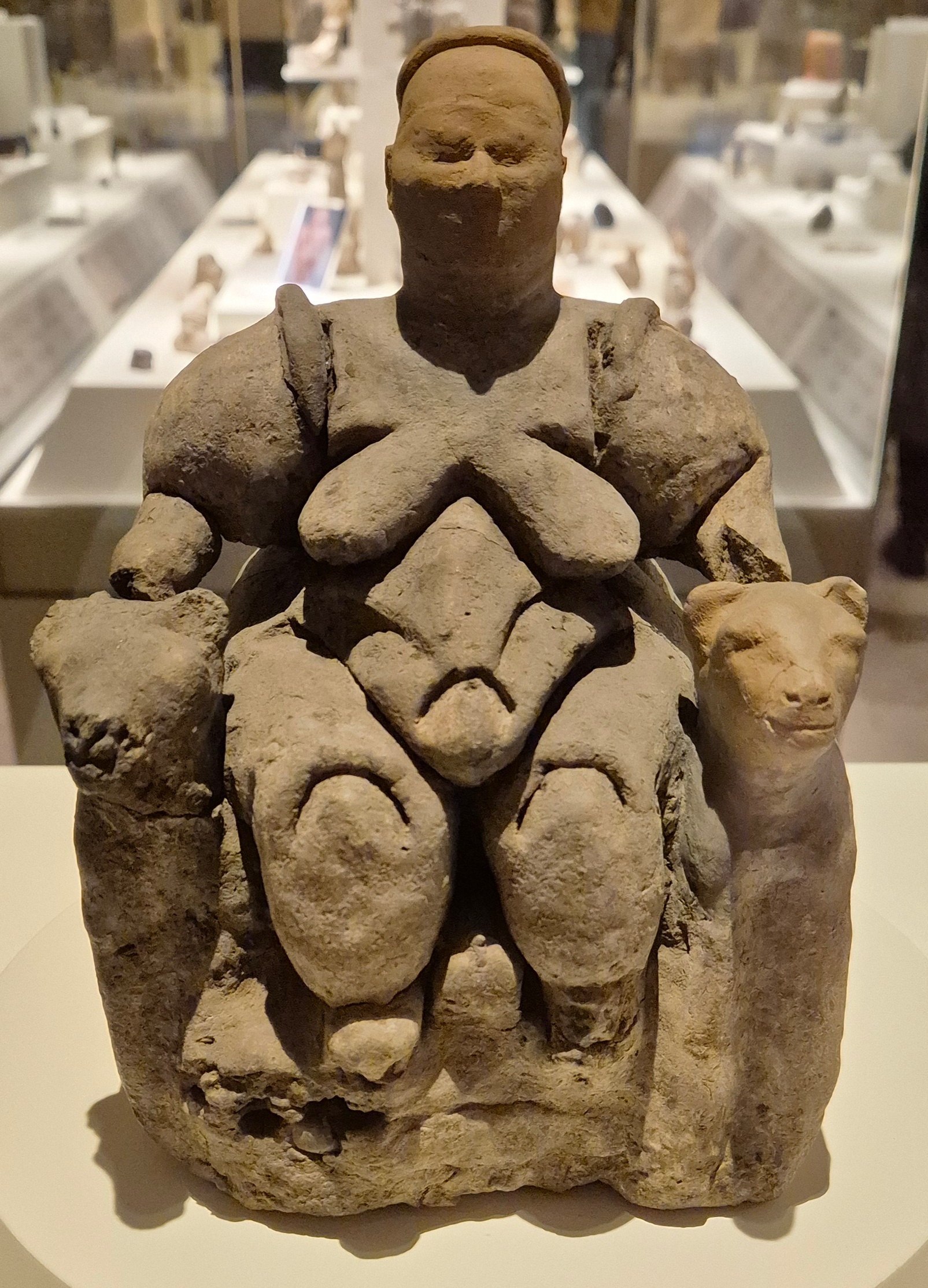
A clay figurine of a goddess about half-foot in height (15cm) from 5750BC. Like the Venus of Willendorf, her figure invokes fertility in crops and children – good ideas for a nascent community. Flanking her on her throne are two leopards, emblems of social compatibility. Some scholars think that Çatalhoyuk was a matrilineal society, with inheritance through the women. (Museum of Anatolyan Civilizations, Ankara)
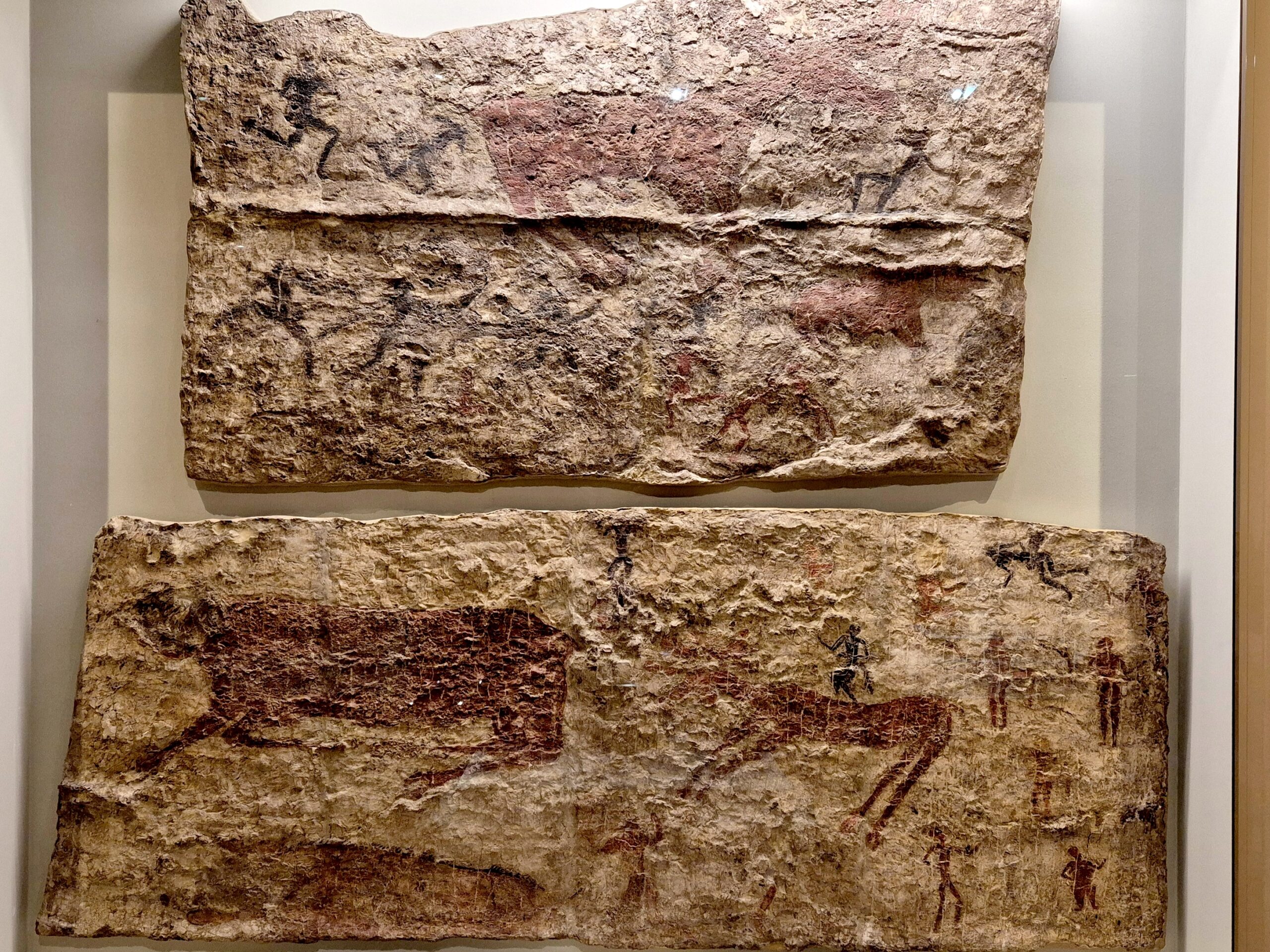
Original paintings from the walls of Çatalhoyuk dwellings. On top, men dressed in leopard skins chase a very large deer and his little friend, the boar. Below, hunters with bows and arrows, as well as a net, pursue the same wild game. These date from 6000BC, 8000 years ago! (Museum of Anatolyan Civilizations, Ankara)
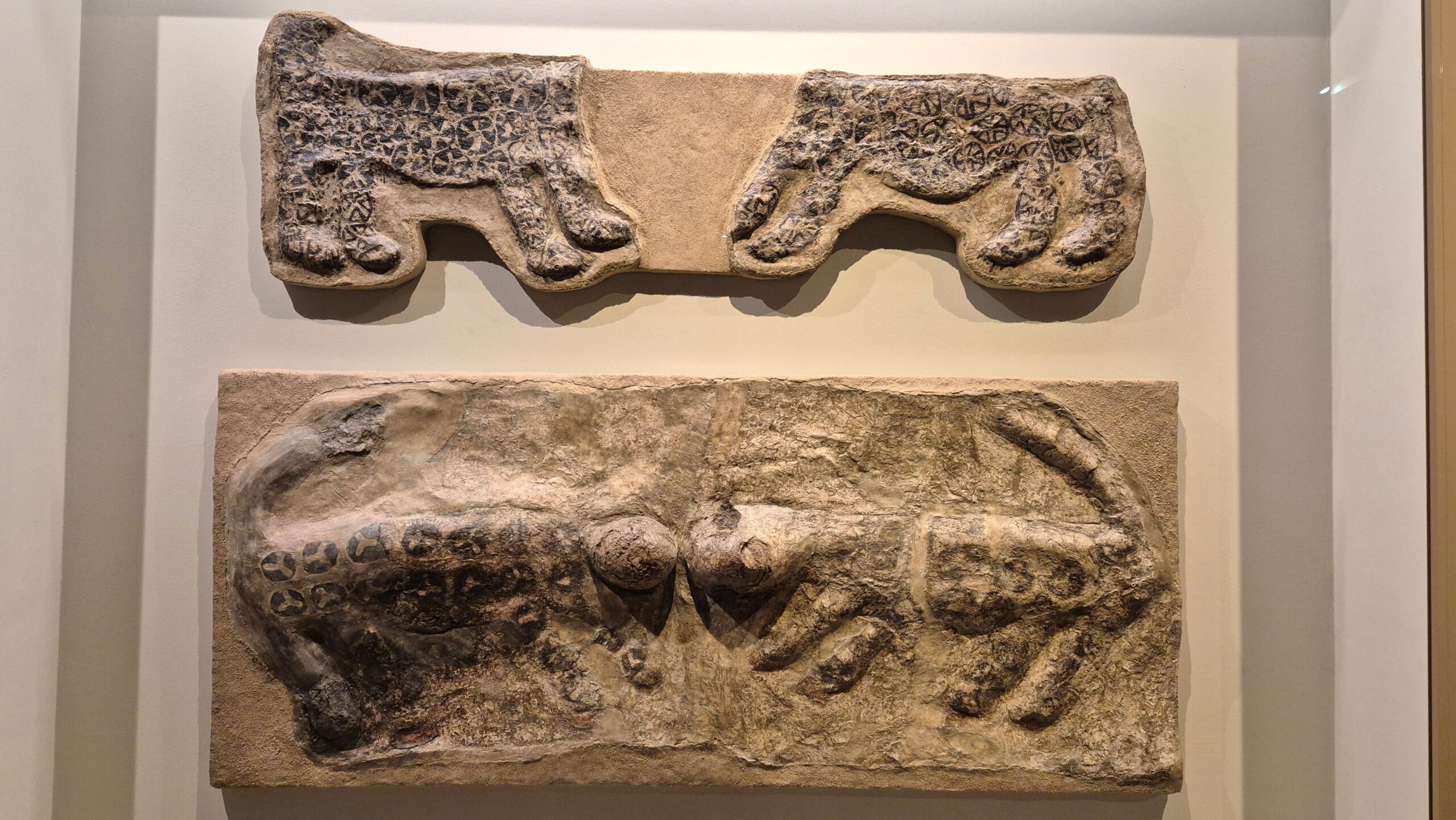
Plaster ornamentation of two leopards, emblems of sociability from around 6000BC. These seemed to have been repainted frequently and so continually used over a long span of time. (Museum of Anatolyan Civilizations, Ankara)
Rumi and the Mystic Dance (Konya)
We seized the opportunity to visit Konya in central Turkey, where the renowned 13th century poet, Rumi, lived much of his life. He has earned worldwide fame for his mystical poetry in Farsi (Persian), centered on his Sufi Islam beliefs. After becoming an ascetic in mid-life, Rumi also fostered the dervish sect. Their best-known practice was to whirl slowly in a meditative, spiritual dance (semah) – now largely performed, however, as entertainment for tourists. But his words still soar:
Be divinely inspired;
Though we are physically distant to each other,
Soulless, bodyless rays of light both we are;
See him, see me, which one would you please…
Oh, the Seeker! for He is me and I am Him.
— Rumi Mevlana
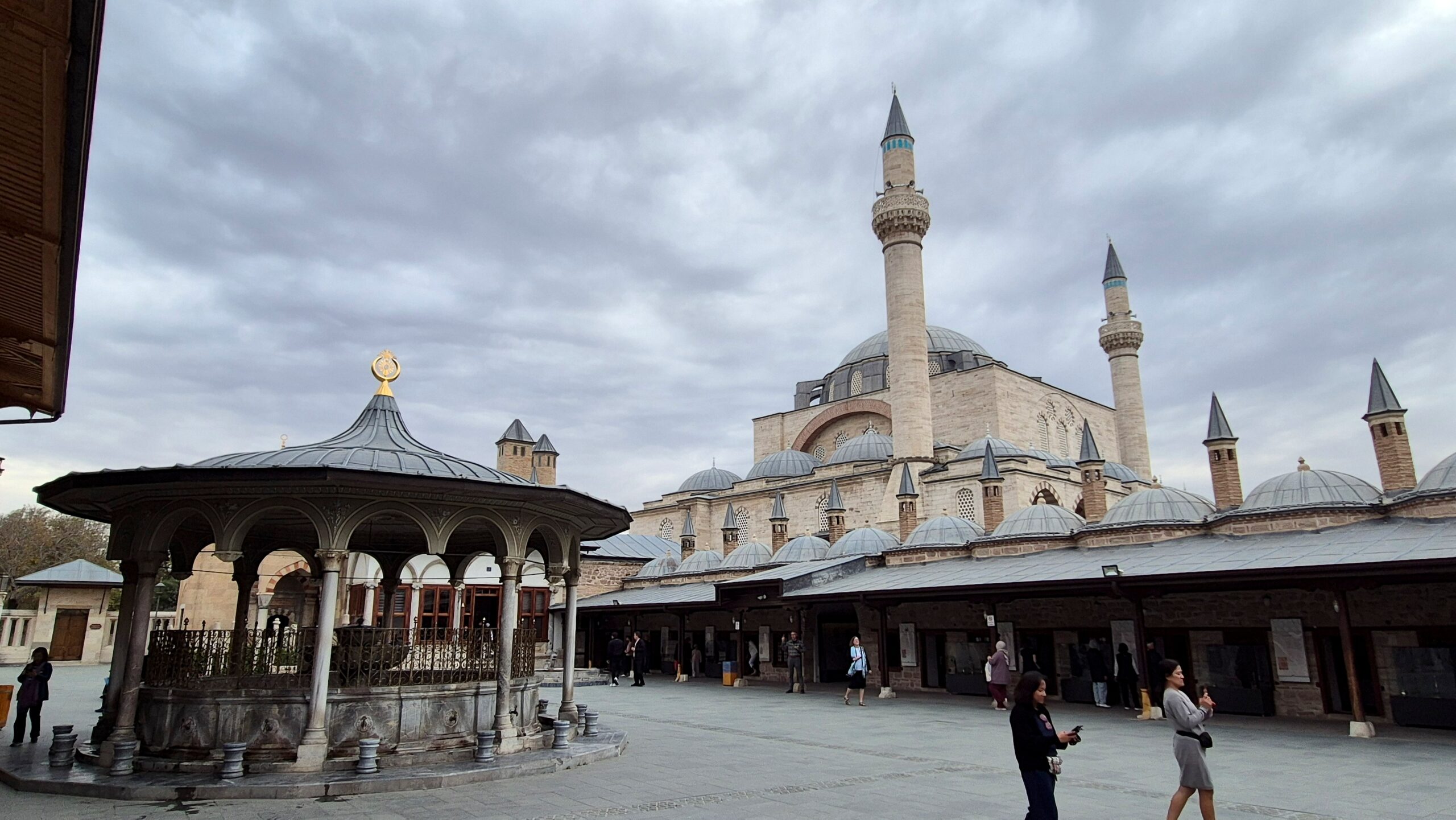
The 13th century mausoleum where Rumi (who was also known Mevlana) is buried, as well as the location of a former dervish lodge – all now part of the Mevlana Museum. In mid-life, Rumi became a disciple of the Sufi dervish leader Shams. The death of that leader led to an outpouring of lyric poetry that Rumi wrote in Konya. These poems dealt with the complex emotions he felt and resulted in the founding of many lodges for devotees to learn the dervish discipline.
The elaborately decorated tomb of Rumi is radiant within its arched chapel at Konya. The coiled black object is a representation of Rumi’s turban. It was common to adorn gravesites and coffins in this way (as you can see to the lower left). The woman in the foreground was weeping while she stood there.
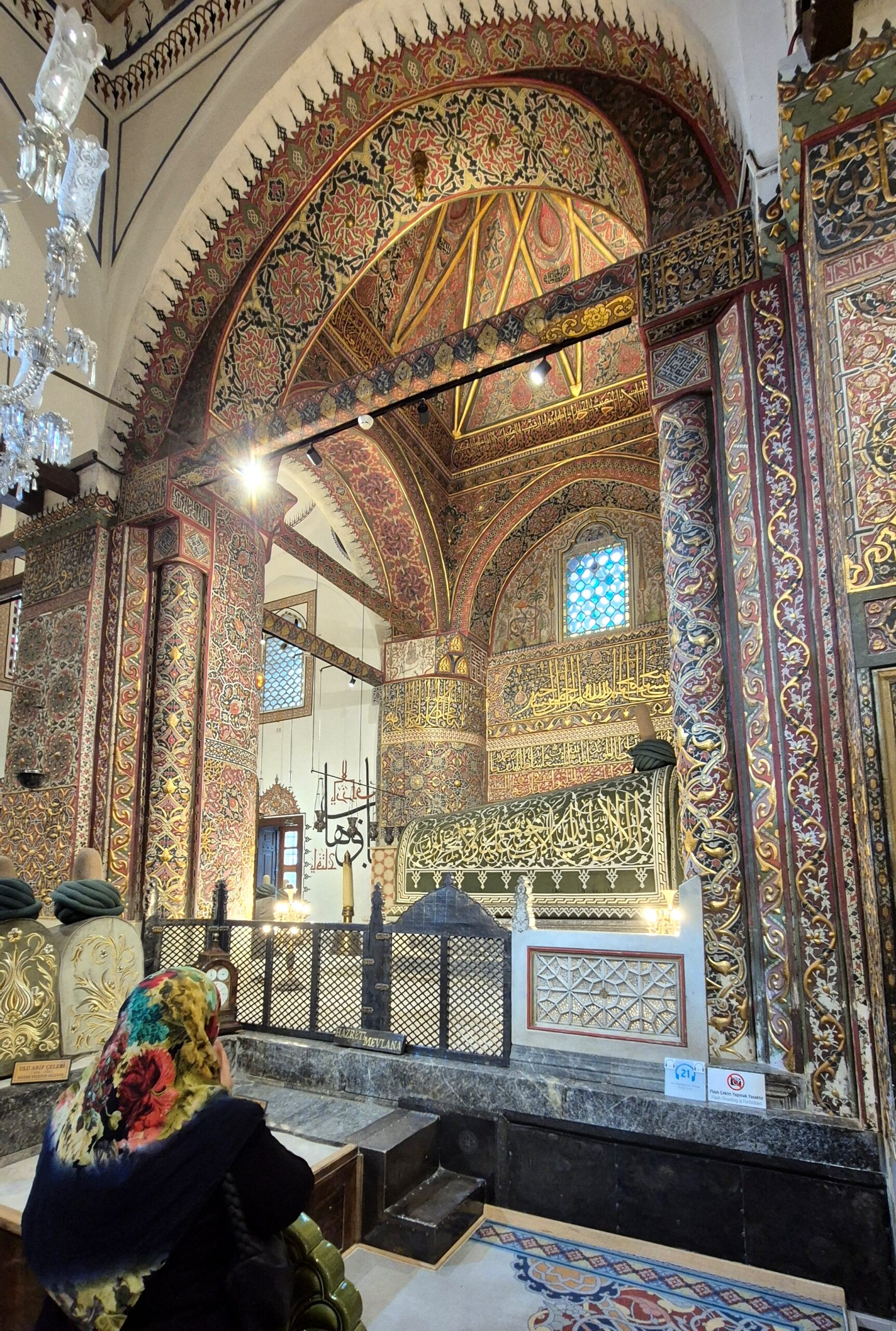
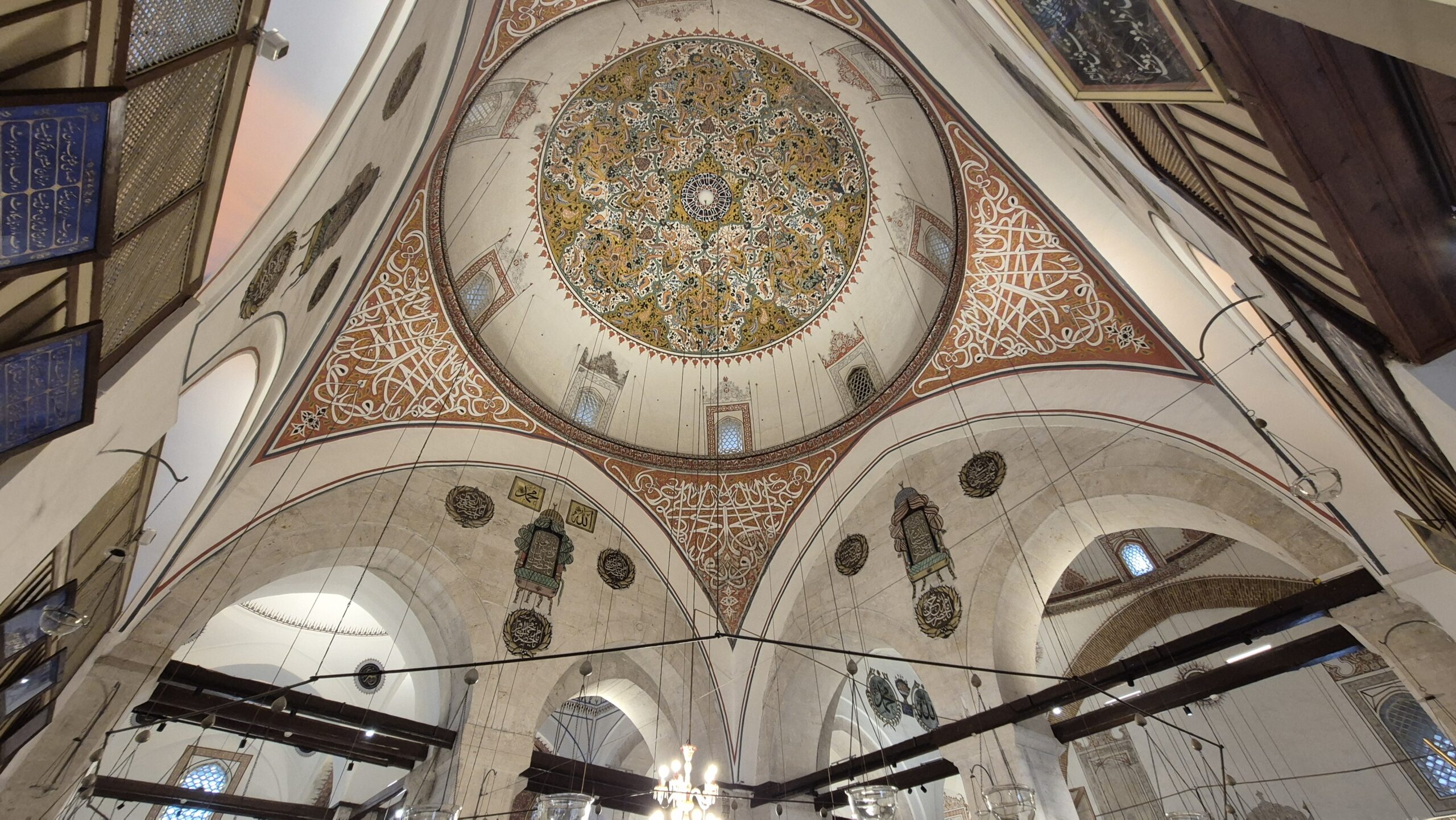
Interior of the Mevlana Museum at Konya, which still seems to be used for prayer at times.
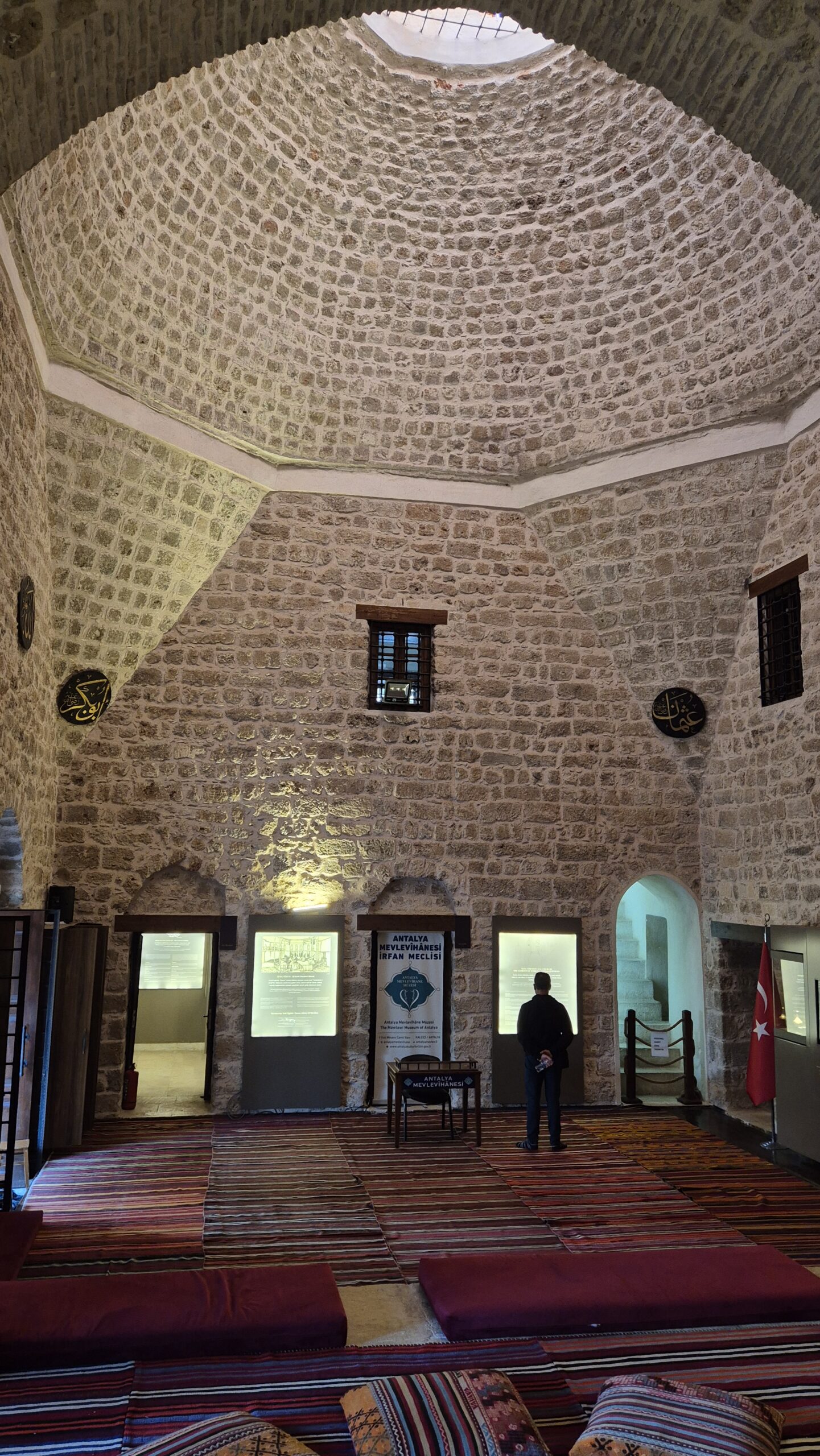
At a former dervish lodge at Antalya, this is the conical space symbolic of the universe for dancing the seven parts of the semah, the dervish whirl. A plaque in the room repeats Rumi’s famous advice for living:
In generosity and helping others be like the river,
In compassion and grace be like the sun,
In concealing others’ faults be like the night,
In anger and fury be like the dead,
In modesty and humility be like earth,
In tolerance be like the sea;
Either appear as you are, or be as you appear.
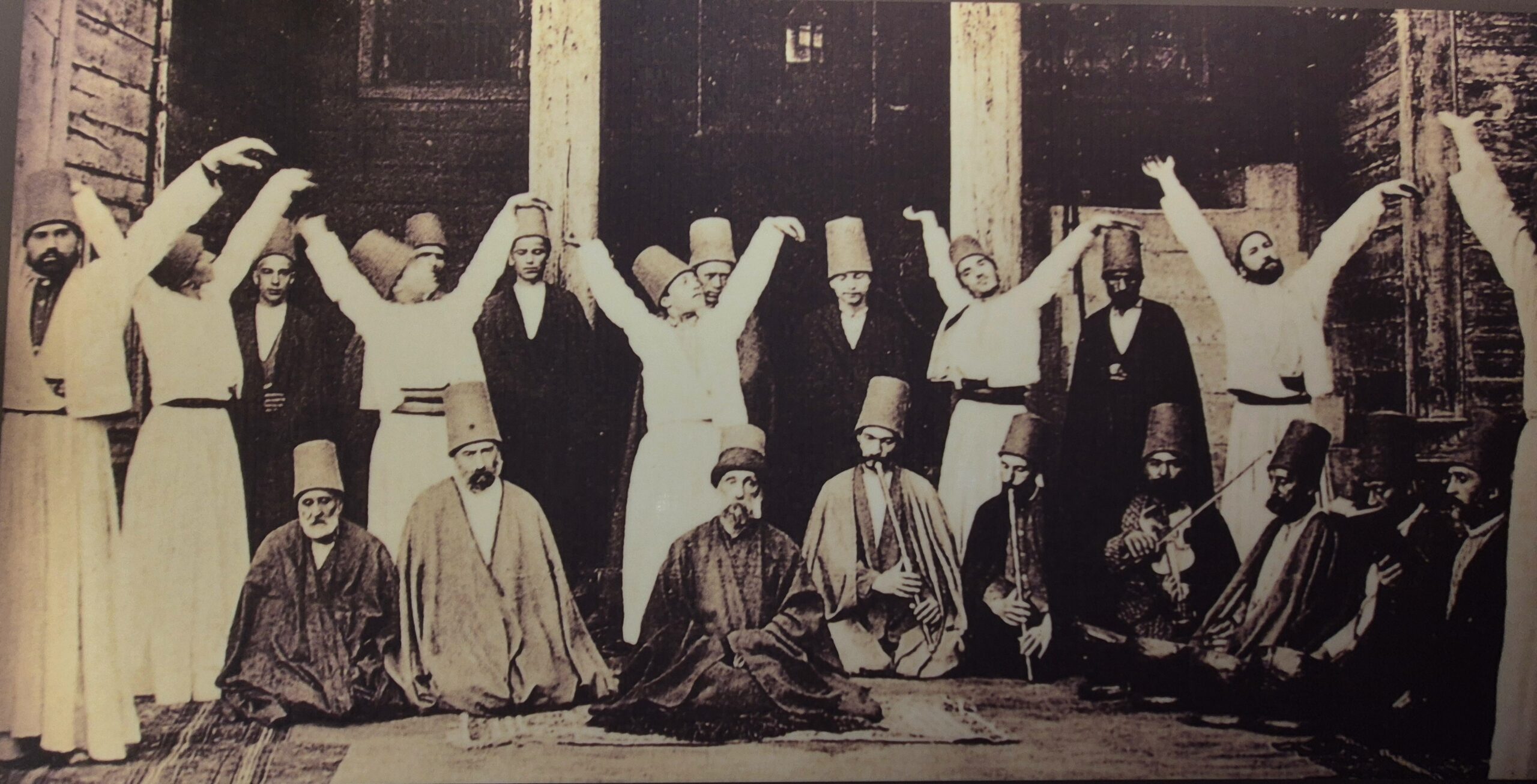
An old photograph of the dervish sect of Sufi mystics, from an ancient dervish lodge in old Antalya, now a museum. The dancers are demonstrating the physical gestures of the semah, with the musicians seated to the right. Their whirling dance was a form of meditation to connect spiritually with the divine. The music elevated and inspired the spirit, mainly through wind (flute) and touch (tambor).
Antalya
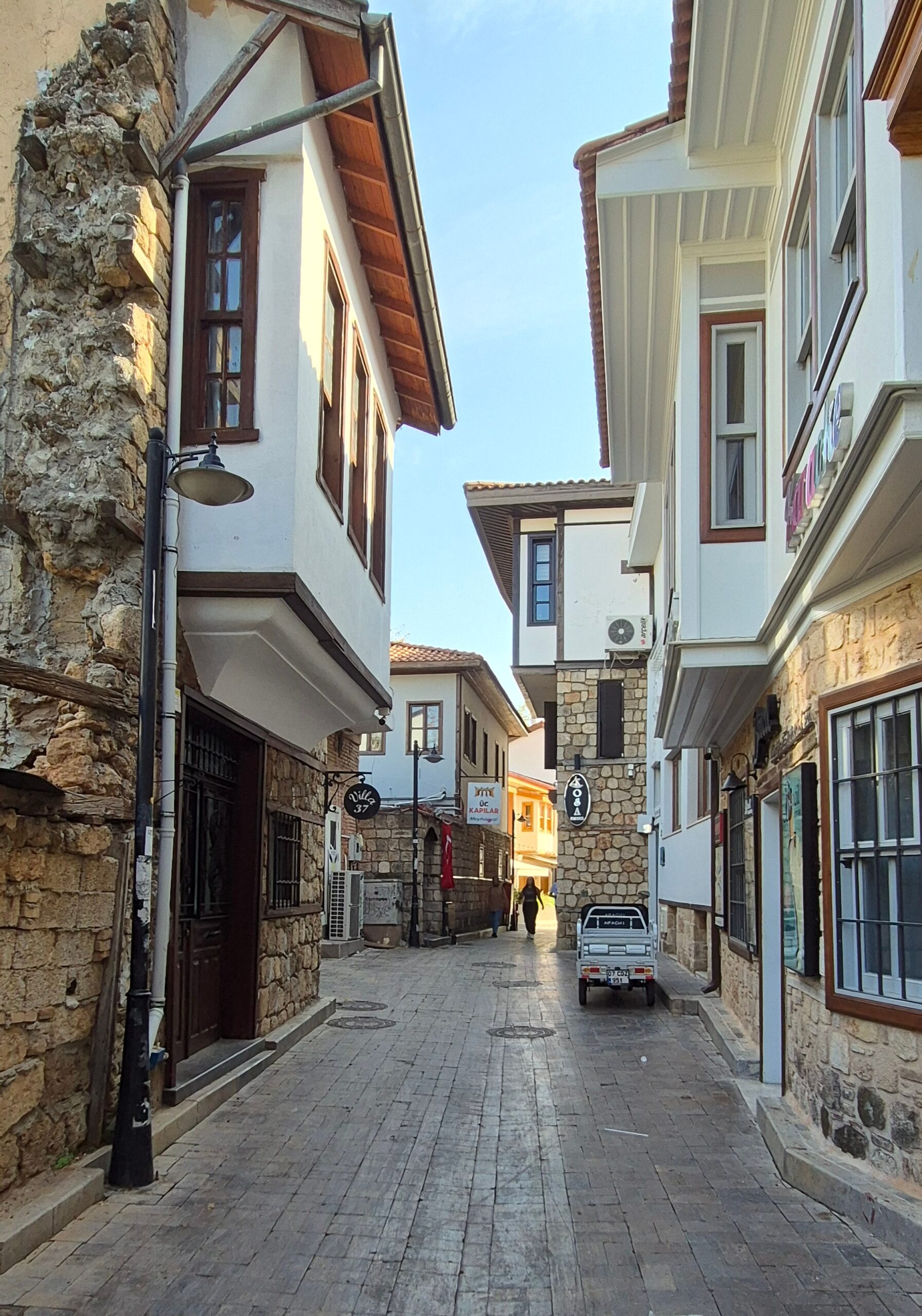
Among the many enticing towns on the Mediterranean Sea in southern Turkey, Antalya charmingly combines the old and the new. It’s ancient hillside district, Kaleiçi, reflects the long Ottoman rule of the country. Mosques still enwrap worshippers in breathtaking space. Rehabilitated old residences along vine-decked lanes still recall a centuries-old style of living. A Roman arch and harbor trace history even further back. We could see that Antalya’s adaptations for Turkish and foreign tourists threaten to undermine its charm. But, on a lovely crisp day in the off season, Antalya could still captivate.
One of many similar, narrow lanes in old Antalya, with rehabbed buildings that retain the jut-out verandahs that let people inside watch people outside.
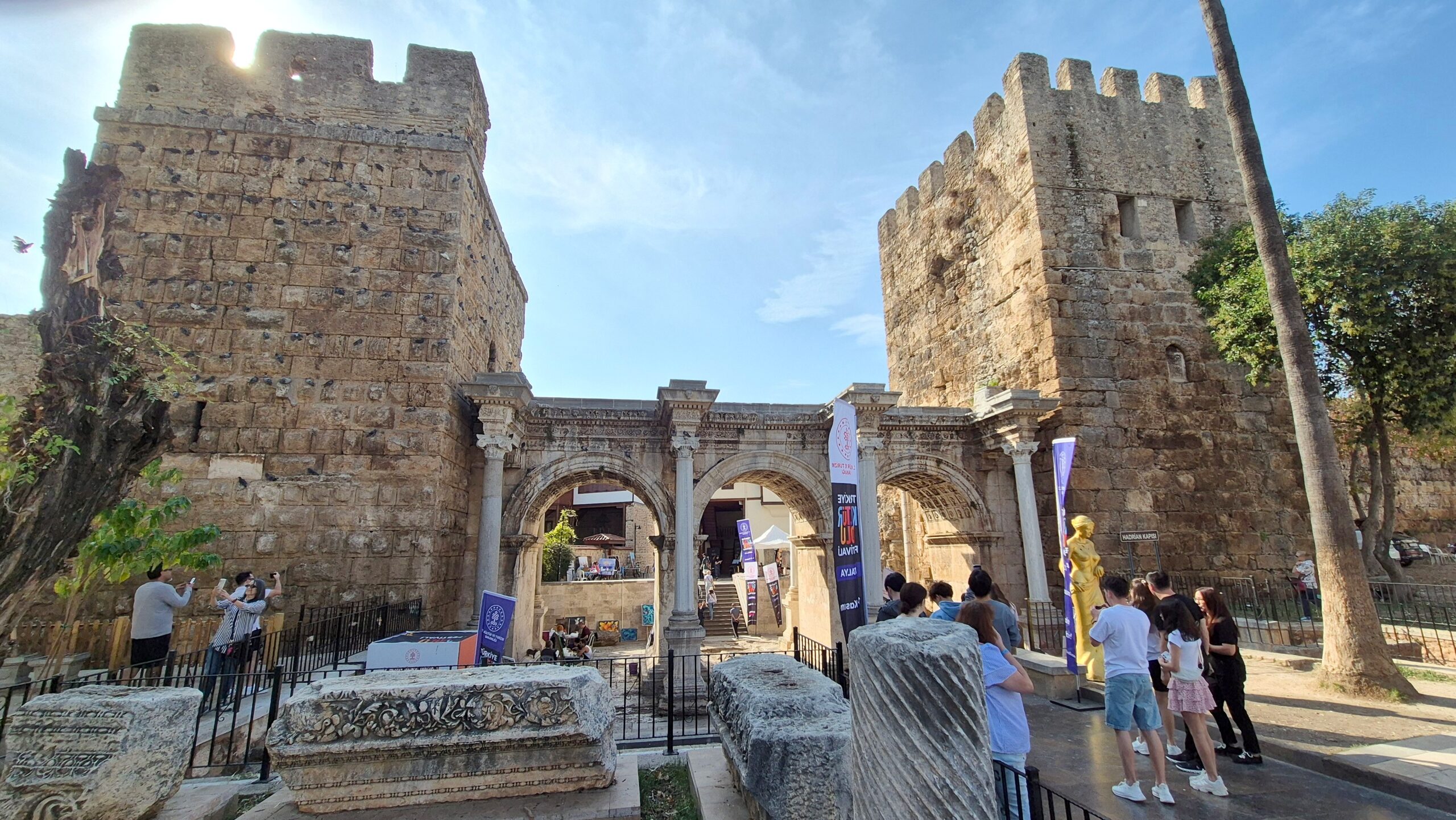
One of two major Roman era features in old Antalya: Hadrian’s Gate from 130BC. This was built to celebrate a visit by the emperor around 2100 years ago. In addition to the usual columnar and frieze decoration, four cute lion faces top the columns.
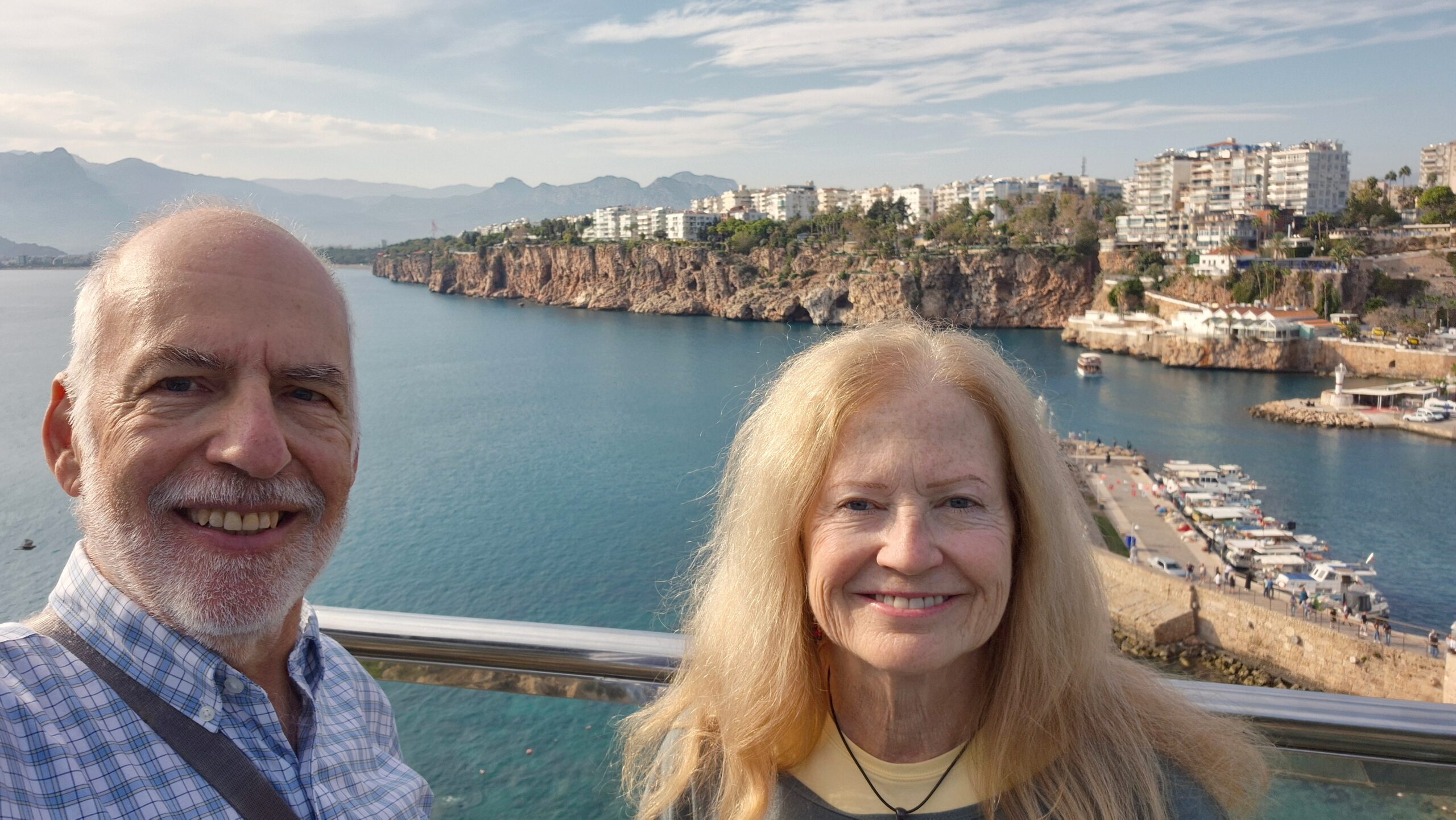
Two modern travelers stand high atop a marina which used to be the main port in the area for 1800 years, from the Roman era until the 20th century. A gaggle of new buildings have gathered atop the natural cliff behind us, which curves around toward where we stand, forming a highly protected bay.
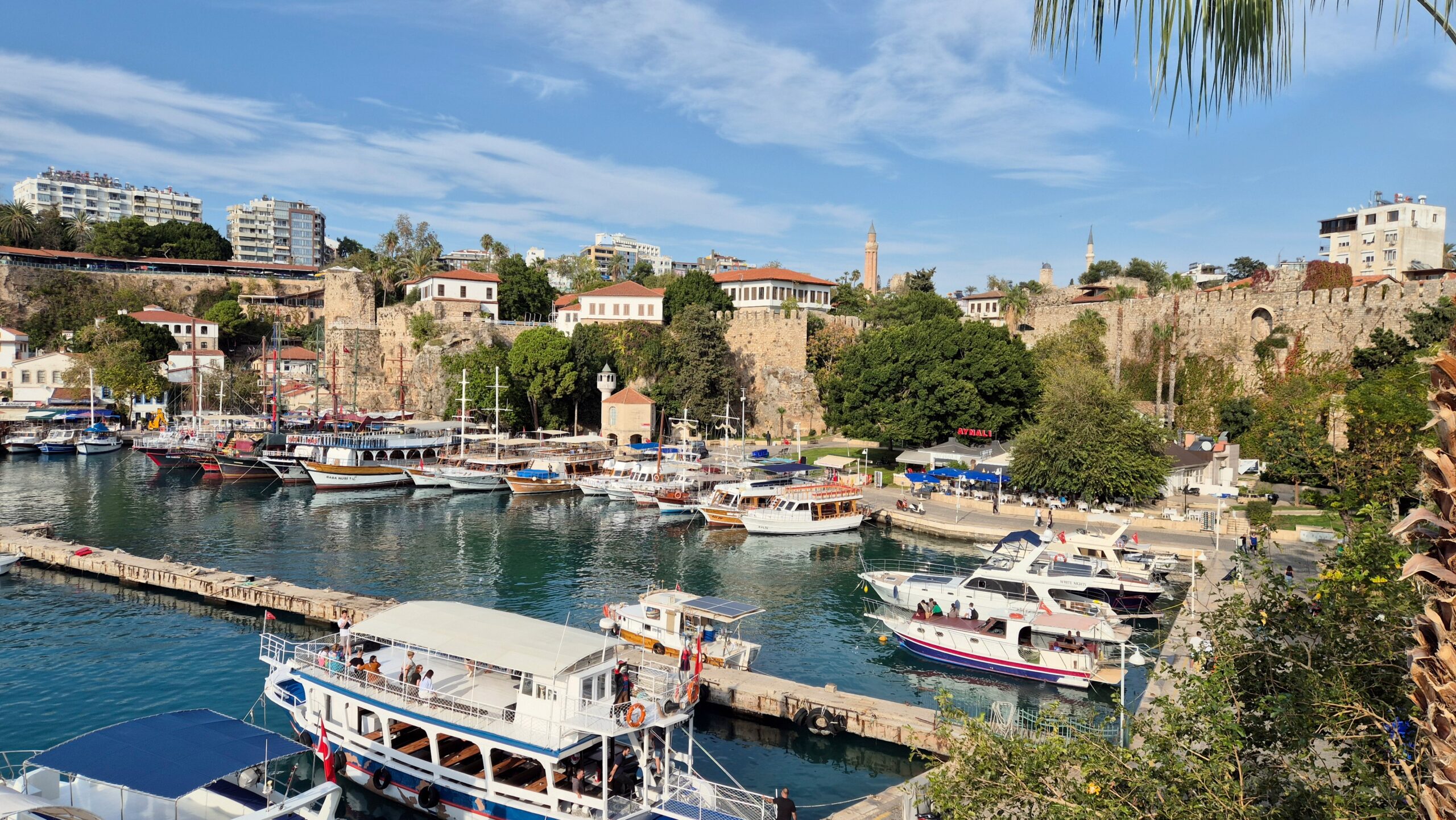
Stone fortifications strengthened and extended the natural cliff faces of Antalya’s old Roman-era port. In the 1980s, the port was also rehabbed, made less commercial and restricted to yachts and local cruising boats.
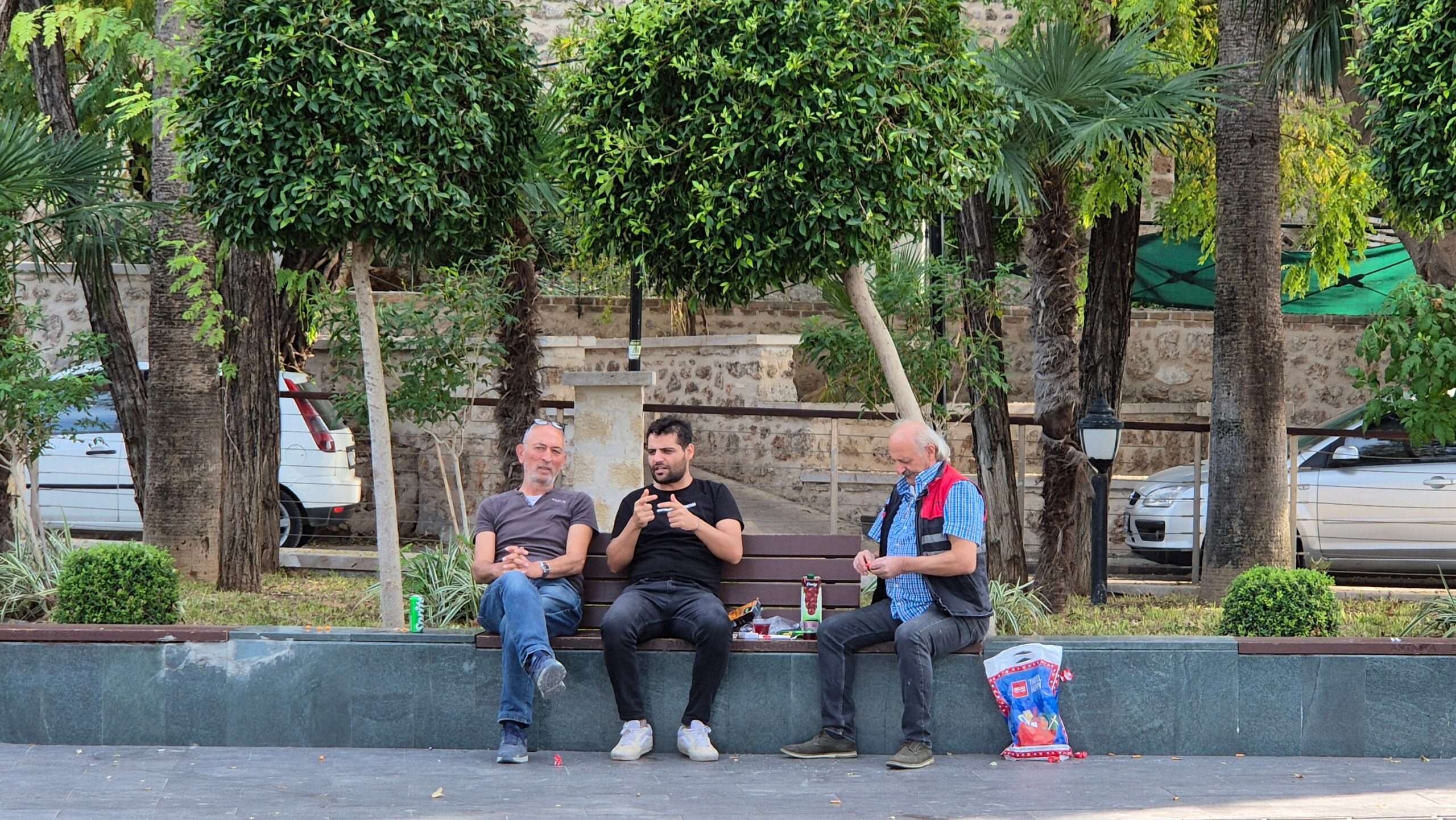
A few friends gather to enjoy the pleasant day – with some juice, soda, and crackers – at a park overlooking the Roman port at Antalya. Many other social gatherings we saw were over tea at the cafes, or battling noisily at backgammon boards.
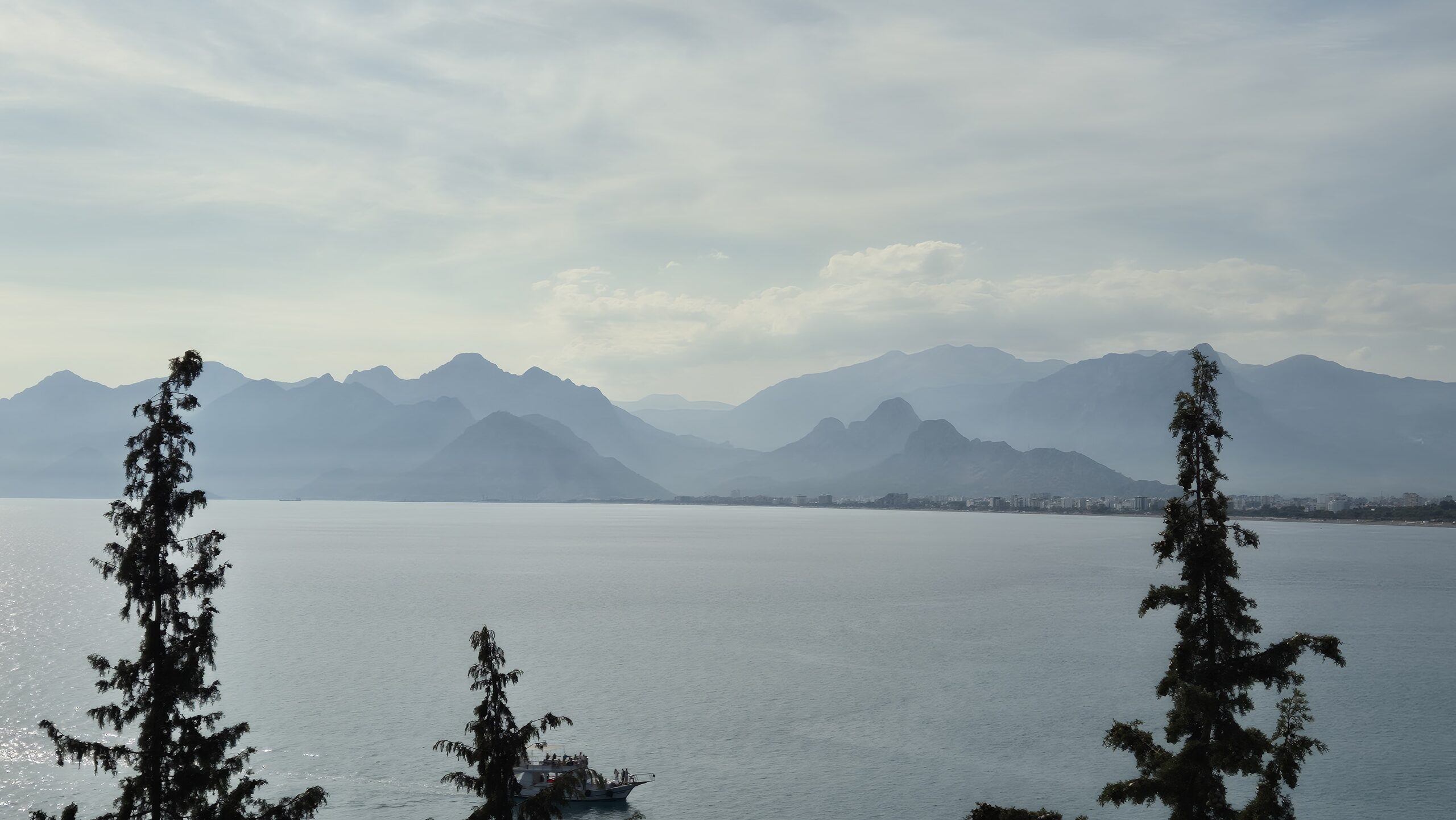
Sublime view along the southern coastline from Antalya’s old port
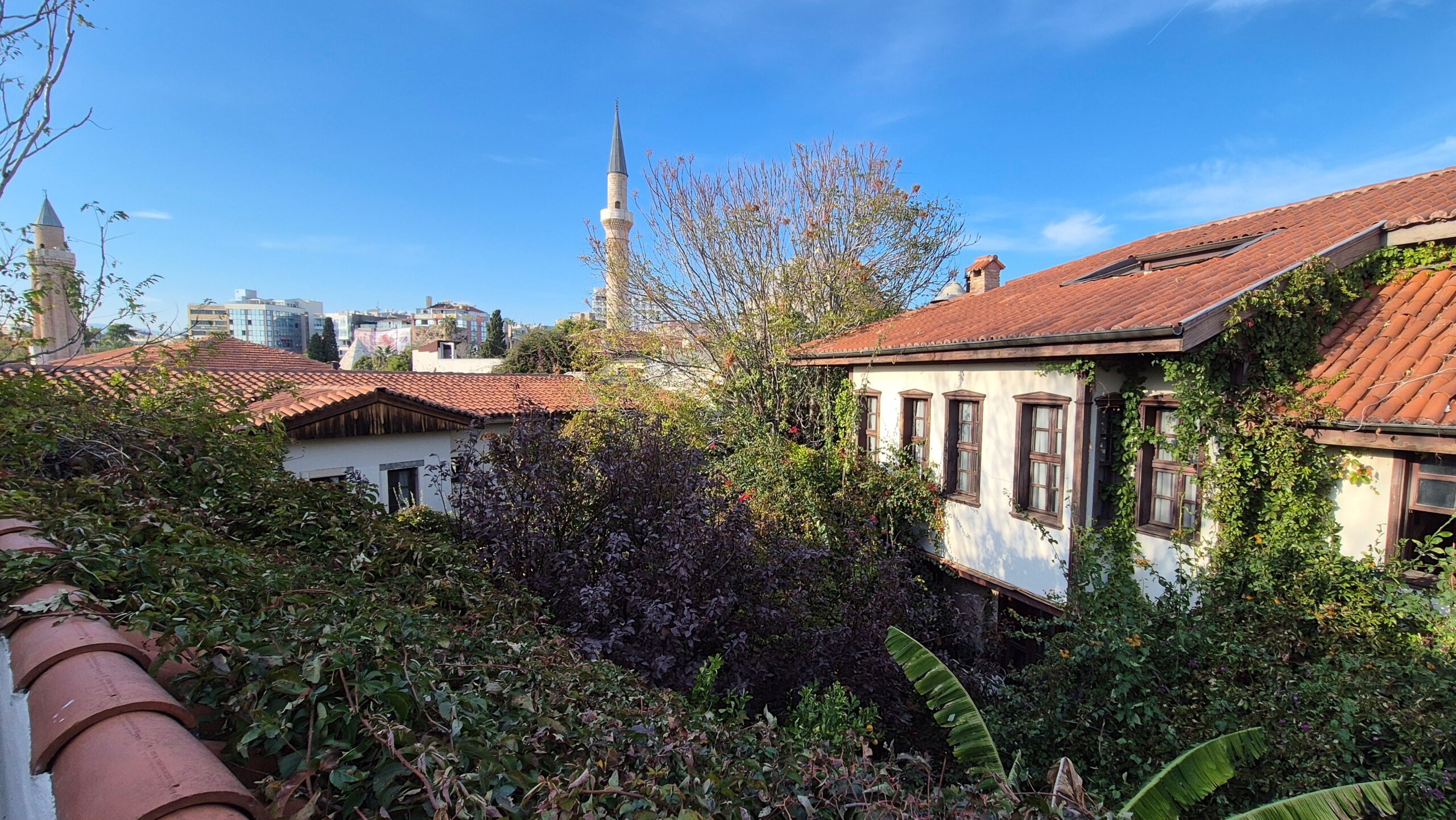
The view from our room’s terrace over the rooftops and greenery toward two minarets. A fluted 13th century tower peaks out on the left, and the “modern” 18th century one to the right.
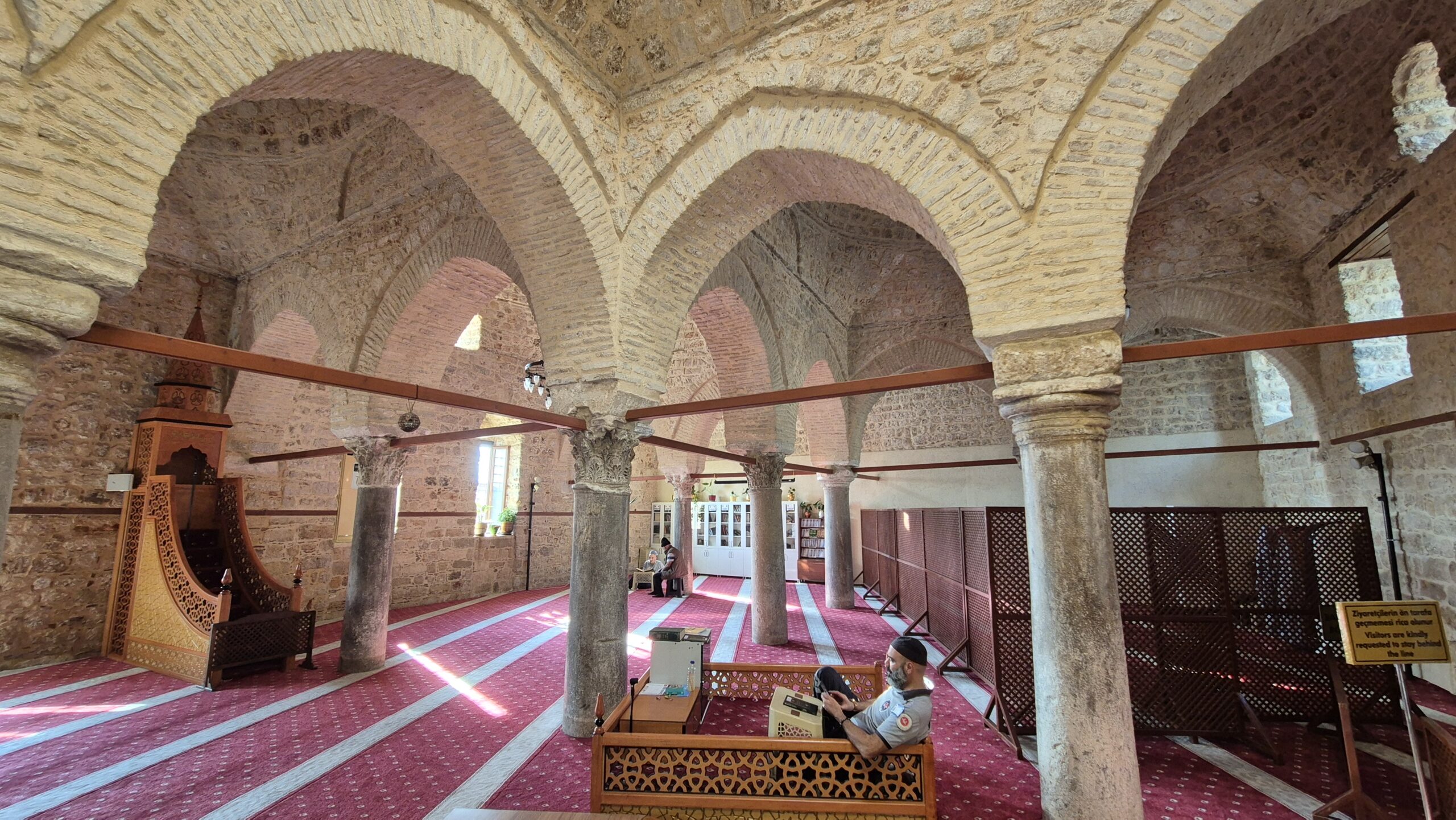
Interior of the 14th century Yivli Minaret mosque in old Antalya. The man in the foreground was multi-tasking: studying the book on the stand, keeping tourists from entering the prayer space, and checking the latest on his phone.
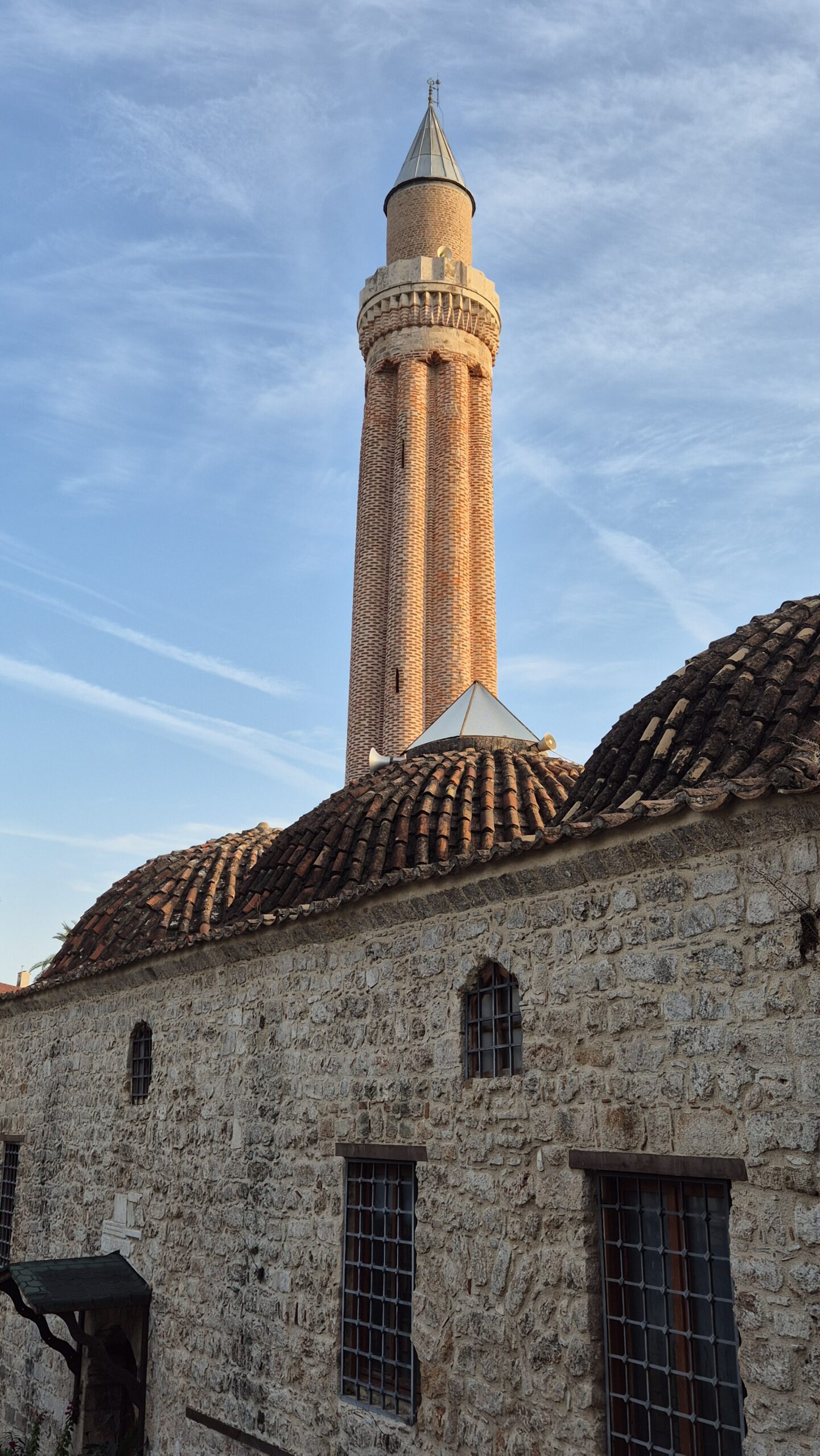
The unusual Yivli Minaret tower – a huge fluted brick structure – rises over the adjacent 14th century mosque.
(To enlarge any picture above, click on it. Also, for more pictures from Turkey, CLICK HERE to view the slideshow at the end of the itinerary page.)