
In brief: Even when the rain drenches Spain, Córdoba offers delights.
We just visited Córdoba in as off an off-season as you could choose: cold and rainy, with a series of drenching storms from the Atlantic that threatened any town set along a river. But we found so much to enjoy in the alternating periods of rain and sun – on the flowery narrow streets, at the grand plazas, in the local taverns and bars, or within the numerous inner courtyards or patios.
(For our separate post on the World Heritage Mezquita-Catedral, click here.)
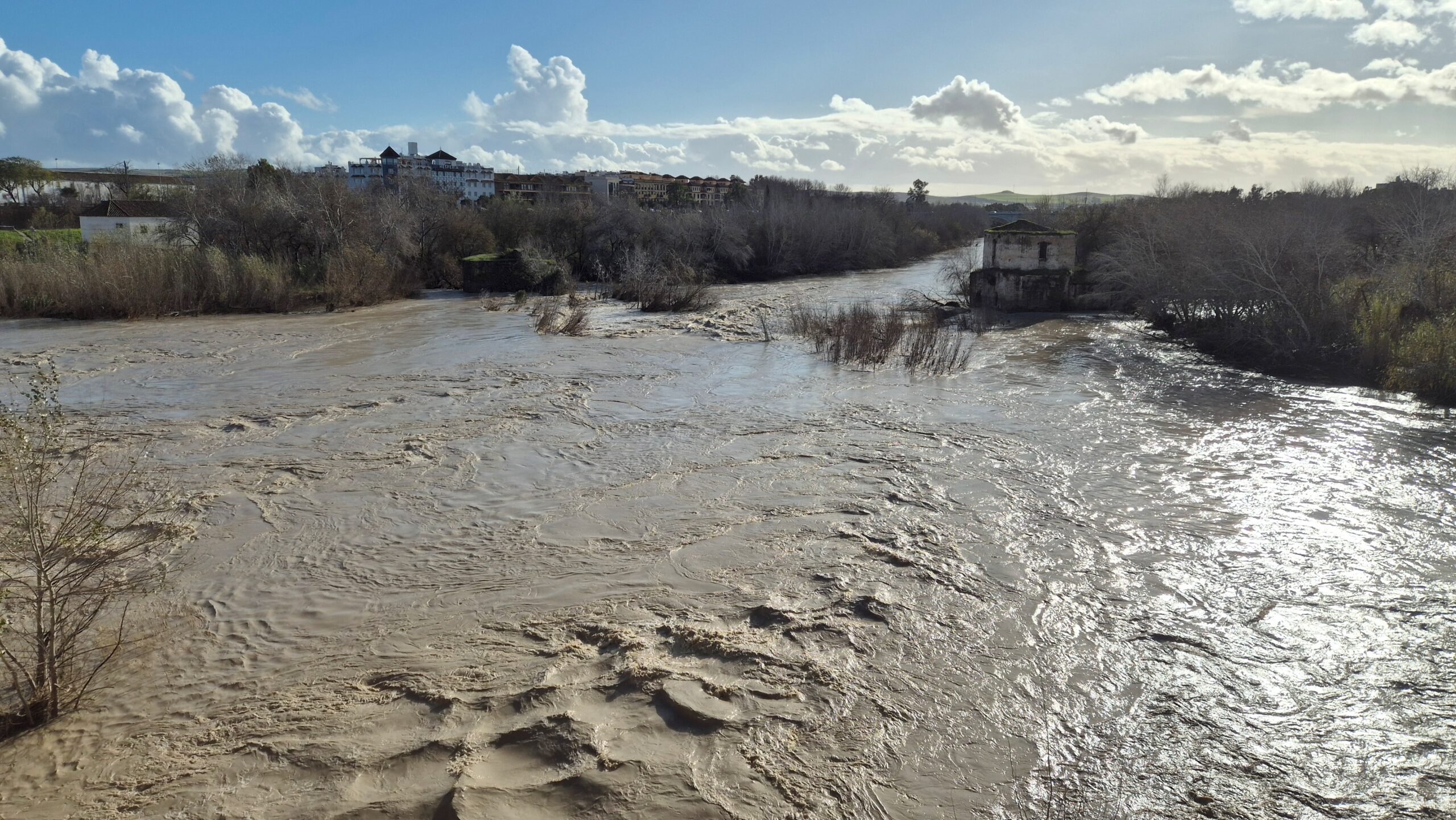
This was the raging Guadalquivir River even before more storms pushed it higher and threatened many towns downstream, all the way to Tavira in Portugal.
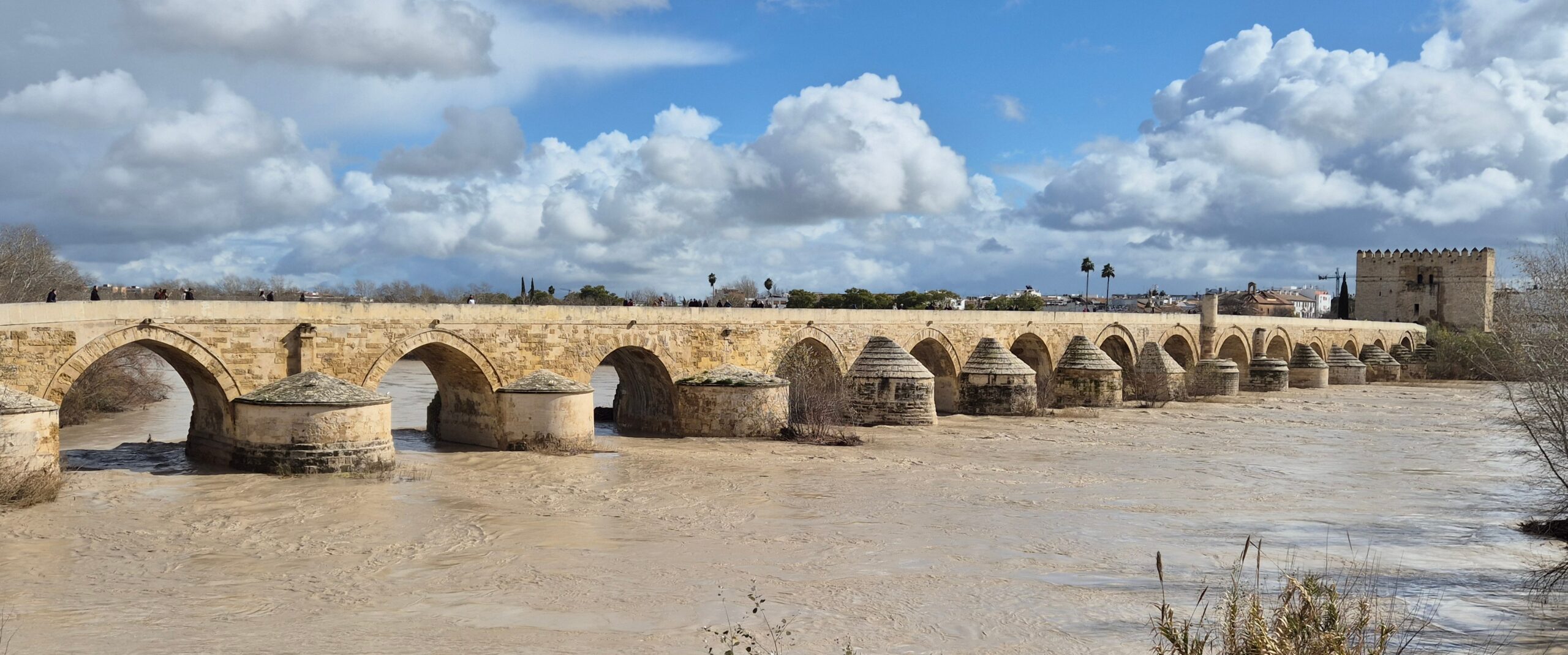
The 1st century “Roman” bridge, reconstructed by the Umayyads in the 10th century, still withstands flood waters today.
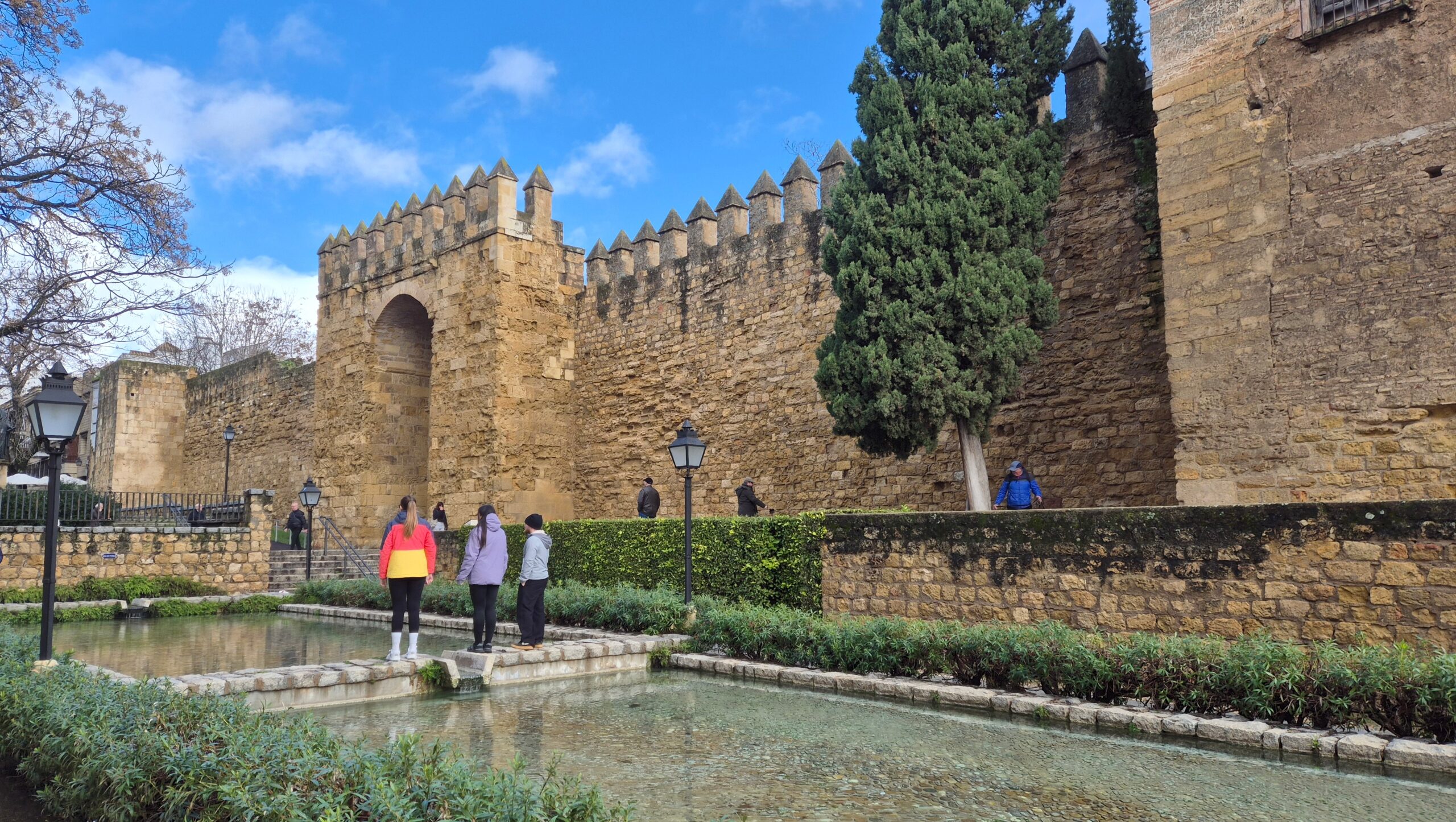
The walls around old Córdoba date from the Roman and Umayyad period.
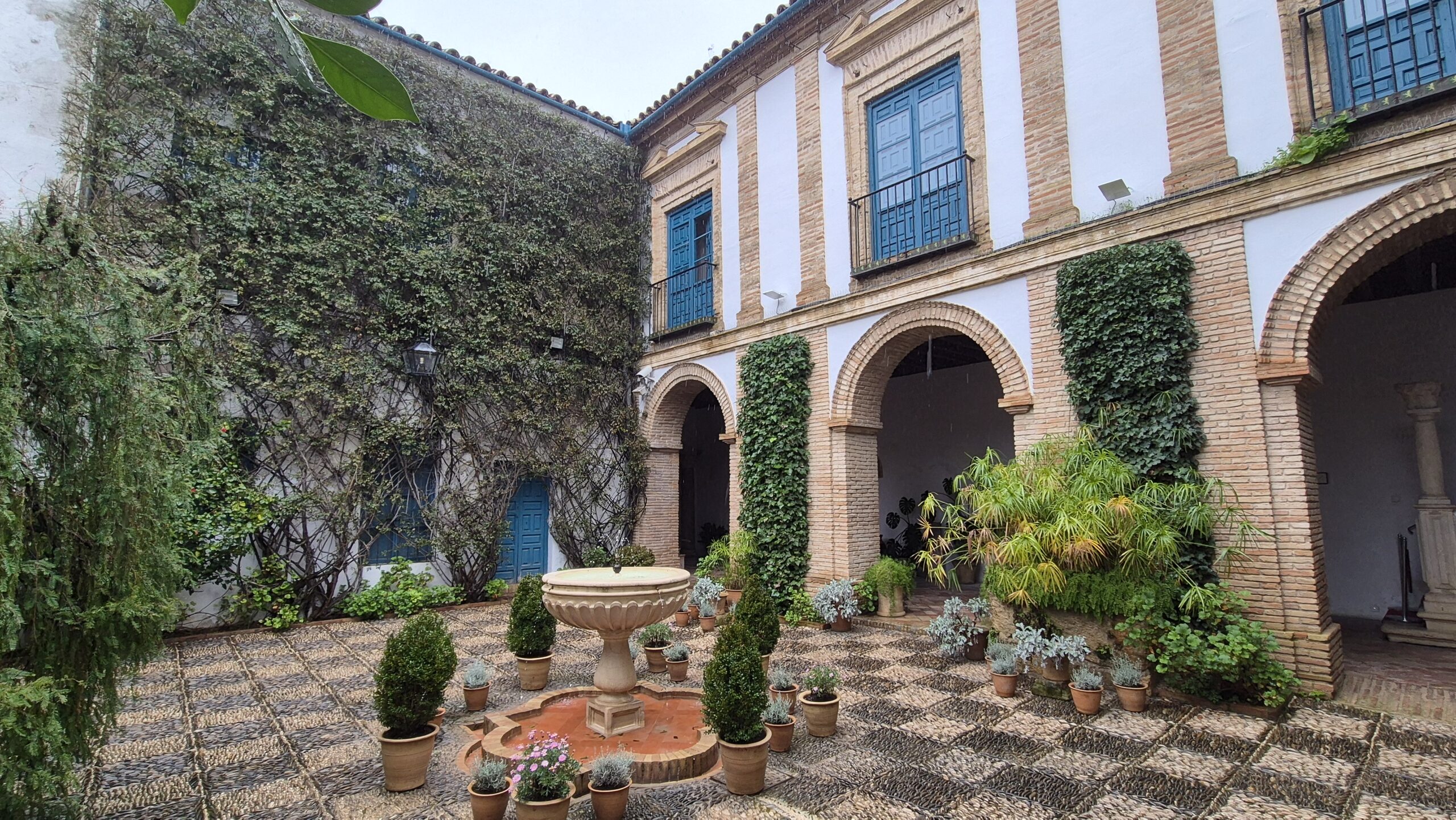
The tradition of internal courtyards or patios has persisted from Roman, Islamic, and modern times. This was one of twelve at the sumptuous Palacio de Viana. We appreciated how many patios, at private and public buildings, were open to view as we walked along Córdoba’s streets.
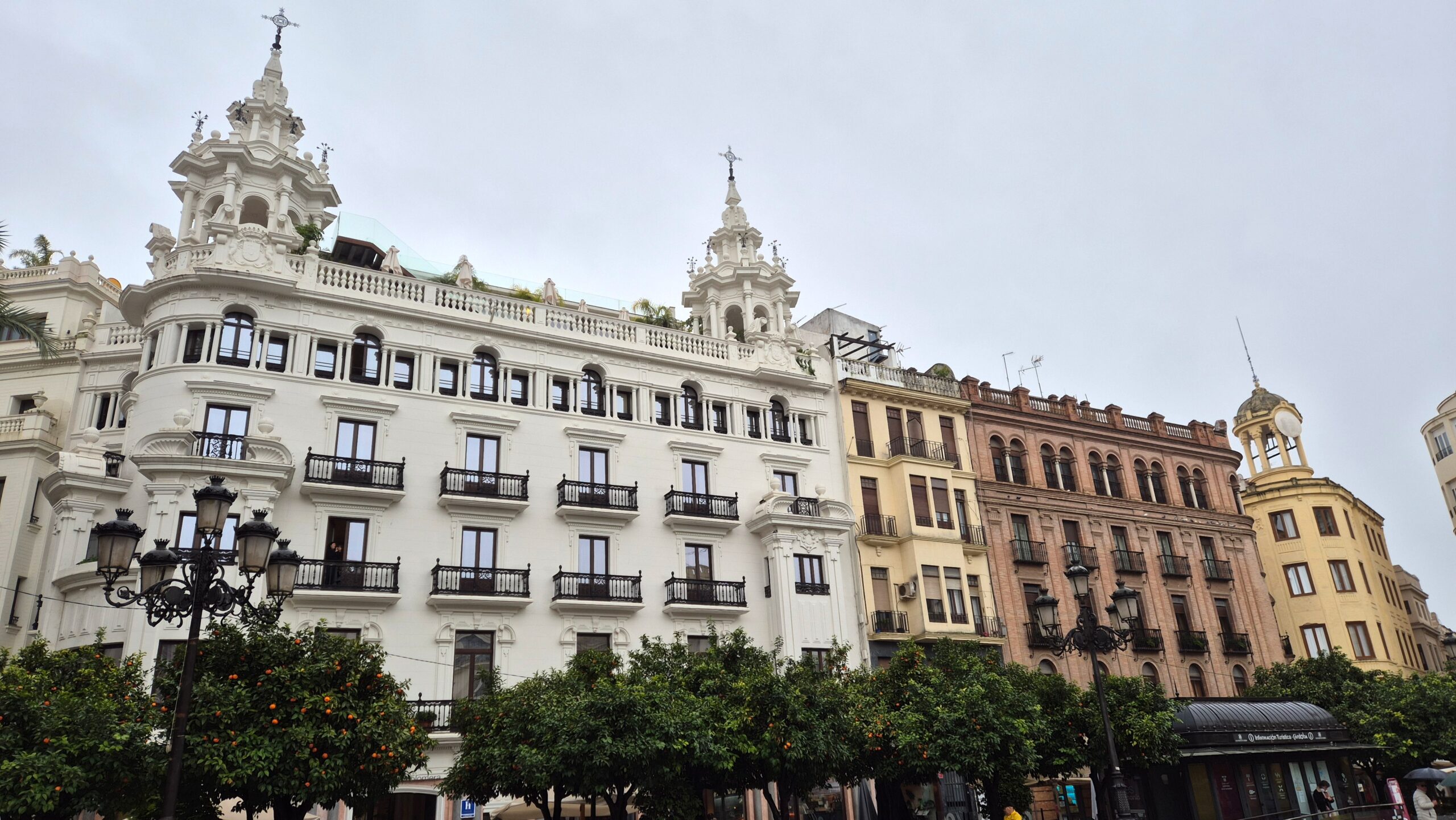
These grand, early 20th century buildings within the newer part of town grace the large plaza, Las Tendillas, where New Year’s Eve celebrations take place.
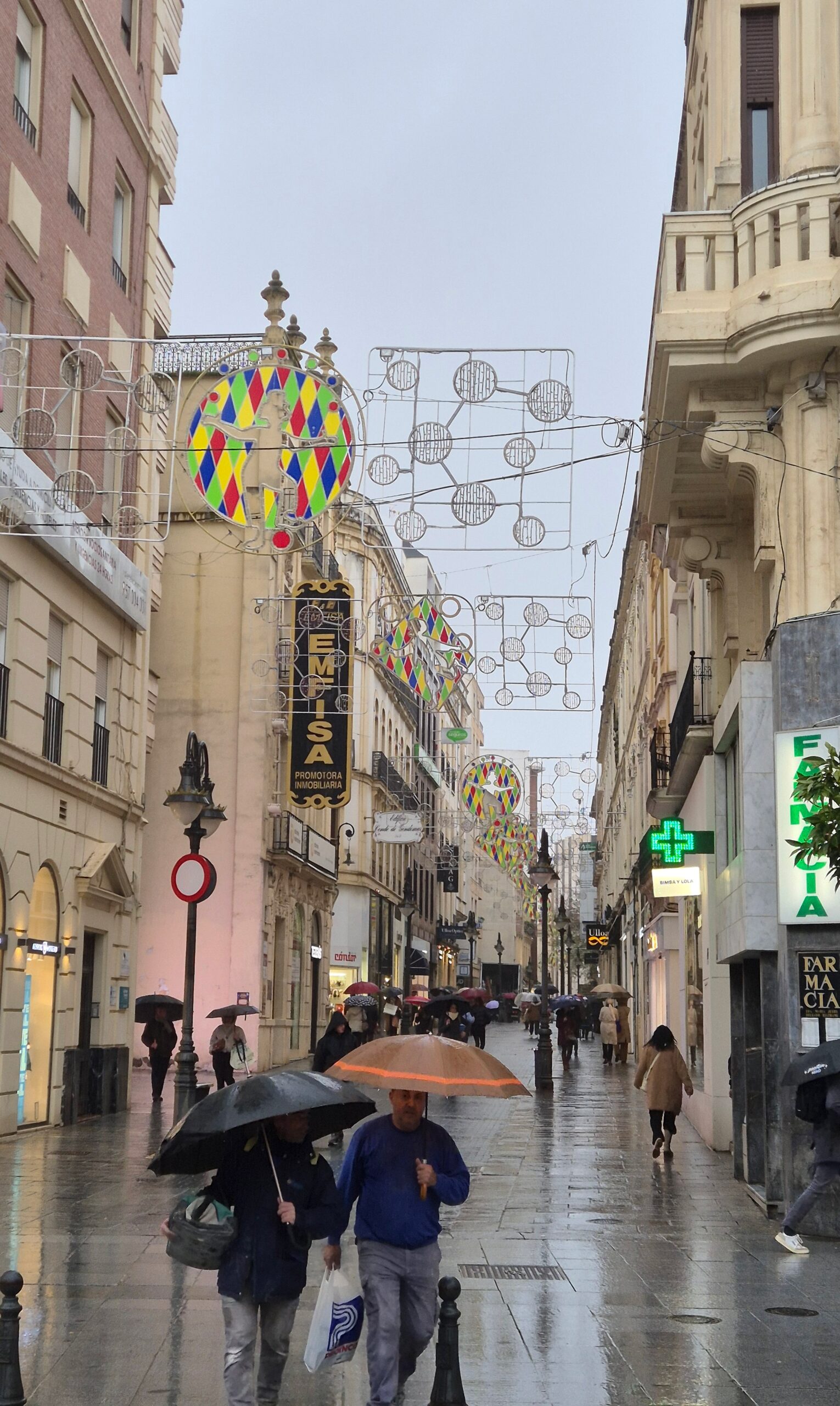
The umbrellas come out and others hustle to cover as a sudden shower covers this 19th century pedestrian boulevard connected to Las Tendillas.
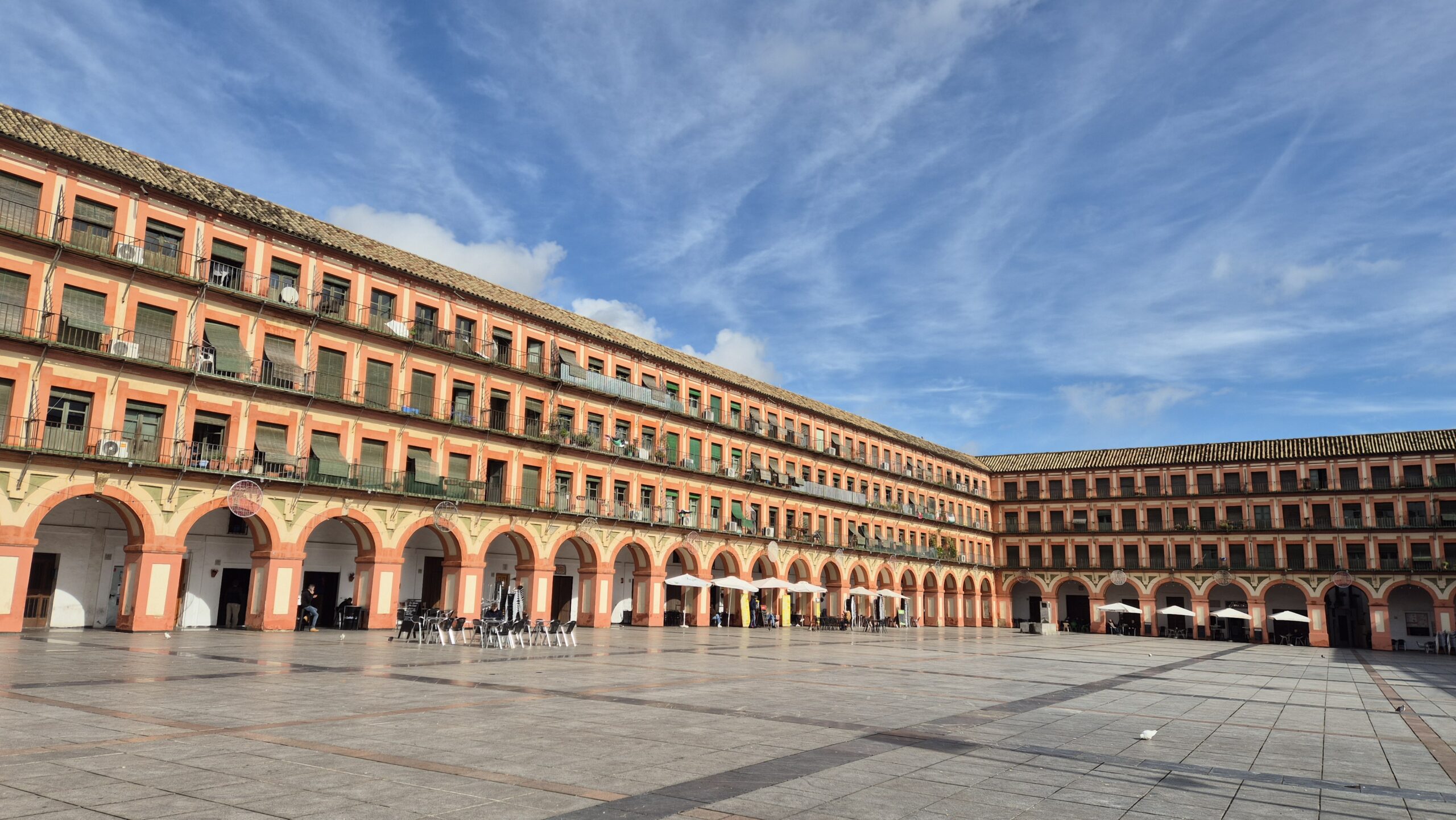
Another eye-catching plaza, Corredora, has hosted bullfights at times and witnessed the horrors of the Inquisition. Its 17th century porticos now mainly look out upon social gatherings of those enjoying the many bars and restaurants.
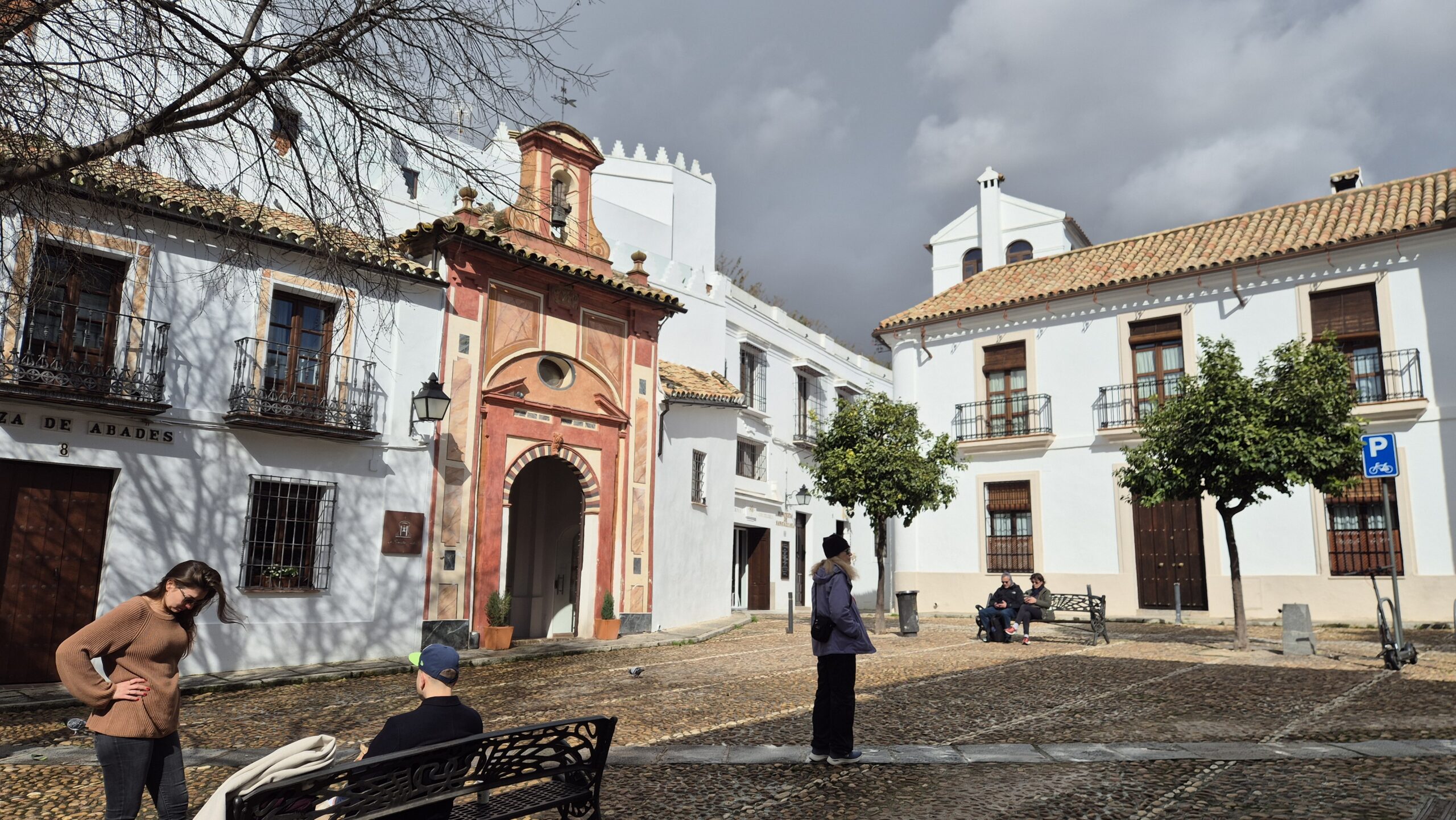
A small plaza, with a colorful entryway marking a boutique hotel, was lit up by the sun during one walk.
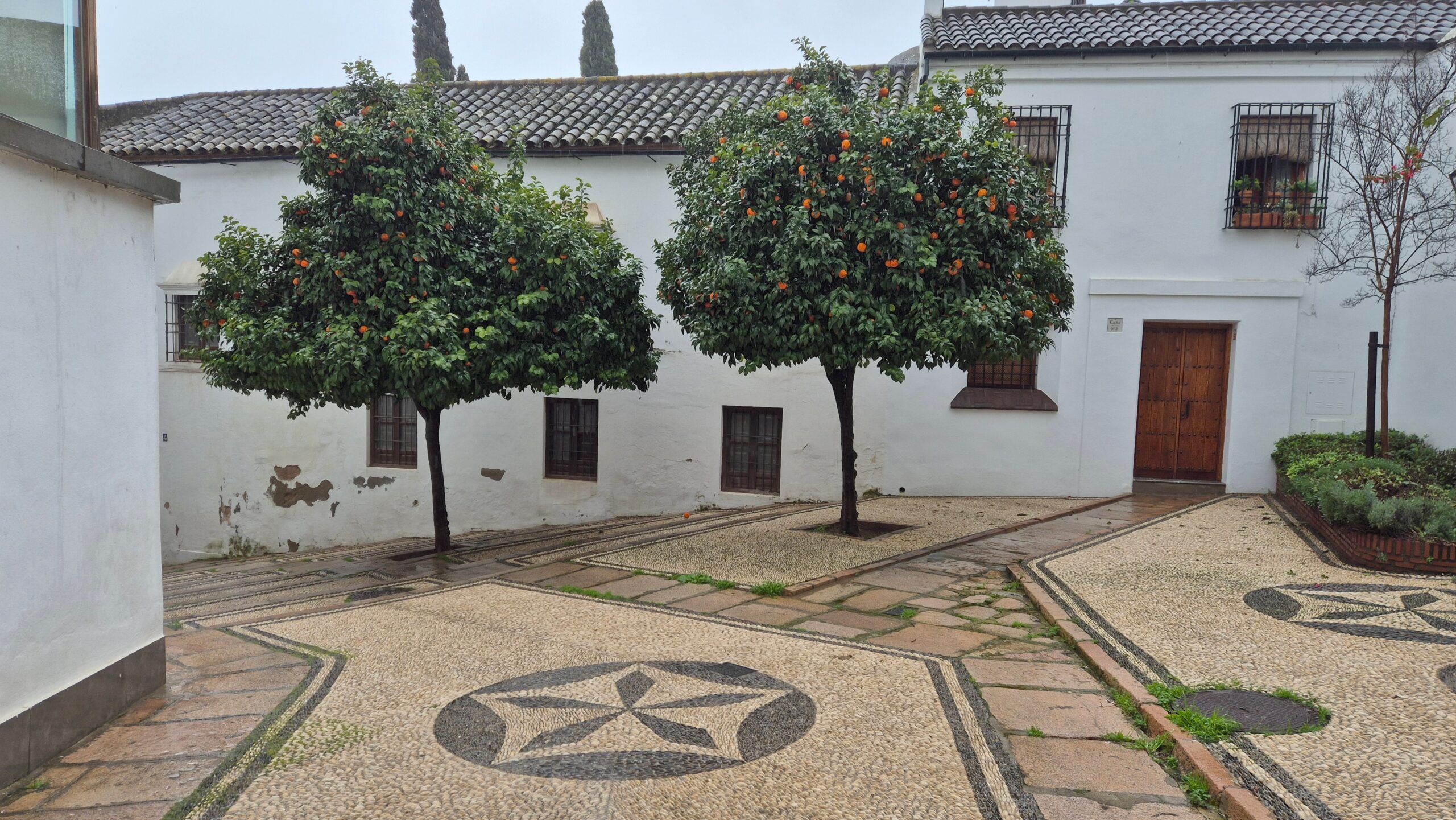
Orange trees abound throughout the town, plopping large fruit into the streets and plazas below them during storms. They’re a tradition from over a thousand years ago, bringing shade and sweet fragrance to the town, but oddly not edible fruit. The patterned paving consists of small, rounded stones of different shades.
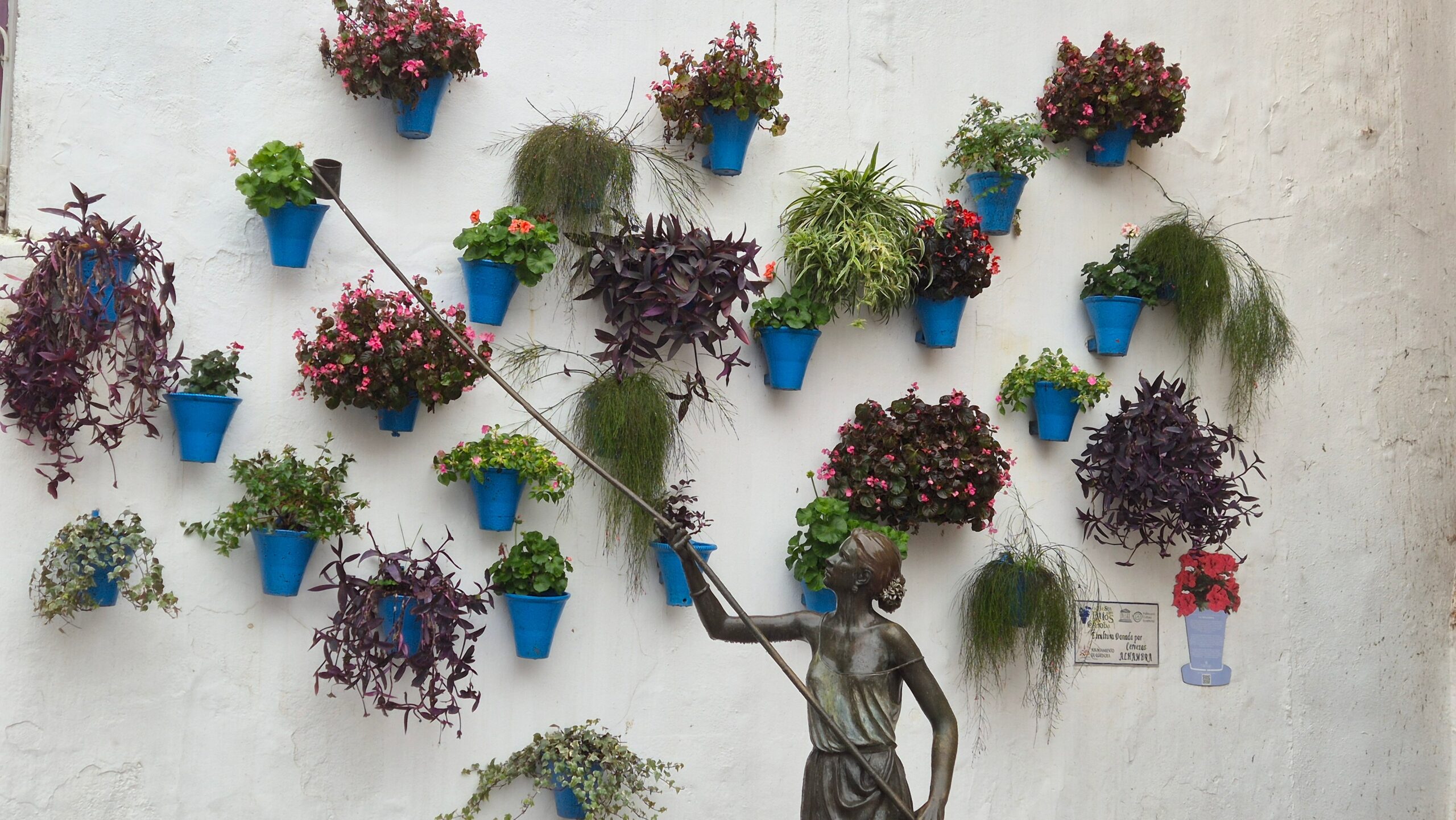
Flowerpots arranged along walls form another pleasant tradition in town, honored by this statue. If she had been alive, that deshabille shift would have hardly protected her from the chill wind. And she would not have needed to water the plants either.
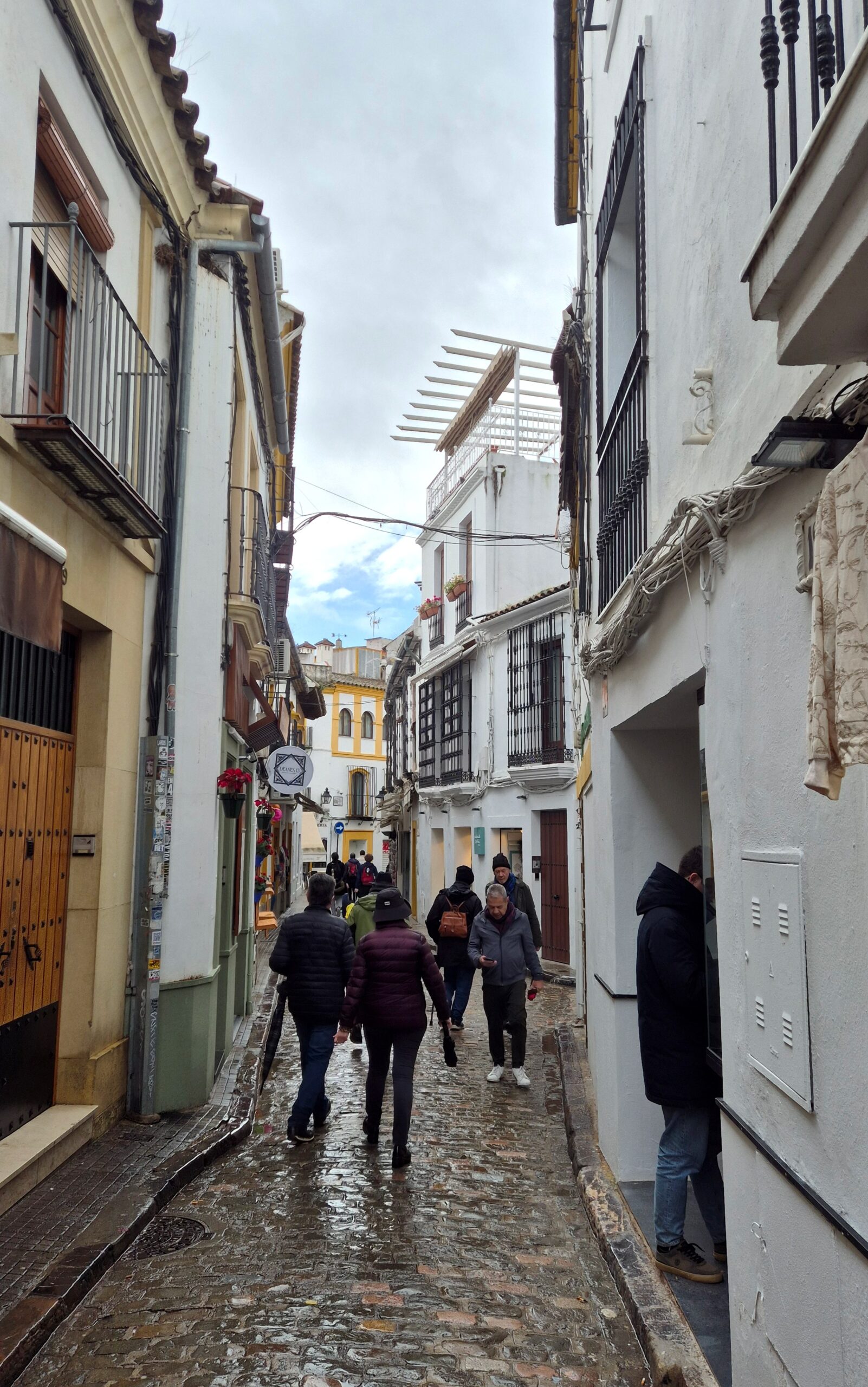
A typical lane in the medieval part of Córdoba. You could tell that those who were now in town had booked their visit a while ago: a few small tour groups, a few British who thought the weather had to be better, and some young backpackers.
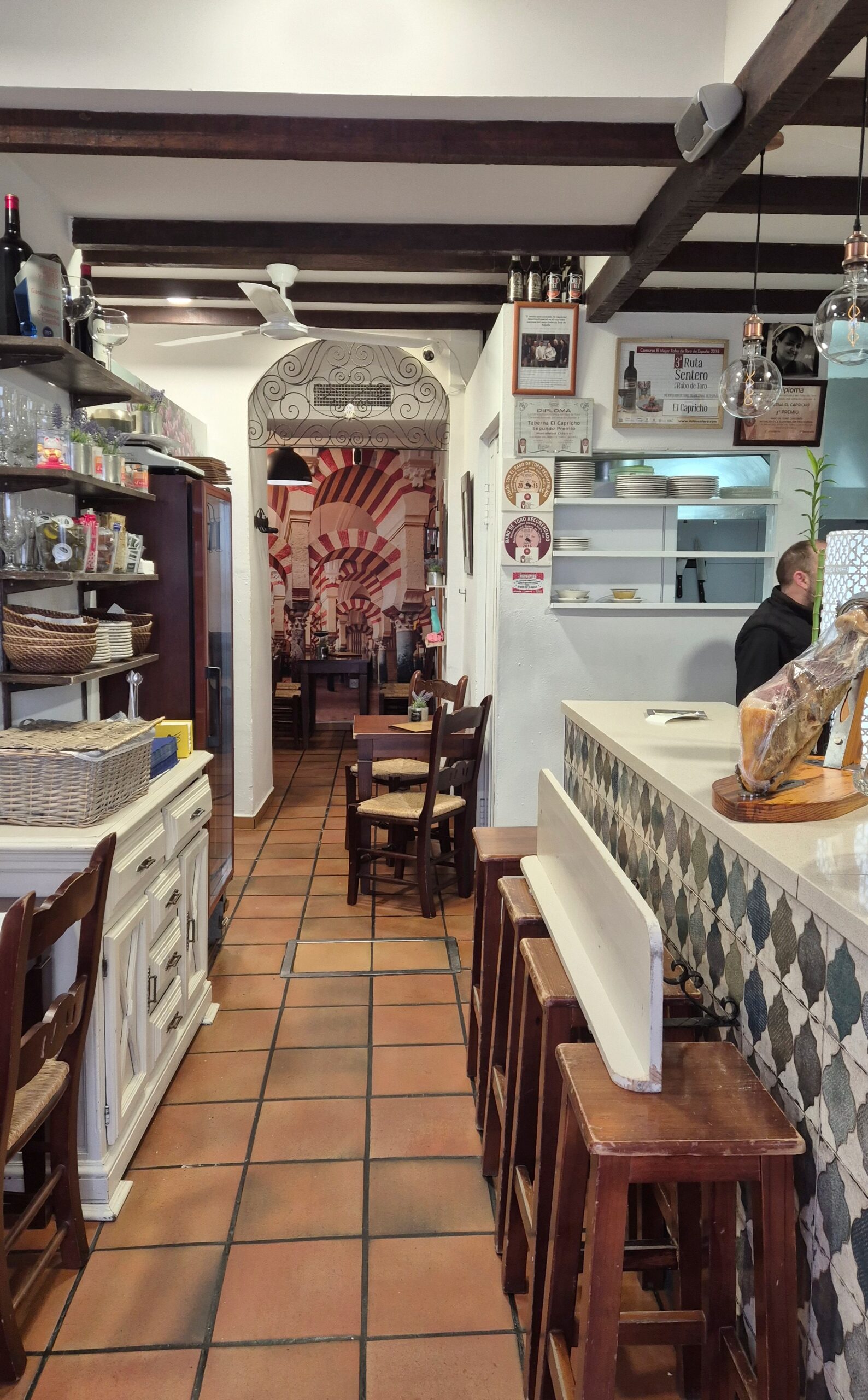
The tabernas are everywhere in Córdoba, offering light meals or tapas in small, but inviting interiors. We had some excellent gazpacho here, while a grandfatherly Córdoban enjoyed a small plate of that Iberian ham on the counter.
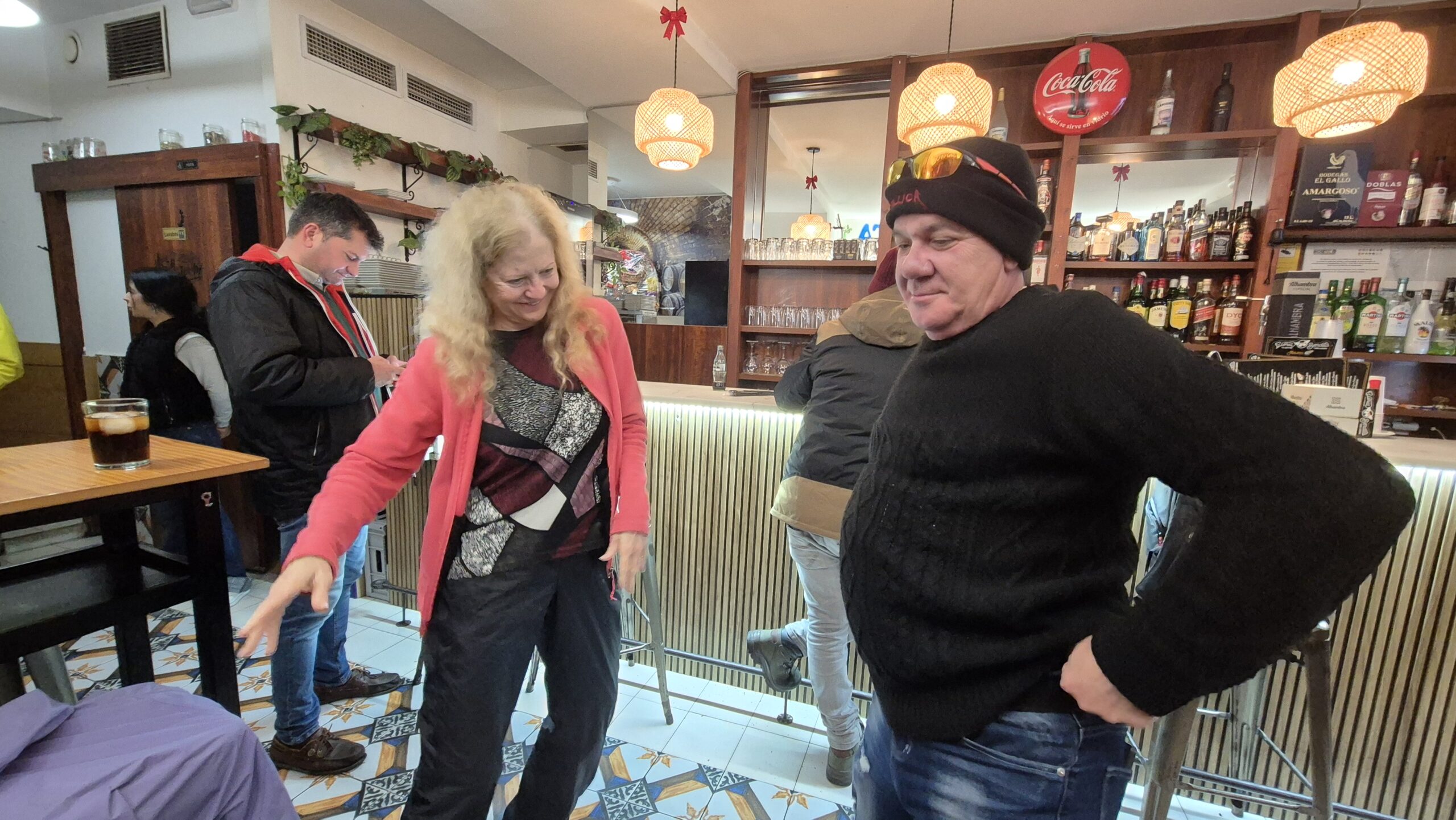
Our last stop in a tavern crawl during a rainy afternoon and evening was the Ultimo Tango. This friendly fellow – who apparently rode motocross in San Diego for a few years – came in with a few other locals. He later claimed to be security for the bar, but most of the time provided informal entertainment, singing pop and flamenco songs along with the TV feed, or giving lessons in dancing flamenco.
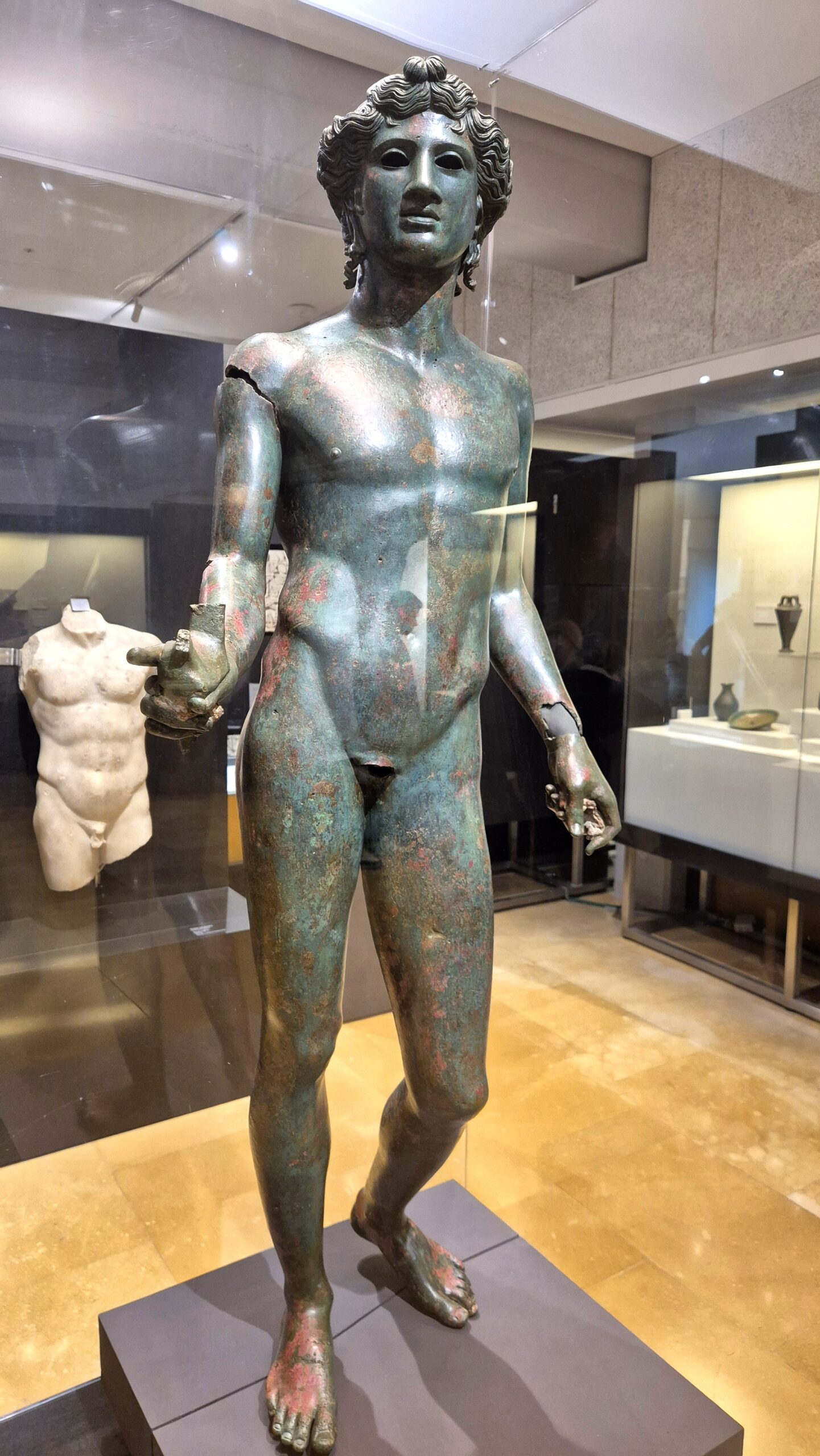
One rainy-day expedition was a visit to the town’s archeological museum, with its engaging overview of cultural history in Córdoba. The collection includes many remnants of the Roman period, but we were enchanted by this elegant bronze statue of Apollo – reminiscent of Renaissance Donatello.
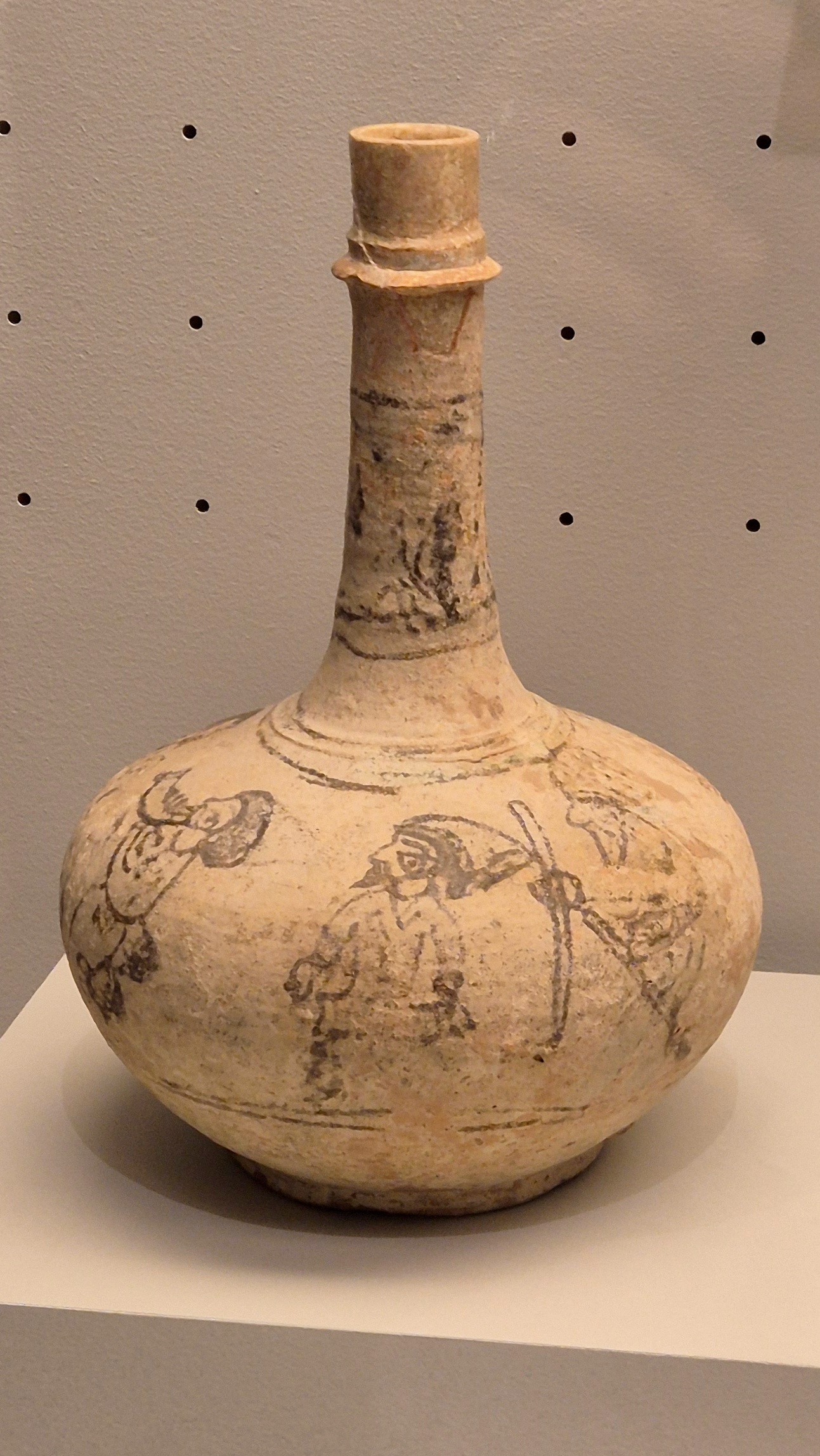
Street musicians adorn this simple Umayyad-era carafe at the archeological museum.
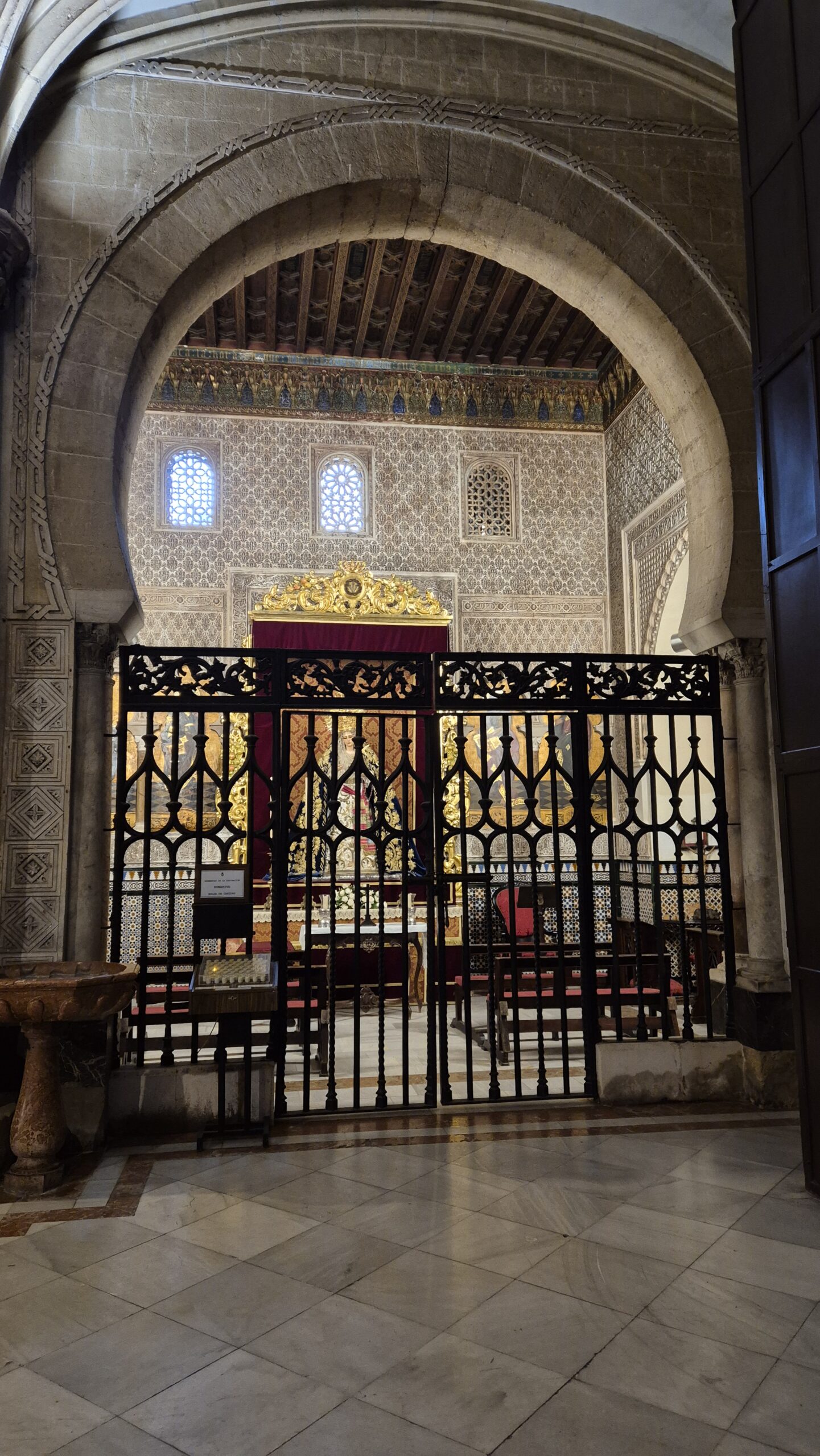
The San Pablo church, one of the many in town, includes this 15th century chapel for the Madonna del Rosario in the mudejar style.
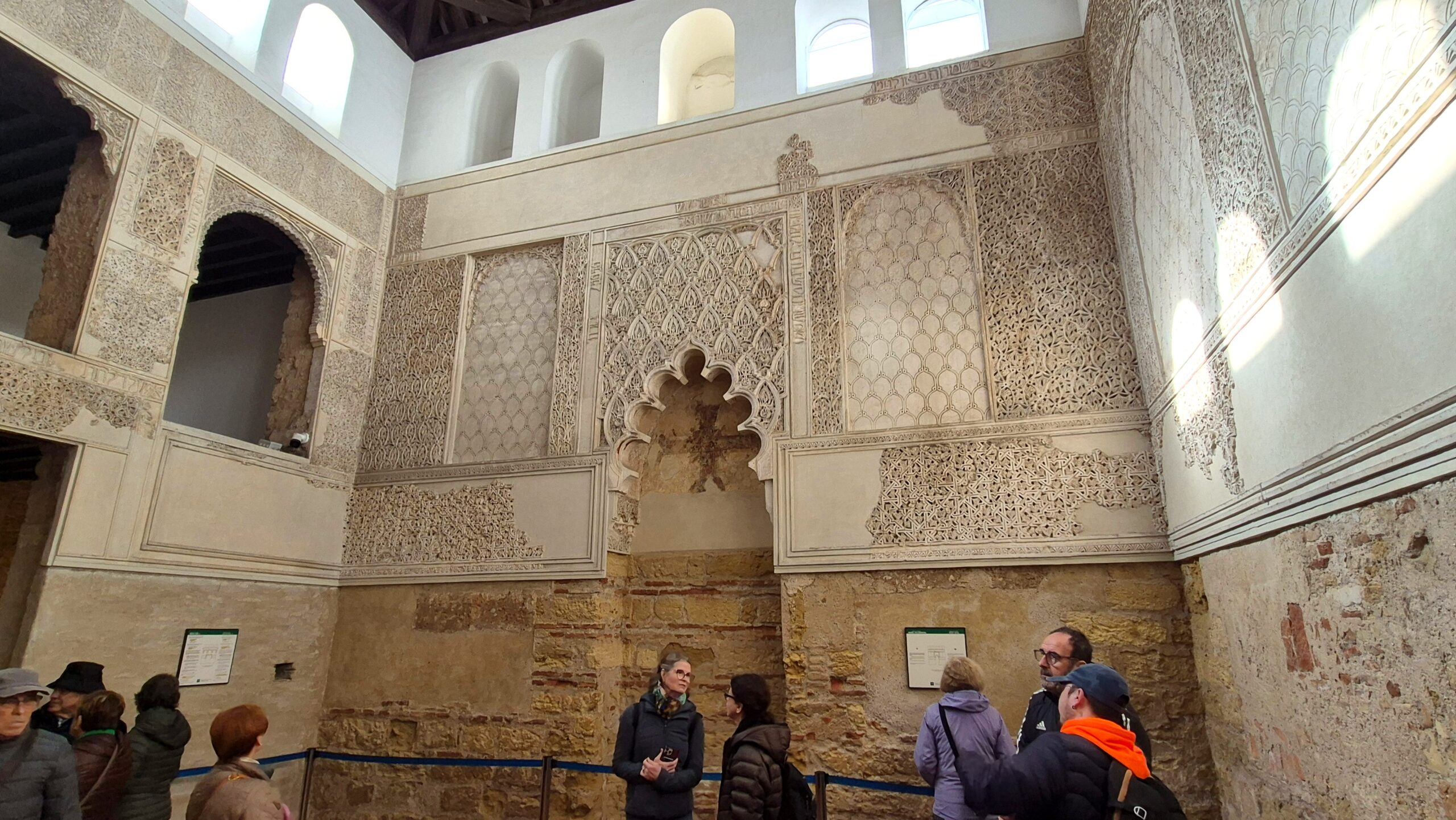
The delicate decoration in mudejar style of a small synagogue from 1315, belonging to the once thriving Jewish community exiled in 1492. Now reopened as a museum, it’s just one of only three left in Spain, including two we visited in Toledo.
(To enlarge any picture above, click on it. Also, for more pictures from Spain, CLICK HERE to view the slideshow at the end of the itinerary page.)