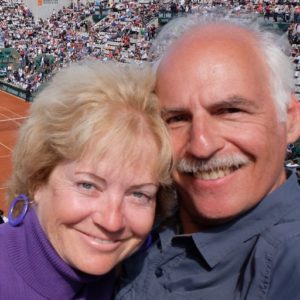
In brief: We hold many memories of sight, sound, and taste from our visit to the Kingdom. In the end, though, it’s the people such as those below that made the time special. We also can’t forget the quirks, such as their fondness for sculptures in roundabouts to represent the culture.
People and Connections
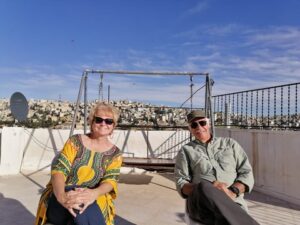
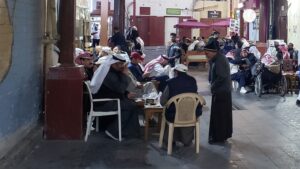
We enjoyed so many casual and extended conversations along the route, learning about differences in culture and also commonalities. Many of these were with the workers from so many other countries that constituted the labor force across Saudi Arabia. These photos just show some of the many people we met, the ones we remembered to photograph.
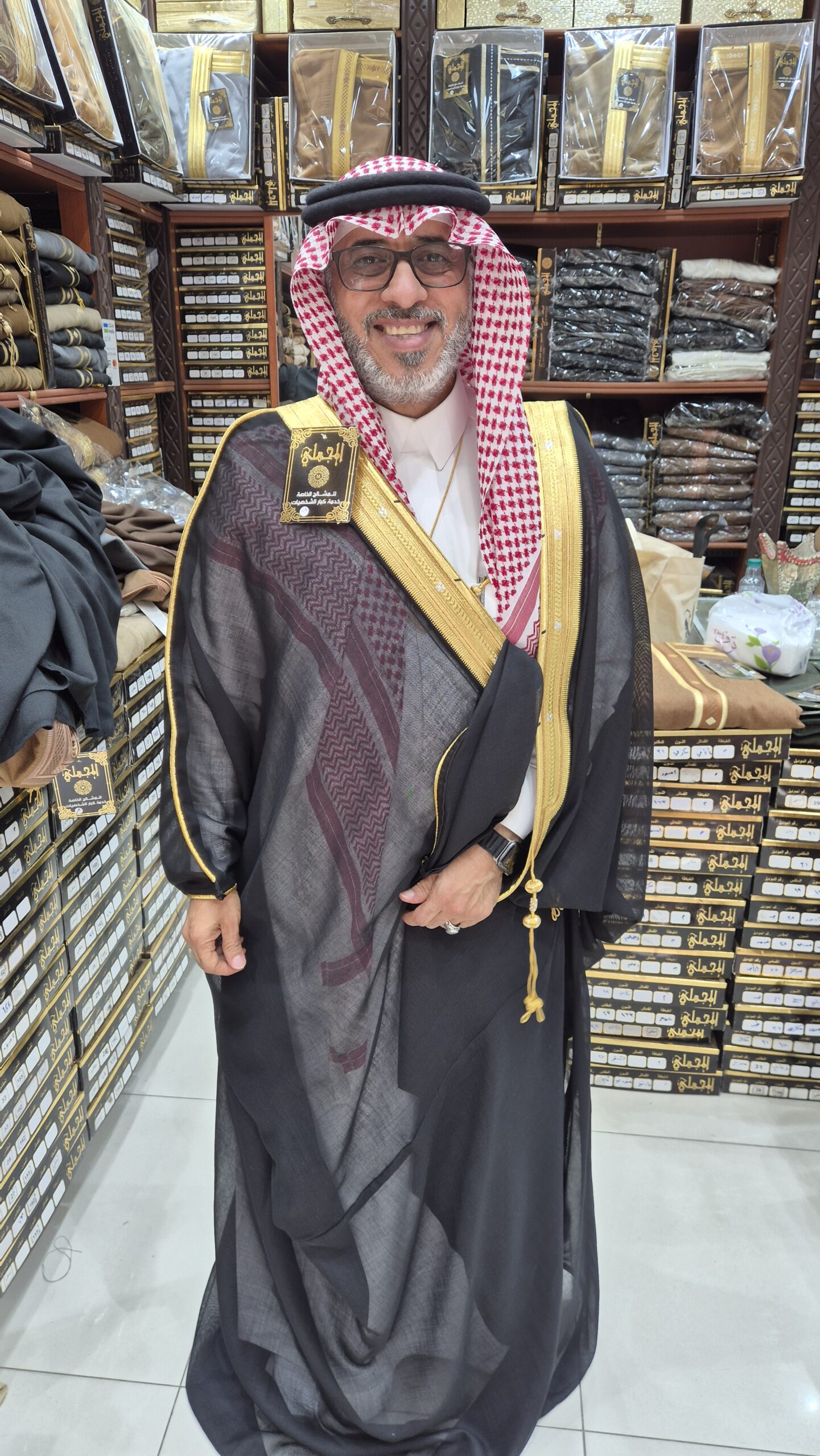
Hasheem, our guide in Riyadh, introduced us to Saudi culture and was a very enjoyable companion as well. Here he models princely fashions for us at the Riyadh souq.
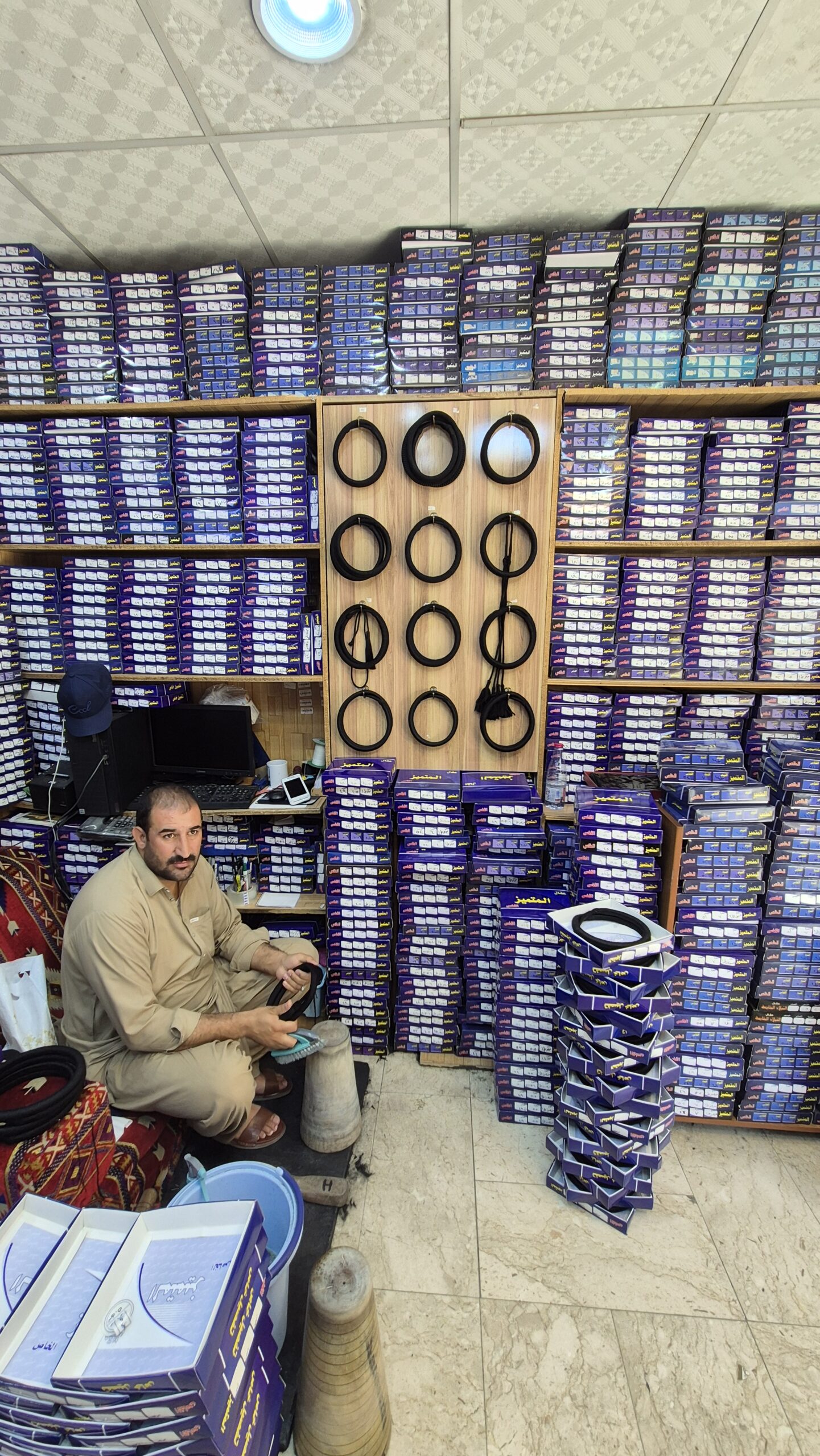
Shopkeepers – from suits to nuts – often wanted to talk with us. The owner of this shop, which supplied and repaired the headgear used by Saudi men, also gave us a demonstration of his craft.
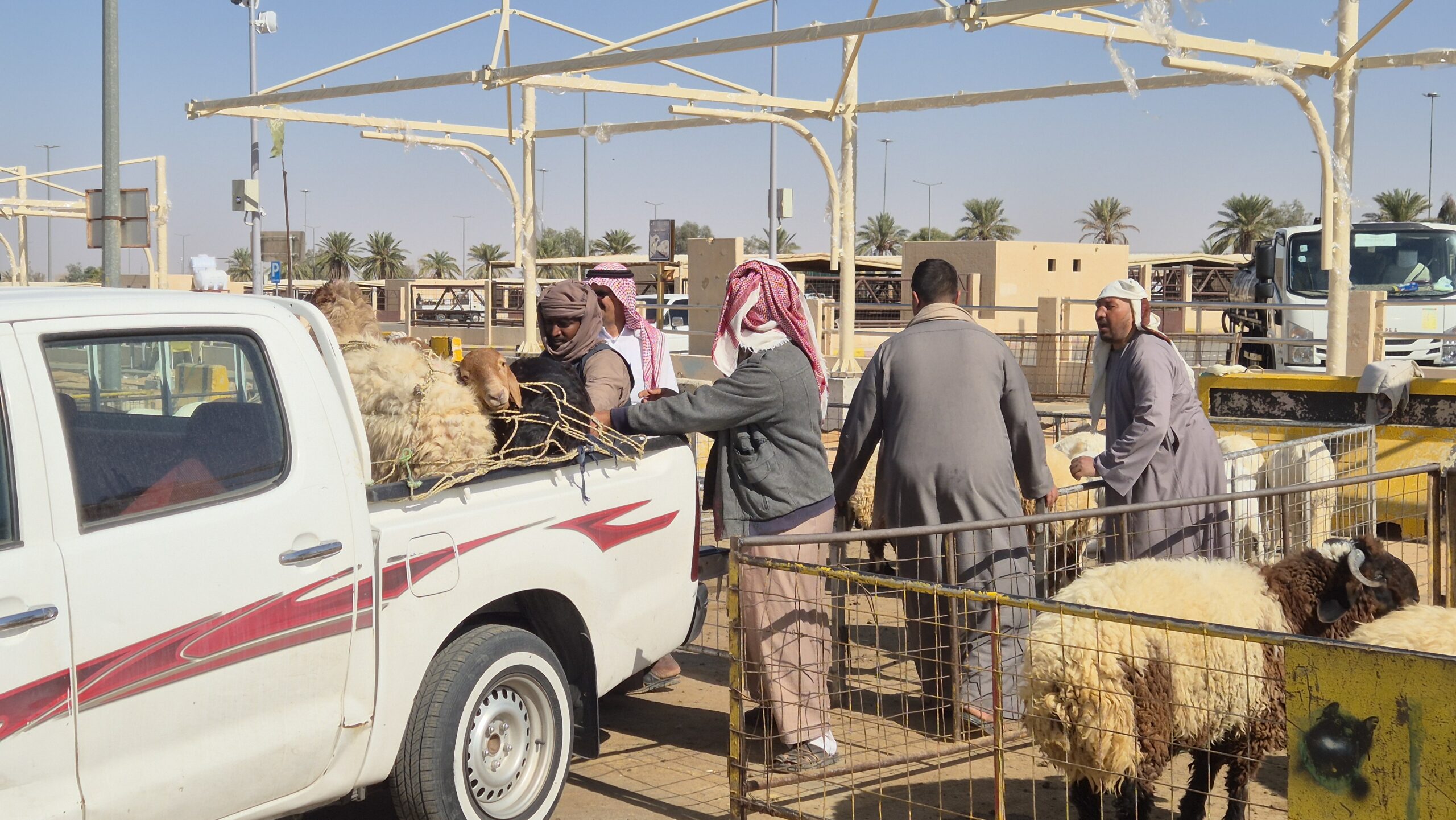
The men working at the sheep and camel market in Buraydah were just finishing their morning trade. These Yemenis stopped to talk with us after herding the sheep onto a truck.
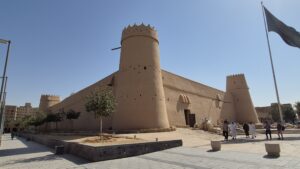
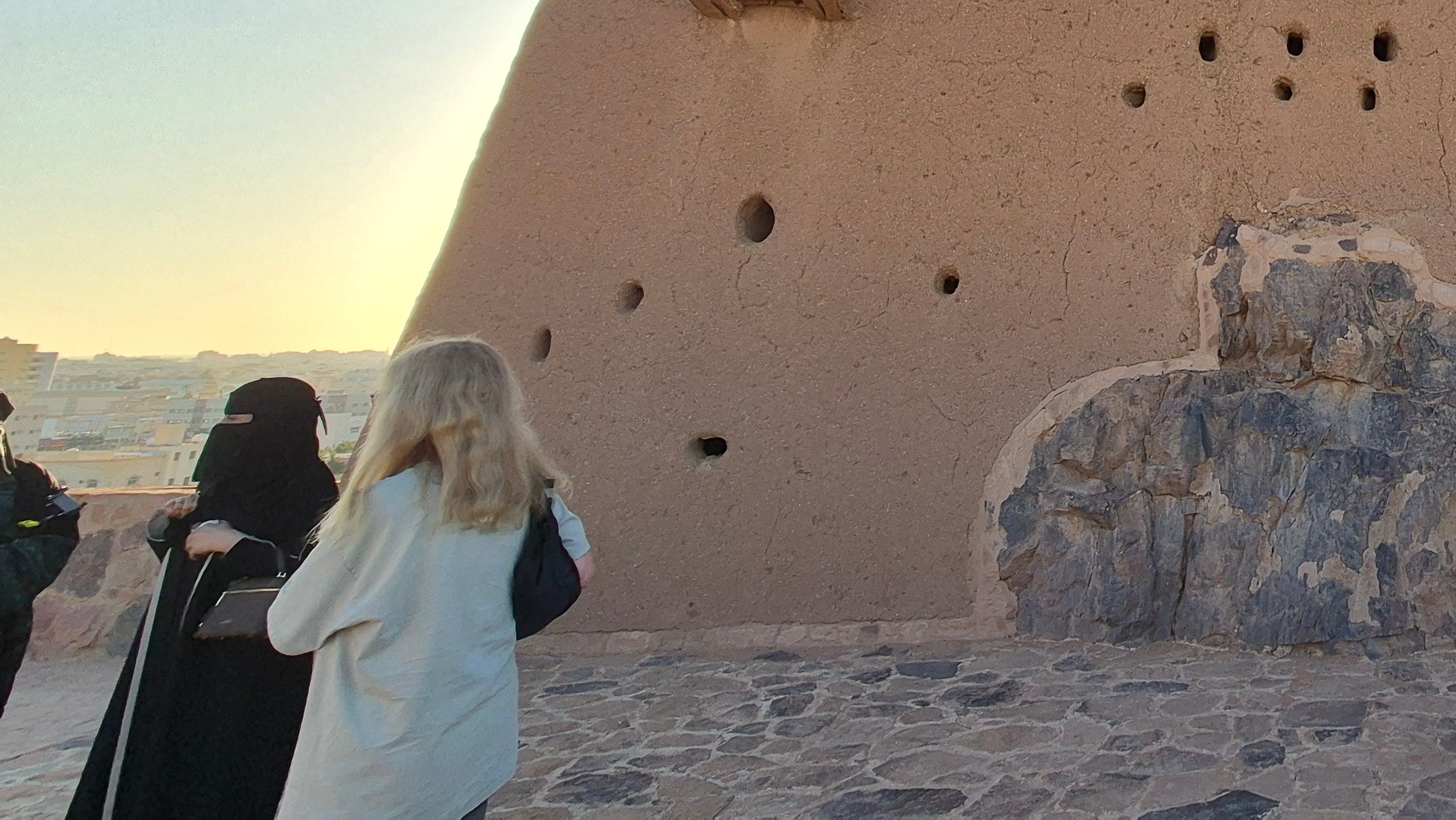
Frequently local Saudis, men and women, initiated conversation out of curiosity. At this restored fort in Hail several groups came up to us. This one (we should have taken a better picture) included a son studying English; another consisted of five young women in town to enjoy a pleasant afternoon.
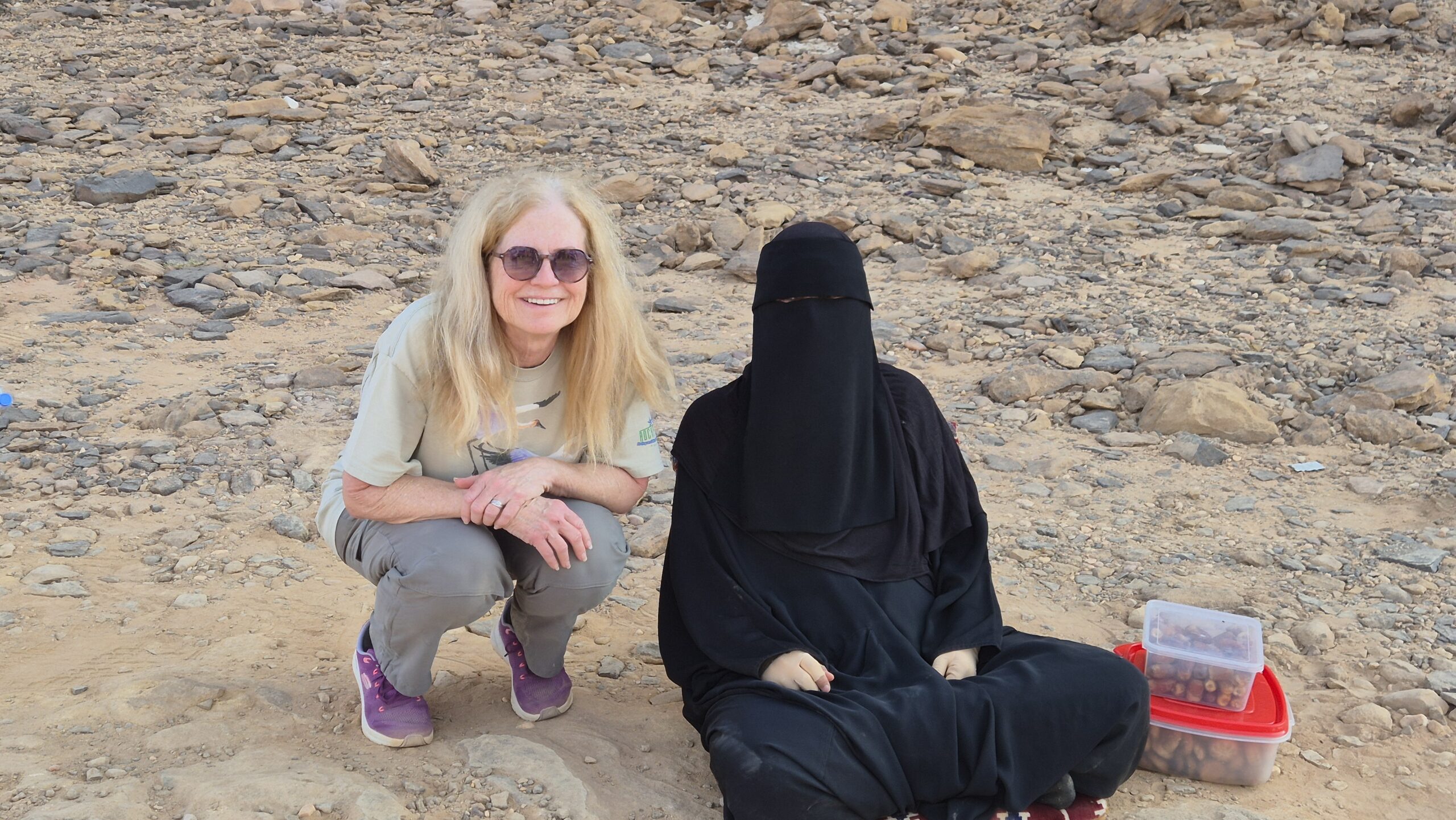
Nancy with the mother of two sons who invited us to join their picnic – dates, coffee, biscuits, etc. – at the Al Ula desert. As we said in our post from there, we truly enjoyed their hospitality and openness about life in the country.
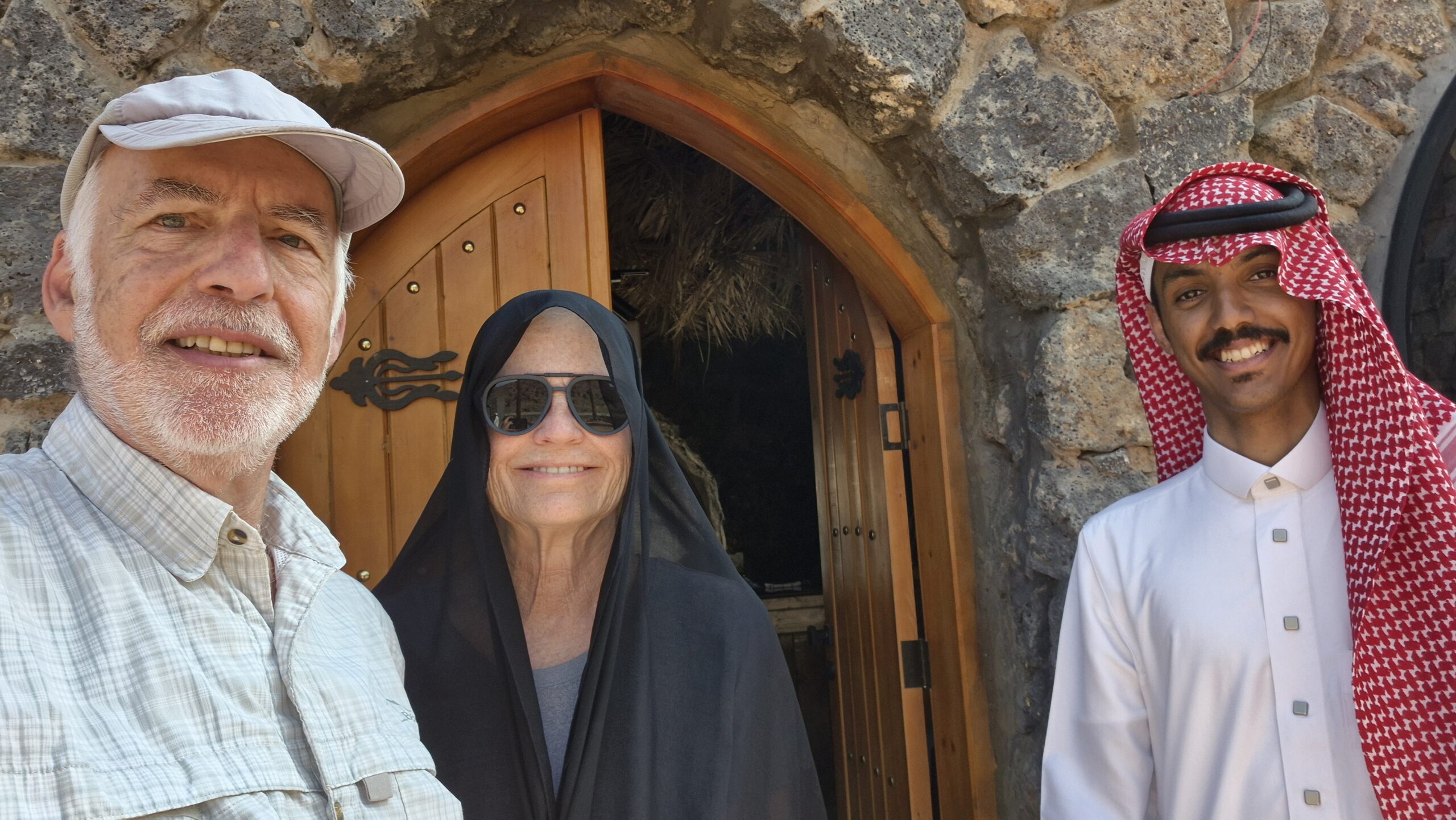
Getting lost helps. We couldn’t find a famous cave near Madinah where Mohammed hid when wounded at a local battle against other tribes. Instead, we found a restored stone-walled resting spot for pilgrims as well as a long conversation with this friendly Saudi man and a merchant from Mauritania. They both suggested Barry start wearing the traditional Saudi robe, or thawb.
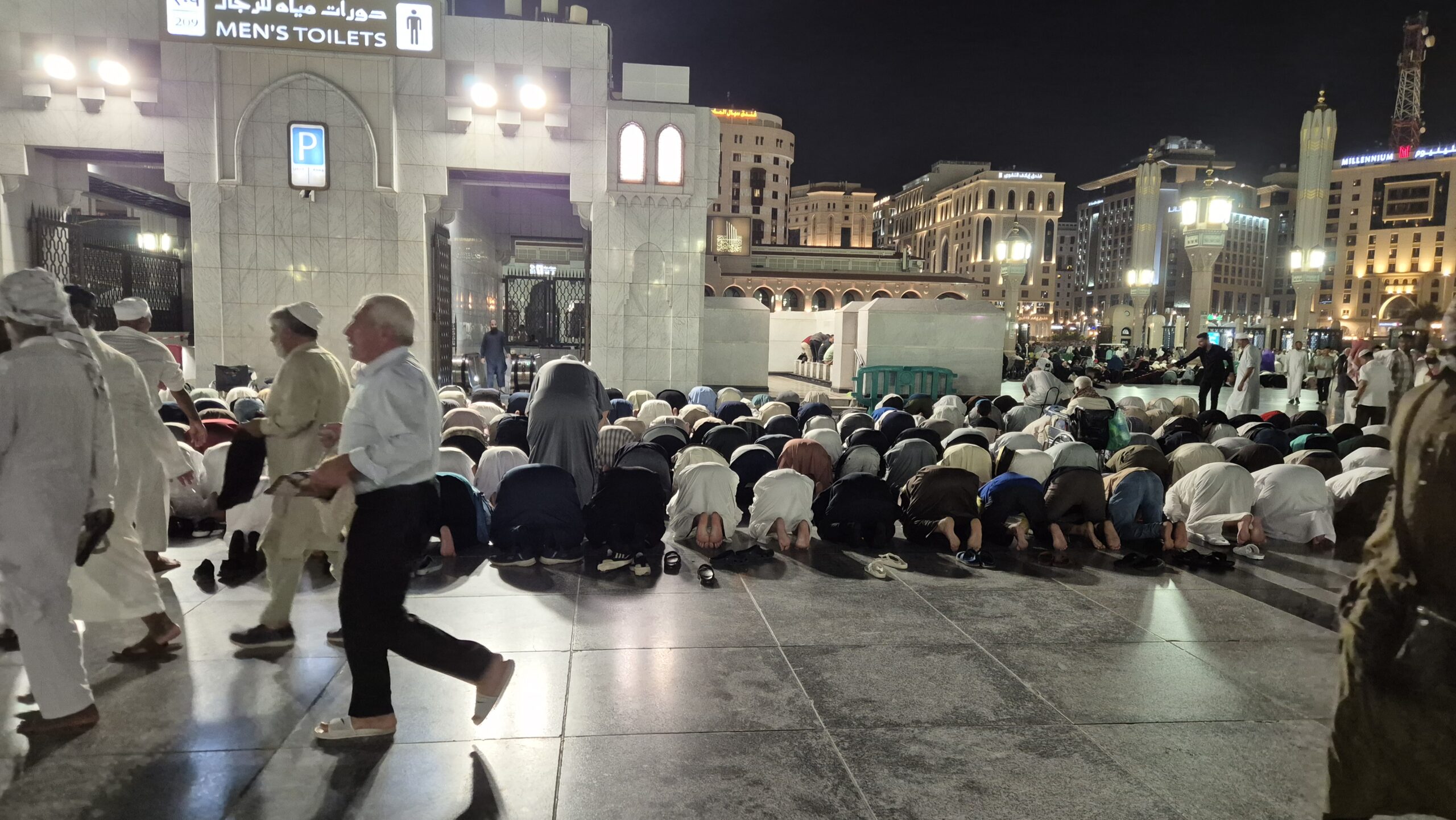
What was perhaps most distinctive about the million or so people absorbed in prayer at the Prophet’s Mosque in Madinah was their lack of attention to us. Surely we were evident outsiders at this holy site, but we were just accepted as guests. The same thing happened at Quba mosque, another revered site in Madinah, though there we were invited to visit within.
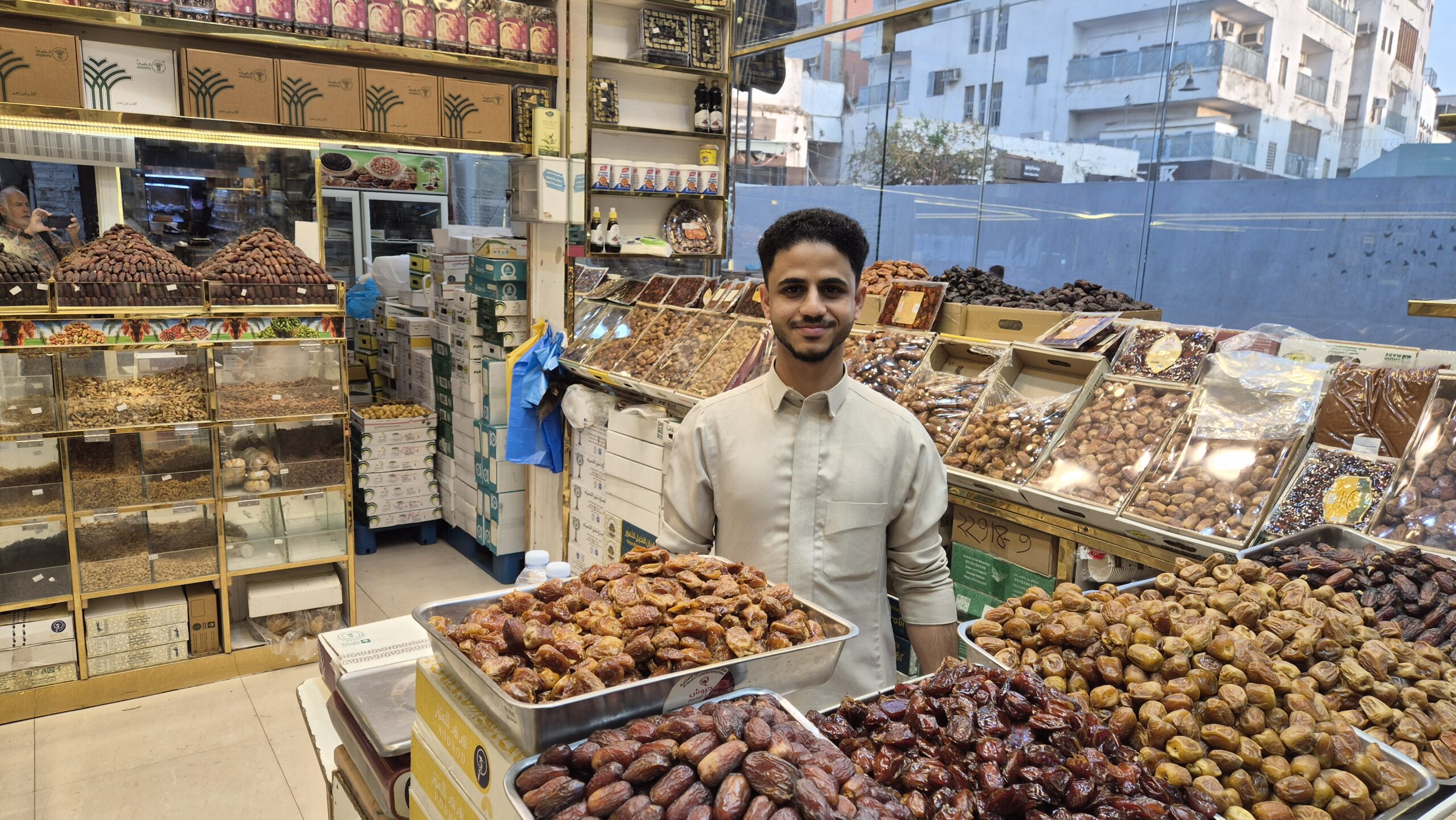
One of many date shops we visited, this one in old Jeddah, generally by the invitation of the shopkeeper. This young man was delighted to share his wide variety of dates with us (even without a sale) as well as some time in conversation. So were others at cafes, juice bars, nut shops, and stalls offering other specialties.
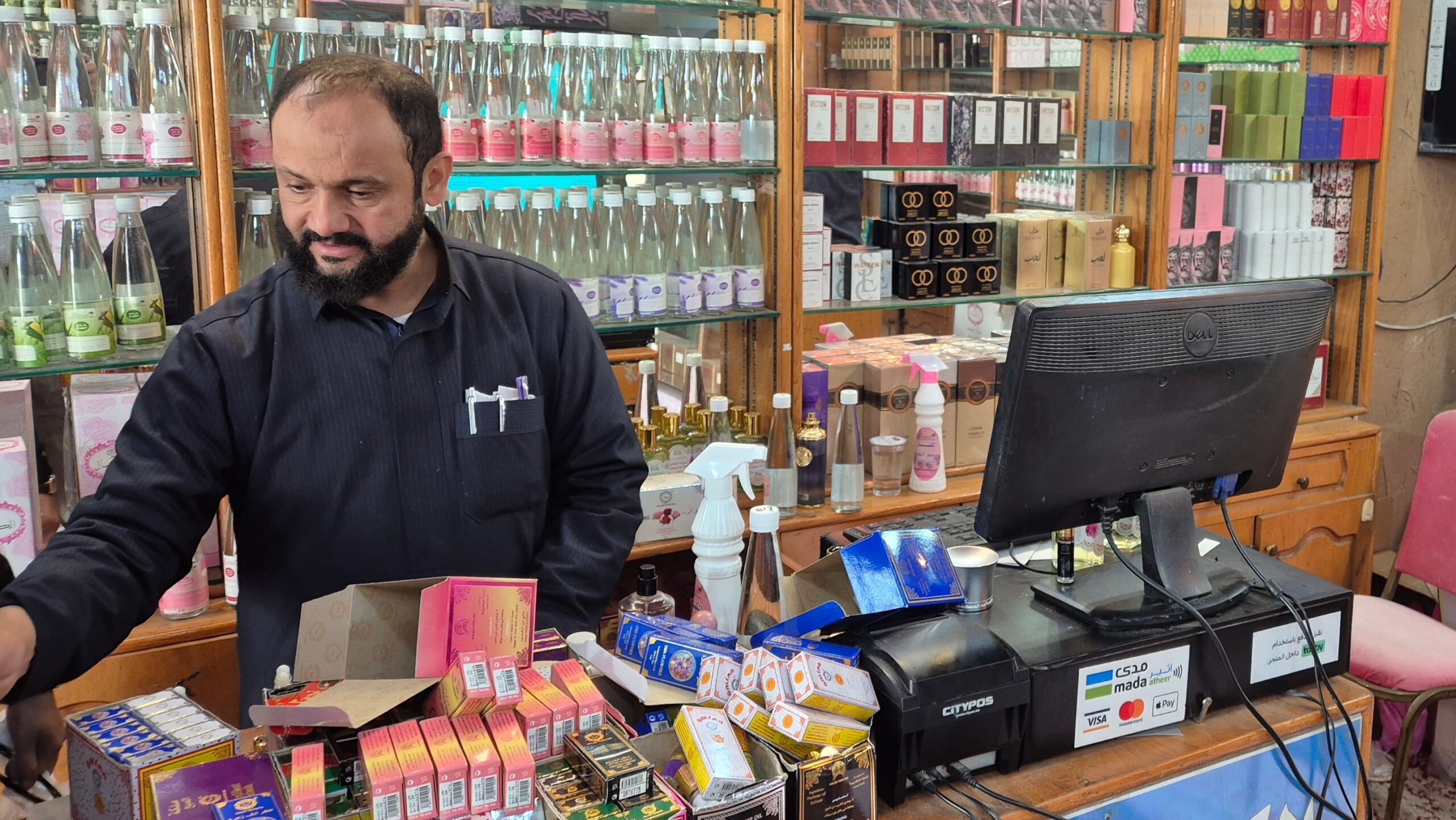
Keepers of the scent helped us sniff various products at the Rose Factory outside Taif, home of their world-renowned roses. We were able to have a short conversation after they finished selling boxes and boxes of aromatic liquids to a Korean tour group.
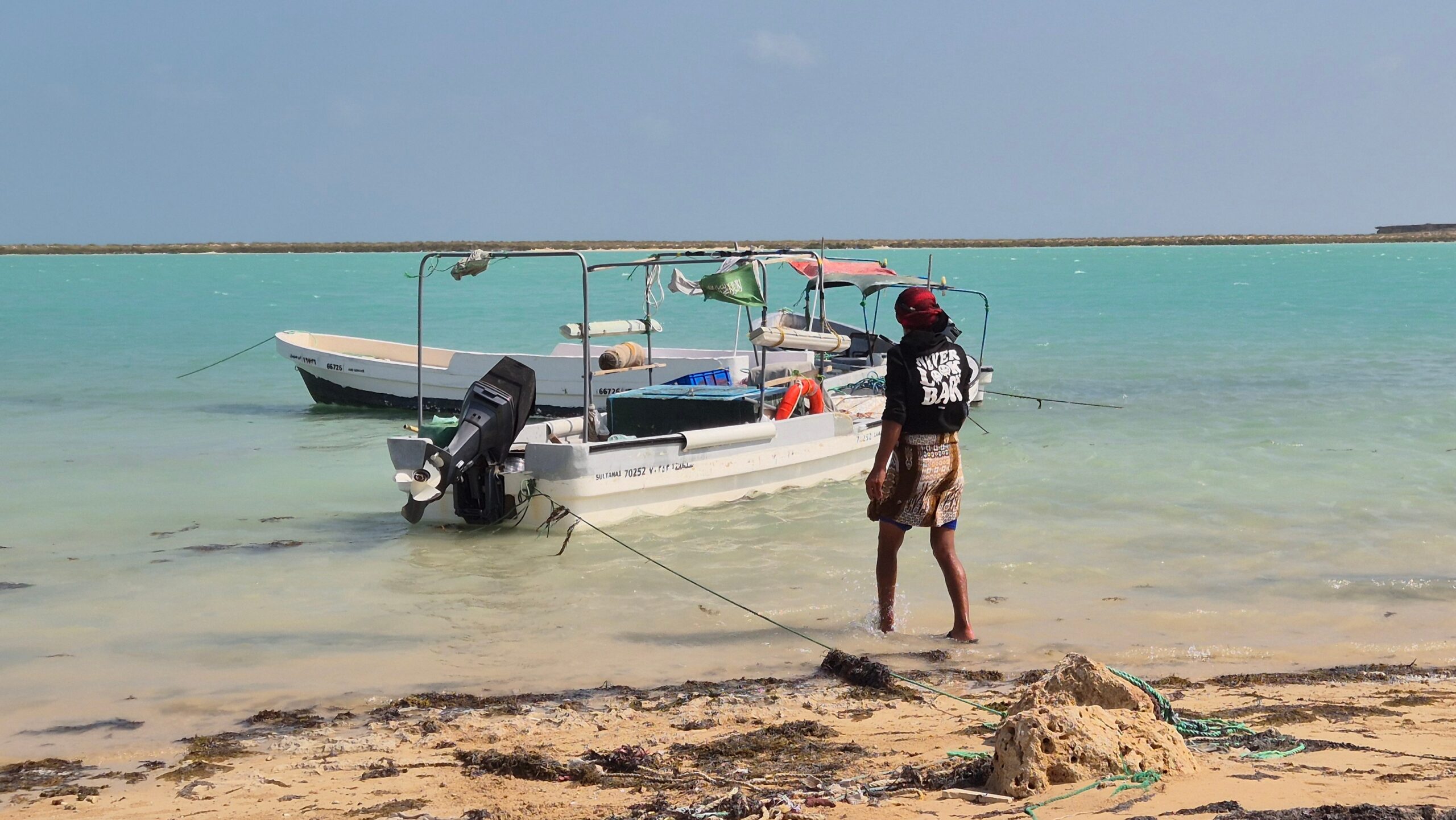
The best places to snorkel on Farasan Island seemed to overlap with the best places for the fishermen to anchor their boats and deliver their catch. We were a curiosity to them but had the most extended conversation with the island patrol guards who ensured we didn’t get in the water at all.
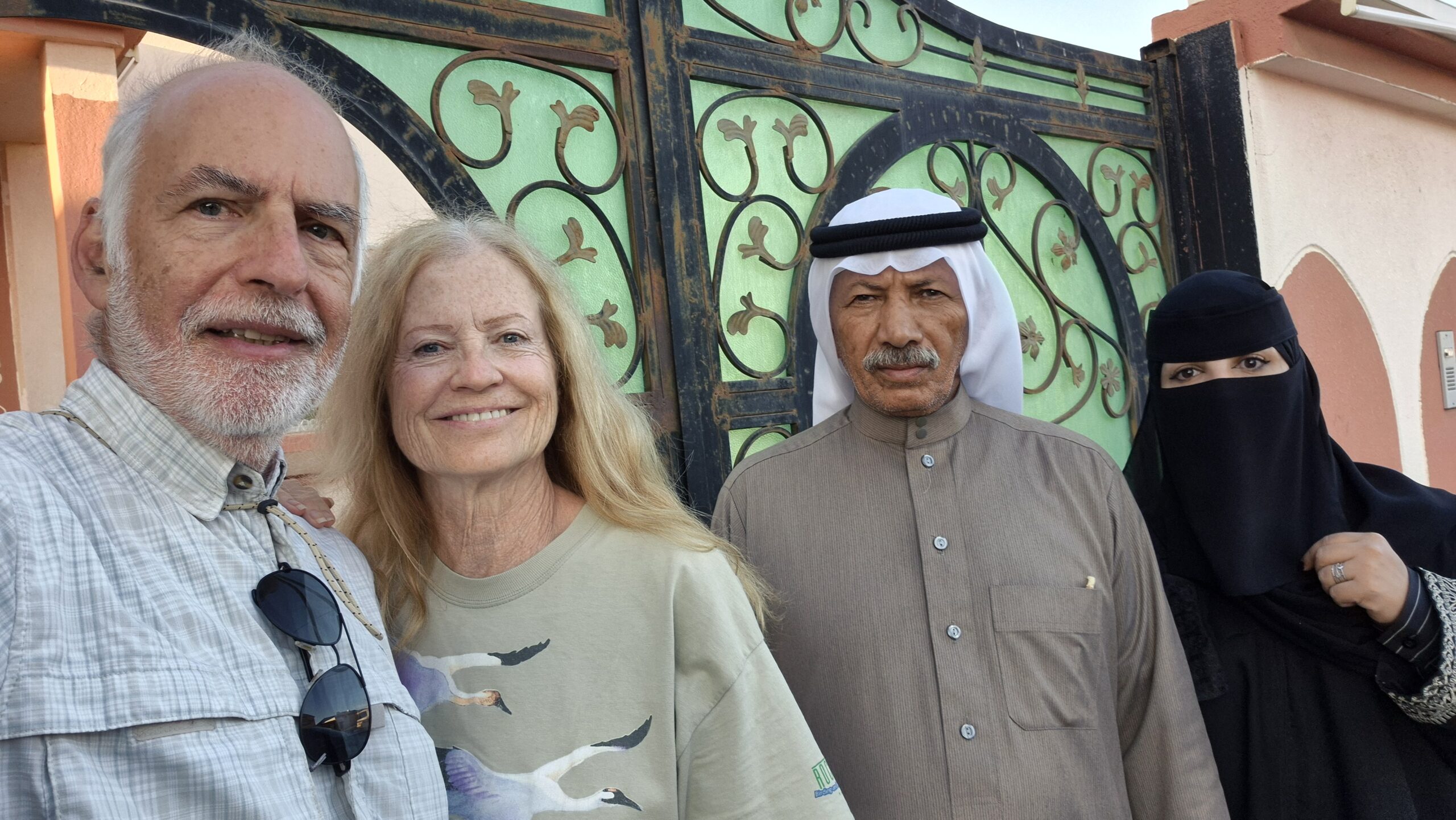
Our last full day in the Kingdom of Saudi Arabia took us out of Najran to Hima for a ride through a spectacular desert landscape to see rock art and camels. Sara, on the right, was our guide with much to add about Saudi culture. The man knew how to explore the vast space we visited and spoke about the art and Islam as well (with her translation). We even had the opportunity to visit his home and meet the family. Despite very limited financial resources, he had three wives and 19 children. His extended family (brothers, cousins, etc.) provided the means for him to marry and acquire his modest but spacious home about an hour’s drive out of Najran, the largest city in the area. He is currently seeking a new third wife.
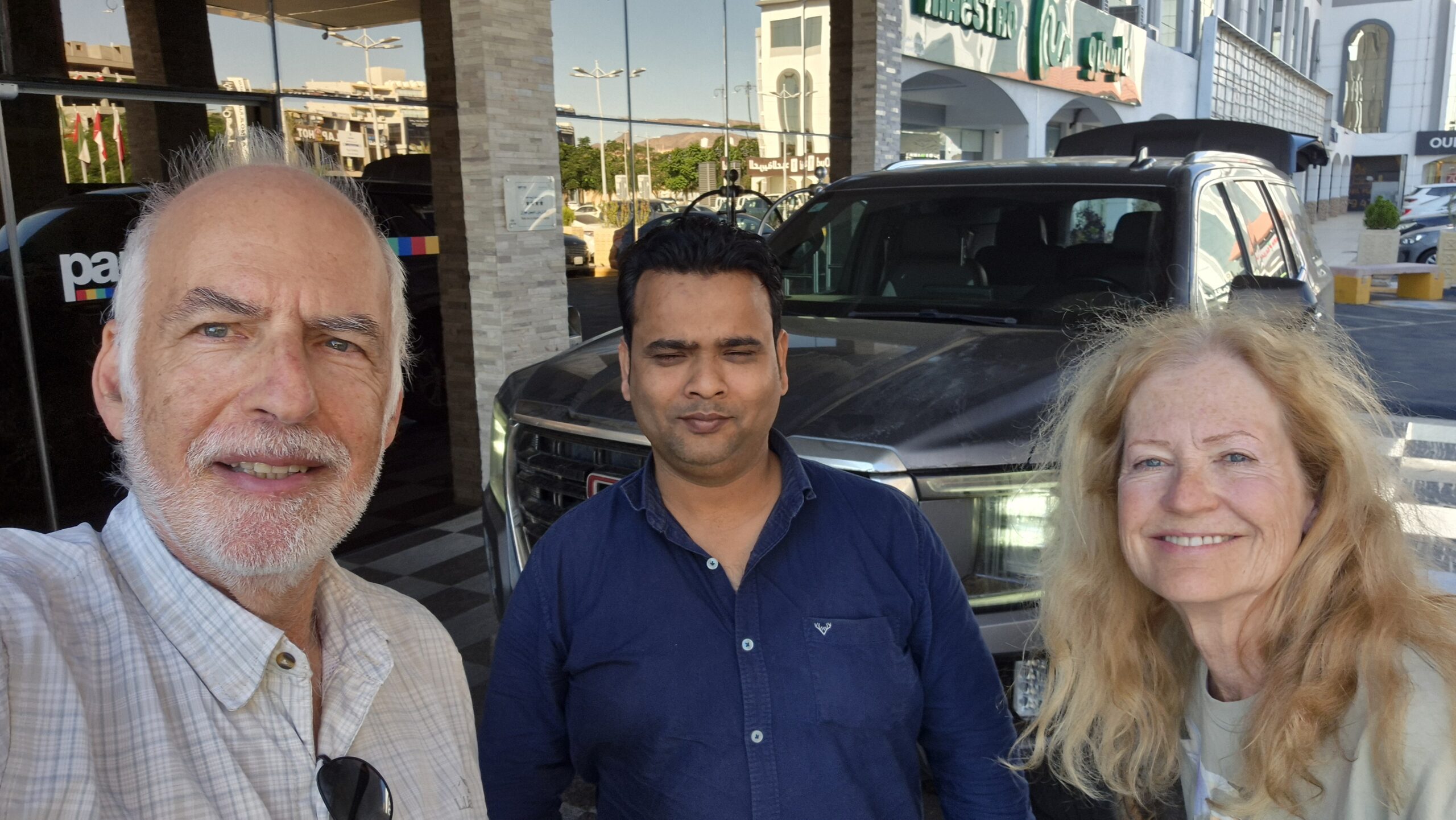
Asif, our driver for some 4000 kilometers across much of Saudi Arabia, turned out to be very helpful – and skilled in Saudi driving methods. In finding him, we were very fortunate because just a few days before our circumnavigation of the country we discovered that we couldn’t rent a car due to age! And we were fortunate that we were relieved of the challenge of Saudi competitive driving and circuitous roadways. Asif was a Muslim from Mumbai who spoke Arabic, though not much of a conversationalist in English. Mostly he said “OK” no matter what we asked. His best hidden skill was spotting the small Arabian gazelles during our jeep safari on Farasan Island.
Roundabouts and Culture
After a few days of driving around Saudi Arabia, we started noticing how many roundabouts were decorated with sculptures that demonstrated a key cultural feature of their locales . Those would make a fun post, we thought, so we started snapping photos – as well as we could – while circling them in traffic.
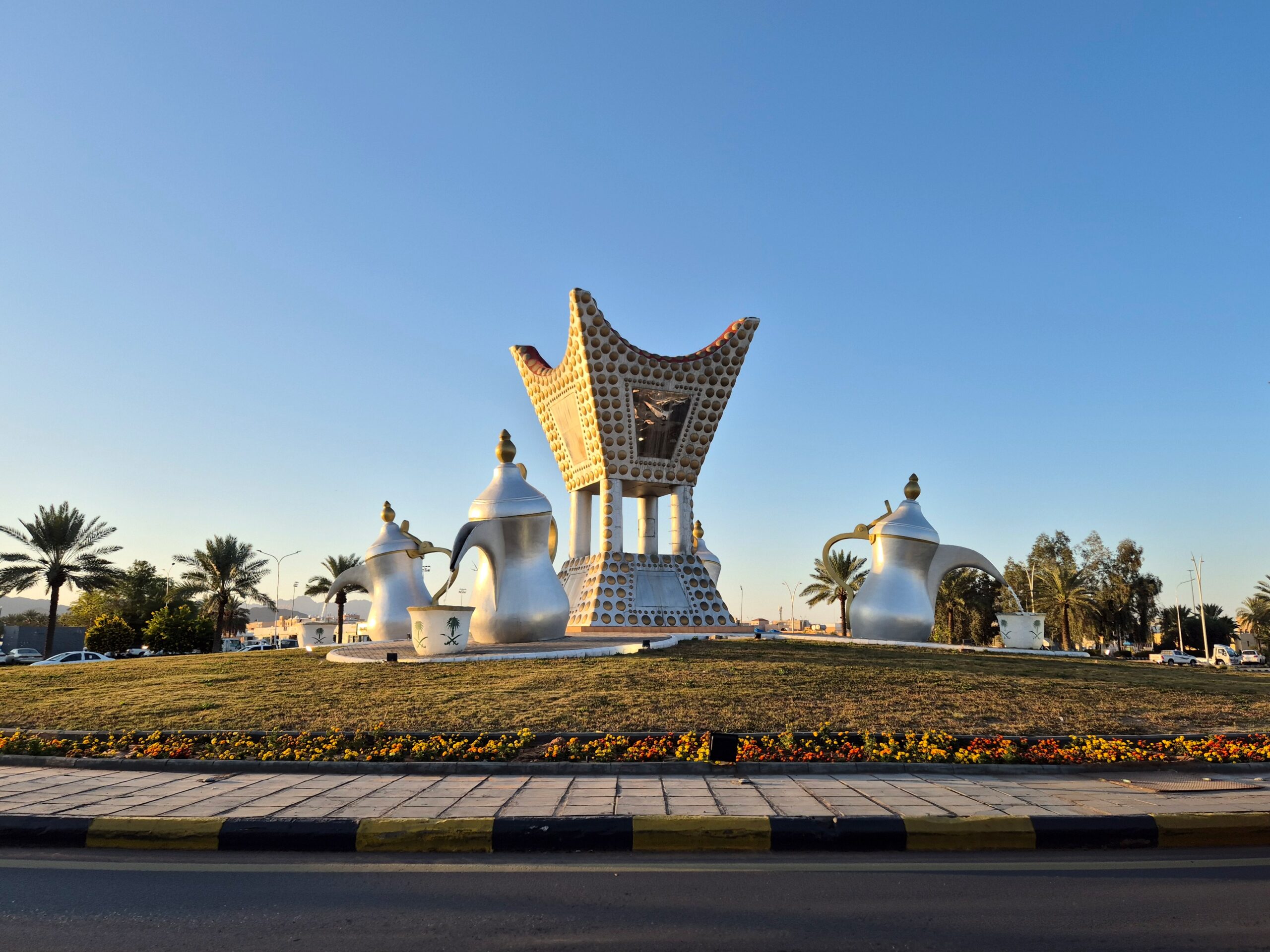
In Hail, a welcome to the city represented by the traditional hospitality greeting in Saudi Arabia, a small cup of Arabic coffee poured from a vessel like this (with dates to eat). The center is an incense burner that adds fragrance to life within a home.
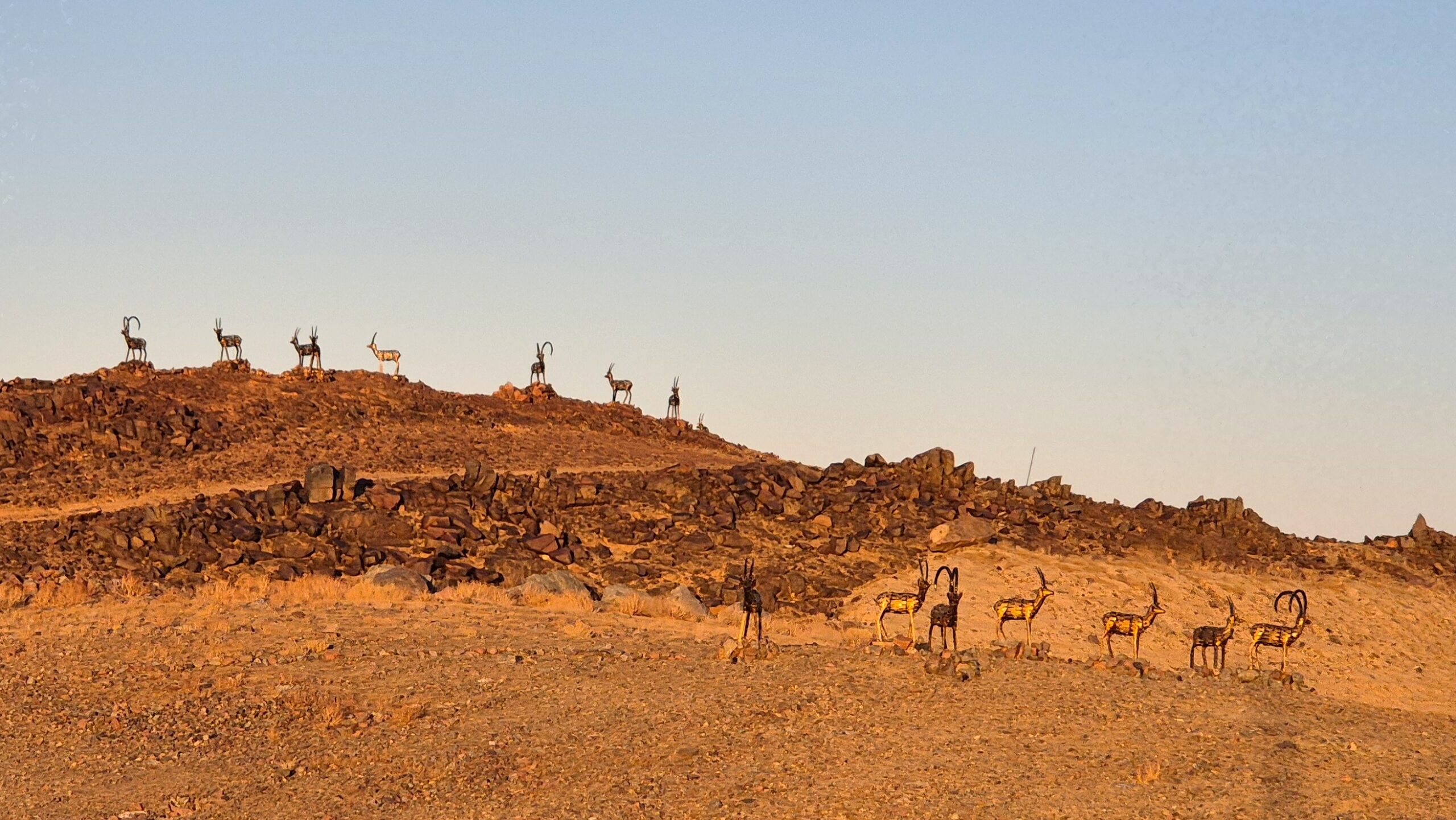
In Hail, a celebration of the UNESCO rock art nearby which includes many depictions of ibex (curved horns) and oryx (straight horns). This was not exactly a roundabout, but a hillside forming part of a cloverleaf intersection as it was lit by the setting sun.
In Jeddah, where the desert abuts the Red Sea, here’s a camel in the elongated style of a Modigliani sculpture.
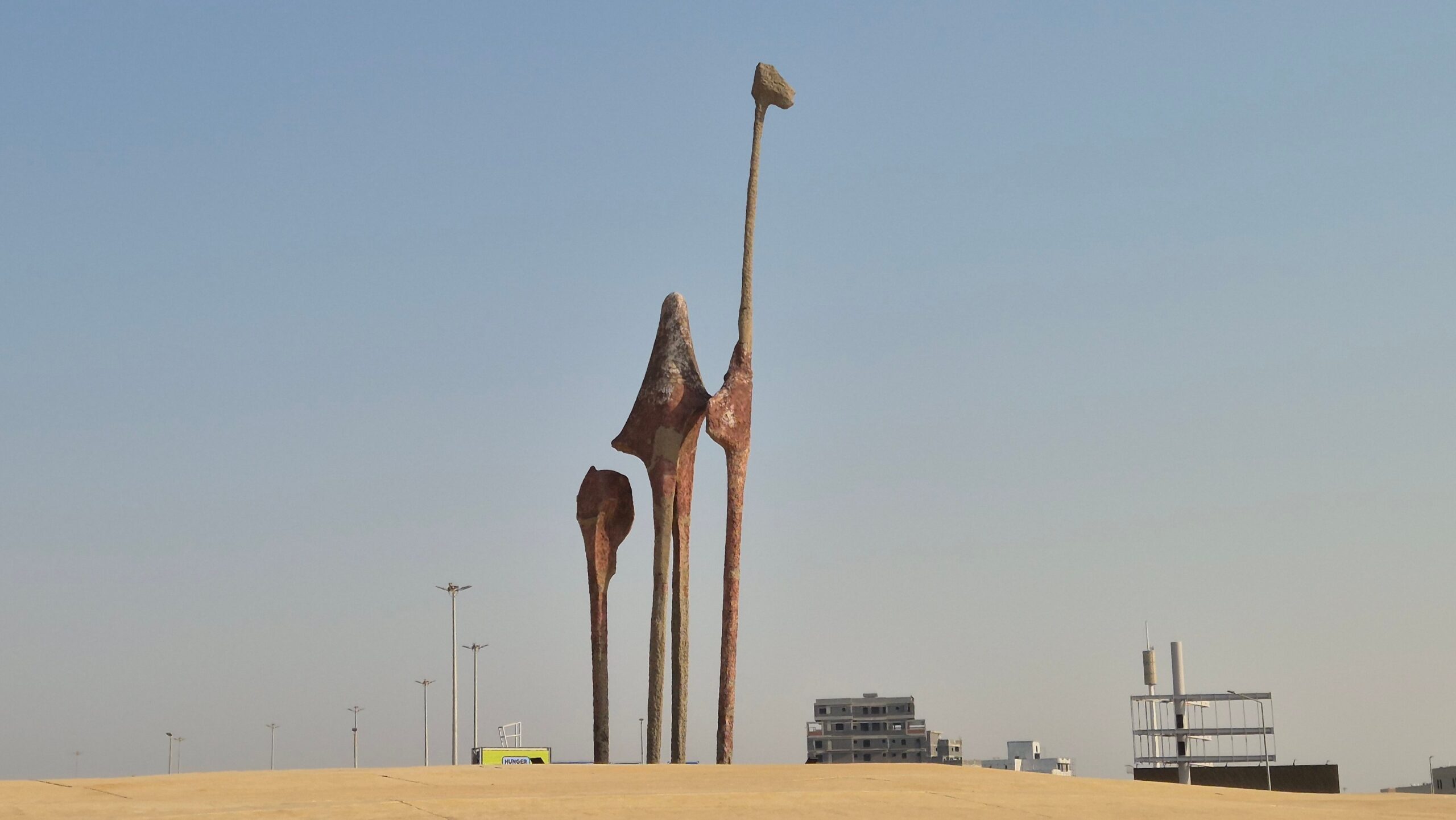
In Jeddah, large doves skimming near the seashore (attended by small pigeons roosting on them).
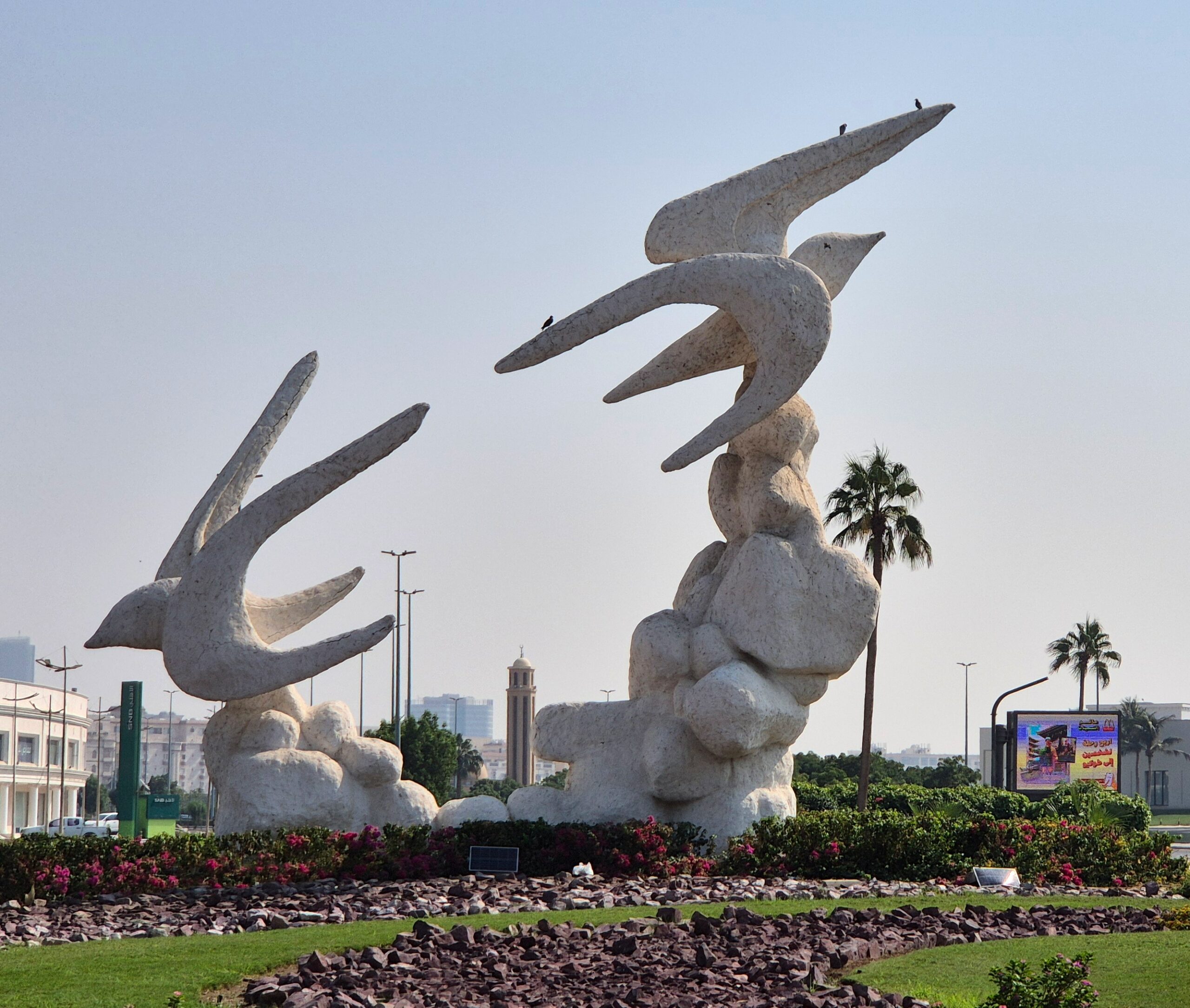
In Jeddah, the Cosmos or Astronomy sculpture rises to the skies some 44 meters high (about 150 feet).
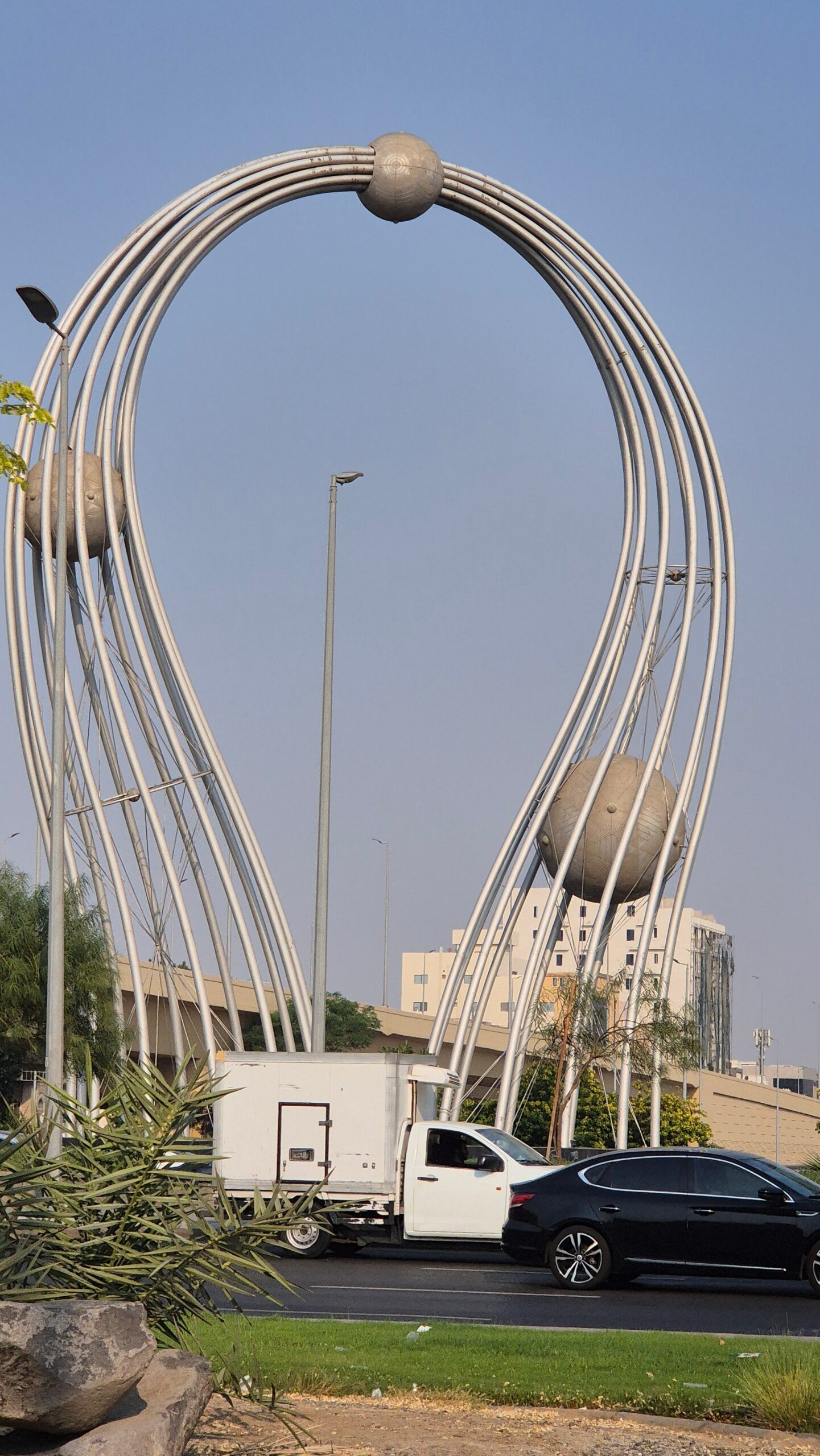
In Taif, the Time Monument in a circle at the edge of the fascinating old town. Seizing the moment?
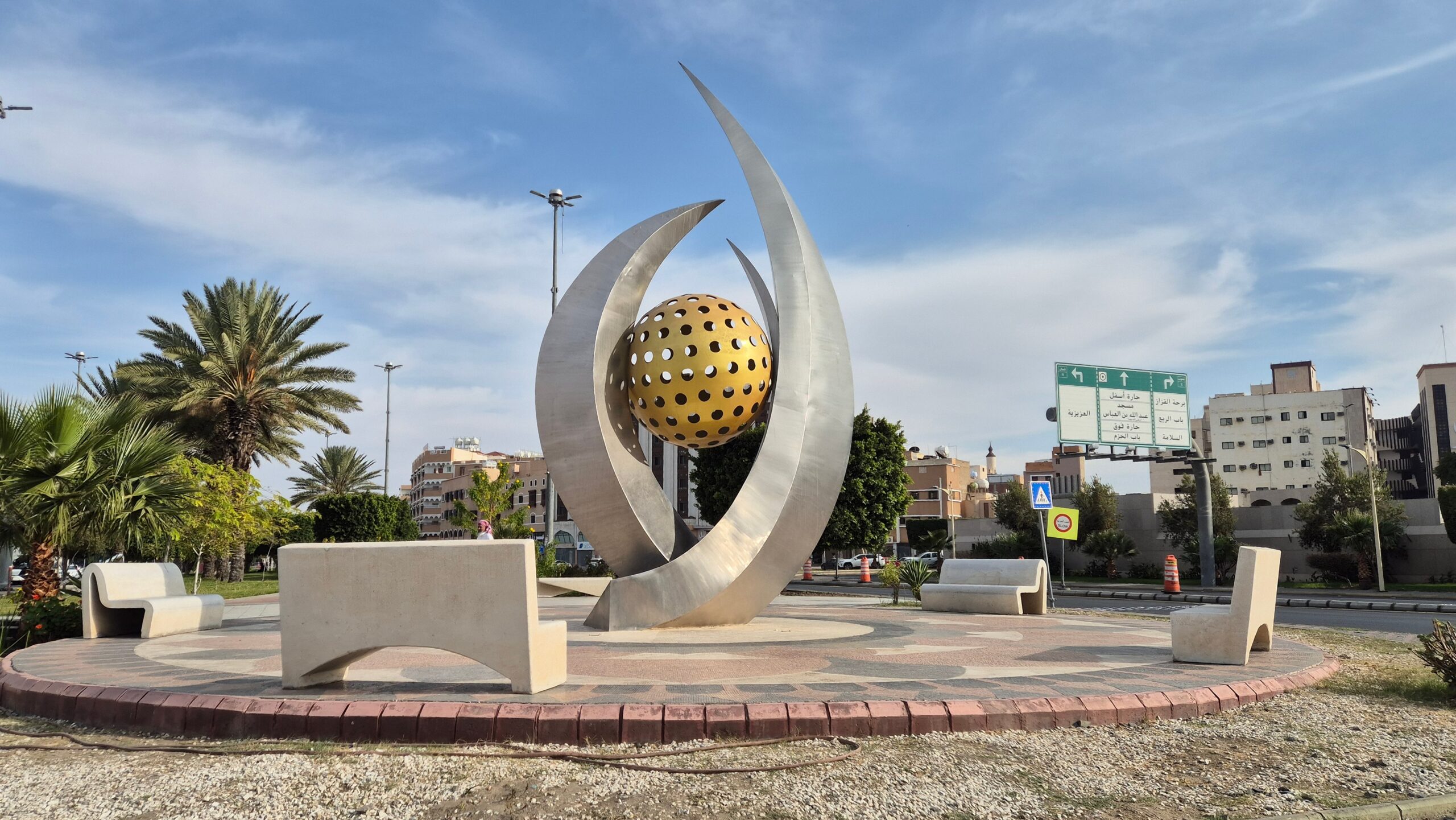
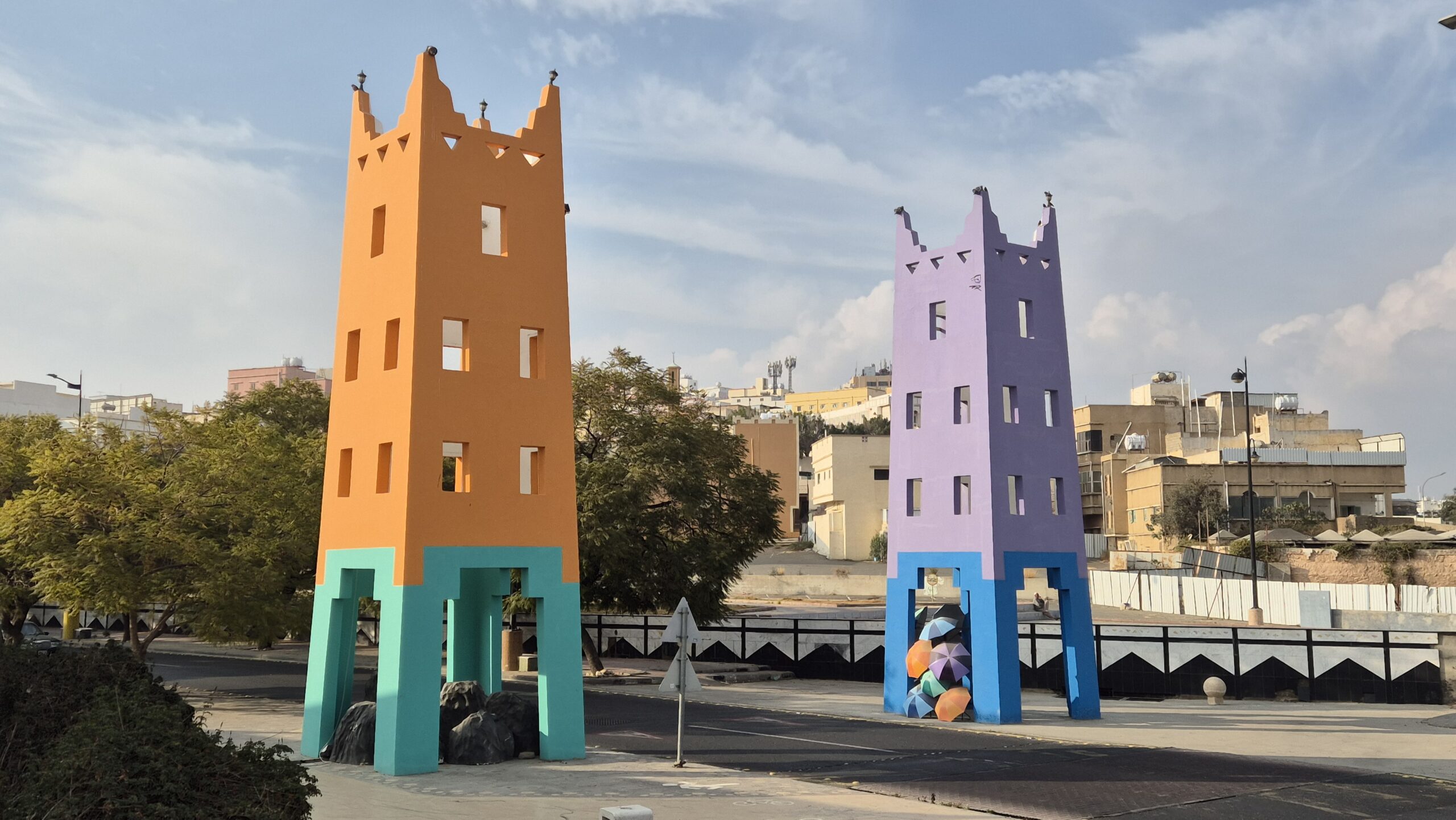
In Abha, this was strictly more of an entry point to a popular walkway off a roundabout, but it’s a charming tribute to watchtowers in local architecture – one standing over lava rock of the area and the other, for some reason, over umbrellas.
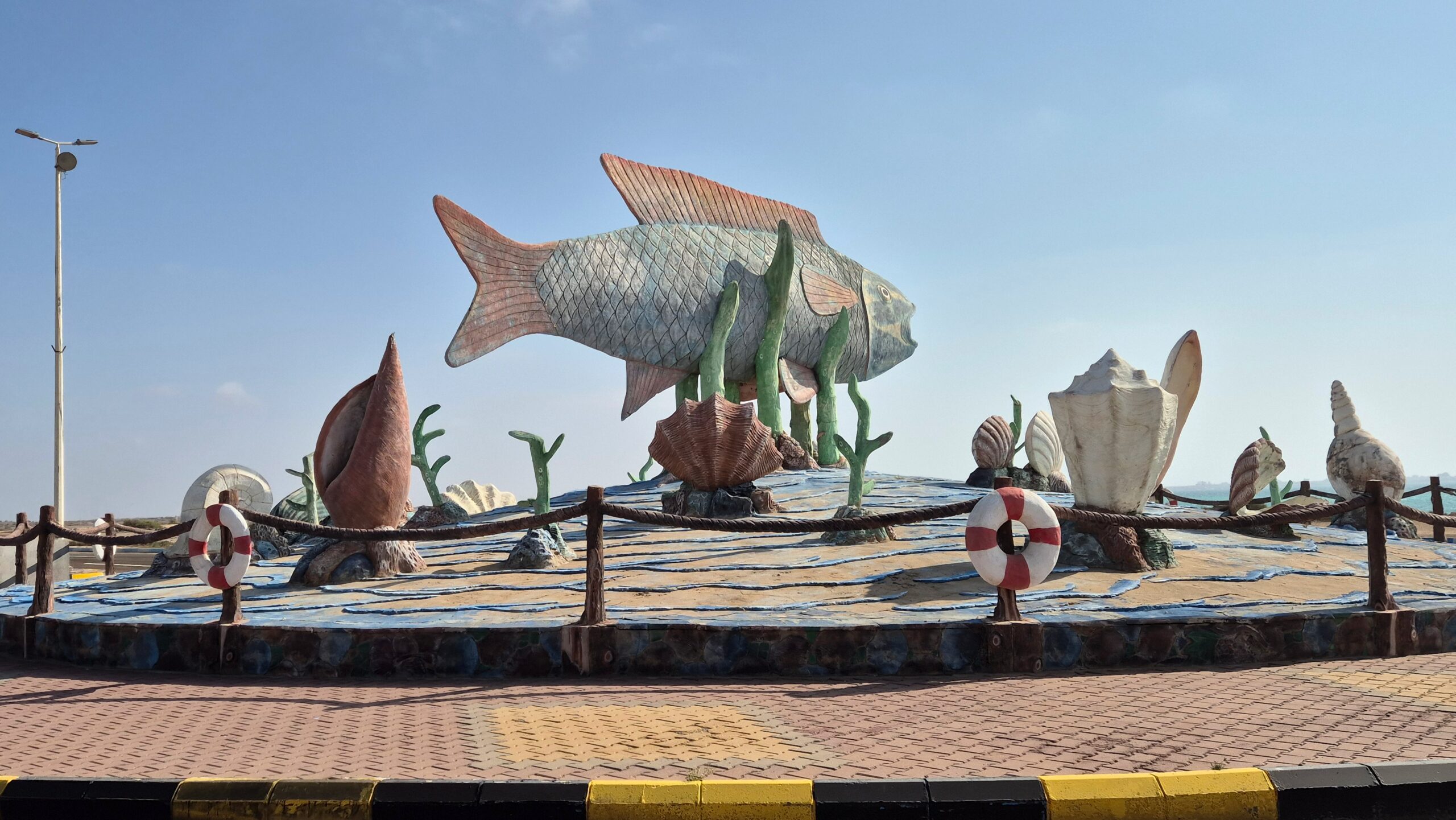
On Farasan Island, a typical local fish with shellfish (and life preservers) around it.
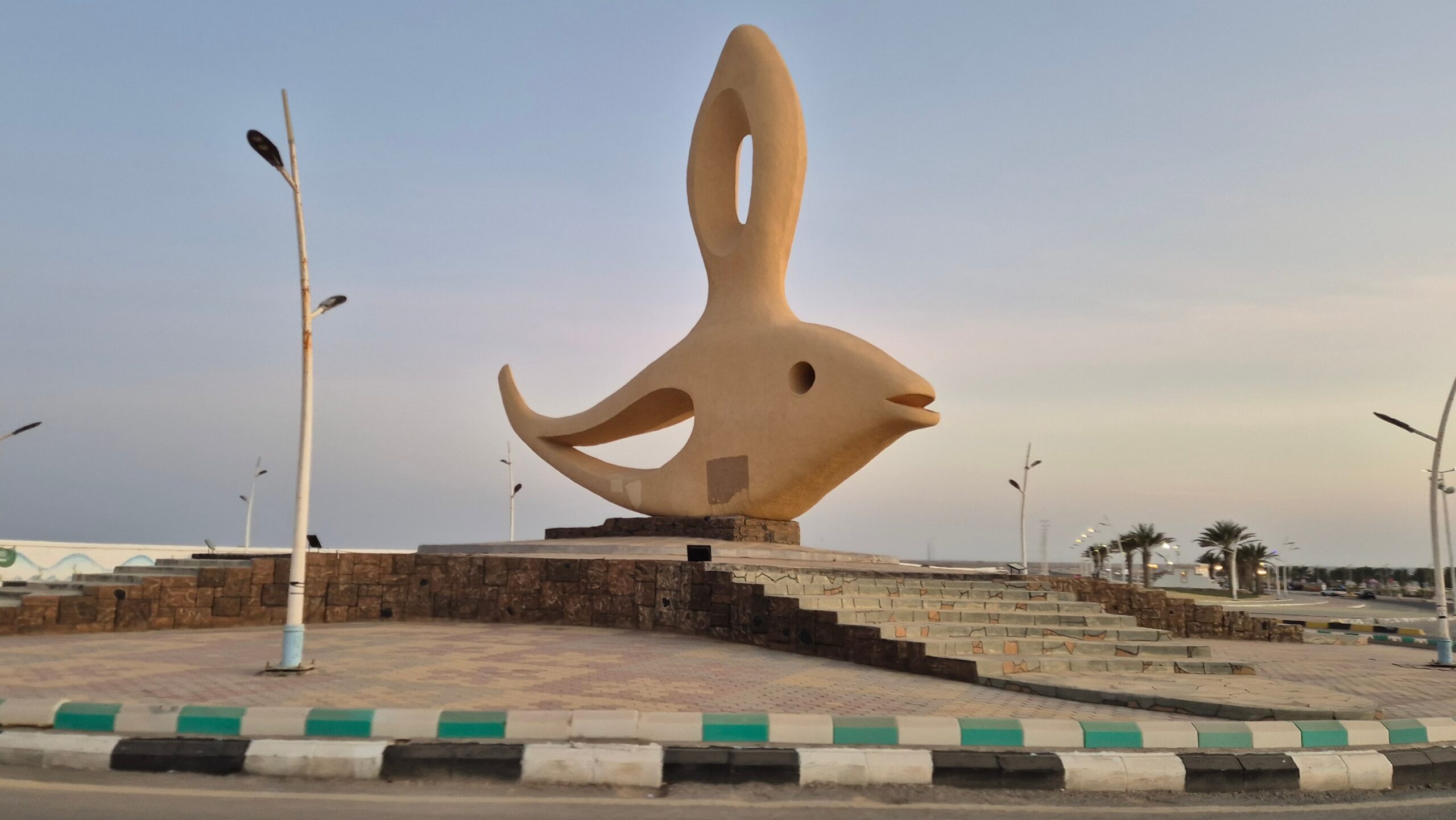
Also on Farasan Island, a less typical fish with a handle
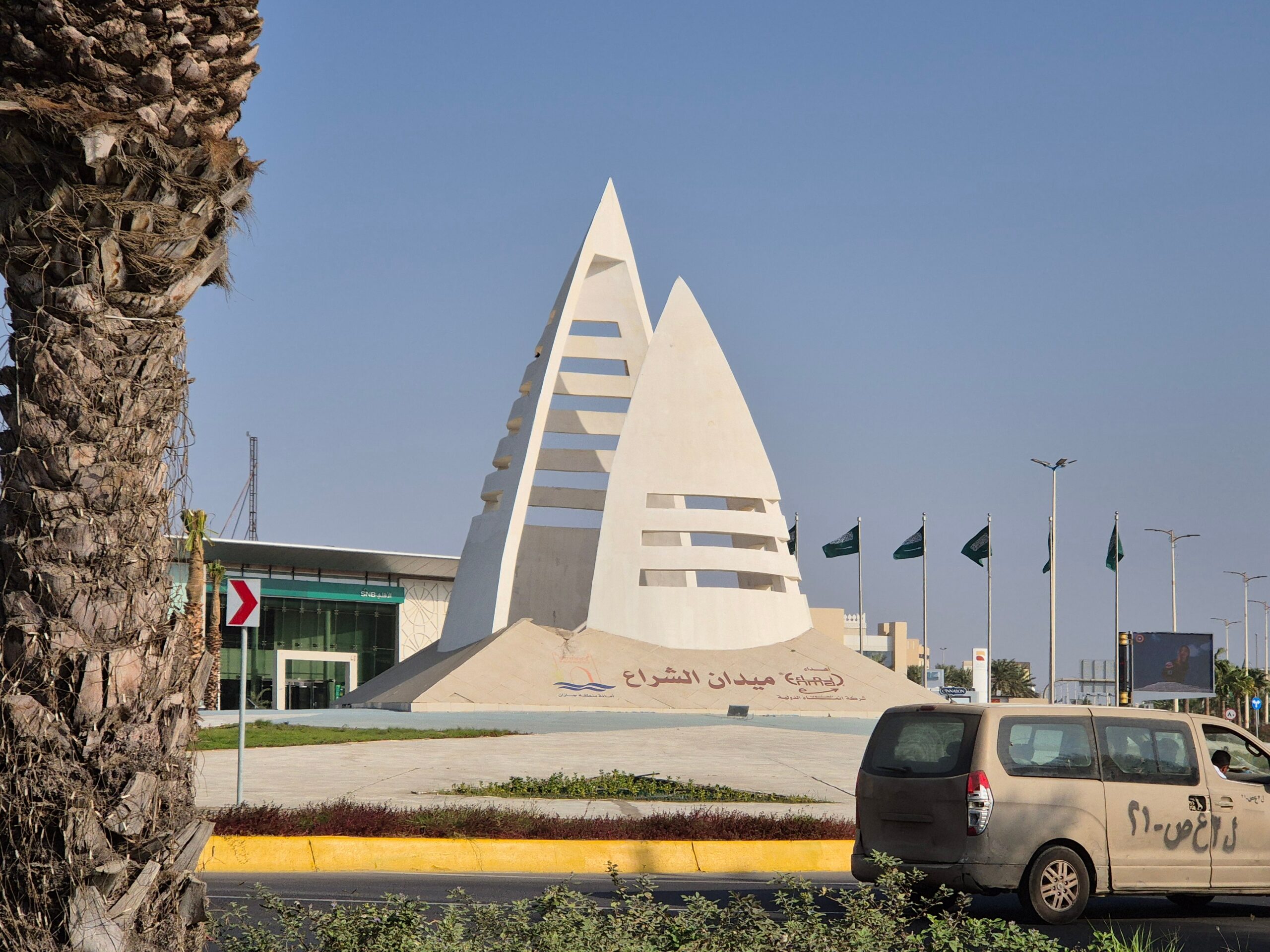
At Jizan, on the Red Sea coast, a tribute to sailing and wind power – in the middle of car traffic.
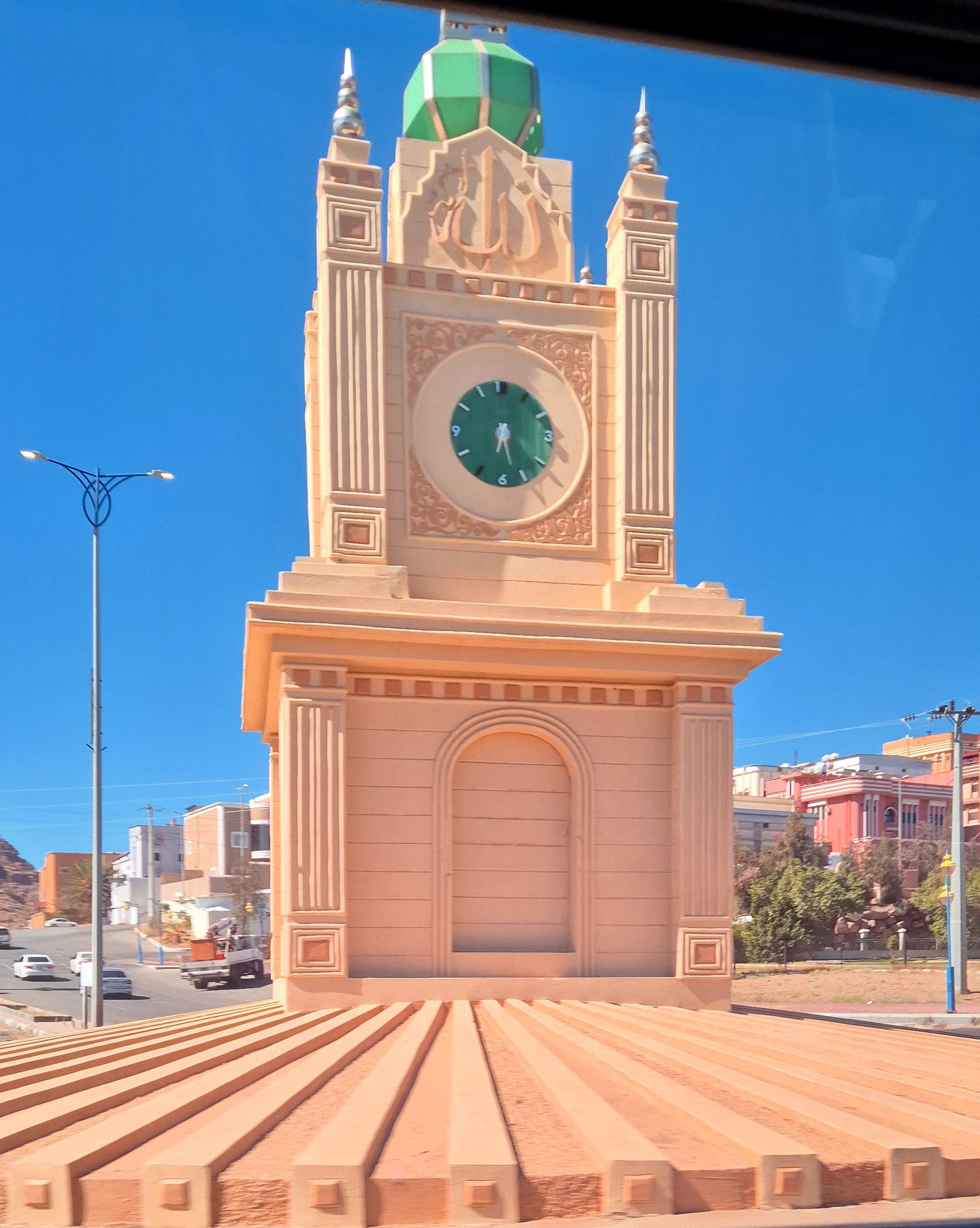
At Najran, a clocktower amid traffic honors the famous tall clocktower in Makkah (Mecca) and similar roundabouts within Saudi Arabia.
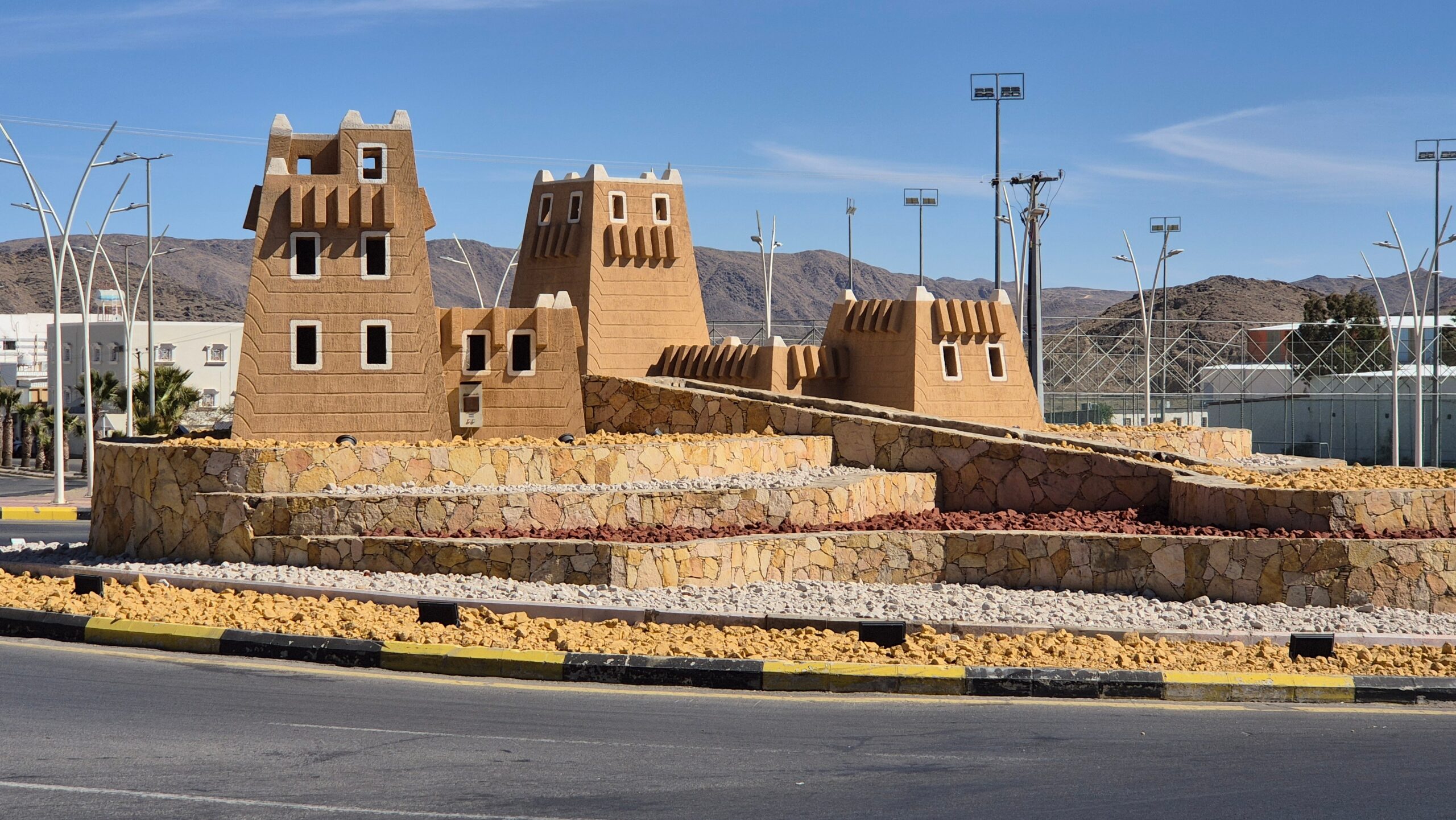
In Najran, this sculpture shows off the local architectural style in clay with white trim, as well as the notable watchtowers built in the desert mountains.
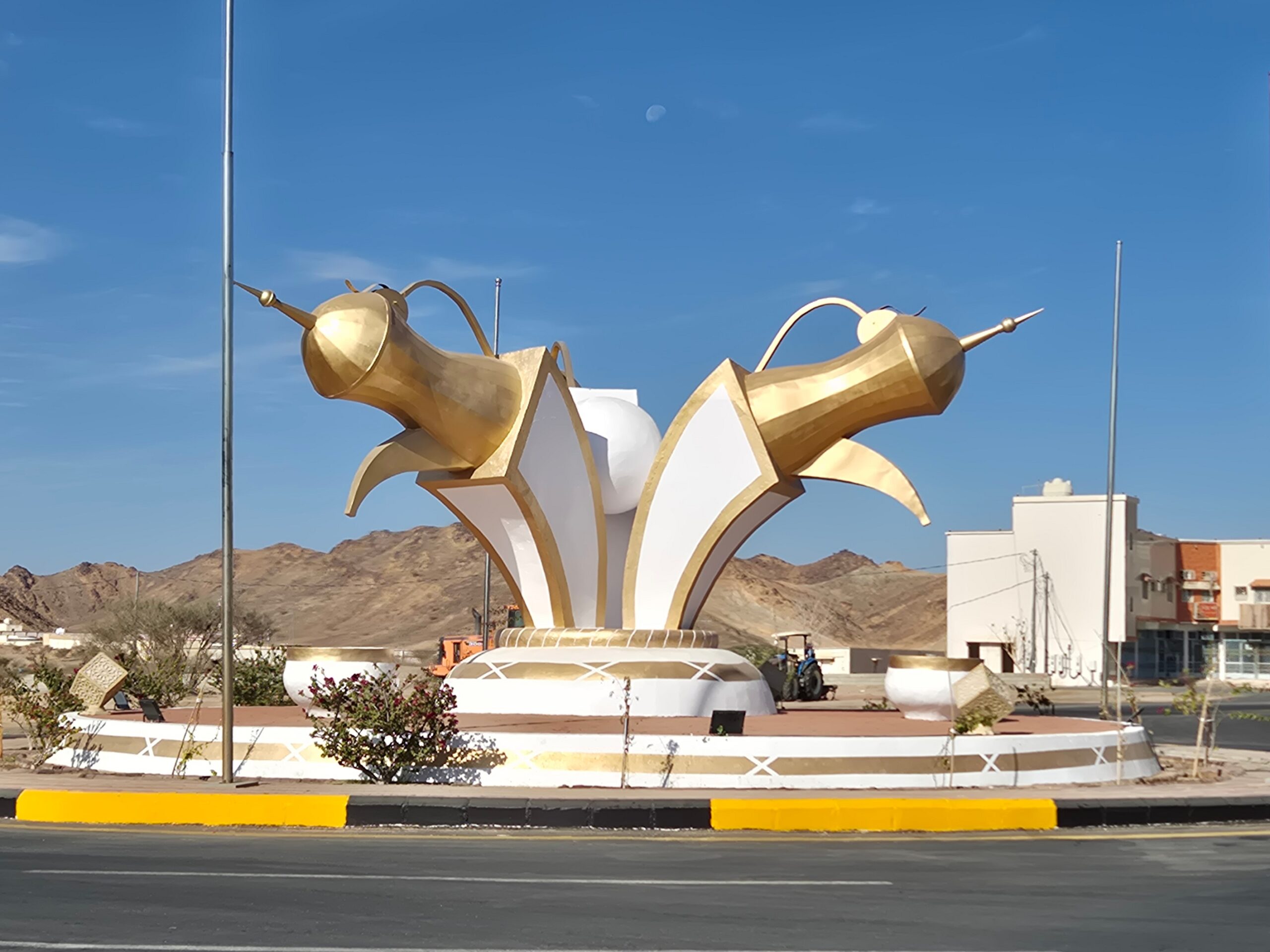
At Najran, another welcome with traditional coffee (plus sugar cubes).
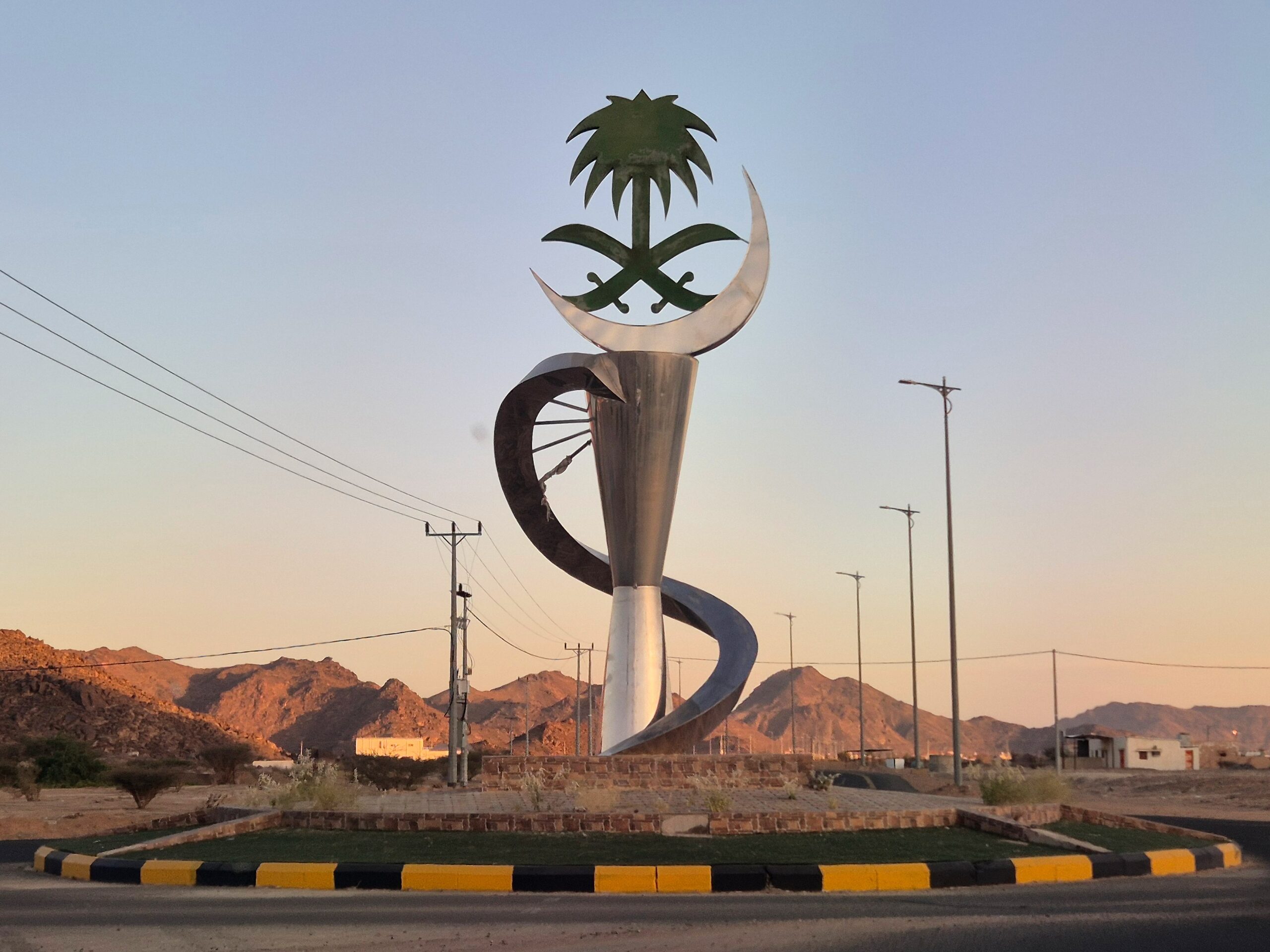
At Hima, the symbol of Saudi Arabia (palm with crossed sabers) sits atop a kind of torch.
Mashups
An amusing observation…You can learn a lot about a culture while shopping for food – whether at a noisy open-air market or local shop or, in this case, a huge chain supermarket in Saudi Arabia.
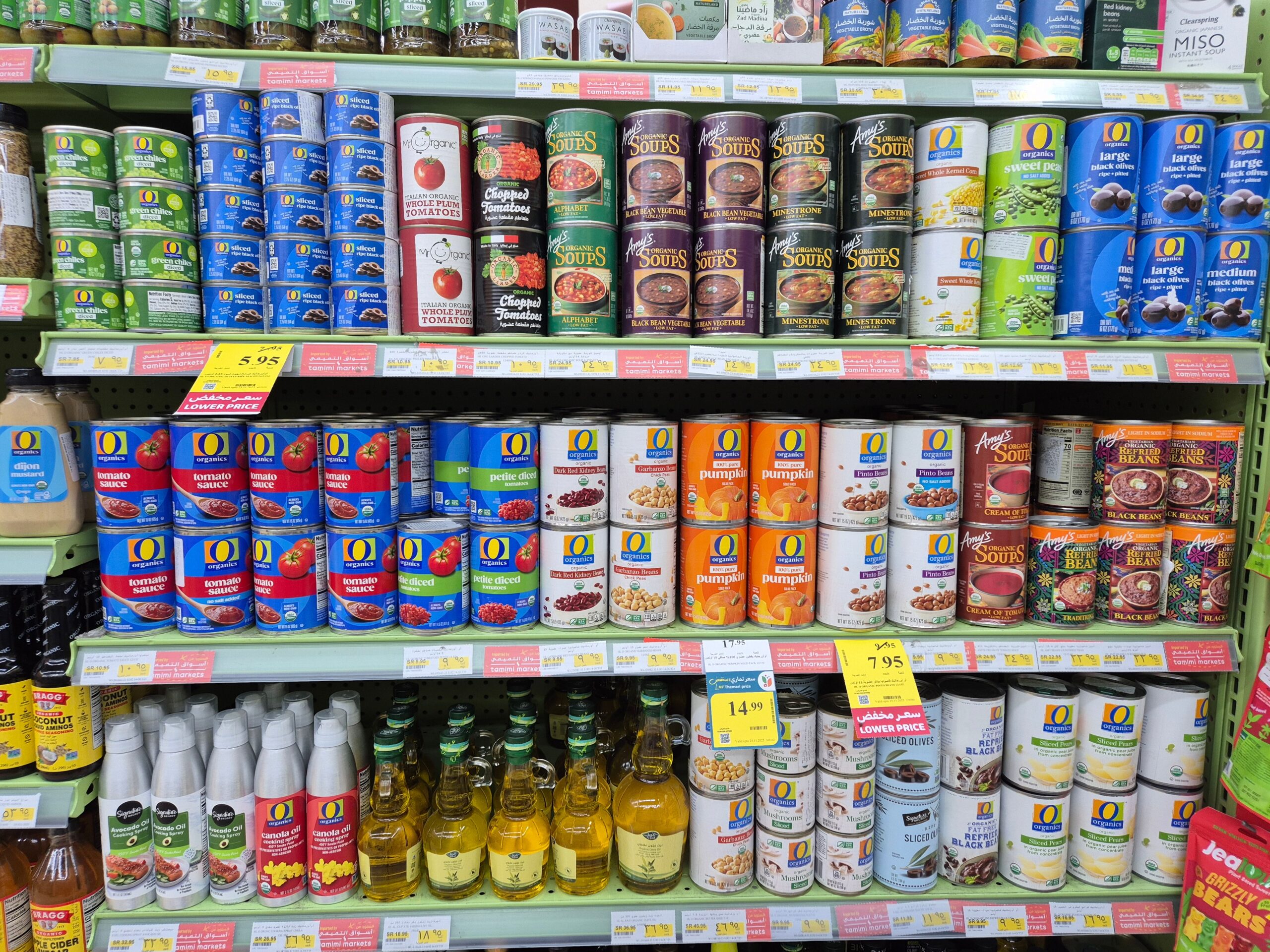
Hmmm, O Organics, Amy’s Soups (and, in other aisles, Morningside, Lay’s, Kikkoman, Old El Paso, Activa, Crest, and on and on)…where am I? An Albertson’s? A Whole Foods? A Continente? No, the Tamimi Supermarket in a mid-sized Saudi agricultural town!
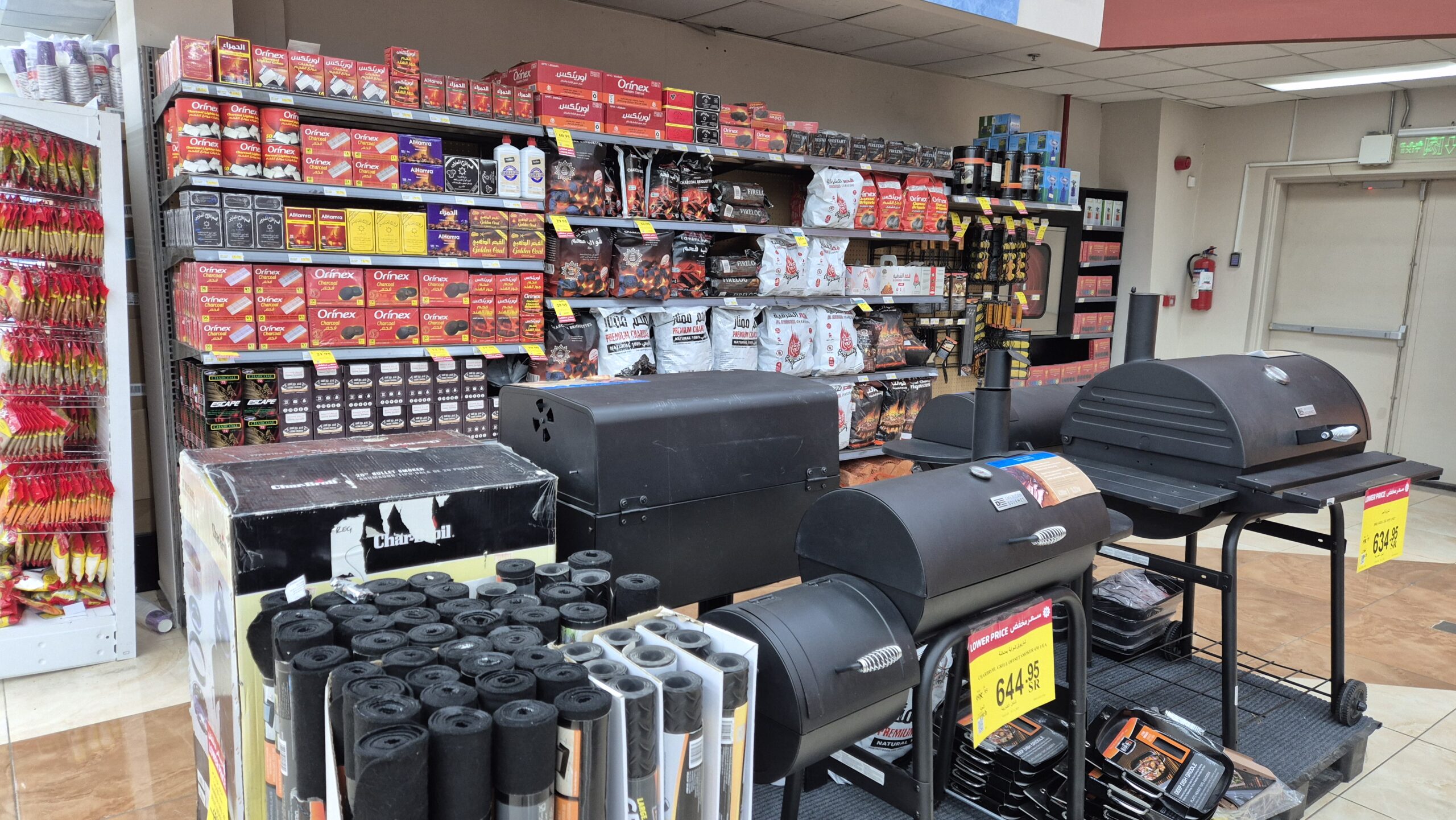
And it seems shoppers should stock up on Barbeque equipment for their next party.
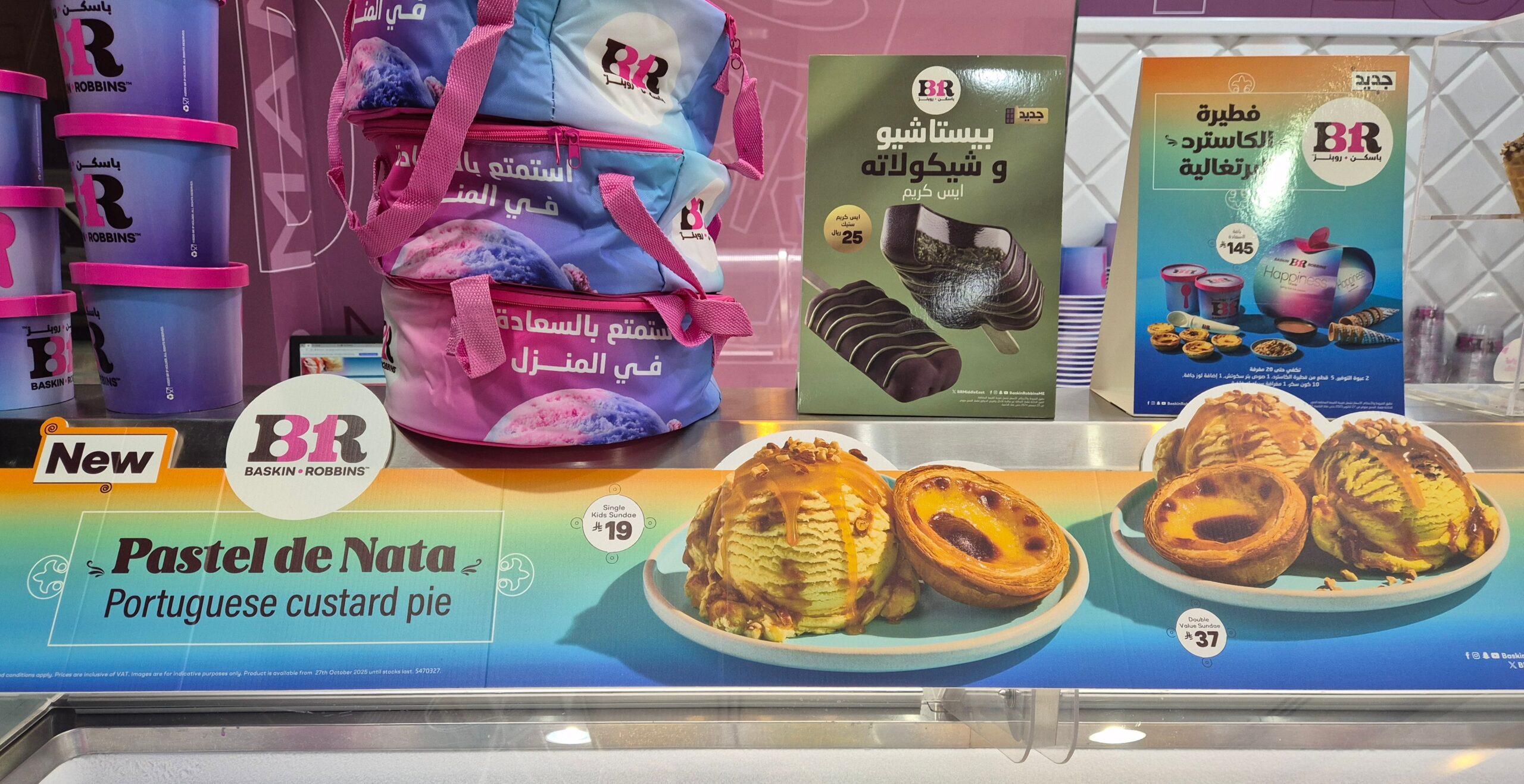
We were quite surprised – and had a big laugh – when we saw this offer at one of many Baskin&Robbins here: the famous Portuguese cream pastry, Pastel de Nata. B&R is just one of many familiar chain eateries like Starbucks, KFC, McDonald’s, Popeye, etc.
What we found in a major chain store in Saudi Arabia was, well, not much different from a major American or European one – with many of the same brands and approaches to cooking.
(To enlarge any picture above, click on it. Also, for more pictures from Saudi Arabia, CLICK HERE to view the slideshow at the end of the itinerary page.)