
The southwestern part of Saudi Arabia surprised us with the fascinating contrasts of Jeddah, the stunning mountain landscape that parallels the Red Sea, the unexpected Farasan Islands off the coast, and our return to the prehistoric desert at Najran.
Jeddah, Saudi Arabia’s second largest city
Jeddah, stretches along the Red Sea coast in the west. It has long been a major entry point by sea (and air) for pilgrims to nearby Makkah (Mecca) and Madinah. Plus, it is a major port for goods and resources as well. Like so much of the country, Jeddah has renovated or built over its historic infrastructure. So, a long boardwalk, with many eateries and entertainments, lines the city’s shores. But leadership now recognizes the value of the old for tourism and education. That’s why so many of the centuries-old tall houses of old Jeddah, whose facades are covered with latticed wood windows or screened balconies (roshans), are getting a facelift in time for 2030, the country’s Vision Project.
- Al-Balad, old town Jeddah
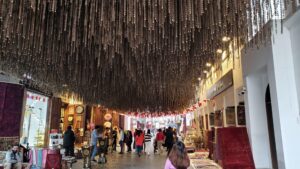
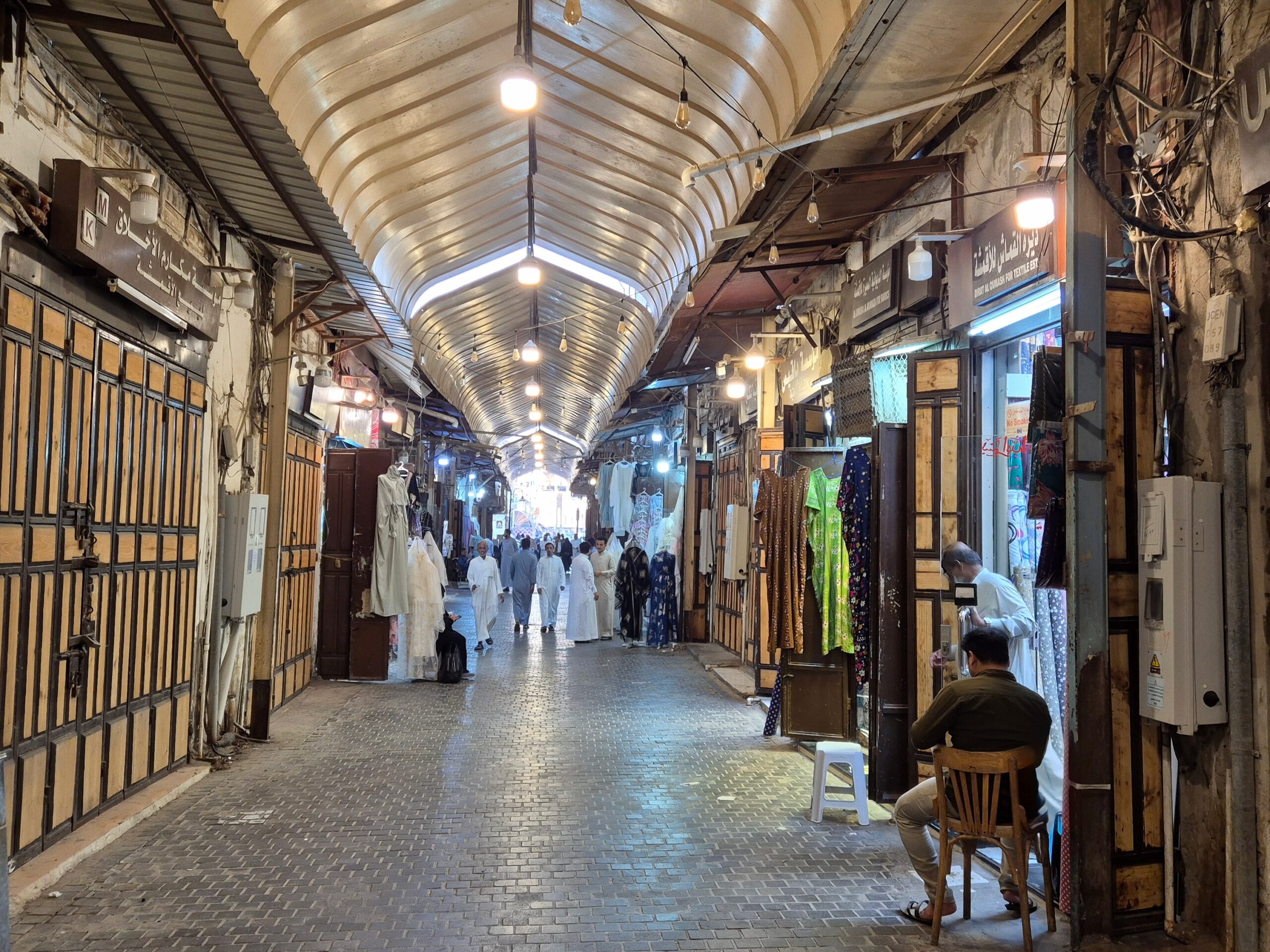
Unlike many Saudi cities, old Jeddah has retained some of its original souq/market buildings like these, which only open in the morning and then around 4pm when the daytime heat lessens. This is in the clothing and textiles section.
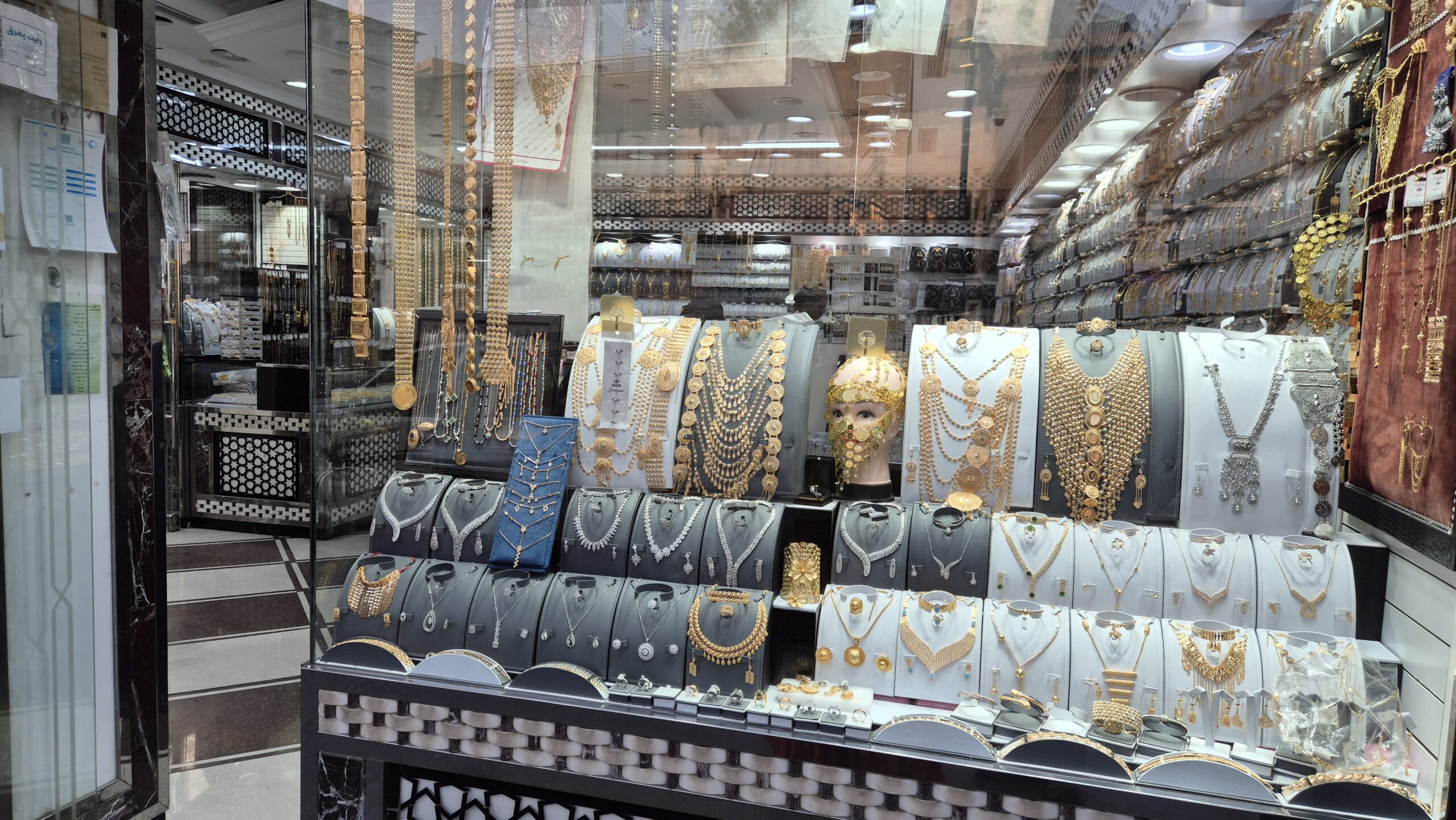
The traditional souqs of Jeddah continue the merchant tradition from ages past, including many of the same type of goods traded for generations – including dates, incense, textiles, and of course gold as in this jewelry shop. We were surprised to find a huge number of such shops, as well, in the very commercialized streets adjacent to the Prophet’s Mosque of Madinah. But then, with a million pilgrims daily, we realized that the appeal was inevitable.
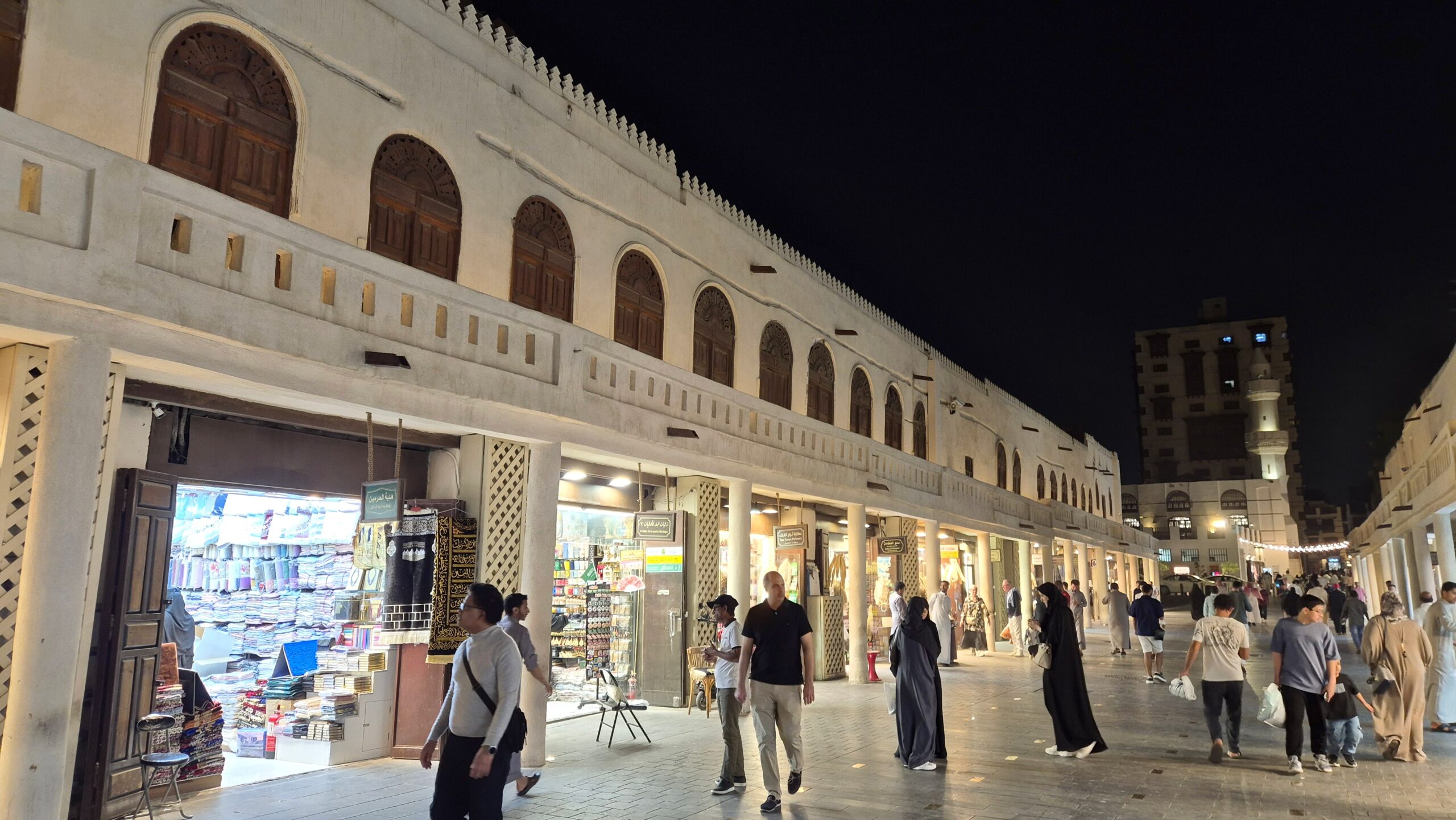
Since around 1900, pilgrims to the holy sites have frequented the Qabil souq in the western part of Al-Balad marketplace to purchase a variety of needs.
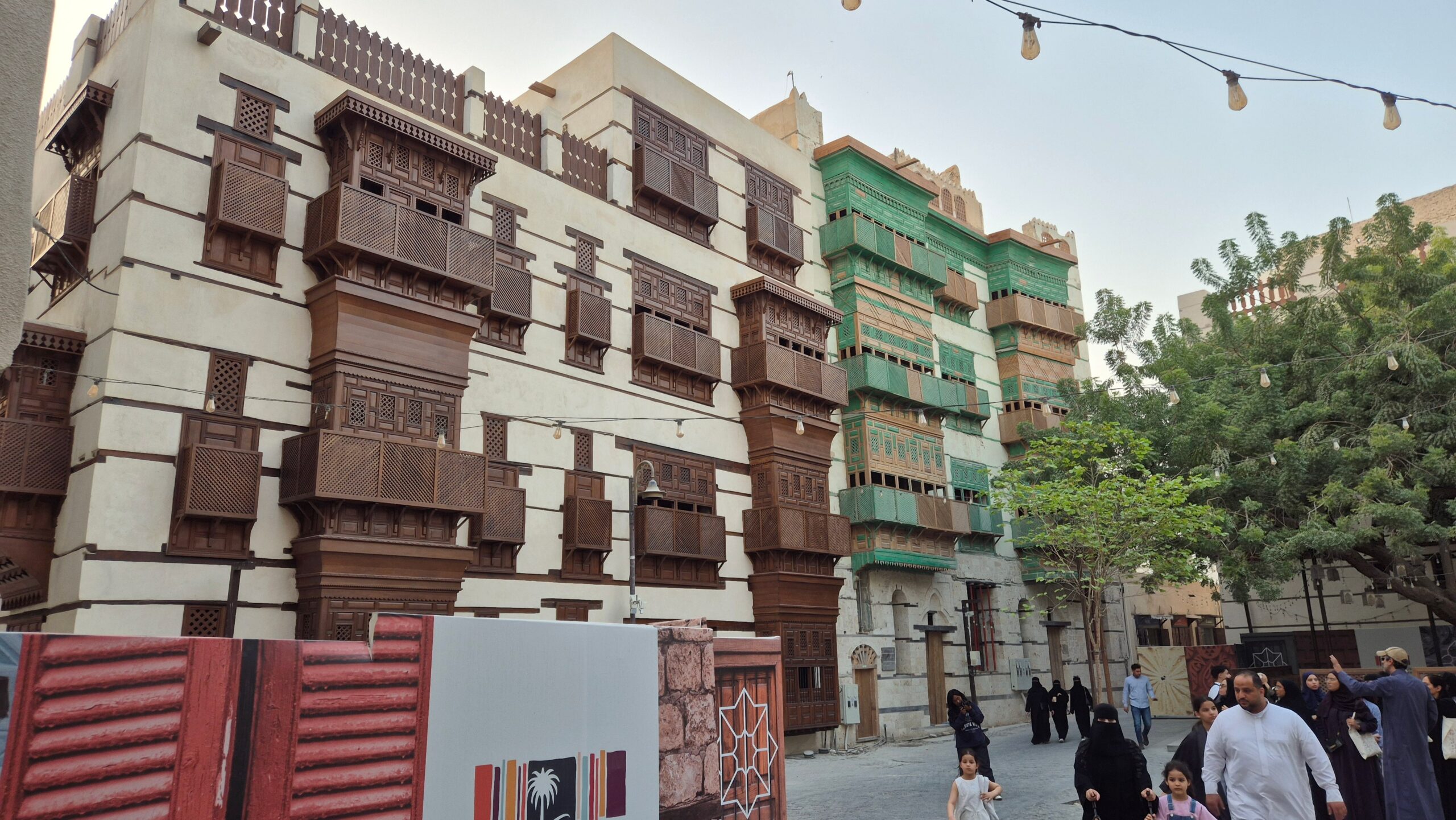
Only four stories high, this building in Al-Balad, old central Jeddah, is comparatively short compared to the 6-story skyscrapers built by other traders during the Ottoman period of the 16th to 19th centuries. Yet it demonstrates much of the elegant detail typical of the taller ones: facades covered with latticed windows and screened balconies festoon a structure formed from large blocks of coral stone harvested out of the Red Sea.
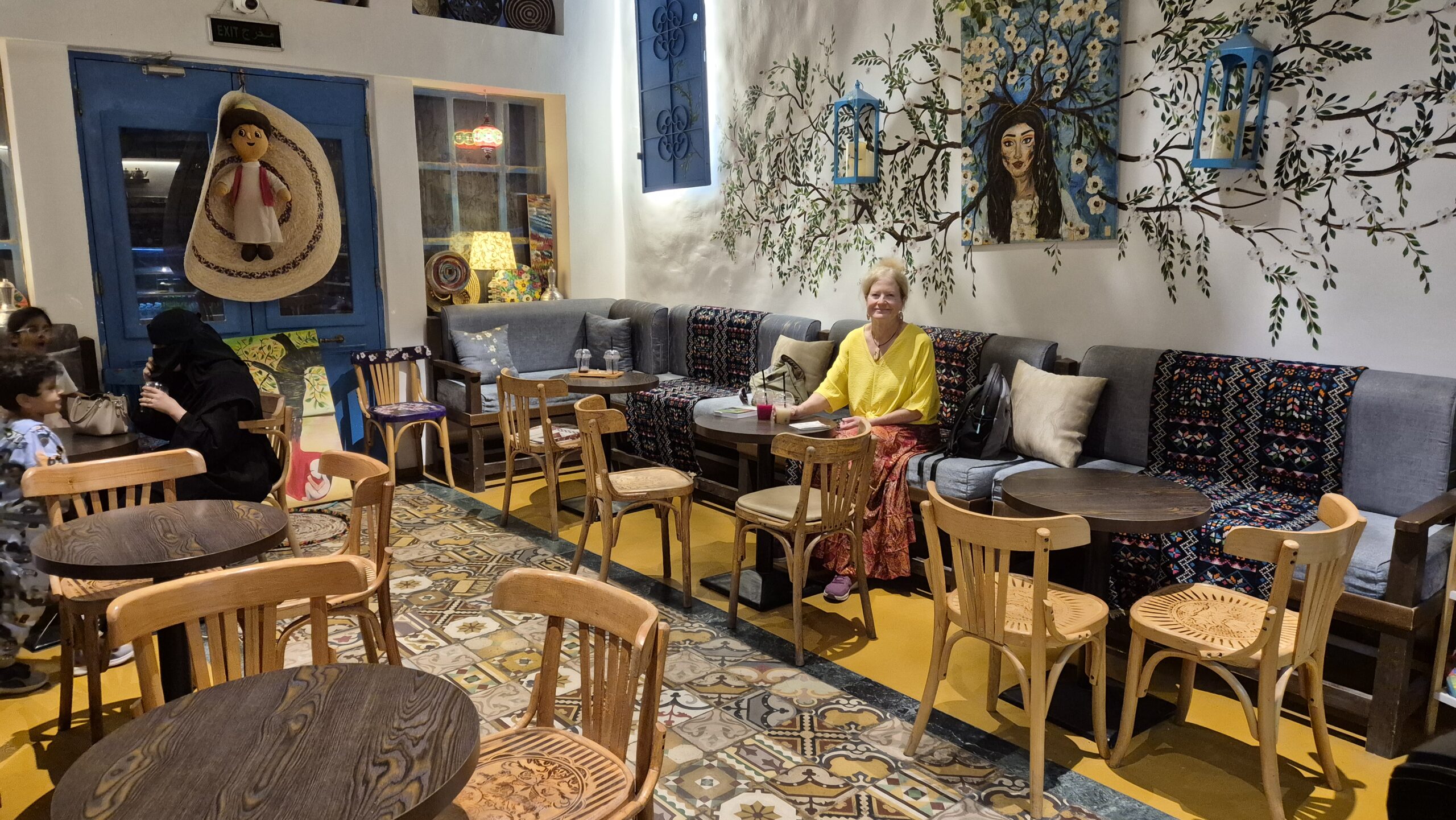
Old Jeddah features many traditional cafes still, and others that have modernized their style for the locals and visitors alike. We thought this lovely place offered a roof-top seating area to survey the town, but we didn’t mind the lack so much as we tried their special smoothy made from barley, cardamom, cinnamon, and sugar. Surprisingly good! And we helped entertain that young Saudi on the left.
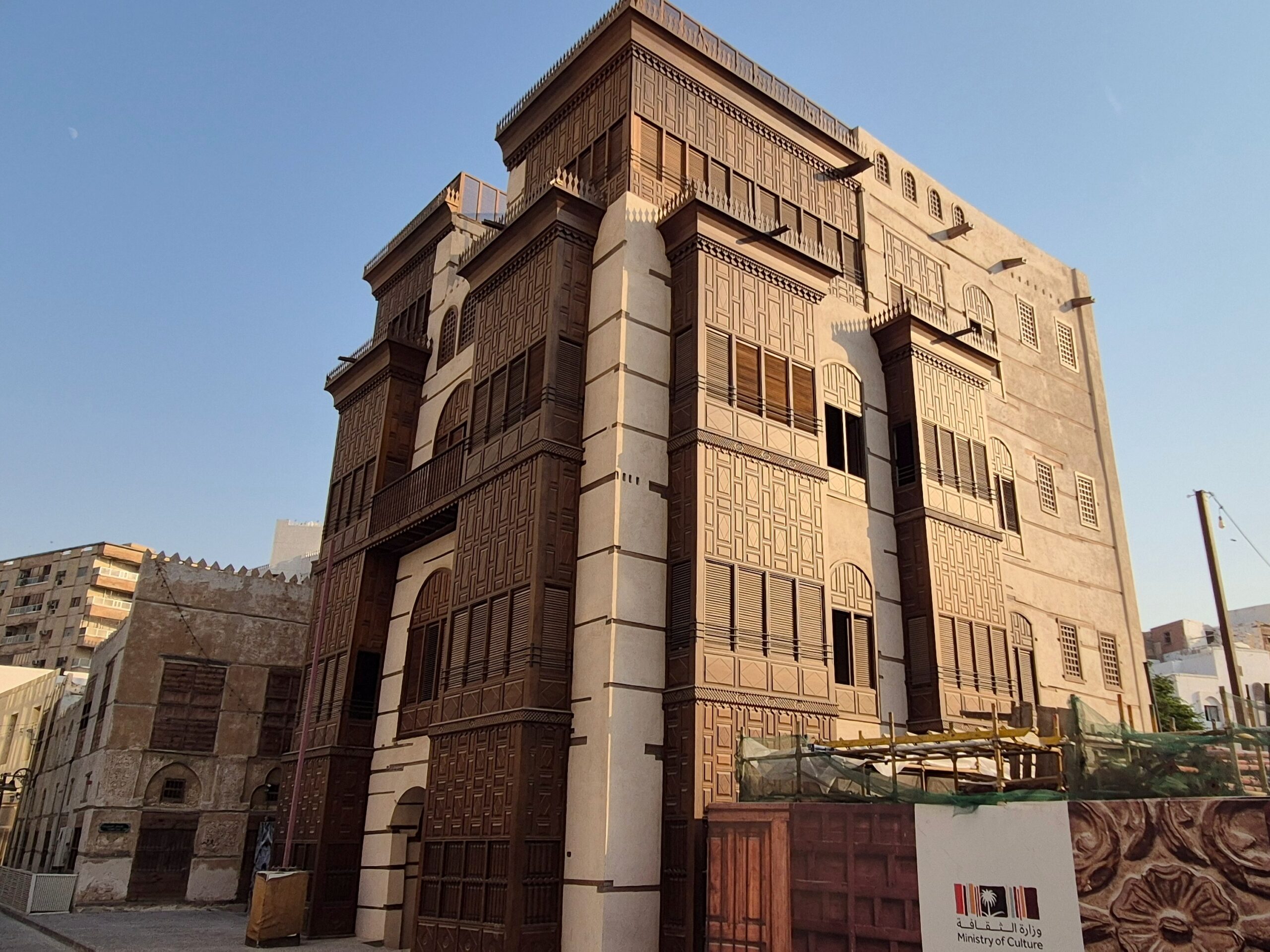
The old two-story structure on the left shows the extent of renovation that transformed this four-level building in Al-Balad, old Jeddah. The polished new woods of the roshans (balconies) and arched windows gleam in the light. It was difficult to walk in this northern part of the old city because so much rehab work was ongoing.
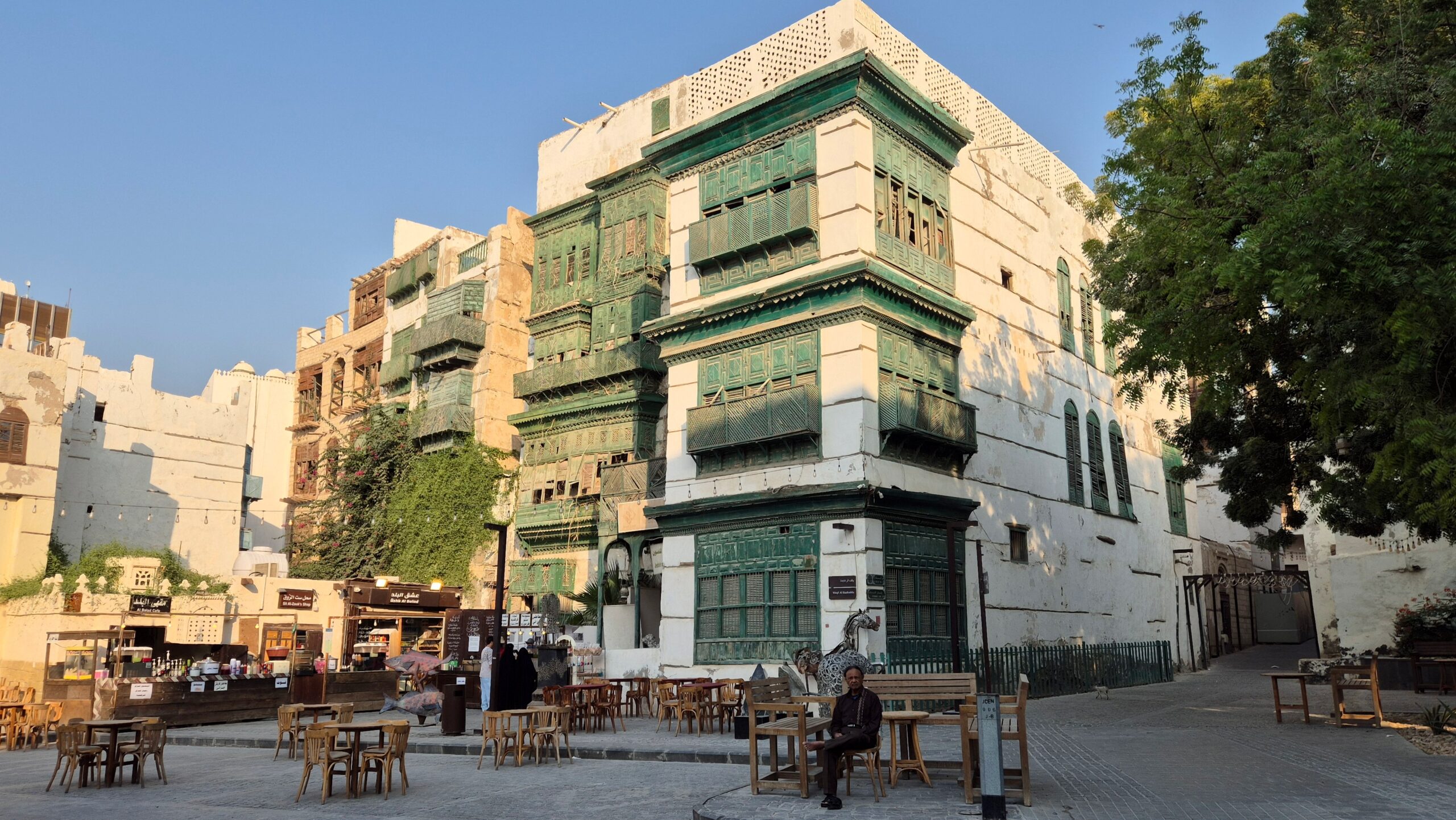
The buildings in this plaza toward the center of Al-Balad, old Jeddah, demonstrate the architectural beauty of its old buildings even without a facelift.
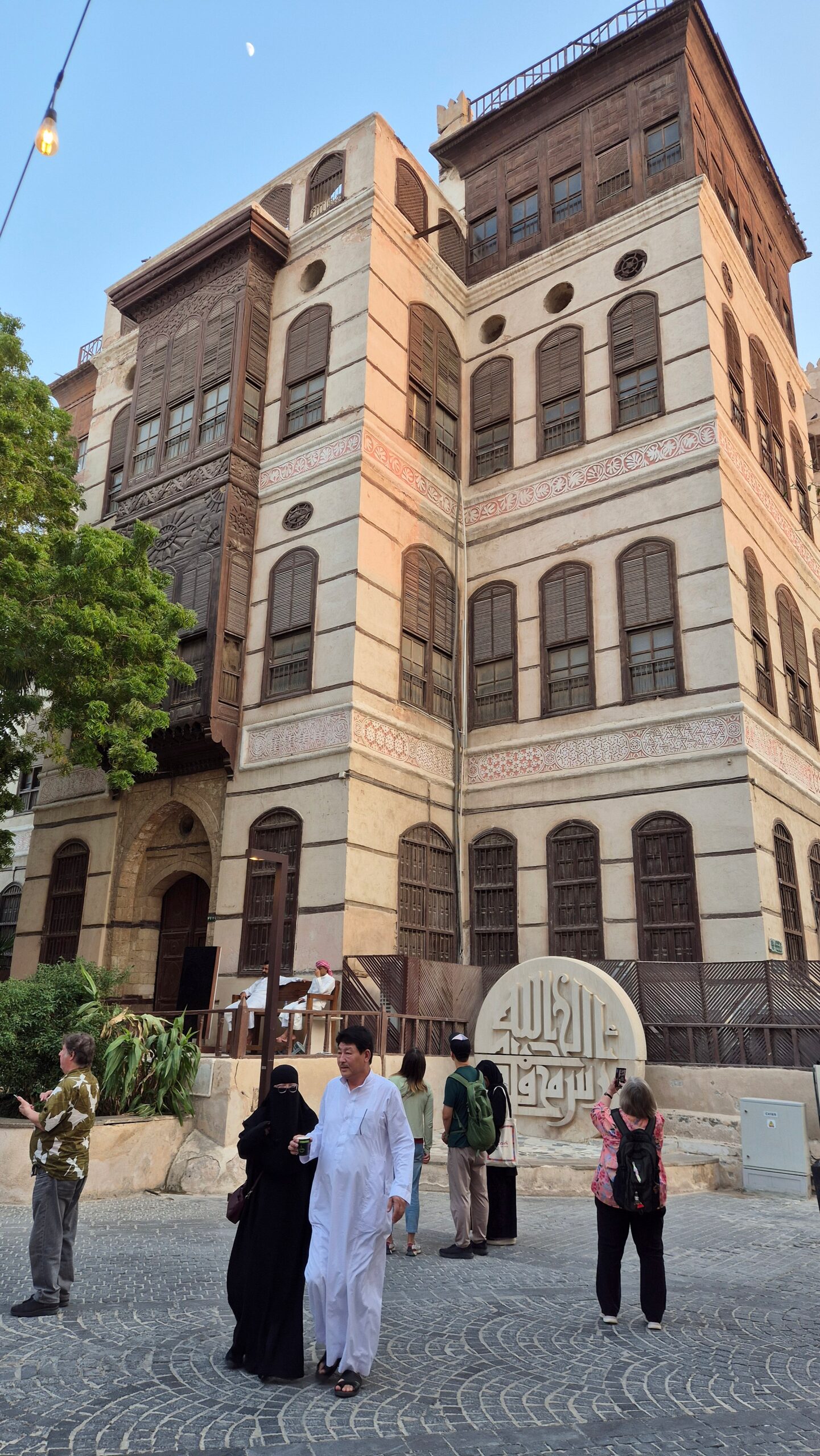
One of the most famous of Jeddah’s tall merchant homes, the 19th century Nassif House has been restored as a museum of the old life. Unfortunately, like so many appealing spots in town, it is closed for further work. But the exterior shows extraordinary craftsmanship.
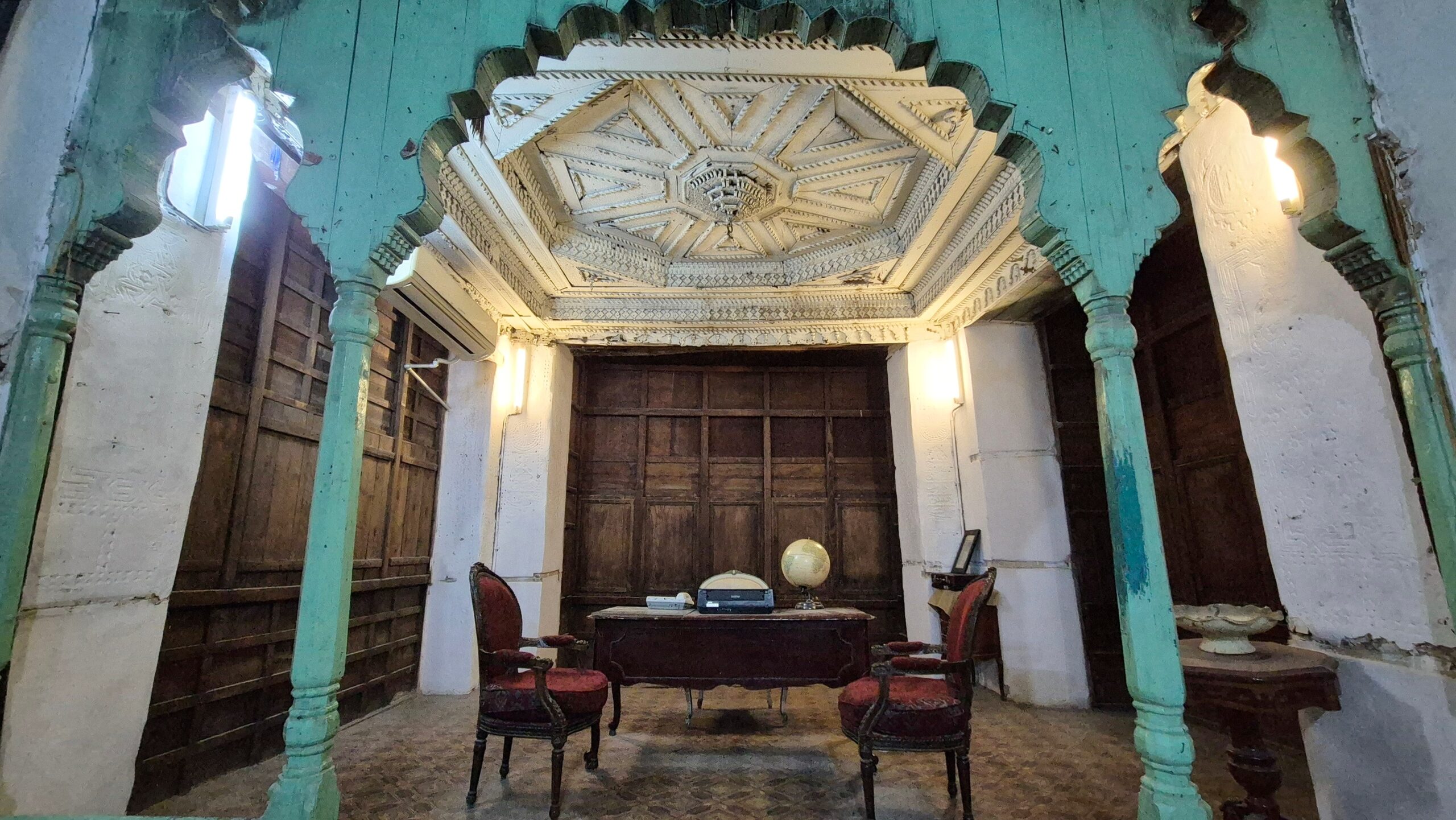
The interior of one merchant house, Matbouli, showed less flamboyance in its coral stone exterior, but was wondrous to explore inside. We climbed the narrow stairs from the male and female diwans (greeting areas) on the ground floor to the plainer sleeping area above. Then we continued upwards to view the inside of wooden punch-out roshan balconies lined with bedding, as well as the private lounging areas like this one with elaborately decorated plasterwork.
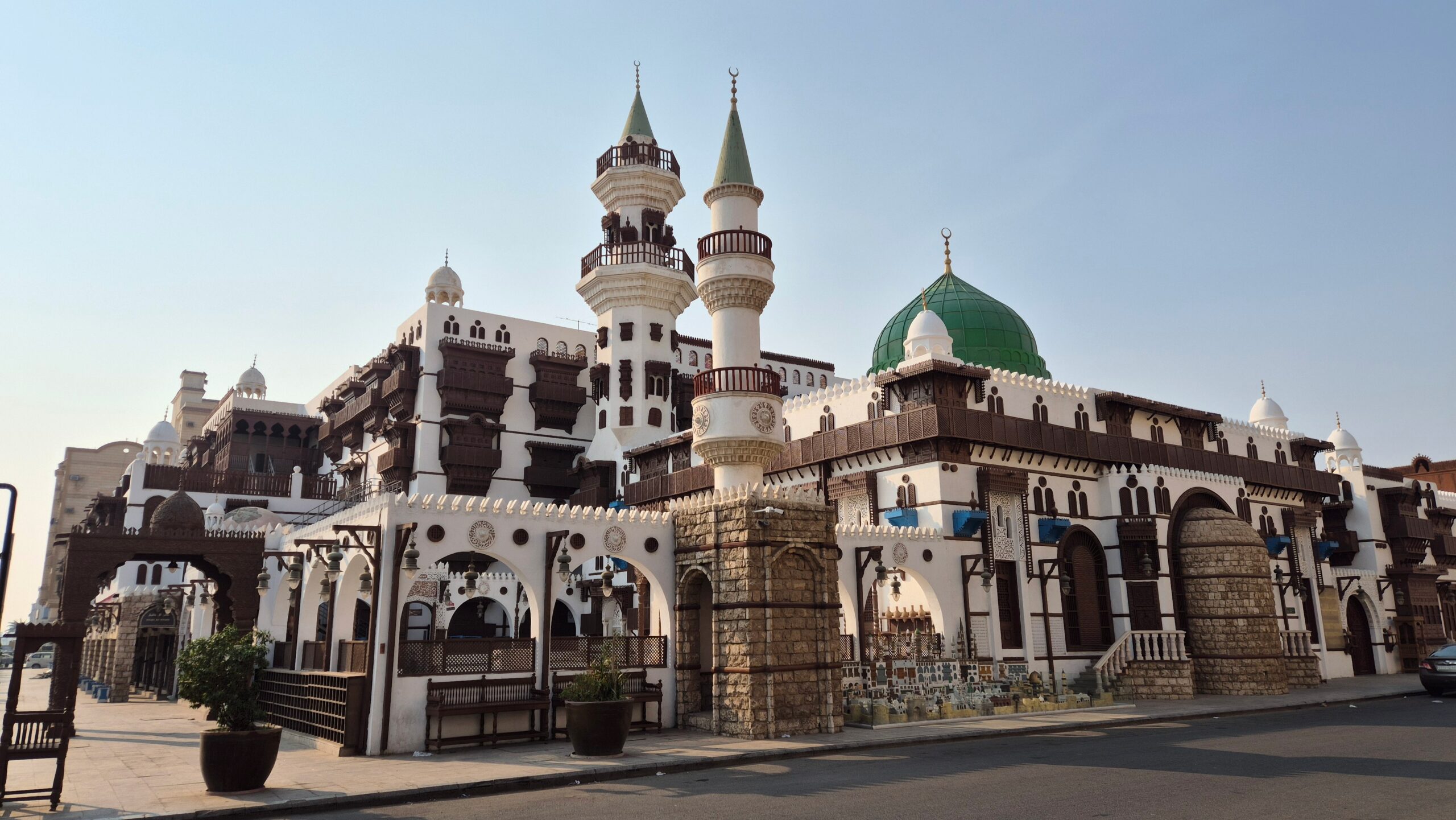
- Al Tayebat Museum of Science and Knowledge
Something completely different. In an otherwise mundane part of town, this effusive display of Hejazi style – with carved doors, elaborate minarets, wooden latticework, gorgeous detailing – clearly stands out, even though less than 40 years old. The Hejaz is the western district of Saudi Arabia along the Red Sea, supposedly settled originally by Biblical Abram and Hagar, then much later ruled by the Ottomans.
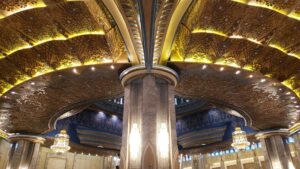
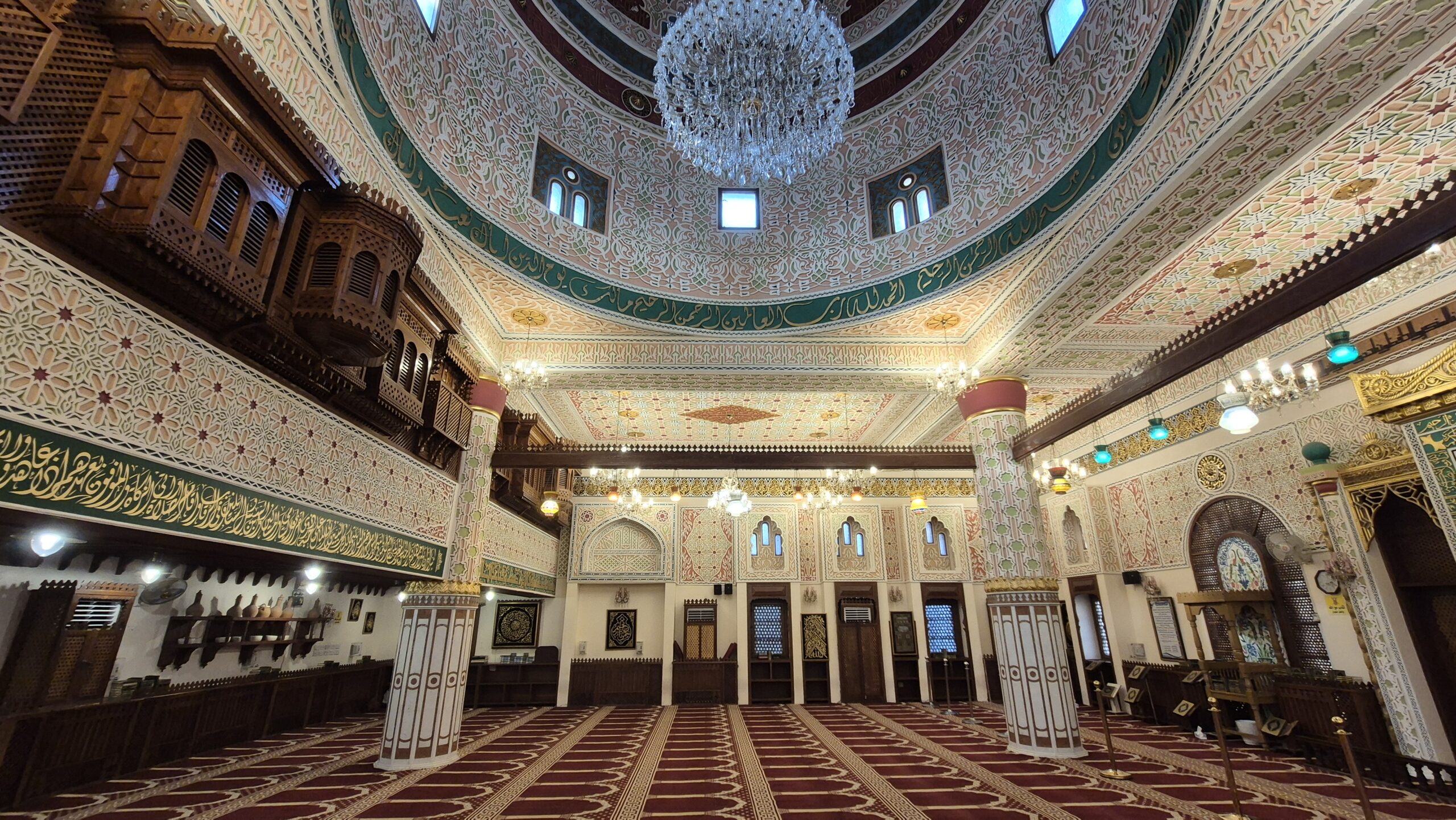
The gorgeous interior of the Al-Mabarra mosque contained within the Al Tayebat museum building. Notice the elaborately carved roshan to the left defining the women’s prayer area on the second floor.
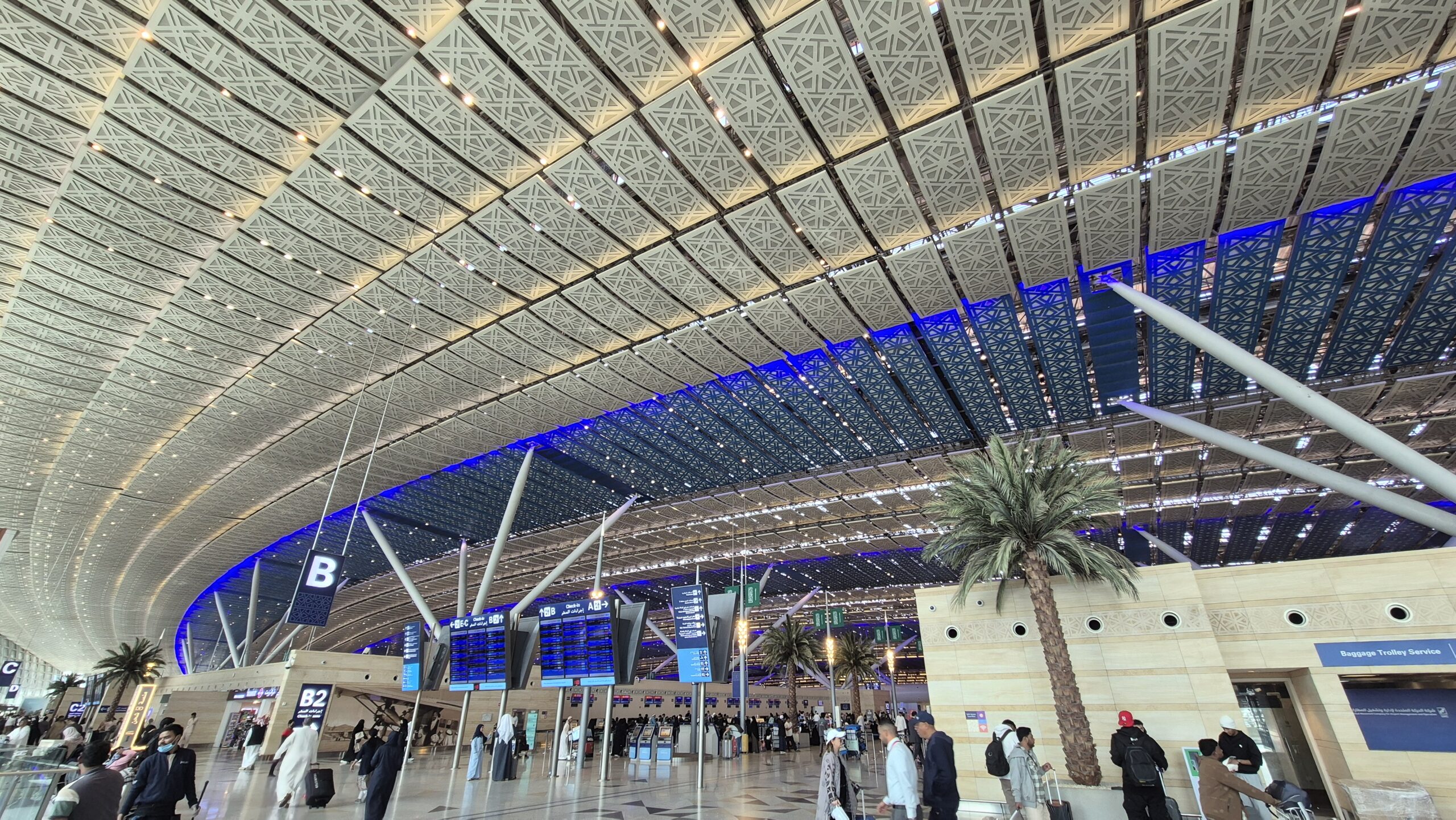
The entry hall at the Jeddah international airport as we departed from Saudi Arabia.
- Corniches of Jeddah
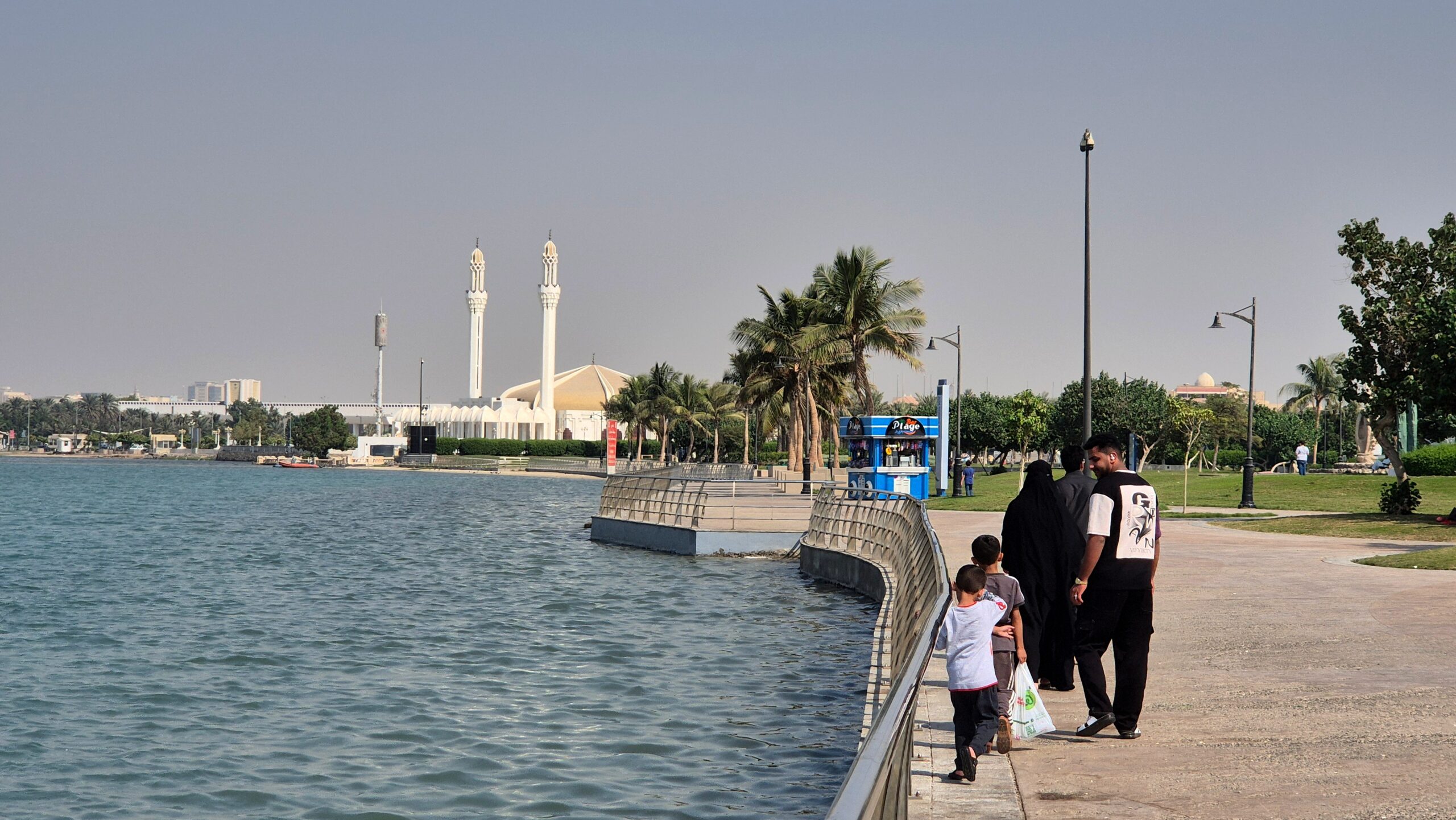
The old styles and narrow streets of Al-Balad contrast markedly with the modernity and openness of Jeddah’s long shoreline, or corniche, which fills with strollers late in the day. Here a family heads toward one of the mosques built along the coast.
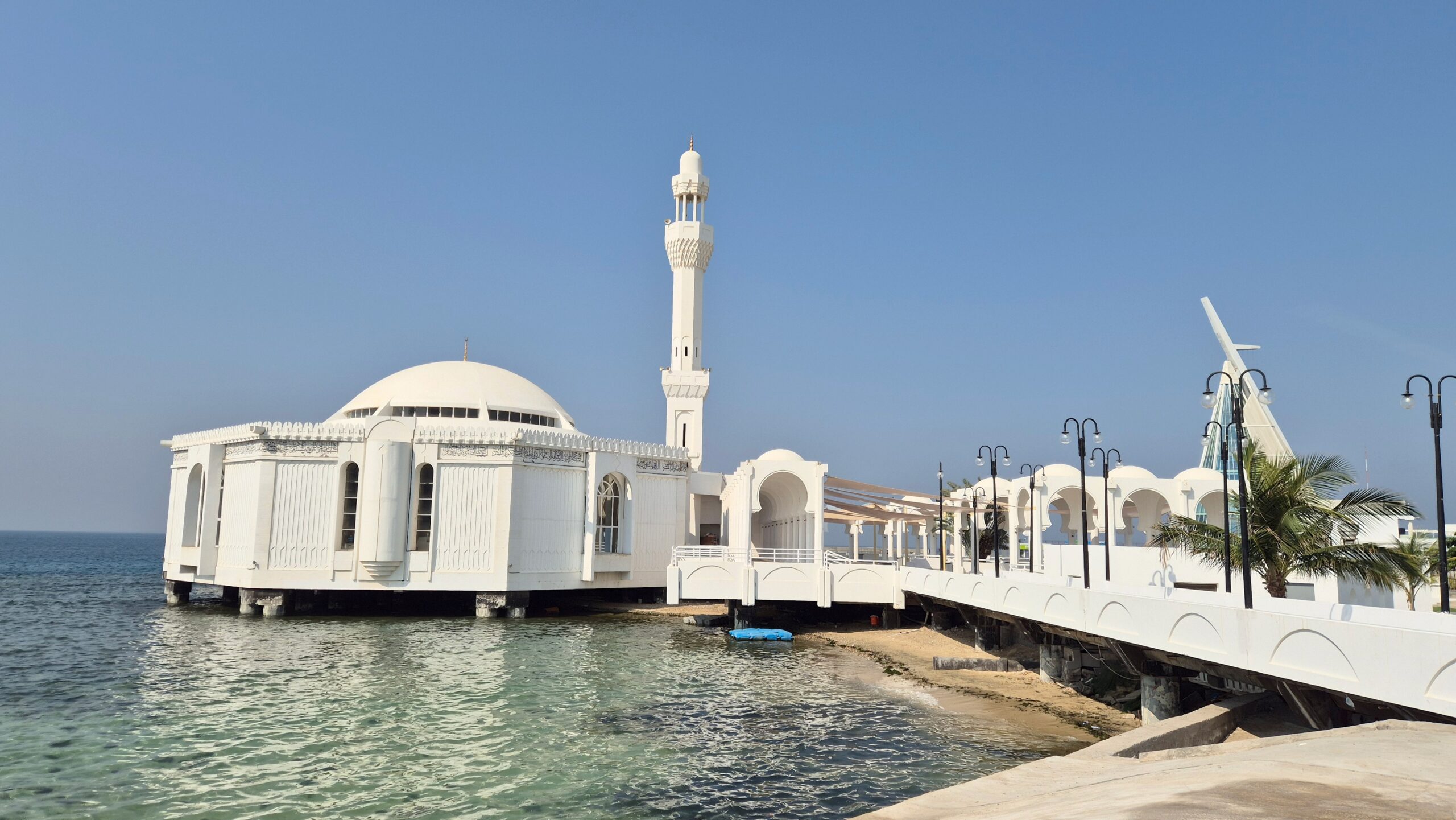
Farther north, another seemingly floats on the water.
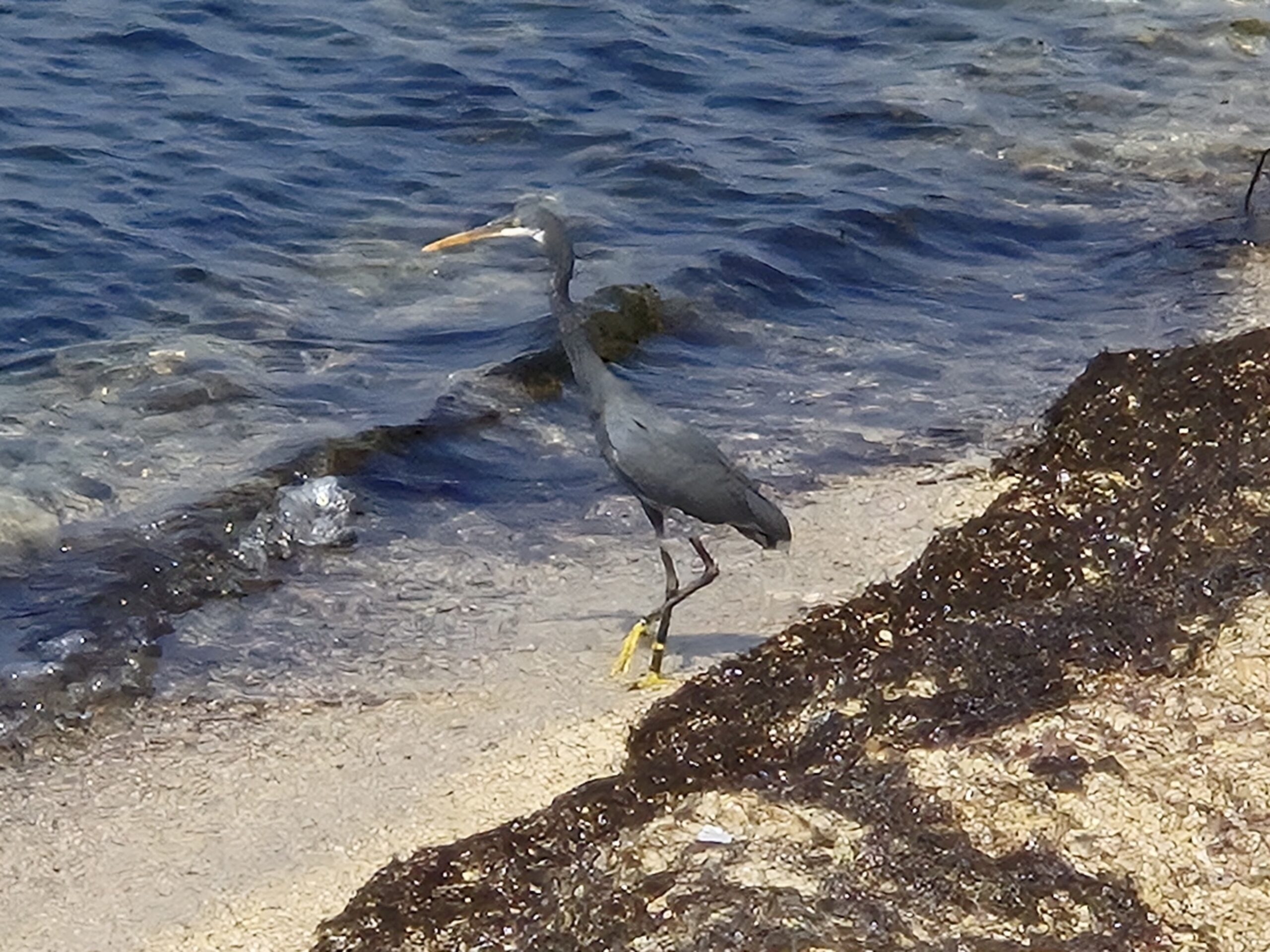
The coastal waters along the boulevards of the Jeddah shoreline seem surprisingly clean, encouraging a lot of birds and fish for us to see. Here a purple heron ignores us while it sunbathes and fishes.
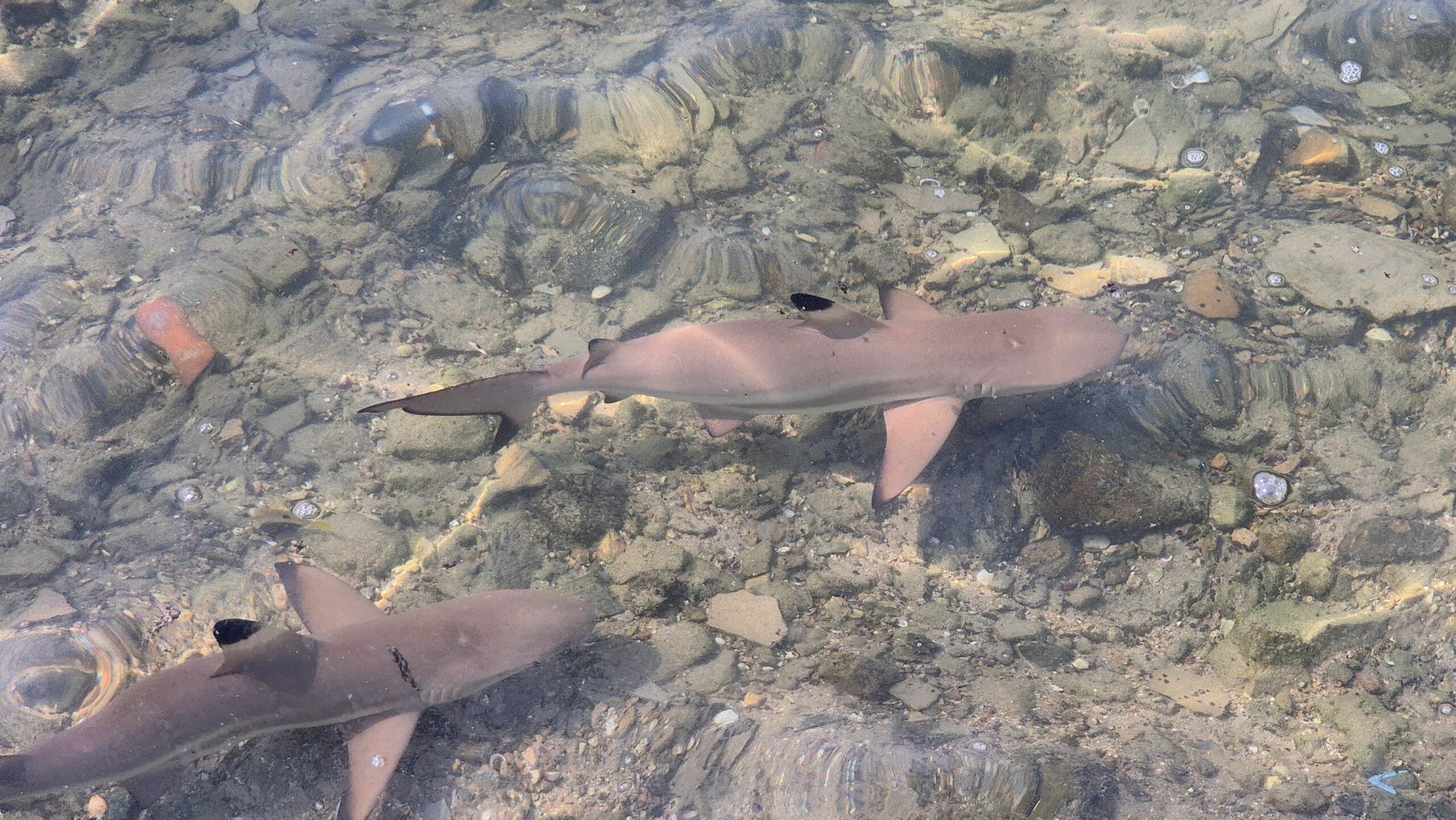
More wildlife at the shore: two reef sharks work the waters for food.
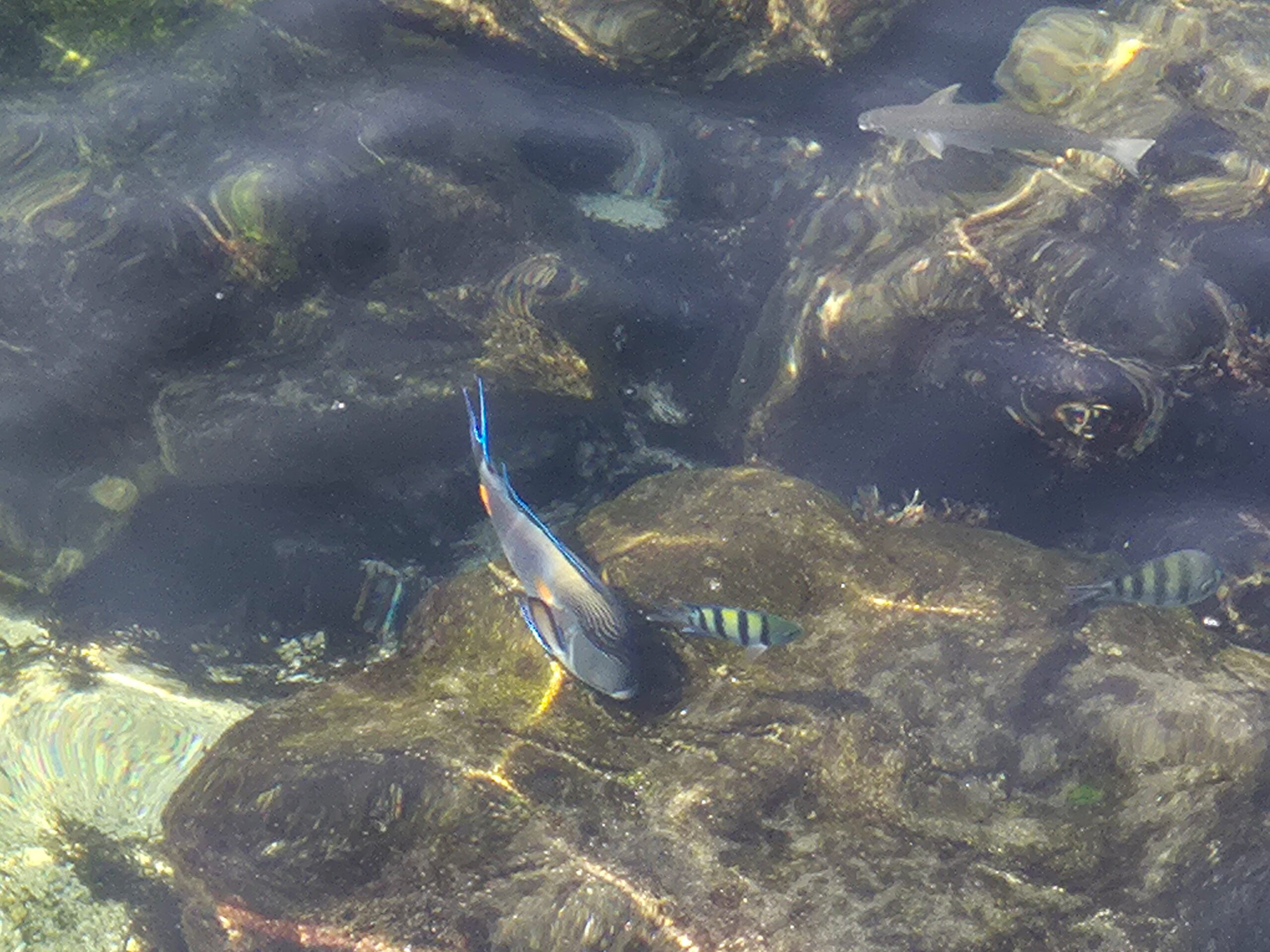
These colorful fish, feeding along the rocks of the Jeddah corniche, would look more beautiful if we joined then in the water, but there’s no swimming except at the beaches.
Mountainous SA (Taif, Al Baha, Abha)
The extensive mountain chain that parallels the Red Sea coast of western Saudi Arabia has long attracted desert dwellers to its much cooler climate. They formed their houses and towers out of the rocks from those mountains, taking a hint in reverse from a traditional Arabic saying: “The mountains are from rocks,” i.e. small things add up. The Quran adds that mountains are God’s anchors for steadying the ground. As we drove within the region, however – from Taif to Al Baha to Abha – these mountains repeatedly shook us with dizzying vistas and spiraling roads.
- Taif
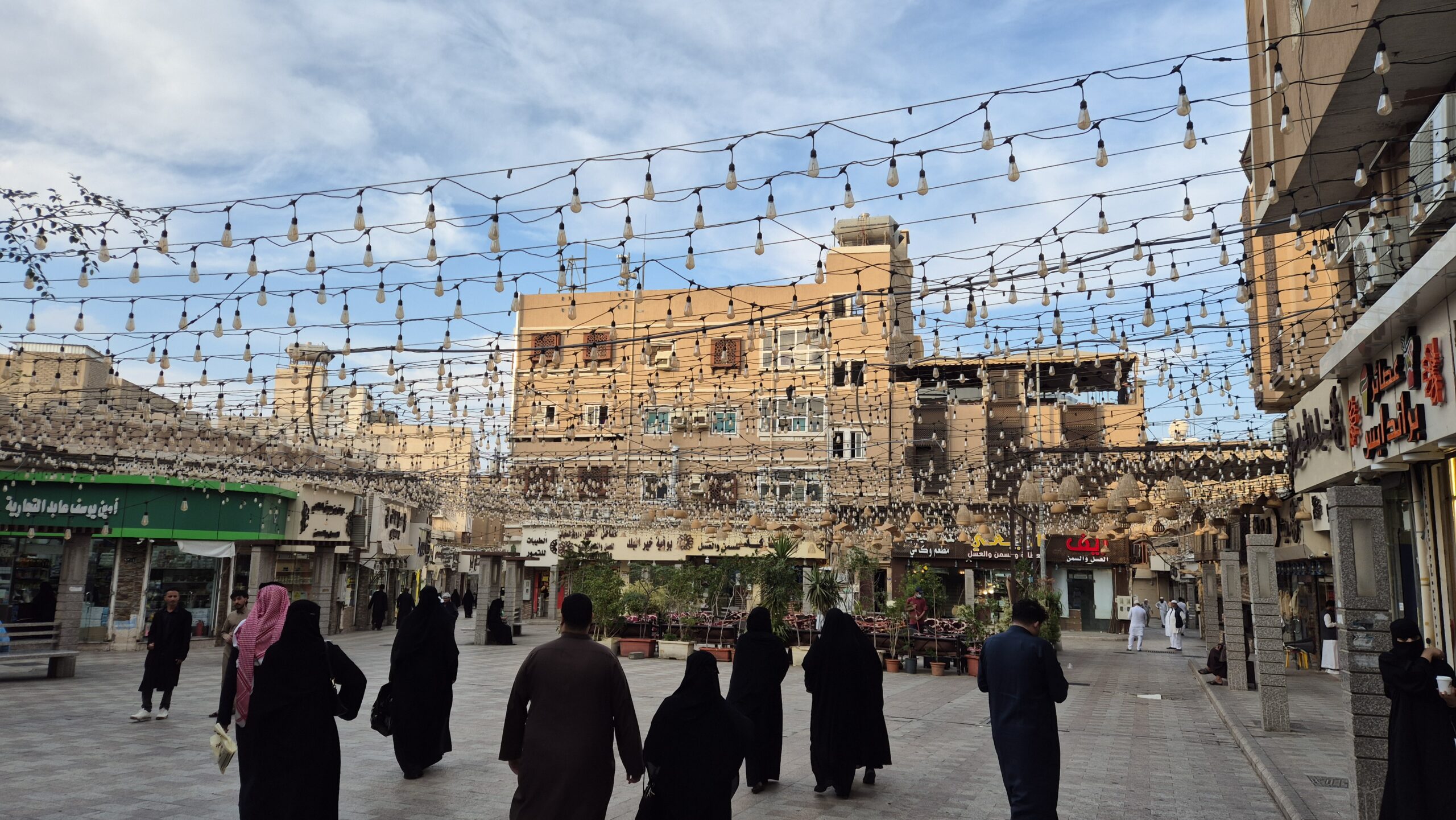
In the late afternoon, the old town of Taif enlivens. The stores in the souq and the cafes open to the gathering crowd. We sat in this plaza enjoying the view of several stone buildings while sipping a fresh squeezed juice. By mistake, we left a backpack on a bench in the plaza for 15 minutes but returned to find it untouched. Later we sat in another plaza where we conversed with a local woman about life in our two countries. Small things add up.
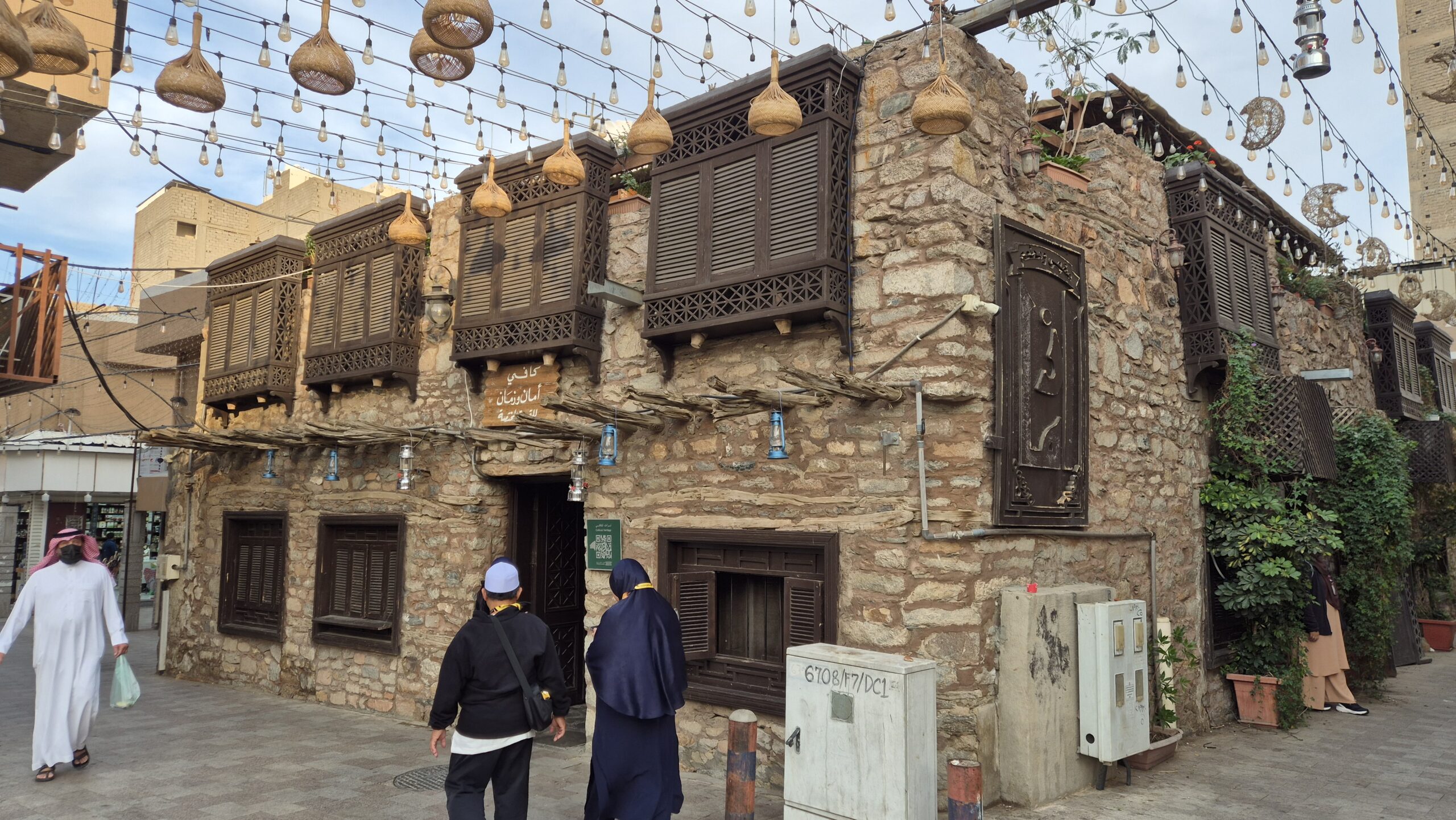
An old café and resting spot for visitors to Taif was constructed, as expected, out of stone and mud – the best of local ingredients. Here, in a few sitting rooms, we found our fresh juice, made from the best of local fruits.
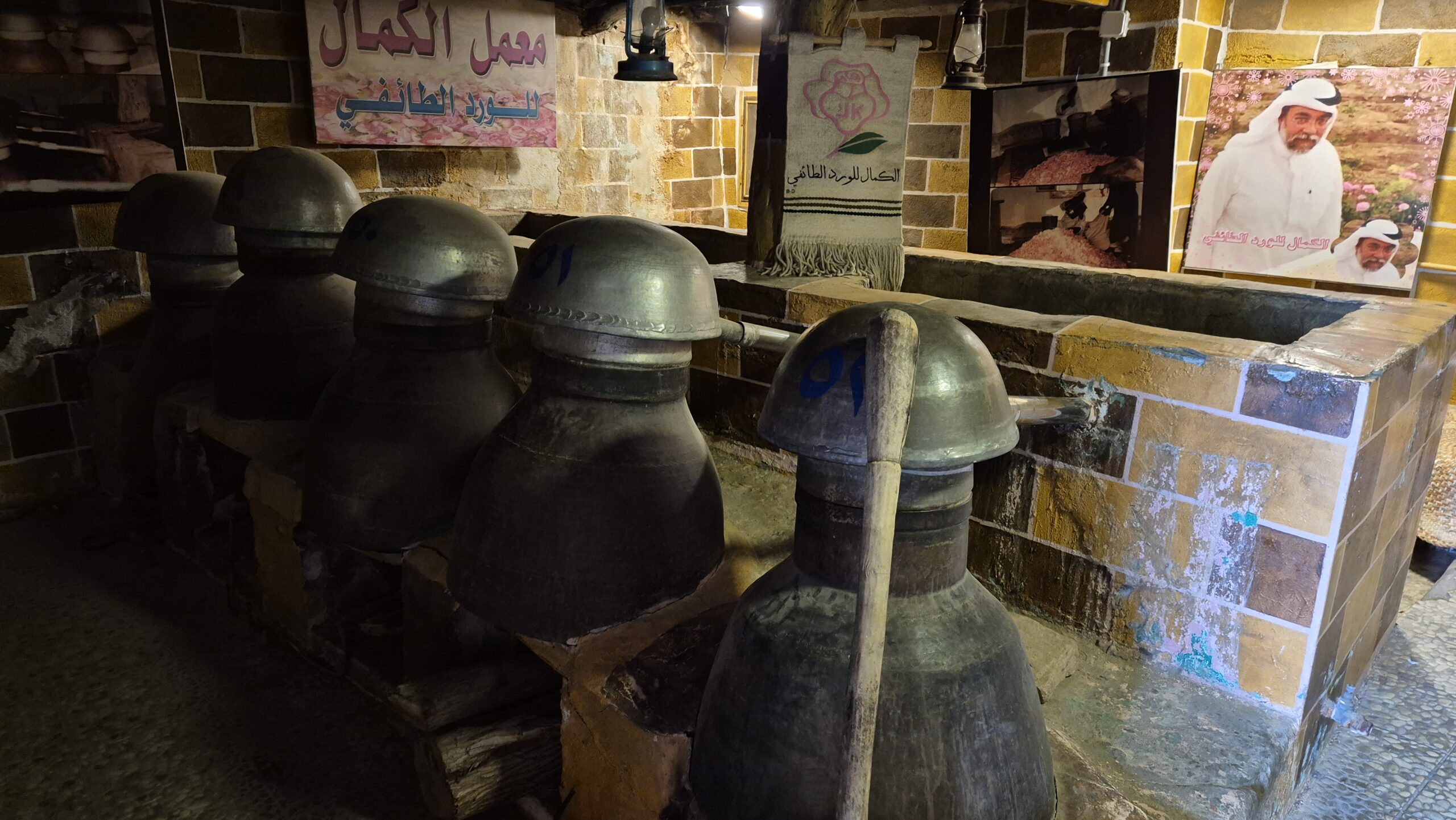
Taif is famous for its perfumes and scented oils, especially those derived from its renowned roses. Only the mountains here can cultivate this special variety, whose quality is nearly sacred as the traditional aroma for the Holy Qaaba in Makkah (Mecca). These ancient distilling vessels have been replaced with newer ones in the veteran factory we visited, but we loved the historic ambiance of this old room.
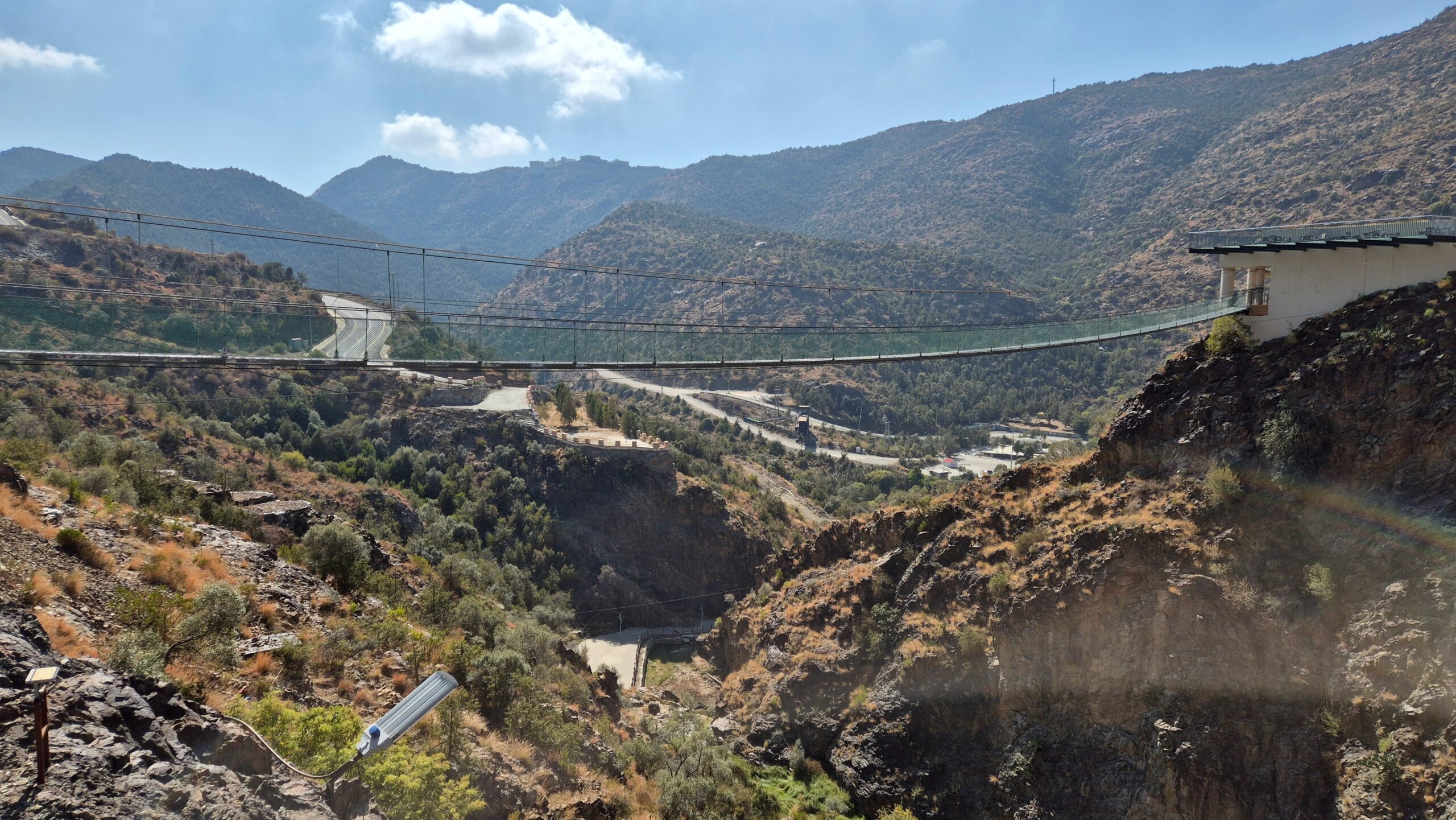
This natural park amid the mountains between Taif and Al Baha features a picturesque waterfall, when water is running, as well as a picnic/playground area with canals that feed the waterfall. That suspension bridge and its companion zip line offer steep views of the drop.
- Stone Villages
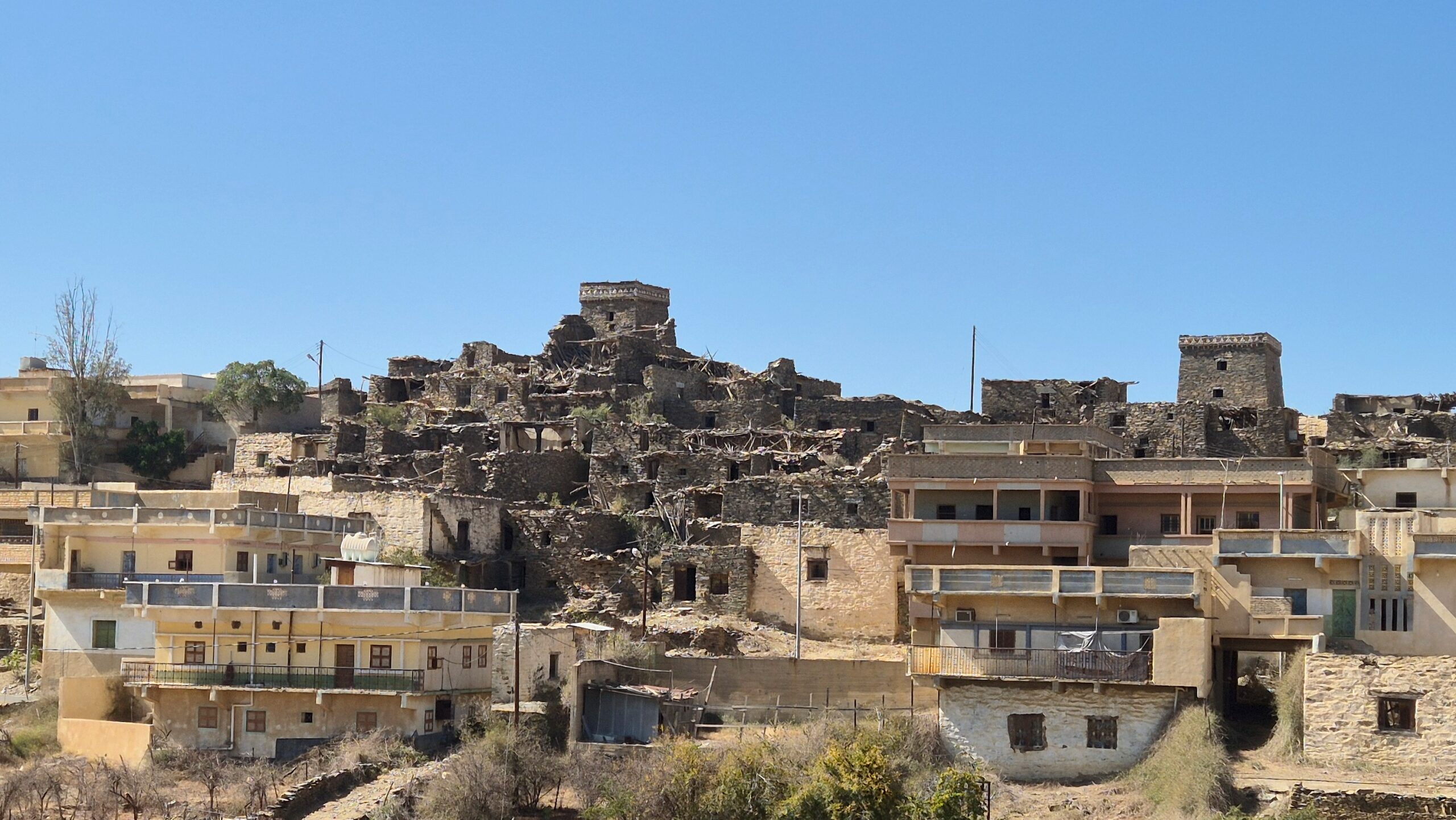
Also between Taif and Al Baha, we took the back roads to explore a number of old stone villages in the countryside. This one is mostly in disrepair, but you can see the detailed decoration on the watchtowers characteristic of the region. The new houses without stones have supplanted the old now. In the vicinity, the wealthy have built large villas on most available hilltops as escapes from the extreme heat of the lowlands.
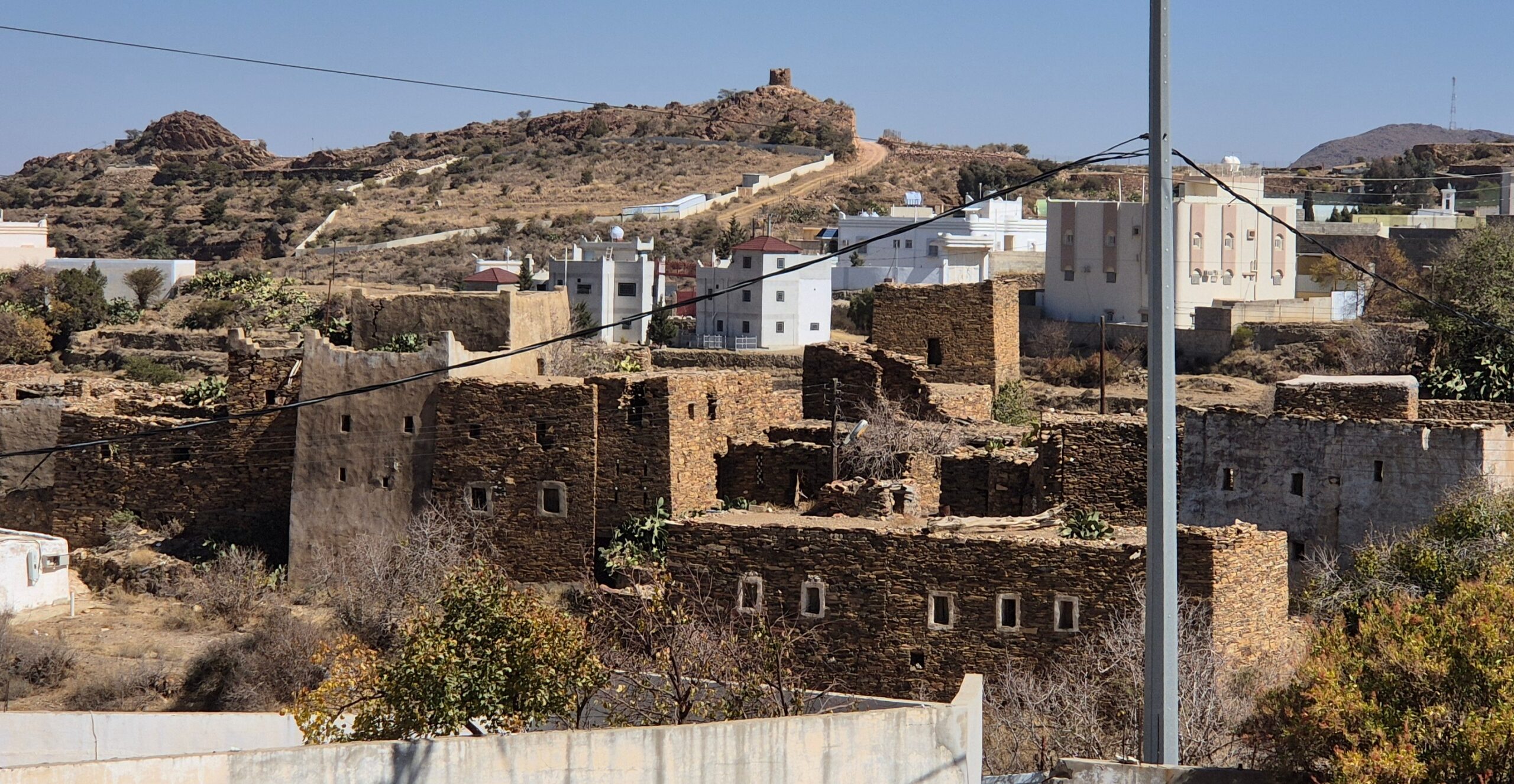
Among the stone villages we found, this was in very good shape and showed various decorative features typical of the buildings. In the background, you can see some new villas and apartment houses that the wealthy use as summer retreats away from the hot desert. The turret of an old castle is just visible on the mountain at the top.
- Al Baha
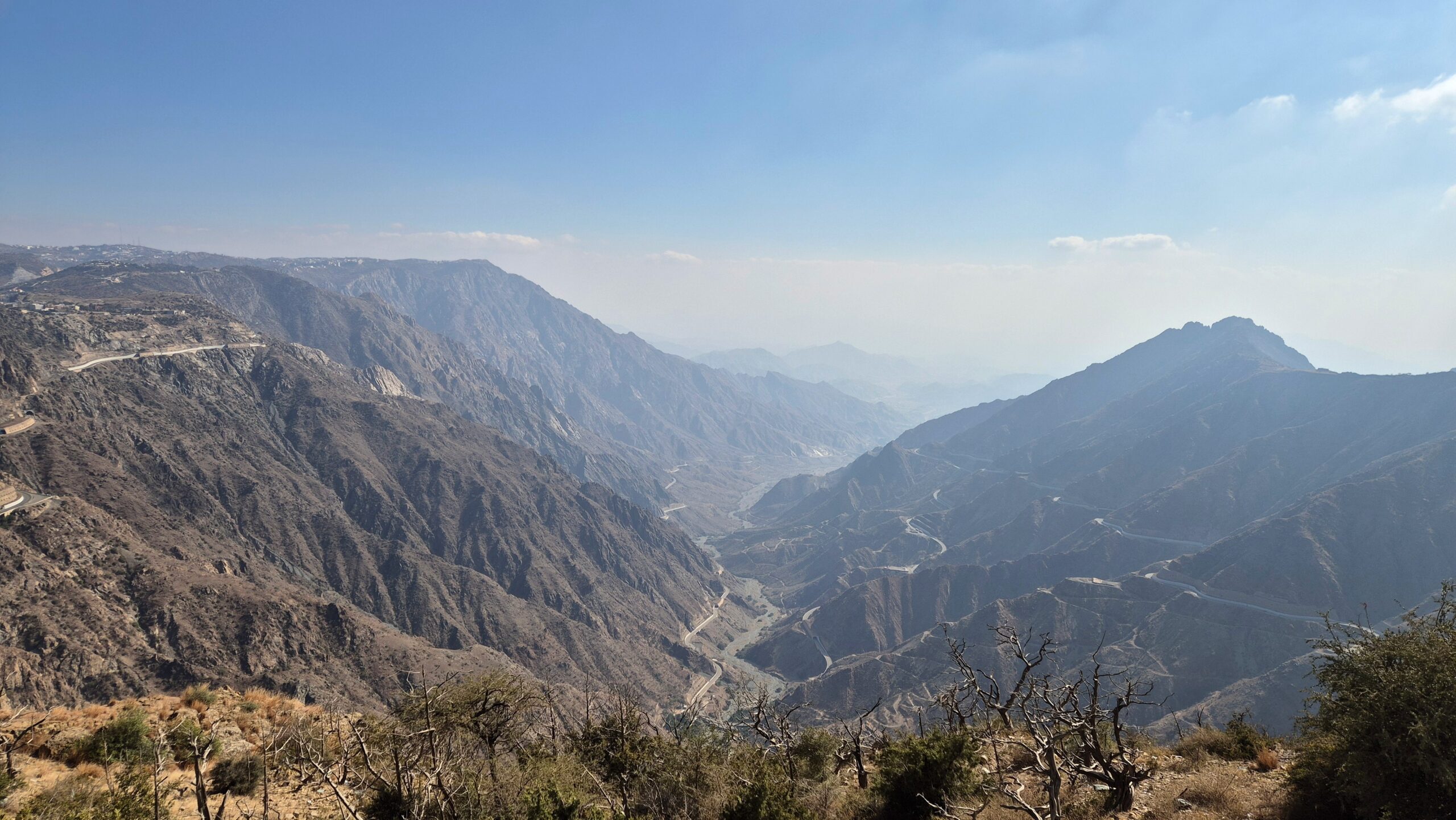
The view from the city’s edge at Al Baha. The valley levels off at about a kilometer (3300 feet) below the rim and a breath-taking road winds down into it.
The hilltop Heritage House near Al Baha, a restoration of a historic stone village.
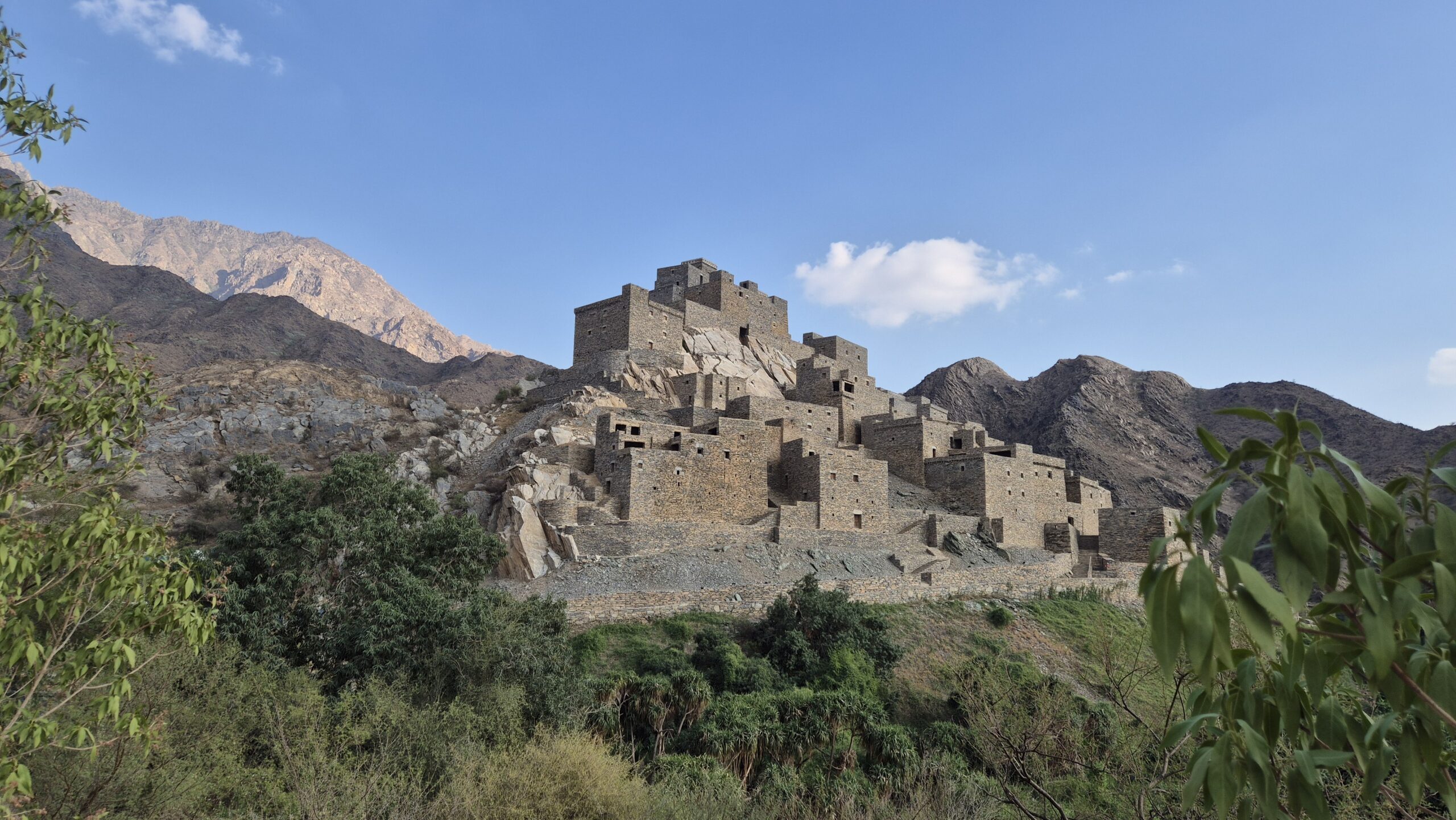
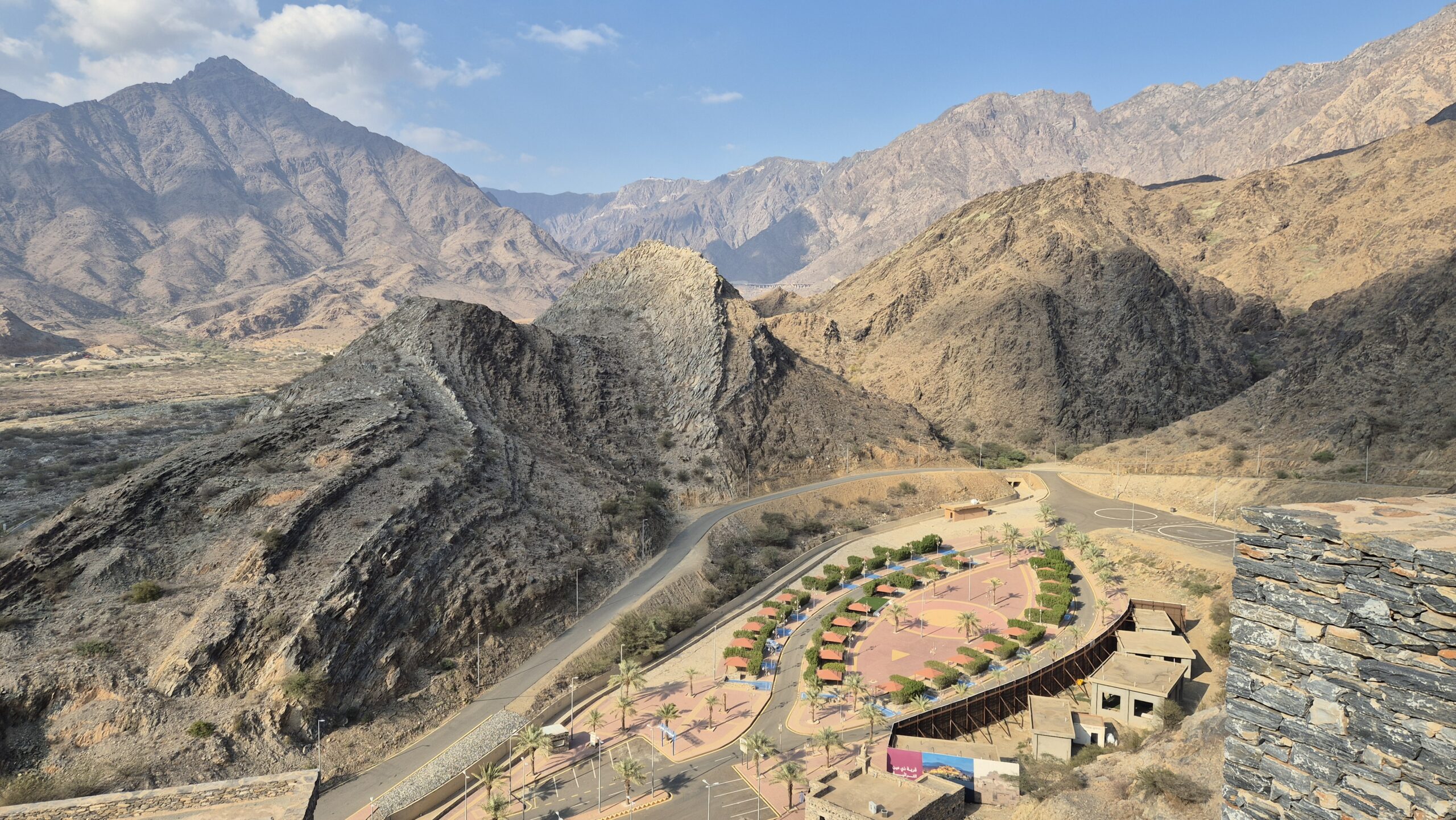
South of Al Baha, this vista rewards visitors who climb to the top of a hilltop stone village restored as a display of Saudi heritage.
- Abha
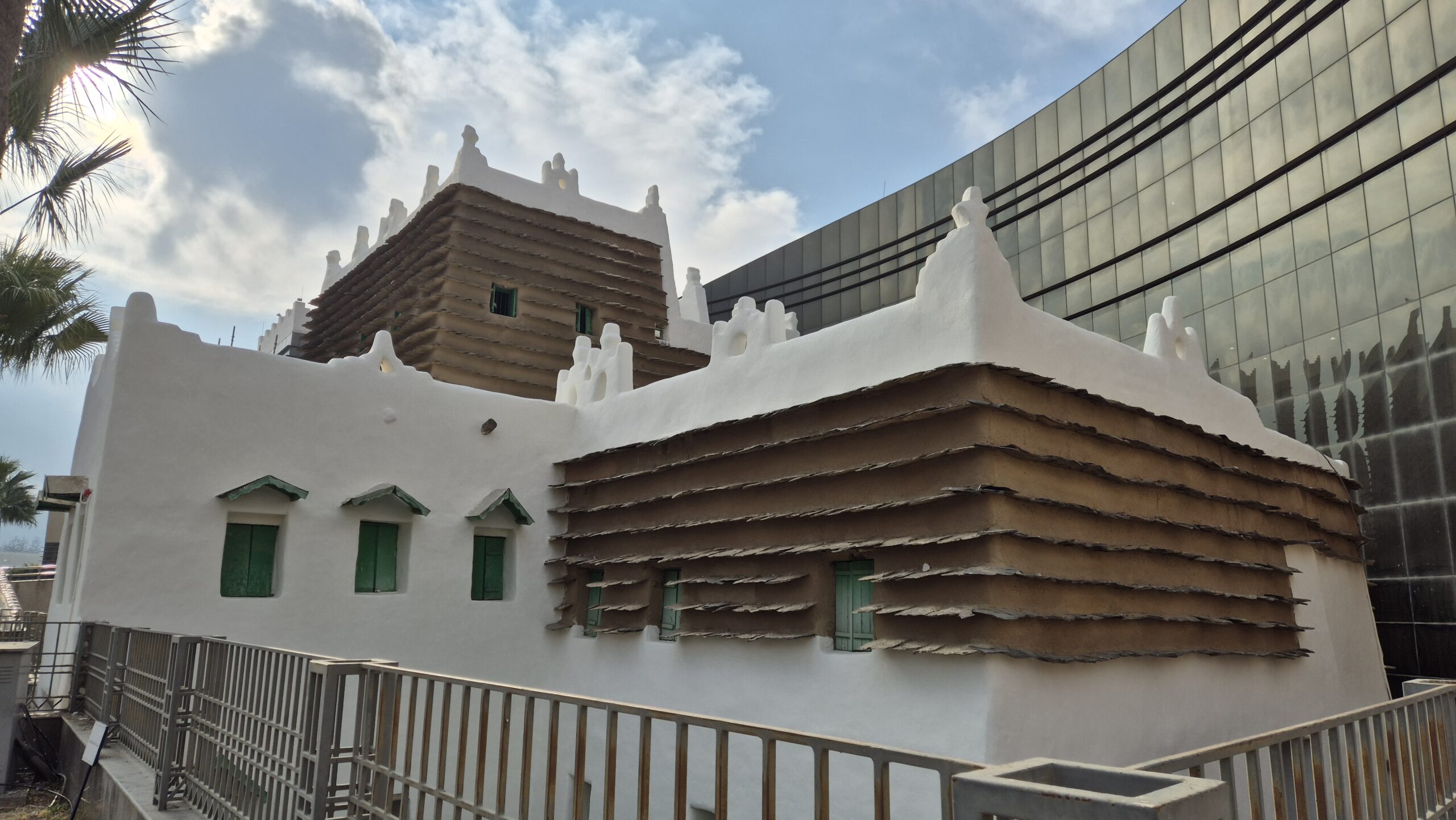
This typical example in Abha of the distinctive architecture of the mountainous region has been renovated and turned into a museum.
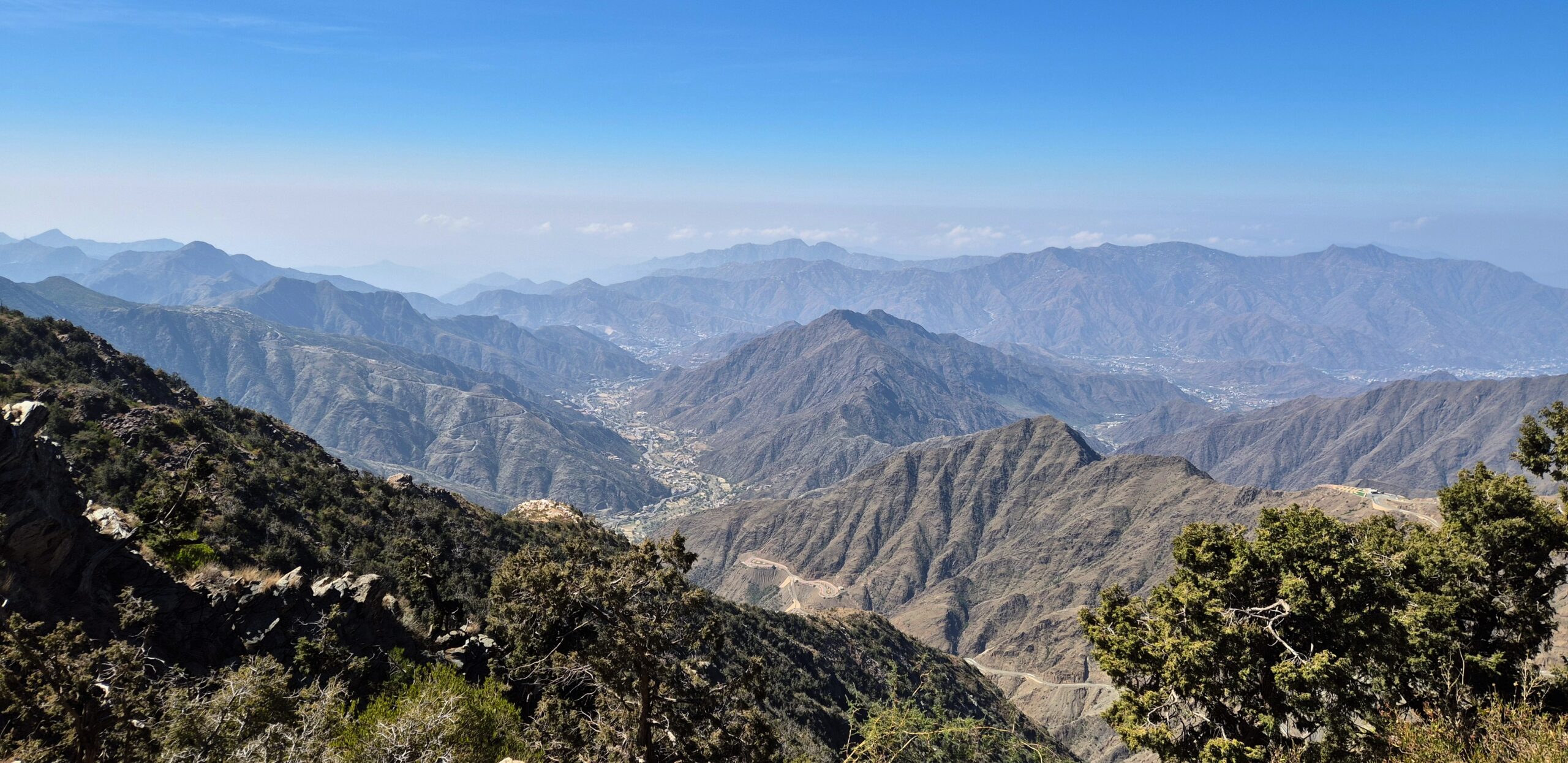
We drove west of Abha to Jebel Souda, the tallest mountain in Saudi Arabia at around 3000 meters (10,000 feet). This was one of the views we enjoyed near the top.
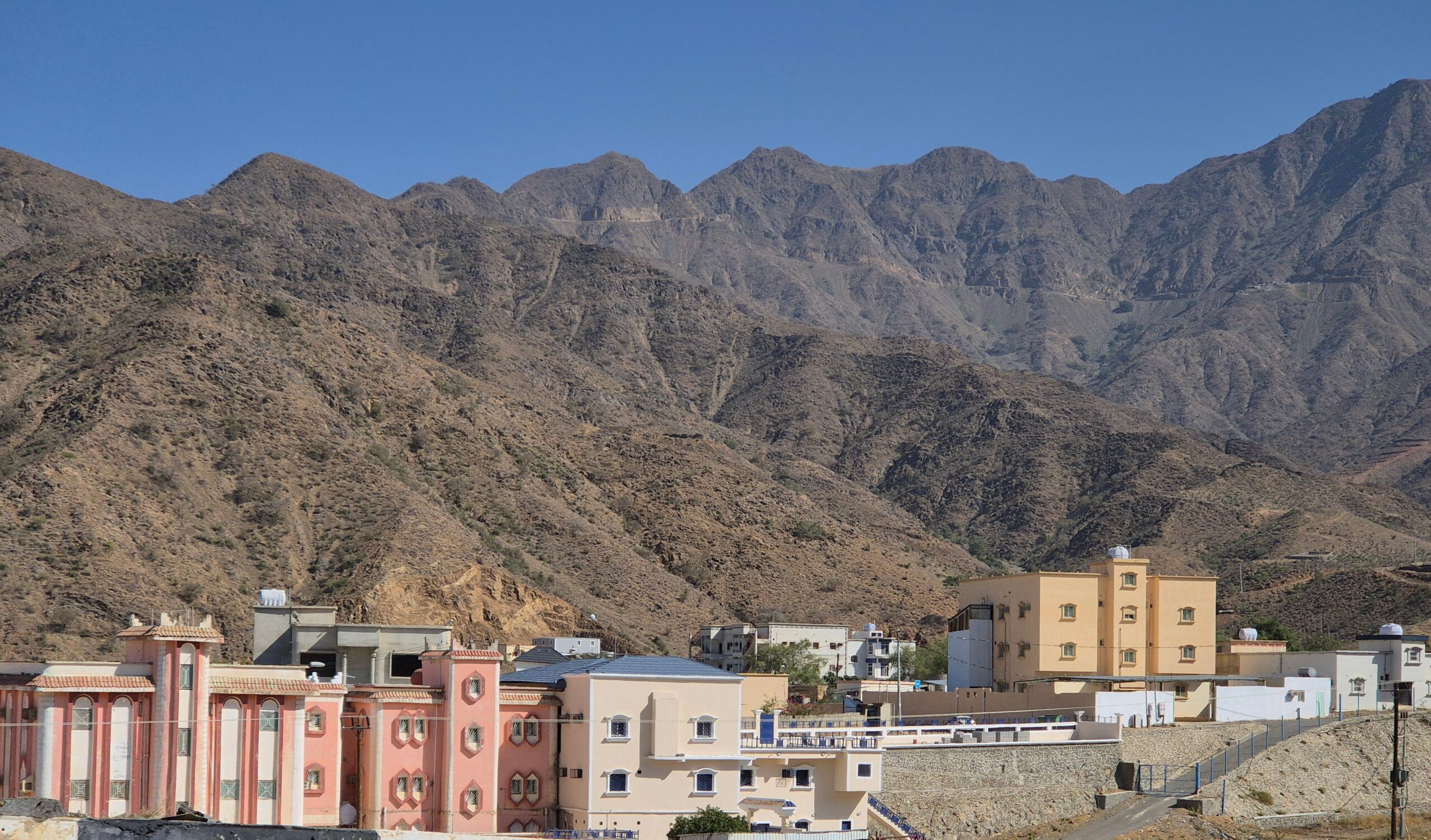
A colorful town nestles below some impressive desert peaks between Abha and Najran.
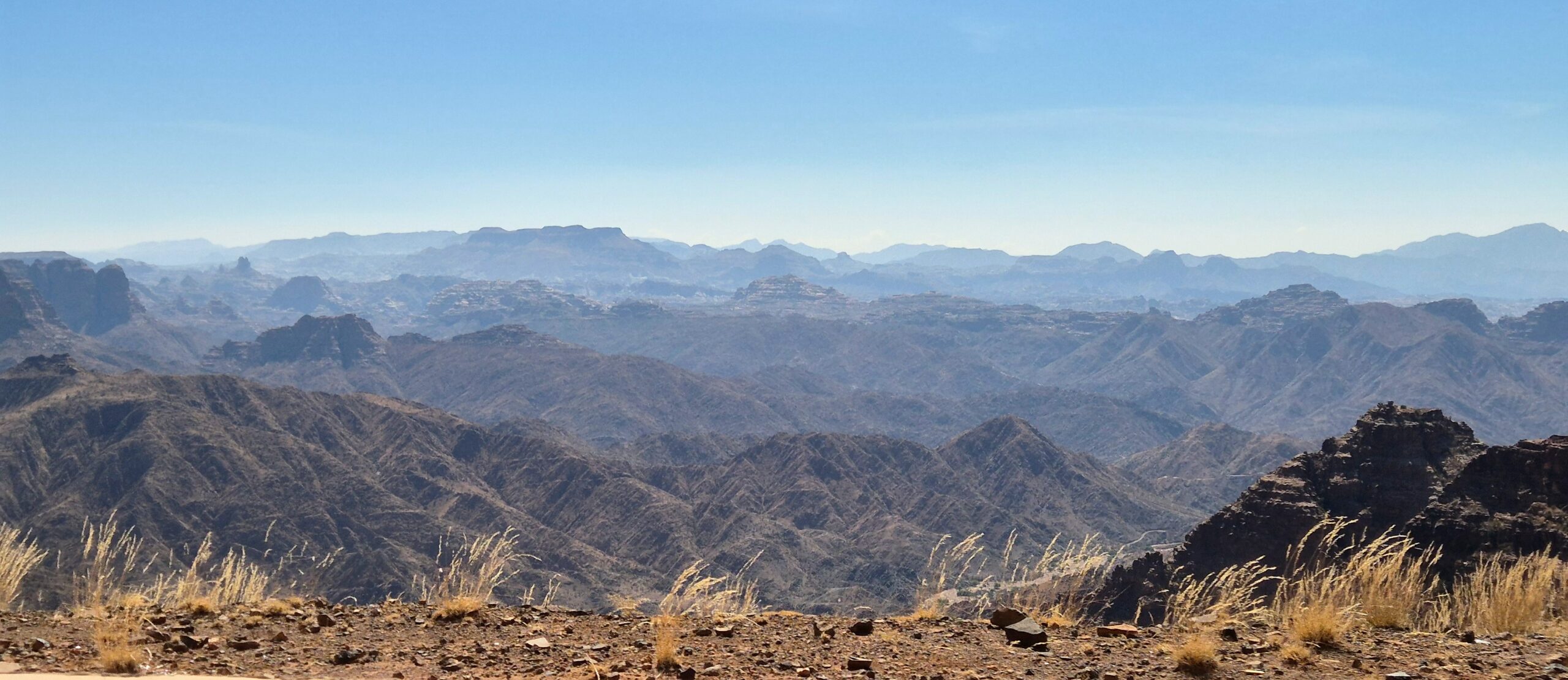
And the peaks vanish into the blue of infinity.
- Najran
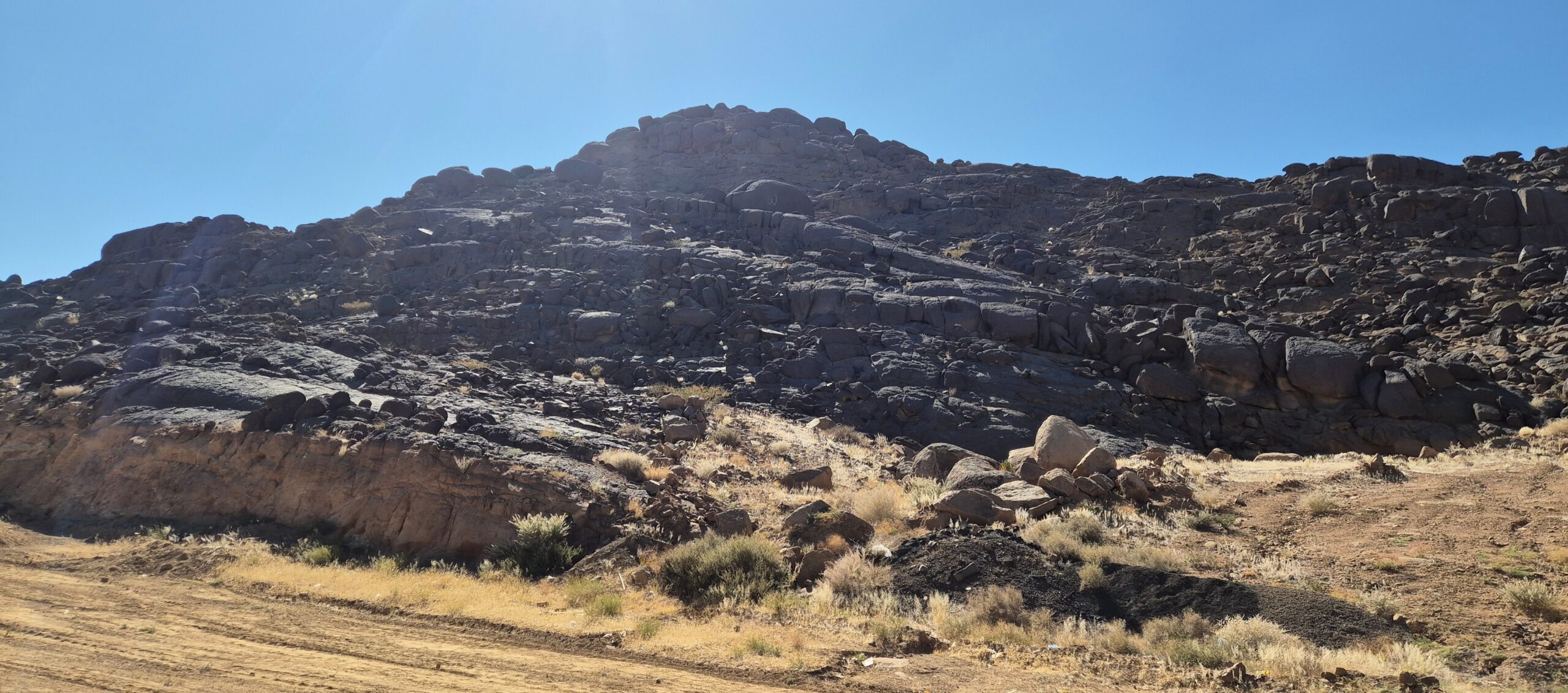
At the southern end of the mountainous region, Najran surprised us with mountains of a different composition – volcanic rock – and features common to ancient lava flows: tubes, domes, and cannonballs.
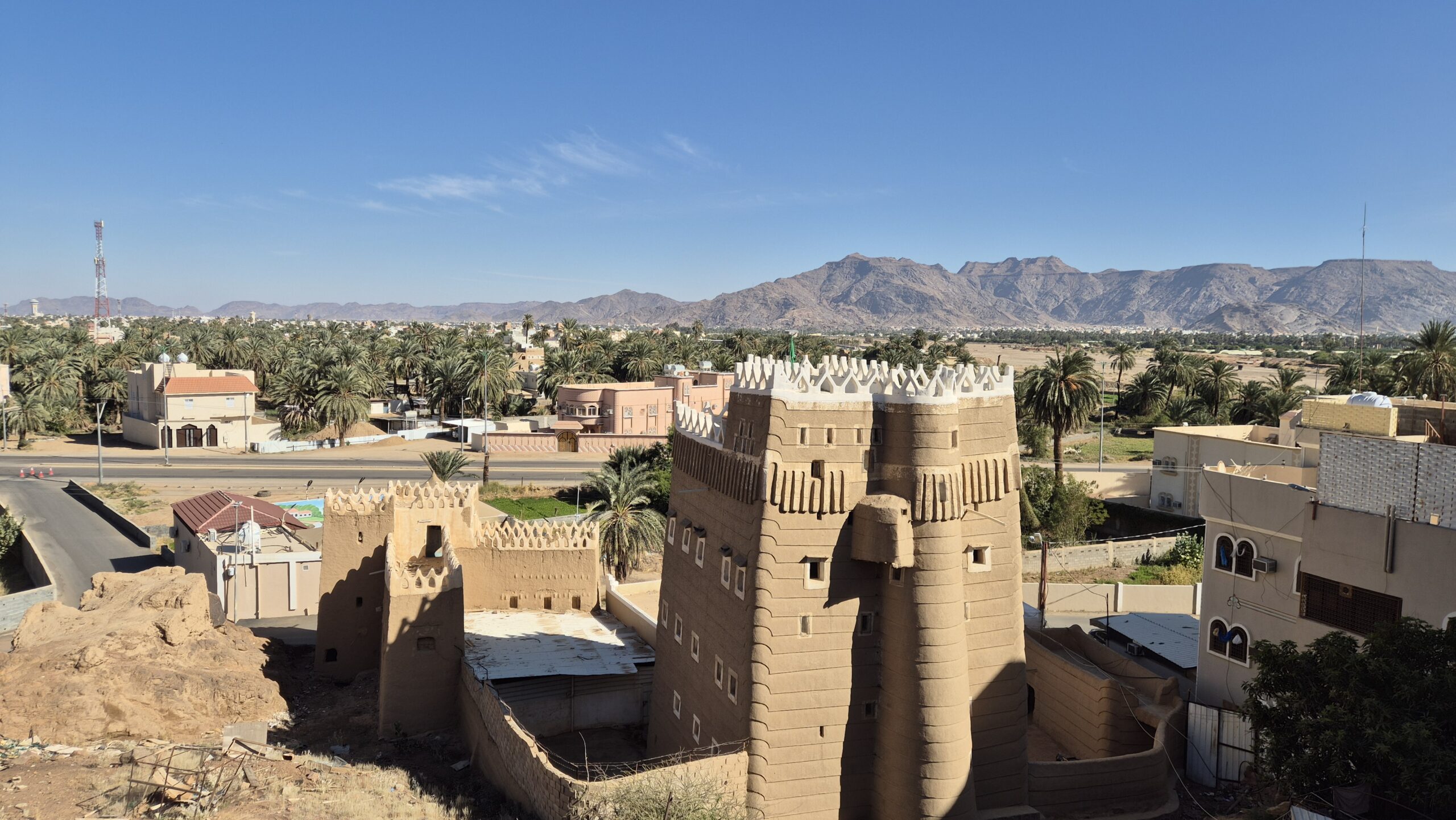
This view shows some of those mountains in the distance, with a splendid example of local Najrani architecture in the foreground. The green in the middle is a palm oasis, whose waters have long been the sustenance for the people here.
Farasan Islands
What to do when your plans fail? Take a deep breath – and adapt. Our two-day plan was to snorkel/swim and explore the Farasan Islands, a marine coral reserve in the Red Sea off the coast of southern Saudi Arabia. So, we put in hours and hours of effort just to find a hotel and book the 90-minute fast ferry. It was disappointing to discover, unexpectedly, that we were prohibited from using the beautiful beaches and coves with calm turquoise waters. (Too close to Yemen?) The open beaches were those with turbulent waters and no coral. The only dive shop had been out of business for years. And the island landscape was mostly flat desert. So, we adapted. We wandered the beaches and inlets. We admired the sunsets. We watched the plentiful birds. And, best of all, we did an unplanned two-hour safari to see the rare and endangered Arabian gazelle.
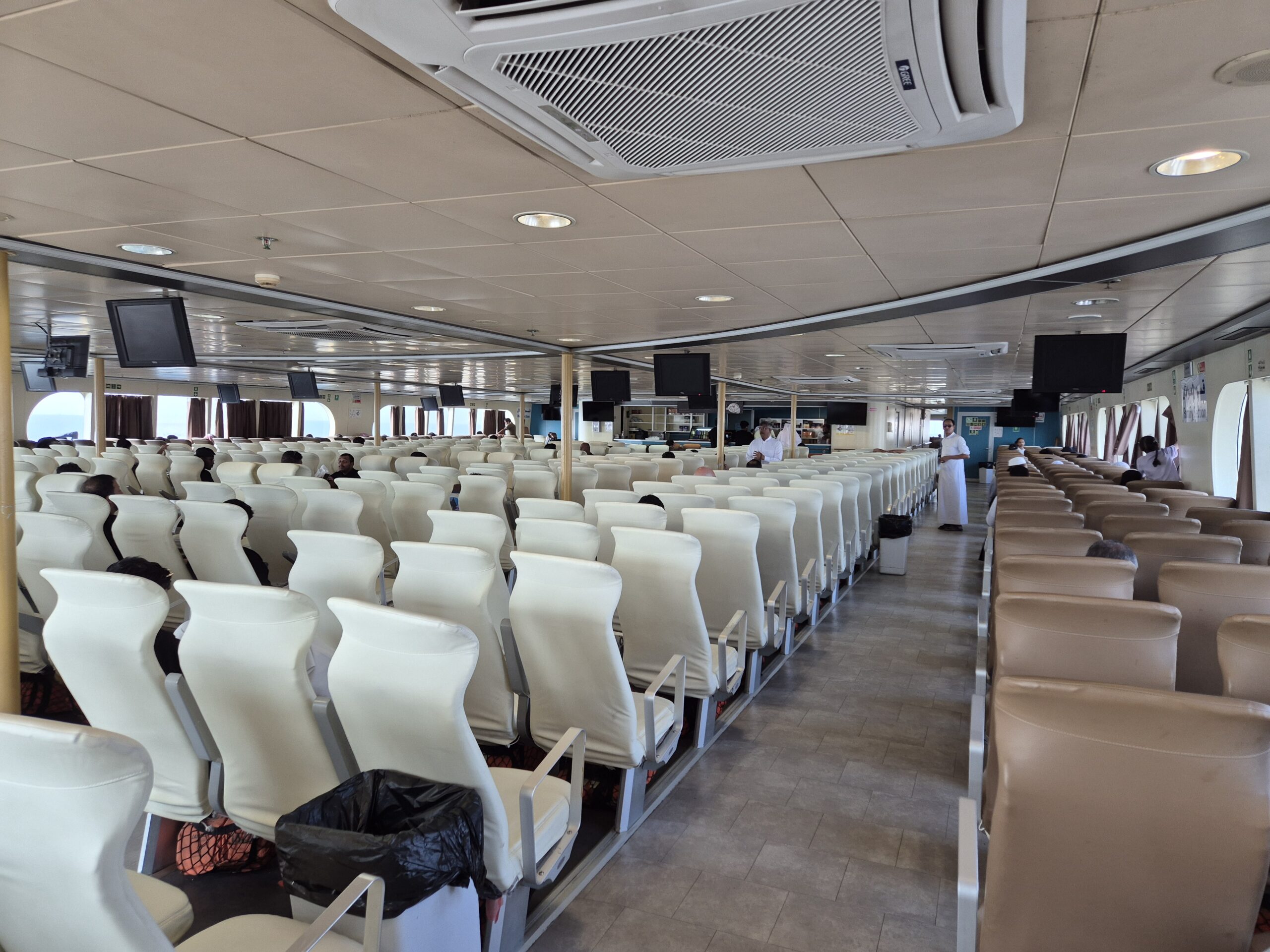
Given the trouble of booking the ferry, we should have sensed something might go awry. There was nothing wrong with the ferry itself: quick and comfortable – and completely free for us and the car. But our hotel needed to book it for us. We needed about an hour to re-book at the ferry office once we arrived in Jizan. We endured lengthy credentials checks and security screenings (though perhaps the proximity to Yemen and other Red Sea hotspots justified that). We needed to wake up at 4:30am to arrive 2 hours before the 7am boat back. Next time, however, we would comply like the locals: arrive barely an hour before departure, at the most.
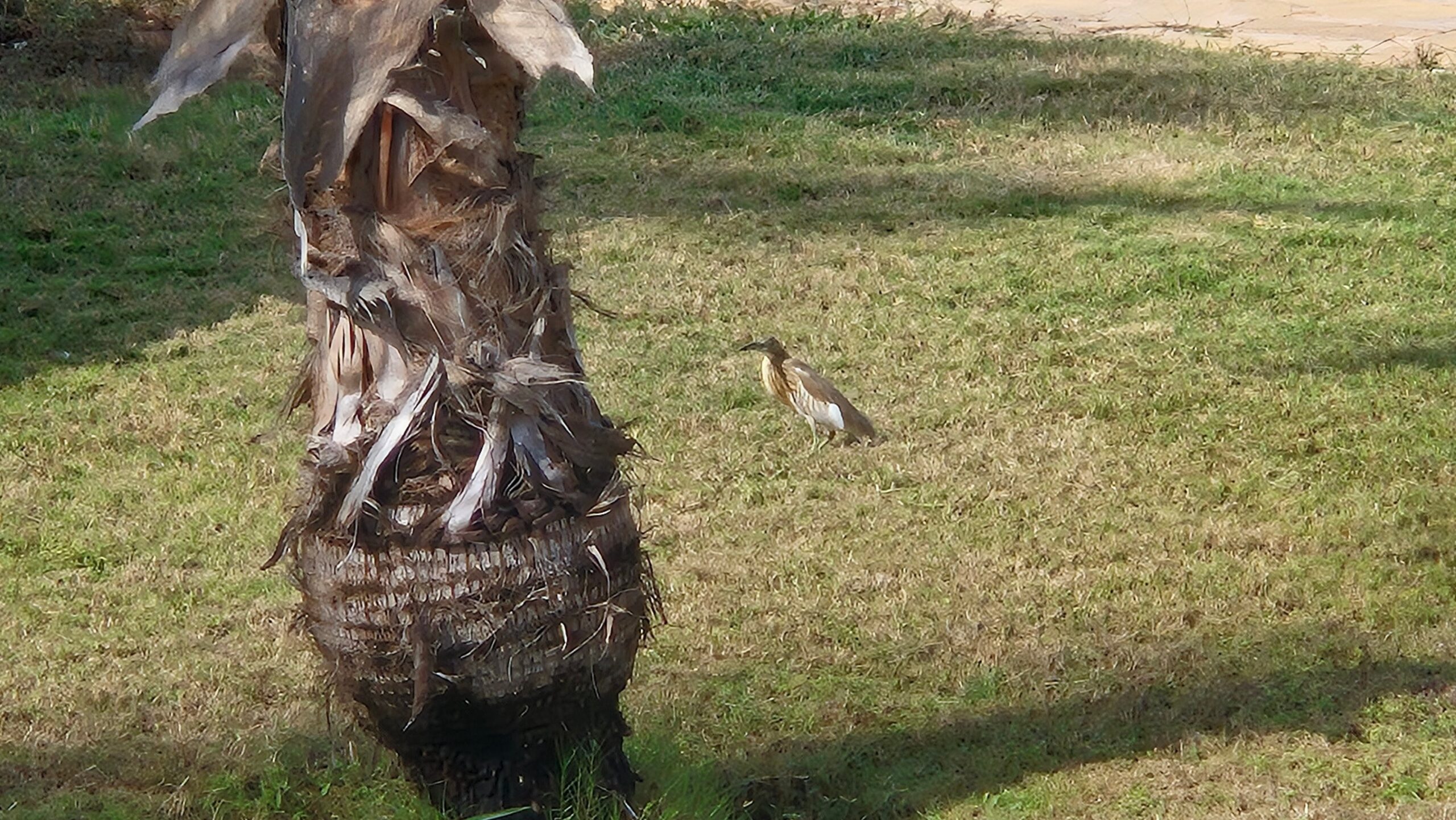
The hotel we wanted was the only one on any Farasan beach, but it had adopted several names over time and had a very confusing presence on the internet. Plus its ratings were mediocre. We expected to rough it. To our surprise, the manager helped us a lot, including booking the ferry for us and finding a great laundry service in the nearby town. Better yet, it was a very comfortable place with a fine view to the beach, lots of easy birdwatching like this bittern, and in pretty good shape. The cook proved to be excellent as well.
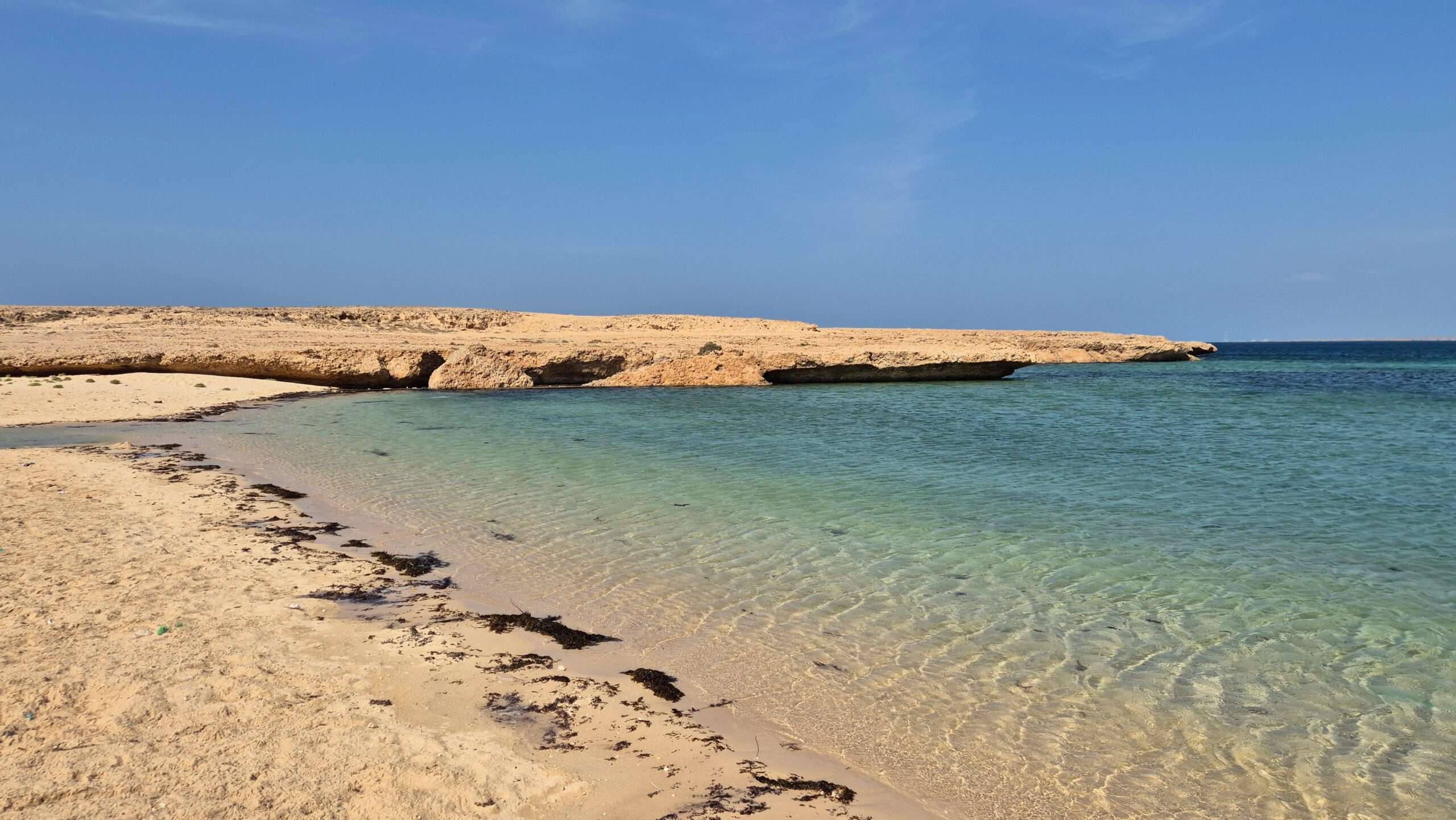
We drove all over the 30-kilometer-long island, finding none of the expected coral and no place to snorkel – including here at Snorkeling Point! Why? Dangerous, the coastal guard police argued to us for about a half-hour, with unclear rationale. Not obviously dangerous in our eyes, as this photo suggests. Too close to Yemen, perhaps? Go to the formal beaches, they said, all of which were frothy in the strong winds and very uninteresting for snorkelers.
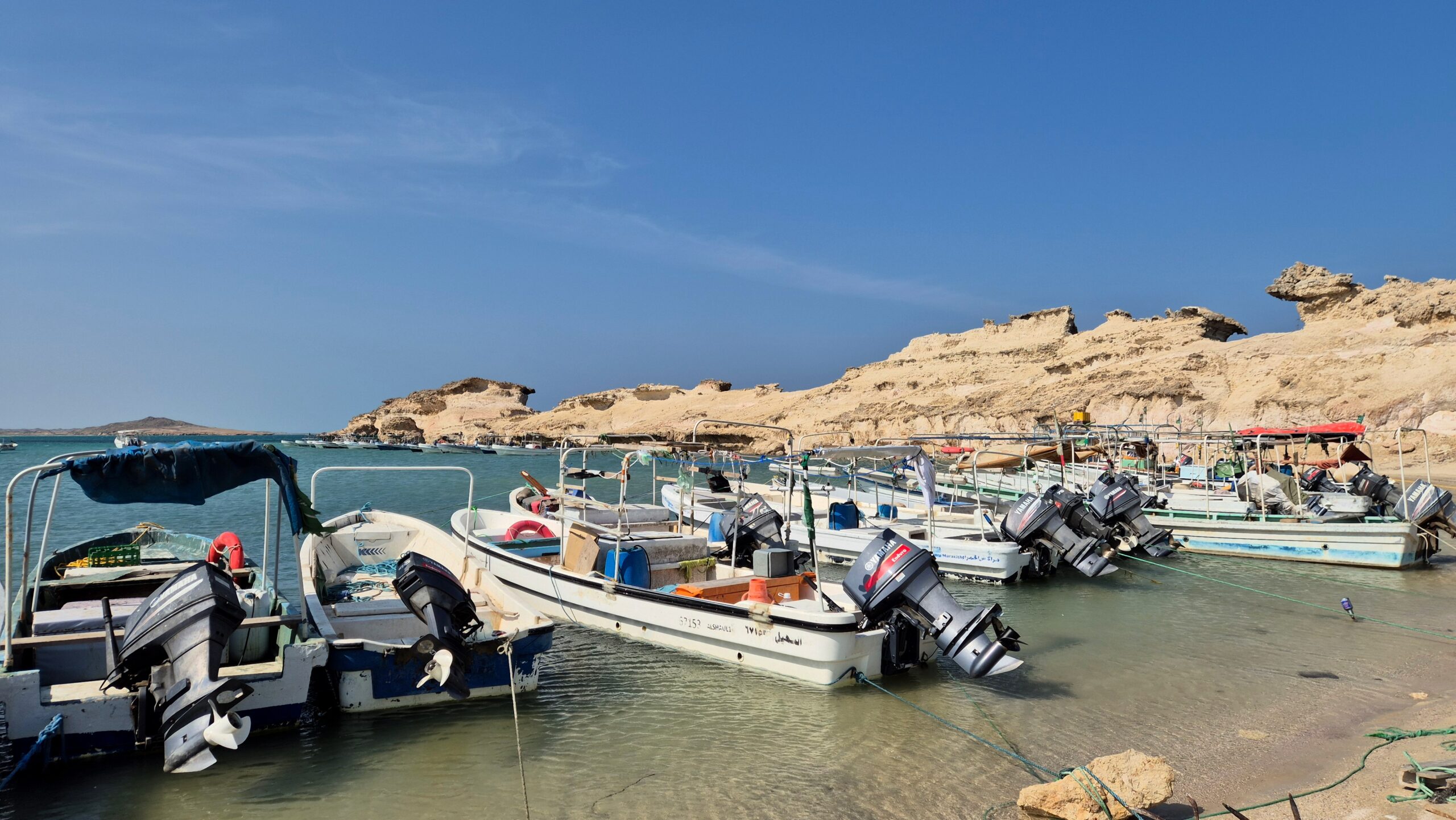
Many of the finest bays were occupied by fishing boats and off-limits to us, reportedly with many fishermen from Yemen.
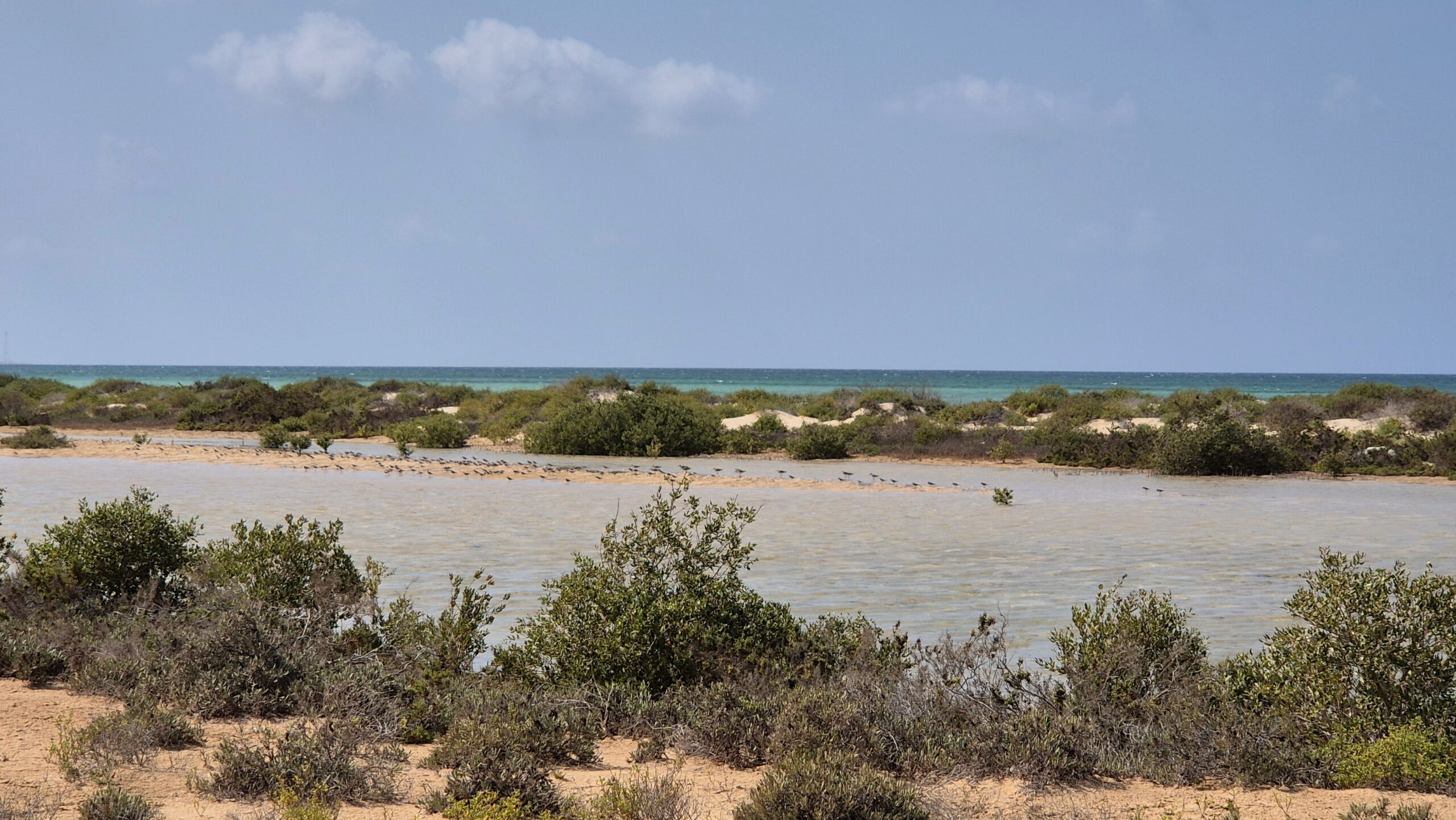
We hiked a bit to some of the coastal areas and inlets like this, with lovely waters and flocks of birds, as well as a few nice viewpoints across other waters we weren’t allowed to snorkel.
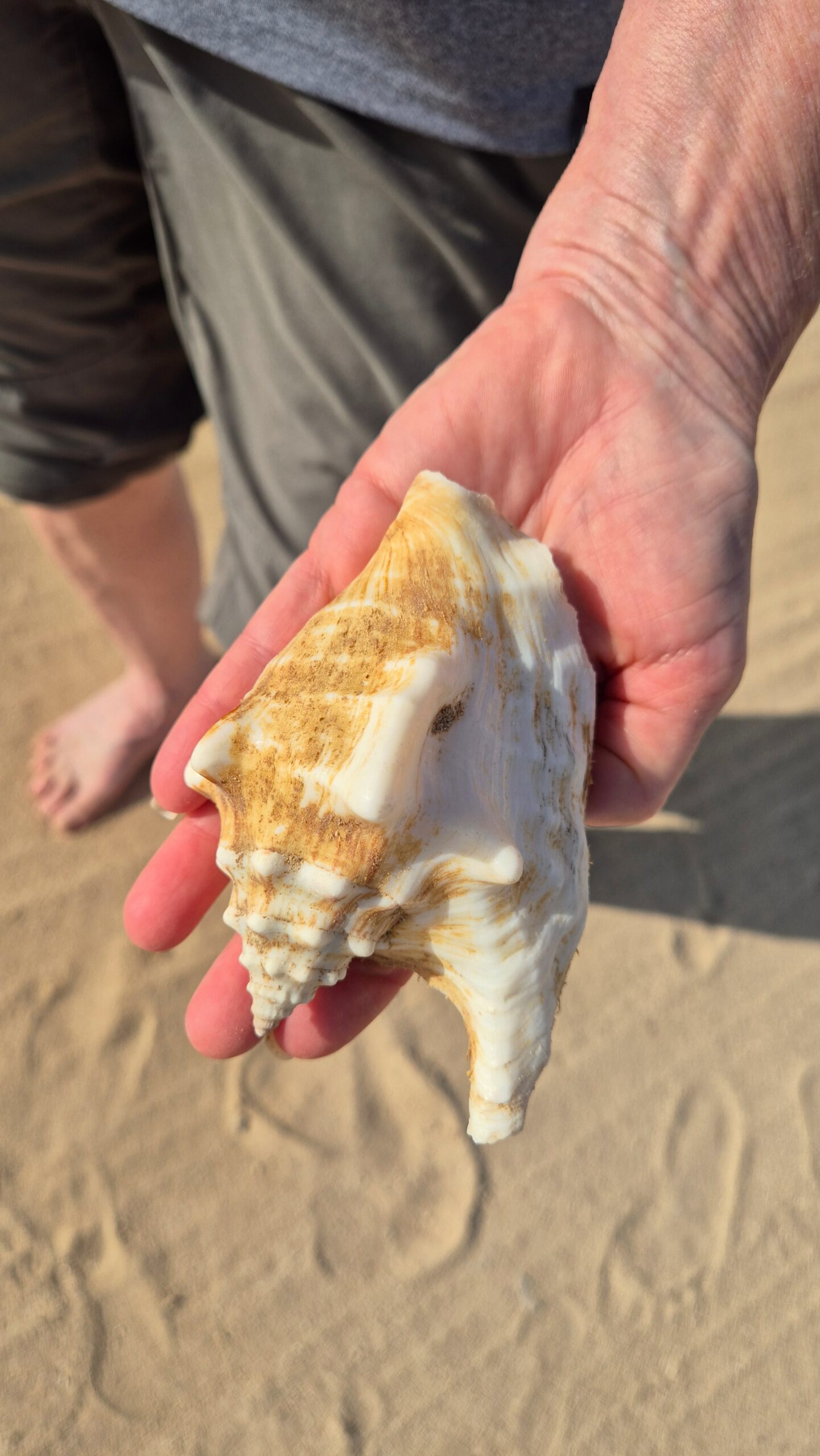
We don’t usually sit on beaches, so we walked a few when we were shut out of the water itself. This fine conch shell showed us that the waters must be rich in marine life, if one was allowed to get in the water and observe it.
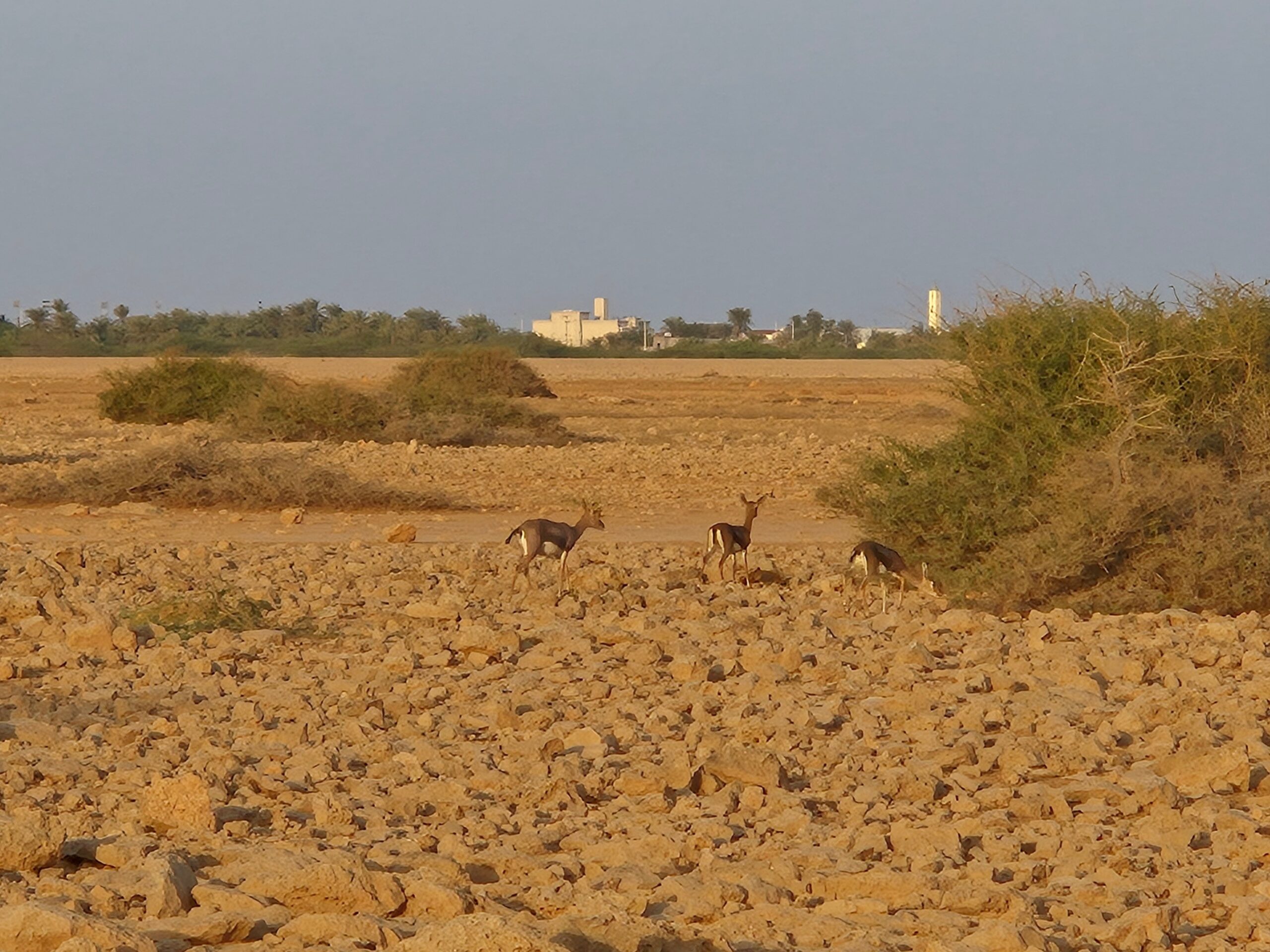
The best adaptation was discovering we could do a safari across a desert reserve that supports about 300 of the rare and endangered Arabian Gazelle. Even that idea started poorly as we wandered the reserve aimlessly for a while in the morning. Then, a helpful ranger kicked us out, but told us to return after 4pm.
In the slanting light of the late afternoon, amid the grasses and scrub acacia that gazelles like to eat, we followed another ranger in our SUV across obscure tracks, over rough rubble, and along the desert plains. Around 20 of these lithe gazelles came into view. The exciting experience made us forget the unfulfilled snorkeling plan. The gazelles were worth all the trouble.
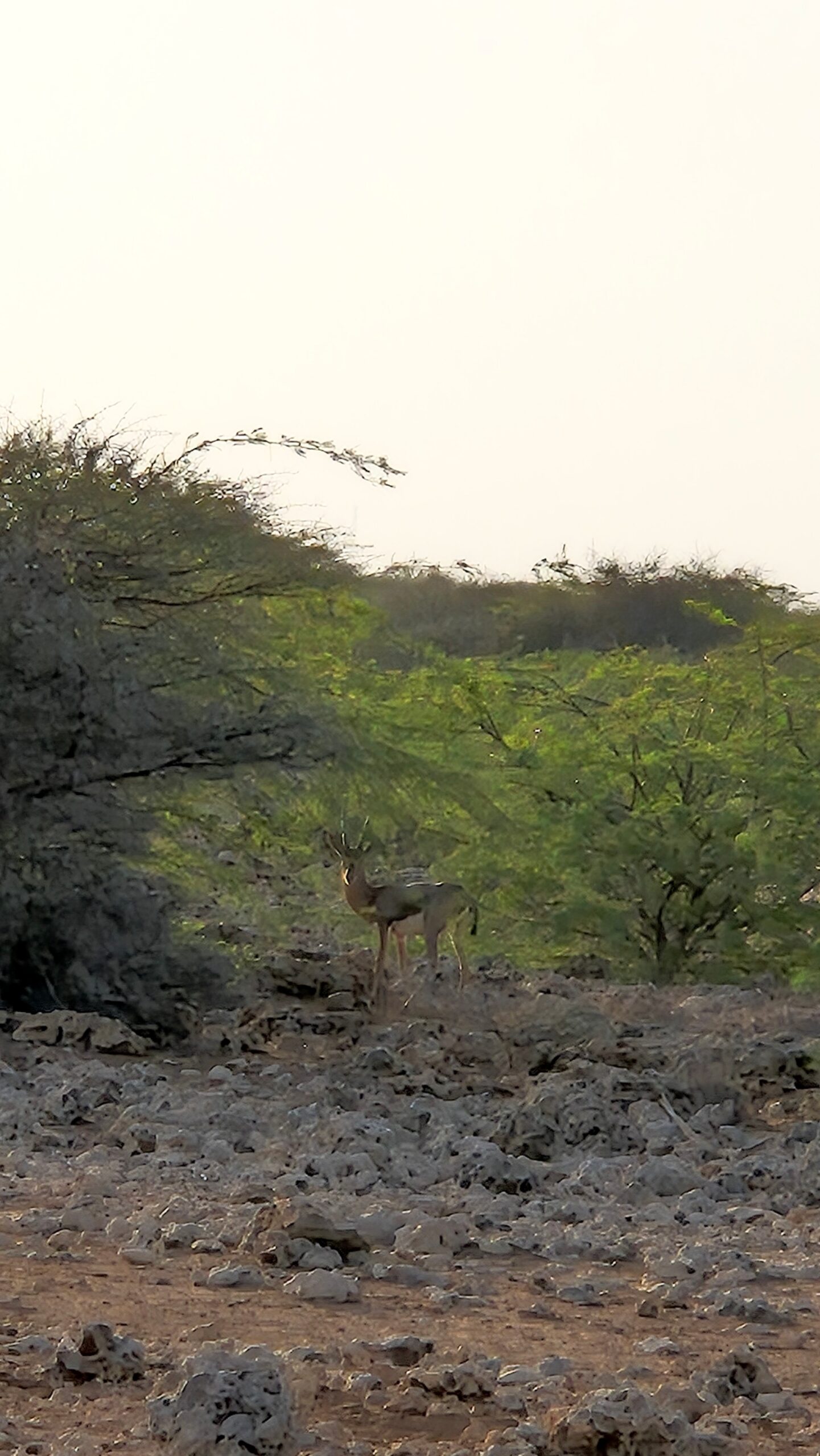
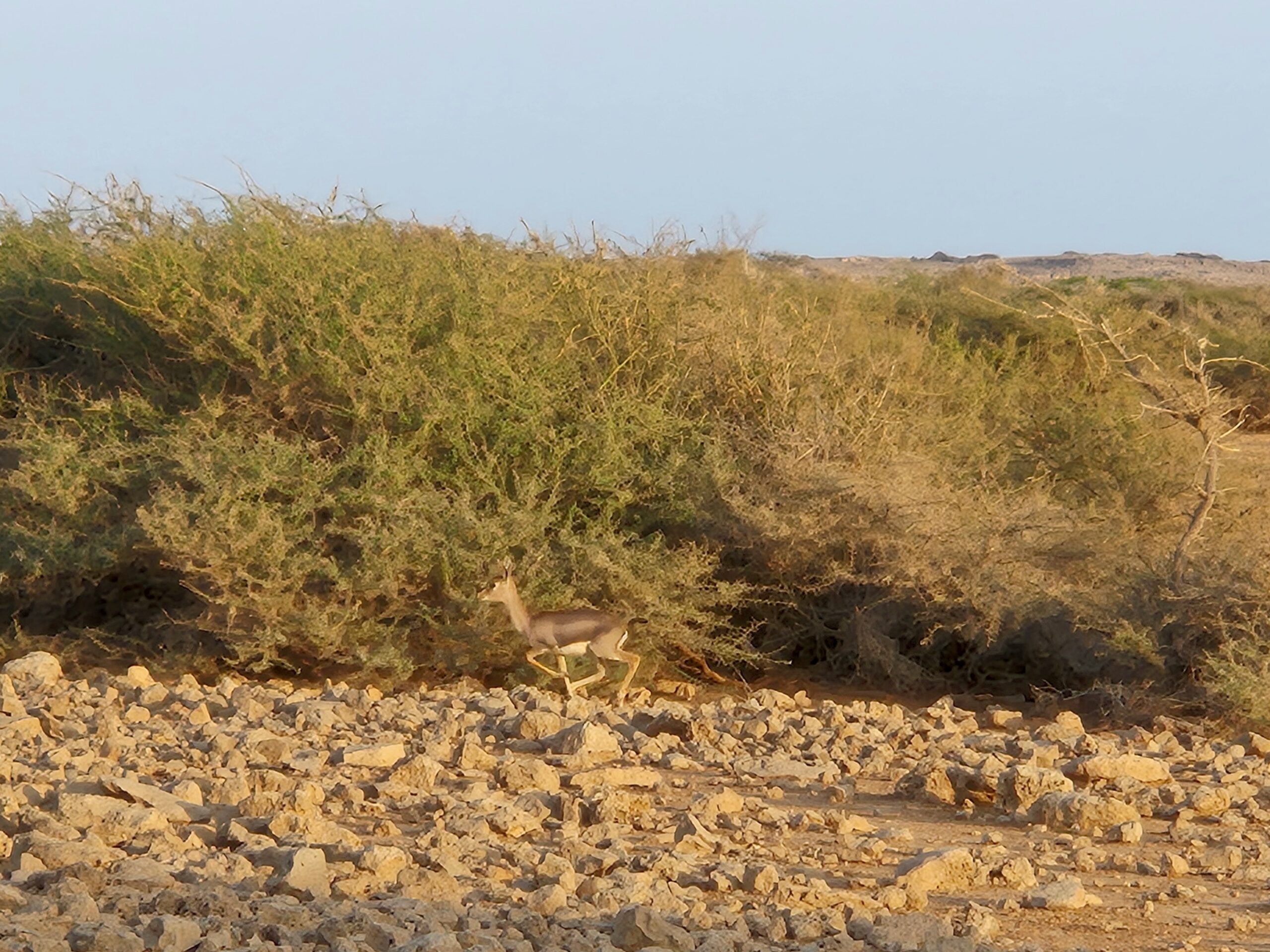
Our first sighting of a gazelle, with a nice long set of horns in the late light of day.
Amazing how fast they can run across the broken rock of the desert. Our car could only do about 5km per hour.
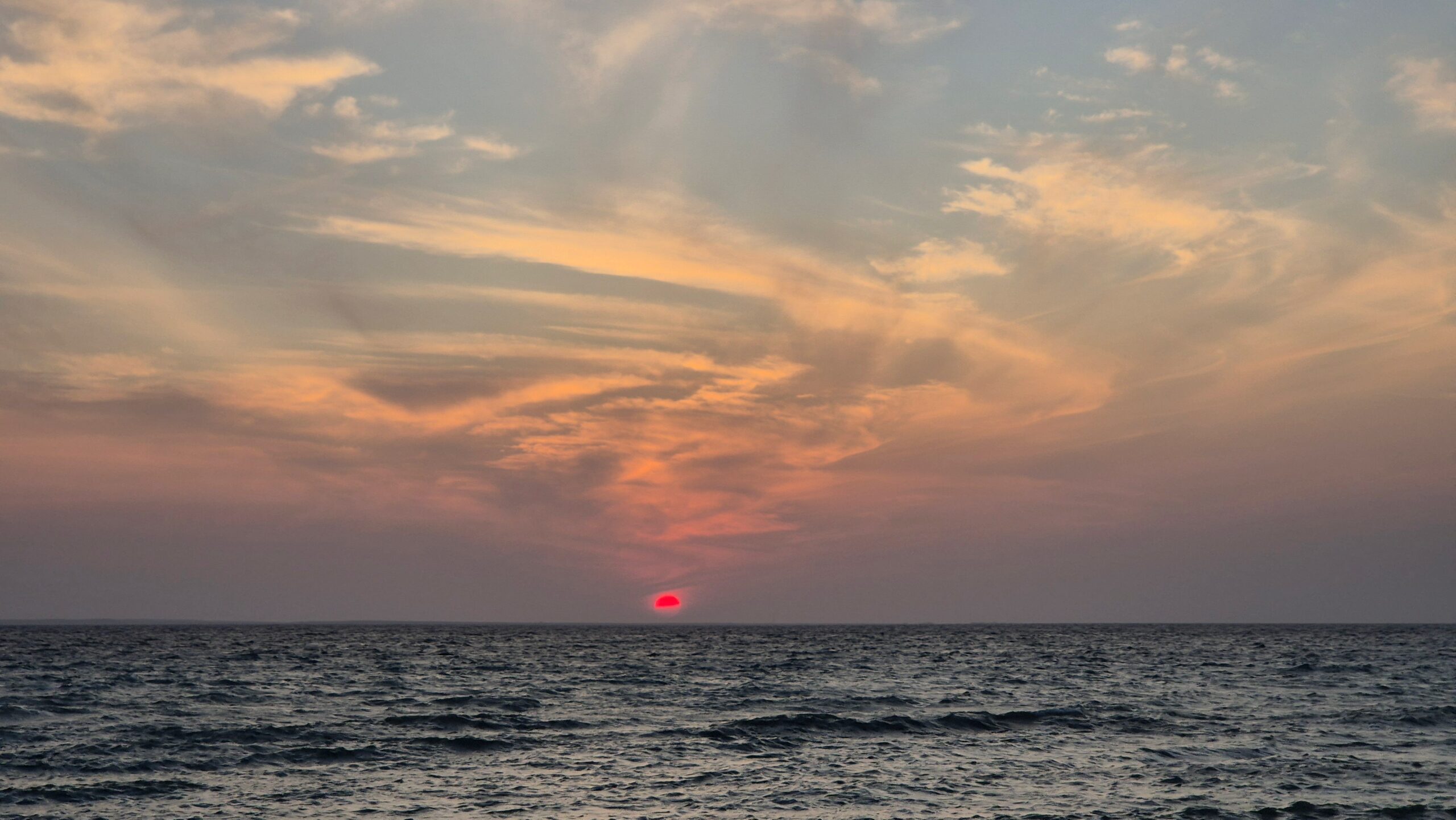
Our hotel faced west on a broad bay, with a small private beach and an extensive public beach and park right next door. After our safari to see the Farasan gazelles, the sun finished the day in style by putting on a light show.
Hima Desert and Ancient Rock Art
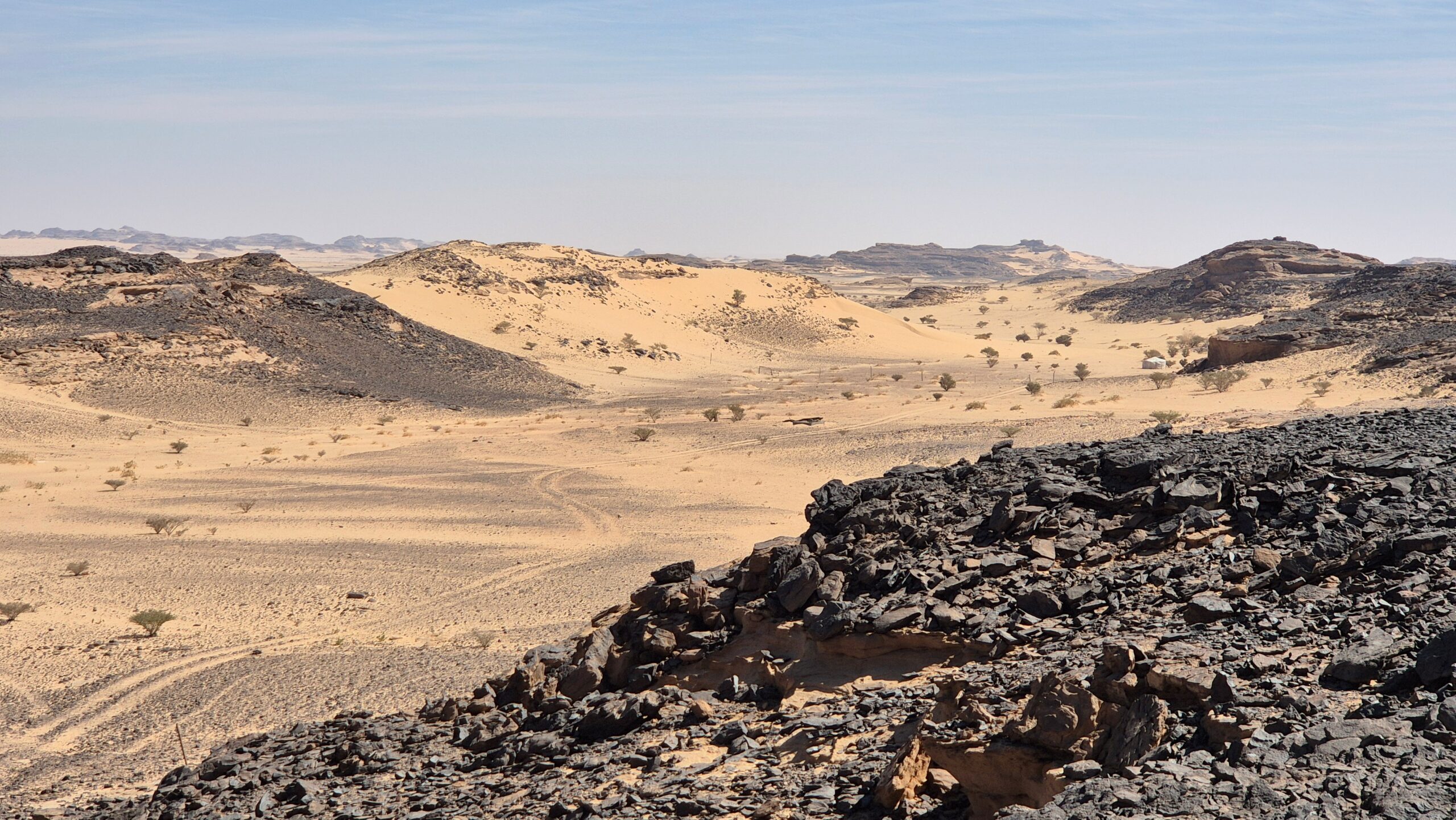
To see the UNESCO World Heritage rock art of Chalcolithic and Thamudic people at Hima, in south Saudi Arabia, we needed to hire a desert-ready vehicle and guide. As expected, cruising the rock formations and plains was spectacular and we saw plentiful art.
But the experience was so much richer than our visit to Jubbah in the east: a safari among herds of white and black camels, a lunch full of local specialties on the desert plain, extensive conversation about life here, and a fascinating visit with the family of our driver. The trip proved a highlight of our time in Saudi Arabia.
At barely perceptible transitions in the terrain, we could climb a bit to piles of the lava rock that made these low mountains. These piles acted as watchtowers, slight vantage points so tribes could defend their land against others in an older, more violent era. Now, hillocks like this offer a placid vista of great beauty. Several times, we passed small camps of the those who still live here, a combination of traditional open tents and modern equipment.
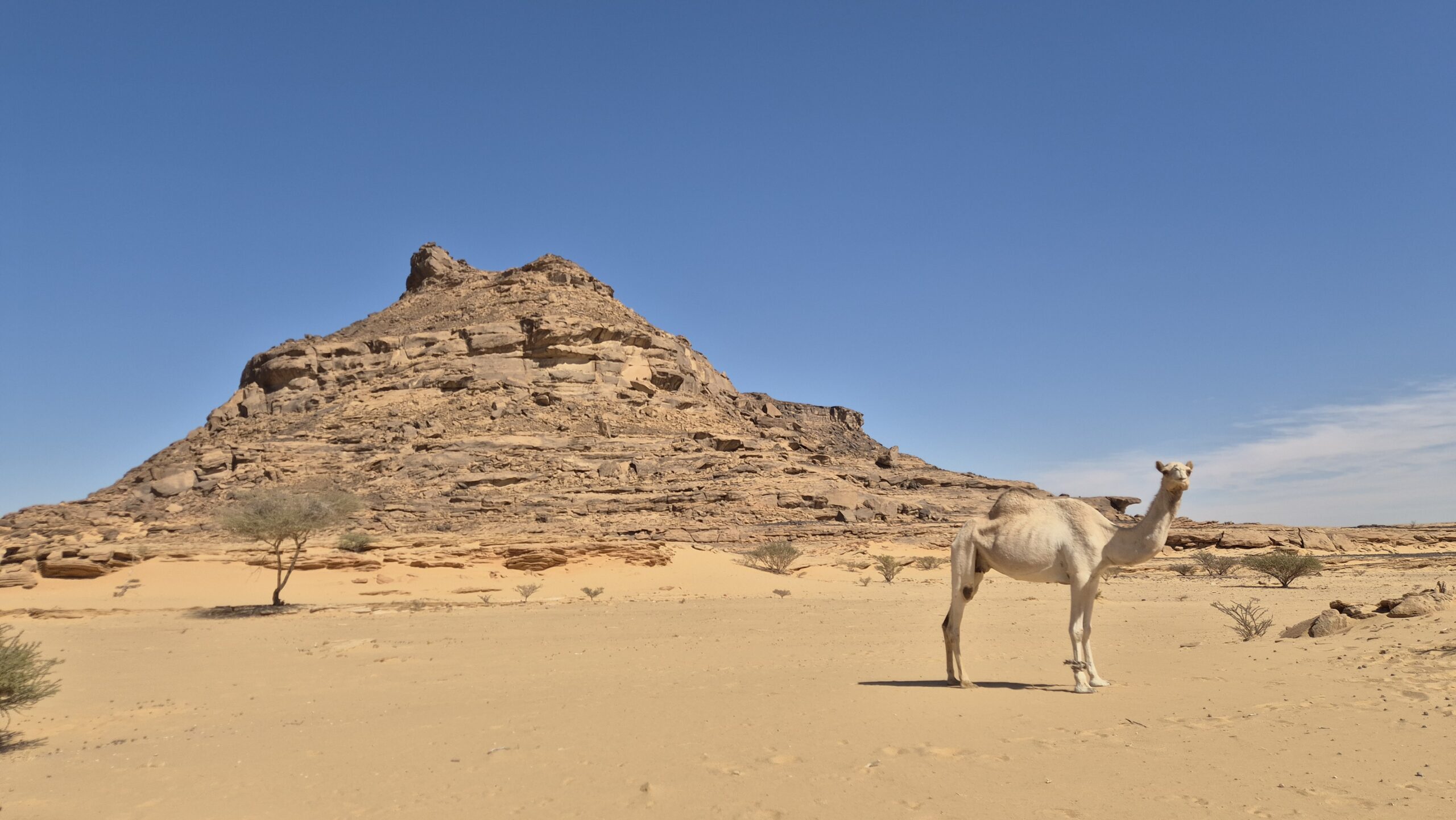
Our guides explained about the half-dozen species of camel during our desert drive. The hump of this white camel seems to be echoed by that mountain hump.
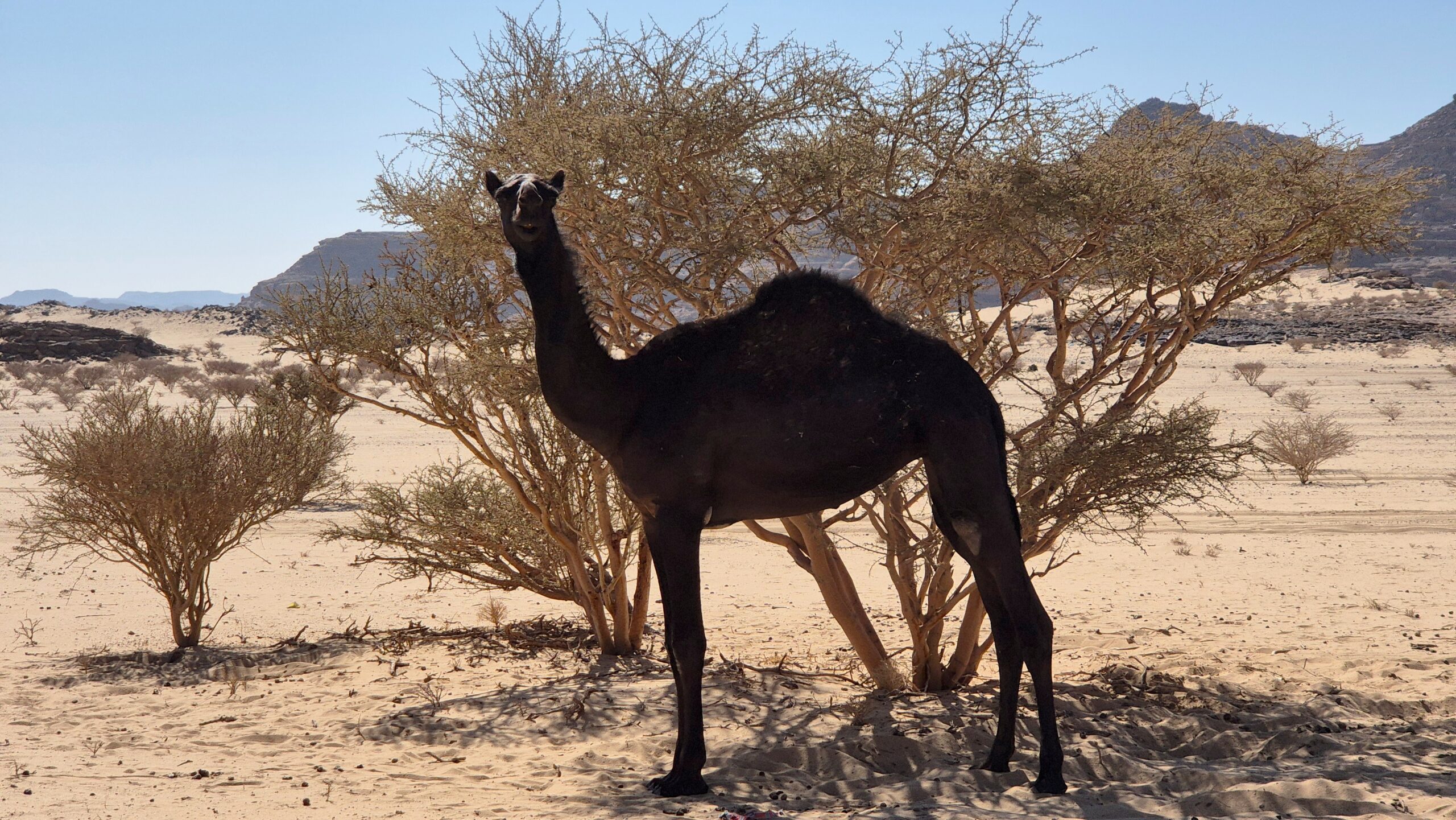
One of the rarer species is the black camel, a type we never knew about. This was one of perhaps a dozen in a herd we passed.
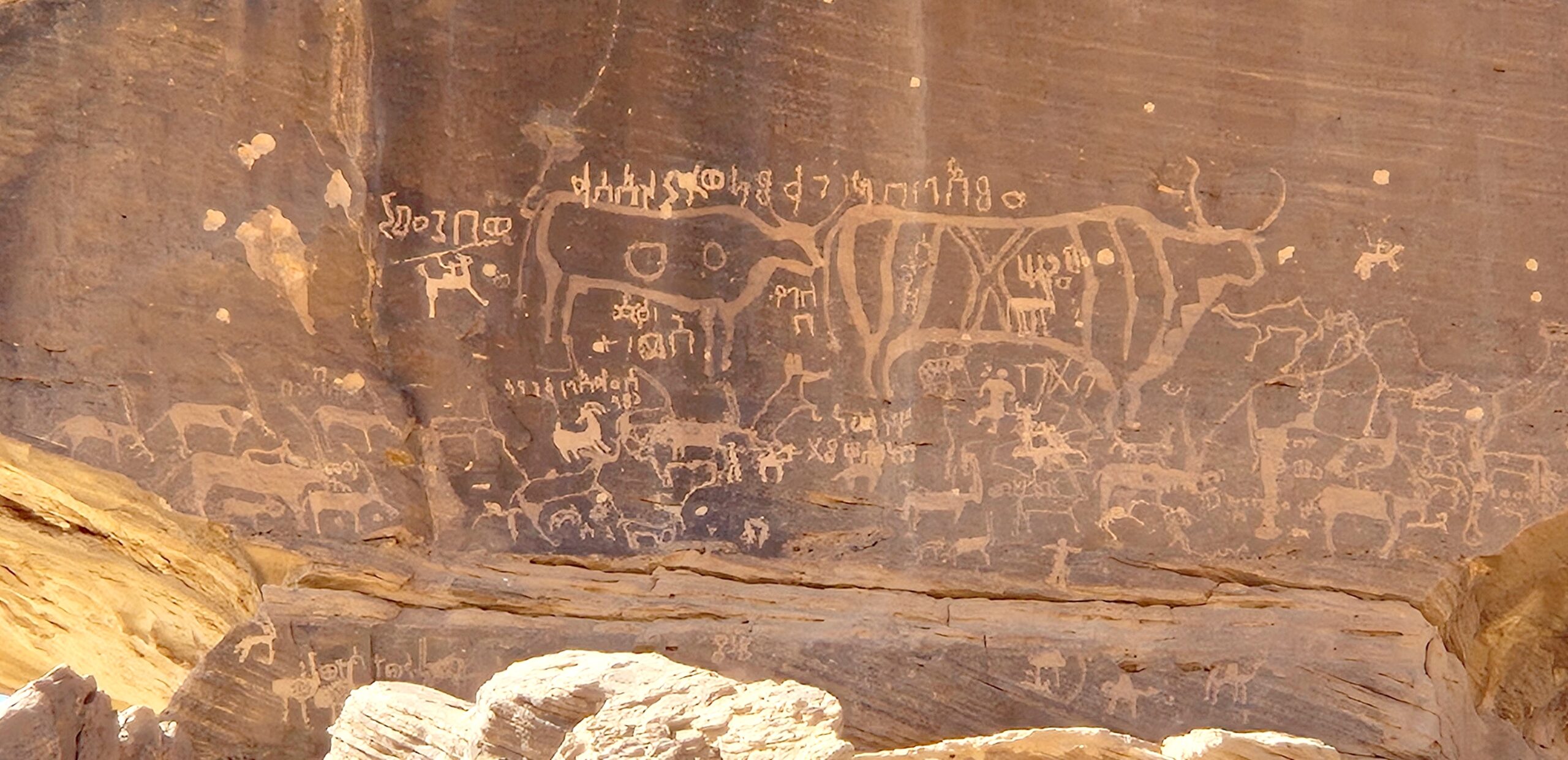
Our trip covered dozens of rock art sites, many notable as much for the boulders and surfaces chosen as the art itself. The art and texts left by desert dwellers and nomadic traders spanned nearly 10,000 years. One of the most striking collection of images included these large domestic bulls, surrounded by little images of oryx, ibex, ostrich, camel – and people. Note the mounted figure carrying a spear just to the left of the bulls, plus another tiny warrior to their right.
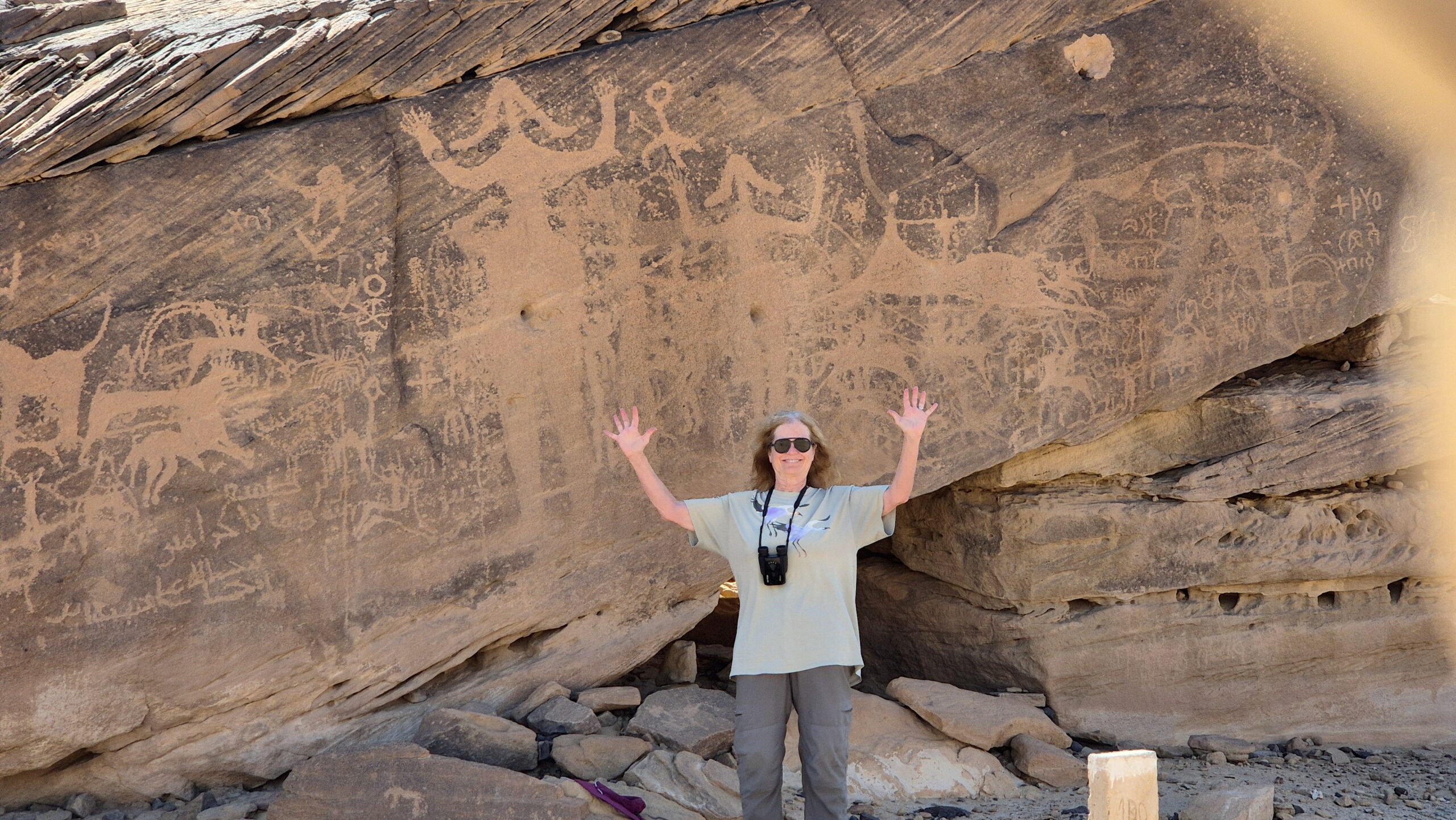
The most unusual art we saw…no, not Nancy, but images of a pre-Islamic goddess at a sacred site where the Bedouin people invoked her blessings. In the vicinity were thousands of inscriptions on unusual slabs of rock that had tumbled from the mountainside. Aliaa was, like Athena and Astarte, the goddess of fertility and love (but also, oddly, mercantile fortune and war). She was a figure of the sun as well, so her hair often appears more like sun rays.
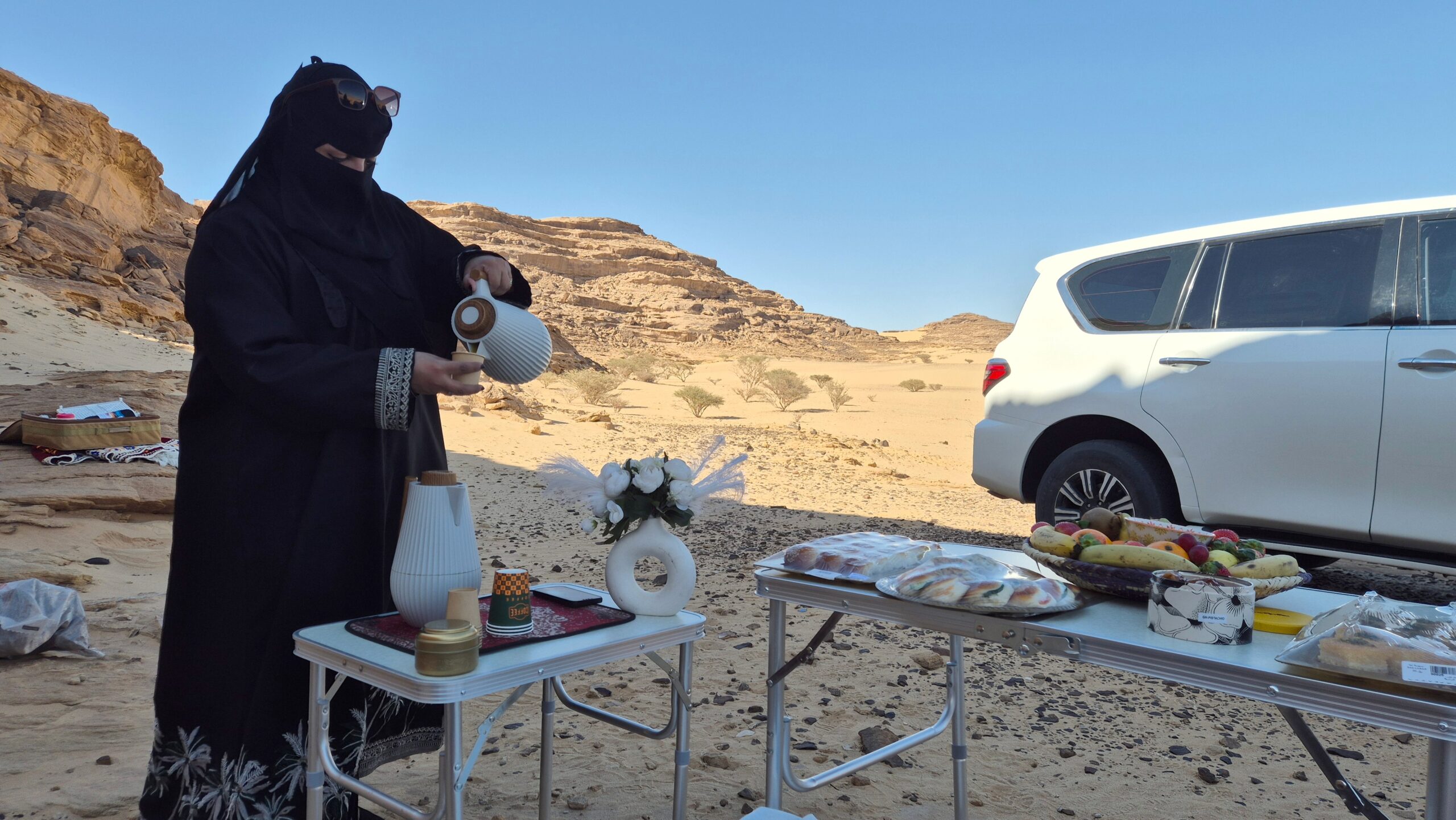
Our guide and hostess for the trip to Hima prepared many treats for our lunch, tailored to vegetarians, including the traditional coffee and dates. Lounging at the edge of that landscape and conversing with her and the driver were pleasures which we were sorry had to end.
(To enlarge any picture above, click on it. Also, for more pictures from Saudi Arabia, CLICK HERE to view the slideshow at the end of the itinerary page.)