
In brief: At Córdoba’s famous Mosque-Cathedral, the blending of styles and materials reminded us how faiths could harmonize as well.
For millennia, in Europe, wealthy cultures would build grand spaces where the devout could gather, spaces whose very solidness and materiality aimed to elevate the spirit to moral heights.
Few places can rival the Mosque-Cathedral of Córdoba (Mezquita-Catedral) for its history of bringing so many people of successive faiths to worship. As empires faded here, their main religious centers passed to their successors: early Christians and Visigoths reused stones from the Romans; the Umayyad “moors” repurposed columns and stones used by their predecessors. And then, remarkably, the architects of Spain built the Catholic church, not on the ruins of the former mosque, but within it.
The result is a harmonious blend of architectural styles, noted by UNESCO as a World Heritage, which affirms the hope that different faiths can harmonize still.
(For our separate post about our visit to Córdoba, click here.)
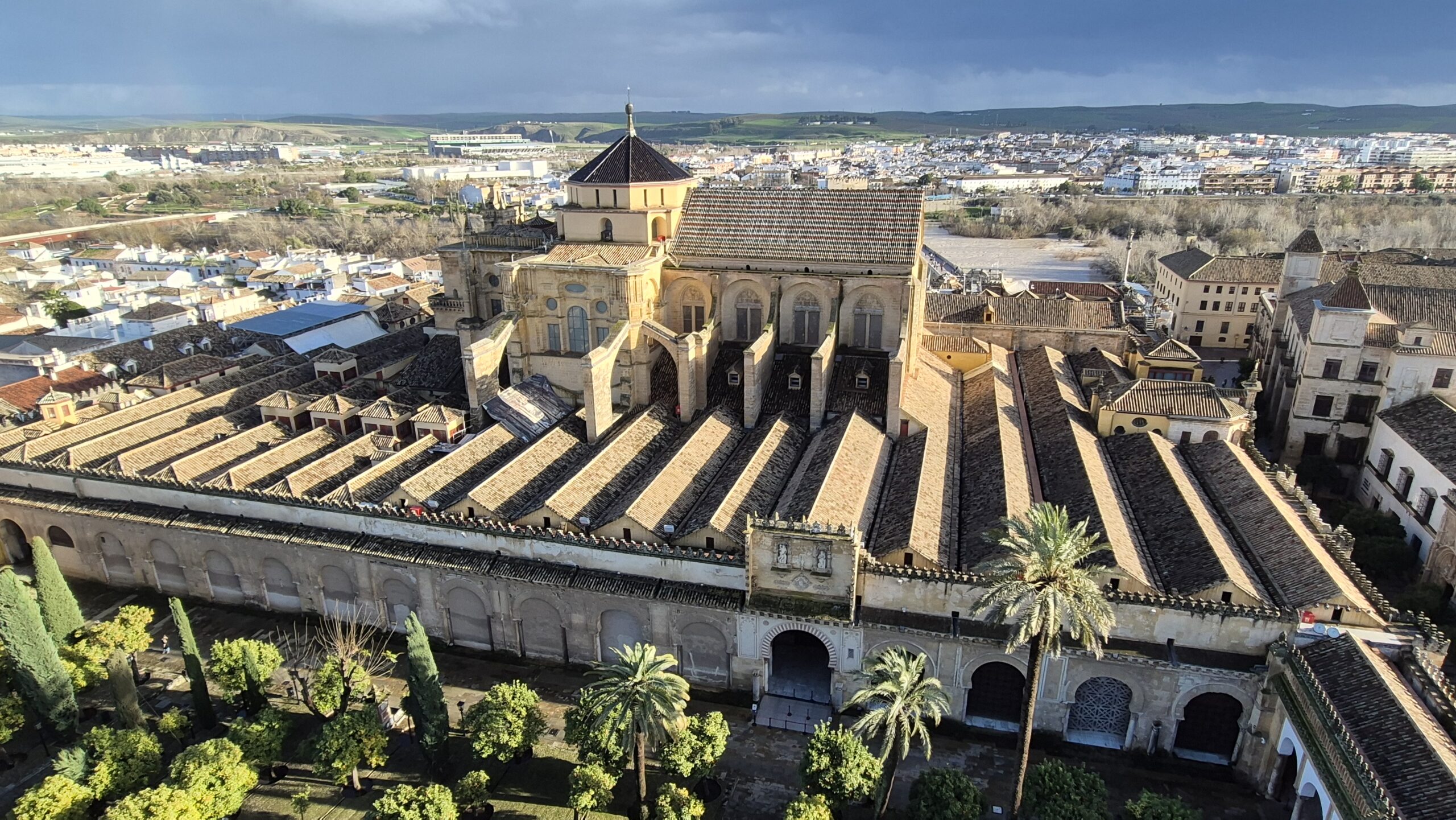
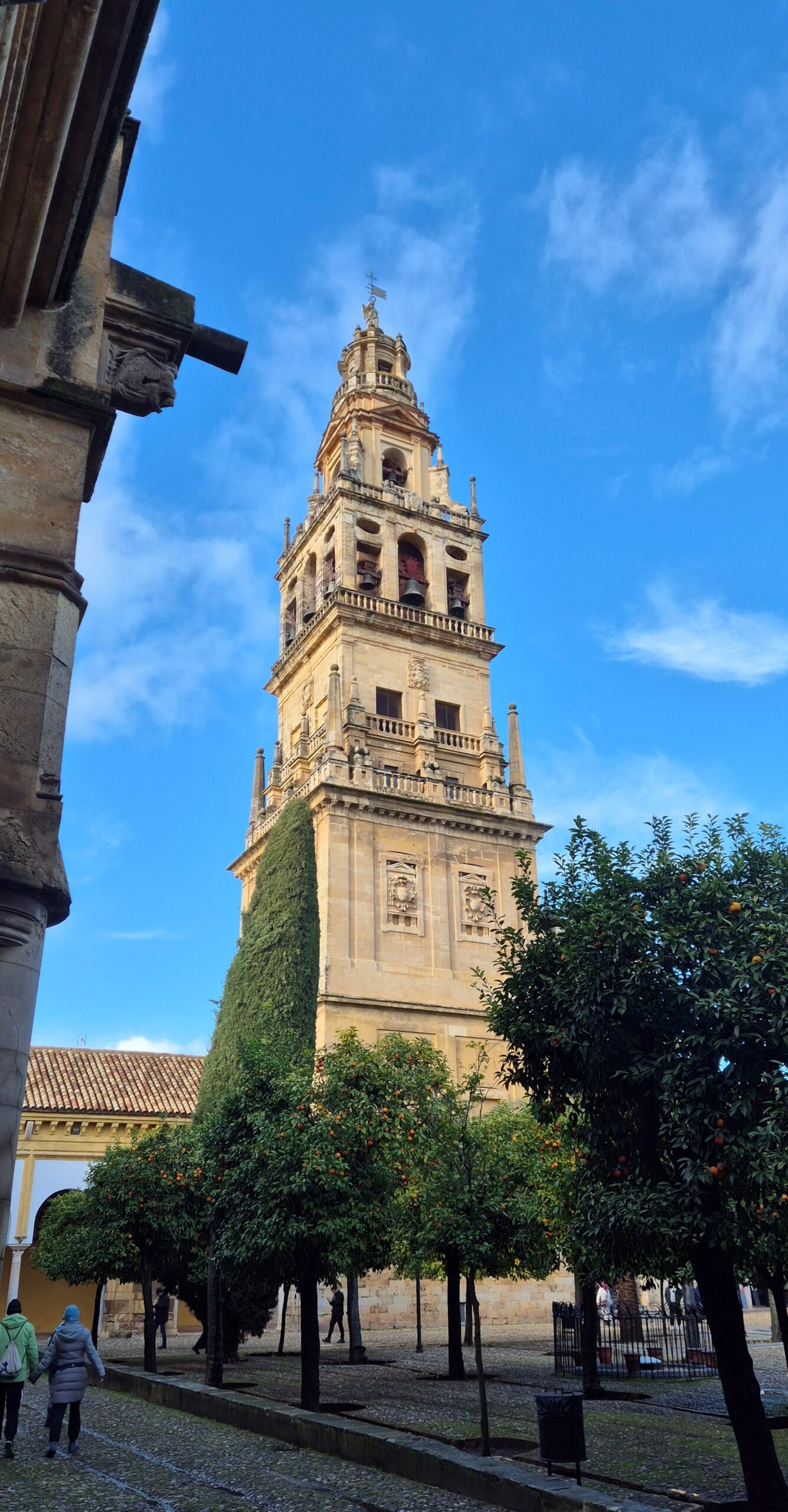
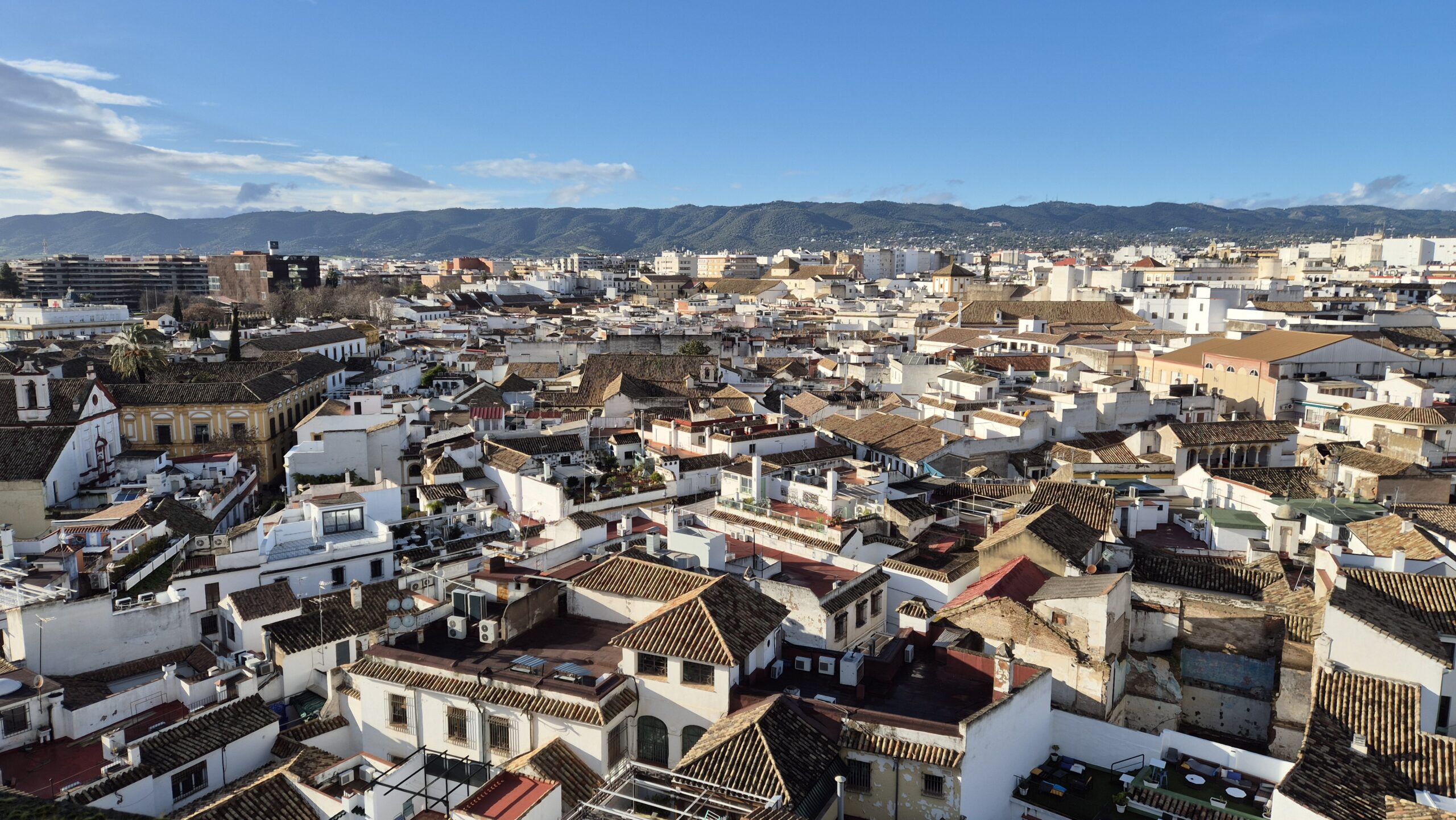
From our perch on the famous bell-tower some 200 steps up, the Catholic church (itself a blend of Romanesque, Renaissance, and Gothic elements) rises out of rooftops protecting the several stages of the mosque dating from 786 to 966. The garden of orange groves and palms was originally the open plaza for Muslim worshippers. The tower is itself a transformation of the original Moorish minaret and a symbol of the city.
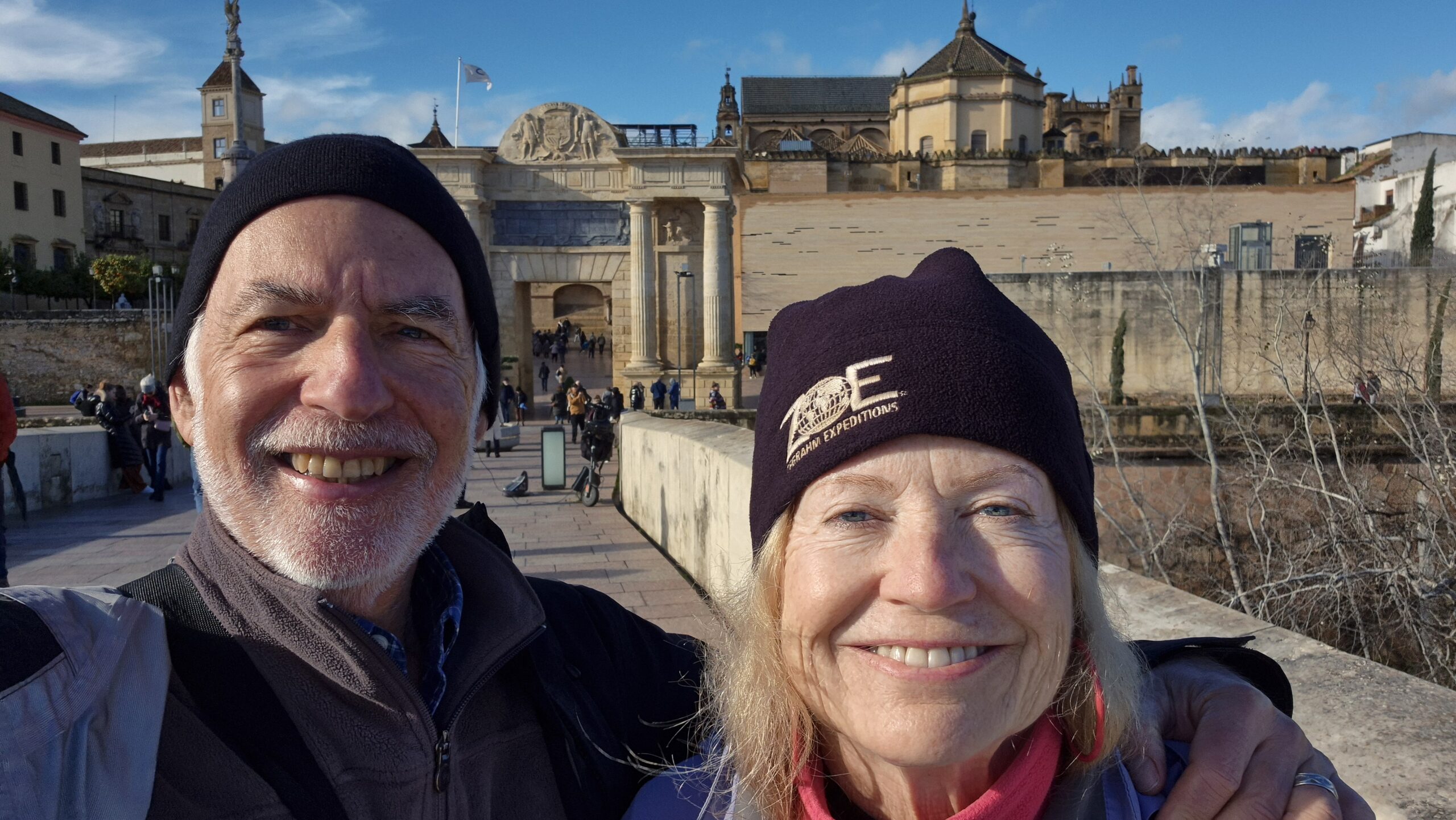
We came to Córdoba to celebrate our anniversary. Despite the weird successive storms that drenched the Iberian Peninsula during our visit, we loved being here. Plus, we lucked out with a few hours of sun during our walks. Here we are, sunlit, at the Roman bridge funded by the emperor in the 1st century BC. Behind us is the renowned Mosque Cathedral and the Puerta del Puente gate. Beneath us the Guadalquivir River flowed past turbulently.
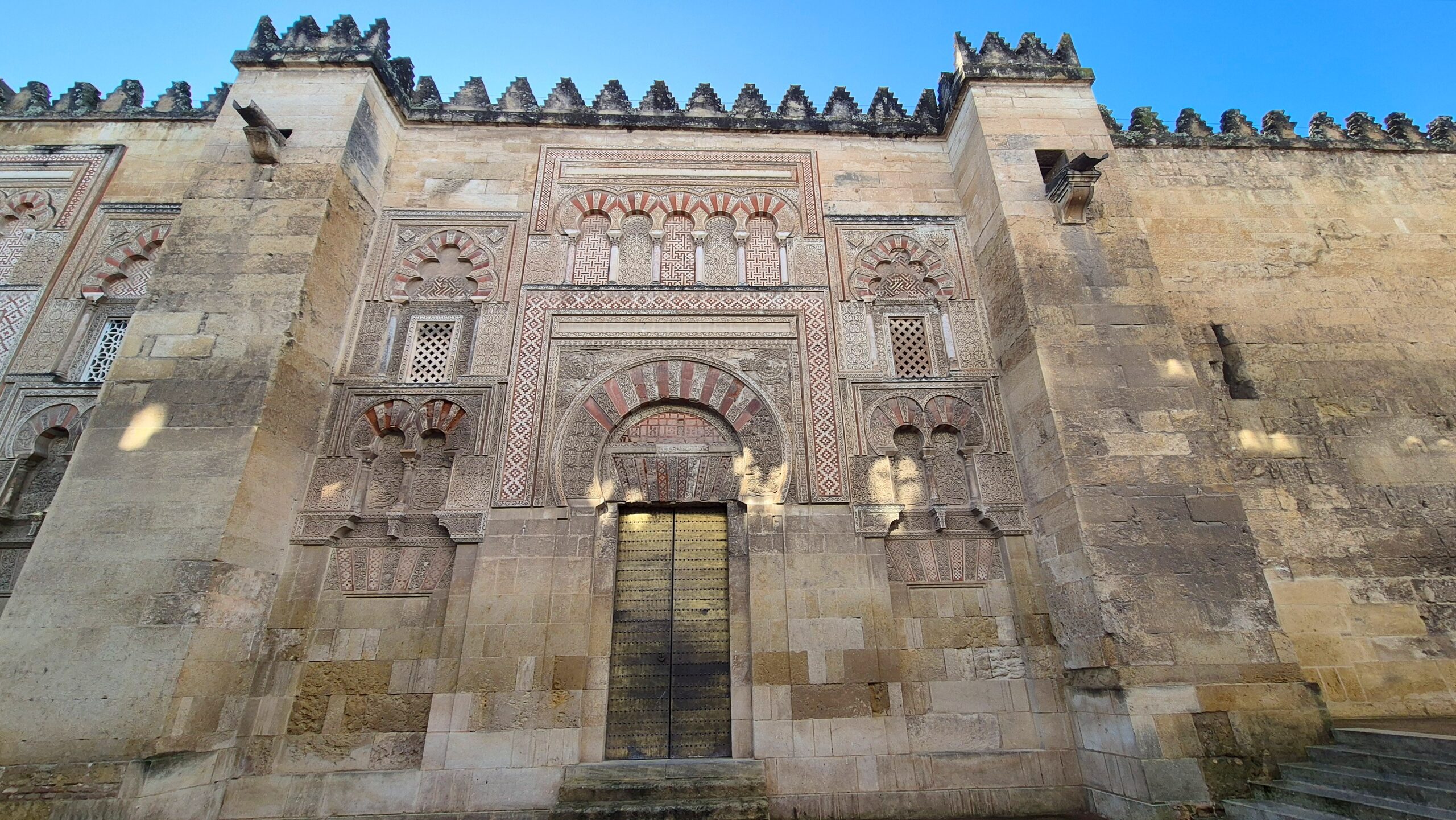
One of the many exquisitely decorated gates along the imposing exterior walls of the mosque.
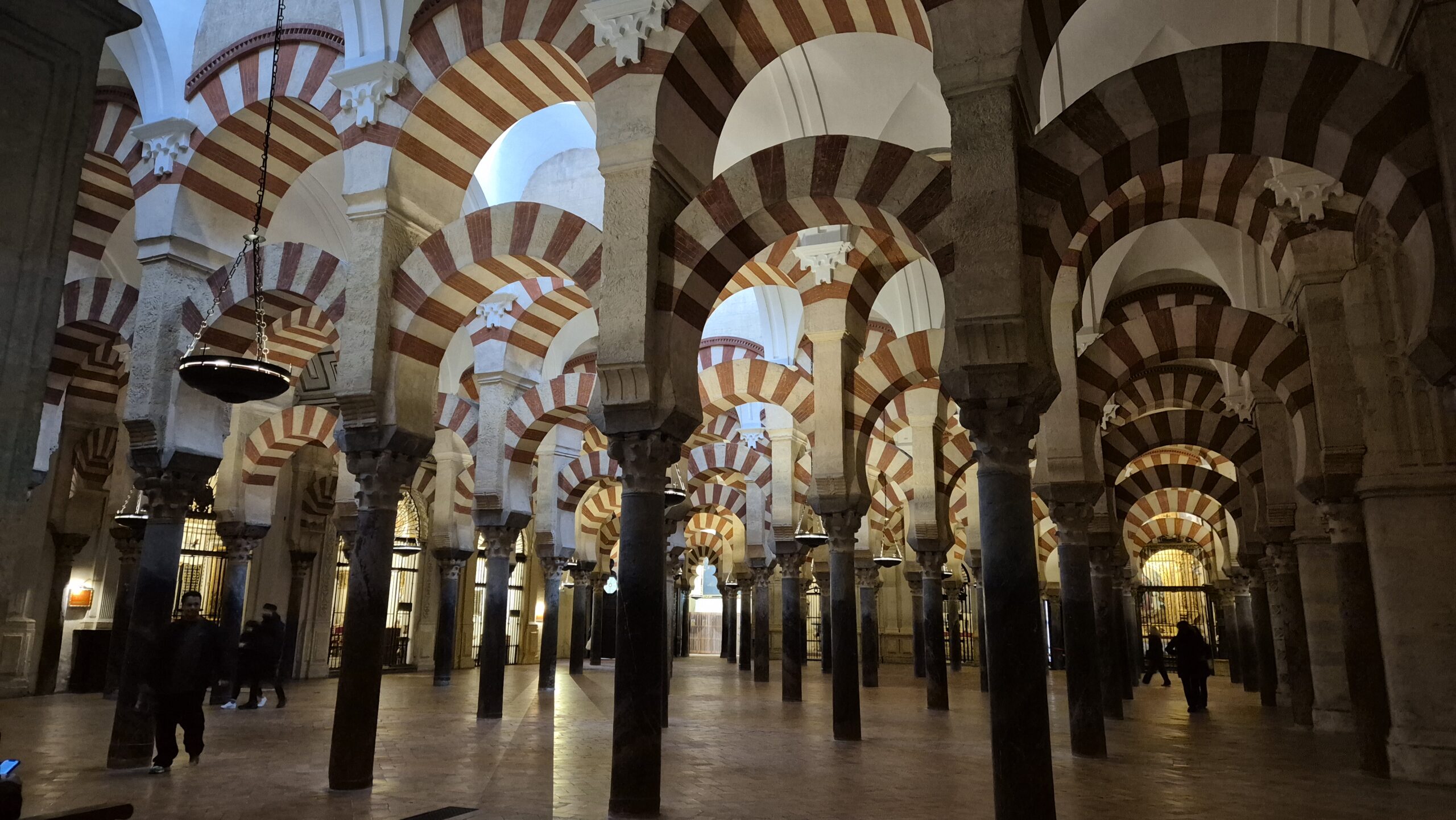
A section of the original mosque, with the noted double arches that bridge its innumerable columns, as conceived and built by Abd ar-Rahman of the Umayyad dynasty in the 8th century. He aimed to honor Allah with this grand space for many to pray.
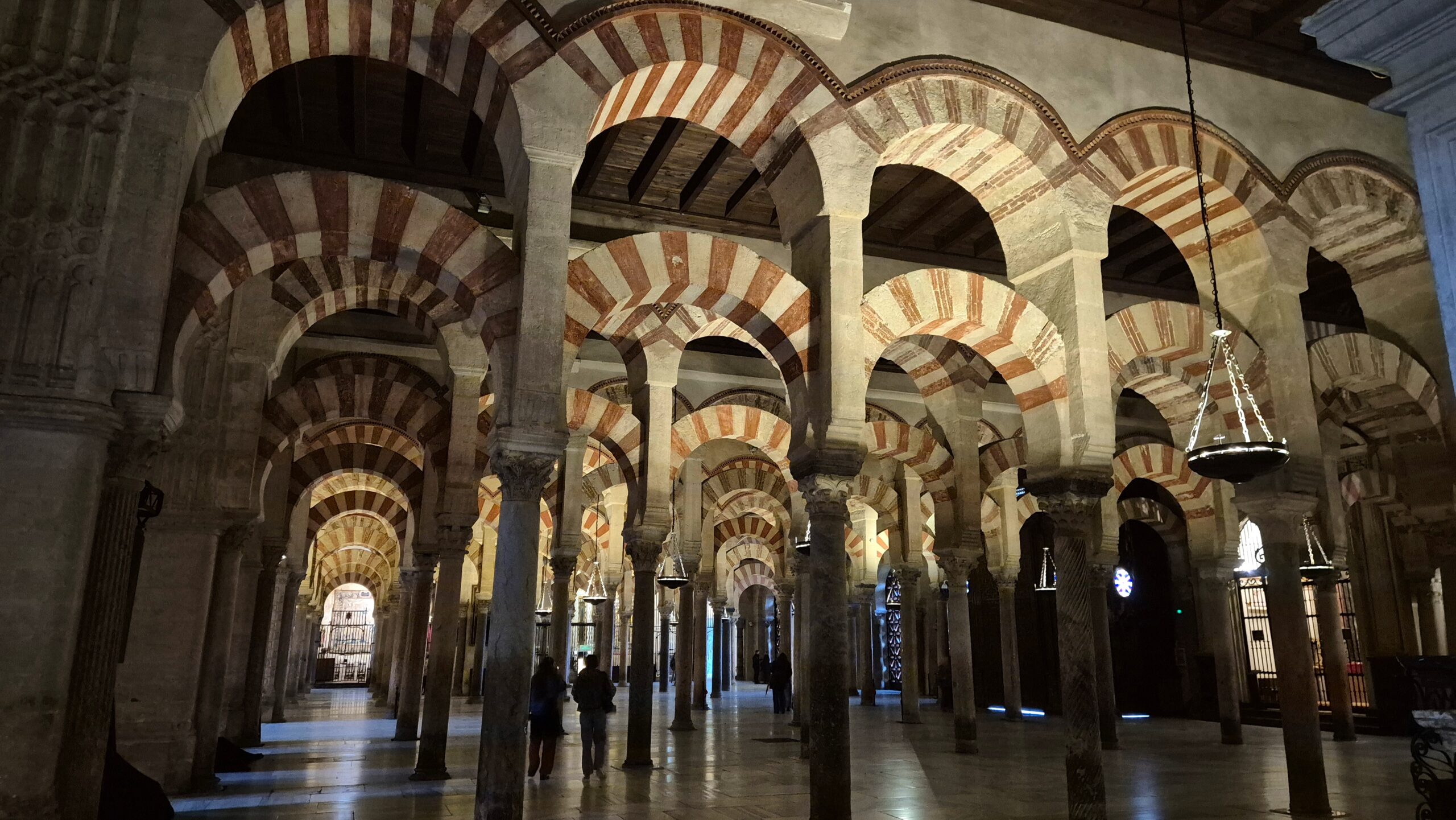
Double arches link columns with no base, part of the later expansion in the 10th century. The lit chapels along the sides are even later Catholic church additions.
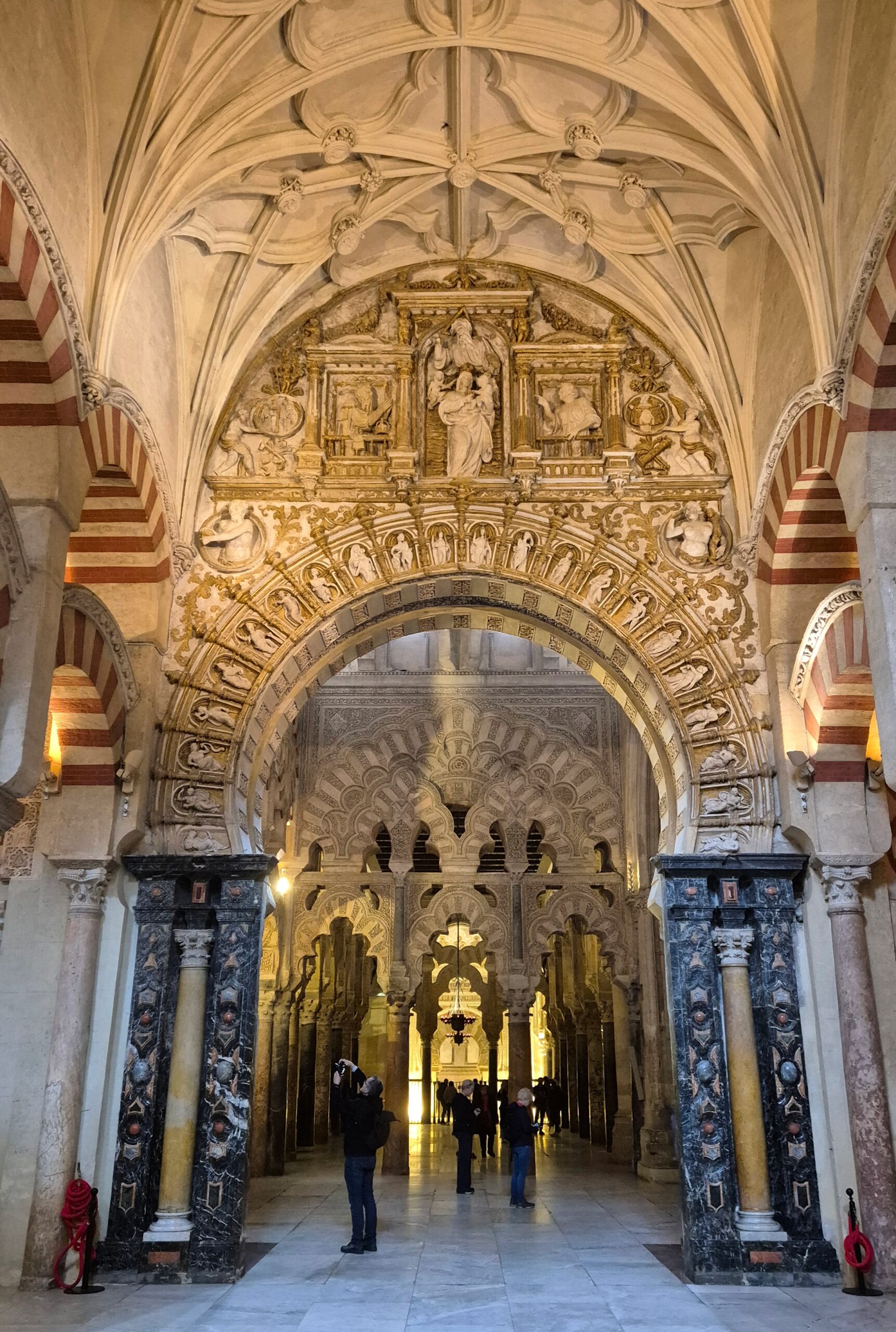
The harmony of Moorish arches, Christian iconography in gold, and Gothic tracery in the ceiling.
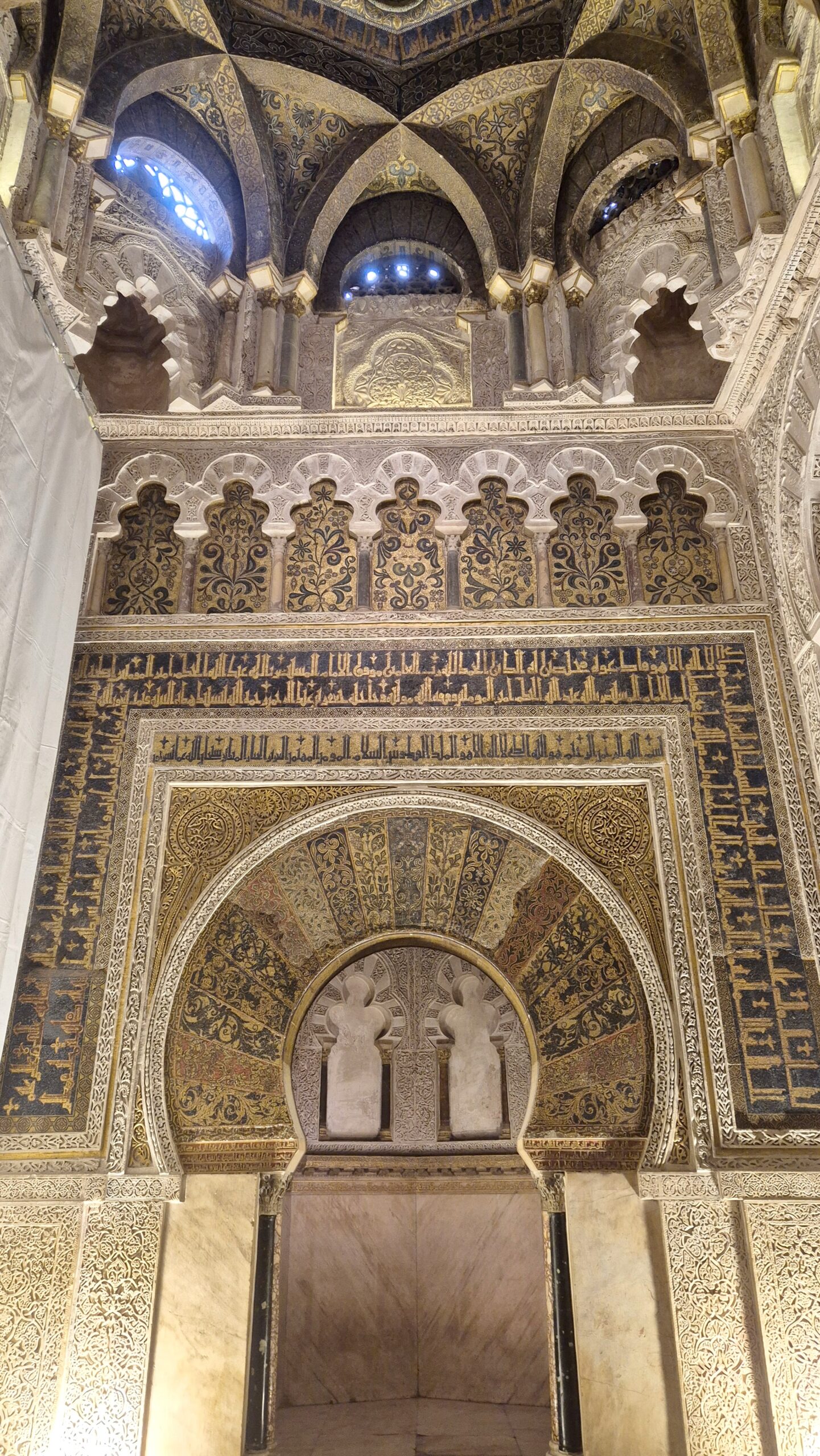
The exquisite inlay of the 10th century mihrab, marking the direction of prayer, one of three chambers wrapped in Qu’ran verses and topped by complex domes.
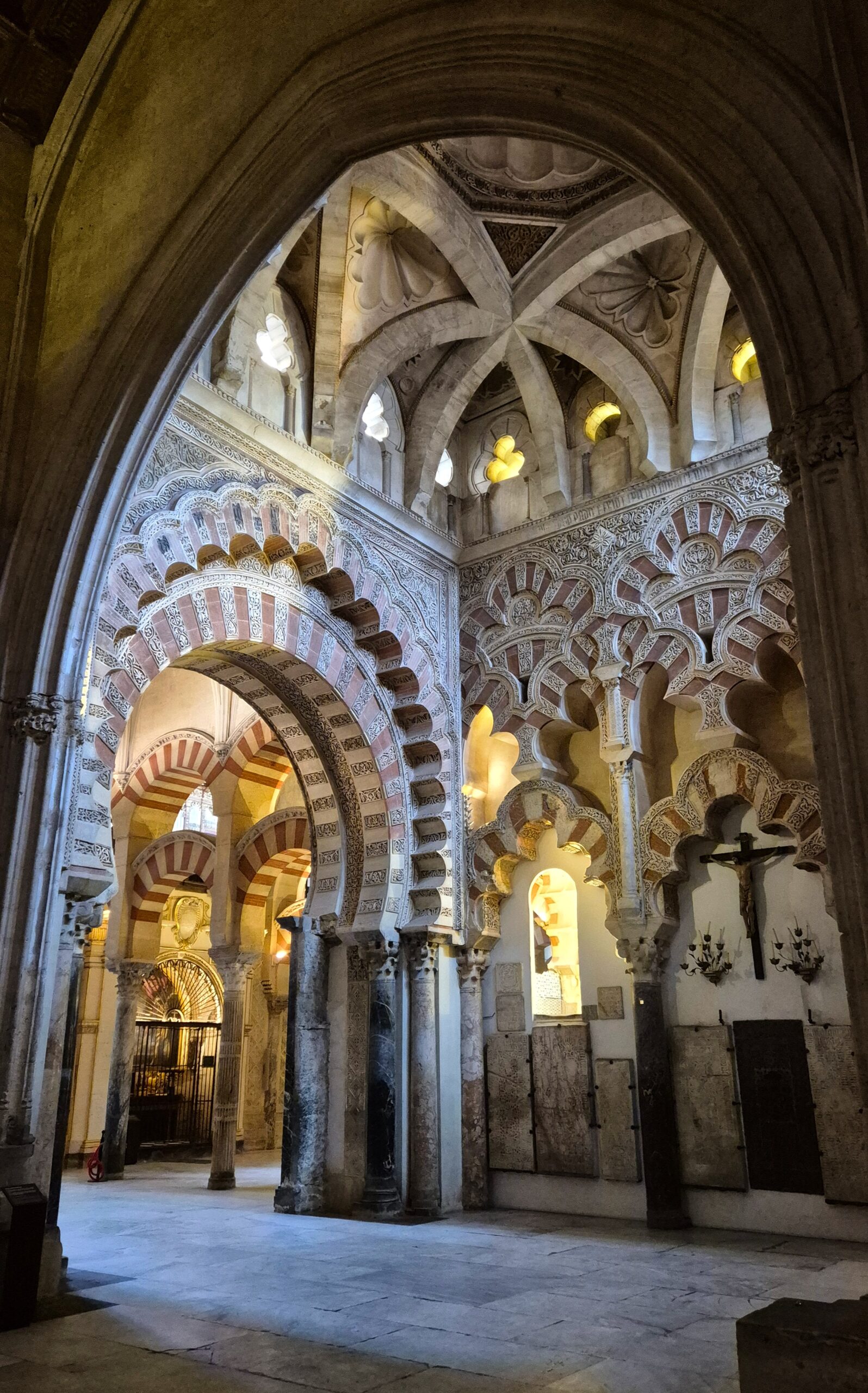
A dazzling interplay of Moorish arches in a space that encloses the 14th century Royal Chapel, the first church inside the mosque.
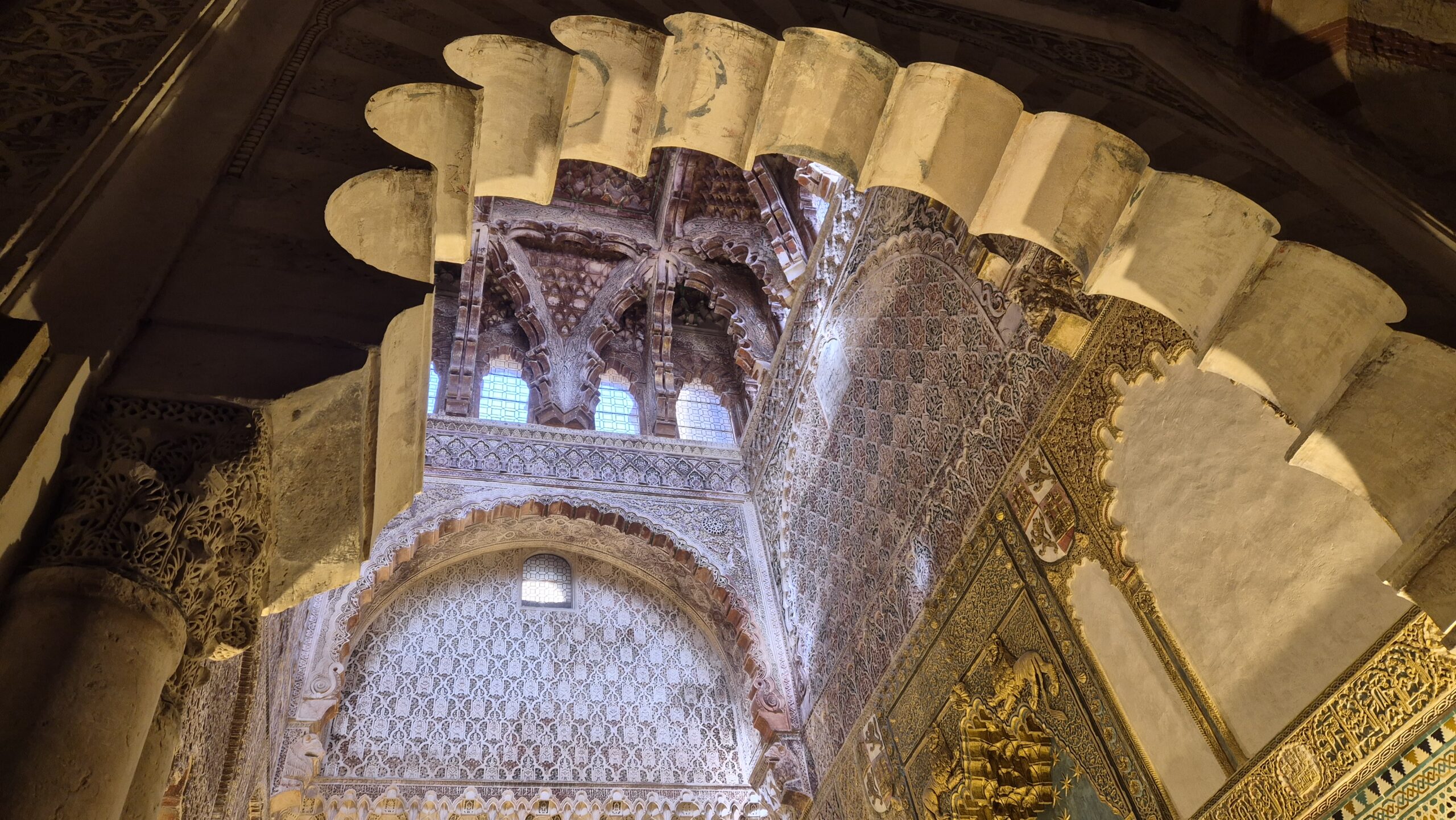
A glimpse of the 14th century Royal Chapel, the original church set within the mosque after the Christian resumption of control in Spain. The space is closed to visitors so one can only have a peek through a scalloped window at the gorgeous mudejar tilework overlayed a bit by the Catholics’ heraldic emblems and golden lions.
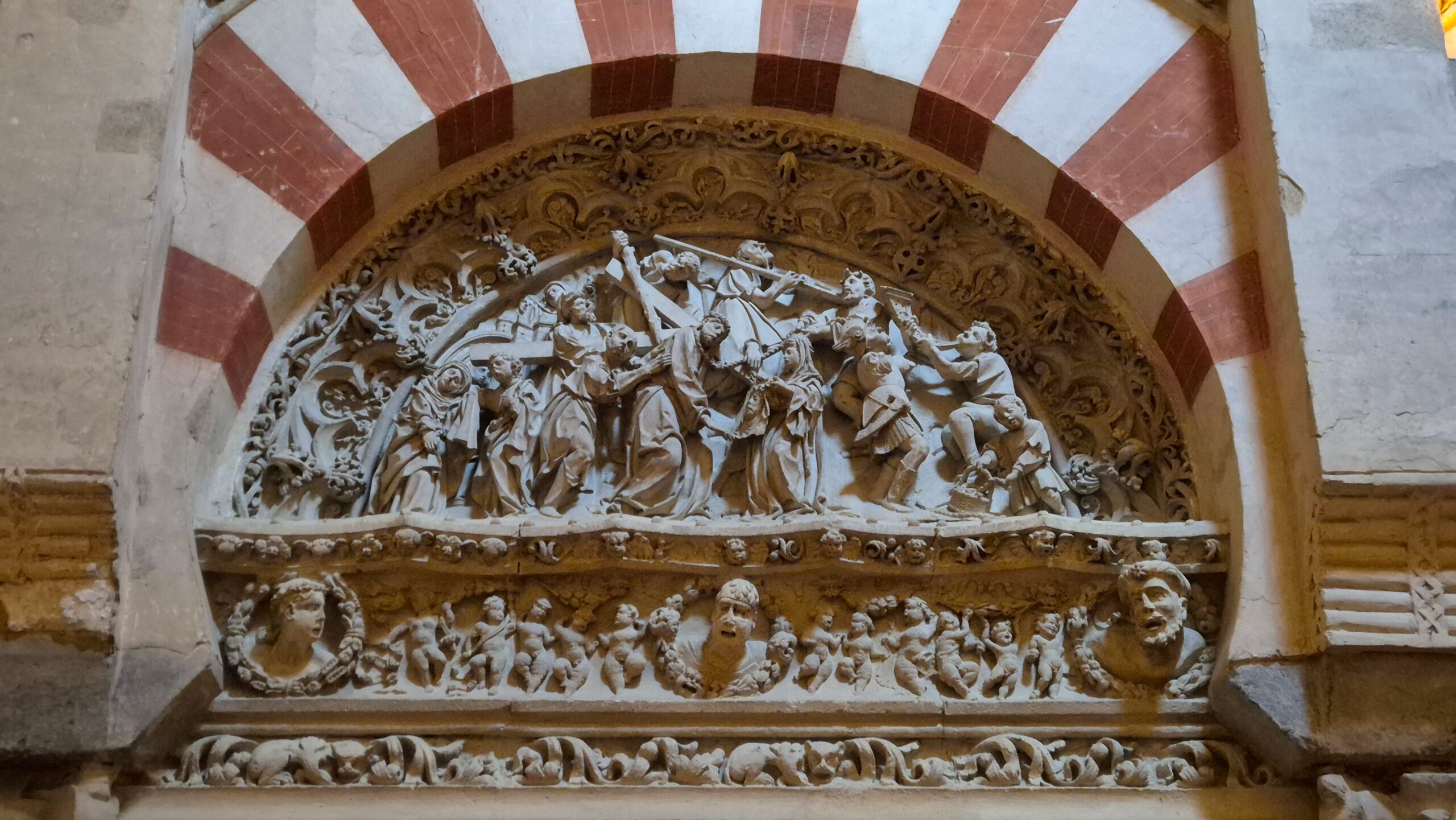
Within a Moorish arch just outside the central nave and altar of the Catholic church, an elaborate, dramatic bas-relief shows Jesus carrying the cross. This is just one such carving for the complete visual narrative of the stations of the cross.
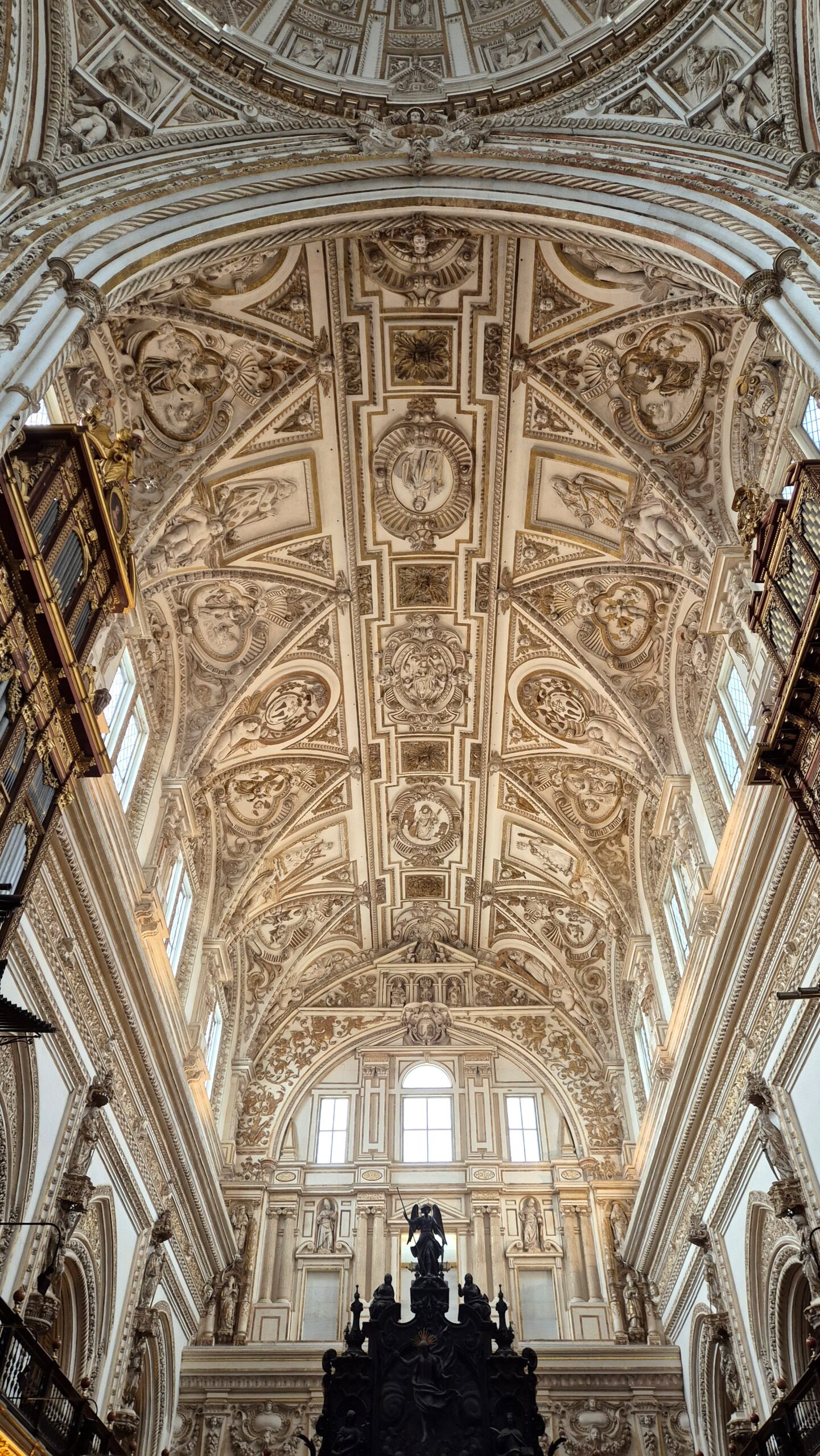
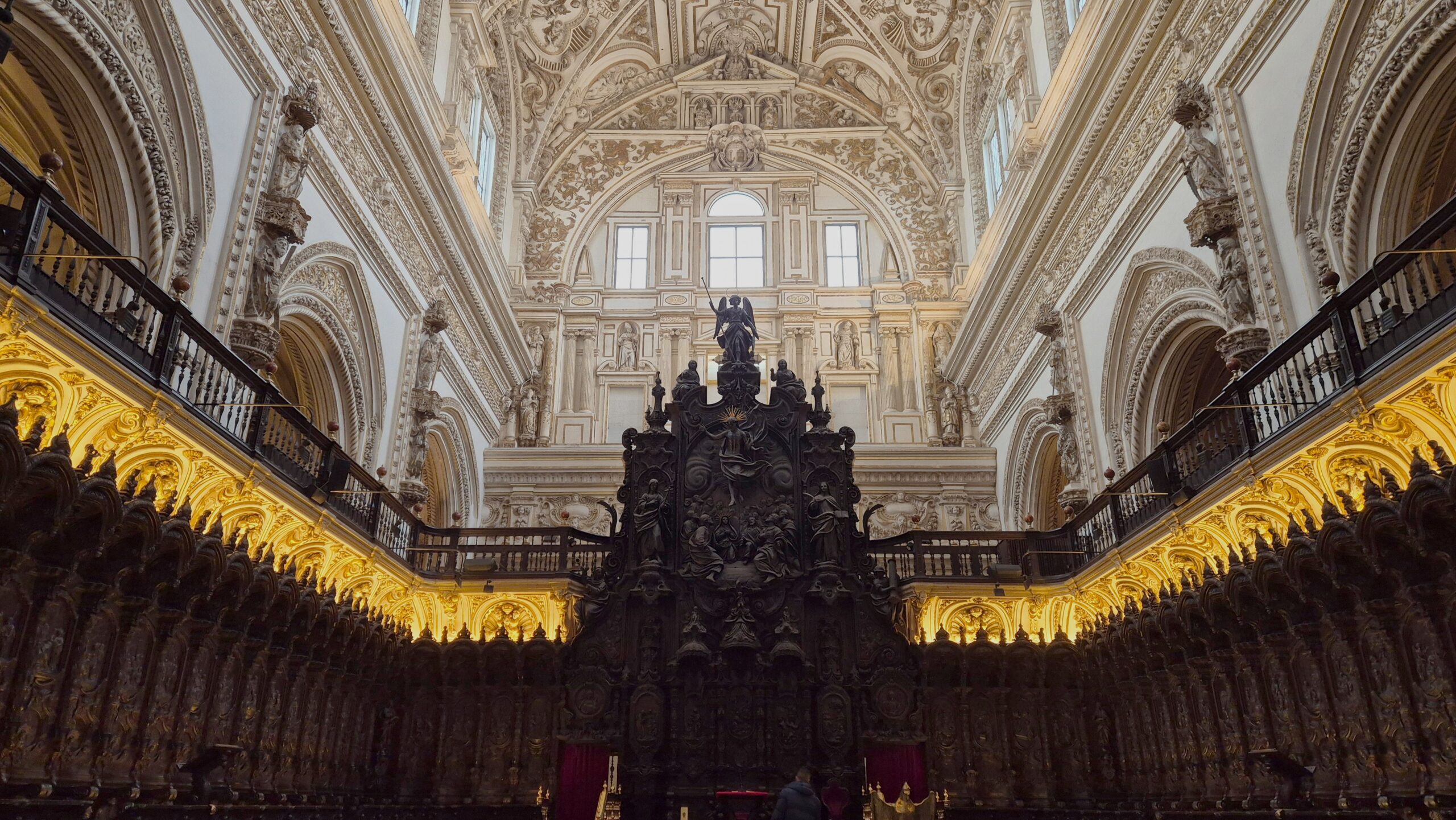
At the center of the 10th century mosque, you find the ebullient interior of the Catholic church. This is the Renaissance barrel-vault ceiling of the choir stalls, with lunettes and frescoes of saints and prophets, all flanked by two baroque organs.
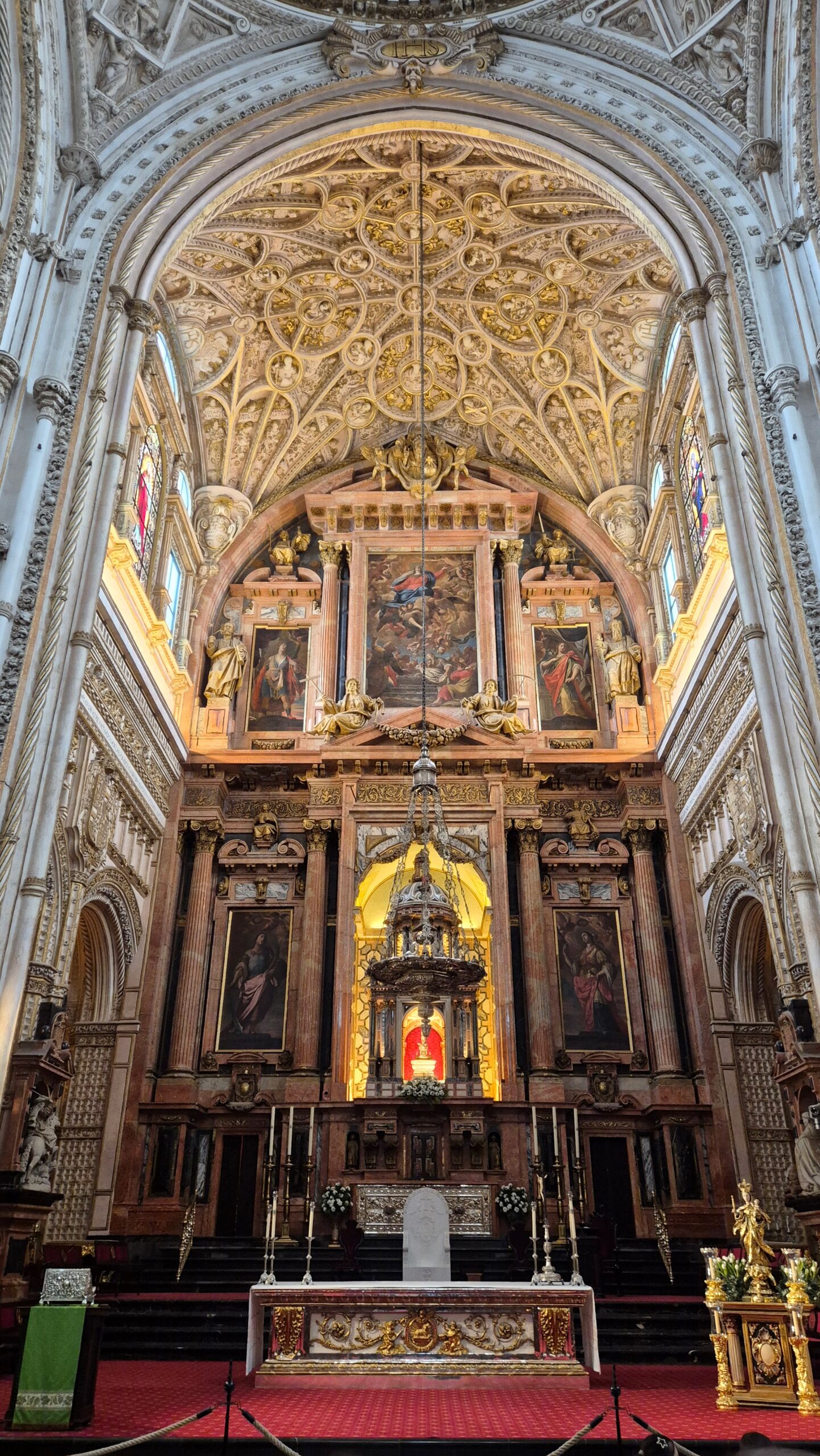
This thrilling 16th century altar faces the church’s choir stalls.
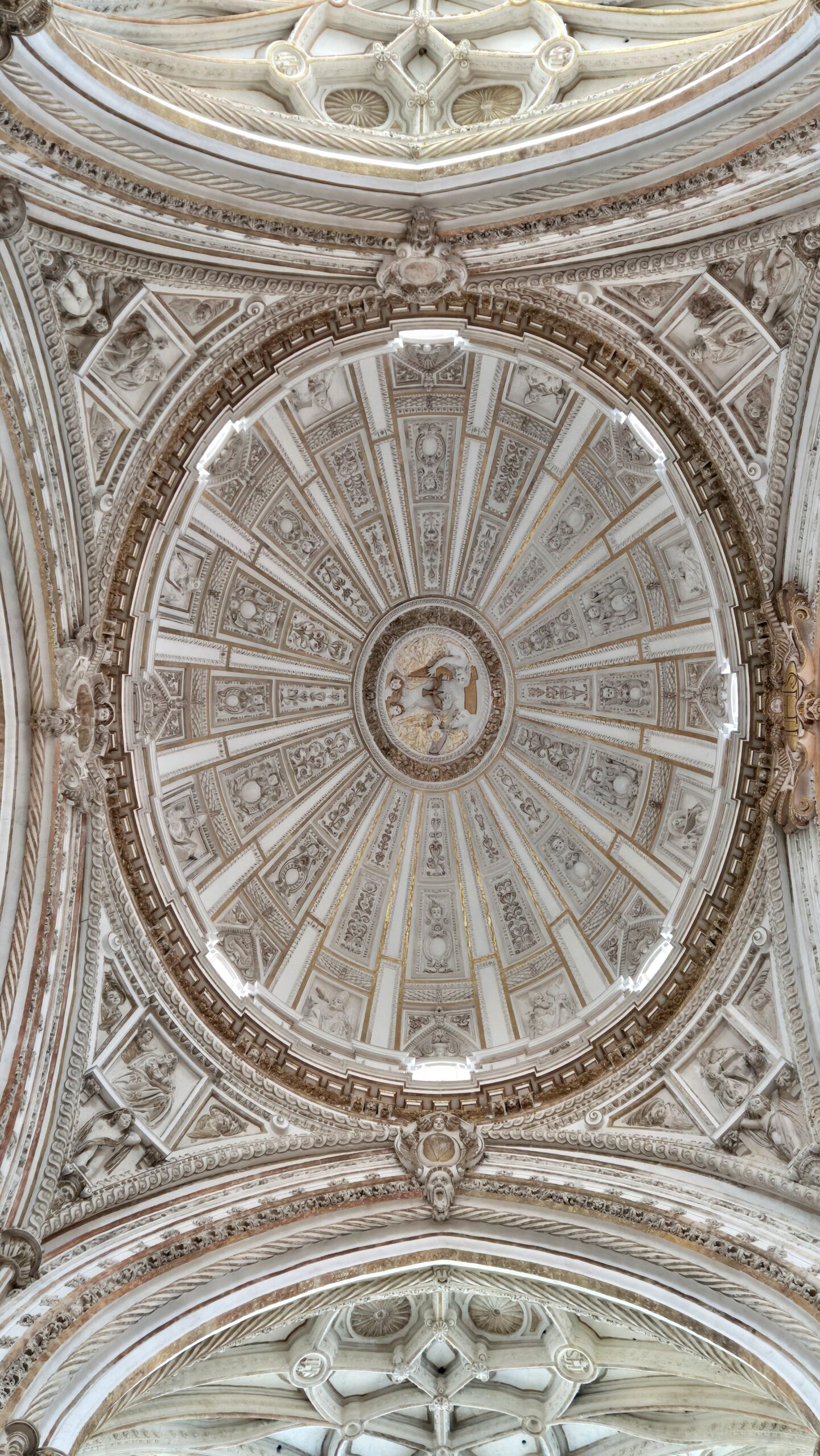
The 16th-17th century dome over the transept of the Catholic church.
The choir loft in the church presents a stark contrast between the Mannerist ceiling of the 16th century and the dark wood of the choir stalls with the altarpiece in their midst. Each stall displays a carved scene from the life of Christ.
The bell-tower was originally the mosque minaret, or watchtower, from the 8th century, with two sets of staircases that never met until the top. It was altered in the 16th and 17th century, partly due to damage and partly to add “modern” Christian elements.
The harmonious rooftops and whitewashed buildings of Córdoba, as seen from the top of the bell-tower, about 200 steps up.
(To enlarge any picture above, click on it. Also, for more pictures from Spain, CLICK HERE to view the slideshow at the end of the itinerary page.)